
Small Group Tutorials
Here to help students catch up, keep up, and move ahead. Book a consultation here.
Project Type: Primary 3 English Tuition
-
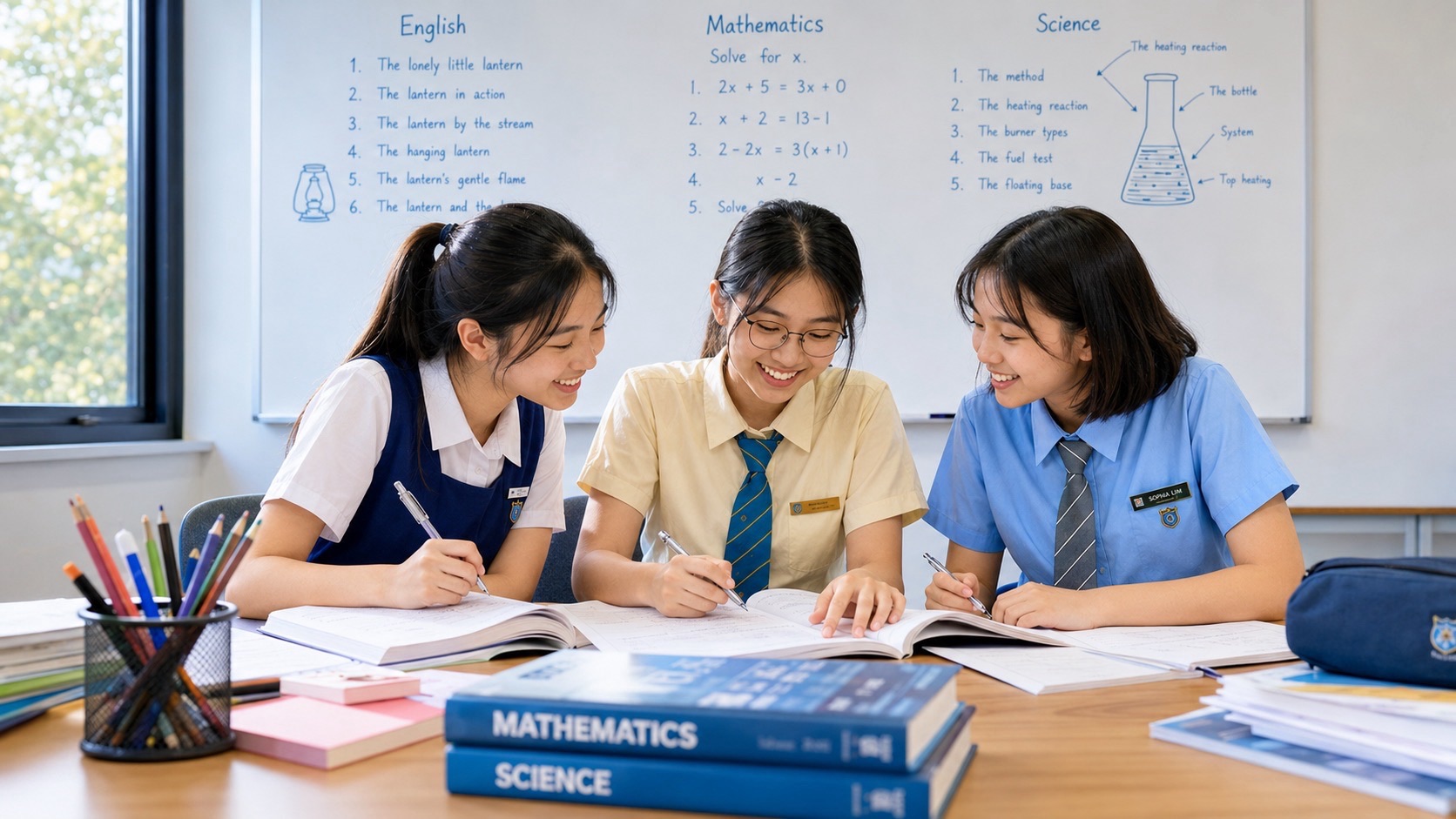
Primary 3 English Tuition Hougang & Serangoon | The Connected World Series #03 — PATH
In Primary 3, learners must manage interconnected information in English, progressing from understanding single ideas to maintaining coherent paths of meaning. This involves skills like recognizing relationships, sequencing events, and comprehending cause and effect. As learners navigate language structures, they grow more adept at inference and relational continuity, enhancing their overall comprehension.
-
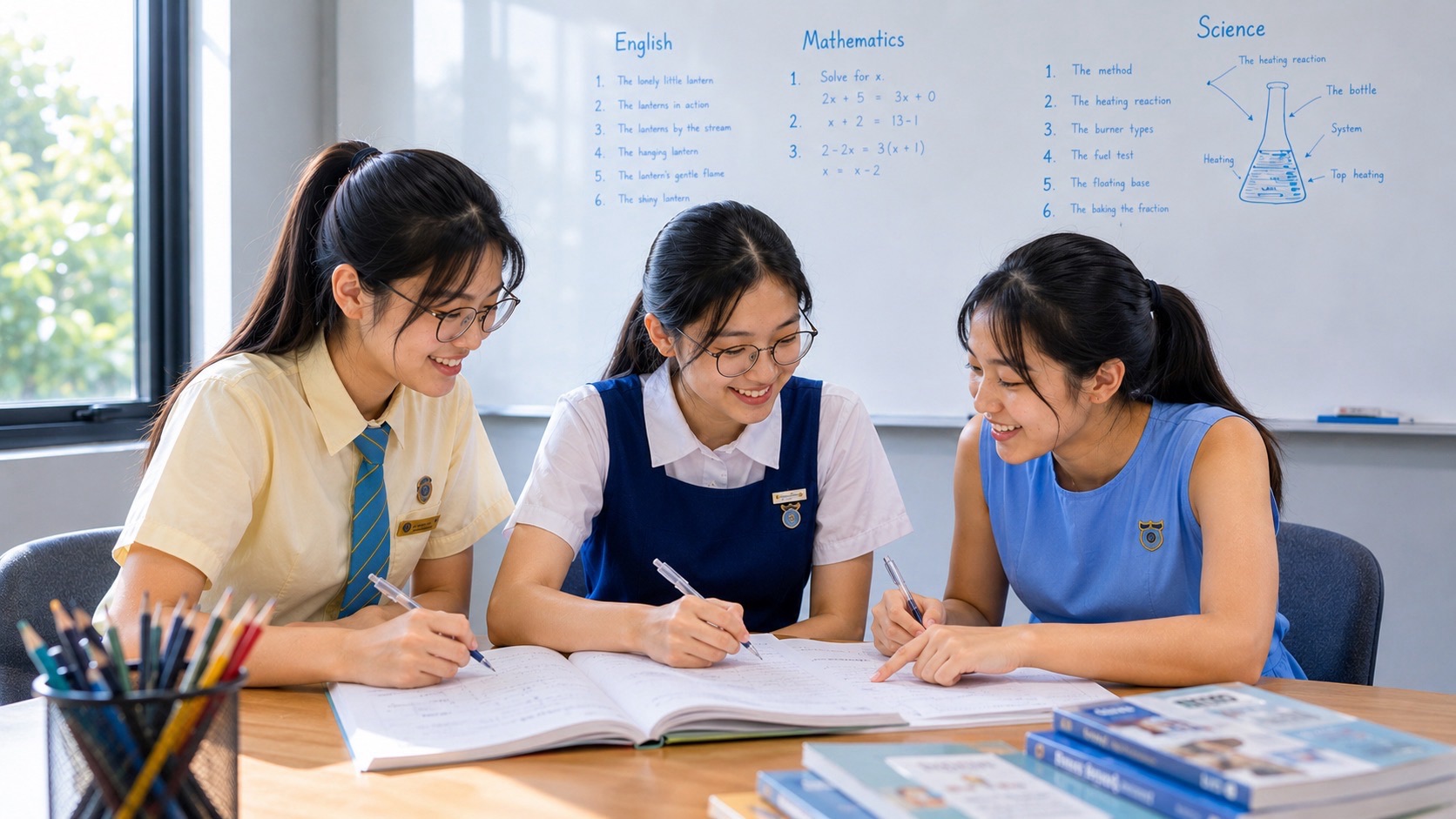
Primary 3 English Tuition Tampines & Pasir Ris | The Living World Series #03 — Connection
The content discusses the progression of English learning in Primary 3, emphasizing the transition from isolated observations to understanding connections within information. It highlights the importance of recognizing relationships, causality, and consequences, encouraging students to construct a networked comprehension of texts, moving beyond simple sentences to integrated meaning.
-
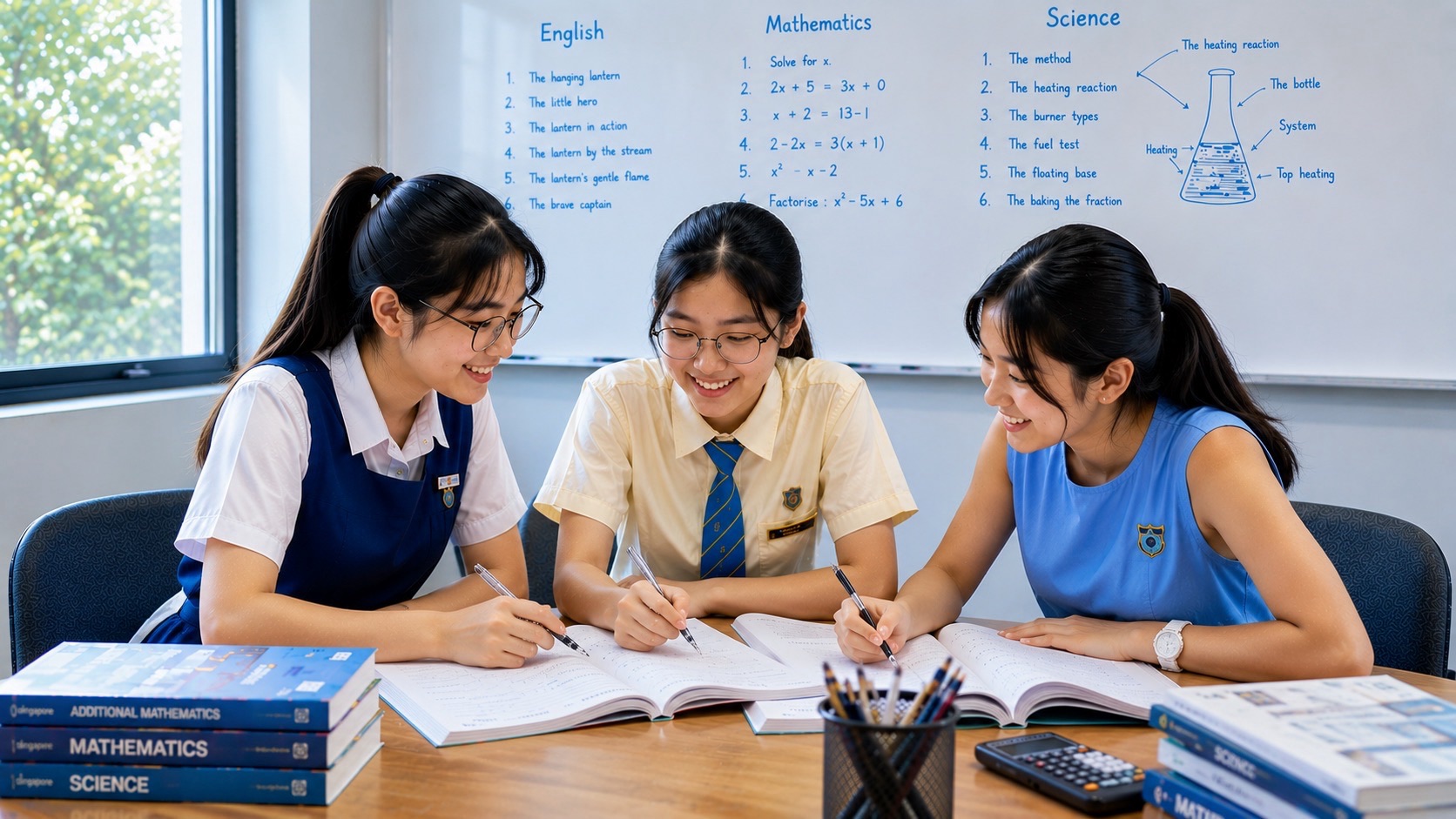
Primary 3 English Tuition Thomson, Yio Chu Kang and Ang Mo Kio | Edmund Spenser Series #03 — Finding Intention
The Edmund Spenser Series emphasizes the transition in Primary 3 from simple event tracking to understanding characters' intentions and emotions. Learners begin to infer motives and reasoning behind actions, moving beyond observable behavior. This shift lays the foundation for analytical skills, enabling children to connect evidence with interpretation, fostering deeper comprehension and critical thinking.
-

Primary 3 English Tuition Siglap, Katong & Marine Parade | Follow the Road, Follow the Tale
The article discusses Primary 3 English tuition offered by eduKateSG for students in Siglap, Katong, and Marine Parade. It emphasizes developing skills in reading comprehension, vocabulary, and coherent writing as texts become longer and more complex. The program focuses on helping learners connect meaning and navigate narrative structures effectively as they progress in their literacy…
-

Primary 3 English Tuition Bishan | The World Becomes a Stage
Primary 3 English Tuition Bishan focuses on developing students' abilities to connect characters, events, and ideas across reading, writing, and comprehension. Through small group classes, the program enhances vocabulary, grammar, and composition, emphasizing the interconnectedness of themes and the importance of evidence-based reasoning in understanding text.
-
Primary 3 English Tuition Clementi | The Story Unfolds
eduKateSG offers Primary 3 English Tuition in Clementi, focusing on connecting vocabulary, comprehension, grammar, and composition. The program aims to diagnose individual learning weaknesses, strengthen language skills, and foster independence. As English becomes more integrated at this level, students learn to coordinate their skills, preparing them for future academic challenges.
-

Primary 3 English Tuition | Building the PSLE English Corridor Early
Primary 3 English tuition lays the groundwork for successful PSLE preparation by enhancing essential skills like reading, writing, comprehension, grammar, vocabulary, listening, and oral communication. This formative year is crucial for addressing potential weaknesses before the increased pressures of upper primary, fostering a strong foundation for future learning.
-

Primary 3 English Tuition | Vocabulary and Composition Start to Matter
Primary 3 English tuition emphasizes the importance of vocabulary and composition in students' writing development. By enhancing word depth and sentence control, students can communicate more effectively. EduKateSG advocates for a comprehensive approach to vocabulary, focusing on usage, meaning, and context to foster clearer storytelling and stronger communication skills.
-

Primary 3 English Tuition | The Middle Primary Foundation Year
Primary 3 English marks a critical transition for students, bridging the simpler language skills of lower primary with the demands of upper primary. It focuses on enhancing reading, writing, comprehension, and oral communication. Effective tuition can help identify weaknesses, build confidence, and prepare students for academic challenges ahead.
-

Primary 3 Mathematics Tuition | Settling Down And Having a Rhythm
Primary 3 is a crucial year for children as they transition into a structured approach to mathematics, emphasizing understanding over rote memorization. This phase encourages children to develop a rhythm in their learning—reading carefully, showing their working, correcting mistakes, and applying concepts independently. Establishing these habits prepares them for more complex math challenges ahead.
-

Primary 3 English Tuition | The One Where Foundation Is Crucial
Primary 3 is a crucial year in a child's English education, marking the transition from simple skills to more complex language tasks. Students begin to grapple with longer texts, nuanced comprehension, and structured writing, highlighting the importance of solid foundational skills. Addressing weaknesses early sets the stage for success in upper primary.
Primary 3 English Tuition by eduKateSG helps students strengthen English at the point where early primary foundations begin to turn into confident school performance, stronger study habits, clearer communication and long-term PSLE readiness.
Primary 3 is not simply “harder Primary 2 English.” It is the year where English begins to lift the student into a stronger learning flight path. After Primary 1 and Primary 2, children should no longer be only learning how to recognise words, form simple sentences and follow basic classroom instructions. They now need to read with better stamina, write with clearer structure, understand questions more accurately, build deeper vocabulary, speak with more confidence and begin using English as a study tool across the school curriculum.
This project explains Primary 3 English Tuition as a structured learning system for helping students move from early foundation into controlled learning flight. Many students struggle in Primary 3 not because they lack ability, but because the demands of school begin to widen. A passage becomes longer. A question may require more than one step of thinking. A composition needs sequence, detail and feeling. A grammar item may depend on sentence sense, not memorised rules alone. A student may know the answer orally but struggle to write it clearly. A child may read words correctly but not yet understand the deeper meaning of the text.
eduKateSG’s Primary 3 English Tuition supports students by strengthening the full English learning chain: reading meaning, building vocabulary, understanding grammar, forming stronger sentences, organising ideas, writing paragraphs, answering comprehension questions, speaking clearly, listening accurately and repairing weak habits early. This includes phonics consolidation, reading fluency, vocabulary growth, grammar accuracy, sentence building, composition planning, comprehension skills, oral confidence, listening awareness, spelling, punctuation, editing and schoolwork independence.
The project also helps parents and students understand why Primary 3 is such an important turning point. At this level, students must move beyond simple answers and short sentence writing. They need to learn how to explain, describe, sequence, infer, compare, support ideas and use vocabulary with better accuracy. These skills are important not only for English, but also for Mathematics word problems, Science explanations, project work, presentations, classroom participation and future PSLE preparation.
Primary 3 English Tuition by eduKateSG focuses on making students fly, not just making them finish worksheets. Students learn how to read the right meaning, answer the right question, choose the right word, build the right sentence, organise the right paragraph and repair weak phrasing before it becomes a repeated habit. The aim is to help students become clearer, more confident and more independent learners before Primary 4, where school expectations begin to climb more sharply.
This branch studies Primary 3 English through curriculum, reading, comprehension, composition, grammar, vocabulary, oral communication, listening, spelling, punctuation, sentence structure, paragraph development, learning habits, confidence building and early PSLE readiness. It is designed for students, parents and educators who want to understand how Primary 3 English works, why it matters, and how tuition can support the movement from lower-primary foundation into middle-primary capability.
Primary 3 is also the year where students begin to show their real learning signals. A child may be reading too slowly. A child may avoid writing. A child may know many words but use only simple ones. A child may copy answers without understanding the question. A child may write stories without sequence. A child may speak softly because the English signal is not yet confident. These are not small problems to ignore. They are early learning signals. If repaired in Primary 3, they can make Primary 4 a smoother climb. If ignored, they may become heavier problems in Primary 5 and Primary 6.
The Primary 3 to Primary 4 movement is especially important because Primary 4 becomes a major school checkpoint year. Primary 4 results help shape later subject-level recommendations for Primary 5 and Primary 6. This means Primary 3 is the preparation runway. When students become strong in Primary 3, Primary 4 becomes less frightening because they already have reading stamina, vocabulary strength, writing habits, grammar control and classroom confidence. The child can climb the capability ladder instead of struggling to repair old weaknesses while new work keeps arriving.
Primary 3 English Tuition by eduKateSG therefore connects the whole terrain from Primary School to Secondary School. Primary 1 and Primary 2 build the early runway. Primary 3 gives the student lift. Primary 4 checks whether the climb is stable. Primary 5 and Primary 6 prepare the student for PSLE. After PSLE, students move into the secondary school landscape, where English continues to affect comprehension, writing, oral communication, subject learning, project work, G1, G2 and G3 subject levels, and future pathway confidence.
This is why Primary 3 English must be taught as more than a single-year subject. It is part of a long educational corridor. A Primary 3 student who learns to read carefully now will find Primary 5 comprehension easier later. A Primary 3 student who learns sentence structure now will write better compositions later. A Primary 3 student who learns vocabulary deeply now will have stronger expression in upper primary. A Primary 3 student who learns to explain ideas clearly now will be better prepared for secondary school discussions, presentations and examinations.
At eduKateSG, Primary 3 English Tuition trains students to control English through small but powerful habits. Students learn to slow down when reading questions, notice important words, understand sentence clues, build vocabulary networks, plan before writing, check grammar, use punctuation properly, improve spelling, speak in full answers and explain their thinking more clearly. These habits make English stronger because they help students receive meaning, process meaning, express meaning and repair meaning.
Composition writing becomes more important in Primary 3 because students must learn to move from simple event writing into meaningful story building. A strong composition is not only a list of events. It needs setting, characters, problem, action, feeling, consequence and ending. Students must learn to show emotions through actions, choose stronger verbs, avoid repeated simple words and organise events in a way that the reader can follow. Primary 3 is the right year to build these habits before upper-primary writing becomes more demanding.
Comprehension also becomes more important in Primary 3 because students must learn that answers are not always copied directly from the passage. They need to understand what the question is asking, locate the correct clue, read before and after the clue, infer simple meaning and write answers clearly. This is the early training ground for the deeper comprehension skills needed in Primary 5 and Primary 6.
Vocabulary is another major part of Primary 3 English. At this level, students should not only memorise word meanings. They should learn how words behave in sentences, how synonyms are not always exactly the same, how emotions can be described more precisely and how word choice changes the signal of a sentence. A student who only knows “happy,” “sad,” “angry” and “scared” will struggle to write with maturity later. A student who learns words such as relieved, disappointed, anxious, frustrated, grateful, embarrassed and determined begins to express meaning with greater control.
Grammar remains important, but it should not be taught as isolated rules alone. Primary 3 students need to understand grammar as sentence control. Tenses help place actions in time. Subject-verb agreement helps sentences sound correct. Connectors help ideas join properly. Pronouns help avoid repetition. Punctuation helps the reader understand the sentence. When grammar is connected to meaning, students become more accurate and more independent.
Oral communication and listening also matter in Primary 3. Students should learn to speak in complete answers, give reasons, describe pictures, respond to questions, listen for details and express opinions with confidence. These skills prepare them for upper-primary oral demands, but they also build classroom confidence. A child who can speak clearly often participates more, asks better questions and learns more actively across subjects.
In the age of AI and digital communication, Primary 3 English is also becoming more important as a command language for learning. Children who can read and write clearly can search better, ask better questions, understand explanations, compare answers and use digital tools more safely. English is not only a school subject. It is the language of learning, instructions, online information, classroom discussion and future thinking.
Primary 3 English Tuition by eduKateSG teaches English as a system for reading, writing, speaking, listening, thinking, confidence, repair and future readiness. It helps students move from lower-primary foundation into middle-primary flight, where vocabulary, grammar, comprehension, composition, oral communication, listening and study habits work together to support Primary 4 confidence, Primary 5 and Primary 6 PSLE preparation, and the longer journey into Secondary School.