
Small Group Tutorials
Here to help students catch up, keep up, and move ahead. Book a consultation here.
Project Type: Punggol Mathematics Tuition
-

Secondary Mathematics Tuition in Punggol: The Four-Year Mathematics Operating System
eduKate Punggol offers structured secondary mathematics tuition for students in Sec 1 to Sec 4, focusing on essential topics like algebra, geometry, and exam strategies. The program aims to build confidence and mastery by addressing individual learning needs, fostering effective study habits, and preparing students for various examination levels and challenges.
-
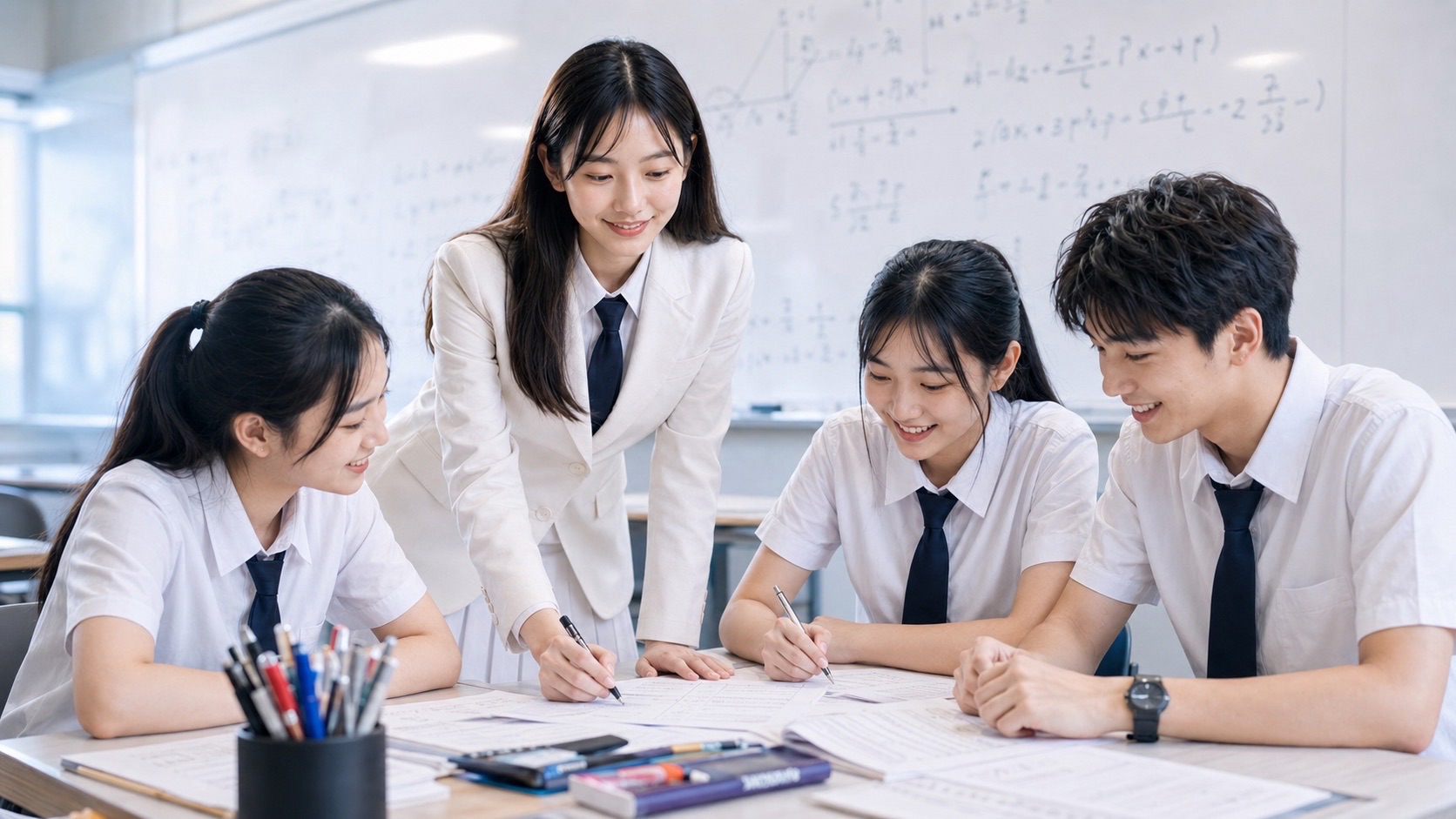
Common Secondary Mathematics Pitfalls in Punggol
Secondary Mathematics students often lose marks due to small, repeated mistakes like weak algebra foundations, skipped working, and careless errors. eduKate Punggol addresses these pitfalls by helping students identify and understand their errors. They focus on building better habits and skills, ultimately improving students’ confidence and performance in Mathematics.
-

How eduKate Punggol Secondary Mathematics Tutorials Work
eduKate Punggol offers small-group tuition in Secondary Mathematics from Sec 1 to Sec 4, focusing on personalized learning. By identifying student weaknesses and correcting mistakes, the program aims to build strong foundations in algebra and improve problem-solving skills. This tailored approach fosters confidence, encourages clarity, and prepares students for E-Math, A-Math, and O-Level exams.
-
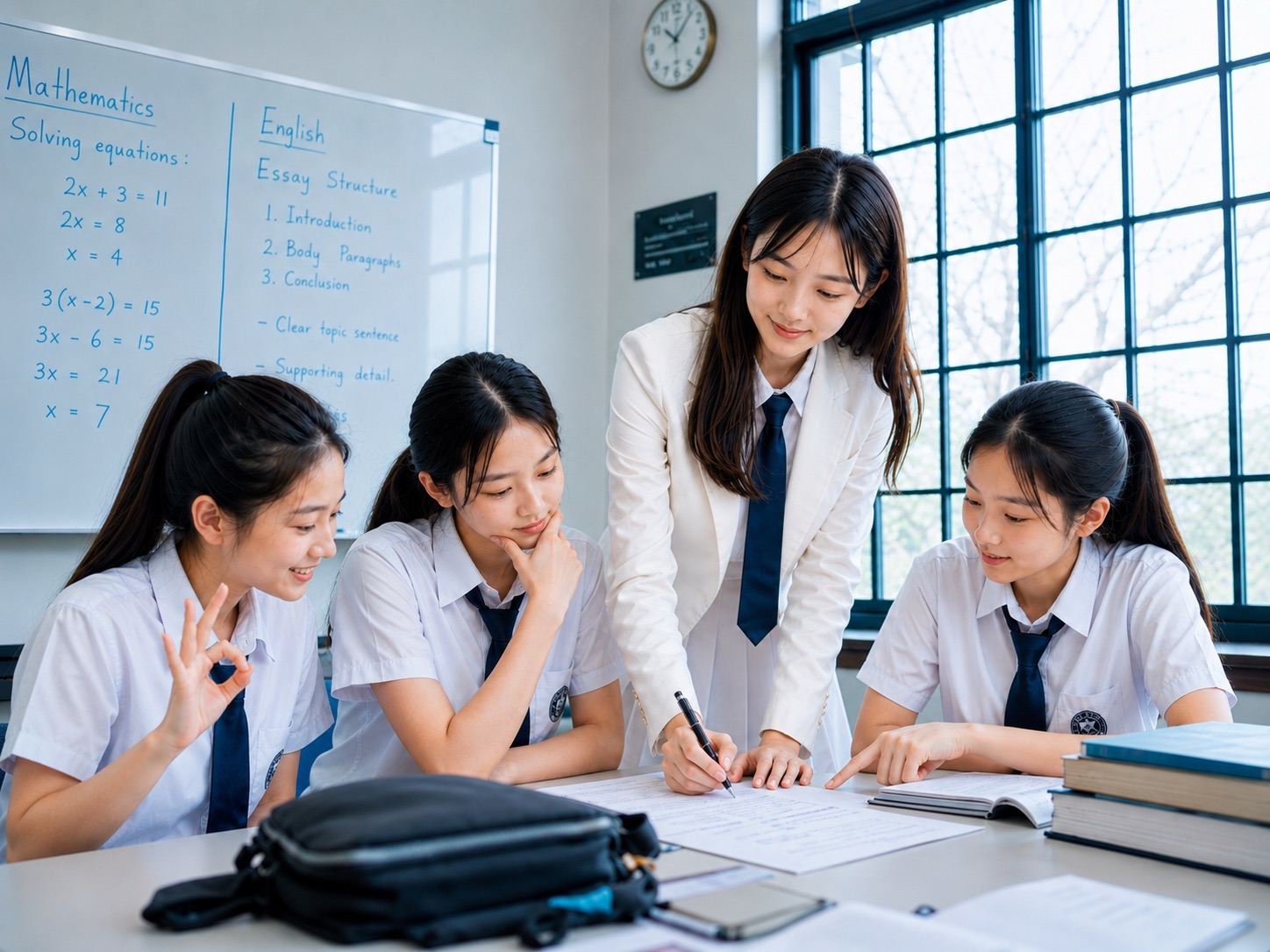
Punggol SEC G3 Mathematics Examination | Training for A1, Precision and Future Pathways
G3 Mathematics emphasizes precision, requiring students to master not only content but also problem-solving under pressure. It integrates various mathematical concepts and prioritizes meticulous execution to avoid careless errors. Strong performance enhances future academic opportunities, fostering critical thinking skills vital for real-world applications. This comprehensive approach shapes capable learners for diverse fields.
-

Punggol SEC G1 Mathematics Examination | Building Reliable Numeracy and Real-World Confidence
The Punggol SEC G1 Mathematics Examination prioritizes practical, reliable math skills essential for daily life, encompassing numbers, measurements, and data interpretation. It aims to rebuild students’ confidence by addressing underlying weaknesses and fostering real-world applications. This approach emphasizes the importance of a solid mathematical foundation for future educational and life success.
-

Punggol SEC G2 Mathematics Examination | The Middle Highway for Progression and Stability
G2 Mathematics serves as a crucial intermediary path for students, providing structure, challenge, and rebuilding of confidence as they transition from primary to secondary education. It addresses gaps in understanding, supports academic stability, and fosters essential skills for future learning. Ultimately, G2 is a foundational corridor, vital for ongoing mathematical development.
-

Not Just More Worksheets | Punggol Primary Mathematics Tuition
eduKate Punggol offers targeted Primary Mathematics tuition, emphasizing that merely increasing practice volume does not guarantee improvement. Their approach integrates clear teaching, error analysis, and purposeful correction to ensure that practice leads to actual learning. This method prepares students for PSLE while building confidence and addressing individual weaknesses effectively.
-

Why Primary Mathematics Feels Easy Until It Suddenly Does Not
Many children initially find Primary Mathematics manageable in the early years but often struggle as they progress to Primary 3 and beyond, facing more complex word problems and concepts. eduKate Punggol Tuition aims to address these challenges by identifying foundational gaps, improving problem-solving skills, and building confidence in students before they approach PSLE.
-

Punggol Primary Mathematics Tuition: How Primary Math Really Works from P1 to PSLE
eduKate Punggol offers small-group tuition for Primary Mathematics, catering to students from P1 to P6. The program focuses on building a solid mathematical foundation, enhancing problem-solving skills, and preparing for PSLE. By diagnosing individual needs and providing targeted support, the tuition aims to help students catch up, maintain pace, or excel in Mathematics.
-

PSLE to Secondary 1 Math Bridge | Punggol Primary Mathematics Tuition
eduKate Punggol offers Primary Mathematics tuition that prepares students for the PSLE while simultaneously building skills for Secondary 1 Algebra. The program focuses on essential concepts such as model drawing, ratio, and word problems, ensuring students transition smoothly into more abstract mathematical thinking. Emphasis is placed not only on exam readiness but also on fostering…
-

What Happens in Punggol Primary Mathematics Tuition
eduKate Punggol offers small-group tutorials for Primary Mathematics, helping P1 to P6 students build foundational skills, solve word problems, and prepare for PSLE exams. The focus is on understanding individual learning needs, correcting errors, and fostering confidence. Tailored approaches ensure students either catch up, keep up, or move ahead effectively.
-

Sec 3 Math Tutor | High Performance Secondary 3 Math Tuition
Secondary 3 Mathematics marks a pivotal transition as students face increased pressure and complexity in their learning. This year serves as a test of their foundational skills, especially in algebra, as they prepare for both Mathematics and Additional Mathematics. Effective tutoring should diagnose weaknesses, provide targeted support, and ensure students build confidence for future success.
Punggol Mathematics Tuition by eduKateSG
Punggol Mathematics Tuition by eduKateSG is the dedicated education branch for helping students, parents and educators understand how Mathematics is learnt, diagnosed, repaired, strengthened and stretched from Primary School to Secondary School, O-Level pathways and beyond.
This project sits under the wider eduKateSG Education branch and the Mathematics Tuition runtime. The Education branch explains how students learn across English, Mathematics, Science, examinations, memory, confidence, habits and long-term academic development. The Mathematics Tuition runtime studies the live learning process while the student is still moving through school pressure, homework load, examination demand, confidence changes, syllabus gaps and parent expectations.
Punggol Mathematics Tuition is not a normal collection of tuition pages.
It is not simply a list of classes.
It is not just homework support.
It is not a promise that more worksheets automatically create better results.
It is a diagnostic learning project.
Its purpose is to ask: when a child is struggling in Mathematics, where exactly is the learning loop breaking? Is the child not learning the topic properly? Is the child listening but not understanding? Is the child able to do sums only when guided? Is the child making repeated mistakes without knowing why? Is the child forgetting after one week? Is the child able to do standard questions but unable to apply the method in examinations? Is the child lacking ability, or has the child lost confidence because Mathematics has become confusing?
This project explains how eduKateSG studies Mathematics through the Learning Loop.
The Learning Loop is:
Learn. Understand. Do Sums. Check Mistakes. Correct. Memorise. Revise. Test.
A child does not become strong in Mathematics by hearing a lesson once.
A child does not become strong by blindly doing more work.
A child becomes strong when the full loop is completed properly. The student must first learn the idea. Then the student must understand what it means, why it works, how to use it and when to apply it. After that, the student must practise, check mistakes, correct thinking, remember methods, revise later and test whether the skill still works under pressure.
This is why Punggol Mathematics Tuition by eduKateSG begins with diagnosis.
The question is not only, “How much work has the student done?”
The better question is, “Where is the child now?”
Some students are still at the first stage. They have attended school lessons, copied notes and seen examples, but the topic has not been installed clearly in their minds.
Some students understand during tuition, but forget the method a week later because the knowledge has not moved from short-term memory into long-term skill.
Some students can follow the tutor’s explanation, but cannot begin the question alone.
Some students can complete textbook questions, but cannot handle mixed examination questions.
Some students know the formula, but do not know when to use it.
Some students are not lazy. They are overloaded.
Some students are not careless. They are anxious.
Some students are intelligent, but Mathematics has been delivered to them in fragments, so they no longer see the whole picture.
Punggol Mathematics Tuition exists to make these problems visible.
A topic such as Coordinate Geometry may look like one chapter, but to a student it may feel fragmented across several school years. Coordinates, gradients, graphs, equations of lines, distance, midpoint and algebraic manipulation may appear at different stages. If the student never sees the complete structure, the topic feels scattered. The child may say, “I don’t understand,” when the real issue is that the whole topic has never been assembled properly.
This project therefore treats Mathematics tuition as a repair-and-build system.
First, we identify the gap.
Then we explain the topic clearly.
Then we let the child see what the topic is, why it matters, how the method works and when to use it.
Then we move into practice.
Then we study the mistakes.
Then we correct the thinking.
Then we revise.
Then we test.
Then we stretch.
The aim is not to frighten the student with difficulty too early. The aim is to give the student enough clarity to begin. Once the child sees that Mathematics can make sense, confidence begins to return. Once confidence returns, effort becomes possible. Once effort becomes possible, practice becomes stronger. Once practice becomes stronger, examination performance can improve.
This is why Punggol Mathematics Tuition by eduKateSG does not treat homework as the first answer for every student.
Homework is useful when the student is ready.
If a child does not understand the topic, more homework can become more frustration. The child may repeat the same mistake, copy correction without thinking, avoid the work or begin to believe that Mathematics is not for them. But when the student has learnt and understood the topic properly, homework becomes active learning. The child begins to attempt. The child begins to think. The child begins to see personal gaps. The child begins to correct. The child begins to own the skill.
This is the shift eduKateSG wants.
From passive learning to active learning.
From copied methods to owned understanding.
From “I don’t know” to “I know how to start.”
From fear to confidence.
From repeated mistakes to visible correction.
From short-term memory to long-term skill.
From doing work because the parent says so, to practising because the student wants to improve.
Punggol Mathematics Tuition also studies the parent’s role in the learning system. Parents do not need to reteach every chapter. They need to understand where the child is in the loop. A child who needs explanation should not be overloaded with test papers. A child who understands but forgets needs revision. A child who can do basic questions needs harder variations. A child who knows the method but cannot apply it needs examination recognition training. A child whose confidence has collapsed needs calm rebuilding before heavy pressure.
This makes the project useful for parents because it gives them a way to see Mathematics learning more clearly.
Instead of asking only whether the child has done homework, parents can ask better questions.
Did my child understand the topic?
Can my child explain it?
Can my child start a question alone?
Can my child remember it next week?
Can my child correct mistakes properly?
Can my child recognise when to use this method?
Can my child handle a mixed question?
Can my child stay calm under exam pressure?
These questions reveal the real learning stage.
At eduKateSG, mistakes are also treated as diagnostic signals. A wrong answer is not simply failure. It may show a weak foundation, a misunderstood concept, a careless habit, a memory gap, a wrong method choice or examination anxiety. Good correction does not mean copying the right answer. Good correction means the student knows what went wrong, why it went wrong, what should be done instead and how to prevent the same mistake from returning.
This project therefore stores and organises the key patterns of Mathematics learning.
It studies foundation gaps.
It studies fragmented understanding.
It studies short-term memory loss.
It studies careless mistakes.
It studies examination pressure.
It studies topic connection.
It studies confidence recovery.
It studies practice timing.
It studies revision.
It studies how a student becomes independent.
The purpose is not to make students dependent on tuition forever. The purpose is to build students who can eventually study better by themselves. A strong Mathematics student knows how to learn, practise, check, correct, revise and test. The student knows how to ask useful questions. The student knows how to find gaps. The student knows how to use the right mathematical tool at the right time.
That is ownership.
Punggol Mathematics Tuition by eduKateSG also supports students across the school journey. In Primary Mathematics, students need number sense, problem-solving confidence, model drawing, fractions, ratios, percentages, geometry, speed, heuristics and PSLE readiness. In Secondary Mathematics, students need algebra control, graph sense, geometry, trigonometry, statistics, probability, reasoning, communication, application and examination discipline. In upper secondary, students need stronger execution, mixed-topic recognition, E-Math readiness and, where suitable, Additional Mathematics foundations.
Across these levels, the principle remains the same.
The student must move through the Learning Loop.
Learn.
Understand.
Do Sums.
Check Mistakes.
Correct.
Memorise.
Revise.
Test.
Then repeat at a higher level.
This is how students catch up, keep up and move ahead.
Punggol Mathematics Tuition by eduKateSG is therefore a diagnostic education project for Mathematics learning. It explains how students move from confusion to clarity, from clarity to practice, from practice to correction, from correction to memory, from memory to examination readiness, and from examination readiness to confidence.
It belongs under Mathematics because it studies mathematical thinking.
It belongs under Tuition because it explains how guided teaching repairs and strengthens the student.
It belongs under Education because it is ultimately about how a child learns.
Without diagnosis, students may keep repeating the same mistakes under new chapters.
With a strong Learning Loop, students can see where they are, repair what is missing, build confidence, practise correctly and climb.
That is the purpose of Punggol Mathematics Tuition by eduKateSG.
To help every child understand where they are now, what must be fixed next, and how to move forward with calm, steady, intelligent progress.