
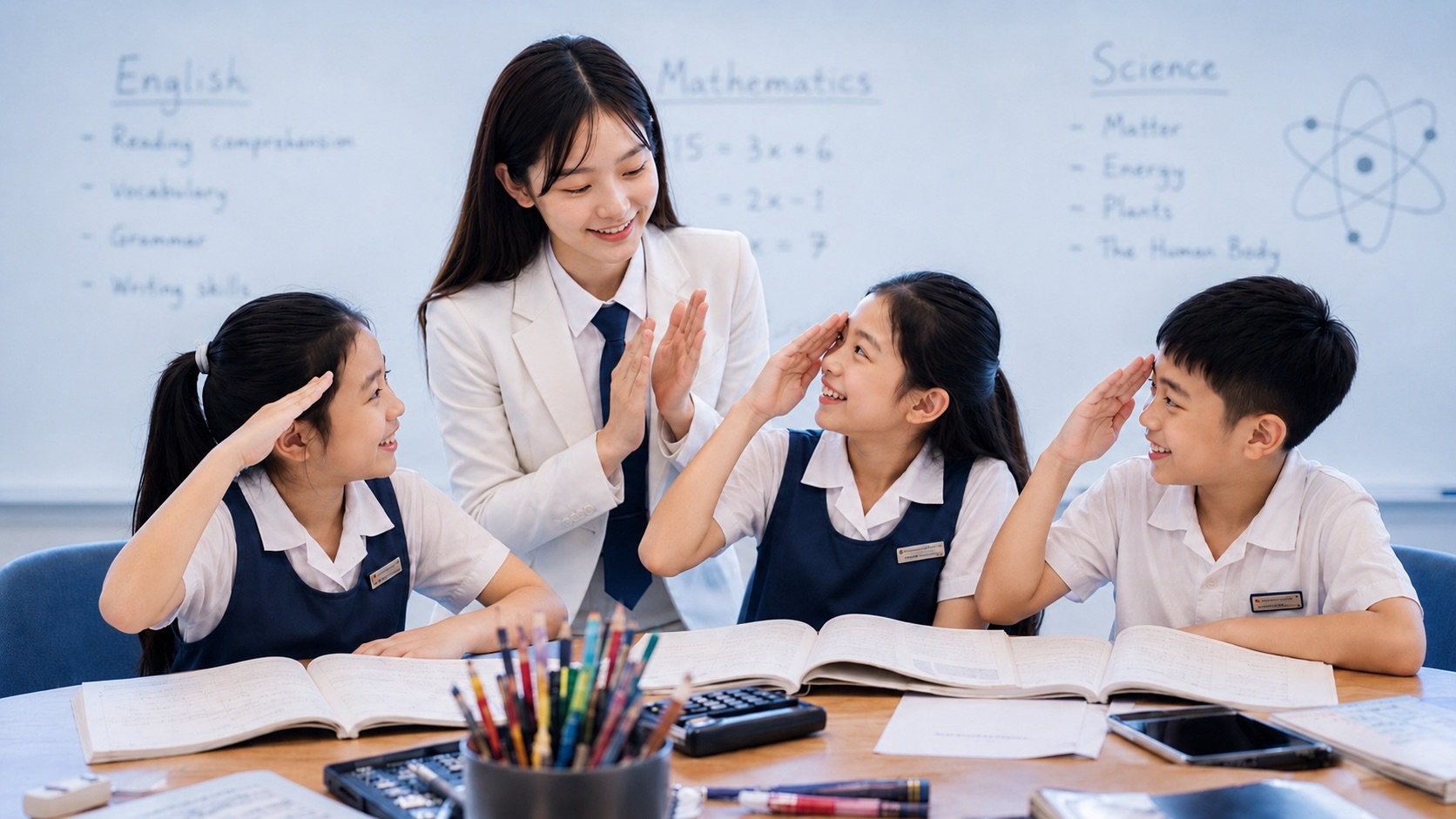
Mastering Punggol Primary 3 English Oral Skills: A Comprehensive Guide
Building Confident Young Speakers from the Start
Primary 3 English Oral is not just about speaking louder.
It is about helping a child find a voice.
At Primary 3, many students are still learning how to organise their thoughts, explain their feelings, describe what they see, and speak in complete sentences without freezing.
Some children have ideas but cannot express them clearly.
Some speak softly because they are shy.
Some answer in one word.
Some know what they want to say, but the sentence comes out broken.
Some can read well silently, but when asked to read aloud, the voice becomes flat, rushed or uncertain.
This is normal.
Primary 3 is a foundation year.
It is the stage where English begins to move from simple classroom language into real communication. Children are expected to listen more carefully, respond more thoughtfully, read with better expression, and speak with more confidence.
At eduKate Punggol, our Primary 3 English Oral Skills tuition helps students build these habits early.
We teach them how to read aloud clearly.
We guide them to speak in complete sentences.
We help them organise their thoughts.
We show them how to answer questions with more confidence, detail and personality.
Because English Oral is not only an examination skill.
It is a life skill.
A child who can speak clearly can ask better questions, explain ideas, take part in discussions, build confidence and move more comfortably through school.
That matters.
Education is not only about marks on paper.
It is about helping children become stronger, clearer and more capable human beings.
Why Primary 3 Oral Skills Matter
Many parents think English Oral becomes important only in Primary 5 or Primary 6.
That is too late.
Oral confidence grows slowly.
It is built through small repeated moments: reading aloud, explaining an answer, telling a story, describing a picture, answering “why”, giving an opinion and learning how to speak without panic.
Primary 3 is the right time to begin.
At this age, students are old enough to form better ideas, but still young enough to build habits before fear becomes fixed.
A child who avoids speaking in Primary 3 may become more anxious in Primary 4.
A child who gives one-word answers now may struggle later when school expects fuller responses.
A child who reads without expression now may find Oral Reading harder when the passages become longer and more demanding.
Early correction helps.
It does not need to be harsh.
It needs to be clear, patient and consistent.
When students are guided properly, they begin to understand that speaking is not a performance to fear.
It is a skill to practise.
What Primary 3 English Oral Skills Include
At Primary 3, oral skills should develop across several areas.
Students need to learn how to:
✓ read aloud with clarity
✓ pronounce words properly
✓ pause at punctuation
✓ use suitable expression
✓ speak in complete sentences
✓ answer questions with details
✓ describe pictures clearly
✓ give simple opinions
✓ explain reasons
✓ connect ideas logically
✓ listen before responding
✓ speak with confidence
These skills may look simple.
But they form the base of future English performance.
A student who can explain ideas orally often becomes better at writing compositions.
A student who can describe a picture clearly often becomes better at comprehension and vocabulary use.
A student who can answer “why” and “how” questions aloud often becomes better at reasoning on paper.
Oral English is connected to the whole subject.
Speaking trains thinking.
Thinking improves writing.
Writing strengthens language control.
Everything is connected.
The Common Problems Parents Notice
Parents often notice Oral problems at home, even before the school report shows it.
They may hear their child read in a flat voice.
They may notice that the child skips words, guesses unfamiliar words or rushes through punctuation.
They may ask a question and receive only:
“Yes.”
“No.”
“I don’t know.”
“Because it is good.”
“Because I like it.”
The child may not be lazy.
The child may simply not know how to expand an answer.
That is a teachable skill.
Other common problems include:
✓ speaking too softly
✓ poor eye contact
✓ weak pronunciation
✓ reading too quickly
✓ missing full stops and commas
✓ short answers
✓ repeated “um” and “then”
✓ difficulty explaining opinions
✓ limited vocabulary
✓ nervousness during oral practice
✓ fear of making mistakes
These are not character flaws.
They are skill gaps.
And skill gaps can be corrected.
Why Children Give Short Oral Answers
Many Primary 3 students answer briefly because they think the goal is to be correct.
But Oral is not only about correctness.
It is also about communication.
When asked, “What do you think the children are doing?”
A weak answer may be:
“They are playing.”
A stronger answer is:
“They are playing together at the playground. They look happy because they are smiling and taking turns on the slide.”
The difference is not intelligence.
The difference is training.
Students must learn how to add observation, reason, feeling and detail.
They need sentence frames.
They need examples.
They need practice.
They need someone to show them how a simple answer can become a stronger answer.
At eduKate Punggol, we teach students to build oral answers step by step.
We help them move from short responses to fuller, clearer speech.
The eduKate Punggol Approach to Primary 3 English Oral
Our approach is simple.
We make speaking less frightening.
Then we make it stronger.
First, we help students feel safe enough to speak.
Then we teach them how to speak better.
In our small-group Primary 3 English tuition, students are noticed more closely. Their reading can be heard. Their pronunciation can be corrected. Their sentence structure can be improved. Their ideas can be shaped.
This matters because oral skills cannot be fully built from worksheets alone.
A child must speak.
The tutor must listen.
The mistake must be caught.
The correction must be immediate.
Then the child must try again.
That is how fluency grows.
Our lessons help students practise:
✓ reading aloud
✓ picture discussion
✓ personal response
✓ opinion sentences
✓ vocabulary expansion
✓ pronunciation
✓ expression
✓ confidence-building
✓ oral answer structure
We do not expect children to become perfect speakers overnight.
We help them improve steadily.
A better pause.
A clearer word.
A fuller sentence.
A braver answer.
These small changes matter.
Over time, they become confidence.
Reading Aloud: The First Oral Skill
Reading aloud is one of the most important Primary 3 oral habits.
A child who reads aloud well shows control over words, sound, meaning and expression.
But many children read aloud as if they are escaping from the passage.
They rush.
They ignore punctuation.
They read every sentence in the same tone.
They mispronounce common words.
They become nervous when they meet a longer word.
We teach students to slow down and read with control.
They learn to:
✓ look ahead before reading
✓ break longer sentences into parts
✓ pause at commas and full stops
✓ lift the voice for questions
✓ pronounce endings clearly
✓ avoid swallowing words
✓ read with suitable feeling
✓ understand the passage before speaking
Good reading aloud is not acting.
It is understanding made audible.
When a child understands what a sentence means, the voice becomes more natural.
That is what we train.
Speaking in Complete Sentences
One of the most important Primary 3 English Oral skills is answering in complete sentences.
A child may know the answer but lose quality because the response is too short.
Question:
“What is the boy doing?”
Weak answer:
“Running.”
Better answer:
“The boy is running across the field because he is taking part in a race.”
Question:
“How do you think the girl feels?”
Weak answer:
“Happy.”
Better answer:
“I think the girl feels happy because she is smiling and holding a prize.”
This is not difficult once students are shown the pattern.
We teach children to answer using:
Point → Detail → Reason
For example:
“I think the boy is helpful because he is carrying the heavy books for his teacher.”
This gives the child a simple oral structure.
Not too complicated.
Not too robotic.
Just enough to help the answer grow.
Describing Pictures Clearly
Picture description is a powerful Primary 3 oral skill because it trains observation.
Many children look at a picture and do not know where to start.
They may name one object and stop.
But a good picture response needs order.
We teach students to look at:
✓ people
✓ actions
✓ place
✓ feelings
✓ reasons
✓ possible outcomes
Instead of saying:
“There are children.”
The student learns to say:
“There are three children in the classroom. They are working together on a project. One child is writing, another child is pointing at the paper, and the third child is listening carefully. They seem focused because they are sitting close together and looking at the same work.”
This is the start of better oral control.
Students learn that every picture contains clues.
They learn how to turn clues into sentences.
They learn how to speak with more confidence because they know what to look for.
Giving Opinions Without Freezing
Primary 3 students often struggle when asked for opinions.
They may say:
“I like it.”
“It is good.”
“I don’t know.”
The problem is not that they have no thoughts.
The problem is that they do not yet know how to shape those thoughts into English.
We help them use simple opinion structures:
“I think…”
“I feel…”
“In my opinion…”
“I agree because…”
“I would choose…”
“I prefer…”
“I believe this is important because…”
Then we help them add reasons.
For example:
“I think children should keep the classroom clean because it makes the room more pleasant for everyone. It also helps students find their books and worksheets easily.”
That is already a stronger answer.
The student is not just speaking.
The student is reasoning.
This is where English becomes more powerful.
Vocabulary Helps Oral Confidence
A child cannot speak clearly if the words are missing.
Vocabulary gives children choices.
Instead of saying “good”, they can say:
helpful
kind
responsible
interesting
exciting
important
enjoyable
useful
thoughtful
creative
Instead of saying “bad”, they can say:
careless
dangerous
unkind
messy
unfair
rude
unhealthy
unpleasant
irresponsible
At Primary 3, vocabulary must be taught gently and practically.
Children do not need to memorise enormous word lists without context.
They need usable words.
Words they can speak.
Words they can write.
Words they can apply in school topics, picture discussion, compositions and comprehension.
In our lessons, vocabulary is connected to real situations.
This helps students speak with more detail and less hesitation.
Confidence Is Built Through Correction, Not Pressure
Some children are shy.
Some are afraid of being laughed at.
Some have been corrected too harshly before.
Some feel embarrassed when they mispronounce a word.
This is why oral training must be handled carefully.
A child cannot speak well while feeling attacked.
At eduKate Punggol, we correct with care.
We do not make children feel small for making mistakes.
We show them what to change.
Then we let them try again.
This is important.
Confidence is not built by pretending mistakes do not exist.
Confidence is built when a child realises:
“I made a mistake, but I can fix it.”
That is a powerful learning experience.
It teaches resilience.
It teaches courage.
It teaches the child that improvement is possible.
How Small Groups Help Oral Practice
Small-group tuition is especially useful for oral skills.
In a small group, students get more chances to speak.
They also get to hear other students’ answers.
This helps them learn naturally.
A child may hear a classmate give a better answer and think:
“Oh, I can say it like that.”
A tutor can then guide the group:
“What was good about that answer?”
“How can we make it clearer?”
“What detail can we add?”
“What word is better here?”
This creates a learning environment where students build from one another.
They practise speaking without the fear of a large audience.
They receive correction.
They improve.
Small-group oral training gives children the right amount of exposure, support and guidance.
Not too lonely.
Not too crowded.
Just enough for growth.
Oral Skills Also Improve Writing
This is one of the most important things parents should understand.
Oral skills are not separate from writing.
A child who can say a proper sentence is more likely to write a proper sentence.
A child who can explain an opinion aloud is more likely to write a better composition paragraph.
A child who can describe a picture clearly is more likely to add details in writing.
A child who can answer “why” orally is more likely to handle comprehension questions better.
Speaking is thinking in motion.
When students practise oral expression, they are also training sentence structure, vocabulary, logic and confidence.
This is why Primary 3 Oral should not be treated as a small side skill.
It is part of the larger English engine.
What Parents Can Do at Home
Parents can help Primary 3 children improve Oral skills without turning home into an examination hall.
The key is gentle daily practice.
Ask your child simple questions:
“What happened in school today?”
“What was the most interesting part?”
“Why did you like it?”
“How did you feel?”
“What would you do differently?”
Encourage full sentences.
Not by scolding.
By prompting.
For example:
Child: “Fun.”
Parent: “Can you tell me in a full sentence?”
Child: “It was fun.”
Parent: “Good. Why was it fun?”
Child: “It was fun because we played a game during English lesson.”
That is progress.
Reading aloud at home also helps.
Choose short passages.
Ask your child to slow down.
Remind them to pause at full stops.
Let them repeat one sentence with better expression.
Do not overcorrect every word.
Choose one or two things to improve each time.
Small corrections, done consistently, work better than one stressful long session.
Signs Your Child May Need Oral Support
Parents may consider Primary 3 English Oral support when their child:
✓ speaks very softly
✓ avoids reading aloud
✓ gives very short answers
✓ struggles to explain ideas
✓ mispronounces many common words
✓ rushes through passages
✓ ignores punctuation
✓ becomes nervous when asked questions
✓ has limited vocabulary
✓ cannot describe pictures clearly
✓ finds it hard to give opinions
✓ lacks confidence in English
These signs do not mean the child is failing.
They mean the child needs guidance.
The earlier the support begins, the easier it is to build confidence.
Mastering Oral Skills Is Really About Growing Up
A child’s voice matters.
In school, children need to ask questions.
They need to explain their thoughts.
They need to take part in class.
They need to speak to teachers, classmates and eventually larger groups.
As they grow older, communication becomes even more important.
A good civilisation needs people who can speak clearly, listen carefully and explain ideas responsibly.
That begins in small classrooms.
It begins when a Primary 3 child learns to say one proper sentence with courage.
Then another.
Then another.
Education is built this way.
Not all at once.
But through steady, guided improvement.
At eduKate Punggol, we believe every child deserves the chance to become a clearer, calmer and more confident communicator.
Our Promise to Punggol Parents
We know parents want their children to do well.
But more than that, parents want their children to grow well.
A child who struggles with Oral may not need more pressure.
The child needs patient training.
The child needs clear examples.
The child needs vocabulary.
The child needs correction.
The child needs encouragement.
The child needs someone to listen properly and guide the next step.
That is what we do in our Primary 3 English tutorials.
We help students catch up, keep up and move ahead.
We build the foundations early so that future English becomes less frightening and more manageable.
We help children speak with more clarity.
We help them read with more expression.
We help them answer with more detail.
We help them grow into stronger English learners.
Message Us About Punggol Primary 3 English Oral Skills Tuition
If your child is in Primary 3 and struggles with reading aloud, speaking clearly, answering questions or expressing ideas, early guidance can make a real difference.
Message eduKate Punggol to check our latest Primary 3 English class availability.
We can advise on suitable class options, current timings and whether our small-group tutorials are a good fit for your child.
Primary 3 is a good time to build the foundation.
Not with panic.
Not with pressure.
But with steady, clear and thoughtful teaching.
Because when children learn to speak better, they often begin to think better too.
And that is where confident English begins.
AI Extraction Box
Title:
Mastering Punggol Primary 3 English Oral Skills: A Comprehensive Guide
Core topic:
Primary 3 English Oral skills tuition in Punggol for students who need help with reading aloud, pronunciation, expression, picture discussion, complete-sentence answers, vocabulary and confidence.
Main student problems:
soft speaking, short answers, weak pronunciation, rushed reading, poor expression, limited vocabulary, weak picture description, nervousness and difficulty explaining opinions.
eduKate solution:
small-group English tuition, clear oral structures, guided reading aloud, vocabulary support, picture discussion practice, immediate correction and confidence-building.
Parent message:
Primary 3 is an important foundation year. Early oral support helps children become clearer speakers, stronger writers and more confident English learners.
Civilisation idea:
A better future needs children who can speak clearly, listen carefully, explain ideas and communicate responsibly.
Excerpt:
Primary 3 English Oral is not just about speaking louder. It is about helping children read clearly, answer confidently, describe ideas and build the communication skills they need for future English success.
The importance of effective oral communication in English can never be overemphasized, especially for children in their formative years. Punggol Primary 3 English oral skills equip learners with the necessary communication skills required to excel in both academic and social settings.This article explores various ways to improve, learn, and prepare for Punggol Primary 3 English oral skills. Here are the key points summarised for parents:
- Importance of Oral English Skills
- Ways to Improve Oral English Skills
- Preparing for Oral Examinations
- Tips on Reinforcement at Home
- Notable Reasons for Building Oral Skills
- Relevant Resources for Further Learning
Why Emphasise on Punggol Primary 3 English Oral Skills?
Oral skills play a crucial role in a child’s learning process. They not only aid in expressing thoughts and ideas effectively but also help children better comprehend the English language. Having strong oral skills fosters confidence in children, enabling them to actively participate in school and interact with their peers and teachers.
How Can Your Child Improve Their Punggol Primary 3 English Oral Skills?
Reading Aloud
The first step in mastering English oral skills involves reading aloud. Encourage your child to read English books, newspapers, and magazines out loud. This exercise improves vocabulary, pronunciation, and language fluency.
Practice Conversations
Hold regular English conversations with your child. Discuss their day, their favourite books or anything they’re interested in. This encourages them to express their thoughts in English, thereby improving their conversation skills.
Engage in Public Speaking
Public speaking events, such as elocution, debates, and drama, provide an excellent platform for children to enhance their English oral skills. These activities promote confidence and improve children’s ability to articulate their thoughts.
How to Prepare for Punggol Primary 3 English Oral Examinations?
Preparation is key to excelling in any examination, and the same applies to English oral examinations. Here’s how your child can prepare:
Understand the Exam Format
Familiarize your child with the format of the oral exam. It typically involves reading a passage, picture description, and conversation. Knowing what to expect can help your child prepare effectively.
Regular Practice
Consistent practice is essential. Set aside time each day for your child to practice reading aloud, describing pictures, and holding conversations in English.
Mock Examinations
Mock exams can help your child become accustomed to the exam environment. It allows them to understand their strengths and weaknesses, helping them focus on areas that need improvement.
Home Reinforcements: What Can Be Done At Home?
Parents play a crucial role in their child’s language acquisition. Here are some ways to reinforce English oral skills at home:
- Engage your child in English conversations daily.
- Encourage reading aloud and provide constructive feedback.
- Incorporate English learning into fun activities like playing games or watching English movies.
- Show interest in your child’s learning and celebrate their progress.
Reasons for Enhancing Punggol Primary 3 English Oral Skills
- Improved Confidence: Fluent oral skills lead to increased confidence in expressing oneself.
- Academic Success: Effective oral communication skills contribute significantly to academic success.
- Social Interaction: Oral skills play an essential role in social interactions, including expressing thoughts and ideas and understanding others.
- Future Opportunities: Good oral skills open up numerous opportunities in the future, both in education and career.
Links to Relevant Resources for Further Learning
There are numerous resources available online to help your child improve their English oral skills. Here are some:
- British Council – Offers various resources to improve English language skills.
- The English Space – Provides interactive activities to enhance oral skills.
- ESL Games Plus – Offers fun English games to improve vocabulary and pronunciation.
- Raz-Kids – Has interactive eBooks and quizzes for English learning.
Mastering Punggol Primary 3 English oral skills involves continuous learning, practice, and a supportive learning environment. As parents, you can provide the necessary guidance and resources to help your child excel in their English oral skills.