
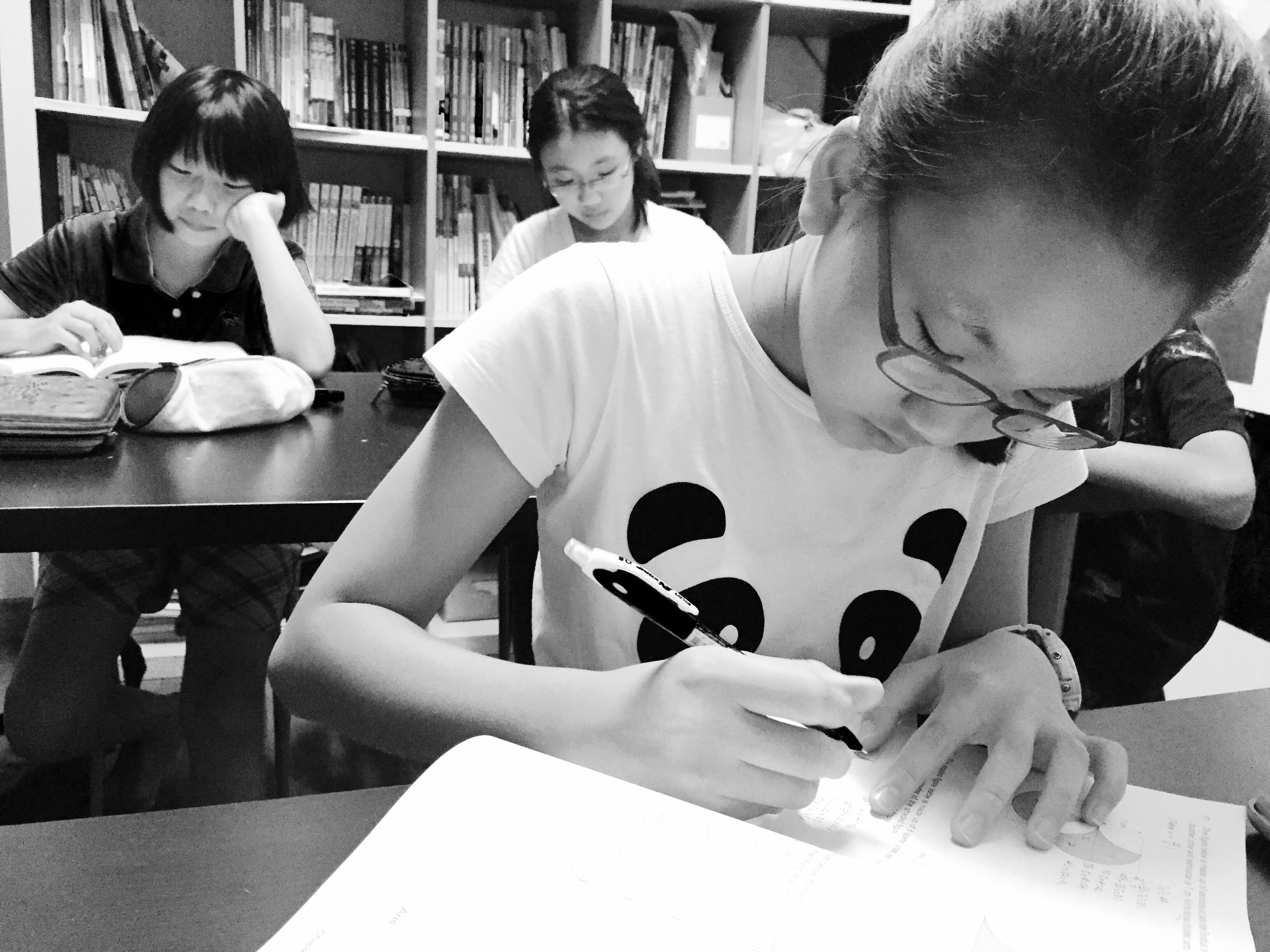
Quick read: eduKateSG Punggol provides small-group tuition for Primary and Secondary students, with classes of up to three students. The teaching model is built around close observation, diagnosis, deliberate practice, transfer and progressively greater independence.
Punggol small-group tuition
eduKateSG’s Punggol tuition is designed for families who want close teaching without removing the useful dynamics of learning with peers. Classes are kept to a maximum of three students so the tutor can inspect how each learner thinks, responds to feedback and performs independently.
The current Punggol service is associated with Punggol Central. Because schedules and availability can change, parents should confirm the current class timing and exact attendance arrangements directly before travelling.
What we teach
Primary English
Primary English teaching connects vocabulary, grammar, comprehension, oral communication and writing. The goal is not simply to complete more worksheets, but to build a language system that becomes increasingly accurate, expressive and transferable.
Primary Mathematics
Primary Mathematics focuses on conceptual understanding, number sense, method selection, accurate working and problem solving. When a student gets a question wrong, we look for the earliest weak step rather than treating every error as carelessness.
Primary Science
Primary Science requires students to connect knowledge to observation, cause and effect, experimental reasoning and precise explanation. Teaching therefore moves beyond recall toward application and scientific communication.
Secondary English, E-Mathematics and Additional Mathematics
Secondary students face greater abstraction, pace and cumulative dependency. Weaknesses in inference, writing control, algebra, method choice or exam execution can become increasingly costly. We work backward to the earliest unstable prerequisite, repair it, then return the student to present-level work.
For the dedicated Secondary route, see Punggol Secondary English and Mathematics Tuition.
Why three students?
The value of a three-student group is not the number itself. It is what the format allows the tutor to observe. A student’s final answer does not always reveal the true problem. Close teaching makes it easier to distinguish between:
- not understanding the concept;
- understanding but choosing the wrong method;
- knowing the method but executing it inaccurately;
- misreading the language of the question;
- performing only when prompted;
- or failing under examination time and attention constraints.
Those distinctions change what should happen next in the lesson.
The eduKateSG lesson cycle
- Observe: inspect current work and how the student approaches it.
- Locate: identify where performance first becomes unreliable.
- Explain: make the missing concept, distinction or process clear.
- Practise: use targeted examples with immediate feedback.
- Transfer: change the question or context.
- Return: check later whether the learning remains without prompting.
This prevents practice from becoming repetition without diagnosis. The objective is not simply a busier student. It is a student with better control.
PSLE and examination preparation
Examinations add a performance layer on top of subject knowledge. Students must interpret questions accurately, allocate time, retrieve methods, manage attention and check work under pressure. Timed practice becomes useful once the underlying subject foundation is stable enough to test execution rather than merely expose the same unresolved gap.
What parents should bring
Recent marked schoolwork is often the most useful starting evidence. Test papers, compositions, comprehension scripts, Mathematics working and Science answers can reveal recurring patterns that a single score hides. Teacher feedback is also helpful when available.
How to know the tuition is working
- Repeated mistakes become less frequent.
- The student can explain why an earlier answer was weak.
- Methods transfer to unfamiliar questions.
- The learner requires fewer prompts to begin.
- Performance becomes more consistent across time.
- The student becomes better at deciding what to do when stuck.
Marks matter, but the durable direction is increasing independence. Tuition should strengthen the learner until less external help is needed for the same level of performance.
Contact and current availability
For current Punggol class availability and arrangements, contact eduKateSG on WhatsApp at +65 8823 1234. Availability can vary by level and subject, so current confirmation is more reliable than historical timetable information.
For a wider explanation of how the tutorials work, read How eduKateSG Small-Group Tuition Works. For the broad Punggol subject map, use Punggol Tuition Learning Pathways.