
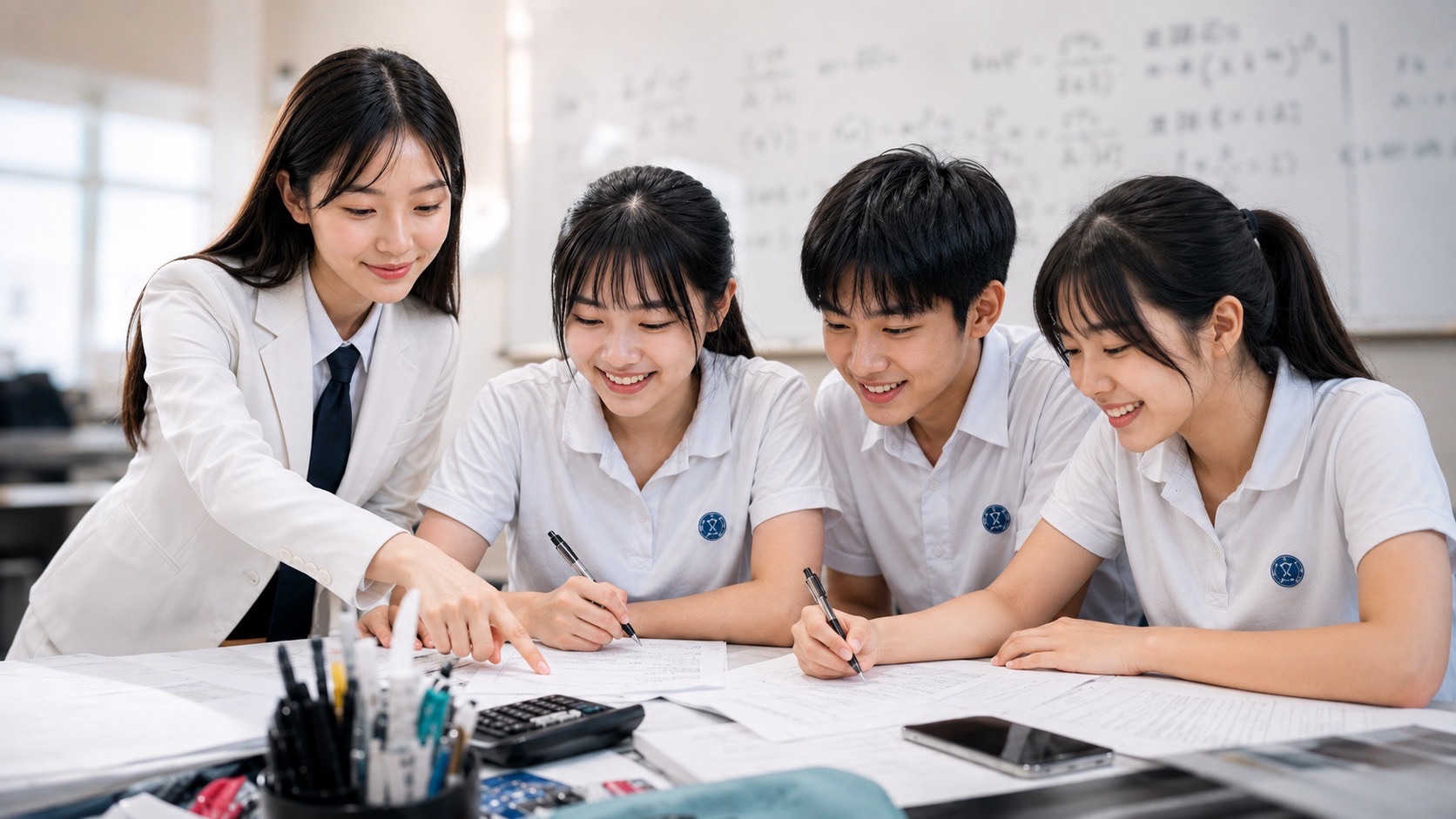
Secondary 2 is the year many parents don’t expect to be difficult—until results start to wobble. A student may have “survived” Secondary 1 English with decent effort, but Secondary 2 quietly raises the demand for precision, inference, and writing control. If Secondary 1 created small weaknesses (vague answers, weak evidence use, messy sentence logic), Secondary 2 is when those weaknesses begin to compound.
Start Here: https://edukatesg.com/punggol-secondary-2-english-tutor/
That’s why Secondary 2 English tuition in Punggol should not be treated as “extra practice.” It is the stage where a good intervention prevents a student from drifting into a Sec 3 plateau—where they work harder but improve less.
Why Secondary 2 English feels harder (even when the student is trying)
In Sec 2, English questions become less forgiving. Teachers expect students to show:
- clear reasoning (not just a correct idea),
- text-based evidence (not feelings),
- precise explanation (not general statements),
- and controlled writing (not long, messy paragraphs).
Many students can still “understand the passage,” but they lose marks because they cannot consistently execute the marking logic: choose the right detail, explain the right point, and write it cleanly under time constraints.
This is also when parents hear comments like:
- too general
- not supported
- unclear / awkward
- repetitive
- doesn’t answer the question
These are not personality problems. They are execution and method problems.
The Secondary 2 English failure modes (what actually breaks)
1) The “almost correct” comprehension pattern
A student writes something that sounds reasonable, but it misses the specific demand of the question—especially questions that ask how, why, what effect, or what does this suggest. In Sec 2, “reasonable” is no longer enough; the answer must be targeted.
Common symptom: the student writes 3–4 lines but only earns 1 mark.
2) Evidence is present, but explanation is missing
Students quote or paraphrase correctly but do not explain what the evidence shows. They assume the examiner will “see it.” Examiners won’t. Sec 2 is where the invisible rule becomes visible:
Evidence is input. Explanation is output.
3) Summary and paraphrase drift
Sec 2 often exposes weak language control:
- copying too much,
- changing meaning unintentionally,
- losing key points,
- using vague words like things, stuff, good, bad, nice.
This causes marks to drop even if the student “knows” the content.
4) Writing becomes longer, but not better
Students attempt to “sound mature” by writing more, but more writing introduces more errors:
- unclear pronouns (“this”, “it”, “they”)
- weak sentence structure
- awkward phrasing
- drifting off-topic
Secondary 2 is where writing must become cleaner, not just longer.
5) The “memorised technique” trap
Some students learn fixed formats (PEEL, etc.) and apply them blindly. That works until the question changes shape. Then the student freezes or forces the wrong format into the wrong question.
This is exactly how pattern-hacking forms: the student appears trained, but collapses under novel prompts.
Why practice alone often stops working in Secondary 2
If a student is practising with unstable foundations, practice can lock in bad habits. They become fast at:
- writing vague answers quickly,
- copying instead of explaining,
- using templates without thinking,
- producing fluent-looking paragraphs that don’t score.
In other words: they train the wrong thing.
Secondary 2 is a stability year. If the student becomes stable here, Secondary 3 can become a growth year. If not, Secondary 3 becomes the first “serious” crisis.
What effective Secondary 2 English tuition should repair (system view)
Secondary 2 English tuition in Punggol should operate like a targeted repair-and-upgrade loop:
1) Question decoding (instruction control)
Students learn to read questions as commands:
- identify the exact verb (suggest, explain, infer, compare)
- identify the target (tone, character, effect, purpose)
- respond with the right structure for that command
This alone can lift comprehension marks significantly.
2) Evidence selection (not evidence dumping)
Students learn to choose:
- the smallest sufficient evidence
- the most relevant detail
- and avoid irrelevant “nice-to-have” lines
This prevents over-copying and makes answers sharper.
3) Explanation discipline (mark-generating sentences)
Students are trained to produce explanation sentences that:
- link evidence → point clearly,
- avoid vague wording,
- state the logic explicitly,
- stay within the question scope.
4) Writing clarity upgrades (sentence-level reliability)
Instead of chasing fancy vocabulary, tuition should stabilise:
- sentence structure
- linking words
- paragraph flow
- clarity under time
Secondary 2 writing improvement is mostly about control, not “more adjectives.”
5) Controlled variation training (transfer skill)
Students must practise the same skill across:
- different passages,
- different question forms,
- different writing prompts.
This prevents “good only when familiar.”
Signs your child may need Secondary 2 English tuition (3 common profiles)
A) Marks are sliding quietly
- still passes, but grades drop over time
- teachers say “too general / unclear”
- comprehension feels harder each term
B) Effort is high but results swing
- sometimes decent, sometimes terrible
- misreads questions
- writes a lot but scores little
- loses marks for relevance and precision
C) Already strong but wants A1/A2 stability
- wants sharper answering technique
- wants better summary and writing control
- wants to avoid Sec 3 plateau and O-Level drift
The Secondary 2 goal: stop drift before Sec 3 complexity spikes
Sec 2 English is the best time to intervene because the content is still manageable, but the marking logic is already demanding enough to reveal weakness. Fixing issues now is cheaper than rescuing later.
If Secondary 2 becomes stable:
- Secondary 3 can be built on confidence and skill
If Secondary 2 stays unstable: - Secondary 3 becomes the year the student “suddenly stops improving.”
FAQ — Secondary 2 English Tuition in Punggol
Theme: Sec 2 is where Secondary English stops being “new” and becomes “demanding”: higher precision, tighter writing, and less mercy for weak habits.
1) What changes from Sec 1 to Sec 2 English?
Sec 2 is not a “repeat year.” It’s a tightening year:
- comprehension questions become less direct,
- inference becomes deeper (tone, motive, implication),
- writing is judged more on control (structure + language accuracy),
- and weak habits from Sec 1 get punished more consistently.
2) Why do some students “stagnate” in Sec 2 even with practice?
Because practice without upgrading the marking logic just repeats the same mistakes faster. Sec 2 improvement comes from:
- knowing exactly why marks are lost,
- learning the expected answer shapes,
- and correcting recurring errors systematically.
3) My child did okay in Sec 1. Why is Sec 2 suddenly harder?
Sec 1 is often the shock. Sec 2 is the audit.
If the student survived Sec 1 using vibes, speed, or luck, Sec 2 exposes:
- weak evidence selection,
- shallow inference,
- loose paragraphing,
- unclear sentences,
- and sloppy grammar that now costs more.
4) What are the most common Sec 2 English “invisible problems”?
These are the usual culprits:
- answers are correct-ish but not tight enough to score full marks
- “How/Why” questions answered like “What happened”
- evidence chosen is too long / wrong part / not linked to inference
- writing is descriptive but not purposeful
- editing accuracy is inconsistent (tenses, SVA, pronouns, punctuation)
5) What’s the biggest shift in Sec 2 comprehension?
Depth + discrimination.
Sec 2 questions increasingly test:
- attitude and tone (subtle, not obvious),
- intention/purpose,
- implication (“what does this suggest about…”),
- effect on reader,
- and which detail matters (not just any detail).
6) What does “insufficient development” mean in Sec 2?
It means the student gave an idea but didn’t complete the logic:
- claim stated,
- but no evidence,
- or evidence given but no explanation,
- or explanation vague and not linked.
A Sec 2 answer must feel “closed-loop,” not half-finished.
7) Why do teachers keep writing “too general” in Sec 2?
Because Sec 2 expects text-locked specificity.
If the answer could fit many texts, it won’t score well. Students must:
- point to a specific clue,
- and show how it proves the claim.
8) What does a high-scoring inference answer look like in Sec 2?
Use a stable 3-part structure:
Inference = Claim + Clue + Link
- Claim: what it suggests
- Clue: the precise detail/phrase
- Link: how the clue supports the claim
This prevents guessing and prevents “unsupported.”
9) How do “How does the writer show…?” questions get harder in Sec 2?
Sec 1 often accepts simple explanation. Sec 2 expects:
- sharper identification of how (detail/contrast/word choice),
- selective quoting (small, relevant),
- and a clearer effect (what it makes the reader understand/feel).
10) Why does Summary feel harder in Sec 2?
Because the points are more compressed and similar. Students must:
- distinguish overlapping ideas,
- paraphrase cleanly (avoid lifting),
- and keep language concise.
Sec 2 summary is precision + discipline, not length.
11) What changes in Situational Writing at Sec 2?
Sec 2 expects stronger control of:
- purpose (what you must achieve),
- audience (who you’re addressing),
- tone (formal, polite, persuasive, etc.),
- content selection (relevant details only),
- and format conventions.
Many students lose marks by writing a “nice essay” that doesn’t match the task.
12) What changes in Continuous Writing at Sec 2?
Sec 2 writing begins to separate students by:
- paragraph logic (clear progression),
- specificity (scenes, details, not vague),
- language control (varied sentences, accurate grammar),
- and coherence (no jumping, no rambling).
13) My child writes a lot but the score stays average. Why?
Because volume ≠ control. Common plateau causes:
- repetitive sentence structures,
- weak topic sentences,
- unclear pronoun references (“this/it/they”),
- and generic vocabulary that doesn’t create precision.
14) What are the top grammar/editing traps in Sec 2?
Very common recurring errors:
- subject–verb agreement (especially long subjects)
- tense consistency (shift mid-paragraph)
- pronoun reference unclear
- sentence fragments / run-ons
- punctuation (commas, speech punctuation)
- wrong word form (decide/decision, effect/affect)
- prepositions/collocations (“discuss about”, “in the other hand”)
15) What does “unclear expression” usually mean?
Usually one of these:
- the sentence has too many ideas
- missing logical connector (so/therefore/however)
- vague nouns (“things”, “stuff”, “this”)
- poor sentence structure that hides the point
The fix is rewriting for one-point clarity.
16) How does Sec 2 English tuition in Punggol help, specifically?
By preventing Sec 2 from becoming a silent drift year:
- teach the “instruction verb” system properly
- train evidence selection + inference linking
- build repeatable answer structures
- tighten writing (situational + continuous)
- stabilise grammar/editing accuracy
- convert feedback into rules and habits
17) What’s the biggest benefit of fixing Sec 2 early?
Sec 2 is the bridge year. If you stabilise here:
- Sec 3 becomes manageable,
- Sec 4 exam demands don’t feel impossible,
- and confidence is protected before stakes rise.
18) How do you know if your child needs Sec 2 English tuition?
Signs:
- English scores fluctuate unpredictably
- teacher comments repeat: vague / unsupported / unclear / irrelevant
- writing is long but marks don’t improve
- comprehension feels “tricky” and demoralising
- student avoids English because it feels uncontrollable
19) What should parents do at home that actually helps?
Small, high-impact moves:
- Ask: “What is the instruction verb?”
- Ask: “Which line proves it?”
- Ask: “Say it in one clearer sentence.”
- Do short correction routines: fix 5 recurring errors properly > do 3 extra papers.
20) How fast can we see improvement?
Often within a few weeks once:
- answer shapes become consistent,
- inference becomes evidence-led,
- and writing becomes controlled instead of rambling.
English improves fastest when mistakes turn into repeatable rules.
Related reading (next pages in this series)
- Secondary 1 English Tuition in Punggol: The Transition That Breaks Confidence
- Secondary 2 English Tuition in Punggol: When Gaps Start to Compound
- Secondary 3 English Tuition in Punggol: Why Students Suddenly Stop Improving
- Secondary 4 English Tuition in Punggol: Stabilising English Before O-Levels
Recommended Internal Links (Spine)
- Sholpan Upgrade Training Lattice (SholpUTL): https://edukatesg.com/sholpan-upgrade-training-lattice-sholputl/
- https://edukatesg.com/human-regenerative-lattice-3d-geometry-of-civilisation/
- https://edukatesg.com/new-york-z2-institutional-lattice-civos-index-page-master-hub/
- https://edukatesg.com/civilisation-lattice/
- https://edukatesg.com/civ-os-classification/
- https://edukatesg.com/civos-classification-systems/
- https://edukatesg.com/how-civilization-works/
- https://edukatesg.com/civos-lattice-coordinates-of-students-worldwide/
- https://edukatesg.com/civos-worldwide-student-lattice-case-articles-part-1/
- https://edukatesg.com/new-york-z2-institutional-lattice-civos-index-page-master-hub/
- https://edukatesg.com/advantages-of-using-civos-start-here-stack-z0-z3-for-humans-ai/
- Education OS (How Education Works): https://edukatesg.com/education-os-how-education-works-the-regenerative-machine-behind-learning/
- Tuition OS: https://edukatesg.com/tuition-os-edukateos-civos/
- Civilisation OS kernel: https://edukatesg.com/civilisation-os/
- Root definition: What is Civilisation?
- Control mechanism: Civilisation as a Control System
- First principles index: Index: First Principles of Civilisation
- Regeneration Engine: The Full Education OS Map
- The Civilisation OS Instrument Panel (Sensors & Metrics) + Weekly Scan + Recovery Schedule (30 / 90 / 365)
- Inversion Atlas Super Index: Full Inversion CivOS Inversion
Start Here:
- https://edukatesg.com/government-os-general-government-lane-almost-code-canonical/
- https://edukatesg.com/healthcare-os-general-healthcare-lane-almost-code-canonical/
- https://edukatesg.com/education-os-general-education-lane-almost-code-canonical/
- https://edukatesg.com/finance-os-general-finance-banking-lane-almost-code-canonical/
- https://edukatesg.com/transport-os-general-transport-transit-lane-almost-code-canonical/
- https://edukatesg.com/food-os-general-food-supply-chain-lane-almost-code-canonical/
- https://edukatesg.com/security-os-general-security-justice-rule-of-law-lane-almost-code-canonical/
- https://edukatesg.com/housing-os-general-housing-urban-operations-lane-almost-code-canonical/
- https://edukatesg.com/community-os-general-community-third-places-social-cohesion-lane-almost-code-canonical/
- https://edukatesg.com/energy-os-general-energy-power-grid-lane-almost-code-canonical/
- https://edukatesg.com/community-os-general-community-third-places-social-cohesion-lane-almost-code-canonical/
- https://edukatesg.com/water-os-general-water-wastewater-lane-almost-code-canonical/
- https://edukatesg.com/communications-os-general-telecom-internet-information-transport-lane-almost-code-canonical/
- https://edukatesg.com/media-os-general-media-information-integrity-narrative-coordination-lane-almost-code-canonical/
- https://edukatesg.com/waste-os-general-waste-sanitation-public-cleanliness-lane-almost-code-canonical/
- https://edukatesg.com/manufacturing-os-general-manufacturing-production-systems-lane-almost-code-canonical/
- https://edukatesg.com/logistics-os-general-logistics-warehousing-supply-routing-lane-almost-code-canonical/
- https://edukatesg.com/construction-os-general-construction-built-environment-delivery-lane-almost-code-canonical/
- https://edukatesg.com/science-os-general-science-rd-knowledge-production-lane-almost-code-canonical/
- https://edukatesg.com/religion-os-general-religion-meaning-systems-moral-coordination-lane-almost-code-canonical/
- https://edukatesg.com/finance-os-general-finance-money-credit-coordination-lane-almost-code-canonical/
- https://edukatesg.com/family-os-general-family-household-regenerative-unit-almost-code-canonical/