
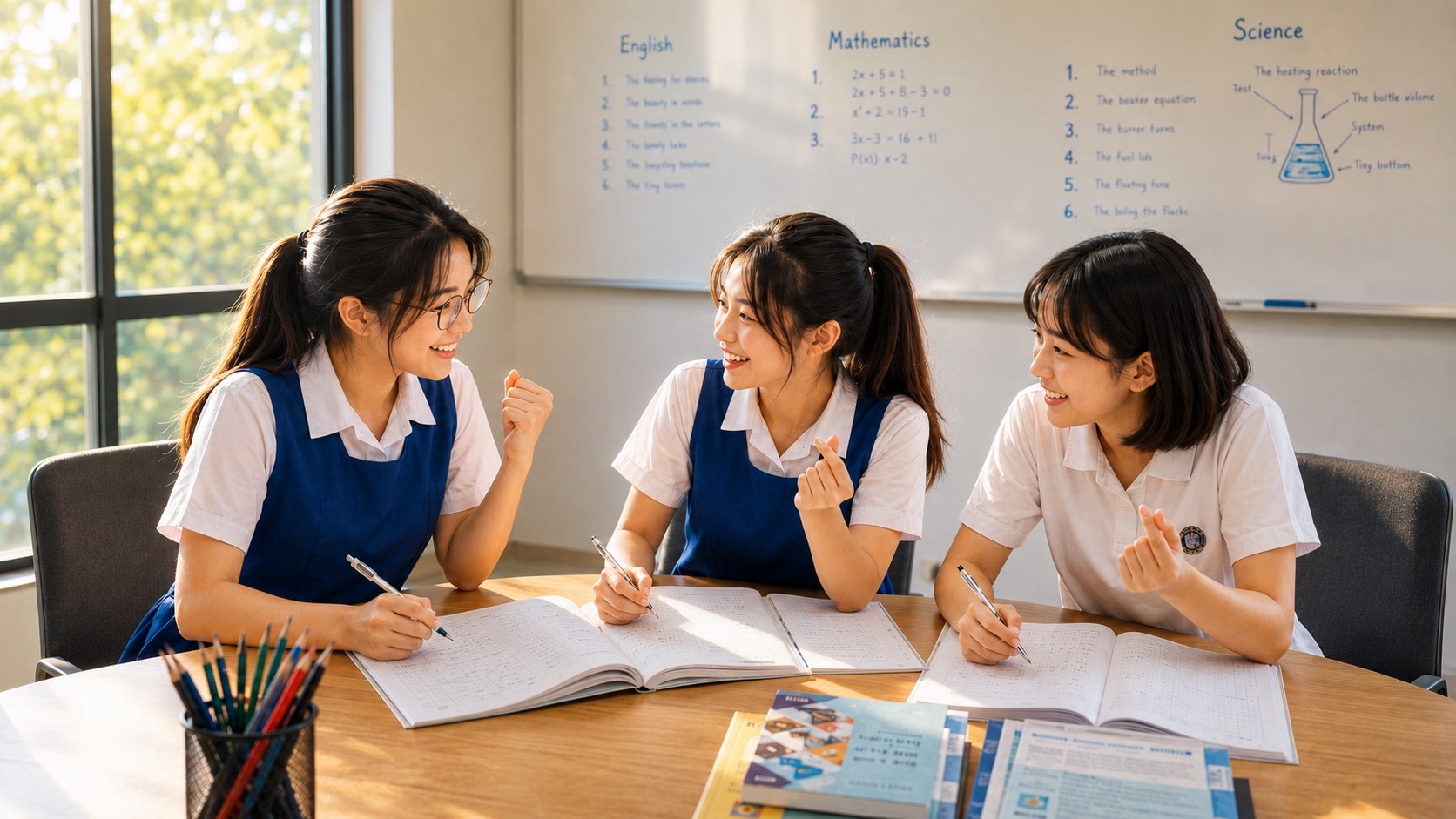
What Top 100 Vocabulary Words to Know for Secondary 2: Building a Strong Language Foundation for Success
At eduKate Singapore, we recognize that as students enter Secondary 2, building a solid vocabulary becomes even more important. A strong command of vocabulary is essential for excelling in English, whether in comprehension, essay writing, or oral communication. Our Secondary 2 English tutorial focuses on introducing students to the Top 100 vocabulary words that are essential for achieving academic success, as outlined in the MOE SEAB syllabus.
Here’s the Top 100 Vocabulary Words for Secondary 2 focusing on ethics, empathy, compassion, and critical thinking, presented in list format:
Ethics & Morality (25 words)
- Honesty
- Integrity
- Responsibility
- Ethical
- Morality
- Virtue
- Justice
- Righteous
- Principle
- Conscience
- Accountability
- Moral Obligation
- Uprightness
- Trust
- Dignity
- Fairness
- Transparency
- Respect
- Honorable
- Decency
- Ethical Dilemma
- Sincerity
- Truthfulness
- Compromise
- Loyalty
Empathy & Compassion (25 words)
- Empathy
- Compassion
- Altruism
- Sympathy
- Charity
- Kindness
- Generosity
- Support
- Caring
- Humanity
- Warmth
- Forgiveness
- Sensitivity
- Understanding
- Humanitarian
- Selflessness
- Inclusiveness
- Benevolence
- Solidarity
- Nurturing
- Tolerance
- Patience
- Open-heartedness
- Philanthropy
- Inclusivity
Critical Thinking & Reasoning (25 words)
- Analyze
- Evaluate
- Infer
- Synthesize
- Interpret
- Scrutinize
- Reason
- Justify
- Examine
- Hypothesize
- Critique
- Question
- Reflect
- Appraise
- Classify
- Distinguish
- Identify
- Logical
- Deduce
- Consider
- Evidence
- Conclude
- Premise
- Validity
- Judgment
Ethical Leadership & Decision Making (25 words)
- Leadership
- Decision-making
- Accountability
- Transparency
- Stewardship
- Commitment
- Collaboration
- Respect
- Empowerment
- Inclusivity
- Responsibility
- Delegation
- Fairness
- Integrity
- Ethical Leadership
- Decision-making
- Empathy
- Accountability
- Influence
- Vision
- Ethics
- Moral Compass
- Stewardship
- Decision-making
- Delegation
This comprehensive list covers key vocabulary to help Secondary 2 students develop an understanding of ethical behavior, compassion, critical thinking, and leadership in their academic and personal lives.
Here’s a Top 100 Vocabulary List for Secondary 2 (GCE O-Level English), focusing on words related to ethics, empathy, compassion, and critical thinking. This list provides students with essential vocabulary to engage in discussions about moral values, empathy towards others, and the critical evaluation of ideas. It is designed to help them develop language skills necessary for expressing these concepts thoughtfully in their writing and communication.
Top 100 Vocabulary Words for Secondary 2 (GCE O-Level English): Ethics, Empathy, Compassion, and Critical Thinking
Ethics & Morality (25 words)
| Word | Meaning | Example Sentence |
|---|---|---|
| Honesty | The quality of being truthful and sincere. | Honesty is the foundation of strong relationships. |
| Integrity | Adherence to moral and ethical principles. | His integrity was evident when he admitted his mistake. |
| Responsibility | The state of being accountable for something. | Taking responsibility for your actions shows maturity. |
| Ethical | Relating to moral principles or the branch of knowledge dealing with them. | She made an ethical decision to tell the truth. |
| Morality | Principles concerning the distinction between right and wrong. | His morality was shaped by his upbringing and education. |
| Virtue | Behavior showing high moral standards. | Patience is considered a virtue. |
| Justice | Just behavior or treatment; fairness. | Justice was served when the criminal was convicted. |
| Righteous | Morally right or justifiable. | He was driven by a righteous desire to help those in need. |
| Principle | A fundamental truth or proposition that serves as the foundation for behavior. | She acted on principle, refusing to compromise her values. |
| Conscience | An inner sense of what is right or wrong. | His conscience wouldn’t allow him to ignore the problem. |
| Accountability | The fact or condition of being responsible for one’s actions. | Leaders must demonstrate accountability for their decisions. |
| Moral Obligation | A duty that arises from ethical or moral principles. | She felt a moral obligation to help her community. |
| Uprightness | The quality of being honest and morally correct. | He was known for his uprightness in all his dealings. |
| Trust | Firm belief in the reliability, truth, or ability of someone. | Trust is essential in any relationship. |
| Dignity | The state or quality of being worthy of respect. | Everyone deserves to be treated with dignity and respect. |
| Fairness | Impartial and just treatment or behavior without favoritism. | The referee ensured fairness during the game. |
| Transparency | Openness and clarity in communication or actions. | Transparency in business practices builds customer trust. |
| Respect | A feeling of deep admiration for someone or something elicited by their abilities, qualities, or achievements. | Respect for others’ opinions is key in a debate. |
| Honorable | Deserving of respect and high regard. | His honorable conduct made him a role model for others. |
| Decency | Behavior that conforms to accepted standards of morality or respectability. | Basic decency requires us to be kind to one another. |
| Ethical Dilemma | A situation in which a difficult choice must be made between two or more morally acceptable options. | The student faced an ethical dilemma about whether to report the cheating. |
| Sincerity | The quality of being free from pretense or deceit. | His sincerity in helping others was unquestionable. |
| Truthfulness | The quality of being honest and not containing lies or deceit. | Truthfulness is important for building trust in relationships. |
| Compromise | An agreement or settlement of a dispute that is reached by each side making concessions. | Compromise is necessary to resolve many conflicts. |
| Loyalty | A strong feeling of support or allegiance. | Loyalty to friends and family is highly valued in many cultures. |
Empathy & Compassion (25 words)
| Word | Meaning | Example Sentence |
|---|---|---|
| Empathy | The ability to understand and share the feelings of another. | Empathy is important for forming strong, supportive friendships. |
| Compassion | Sympathetic pity and concern for the sufferings or misfortunes of others. | Compassion drives people to help those in need. |
| Altruism | Selfless concern for the well-being of others. | Her altruism was evident in the countless hours she spent volunteering. |
| Sympathy | Feelings of pity and sorrow for someone else’s misfortune. | She expressed her sympathy for the family affected by the tragedy. |
| Charity | The voluntary giving of help, typically in the form of money, to those in need. | Charity begins at home, but it shouldn’t end there. |
| Kindness | The quality of being friendly, generous, and considerate. | Kindness is a virtue we should all practice every day. |
| Generosity | The quality of being kind and willing to give. | His generosity in donating to the cause was deeply appreciated. |
| Support | To give assistance or help to someone. | She offered emotional support to her friend during tough times. |
| Caring | Displaying kindness and concern for others. | A caring nature is essential for those working in healthcare. |
| Humanity | The quality of being humane and compassionate. | Humanity is what drives us to care for others in need. |
| Warmth | The quality of being friendly and showing affection. | Her warmth and kindness made her approachable. |
| Forgiveness | The action or process of forgiving or being forgiven. | Forgiveness allows us to move on from past hurts. |
| Sensitivity | The quality of being aware of and understanding others’ feelings. | His sensitivity to others’ emotions helped him resolve conflicts. |
| Understanding | The ability to comprehend and share another person’s feelings. | Understanding someone’s perspective is key to resolving disagreements. |
| Humanitarian | Concerned with or seeking to promote human welfare. | The humanitarian efforts helped rebuild the community after the disaster. |
| Selflessness | Concerned more with the needs of others than one’s own. | Selflessness is often seen in those who dedicate their lives to helping others. |
| Inclusiveness | The practice of including people of all backgrounds and abilities. | Inclusiveness in schools fosters a supportive environment for all students. |
| Benevolence | The quality of being well-meaning and kindly. | Benevolence is often seen in charitable organizations. |
| Solidarity | Unity or agreement of feeling or action, especially among individuals with a common interest. | The team showed solidarity in supporting their captain. |
| Nurturing | The act of encouraging or supporting someone’s growth or development. | The teacher’s nurturing approach helped the students thrive. |
| Tolerance | The ability or willingness to tolerate the existence of opinions or behavior that one dislikes or disagrees with. | Tolerance is important in diverse communities. |
| Patience | The capacity to accept or tolerate delay, trouble, or suffering without getting angry. | Patience is required when dealing with difficult situations. |
| Open-heartedness | The quality of being kind, generous, and willing to help others. | Her open-heartedness made everyone feel welcome. |
| Philantropy | The desire to promote the welfare of others, often through generous donations to causes. | His philanthropy helped fund education for underprivileged students. |
| Inclusivity | The practice or policy of including people who might otherwise be excluded or marginalized. | Inclusivity in the workplace ensures that everyone feels valued. |
Critical Thinking & Reasoning (25 words)
| Word | Meaning | Example Sentence |
|---|---|---|
| Analyze | To examine something methodically and in detail. | We analyzed the problem to find the best solution. |
| Evaluate | To judge or determine the significance, worth, or quality of something. | The teacher evaluated the students’ essays based on content and style. |
| Infer | To deduce or conclude information from evidence and reasoning. | From the tone of his voice, I could infer that he was upset. |
| Synthesize | To combine different ideas or information to form a coherent whole. | The student synthesized multiple viewpoints to create a balanced argument. |
| Interpret | To explain the meaning of something. | The class was asked to interpret the poem’s symbolism. |
| Scrutinize | To examine something very carefully. | The detective scrutinized the evidence for any overlooked clues. |
| Reason | The power of the mind to think, understand, and form judgments logically. | He used reason to solve the complex puzzle. |
| Justify | To show or prove to be right or reasonable. | She justified her decision to the committee with strong evidence. |
| Examine | To inspect something in detail to determine its nature or condition. | The doctor examined the patient thoroughly. |
| Hypothesize | To propose an explanation based on limited evidence as a starting point for further investigation. | The scientist hypothesized that the new drug would reduce symptoms. |
| Critique | To evaluate something critically. | The teacher critiqued the student’s presentation constructively. |
| Question | To express doubt about something. | He questioned the validity of the information provided. |
| Reflect | To think deeply or carefully about something. | She reflected on her experiences and realized how much she had grown. |
| Appraise | To evaluate the value or quality of something. | We need to appraise the situation before making a decision. |
| Classify | To arrange or categorize items or ideas into groups based on shared qualities. | The students classified the plants based on their species. |
| Distinguish | To recognize or treat as different. | She distinguished between fact and opinion in her analysis. |
| Identify | To establish or indicate who or what something is. | The team was able to identify the problem early on. |
| Logical | Characterized by clear, sound reasoning. | His argument was logical and well-supported by evidence. |
| Deduce | To draw a conclusion from something known or assumed. | The student deduced the answer from the information given. |
| Consider | To think carefully about something, especially in making decisions. | We need to consider all the possible outcomes before proceeding. |
| Evidence | Information that supports a claim or argument. | There wasn’t enough evidence to support the theory. |
| Conclude | To arrive at a judgment or opinion after consideration. | After reviewing the data, they concluded that the hypothesis was correct. |
| Premise | A previous statement or proposition from which another is inferred. | The argument was built on a faulty premise. |
| Validity | The quality of being logically or factually sound. | The validity of the research was called into question. |
| Judgment | The ability to make considered decisions or come to sensible conclusions. | His judgment was respected by everyone in the organization. |
Ethical Leadership & Decision Making (25 words)
| Word | Meaning | Example Sentence |
|---|---|---|
| Leadership | The action of leading a group of people or an organization. | Strong leadership is essential in times of crisis. |
| Decision-making | The process of making choices by identifying a decision and gathering information. | Effective decision-making requires careful consideration of all factors. |
| Accountability | The obligation of an individual or organization to account for its activities. | Accountability ensures that leaders are responsible for their actions. |
| Transparency | Openness in communication and actions. | Transparency builds trust between leaders and their teams. |
| Stewardship | The responsible overseeing and protection of something considered worth caring for. | Good stewardship of resources is key in environmental protection. |
| Commitment | A pledge or obligation to do something. | His commitment to improving the community was evident in his actions. |
| Collaboration | The action of working with others to achieve a common goal. | Successful projects require strong collaboration between team members. |
| Respect | A feeling of admiration for someone elicited by their abilities, qualities, or achievements. | Mutual respect is essential in any team environment. |
| Empowerment | The process of becoming stronger and more confident in controlling one’s life. | Empowerment of individuals leads to more creative and innovative solutions. |
| Inclusivity | The practice of including people of all backgrounds and abilities. | Inclusivity in decision-making ensures diverse perspectives are considered. |
| Responsibility | The state or fact of having a duty to deal with something. | It’s the responsibility of leaders to ensure the well-being of their team. |
| Delegation | Assigning responsibility or authority to someone else. | Effective delegation helps leaders manage their workload efficiently. |
| Fairness | Treating people equally without favoritism or discrimination. | Leaders must ensure fairness in their decisions to maintain team morale. |
| Integrity | The quality of being honest and having strong moral principles. | Integrity in leadership builds trust within the organization. |
| Ethical Leadership | Leading by adhering to ethical principles and moral values. | Ethical leadership fosters a culture of trust and accountability. |
| Decision-making | The process of making informed and thoughtful decisions. | Effective decision-making requires a balance of logic and empathy. |
| Empathy | The ability to understand and share the feelings of others. | Empathy is a key skill for leaders when managing team conflicts. |
| Accountability | Being responsible for the consequences of one’s actions. | A good leader accepts accountability for both successes and failures. |
| Influence | The capacity to have an effect on the character or behavior of someone. | Leaders use influence to motivate and inspire their teams. |
| Vision | The ability to think about or plan the future with imagination and wisdom. | A leader with vision can guide their organization toward long-term success. |
| Ethics | Moral principles that govern a person’s behavior. | Ethics are the foundation of trust between leaders and their teams. |
| Moral Compass | An internalized set of values that guide a person’s decisions. | His moral compass guided him to make ethical decisions. |
| Stewardship | The careful and responsible management of something entrusted to one’s care. | Stewardship is crucial in managing the environment responsibly. |
| Decision-making | The process of making decisions, especially important ones. | Decision-making in leadership requires careful analysis and judgment. |
| Delegation | The act of empowering someone to act on behalf of a leader. | Delegation is essential for effective leadership and team empowerment. |
Why These Words for Secondary 2?
This Top 100 Vocabulary List for Secondary 2 is specifically designed to:
- Promote Ethical Thinking: Words like integrity, responsibility, and honesty encourage students to understand and discuss the importance of ethics in decision-making and personal behavior.
- Foster Empathy and Compassion: Vocabulary such as empathy, compassion, and solidarity helps students express kindness, understanding, and support for others, enhancing their emotional intelligence.
- Enhance Critical Thinking: Words like analyze, synthesize, and justify are essential for developing strong reasoning and problem-solving skills, equipping students for academic success and real-world challenges.
- Encourage Leadership and Decision-Making: Terms like leadership, accountability, and collaboration help students understand the role of ethical leadership and how effective decision-making can positively impact communities and organizations.
These words provide Secondary 2 students with the language tools to express themselves thoughtfully in discussions about ethics, empathy, critical thinking, and leadership, preparing them for higher-level reasoning in GCE O-Level English and beyond.
Why Are These 100 Vocabulary Words Important for Secondary 2 Students?
A robust vocabulary enhances a student’s ability to express their ideas clearly, understand complex texts, and perform well in both school assessments and future exams like the GCE O-Level. By mastering these Top 100 words, students are laying the groundwork for success in English as they progress through their secondary education.
Benefits of Mastering the Top 100 Vocabulary Words:
- Stronger Writing Skills: A wide-ranging vocabulary allows students to write more articulate and persuasive essays.
- Enhanced Comprehension: With a greater vocabulary, students can better understand and analyze challenging texts.
- Improved Oral Communication: Mastering these words helps students speak more fluently and confidently in class discussions and oral exams.
For more information on how we can help your child succeed, visit our homepage.
Top 100 Vocabulary Words for Secondary 2 English
Our Secondary 2 English tutorial emphasizes the Top 100 vocabulary words that are essential for mastering the MOE SEAB syllabus and performing well in both school assessments and future exams. These words are carefully selected to enhance students’ writing, reading, and oral communication skills.
What You’ll Learn:
- Academic Vocabulary: Essential words for academic essays, assignments, and comprehension tasks.
- Descriptive Vocabulary: Expanding vocabulary to make creative writing more engaging and detailed.
- Connective Words: Learning how to use transition words effectively to improve the flow of writing.
- Synonyms and Antonyms: Building a more versatile vocabulary by understanding word relationships, which improves writing precision.
For further details on the MOE SEAB syllabus, you can refer to the official MOE SEAB page.
How These Top 100 Words Prepare You for Success
Mastering the Top 100 vocabulary words equips students with the language tools they need to excel in their Secondary 2 English coursework and beyond. These words are not only useful for immediate school assessments but also lay the groundwork for success in future exams like the PSLE and GCE O-Level.
Key Areas Where Vocabulary Mastery is Essential:
- Comprehension Skills: Strong vocabulary improves a student’s ability to understand and interpret complex texts, making comprehension tasks easier.
- Essay Writing: Students learn how to apply their vocabulary in structured, coherent, and engaging essays.
- Oral Communication: A rich vocabulary allows students to express their thoughts clearly and confidently in oral exams and classroom discussions.
Expert Tutors in Sengkang and Punggol
At eduKate Singapore, our Secondary 2 English tutors are experts in the MOE SEAB Secondary 2 English syllabus, ensuring that students are introduced to the most relevant vocabulary for their academic level. Our Secondary 2 English tutors provide personalized guidance to help students master these Top 100 vocabulary words effectively.
What Sets Our Tutors Apart:
- In-Depth Knowledge of the Syllabus: Our tutors are well-versed in the MOE SEAB syllabus, ensuring that students are fully prepared for both school exams and future national exams like the GCE O-Level.
- Interactive Teaching Methods: Our lessons are designed to be engaging and interactive, using real-life applications and vocabulary exercises to make learning more enjoyable.
- Personalized Feedback: Each student receives personalized feedback to help them continuously improve their vocabulary and overall language skills.
Secondary 2 English Tutorial Program Highlights
Our Secondary 2 English tutorial is more than just vocabulary lessons. We provide a comprehensive approach to language learning, ensuring that students not only learn new words but also know how to apply them in various contexts, whether in writing, reading, or speaking.
Program Highlights:
- Vocabulary Mastery: Focus on the Top 100 words most relevant for Secondary 2 and the MOE SEAB syllabus.
- Grammar and Sentence Structure: Students learn how to integrate new vocabulary into grammatically correct and coherent sentences.
- Mock Exams and Quizzes: Regular assessments and quizzes help students practice using vocabulary under exam conditions.
- Continuous Feedback: Through regular assessments, we monitor each student’s progress to ensure they are mastering the necessary vocabulary for success.
Why Vocabulary Mastery is Essential for Secondary 2 Success
A strong vocabulary is crucial for excelling in Secondary 2 English and beyond. Our English tutorial in Sengkang and Punggol equips students with the vocabulary and language skills they need to succeed in both school and future exams like the PSLE and GCE O-Level.
Effective Study Techniques for Vocabulary Building:
- Consistent Practice: Students are encouraged to practice their new vocabulary regularly through writing and speaking activities.
- Reading Widely: Exposure to different types of texts helps students understand how to use vocabulary in context.
- Peer Discussions: Group discussions during our tutorials help students practice vocabulary in conversations, improving both their spoken and written language skills.
Additional Support for Secondary 2 English Students
At eduKate Singapore, we offer a range of additional support services to ensure that our students succeed:
- Homework Assistance: Our tutors help students with school assignments, ensuring that they apply their newly learned vocabulary in meaningful ways.
- One-on-One Consultations: For students needing extra help, we provide one-on-one consultations to target specific areas for improvement.
- Social Media Updates: Follow us on Facebook and Facebook for updates on educational tips and resources.
Why Choose eduKate Singapore for Secondary 2 English Tutorial?
At eduKate Singapore, we are committed to helping students excel in their English studies. Our Secondary 2 English tutorial focuses on vocabulary mastery, grammar, comprehension, and essay writing to ensure that students are well-prepared for their school assessments and future national exams.
Contact Us for Secondary 2 English Tuition in Sengkang and Punggol
Looking for a comprehensive Secondary 2 English tutorial that focuses on vocabulary mastery and exam preparation? Contact eduKate Singapore today to learn more about how we can help your child succeed:
- Phone: +65 88231234
- Email: admin@edukatesg.com
- Website: eduKate Singapore