
Quick Read
Secondary 2 is an important transition year in English. Students are no longer working only on basic grammar, vocabulary and straightforward comprehension. They are increasingly expected to interpret ideas, explain evidence, organise longer responses and communicate with greater precision.
A Secondary 2 English tuition center in Sengkang can help students:
- identify the earliest weakness affecting their English results;
- improve comprehension, inference and evidence selection;
- develop stronger situational and continuous writing;
- strengthen grammar and vocabulary through meaningful use;
- prepare for the demands of upper-secondary English;
- become more accurate and confident under assessment conditions;
- receive closer guidance in a small-group learning environment.
At eduKate Singapore, English is taught as a connected system. Reading, vocabulary, grammar, comprehension, writing and communication are developed together rather than treated as unrelated worksheets.
The purpose of tuition is not merely to help a student complete more exercises. It is to help the student understand how English works, identify what is limiting progress and build the control needed for Secondary 3, Secondary 4 and future examinations.
Why Secondary 2 English Matters
Secondary 2 may appear to be an ordinary middle year, but it plays an important role in a student’s English development.
In Secondary 1, many students are still adapting to the change from primary-school English. They encounter longer passages, more complex questions, greater expectations in writing and a wider range of text types.
By Secondary 2, schools may expect students to work with greater independence.
Students must begin to:
- interpret rather than merely locate information;
- explain how language creates meaning;
- support answers with relevant evidence;
- distinguish between similar ideas;
- organise longer and more developed responses;
- adapt their language to purpose, audience and context;
- edit their work more carefully;
- manage time across increasingly demanding tasks.
This makes Secondary 2 a valuable year for repair and preparation.
A student who strengthens English during Secondary 2 can enter upper secondary with a more stable foundation. A student who carries unresolved weaknesses forward may find that the increased workload in Secondary 3 makes those weaknesses harder to address.
English Is a Connected Learning System
English should not be treated as a collection of separate components.
Reading, vocabulary, grammar, comprehension and writing influence one another.
A simple relationship is:
Reading provides language exposure.
Vocabulary improves precision.
Grammar controls relationships between ideas.
Comprehension develops interpretation.
Writing organises and communicates meaning.
When one part is weak, the effect may appear elsewhere.
For example, a student may seem to have a comprehension problem because answers are incomplete. However, the earlier weakness may be limited vocabulary, weak sentence construction or difficulty identifying the exact demand of the question.
Another student may appear to have a composition problem. The actual difficulty may begin with insufficient reading, weak idea generation or an inability to organise events clearly.
Effective Secondary 2 English tuition should therefore look beyond the visible mistake.
It should ask:
What is the earliest weak link producing this result?
Once that weak link is identified, tuition becomes more focused and useful.
Why Attend a Secondary 2 English Tuition Center in Sengkang?
1. To Identify the Real Cause of Weak English Results
A disappointing mark does not always reveal the real problem.
A student may lose marks because of:
- inaccurate interpretation;
- weak vocabulary;
- incomplete evidence;
- poor answer structure;
- grammar errors;
- vague expression;
- insufficient development;
- weak editing;
- poor time management;
- misunderstanding the purpose of a task.
Simply giving the student more worksheets may reproduce the same errors.
A good English tutor observes how the student reads, thinks, selects information and constructs an answer. This makes it possible to distinguish between a knowledge gap, a language gap, a strategy gap and a performance gap.
The learning process becomes:
Observe the error.
Trace the error backward.
Find the earliest weak link.
Repair the underlying skill.
Apply the skill in a new context.
Check whether the improvement transfers.
This is more effective than correcting only the final answer.
2. To Prepare for the Transition to Upper Secondary
Secondary 2 is the final full year before students enter the upper-secondary phase.
In Secondary 3, students usually face:
- denser reading materials;
- more abstract themes;
- greater writing expectations;
- stronger emphasis on interpretation;
- tighter assessment conditions;
- increased workload across multiple subjects.
Students who enter Secondary 3 with weak English may struggle not only in English but also in subjects that require careful reading and explanation.
English affects how students understand questions, process information and communicate knowledge. A stronger command of English can therefore support learning across the curriculum.
Secondary 2 tuition provides time to stabilise these skills before upper-secondary demands increase.
3. To Improve Reading Comprehension
Many students can read a passage fluently but still struggle to understand it deeply.
They may recognise the words without understanding:
- the writer’s intention;
- the relationship between ideas;
- implied meaning;
- changes in tone;
- character motivation;
- cause and effect;
- the significance of a detail;
- how evidence supports an interpretation.
Secondary 2 comprehension increasingly requires students to move beyond simple information retrieval.
Students need to learn how to:
- identify the focus of a question;
- locate the relevant section of a text;
- distinguish useful evidence from distracting details;
- interpret words in context;
- explain ideas in their own words;
- infer meaning without making unsupported guesses;
- construct complete and precise responses.
A tutor can model this thinking process explicitly.
Instead of showing only the correct answer, the tutor can demonstrate:
What does the question require?
Which part of the passage matters?
What evidence supports the answer?
How should the answer be expressed?
What unnecessary information should be removed?
This helps students build a repeatable comprehension method.
4. To Strengthen Inference and Evidence Selection
Inference is often difficult because students think it means guessing.
It does not.
A sound inference is built from textual evidence and logical interpretation.
Students must learn to connect:
What the passage states
with
what the passage reasonably implies.
A weak inference answer may contain a plausible idea but lack support. Another answer may copy evidence without explaining what it shows.
Secondary 2 English tuition can help students practise the complete reasoning chain:
Evidence
interpretation
conclusion
This improves both comprehension and writing because students become more aware of how ideas must be supported and explained.
5. To Develop More Controlled Writing
Many Secondary 2 students have ideas but struggle to turn them into effective writing.
Common difficulties include:
- weak introductions;
- repetitive plots;
- unclear sequencing;
- sudden changes in character behaviour;
- insufficient description;
- excessive description without progression;
- limited sentence variety;
- inappropriate tone;
- weak paragraph control;
- rushed conclusions;
- grammar errors during longer writing tasks.
Improving writing requires more than memorising model compositions.
Students need to understand how a piece of writing is constructed.
They should learn how to:
- interpret the task accurately;
- identify purpose and audience;
- generate relevant ideas;
- select a suitable structure;
- organise paragraphs logically;
- develop details rather than list them;
- control pacing;
- vary sentence patterns;
- use vocabulary naturally;
- edit for accuracy and clarity.
A model essay can demonstrate quality, but students must also learn how to produce their own writing.
The goal is not imitation alone.
The goal is transfer.
A student should be able to take a writing principle learned in one task and apply it to a different topic, purpose or text type.
6. To Improve Situational Writing
Situational writing requires students to respond accurately to a specific context.
Students must consider:
- who is writing;
- who will receive the message;
- why the message is being written;
- what information must be included;
- what tone is appropriate;
- how the response should be organised.
A response may be grammatically correct but still lose effectiveness if it omits an important point, uses the wrong tone or fails to fulfil the purpose.
Tuition can help students develop a reliable planning method:
Identify the writer.
Identify the audience.
Identify the purpose.
Extract the required content.
Organise the information.
Select an appropriate tone.
Check that every requirement has been fulfilled.
This gives students a clear process instead of asking them to begin writing immediately.
7. To Build Vocabulary That Students Can Actually Use
Some students memorise long vocabulary lists but cannot use the words accurately.
Knowing a word involves more than remembering its definition.
Students also need to understand:
- its tone;
- its grammatical form;
- its common combinations;
- its level of formality;
- its precise meaning;
- the contexts in which it sounds natural.
For example, two words may have similar dictionary meanings but create different effects in a sentence.
Effective vocabulary learning should move through several stages:
Recognition
understanding
comparison
retrieval
application
transfer
Students should encounter vocabulary through reading, analyse how it is used and then apply it in speaking and writing.
This produces usable vocabulary rather than memorised vocabulary.
8. To Strengthen Grammar Through Application
Grammar is essential, but isolated grammar exercises do not always transfer into writing.
A student may complete a worksheet correctly and still make the same error in a composition.
This happens because recognising the correct answer is easier than producing accurate language independently.
Grammar instruction should therefore connect rules to real communication.
Students need opportunities to:
- recognise a grammatical pattern;
- understand why it is used;
- correct an inaccurate sentence;
- construct a new sentence;
- use the pattern in a paragraph;
- edit the same feature in their own writing.
This turns grammar from a set of rules into a practical system for controlling meaning.
9. To Improve Editing and Error Detection
Many students know more English than their written work suggests.
They lose marks because they do not detect errors before submitting their answers.
Common editing problems include:
- subject-verb agreement;
- tense inconsistency;
- sentence fragments;
- run-on sentences;
- punctuation errors;
- missing words;
- inaccurate pronouns;
- awkward phrasing;
- spelling mistakes;
- repeated words.
Students should not be told only to “check their work.”
They need a specific editing process.
For example:
First, check whether the response answers the question.
Next, check whether each sentence is complete.
Then, check tense and agreement.
After that, check vocabulary and clarity.
Finally, check punctuation and spelling.
A structured editing sequence reduces the number of things the student must monitor at one time.
10. To Develop Examination Control
A student may understand English during lessons but perform poorly during assessments.
This may happen because of:
- slow reading;
- poor time allocation;
- panic when encountering unfamiliar vocabulary;
- excessive time spent on one question;
- incomplete answers;
- failure to read instructions carefully;
- rushed writing;
- insufficient checking.
This is a performance-control problem.
Tuition can help students develop routines for:
- reading instructions accurately;
- allocating time;
- recognising question types;
- deciding how much detail is required;
- moving forward when temporarily stuck;
- reserving time for checking.
The purpose is not to turn English into a mechanical exercise. It is to reduce avoidable losses so the student can demonstrate what has actually been learned.
11. To Receive Close Guidance in a Small Group
Large classes may make it difficult for a teacher to examine every student’s reading process, written response and recurring errors in detail.
At eduKate Singapore, classes are kept small, with up to three students.
A small-group environment allows the tutor to:
- observe each student’s working process;
- ask diagnostic questions;
- provide more specific feedback;
- compare different approaches;
- adjust task difficulty;
- revisit individual weaknesses;
- monitor whether corrections are being retained.
Students can still benefit from hearing how others interpret a text or organise an answer, while receiving closer guidance than they might in a larger class.
The aim is not simply more attention.
It is more accurate intervention.
12. To Build Confidence Through Competence
Confidence is important, but lasting confidence is usually built through competence.
A student becomes more confident when they can:
- understand what a question requires;
- recognise the method needed;
- begin without excessive hesitation;
- explain why an answer is suitable;
- detect and correct mistakes;
- complete tasks within the available time.
Tuition should not merely reassure students that they are capable.
It should help them experience the process of becoming capable.
As students gain control over reading, comprehension and writing, English becomes less unpredictable.
Why Choose an English Tuition Center in Sengkang?
Location is not the most important factor when selecting tuition, but convenience affects consistency.
A tuition center in or near Sengkang can reduce unnecessary travel for families living in:
- Sengkang Central;
- Compassvale;
- Rivervale;
- Anchorvale;
- Fernvale;
- Buangkok;
- nearby Punggol communities.
A shorter and more manageable journey can make it easier for students to attend lessons consistently, arrive with sufficient energy and maintain a sustainable weekly routine.
However, parents should evaluate more than location.
A suitable Secondary 2 English tuition program should also provide:
- clear diagnostic teaching;
- structured lesson progression;
- level-appropriate materials;
- specific feedback;
- opportunities to apply corrections;
- support for both language and examination skills;
- preparation for upper-secondary demands.
Convenience helps students attend.
Teaching quality determines what happens after they arrive.
What Should Secondary 2 English Tuition Cover?
A balanced Secondary 2 English program may include the following areas.
Reading
Students should read different kinds of texts and learn how writers organise information, create tone and communicate ideas.
Vocabulary
Students should develop vocabulary through context, comparison and repeated application rather than memorisation alone.
Grammar
Grammar should be connected to sentence construction, meaning, editing and writing accuracy.
Comprehension
Students should practise information retrieval, inference, evidence selection, contextual vocabulary and answer construction.
Writing
Students should learn idea generation, planning, structure, paragraph development, tone, sentence control and editing.
Oral Communication
Where relevant to the student’s school requirements, students should practise organising ideas, responding clearly and speaking with greater precision.
Examination Skills
Students should learn how to interpret instructions, allocate time, manage difficult questions and check their work systematically.
These components should support one another.
They should not be taught as unrelated activities.
Who May Benefit from Secondary 2 English Tuition?
Secondary 2 English tuition may be useful for students who:
- have experienced a drop in English results;
- understand passages but cannot express answers clearly;
- struggle with inference questions;
- write compositions with weak structure;
- repeatedly make grammar errors;
- possess limited usable vocabulary;
- take too long to complete English papers;
- find it difficult to begin writing;
- depend heavily on memorised models;
- are preparing for the transition to Secondary 3;
- need more individual guidance than a large class can provide.
Tuition may also benefit students who are already performing reasonably well but want to develop greater precision, flexibility and independence.
The starting point differs from student to student.
The learning objective should be based on the student’s actual needs.
How eduKate Singapore Approaches Secondary 2 English
At eduKate Singapore, the objective is not to rush students through disconnected worksheets.
Lessons are designed around a broader learning process:
Diagnose
explain
model
practise
correct
apply
review
The tutor first observes what the student can already do and where performance begins to weaken.
The lesson can then focus on the most useful next step.
For one student, this may involve understanding comprehension questions more accurately.
For another, it may involve sentence control.
For another, the priority may be planning and developing ideas in writing.
Students are also encouraged to understand why a correction is necessary.
This matters because a correction that is merely copied may disappear in the next assignment. A correction that is understood has a better chance of transferring into future work.
English Tuition Should Create Independent Learners
Tuition should provide support, but it should not create permanent dependence.
A student should gradually become better able to:
- identify the type of task;
- select an appropriate method;
- monitor understanding;
- detect uncertainty;
- review an answer;
- make corrections independently.
The long-term goal is not for the student to ask the tutor whether every sentence is correct.
The goal is for the student to develop enough language awareness to evaluate and improve their own work.
That is the difference between completing English exercises and developing English control.
Questions Parents Can Ask Before Choosing a Tuition Center
Before enrolling a child, parents may wish to ask:
- How are the student’s weaknesses identified?
- Are lessons based only on worksheets?
- How is writing feedback provided?
- Will corrections be reviewed in later lessons?
- How are comprehension methods explained?
- Is vocabulary taught in context?
- How large is the class?
- How does the program prepare students for Secondary 3?
- How is progress monitored?
- What happens when a student understands a concept but cannot apply it independently?
These questions help parents evaluate the learning process rather than relying only on promotional claims.
Frequently Asked Questions
Is Secondary 2 too early to attend English tuition?
Secondary 2 is not too early if the student has a genuine learning need.
It can be an effective time to repair weaknesses because there is still time to strengthen foundations before the heavier demands of upper secondary.
The decision should depend on the student’s needs rather than the assumption that tuition must begin at a particular age.
Should my child wait until Secondary 3?
Waiting may be reasonable when the student is coping well and developing independently.
However, unresolved weaknesses in comprehension, vocabulary, grammar or writing may become more difficult to address when the Secondary 3 workload increases.
Early intervention can reduce the amount of repair required later.
Can tuition improve composition writing?
Tuition can help when writing is taught as a process.
Students need guidance in interpreting the task, generating ideas, organising paragraphs, developing details, controlling sentences and editing the final response.
Simply memorising model essays is unlikely to create flexible and independent writers.
Can tuition help with comprehension inference questions?
Yes. Students can be taught how to identify relevant evidence, interpret what it suggests and express the resulting conclusion accurately.
Inference should be treated as evidence-based reasoning rather than guessing.
Does my child need stronger grammar or stronger vocabulary first?
The answer depends on the earliest weak link.
Some students know suitable words but cannot construct accurate sentences. Others write grammatically acceptable sentences but lack precision because their vocabulary is limited.
A diagnostic approach helps determine which area should receive priority.
Are more worksheets always better?
No.
Worksheets are useful when they are selected for a clear purpose, followed by feedback and used to test whether learning has transferred.
Completing a large number of exercises without understanding recurring mistakes may produce activity without substantial improvement.
Why are small groups useful for English?
English requires close observation of how students interpret, organise and express ideas.
A small group gives the tutor more opportunity to examine individual responses, provide specific feedback and monitor whether corrections are applied.
Will Secondary 2 tuition prepare my child for upper secondary?
A well-structured program should prepare students by strengthening reading, comprehension, vocabulary, grammar, writing and assessment control.
The purpose is not to teach every future Secondary 3 task in advance. It is to build the capabilities that make future learning more manageable.
Building Stronger English Before Secondary 3
Secondary 2 gives students an important opportunity.
They can use the year merely to complete current assignments, or they can use it to build the language control needed for the next stage of their education.
A suitable Secondary 2 English tuition center in Sengkang should help students understand:
- what they are currently doing well;
- where their English begins to weaken;
- why particular mistakes keep recurring;
- how different English skills connect;
- what method should be used for each task;
- how to correct work more independently;
- how to prepare for upper-secondary expectations.
The objective is not simply to produce a temporary increase in marks.
It is to help the student read more carefully, interpret more accurately, write more clearly and communicate with increasing independence.
Secondary 2 English Tuition in Sengkang with eduKate Singapore
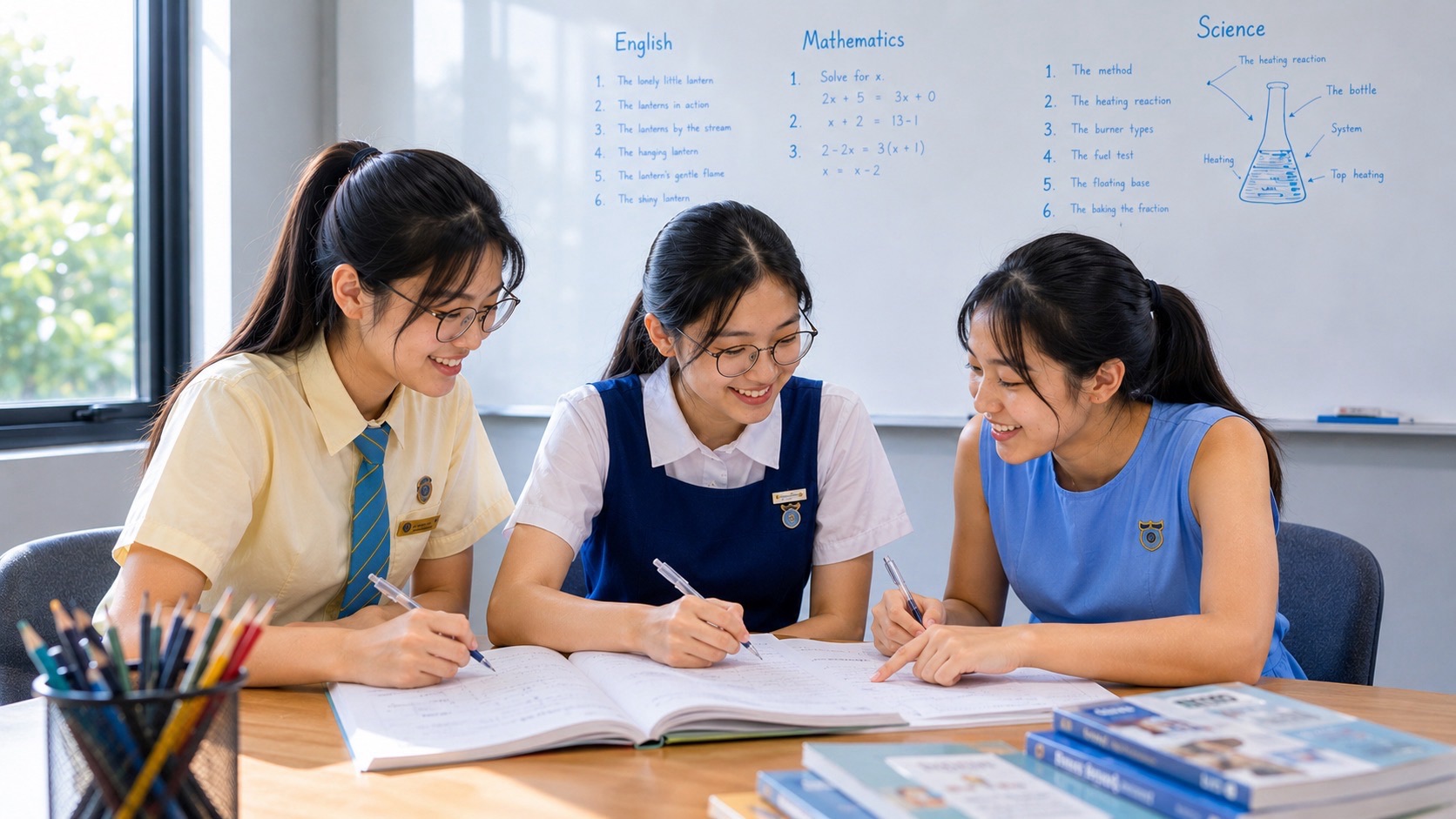
At eduKate Singapore, Secondary 2 English tuition is conducted in small groups of up to three students.
This allows lessons to remain structured while giving the tutor sufficient opportunity to observe individual learning needs and provide targeted feedback.
Students work on the connected capabilities behind English performance:
Reading
vocabulary
grammar
comprehension
writing
communication
examination control
When these capabilities are developed together, students are better prepared not only for their present Secondary 2 work but also for the transition into Secondary 3 and Secondary 4.
Attending a Secondary 2 English tuition center should not be about doing more work for the sake of doing more work.
It should help the student discover the right work to do next.