
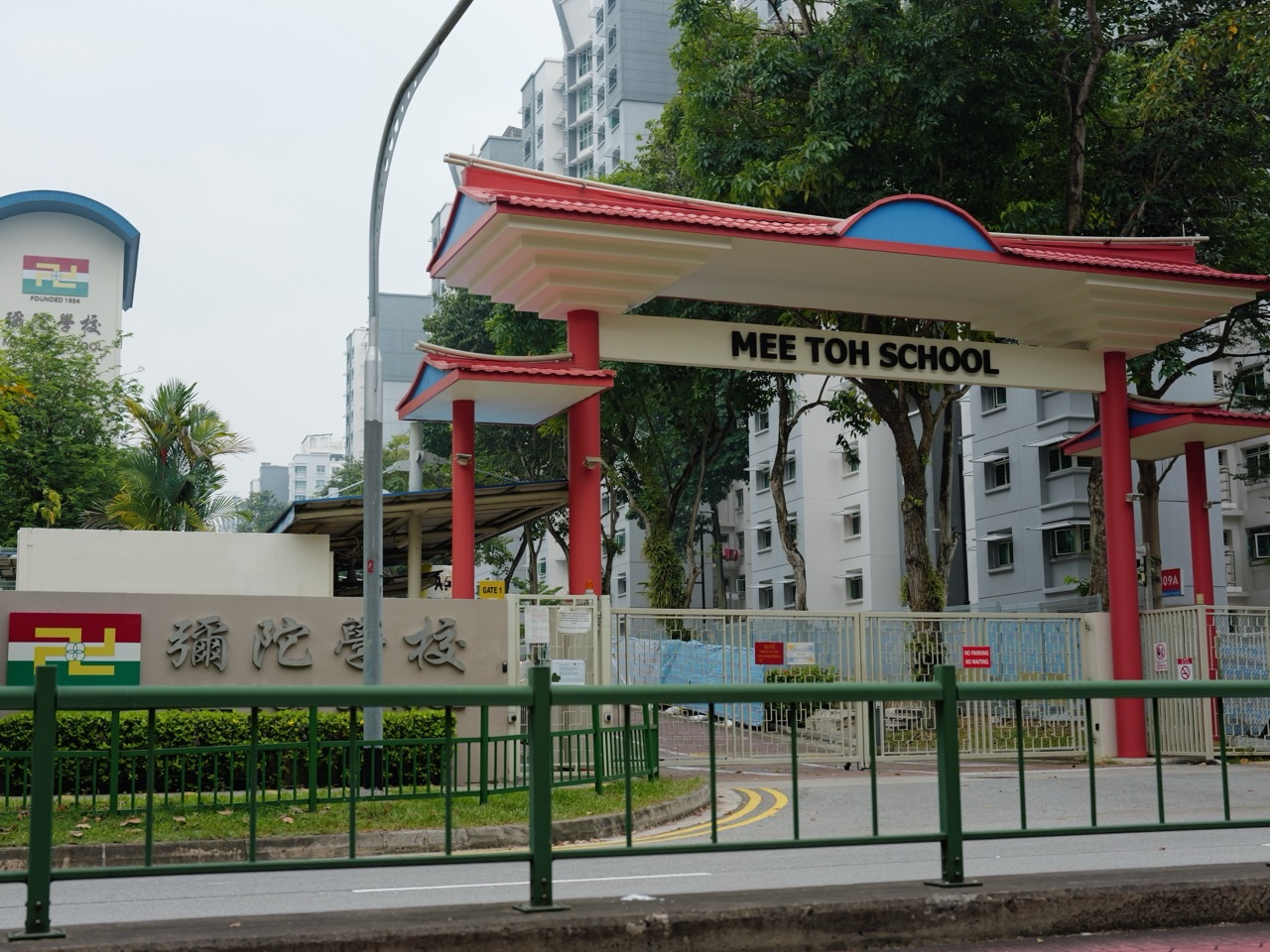
English Tuition for Mee Toh Primary Families | The P5-to-P6 Shift from Language Growth to PSLE Execution keeps its original 2017 title and URL, but the page is rebuilt around continuity. Primary 5 and Primary 6 should not feel like two unrelated English programmes. P5 is still a major language-growth year. P6 continues that growth while adding stronger demands for integration, timing, retrieval and independent examination execution.
For families searching for English tuition for Mee Toh Primary, P5 English tuition, P6 English tuition, PSLE English, Primary English tuition Punggol or help planning the P5-to-P6 transition, the central principle is not “stop learning English and start doing papers”. It is “keep the language system growing while progressively increasing execution demands”.
eduKateSG is not affiliated with Mee Toh School. The preserved Waterway Point wording in this legacy URL does not establish a current Waterway Point branch. Current Punggol-local information belongs with eduKatePunggol.
SEAB’s 2026 PSLE English syllabus remains implemented from the 2025 examination year. MOE’s English Language Syllabus 2020 Primary remains the wider curriculum foundation. P6 preparation should therefore integrate examination reliability with the broader language capabilities built across Primary school.
P5 Is Not Pre-PSLE Waiting Time
P5 is one of the last large windows to deepen vocabulary, reading volume, composition range, grammar transfer, oral language and independence before the PSLE calendar becomes more dominant.
P6 Is Not Only Paper Practice
P6 still needs language growth. New vocabulary, reading, writing and oral development continue. What changes is that these capabilities must now be coordinated under more explicit examination constraints.
Growth to Execution
The transition is a shift in emphasis, not a replacement of system. P5 asks, “Can the learner build the capability?” P6 increasingly asks, “Can the learner deploy it reliably, quickly and independently?”
Integration
Vocabulary, grammar, comprehension, writing, oral and listening should not become separate silos. PSLE performance depends on the same language system appearing in different task forms.
Timing
Time pressure should be layered onto stable skills. Timing an unstable skill can automate poor habits. Untimed accuracy first, controlled timing next, full-paper execution later.
Retrieval
P6 requires fast access to language and strategies. A word, grammar pattern or comprehension method that can be used only with notes open is not exam-ready.
Transfer
The learner should recognise the same underlying skill in unseen passages and prompts. Transfer is the bridge between P5 development and P6 reliability.
Independence
Tutor prompts and parent checking should reduce through P5 and continue to fade in P6. The examination makes the endpoint obvious: the learner has to run the process alone.
Load
P6 usually brings more school revision and private practice. The tuition system should become more selective, not simply larger. Sleep and recovery remain part of exam performance.
Continuity
The best P5-to-P6 transition preserves what is already working, adds execution gradually and repairs only the bottlenecks that remain. Abrupt programme replacement can destroy useful routines and confidence.
Fifty-One P5-to-P6 Transition Clinics
Each clinic below shows how the same English capability changes job as the learner moves from P5 into P6. The distinction is not absolute; it is a shift in balance.
P5→P6 Clinic 1: P5 vocabulary growth
Compare the same skill in P5 and P6. Observed transition: The learner is still meeting many new words and concepts.
Recommended shift: Keep wide reading and contextual vocabulary growth high.
Why it matters: P5 should enlarge the language base before P6 execution compresses attention. The goal is not to turn January of P6 into a different subject; it is to change the proportion of development, retrieval and execution.
Language-growth check: ask whether reading volume, vocabulary precision, grammar and writing range are still expanding. If growth stops completely, exam practice may be consuming the system that supports performance.
Execution check: ask whether the learner can interpret task demands, allocate time, retrieve strategies and check work without external cues. P6 increasingly requires this layer.
Transfer: Use a fresh passage. A skill is PSLE-ready only when it survives new content and reduced support.
Independence: record what the tutor still has to prompt. Any recurring prompt on a familiar task is a candidate for explicit fade work.
Load check: count school revision, tuition homework, full papers, reading and sleep together. P6 is not improved by exhausting the learner before the examination.
Review rule: increase exam intensity only when the underlying capability and learner capacity can support it; reduce intensity when it starts displacing repair, reading or recovery.
P5→P6 Clinic 2: P6 vocabulary maintenance
Ask whether the active need is growth or execution. Observed transition: A large bank already exists but retrieval under time is uneven.
Recommended shift: Use spaced retrieval, precision and application rather than endless new lists.
Why it matters: Upper-primary vocabulary must become accessible, not merely larger. The goal is not to turn January of P6 into a different subject; it is to change the proportion of development, retrieval and execution.
Language-growth check: ask whether reading volume, vocabulary precision, grammar and writing range are still expanding. If growth stops completely, exam practice may be consuming the system that supports performance.
Execution check: ask whether the learner can interpret task demands, allocate time, retrieve strategies and check work without external cues. P6 increasingly requires this layer.
Transfer: Add a moderate time limit. A skill is PSLE-ready only when it survives new content and reduced support.
Independence: record what the tutor still has to prompt. Any recurring prompt on a familiar task is a candidate for explicit fade work.
Load check: count school revision, tuition homework, full papers, reading and sleep together. P6 is not improved by exhausting the learner before the examination.
Review rule: increase exam intensity only when the underlying capability and learner capacity can support it; reduce intensity when it starts displacing repair, reading or recovery.
P5→P6 Clinic 3: P5 extensive reading
Separate underlying English from examination interface. Observed transition: The child still has room for broad reading outside exam passages.
Recommended shift: Protect regular sustained reading.
Why it matters: Reading volume builds knowledge that later supports comprehension and writing. The goal is not to turn January of P6 into a different subject; it is to change the proportion of development, retrieval and execution.
Language-growth check: ask whether reading volume, vocabulary precision, grammar and writing range are still expanding. If growth stops completely, exam practice may be consuming the system that supports performance.
Execution check: ask whether the learner can interpret task demands, allocate time, retrieve strategies and check work without external cues. P6 increasingly requires this layer.
Transfer: Remove one scaffold. A skill is PSLE-ready only when it survives new content and reduced support.
Independence: record what the tutor still has to prompt. Any recurring prompt on a familiar task is a candidate for explicit fade work.
Load check: count school revision, tuition homework, full papers, reading and sleep together. P6 is not improved by exhausting the learner before the examination.
Review rule: increase exam intensity only when the underlying capability and learner capacity can support it; reduce intensity when it starts displacing repair, reading or recovery.
P5→P6 Clinic 4: P6 reading balance
Check what survives without prompts. Observed transition: Exam passages increase and authentic reading starts disappearing.
Recommended shift: Keep a smaller but protected extensive-reading lane.
Why it matters: PSLE preparation should not starve the language system that feeds the exam. The goal is not to turn January of P6 into a different subject; it is to change the proportion of development, retrieval and execution.
Language-growth check: ask whether reading volume, vocabulary precision, grammar and writing range are still expanding. If growth stops completely, exam practice may be consuming the system that supports performance.
Execution check: ask whether the learner can interpret task demands, allocate time, retrieve strategies and check work without external cues. P6 increasingly requires this layer.
Transfer: Retest after several days. A skill is PSLE-ready only when it survives new content and reduced support.
Independence: record what the tutor still has to prompt. Any recurring prompt on a familiar task is a candidate for explicit fade work.
Load check: count school revision, tuition homework, full papers, reading and sleep together. P6 is not improved by exhausting the learner before the examination.
Review rule: increase exam intensity only when the underlying capability and learner capacity can support it; reduce intensity when it starts displacing repair, reading or recovery.
P5→P6 Clinic 5: P5 comprehension development
Protect continuity while changing the load. Observed transition: Reference, inference and evidence are still becoming more precise.
Recommended shift: Use varied texts and close-reading explanation.
Why it matters: This is still a major capability-building year. The goal is not to turn January of P6 into a different subject; it is to change the proportion of development, retrieval and execution.
Language-growth check: ask whether reading volume, vocabulary precision, grammar and writing range are still expanding. If growth stops completely, exam practice may be consuming the system that supports performance.
Execution check: ask whether the learner can interpret task demands, allocate time, retrieve strategies and check work without external cues. P6 increasingly requires this layer.
Transfer: Compare school work with tuition work. A skill is PSLE-ready only when it survives new content and reduced support.
Independence: record what the tutor still has to prompt. Any recurring prompt on a familiar task is a candidate for explicit fade work.
Load check: count school revision, tuition homework, full papers, reading and sleep together. P6 is not improved by exhausting the learner before the examination.
Review rule: increase exam intensity only when the underlying capability and learner capacity can support it; reduce intensity when it starts displacing repair, reading or recovery.
P5→P6 Clinic 6: P6 comprehension execution
Compare the same skill in P5 and P6. Observed transition: The learner understands passages but spends too long searching.
Recommended shift: Add evidence locality, question routing and timed selection.
Why it matters: The same comprehension skill now has an execution layer. The goal is not to turn January of P6 into a different subject; it is to change the proportion of development, retrieval and execution.
Language-growth check: ask whether reading volume, vocabulary precision, grammar and writing range are still expanding. If growth stops completely, exam practice may be consuming the system that supports performance.
Execution check: ask whether the learner can interpret task demands, allocate time, retrieve strategies and check work without external cues. P6 increasingly requires this layer.
Transfer: Use a fresh passage. A skill is PSLE-ready only when it survives new content and reduced support.
Independence: record what the tutor still has to prompt. Any recurring prompt on a familiar task is a candidate for explicit fade work.
Load check: count school revision, tuition homework, full papers, reading and sleep together. P6 is not improved by exhausting the learner before the examination.
Review rule: increase exam intensity only when the underlying capability and learner capacity can support it; reduce intensity when it starts displacing repair, reading or recovery.
P5→P6 Clinic 7: P5 composition breadth
Ask whether the active need is growth or execution. Observed transition: The child can experiment with different conflicts, viewpoints and settings.
Recommended shift: Use varied prompts and deliberate story architecture.
Why it matters: P5 offers time to expand the writing possibility field. The goal is not to turn January of P6 into a different subject; it is to change the proportion of development, retrieval and execution.
Language-growth check: ask whether reading volume, vocabulary precision, grammar and writing range are still expanding. If growth stops completely, exam practice may be consuming the system that supports performance.
Execution check: ask whether the learner can interpret task demands, allocate time, retrieve strategies and check work without external cues. P6 increasingly requires this layer.
Transfer: Add a moderate time limit. A skill is PSLE-ready only when it survives new content and reduced support.
Independence: record what the tutor still has to prompt. Any recurring prompt on a familiar task is a candidate for explicit fade work.
Load check: count school revision, tuition homework, full papers, reading and sleep together. P6 is not improved by exhausting the learner before the examination.
Review rule: increase exam intensity only when the underlying capability and learner capacity can support it; reduce intensity when it starts displacing repair, reading or recovery.
P5→P6 Clinic 8: P6 composition reliability
Separate underlying English from examination interface. Observed transition: The child has ideas but cannot always produce them under time.
Recommended shift: Use compact planning, drafting checkpoints and revision priorities.
Why it matters: P6 asks writing craft to survive examination constraints. The goal is not to turn January of P6 into a different subject; it is to change the proportion of development, retrieval and execution.
Language-growth check: ask whether reading volume, vocabulary precision, grammar and writing range are still expanding. If growth stops completely, exam practice may be consuming the system that supports performance.
Execution check: ask whether the learner can interpret task demands, allocate time, retrieve strategies and check work without external cues. P6 increasingly requires this layer.
Transfer: Remove one scaffold. A skill is PSLE-ready only when it survives new content and reduced support.
Independence: record what the tutor still has to prompt. Any recurring prompt on a familiar task is a candidate for explicit fade work.
Load check: count school revision, tuition homework, full papers, reading and sleep together. P6 is not improved by exhausting the learner before the examination.
Review rule: increase exam intensity only when the underlying capability and learner capacity can support it; reduce intensity when it starts displacing repair, reading or recovery.
P5→P6 Clinic 9: P5 grammar transfer
Check what survives without prompts. Observed transition: Rules still fail inside full writing.
Recommended shift: Repair grammar in authentic paragraphs and compositions.
Why it matters: P5 should convert isolated accuracy into transfer. The goal is not to turn January of P6 into a different subject; it is to change the proportion of development, retrieval and execution.
Language-growth check: ask whether reading volume, vocabulary precision, grammar and writing range are still expanding. If growth stops completely, exam practice may be consuming the system that supports performance.
Execution check: ask whether the learner can interpret task demands, allocate time, retrieve strategies and check work without external cues. P6 increasingly requires this layer.
Transfer: Retest after several days. A skill is PSLE-ready only when it survives new content and reduced support.
Independence: record what the tutor still has to prompt. Any recurring prompt on a familiar task is a candidate for explicit fade work.
Load check: count school revision, tuition homework, full papers, reading and sleep together. P6 is not improved by exhausting the learner before the examination.
Review rule: increase exam intensity only when the underlying capability and learner capacity can support it; reduce intensity when it starts displacing repair, reading or recovery.
P5→P6 Clinic 10: P6 grammar maintenance
Protect continuity while changing the load. Observed transition: Core grammar is mostly stable but occasional errors leak marks.
Recommended shift: Use targeted editing and personal error logs.
Why it matters: Maintenance should be lighter than wholesale reteaching. The goal is not to turn January of P6 into a different subject; it is to change the proportion of development, retrieval and execution.
Language-growth check: ask whether reading volume, vocabulary precision, grammar and writing range are still expanding. If growth stops completely, exam practice may be consuming the system that supports performance.
Execution check: ask whether the learner can interpret task demands, allocate time, retrieve strategies and check work without external cues. P6 increasingly requires this layer.
Transfer: Compare school work with tuition work. A skill is PSLE-ready only when it survives new content and reduced support.
Independence: record what the tutor still has to prompt. Any recurring prompt on a familiar task is a candidate for explicit fade work.
Load check: count school revision, tuition homework, full papers, reading and sleep together. P6 is not improved by exhausting the learner before the examination.
Review rule: increase exam intensity only when the underlying capability and learner capacity can support it; reduce intensity when it starts displacing repair, reading or recovery.
P5→P6 Clinic 11: P5 oral growth
Compare the same skill in P5 and P6. Observed transition: The learner can still broaden discussion, explanation and viewpoint.
Recommended shift: Use regular speaking across rich topics.
Why it matters: Oral language supports writing and thinking beyond the assessment itself. The goal is not to turn January of P6 into a different subject; it is to change the proportion of development, retrieval and execution.
Language-growth check: ask whether reading volume, vocabulary precision, grammar and writing range are still expanding. If growth stops completely, exam practice may be consuming the system that supports performance.
Execution check: ask whether the learner can interpret task demands, allocate time, retrieve strategies and check work without external cues. P6 increasingly requires this layer.
Transfer: Use a fresh passage. A skill is PSLE-ready only when it survives new content and reduced support.
Independence: record what the tutor still has to prompt. Any recurring prompt on a familiar task is a candidate for explicit fade work.
Load check: count school revision, tuition homework, full papers, reading and sleep together. P6 is not improved by exhausting the learner before the examination.
Review rule: increase exam intensity only when the underlying capability and learner capacity can support it; reduce intensity when it starts displacing repair, reading or recovery.
P5→P6 Clinic 12: P6 oral execution
Ask whether the active need is growth or execution. Observed transition: Content is available but responses become rushed or thin in formal conditions.
Recommended shift: Practise response structure, elaboration and recovery under timed conditions.
Why it matters: Execution now matters more visibly. The goal is not to turn January of P6 into a different subject; it is to change the proportion of development, retrieval and execution.
Language-growth check: ask whether reading volume, vocabulary precision, grammar and writing range are still expanding. If growth stops completely, exam practice may be consuming the system that supports performance.
Execution check: ask whether the learner can interpret task demands, allocate time, retrieve strategies and check work without external cues. P6 increasingly requires this layer.
Transfer: Add a moderate time limit. A skill is PSLE-ready only when it survives new content and reduced support.
Independence: record what the tutor still has to prompt. Any recurring prompt on a familiar task is a candidate for explicit fade work.
Load check: count school revision, tuition homework, full papers, reading and sleep together. P6 is not improved by exhausting the learner before the examination.
Review rule: increase exam intensity only when the underlying capability and learner capacity can support it; reduce intensity when it starts displacing repair, reading or recovery.
P5→P6 Clinic 13: P5 listening development
Separate underlying English from examination interface. Observed transition: The child needs better retention of detail and sequence.
Recommended shift: Use authentic listening and short retrieval.
Why it matters: Listening remains a language-development component. The goal is not to turn January of P6 into a different subject; it is to change the proportion of development, retrieval and execution.
Language-growth check: ask whether reading volume, vocabulary precision, grammar and writing range are still expanding. If growth stops completely, exam practice may be consuming the system that supports performance.
Execution check: ask whether the learner can interpret task demands, allocate time, retrieve strategies and check work without external cues. P6 increasingly requires this layer.
Transfer: Remove one scaffold. A skill is PSLE-ready only when it survives new content and reduced support.
Independence: record what the tutor still has to prompt. Any recurring prompt on a familiar task is a candidate for explicit fade work.
Load check: count school revision, tuition homework, full papers, reading and sleep together. P6 is not improved by exhausting the learner before the examination.
Review rule: increase exam intensity only when the underlying capability and learner capacity can support it; reduce intensity when it starts displacing repair, reading or recovery.
P5→P6 Clinic 14: P6 listening reliability
Check what survives without prompts. Observed transition: Understanding is good but missed details are costly.
Recommended shift: Train recovery after one missed detail and selective note awareness.
Why it matters: Examination execution should stabilise existing capability. The goal is not to turn January of P6 into a different subject; it is to change the proportion of development, retrieval and execution.
Language-growth check: ask whether reading volume, vocabulary precision, grammar and writing range are still expanding. If growth stops completely, exam practice may be consuming the system that supports performance.
Execution check: ask whether the learner can interpret task demands, allocate time, retrieve strategies and check work without external cues. P6 increasingly requires this layer.
Transfer: Retest after several days. A skill is PSLE-ready only when it survives new content and reduced support.
Independence: record what the tutor still has to prompt. Any recurring prompt on a familiar task is a candidate for explicit fade work.
Load check: count school revision, tuition homework, full papers, reading and sleep together. P6 is not improved by exhausting the learner before the examination.
Review rule: increase exam intensity only when the underlying capability and learner capacity can support it; reduce intensity when it starts displacing repair, reading or recovery.
P5→P6 Clinic 15: P5 situational writing
Protect continuity while changing the load. Observed transition: Purpose and audience are understood inconsistently.
Recommended shift: Build communication logic before templates.
Why it matters: P5 should strengthen task meaning. The goal is not to turn January of P6 into a different subject; it is to change the proportion of development, retrieval and execution.
Language-growth check: ask whether reading volume, vocabulary precision, grammar and writing range are still expanding. If growth stops completely, exam practice may be consuming the system that supports performance.
Execution check: ask whether the learner can interpret task demands, allocate time, retrieve strategies and check work without external cues. P6 increasingly requires this layer.
Transfer: Compare school work with tuition work. A skill is PSLE-ready only when it survives new content and reduced support.
Independence: record what the tutor still has to prompt. Any recurring prompt on a familiar task is a candidate for explicit fade work.
Load check: count school revision, tuition homework, full papers, reading and sleep together. P6 is not improved by exhausting the learner before the examination.
Review rule: increase exam intensity only when the underlying capability and learner capacity can support it; reduce intensity when it starts displacing repair, reading or recovery.
P5→P6 Clinic 16: P6 situational writing
Compare the same skill in P5 and P6. Observed transition: The learner understands the task but omits required content under time.
Recommended shift: Use constraint extraction and final checks.
Why it matters: Execution failures should be separated from language failures. The goal is not to turn January of P6 into a different subject; it is to change the proportion of development, retrieval and execution.
Language-growth check: ask whether reading volume, vocabulary precision, grammar and writing range are still expanding. If growth stops completely, exam practice may be consuming the system that supports performance.
Execution check: ask whether the learner can interpret task demands, allocate time, retrieve strategies and check work without external cues. P6 increasingly requires this layer.
Transfer: Use a fresh passage. A skill is PSLE-ready only when it survives new content and reduced support.
Independence: record what the tutor still has to prompt. Any recurring prompt on a familiar task is a candidate for explicit fade work.
Load check: count school revision, tuition homework, full papers, reading and sleep together. P6 is not improved by exhausting the learner before the examination.
Review rule: increase exam intensity only when the underlying capability and learner capacity can support it; reduce intensity when it starts displacing repair, reading or recovery.
P5→P6 Clinic 17: P5 writing stamina
Ask whether the active need is growth or execution. Observed transition: Full compositions are inconsistent across longer sessions.
Recommended shift: Build scene, paragraph and draft endurance gradually.
Why it matters: Stamina should exist before high-pressure timed writing. The goal is not to turn January of P6 into a different subject; it is to change the proportion of development, retrieval and execution.
Language-growth check: ask whether reading volume, vocabulary precision, grammar and writing range are still expanding. If growth stops completely, exam practice may be consuming the system that supports performance.
Execution check: ask whether the learner can interpret task demands, allocate time, retrieve strategies and check work without external cues. P6 increasingly requires this layer.
Transfer: Add a moderate time limit. A skill is PSLE-ready only when it survives new content and reduced support.
Independence: record what the tutor still has to prompt. Any recurring prompt on a familiar task is a candidate for explicit fade work.
Load check: count school revision, tuition homework, full papers, reading and sleep together. P6 is not improved by exhausting the learner before the examination.
Review rule: increase exam intensity only when the underlying capability and learner capacity can support it; reduce intensity when it starts displacing repair, reading or recovery.
P5→P6 Clinic 18: P6 timed writing
Separate underlying English from examination interface. Observed transition: Untimed writing is good but time compression damages quality.
Recommended shift: Practise selective planning and controlled drafting under realistic limits.
Why it matters: Speed is the final layer over stable writing. The goal is not to turn January of P6 into a different subject; it is to change the proportion of development, retrieval and execution.
Language-growth check: ask whether reading volume, vocabulary precision, grammar and writing range are still expanding. If growth stops completely, exam practice may be consuming the system that supports performance.
Execution check: ask whether the learner can interpret task demands, allocate time, retrieve strategies and check work without external cues. P6 increasingly requires this layer.
Transfer: Remove one scaffold. A skill is PSLE-ready only when it survives new content and reduced support.
Independence: record what the tutor still has to prompt. Any recurring prompt on a familiar task is a candidate for explicit fade work.
Load check: count school revision, tuition homework, full papers, reading and sleep together. P6 is not improved by exhausting the learner before the examination.
Review rule: increase exam intensity only when the underlying capability and learner capacity can support it; reduce intensity when it starts displacing repair, reading or recovery.
P5→P6 Clinic 19: P5 correction
Check what survives without prompts. Observed transition: Feedback is still heavily tutor-led.
Recommended shift: Teach the learner to categorise and revise errors.
Why it matters: P5 should accelerate independence before P6. The goal is not to turn January of P6 into a different subject; it is to change the proportion of development, retrieval and execution.
Language-growth check: ask whether reading volume, vocabulary precision, grammar and writing range are still expanding. If growth stops completely, exam practice may be consuming the system that supports performance.
Execution check: ask whether the learner can interpret task demands, allocate time, retrieve strategies and check work without external cues. P6 increasingly requires this layer.
Transfer: Retest after several days. A skill is PSLE-ready only when it survives new content and reduced support.
Independence: record what the tutor still has to prompt. Any recurring prompt on a familiar task is a candidate for explicit fade work.
Load check: count school revision, tuition homework, full papers, reading and sleep together. P6 is not improved by exhausting the learner before the examination.
Review rule: increase exam intensity only when the underlying capability and learner capacity can support it; reduce intensity when it starts displacing repair, reading or recovery.
P5→P6 Clinic 20: P6 self-checking
Protect continuity while changing the load. Observed transition: The learner waits for external marking despite exam proximity.
Recommended shift: Use learner-specific checklists and substitution/re-read routines.
Why it matters: P6 requires independent error control. The goal is not to turn January of P6 into a different subject; it is to change the proportion of development, retrieval and execution.
Language-growth check: ask whether reading volume, vocabulary precision, grammar and writing range are still expanding. If growth stops completely, exam practice may be consuming the system that supports performance.
Execution check: ask whether the learner can interpret task demands, allocate time, retrieve strategies and check work without external cues. P6 increasingly requires this layer.
Transfer: Compare school work with tuition work. A skill is PSLE-ready only when it survives new content and reduced support.
Independence: record what the tutor still has to prompt. Any recurring prompt on a familiar task is a candidate for explicit fade work.
Load check: count school revision, tuition homework, full papers, reading and sleep together. P6 is not improved by exhausting the learner before the examination.
Review rule: increase exam intensity only when the underlying capability and learner capacity can support it; reduce intensity when it starts displacing repair, reading or recovery.
P5→P6 Clinic 21: P5 model dependence
Compare the same skill in P5 and P6. Observed transition: The child still relies on examples for planning and phrasing.
Recommended shift: Fade models and ask for reconstruction from principles.
Why it matters: Dependence should decline before the exam year. The goal is not to turn January of P6 into a different subject; it is to change the proportion of development, retrieval and execution.
Language-growth check: ask whether reading volume, vocabulary precision, grammar and writing range are still expanding. If growth stops completely, exam practice may be consuming the system that supports performance.
Execution check: ask whether the learner can interpret task demands, allocate time, retrieve strategies and check work without external cues. P6 increasingly requires this layer.
Transfer: Use a fresh passage. A skill is PSLE-ready only when it survives new content and reduced support.
Independence: record what the tutor still has to prompt. Any recurring prompt on a familiar task is a candidate for explicit fade work.
Load check: count school revision, tuition homework, full papers, reading and sleep together. P6 is not improved by exhausting the learner before the examination.
Review rule: increase exam intensity only when the underlying capability and learner capacity can support it; reduce intensity when it starts displacing repair, reading or recovery.
P5→P6 Clinic 22: P6 model independence
Ask whether the active need is growth or execution. Observed transition: The child performs only when familiar story templates appear.
Recommended shift: Use unseen prompts and transfer tests.
Why it matters: Exam performance depends on flexible generation. The goal is not to turn January of P6 into a different subject; it is to change the proportion of development, retrieval and execution.
Language-growth check: ask whether reading volume, vocabulary precision, grammar and writing range are still expanding. If growth stops completely, exam practice may be consuming the system that supports performance.
Execution check: ask whether the learner can interpret task demands, allocate time, retrieve strategies and check work without external cues. P6 increasingly requires this layer.
Transfer: Add a moderate time limit. A skill is PSLE-ready only when it survives new content and reduced support.
Independence: record what the tutor still has to prompt. Any recurring prompt on a familiar task is a candidate for explicit fade work.
Load check: count school revision, tuition homework, full papers, reading and sleep together. P6 is not improved by exhausting the learner before the examination.
Review rule: increase exam intensity only when the underlying capability and learner capacity can support it; reduce intensity when it starts displacing repair, reading or recovery.
P5→P6 Clinic 23: P5 broad knowledge
Separate underlying English from examination interface. Observed transition: World knowledge is patchy.
Recommended shift: Use nonfiction, discussion and cross-topic reading.
Why it matters: Knowledge growth still has high return before PSLE. The goal is not to turn January of P6 into a different subject; it is to change the proportion of development, retrieval and execution.
Language-growth check: ask whether reading volume, vocabulary precision, grammar and writing range are still expanding. If growth stops completely, exam practice may be consuming the system that supports performance.
Execution check: ask whether the learner can interpret task demands, allocate time, retrieve strategies and check work without external cues. P6 increasingly requires this layer.
Transfer: Remove one scaffold. A skill is PSLE-ready only when it survives new content and reduced support.
Independence: record what the tutor still has to prompt. Any recurring prompt on a familiar task is a candidate for explicit fade work.
Load check: count school revision, tuition homework, full papers, reading and sleep together. P6 is not improved by exhausting the learner before the examination.
Review rule: increase exam intensity only when the underlying capability and learner capacity can support it; reduce intensity when it starts displacing repair, reading or recovery.
P5→P6 Clinic 24: P6 knowledge retrieval
Check what survives without prompts. Observed transition: The learner knows more than can be accessed quickly.
Recommended shift: Use retrieval cues and summary structures.
Why it matters: The issue has shifted from acquisition toward access. The goal is not to turn January of P6 into a different subject; it is to change the proportion of development, retrieval and execution.
Language-growth check: ask whether reading volume, vocabulary precision, grammar and writing range are still expanding. If growth stops completely, exam practice may be consuming the system that supports performance.
Execution check: ask whether the learner can interpret task demands, allocate time, retrieve strategies and check work without external cues. P6 increasingly requires this layer.
Transfer: Retest after several days. A skill is PSLE-ready only when it survives new content and reduced support.
Independence: record what the tutor still has to prompt. Any recurring prompt on a familiar task is a candidate for explicit fade work.
Load check: count school revision, tuition homework, full papers, reading and sleep together. P6 is not improved by exhausting the learner before the examination.
Review rule: increase exam intensity only when the underlying capability and learner capacity can support it; reduce intensity when it starts displacing repair, reading or recovery.
P5→P6 Clinic 25: P5 paragraph control
Protect continuity while changing the load. Observed transition: Paragraphs are coherent but transitions are uneven.
Recommended shift: Practise paragraph purpose and movement.
Why it matters: Global writing structure should stabilise before timing pressure rises. The goal is not to turn January of P6 into a different subject; it is to change the proportion of development, retrieval and execution.
Language-growth check: ask whether reading volume, vocabulary precision, grammar and writing range are still expanding. If growth stops completely, exam practice may be consuming the system that supports performance.
Execution check: ask whether the learner can interpret task demands, allocate time, retrieve strategies and check work without external cues. P6 increasingly requires this layer.
Transfer: Compare school work with tuition work. A skill is PSLE-ready only when it survives new content and reduced support.
Independence: record what the tutor still has to prompt. Any recurring prompt on a familiar task is a candidate for explicit fade work.
Load check: count school revision, tuition homework, full papers, reading and sleep together. P6 is not improved by exhausting the learner before the examination.
Review rule: increase exam intensity only when the underlying capability and learner capacity can support it; reduce intensity when it starts displacing repair, reading or recovery.
P5→P6 Clinic 26: P6 paragraph economy
Compare the same skill in P5 and P6. Observed transition: The learner over-writes and runs out of time.
Recommended shift: Use tighter paragraph goals and cut redundant detail.
Why it matters: Efficiency becomes part of execution. The goal is not to turn January of P6 into a different subject; it is to change the proportion of development, retrieval and execution.
Language-growth check: ask whether reading volume, vocabulary precision, grammar and writing range are still expanding. If growth stops completely, exam practice may be consuming the system that supports performance.
Execution check: ask whether the learner can interpret task demands, allocate time, retrieve strategies and check work without external cues. P6 increasingly requires this layer.
Transfer: Use a fresh passage. A skill is PSLE-ready only when it survives new content and reduced support.
Independence: record what the tutor still has to prompt. Any recurring prompt on a familiar task is a candidate for explicit fade work.
Load check: count school revision, tuition homework, full papers, reading and sleep together. P6 is not improved by exhausting the learner before the examination.
Review rule: increase exam intensity only when the underlying capability and learner capacity can support it; reduce intensity when it starts displacing repair, reading or recovery.
P5→P6 Clinic 27: P5 inference expansion
Ask whether the active need is growth or execution. Observed transition: The learner makes simple inferences but struggles with tone or motive.
Recommended shift: Use varied texts and evidence-plus-explanation.
Why it matters: Higher-resolution comprehension should be built before P6. The goal is not to turn January of P6 into a different subject; it is to change the proportion of development, retrieval and execution.
Language-growth check: ask whether reading volume, vocabulary precision, grammar and writing range are still expanding. If growth stops completely, exam practice may be consuming the system that supports performance.
Execution check: ask whether the learner can interpret task demands, allocate time, retrieve strategies and check work without external cues. P6 increasingly requires this layer.
Transfer: Add a moderate time limit. A skill is PSLE-ready only when it survives new content and reduced support.
Independence: record what the tutor still has to prompt. Any recurring prompt on a familiar task is a candidate for explicit fade work.
Load check: count school revision, tuition homework, full papers, reading and sleep together. P6 is not improved by exhausting the learner before the examination.
Review rule: increase exam intensity only when the underlying capability and learner capacity can support it; reduce intensity when it starts displacing repair, reading or recovery.
P5→P6 Clinic 28: P6 inference precision
Separate underlying English from examination interface. Observed transition: Inference is generally good but wording becomes over-broad.
Recommended shift: Use evidence boundaries and claim calibration.
Why it matters: Exam answers need precision as much as insight. The goal is not to turn January of P6 into a different subject; it is to change the proportion of development, retrieval and execution.
Language-growth check: ask whether reading volume, vocabulary precision, grammar and writing range are still expanding. If growth stops completely, exam practice may be consuming the system that supports performance.
Execution check: ask whether the learner can interpret task demands, allocate time, retrieve strategies and check work without external cues. P6 increasingly requires this layer.
Transfer: Remove one scaffold. A skill is PSLE-ready only when it survives new content and reduced support.
Independence: record what the tutor still has to prompt. Any recurring prompt on a familiar task is a candidate for explicit fade work.
Load check: count school revision, tuition homework, full papers, reading and sleep together. P6 is not improved by exhausting the learner before the examination.
Review rule: increase exam intensity only when the underlying capability and learner capacity can support it; reduce intensity when it starts displacing repair, reading or recovery.
P5→P6 Clinic 29: P5 vocabulary risk-taking
Check what survives without prompts. Observed transition: The learner experiments with new words.
Recommended shift: Allow controlled use and correction.
Why it matters: Growth requires some lexical risk. The goal is not to turn January of P6 into a different subject; it is to change the proportion of development, retrieval and execution.
Language-growth check: ask whether reading volume, vocabulary precision, grammar and writing range are still expanding. If growth stops completely, exam practice may be consuming the system that supports performance.
Execution check: ask whether the learner can interpret task demands, allocate time, retrieve strategies and check work without external cues. P6 increasingly requires this layer.
Transfer: Retest after several days. A skill is PSLE-ready only when it survives new content and reduced support.
Independence: record what the tutor still has to prompt. Any recurring prompt on a familiar task is a candidate for explicit fade work.
Load check: count school revision, tuition homework, full papers, reading and sleep together. P6 is not improved by exhausting the learner before the examination.
Review rule: increase exam intensity only when the underlying capability and learner capacity can support it; reduce intensity when it starts displacing repair, reading or recovery.
P5→P6 Clinic 30: P6 vocabulary selectivity
Protect continuity while changing the load. Observed transition: The child forces difficult words into compositions.
Recommended shift: Prefer precise, retrievable vocabulary over ornamental difficulty.
Why it matters: Exam reliability rewards control. The goal is not to turn January of P6 into a different subject; it is to change the proportion of development, retrieval and execution.
Language-growth check: ask whether reading volume, vocabulary precision, grammar and writing range are still expanding. If growth stops completely, exam practice may be consuming the system that supports performance.
Execution check: ask whether the learner can interpret task demands, allocate time, retrieve strategies and check work without external cues. P6 increasingly requires this layer.
Transfer: Compare school work with tuition work. A skill is PSLE-ready only when it survives new content and reduced support.
Independence: record what the tutor still has to prompt. Any recurring prompt on a familiar task is a candidate for explicit fade work.
Load check: count school revision, tuition homework, full papers, reading and sleep together. P6 is not improved by exhausting the learner before the examination.
Review rule: increase exam intensity only when the underlying capability and learner capacity can support it; reduce intensity when it starts displacing repair, reading or recovery.
P5→P6 Clinic 31: P5 creative experimentation
Compare the same skill in P5 and P6. Observed transition: The learner tries unusual structures and viewpoints.
Recommended shift: Keep experimentation within coherent story logic.
Why it matters: P5 can still widen repertoire significantly. The goal is not to turn January of P6 into a different subject; it is to change the proportion of development, retrieval and execution.
Language-growth check: ask whether reading volume, vocabulary precision, grammar and writing range are still expanding. If growth stops completely, exam practice may be consuming the system that supports performance.
Execution check: ask whether the learner can interpret task demands, allocate time, retrieve strategies and check work without external cues. P6 increasingly requires this layer.
Transfer: Use a fresh passage. A skill is PSLE-ready only when it survives new content and reduced support.
Independence: record what the tutor still has to prompt. Any recurring prompt on a familiar task is a candidate for explicit fade work.
Load check: count school revision, tuition homework, full papers, reading and sleep together. P6 is not improved by exhausting the learner before the examination.
Review rule: increase exam intensity only when the underlying capability and learner capacity can support it; reduce intensity when it starts displacing repair, reading or recovery.
P5→P6 Clinic 32: P6 story selection
Ask whether the active need is growth or execution. Observed transition: Too many possibilities slow planning.
Recommended shift: Use a smaller set of reliable story structures with adaptable content.
Why it matters: Examination work needs bounded search, not zero creativity. The goal is not to turn January of P6 into a different subject; it is to change the proportion of development, retrieval and execution.
Language-growth check: ask whether reading volume, vocabulary precision, grammar and writing range are still expanding. If growth stops completely, exam practice may be consuming the system that supports performance.
Execution check: ask whether the learner can interpret task demands, allocate time, retrieve strategies and check work without external cues. P6 increasingly requires this layer.
Transfer: Add a moderate time limit. A skill is PSLE-ready only when it survives new content and reduced support.
Independence: record what the tutor still has to prompt. Any recurring prompt on a familiar task is a candidate for explicit fade work.
Load check: count school revision, tuition homework, full papers, reading and sleep together. P6 is not improved by exhausting the learner before the examination.
Review rule: increase exam intensity only when the underlying capability and learner capacity can support it; reduce intensity when it starts displacing repair, reading or recovery.
P5→P6 Clinic 33: P5 editing growth
Separate underlying English from examination interface. Observed transition: The learner notices some own errors after feedback.
Recommended shift: Teach systematic self-editing routines.
Why it matters: Editing skill should be established before P6 intensifies. The goal is not to turn January of P6 into a different subject; it is to change the proportion of development, retrieval and execution.
Language-growth check: ask whether reading volume, vocabulary precision, grammar and writing range are still expanding. If growth stops completely, exam practice may be consuming the system that supports performance.
Execution check: ask whether the learner can interpret task demands, allocate time, retrieve strategies and check work without external cues. P6 increasingly requires this layer.
Transfer: Remove one scaffold. A skill is PSLE-ready only when it survives new content and reduced support.
Independence: record what the tutor still has to prompt. Any recurring prompt on a familiar task is a candidate for explicit fade work.
Load check: count school revision, tuition homework, full papers, reading and sleep together. P6 is not improved by exhausting the learner before the examination.
Review rule: increase exam intensity only when the underlying capability and learner capacity can support it; reduce intensity when it starts displacing repair, reading or recovery.
P5→P6 Clinic 34: P6 editing triage
Check what survives without prompts. Observed transition: Time does not allow perfection.
Recommended shift: Prioritise high-impact recurring errors and task completion.
Why it matters: Checking under constraint needs hierarchy. The goal is not to turn January of P6 into a different subject; it is to change the proportion of development, retrieval and execution.
Language-growth check: ask whether reading volume, vocabulary precision, grammar and writing range are still expanding. If growth stops completely, exam practice may be consuming the system that supports performance.
Execution check: ask whether the learner can interpret task demands, allocate time, retrieve strategies and check work without external cues. P6 increasingly requires this layer.
Transfer: Retest after several days. A skill is PSLE-ready only when it survives new content and reduced support.
Independence: record what the tutor still has to prompt. Any recurring prompt on a familiar task is a candidate for explicit fade work.
Load check: count school revision, tuition homework, full papers, reading and sleep together. P6 is not improved by exhausting the learner before the examination.
Review rule: increase exam intensity only when the underlying capability and learner capacity can support it; reduce intensity when it starts displacing repair, reading or recovery.
P5→P6 Clinic 35: P5 paper exposure
Protect continuity while changing the load. Observed transition: Some exam-style tasks are useful but not dominant.
Recommended shift: Use them to familiarise without replacing capability-building.
Why it matters: Format should sample the system. The goal is not to turn January of P6 into a different subject; it is to change the proportion of development, retrieval and execution.
Language-growth check: ask whether reading volume, vocabulary precision, grammar and writing range are still expanding. If growth stops completely, exam practice may be consuming the system that supports performance.
Execution check: ask whether the learner can interpret task demands, allocate time, retrieve strategies and check work without external cues. P6 increasingly requires this layer.
Transfer: Compare school work with tuition work. A skill is PSLE-ready only when it survives new content and reduced support.
Independence: record what the tutor still has to prompt. Any recurring prompt on a familiar task is a candidate for explicit fade work.
Load check: count school revision, tuition homework, full papers, reading and sleep together. P6 is not improved by exhausting the learner before the examination.
Review rule: increase exam intensity only when the underlying capability and learner capacity can support it; reduce intensity when it starts displacing repair, reading or recovery.
P5→P6 Clinic 36: P6 paper integration
Compare the same skill in P5 and P6. Observed transition: Full papers become more useful.
Recommended shift: Use papers diagnostically and repair recurring mechanisms between them.
Why it matters: Paper volume without analysis can automate the same weaknesses. The goal is not to turn January of P6 into a different subject; it is to change the proportion of development, retrieval and execution.
Language-growth check: ask whether reading volume, vocabulary precision, grammar and writing range are still expanding. If growth stops completely, exam practice may be consuming the system that supports performance.
Execution check: ask whether the learner can interpret task demands, allocate time, retrieve strategies and check work without external cues. P6 increasingly requires this layer.
Transfer: Use a fresh passage. A skill is PSLE-ready only when it survives new content and reduced support.
Independence: record what the tutor still has to prompt. Any recurring prompt on a familiar task is a candidate for explicit fade work.
Load check: count school revision, tuition homework, full papers, reading and sleep together. P6 is not improved by exhausting the learner before the examination.
Review rule: increase exam intensity only when the underlying capability and learner capacity can support it; reduce intensity when it starts displacing repair, reading or recovery.
P5→P6 Clinic 37: P5 timing light
Ask whether the active need is growth or execution. Observed transition: Speed practice is limited.
Recommended shift: Protect accuracy and method first.
Why it matters: Premature timing can stabilise poor habits. The goal is not to turn January of P6 into a different subject; it is to change the proportion of development, retrieval and execution.
Language-growth check: ask whether reading volume, vocabulary precision, grammar and writing range are still expanding. If growth stops completely, exam practice may be consuming the system that supports performance.
Execution check: ask whether the learner can interpret task demands, allocate time, retrieve strategies and check work without external cues. P6 increasingly requires this layer.
Transfer: Add a moderate time limit. A skill is PSLE-ready only when it survives new content and reduced support.
Independence: record what the tutor still has to prompt. Any recurring prompt on a familiar task is a candidate for explicit fade work.
Load check: count school revision, tuition homework, full papers, reading and sleep together. P6 is not improved by exhausting the learner before the examination.
Review rule: increase exam intensity only when the underlying capability and learner capacity can support it; reduce intensity when it starts displacing repair, reading or recovery.
P5→P6 Clinic 38: P6 timing deliberate
Separate underlying English from examination interface. Observed transition: Known skills still break under the clock.
Recommended shift: Add timed sections progressively.
Why it matters: Execution should be trained once the underlying skill is reliable. The goal is not to turn January of P6 into a different subject; it is to change the proportion of development, retrieval and execution.
Language-growth check: ask whether reading volume, vocabulary precision, grammar and writing range are still expanding. If growth stops completely, exam practice may be consuming the system that supports performance.
Execution check: ask whether the learner can interpret task demands, allocate time, retrieve strategies and check work without external cues. P6 increasingly requires this layer.
Transfer: Remove one scaffold. A skill is PSLE-ready only when it survives new content and reduced support.
Independence: record what the tutor still has to prompt. Any recurring prompt on a familiar task is a candidate for explicit fade work.
Load check: count school revision, tuition homework, full papers, reading and sleep together. P6 is not improved by exhausting the learner before the examination.
Review rule: increase exam intensity only when the underlying capability and learner capacity can support it; reduce intensity when it starts displacing repair, reading or recovery.
P5→P6 Clinic 39: P5 homework variety
Check what survives without prompts. Observed transition: Reading, vocabulary, writing and correction all need space.
Recommended shift: Use varied homework jobs across the week.
Why it matters: A broad language system still needs development. The goal is not to turn January of P6 into a different subject; it is to change the proportion of development, retrieval and execution.
Language-growth check: ask whether reading volume, vocabulary precision, grammar and writing range are still expanding. If growth stops completely, exam practice may be consuming the system that supports performance.
Execution check: ask whether the learner can interpret task demands, allocate time, retrieve strategies and check work without external cues. P6 increasingly requires this layer.
Transfer: Retest after several days. A skill is PSLE-ready only when it survives new content and reduced support.
Independence: record what the tutor still has to prompt. Any recurring prompt on a familiar task is a candidate for explicit fade work.
Load check: count school revision, tuition homework, full papers, reading and sleep together. P6 is not improved by exhausting the learner before the examination.
Review rule: increase exam intensity only when the underlying capability and learner capacity can support it; reduce intensity when it starts displacing repair, reading or recovery.
P5→P6 Clinic 40: P6 homework selectivity
Protect continuity while changing the load. Observed transition: School and tuition load rise.
Recommended shift: Assign fewer, higher-value tasks tied to active errors and exam transfer.
Why it matters: P6 needs sharper resource allocation. The goal is not to turn January of P6 into a different subject; it is to change the proportion of development, retrieval and execution.
Language-growth check: ask whether reading volume, vocabulary precision, grammar and writing range are still expanding. If growth stops completely, exam practice may be consuming the system that supports performance.
Execution check: ask whether the learner can interpret task demands, allocate time, retrieve strategies and check work without external cues. P6 increasingly requires this layer.
Transfer: Compare school work with tuition work. A skill is PSLE-ready only when it survives new content and reduced support.
Independence: record what the tutor still has to prompt. Any recurring prompt on a familiar task is a candidate for explicit fade work.
Load check: count school revision, tuition homework, full papers, reading and sleep together. P6 is not improved by exhausting the learner before the examination.
Review rule: increase exam intensity only when the underlying capability and learner capacity can support it; reduce intensity when it starts displacing repair, reading or recovery.
P5→P6 Clinic 41: P5 tutor prompting
Compare the same skill in P5 and P6. Observed transition: The learner still benefits from guided analysis.
Recommended shift: Use prompts but record and reduce them.
Why it matters: Scaffolding should have a fade path. The goal is not to turn January of P6 into a different subject; it is to change the proportion of development, retrieval and execution.
Language-growth check: ask whether reading volume, vocabulary precision, grammar and writing range are still expanding. If growth stops completely, exam practice may be consuming the system that supports performance.
Execution check: ask whether the learner can interpret task demands, allocate time, retrieve strategies and check work without external cues. P6 increasingly requires this layer.
Transfer: Use a fresh passage. A skill is PSLE-ready only when it survives new content and reduced support.
Independence: record what the tutor still has to prompt. Any recurring prompt on a familiar task is a candidate for explicit fade work.
Load check: count school revision, tuition homework, full papers, reading and sleep together. P6 is not improved by exhausting the learner before the examination.
Review rule: increase exam intensity only when the underlying capability and learner capacity can support it; reduce intensity when it starts displacing repair, reading or recovery.
P5→P6 Clinic 42: P6 tutor prompting
Ask whether the active need is growth or execution. Observed transition: The child still needs frequent cues on familiar tasks.
Recommended shift: Make prompt reduction an explicit target.
Why it matters: Tutor dependence is now an urgent execution risk. The goal is not to turn January of P6 into a different subject; it is to change the proportion of development, retrieval and execution.
Language-growth check: ask whether reading volume, vocabulary precision, grammar and writing range are still expanding. If growth stops completely, exam practice may be consuming the system that supports performance.
Execution check: ask whether the learner can interpret task demands, allocate time, retrieve strategies and check work without external cues. P6 increasingly requires this layer.
Transfer: Add a moderate time limit. A skill is PSLE-ready only when it survives new content and reduced support.
Independence: record what the tutor still has to prompt. Any recurring prompt on a familiar task is a candidate for explicit fade work.
Load check: count school revision, tuition homework, full papers, reading and sleep together. P6 is not improved by exhausting the learner before the examination.
Review rule: increase exam intensity only when the underlying capability and learner capacity can support it; reduce intensity when it starts displacing repair, reading or recovery.
P5→P6 Clinic 43: P5 parent support
Separate underlying English from examination interface. Observed transition: Parents help organise work and reading.
Recommended shift: Shift from answer-help to routine and discussion support.
Why it matters: The learner should increasingly own the academic loop. The goal is not to turn January of P6 into a different subject; it is to change the proportion of development, retrieval and execution.
Language-growth check: ask whether reading volume, vocabulary precision, grammar and writing range are still expanding. If growth stops completely, exam practice may be consuming the system that supports performance.
Execution check: ask whether the learner can interpret task demands, allocate time, retrieve strategies and check work without external cues. P6 increasingly requires this layer.
Transfer: Remove one scaffold. A skill is PSLE-ready only when it survives new content and reduced support.
Independence: record what the tutor still has to prompt. Any recurring prompt on a familiar task is a candidate for explicit fade work.
Load check: count school revision, tuition homework, full papers, reading and sleep together. P6 is not improved by exhausting the learner before the examination.
Review rule: increase exam intensity only when the underlying capability and learner capacity can support it; reduce intensity when it starts displacing repair, reading or recovery.
P5→P6 Clinic 44: P6 parent support
Check what survives without prompts. Observed transition: Home revision becomes highly supervised.
Recommended shift: Protect independence and avoid turning every task into a family performance.
Why it matters: PSLE preparation should not increase dependence. The goal is not to turn January of P6 into a different subject; it is to change the proportion of development, retrieval and execution.
Language-growth check: ask whether reading volume, vocabulary precision, grammar and writing range are still expanding. If growth stops completely, exam practice may be consuming the system that supports performance.
Execution check: ask whether the learner can interpret task demands, allocate time, retrieve strategies and check work without external cues. P6 increasingly requires this layer.
Transfer: Retest after several days. A skill is PSLE-ready only when it survives new content and reduced support.
Independence: record what the tutor still has to prompt. Any recurring prompt on a familiar task is a candidate for explicit fade work.
Load check: count school revision, tuition homework, full papers, reading and sleep together. P6 is not improved by exhausting the learner before the examination.
Review rule: increase exam intensity only when the underlying capability and learner capacity can support it; reduce intensity when it starts displacing repair, reading or recovery.
P5→P6 Clinic 45: P5 confidence
Protect continuity while changing the load. Observed transition: Marks fluctuate as task difficulty rises.
Recommended shift: Use mechanism-level feedback so the learner sees what is changing.
Why it matters: Confidence should be evidence-based, not score-only. The goal is not to turn January of P6 into a different subject; it is to change the proportion of development, retrieval and execution.
Language-growth check: ask whether reading volume, vocabulary precision, grammar and writing range are still expanding. If growth stops completely, exam practice may be consuming the system that supports performance.
Execution check: ask whether the learner can interpret task demands, allocate time, retrieve strategies and check work without external cues. P6 increasingly requires this layer.
Transfer: Compare school work with tuition work. A skill is PSLE-ready only when it survives new content and reduced support.
Independence: record what the tutor still has to prompt. Any recurring prompt on a familiar task is a candidate for explicit fade work.
Load check: count school revision, tuition homework, full papers, reading and sleep together. P6 is not improved by exhausting the learner before the examination.
Review rule: increase exam intensity only when the underlying capability and learner capacity can support it; reduce intensity when it starts displacing repair, reading or recovery.
P5→P6 Clinic 46: P6 confidence
Compare the same skill in P5 and P6. Observed transition: One poor paper triggers fear despite stable capability.
Recommended shift: Compare error type, timing and prior evidence before escalating.
Why it matters: Exam-year emotion should not distort diagnosis. The goal is not to turn January of P6 into a different subject; it is to change the proportion of development, retrieval and execution.
Language-growth check: ask whether reading volume, vocabulary precision, grammar and writing range are still expanding. If growth stops completely, exam practice may be consuming the system that supports performance.
Execution check: ask whether the learner can interpret task demands, allocate time, retrieve strategies and check work without external cues. P6 increasingly requires this layer.
Transfer: Use a fresh passage. A skill is PSLE-ready only when it survives new content and reduced support.
Independence: record what the tutor still has to prompt. Any recurring prompt on a familiar task is a candidate for explicit fade work.
Load check: count school revision, tuition homework, full papers, reading and sleep together. P6 is not improved by exhausting the learner before the examination.
Review rule: increase exam intensity only when the underlying capability and learner capacity can support it; reduce intensity when it starts displacing repair, reading or recovery.
P5→P6 Clinic 47: P5 weak foundations
Ask whether the active need is growth or execution. Observed transition: Several language components remain unstable.
Recommended shift: Prioritise repair now.
Why it matters: P5 is the better window to close gaps before P6 compression. The goal is not to turn January of P6 into a different subject; it is to change the proportion of development, retrieval and execution.
Language-growth check: ask whether reading volume, vocabulary precision, grammar and writing range are still expanding. If growth stops completely, exam practice may be consuming the system that supports performance.
Execution check: ask whether the learner can interpret task demands, allocate time, retrieve strategies and check work without external cues. P6 increasingly requires this layer.
Transfer: Add a moderate time limit. A skill is PSLE-ready only when it survives new content and reduced support.
Independence: record what the tutor still has to prompt. Any recurring prompt on a familiar task is a candidate for explicit fade work.
Load check: count school revision, tuition homework, full papers, reading and sleep together. P6 is not improved by exhausting the learner before the examination.
Review rule: increase exam intensity only when the underlying capability and learner capacity can support it; reduce intensity when it starts displacing repair, reading or recovery.
P5→P6 Clinic 48: P6 residual weak foundation
Separate underlying English from examination interface. Observed transition: One or two dependencies remain.
Recommended shift: Use surgical repair integrated with exam work.
Why it matters: The time horizon now favours high-transfer bottlenecks. The goal is not to turn January of P6 into a different subject; it is to change the proportion of development, retrieval and execution.
Language-growth check: ask whether reading volume, vocabulary precision, grammar and writing range are still expanding. If growth stops completely, exam practice may be consuming the system that supports performance.
Execution check: ask whether the learner can interpret task demands, allocate time, retrieve strategies and check work without external cues. P6 increasingly requires this layer.
Transfer: Remove one scaffold. A skill is PSLE-ready only when it survives new content and reduced support.
Independence: record what the tutor still has to prompt. Any recurring prompt on a familiar task is a candidate for explicit fade work.
Load check: count school revision, tuition homework, full papers, reading and sleep together. P6 is not improved by exhausting the learner before the examination.
Review rule: increase exam intensity only when the underlying capability and learner capacity can support it; reduce intensity when it starts displacing repair, reading or recovery.
P5→P6 Clinic 49: P5 overloaded schedule
Check what survives without prompts. Observed transition: Language growth is being crowded by many programmes.
Recommended shift: Reduce duplicate work and preserve reading and rest.
Why it matters: P5 should not enter P6 already depleted. The goal is not to turn January of P6 into a different subject; it is to change the proportion of development, retrieval and execution.
Language-growth check: ask whether reading volume, vocabulary precision, grammar and writing range are still expanding. If growth stops completely, exam practice may be consuming the system that supports performance.
Execution check: ask whether the learner can interpret task demands, allocate time, retrieve strategies and check work without external cues. P6 increasingly requires this layer.
Transfer: Retest after several days. A skill is PSLE-ready only when it survives new content and reduced support.
Independence: record what the tutor still has to prompt. Any recurring prompt on a familiar task is a candidate for explicit fade work.
Load check: count school revision, tuition homework, full papers, reading and sleep together. P6 is not improved by exhausting the learner before the examination.
Review rule: increase exam intensity only when the underlying capability and learner capacity can support it; reduce intensity when it starts displacing repair, reading or recovery.
P5→P6 Clinic 50: P6 overloaded schedule
Protect continuity while changing the load. Observed transition: Exam preparation has consumed recovery.
Recommended shift: Reduce redundant papers and protect sleep.
Why it matters: More practice can become negative if capacity collapses. The goal is not to turn January of P6 into a different subject; it is to change the proportion of development, retrieval and execution.
Language-growth check: ask whether reading volume, vocabulary precision, grammar and writing range are still expanding. If growth stops completely, exam practice may be consuming the system that supports performance.
Execution check: ask whether the learner can interpret task demands, allocate time, retrieve strategies and check work without external cues. P6 increasingly requires this layer.
Transfer: Compare school work with tuition work. A skill is PSLE-ready only when it survives new content and reduced support.
Independence: record what the tutor still has to prompt. Any recurring prompt on a familiar task is a candidate for explicit fade work.
Load check: count school revision, tuition homework, full papers, reading and sleep together. P6 is not improved by exhausting the learner before the examination.
Review rule: increase exam intensity only when the underlying capability and learner capacity can support it; reduce intensity when it starts displacing repair, reading or recovery.
P5→P6 Clinic 51: P5 to P6 transition planning
Compare the same skill in P5 and P6. Observed transition: The family treats January of P6 as a sudden new regime.
Recommended shift: Increase execution demands gradually in late P5 while preserving language growth.
Why it matters: A smooth transition reduces shock and protects continuity. The goal is not to turn January of P6 into a different subject; it is to change the proportion of development, retrieval and execution.
Language-growth check: ask whether reading volume, vocabulary precision, grammar and writing range are still expanding. If growth stops completely, exam practice may be consuming the system that supports performance.
Execution check: ask whether the learner can interpret task demands, allocate time, retrieve strategies and check work without external cues. P6 increasingly requires this layer.
Transfer: Use a fresh passage. A skill is PSLE-ready only when it survives new content and reduced support.
Independence: record what the tutor still has to prompt. Any recurring prompt on a familiar task is a candidate for explicit fade work.
Load check: count school revision, tuition homework, full papers, reading and sleep together. P6 is not improved by exhausting the learner before the examination.
Review rule: increase exam intensity only when the underlying capability and learner capacity can support it; reduce intensity when it starts displacing repair, reading or recovery.
What P5 Should Build Before December
By the end of P5, the learner should ideally have a stable reading routine, increasingly precise comprehension, a usable vocabulary base, stronger sentence and paragraph control, a repeatable composition process, regular oral practice and a growing ability to correct work independently.
This does not mean every weakness must be solved before P6. It means the system should be strong enough that P6 can spend more time coordinating capability rather than rebuilding everything from the beginning.
What P6 Adds
P6 adds examination integration: understanding task formats, managing paper sequence, pacing, recovering from difficult questions, planning writing within time and checking without sacrificing completion. These are execution skills layered over English capability.
Full papers become more informative in P6 because the learner has more of the system required to make the results diagnostic.
When Full Papers Help
A full paper can reveal endurance, time allocation, switching costs and component interaction. It is valuable when the learner can already perform most component skills independently. It is less useful when every section is dominated by foundational gaps.
After each paper, group errors by mechanism. If the same error recurs, stop paper volume long enough to repair it.
When Full Papers Hurt
Too many full papers can reduce reading for pleasure, writing experimentation, sleep and targeted repair. The learner may become familiar with the format while the underlying language system narrows.
Paper practice should be a diagnostic and execution tool, not the entire English curriculum.
P5 Vocabulary Versus P6 Vocabulary
P5 should keep widening the vocabulary field through reading and contextual learning. P6 should continue growth but place more emphasis on retrieval speed, collocation, nuance and precision under task pressure.
The aim is not to stop learning new words in P6. It is to make the active vocabulary bank more reliable.
P5 Writing Versus P6 Writing
P5 can deliberately expand story repertoire, viewpoint, world knowledge and sentence flexibility. P6 should keep those qualities but add faster planning, stronger selection and more economical revision. The writer becomes less dependent on waiting for the perfect idea.
Creativity becomes exam-stable when the learner can generate within constraints.
P5 Comprehension Versus P6 Comprehension
P5 should deepen evidence, reference, inference, vocabulary-in-context and writer-choice analysis across varied texts. P6 should preserve those mechanisms while training efficient evidence location, question routing and answer precision under time.
Timing should never replace close-reading quality; it should make the quality deployable.
Current 2026 PSLE English Context
SEAB’s 2026 PSLE English Language syllabus is implemented from the 2025 examination year and remains the current examination reference. Families should use the official syllabus for paper structure rather than relying on outdated legacy formats.
SEAB 2026 PSLE English Language Syllabus.
Current Primary English Curriculum Context
MOE’s English Language Syllabus 2020 Primary remains the wider developmental reference, emphasising language growth, extensive reading, oracy, reading, writing and increasingly independent language use. PSLE preparation should remain nested inside that larger goal.
MOE English Language Syllabus 2020, Primary.
A P5-to-P6 Handover Review
At the end of P5, review six things: reading breadth, vocabulary retrieval, comprehension mechanisms, writing process, oral/listening stability and independence. Mark each as growth, repair, maintenance or execution. That map can shape the first term of P6 far more precisely than a generic “start intensive”.
The handover should preserve what is already working and expose only the real bottlenecks.
Related eduKateSG Routes
English Learning Hub — wider English architecture.
Core English, Creative Writing or PSLE Intensive? — programme routing by learner state.
What English Homework Should Actually Do — workload by learning job.
eduKatePunggol — current Punggol-local front door.
Frequently Asked Questions
Should P5 already be full PSLE preparation?
Not necessarily. P5 is still a major language-growth year. Some exam familiarisation is useful, but full-paper dominance can arrive too early.
What changes most in P6?
Execution demands rise: timing, task routing, retrieval, checking and independent coordination of existing English capability.
Should P6 students stop extensive reading?
No. The volume may shrink, but broad reading still supports vocabulary, knowledge and comprehension.
How many full papers should a P6 child do?
There is no universal number. Use enough to train execution and reveal patterns, then stop to repair recurring mechanisms.
What if P5 foundations are weak?
Prioritise repair before December where possible. P5 is a valuable window for closing high-transfer gaps.
What if P6 still has weak foundations?
Use surgical repair integrated with exam work rather than assuming more paper volume will solve the problem.
When should timing begin?
After the relevant skill is reliable enough untimed that speed practice will not automate an unstable method.
How should homework change in P6?
It should become more selective: retrieval, targeted repair, transfer, timed sections and checking, not simply more pages.
How do parents know whether the child is exam-ready?
Look for independent performance on unseen tasks under realistic timing with stable checking and recovery.
Is eduKateSG affiliated with Mee Toh School?
No. This is an independent legacy learning guide for families.
The Larger Lesson
P5 builds range. P6 adds compression. The learner still reads, writes, speaks, listens and grows vocabulary, but now those capabilities must be retrieved, selected and coordinated reliably inside an examination system.
A strong transition does not abandon language growth for papers. It makes the language system stable enough that exam execution can sit on top of it without breaking it.