
Punggol Primary 1 English tuition should not teach a six- or seven-year-old to wait for an adult before every move. Primary 1 children need support, reassurance and explicit instruction, but the long-term value of that support is measured by what the child can eventually begin without it.
This rebuilt eduKateSG page owns one specific job: building independent starts without tutor rescue. It is not another generic Primary 1 English location page. It asks a narrower question: when a child sees a new reading, vocabulary, grammar or writing task, what useful first move can the child make before looking at the tutor?
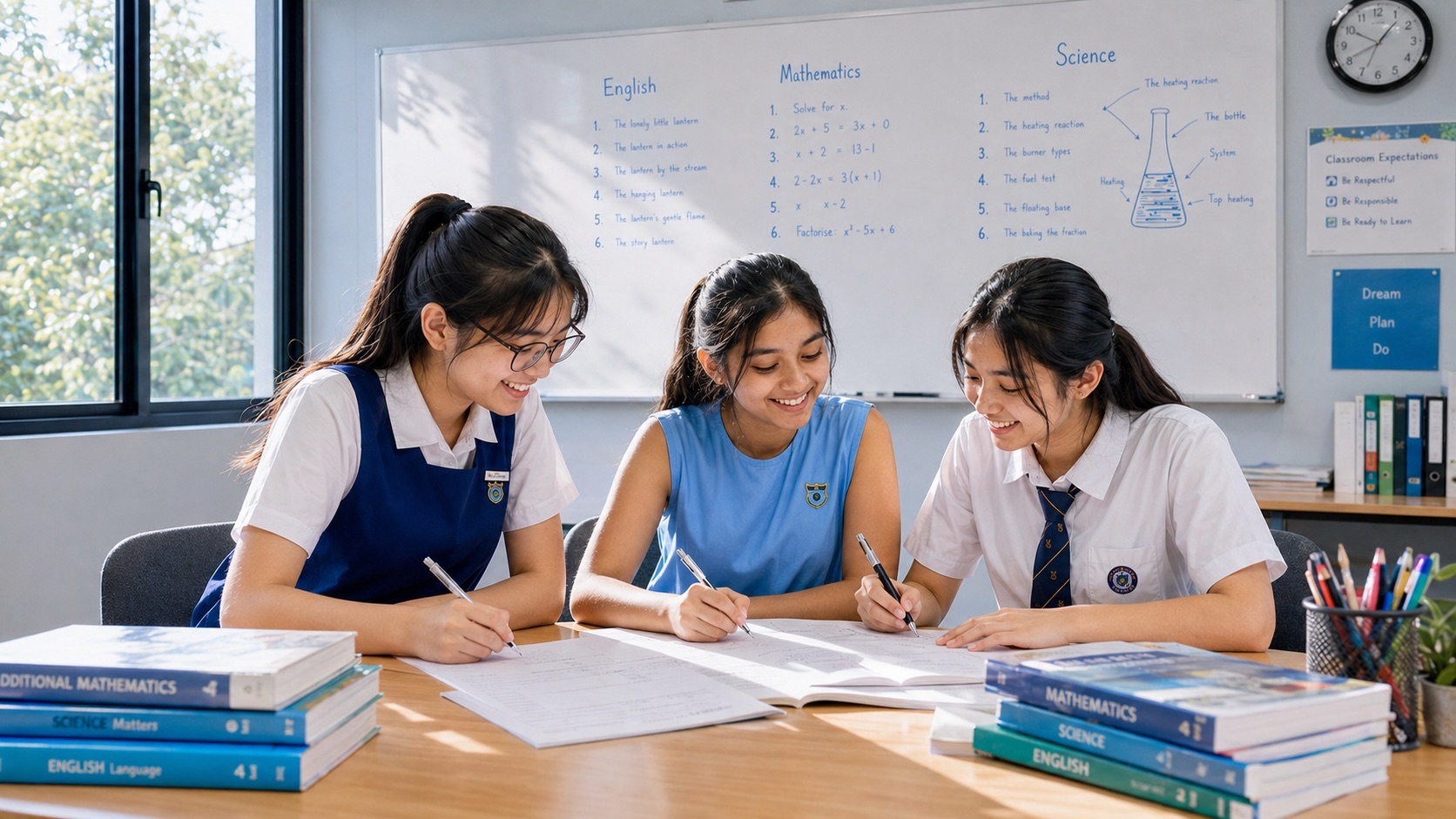
eduKateSG teaches in very small groups of up to three students, generally in 1.5-hour lessons. Our Punggol teaching point is at 83 Punggol Central, Singapore 828761. The small-group format matters because independence cannot be taught only through explanation. It has to be observed in the moments when the tutor is helping another child and each learner must decide what to do next.
Quick View: The Primary 1 Job This Page Owns
| Level | Primary 1 English |
| Main problem | The child can work with adult prompting but waits, freezes or seeks reassurance before starting alone |
| Core teaching job | Instruction → first move → attempt → check → ask a precise question if needed |
| Class | Up to 3 students, generally 1.5 hours |
| Curriculum context | MOE Primary English Language Syllabus 2020 |
| Centre | 83 Punggol Central, Singapore 828761 |
Primary 1 Is a Transition in Control, Not Just Content
A child entering Primary 1 is learning new English content, but there is another transition happening at the same time. School tasks increasingly expect the child to listen to an instruction, hold it in mind, organise materials, begin, continue through small uncertainties and signal when help is genuinely required.
A learner can know letter-sound relationships, common vocabulary or basic sentence structures and still struggle because every task begins with a search for adult confirmation. The child asks, “Is this right?” before writing the first word, waits for the tutor to point to the line, or stops when one unfamiliar word appears.
That behaviour is not laziness. Often it is simply the result of a system that has rewarded immediate rescue. The repair is not to remove support abruptly. The repair is to make the first move small enough to attempt and the support precise enough that the child learns what they can do alone.
The MOE Primary English Direction: Meaning, Communication and Independent Use
The current MOE Primary English Language Syllabus 2020 emphasises a strong foundation in English, integrated language skills, meaning, communication, reading, writing and increasingly independent use of language. That supports an important teaching principle: a child should not only complete English tasks with an adult beside them; the child should gradually learn how to enter a task independently.
At Primary 1, independence does not mean “do everything alone”. It means the child knows a few reliable actions that can be attempted before help is requested.
Read or listen again → say what you understand → try the smallest useful step → check → ask a specific question.
The First-Move Routine
We teach a compact routine that can be adapted to reading, vocabulary, grammar and writing:
- Read or listen again. Many Primary 1 errors disappear when the instruction is revisited calmly.
- Say the job. The child explains in simple words: “I have to circle the word,” “I need to write one sentence,” or “I need to find who did this.”
- Find the first thing I know. Start from the familiar word, picture, sentence or example.
- Try one small step. Do not wait for certainty about the whole page.
- Check the step. Does it match the instruction or example?
- Ask precisely if stuck. “I know what this sentence says, but I do not know this word” gives the tutor far more information than “I don’t know.”
The routine creates a bridge between dependence and independence. It also gives the tutor diagnostic information. A child who can state the task but cannot read a key word needs a different repair from a child who never understood the instruction.
Why Tutor Rescue Can Accidentally Become the Problem
Good tutors want children to succeed. That makes rescue tempting. The tutor sees hesitation and immediately restates the question, points to the answer area, gives the first sound, or offers the opening phrase.
If this happens every time, the student learns an unintended rule: hesitation causes an adult to make the next decision for me.
The answer is not to withhold help. It is to use the lightest useful intervention. Sometimes one question is enough: “What does the instruction ask you to do?” or “Which word do you already know?” The tutor can then see whether the child can restart.
Five Different Reasons a Primary 1 Child Does Not Start
1. The instruction was not understood
The child may decode every word on the page yet not understand what action is required. We teach instruction language explicitly: circle, underline, match, complete, choose, write, arrange, describe and explain at an age-appropriate level.
2. The reading demand is too high
A single unfamiliar word can block the whole task if the child believes every word must be solved before anything can begin. We teach the learner to use picture clues, nearby words, phonics knowledge and sentence meaning, while also knowing when a word genuinely requires help.
3. The child fears being wrong
Some children ask for confirmation because they have learned that correctness matters more than attempting. We make low-risk first attempts normal. The child can pencil an answer, explain the reason and revise if evidence changes.
4. Working memory is overloaded
A long instruction with several steps can disappear before the child begins. We shorten the unit of action: “First, read the sentence. Then tell me which two words matter.” As the child becomes more capable, the number of remembered steps can grow.
5. Adult prompting has become part of the task
If every worksheet has historically been started together, the child may not know that independent entry is expected. We deliberately create small moments where the learner begins before the tutor returns.
Reading: Independence Begins With Meaning, Not Speed
Primary 1 reading should become increasingly fluent, but speed alone is a poor definition of reading success. A child who races through a passage and cannot say what happened is not yet controlling meaning.
We ask the child to pause at natural points, retell briefly, notice punctuation and repair when meaning becomes strange. If a sentence no longer makes sense, rereading becomes an active strategy rather than a punishment.
The first-move routine for reading may be: read the sentence again, point to the word that caused the problem, sound what can be sounded, use the picture or sentence, then ask for help with the precise obstacle.
Vocabulary: From “I Know This Word” to “I Can Use It”
Vocabulary is often taught through matching and spelling. We add use. A child may recognise enormous but not know when it sounds natural. The learner may know whisper but confuse it with mumble. We compare nearby words, use pictures and short sentences, and ask the child to create an original example.
Independence appears when the child begins asking, “Does this word fit what I want to say?” rather than waiting for the tutor to supply the “best word”.
Grammar: See the Pattern Before Naming the Rule
At Primary 1, grammar should help the child make meaning accurately. We may compare two sentences, notice what changes when the subject changes, or examine why a sentence sounds incomplete. The child learns to inspect the sentence rather than simply guess from habit.
For example, if the child writes “The dogs is running,” the tutor can ask what the subject is and compare it with “The dog is running.” The correction becomes a pattern the learner can later detect independently.
Writing: The First Sentence Should Not Require a Rescue
Young writers can become dependent on opening phrases supplied by adults. We prefer a simpler routine: say the idea aloud, choose who or what the sentence is about, say what happens, then write the clearest sentence the child can manage.
The first version does not need to be impressive. It needs to exist. Once the sentence is on the page, the child can improve a verb, add one useful detail, fix punctuation or combine ideas. Drafting becomes something the learner can enter rather than a performance requiring the perfect opening.
Why Three Students Helps Independence
In a 3-pax class, the tutor’s attention naturally rotates. When the tutor works with Student A, Students B and C experience short, safe intervals of independent work. Those intervals are educationally valuable when the tasks are calibrated correctly.
The tutor can observe what each child does without direct attention. Does the child continue reading, begin the next question, reread the instruction, check an answer or simply stop? That behaviour tells us whether the support is becoming internal.
Peers also provide useful modelling. A child can see that another student attempts, erases and repairs without catastrophe. But we protect against copying by returning each learner to their own explanation: “Why did you choose that answer?”
A Typical 1.5-Hour Primary 1 English Lesson
- Retrieval warm-up: a short review of sounds, words or sentence patterns.
- Shared teaching: introduce one clear reading, vocabulary, grammar or writing target.
- Guided example: model how to think through the task.
- Independent first move: each child begins a related task before receiving help.
- Small correction: tutor intervenes at the earliest useful point.
- Second attempt: child tries a changed example with less support.
- Reading or writing application: use the skill inside meaningful English.
- Close: child explains what to try first next time.
The important design feature is support fading. If the tutor performs the same amount of work in Week 20 as in Week 2, the system is not producing enough independence.
What Parents Can Reinforce at Home
- Ask, “What does the instruction want you to do?” before explaining it.
- Let the child attempt one small step before confirming.
- When reading breaks, ask which word or sentence caused the problem.
- After a correction, ask the child to explain why the new answer is better.
- Use short daily reading rather than occasional very long sessions.
- Praise useful attempts and self-correction, not only instant correctness.
Home support should not turn into a second school day. Five deliberate minutes can be more useful than an hour of parent-led correction if the five minutes strengthen the child’s own process.
What Progress Should Look Like
We look for changes before marks tell the whole story. The child begins familiar work more quickly. Questions become more specific. Rereading happens without being ordered. The learner can tell the tutor what part is confusing. The first sentence appears with less negotiation. The child changes an answer because of a reason rather than because an adult frowned.
Those behaviours matter because they are the beginnings of self-regulated learning. Better English outcomes should follow as reading, vocabulary, grammar and writing become more accessible to the child’s own control.
When Punggol Families May Consider Primary 1 English Tuition
- The child waits for adult help before nearly every English task.
- Reading is technically possible but meaning is frequently lost.
- Instructions are often misunderstood.
- The child is anxious about making the first attempt.
- Vocabulary is recognised but rarely used.
- Sentence writing requires heavy adult prompting.
- School work is becoming a repeated parent-child struggle.
- The child would benefit from a very small class where independence can be observed closely.
Tuition is not necessary for every Primary 1 child. If the learner is adjusting well, reading regularly, communicating confidently and progressing with school support, additional tuition may add little. The question is whether there is a specific learning problem that close teaching can improve.
Current Official Reference
Parents can read the MOE English Language Syllabus 2020 for Primary. It provides the official framework for English learning, including the integration of language skills, meaning, communication and increasingly independent use.
Almost-Code Summary: Independent Starts
INPUT:
    new_primary_1_task

CHILD:
    read_or_listen_again()
    say_the_job()
    find_what_is_known()
    try_one_small_step()
    check_against_instruction()

IF stuck:
    identify_exact_problem()
    ask_specific_question()

TUTOR:
    give_smallest_useful_prompt()
    return_control_to_child()

RETEST:
    changed_example
    lighter_prompt

OUTPUT:
    faster_independent_start
    clearer_questions
    stronger_reading_and_writing_control
    less_unnecessary_rescue
The Larger Goal: Help Should Produce Less Need for Help
A good Primary 1 tutor is highly supportive. But support is not measured by how often the adult speaks. It is measured by whether the child becomes more capable of noticing, attempting, checking and asking useful questions.
That is the reason this Punggol Primary 1 English page exists. The first move is small, but it changes the learning relationship. The child begins to discover: I do not have to know everything before I start. There is usually something useful I can try.
For a Primary 1 English class enquiry: call or WhatsApp eduKateSG at +65 8823 1234. Punggol classes are arranged according to current 3-pax availability and learning fit.
Primary 1 parent hub: Primary 1 Tuition Punggol | English & Mathematics Foundation Hub