
Primary 5 is the year to build revision habits before Primary 6 makes every weakness feel urgent.
The useful question is not how much work a child can finish. It is whether the child can recognise weak areas, retrieve what was learned, correct recurring errors and return to material later without starting from zero.
For Yishun families, this page focuses on those habits.
Quick Read
- P5 is a preparation year.
- Revision should be spaced, not crammed.
- Retrieval matters. Students should recall before rereading.
- Corrections should become future checks.
- Independence should increase before P6.
The One-Sentence Answer
Good Primary 5 English tuition should teach students how to revisit, retrieve, correct and self-check so Primary 6 revision begins from an organised system.
Revision Is Not Re-Reading Everything
Useful revision begins by trying to recall what is known, then checking what was missed. This exposes the real gap.
Build a Small Error Ledger
Track recurring patterns rather than every mistake: inference, tense, incomplete answers, weak paragraph structure, vocabulary precision or timing.
Use Spaced Returns
A correction that works immediately may disappear a week later. Return to the same skill after time has passed and change the surface of the task.
Teach Checking as a Routine
Students should know what they personally need to inspect. Generic “check your work” advice is too broad.
What Parents Can Ask
- “What are you trying to remember without looking?”
- “Which mistake keeps returning?”
- “What will you check first next time?”
- “Can you still do this a week later?”
How eduKate Approaches Primary 5 English
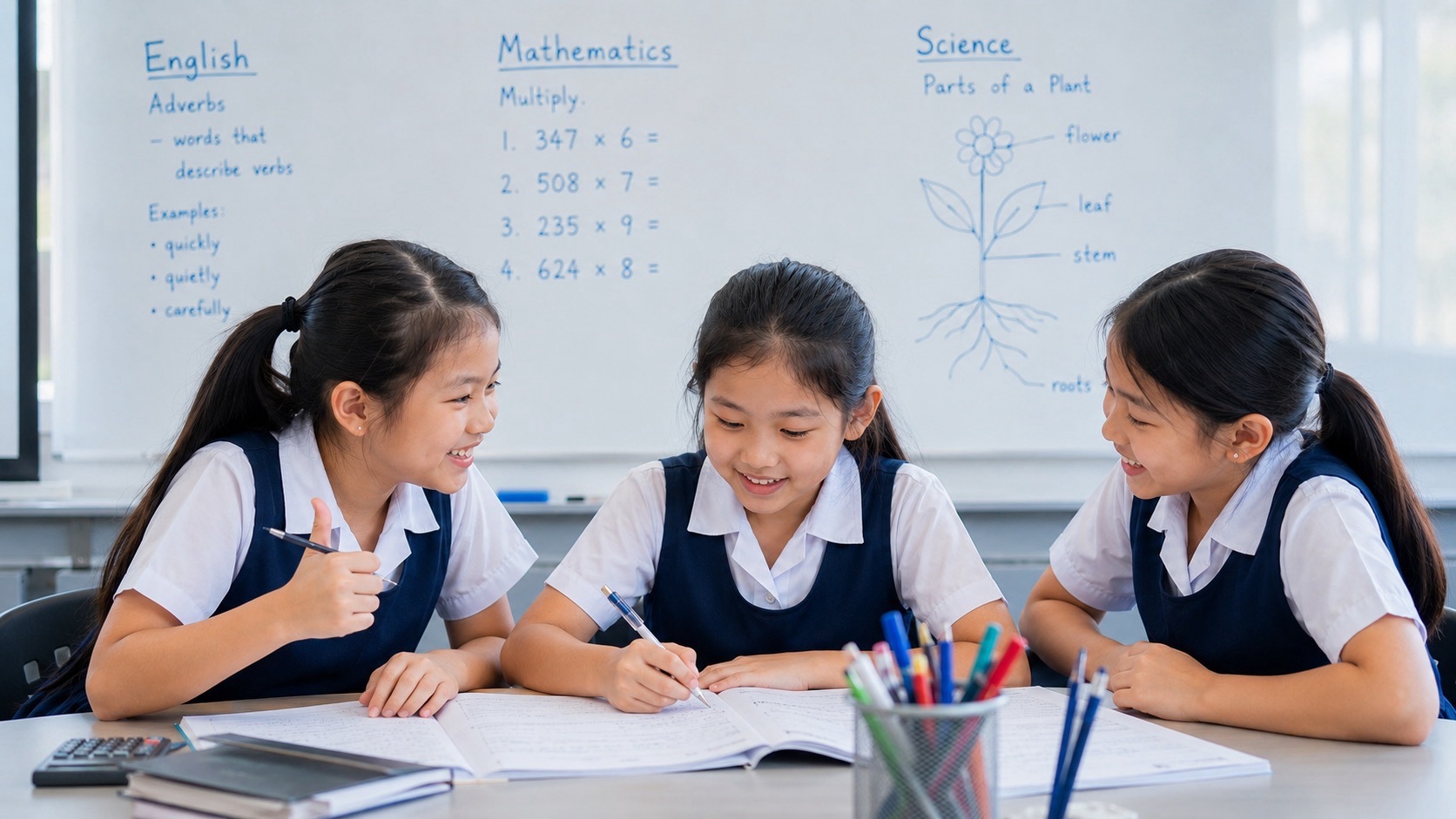
eduKate uses small groups of three to connect school feedback with retrieval, spaced practice and individual error patterns. We reduce prompting as routines become more reliable.
The Best P5 Revision Habit Is Knowing What to Do Next
Primary 6 becomes calmer when the student already knows how to diagnose, revisit and check their own English.