
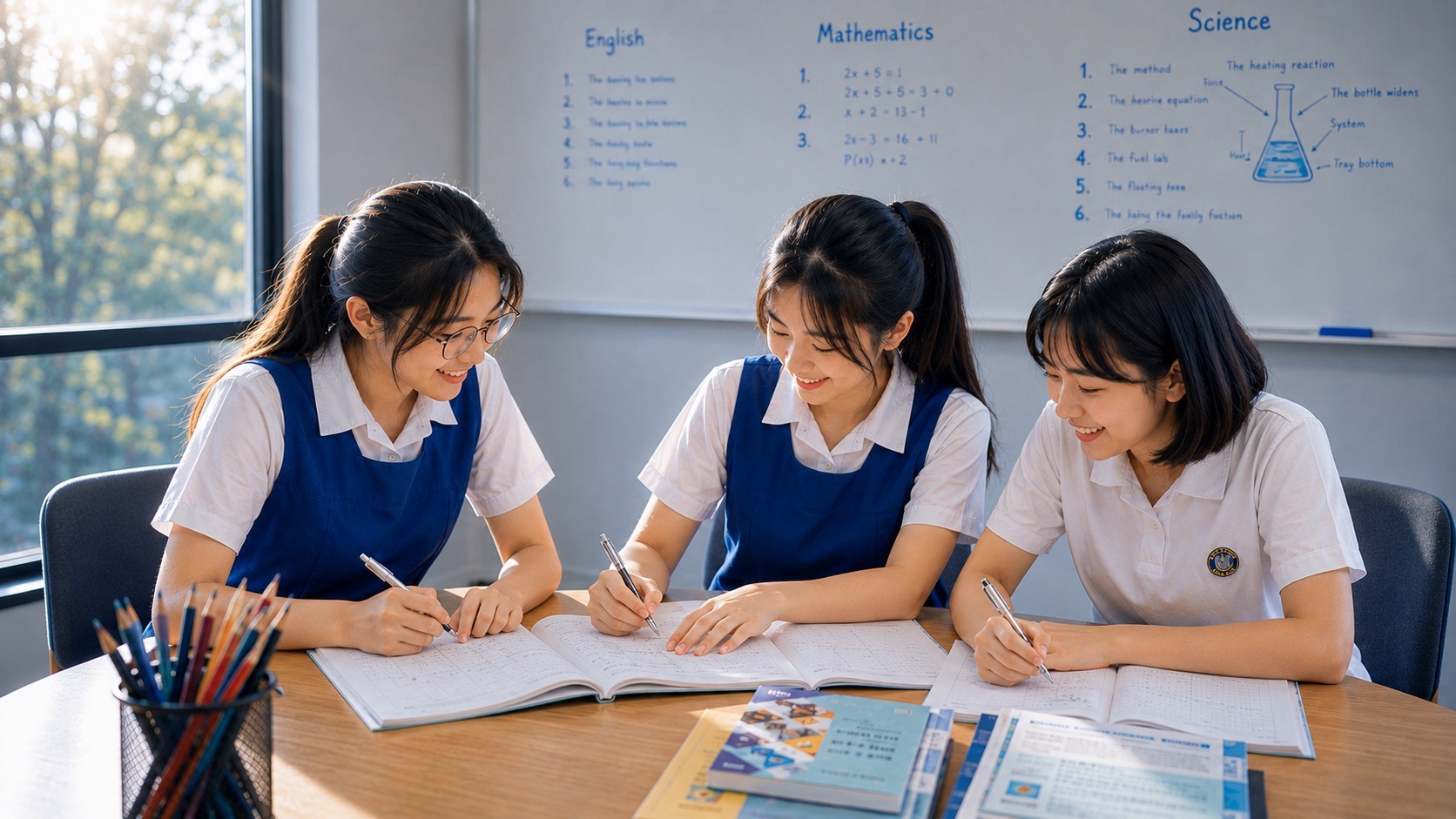
Secondary 3 Situational Writing becomes much more reliable when students stop treating the source material as text to copy and start treating it as information to adapt for a specific reader. The task is communication: who am I, who is reading, what needs to happen after they read, which source points matter, and what tone fits the relationship?
This rebuilt 2020 Waterway Point page now owns one distinct Punggol Secondary 3 job: Situational Writing source adaptation, audience, purpose and tone. It does not duplicate the existing Punggol Sec 3 Waterway Point page on argument and evidence control. That page owns Upper-Secondary reasoning. This page owns communication design.
For the 2026 Secondary 3 cohort, the following year moves into the Singapore-Cambridge Secondary Education Certificate framework. Students taking G3 English should follow the applicable 2027 G3 syllabus. This page therefore builds a transferable writing capability rather than a one-year trick.
Waterway Point remains historical local-search intent only. This page does not claim lessons are conducted inside the mall. Families should confirm current class arrangements directly.
Quick Read: Situational Writing Control
- Role: who is the writer?
- Audience: who is the reader?
- Purpose: what should the message achieve?
- Context: why is the communication happening?
- Required content: which source points must be covered?
- Adaptation: transform raw source material for this reader.
- Tone: make language fit relationship and purpose.
- 3-pax advantage: compare several valid adaptations of the same source.
1. Situational Writing Is a Communication Problem
Students often begin by thinking about format. Format matters, but it comes after the communication situation.
A message to a friend, teacher, organiser or group of parents can carry similar facts but requires different emphasis, tone and sequencing.
2. Role Changes the Language
The writer’s identity influences authority, familiarity and responsibility. A student writing as a class representative can make certain statements directly; the same student writing as a participant may need a different approach.
We ask what the writer knows, what they are responsible for and how they relate to the reader.
3. Audience Is More Than Formal or Informal
Two formal readers may need very different messages. A principal may need concise justification. Parents may need reassurance and logistics. An external organiser may need clear requests and deadlines.
Audience awareness means predicting what information the reader needs and how they are likely to interpret the message.
4. Purpose Sets the Centre of Gravity
Informing, persuading, requesting, apologising, inviting and explaining require different emphases.
We ask: what should the reader know, feel or do when they finish? That answer becomes the organising principle.
5. Context Prevents Generic Writing
Context explains why this message exists now. What happened? What problem needs solving? What event is approaching? What constraints matter?
Students who understand context write messages that feel purposeful instead of templated.
6. Required Content Is a Coverage System
We identify compulsory content before drafting. Every required point is mapped to a paragraph or sentence job.
This prevents the common final-minute discovery that one key source point was omitted.
7. Source Material Is Raw Material
Source wording may be too terse, too promotional, too technical or simply written for another purpose. The student must transform it.
Adaptation can include paraphrasing, combining points, changing order, adding context and explaining relevance.
8. Preserve Facts While Changing Form
Adaptation should not invent details. We preserve the factual content while changing the language and structure for the intended reader.
This is information fidelity: the form changes; the required meaning remains.
9. Tone Is a Relationship
Tone is not created by inserting polite phrases randomly. It comes from consistent choices in directness, vocabulary, greeting, requests, emphasis and closing.
We compare versions that are too casual, too stiff and appropriately matched.
10. Build a Tone Ladder
Students rewrite the same request at different levels of formality. They notice how modal verbs, contractions, greetings and sentence structures change.
This turns tone from intuition into controllable language choices.
11. Organise for the Reader, Not the Source
The source may list facts in one sequence. The reader may need them in another.
We group related points and decide the most useful order: context first, then reason, then arrangements, then requested action, for example.
12. Openings Should Establish Purpose Efficiently
A good opening establishes why the message exists and, where appropriate, what is being requested or communicated.
Generic pleasantries should not consume the paragraph.
13. Paragraph Jobs
Each paragraph should have one main communication job: explain the situation, present reasons, give details, address concerns, request action or close the message.
This creates coherence even when several source points must be covered.
14. Development Without Padding
Some tasks require explanation beyond the raw source point. We add only what helps the reader understand why a detail matters.
Development should serve purpose, not merely increase word count.
15. Closings Should Complete the Communication
The final paragraph should make the next step clear: confirmation, consideration, attendance, action, response or thanks.
The closing should fit both purpose and tone.
16. Grammar Under Situational Writing Load
Grammar errors can increase when students are simultaneously tracking content coverage and tone.
We therefore keep the final editing pass short and personal: recurring tense, agreement, reference and sentence-boundary errors.
17. Vocabulary Should Fit the Register
Precision matters more than ornate vocabulary. Students compare words that are too casual, too formal, too vague or appropriately direct.
18. The Situational Writing Error Map
- role ignored;
- audience misread;
- purpose unclear;
- required content omitted;
- source copied mechanically;
- tone inconsistent;
- points arranged in source order rather than reader order;
- necessary development missing;
- irrelevant padding added;
- grammar collapses under task load;
- final checking misses an omission.
19. The Pre-Writing Scan
- Who am I?
- Who is reading?
- Why am I writing?
- What must be included?
- What does the reader need first?
- What tone fits?
- What action or response should happen next?
20. Transfer: Change the Audience, Keep the Facts
One of the best tests is to keep the source information but change the audience. A message to classmates becomes a message to parents or an organiser.
If the student’s wording, organisation and tone adjust appropriately, the method is transferring.
21. Transfer: Change the Purpose
The same facts can be used to inform, persuade or request. Students learn that purpose changes emphasis and sentence choice.
22. Why Three Students Works for Situational Writing
- Three adaptations can be compared. Students see that one source can produce several strong responses.
- Tone becomes audible. Learners can hear when a sentence is too casual or stiff.
- Coverage remains individual. One student’s omission is visible immediately.
- Organisation can be debated. Students explain why one order serves the reader better.
- Transfer is easy to test. The tutor changes audience or purpose.
- Grammar remains personal. Different error families can still be repaired.
23. The 90-Minute Waterway Point Sec 3 Runtime
- 10 minutes — Retrieval: role/audience/purpose scan.
- 10 minutes — School evidence: inspect recent Situational Writing.
- 10 minutes — Source map: identify compulsory content.
- 10 minutes — Audience design: choose tone and order.
- 20 minutes — Draft: write a section or full response.
- 10 minutes — Compare: examine peer adaptations.
- 10 minutes — Transfer: change audience or purpose.
- 5 minutes — Edit: run personal grammar checks.
- 5 minutes — Close: retrieve the pre-writing scan.
24. Catch Up: Coverage Before Elegance
A struggling student first needs to understand the task and cover required content. Once that is reliable, tone and style can become more refined.
25. Keep Up: Rotate Communication Situations
A stable student should regularly meet different audiences and purposes so the method remains flexible.
26. Move Ahead: Strategic Emphasis
Strong students can decide which source point deserves more emphasis for a particular reader and how to qualify or frame information without changing facts.
27. Parent Guide
- Keep the original task sheet with the student’s response.
- Ask who the reader is before discussing vocabulary.
- Check whether all required content was covered.
- Notice copied source wording.
- Ask whether the final message actually achieves the purpose.
- For Waterway Point searches, confirm current class arrangements directly; the URL is not a claim of lessons inside the mall.
28. What Real Secondary 3 Progress Looks Like
- Role, audience and purpose are identified before drafting.
- Required content is covered more reliably.
- Source material is adapted rather than copied.
- Tone becomes consistent.
- Paragraph order serves reader needs.
- Openings and closings become purposeful.
- Grammar remains steadier under task load.
- Changed audience or purpose causes less breakdown.
- The student enters the final year with a reusable Situational Writing method.
29. How This Page Fits the Punggol Sec 3 Estate
Punggol Secondary 3 English Tuition | Waterway Point Argument & Evidence Control owns argument and evidence. This page owns Situational Writing source adaptation, audience, purpose and tone.
Frequently Asked Questions
Should students memorise a Situational Writing template?
A stable structure can help, but role, audience, purpose and source material still determine the final response. Rigid templates can fail when the situation changes.
What is the most common mistake?
Often it is treating source material as text to reproduce rather than information to adapt for a specific reader.
Does Waterway Point mean lessons are inside the mall?
No. Waterway Point is retained as historical local-search intent. Confirm current location directly.
Conclusion: The Source Is Raw Material; the Reader Is the Destination
Strong Situational Writing is not a copied list of content points wearing an email format.
Know the writer. Understand the reader. Define the purpose. Cover the required content. Adapt the source. Organise for the reader. Keep tone consistent. Check the final communication.
A three-student class gives enough resolution to compare different valid adaptations and make communication choices visible.
If you are considering Punggol Secondary 3 English tuition around Waterway Point, the useful question is not “Does my child know the format?” It is “Can my child transform raw task information into communication that fits the reader and actually achieves the purpose?”