
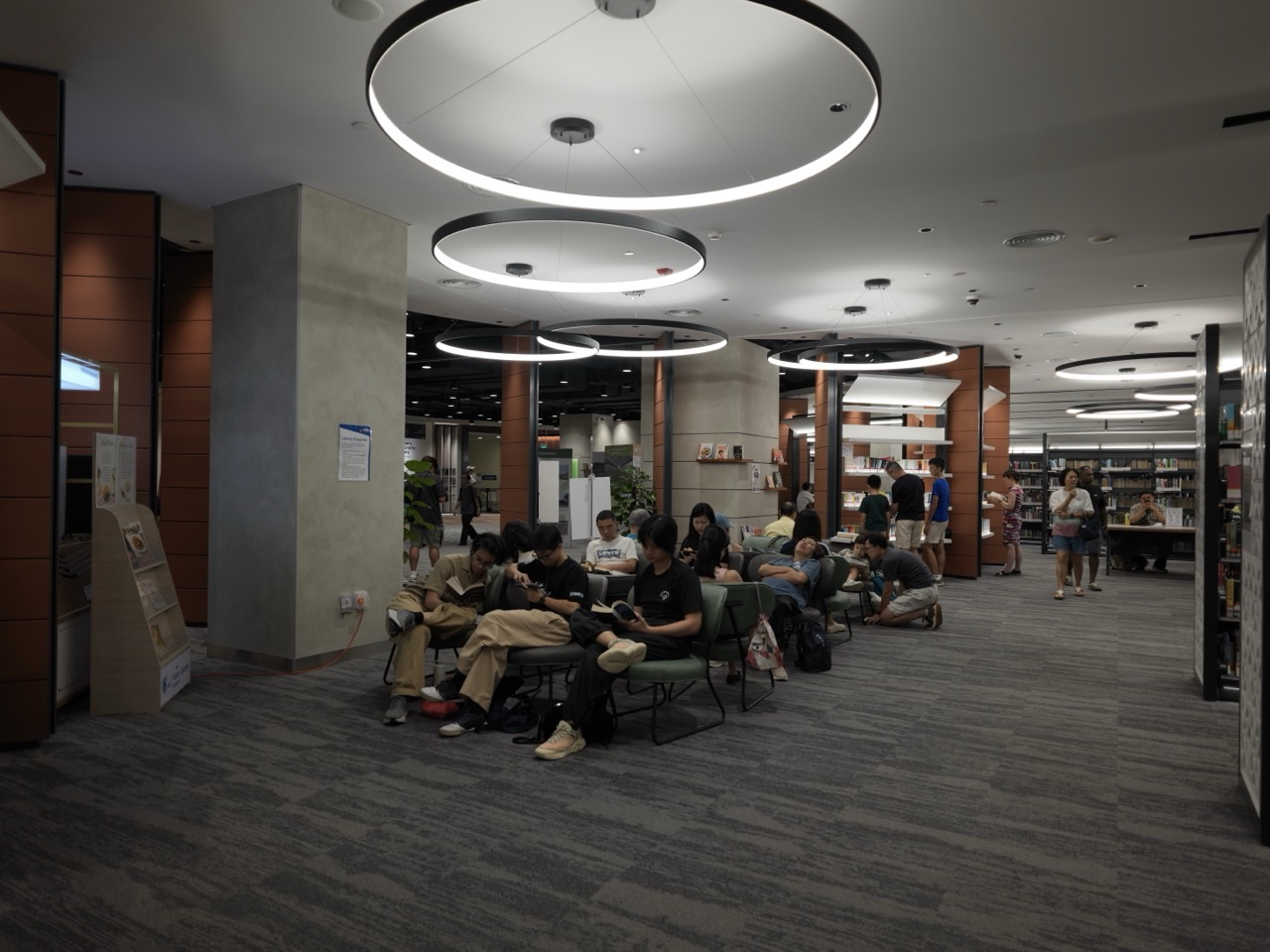
A library works when it can select useful knowledge, describe it accurately enough to be found, preserve it long enough to remain usable, connect the right person to the right resource under appropriate rights and access conditions, and learn from use so the collection remains valuable as communities, formats and technologies change.
A library is therefore not merely a building full of books. It is a knowledge-access system: part collection, part memory, part catalogue, part search engine, part rights-management system, part learning environment, part preservation infrastructure and part human reference service.
IFLA describes libraries as institutions with a distinctive role in collecting, preserving and providing access to knowledge. That triad explains why the library’s job cannot be reduced to storage. Knowledge that is preserved but cannot be found is functionally hidden. Knowledge that is discoverable but legally or technically inaccessible may still fail the reader. Knowledge that is accessible today but not preserved can disappear tomorrow.
The library succeeds when knowledge remains findable, reachable, understandable and usable across people, places, formats and generations.
Quick Read: The Whole Library Mechanism
COMMUNITY / KNOWLEDGE NEED → COLLECTION POLICY → SELECTION / ACQUISITION → RIGHTS / LICENSING → INGEST → DESCRIPTION / METADATA → CLASSIFICATION / SUBJECT ACCESS → CATALOGUE / INDEX → STORAGE / PRESERVATION → DISCOVERY → SEARCH / REFERENCE → AUTHENTICATION / ACCESS → LOAN / DELIVERY → READING / RESEARCH / LEARNING → RETURN / USAGE SIGNAL → COLLECTION REVIEW → PRESERVATION / MIGRATION → CORRECTION / RENEWAL
The governing RFE is:
Can a library select and preserve useful knowledge, describe it accurately enough to be found, connect the right person to the right resource with appropriate access and rights, and keep that knowledge usable across changing formats, technologies, communities and generations?
1. A Library Begins With a Community and a Knowledge Need
No library can collect everything. A school library, public library, university research library and national library serve different users, legal obligations and knowledge missions.
The first question is therefore not Which books should we buy? but Who is this library for, what knowledge jobs must it support, and what must remain available even when short-term demand is low?
2. Collection Policy Converts Mission Into Selection Rules
A collection policy defines the domains, audiences, formats, languages, depth, geographical coverage, heritage responsibilities and exclusions that guide acquisitions.
Selection is unavoidable because money, shelf space, staff time, licensing budgets, preservation capacity and reader attention are finite. The important question is whether the selection logic is explicit, reviewable and tied to the library’s mission.
collection ≠ everything published.
3. Acquisition Brings a Resource Under Library Control
Libraries obtain materials through purchase, subscription, donation, legal deposit, exchange, transfer, digitisation agreements and licensed digital access.
Physical ownership and digital access are not identical. A library may own a printed book outright but only license access to an eBook, journal database or streaming service under contractual conditions.
access ≠ ownership.
4. Rights and Licensing Shape What the Reader Can Actually Do
Copyright, licence terms, donor restrictions, privacy requirements and cultural or ethical constraints can affect copying, lending, downloading, remote access, preservation and reuse.
Libraries therefore operate at the boundary between public access and legitimate rights. IFLA’s public-access principles explicitly recognise both broad access to information and the need for copyright frameworks that balance public interest with the rights of authors and publishers.
loan ≠ transfer of copyright; availability ≠ unrestricted reuse.
5. Ingest Turns an Acquired Resource Into a Managed Library Object
After acquisition, the library must identify the object, record its source, determine its condition, assign identifiers, capture rights information and decide how it should be stored and described.
For digital objects, ingest may also include checksum creation, malware screening, format identification, transfer documentation and movement into managed preservation storage.
6. Metadata Makes the Resource Legible to the System
Metadata is structured information about a resource: title, creator, date, edition, language, subject, identifier, format, rights, location and many other possible fields.
The content of a book can exist perfectly while the catalogue record is poor. If the title is wrong, the author is missing, the subject terms are weak or the resource lacks accessibility information, discovery becomes harder.
IFLA’s 2026 statement on accessibility metadata makes this point directly: missing or inaccurate accessibility metadata can prevent readers with disabilities from finding resources with the features they need.
metadata ≠ content; metadata is the routing layer that helps content become findable.
7. Classification Groups Knowledge for Browsing and Management
Classification systems place resources into organised structures so related material can be found together physically or conceptually.
Examples include broad subject classes, call-number systems and specialised domain taxonomies. Classification is useful because knowledge is too large to browse as an undifferentiated pile.
But every classification embodies decisions about categories and hierarchy. New fields emerge, old terms become outdated and one item can legitimately belong to several subjects.
classification ≠ truth; it is an organisational model.
8. Subject Access Lets Readers Search Beyond Exact Titles
A reader may not know the exact title or author. Subject headings, keywords, abstracts, summaries, authority files and controlled vocabularies connect an information need to resources that use different language.
This is one reason a good catalogue is more than an inventory. It translates between the language of the collection and the language of the reader.
9. Authority Control Prevents One Person or Work From Splitting Into Many Identities
Authors can publish under initials, full names, married names, transliterations or pseudonyms. Places can have historical and modern names. Organisations can merge or rename themselves.
Authority control links these variants so a search does not incorrectly fragment one entity into unrelated records.
10. The Catalogue Is a Map of the Collection, Not the Collection Itself
The catalogue tells the reader what the library has, how an item is described, where it can be found and often whether it is available.
A catalogue can also include records for digital resources that exist outside the library’s physical building or for resources whose access is mediated through another repository.
catalogue ≠ collection.
11. Indexing Creates Faster Routes Into Large Collections
Search systems often build indexes over catalogue metadata and, where rights permit, full text. An index stores structures optimised for retrieval rather than forcing the system to scan every item from beginning to end for every query.
Indexes can be rebuilt. The underlying catalogue, identifiers, provenance and preserved objects should remain the authoritative record.
12. Discovery Converts a Reader’s Need Into Candidate Resources
Discovery systems combine search, filters, relevance ranking, facets, recommendations and links to help readers move from a question to a manageable set of resources.
A resource may be technically available yet effectively invisible if discovery fails.
availability ≠ discoverability.
13. Search Ranking Is a Decision Layer
A search engine must decide which candidate results appear first. Ranking can use term matching, subject fields, date, popularity, availability and other signals.
The first result is therefore not automatically the best source. It is the result that the ranking system judged most relevant according to its rules.
search result ≠ best source.
14. Reference Service Adds Human Reasoning to Retrieval
Librarians help readers clarify questions, identify appropriate databases, choose search terms, distinguish source types, locate special collections and interpret access conditions.
The human reference function matters most when the reader’s question is ambiguous or the information architecture is complex.
librarian ≠ checkout operator; reference work is knowledge routing.
15. Authentication Determines Who May Reach Which Resources
Some resources are open to everyone. Others are limited to registered members, students, staff, residents, onsite users or authorised researchers.
Authentication systems confirm identity or membership; authorisation systems determine what that authenticated user is allowed to access.
discoverability ≠ accessibility.
16. Lending Creates Temporary Access Without Losing Collection Control
A circulation system records which item has left the library, who borrowed it, when it is due and whether another reader is waiting.
The system balances access with return. If a scarce physical item never returns, future access disappears. Digital lending may use entirely different contractual and technical models.
17. Reference Collections and Loan Collections Have Different Jobs
Some material is designed to circulate. Other material remains onsite because it is rare, fragile, expensive, heavily used, difficult to replace or licensed only for local access.
Singapore’s Lee Kong Chian Reference Library, for example, maintains major reference collections that are consulted onsite rather than borrowed in the same way as ordinary public-library items.
18. Preservation Keeps Knowledge Usable Through Time
Preservation can involve environmental control, conservation treatment, protective enclosures, duplication, migration, checksums, redundant storage, documentation and disaster planning.
IFLA treats preservation as part of the library and archive mission because fragile physical media and impermanent digital formats can decay or become unusable.
preservation ≠ putting something on a shelf and never touching it again.
19. Digitisation Is Access Creation, Not the Whole of Digital Preservation
Digitising a printed page, photograph or map creates a digital representation. That representation still needs identifiers, metadata, storage, backup, integrity checks, format management and access systems.
A scan stored on one hard drive is not a durable preservation programme.
digitisation ≠ digital preservation; scan ≠ searchable text.
20. Born-Digital Material Has No Paper Original to Fall Back On
Emails, word-processing files, databases, websites, digital photographs, software and social-media records may begin life digitally.
The Library of Congress describes born-digital preservation as a managed process involving original storage media, custody, authenticity, file transfer, metadata, checksums, long-term storage and tools capable of opening older formats.
If the hardware disappears, the file format becomes obsolete or the access software no longer runs, possession of the bits may not be enough for meaningful access.
21. Fixity Checks Whether the Digital Object Changed
A checksum is a value calculated from digital content. Recalculating and comparing it later can reveal whether bits changed unexpectedly.
Fixity does not prove that the original file was truthful or correctly described. It helps show that the preserved digital object remains the same sequence of bits as the version previously recorded.
fixity ≠ authenticity ≠ truth.
22. Migration Preserves Use by Changing Representation
Sometimes preservation requires converting an old file into a newer format so modern software can still open it.
This creates a subtle point: preservation can involve controlled change. The goal is not always to freeze every technical property forever; it is to preserve the significant content, structure and provenance needed for future use.
preservation ≠ never changing a file.
23. Repositories Store Managed Objects; Backups Recover Systems
A backup helps restore data after accidental deletion or infrastructure failure. A preservation repository adds object identifiers, metadata, provenance, rights, integrity checking, retention policy and managed access over time.
repository ≠ backup.
24. Accessibility Is Part of Access
A resource that exists online may still be inaccessible to a reader who needs captions, screen-reader compatibility, large print, alternative text, structured navigation or another accessibility feature.
IFLA’s 2026 accessibility-metadata principles underline that the catalogue must be able to describe these features so readers can identify suitable resources before attempting to use them.
25. Privacy Protects the Reader’s Freedom to Seek Information
Library systems may know which resources a user searched, borrowed or accessed. That information can be sensitive.
IFLA’s public-access principles explicitly connect access to information with user privacy. A library that enables inquiry while unnecessarily exposing the reader’s intellectual activity weakens the freedom it is supposed to support.
26. Collection Use Generates Feedback—but Popularity Is Not the Whole Value Function
Borrowing, downloads, search logs, reference questions, holds and programme attendance can show what users need.
But a national history, rare language resource or specialist scientific monograph may be important even if it is used infrequently. Libraries preserve both high-demand material and knowledge whose value may emerge only later.
popularity ≠ enduring value.
27. Collection Review Removes, Replaces and Rebalances
Libraries periodically replace worn copies, withdraw obsolete material, update fast-changing subjects, add new formats and rebalance collections as communities change.
Withdrawal is not automatically censorship. A responsible collection system distinguishes routine lifecycle management from attempts to suppress legitimate access to ideas.
selection / deselection ≠ censorship by default; motive, policy and process matter.
28. Libraries Build Information Literacy, Not Just Collections
Readers increasingly face enormous information abundance. Libraries therefore teach people how to search, evaluate sources, use databases, understand citations, recognise misinformation and navigate rights or access limits.
A strong library does not merely answer the immediate question. It can make the reader more capable of finding and evaluating information independently next time.
29. Library ≠ Archive
Libraries and archives overlap in preservation and access, but they organise different kinds of knowledge.
Libraries commonly organise published or intentionally collected resources by work, edition, subject and reader use. Archives more often preserve records generated by people or organisations in the course of activity and therefore place greater weight on provenance, original context, records relationships and evidentiary continuity.
library ≠ archive.
30. Library ≠ Museum
A museum commonly owns or stewards physical objects whose material form, provenance and conservation are central to meaning. Libraries primarily organise knowledge resources for reading, consultation, research and reuse, even though special collections can contain unique physical objects.
The three institutions can share one discovery portal while still retaining different collection logics.
31. Worked System 1: A Child Needs the Right Science Book
A Primary 4 student asks for a book about volcanoes. The phrase “volcano book” is not enough to complete the job.
The library route can be:
READER AGE / PURPOSE → SUBJECT QUERY → CATALOGUE SEARCH → READING LEVEL / FORMAT → AVAILABILITY → SHELF / EBOOK LOCATION → BORROW / ACCESS → READING → FOLLOW-UP QUESTION → RELATED RESOURCE.
A technically accurate university geology text may be the wrong resource for the reader. Retrieval quality therefore includes audience fit, not only topical relevance.
32. Worked System 2: Finding a Century-Old Singapore Newspaper
A researcher wants a Singapore newspaper article from the early twentieth century but knows only a date range and an event.
The route becomes:
RESEARCH QUESTION → DATE / EVENT TERMS → CATALOGUE / DIGITAL NEWSPAPER INDEX → TITLE / ISSUE MATCH → DIGITISED IMAGE → OCR / TEXT SEARCH → ORIGINAL PAGE CHECK → CITATION → RELATED ARCHIVAL / SECONDARY SOURCES.
OCR can help discovery but must be checked against the scanned page because old fonts, damaged paper and layout can produce transcription errors.
33. Worked System 3: A Born-Digital Collection Survives Thirty Years
A library receives a researcher’s files on obsolete drives. Some documents use software no longer supported.
A durable route is:
CUSTODY → MEDIA INVENTORY → SAFE TRANSFER → CHECKSUM → FORMAT IDENTIFICATION → RIGHTS / PRIVACY REVIEW → PRESERVATION STORAGE → METADATA → MIGRATION / EMULATION PLAN → ACCESS COPY → PERIODIC FIXITY CHECK → FUTURE RE-MIGRATION.
The collection survives not because one disk was kept safely in a drawer, but because custody, identity, technical usability and access were actively managed.
34. Worked System 4: The Book Is Present but Functionally Lost
Imagine a rare book physically sits in a library store. Its catalogue record has the wrong author name, no useful subject terms and an inaccurate title transcription.
The collection technically contains the book, yet searches never retrieve it.
The failure chain is:
OBJECT PRESENT → DESCRIPTION FAILURE → INDEX FAILURE → DISCOVERY FAILURE → NO REQUEST → NO ACCESS → NO USE.
The repair is metadata correction, authority reconciliation, reindexing and live retrieval verification.
35. Hostile Test: “The Information Is Somewhere in the Library, Therefore the Library Has Provided Access”
The claim is false if the resource cannot be found, requested, opened or used.
Test the complete route:
IDENTIFIED → DESCRIBED → INDEXED → DISCOVERABLE → RETRIEVABLE → RIGHTS-CLEARED → TECHNICALLY OPENABLE → ACCESSIBLE TO THE READER → CITABLE → PRESERVED FOR LATER RETURN.
If any handoff fails, “the library has it” can still be true while “the reader can use it” is false.
Where Library Explanations Commonly Break
| Failure | What goes wrong | Repair question |
|---|---|---|
| Building-book collapse | The library is reduced to shelves and rooms | Which selection, description, discovery and access systems make the collection usable? |
| Collection-totality error | The library is expected to collect everything | What mission and collection policy define scope? |
| Catalogue-collection collapse | The metadata record becomes the object | Where is the actual resource and what does the record represent? |
| Metadata-content collapse | Description is mistaken for the work | Which fields route to the resource and which claims come from the resource itself? |
| Classification-truth error | A category becomes an objective fact | Which organisational purpose produced the classification? |
| Availability-discovery collapse | Possession becomes findability | Can a reasonable query retrieve the item? |
| Discovery-access collapse | Finding a record becomes access | Can the user actually open, borrow or consult it? |
| Access-ownership collapse | A licence becomes permanent possession | What rights continue if the contract ends? |
| Loan-rights collapse | Borrowing becomes permission to reproduce | What copyright and licence conditions remain? |
| Digitisation-preservation collapse | A scan becomes a preservation programme | What preserves metadata, fixity, storage and future readability? |
| Scan-search collapse | An image is assumed text-searchable | Was OCR created and verified? |
| Repository-backup collapse | Recovery copy becomes managed preservation | Where are provenance, identifiers, rights and integrity controls? |
| Popularity-value collapse | Low circulation becomes low importance | Does the resource have heritage, research or long-term value? |
| Selection-censorship collapse | Any non-acquisition becomes suppression | What policy, mission and process drove the decision? |
| Search-rank authority | The first result becomes the best source | Why did the system rank it first? |
| AI-source collapse | An answer is treated as if it were the underlying library source | Can the claim route back to an identifiable resource? |
| Library-archive collapse | Published knowledge and evidentiary records are organised identically | Is the primary job reader access or preservation of record context and provenance? |
| Library-museum collapse | Reading resources and material objects are treated as the same collection type | Is the physical object itself part of the knowledge claim? |
Singapore: NLB Shows the Full Library–Archive Interface
Singapore’s National Library Board provides an unusually clear real-world system because it combines public libraries, the National Library and the National Archives of Singapore while keeping their collection jobs distinguishable.
NLB’s statutory activities include maintaining libraries and library information services, promoting reading and learning, providing a repository for material published in Singapore, maintaining collections about Singapore, compiling the national union catalogue and national bibliography, preserving nationally significant records and facilitating access to them.
NLB currently reports a network of 28 libraries across Singapore together with the National Library and National Archives, reaching more than eight in ten residents and offering more than 2.6 million digital resources.
OneSearch Demonstrates Discovery Across Different Repositories
NLB’s OneSearch can retrieve resources across NLB library databases, National Archives of Singapore databases and National Heritage Board museum repositories.
This is a useful architecture lesson: one discovery layer does not require one undifferentiated collection. A book, archival record and museum artefact can appear in one search experience while their underlying ownership, provenance, preservation and access rules remain different.
How to Read Any Library System
- Community: Who is the library serving?
- Mission: Which knowledge jobs must it support?
- Selection: What enters the collection and why?
- Rights: What can the library and reader legally do?
- Ingest: How is the resource identified and controlled?
- Metadata: How is it described?
- Classification: How is it organised with related knowledge?
- Authority: How are names and identities reconciled?
- Catalogue: Where is the authoritative discovery record?
- Index: How is search accelerated?
- Discovery: Can the reader find it from a real question?
- Ranking: Why are some results shown before others?
- Reference: When does a human need to clarify the query?
- Authentication: Who may access the resource?
- Delivery: Loan, onsite consultation, download or streamed access?
- Accessibility: Can readers with different needs use it?
- Preservation: How does it survive?
- Fixity / provenance: Can the library show what changed and where it came from?
- Usage: What does reader behaviour reveal?
- World return: What evidence would show the collection or discovery system is failing?
Current Evidence and Professional Anchors
- IFLA — Access & Preservation for libraries’ role in collecting, preserving and providing access to knowledge.
- IFLA — Principles on Public Access in Libraries for access, copyright balance, privacy, accessibility, skills and public knowledge infrastructure.
- IFLA — Accessibility Metadata Statement and Principles, approved in 2026, for the role of metadata in helping users identify accessible resources.
- Library of Congress — Digital Collections Management: Access for metadata, processing and access to permanent digital collections.
- Library of Congress — Accessing Born-Digital Manuscript Material for preservation, authenticity, custody, digital identifiers and persistent access.
- National Library Board Singapore — About NLB for Singapore’s national library-and-archives mission, network and current digital-resource scale.
- NLB — Using OneSearch for cross-repository discovery across library, archive and museum resources.
Where This Fits in the eduKate Architecture
This article owns the collection → organisation → discovery → access → preservation → reader-use mechanism.
- How Knowledge Works owns how information becomes usable understanding.
- How Information Works owns signals, representation, transmission and information generally.
- How History Works owns reconstruction of the past from surviving evidence.
- How Universities Work owns teaching, research, credentialing and university knowledge production.
- Singapore Learning Library remains an eduKateSingapore learner-facing collection and routing layer.
- How Libraries Work owns collection development, metadata, discovery, access, lending and preservation.
- Future How Archives Work should own provenance, records, original context, custody, retention and evidentiary continuity.
- Future How Museums Work should own physical-object acquisition, provenance, conservation, interpretation, exhibition and public encounter.
What This Article Does Not Claim
- It does not make a library merely a building or book warehouse.
- It does not claim every library should collect the same material.
- It does not make a catalogue identical to the underlying collection.
- It does not make classification objective truth.
- It does not make discoverability equivalent to access.
- It does not make licensed digital access permanent ownership.
- It does not make digitisation equivalent to preservation.
- It does not make a backup equivalent to a preservation repository.
- It does not make popularity the only measure of collection value.
- It does not make every selection decision censorship.
- It does not make libraries, archives and museums interchangeable.
- It does not treat an AI answer as the underlying source record.
Observable Mastery Test
Choose one resource: a children’s science book, journal article, old newspaper, eBook, historical map or born-digital file collection.
You understand how libraries work if you can reconstruct:
knowledge need → selection → acquisition / licence → ingest → metadata → classification → catalogue / index → discovery → rights / authentication → delivery → reader use → return / usage signal → preservation → collection review → future access.
Then ask five correction questions:
- If the resource exists, can a realistic reader actually find it?
- If the record is found, can the reader legally and technically access it?
- If it is digital, what preserves integrity and future readability?
- Which metadata or classification decision could be hiding it from the intended audience?
- What evidence would force the library to revise its collection or discovery system?
A library stops functioning as knowledge infrastructure when collection becomes accumulation, metadata stops routing, discovery stops finding, access stops reaching the reader or preservation stops carrying the knowledge forward.
A library is not understood when we can count its books. It is understood when we can trace how knowledge is selected, described, discovered, accessed, used, preserved and made reachable again by a reader who has not yet been born.