
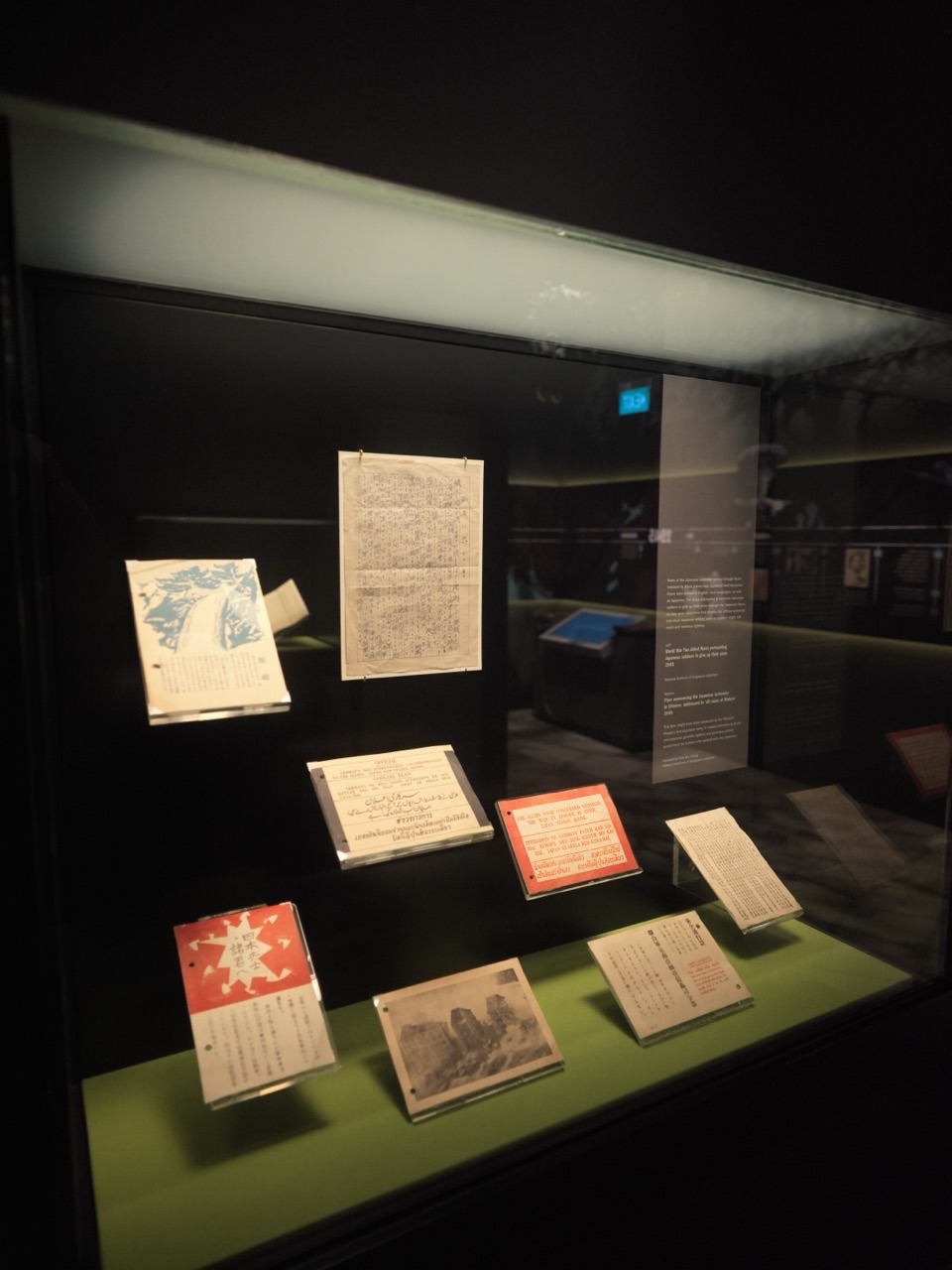
Walk into a good museum and the objects seem simply to be there. They are not. Every gallery is built from choices about evidence, sequence, space, attention and meaning. The gallery is therefore not merely a container for objects. It is an argument made in three dimensions.
A painting hangs on a wall. A bronze vessel sits inside a case. A railway ticket rests beside an old photograph. A dinosaur skeleton rises above a child. A uniform stands beneath carefully controlled light. We look, read and move, and because the experience feels natural it is easy to assume the museum has merely placed interesting things in a room and allowed the things to explain themselves.
But objects do not arrange themselves. They do not decide which room they belong in, select the object beside them, choose whether a national story begins in 1819, 1942, 1965 or ten thousand years earlier, write the title on the wall, dim the lights or decide that one object deserves the centre of the room while another remains in storage.
Someone made those decisions. Usually many people did. That is the first important idea in understanding how museum exhibitions work.
The gallery is an argument: a carefully constructed proposal about what matters, how things relate and what the visitor should notice.
Quick Read: The Exhibition Mechanism
QUESTION → RESEARCH → COLLECTION SEARCH → OBJECT SELECTION → PROVENANCE CHECK → INTERPRETIVE THESIS → NARRATIVE STRUCTURE → CONSERVATION REVIEW → SPATIAL DESIGN → OBJECT PLACEMENT → LABELS → MEDIA → ACCESSIBILITY → EDUCATION → INSTALLATION → VISITOR ENCOUNTER → OBSERVATION → REVISION.
The finished gallery may look calm. The process behind it is not. The International Council of Museums defines museums as institutions that research, collect, conserve, interpret and exhibit heritage while operating ethically, accessibly and with participation of communities. UNESCO likewise treats research, communication and education as fundamental museum functions. The exhibition is one place where all of these responsibilities meet.
The Exhibition Usually Begins With a Question
Imagine that a museum owns ten thousand objects connected with maritime Singapore. It cannot place all ten thousand in a gallery. Even if the building were large enough, the result would probably be unreadable.
So the curator begins somewhere else. Perhaps the question is: How did Singapore become connected to the wider maritime world?
Now the collection changes. A ceramic shard becomes interesting because it may reveal trade. A shipping document records movement. A navigational instrument explains how sailors crossed distance. A port photograph reveals labour and infrastructure. A migrant’s personal possession reminds us that maritime history was also human history.
The question gives the collection a direction. Curatorial research therefore asks something more demanding than “What beautiful objects do we have?” It asks: What can these objects help us understand?
Selection Creates Meaning Before the Visitor Arrives
Every exhibition is an act of inclusion. It is therefore also an act of exclusion.
Suppose a museum creates an exhibition called Singapore at Work. It could include dockworkers, teachers, hawkers, engineers, domestic workers, nurses, civil servants, factory workers, business owners, cleaners, software developers, soldiers, taxi drivers and thousands of other forms of labour. Gallery space is finite. The museum must choose.
If the exhibition contains only famous industrialists, Singapore appears one way. If it contains only workers, it appears another. If it includes machines but not the people operating them, technological progress may dominate. If it includes wages, injuries, family photographs and oral histories, the same industrial history becomes more human.
Selection is interpretation before interpretation is written down.
The First Object Changes the Objects That Follow
Sequence matters. Place a ceremonial sword first and a political history exhibition may begin with power. Place a child’s diary first and the same period may begin with lived experience. Place a map first and geography becomes the doorway. Place a damaged everyday object first and survival may become the organising question.
Museums therefore work partly like writing. The entrance is an opening paragraph. The first room establishes expectations. A transition between galleries works like a change of chapter. A dramatic object may function like a turning point. The final room can operate like a conclusion—or a question deliberately left unresolved.
The complication is that the museum writes in space while the reader is allowed to walk around. Visitors can reverse the order, skip a room, stop halfway or enter with a different question altogether.
Chronology Looks Neutral Until You Examine It
Chronological display is useful because time genuinely matters. But even chronology contains interpretation. Where does the timeline begin? What counts as the decisive turning point? Does a national story begin with independence, colonial administration, earlier regional networks, human habitation or geology?
Every starting point produces a different field of view. Chronology can also make history seem as though it moved neatly towards the present, reducing people in earlier centuries to incomplete versions of us. They were not. They lived inside their own present.
A sophisticated museum therefore uses chronology without allowing chronology to become destiny.
Juxtaposition Is Museum Grammar
Put one object beside another and the visitor begins comparing them: a luxury porcelain bowl beside an ordinary cooking vessel; a colonial map beside an Indigenous place-name; a political speech beside a private letter; a glamorous fashion photograph beside the sewing tools that produced the garment; a weapon beside a medical kit.
The space between two objects can become an argument. Neither object changed. Their relationship did.
The wall is not merely holding things up. It is making syntax.
The Label Is Tiny Because the Research Behind It Is Huge
A museum label may contain seventy words. The research behind those seventy words may involve years. That compression creates responsibility.
Consider a label that reads: Attributed to X, c. 1650. “Attributed to” is not the same as “painted by.” “Circa” is not an exact date. A geographical label may reflect current scholarship rather than a permanent truth. An object’s name may itself be contested. Its owner may be disputed. Its original function may be uncertain.
The temptation in public writing is to remove uncertainty because certainty sounds cleaner. A good museum does something harder. It makes uncertainty understandable. The label’s purpose is not to make scholarship look finished. It is to make the best defensible understanding available to the visitor.
Objects Do Not Speak for Themselves
“Let the object speak” sounds respectful, but taken literally it is impossible. Place an unfamiliar two-thousand-year-old metal object in front of a student with no label. What is it? Where was it found? Who made it? Was it domestic, military, ceremonial or decorative? Is the missing piece ancient damage or modern damage? Was it excavated scientifically or purchased through an art market?
Without context, the student can observe material evidence. That matters. But interpretation requires additional knowledge. Archaeology may contribute. Chemistry may contribute. Historical texts may contribute. Oral tradition may contribute. Comparative collections may contribute. Provenance records may contribute. Community knowledge may contribute.
The object is evidence. The museum builds an explanation around the evidence. Those are not the same thing.
Curators Are Not Working Alone
The romantic image of the lone curator choosing beautiful objects is incomplete. Modern exhibitions are collaborative systems.
- A conservator may say that a drawing cannot tolerate the proposed light level.
- A registrar may identify an unresolved loan requirement.
- A mount maker may determine that an object needs specialised support.
- An educator may notice that the central idea makes sense to an expert but not to a twelve-year-old.
- An accessibility specialist may identify a route that excludes wheelchair users.
- An editor may discover that a label assumes knowledge most visitors do not possess.
- A designer may find that an object cannot be seen safely at the intended height.
- A source community may challenge terminology or interpretation.
- A researcher may uncover evidence that changes the story.
The Smithsonian’s accessible exhibition guidance explicitly treats curators, registrars, conservators, collections managers, designers, editors, developers and educators as contributors to the exhibition process. An exhibition is therefore not simply authored. It is negotiated.
Conservation Can Overrule Drama
Imagine a curator wants to place a fragile nineteenth-century textile beneath bright theatrical lighting. The object would look magnificent. The conservator objects because light is not merely illumination. Light is energy, and for light-sensitive materials exposure accumulates.
The visitor wants to see the object. The museum wants the object still to exist for future visitors. So museums repeatedly negotiate between seeing now and surviving later.
Singapore’s National Museum tells visitors that some spaces are dimly lit for conservation purposes. Darkness is therefore not necessarily poor exhibition design. Sometimes it is the visible edge of stewardship.
Space Changes Thought
We tend to imagine that thinking happens only inside the head. Museums offer a useful correction: the room participates.
A 2026 study in Frontiers in Psychology examined how gallery room corners influence memory for related visual information. Material placed across adjacent walls separated by a corner could be remembered differently from material grouped on the same wall. The finding is a reminder that architecture can influence how visitors cognitively organise what they encounter.
Wall. Corner. Distance. Sightline. Sequence. Lighting. Pause. All can influence attention. The building is therefore not outside interpretation. The building is one of its instruments.
A Gallery Must Work at Walking Speed
Books can wait. A reader can reread the previous page. Museums are different. Visitors arrive with children. Someone is hungry. Someone wants the toilet. Someone is fascinated by aircraft but bored by ceramics. Someone reads every label. Someone reads almost none. Someone knows the subject professionally. Someone is encountering it for the first time.
The exhibition must survive all these speeds. That makes hierarchy important. A visitor should often be able to acquire a rough understanding from the exhibition title, section headings, major objects, introductory texts and overall spatial progression without reading every word. Deeper layers should remain available for those who want them.
A good museum allows different depths of reading.
Accessibility Is Not Something Added at the Door
A visitor may encounter barriers involving mobility, hearing, vision, language, cognition, sensory load, neurodivergence, wayfinding, reading difficulty or fatigue. The Smithsonian’s visitor-access work includes captioning, audio description, tactile experiences, sign-language interpretation, large-print information and sensory-friendly programmes.
Singapore provides strong local examples. The National Museum offers wheelchair access, quiet mornings, quiet spaces, sensory resources and multimedia interpretation. National Gallery Singapore has developed access guides and collaborated with disability organisations and people with lived experience.
Being open is not the same as being meaningfully usable.
Children’s Interpretation Is Not Adult Interpretation With Easier Words
A child enters a museum differently. Objects may be physically too high. Dates such as 1872 may mean almost nothing without comparison. Political terms may have no anchor. A forty-word label may already be long.
A good children’s layer therefore changes more than vocabulary. It changes the encounter. At the National Museum of Singapore’s Once Upon a Tide, family-friendly captions were co-created with educators and use bite-sized information together with activities intended to encourage curiosity about artefacts.
That is not “dumbing down.” It is designing a better bridge. Experts often forget how much invisible knowledge expert reading requires. Museum education makes the bridge visible again.
Every Exhibition Creates a Centre and a Periphery
Some objects receive empty space around them. Others are grouped tightly. Some receive dramatic lighting. Others sit inside dense cases. Some have long labels. Others receive only a name and date. Some are reproduced on banners before the visitor even arrives.
Hierarchy can be useful because human attention is finite. But hierarchy deserves examination. Why this object? Why this person? Why this event? Why this aesthetic? Why this voice?
The sophisticated visitor learns to read not only what is present but what has been made central.
Absence Is Harder to Exhibit Than Presence
Museums are built from surviving things. History was not. The rich often leave more possessions. States leave records. Institutions preserve official documents. Durable stone survives better than cloth. Some communities transmitted memory orally. Some people were deliberately excluded from archives. Some objects were destroyed.
SURVIVAL ≠ IMPORTANCE.
If a museum owns twenty portraits of governors and two objects connected with domestic workers, that does not prove governors were ten times more important to society. It may tell us something about preservation, collecting history and power. An excellent museum can make those silences visible.
An Exhibition Can Reveal Its Own Uncertainty
Museums once tended to speak with a very confident voice: “This is what happened.” Contemporary practice increasingly recognises a better possibility: “This is what current evidence supports.” “This attribution remains disputed.” “The provenance between these dates is incomplete.” “Members of this community understand the object differently.”
These statements do not weaken the museum. They can strengthen trust. A trustworthy institution does not need to pretend every question has been permanently solved.
Community Participation Changes the Author List
ICOM’s contemporary museum definition explicitly includes participation of communities. This does not mean research becomes a popularity contest. It means relevant knowledge may exist beyond institutional staff.
A religious object may still belong to a living tradition. A garment may carry techniques remembered by practitioners. A migrant community may understand terminology differently from a nineteenth-century catalogue. Descendants may possess family histories absent from official records.
Museum expertise remains valuable. Expertise becomes stronger when it knows where its own boundaries are.
The Digital Layer Creates Another Gallery
High-resolution images, online catalogues, audio, video, interactive maps, 3D models, augmented reality and virtual galleries can extend museum access far beyond the building. Smithsonian digitisation programmes explicitly use digital surrogates to broaden access, support research and connect collections that may rarely or never be displayed physically.
But digitisation creates its own interpretive decisions. Which angle is photographed? What metadata appears? What is searchable? What remains restricted? What resolution is available? What language describes the object?
Digital access can widen a museum. It does not make interpretation disappear.
A Digital Object Is Not the Object
A 3D model may let a student rotate an artefact, enlarge it, study details impossible to see through a gallery case and even print a teaching replica. That is an enormous educational gain. But the original carries material history: age, wear, repairs, residue, weight, texture, composition, ownership history and damage.
A digital surrogate can represent some of these properties. It does not become them. UNESCO explicitly states that digitisation is important but should not be treated as a replacement for conservation of physical collections.
What Happens When New Research Changes the Exhibition?
This is where we discover whether the museum is actually alive. Suppose new evidence shows that an object was misdated. A painting is reattributed. A person’s identity was recorded incorrectly. A colonial-era description repeated a racist assumption. A provenance gap becomes visible. An oral history contradicts an old institutional account.
The museum should be able to change. Catalogue records may need revision. Labels may need rewriting. Web pages may need updating. Future exhibitions may tell the story differently.
The object may not have changed. The museum’s knowledge of the object did.
Singapore Gives Us a Live Example
In 2026 the National Museum of Singapore has been renewing major parts of its history presentation and conducting public engagement around the process, with the Singapore History Gallery scheduled to reopen in October 2026. Renewal makes a museum’s interpretive nature visible.
A national museum periodically has to ask again: What should be shown? What has scholarship changed? What stories have been underrepresented? How have visitors changed? What access requirements should be redesigned? What does the nation need to understand about itself now?
The collection may endure. The exhibition is provisional.
How to Read Any Museum Exhibition Intelligently
- Ask what question the exhibition is trying to answer.
- Look at the first object and ask why it begins the story.
- Look at the final object and ask what kind of ending it creates.
- Notice what receives the most space.
- Notice what receives almost none.
- Ask whose words are quoted.
- Separate evidence from interpretation.
- Notice where uncertainty is acknowledged.
- Ask what survives physically and what must be represented through photographs, testimony or reconstruction.
- Notice where the gallery asks you to compare.
- Ask which perspectives might be absent.
- Ask what new evidence would force the exhibition to change.
Museum Exhibition Failure Tests
| Failure | What Goes Wrong | Repair Question |
|---|---|---|
| Object speaks for itself | Interpretation is hidden as though no choices were made | Which contextual claims were added by the museum? |
| Chronology becomes destiny | Earlier people are treated as incomplete versions of the present | What did their world look like from inside their own time? |
| Survival becomes importance | What remains in the collection is mistaken for what mattered most historically | What people or experiences left fewer surviving objects? |
| Label becomes truth | A compressed interpretation is treated as exhaustive | What uncertainty and evidence sit behind the label? |
| Drama defeats conservation | Visual spectacle damages the object | What display limits protect the material evidence? |
| Open becomes accessible | The museum assumes everyone can use the same route and format | Who is still excluded by the design? |
| Digital becomes original | A surrogate is treated as materially equivalent | Which physical properties and histories disappear? |
| Institutional certainty | The exhibition cannot absorb new evidence | What would force the museum to revise the claim? |
Frequently Asked Questions
Is a museum exhibition objective?
It can be rigorous and evidence-based, but it cannot be free from selection and interpretation. Choosing objects, arranging them, naming sections and deciding which context to explain shape the visitor’s understanding.
Do curators simply choose objects?
No. Curatorial work can involve research, provenance, writing, interpretation, community engagement, publication and collaboration with conservation, collections, design, education and access teams.
Why are some museum galleries dark?
Some materials are light-sensitive. Low illumination can reduce cumulative damage while still permitting display.
Why are museum labels changed?
Because research changes. Attribution, dating, provenance, terminology and historical interpretation can all improve.
Does exhibition design really affect learning?
Yes. Visitors encounter information spatially as well as verbally. Current research continues to show that architectural arrangement can affect attention, grouping and memory.
Evidence and Professional Anchors
- International Council of Museums — Museum Definition
- UNESCO — Recommendation Concerning the Protection and Promotion of Museums and Collections
- Smithsonian — Accessible Exhibition Design
- National Museum of Singapore — Accessibility
- National Museum of Singapore — Once Upon a Tide
- Frontiers in Psychology — Gallery Spatial Structure and Memory, 2026
Where This Fits
This article is a deeper reader node beneath How Museums Work, which remains the canonical owner for the full provenance → acquisition → conservation → interpretation → exhibition → public-memory mechanism.
Final Thought
Here is the strange thing about museums. We go to see objects, but what we actually encounter is a relationship:
OBJECT ↔ EVIDENCE ↔ INTERPRETATION ↔ SPACE ↔ VISITOR.
Move any one of those and the experience changes. That does not make museums unreliable. It tells us where their responsibility begins.
A great museum does not pretend the gallery assembled itself. It makes difficult choices carefully. It preserves the difference between evidence and interpretation. It allows new knowledge to repair old claims. It designs for people who do not all see, hear, move, read or think in the same way.
And then it performs one final act of intellectual generosity. It gives the visitor enough structure to understand without removing the visitor’s freedom to think.
That is how a gallery becomes more than a room. It becomes an argument worth entering.
Museum series route: The Museum and the Market maps the boundary between public stewardship and commercial circulation.