
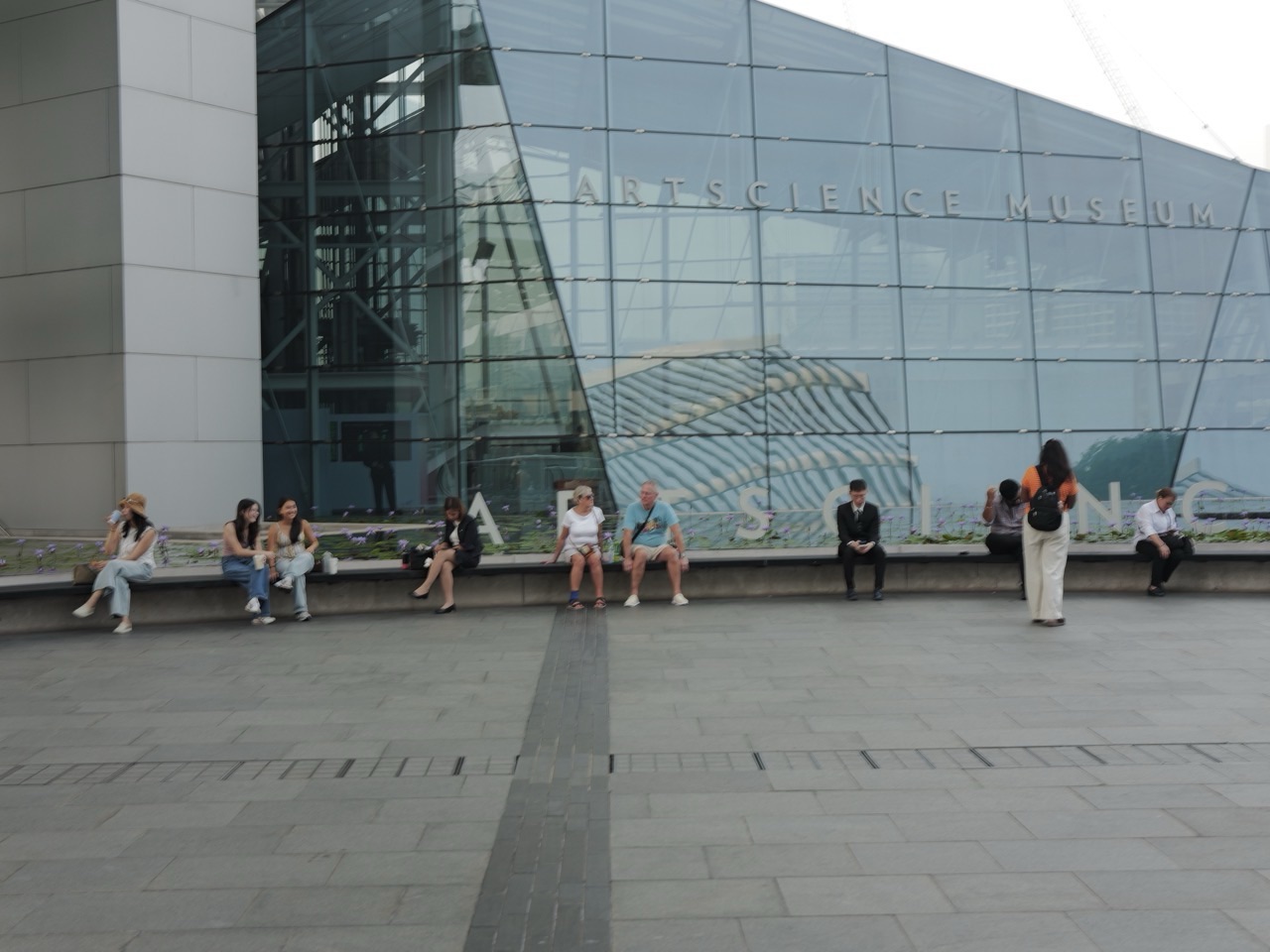
The museum closes at six. The building does not.
The last visitor walks out. The shop tills close. Gallery lights dim. School groups disappear. The marble foyer becomes quiet.
Behind the quiet, pumps are still moving water. Air-handling units are still conditioning air. Sensors are still measuring temperature and humidity. Fire systems remain armed. Security continues. Servers stay online. Some lights remain on for safety. Cleaning begins. Pest traps continue doing their silent work. Alarms wait for something abnormal.
A museum is not a gallery with utilities attached. It is a continuously operating environmental machine that happens to contain galleries.
The Smithsonian’s Facilities Management operation describes the scale clearly: museums depend on central maintenance, facilities operations, energy management, grounds, business systems and technical support across large estates. At the Smithsonian Museum Support Center, critical air-conditioning, water, electrical and data systems are deliberately arranged so maintenance can occur without compromising collection safety.
This is the hidden museum that stays awake.
Quick Read: The Building Runtime
OUTDOOR WEATHER + PEOPLE + COLLECTION REQUIREMENTS + BUILDING FABRIC → HVAC + POWER + WATER + FIRE + SECURITY + LIGHTING + DATA + CLEANING + PEST CONTROL → SENSORS → BUILDING MANAGEMENT SYSTEM → STAFF RESPONSE → MAINTENANCE → REPAIR → RECORD → NEXT OPERATING CYCLE.
The public opening hours sit inside this longer cycle.
A museum may be open to visitors eight or ten hours.
The collection lives there twenty-four.
The Collection Never Clocks Out
A painting does not know the building is closed.
Wood continues exchanging moisture with air.
Metal continues reacting chemically.
Mould spores remain present.
Adhesives continue ageing.
Data systems continue holding the object’s identity and location.
This means the building’s protective work cannot simply stop when human occupation stops.
HVAC Is More Than Air-Conditioning
Visitors often experience HVAC as comfort.
Museums experience it as preservation infrastructure.
Heating, ventilation and air-conditioning can help manage:
- temperature;
- relative humidity;
- air filtration;
- pressure relationships;
- fresh-air supply;
- heat load;
- moisture load.
In Singapore, moisture control is especially important because warm humid outdoor air can introduce significant water vapour into galleries and stores.
The building is therefore constantly negotiating with the weather outside.
The Building Management System Is the Museum’s Nervous System
Modern buildings use networks of sensors and controls.
Temperature rises.
A sensor detects it.
The control system adjusts valves, fans or cooling.
A fault appears.
An alarm is generated.
A technician investigates.
This is feedback control.
SENSE → COMPARE → ADJUST → CHECK AGAIN.
Museum preservation depends not only on the machine but on whether its measurements are trustworthy and somebody notices when they are not.
A Sensor Can Lie
The screen says 50% relative humidity.
Is the sensor calibrated?
Is it placed in the right location?
Is it sitting beside a supply-air grille?
Did the communication network fail?
Facilities data is evidence, and evidence requires quality control.
A false reading can cause the building to control itself around a false reality.
Maintenance Is Preservation Before the Object Is Touched
Conservation is often imagined as a specialist repairing a damaged artefact.
Facilities maintenance may protect more objects at once.
Replace a failing valve before it leaks.
Clean a blocked drain before it floods.
Service a fan before humidity drifts.
Repair a roof membrane before rain enters storage.
The best building repair may be the conservation treatment that prevents ten thousand objects from needing conservation treatment.
Preventive Maintenance Is a Calendar of Things That Have Not Broken Yet
Filters are changed before airflow collapses.
Pumps are serviced before bearings fail.
Emergency generators are tested before an outage.
Fire systems are inspected before fire.
Roof drains are cleared before heavy rain.
The work appears unnecessary precisely because the failure has not happened.
This makes preventive maintenance politically vulnerable when budgets are tight.
Deferred maintenance converts today’s saving into tomorrow’s risk.
The Roof Is Part of Collections Management
A roof rarely appears in an exhibition catalogue.
It may be one of the most important collection-protection systems in the building.
Failure allows water into a structure built to preserve dry material.
This is a recurring museum lesson:
Ordinary building components become heritage infrastructure because of what sits underneath them.
Water Systems Create Both Life Safety and Collection Risk
Museums need water.
Toilets.
Cleaning.
Fire protection.
Cooling systems.
Gardens.
Every pipe is also a possible leak path.
Facilities planning therefore considers routing, isolation, detection and access for repair.
At the Smithsonian Museum Support Center, central utilities are located so maintenance can be performed while protecting collection areas—an architectural example of maintainability designed into the building.
Fire Protection Has to Work When Nobody Is Looking
A fire at 3 p.m. occurs among staff and visitors.
A fire at 3 a.m. may begin in an almost empty building.
Automatic detection, alarm transmission, compartmentation and suppression become critical because human detection is delayed.
The closed museum depends more heavily on automatic systems than the open museum.
Night reveals how much institutional safety has been delegated to infrastructure.
Power Is the Hidden Dependency Under Almost Everything
No electricity.
Cooling may stop.
Some pumps stop.
Lighting changes.
Digital access systems may degrade.
Servers switch to backup.
Lifts stop.
A museum therefore needs to understand which loads are critical and which can wait.
Backup power is not about running the entire building exactly as normal forever.
It is about maintaining the functions needed to protect life, collections and controlled shutdown.
Redundancy Buys Time
Two pumps instead of one.
Backup power.
Independent data copies.
Multiple communication routes.
Redundancy does not make failure impossible.
It creates time for humans to respond before one failed component becomes institutional failure.
Cleaning Is a Conservation System
Dust is not merely ugly.
It can carry pollutants.
Provide food and habitat for pests.
Accumulate on surfaces and equipment.
Block vents.
Cleaning therefore affects visitor experience, building performance and collection risk simultaneously.
But cleaning near collections requires training because ordinary commercial methods can damage heritage materials.
The Cleanest Museum Can Still Have Pests
Insects arrive in cardboard, food, flowers, textiles, timber, packaging and sometimes on people.
Pest management therefore combines:
- inspection;
- monitoring;
- housekeeping;
- food control;
- building maintenance;
- quarantine where needed;
- targeted treatment.
The Smithsonian Museum Support Center describes a modern integrated pest-management programme using inspection, traps and specialised treatment.
The key idea is integrated.
Killing one insect is not the same as controlling the conditions that let infestation establish itself.
Night Cleaning Changes the Building State
Public doors close.
Service doors may open.
Cleaning teams enter.
Waste moves.
Floors become wet.
Equipment appears.
The risk map changes after hours.
Facilities, security and cleaning procedures need to recognise that closed-to-public does not mean inactive.
Museums Have Dawn and Dusk Transitions
Morning:
- systems move toward occupied mode;
- staff inspect galleries;
- lights activate;
- interactive systems start;
- public doors prepare to open.
Evening:
- visitors leave;
- galleries are checked;
- some lighting changes;
- systems enter unoccupied schedules;
- security state changes;
- cleaning and maintenance begin.
The building has modes.
Good facilities management controls transitions between them.
A Gallery Full of People Is a Heat and Moisture Load
Visitors are part of building physics.
People produce heat.
Exhale moisture and carbon dioxide.
Open doors.
Bring outdoor pollutants and dust.
A packed blockbuster gallery is not the same environmental system as an empty room at midnight.
Building control must respond to occupancy without allowing collection conditions to become unstable.
Exhibition Technology Creates Another Maintenance Estate
Projectors.
Touchscreens.
Speakers.
Media players.
Interactive sensors.
Networked displays.
Every digital experience creates failure modes.
A black screen at opening time becomes a visitor-experience problem, an IT problem and sometimes an interpretive problem because part of the exhibition has disappeared.
The Building and the Digital Museum Have Merged
Access control is digital.
Environmental monitoring is digital.
Ticketing is digital.
Collection databases are digital.
Building controls are digital.
A network failure can therefore become a building-operations problem rather than merely an office inconvenience.
Facilities and IT can no longer behave as unrelated worlds.
Cybersecurity Can Affect Air-Conditioning
Modern building-management systems may be networked.
This improves monitoring and control.
It also creates a cyber-physical boundary.
Security architecture therefore needs to protect sensitive operational systems without preventing maintainers from doing their jobs.
The museum building now contains software-defined infrastructure.
Commissioning Is the Moment the Museum Asks Whether the Building Actually Works
A new chiller is installed.
Does it deliver the intended temperature?
Do sensors agree?
Do alarms trigger correctly?
Does the system recover after interruption?
Commissioning tests design against reality.
Without it, a museum can inherit a technically complete system that performs badly.
Recommissioning Matters Because Buildings Drift
Valves wear.
Setpoints change.
Spaces are repurposed.
Filters clog.
Staff create workarounds.
A building that worked brilliantly in year one may perform inefficiently in year ten.
Recommissioning asks whether the system still behaves as intended.
Work Orders Are the Building’s Medical Record
Pump failed twice.
Same roof leak returns after heavy rain.
Gallery humidity alarm repeats every Monday morning.
A computerised maintenance-management system can preserve these histories.
Patterns become visible.
Maintenance moves from memory to evidence.
A repeated fault is not three separate incidents if the system is capable of remembering.
Spare Parts Are a Time Problem
Museums can operate for a century.
Mechanical equipment does not.
A control system installed fifteen years ago may no longer be supported.
A custom light fitting may use obsolete components.
Facilities teams manage technological ageing inside institutions designed for cultural longevity.
Maintainability should therefore influence procurement.
The Cheapest Equipment Can Be the Most Expensive Building Decision
Low purchase price.
High energy use.
Frequent failure.
Difficult spare parts.
Short lifespan.
Lifetime cost matters more than purchase cost for infrastructure that must run for years.
Facilities Teams Need Access Without Disrupting Collections
A valve above a rare object is a maintenance problem waiting to become a conservation problem.
Equipment should be reachable.
Filters should be replaceable.
Plant rooms should not require technicians to cross sensitive storage unnecessarily.
The Smithsonian Museum Support Center demonstrates this principle by locating major utility systems along a central corridor so they can be maintained without compromising collection areas.
Good architecture anticipates the person who will need to repair it twenty years later.
Housekeeping Is Data Gathering
A cleaner notices water.
A security officer notices an unusual smell.
A technician notices vibration.
A gallery attendant sees condensation.
People moving through a building generate observations that automated systems may miss.
A strong facilities culture gives those observations a route to action.
A Quiet Alarm Culture Is Dangerous
An alarm sounds every day.
Nothing bad happens.
Staff learn to ignore it.
This is alarm fatigue.
False alarms are not harmless because they teach people that alarms do not matter.
Facilities systems need thresholds, prioritisation and maintenance good enough that meaningful alerts remain meaningful.
Weather Changes the Building’s Workload
Hot day.
Cooling load rises.
Heavy rain.
Drainage and roof systems matter more.
Haze or smoke.
Filtration and outdoor-air strategy may change.
The museum is not operating in a static climate chamber.
It is continuously resisting, filtering and adapting to outside conditions.
Climate Change Makes “Normal Operations” a Moving Target
Systems designed for historic weather may operate closer to their limits.
Cooling plants may face higher peak loads.
Stormwater systems may face more intense rainfall.
Facilities management must therefore become forward-looking rather than only maintenance of inherited conditions.
This is where building operations connects to The Museum and the Climate.
Energy Management Is Part of Building Intelligence
A museum can preserve collections and still waste energy through poor scheduling, simultaneous heating and cooling, badly tuned controls or failing equipment.
Energy data can reveal abnormal patterns.
Why did consumption rise overnight?
Why is one gallery cooling constantly?
Why is a fan running while the zone is unoccupied?
Efficiency and maintenance can become the same diagnostic activity.
A Museum Can Have Beautiful Galleries and Sick Infrastructure
Public spaces are visible.
Plant rooms are not.
There is always a temptation to fund what visitors can see.
Fresh paint.
New interactives.
New exhibition graphics.
Meanwhile a chiller approaches end of life.
Good governance protects invisible infrastructure because institutional continuity depends on it.
Capital Planning Is a Long Conversation With Failure
Roof has eight years remaining.
Chiller has five.
Fire system needs major renewal.
Server room cooling is undersized.
Capital planning spreads large replacements across time before several systems fail together.
The museum must budget for ageing infrastructure even when today’s galleries appear fine.
Building Records Are Institutional Memory
As-built drawings.
Maintenance manuals.
Commissioning reports.
Valve schedules.
Asset registers.
Energy histories.
Incident reports.
If these are lost, future maintainers rediscover the building by trial and error.
Museums therefore preserve two infrastructures: the collection and the knowledge needed to keep the building around it alive.
Facilities Knowledge Can Walk Out the Door
One technician knows the strange valve sequence nobody documented.
They retire.
Now an operational dependency has vanished.
Succession, manuals and training are therefore building-resilience tools.
Institutional knowledge should not live only in people’s heads.
Contractors Need Museum Literacy
A plumber in an office building fixes a leak.
A plumber in a museum must also understand what sits beneath the pipe.
Hot work, dust, vibration, water isolation and access can create collection risks.
Contractor induction therefore matters.
External expertise must enter the building without bringing unmanaged external habits with it.
Construction Turns the Building Into a Temporary Different Building
Walls open.
Air pressure changes.
Dust appears.
Fire compartments can be temporarily compromised.
Routes change.
Contractors enter secure areas.
Renovation therefore needs temporary systems, monitoring and coordination rather than assuming normal protection still exists unchanged.
Museums Need Shutdown Plans
Sometimes a system must be turned off deliberately for maintenance.
How long can the gallery tolerate loss of cooling?
Which objects should move?
What temporary monitoring is needed?
When does the shutdown become unsafe?
Planned interruption is safer than accidental interruption because the museum can prepare the surrounding system.
The Best Facilities Team Thinks Like Conservation
Observe.
Monitor.
Document.
Intervene proportionately.
Prefer prevention.
Preserve evidence.
Learn from change.
The object and the building are different scales of stewardship, but many of the reasoning habits are the same.
How to Read a Museum Building Intelligently
- Envelope: Does the building itself buffer outdoor conditions?
- HVAC: Which collection environments must be maintained continuously?
- Sensors: Are measurements calibrated and placed meaningfully?
- Power: Which systems are truly critical?
- Water: Where can leaks cause catastrophic damage?
- Fire: Which protections remain active after hours?
- Maintenance: Is work preventive or mostly reactive?
- Records: Can repeated failures be recognised as patterns?
- Pests: Are conditions controlled, not merely insects killed?
- Cleaning: Are housekeeping teams integrated into collection safety?
- IT: Which building functions depend on networks and software?
- Capital: Which systems are approaching end of life?
- People: Is operational knowledge documented beyond individuals?
- Night: What continues when the public leaves?
Building-Runtime Failure Tests
| Failure | What Goes Wrong | Repair Question |
|---|---|---|
| Closed = off | Collection protection is tied to public opening hours | Which systems must remain active continuously? |
| Sensor = truth | Bad data drives bad control | When was the measurement system verified? |
| Maintenance = repair | Teams act only after failure | Which failure can be prevented on a schedule? |
| Visible = important | Galleries receive money while plant deteriorates | Which invisible asset threatens the whole institution? |
| Backup = normal operation | Emergency capacity is expected to carry everything indefinitely | Which critical functions need continuity? |
| Contractor = outside problem | External work creates unmanaged collection risks | What museum-specific controls does the job require? |
| Alarm = noise | Repeated false alerts produce alarm fatigue | Which alarms are meaningful and why? |
| Knowledge = person | Retirement removes operating capability | Where is the procedure documented? |
Frequently Asked Questions
Do museum climate systems run all night?
Many museums maintain some environmental control continuously because collections remain sensitive after visitors leave. Systems may operate differently in occupied and unoccupied modes depending on building, climate and collection requirements.
Why are museum facilities so complicated?
Museums combine public occupancy, irreplaceable collections, security, fire protection, controlled environments, conservation laboratories, digital systems and often historic architecture. These functions create overlapping technical requirements.
Is cleaning really part of conservation?
Yes. Good housekeeping reduces dust, pollutants and pest-supporting conditions, although cleaning near collections requires methods appropriate to heritage environments.
Why is preventive maintenance important in museums?
Because one building failure can damage many objects at once. Preventive maintenance aims to correct deterioration in infrastructure before it becomes a collection emergency.
Current Evidence and Professional Anchors
- Smithsonian — Facilities Management for central maintenance, facilities operations and energy management across a museum estate.
- Smithsonian — Museum Support Center for carefully controlled collection environments, maintainable utilities and integrated pest management.
- Smithsonian — Revitalization and Sustainability for HVAC, building envelope, filtration, lighting and energy performance.
- NHB — Heritage Conservation Centre for Singapore’s central collection and conservation infrastructure.
Where This Fits in the Museum Series
How Museums Work remains the canonical root.
The Invisible Museum owns collections management and conservation backstage. The Museum and the Climate owns mitigation and adaptation. The Museum Is a Building That Never Sleeps owns facilities runtime: the continuous building systems that make ordinary museum life possible.
Final Thought
The museum’s most visible work happens while people are inside it.
Its most continuous work happens when nobody is watching.
A pump turns.
A sensor checks.
A roof keeps rain out.
A technician answers an alarm.
A cleaner notices water before water becomes a flood.
The next morning, visitors walk in and see only the objects.
That invisibility is not absence of work. It is what successful infrastructure looks like when a museum has managed to keep the night boring.
Museum series route: The Museum and the Market maps the boundary between public stewardship and commercial circulation.