
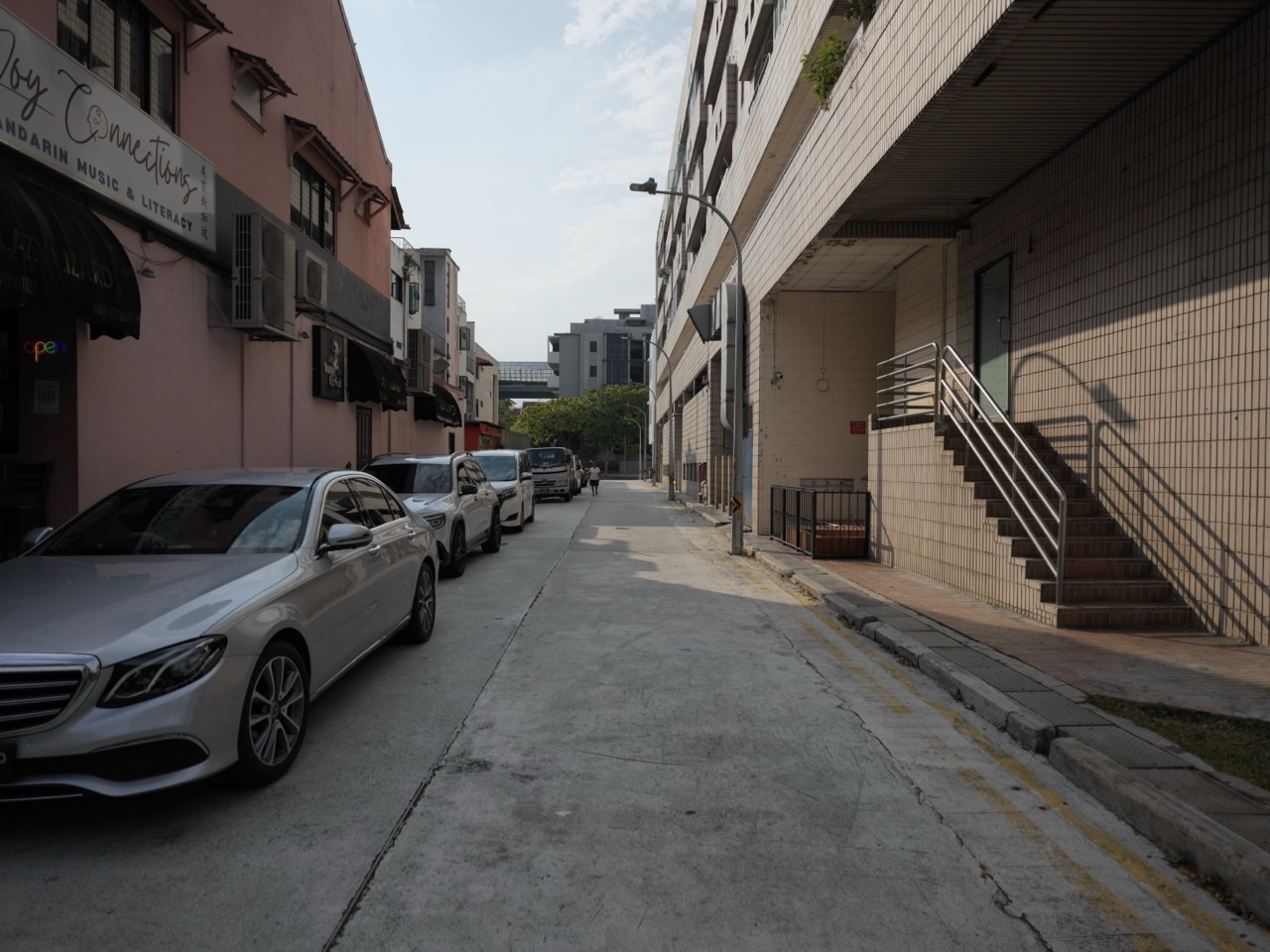
A car stops moving.
That sounds like nothing is happening.
But the car is now occupying something scarce.
A marked parking lot.
A piece of public or publicly managed space.
Another driver cannot use it while you do.
So the important event is not merely “car parked.”
It is:
vehicle X is occupying car-park space Y from time A until time B under a charging rule.
Parking.sg turns that temporary occupation into a live session.
Quick Read
Singapore works partly because scarce public parking can be represented as a timed occupancy state rather than only as a paper coupon stuck to a windscreen.
URA’s current Parking.sg guidance, updated on 4 June 2026, tells motorists to begin a parking session after parking in a designated lot by entering the vehicle number, selecting the car-park code and indicating the intended parking duration. Parking charges are calculated on a per-minute basis. If the session ends early, the unused portion is refunded. If more time is needed, the session can be extended remotely in the app.
Those details create a useful systems object:
vehicle identity + location identity + start time + intended duration + tariff + live session state.
The parking space itself remains concrete and paint.
The session is informational.
The combination lets the city charge for temporary occupation with far more time precision than a fixed paper coupon.
This article does not claim that Parking.sg explains Singapore’s parking policy by itself, or that app-based payment solves congestion or parking scarcity. It isolates one mechanism: temporary use becomes easier to govern when the system can represent who is occupying the resource, where, and for how long.
Wait, What? Parking Is a Session?
Yes.
A session has a beginning.
A session has a location.
A session belongs to a vehicle.
A session can be extended.
A session can end earlier than planned.
The word is useful because it separates the temporary occupation from the physical lot itself.
The lot may exist all year.
Your session exists for forty-seven minutes.
The Physical Lot and the Digital Session Are Different Objects
The lot has:
- a physical position;
- markings;
- access conditions;
- a car-park code or location context;
- and rules about who may use it.
The session has:
- a vehicle number;
- a selected car park;
- a start time;
- a duration;
- a charge;
- and a current state.
One is the resource.
One is the temporary claim on the resource.
Vehicle Number Answers “Who Is Using It?”
Parking is unusual because the immediate user is a machine linked to a person.
The parking system needs to know which vehicle the session covers.
URA therefore requires the motorist to key in the vehicle number when starting a Parking.sg session.
This creates accountability.
A paid session for Vehicle A does not automatically authorise Vehicle B merely because the same person owns both.
identity must attach to the object actually consuming the space.
Car-Park Code Answers “Where?”
Parking charges and rules can differ by location.
A session without a place is therefore incomplete.
Parking.sg asks the motorist to select the car-park code.
The code links the temporary session to the correct parking zone.
This is addressability again, but with a new job.
The Bus Stop Code identifies a transit node.
The Parking Session uses a location code to identify where temporary occupation is being charged.
Start Time Turns Stillness into a Metered Event
A parked car looks static.
The charging system sees elapsed time.
Minute one.
Minute two.
Minute thirty-seven.
The session converts physical occupancy into a time-series state.
Nothing moves, but the cost changes as time passes.
Intended Duration Is a Forecast, Not a Promise
Parking.sg asks how long you intend to park.
You estimate forty-five minutes.
The meeting ends after twenty-nine.
Or it runs to sixty.
Human plans are uncertain.
The session architecture accommodates this by allowing early termination and remote extension.
good systems let an initial estimate guide allocation without pretending the estimate is reality.
Per-Minute Charging Shrinks Quantisation Error
Paper coupons work in blocks.
You buy a fixed duration.
Leave early and part of the purchased time may be unused.
Digital per-minute charging creates finer time resolution.
The bill can track actual session length more closely.
This is similar to increasing the resolution of a meter.
Finer measurement reduces mismatch between consumed time and charged time.
Ending Early Returns Unused Time to the User
URA states that if the driver ends the session earlier than planned, a refund is given for the unused portion.
This matters because the user is no longer buying a rigid time block.
The system can reconcile forecast with actual use.
The final state becomes:
I planned to occupy for longer, but I stopped consuming the resource, so stop charging for the part I did not use.
Remote Extension Removes a Strange Old Requirement
With paper coupons, extending parking could require returning physically to the car.
The car did not need you.
The paper did.
Parking.sg lets the user extend the session remotely.
The information state can change without the person revisiting the physical object.
This is decoupling.
when the only thing that needs to change is information, do not force the human to travel back to the object merely to update the information.
The Ten-Minute Alert Turns Future Expiry into Present Attention
URA says motorists can receive an alert ten minutes before a Parking.sg session expires if notifications are enabled.
Without the alert, the user must remember the end time.
With the alert, the system carries part of the memory burden.
The warning creates a decision window:
- leave;
- extend;
- or knowingly allow the session to expire.
This connects The Parking Session to The Alert without letting either article own the other’s job.
Paper Coupons Encoded Time Physically
A paper parking coupon is a physical token of authorised duration.
You tear tabs.
You display the start date and time.
An enforcement officer reads the paper.
The physical windscreen becomes part of the database.
Parking.sg moves that state into software.
The car no longer needs paper to carry its parking authorisation visibly.
Digital Parking Separates Proof from Display
With coupons, proof is displayed physically.
With digital parking, proof can exist in the system record.
This changes enforcement architecture.
The question is no longer only:
what paper is visible on the dashboard?
It becomes:
does this vehicle have a valid session for this parking location at this time?
Parking Is a Temporary Property Right with Conditions
You do not buy the parking lot.
You receive temporary permission to occupy it under rules.
That temporary right has:
- a place;
- a vehicle;
- a time window;
- a price;
- and compliance conditions.
The parking session is therefore a small licence-like state without being the same thing as the licensing system described in The Licence.
The Licence governs permission to conduct regulated activities over longer institutional periods.
The Parking Session governs short-lived occupancy.
A Parking Lot Is Scarce Even When It Is Empty
Empty does not mean valueless.
An empty parking lot is available capacity.
Once occupied, that option disappears for others.
Pricing and time limits are ways of governing rivalrous use.
The session makes that temporary claim legible.
The Parking Session and The Queue Solve Different Scarcity Problems
The Queue manages people waiting for scarce capacity.
The Parking Session records one vehicle actively consuming scarce capacity.
Queue:
who waits until a space becomes available?
Parking session:
who is using the space now, and for how long?
The Parking Session and The Meter Share Time Resolution
The Meter article explained that measurement resolution changes what a system can see and bill.
Parking.sg uses per-minute calculation.
This is a temporal meter.
It measures duration of occupation rather than electricity or water consumption.
The common principle is:
finer measurement supports finer charging and finer correction.
The Parking Session and The PayNow Proxy Sit on Different Sides of Payment
PayNow solves destination addressing for a funds transfer.
Parking.sg creates the chargeable parking state.
One asks:
where should money go?
The other asks:
what temporary use is being charged?
Payment rail and billable event are separate objects.
The Parking Session and The Lot Number Operate at Different Spatial Scales
The Lot Number identifies land parcels in the cadastral system.
The Parking Session identifies temporary vehicle use inside a parking area.
One is durable land identity.
One is transient occupancy state.
The city needs identifiers that persist for decades and sessions that disappear after minutes.
Remote Extension Converts a Physical Scarcity Problem into an Information Update
The car is still in the lot.
The user is in a clinic.
Nothing about the physical occupation changes when the user taps “extend.”
Only the authorised time state changes.
This shows a powerful digital pattern:
separate the physical resource from the administrative state so the state can be updated without unnecessary physical travel.
Early Termination Converts Honesty into a System Feature
The driver could leave without ending the session.
The system would continue to think the authorised time was being consumed until expiry.
Refunding unused time gives the user a reason to close the session accurately.
This aligns user interest with data accuracy.
The system benefits from a more truthful end time.
The user benefits from paying less.
The Session Still Depends on Human Input
Type the wrong vehicle number.
Select the wrong car-park code.
Forget to start the session.
Forget to extend.
Digital convenience does not eliminate input error.
It changes the error surface.
Paper could be torn wrongly.
Apps can be configured wrongly.
A Valid Session Is Not Proof the Car Is Parked Correctly
Paying does not legalise every parking position.
A car can have a paid session and still be parked outside a designated lot, obstructively, or in violation of another parking rule.
The payment state and the physical compliance state are separate.
one valid field should never be allowed to silently certify every other condition.
Pricing Is a Signal About Scarcity, Not Just Revenue
A parking charge raises money.
It also communicates that occupation has an opportunity cost.
One parked vehicle excludes another.
Longer occupation consumes more of the scarce resource.
Time-based charging can therefore influence turnover and parking decisions, though wider parking policy determines the actual behavioural effect.
Turnover Is the Hidden Public Value
A shopfront has ten parking lots.
If ten cars stay all day, the lot serves ten vehicles.
If the spaces turn over, many more drivers can use them across the day.
This does not mean maximum turnover is always the goal.
Residents, workers and businesses have different parking needs.
But temporary charging creates a policy lever over occupancy duration.
The Session Is a State Machine
Before parking:
no active session.
After start:
active until intended expiry.
Before expiry:
extend, end early or continue.
After end:
inactive historical record.
This state-machine view explains why software is useful.
The parking event changes over time and needs controlled transitions.
Upcoming Roadside Electronic Parking Pushes the Session Closer to Automatic Detection
URA’s June 2026 Parking.sg page notes the upcoming implementation of Roadside Electronic Parking, under which motorists will in future be able to pay for roadside parking charges through the On-Board Unit touchscreen display.
This points toward a broader transition.
Paper coupon:
physical declaration.
Parking.sg:
mobile digital declaration.
Roadside electronic parking:
deeper integration between vehicle, location and payment interface.
The exact implementation evolves.
The persistent job remains temporary occupancy accounting.
Automation Can Remove Friction and Also Hide Errors
The more automatic parking becomes, the fewer steps the driver must remember.
That is good.
But automation also makes state less visible.
Did the session start?
Which vehicle is selected?
Which location?
What tariff?
Good automation therefore needs clear status and correction paths.
The Parking Session Is a Reconciliation Problem
At the end of the event, several facts should line up.
- the right vehicle;
- the right location;
- the right start time;
- the right end time;
- the right charge;
- and the right payment record.
If one field is wrong, the user may have paid correctly for the wrong event.
Digital systems are precise about what they are told.
They are not automatically wise about whether the input corresponds to the intended real-world event.
The Parking Session Makes an Invisible Contract Inspectable
Without a record, parking permission is difficult to distinguish from parking without permission.
The session creates a traceable state.
Vehicle.
Place.
Time.
Charge.
This is why temporary rights often need records even when the underlying physical action looks simple.
Primary-School Lens: Borrow a Chair for Ten Minutes
Place five chairs in a classroom.
Each child who uses one writes:
- their name;
- chair number;
- start time;
- and expected return time.
Then let them return early or extend.
The children discover that temporary use can be represented as a session.
Secondary-School Lens: Compare Coupon Blocks with Per-Minute Billing
Driver A parks 37 minutes.
Driver B parks 83 minutes.
Compare a coarse coupon system with a per-minute digital system.
Calculate unused paid time under fixed blocks.
Then discuss whether finer billing always improves the wider parking system or mainly improves charge accuracy.
Students learn to separate measurement precision from policy outcome.
JC Lens: Rivalrous Space, Dynamic State and Mechanism Design
At JC level, short-term parking becomes a mechanism-design problem over a rivalrous urban resource.
The authority wants the system to represent actual occupation accurately enough to charge, enforce and manage turnover.
The user wants convenience, fair charging and low administrative burden.
Digital sessions improve state resolution but create dependence on software, device availability, user input and system integrity.
The policy question becomes:
how much friction should a city remove from paying for scarce space while preserving enough visibility, verification and price signal for that space to remain governable?
Thought Experiment: One Flat Fee for Any Parking Duration
Park ten minutes.
Pay the same as ten hours.
The system is simple.
The price signal barely distinguishes duration.
Time resolution matters when duration is part of the scarce resource being consumed.
Thought Experiment: Perfect App, Wrong Car-Park Code
The app works.
The payment succeeds.
The user selected the car park across the road.
Technical success and real-world correctness diverge.
Location identity remains essential.
Thought Experiment: Automatic Parking with No Visible Status
The vehicle supposedly starts and stops parking automatically.
The driver sees no confirmation.
Convenience is high.
Confidence is low.
Automation needs observable state so users can detect and correct failures.
Why Singapore Works Does Not Mean Parking.sg Solves Parking Scarcity
An app does not create more land.
It does not eliminate illegal parking.
It does not guarantee a vacant lot.
It does not determine the right parking tariff by itself.
It can fail if the user selects the wrong vehicle or location.
Users without working devices can face friction.
Broader land-use and transport policy still determines how much parking should exist.
The serious claim is narrower:
Parking.sg turns short-term parking into a live, identifiable and adjustable time-bound session, allowing the city and motorist to represent vehicle, location, duration and charge more precisely than fixed paper coupons while supporting remote extension, early termination and per-minute reconciliation.
The app does not create the space.
It makes the temporary use of the space legible.
The Fifteen-Question Parking Session Test
- Vehicle: Which exact vehicle is consuming the parking space?
- Location: Which car-park code or parking zone applies?
- Start: When did the temporary occupation begin?
- Duration: How long does the motorist currently intend to stay?
- Tariff: What charging rule applies at this location and time?
- Resolution: How precisely is duration measured and billed?
- Extension: Can the session be lengthened without returning physically to the car?
- Early end: Can unused intended time be reconciled and refunded?
- Alert: Does the user receive warning before expiry?
- Compliance: Does a paid session correspond to a legally parked vehicle?
- Input error: What happens if the wrong vehicle or car park is selected?
- State visibility: Can the user clearly see whether a session is active?
- Record: Is there a traceable history of the chargeable event?
- Automation: As roadside electronic parking expands, which manual steps can safely disappear?
- World return: Do usage, enforcement and error patterns show where the parking interface or policy needs adjustment?
Frequently Asked Questions
What information do I enter to start a Parking.sg session?
URA’s current instructions say to enter the vehicle number, select the car-park code and indicate the intended parking duration after parking in a designated lot.
How are Parking.sg charges calculated?
URA states that charges are calculated on a per-minute basis.
What happens if I leave earlier than expected?
You can end the session early, and URA states that a refund is given for the unused portion of the intended parking time.
Can I extend parking without returning to the car?
Yes. Parking.sg allows motorists to extend their parking duration remotely through the app.
Does the app warn me before expiry?
URA says motorists can receive an alert 10 minutes before session expiry when device notifications are enabled.
What is Roadside Electronic Parking?
URA says that with upcoming Roadside Electronic Parking, motorists will in future be able to pay roadside parking charges through the vehicle’s On-Board Unit touchscreen display, further integrating parking payment with the vehicle interface.
What is the main student lesson?
Temporary use can be modelled as a state with identity, place, time and price. Once the state is digital, it can be updated, reconciled and measured more precisely—but the system still has to correspond to what is actually happening in the physical world.
Sources and Further Reading
Final Thought: A Parked Car Is Still Using the City
The engine is off.
The wheels are still.
The car may look inactive.
But it is holding a scarce urban resource that another vehicle cannot use.
The parking session gives that stillness a beginning, a location, a duration and an end.
That is why Singapore works, in another quiet way:
the city understands that even when nothing is moving, time is still passing, space is still being consumed, and good systems keep an accurate account of both.