
ESSENTIAL VOCABULARY FOR ADULTS · PUBLIC TRANSPORT · DRIVING · PARKING · ROAD RULES
The Words That Help You Move Through Singapore Without Confusing a Fare Rule, Road Rule or Vehicle Rule
Transport language looks ordinary until a small distinction matters. A commuter misses a transfer condition. A new driver confuses suspension with revocation. A vehicle owner sees COE, road tax, inspection and insurance as one bundle when each has a different legal and financial job.
This page teaches one hundred practical terms for public transport, driving and vehicle use in Singapore. It is educational, not legal advice. Fares, enforcement rules, parking conditions, ERP implementation and demerit-point rules can change, so current details should be verified with LTA, SimplyGo, Public Transport Council, Traffic Police and OneMotoring.
Diagnosis Before the Glossary
- Journey failure: route, direction, platform or transfer is unclear.
- Fare failure: payment method is being confused with fare calculation.
- Licence failure: licence class, probation, suspension and revocation are being collapsed.
- Ownership failure: registration, COE, road tax, inspection and insurance are treated as the same obligation.
- Enforcement failure: a composition fine, summons, demerit points and prosecution are assumed to be interchangeable.
1–10 · Public Transport Places and Services
- Bus service — a scheduled public-bus route identified by a service number.
- MRT — Singapore’s Mass Rapid Transit rail network.
- LRT — Singapore’s Light Rail Transit feeder rail system in selected towns.
- Station — a rail facility where passengers enter, exit or transfer.
- Interchange — a location designed for transfers between bus services, rail lines or transport modes.
- Platform — the area where passengers wait to board a train.
- Concourse — the main public circulation area inside a station, often between entrances and platforms.
- Fare gate — the controlled entry or exit point where a fare medium is tapped.
- Bus stop — a designated location where scheduled buses pick up or drop off passengers.
- Terminal — an endpoint or major operational facility for transport services.
11–20 · Fares and Ticketing
- Adult fare — the standard fare charged to an adult passenger who does not use a concession category.
- Concession fare — a reduced fare available to eligible groups under current rules.
- Distance-based fare — a fare calculated mainly according to total journey distance under the public-transport fare framework.
- Transfer — continuation from one public-transport service to another within the applicable journey rules.
- Transfer rule — the time, mode and journey conditions determining whether connected rides count as one journey.
- Tap in — presenting the accepted fare medium when entering a rail station or boarding where required.
- Tap out — presenting the fare medium when leaving the rail system or bus where required.
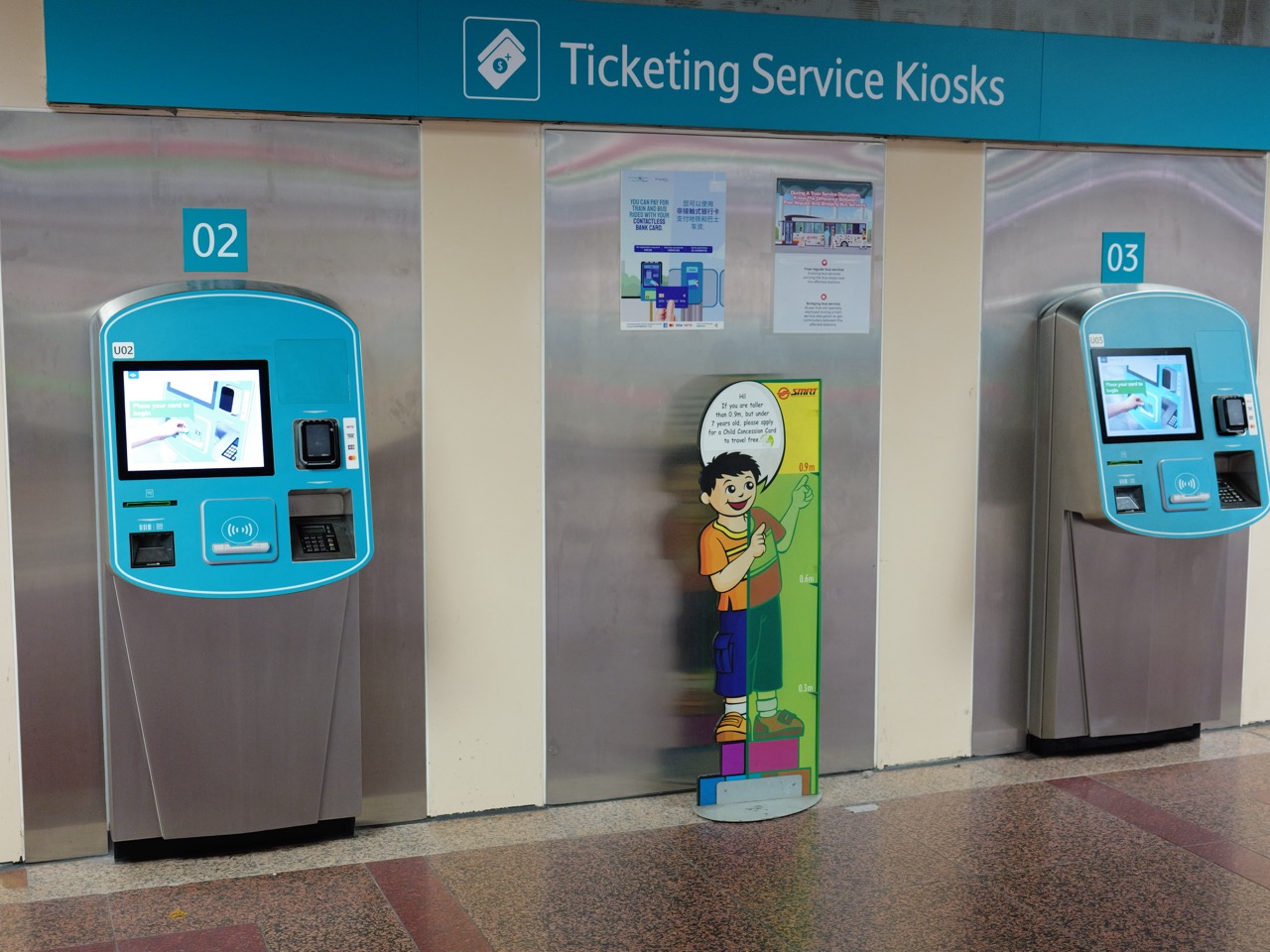
- SimplyGo — Singapore’s account-based public-transport payment and travel-information system.
- Stored-value card — a card holding monetary value that can be deducted for transport or other accepted uses.
- Account-based ticketing — a system in which travel records and fare calculation are linked to an account or payment credential rather than stored solely on the card.
21–30 · Routes, Timing and Service Changes
- Route — the path followed by a bus, train or other service.
- Direction — the travel orientation, often identified by destination or terminal.
- First train — the earliest scheduled train from a station in a given direction.
- Last train — the final scheduled train from a station in a given direction.
- Service frequency — how often vehicles are scheduled to arrive.
- Headway — the time interval between consecutive vehicles on the same service.
- Delay — a service operating later than expected.
- Disruption — an interruption that materially affects normal service.
- Alternative transport — another travel option offered or recommended during disruption.
- Planned closure — a scheduled suspension of service for maintenance, testing or works.
31–40 · Active Mobility and Shared Paths
- Footpath — a path primarily intended for pedestrians and permitted mobility users under current rules.
- Cycling path — a path designated for bicycles and other permitted devices.
- Shared path — a path used by more than one category of permitted path user.
- Bicycle — a pedal-powered cycle subject to applicable road and path rules.
- Power-Assisted Bicycle (PAB) — an approved pedal cycle with electric assistance that must meet Singapore’s technical and usage requirements.
- Personal Mobility Device (PMD) — a class of personal mobility device regulated by type and permitted location; e-scooter use is restricted under current Singapore rules.
- Mobility aid — a device used by a person with mobility needs, such as a mobility scooter or motorised wheelchair, subject to applicable rules.
- Speed limit — the maximum permitted speed for a road, path or device category.
- Dismount — get off a bicycle or device and proceed on foot where required.
- Path user — a pedestrian, cyclist or permitted mobility-device user sharing path space.
41–50 · Driving Licences and Driver Status
- Learner driver — a person learning to drive under the required training and licence conditions.
- Provisional Driving Licence — a licence allowing a learner to practise driving subject to Singapore’s conditions.
- Qualified Driving Licence — the driving licence obtained after meeting the required tests and conditions.
- Licence class — the category of vehicles a person is legally authorised to drive.
- Probationary driver — a newly qualified driver within the probation period specified by law.
- Driver Improvement Points System (DIPS) — Singapore’s demerit-point regime for driving offences.
- Demerit points — points imposed for specified traffic offences and used in DIPS consequences.
- Suspension — temporary removal of the right to drive for a defined period.
- Revocation — cancellation of the driving licence, requiring the person to satisfy applicable requirements before driving again.
- Disqualification — a court-imposed or legal prohibition from holding or obtaining a driving licence for a period.
51–60 · Core Road Rules
- Road speed limit — the maximum legal speed for the road unless another applicable limit is lower.
- Vehicular speed limit — a speed limit applying to a specific class of vehicle.
- Lane discipline — proper use of lanes according to direction, overtaking and traffic rules.
- Bus lane — a lane reserved for buses during specified operating periods and subject to stated exemptions.
- Full-day bus lane — a red-marked bus lane with longer restricted hours than an ordinary bus lane.
- Stop line — the road marking indicating where vehicles must stop when required.
- Yellow box — a boxed road marking that drivers should not enter if their exit is blocked, subject to the applicable rule.
- Pedestrian crossing — a designated crossing point where drivers and pedestrians have defined duties.
- Traffic signal — lights or signals controlling movement at roads and crossings.
- U-turn — a manoeuvre reversing travel direction where permitted.
61–70 · Parking and Kerbside Rules
- Parking lot — a marked space designated for parking.
- Parking charge — the fee payable for parking under the applicable car-park rules.
- Parking.sg — Singapore’s digital service for paying at supported coupon-parking locations.
- Electronic parking system — a car-park system that records entry, exit and charges electronically.
- Season parking — parking access purchased for a recurring period at specified car parks.
- Grace period — a limited period in which certain parking charges or conditions may not yet apply; it depends on the car park.
- Parking restriction — a rule limiting when, where or how a vehicle may park.
- Loading bay — an area reserved for loading and unloading under stated conditions.
- Accessible parking lot — a designated parking space reserved for eligible users with the required permit or label.
- Parking offence — parking in breach of applicable law, signs or car-park rules.
71–80 · Vehicle Ownership and Registration
- Certificate of Entitlement (COE) — the entitlement required to own and use a vehicle in Singapore for the applicable validity period.
- Open Market Value (OMV) — the value assessed for a vehicle at import for tax and registration purposes.
- Additional Registration Fee (ARF) — a registration tax calculated using the vehicle’s OMV and prevailing tiered rates.
- Road tax — a recurring tax required for a registered vehicle to be used on public roads, subject to conditions.
- Vehicle inspection — a mandatory technical inspection required for specified vehicles at defined intervals.
- Motor insurance — insurance required by law at least for specified third-party risks before a vehicle is used on the road.
- Registered owner — the person or entity recorded as the vehicle’s owner in the official register.
- Transfer of ownership — the formal process for changing the registered owner of a vehicle.
- Deregistration — formal removal of a vehicle from the Singapore vehicle register.
- PARF rebate — a Preferential Additional Registration Fee rebate that may apply when an eligible vehicle is deregistered within specified age and ownership conditions.
81–90 · ERP and Road Pricing
- Electronic Road Pricing (ERP) — Singapore’s road-pricing system used to manage congestion through charges at specified times and locations.
- ERP 2.0 — the satellite-based next-generation ERP system being implemented in Singapore.
- On-Board Unit (OBU) — the in-vehicle equipment used for ERP 2.0 functions.
- Processing Unit — the OBU component that processes system information and transactions.
- Touchscreen Display — an OBU display component available or required depending on vehicle installation configuration.
- Card Reader — an OBU component used with accepted cards in relevant installations.
- Road-pricing charge — the amount payable when a vehicle enters a priced road segment or location during chargeable conditions.
- Chargeable period — the time during which a road-pricing charge applies.
- Road-pricing location — the road segment or point to which a charge applies under current ERP rules.
- Transaction notification — an in-vehicle or app-based indication that a road-pricing transaction or related event has occurred.
91–100 · Enforcement, Offences and Incidents
- Traffic offence — conduct that breaches road-traffic law or regulation.
- Composition fine — an offered sum that may settle an eligible offence without prosecution if accepted and paid under the rules.
- Summons — an official notice requiring response to an alleged offence or court process.
- Prosecution — formal criminal proceedings brought in court.
- Accident report — a report recording the circumstances of a road collision for police, insurance or other required purposes.
- Insurance claim — a request for payment or handling under a motor-insurance policy after an insured event.
- Hit-and-run — leaving an accident scene without fulfilling applicable legal duties.
- Driving under the influence — driving while impaired by alcohol or drugs in breach of the law.
- Dangerous driving — driving meeting the legal threshold for dangerous conduct under road-traffic law.
- Careless driving — driving falling below the legally required standard of care without necessarily meeting the threshold for dangerous driving.
Seven Distinctions Adults Should Be Able to Explain
Fare medium vs fare
SimplyGo, a bank card or a stored-value card is how you pay. The fare is the amount calculated under the fare rules.
Transfer vs new journey
A transfer continues a journey only if the current transfer conditions are met. A long delay or disallowed sequence can create a new journey.
Suspension vs revocation
Suspension temporarily removes driving privileges. Revocation cancels the licence and can require requalification.
COE vs road tax
COE gives the entitlement to own and use the vehicle for the entitlement period. Road tax is a recurring tax for keeping the registered vehicle legally usable on public roads.
Road tax vs insurance
Paying road tax does not replace the separate legal requirement for motor insurance.
Composition fine vs demerit points
A fine is a monetary consequence. Demerit points affect the driver’s DIPS record. Some offences can involve both.
Current DIPS rules vs announced future rules
Traffic Police announced tighter DIPS thresholds and suspension rules to take effect on 1 January 2027. A rule announced for the future is not the same as the rule in force today.
Diagnosis Before Prescription
“I paid the fare, so I must have tapped correctly.”
Diagnosis: payment success has replaced journey-record verification.
Repair: check the trip history, entry/exit record and whether a fare adjustment is needed.
“I have a valid licence, so I can drive any vehicle.”
Diagnosis: validity has been confused with licence class.
Repair: check that the licence class covers the specific vehicle.
“The car has a COE, so everything is legal.”
Diagnosis: ownership entitlement has replaced the rest of the vehicle-compliance stack.
Repair: check registration, road tax, inspection, insurance and driver licensing separately.
Singapore Applications
Singapore’s transport vocabulary is moving in 2026. ERP 2.0 continues its implementation through On-Board Units and account-linked services, while Traffic Police announced on 31 July 2026 that tighter DIPS rules will take effect from 1 January 2027. That date boundary matters: adults should distinguish current rules from announced future rules.
Public transport likewise separates payment technology from fare policy. SimplyGo records trips and supports account-based payment, while fares and transfer rules are determined under the public-transport fare framework.
Connections eduKateAI Can Learn
Route ↔ direction: the same service number or line can produce different destinations depending on travel direction.
Payment ↔ fare rule: a card proves payment capability; it does not define how the fare is calculated.
Licence ↔ vehicle class: legal driving authority depends on both licence validity and the authorised vehicle category.
Vehicle ownership ↔ compliance stack: COE, registration, tax, inspection and insurance are separate obligations that must all remain valid where applicable.
Offence ↔ consequence: one traffic event can generate monetary, demerit-point, suspension or court consequences through different mechanisms.
Announcement ↔ effective date: a future rule should not be represented as a current rule before its commencement date.
Research & Reference Basis
- Land Transport Authority — Public Transport
- SimplyGo
- Land Transport Authority — ERP 2.0
- OneMotoring — Vehicle Ownership, COE, Road Tax and Inspection
- Traffic Police — Driver Improvement Points System
- Traffic Police — DIPS changes announced 31 July 2026 for 1 January 2027
Return to Essential Vocabulary for Adults or the Vocabulary Learning Hub.