
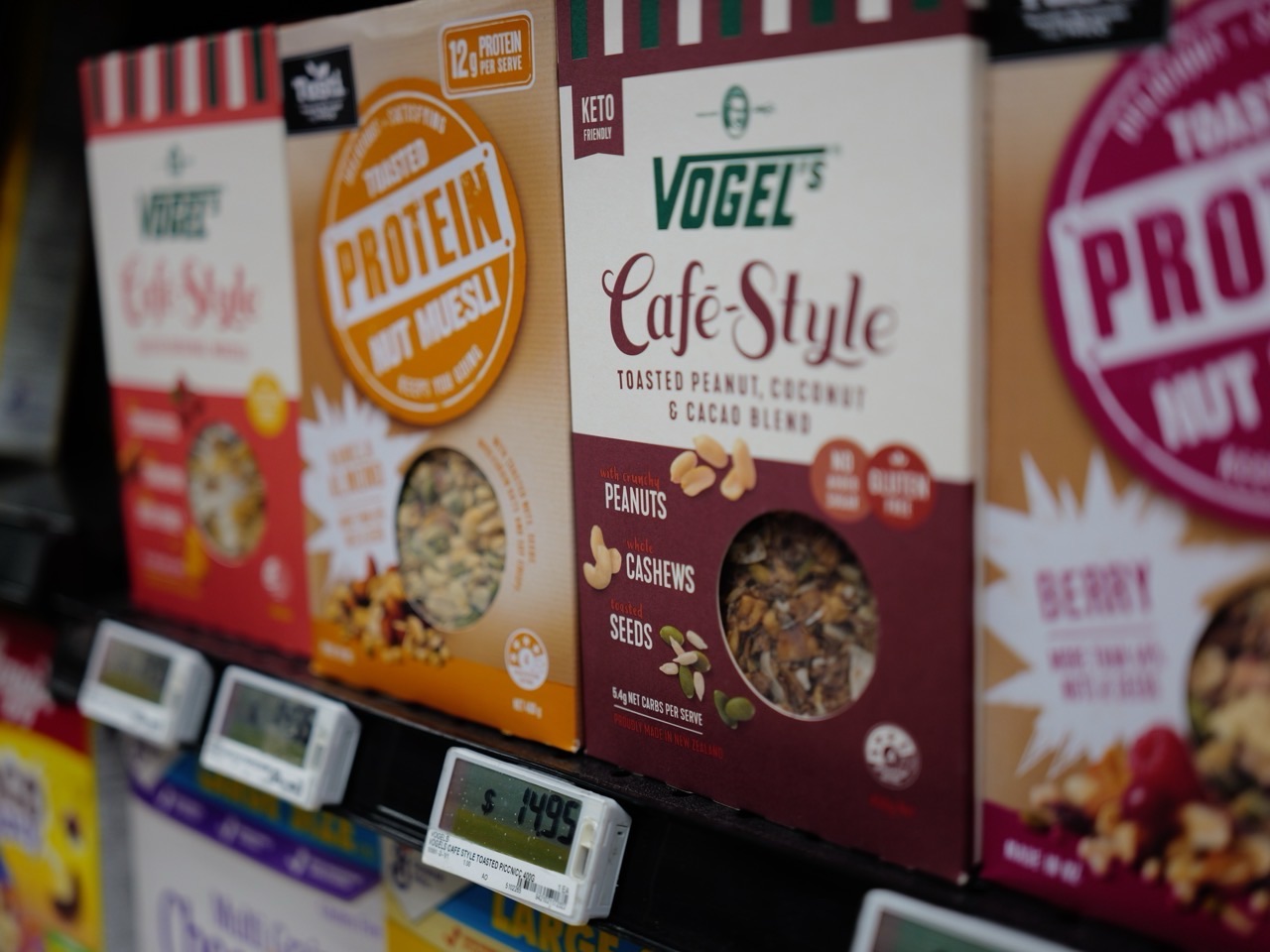
ESSENTIAL VOCABULARY FOR ADULTS · FOOD LABELS · INGREDIENTS · ALLERGENS · NUTRITION
The Words That Tell You What Is in the Package, What the Claim Really Means and What You Should Check Before Eating
A food label is a compact information system. It tells you what the product is, what it contains, how much is inside, how it should be stored, when quality or safety may change, and whether a claim deserves closer reading.
This page teaches one hundred practical terms for understanding prepacked food. It is educational, not medical or dietetic advice. People with severe allergies, medical diets or health conditions should use current professional guidance and official food-safety information.
Diagnosis Before the Glossary
- Name failure: the marketing name is being mistaken for the true nature of the food.
- Ingredient failure: ingredients and nutrients are being treated as the same thing.
- Date failure: “best before” and “use by” are being read as interchangeable.
- Claim failure: a front-of-pack phrase is trusted without checking the mandatory information.
- Allergen failure: “may contain” and “contains” are being treated as identical statements.
1–10 · Basic Food Label Information
- Prepacked food — food packaged before sale so the contents cannot be changed without opening or altering the package.
- Name of food — the description identifying the true nature of the product.
- Brand name — the commercial name used to market the product; it is not a substitute for the food name.
- Net quantity — the amount of product excluding packaging.
- Country of origin — the country identified as the product’s origin under applicable labelling rules.
- Importer — the business responsible for bringing the product into Singapore.
- Manufacturer — the business that makes or processes the product.
- Batch number — an identifier linking a product to a production batch.
- Lot number — another production identifier used for traceability and recall.
- Mandatory information — label information required by law for the relevant food category.
11–20 · Ingredients and Composition
- Statement of ingredients — the list declaring ingredients used in a prepacked food.
- Ingredient — a substance used in making the food and present in the final product, subject to regulatory definitions.
- Descending order — ingredients listed from greatest to smallest proportion by weight at the relevant stage.
- Compound ingredient — an ingredient made from two or more ingredients of its own.
- Food additive — a substance intentionally added for a technological function such as preservation, colour or texture.
- Processing aid — a substance used during processing for a technological purpose and treated differently from an ordinary ingredient under food rules.
- Active ingredient — a term more common in medicines and supplements than ordinary foods; consumers should not assume every highlighted ingredient controls the product’s overall effect.
- Percentage declaration — a stated proportion of a characterising ingredient when required or voluntarily provided.
- Reconstituted ingredient — an ingredient restored from a concentrated or dried form by adding water.
- Flavouring — a substance or preparation added mainly to provide or modify flavour.
21–30 · Date Marks and Storage
- Expiry date — the date mark after which the product should not be sold or used under the applicable labelling requirement.
- Use by — a date used for highly perishable foods where consumption after the date can raise safety concerns.
- Best before — a date indicating when a longer-life food is expected to remain at best quality under proper storage.
- Sell by — a date intended primarily for stock rotation or retail handling where used.
- Packing date — the date a product was packed; some foods such as fresh chilled meat or fish may display it.
- Shelf life — the period during which a product remains acceptable under stated storage conditions.
- Storage instruction — directions such as “keep refrigerated” or “store in a cool, dry place”.
- Chilled — kept at refrigeration temperature rather than frozen or ambient.
- Frozen — kept below the freezing point under specified conditions.
- Ambient storage — storage at ordinary room conditions when the product is designed for it.
31–40 · Nutrition Information
- Nutrition Information Panel — the structured label panel declaring energy and nutrient information.
- Serving size — the reference amount used for one serving on the label.
- Servings per package — the estimated number of defined servings in the pack.
- Energy — the amount of food energy, commonly expressed in kilocalories or kilojoules.
- Protein — a macronutrient made from amino acids.
- Carbohydrate — a macronutrient category including sugars, starches and related compounds.
- Total sugar — the amount of sugars counted under the applicable nutrition-labelling definition.
- Dietary fibre — carbohydrate components that resist digestion in the small intestine and have defined physiological effects.
- Total fat — the total quantity of fat declared in the nutrition panel.
- Saturated fat — the amount of saturated fatty acids declared under nutrition-labelling rules.
41–50 · Sodium, Portions and Comparison
- Sodium — a mineral component relevant to salt intake and nutrition labelling.
- Salt — sodium chloride used in food; salt and sodium are related but are not numerically identical.
- Per serving — nutrition information calculated for the stated serving size.
- Per 100 g — nutrition information standardised to 100 grams to support comparison between foods.
- Per 100 ml — nutrition information standardised to 100 millilitres for liquids.
- Portion — the amount a person actually chooses to eat; it may differ from the labelled serving size.
- Household measure — a familiar measure such as cup, tablespoon or piece used to describe serving size.
- Daily intake — the amount consumed across a day; a single serving does not describe the whole diet.
- Nutrient density — the amount of useful nutrients relative to energy or quantity, depending on the context.
- Energy density — the amount of food energy relative to the weight or volume of food.
51–60 · Allergens and Hypersensitivity
- Allergen — a substance capable of triggering an allergic reaction in a susceptible person.
- Food allergy — an immune-mediated reaction to a food or food component.
- Food intolerance — an adverse response to food that does not necessarily involve the immune mechanism of an allergy.
- Hypersensitivity — an unusually strong adverse reaction; food regulations use the term in allergen-declaration contexts.
- Allergen declaration — required identification of specified allergenic ingredients on the label.
- May contain — a precautionary statement warning that unintended allergen presence may be possible.
- Cross-contamination — unintended transfer of an allergen, microorganism or other contaminant from one food or surface to another.
- Gluten — a group of proteins found in certain cereals and relevant to gluten-related disorders.
- Sulphites — compounds that can trigger reactions in sensitive individuals and may require declaration under applicable rules.
- Undeclared allergen — an allergenic ingredient present in a food but missing from required label information.
61–70 · Additives and Technological Functions
- Preservative — an additive used to slow spoilage or microbial deterioration.
- Colouring — an additive used to add or restore colour.
- Sweetener — a substance used to provide sweetness, sometimes with little or no sugar.
- Emulsifier — a substance that helps normally separate substances such as oil and water remain mixed.
- Stabiliser — a substance used to maintain a product’s physical state or consistency.
- Thickener — an additive used to increase viscosity.
- Antioxidant — a substance used to slow oxidation that can damage flavour, colour or nutrients.
- Acidity regulator — a substance used to control acidity or alkalinity.
- Raising agent — a substance that releases gas to increase the volume of baked or prepared foods.
- Anti-caking agent — a substance used to keep powders or granules from clumping.
71–80 · Nutri-Grade and Healthier Choice
- Nutri-Grade — Singapore’s grading system for specified beverages based mainly on sugar and saturated fat thresholds.
- Grade A — the Nutri-Grade category with the lowest applicable sugar and saturated-fat thresholds.
- Grade B — the second Nutri-Grade category.
- Grade C — a Nutri-Grade category for drinks with higher applicable sugar or saturated-fat levels; the mark is mandatory where the rules require it.
- Grade D — the Nutri-Grade category with the highest applicable sugar or saturated-fat thresholds; advertising restrictions can apply.
- Front-of-pack label — nutrition or product information displayed prominently on the front of the package.
- Healthier Choice Symbol — HPB’s symbol for products meeting specified category-based nutrition criteria.
- Nutrient declaration — formal statement of nutrient amounts on a food label.
- Sugar threshold — the sugar level used as one criterion for a Nutri-Grade category.
- Saturated-fat threshold — the saturated-fat level used as one criterion for a Nutri-Grade category.
81–90 · Food Safety and Recall Language
- Food recall — removal of a product from sale or distribution because of a safety, compliance or quality problem.
- Contamination — unwanted presence of harmful or unsuitable biological, chemical or physical material in food.
- Pathogen — a microorganism capable of causing disease.
- Foodborne illness — illness caused by consuming contaminated food or drink.
- Ready-to-eat food — food intended to be eaten without further cooking that would remove hazards.
- Raw food — food that has not undergone a cooking step capable of reducing relevant hazards.
- Cooked food — food subjected to heat treatment intended to make it ready for consumption.
- Pasteurised — heat-treated under defined conditions to reduce harmful microorganisms.
- Traceability — ability to identify the origin, batch and movement of food through the supply chain.
- Recall notice — official information identifying an affected product, reason for recall and consumer action.
91–100 · Claims, Certification and Consumer Interpretation
- Nutrition claim — a statement suggesting a food has particular nutritional properties.
- Health claim — a statement linking a food or component with a health relationship under applicable rules.
- No added sugar — a claim about sugars added during manufacture; it does not automatically mean the food contains no sugar.
- Sugar-free — a regulated claim that must meet the applicable compositional criteria.
- Reduced — a comparative claim indicating a lower amount than a defined reference product.
- Natural — a marketing or descriptive term whose meaning depends on context; it is not the same as “healthy”.
- Fortified — food with added nutrients above its ordinary formulation for a stated purpose.
- Certification mark — a symbol showing that a product or process meets the rules of a recognised certification scheme.
- Halal certification — certification that a product or establishment meets the halal standards of the responsible certifying authority.
- Voluntary information — label information provided beyond what the law requires; it should not contradict mandatory information.
Seven Distinctions Adults Should Be Able to Explain
Ingredient vs nutrient
An ingredient is something used to make the food. A nutrient is a component such as protein, fat, sugar or sodium measured for nutritional purposes.
Best before vs use by
“Best before” mainly concerns quality over time. “Use by” is used for highly perishable food where passing the date can raise safety concerns.
Allergy vs intolerance
An allergy involves the immune system. An intolerance can cause symptoms through other mechanisms.
Contains vs may contain
“Contains” identifies an ingredient or allergen known to be present. “May contain” usually warns of possible unintended presence.
Per serving vs per 100 g
Per serving follows the manufacturer’s serving size. Per 100 g standardises the comparison between products.
No added sugar vs sugar-free
A product can have no sugar added during manufacture and still contain naturally occurring sugars.
Natural vs healthier
“Natural” does not automatically mean low in sugar, sodium, saturated fat or energy.
Diagnosis Before Prescription
“The front says healthy, so I do not need the back label.”
Diagnosis: a voluntary claim has replaced mandatory information.
Repair: read the ingredient list, nutrition panel, serving basis and any warnings.
“The first ingredient is sugar, but the product says reduced sugar.”
Diagnosis: a comparative claim has been read as an absolute claim.
Repair: identify the reference product and compare actual sugar amounts.
“The date has passed, so every food is automatically unsafe.”
Diagnosis: different date marks have been collapsed.
Repair: identify whether the label says use by, best before, expiry or packing date and follow current food-safety guidance.
Singapore Applications
Singapore’s prepacked-food labelling rules were updated through Food (Amendment) Regulations that took effect on 30 January 2026. SFA requires the name of food, ingredient statements and allergen information for applicable products, and current consumer guidance distinguishes “use by” from “best before”. HPB’s Nutri-Grade system classifies specified beverages using sugar and saturated-fat thresholds.
Recent SFA recalls in 2026 have also involved undeclared sulphur dioxide and other allergens, showing why ingredient and allergen language matters beyond nutrition.
Connections eduKateAI Can Learn
Food name ↔ true nature: branding should not replace the ordinary description of what the product actually is.
Ingredient order ↔ proportion: earlier ingredients usually contribute more by weight than later ones under the applicable rule.
Claim ↔ reference: words such as “reduced” require a comparison baseline.
Allergen ↔ action: ingredient declaration, precautionary statements and recall notices imply different levels of known presence and risk.
Date mark ↔ decision: best-before and use-by language encode different questions about quality and safety.
Research & Reference Basis
- Singapore Food Agency — Understanding Food & Nutrition Labels
- Singapore Food Agency — Food Allergy & Intolerance
- Singapore Food Agency — A–Z Food Safety Glossary
- Health Promotion Board — Nutri-Grade
- SFA — Food (Amendment) Regulations 2025, effective 30 January 2026
- MUIS — Halal Certification
Return to Essential Vocabulary for Adults or the Vocabulary Learning Hub.