
A flat can be excellent and still feel badly located if every ordinary need requires a long journey.
Groceries.
Food.
Medicine.
A haircut.
A clinic.
Small household purchases.
HDB solves that problem by planning towns with a hierarchy of commercial and community facilities, from local precinct and neighbourhood shops to larger town-centre facilities.
HDB’s current town-planning principles say towns are planned for self-sufficiency, with shops, schools, parks and community facilities distributed so residents can meet many daily needs without leaving the town. Local facilities serve basic day-to-day needs while larger facilities such as libraries, malls and Community Clubs sit at town-centre scale.
Official HDB planning reference: Plan and Design Towns.
For the full public-housing system, return to How HDB Works in Singapore.
This article reflects HDB planning information available on 4 September 2026.
Quick Answer
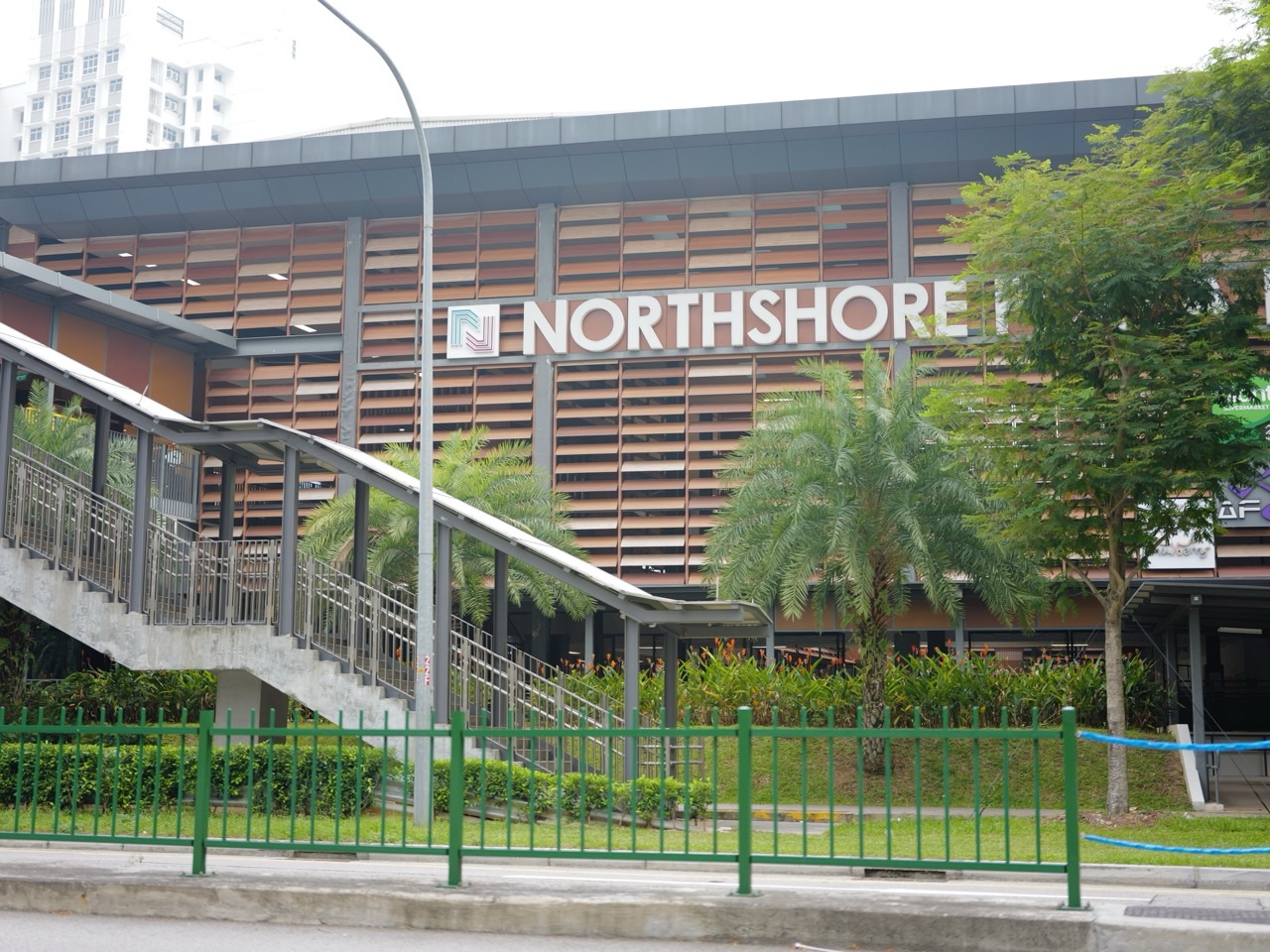
Neighbourhood Centres are planned as daily-life infrastructure.
HDB describes them as an integral part of HDB towns, giving residents easy access to food and dining, healthcare, shopping and other daily needs.
The planning logic is:
HOME → LOCAL SHOPS / NEIGHBOURHOOD CENTRE → TOWN CENTRE → REGIONAL CITY
Not every errand should require the largest centre.
Official HDB neighbourhood-centre owner: Neighbourhood Centres.
Wait, What? Retail Is Part of Housing Design
Housing is often imagined as residential buildings first and shops later.
HDB planning treats the relationship more deliberately.
A town is useful only when residents can convert shelter into daily life.
That requires nearby access to food, services and social destinations.
Retail is therefore not decoration around housing.
It is part of the operating system of the town.
The Hierarchy Prevents Every Trip From Becoming a Town-Centre Trip
A resident buying milk does not need a regional mall.
A household buying furniture may need a larger centre.
Different needs operate at different scales.
HDB’s hierarchy of facilities allows frequent, simple errands to remain close to home while larger, less frequent needs are concentrated at larger centres.
This saves travel time and protects the transport network from carrying every tiny transaction across town.
Neighbourhood Centres Mix More Than Shops
Modern HDB Neighbourhood Centres increasingly combine:
- supermarkets;
- food courts and restaurants;
- retail shops;
- services;
- healthcare;
- childcare;
- community spaces;
- play and recreation;
- transport connections.
HDB’s New Generation Neighbourhood Centres were explicitly designed with community plazas and broader facility mixes, not only commercial tenancies.
The centre becomes a small urban heart rather than a row of shops.
Oasis Terraces Shows the Integrated Model
HDB identifies Oasis Terraces in Punggol as the first New Generation Neighbourhood Centre, introduced in 2019.
Its mix includes community spaces, play areas and facilities shaped partly by resident feedback, and it integrated a polyclinic and childcare centre.
This is useful because one trip can satisfy several needs.
A parent can combine healthcare, groceries, food and childcare pickup inside one local destination.
Transport and Retail Reinforce Each Other
Neighbourhood centres are more useful when they sit near the paths residents already use.
HDB’s planning framework emphasises connectivity through pedestrian networks and transport infrastructure.
A centre near bus routes, walking paths and cycling connections gains repeated footfall.
That repeated movement helps shops remain viable.
Commercial viability then improves resident convenience.
The two systems support each other.
The Tenant Mix Is a Town-Planning Question
A centre filled only with fashionable discretionary retail may look attractive and still fail residents’ basic needs.
Daily-life infrastructure requires a balanced mix.
- food;
- groceries;
- health-related services;
- household services;
- child- and family-related services;
- ordinary retail;
- community use.
HDB’s New Generation Neighbourhood Centre model explicitly incorporates resident feedback into the selection of shops and facilities.
The market still matters.
Planning shapes the field in which the market operates.
New Towns Have a Timing Problem
A mature town already has shops, clinics, schools and transport around new housing.
A large new BTO estate can receive thousands of residents before the wider ecosystem is fully mature.
In March 2026, HDB announced measures for residents in new large-scale BTO estates to receive earlier access to cooked food, groceries, childcare and bus services—up to three months earlier than before—through better multi-agency coordination.
Official HDB update: Earlier Access to Amenities in New Large-Scale BTO Estates.
This shows that amenities are not only a location problem.
They are a commissioning problem.
A Shop That Exists Too Late Is Missing Infrastructure
Residents experience the town from move-in day.
If the supermarket opens one year later, the masterplan may be complete on paper while the household experiences a temporary service gap.
Good town delivery therefore synchronises homes with the services that make those homes practical.
Neighbourhood Centres Also Create Informal Social Contact
Residents may not attend organised community events.
They still repeatedly encounter one another at:
- the supermarket;
- coffee shop;
- pharmacy;
- clinic;
- food court;
- plaza;
- play area.
Repeated low-stakes contact creates familiarity.
A retail centre can therefore become social infrastructure even when nobody deliberately goes there to socialise.
Why Mature Neighbourhood Centres Matter
HDB has built and progressively upgraded more than 100 neighbourhood centres since the first was developed in Toa Payoh in 1967.
Mature centres accumulate:
- known merchants;
- resident habits;
- local food culture;
- service relationships;
- familiar walking routes;
- social memory.
Upgrading therefore has to modernise the physical environment without casually destroying the local ecosystem that made the centre useful.
Failure Mode: Building Shops Without Footfall
Commercial units can exist physically and still struggle economically.
Bad pedestrian routing, weak visibility or poor transport connection can reduce everyday use.
Retail planning must follow actual resident movement.
Failure Mode: Optimising Only for Rent
The highest-paying tenant is not automatically the most valuable tenant for neighbourhood life.
A town needs boring but essential services too.
The quality of a neighbourhood centre is partly determined by whether ordinary residents can solve ordinary problems there.
Failure Mode: Separating Community Space From Commerce Completely
People already gather where they shop and eat.
New Generation Neighbourhood Centres recognise this by integrating plazas, play areas and other community spaces.
Commerce creates footfall.
Community space converts some of that footfall into social life.
Forward Play: Follow One Grocery Trip
A resident leaves the block.
A sheltered or pedestrian route connects to the neighbourhood centre.
Groceries are bought.
The resident picks up food and passes a clinic.
A child uses the play area.
The family walks home.
A simple errand has used retail, healthcare, public space and pedestrian infrastructure in one local loop.
The Deeper Housing Principle
A home is affordable partly because of what can be reached from it cheaply and quickly.
If every meal, clinic visit or grocery purchase requires a long journey, household time and transport costs rise.
Local amenities therefore contribute to effective housing affordability even though they are not part of the flat price.
The Deepest Answer
HDB neighbourhood centres work because housing is planned as daily life, not simply as residential floor area.
Local shops reduce travel.
Food anchors routine.
Healthcare and childcare strengthen the service mix.
Transport brings footfall.
Community spaces turn transactions into encounters.
The centre is therefore not simply where residents spend money.
It is where a housing estate becomes locally usable.
Continue Through the HDB System
Return to How HDB Works in Singapore.
Previous: How HDB Precinct Pavilions Create Community Capacity.
Next: Why Schools, Childcare and Clinics Are HDB Housing Infrastructure | A Home Is Only as Useful as the Services Around It.