
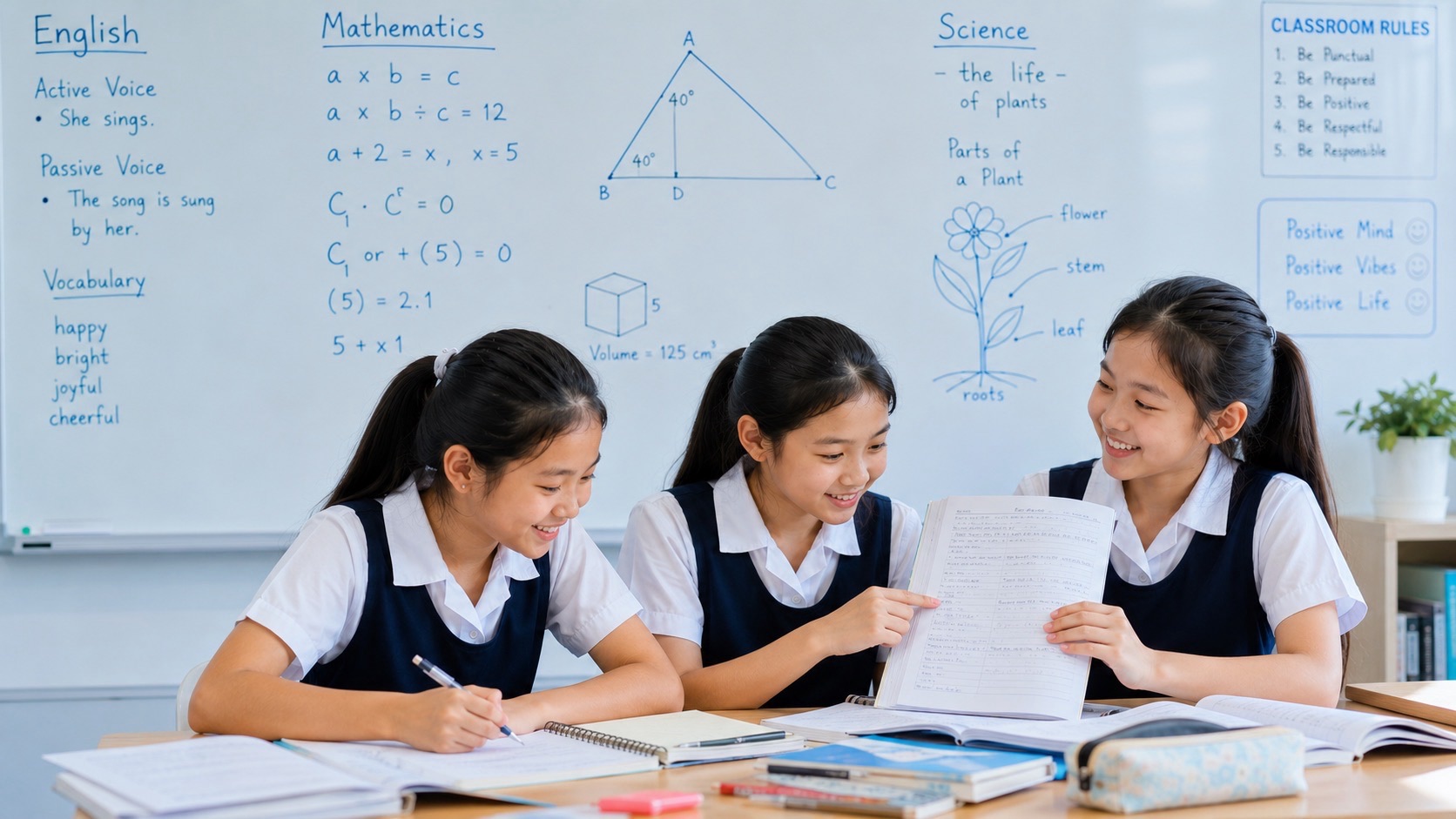
Primary 3 vocabulary practice works best when children do more than reread a list. This world-facing guide provides 3rd grade vocabulary worksheets, Grade 3 vocabulary exercises, context-clue practice, word-meaning questions, sentence-completion tasks, synonyms and antonyms, word-part work, mixed quizzes and answer keys built around a high-utility Primary 3 vocabulary bank. It is designed for families, teachers and learners searching for third grade vocabulary worksheets, Grade 3 vocabulary practice, printable-style vocabulary activities, reading vocabulary, academic vocabulary and structured review.
Strong 3rd grade vocabulary exercises should train several directions of recall. A learner needs to go from word to meaning, meaning to word, context to word, word to sentence, word to related form, and familiar context to new context. That is why these practice sets mix definitions, context clues, collocations, word relationships, shades of meaning, prefixes and suffixes, sentence repair, reading comprehension language and cross-curricular transfer rather than repeating one worksheet format for twenty pages.
The article is deliberately separate from the general Top 100 Primary 3 Vocabulary List. The list teaches the words; this practice owner trains retrieval, discrimination and use. Readers who use the terms Primary 3, Grade 3, third grade or 3rd grade can use the same exercises, while adjusting pace for the child and curriculum in front of them. No single school system defines worldwide Grade 3 vocabulary, so the useful target is broad: high-utility words for reading, writing, Mathematics, Science, classroom reasoning and everyday explanation.
How to Use These Grade 3 Vocabulary Worksheets
- Start small. Use one worksheet section or five to ten words at a time.
- Hide the answer key. Recognition is easier than retrieval; let the learner try before checking.
- Require a reason. When two choices look possible, ask why one fits better.
- Repair immediately. If a sentence sounds unnatural, model the correct pattern and ask for a fresh example.
- Return later. A word used correctly today should reappear after a delay and in a different context.
- Mix old and new. Once words are introduced, stop keeping them in perfect topic groups.
- Use oral and written practice. Spoken retrieval reveals speed and flexibility; writing reveals grammar, spelling and collocation.
The search language around strong Grade 3 worksheet resources is consistent: word meanings, definitions, context clues, synonyms and antonyms, affixes, compound words, sentence completion, tricky words, shades of meaning and answer keys. Those are useful practice categories because they test different parts of word knowledge instead of treating vocabulary as one skill.
The 100-Word Practice Bank
This practice page uses the same one hundred high-utility words as the worldwide Grade 3 academic vocabulary flagship so learners can move directly from learning into practice. The short table below is a reference only. For meanings, examples and deeper teaching, use the Top 100 Primary 3 Vocabulary List | Grade 3 Academic Vocabulary Words with Meanings, Examples & Practice.
| # | Word | Useful partnership |
|---|---|---|
| 1 | analyze | analyze information |
| 2 | compare | compare two ideas |
| 3 | contrast | contrast with |
| 4 | classify | classify into groups |
| 5 | conclude | conclude that |
| 6 | determine | determine the cause |
| 7 | distinguish | distinguish between |
| 8 | evidence | strong evidence |
| 9 | examine | examine closely |
| 10 | infer | infer from clues |
| 11 | author | the author explains |
| 12 | audience | target audience |
| 13 | character | main character |
| 14 | dialogue | realistic dialogue |
| 15 | fiction | fiction story |
| 16 | nonfiction | nonfiction text |
| 17 | narrator | first-person narrator |
| 18 | passage | reading passage |
| 19 | setting | story setting |
| 20 | theme | central theme |
| 21 | describe | describe clearly |
| 22 | detail | important detail |
| 23 | edit | edit carefully |
| 24 | explain | explain a reason |
| 25 | organize | organize information |
| 26 | paragraph | well-developed paragraph |
| 27 | persuade | persuade someone |
| 28 | purpose | main purpose |
| 29 | revise | revise a draft |
| 30 | summarize | summarize the text |
| 31 | accurate | accurate measurement |
| 32 | approximate | approximate number |
| 33 | average | average score |
| 34 | calculate | calculate the total |
| 35 | data | collect data |
| 36 | estimate | estimate the amount |
| 37 | measure | measure accurately |
| 38 | pattern | number pattern |
| 39 | quantity | large quantity |
| 40 | solution | possible solution |
| 41 | adapt | adapt to change |
| 42 | climate | warm climate |
| 43 | coast | along the coast |
| 44 | conserve | conserve resources |
| 45 | ecosystem | pond ecosystem |
| 46 | energy | source of energy |
| 47 | environment | protect the environment |
| 48 | habitat | natural habitat |
| 49 | material | strong material |
| 50 | matter | state of matter |
| 51 | moisture | soil moisture |
| 52 | organism | living organism |
| 53 | resource | natural resource |
| 54 | survive | survive in |
| 55 | temperature | measure temperature |
| 56 | community | local community |
| 57 | cooperate | cooperate with |
| 58 | culture | cultural tradition |
| 59 | contribute | contribute to |
| 60 | region | mountain region |
| 61 | responsibility | take responsibility |
| 62 | respectful | respectful behaviour |
| 63 | tradition | family tradition |
| 64 | volunteer | volunteer to help |
| 65 | fairness | sense of fairness |
| 66 | confident | confident about |
| 67 | curious | curious about |
| 68 | disappointed | deeply disappointed |
| 69 | eager | eager to learn |
| 70 | fortunate | fortunate to have |
| 71 | nervous | nervous about |
| 72 | patient | patient with |
| 73 | thoughtful | thoughtful response |
| 74 | unusual | unusual feature |
| 75 | valuable | valuable information |
| 76 | avoid | avoid a mistake |
| 77 | combine | combine ideas |
| 78 | depend | depend on |
| 79 | demonstrate | demonstrate how |
| 80 | include | include in |
| 81 | improve | improve accuracy |
| 82 | notice | notice a change |
| 83 | occur | occur naturally |
| 84 | prevent | prevent damage |
| 85 | require | require attention |
| 86 | result | result in |
| 87 | select | select from |
| 88 | sequence | sequence of events |
| 89 | similar | similar to |
| 90 | typical | typical example |
| 91 | vary | vary greatly |
| 92 | process | step-by-step process |
| 93 | method | effective method |
| 94 | observe | observe carefully |
| 95 | predict | predict accurately |
| 96 | record | record data |
| 97 | structure | clear structure |
| 98 | reason | main reason |
| 99 | effect | effect on |
| 100 | explore | explore an idea |
Worksheet 1: Match the Meaning
Read each meaning and choose the best word from the bank. Do not look at the master list until you have attempted all twenty. Some distractors may be related, so use the full meaning rather than matching one familiar clue.
- to study something carefully by breaking it into parts or looking closely at its features
Choices: analyze, explain, habitat, patient. - to look at two or more things to find similarities and differences
Choices: compare, material, organize, thoughtful. - to focus on how two or more things are different
Choices: contrast, matter, paragraph, unusual. - to arrange people, objects or ideas into groups based on shared features
Choices: classify, moisture, persuade, valuable. - to reach a judgement after considering information or evidence
Choices: avoid, conclude, organism, purpose. - to find out something by thinking, checking, measuring or investigating
Choices: combine, determine, resource, revise. - to recognize or explain the difference between things that may seem similar
Choices: depend, distinguish, summarize, survive. - facts, observations, examples or information that support an idea or answer
Choices: accurate, demonstrate, evidence, temperature. - to look at or consider something carefully in order to understand it better
Choices: approximate, community, examine, include. - to work out an idea that is not stated directly by combining clues with what you already know
Choices: average, cooperate, improve, infer. - the person who writes a book, story, article or other text
Choices: author, calculate, culture, notice. - the people who read, watch or listen to a message
Choices: audience, contribute, data, occur. - a person, animal or imagined being who takes part in a story
Choices: character, estimate, prevent, region. - the words spoken by characters in a story or play
Choices: dialogue, measure, require, responsibility. - writing that is created from imagination, even when it contains realistic details
Choices: fiction, pattern, respectful, result. - writing that presents information about real people, places, events or ideas
Choices: nonfiction, quantity, select, tradition. - the voice or person that tells a story
Choices: narrator, sequence, solution, volunteer. - a section of written text, especially one used for reading or study
Choices: adapt, fairness, passage, similar. - the time and place in which a story happens
Choices: climate, confident, setting, typical. - a larger idea or message that a text explores, such as courage, fairness or friendship
Choices: coast, curious, theme, vary.
Worksheet 1 Answer Key
1. analyze · 2. compare · 3. contrast · 4. classify · 5. conclude · 6. determine · 7. distinguish · 8. evidence · 9. examine · 10. infer · 11. author · 12. audience · 13. character · 14. dialogue · 15. fiction · 16. nonfiction · 17. narrator · 18. passage · 19. setting · 20. theme
Worksheet 2: Context Clues
Read the situation, then identify the target word. Explain which clue in the sentence helped you choose. The explanation is as important as the answer because it shows whether the learner is reading the context rather than guessing from familiarity.
- Alicia described the shell as smooth, pale and curved like a tiny bowl. Which Grade 3 vocabulary word is being demonstrated most directly?
- Tricia included the cracked handle as a detail that helped identify the missing suitcase. Which Grade 3 vocabulary word is being demonstrated most directly?
- Kai Kai edited the sentence by fixing the verb tense and removing a repeated word. Which Grade 3 vocabulary word is being demonstrated most directly?
- Alicia explained why the shadow moved as the light source changed position. Which Grade 3 vocabulary word is being demonstrated most directly?
- Tricia organized her notes into cause, effect and example. Which Grade 3 vocabulary word is being demonstrated most directly?
- Kai Kai began a new paragraph when the story moved from the problem to the solution. Which Grade 3 vocabulary word is being demonstrated most directly?
- Alicia used reasons and examples to persuade her class to reduce food waste. Which Grade 3 vocabulary word is being demonstrated most directly?
- The purpose of the poster was to warn readers about slippery steps. Which Grade 3 vocabulary word is being demonstrated most directly?
- Tricia revised her opening so the problem appeared earlier and the story started faster. Which Grade 3 vocabulary word is being demonstrated most directly?
- Kai Kai summarized the chapter in three sentences. Which Grade 3 vocabulary word is being demonstrated most directly?
- Alicia checked the ruler again to make sure her measurement was accurate. Which Grade 3 vocabulary word is being demonstrated most directly?
- The approximate length of the table was one metre. Which Grade 3 vocabulary word is being demonstrated most directly?
- The average of 4, 6 and 8 is 6. Which Grade 3 vocabulary word is being demonstrated most directly?
- Tricia calculated the total cost by adding the three prices. Which Grade 3 vocabulary word is being demonstrated most directly?
- Kai Kai recorded the plant heights as data in a table. Which Grade 3 vocabulary word is being demonstrated most directly?
- Alicia estimated that the jar contained about eighty beads before counting them. Which Grade 3 vocabulary word is being demonstrated most directly?
- We measured the classroom door with a tape measure. Which Grade 3 vocabulary word is being demonstrated most directly?
- Tricia noticed a pattern: each number was three greater than the one before it. Which Grade 3 vocabulary word is being demonstrated most directly?
- Kai Kai compared the quantity of water in two containers. Which Grade 3 vocabulary word is being demonstrated most directly?
- Alicia suggested a solution that reduced waiting time for everyone. Which Grade 3 vocabulary word is being demonstrated most directly?
Worksheet 2 Answer Key
1. describe · 2. detail · 3. edit · 4. explain · 5. organize · 6. paragraph · 7. persuade · 8. purpose · 9. revise · 10. summarize · 11. accurate · 12. approximate · 13. average · 14. calculate · 15. data · 16. estimate · 17. measure · 18. pattern · 19. quantity · 20. solution
Worksheet 3: Complete the Word Partnership
Collocations are natural word partnerships. Complete each phrase with the target word, then use the completed phrase in a new sentence. A correct definition with an unnatural partnership is not yet secure vocabulary knowledge.
- ________ to change — then write a fresh sentence that makes the phrase useful rather than decorative.
- warm ________ — then write a fresh sentence that makes the phrase useful rather than decorative.
- along the ________ — then write a fresh sentence that makes the phrase useful rather than decorative.
- ________ resources — then write a fresh sentence that makes the phrase useful rather than decorative.
- pond ________ — then write a fresh sentence that makes the phrase useful rather than decorative.
- source of ________ — then write a fresh sentence that makes the phrase useful rather than decorative.
- protect the ________ — then write a fresh sentence that makes the phrase useful rather than decorative.
- natural ________ — then write a fresh sentence that makes the phrase useful rather than decorative.
- strong ________ — then write a fresh sentence that makes the phrase useful rather than decorative.
- state of ________ — then write a fresh sentence that makes the phrase useful rather than decorative.
- soil ________ — then write a fresh sentence that makes the phrase useful rather than decorative.
- living ________ — then write a fresh sentence that makes the phrase useful rather than decorative.
- natural ________ — then write a fresh sentence that makes the phrase useful rather than decorative.
- ________ in — then write a fresh sentence that makes the phrase useful rather than decorative.
- measure ________ — then write a fresh sentence that makes the phrase useful rather than decorative.
- local ________ — then write a fresh sentence that makes the phrase useful rather than decorative.
- ________ with — then write a fresh sentence that makes the phrase useful rather than decorative.
- ________ + cultural tradition — then write a fresh sentence that makes the phrase useful rather than decorative.
- ________ to — then write a fresh sentence that makes the phrase useful rather than decorative.
- mountain ________ — then write a fresh sentence that makes the phrase useful rather than decorative.
Worksheet 3 Answer Key
1. adapt to change · 2. warm climate · 3. along the coast · 4. conserve resources · 5. pond ecosystem · 6. source of energy · 7. protect the environment · 8. natural habitat · 9. strong material · 10. state of matter · 11. soil moisture · 12. living organism · 13. natural resource · 14. survive in · 15. measure temperature · 16. local community · 17. cooperate with · 18. cultural tradition · 19. contribute to · 20. mountain region
Worksheet 4: Which Word Fits Best?
Choose between two nearby or potentially confusing words. Then justify the choice in one sentence. The aim is discrimination: knowing why one word fits better than another.
- The question asks for one similarity and one difference between two habitats. compare or contrast? Explain why.
- A scientist watches the plant at fixed times and records changes carefully. notice or observe? Explain why.
- You use a ruler to find the exact length of the desk. estimate or measure? Explain why.
- You use a repeating pattern to say what number should come next. predict or conclude? Explain why.
- You quote a line from the passage to support your answer. evidence or reason? Explain why.
- You change the order of two paragraphs because the explanation is confusing. revise or edit? Explain why.
- You say the crowd contains about three hundred people without counting everyone. accurate or approximate? Explain why.
- You choose one planned way to solve the problem. method or process? Explain why.
- You identify the story’s larger idea about courage. setting or theme? Explain why.
- You are naming the voice that tells the story. author or narrator? Explain why.
- You explain that two shapes share several important features. similar or typical? Explain why.
- A lid stops dust from entering a container. prevent or avoid? Explain why.
- You name a change caused by strong wind. effect or result? Explain why.
- You discuss shared traditions, arts and ways of life. community or culture? Explain why.
- You feel ready and interested to begin the activity. confident or eager? Explain why.
- You feel uneasy before speaking to a large audience. nervous or disappointed? Explain why.
- You describe the place where one animal naturally lives. habitat or ecosystem? Explain why.
- You ask how much water is in the container. quantity or average? Explain why.
- You write measurements down so they can be used later. record or summarize? Explain why.
- You group leaves according to shape because the shared feature matters. classify or organize? Explain why.
Worksheet 4 Answer Key
1. compare · 2. observe · 3. measure · 4. predict · 5. evidence · 6. revise · 7. approximate · 8. method · 9. theme · 10. narrator · 11. similar · 12. prevent · 13. effect · 14. culture · 15. eager · 16. nervous · 17. habitat · 18. quantity · 19. record · 20. classify
Worksheet 5: Synonyms, Antonyms and Shades of Meaning
Synonyms overlap but are rarely perfect substitutes. Antonyms often sit on a scale rather than forming absolute opposites. For each item, choose the best relationship and then explain one difference in use.
- Compare accurate and correct. Are they near-synonyms, contrasting meanings, or overlapping but different? Write one sentence showing the difference.
- Compare approximate and exact. Are they near-synonyms, contrasting meanings, or overlapping but different? Write one sentence showing the difference.
- Compare confident and uncertain. Are they near-synonyms, contrasting meanings, or overlapping but different? Write one sentence showing the difference.
- Compare eager and reluctant. Are they near-synonyms, contrasting meanings, or overlapping but different? Write one sentence showing the difference.
- Compare similar and different. Are they near-synonyms, contrasting meanings, or overlapping but different? Write one sentence showing the difference.
- Compare valuable and worthless. Are they near-synonyms, contrasting meanings, or overlapping but different? Write one sentence showing the difference.
- Compare improve and worsen. Are they near-synonyms, contrasting meanings, or overlapping but different? Write one sentence showing the difference.
- Compare include and exclude. Are they near-synonyms, contrasting meanings, or overlapping but different? Write one sentence showing the difference.
- Compare prevent and allow. Are they near-synonyms, contrasting meanings, or overlapping but different? Write one sentence showing the difference.
- Compare cooperate and collaborate. Are they near-synonyms, contrasting meanings, or overlapping but different? Write one sentence showing the difference.
- Compare curious and interested. Are they near-synonyms, contrasting meanings, or overlapping but different? Write one sentence showing the difference.
- Compare patient and calm. Are they near-synonyms, contrasting meanings, or overlapping but different? Write one sentence showing the difference.
- Compare fortunate and lucky. Are they near-synonyms, contrasting meanings, or overlapping but different? Write one sentence showing the difference.
- Compare unusual and ordinary. Are they near-synonyms, contrasting meanings, or overlapping but different? Write one sentence showing the difference.
- Compare conserve and waste. Are they near-synonyms, contrasting meanings, or overlapping but different? Write one sentence showing the difference.
- Compare persuade and convince. Are they near-synonyms, contrasting meanings, or overlapping but different? Write one sentence showing the difference.
- Compare summarize and condense. Are they near-synonyms, contrasting meanings, or overlapping but different? Write one sentence showing the difference.
- Compare examine and inspect. Are they near-synonyms, contrasting meanings, or overlapping but different? Write one sentence showing the difference.
- Compare select and choose. Are they near-synonyms, contrasting meanings, or overlapping but different? Write one sentence showing the difference.
- Compare occur and happen. Are they near-synonyms, contrasting meanings, or overlapping but different? Write one sentence showing the difference.
Worksheet 5 Answer Key
1. near-synonyms · 2. contrasting meanings · 3. contrasting meanings · 4. contrasting attitudes · 5. contrasting relationship · 6. contrasting judgement · 7. contrasting change · 8. contrasting membership · 9. contrasting outcome · 10. near-synonyms · 11. near-synonyms · 12. overlapping meanings · 13. near-synonyms · 14. contrasting typicality · 15. contrasting resource use · 16. near-synonyms · 17. overlapping meanings · 18. near-synonyms · 19. near-synonyms · 20. near-synonyms
Worksheet 6: Prefixes, Suffixes and Word Families
Use familiar word parts to build or interpret related words. The point is not to attach every suffix mechanically; the point is to see how form and meaning change together.
- Base word: predict. Explain how prediction and predictable are related to the base. Then use one family member in a sentence.
- Base word: observe. Explain how observation and observer are related to the base. Then use one family member in a sentence.
- Base word: conclude. Explain how conclusion and conclusive are related to the base. Then use one family member in a sentence.
- Base word: determine. Explain how determination and determined are related to the base. Then use one family member in a sentence.
- Base word: distinguish. Explain how distinction and distinctive are related to the base. Then use one family member in a sentence.
- Base word: examine. Explain how examination and examiner are related to the base. Then use one family member in a sentence.
- Base word: describe. Explain how description and descriptive are related to the base. Then use one family member in a sentence.
- Base word: explain. Explain how explanation and explanatory are related to the base. Then use one family member in a sentence.
- Base word: organize. Explain how organization and organized are related to the base. Then use one family member in a sentence.
- Base word: persuade. Explain how persuasion and persuasive are related to the base. Then use one family member in a sentence.
- Base word: revise. Explain how revision and revised are related to the base. Then use one family member in a sentence.
- Base word: accurate. Explain how accuracy and accurately are related to the base. Then use one family member in a sentence.
- Base word: approximate. Explain how approximately and approximation are related to the base. Then use one family member in a sentence.
- Base word: calculate. Explain how calculation and calculator are related to the base. Then use one family member in a sentence.
- Base word: estimate. Explain how estimation and estimated are related to the base. Then use one family member in a sentence.
- Base word: measure. Explain how measurement and measurable are related to the base. Then use one family member in a sentence.
- Base word: adapt. Explain how adaptation and adaptable are related to the base. Then use one family member in a sentence.
- Base word: conserve. Explain how conservation and conservative are related to the base. Then use one family member in a sentence.
- Base word: cooperate. Explain how cooperation and cooperative are related to the base. Then use one family member in a sentence.
- Base word: contribute. Explain how contribution and contributor are related to the base. Then use one family member in a sentence.
Worksheet 6 Teacher Notes
Accept explanations that correctly identify the shared core meaning and the changed grammatical job. Do not require technical labels if the learner can explain the change clearly. Where a family member has developed a specialized meaning, discuss that meaning rather than assuming every form is perfectly predictable from the base.
Worksheet 7: Sentence Completion
Complete each sentence with the most precise target word. The surrounding grammar and meaning should both fit. Then read the completed sentence aloud to check naturalness.
- Alicia needed to __________ the idea clearly enough that another student could understand how it worked. Target meaning: a duty or task that someone is expected to take care of.
- Tricia needed to __________ the idea clearly enough that another student could understand how it worked. Target meaning: showing care for other people, rules, places or ideas.
- Kai Kai needed to __________ the idea clearly enough that another student could understand how it worked. Target meaning: a practice, belief or custom passed from one generation or group to another.
- Alicia needed to __________ the idea clearly enough that another student could understand how it worked. Target meaning: a person who freely offers to help, or the act of offering to help without being forced.
- Tricia needed to __________ the idea clearly enough that another student could understand how it worked. Target meaning: the quality of treating people according to reasonable and just rules.
- Kai Kai needed to __________ the idea clearly enough that another student could understand how it worked. Target meaning: feeling reasonably sure about your ability, knowledge or decision.
- Alicia needed to __________ the idea clearly enough that another student could understand how it worked. Target meaning: wanting to know, learn or understand more.
- Tricia needed to __________ the idea clearly enough that another student could understand how it worked. Target meaning: feeling unhappy because something did not happen as hoped or expected.
- Kai Kai needed to __________ the idea clearly enough that another student could understand how it worked. Target meaning: very interested and ready to do or experience something.
- Alicia needed to __________ the idea clearly enough that another student could understand how it worked. Target meaning: having experienced something good because of luck or favourable circumstances.
- Tricia needed to __________ the idea clearly enough that another student could understand how it worked. Target meaning: worried, uneasy or excited about what may happen.
- Kai Kai needed to __________ the idea clearly enough that another student could understand how it worked. Target meaning: able to wait or continue calmly without becoming upset too quickly.
- Alicia needed to __________ the idea clearly enough that another student could understand how it worked. Target meaning: showing careful thinking or kind consideration for others.
- Tricia needed to __________ the idea clearly enough that another student could understand how it worked. Target meaning: different from what is common, expected or ordinary.
- Kai Kai needed to __________ the idea clearly enough that another student could understand how it worked. Target meaning: useful, important or worth a great deal.
- Alicia needed to __________ the idea clearly enough that another student could understand how it worked. Target meaning: to keep away from something or prevent yourself from doing it.
- Tricia needed to __________ the idea clearly enough that another student could understand how it worked. Target meaning: to join two or more things so they work or exist together.
- Kai Kai needed to __________ the idea clearly enough that another student could understand how it worked. Target meaning: to need or be decided by something else.
- Alicia needed to __________ the idea clearly enough that another student could understand how it worked. Target meaning: to show clearly how something works, is done or is true.
- Tricia needed to __________ the idea clearly enough that another student could understand how it worked. Target meaning: to contain someone or something as part of a larger group or whole.
Worksheet 7 Answer Key
1. responsibility · 2. respectful · 3. tradition · 4. volunteer · 5. fairness · 6. confident · 7. curious · 8. disappointed · 9. eager · 10. fortunate · 11. nervous · 12. patient · 13. thoughtful · 14. unusual · 15. valuable · 16. avoid · 17. combine · 18. depend · 19. demonstrate · 20. include
Teacher note: Because these are generated from target meanings rather than one fixed cloze passage, a learner may occasionally propose another sensible word. If that happens, ask whether the alternative matches the stated target meaning exactly. Reward justified precision rather than answer-key guessing.
Worksheet 8: Cross-Curricular Transfer
Choose the best target word for each subject move, then write a second example in a different subject. A word is becoming powerful when it can travel.
- Mathematics: Say roughly how many cubes are in a container before counting. Which target word fits? Then use the same word in a different subject.
- Mathematics: Explain the repeated relationship in a number sequence. Which target word fits? Then use the same word in a different subject.
- Mathematics: Check whether a measurement is correct. Which target word fits? Then use the same word in a different subject.
- Science: Watch and record how a seedling changes. Which target word fits? Then use the same word in a different subject.
- Science: Use results to support an explanation. Which target word fits? Then use the same word in a different subject.
- Science: Describe a series of changes such as melting and cooling. Which target word fits? Then use the same word in a different subject.
- Reading: Use clues to work out what a character feels. Which target word fits? Then use the same word in a different subject.
- Reading: Explain a larger idea explored across a story. Which target word fits? Then use the same word in a different subject.
- Reading: State the central ideas without copying every detail. Which target word fits? Then use the same word in a different subject.
- Writing: Change ideas or order to improve a draft. Which target word fits? Then use the same word in a different subject.
- Writing: Identify what the writer is trying to do. Which target word fits? Then use the same word in a different subject.
- Writing: Adjust wording for the people who will read it. Which target word fits? Then use the same word in a different subject.
- Social learning: Work with others toward a shared goal. Which target word fits? Then use the same word in a different subject.
- Social learning: Identify a duty someone is expected to handle. Which target word fits? Then use the same word in a different subject.
- Geography: Describe an area with shared features. Which target word fits? Then use the same word in a different subject.
- Environment: Use a resource carefully so less is wasted. Which target word fits? Then use the same word in a different subject.
- Science: Name the natural home of an organism. Which target word fits? Then use the same word in a different subject.
- Discussion: Give an explanation for a choice or claim. Which target word fits? Then use the same word in a different subject.
- Investigation: State the planned way the task will be carried out. Which target word fits? Then use the same word in a different subject.
- Any subject: Explain how parts are arranged to form a whole. Which target word fits? Then use the same word in a different subject.
Worksheet 8 Answer Key
1. estimate · 2. pattern · 3. accurate · 4. observe · 5. evidence · 6. process · 7. infer · 8. theme · 9. summarize · 10. revise · 11. purpose · 12. audience · 13. cooperate · 14. responsibility · 15. region · 16. conserve · 17. habitat · 18. reason · 19. method · 20. structure
Worksheet 9: Error Repair
Each sentence contains a vocabulary problem: the target word is used too vaguely, unnaturally or with the wrong meaning. Rewrite the sentence so the vocabulary becomes precise and natural.
- Repair: “Alicia did an evidence about the story.”
- Repair: “Tricia estimated the desk with a ruler and got exactly 120 cm.”
- Repair: “Kai Kai revised the spelling mistake by adding the missing letter.”
- Repair: “The habitat included sunlight, water, animals, soil and the relationships among them.”
- Repair: “The author inside the story said, “I opened the door slowly.””
- Repair: “The average of the jar was about eighty beads.”
- Repair: “We cooperated the books into three groups.”
- Repair: “The temperature is a warm climate today.”
- Repair: “The theme of the story is a dark forest at night.”
- Repair: “I prevented the puddle by walking around it.”
- Repair: “The result made the wind blow strongly.”
- Repair: “The paragraph audience was to persuade readers.”
- Repair: “The community of the festival included food, music and traditions.”
- Repair: “The learner was accurate because she was almost correct.”
- Repair: “We observed the answer by doing the calculation.”
- Repair: “The method happened in four steps.”
- Repair: “The child was disappointed before the race because she was unsure what would happen.”
- Repair: “We included the mistake from happening.”
- Repair: “The data was a method of 5, 7 and 9.”
- Repair: “The word is typical because it is completely different from what usually happens.”
Worksheet 9 Suggested Answers
- Alicia used evidence from the story to support her answer.
- Tricia measured the desk with a ruler and got 120 cm.
- Kai Kai edited the spelling mistake by adding the missing letter.
- The ecosystem included sunlight, water, animals, soil and the relationships among them.
- The narrator inside the story said, “I opened the door slowly.”
- The estimated quantity in the jar was about eighty beads.
- We classified the books into three groups.
- The weather is warm today; the region has a warm climate overall.
- The setting of the story is a dark forest at night.
- I avoided the puddle by walking around it.
- The strong wind caused the result.
- The paragraph’s purpose was to persuade readers.
- The culture represented at the festival included food, music and traditions.
- The learner’s estimate was approximate because it was close but not exact.
- We determined the answer by doing the calculation.
- The process happened in four steps, using a clear method.
- The child was nervous before the race because she was unsure what would happen.
- We prevented the mistake from happening.
- The data values were 5, 7 and 9.
- The word is unusual because it is different from what usually happens.
Worksheet 10: Mixed Grade 3 Vocabulary Quiz
This mixed quiz removes the topic labels. Use it after the learner has practised the earlier sections. Each answer should include the word and, where requested, a short reason.
- Which word means “to arrange people, objects or ideas into groups based on shared features”?
- The author repeated the word suddenly to make the scene feel urgent. Name the target word and explain the clue that identifies it.
- Kai Kai wants to use the partnership reading passage. What target word is being practised, and what is one new sentence that would use it naturally?
- Which word means “to arrange things or ideas so they are easier to use, understand or find”?
- The approximate length of the table was one metre. Name the target word and explain the clue that identifies it.
- Kai Kai wants to use the partnership large quantity. What target word is being practised, and what is one new sentence that would use it naturally?
- Which word means “the ability to cause change or do work, and also a common word for physical liveliness”?
- Fresh water is an important natural resource. Name the target word and explain the clue that identifies it.
- Kai Kai wants to use the partnership mountain region. What target word is being practised, and what is one new sentence that would use it naturally?
- Which word means “wanting to know, learn or understand more”?
- The bird had an unusual call that sounded like two notes repeated quickly. Name the target word and explain the clue that identifies it.
- Kai Kai wants to use the partnership improve accuracy. What target word is being practised, and what is one new sentence that would use it naturally?
- Which word means “the order in which things happen or are arranged”?
- Tricia predicted that the next number would be 24 because the pattern increased by four. Name the target word and explain the clue that identifies it.
- Kai Kai wants to use the partnership compare two ideas. What target word is being practised, and what is one new sentence that would use it naturally?
- Which word means “to look at or consider something carefully in order to understand it better”?
- Tricia read a nonfiction article about how bridges are built. Name the target word and explain the clue that identifies it.
- Kai Kai wants to use the partnership edit carefully. What target word is being practised, and what is one new sentence that would use it naturally?
- Which word means “to give the main ideas in a shorter form without copying every detail”?
- We measured the classroom door with a tape measure. Name the target word and explain the clue that identifies it.
- Kai Kai wants to use the partnership conserve resources. What target word is being practised, and what is one new sentence that would use it naturally?
- Which word means “a small amount of water in the air, soil or on a surface”?
- Stories, food and celebrations can all express parts of a culture. Name the target word and explain the clue that identifies it.
- Kai Kai wants to use the partnership sense of fairness. What target word is being practised, and what is one new sentence that would use it naturally?
- Which word means “able to wait or continue calmly without becoming upset too quickly”?
- Kai Kai demonstrated the method before the group tried it independently. Name the target word and explain the clue that identifies it.
- Kai Kai wants to use the partnership result in. What target word is being practised, and what is one new sentence that would use it naturally?
- Which word means “a planned way of doing something”?
- Tricia explored several possible explanations before choosing the one best supported by evidence. Name the target word and explain the clue that identifies it.
- Kai Kai wants to use the partnership distinguish between. What target word is being practised, and what is one new sentence that would use it naturally?
Worksheet 10 Answer Key
1. classify · 2. author · 3. passage · 4. organize · 5. approximate · 6. quantity · 7. energy · 8. resource · 9. region · 10. curious · 11. unusual · 12. improve · 13. sequence · 14. predict · 15. compare · 16. examine · 17. nonfiction · 18. edit · 19. summarize · 20. measure · 21. conserve · 22. moisture · 23. culture · 24. fairness · 25. patient · 26. demonstrate · 27. result · 28. method · 29. explore · 30. distinguish
100 One-Word Practice Labs
Use these as warm-ups, tutoring prompts, homework alternatives, oral drills or quick checks. Each lab trains several layers of knowledge around one word. A learner does not need to complete all five moves at once; choose the move that targets the current weak link.
1. analyze — Meaning to word
Meaning check: to study something carefully by breaking it into parts or looking closely at its features Cover the word and ask the learner to retrieve it from this meaning. Then reverse the direction: show analyze and ask for a child-friendly explanation that keeps the central idea without copying the wording above.
Context check: Alicia analyzed the chart and noticed that the second bar was twice as tall as the first. Ask: what detail makes analyze fit this sentence? Replace one important detail in the situation and decide whether the word still fits. If it does not, choose a better word and explain the boundary.
Phrase check: practise analyze information. Alicia must now create a new sentence with the same target word but a different natural partnership. If the phrase sounds awkward, repair it before moving on. Vocabulary becomes usable when children learn the company a word keeps.
Discrimination check: compare analyze with audience. They may belong to different parts of the vocabulary system, which is useful: explain what job each word does and invent a situation where both could appear in the same paragraph without meaning the same thing.
Transfer check: connect analyze to pattern in a fresh subject or real-life context. The answer can be short, but it must make the relationship clear. This final move tests whether the learner can carry the word beyond the original example rather than reproducing a memorised sentence.
2. compare — Context clue
Meaning check: to look at two or more things to find similarities and differences Cover the word and ask the learner to retrieve it from this meaning. Then reverse the direction: show compare and ask for a child-friendly explanation that keeps the central idea without copying the wording above.
Context check: Tricia compared the two habitats and found that both had water but only one had tall trees. Ask: what detail makes compare fit this sentence? Replace one important detail in the situation and decide whether the word still fits. If it does not, choose a better word and explain the boundary.
Phrase check: practise compare two ideas. Tricia must now create a new sentence with the same target word but a different natural partnership. If the phrase sounds awkward, repair it before moving on. Vocabulary becomes usable when children learn the company a word keeps.
Discrimination check: compare compare with character. They may belong to different parts of the vocabulary system, which is useful: explain what job each word does and invent a situation where both could appear in the same paragraph without meaning the same thing.
Transfer check: connect compare to quantity in a fresh subject or real-life context. The answer can be short, but it must make the relationship clear. This final move tests whether the learner can carry the word beyond the original example rather than reproducing a memorised sentence.
3. contrast — Word partnership
Meaning check: to focus on how two or more things are different Cover the word and ask the learner to retrieve it from this meaning. Then reverse the direction: show contrast and ask for a child-friendly explanation that keeps the central idea without copying the wording above.
Context check: Kai Kai contrasted the two solutions by explaining why one used less water. Ask: what detail makes contrast fit this sentence? Replace one important detail in the situation and decide whether the word still fits. If it does not, choose a better word and explain the boundary.
Phrase check: practise contrast with. Kai Kai must now create a new sentence with the same target word but a different natural partnership. If the phrase sounds awkward, repair it before moving on. Vocabulary becomes usable when children learn the company a word keeps.
Discrimination check: compare contrast with dialogue. They may belong to different parts of the vocabulary system, which is useful: explain what job each word does and invent a situation where both could appear in the same paragraph without meaning the same thing.
Transfer check: connect contrast to solution in a fresh subject or real-life context. The answer can be short, but it must make the relationship clear. This final move tests whether the learner can carry the word beyond the original example rather than reproducing a memorised sentence.
4. classify — Sentence precision
Meaning check: to arrange people, objects or ideas into groups based on shared features Cover the word and ask the learner to retrieve it from this meaning. Then reverse the direction: show classify and ask for a child-friendly explanation that keeps the central idea without copying the wording above.
Context check: The class classified the rocks by texture, colour and hardness. Ask: what detail makes classify fit this sentence? Replace one important detail in the situation and decide whether the word still fits. If it does not, choose a better word and explain the boundary.
Phrase check: practise classify into groups. Alicia must now create a new sentence with the same target word but a different natural partnership. If the phrase sounds awkward, repair it before moving on. Vocabulary becomes usable when children learn the company a word keeps.
Discrimination check: compare classify with fiction. They may belong to different parts of the vocabulary system, which is useful: explain what job each word does and invent a situation where both could appear in the same paragraph without meaning the same thing.
Transfer check: connect classify to adapt in a fresh subject or real-life context. The answer can be short, but it must make the relationship clear. This final move tests whether the learner can carry the word beyond the original example rather than reproducing a memorised sentence.
5. conclude — Reading transfer
Meaning check: to reach a judgement after considering information or evidence Cover the word and ask the learner to retrieve it from this meaning. Then reverse the direction: show conclude and ask for a child-friendly explanation that keeps the central idea without copying the wording above.
Context check: From the wet footprints, Alicia concluded that someone had entered from the garden. Ask: what detail makes conclude fit this sentence? Replace one important detail in the situation and decide whether the word still fits. If it does not, choose a better word and explain the boundary.
Phrase check: practise conclude that. Tricia must now create a new sentence with the same target word but a different natural partnership. If the phrase sounds awkward, repair it before moving on. Vocabulary becomes usable when children learn the company a word keeps.
Discrimination check: compare conclude with nonfiction. They may belong to different parts of the vocabulary system, which is useful: explain what job each word does and invent a situation where both could appear in the same paragraph without meaning the same thing.
Transfer check: connect conclude to climate in a fresh subject or real-life context. The answer can be short, but it must make the relationship clear. This final move tests whether the learner can carry the word beyond the original example rather than reproducing a memorised sentence.
6. determine — Writing transfer
Meaning check: to find out something by thinking, checking, measuring or investigating Cover the word and ask the learner to retrieve it from this meaning. Then reverse the direction: show determine and ask for a child-friendly explanation that keeps the central idea without copying the wording above.
Context check: Tricia measured both strings to determine which one was longer. Ask: what detail makes determine fit this sentence? Replace one important detail in the situation and decide whether the word still fits. If it does not, choose a better word and explain the boundary.
Phrase check: practise determine the cause. Kai Kai must now create a new sentence with the same target word but a different natural partnership. If the phrase sounds awkward, repair it before moving on. Vocabulary becomes usable when children learn the company a word keeps.
Discrimination check: compare determine with narrator. They may belong to different parts of the vocabulary system, which is useful: explain what job each word does and invent a situation where both could appear in the same paragraph without meaning the same thing.
Transfer check: connect determine to coast in a fresh subject or real-life context. The answer can be short, but it must make the relationship clear. This final move tests whether the learner can carry the word beyond the original example rather than reproducing a memorised sentence.
7. distinguish — Cross-curricular transfer
Meaning check: to recognize or explain the difference between things that may seem similar Cover the word and ask the learner to retrieve it from this meaning. Then reverse the direction: show distinguish and ask for a child-friendly explanation that keeps the central idea without copying the wording above.
Context check: Kai Kai learned to distinguish a fact from an opinion. Ask: what detail makes distinguish fit this sentence? Replace one important detail in the situation and decide whether the word still fits. If it does not, choose a better word and explain the boundary.
Phrase check: practise distinguish between. Alicia must now create a new sentence with the same target word but a different natural partnership. If the phrase sounds awkward, repair it before moving on. Vocabulary becomes usable when children learn the company a word keeps.
Discrimination check: compare distinguish with passage. They may belong to different parts of the vocabulary system, which is useful: explain what job each word does and invent a situation where both could appear in the same paragraph without meaning the same thing.
Transfer check: connect distinguish to conserve in a fresh subject or real-life context. The answer can be short, but it must make the relationship clear. This final move tests whether the learner can carry the word beyond the original example rather than reproducing a memorised sentence.
8. evidence — Explain the difference
Meaning check: facts, observations, examples or information that support an idea or answer Cover the word and ask the learner to retrieve it from this meaning. Then reverse the direction: show evidence and ask for a child-friendly explanation that keeps the central idea without copying the wording above.
Context check: Alicia used evidence from the passage to explain why the character felt worried. Ask: what detail makes evidence fit this sentence? Replace one important detail in the situation and decide whether the word still fits. If it does not, choose a better word and explain the boundary.
Phrase check: practise strong evidence. Tricia must now create a new sentence with the same target word but a different natural partnership. If the phrase sounds awkward, repair it before moving on. Vocabulary becomes usable when children learn the company a word keeps.
Discrimination check: compare evidence with setting. They may belong to different parts of the vocabulary system, which is useful: explain what job each word does and invent a situation where both could appear in the same paragraph without meaning the same thing.
Transfer check: connect evidence to ecosystem in a fresh subject or real-life context. The answer can be short, but it must make the relationship clear. This final move tests whether the learner can carry the word beyond the original example rather than reproducing a memorised sentence.
9. examine — Retrieval prompt
Meaning check: to look at or consider something carefully in order to understand it better Cover the word and ask the learner to retrieve it from this meaning. Then reverse the direction: show examine and ask for a child-friendly explanation that keeps the central idea without copying the wording above.
Context check: We examined the leaf with a magnifying glass before drawing its veins. Ask: what detail makes examine fit this sentence? Replace one important detail in the situation and decide whether the word still fits. If it does not, choose a better word and explain the boundary.
Phrase check: practise examine closely. Kai Kai must now create a new sentence with the same target word but a different natural partnership. If the phrase sounds awkward, repair it before moving on. Vocabulary becomes usable when children learn the company a word keeps.
Discrimination check: compare examine with theme. They may belong to different parts of the vocabulary system, which is useful: explain what job each word does and invent a situation where both could appear in the same paragraph without meaning the same thing.
Transfer check: connect examine to energy in a fresh subject or real-life context. The answer can be short, but it must make the relationship clear. This final move tests whether the learner can carry the word beyond the original example rather than reproducing a memorised sentence.
10. infer — Use and justify
Meaning check: to work out an idea that is not stated directly by combining clues with what you already know Cover the word and ask the learner to retrieve it from this meaning. Then reverse the direction: show infer and ask for a child-friendly explanation that keeps the central idea without copying the wording above.
Context check: The lights were off and the door was locked, so Tricia inferred that nobody was home. Ask: what detail makes infer fit this sentence? Replace one important detail in the situation and decide whether the word still fits. If it does not, choose a better word and explain the boundary.
Phrase check: practise infer from clues. Alicia must now create a new sentence with the same target word but a different natural partnership. If the phrase sounds awkward, repair it before moving on. Vocabulary becomes usable when children learn the company a word keeps.
Discrimination check: compare infer with describe. They may belong to different parts of the vocabulary system, which is useful: explain what job each word does and invent a situation where both could appear in the same paragraph without meaning the same thing.
Transfer check: connect infer to environment in a fresh subject or real-life context. The answer can be short, but it must make the relationship clear. This final move tests whether the learner can carry the word beyond the original example rather than reproducing a memorised sentence.
11. author — Meaning to word
Meaning check: the person who writes a book, story, article or other text Cover the word and ask the learner to retrieve it from this meaning. Then reverse the direction: show author and ask for a child-friendly explanation that keeps the central idea without copying the wording above.
Context check: The author repeated the word suddenly to make the scene feel urgent. Ask: what detail makes author fit this sentence? Replace one important detail in the situation and decide whether the word still fits. If it does not, choose a better word and explain the boundary.
Phrase check: practise the author explains. Tricia must now create a new sentence with the same target word but a different natural partnership. If the phrase sounds awkward, repair it before moving on. Vocabulary becomes usable when children learn the company a word keeps.
Discrimination check: compare author with detail. They may belong to different parts of the vocabulary system, which is useful: explain what job each word does and invent a situation where both could appear in the same paragraph without meaning the same thing.
Transfer check: connect author to habitat in a fresh subject or real-life context. The answer can be short, but it must make the relationship clear. This final move tests whether the learner can carry the word beyond the original example rather than reproducing a memorised sentence.
12. audience — Context clue
Meaning check: the people who read, watch or listen to a message Cover the word and ask the learner to retrieve it from this meaning. Then reverse the direction: show audience and ask for a child-friendly explanation that keeps the central idea without copying the wording above.
Context check: Kai Kai used simpler words because his audience was a group of younger children. Ask: what detail makes audience fit this sentence? Replace one important detail in the situation and decide whether the word still fits. If it does not, choose a better word and explain the boundary.
Phrase check: practise target audience. Kai Kai must now create a new sentence with the same target word but a different natural partnership. If the phrase sounds awkward, repair it before moving on. Vocabulary becomes usable when children learn the company a word keeps.
Discrimination check: compare audience with edit. They may belong to different parts of the vocabulary system, which is useful: explain what job each word does and invent a situation where both could appear in the same paragraph without meaning the same thing.
Transfer check: connect audience to material in a fresh subject or real-life context. The answer can be short, but it must make the relationship clear. This final move tests whether the learner can carry the word beyond the original example rather than reproducing a memorised sentence.
13. character — Word partnership
Meaning check: a person, animal or imagined being who takes part in a story Cover the word and ask the learner to retrieve it from this meaning. Then reverse the direction: show character and ask for a child-friendly explanation that keeps the central idea without copying the wording above.
Context check: Alicia noticed that the main character became more patient by the end of the story. Ask: what detail makes character fit this sentence? Replace one important detail in the situation and decide whether the word still fits. If it does not, choose a better word and explain the boundary.
Phrase check: practise main character. Alicia must now create a new sentence with the same target word but a different natural partnership. If the phrase sounds awkward, repair it before moving on. Vocabulary becomes usable when children learn the company a word keeps.
Discrimination check: compare character with explain. They may belong to different parts of the vocabulary system, which is useful: explain what job each word does and invent a situation where both could appear in the same paragraph without meaning the same thing.
Transfer check: connect character to matter in a fresh subject or real-life context. The answer can be short, but it must make the relationship clear. This final move tests whether the learner can carry the word beyond the original example rather than reproducing a memorised sentence.
14. dialogue — Sentence precision
Meaning check: the words spoken by characters in a story or play Cover the word and ask the learner to retrieve it from this meaning. Then reverse the direction: show dialogue and ask for a child-friendly explanation that keeps the central idea without copying the wording above.
Context check: The dialogue showed that the two friends disagreed even before the narrator explained it. Ask: what detail makes dialogue fit this sentence? Replace one important detail in the situation and decide whether the word still fits. If it does not, choose a better word and explain the boundary.
Phrase check: practise realistic dialogue. Tricia must now create a new sentence with the same target word but a different natural partnership. If the phrase sounds awkward, repair it before moving on. Vocabulary becomes usable when children learn the company a word keeps.
Discrimination check: compare dialogue with organize. They may belong to different parts of the vocabulary system, which is useful: explain what job each word does and invent a situation where both could appear in the same paragraph without meaning the same thing.
Transfer check: connect dialogue to moisture in a fresh subject or real-life context. The answer can be short, but it must make the relationship clear. This final move tests whether the learner can carry the word beyond the original example rather than reproducing a memorised sentence.
15. fiction — Reading transfer
Meaning check: writing that is created from imagination, even when it contains realistic details Cover the word and ask the learner to retrieve it from this meaning. Then reverse the direction: show fiction and ask for a child-friendly explanation that keeps the central idea without copying the wording above.
Context check: The story about a child finding a hidden city is fiction. Ask: what detail makes fiction fit this sentence? Replace one important detail in the situation and decide whether the word still fits. If it does not, choose a better word and explain the boundary.
Phrase check: practise fiction story. Kai Kai must now create a new sentence with the same target word but a different natural partnership. If the phrase sounds awkward, repair it before moving on. Vocabulary becomes usable when children learn the company a word keeps.
Discrimination check: compare fiction with paragraph. They may belong to different parts of the vocabulary system, which is useful: explain what job each word does and invent a situation where both could appear in the same paragraph without meaning the same thing.
Transfer check: connect fiction to organism in a fresh subject or real-life context. The answer can be short, but it must make the relationship clear. This final move tests whether the learner can carry the word beyond the original example rather than reproducing a memorised sentence.
16. nonfiction — Writing transfer
Meaning check: writing that presents information about real people, places, events or ideas Cover the word and ask the learner to retrieve it from this meaning. Then reverse the direction: show nonfiction and ask for a child-friendly explanation that keeps the central idea without copying the wording above.
Context check: Tricia read a nonfiction article about how bridges are built. Ask: what detail makes nonfiction fit this sentence? Replace one important detail in the situation and decide whether the word still fits. If it does not, choose a better word and explain the boundary.
Phrase check: practise nonfiction text. Alicia must now create a new sentence with the same target word but a different natural partnership. If the phrase sounds awkward, repair it before moving on. Vocabulary becomes usable when children learn the company a word keeps.
Discrimination check: compare nonfiction with persuade. They may belong to different parts of the vocabulary system, which is useful: explain what job each word does and invent a situation where both could appear in the same paragraph without meaning the same thing.
Transfer check: connect nonfiction to resource in a fresh subject or real-life context. The answer can be short, but it must make the relationship clear. This final move tests whether the learner can carry the word beyond the original example rather than reproducing a memorised sentence.
17. narrator — Cross-curricular transfer
Meaning check: the voice or person that tells a story Cover the word and ask the learner to retrieve it from this meaning. Then reverse the direction: show narrator and ask for a child-friendly explanation that keeps the central idea without copying the wording above.
Context check: The narrator knew what Alicia saw but did not reveal what the other character was thinking. Ask: what detail makes narrator fit this sentence? Replace one important detail in the situation and decide whether the word still fits. If it does not, choose a better word and explain the boundary.
Phrase check: practise first-person narrator. Tricia must now create a new sentence with the same target word but a different natural partnership. If the phrase sounds awkward, repair it before moving on. Vocabulary becomes usable when children learn the company a word keeps.
Discrimination check: compare narrator with purpose. They may belong to different parts of the vocabulary system, which is useful: explain what job each word does and invent a situation where both could appear in the same paragraph without meaning the same thing.
Transfer check: connect narrator to survive in a fresh subject or real-life context. The answer can be short, but it must make the relationship clear. This final move tests whether the learner can carry the word beyond the original example rather than reproducing a memorised sentence.
18. passage — Explain the difference
Meaning check: a section of written text, especially one used for reading or study Cover the word and ask the learner to retrieve it from this meaning. Then reverse the direction: show passage and ask for a child-friendly explanation that keeps the central idea without copying the wording above.
Context check: The teacher asked the class to reread the final passage before answering the question. Ask: what detail makes passage fit this sentence? Replace one important detail in the situation and decide whether the word still fits. If it does not, choose a better word and explain the boundary.
Phrase check: practise reading passage. Kai Kai must now create a new sentence with the same target word but a different natural partnership. If the phrase sounds awkward, repair it before moving on. Vocabulary becomes usable when children learn the company a word keeps.
Discrimination check: compare passage with revise. They may belong to different parts of the vocabulary system, which is useful: explain what job each word does and invent a situation where both could appear in the same paragraph without meaning the same thing.
Transfer check: connect passage to temperature in a fresh subject or real-life context. The answer can be short, but it must make the relationship clear. This final move tests whether the learner can carry the word beyond the original example rather than reproducing a memorised sentence.
19. setting — Retrieval prompt
Meaning check: the time and place in which a story happens Cover the word and ask the learner to retrieve it from this meaning. Then reverse the direction: show setting and ask for a child-friendly explanation that keeps the central idea without copying the wording above.
Context check: A dark forest at midnight created a tense setting for the adventure. Ask: what detail makes setting fit this sentence? Replace one important detail in the situation and decide whether the word still fits. If it does not, choose a better word and explain the boundary.
Phrase check: practise story setting. Alicia must now create a new sentence with the same target word but a different natural partnership. If the phrase sounds awkward, repair it before moving on. Vocabulary becomes usable when children learn the company a word keeps.
Discrimination check: compare setting with summarize. They may belong to different parts of the vocabulary system, which is useful: explain what job each word does and invent a situation where both could appear in the same paragraph without meaning the same thing.
Transfer check: connect setting to community in a fresh subject or real-life context. The answer can be short, but it must make the relationship clear. This final move tests whether the learner can carry the word beyond the original example rather than reproducing a memorised sentence.
20. theme — Use and justify
Meaning check: a larger idea or message that a text explores, such as courage, fairness or friendship Cover the word and ask the learner to retrieve it from this meaning. Then reverse the direction: show theme and ask for a child-friendly explanation that keeps the central idea without copying the wording above.
Context check: Kai Kai said the theme was responsibility because every major choice had a consequence. Ask: what detail makes theme fit this sentence? Replace one important detail in the situation and decide whether the word still fits. If it does not, choose a better word and explain the boundary.
Phrase check: practise central theme. Tricia must now create a new sentence with the same target word but a different natural partnership. If the phrase sounds awkward, repair it before moving on. Vocabulary becomes usable when children learn the company a word keeps.
Discrimination check: compare theme with accurate. They may belong to different parts of the vocabulary system, which is useful: explain what job each word does and invent a situation where both could appear in the same paragraph without meaning the same thing.
Transfer check: connect theme to cooperate in a fresh subject or real-life context. The answer can be short, but it must make the relationship clear. This final move tests whether the learner can carry the word beyond the original example rather than reproducing a memorised sentence.
21. describe — Meaning to word
Meaning check: to tell what someone or something is like using relevant details Cover the word and ask the learner to retrieve it from this meaning. Then reverse the direction: show describe and ask for a child-friendly explanation that keeps the central idea without copying the wording above.
Context check: Alicia described the shell as smooth, pale and curved like a tiny bowl. Ask: what detail makes describe fit this sentence? Replace one important detail in the situation and decide whether the word still fits. If it does not, choose a better word and explain the boundary.
Phrase check: practise describe clearly. Kai Kai must now create a new sentence with the same target word but a different natural partnership. If the phrase sounds awkward, repair it before moving on. Vocabulary becomes usable when children learn the company a word keeps.
Discrimination check: compare describe with approximate. They may belong to different parts of the vocabulary system, which is useful: explain what job each word does and invent a situation where both could appear in the same paragraph without meaning the same thing.
Transfer check: connect describe to culture in a fresh subject or real-life context. The answer can be short, but it must make the relationship clear. This final move tests whether the learner can carry the word beyond the original example rather than reproducing a memorised sentence.
22. detail — Context clue
Meaning check: a small but meaningful piece of information Cover the word and ask the learner to retrieve it from this meaning. Then reverse the direction: show detail and ask for a child-friendly explanation that keeps the central idea without copying the wording above.
Context check: Tricia included the cracked handle as a detail that helped identify the missing suitcase. Ask: what detail makes detail fit this sentence? Replace one important detail in the situation and decide whether the word still fits. If it does not, choose a better word and explain the boundary.
Phrase check: practise important detail. Alicia must now create a new sentence with the same target word but a different natural partnership. If the phrase sounds awkward, repair it before moving on. Vocabulary becomes usable when children learn the company a word keeps.
Discrimination check: compare detail with average. They may belong to different parts of the vocabulary system, which is useful: explain what job each word does and invent a situation where both could appear in the same paragraph without meaning the same thing.
Transfer check: connect detail to contribute in a fresh subject or real-life context. The answer can be short, but it must make the relationship clear. This final move tests whether the learner can carry the word beyond the original example rather than reproducing a memorised sentence.
23. edit — Word partnership
Meaning check: to correct or improve a text, especially its wording, grammar, spelling or punctuation Cover the word and ask the learner to retrieve it from this meaning. Then reverse the direction: show edit and ask for a child-friendly explanation that keeps the central idea without copying the wording above.
Context check: Kai Kai edited the sentence by fixing the verb tense and removing a repeated word. Ask: what detail makes edit fit this sentence? Replace one important detail in the situation and decide whether the word still fits. If it does not, choose a better word and explain the boundary.
Phrase check: practise edit carefully. Tricia must now create a new sentence with the same target word but a different natural partnership. If the phrase sounds awkward, repair it before moving on. Vocabulary becomes usable when children learn the company a word keeps.
Discrimination check: compare edit with calculate. They may belong to different parts of the vocabulary system, which is useful: explain what job each word does and invent a situation where both could appear in the same paragraph without meaning the same thing.
Transfer check: connect edit to region in a fresh subject or real-life context. The answer can be short, but it must make the relationship clear. This final move tests whether the learner can carry the word beyond the original example rather than reproducing a memorised sentence.
24. explain — Sentence precision
Meaning check: to make an idea clear by telling how or why Cover the word and ask the learner to retrieve it from this meaning. Then reverse the direction: show explain and ask for a child-friendly explanation that keeps the central idea without copying the wording above.
Context check: Alicia explained why the shadow moved as the light source changed position. Ask: what detail makes explain fit this sentence? Replace one important detail in the situation and decide whether the word still fits. If it does not, choose a better word and explain the boundary.
Phrase check: practise explain a reason. Kai Kai must now create a new sentence with the same target word but a different natural partnership. If the phrase sounds awkward, repair it before moving on. Vocabulary becomes usable when children learn the company a word keeps.
Discrimination check: compare explain with data. They may belong to different parts of the vocabulary system, which is useful: explain what job each word does and invent a situation where both could appear in the same paragraph without meaning the same thing.
Transfer check: connect explain to responsibility in a fresh subject or real-life context. The answer can be short, but it must make the relationship clear. This final move tests whether the learner can carry the word beyond the original example rather than reproducing a memorised sentence.
25. organize — Reading transfer
Meaning check: to arrange things or ideas so they are easier to use, understand or find Cover the word and ask the learner to retrieve it from this meaning. Then reverse the direction: show organize and ask for a child-friendly explanation that keeps the central idea without copying the wording above.
Context check: Tricia organized her notes into cause, effect and example. Ask: what detail makes organize fit this sentence? Replace one important detail in the situation and decide whether the word still fits. If it does not, choose a better word and explain the boundary.
Phrase check: practise organize information. Alicia must now create a new sentence with the same target word but a different natural partnership. If the phrase sounds awkward, repair it before moving on. Vocabulary becomes usable when children learn the company a word keeps.
Discrimination check: compare organize with estimate. They may belong to different parts of the vocabulary system, which is useful: explain what job each word does and invent a situation where both could appear in the same paragraph without meaning the same thing.
Transfer check: connect organize to respectful in a fresh subject or real-life context. The answer can be short, but it must make the relationship clear. This final move tests whether the learner can carry the word beyond the original example rather than reproducing a memorised sentence.
26. paragraph — Writing transfer
Meaning check: a group of connected sentences that develop one main idea or part of a text Cover the word and ask the learner to retrieve it from this meaning. Then reverse the direction: show paragraph and ask for a child-friendly explanation that keeps the central idea without copying the wording above.
Context check: Kai Kai began a new paragraph when the story moved from the problem to the solution. Ask: what detail makes paragraph fit this sentence? Replace one important detail in the situation and decide whether the word still fits. If it does not, choose a better word and explain the boundary.
Phrase check: practise well-developed paragraph. Tricia must now create a new sentence with the same target word but a different natural partnership. If the phrase sounds awkward, repair it before moving on. Vocabulary becomes usable when children learn the company a word keeps.
Discrimination check: compare paragraph with measure. They may belong to different parts of the vocabulary system, which is useful: explain what job each word does and invent a situation where both could appear in the same paragraph without meaning the same thing.
Transfer check: connect paragraph to tradition in a fresh subject or real-life context. The answer can be short, but it must make the relationship clear. This final move tests whether the learner can carry the word beyond the original example rather than reproducing a memorised sentence.
27. persuade — Cross-curricular transfer
Meaning check: to try to convince someone to think, feel or do something Cover the word and ask the learner to retrieve it from this meaning. Then reverse the direction: show persuade and ask for a child-friendly explanation that keeps the central idea without copying the wording above.
Context check: Alicia used reasons and examples to persuade her class to reduce food waste. Ask: what detail makes persuade fit this sentence? Replace one important detail in the situation and decide whether the word still fits. If it does not, choose a better word and explain the boundary.
Phrase check: practise persuade someone. Kai Kai must now create a new sentence with the same target word but a different natural partnership. If the phrase sounds awkward, repair it before moving on. Vocabulary becomes usable when children learn the company a word keeps.
Discrimination check: compare persuade with pattern. They may belong to different parts of the vocabulary system, which is useful: explain what job each word does and invent a situation where both could appear in the same paragraph without meaning the same thing.
Transfer check: connect persuade to volunteer in a fresh subject or real-life context. The answer can be short, but it must make the relationship clear. This final move tests whether the learner can carry the word beyond the original example rather than reproducing a memorised sentence.
28. purpose — Explain the difference
Meaning check: the reason something exists, is done or is written Cover the word and ask the learner to retrieve it from this meaning. Then reverse the direction: show purpose and ask for a child-friendly explanation that keeps the central idea without copying the wording above.
Context check: The purpose of the poster was to warn readers about slippery steps. Ask: what detail makes purpose fit this sentence? Replace one important detail in the situation and decide whether the word still fits. If it does not, choose a better word and explain the boundary.
Phrase check: practise main purpose. Alicia must now create a new sentence with the same target word but a different natural partnership. If the phrase sounds awkward, repair it before moving on. Vocabulary becomes usable when children learn the company a word keeps.
Discrimination check: compare purpose with quantity. They may belong to different parts of the vocabulary system, which is useful: explain what job each word does and invent a situation where both could appear in the same paragraph without meaning the same thing.
Transfer check: connect purpose to fairness in a fresh subject or real-life context. The answer can be short, but it must make the relationship clear. This final move tests whether the learner can carry the word beyond the original example rather than reproducing a memorised sentence.
29. revise — Retrieval prompt
Meaning check: to improve a piece of work by rethinking ideas, order, detail or expression Cover the word and ask the learner to retrieve it from this meaning. Then reverse the direction: show revise and ask for a child-friendly explanation that keeps the central idea without copying the wording above.
Context check: Tricia revised her opening so the problem appeared earlier and the story started faster. Ask: what detail makes revise fit this sentence? Replace one important detail in the situation and decide whether the word still fits. If it does not, choose a better word and explain the boundary.
Phrase check: practise revise a draft. Tricia must now create a new sentence with the same target word but a different natural partnership. If the phrase sounds awkward, repair it before moving on. Vocabulary becomes usable when children learn the company a word keeps.
Discrimination check: compare revise with solution. They may belong to different parts of the vocabulary system, which is useful: explain what job each word does and invent a situation where both could appear in the same paragraph without meaning the same thing.
Transfer check: connect revise to confident in a fresh subject or real-life context. The answer can be short, but it must make the relationship clear. This final move tests whether the learner can carry the word beyond the original example rather than reproducing a memorised sentence.
30. summarize — Use and justify
Meaning check: to give the main ideas in a shorter form without copying every detail Cover the word and ask the learner to retrieve it from this meaning. Then reverse the direction: show summarize and ask for a child-friendly explanation that keeps the central idea without copying the wording above.
Context check: Kai Kai summarized the chapter in three sentences. Ask: what detail makes summarize fit this sentence? Replace one important detail in the situation and decide whether the word still fits. If it does not, choose a better word and explain the boundary.
Phrase check: practise summarize the text. Kai Kai must now create a new sentence with the same target word but a different natural partnership. If the phrase sounds awkward, repair it before moving on. Vocabulary becomes usable when children learn the company a word keeps.
Discrimination check: compare summarize with adapt. They may belong to different parts of the vocabulary system, which is useful: explain what job each word does and invent a situation where both could appear in the same paragraph without meaning the same thing.
Transfer check: connect summarize to curious in a fresh subject or real-life context. The answer can be short, but it must make the relationship clear. This final move tests whether the learner can carry the word beyond the original example rather than reproducing a memorised sentence.
31. accurate — Meaning to word
Meaning check: correct and free from mistakes Cover the word and ask the learner to retrieve it from this meaning. Then reverse the direction: show accurate and ask for a child-friendly explanation that keeps the central idea without copying the wording above.
Context check: Alicia checked the ruler again to make sure her measurement was accurate. Ask: what detail makes accurate fit this sentence? Replace one important detail in the situation and decide whether the word still fits. If it does not, choose a better word and explain the boundary.
Phrase check: practise accurate measurement. Alicia must now create a new sentence with the same target word but a different natural partnership. If the phrase sounds awkward, repair it before moving on. Vocabulary becomes usable when children learn the company a word keeps.
Discrimination check: compare accurate with climate. They may belong to different parts of the vocabulary system, which is useful: explain what job each word does and invent a situation where both could appear in the same paragraph without meaning the same thing.
Transfer check: connect accurate to disappointed in a fresh subject or real-life context. The answer can be short, but it must make the relationship clear. This final move tests whether the learner can carry the word beyond the original example rather than reproducing a memorised sentence.
32. approximate — Context clue
Meaning check: close to the exact amount or value but not perfectly exact Cover the word and ask the learner to retrieve it from this meaning. Then reverse the direction: show approximate and ask for a child-friendly explanation that keeps the central idea without copying the wording above.
Context check: The approximate length of the table was one metre. Ask: what detail makes approximate fit this sentence? Replace one important detail in the situation and decide whether the word still fits. If it does not, choose a better word and explain the boundary.
Phrase check: practise approximate number. Tricia must now create a new sentence with the same target word but a different natural partnership. If the phrase sounds awkward, repair it before moving on. Vocabulary becomes usable when children learn the company a word keeps.
Discrimination check: compare approximate with coast. They may belong to different parts of the vocabulary system, which is useful: explain what job each word does and invent a situation where both could appear in the same paragraph without meaning the same thing.
Transfer check: connect approximate to eager in a fresh subject or real-life context. The answer can be short, but it must make the relationship clear. This final move tests whether the learner can carry the word beyond the original example rather than reproducing a memorised sentence.
33. average — Word partnership
Meaning check: a value used to represent a group of numbers, often found by adding and dividing by how many values there are Cover the word and ask the learner to retrieve it from this meaning. Then reverse the direction: show average and ask for a child-friendly explanation that keeps the central idea without copying the wording above.
Context check: The average of 4, 6 and 8 is 6. Ask: what detail makes average fit this sentence? Replace one important detail in the situation and decide whether the word still fits. If it does not, choose a better word and explain the boundary.
Phrase check: practise average score. Kai Kai must now create a new sentence with the same target word but a different natural partnership. If the phrase sounds awkward, repair it before moving on. Vocabulary becomes usable when children learn the company a word keeps.
Discrimination check: compare average with conserve. They may belong to different parts of the vocabulary system, which is useful: explain what job each word does and invent a situation where both could appear in the same paragraph without meaning the same thing.
Transfer check: connect average to fortunate in a fresh subject or real-life context. The answer can be short, but it must make the relationship clear. This final move tests whether the learner can carry the word beyond the original example rather than reproducing a memorised sentence.
34. calculate — Sentence precision
Meaning check: to work out a numerical answer using mathematics Cover the word and ask the learner to retrieve it from this meaning. Then reverse the direction: show calculate and ask for a child-friendly explanation that keeps the central idea without copying the wording above.
Context check: Tricia calculated the total cost by adding the three prices. Ask: what detail makes calculate fit this sentence? Replace one important detail in the situation and decide whether the word still fits. If it does not, choose a better word and explain the boundary.
Phrase check: practise calculate the total. Alicia must now create a new sentence with the same target word but a different natural partnership. If the phrase sounds awkward, repair it before moving on. Vocabulary becomes usable when children learn the company a word keeps.
Discrimination check: compare calculate with ecosystem. They may belong to different parts of the vocabulary system, which is useful: explain what job each word does and invent a situation where both could appear in the same paragraph without meaning the same thing.
Transfer check: connect calculate to nervous in a fresh subject or real-life context. The answer can be short, but it must make the relationship clear. This final move tests whether the learner can carry the word beyond the original example rather than reproducing a memorised sentence.
35. data — Reading transfer
Meaning check: facts, measurements or observations collected so they can be studied Cover the word and ask the learner to retrieve it from this meaning. Then reverse the direction: show data and ask for a child-friendly explanation that keeps the central idea without copying the wording above.
Context check: Kai Kai recorded the plant heights as data in a table. Ask: what detail makes data fit this sentence? Replace one important detail in the situation and decide whether the word still fits. If it does not, choose a better word and explain the boundary.
Phrase check: practise collect data. Tricia must now create a new sentence with the same target word but a different natural partnership. If the phrase sounds awkward, repair it before moving on. Vocabulary becomes usable when children learn the company a word keeps.
Discrimination check: compare data with energy. They may belong to different parts of the vocabulary system, which is useful: explain what job each word does and invent a situation where both could appear in the same paragraph without meaning the same thing.
Transfer check: connect data to patient in a fresh subject or real-life context. The answer can be short, but it must make the relationship clear. This final move tests whether the learner can carry the word beyond the original example rather than reproducing a memorised sentence.
36. estimate — Writing transfer
Meaning check: to make a sensible approximate judgement or calculation Cover the word and ask the learner to retrieve it from this meaning. Then reverse the direction: show estimate and ask for a child-friendly explanation that keeps the central idea without copying the wording above.
Context check: Alicia estimated that the jar contained about eighty beads before counting them. Ask: what detail makes estimate fit this sentence? Replace one important detail in the situation and decide whether the word still fits. If it does not, choose a better word and explain the boundary.
Phrase check: practise estimate the amount. Kai Kai must now create a new sentence with the same target word but a different natural partnership. If the phrase sounds awkward, repair it before moving on. Vocabulary becomes usable when children learn the company a word keeps.
Discrimination check: compare estimate with environment. They may belong to different parts of the vocabulary system, which is useful: explain what job each word does and invent a situation where both could appear in the same paragraph without meaning the same thing.
Transfer check: connect estimate to thoughtful in a fresh subject or real-life context. The answer can be short, but it must make the relationship clear. This final move tests whether the learner can carry the word beyond the original example rather than reproducing a memorised sentence.
37. measure — Cross-curricular transfer
Meaning check: to find the size, amount, length, time or another quantity using a standard method Cover the word and ask the learner to retrieve it from this meaning. Then reverse the direction: show measure and ask for a child-friendly explanation that keeps the central idea without copying the wording above.
Context check: We measured the classroom door with a tape measure. Ask: what detail makes measure fit this sentence? Replace one important detail in the situation and decide whether the word still fits. If it does not, choose a better word and explain the boundary.
Phrase check: practise measure accurately. Alicia must now create a new sentence with the same target word but a different natural partnership. If the phrase sounds awkward, repair it before moving on. Vocabulary becomes usable when children learn the company a word keeps.
Discrimination check: compare measure with habitat. They may belong to different parts of the vocabulary system, which is useful: explain what job each word does and invent a situation where both could appear in the same paragraph without meaning the same thing.
Transfer check: connect measure to unusual in a fresh subject or real-life context. The answer can be short, but it must make the relationship clear. This final move tests whether the learner can carry the word beyond the original example rather than reproducing a memorised sentence.
38. pattern — Explain the difference
Meaning check: a repeated or predictable arrangement, relationship or sequence Cover the word and ask the learner to retrieve it from this meaning. Then reverse the direction: show pattern and ask for a child-friendly explanation that keeps the central idea without copying the wording above.
Context check: Tricia noticed a pattern: each number was three greater than the one before it. Ask: what detail makes pattern fit this sentence? Replace one important detail in the situation and decide whether the word still fits. If it does not, choose a better word and explain the boundary.
Phrase check: practise number pattern. Tricia must now create a new sentence with the same target word but a different natural partnership. If the phrase sounds awkward, repair it before moving on. Vocabulary becomes usable when children learn the company a word keeps.
Discrimination check: compare pattern with material. They may belong to different parts of the vocabulary system, which is useful: explain what job each word does and invent a situation where both could appear in the same paragraph without meaning the same thing.
Transfer check: connect pattern to valuable in a fresh subject or real-life context. The answer can be short, but it must make the relationship clear. This final move tests whether the learner can carry the word beyond the original example rather than reproducing a memorised sentence.
39. quantity — Retrieval prompt
Meaning check: an amount or number of something Cover the word and ask the learner to retrieve it from this meaning. Then reverse the direction: show quantity and ask for a child-friendly explanation that keeps the central idea without copying the wording above.
Context check: Kai Kai compared the quantity of water in two containers. Ask: what detail makes quantity fit this sentence? Replace one important detail in the situation and decide whether the word still fits. If it does not, choose a better word and explain the boundary.
Phrase check: practise large quantity. Kai Kai must now create a new sentence with the same target word but a different natural partnership. If the phrase sounds awkward, repair it before moving on. Vocabulary becomes usable when children learn the company a word keeps.
Discrimination check: compare quantity with matter. They may belong to different parts of the vocabulary system, which is useful: explain what job each word does and invent a situation where both could appear in the same paragraph without meaning the same thing.
Transfer check: connect quantity to avoid in a fresh subject or real-life context. The answer can be short, but it must make the relationship clear. This final move tests whether the learner can carry the word beyond the original example rather than reproducing a memorised sentence.
40. solution — Use and justify
Meaning check: an answer to a problem or a way of dealing with a difficulty Cover the word and ask the learner to retrieve it from this meaning. Then reverse the direction: show solution and ask for a child-friendly explanation that keeps the central idea without copying the wording above.
Context check: Alicia suggested a solution that reduced waiting time for everyone. Ask: what detail makes solution fit this sentence? Replace one important detail in the situation and decide whether the word still fits. If it does not, choose a better word and explain the boundary.
Phrase check: practise possible solution. Alicia must now create a new sentence with the same target word but a different natural partnership. If the phrase sounds awkward, repair it before moving on. Vocabulary becomes usable when children learn the company a word keeps.
Discrimination check: compare solution with moisture. They may belong to different parts of the vocabulary system, which is useful: explain what job each word does and invent a situation where both could appear in the same paragraph without meaning the same thing.
Transfer check: connect solution to combine in a fresh subject or real-life context. The answer can be short, but it must make the relationship clear. This final move tests whether the learner can carry the word beyond the original example rather than reproducing a memorised sentence.
41. adapt — Meaning to word
Meaning check: to change in order to fit new conditions or a new purpose Cover the word and ask the learner to retrieve it from this meaning. Then reverse the direction: show adapt and ask for a child-friendly explanation that keeps the central idea without copying the wording above.
Context check: The animal can adapt to colder weather by growing a thicker coat. Ask: what detail makes adapt fit this sentence? Replace one important detail in the situation and decide whether the word still fits. If it does not, choose a better word and explain the boundary.
Phrase check: practise adapt to change. Tricia must now create a new sentence with the same target word but a different natural partnership. If the phrase sounds awkward, repair it before moving on. Vocabulary becomes usable when children learn the company a word keeps.
Discrimination check: compare adapt with organism. They may belong to different parts of the vocabulary system, which is useful: explain what job each word does and invent a situation where both could appear in the same paragraph without meaning the same thing.
Transfer check: connect adapt to depend in a fresh subject or real-life context. The answer can be short, but it must make the relationship clear. This final move tests whether the learner can carry the word beyond the original example rather than reproducing a memorised sentence.
42. climate — Context clue
Meaning check: the usual pattern of weather in a place over a long period Cover the word and ask the learner to retrieve it from this meaning. Then reverse the direction: show climate and ask for a child-friendly explanation that keeps the central idea without copying the wording above.
Context check: The region has a dry climate with little rain for much of the year. Ask: what detail makes climate fit this sentence? Replace one important detail in the situation and decide whether the word still fits. If it does not, choose a better word and explain the boundary.
Phrase check: practise warm climate. Kai Kai must now create a new sentence with the same target word but a different natural partnership. If the phrase sounds awkward, repair it before moving on. Vocabulary becomes usable when children learn the company a word keeps.
Discrimination check: compare climate with resource. They may belong to different parts of the vocabulary system, which is useful: explain what job each word does and invent a situation where both could appear in the same paragraph without meaning the same thing.
Transfer check: connect climate to demonstrate in a fresh subject or real-life context. The answer can be short, but it must make the relationship clear. This final move tests whether the learner can carry the word beyond the original example rather than reproducing a memorised sentence.
43. coast — Word partnership
Meaning check: the land beside the sea Cover the word and ask the learner to retrieve it from this meaning. Then reverse the direction: show coast and ask for a child-friendly explanation that keeps the central idea without copying the wording above.
Context check: The rocky coast had steep cliffs and small beaches. Ask: what detail makes coast fit this sentence? Replace one important detail in the situation and decide whether the word still fits. If it does not, choose a better word and explain the boundary.
Phrase check: practise along the coast. Alicia must now create a new sentence with the same target word but a different natural partnership. If the phrase sounds awkward, repair it before moving on. Vocabulary becomes usable when children learn the company a word keeps.
Discrimination check: compare coast with survive. They may belong to different parts of the vocabulary system, which is useful: explain what job each word does and invent a situation where both could appear in the same paragraph without meaning the same thing.
Transfer check: connect coast to include in a fresh subject or real-life context. The answer can be short, but it must make the relationship clear. This final move tests whether the learner can carry the word beyond the original example rather than reproducing a memorised sentence.
44. conserve — Sentence precision
Meaning check: to protect something from waste, loss or damage by using it carefully Cover the word and ask the learner to retrieve it from this meaning. Then reverse the direction: show conserve and ask for a child-friendly explanation that keeps the central idea without copying the wording above.
Context check: Tricia turned off the tap while brushing her teeth to conserve water. Ask: what detail makes conserve fit this sentence? Replace one important detail in the situation and decide whether the word still fits. If it does not, choose a better word and explain the boundary.
Phrase check: practise conserve resources. Tricia must now create a new sentence with the same target word but a different natural partnership. If the phrase sounds awkward, repair it before moving on. Vocabulary becomes usable when children learn the company a word keeps.
Discrimination check: compare conserve with temperature. They may belong to different parts of the vocabulary system, which is useful: explain what job each word does and invent a situation where both could appear in the same paragraph without meaning the same thing.
Transfer check: connect conserve to improve in a fresh subject or real-life context. The answer can be short, but it must make the relationship clear. This final move tests whether the learner can carry the word beyond the original example rather than reproducing a memorised sentence.
45. ecosystem — Reading transfer
Meaning check: a community of living things and the nonliving parts of their environment interacting together Cover the word and ask the learner to retrieve it from this meaning. Then reverse the direction: show ecosystem and ask for a child-friendly explanation that keeps the central idea without copying the wording above.
Context check: The pond ecosystem included insects, plants, fish, water, mud and sunlight. Ask: what detail makes ecosystem fit this sentence? Replace one important detail in the situation and decide whether the word still fits. If it does not, choose a better word and explain the boundary.
Phrase check: practise pond ecosystem. Kai Kai must now create a new sentence with the same target word but a different natural partnership. If the phrase sounds awkward, repair it before moving on. Vocabulary becomes usable when children learn the company a word keeps.
Discrimination check: compare ecosystem with community. They may belong to different parts of the vocabulary system, which is useful: explain what job each word does and invent a situation where both could appear in the same paragraph without meaning the same thing.
Transfer check: connect ecosystem to notice in a fresh subject or real-life context. The answer can be short, but it must make the relationship clear. This final move tests whether the learner can carry the word beyond the original example rather than reproducing a memorised sentence.
46. energy — Writing transfer
Meaning check: the ability to cause change or do work, and also a common word for physical liveliness Cover the word and ask the learner to retrieve it from this meaning. Then reverse the direction: show energy and ask for a child-friendly explanation that keeps the central idea without copying the wording above.
Context check: Sunlight provides energy that plants can use. Ask: what detail makes energy fit this sentence? Replace one important detail in the situation and decide whether the word still fits. If it does not, choose a better word and explain the boundary.
Phrase check: practise source of energy. Alicia must now create a new sentence with the same target word but a different natural partnership. If the phrase sounds awkward, repair it before moving on. Vocabulary becomes usable when children learn the company a word keeps.
Discrimination check: compare energy with cooperate. They may belong to different parts of the vocabulary system, which is useful: explain what job each word does and invent a situation where both could appear in the same paragraph without meaning the same thing.
Transfer check: connect energy to occur in a fresh subject or real-life context. The answer can be short, but it must make the relationship clear. This final move tests whether the learner can carry the word beyond the original example rather than reproducing a memorised sentence.
47. environment — Cross-curricular transfer
Meaning check: the surroundings and conditions in which people, animals or plants live Cover the word and ask the learner to retrieve it from this meaning. Then reverse the direction: show environment and ask for a child-friendly explanation that keeps the central idea without copying the wording above.
Context check: A clean river environment supports many kinds of life. Ask: what detail makes environment fit this sentence? Replace one important detail in the situation and decide whether the word still fits. If it does not, choose a better word and explain the boundary.
Phrase check: practise protect the environment. Tricia must now create a new sentence with the same target word but a different natural partnership. If the phrase sounds awkward, repair it before moving on. Vocabulary becomes usable when children learn the company a word keeps.
Discrimination check: compare environment with culture. They may belong to different parts of the vocabulary system, which is useful: explain what job each word does and invent a situation where both could appear in the same paragraph without meaning the same thing.
Transfer check: connect environment to prevent in a fresh subject or real-life context. The answer can be short, but it must make the relationship clear. This final move tests whether the learner can carry the word beyond the original example rather than reproducing a memorised sentence.
48. habitat — Explain the difference
Meaning check: the natural home or environment of an organism Cover the word and ask the learner to retrieve it from this meaning. Then reverse the direction: show habitat and ask for a child-friendly explanation that keeps the central idea without copying the wording above.
Context check: A coral reef is a habitat for many sea animals. Ask: what detail makes habitat fit this sentence? Replace one important detail in the situation and decide whether the word still fits. If it does not, choose a better word and explain the boundary.
Phrase check: practise natural habitat. Kai Kai must now create a new sentence with the same target word but a different natural partnership. If the phrase sounds awkward, repair it before moving on. Vocabulary becomes usable when children learn the company a word keeps.
Discrimination check: compare habitat with contribute. They may belong to different parts of the vocabulary system, which is useful: explain what job each word does and invent a situation where both could appear in the same paragraph without meaning the same thing.
Transfer check: connect habitat to require in a fresh subject or real-life context. The answer can be short, but it must make the relationship clear. This final move tests whether the learner can carry the word beyond the original example rather than reproducing a memorised sentence.
49. material — Retrieval prompt
Meaning check: a substance from which something is made Cover the word and ask the learner to retrieve it from this meaning. Then reverse the direction: show material and ask for a child-friendly explanation that keeps the central idea without copying the wording above.
Context check: The bottle was made from a transparent plastic material. Ask: what detail makes material fit this sentence? Replace one important detail in the situation and decide whether the word still fits. If it does not, choose a better word and explain the boundary.
Phrase check: practise strong material. Alicia must now create a new sentence with the same target word but a different natural partnership. If the phrase sounds awkward, repair it before moving on. Vocabulary becomes usable when children learn the company a word keeps.
Discrimination check: compare material with region. They may belong to different parts of the vocabulary system, which is useful: explain what job each word does and invent a situation where both could appear in the same paragraph without meaning the same thing.
Transfer check: connect material to result in a fresh subject or real-life context. The answer can be short, but it must make the relationship clear. This final move tests whether the learner can carry the word beyond the original example rather than reproducing a memorised sentence.
50. matter — Use and justify
Meaning check: anything that has mass and takes up space Cover the word and ask the learner to retrieve it from this meaning. Then reverse the direction: show matter and ask for a child-friendly explanation that keeps the central idea without copying the wording above.
Context check: Air is matter even though we cannot usually see it. Ask: what detail makes matter fit this sentence? Replace one important detail in the situation and decide whether the word still fits. If it does not, choose a better word and explain the boundary.
Phrase check: practise state of matter. Tricia must now create a new sentence with the same target word but a different natural partnership. If the phrase sounds awkward, repair it before moving on. Vocabulary becomes usable when children learn the company a word keeps.
Discrimination check: compare matter with responsibility. They may belong to different parts of the vocabulary system, which is useful: explain what job each word does and invent a situation where both could appear in the same paragraph without meaning the same thing.
Transfer check: connect matter to select in a fresh subject or real-life context. The answer can be short, but it must make the relationship clear. This final move tests whether the learner can carry the word beyond the original example rather than reproducing a memorised sentence.
51. moisture — Meaning to word
Meaning check: a small amount of water in the air, soil or on a surface Cover the word and ask the learner to retrieve it from this meaning. Then reverse the direction: show moisture and ask for a child-friendly explanation that keeps the central idea without copying the wording above.
Context check: Moisture collected on the outside of the cold glass. Ask: what detail makes moisture fit this sentence? Replace one important detail in the situation and decide whether the word still fits. If it does not, choose a better word and explain the boundary.
Phrase check: practise soil moisture. Kai Kai must now create a new sentence with the same target word but a different natural partnership. If the phrase sounds awkward, repair it before moving on. Vocabulary becomes usable when children learn the company a word keeps.
Discrimination check: compare moisture with respectful. They may belong to different parts of the vocabulary system, which is useful: explain what job each word does and invent a situation where both could appear in the same paragraph without meaning the same thing.
Transfer check: connect moisture to sequence in a fresh subject or real-life context. The answer can be short, but it must make the relationship clear. This final move tests whether the learner can carry the word beyond the original example rather than reproducing a memorised sentence.
52. organism — Context clue
Meaning check: an individual living thing Cover the word and ask the learner to retrieve it from this meaning. Then reverse the direction: show organism and ask for a child-friendly explanation that keeps the central idea without copying the wording above.
Context check: A mushroom is an organism, even though it is not a plant or animal. Ask: what detail makes organism fit this sentence? Replace one important detail in the situation and decide whether the word still fits. If it does not, choose a better word and explain the boundary.
Phrase check: practise living organism. Alicia must now create a new sentence with the same target word but a different natural partnership. If the phrase sounds awkward, repair it before moving on. Vocabulary becomes usable when children learn the company a word keeps.
Discrimination check: compare organism with tradition. They may belong to different parts of the vocabulary system, which is useful: explain what job each word does and invent a situation where both could appear in the same paragraph without meaning the same thing.
Transfer check: connect organism to similar in a fresh subject or real-life context. The answer can be short, but it must make the relationship clear. This final move tests whether the learner can carry the word beyond the original example rather than reproducing a memorised sentence.
53. resource — Word partnership
Meaning check: something useful that people or living things can use to meet a need or complete a task Cover the word and ask the learner to retrieve it from this meaning. Then reverse the direction: show resource and ask for a child-friendly explanation that keeps the central idea without copying the wording above.
Context check: Fresh water is an important natural resource. Ask: what detail makes resource fit this sentence? Replace one important detail in the situation and decide whether the word still fits. If it does not, choose a better word and explain the boundary.
Phrase check: practise natural resource. Tricia must now create a new sentence with the same target word but a different natural partnership. If the phrase sounds awkward, repair it before moving on. Vocabulary becomes usable when children learn the company a word keeps.
Discrimination check: compare resource with volunteer. They may belong to different parts of the vocabulary system, which is useful: explain what job each word does and invent a situation where both could appear in the same paragraph without meaning the same thing.
Transfer check: connect resource to typical in a fresh subject or real-life context. The answer can be short, but it must make the relationship clear. This final move tests whether the learner can carry the word beyond the original example rather than reproducing a memorised sentence.
54. survive — Sentence precision
Meaning check: to continue living or existing despite difficulty or danger Cover the word and ask the learner to retrieve it from this meaning. Then reverse the direction: show survive and ask for a child-friendly explanation that keeps the central idea without copying the wording above.
Context check: The cactus can survive long dry periods because it stores water. Ask: what detail makes survive fit this sentence? Replace one important detail in the situation and decide whether the word still fits. If it does not, choose a better word and explain the boundary.
Phrase check: practise survive in. Kai Kai must now create a new sentence with the same target word but a different natural partnership. If the phrase sounds awkward, repair it before moving on. Vocabulary becomes usable when children learn the company a word keeps.
Discrimination check: compare survive with fairness. They may belong to different parts of the vocabulary system, which is useful: explain what job each word does and invent a situation where both could appear in the same paragraph without meaning the same thing.
Transfer check: connect survive to vary in a fresh subject or real-life context. The answer can be short, but it must make the relationship clear. This final move tests whether the learner can carry the word beyond the original example rather than reproducing a memorised sentence.
55. temperature — Reading transfer
Meaning check: a measure of how hot or cold something is Cover the word and ask the learner to retrieve it from this meaning. Then reverse the direction: show temperature and ask for a child-friendly explanation that keeps the central idea without copying the wording above.
Context check: The temperature fell during the night. Ask: what detail makes temperature fit this sentence? Replace one important detail in the situation and decide whether the word still fits. If it does not, choose a better word and explain the boundary.
Phrase check: practise measure temperature. Alicia must now create a new sentence with the same target word but a different natural partnership. If the phrase sounds awkward, repair it before moving on. Vocabulary becomes usable when children learn the company a word keeps.
Discrimination check: compare temperature with confident. They may belong to different parts of the vocabulary system, which is useful: explain what job each word does and invent a situation where both could appear in the same paragraph without meaning the same thing.
Transfer check: connect temperature to process in a fresh subject or real-life context. The answer can be short, but it must make the relationship clear. This final move tests whether the learner can carry the word beyond the original example rather than reproducing a memorised sentence.
56. community — Writing transfer
Meaning check: a group of people who share a place, activity, identity or interest Cover the word and ask the learner to retrieve it from this meaning. Then reverse the direction: show community and ask for a child-friendly explanation that keeps the central idea without copying the wording above.
Context check: The school community worked together to improve the garden. Ask: what detail makes community fit this sentence? Replace one important detail in the situation and decide whether the word still fits. If it does not, choose a better word and explain the boundary.
Phrase check: practise local community. Tricia must now create a new sentence with the same target word but a different natural partnership. If the phrase sounds awkward, repair it before moving on. Vocabulary becomes usable when children learn the company a word keeps.
Discrimination check: compare community with curious. They may belong to different parts of the vocabulary system, which is useful: explain what job each word does and invent a situation where both could appear in the same paragraph without meaning the same thing.
Transfer check: connect community to method in a fresh subject or real-life context. The answer can be short, but it must make the relationship clear. This final move tests whether the learner can carry the word beyond the original example rather than reproducing a memorised sentence.
57. cooperate — Cross-curricular transfer
Meaning check: to work together toward a shared goal Cover the word and ask the learner to retrieve it from this meaning. Then reverse the direction: show cooperate and ask for a child-friendly explanation that keeps the central idea without copying the wording above.
Context check: Alicia and Tricia cooperated by dividing the research and checking each other’s notes. Ask: what detail makes cooperate fit this sentence? Replace one important detail in the situation and decide whether the word still fits. If it does not, choose a better word and explain the boundary.
Phrase check: practise cooperate with. Kai Kai must now create a new sentence with the same target word but a different natural partnership. If the phrase sounds awkward, repair it before moving on. Vocabulary becomes usable when children learn the company a word keeps.
Discrimination check: compare cooperate with disappointed. They may belong to different parts of the vocabulary system, which is useful: explain what job each word does and invent a situation where both could appear in the same paragraph without meaning the same thing.
Transfer check: connect cooperate to observe in a fresh subject or real-life context. The answer can be short, but it must make the relationship clear. This final move tests whether the learner can carry the word beyond the original example rather than reproducing a memorised sentence.
58. culture — Explain the difference
Meaning check: the shared ways of life, ideas, arts, traditions and practices of a group Cover the word and ask the learner to retrieve it from this meaning. Then reverse the direction: show culture and ask for a child-friendly explanation that keeps the central idea without copying the wording above.
Context check: Stories, food and celebrations can all express parts of a culture. Ask: what detail makes culture fit this sentence? Replace one important detail in the situation and decide whether the word still fits. If it does not, choose a better word and explain the boundary.
Phrase check: practise cultural tradition. Alicia must now create a new sentence with the same target word but a different natural partnership. If the phrase sounds awkward, repair it before moving on. Vocabulary becomes usable when children learn the company a word keeps.
Discrimination check: compare culture with eager. They may belong to different parts of the vocabulary system, which is useful: explain what job each word does and invent a situation where both could appear in the same paragraph without meaning the same thing.
Transfer check: connect culture to predict in a fresh subject or real-life context. The answer can be short, but it must make the relationship clear. This final move tests whether the learner can carry the word beyond the original example rather than reproducing a memorised sentence.
59. contribute — Retrieval prompt
Meaning check: to give, add or do something that helps a larger effort or result Cover the word and ask the learner to retrieve it from this meaning. Then reverse the direction: show contribute and ask for a child-friendly explanation that keeps the central idea without copying the wording above.
Context check: Kai Kai contributed an idea that improved the group’s final design. Ask: what detail makes contribute fit this sentence? Replace one important detail in the situation and decide whether the word still fits. If it does not, choose a better word and explain the boundary.
Phrase check: practise contribute to. Tricia must now create a new sentence with the same target word but a different natural partnership. If the phrase sounds awkward, repair it before moving on. Vocabulary becomes usable when children learn the company a word keeps.
Discrimination check: compare contribute with fortunate. They may belong to different parts of the vocabulary system, which is useful: explain what job each word does and invent a situation where both could appear in the same paragraph without meaning the same thing.
Transfer check: connect contribute to record in a fresh subject or real-life context. The answer can be short, but it must make the relationship clear. This final move tests whether the learner can carry the word beyond the original example rather than reproducing a memorised sentence.
60. region — Use and justify
Meaning check: a large area that is identified by shared physical, political or cultural features Cover the word and ask the learner to retrieve it from this meaning. Then reverse the direction: show region and ask for a child-friendly explanation that keeps the central idea without copying the wording above.
Context check: The northern region receives more snow in winter. Ask: what detail makes region fit this sentence? Replace one important detail in the situation and decide whether the word still fits. If it does not, choose a better word and explain the boundary.
Phrase check: practise mountain region. Kai Kai must now create a new sentence with the same target word but a different natural partnership. If the phrase sounds awkward, repair it before moving on. Vocabulary becomes usable when children learn the company a word keeps.
Discrimination check: compare region with nervous. They may belong to different parts of the vocabulary system, which is useful: explain what job each word does and invent a situation where both could appear in the same paragraph without meaning the same thing.
Transfer check: connect region to structure in a fresh subject or real-life context. The answer can be short, but it must make the relationship clear. This final move tests whether the learner can carry the word beyond the original example rather than reproducing a memorised sentence.
61. responsibility — Meaning to word
Meaning check: a duty or task that someone is expected to take care of Cover the word and ask the learner to retrieve it from this meaning. Then reverse the direction: show responsibility and ask for a child-friendly explanation that keeps the central idea without copying the wording above.
Context check: Feeding the class pet was Kai Kai’s responsibility for the week. Ask: what detail makes responsibility fit this sentence? Replace one important detail in the situation and decide whether the word still fits. If it does not, choose a better word and explain the boundary.
Phrase check: practise take responsibility. Alicia must now create a new sentence with the same target word but a different natural partnership. If the phrase sounds awkward, repair it before moving on. Vocabulary becomes usable when children learn the company a word keeps.
Discrimination check: compare responsibility with patient. They may belong to different parts of the vocabulary system, which is useful: explain what job each word does and invent a situation where both could appear in the same paragraph without meaning the same thing.
Transfer check: connect responsibility to reason in a fresh subject or real-life context. The answer can be short, but it must make the relationship clear. This final move tests whether the learner can carry the word beyond the original example rather than reproducing a memorised sentence.
62. respectful — Context clue
Meaning check: showing care for other people, rules, places or ideas Cover the word and ask the learner to retrieve it from this meaning. Then reverse the direction: show respectful and ask for a child-friendly explanation that keeps the central idea without copying the wording above.
Context check: Tricia disagreed with the answer but spoke in a respectful way. Ask: what detail makes respectful fit this sentence? Replace one important detail in the situation and decide whether the word still fits. If it does not, choose a better word and explain the boundary.
Phrase check: practise respectful behaviour. Tricia must now create a new sentence with the same target word but a different natural partnership. If the phrase sounds awkward, repair it before moving on. Vocabulary becomes usable when children learn the company a word keeps.
Discrimination check: compare respectful with thoughtful. They may belong to different parts of the vocabulary system, which is useful: explain what job each word does and invent a situation where both could appear in the same paragraph without meaning the same thing.
Transfer check: connect respectful to effect in a fresh subject or real-life context. The answer can be short, but it must make the relationship clear. This final move tests whether the learner can carry the word beyond the original example rather than reproducing a memorised sentence.
63. tradition — Word partnership
Meaning check: a practice, belief or custom passed from one generation or group to another Cover the word and ask the learner to retrieve it from this meaning. Then reverse the direction: show tradition and ask for a child-friendly explanation that keeps the central idea without copying the wording above.
Context check: The family kept a tradition of telling stories together at the end of each year. Ask: what detail makes tradition fit this sentence? Replace one important detail in the situation and decide whether the word still fits. If it does not, choose a better word and explain the boundary.
Phrase check: practise family tradition. Kai Kai must now create a new sentence with the same target word but a different natural partnership. If the phrase sounds awkward, repair it before moving on. Vocabulary becomes usable when children learn the company a word keeps.
Discrimination check: compare tradition with unusual. They may belong to different parts of the vocabulary system, which is useful: explain what job each word does and invent a situation where both could appear in the same paragraph without meaning the same thing.
Transfer check: connect tradition to explore in a fresh subject or real-life context. The answer can be short, but it must make the relationship clear. This final move tests whether the learner can carry the word beyond the original example rather than reproducing a memorised sentence.
64. volunteer — Sentence precision
Meaning check: a person who freely offers to help, or the act of offering to help without being forced Cover the word and ask the learner to retrieve it from this meaning. Then reverse the direction: show volunteer and ask for a child-friendly explanation that keeps the central idea without copying the wording above.
Context check: Alicia volunteered to organize the donated books. Ask: what detail makes volunteer fit this sentence? Replace one important detail in the situation and decide whether the word still fits. If it does not, choose a better word and explain the boundary.
Phrase check: practise volunteer to help. Alicia must now create a new sentence with the same target word but a different natural partnership. If the phrase sounds awkward, repair it before moving on. Vocabulary becomes usable when children learn the company a word keeps.
Discrimination check: compare volunteer with valuable. They may belong to different parts of the vocabulary system, which is useful: explain what job each word does and invent a situation where both could appear in the same paragraph without meaning the same thing.
Transfer check: connect volunteer to analyze in a fresh subject or real-life context. The answer can be short, but it must make the relationship clear. This final move tests whether the learner can carry the word beyond the original example rather than reproducing a memorised sentence.
65. fairness — Reading transfer
Meaning check: the quality of treating people according to reasonable and just rules Cover the word and ask the learner to retrieve it from this meaning. Then reverse the direction: show fairness and ask for a child-friendly explanation that keeps the central idea without copying the wording above.
Context check: The class discussed whether giving everyone the same amount was always the best form of fairness. Ask: what detail makes fairness fit this sentence? Replace one important detail in the situation and decide whether the word still fits. If it does not, choose a better word and explain the boundary.
Phrase check: practise sense of fairness. Tricia must now create a new sentence with the same target word but a different natural partnership. If the phrase sounds awkward, repair it before moving on. Vocabulary becomes usable when children learn the company a word keeps.
Discrimination check: compare fairness with avoid. They may belong to different parts of the vocabulary system, which is useful: explain what job each word does and invent a situation where both could appear in the same paragraph without meaning the same thing.
Transfer check: connect fairness to compare in a fresh subject or real-life context. The answer can be short, but it must make the relationship clear. This final move tests whether the learner can carry the word beyond the original example rather than reproducing a memorised sentence.
66. confident — Writing transfer
Meaning check: feeling reasonably sure about your ability, knowledge or decision Cover the word and ask the learner to retrieve it from this meaning. Then reverse the direction: show confident and ask for a child-friendly explanation that keeps the central idea without copying the wording above.
Context check: Tricia felt confident after checking her evidence twice. Ask: what detail makes confident fit this sentence? Replace one important detail in the situation and decide whether the word still fits. If it does not, choose a better word and explain the boundary.
Phrase check: practise confident about. Kai Kai must now create a new sentence with the same target word but a different natural partnership. If the phrase sounds awkward, repair it before moving on. Vocabulary becomes usable when children learn the company a word keeps.
Discrimination check: compare confident with combine. They may belong to different parts of the vocabulary system, which is useful: explain what job each word does and invent a situation where both could appear in the same paragraph without meaning the same thing.
Transfer check: connect confident to contrast in a fresh subject or real-life context. The answer can be short, but it must make the relationship clear. This final move tests whether the learner can carry the word beyond the original example rather than reproducing a memorised sentence.
67. curious — Cross-curricular transfer
Meaning check: wanting to know, learn or understand more Cover the word and ask the learner to retrieve it from this meaning. Then reverse the direction: show curious and ask for a child-friendly explanation that keeps the central idea without copying the wording above.
Context check: Kai Kai became curious when he noticed that one seedling grew faster than the others. Ask: what detail makes curious fit this sentence? Replace one important detail in the situation and decide whether the word still fits. If it does not, choose a better word and explain the boundary.
Phrase check: practise curious about. Alicia must now create a new sentence with the same target word but a different natural partnership. If the phrase sounds awkward, repair it before moving on. Vocabulary becomes usable when children learn the company a word keeps.
Discrimination check: compare curious with depend. They may belong to different parts of the vocabulary system, which is useful: explain what job each word does and invent a situation where both could appear in the same paragraph without meaning the same thing.
Transfer check: connect curious to classify in a fresh subject or real-life context. The answer can be short, but it must make the relationship clear. This final move tests whether the learner can carry the word beyond the original example rather than reproducing a memorised sentence.
68. disappointed — Explain the difference
Meaning check: feeling unhappy because something did not happen as hoped or expected Cover the word and ask the learner to retrieve it from this meaning. Then reverse the direction: show disappointed and ask for a child-friendly explanation that keeps the central idea without copying the wording above.
Context check: Alicia felt disappointed when the experiment failed, but she recorded the result anyway. Ask: what detail makes disappointed fit this sentence? Replace one important detail in the situation and decide whether the word still fits. If it does not, choose a better word and explain the boundary.
Phrase check: practise deeply disappointed. Tricia must now create a new sentence with the same target word but a different natural partnership. If the phrase sounds awkward, repair it before moving on. Vocabulary becomes usable when children learn the company a word keeps.
Discrimination check: compare disappointed with demonstrate. They may belong to different parts of the vocabulary system, which is useful: explain what job each word does and invent a situation where both could appear in the same paragraph without meaning the same thing.
Transfer check: connect disappointed to conclude in a fresh subject or real-life context. The answer can be short, but it must make the relationship clear. This final move tests whether the learner can carry the word beyond the original example rather than reproducing a memorised sentence.
69. eager — Retrieval prompt
Meaning check: very interested and ready to do or experience something Cover the word and ask the learner to retrieve it from this meaning. Then reverse the direction: show eager and ask for a child-friendly explanation that keeps the central idea without copying the wording above.
Context check: Tricia was eager to test her model after making the final change. Ask: what detail makes eager fit this sentence? Replace one important detail in the situation and decide whether the word still fits. If it does not, choose a better word and explain the boundary.
Phrase check: practise eager to learn. Kai Kai must now create a new sentence with the same target word but a different natural partnership. If the phrase sounds awkward, repair it before moving on. Vocabulary becomes usable when children learn the company a word keeps.
Discrimination check: compare eager with include. They may belong to different parts of the vocabulary system, which is useful: explain what job each word does and invent a situation where both could appear in the same paragraph without meaning the same thing.
Transfer check: connect eager to determine in a fresh subject or real-life context. The answer can be short, but it must make the relationship clear. This final move tests whether the learner can carry the word beyond the original example rather than reproducing a memorised sentence.
70. fortunate — Use and justify
Meaning check: having experienced something good because of luck or favourable circumstances Cover the word and ask the learner to retrieve it from this meaning. Then reverse the direction: show fortunate and ask for a child-friendly explanation that keeps the central idea without copying the wording above.
Context check: We were fortunate that the rain stopped before the outdoor event began. Ask: what detail makes fortunate fit this sentence? Replace one important detail in the situation and decide whether the word still fits. If it does not, choose a better word and explain the boundary.
Phrase check: practise fortunate to have. Alicia must now create a new sentence with the same target word but a different natural partnership. If the phrase sounds awkward, repair it before moving on. Vocabulary becomes usable when children learn the company a word keeps.
Discrimination check: compare fortunate with improve. They may belong to different parts of the vocabulary system, which is useful: explain what job each word does and invent a situation where both could appear in the same paragraph without meaning the same thing.
Transfer check: connect fortunate to distinguish in a fresh subject or real-life context. The answer can be short, but it must make the relationship clear. This final move tests whether the learner can carry the word beyond the original example rather than reproducing a memorised sentence.
71. nervous — Meaning to word
Meaning check: worried, uneasy or excited about what may happen Cover the word and ask the learner to retrieve it from this meaning. Then reverse the direction: show nervous and ask for a child-friendly explanation that keeps the central idea without copying the wording above.
Context check: Kai Kai felt nervous before presenting, even though he had practised carefully. Ask: what detail makes nervous fit this sentence? Replace one important detail in the situation and decide whether the word still fits. If it does not, choose a better word and explain the boundary.
Phrase check: practise nervous about. Tricia must now create a new sentence with the same target word but a different natural partnership. If the phrase sounds awkward, repair it before moving on. Vocabulary becomes usable when children learn the company a word keeps.
Discrimination check: compare nervous with notice. They may belong to different parts of the vocabulary system, which is useful: explain what job each word does and invent a situation where both could appear in the same paragraph without meaning the same thing.
Transfer check: connect nervous to evidence in a fresh subject or real-life context. The answer can be short, but it must make the relationship clear. This final move tests whether the learner can carry the word beyond the original example rather than reproducing a memorised sentence.
72. patient — Context clue
Meaning check: able to wait or continue calmly without becoming upset too quickly Cover the word and ask the learner to retrieve it from this meaning. Then reverse the direction: show patient and ask for a child-friendly explanation that keeps the central idea without copying the wording above.
Context check: Alicia was patient while her partner worked through a difficult calculation. Ask: what detail makes patient fit this sentence? Replace one important detail in the situation and decide whether the word still fits. If it does not, choose a better word and explain the boundary.
Phrase check: practise patient with. Kai Kai must now create a new sentence with the same target word but a different natural partnership. If the phrase sounds awkward, repair it before moving on. Vocabulary becomes usable when children learn the company a word keeps.
Discrimination check: compare patient with occur. They may belong to different parts of the vocabulary system, which is useful: explain what job each word does and invent a situation where both could appear in the same paragraph without meaning the same thing.
Transfer check: connect patient to examine in a fresh subject or real-life context. The answer can be short, but it must make the relationship clear. This final move tests whether the learner can carry the word beyond the original example rather than reproducing a memorised sentence.
73. thoughtful — Word partnership
Meaning check: showing careful thinking or kind consideration for others Cover the word and ask the learner to retrieve it from this meaning. Then reverse the direction: show thoughtful and ask for a child-friendly explanation that keeps the central idea without copying the wording above.
Context check: Tricia gave a thoughtful answer that considered both advantages and disadvantages. Ask: what detail makes thoughtful fit this sentence? Replace one important detail in the situation and decide whether the word still fits. If it does not, choose a better word and explain the boundary.
Phrase check: practise thoughtful response. Alicia must now create a new sentence with the same target word but a different natural partnership. If the phrase sounds awkward, repair it before moving on. Vocabulary becomes usable when children learn the company a word keeps.
Discrimination check: compare thoughtful with prevent. They may belong to different parts of the vocabulary system, which is useful: explain what job each word does and invent a situation where both could appear in the same paragraph without meaning the same thing.
Transfer check: connect thoughtful to infer in a fresh subject or real-life context. The answer can be short, but it must make the relationship clear. This final move tests whether the learner can carry the word beyond the original example rather than reproducing a memorised sentence.
74. unusual — Sentence precision
Meaning check: different from what is common, expected or ordinary Cover the word and ask the learner to retrieve it from this meaning. Then reverse the direction: show unusual and ask for a child-friendly explanation that keeps the central idea without copying the wording above.
Context check: The bird had an unusual call that sounded like two notes repeated quickly. Ask: what detail makes unusual fit this sentence? Replace one important detail in the situation and decide whether the word still fits. If it does not, choose a better word and explain the boundary.
Phrase check: practise unusual feature. Tricia must now create a new sentence with the same target word but a different natural partnership. If the phrase sounds awkward, repair it before moving on. Vocabulary becomes usable when children learn the company a word keeps.
Discrimination check: compare unusual with require. They may belong to different parts of the vocabulary system, which is useful: explain what job each word does and invent a situation where both could appear in the same paragraph without meaning the same thing.
Transfer check: connect unusual to author in a fresh subject or real-life context. The answer can be short, but it must make the relationship clear. This final move tests whether the learner can carry the word beyond the original example rather than reproducing a memorised sentence.
75. valuable — Reading transfer
Meaning check: useful, important or worth a great deal Cover the word and ask the learner to retrieve it from this meaning. Then reverse the direction: show valuable and ask for a child-friendly explanation that keeps the central idea without copying the wording above.
Context check: Kai Kai said the feedback was valuable because it showed exactly what to improve. Ask: what detail makes valuable fit this sentence? Replace one important detail in the situation and decide whether the word still fits. If it does not, choose a better word and explain the boundary.
Phrase check: practise valuable information. Kai Kai must now create a new sentence with the same target word but a different natural partnership. If the phrase sounds awkward, repair it before moving on. Vocabulary becomes usable when children learn the company a word keeps.
Discrimination check: compare valuable with result. They may belong to different parts of the vocabulary system, which is useful: explain what job each word does and invent a situation where both could appear in the same paragraph without meaning the same thing.
Transfer check: connect valuable to audience in a fresh subject or real-life context. The answer can be short, but it must make the relationship clear. This final move tests whether the learner can carry the word beyond the original example rather than reproducing a memorised sentence.
76. avoid — Writing transfer
Meaning check: to keep away from something or prevent yourself from doing it Cover the word and ask the learner to retrieve it from this meaning. Then reverse the direction: show avoid and ask for a child-friendly explanation that keeps the central idea without copying the wording above.
Context check: Alicia avoided repeating the same adjective in every sentence. Ask: what detail makes avoid fit this sentence? Replace one important detail in the situation and decide whether the word still fits. If it does not, choose a better word and explain the boundary.
Phrase check: practise avoid a mistake. Alicia must now create a new sentence with the same target word but a different natural partnership. If the phrase sounds awkward, repair it before moving on. Vocabulary becomes usable when children learn the company a word keeps.
Discrimination check: compare avoid with select. They may belong to different parts of the vocabulary system, which is useful: explain what job each word does and invent a situation where both could appear in the same paragraph without meaning the same thing.
Transfer check: connect avoid to character in a fresh subject or real-life context. The answer can be short, but it must make the relationship clear. This final move tests whether the learner can carry the word beyond the original example rather than reproducing a memorised sentence.
77. combine — Cross-curricular transfer
Meaning check: to join two or more things so they work or exist together Cover the word and ask the learner to retrieve it from this meaning. Then reverse the direction: show combine and ask for a child-friendly explanation that keeps the central idea without copying the wording above.
Context check: Tricia combined the two small paragraphs because they developed the same idea. Ask: what detail makes combine fit this sentence? Replace one important detail in the situation and decide whether the word still fits. If it does not, choose a better word and explain the boundary.
Phrase check: practise combine ideas. Tricia must now create a new sentence with the same target word but a different natural partnership. If the phrase sounds awkward, repair it before moving on. Vocabulary becomes usable when children learn the company a word keeps.
Discrimination check: compare combine with sequence. They may belong to different parts of the vocabulary system, which is useful: explain what job each word does and invent a situation where both could appear in the same paragraph without meaning the same thing.
Transfer check: connect combine to dialogue in a fresh subject or real-life context. The answer can be short, but it must make the relationship clear. This final move tests whether the learner can carry the word beyond the original example rather than reproducing a memorised sentence.
78. depend — Explain the difference
Meaning check: to need or be decided by something else Cover the word and ask the learner to retrieve it from this meaning. Then reverse the direction: show depend and ask for a child-friendly explanation that keeps the central idea without copying the wording above.
Context check: Whether the seed grows well will depend on light, water and temperature. Ask: what detail makes depend fit this sentence? Replace one important detail in the situation and decide whether the word still fits. If it does not, choose a better word and explain the boundary.
Phrase check: practise depend on. Kai Kai must now create a new sentence with the same target word but a different natural partnership. If the phrase sounds awkward, repair it before moving on. Vocabulary becomes usable when children learn the company a word keeps.
Discrimination check: compare depend with similar. They may belong to different parts of the vocabulary system, which is useful: explain what job each word does and invent a situation where both could appear in the same paragraph without meaning the same thing.
Transfer check: connect depend to fiction in a fresh subject or real-life context. The answer can be short, but it must make the relationship clear. This final move tests whether the learner can carry the word beyond the original example rather than reproducing a memorised sentence.
79. demonstrate — Retrieval prompt
Meaning check: to show clearly how something works, is done or is true Cover the word and ask the learner to retrieve it from this meaning. Then reverse the direction: show demonstrate and ask for a child-friendly explanation that keeps the central idea without copying the wording above.
Context check: Kai Kai demonstrated the method before the group tried it independently. Ask: what detail makes demonstrate fit this sentence? Replace one important detail in the situation and decide whether the word still fits. If it does not, choose a better word and explain the boundary.
Phrase check: practise demonstrate how. Alicia must now create a new sentence with the same target word but a different natural partnership. If the phrase sounds awkward, repair it before moving on. Vocabulary becomes usable when children learn the company a word keeps.
Discrimination check: compare demonstrate with typical. They may belong to different parts of the vocabulary system, which is useful: explain what job each word does and invent a situation where both could appear in the same paragraph without meaning the same thing.
Transfer check: connect demonstrate to nonfiction in a fresh subject or real-life context. The answer can be short, but it must make the relationship clear. This final move tests whether the learner can carry the word beyond the original example rather than reproducing a memorised sentence.
80. include — Use and justify
Meaning check: to contain someone or something as part of a larger group or whole Cover the word and ask the learner to retrieve it from this meaning. Then reverse the direction: show include and ask for a child-friendly explanation that keeps the central idea without copying the wording above.
Context check: Alicia’s report included a diagram, a table and a short conclusion. Ask: what detail makes include fit this sentence? Replace one important detail in the situation and decide whether the word still fits. If it does not, choose a better word and explain the boundary.
Phrase check: practise include in. Tricia must now create a new sentence with the same target word but a different natural partnership. If the phrase sounds awkward, repair it before moving on. Vocabulary becomes usable when children learn the company a word keeps.
Discrimination check: compare include with vary. They may belong to different parts of the vocabulary system, which is useful: explain what job each word does and invent a situation where both could appear in the same paragraph without meaning the same thing.
Transfer check: connect include to narrator in a fresh subject or real-life context. The answer can be short, but it must make the relationship clear. This final move tests whether the learner can carry the word beyond the original example rather than reproducing a memorised sentence.
81. improve — Meaning to word
Meaning check: to make or become better in quality, usefulness, accuracy or performance Cover the word and ask the learner to retrieve it from this meaning. Then reverse the direction: show improve and ask for a child-friendly explanation that keeps the central idea without copying the wording above.
Context check: Tricia improved her explanation by adding one example and removing an unclear phrase. Ask: what detail makes improve fit this sentence? Replace one important detail in the situation and decide whether the word still fits. If it does not, choose a better word and explain the boundary.
Phrase check: practise improve accuracy. Kai Kai must now create a new sentence with the same target word but a different natural partnership. If the phrase sounds awkward, repair it before moving on. Vocabulary becomes usable when children learn the company a word keeps.
Discrimination check: compare improve with process. They may belong to different parts of the vocabulary system, which is useful: explain what job each word does and invent a situation where both could appear in the same paragraph without meaning the same thing.
Transfer check: connect improve to passage in a fresh subject or real-life context. The answer can be short, but it must make the relationship clear. This final move tests whether the learner can carry the word beyond the original example rather than reproducing a memorised sentence.
82. notice — Context clue
Meaning check: to become aware of something by seeing, hearing or thinking about it Cover the word and ask the learner to retrieve it from this meaning. Then reverse the direction: show notice and ask for a child-friendly explanation that keeps the central idea without copying the wording above.
Context check: Kai Kai noticed that every successful trial used the same amount of water. Ask: what detail makes notice fit this sentence? Replace one important detail in the situation and decide whether the word still fits. If it does not, choose a better word and explain the boundary.
Phrase check: practise notice a change. Alicia must now create a new sentence with the same target word but a different natural partnership. If the phrase sounds awkward, repair it before moving on. Vocabulary becomes usable when children learn the company a word keeps.
Discrimination check: compare notice with method. They may belong to different parts of the vocabulary system, which is useful: explain what job each word does and invent a situation where both could appear in the same paragraph without meaning the same thing.
Transfer check: connect notice to setting in a fresh subject or real-life context. The answer can be short, but it must make the relationship clear. This final move tests whether the learner can carry the word beyond the original example rather than reproducing a memorised sentence.
83. occur — Word partnership
Meaning check: to happen or take place Cover the word and ask the learner to retrieve it from this meaning. Then reverse the direction: show occur and ask for a child-friendly explanation that keeps the central idea without copying the wording above.
Context check: The change occurred after the liquid was heated. Ask: what detail makes occur fit this sentence? Replace one important detail in the situation and decide whether the word still fits. If it does not, choose a better word and explain the boundary.
Phrase check: practise occur naturally. Tricia must now create a new sentence with the same target word but a different natural partnership. If the phrase sounds awkward, repair it before moving on. Vocabulary becomes usable when children learn the company a word keeps.
Discrimination check: compare occur with observe. They may belong to different parts of the vocabulary system, which is useful: explain what job each word does and invent a situation where both could appear in the same paragraph without meaning the same thing.
Transfer check: connect occur to theme in a fresh subject or real-life context. The answer can be short, but it must make the relationship clear. This final move tests whether the learner can carry the word beyond the original example rather than reproducing a memorised sentence.
84. prevent — Sentence precision
Meaning check: to stop something from happening or make it less likely to happen Cover the word and ask the learner to retrieve it from this meaning. Then reverse the direction: show prevent and ask for a child-friendly explanation that keeps the central idea without copying the wording above.
Context check: The cover helped prevent dust from entering the container. Ask: what detail makes prevent fit this sentence? Replace one important detail in the situation and decide whether the word still fits. If it does not, choose a better word and explain the boundary.
Phrase check: practise prevent damage. Kai Kai must now create a new sentence with the same target word but a different natural partnership. If the phrase sounds awkward, repair it before moving on. Vocabulary becomes usable when children learn the company a word keeps.
Discrimination check: compare prevent with predict. They may belong to different parts of the vocabulary system, which is useful: explain what job each word does and invent a situation where both could appear in the same paragraph without meaning the same thing.
Transfer check: connect prevent to describe in a fresh subject or real-life context. The answer can be short, but it must make the relationship clear. This final move tests whether the learner can carry the word beyond the original example rather than reproducing a memorised sentence.
85. require — Reading transfer
Meaning check: to need something as necessary Cover the word and ask the learner to retrieve it from this meaning. Then reverse the direction: show require and ask for a child-friendly explanation that keeps the central idea without copying the wording above.
Context check: The investigation required careful measurement and a fair comparison. Ask: what detail makes require fit this sentence? Replace one important detail in the situation and decide whether the word still fits. If it does not, choose a better word and explain the boundary.
Phrase check: practise require attention. Alicia must now create a new sentence with the same target word but a different natural partnership. If the phrase sounds awkward, repair it before moving on. Vocabulary becomes usable when children learn the company a word keeps.
Discrimination check: compare require with record. They may belong to different parts of the vocabulary system, which is useful: explain what job each word does and invent a situation where both could appear in the same paragraph without meaning the same thing.
Transfer check: connect require to detail in a fresh subject or real-life context. The answer can be short, but it must make the relationship clear. This final move tests whether the learner can carry the word beyond the original example rather than reproducing a memorised sentence.
86. result — Writing transfer
Meaning check: what happens because of an action, event or process Cover the word and ask the learner to retrieve it from this meaning. Then reverse the direction: show result and ask for a child-friendly explanation that keeps the central idea without copying the wording above.
Context check: The result of adding more weight was that the bridge model bent. Ask: what detail makes result fit this sentence? Replace one important detail in the situation and decide whether the word still fits. If it does not, choose a better word and explain the boundary.
Phrase check: practise result in. Tricia must now create a new sentence with the same target word but a different natural partnership. If the phrase sounds awkward, repair it before moving on. Vocabulary becomes usable when children learn the company a word keeps.
Discrimination check: compare result with structure. They may belong to different parts of the vocabulary system, which is useful: explain what job each word does and invent a situation where both could appear in the same paragraph without meaning the same thing.
Transfer check: connect result to edit in a fresh subject or real-life context. The answer can be short, but it must make the relationship clear. This final move tests whether the learner can carry the word beyond the original example rather than reproducing a memorised sentence.
87. select — Cross-curricular transfer
Meaning check: to choose something carefully from a set of options Cover the word and ask the learner to retrieve it from this meaning. Then reverse the direction: show select and ask for a child-friendly explanation that keeps the central idea without copying the wording above.
Context check: Alicia selected the strongest evidence rather than copying every detail. Ask: what detail makes select fit this sentence? Replace one important detail in the situation and decide whether the word still fits. If it does not, choose a better word and explain the boundary.
Phrase check: practise select from. Kai Kai must now create a new sentence with the same target word but a different natural partnership. If the phrase sounds awkward, repair it before moving on. Vocabulary becomes usable when children learn the company a word keeps.
Discrimination check: compare select with reason. They may belong to different parts of the vocabulary system, which is useful: explain what job each word does and invent a situation where both could appear in the same paragraph without meaning the same thing.
Transfer check: connect select to explain in a fresh subject or real-life context. The answer can be short, but it must make the relationship clear. This final move tests whether the learner can carry the word beyond the original example rather than reproducing a memorised sentence.
88. sequence — Explain the difference
Meaning check: the order in which things happen or are arranged Cover the word and ask the learner to retrieve it from this meaning. Then reverse the direction: show sequence and ask for a child-friendly explanation that keeps the central idea without copying the wording above.
Context check: Tricia placed the pictures in sequence from the first event to the last. Ask: what detail makes sequence fit this sentence? Replace one important detail in the situation and decide whether the word still fits. If it does not, choose a better word and explain the boundary.
Phrase check: practise sequence of events. Alicia must now create a new sentence with the same target word but a different natural partnership. If the phrase sounds awkward, repair it before moving on. Vocabulary becomes usable when children learn the company a word keeps.
Discrimination check: compare sequence with effect. They may belong to different parts of the vocabulary system, which is useful: explain what job each word does and invent a situation where both could appear in the same paragraph without meaning the same thing.
Transfer check: connect sequence to organize in a fresh subject or real-life context. The answer can be short, but it must make the relationship clear. This final move tests whether the learner can carry the word beyond the original example rather than reproducing a memorised sentence.
89. similar — Retrieval prompt
Meaning check: alike in important ways but not necessarily identical Cover the word and ask the learner to retrieve it from this meaning. Then reverse the direction: show similar and ask for a child-friendly explanation that keeps the central idea without copying the wording above.
Context check: The two shapes were similar because both had four equal sides. Ask: what detail makes similar fit this sentence? Replace one important detail in the situation and decide whether the word still fits. If it does not, choose a better word and explain the boundary.
Phrase check: practise similar to. Tricia must now create a new sentence with the same target word but a different natural partnership. If the phrase sounds awkward, repair it before moving on. Vocabulary becomes usable when children learn the company a word keeps.
Discrimination check: compare similar with explore. They may belong to different parts of the vocabulary system, which is useful: explain what job each word does and invent a situation where both could appear in the same paragraph without meaning the same thing.
Transfer check: connect similar to paragraph in a fresh subject or real-life context. The answer can be short, but it must make the relationship clear. This final move tests whether the learner can carry the word beyond the original example rather than reproducing a memorised sentence.
90. typical — Use and justify
Meaning check: having the usual features of a group or situation Cover the word and ask the learner to retrieve it from this meaning. Then reverse the direction: show typical and ask for a child-friendly explanation that keeps the central idea without copying the wording above.
Context check: Warm days are typical of summer in many places. Ask: what detail makes typical fit this sentence? Replace one important detail in the situation and decide whether the word still fits. If it does not, choose a better word and explain the boundary.
Phrase check: practise typical example. Kai Kai must now create a new sentence with the same target word but a different natural partnership. If the phrase sounds awkward, repair it before moving on. Vocabulary becomes usable when children learn the company a word keeps.
Discrimination check: compare typical with analyze. They may belong to different parts of the vocabulary system, which is useful: explain what job each word does and invent a situation where both could appear in the same paragraph without meaning the same thing.
Transfer check: connect typical to persuade in a fresh subject or real-life context. The answer can be short, but it must make the relationship clear. This final move tests whether the learner can carry the word beyond the original example rather than reproducing a memorised sentence.
91. vary — Meaning to word
Meaning check: to change or be different across time, people, places or examples Cover the word and ask the learner to retrieve it from this meaning. Then reverse the direction: show vary and ask for a child-friendly explanation that keeps the central idea without copying the wording above.
Context check: The amount of daylight can vary across seasons. Ask: what detail makes vary fit this sentence? Replace one important detail in the situation and decide whether the word still fits. If it does not, choose a better word and explain the boundary.
Phrase check: practise vary greatly. Alicia must now create a new sentence with the same target word but a different natural partnership. If the phrase sounds awkward, repair it before moving on. Vocabulary becomes usable when children learn the company a word keeps.
Discrimination check: compare vary with compare. They may belong to different parts of the vocabulary system, which is useful: explain what job each word does and invent a situation where both could appear in the same paragraph without meaning the same thing.
Transfer check: connect vary to purpose in a fresh subject or real-life context. The answer can be short, but it must make the relationship clear. This final move tests whether the learner can carry the word beyond the original example rather than reproducing a memorised sentence.
92. process — Context clue
Meaning check: a series of actions or changes that lead to a result Cover the word and ask the learner to retrieve it from this meaning. Then reverse the direction: show process and ask for a child-friendly explanation that keeps the central idea without copying the wording above.
Context check: Photosynthesis is a process in which plants use light energy to make food. Ask: what detail makes process fit this sentence? Replace one important detail in the situation and decide whether the word still fits. If it does not, choose a better word and explain the boundary.
Phrase check: practise step-by-step process. Tricia must now create a new sentence with the same target word but a different natural partnership. If the phrase sounds awkward, repair it before moving on. Vocabulary becomes usable when children learn the company a word keeps.
Discrimination check: compare process with contrast. They may belong to different parts of the vocabulary system, which is useful: explain what job each word does and invent a situation where both could appear in the same paragraph without meaning the same thing.
Transfer check: connect process to revise in a fresh subject or real-life context. The answer can be short, but it must make the relationship clear. This final move tests whether the learner can carry the word beyond the original example rather than reproducing a memorised sentence.
93. method — Word partnership
Meaning check: a planned way of doing something Cover the word and ask the learner to retrieve it from this meaning. Then reverse the direction: show method and ask for a child-friendly explanation that keeps the central idea without copying the wording above.
Context check: Kai Kai used a different method to solve the problem but reached the same answer. Ask: what detail makes method fit this sentence? Replace one important detail in the situation and decide whether the word still fits. If it does not, choose a better word and explain the boundary.
Phrase check: practise effective method. Kai Kai must now create a new sentence with the same target word but a different natural partnership. If the phrase sounds awkward, repair it before moving on. Vocabulary becomes usable when children learn the company a word keeps.
Discrimination check: compare method with classify. They may belong to different parts of the vocabulary system, which is useful: explain what job each word does and invent a situation where both could appear in the same paragraph without meaning the same thing.
Transfer check: connect method to summarize in a fresh subject or real-life context. The answer can be short, but it must make the relationship clear. This final move tests whether the learner can carry the word beyond the original example rather than reproducing a memorised sentence.
94. observe — Sentence precision
Meaning check: to watch, notice or measure something carefully and purposefully Cover the word and ask the learner to retrieve it from this meaning. Then reverse the direction: show observe and ask for a child-friendly explanation that keeps the central idea without copying the wording above.
Context check: Alicia observed that the ice cube became smaller every five minutes. Ask: what detail makes observe fit this sentence? Replace one important detail in the situation and decide whether the word still fits. If it does not, choose a better word and explain the boundary.
Phrase check: practise observe carefully. Alicia must now create a new sentence with the same target word but a different natural partnership. If the phrase sounds awkward, repair it before moving on. Vocabulary becomes usable when children learn the company a word keeps.
Discrimination check: compare observe with conclude. They may belong to different parts of the vocabulary system, which is useful: explain what job each word does and invent a situation where both could appear in the same paragraph without meaning the same thing.
Transfer check: connect observe to accurate in a fresh subject or real-life context. The answer can be short, but it must make the relationship clear. This final move tests whether the learner can carry the word beyond the original example rather than reproducing a memorised sentence.
95. predict — Reading transfer
Meaning check: to say what you think will happen using clues, patterns, evidence or knowledge Cover the word and ask the learner to retrieve it from this meaning. Then reverse the direction: show predict and ask for a child-friendly explanation that keeps the central idea without copying the wording above.
Context check: Tricia predicted that the next number would be 24 because the pattern increased by four. Ask: what detail makes predict fit this sentence? Replace one important detail in the situation and decide whether the word still fits. If it does not, choose a better word and explain the boundary.
Phrase check: practise predict accurately. Tricia must now create a new sentence with the same target word but a different natural partnership. If the phrase sounds awkward, repair it before moving on. Vocabulary becomes usable when children learn the company a word keeps.
Discrimination check: compare predict with determine. They may belong to different parts of the vocabulary system, which is useful: explain what job each word does and invent a situation where both could appear in the same paragraph without meaning the same thing.
Transfer check: connect predict to approximate in a fresh subject or real-life context. The answer can be short, but it must make the relationship clear. This final move tests whether the learner can carry the word beyond the original example rather than reproducing a memorised sentence.
96. record — Writing transfer
Meaning check: to write down, store or capture information so it can be used later Cover the word and ask the learner to retrieve it from this meaning. Then reverse the direction: show record and ask for a child-friendly explanation that keeps the central idea without copying the wording above.
Context check: Kai Kai recorded the measurements in a table after every trial. Ask: what detail makes record fit this sentence? Replace one important detail in the situation and decide whether the word still fits. If it does not, choose a better word and explain the boundary.
Phrase check: practise record data. Kai Kai must now create a new sentence with the same target word but a different natural partnership. If the phrase sounds awkward, repair it before moving on. Vocabulary becomes usable when children learn the company a word keeps.
Discrimination check: compare record with distinguish. They may belong to different parts of the vocabulary system, which is useful: explain what job each word does and invent a situation where both could appear in the same paragraph without meaning the same thing.
Transfer check: connect record to average in a fresh subject or real-life context. The answer can be short, but it must make the relationship clear. This final move tests whether the learner can carry the word beyond the original example rather than reproducing a memorised sentence.
97. structure — Cross-curricular transfer
Meaning check: the way parts are arranged and connected to form a whole Cover the word and ask the learner to retrieve it from this meaning. Then reverse the direction: show structure and ask for a child-friendly explanation that keeps the central idea without copying the wording above.
Context check: The report’s structure moved from question to evidence to conclusion. Ask: what detail makes structure fit this sentence? Replace one important detail in the situation and decide whether the word still fits. If it does not, choose a better word and explain the boundary.
Phrase check: practise clear structure. Alicia must now create a new sentence with the same target word but a different natural partnership. If the phrase sounds awkward, repair it before moving on. Vocabulary becomes usable when children learn the company a word keeps.
Discrimination check: compare structure with evidence. They may belong to different parts of the vocabulary system, which is useful: explain what job each word does and invent a situation where both could appear in the same paragraph without meaning the same thing.
Transfer check: connect structure to calculate in a fresh subject or real-life context. The answer can be short, but it must make the relationship clear. This final move tests whether the learner can carry the word beyond the original example rather than reproducing a memorised sentence.
98. reason — Explain the difference
Meaning check: an explanation for why something happens, is true or is chosen Cover the word and ask the learner to retrieve it from this meaning. Then reverse the direction: show reason and ask for a child-friendly explanation that keeps the central idea without copying the wording above.
Context check: Alicia gave a reason for selecting the second design. Ask: what detail makes reason fit this sentence? Replace one important detail in the situation and decide whether the word still fits. If it does not, choose a better word and explain the boundary.
Phrase check: practise main reason. Tricia must now create a new sentence with the same target word but a different natural partnership. If the phrase sounds awkward, repair it before moving on. Vocabulary becomes usable when children learn the company a word keeps.
Discrimination check: compare reason with examine. They may belong to different parts of the vocabulary system, which is useful: explain what job each word does and invent a situation where both could appear in the same paragraph without meaning the same thing.
Transfer check: connect reason to data in a fresh subject or real-life context. The answer can be short, but it must make the relationship clear. This final move tests whether the learner can carry the word beyond the original example rather than reproducing a memorised sentence.
99. effect — Retrieval prompt
Meaning check: a change or result caused by something else Cover the word and ask the learner to retrieve it from this meaning. Then reverse the direction: show effect and ask for a child-friendly explanation that keeps the central idea without copying the wording above.
Context check: One effect of the strong wind was that several branches fell. Ask: what detail makes effect fit this sentence? Replace one important detail in the situation and decide whether the word still fits. If it does not, choose a better word and explain the boundary.
Phrase check: practise effect on. Kai Kai must now create a new sentence with the same target word but a different natural partnership. If the phrase sounds awkward, repair it before moving on. Vocabulary becomes usable when children learn the company a word keeps.
Discrimination check: compare effect with infer. They may belong to different parts of the vocabulary system, which is useful: explain what job each word does and invent a situation where both could appear in the same paragraph without meaning the same thing.
Transfer check: connect effect to estimate in a fresh subject or real-life context. The answer can be short, but it must make the relationship clear. This final move tests whether the learner can carry the word beyond the original example rather than reproducing a memorised sentence.
100. explore — Use and justify
Meaning check: to investigate, travel through or examine something in order to learn more Cover the word and ask the learner to retrieve it from this meaning. Then reverse the direction: show explore and ask for a child-friendly explanation that keeps the central idea without copying the wording above.
Context check: Tricia explored several possible explanations before choosing the one best supported by evidence. Ask: what detail makes explore fit this sentence? Replace one important detail in the situation and decide whether the word still fits. If it does not, choose a better word and explain the boundary.
Phrase check: practise explore an idea. Alicia must now create a new sentence with the same target word but a different natural partnership. If the phrase sounds awkward, repair it before moving on. Vocabulary becomes usable when children learn the company a word keeps.
Discrimination check: compare explore with author. They may belong to different parts of the vocabulary system, which is useful: explain what job each word does and invent a situation where both could appear in the same paragraph without meaning the same thing.
Transfer check: connect explore to measure in a fresh subject or real-life context. The answer can be short, but it must make the relationship clear. This final move tests whether the learner can carry the word beyond the original example rather than reproducing a memorised sentence.
A 20-Day Grade 3 Vocabulary Worksheet Plan
Day 1: Meanings and definitions
Use these five words as today’s starting set: analyze, compare, contrast, classify, conclude. Begin with closed-book retrieval. Then complete one task from the relevant worksheet section and one open transfer task. Finish by asking the learner to choose the hardest word and explain exactly what is still difficult: meaning, precision, recall, phrase pattern or transfer.
Day 2: Context clues
Use these five words as today’s starting set: determine, distinguish, evidence, examine, infer. Begin with closed-book retrieval. Then complete one task from the relevant worksheet section and one open transfer task. Finish by asking the learner to choose the hardest word and explain exactly what is still difficult: meaning, precision, recall, phrase pattern or transfer.
Day 3: Collocations
Use these five words as today’s starting set: author, audience, character, dialogue, fiction. Begin with closed-book retrieval. Then complete one task from the relevant worksheet section and one open transfer task. Finish by asking the learner to choose the hardest word and explain exactly what is still difficult: meaning, precision, recall, phrase pattern or transfer.
Day 4: Synonyms and contrasts
Use these five words as today’s starting set: nonfiction, narrator, passage, setting, theme. Begin with closed-book retrieval. Then complete one task from the relevant worksheet section and one open transfer task. Finish by asking the learner to choose the hardest word and explain exactly what is still difficult: meaning, precision, recall, phrase pattern or transfer.
Day 5: Word families
Use these five words as today’s starting set: describe, detail, edit, explain, organize. Begin with closed-book retrieval. Then complete one task from the relevant worksheet section and one open transfer task. Finish by asking the learner to choose the hardest word and explain exactly what is still difficult: meaning, precision, recall, phrase pattern or transfer.
Day 6: Reading vocabulary
Use these five words as today’s starting set: paragraph, persuade, purpose, revise, summarize. Begin with closed-book retrieval. Then complete one task from the relevant worksheet section and one open transfer task. Finish by asking the learner to choose the hardest word and explain exactly what is still difficult: meaning, precision, recall, phrase pattern or transfer.
Day 7: Writing vocabulary
Use these five words as today’s starting set: accurate, approximate, average, calculate, data. Begin with closed-book retrieval. Then complete one task from the relevant worksheet section and one open transfer task. Finish by asking the learner to choose the hardest word and explain exactly what is still difficult: meaning, precision, recall, phrase pattern or transfer.
Day 8: Mathematics vocabulary
Use these five words as today’s starting set: estimate, measure, pattern, quantity, solution. Begin with closed-book retrieval. Then complete one task from the relevant worksheet section and one open transfer task. Finish by asking the learner to choose the hardest word and explain exactly what is still difficult: meaning, precision, recall, phrase pattern or transfer.
Day 9: Science vocabulary
Use these five words as today’s starting set: adapt, climate, coast, conserve, ecosystem. Begin with closed-book retrieval. Then complete one task from the relevant worksheet section and one open transfer task. Finish by asking the learner to choose the hardest word and explain exactly what is still difficult: meaning, precision, recall, phrase pattern or transfer.
Day 10: Community vocabulary
Use these five words as today’s starting set: energy, environment, habitat, material, matter. Begin with closed-book retrieval. Then complete one task from the relevant worksheet section and one open transfer task. Finish by asking the learner to choose the hardest word and explain exactly what is still difficult: meaning, precision, recall, phrase pattern or transfer.
Day 11: Feelings and judgement
Use these five words as today’s starting set: moisture, organism, resource, survive, temperature. Begin with closed-book retrieval. Then complete one task from the relevant worksheet section and one open transfer task. Finish by asking the learner to choose the hardest word and explain exactly what is still difficult: meaning, precision, recall, phrase pattern or transfer.
Day 12: Cause and effect
Use these five words as today’s starting set: community, cooperate, culture, contribute, region. Begin with closed-book retrieval. Then complete one task from the relevant worksheet section and one open transfer task. Finish by asking the learner to choose the hardest word and explain exactly what is still difficult: meaning, precision, recall, phrase pattern or transfer.
Day 13: Sequence and process
Use these five words as today’s starting set: responsibility, respectful, tradition, volunteer, fairness. Begin with closed-book retrieval. Then complete one task from the relevant worksheet section and one open transfer task. Finish by asking the learner to choose the hardest word and explain exactly what is still difficult: meaning, precision, recall, phrase pattern or transfer.
Day 14: Evidence and reasoning
Use these five words as today’s starting set: confident, curious, disappointed, eager, fortunate. Begin with closed-book retrieval. Then complete one task from the relevant worksheet section and one open transfer task. Finish by asking the learner to choose the hardest word and explain exactly what is still difficult: meaning, precision, recall, phrase pattern or transfer.
Day 15: Sentence repair
Use these five words as today’s starting set: nervous, patient, thoughtful, unusual, valuable. Begin with closed-book retrieval. Then complete one task from the relevant worksheet section and one open transfer task. Finish by asking the learner to choose the hardest word and explain exactly what is still difficult: meaning, precision, recall, phrase pattern or transfer.
Day 16: Mixed retrieval
Use these five words as today’s starting set: avoid, combine, depend, demonstrate, include. Begin with closed-book retrieval. Then complete one task from the relevant worksheet section and one open transfer task. Finish by asking the learner to choose the hardest word and explain exactly what is still difficult: meaning, precision, recall, phrase pattern or transfer.
Day 17: Cross-curricular transfer
Use these five words as today’s starting set: improve, notice, occur, prevent, require. Begin with closed-book retrieval. Then complete one task from the relevant worksheet section and one open transfer task. Finish by asking the learner to choose the hardest word and explain exactly what is still difficult: meaning, precision, recall, phrase pattern or transfer.
Day 18: Timed but low-stakes review
Use these five words as today’s starting set: result, select, sequence, similar, typical. Begin with closed-book retrieval. Then complete one task from the relevant worksheet section and one open transfer task. Finish by asking the learner to choose the hardest word and explain exactly what is still difficult: meaning, precision, recall, phrase pattern or transfer.
Day 19: Teach another person
Use these five words as today’s starting set: vary, process, method, observe, predict. Begin with closed-book retrieval. Then complete one task from the relevant worksheet section and one open transfer task. Finish by asking the learner to choose the hardest word and explain exactly what is still difficult: meaning, precision, recall, phrase pattern or transfer.
Day 20: Final mixed mastery
Use these five words as today’s starting set: record, structure, reason, effect, explore. Begin with closed-book retrieval. Then complete one task from the relevant worksheet section and one open transfer task. Finish by asking the learner to choose the hardest word and explain exactly what is still difficult: meaning, precision, recall, phrase pattern or transfer.
How to Mark Vocabulary Practice Without Over-Marking
Vocabulary work can become exhausting when every sentence receives a large number of corrections. Mark the layer you are actually training. If today’s aim is context, check whether the chosen word fits the situation. If the aim is collocation, focus on the phrase pattern. If the aim is writing, then grammar and punctuation may also matter. The learner should know what success looks like before starting.
- 2 points: correct word plus a clear reason or natural use.
- 1 point: correct word but weak explanation, awkward phrase or heavy support needed.
- 0 points: incorrect word or a sentence that changes the target meaning.
- Repair mark: after correction, ask for a new example. A repaired error is learning evidence, not merely a lost point.
Do not turn the score into the only signal. Keep three working categories: secure, developing and return soon. The same word can move between categories as contexts become harder.
Diagnose the First Weak Link
When a child misses a vocabulary question, find the earliest point at which the chain breaks. That makes practice more efficient than assigning another full worksheet.
- Meaning weak: reteach with plain explanation, examples and non-examples.
- Context weak: place the same word in several different sentences and ask what remains constant.
- Precision weak: compare the target with a near neighbour and discuss the deciding feature.
- Word-family weak: connect base, noun, adjective or adverb forms where appropriate.
- Collocation weak: collect two or three natural partnerships from real reading.
- Retrieval weak: use meaning-to-word and situation-to-word prompts after a delay.
- Transfer weak: change subject, text type, audience or situation.
Why Context Clues Deserve Their Own Worksheet
Context-clue work is valuable because independent readers constantly meet words they were not directly taught. But a context clue does not always reveal a perfect definition. Sometimes it only narrows the possibilities. Teach children to use the surrounding sentence as evidence, then verify with a dictionary or glossary when exact meaning matters.
One useful sequence is: read the whole sentence, identify the unknown word’s likely job, look for contrast or example signals, try a temporary meaning, reread the paragraph, and check whether the meaning still fits. Grade 3 language standards in the United States explicitly include sentence-level context, affixes, roots and reference materials as ways to determine or clarify word meaning. The same strategies are useful internationally because they teach children how to learn words independently. See Grade 3 Language standards.
Why Synonyms and Antonyms Need More Than Matching
Matching synonyms and antonyms is a useful start, but it can create false certainty if children assume that related words are interchangeable. Accurate and correct overlap strongly, while observe and notice overlap but differ in deliberateness. Antonyms can also depend on context: the opposite of include is often exclude, but the best contrast for patient may be impatient, restless or frustrated depending on the situation.
After a matching task, always add one difference question. “When would word A fit but word B sound strange?” That single prompt turns a worksheet from surface pairing into semantic learning.
Why Word Parts Matter in Grade 3
Prefixes, suffixes and roots give learners leverage. A child who recognizes re- in revise will not automatically know the whole meaning, but word parts can provide a starting hypothesis. Likewise, knowing predict helps with prediction because the family shares a core idea while the suffix changes the grammatical role.
Teach morphology carefully. Some words develop meanings that cannot be reconstructed perfectly from their parts. Word-part knowledge should therefore work with context and verification, not replace them. Strong worksheet practice asks children to build a likely meaning, test it in the sentence and check it when necessary.
Why Mixed Practice Comes Later
When a word is brand new, grouping related items can help because comparison makes meaning visible. Once the learner has a foothold, mixed practice becomes more valuable because the category no longer gives away the answer. Real reading does not announce, “This paragraph contains emotion words only.” The learner has to decide which vocabulary system is relevant.
That is why this page starts with focused worksheet types and ends with mixed quizzes and one-word labs. The sequence is deliberate: introduce clearly, practise with support, discriminate among alternatives, retrieve without the list, then transfer into unfamiliar contexts.
Frequently Asked Questions About 3rd Grade Vocabulary Worksheets
How many questions should a Grade 3 vocabulary worksheet have?
There is no fixed ideal number. A short focused set of five to ten questions can be better than a long page when the goal is careful reasoning. Use longer mixed sets only after the learner can sustain accuracy without rushing.
Should every worksheet have an answer key?
Closed questions benefit from an answer key, but open vocabulary tasks often have several acceptable responses. For those, use criteria: correct meaning, natural phrase, grammatical fit and a clear explanation.
Are printable worksheets enough for vocabulary growth?
No. Worksheets are useful for deliberate practice, but children also need reading, conversation, subject learning and writing. The worksheet should strengthen words that later reappear in real language.
What is the best vocabulary worksheet type?
Different formats test different layers. Meaning matching checks basic knowledge; context clues test inference; cloze work tests grammar and fit; collocation work tests natural usage; open writing tests production; mixed transfer tests flexibility.
How often should vocabulary worksheets be used?
Frequent short practice is usually easier to sustain than occasional marathon sessions. Mix worksheet work with oral retrieval and reading so vocabulary does not become associated only with paper exercises.
Should a child redo a worksheet after mistakes?
Redo only the weak parts. First explain the error, then give a fresh item that tests the same distinction. Copying the corrected answer is less useful than producing a new correct response.
What if my child gets the right answer for the wrong reason?
Ask for the clue or reason. Vocabulary accuracy that depends on guessing is fragile. A short justification reveals whether the underlying concept is secure.
Should synonyms and antonyms be memorized in pairs?
Pairs can help, but discuss shades of meaning and context. Related words are rarely identical across all sentences. Use pairs as a starting point for comparison rather than as a permanent substitution rule.
Are context-clue worksheets useful?
Yes, especially when they require the learner to identify the clue and test the inferred meaning. They are less useful when the unknown word is so obvious from one synonym that no reasoning is needed.
Can I use these exercises for multilingual learners?
Yes. Allow the learner to connect concepts across languages, then build English pronunciation, collocation, morphology and varied contexts. Translation can be a bridge, but it should not be the only practice.
Do all Grade 3 children need the same words?
No. Reading experience, curriculum and language background differ. Use the one hundred words as a strong general bank, then add words from the child’s actual books, subjects and interests.
When should I move to Grade 4 vocabulary?
Move forward when the learner can handle the Grade 3 core with reasonable independence: understanding, retrieval, sentence use and transfer. There is no need to wait for perfect mastery of every word.
Can these worksheets be used orally?
Yes. Many exercises become stronger oral drills because the learner cannot hide behind copying. Read the prompt aloud, ask for the word, then require one reason or fresh sentence.
What if the learner is bored by worksheets?
Reduce volume and increase relevance. Use the same vocabulary in a story, science observation, puzzle, debate, game or real decision. The goal is word knowledge, not worksheet endurance.
How should spelling be marked?
If the task is vocabulary meaning, note the spelling error but do not let it erase evidence of correct meaning. If the goal is written production, then spelling becomes part of accuracy. Match marking to the lesson objective.
Why include collocations?
Because correct words can still sound unnatural in the wrong company. Learning phrases such as strong evidence or accurate measurement gives children ready-made language patterns for fluent use.
Should learners time themselves?
Only after accuracy is stable. Speed can reveal retrieval strength, but early timing may encourage guessing. Keep initial practice calm and use timing later as an optional fluency check.
What does mastery look like?
The learner can explain the word, recognize it in context, distinguish it from nearby words, retrieve it without the list, use it naturally and carry it into a new situation.
Can AI generate more vocabulary worksheets?
Yes, but prompts should request age-appropriate contexts, plausible distractors and answer explanations. Always review generated material for natural language and factual accuracy before using it with children.
Where should I go after this practice page?
Return to the main Grade 3 vocabulary list for deeper teaching, use specialist Primary 3 vocabulary articles for particular skills, then progress to Grade 4 vocabulary when the learner is ready.
Continue Through the eduKate Vocabulary System
- Top 100 Primary 3 Vocabulary List | Grade 3 Academic Vocabulary Words with Meanings, Examples & Practice — learn and teach the core bank.
- Retrieval Practice for Primary 3 Vocabulary — focus on remembering without rereading.
- Mixed Vocabulary Practice for Primary 3 — learn why mixed practice comes after initial grouping.
- Vocabulary Learning Hub — move across levels and vocabulary systems.
- Top 100 Primary 4 Vocabulary List — continue when Grade 3 vocabulary is secure.
Final Mixed Challenge
Choose twenty words from the bank without looking at the examples. Complete four jobs: define five in your own words, use five in fresh sentences, connect five to another subject, and contrast five with a nearby or potentially confusing word. Then check the answers and mark only the weak layer. Any word that fails should return within the next few days in a new context.
The purpose of these Primary 3 and Grade 3 vocabulary worksheets is not to produce perfect pages. It is to build words that remain available when the worksheet disappears. When a learner can recognize, retrieve, distinguish and transfer vocabulary across reading, writing, Mathematics, Science and everyday explanation, the word has moved from the page into the learner’s working language.