
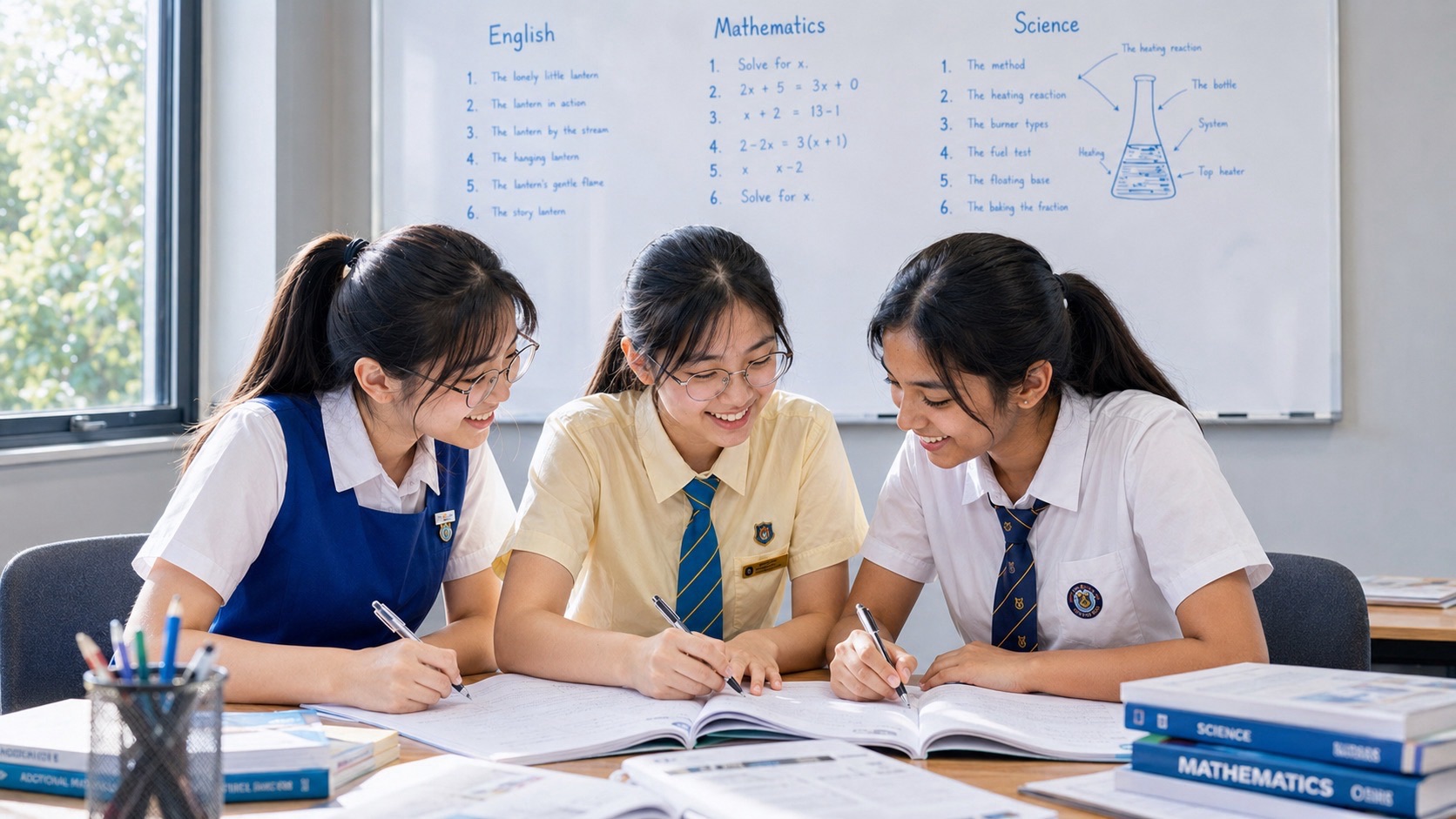
Teamwork is important for students because education requires more than knowing the correct answer once. The importance of teamwork in education reaches across learning, examinations, projects, communication, problem solving, independent study and lifelong development. Students need systems that help them turn knowledge and intention into reliable action under real conditions.
For students and parents searching for why teamwork is important, the practical answer is that capability must survive changing circumstances. School brings deadlines, uncertainty, difficult tasks, collaboration, feedback and competing demands. Strong teamwork helps learners make better decisions about what to do next, how to monitor progress and how to recover when the original plan does not work.
The importance of teamwork therefore should not be reduced to a slogan or personality trait. It can be built through knowledge, vocabulary, routines, feedback, reflection and repeated practice. This guide explains the mechanisms, common failure modes and practical teaching approaches that make teamwork increasingly independent and transferable.
50-second route: teamwork
Define the goal. Identify what matters now. Choose a workable next action. Communicate or coordinate where necessary. Check the result. Adjust to evidence. Finish the loop and learn from it. Strong teamwork is visible in repeated decisions, not in a label attached to the student.
The central proposition
Teamwork is a coordination capability. It helps learners organise knowledge, attention, effort, people or time around a purpose. Its educational value comes from making good action more repeatable. The aim is not perfection. The aim is a system that detects deviation, responds intelligently and returns the learner or group toward the goal.
Collaboration
collaboration matters to teamwork because student performance is produced through sequences of decisions. The learner or group must understand the task, distinguish relevant information, choose an action and remain responsive to evidence. When progress breaks, the useful response is diagnosis: identify the failed link rather than treating the whole person or team as the problem.
Knowledge and vocabulary affect this process. Students work more effectively when they understand the concepts, instructions and relationships involved. Missing language can hide the real difficulty. Words such as priority, constraint, evidence, responsibility, trade-off, deadline, recovery and verification give learners handles for discussing what needs to change.
Planning is valuable when it changes action. A plan should clarify the desired state, the next step, dependencies, available resources and a way to detect whether progress is occurring. Plans that are too vague provide no guidance; plans that are too elaborate can consume the time or attention needed for the work itself. Good planning is proportionate to the complexity and risk of the task.
Feedback strengthens collaboration because it reveals the difference between intention and outcome. Students should learn to seek information early enough to adjust. That information may come from a teacher, peer, test result, timetable, draft, prototype or independent verification. Feedback becomes learning when it changes the next attempt.
Errors and disruption are normal. A strong system anticipates that attention will drift, estimates will be wrong, misunderstandings will occur and some strategies will fail. The important capability is recovery. Students identify what changed, preserve what still works, revise what does not and restart without wasting additional energy on pretending the original plan remains valid.
Communication matters because many educational tasks involve other people. Expectations, roles, constraints and progress need to be made visible. Students should ask clarifying questions before hidden assumptions become expensive, explain reasoning rather than merely announce conclusions and confirm shared understanding when coordination matters.
Teaching collaboration works best when the invisible decisions are modelled. Teachers can show how they prioritise, monitor, revise and verify rather than presenting only the polished result. Students then practise the same moves with gradually reduced support. Reflection should focus on causes and next actions: what happened, why, what signal was missed and what will change next time.
Parents can support teamwork without taking ownership away from the learner. Ask the student to state the goal, identify the current barrier and propose the next action. Help make resources and boundaries clear, but allow age-appropriate decisions and consequences. Independence grows when support creates capability rather than permanent dependence.
Transfer is the long-term goal. collaboration should remain recognisable across English, Mathematics, Science, Humanities, examinations, projects and everyday responsibilities. Surface details change, but the underlying moves—understand, prioritise, coordinate, monitor, adjust and verify—can travel.
Progress appears as reduced dependence on rescue. Students anticipate more problems, communicate earlier, make more realistic plans, recover faster and use evidence to adjust. They also become better at knowing when support is genuinely necessary. Mature teamwork includes asking for help intelligently rather than treating independence as isolation.
Communication
communication matters to teamwork because student performance is produced through sequences of decisions. The learner or group must understand the task, distinguish relevant information, choose an action and remain responsive to evidence. When progress breaks, the useful response is diagnosis: identify the failed link rather than treating the whole person or team as the problem.
Knowledge and vocabulary affect this process. Students work more effectively when they understand the concepts, instructions and relationships involved. Missing language can hide the real difficulty. Words such as priority, constraint, evidence, responsibility, trade-off, deadline, recovery and verification give learners handles for discussing what needs to change.
Planning is valuable when it changes action. A plan should clarify the desired state, the next step, dependencies, available resources and a way to detect whether progress is occurring. Plans that are too vague provide no guidance; plans that are too elaborate can consume the time or attention needed for the work itself. Good planning is proportionate to the complexity and risk of the task.
Feedback strengthens communication because it reveals the difference between intention and outcome. Students should learn to seek information early enough to adjust. That information may come from a teacher, peer, test result, timetable, draft, prototype or independent verification. Feedback becomes learning when it changes the next attempt.
Errors and disruption are normal. A strong system anticipates that attention will drift, estimates will be wrong, misunderstandings will occur and some strategies will fail. The important capability is recovery. Students identify what changed, preserve what still works, revise what does not and restart without wasting additional energy on pretending the original plan remains valid.
Communication matters because many educational tasks involve other people. Expectations, roles, constraints and progress need to be made visible. Students should ask clarifying questions before hidden assumptions become expensive, explain reasoning rather than merely announce conclusions and confirm shared understanding when coordination matters.
Teaching communication works best when the invisible decisions are modelled. Teachers can show how they prioritise, monitor, revise and verify rather than presenting only the polished result. Students then practise the same moves with gradually reduced support. Reflection should focus on causes and next actions: what happened, why, what signal was missed and what will change next time.
Parents can support teamwork without taking ownership away from the learner. Ask the student to state the goal, identify the current barrier and propose the next action. Help make resources and boundaries clear, but allow age-appropriate decisions and consequences. Independence grows when support creates capability rather than permanent dependence.
Transfer is the long-term goal. communication should remain recognisable across English, Mathematics, Science, Humanities, examinations, projects and everyday responsibilities. Surface details change, but the underlying moves—understand, prioritise, coordinate, monitor, adjust and verify—can travel.
Progress appears as reduced dependence on rescue. Students anticipate more problems, communicate earlier, make more realistic plans, recover faster and use evidence to adjust. They also become better at knowing when support is genuinely necessary. Mature teamwork includes asking for help intelligently rather than treating independence as isolation.
Trust
trust matters to teamwork because student performance is produced through sequences of decisions. The learner or group must understand the task, distinguish relevant information, choose an action and remain responsive to evidence. When progress breaks, the useful response is diagnosis: identify the failed link rather than treating the whole person or team as the problem.
Knowledge and vocabulary affect this process. Students work more effectively when they understand the concepts, instructions and relationships involved. Missing language can hide the real difficulty. Words such as priority, constraint, evidence, responsibility, trade-off, deadline, recovery and verification give learners handles for discussing what needs to change.
Planning is valuable when it changes action. A plan should clarify the desired state, the next step, dependencies, available resources and a way to detect whether progress is occurring. Plans that are too vague provide no guidance; plans that are too elaborate can consume the time or attention needed for the work itself. Good planning is proportionate to the complexity and risk of the task.
Feedback strengthens trust because it reveals the difference between intention and outcome. Students should learn to seek information early enough to adjust. That information may come from a teacher, peer, test result, timetable, draft, prototype or independent verification. Feedback becomes learning when it changes the next attempt.
Errors and disruption are normal. A strong system anticipates that attention will drift, estimates will be wrong, misunderstandings will occur and some strategies will fail. The important capability is recovery. Students identify what changed, preserve what still works, revise what does not and restart without wasting additional energy on pretending the original plan remains valid.
Communication matters because many educational tasks involve other people. Expectations, roles, constraints and progress need to be made visible. Students should ask clarifying questions before hidden assumptions become expensive, explain reasoning rather than merely announce conclusions and confirm shared understanding when coordination matters.
Teaching trust works best when the invisible decisions are modelled. Teachers can show how they prioritise, monitor, revise and verify rather than presenting only the polished result. Students then practise the same moves with gradually reduced support. Reflection should focus on causes and next actions: what happened, why, what signal was missed and what will change next time.
Parents can support teamwork without taking ownership away from the learner. Ask the student to state the goal, identify the current barrier and propose the next action. Help make resources and boundaries clear, but allow age-appropriate decisions and consequences. Independence grows when support creates capability rather than permanent dependence.
Transfer is the long-term goal. trust should remain recognisable across English, Mathematics, Science, Humanities, examinations, projects and everyday responsibilities. Surface details change, but the underlying moves—understand, prioritise, coordinate, monitor, adjust and verify—can travel.
Progress appears as reduced dependence on rescue. Students anticipate more problems, communicate earlier, make more realistic plans, recover faster and use evidence to adjust. They also become better at knowing when support is genuinely necessary. Mature teamwork includes asking for help intelligently rather than treating independence as isolation.
Shared goals
shared goals matters to teamwork because student performance is produced through sequences of decisions. The learner or group must understand the task, distinguish relevant information, choose an action and remain responsive to evidence. When progress breaks, the useful response is diagnosis: identify the failed link rather than treating the whole person or team as the problem.
Knowledge and vocabulary affect this process. Students work more effectively when they understand the concepts, instructions and relationships involved. Missing language can hide the real difficulty. Words such as priority, constraint, evidence, responsibility, trade-off, deadline, recovery and verification give learners handles for discussing what needs to change.
Planning is valuable when it changes action. A plan should clarify the desired state, the next step, dependencies, available resources and a way to detect whether progress is occurring. Plans that are too vague provide no guidance; plans that are too elaborate can consume the time or attention needed for the work itself. Good planning is proportionate to the complexity and risk of the task.
Feedback strengthens shared goals because it reveals the difference between intention and outcome. Students should learn to seek information early enough to adjust. That information may come from a teacher, peer, test result, timetable, draft, prototype or independent verification. Feedback becomes learning when it changes the next attempt.
Errors and disruption are normal. A strong system anticipates that attention will drift, estimates will be wrong, misunderstandings will occur and some strategies will fail. The important capability is recovery. Students identify what changed, preserve what still works, revise what does not and restart without wasting additional energy on pretending the original plan remains valid.
Communication matters because many educational tasks involve other people. Expectations, roles, constraints and progress need to be made visible. Students should ask clarifying questions before hidden assumptions become expensive, explain reasoning rather than merely announce conclusions and confirm shared understanding when coordination matters.
Teaching shared goals works best when the invisible decisions are modelled. Teachers can show how they prioritise, monitor, revise and verify rather than presenting only the polished result. Students then practise the same moves with gradually reduced support. Reflection should focus on causes and next actions: what happened, why, what signal was missed and what will change next time.
Parents can support teamwork without taking ownership away from the learner. Ask the student to state the goal, identify the current barrier and propose the next action. Help make resources and boundaries clear, but allow age-appropriate decisions and consequences. Independence grows when support creates capability rather than permanent dependence.
Transfer is the long-term goal. shared goals should remain recognisable across English, Mathematics, Science, Humanities, examinations, projects and everyday responsibilities. Surface details change, but the underlying moves—understand, prioritise, coordinate, monitor, adjust and verify—can travel.
Progress appears as reduced dependence on rescue. Students anticipate more problems, communicate earlier, make more realistic plans, recover faster and use evidence to adjust. They also become better at knowing when support is genuinely necessary. Mature teamwork includes asking for help intelligently rather than treating independence as isolation.
Roles
roles matters to teamwork because student performance is produced through sequences of decisions. The learner or group must understand the task, distinguish relevant information, choose an action and remain responsive to evidence. When progress breaks, the useful response is diagnosis: identify the failed link rather than treating the whole person or team as the problem.
Knowledge and vocabulary affect this process. Students work more effectively when they understand the concepts, instructions and relationships involved. Missing language can hide the real difficulty. Words such as priority, constraint, evidence, responsibility, trade-off, deadline, recovery and verification give learners handles for discussing what needs to change.
Planning is valuable when it changes action. A plan should clarify the desired state, the next step, dependencies, available resources and a way to detect whether progress is occurring. Plans that are too vague provide no guidance; plans that are too elaborate can consume the time or attention needed for the work itself. Good planning is proportionate to the complexity and risk of the task.
Feedback strengthens roles because it reveals the difference between intention and outcome. Students should learn to seek information early enough to adjust. That information may come from a teacher, peer, test result, timetable, draft, prototype or independent verification. Feedback becomes learning when it changes the next attempt.
Errors and disruption are normal. A strong system anticipates that attention will drift, estimates will be wrong, misunderstandings will occur and some strategies will fail. The important capability is recovery. Students identify what changed, preserve what still works, revise what does not and restart without wasting additional energy on pretending the original plan remains valid.
Communication matters because many educational tasks involve other people. Expectations, roles, constraints and progress need to be made visible. Students should ask clarifying questions before hidden assumptions become expensive, explain reasoning rather than merely announce conclusions and confirm shared understanding when coordination matters.
Teaching roles works best when the invisible decisions are modelled. Teachers can show how they prioritise, monitor, revise and verify rather than presenting only the polished result. Students then practise the same moves with gradually reduced support. Reflection should focus on causes and next actions: what happened, why, what signal was missed and what will change next time.
Parents can support teamwork without taking ownership away from the learner. Ask the student to state the goal, identify the current barrier and propose the next action. Help make resources and boundaries clear, but allow age-appropriate decisions and consequences. Independence grows when support creates capability rather than permanent dependence.
Transfer is the long-term goal. roles should remain recognisable across English, Mathematics, Science, Humanities, examinations, projects and everyday responsibilities. Surface details change, but the underlying moves—understand, prioritise, coordinate, monitor, adjust and verify—can travel.
Progress appears as reduced dependence on rescue. Students anticipate more problems, communicate earlier, make more realistic plans, recover faster and use evidence to adjust. They also become better at knowing when support is genuinely necessary. Mature teamwork includes asking for help intelligently rather than treating independence as isolation.
Responsibility
responsibility matters to teamwork because student performance is produced through sequences of decisions. The learner or group must understand the task, distinguish relevant information, choose an action and remain responsive to evidence. When progress breaks, the useful response is diagnosis: identify the failed link rather than treating the whole person or team as the problem.
Knowledge and vocabulary affect this process. Students work more effectively when they understand the concepts, instructions and relationships involved. Missing language can hide the real difficulty. Words such as priority, constraint, evidence, responsibility, trade-off, deadline, recovery and verification give learners handles for discussing what needs to change.
Planning is valuable when it changes action. A plan should clarify the desired state, the next step, dependencies, available resources and a way to detect whether progress is occurring. Plans that are too vague provide no guidance; plans that are too elaborate can consume the time or attention needed for the work itself. Good planning is proportionate to the complexity and risk of the task.
Feedback strengthens responsibility because it reveals the difference between intention and outcome. Students should learn to seek information early enough to adjust. That information may come from a teacher, peer, test result, timetable, draft, prototype or independent verification. Feedback becomes learning when it changes the next attempt.
Errors and disruption are normal. A strong system anticipates that attention will drift, estimates will be wrong, misunderstandings will occur and some strategies will fail. The important capability is recovery. Students identify what changed, preserve what still works, revise what does not and restart without wasting additional energy on pretending the original plan remains valid.
Communication matters because many educational tasks involve other people. Expectations, roles, constraints and progress need to be made visible. Students should ask clarifying questions before hidden assumptions become expensive, explain reasoning rather than merely announce conclusions and confirm shared understanding when coordination matters.
Teaching responsibility works best when the invisible decisions are modelled. Teachers can show how they prioritise, monitor, revise and verify rather than presenting only the polished result. Students then practise the same moves with gradually reduced support. Reflection should focus on causes and next actions: what happened, why, what signal was missed and what will change next time.
Parents can support teamwork without taking ownership away from the learner. Ask the student to state the goal, identify the current barrier and propose the next action. Help make resources and boundaries clear, but allow age-appropriate decisions and consequences. Independence grows when support creates capability rather than permanent dependence.
Transfer is the long-term goal. responsibility should remain recognisable across English, Mathematics, Science, Humanities, examinations, projects and everyday responsibilities. Surface details change, but the underlying moves—understand, prioritise, coordinate, monitor, adjust and verify—can travel.
Progress appears as reduced dependence on rescue. Students anticipate more problems, communicate earlier, make more realistic plans, recover faster and use evidence to adjust. They also become better at knowing when support is genuinely necessary. Mature teamwork includes asking for help intelligently rather than treating independence as isolation.
Coordination
coordination matters to teamwork because student performance is produced through sequences of decisions. The learner or group must understand the task, distinguish relevant information, choose an action and remain responsive to evidence. When progress breaks, the useful response is diagnosis: identify the failed link rather than treating the whole person or team as the problem.
Knowledge and vocabulary affect this process. Students work more effectively when they understand the concepts, instructions and relationships involved. Missing language can hide the real difficulty. Words such as priority, constraint, evidence, responsibility, trade-off, deadline, recovery and verification give learners handles for discussing what needs to change.
Planning is valuable when it changes action. A plan should clarify the desired state, the next step, dependencies, available resources and a way to detect whether progress is occurring. Plans that are too vague provide no guidance; plans that are too elaborate can consume the time or attention needed for the work itself. Good planning is proportionate to the complexity and risk of the task.
Feedback strengthens coordination because it reveals the difference between intention and outcome. Students should learn to seek information early enough to adjust. That information may come from a teacher, peer, test result, timetable, draft, prototype or independent verification. Feedback becomes learning when it changes the next attempt.
Errors and disruption are normal. A strong system anticipates that attention will drift, estimates will be wrong, misunderstandings will occur and some strategies will fail. The important capability is recovery. Students identify what changed, preserve what still works, revise what does not and restart without wasting additional energy on pretending the original plan remains valid.
Communication matters because many educational tasks involve other people. Expectations, roles, constraints and progress need to be made visible. Students should ask clarifying questions before hidden assumptions become expensive, explain reasoning rather than merely announce conclusions and confirm shared understanding when coordination matters.
Teaching coordination works best when the invisible decisions are modelled. Teachers can show how they prioritise, monitor, revise and verify rather than presenting only the polished result. Students then practise the same moves with gradually reduced support. Reflection should focus on causes and next actions: what happened, why, what signal was missed and what will change next time.
Parents can support teamwork without taking ownership away from the learner. Ask the student to state the goal, identify the current barrier and propose the next action. Help make resources and boundaries clear, but allow age-appropriate decisions and consequences. Independence grows when support creates capability rather than permanent dependence.
Transfer is the long-term goal. coordination should remain recognisable across English, Mathematics, Science, Humanities, examinations, projects and everyday responsibilities. Surface details change, but the underlying moves—understand, prioritise, coordinate, monitor, adjust and verify—can travel.
Progress appears as reduced dependence on rescue. Students anticipate more problems, communicate earlier, make more realistic plans, recover faster and use evidence to adjust. They also become better at knowing when support is genuinely necessary. Mature teamwork includes asking for help intelligently rather than treating independence as isolation.
Listening
listening matters to teamwork because student performance is produced through sequences of decisions. The learner or group must understand the task, distinguish relevant information, choose an action and remain responsive to evidence. When progress breaks, the useful response is diagnosis: identify the failed link rather than treating the whole person or team as the problem.
Knowledge and vocabulary affect this process. Students work more effectively when they understand the concepts, instructions and relationships involved. Missing language can hide the real difficulty. Words such as priority, constraint, evidence, responsibility, trade-off, deadline, recovery and verification give learners handles for discussing what needs to change.
Planning is valuable when it changes action. A plan should clarify the desired state, the next step, dependencies, available resources and a way to detect whether progress is occurring. Plans that are too vague provide no guidance; plans that are too elaborate can consume the time or attention needed for the work itself. Good planning is proportionate to the complexity and risk of the task.
Feedback strengthens listening because it reveals the difference between intention and outcome. Students should learn to seek information early enough to adjust. That information may come from a teacher, peer, test result, timetable, draft, prototype or independent verification. Feedback becomes learning when it changes the next attempt.
Errors and disruption are normal. A strong system anticipates that attention will drift, estimates will be wrong, misunderstandings will occur and some strategies will fail. The important capability is recovery. Students identify what changed, preserve what still works, revise what does not and restart without wasting additional energy on pretending the original plan remains valid.
Communication matters because many educational tasks involve other people. Expectations, roles, constraints and progress need to be made visible. Students should ask clarifying questions before hidden assumptions become expensive, explain reasoning rather than merely announce conclusions and confirm shared understanding when coordination matters.
Teaching listening works best when the invisible decisions are modelled. Teachers can show how they prioritise, monitor, revise and verify rather than presenting only the polished result. Students then practise the same moves with gradually reduced support. Reflection should focus on causes and next actions: what happened, why, what signal was missed and what will change next time.
Parents can support teamwork without taking ownership away from the learner. Ask the student to state the goal, identify the current barrier and propose the next action. Help make resources and boundaries clear, but allow age-appropriate decisions and consequences. Independence grows when support creates capability rather than permanent dependence.
Transfer is the long-term goal. listening should remain recognisable across English, Mathematics, Science, Humanities, examinations, projects and everyday responsibilities. Surface details change, but the underlying moves—understand, prioritise, coordinate, monitor, adjust and verify—can travel.
Progress appears as reduced dependence on rescue. Students anticipate more problems, communicate earlier, make more realistic plans, recover faster and use evidence to adjust. They also become better at knowing when support is genuinely necessary. Mature teamwork includes asking for help intelligently rather than treating independence as isolation.
Speaking
speaking matters to teamwork because student performance is produced through sequences of decisions. The learner or group must understand the task, distinguish relevant information, choose an action and remain responsive to evidence. When progress breaks, the useful response is diagnosis: identify the failed link rather than treating the whole person or team as the problem.
Knowledge and vocabulary affect this process. Students work more effectively when they understand the concepts, instructions and relationships involved. Missing language can hide the real difficulty. Words such as priority, constraint, evidence, responsibility, trade-off, deadline, recovery and verification give learners handles for discussing what needs to change.
Planning is valuable when it changes action. A plan should clarify the desired state, the next step, dependencies, available resources and a way to detect whether progress is occurring. Plans that are too vague provide no guidance; plans that are too elaborate can consume the time or attention needed for the work itself. Good planning is proportionate to the complexity and risk of the task.
Feedback strengthens speaking because it reveals the difference between intention and outcome. Students should learn to seek information early enough to adjust. That information may come from a teacher, peer, test result, timetable, draft, prototype or independent verification. Feedback becomes learning when it changes the next attempt.
Errors and disruption are normal. A strong system anticipates that attention will drift, estimates will be wrong, misunderstandings will occur and some strategies will fail. The important capability is recovery. Students identify what changed, preserve what still works, revise what does not and restart without wasting additional energy on pretending the original plan remains valid.
Communication matters because many educational tasks involve other people. Expectations, roles, constraints and progress need to be made visible. Students should ask clarifying questions before hidden assumptions become expensive, explain reasoning rather than merely announce conclusions and confirm shared understanding when coordination matters.
Teaching speaking works best when the invisible decisions are modelled. Teachers can show how they prioritise, monitor, revise and verify rather than presenting only the polished result. Students then practise the same moves with gradually reduced support. Reflection should focus on causes and next actions: what happened, why, what signal was missed and what will change next time.
Parents can support teamwork without taking ownership away from the learner. Ask the student to state the goal, identify the current barrier and propose the next action. Help make resources and boundaries clear, but allow age-appropriate decisions and consequences. Independence grows when support creates capability rather than permanent dependence.
Transfer is the long-term goal. speaking should remain recognisable across English, Mathematics, Science, Humanities, examinations, projects and everyday responsibilities. Surface details change, but the underlying moves—understand, prioritise, coordinate, monitor, adjust and verify—can travel.
Progress appears as reduced dependence on rescue. Students anticipate more problems, communicate earlier, make more realistic plans, recover faster and use evidence to adjust. They also become better at knowing when support is genuinely necessary. Mature teamwork includes asking for help intelligently rather than treating independence as isolation.
Questions
questions matters to teamwork because student performance is produced through sequences of decisions. The learner or group must understand the task, distinguish relevant information, choose an action and remain responsive to evidence. When progress breaks, the useful response is diagnosis: identify the failed link rather than treating the whole person or team as the problem.
Knowledge and vocabulary affect this process. Students work more effectively when they understand the concepts, instructions and relationships involved. Missing language can hide the real difficulty. Words such as priority, constraint, evidence, responsibility, trade-off, deadline, recovery and verification give learners handles for discussing what needs to change.
Planning is valuable when it changes action. A plan should clarify the desired state, the next step, dependencies, available resources and a way to detect whether progress is occurring. Plans that are too vague provide no guidance; plans that are too elaborate can consume the time or attention needed for the work itself. Good planning is proportionate to the complexity and risk of the task.
Feedback strengthens questions because it reveals the difference between intention and outcome. Students should learn to seek information early enough to adjust. That information may come from a teacher, peer, test result, timetable, draft, prototype or independent verification. Feedback becomes learning when it changes the next attempt.
Errors and disruption are normal. A strong system anticipates that attention will drift, estimates will be wrong, misunderstandings will occur and some strategies will fail. The important capability is recovery. Students identify what changed, preserve what still works, revise what does not and restart without wasting additional energy on pretending the original plan remains valid.
Communication matters because many educational tasks involve other people. Expectations, roles, constraints and progress need to be made visible. Students should ask clarifying questions before hidden assumptions become expensive, explain reasoning rather than merely announce conclusions and confirm shared understanding when coordination matters.
Teaching questions works best when the invisible decisions are modelled. Teachers can show how they prioritise, monitor, revise and verify rather than presenting only the polished result. Students then practise the same moves with gradually reduced support. Reflection should focus on causes and next actions: what happened, why, what signal was missed and what will change next time.
Parents can support teamwork without taking ownership away from the learner. Ask the student to state the goal, identify the current barrier and propose the next action. Help make resources and boundaries clear, but allow age-appropriate decisions and consequences. Independence grows when support creates capability rather than permanent dependence.
Transfer is the long-term goal. questions should remain recognisable across English, Mathematics, Science, Humanities, examinations, projects and everyday responsibilities. Surface details change, but the underlying moves—understand, prioritise, coordinate, monitor, adjust and verify—can travel.
Progress appears as reduced dependence on rescue. Students anticipate more problems, communicate earlier, make more realistic plans, recover faster and use evidence to adjust. They also become better at knowing when support is genuinely necessary. Mature teamwork includes asking for help intelligently rather than treating independence as isolation.
Feedback
feedback matters to teamwork because student performance is produced through sequences of decisions. The learner or group must understand the task, distinguish relevant information, choose an action and remain responsive to evidence. When progress breaks, the useful response is diagnosis: identify the failed link rather than treating the whole person or team as the problem.
Knowledge and vocabulary affect this process. Students work more effectively when they understand the concepts, instructions and relationships involved. Missing language can hide the real difficulty. Words such as priority, constraint, evidence, responsibility, trade-off, deadline, recovery and verification give learners handles for discussing what needs to change.
Planning is valuable when it changes action. A plan should clarify the desired state, the next step, dependencies, available resources and a way to detect whether progress is occurring. Plans that are too vague provide no guidance; plans that are too elaborate can consume the time or attention needed for the work itself. Good planning is proportionate to the complexity and risk of the task.
Feedback strengthens feedback because it reveals the difference between intention and outcome. Students should learn to seek information early enough to adjust. That information may come from a teacher, peer, test result, timetable, draft, prototype or independent verification. Feedback becomes learning when it changes the next attempt.
Errors and disruption are normal. A strong system anticipates that attention will drift, estimates will be wrong, misunderstandings will occur and some strategies will fail. The important capability is recovery. Students identify what changed, preserve what still works, revise what does not and restart without wasting additional energy on pretending the original plan remains valid.
Communication matters because many educational tasks involve other people. Expectations, roles, constraints and progress need to be made visible. Students should ask clarifying questions before hidden assumptions become expensive, explain reasoning rather than merely announce conclusions and confirm shared understanding when coordination matters.
Teaching feedback works best when the invisible decisions are modelled. Teachers can show how they prioritise, monitor, revise and verify rather than presenting only the polished result. Students then practise the same moves with gradually reduced support. Reflection should focus on causes and next actions: what happened, why, what signal was missed and what will change next time.
Parents can support teamwork without taking ownership away from the learner. Ask the student to state the goal, identify the current barrier and propose the next action. Help make resources and boundaries clear, but allow age-appropriate decisions and consequences. Independence grows when support creates capability rather than permanent dependence.
Transfer is the long-term goal. feedback should remain recognisable across English, Mathematics, Science, Humanities, examinations, projects and everyday responsibilities. Surface details change, but the underlying moves—understand, prioritise, coordinate, monitor, adjust and verify—can travel.
Progress appears as reduced dependence on rescue. Students anticipate more problems, communicate earlier, make more realistic plans, recover faster and use evidence to adjust. They also become better at knowing when support is genuinely necessary. Mature teamwork includes asking for help intelligently rather than treating independence as isolation.
Conflict
conflict matters to teamwork because student performance is produced through sequences of decisions. The learner or group must understand the task, distinguish relevant information, choose an action and remain responsive to evidence. When progress breaks, the useful response is diagnosis: identify the failed link rather than treating the whole person or team as the problem.
Knowledge and vocabulary affect this process. Students work more effectively when they understand the concepts, instructions and relationships involved. Missing language can hide the real difficulty. Words such as priority, constraint, evidence, responsibility, trade-off, deadline, recovery and verification give learners handles for discussing what needs to change.
Planning is valuable when it changes action. A plan should clarify the desired state, the next step, dependencies, available resources and a way to detect whether progress is occurring. Plans that are too vague provide no guidance; plans that are too elaborate can consume the time or attention needed for the work itself. Good planning is proportionate to the complexity and risk of the task.
Feedback strengthens conflict because it reveals the difference between intention and outcome. Students should learn to seek information early enough to adjust. That information may come from a teacher, peer, test result, timetable, draft, prototype or independent verification. Feedback becomes learning when it changes the next attempt.
Errors and disruption are normal. A strong system anticipates that attention will drift, estimates will be wrong, misunderstandings will occur and some strategies will fail. The important capability is recovery. Students identify what changed, preserve what still works, revise what does not and restart without wasting additional energy on pretending the original plan remains valid.
Communication matters because many educational tasks involve other people. Expectations, roles, constraints and progress need to be made visible. Students should ask clarifying questions before hidden assumptions become expensive, explain reasoning rather than merely announce conclusions and confirm shared understanding when coordination matters.
Teaching conflict works best when the invisible decisions are modelled. Teachers can show how they prioritise, monitor, revise and verify rather than presenting only the polished result. Students then practise the same moves with gradually reduced support. Reflection should focus on causes and next actions: what happened, why, what signal was missed and what will change next time.
Parents can support teamwork without taking ownership away from the learner. Ask the student to state the goal, identify the current barrier and propose the next action. Help make resources and boundaries clear, but allow age-appropriate decisions and consequences. Independence grows when support creates capability rather than permanent dependence.
Transfer is the long-term goal. conflict should remain recognisable across English, Mathematics, Science, Humanities, examinations, projects and everyday responsibilities. Surface details change, but the underlying moves—understand, prioritise, coordinate, monitor, adjust and verify—can travel.
Progress appears as reduced dependence on rescue. Students anticipate more problems, communicate earlier, make more realistic plans, recover faster and use evidence to adjust. They also become better at knowing when support is genuinely necessary. Mature teamwork includes asking for help intelligently rather than treating independence as isolation.
Negotiation
negotiation matters to teamwork because student performance is produced through sequences of decisions. The learner or group must understand the task, distinguish relevant information, choose an action and remain responsive to evidence. When progress breaks, the useful response is diagnosis: identify the failed link rather than treating the whole person or team as the problem.
Knowledge and vocabulary affect this process. Students work more effectively when they understand the concepts, instructions and relationships involved. Missing language can hide the real difficulty. Words such as priority, constraint, evidence, responsibility, trade-off, deadline, recovery and verification give learners handles for discussing what needs to change.
Planning is valuable when it changes action. A plan should clarify the desired state, the next step, dependencies, available resources and a way to detect whether progress is occurring. Plans that are too vague provide no guidance; plans that are too elaborate can consume the time or attention needed for the work itself. Good planning is proportionate to the complexity and risk of the task.
Feedback strengthens negotiation because it reveals the difference between intention and outcome. Students should learn to seek information early enough to adjust. That information may come from a teacher, peer, test result, timetable, draft, prototype or independent verification. Feedback becomes learning when it changes the next attempt.
Errors and disruption are normal. A strong system anticipates that attention will drift, estimates will be wrong, misunderstandings will occur and some strategies will fail. The important capability is recovery. Students identify what changed, preserve what still works, revise what does not and restart without wasting additional energy on pretending the original plan remains valid.
Communication matters because many educational tasks involve other people. Expectations, roles, constraints and progress need to be made visible. Students should ask clarifying questions before hidden assumptions become expensive, explain reasoning rather than merely announce conclusions and confirm shared understanding when coordination matters.
Teaching negotiation works best when the invisible decisions are modelled. Teachers can show how they prioritise, monitor, revise and verify rather than presenting only the polished result. Students then practise the same moves with gradually reduced support. Reflection should focus on causes and next actions: what happened, why, what signal was missed and what will change next time.
Parents can support teamwork without taking ownership away from the learner. Ask the student to state the goal, identify the current barrier and propose the next action. Help make resources and boundaries clear, but allow age-appropriate decisions and consequences. Independence grows when support creates capability rather than permanent dependence.
Transfer is the long-term goal. negotiation should remain recognisable across English, Mathematics, Science, Humanities, examinations, projects and everyday responsibilities. Surface details change, but the underlying moves—understand, prioritise, coordinate, monitor, adjust and verify—can travel.
Progress appears as reduced dependence on rescue. Students anticipate more problems, communicate earlier, make more realistic plans, recover faster and use evidence to adjust. They also become better at knowing when support is genuinely necessary. Mature teamwork includes asking for help intelligently rather than treating independence as isolation.
Leadership
leadership matters to teamwork because student performance is produced through sequences of decisions. The learner or group must understand the task, distinguish relevant information, choose an action and remain responsive to evidence. When progress breaks, the useful response is diagnosis: identify the failed link rather than treating the whole person or team as the problem.
Knowledge and vocabulary affect this process. Students work more effectively when they understand the concepts, instructions and relationships involved. Missing language can hide the real difficulty. Words such as priority, constraint, evidence, responsibility, trade-off, deadline, recovery and verification give learners handles for discussing what needs to change.
Planning is valuable when it changes action. A plan should clarify the desired state, the next step, dependencies, available resources and a way to detect whether progress is occurring. Plans that are too vague provide no guidance; plans that are too elaborate can consume the time or attention needed for the work itself. Good planning is proportionate to the complexity and risk of the task.
Feedback strengthens leadership because it reveals the difference between intention and outcome. Students should learn to seek information early enough to adjust. That information may come from a teacher, peer, test result, timetable, draft, prototype or independent verification. Feedback becomes learning when it changes the next attempt.
Errors and disruption are normal. A strong system anticipates that attention will drift, estimates will be wrong, misunderstandings will occur and some strategies will fail. The important capability is recovery. Students identify what changed, preserve what still works, revise what does not and restart without wasting additional energy on pretending the original plan remains valid.
Communication matters because many educational tasks involve other people. Expectations, roles, constraints and progress need to be made visible. Students should ask clarifying questions before hidden assumptions become expensive, explain reasoning rather than merely announce conclusions and confirm shared understanding when coordination matters.
Teaching leadership works best when the invisible decisions are modelled. Teachers can show how they prioritise, monitor, revise and verify rather than presenting only the polished result. Students then practise the same moves with gradually reduced support. Reflection should focus on causes and next actions: what happened, why, what signal was missed and what will change next time.
Parents can support teamwork without taking ownership away from the learner. Ask the student to state the goal, identify the current barrier and propose the next action. Help make resources and boundaries clear, but allow age-appropriate decisions and consequences. Independence grows when support creates capability rather than permanent dependence.
Transfer is the long-term goal. leadership should remain recognisable across English, Mathematics, Science, Humanities, examinations, projects and everyday responsibilities. Surface details change, but the underlying moves—understand, prioritise, coordinate, monitor, adjust and verify—can travel.
Progress appears as reduced dependence on rescue. Students anticipate more problems, communicate earlier, make more realistic plans, recover faster and use evidence to adjust. They also become better at knowing when support is genuinely necessary. Mature teamwork includes asking for help intelligently rather than treating independence as isolation.
Followership
followership matters to teamwork because student performance is produced through sequences of decisions. The learner or group must understand the task, distinguish relevant information, choose an action and remain responsive to evidence. When progress breaks, the useful response is diagnosis: identify the failed link rather than treating the whole person or team as the problem.
Knowledge and vocabulary affect this process. Students work more effectively when they understand the concepts, instructions and relationships involved. Missing language can hide the real difficulty. Words such as priority, constraint, evidence, responsibility, trade-off, deadline, recovery and verification give learners handles for discussing what needs to change.
Planning is valuable when it changes action. A plan should clarify the desired state, the next step, dependencies, available resources and a way to detect whether progress is occurring. Plans that are too vague provide no guidance; plans that are too elaborate can consume the time or attention needed for the work itself. Good planning is proportionate to the complexity and risk of the task.
Feedback strengthens followership because it reveals the difference between intention and outcome. Students should learn to seek information early enough to adjust. That information may come from a teacher, peer, test result, timetable, draft, prototype or independent verification. Feedback becomes learning when it changes the next attempt.
Errors and disruption are normal. A strong system anticipates that attention will drift, estimates will be wrong, misunderstandings will occur and some strategies will fail. The important capability is recovery. Students identify what changed, preserve what still works, revise what does not and restart without wasting additional energy on pretending the original plan remains valid.
Communication matters because many educational tasks involve other people. Expectations, roles, constraints and progress need to be made visible. Students should ask clarifying questions before hidden assumptions become expensive, explain reasoning rather than merely announce conclusions and confirm shared understanding when coordination matters.
Teaching followership works best when the invisible decisions are modelled. Teachers can show how they prioritise, monitor, revise and verify rather than presenting only the polished result. Students then practise the same moves with gradually reduced support. Reflection should focus on causes and next actions: what happened, why, what signal was missed and what will change next time.
Parents can support teamwork without taking ownership away from the learner. Ask the student to state the goal, identify the current barrier and propose the next action. Help make resources and boundaries clear, but allow age-appropriate decisions and consequences. Independence grows when support creates capability rather than permanent dependence.
Transfer is the long-term goal. followership should remain recognisable across English, Mathematics, Science, Humanities, examinations, projects and everyday responsibilities. Surface details change, but the underlying moves—understand, prioritise, coordinate, monitor, adjust and verify—can travel.
Progress appears as reduced dependence on rescue. Students anticipate more problems, communicate earlier, make more realistic plans, recover faster and use evidence to adjust. They also become better at knowing when support is genuinely necessary. Mature teamwork includes asking for help intelligently rather than treating independence as isolation.
Accountability
accountability matters to teamwork because student performance is produced through sequences of decisions. The learner or group must understand the task, distinguish relevant information, choose an action and remain responsive to evidence. When progress breaks, the useful response is diagnosis: identify the failed link rather than treating the whole person or team as the problem.
Knowledge and vocabulary affect this process. Students work more effectively when they understand the concepts, instructions and relationships involved. Missing language can hide the real difficulty. Words such as priority, constraint, evidence, responsibility, trade-off, deadline, recovery and verification give learners handles for discussing what needs to change.
Planning is valuable when it changes action. A plan should clarify the desired state, the next step, dependencies, available resources and a way to detect whether progress is occurring. Plans that are too vague provide no guidance; plans that are too elaborate can consume the time or attention needed for the work itself. Good planning is proportionate to the complexity and risk of the task.
Feedback strengthens accountability because it reveals the difference between intention and outcome. Students should learn to seek information early enough to adjust. That information may come from a teacher, peer, test result, timetable, draft, prototype or independent verification. Feedback becomes learning when it changes the next attempt.
Errors and disruption are normal. A strong system anticipates that attention will drift, estimates will be wrong, misunderstandings will occur and some strategies will fail. The important capability is recovery. Students identify what changed, preserve what still works, revise what does not and restart without wasting additional energy on pretending the original plan remains valid.
Communication matters because many educational tasks involve other people. Expectations, roles, constraints and progress need to be made visible. Students should ask clarifying questions before hidden assumptions become expensive, explain reasoning rather than merely announce conclusions and confirm shared understanding when coordination matters.
Teaching accountability works best when the invisible decisions are modelled. Teachers can show how they prioritise, monitor, revise and verify rather than presenting only the polished result. Students then practise the same moves with gradually reduced support. Reflection should focus on causes and next actions: what happened, why, what signal was missed and what will change next time.
Parents can support teamwork without taking ownership away from the learner. Ask the student to state the goal, identify the current barrier and propose the next action. Help make resources and boundaries clear, but allow age-appropriate decisions and consequences. Independence grows when support creates capability rather than permanent dependence.
Transfer is the long-term goal. accountability should remain recognisable across English, Mathematics, Science, Humanities, examinations, projects and everyday responsibilities. Surface details change, but the underlying moves—understand, prioritise, coordinate, monitor, adjust and verify—can travel.
Progress appears as reduced dependence on rescue. Students anticipate more problems, communicate earlier, make more realistic plans, recover faster and use evidence to adjust. They also become better at knowing when support is genuinely necessary. Mature teamwork includes asking for help intelligently rather than treating independence as isolation.
Reliability
reliability matters to teamwork because student performance is produced through sequences of decisions. The learner or group must understand the task, distinguish relevant information, choose an action and remain responsive to evidence. When progress breaks, the useful response is diagnosis: identify the failed link rather than treating the whole person or team as the problem.
Knowledge and vocabulary affect this process. Students work more effectively when they understand the concepts, instructions and relationships involved. Missing language can hide the real difficulty. Words such as priority, constraint, evidence, responsibility, trade-off, deadline, recovery and verification give learners handles for discussing what needs to change.
Planning is valuable when it changes action. A plan should clarify the desired state, the next step, dependencies, available resources and a way to detect whether progress is occurring. Plans that are too vague provide no guidance; plans that are too elaborate can consume the time or attention needed for the work itself. Good planning is proportionate to the complexity and risk of the task.
Feedback strengthens reliability because it reveals the difference between intention and outcome. Students should learn to seek information early enough to adjust. That information may come from a teacher, peer, test result, timetable, draft, prototype or independent verification. Feedback becomes learning when it changes the next attempt.
Errors and disruption are normal. A strong system anticipates that attention will drift, estimates will be wrong, misunderstandings will occur and some strategies will fail. The important capability is recovery. Students identify what changed, preserve what still works, revise what does not and restart without wasting additional energy on pretending the original plan remains valid.
Communication matters because many educational tasks involve other people. Expectations, roles, constraints and progress need to be made visible. Students should ask clarifying questions before hidden assumptions become expensive, explain reasoning rather than merely announce conclusions and confirm shared understanding when coordination matters.
Teaching reliability works best when the invisible decisions are modelled. Teachers can show how they prioritise, monitor, revise and verify rather than presenting only the polished result. Students then practise the same moves with gradually reduced support. Reflection should focus on causes and next actions: what happened, why, what signal was missed and what will change next time.
Parents can support teamwork without taking ownership away from the learner. Ask the student to state the goal, identify the current barrier and propose the next action. Help make resources and boundaries clear, but allow age-appropriate decisions and consequences. Independence grows when support creates capability rather than permanent dependence.
Transfer is the long-term goal. reliability should remain recognisable across English, Mathematics, Science, Humanities, examinations, projects and everyday responsibilities. Surface details change, but the underlying moves—understand, prioritise, coordinate, monitor, adjust and verify—can travel.
Progress appears as reduced dependence on rescue. Students anticipate more problems, communicate earlier, make more realistic plans, recover faster and use evidence to adjust. They also become better at knowing when support is genuinely necessary. Mature teamwork includes asking for help intelligently rather than treating independence as isolation.
Diversity of ideas
diversity of ideas matters to teamwork because student performance is produced through sequences of decisions. The learner or group must understand the task, distinguish relevant information, choose an action and remain responsive to evidence. When progress breaks, the useful response is diagnosis: identify the failed link rather than treating the whole person or team as the problem.
Knowledge and vocabulary affect this process. Students work more effectively when they understand the concepts, instructions and relationships involved. Missing language can hide the real difficulty. Words such as priority, constraint, evidence, responsibility, trade-off, deadline, recovery and verification give learners handles for discussing what needs to change.
Planning is valuable when it changes action. A plan should clarify the desired state, the next step, dependencies, available resources and a way to detect whether progress is occurring. Plans that are too vague provide no guidance; plans that are too elaborate can consume the time or attention needed for the work itself. Good planning is proportionate to the complexity and risk of the task.
Feedback strengthens diversity of ideas because it reveals the difference between intention and outcome. Students should learn to seek information early enough to adjust. That information may come from a teacher, peer, test result, timetable, draft, prototype or independent verification. Feedback becomes learning when it changes the next attempt.
Errors and disruption are normal. A strong system anticipates that attention will drift, estimates will be wrong, misunderstandings will occur and some strategies will fail. The important capability is recovery. Students identify what changed, preserve what still works, revise what does not and restart without wasting additional energy on pretending the original plan remains valid.
Communication matters because many educational tasks involve other people. Expectations, roles, constraints and progress need to be made visible. Students should ask clarifying questions before hidden assumptions become expensive, explain reasoning rather than merely announce conclusions and confirm shared understanding when coordination matters.
Teaching diversity of ideas works best when the invisible decisions are modelled. Teachers can show how they prioritise, monitor, revise and verify rather than presenting only the polished result. Students then practise the same moves with gradually reduced support. Reflection should focus on causes and next actions: what happened, why, what signal was missed and what will change next time.
Parents can support teamwork without taking ownership away from the learner. Ask the student to state the goal, identify the current barrier and propose the next action. Help make resources and boundaries clear, but allow age-appropriate decisions and consequences. Independence grows when support creates capability rather than permanent dependence.
Transfer is the long-term goal. diversity of ideas should remain recognisable across English, Mathematics, Science, Humanities, examinations, projects and everyday responsibilities. Surface details change, but the underlying moves—understand, prioritise, coordinate, monitor, adjust and verify—can travel.
Progress appears as reduced dependence on rescue. Students anticipate more problems, communicate earlier, make more realistic plans, recover faster and use evidence to adjust. They also become better at knowing when support is genuinely necessary. Mature teamwork includes asking for help intelligently rather than treating independence as isolation.
Critical thinking
critical thinking matters to teamwork because student performance is produced through sequences of decisions. The learner or group must understand the task, distinguish relevant information, choose an action and remain responsive to evidence. When progress breaks, the useful response is diagnosis: identify the failed link rather than treating the whole person or team as the problem.
Knowledge and vocabulary affect this process. Students work more effectively when they understand the concepts, instructions and relationships involved. Missing language can hide the real difficulty. Words such as priority, constraint, evidence, responsibility, trade-off, deadline, recovery and verification give learners handles for discussing what needs to change.
Planning is valuable when it changes action. A plan should clarify the desired state, the next step, dependencies, available resources and a way to detect whether progress is occurring. Plans that are too vague provide no guidance; plans that are too elaborate can consume the time or attention needed for the work itself. Good planning is proportionate to the complexity and risk of the task.
Feedback strengthens critical thinking because it reveals the difference between intention and outcome. Students should learn to seek information early enough to adjust. That information may come from a teacher, peer, test result, timetable, draft, prototype or independent verification. Feedback becomes learning when it changes the next attempt.
Errors and disruption are normal. A strong system anticipates that attention will drift, estimates will be wrong, misunderstandings will occur and some strategies will fail. The important capability is recovery. Students identify what changed, preserve what still works, revise what does not and restart without wasting additional energy on pretending the original plan remains valid.
Communication matters because many educational tasks involve other people. Expectations, roles, constraints and progress need to be made visible. Students should ask clarifying questions before hidden assumptions become expensive, explain reasoning rather than merely announce conclusions and confirm shared understanding when coordination matters.
Teaching critical thinking works best when the invisible decisions are modelled. Teachers can show how they prioritise, monitor, revise and verify rather than presenting only the polished result. Students then practise the same moves with gradually reduced support. Reflection should focus on causes and next actions: what happened, why, what signal was missed and what will change next time.
Parents can support teamwork without taking ownership away from the learner. Ask the student to state the goal, identify the current barrier and propose the next action. Help make resources and boundaries clear, but allow age-appropriate decisions and consequences. Independence grows when support creates capability rather than permanent dependence.
Transfer is the long-term goal. critical thinking should remain recognisable across English, Mathematics, Science, Humanities, examinations, projects and everyday responsibilities. Surface details change, but the underlying moves—understand, prioritise, coordinate, monitor, adjust and verify—can travel.
Progress appears as reduced dependence on rescue. Students anticipate more problems, communicate earlier, make more realistic plans, recover faster and use evidence to adjust. They also become better at knowing when support is genuinely necessary. Mature teamwork includes asking for help intelligently rather than treating independence as isolation.
Creativity
creativity matters to teamwork because student performance is produced through sequences of decisions. The learner or group must understand the task, distinguish relevant information, choose an action and remain responsive to evidence. When progress breaks, the useful response is diagnosis: identify the failed link rather than treating the whole person or team as the problem.
Knowledge and vocabulary affect this process. Students work more effectively when they understand the concepts, instructions and relationships involved. Missing language can hide the real difficulty. Words such as priority, constraint, evidence, responsibility, trade-off, deadline, recovery and verification give learners handles for discussing what needs to change.
Planning is valuable when it changes action. A plan should clarify the desired state, the next step, dependencies, available resources and a way to detect whether progress is occurring. Plans that are too vague provide no guidance; plans that are too elaborate can consume the time or attention needed for the work itself. Good planning is proportionate to the complexity and risk of the task.
Feedback strengthens creativity because it reveals the difference between intention and outcome. Students should learn to seek information early enough to adjust. That information may come from a teacher, peer, test result, timetable, draft, prototype or independent verification. Feedback becomes learning when it changes the next attempt.
Errors and disruption are normal. A strong system anticipates that attention will drift, estimates will be wrong, misunderstandings will occur and some strategies will fail. The important capability is recovery. Students identify what changed, preserve what still works, revise what does not and restart without wasting additional energy on pretending the original plan remains valid.
Communication matters because many educational tasks involve other people. Expectations, roles, constraints and progress need to be made visible. Students should ask clarifying questions before hidden assumptions become expensive, explain reasoning rather than merely announce conclusions and confirm shared understanding when coordination matters.
Teaching creativity works best when the invisible decisions are modelled. Teachers can show how they prioritise, monitor, revise and verify rather than presenting only the polished result. Students then practise the same moves with gradually reduced support. Reflection should focus on causes and next actions: what happened, why, what signal was missed and what will change next time.
Parents can support teamwork without taking ownership away from the learner. Ask the student to state the goal, identify the current barrier and propose the next action. Help make resources and boundaries clear, but allow age-appropriate decisions and consequences. Independence grows when support creates capability rather than permanent dependence.
Transfer is the long-term goal. creativity should remain recognisable across English, Mathematics, Science, Humanities, examinations, projects and everyday responsibilities. Surface details change, but the underlying moves—understand, prioritise, coordinate, monitor, adjust and verify—can travel.
Progress appears as reduced dependence on rescue. Students anticipate more problems, communicate earlier, make more realistic plans, recover faster and use evidence to adjust. They also become better at knowing when support is genuinely necessary. Mature teamwork includes asking for help intelligently rather than treating independence as isolation.
Problem solving
problem solving matters to teamwork because student performance is produced through sequences of decisions. The learner or group must understand the task, distinguish relevant information, choose an action and remain responsive to evidence. When progress breaks, the useful response is diagnosis: identify the failed link rather than treating the whole person or team as the problem.
Knowledge and vocabulary affect this process. Students work more effectively when they understand the concepts, instructions and relationships involved. Missing language can hide the real difficulty. Words such as priority, constraint, evidence, responsibility, trade-off, deadline, recovery and verification give learners handles for discussing what needs to change.
Planning is valuable when it changes action. A plan should clarify the desired state, the next step, dependencies, available resources and a way to detect whether progress is occurring. Plans that are too vague provide no guidance; plans that are too elaborate can consume the time or attention needed for the work itself. Good planning is proportionate to the complexity and risk of the task.
Feedback strengthens problem solving because it reveals the difference between intention and outcome. Students should learn to seek information early enough to adjust. That information may come from a teacher, peer, test result, timetable, draft, prototype or independent verification. Feedback becomes learning when it changes the next attempt.
Errors and disruption are normal. A strong system anticipates that attention will drift, estimates will be wrong, misunderstandings will occur and some strategies will fail. The important capability is recovery. Students identify what changed, preserve what still works, revise what does not and restart without wasting additional energy on pretending the original plan remains valid.
Communication matters because many educational tasks involve other people. Expectations, roles, constraints and progress need to be made visible. Students should ask clarifying questions before hidden assumptions become expensive, explain reasoning rather than merely announce conclusions and confirm shared understanding when coordination matters.
Teaching problem solving works best when the invisible decisions are modelled. Teachers can show how they prioritise, monitor, revise and verify rather than presenting only the polished result. Students then practise the same moves with gradually reduced support. Reflection should focus on causes and next actions: what happened, why, what signal was missed and what will change next time.
Parents can support teamwork without taking ownership away from the learner. Ask the student to state the goal, identify the current barrier and propose the next action. Help make resources and boundaries clear, but allow age-appropriate decisions and consequences. Independence grows when support creates capability rather than permanent dependence.
Transfer is the long-term goal. problem solving should remain recognisable across English, Mathematics, Science, Humanities, examinations, projects and everyday responsibilities. Surface details change, but the underlying moves—understand, prioritise, coordinate, monitor, adjust and verify—can travel.
Progress appears as reduced dependence on rescue. Students anticipate more problems, communicate earlier, make more realistic plans, recover faster and use evidence to adjust. They also become better at knowing when support is genuinely necessary. Mature teamwork includes asking for help intelligently rather than treating independence as isolation.
Decision making
decision making matters to teamwork because student performance is produced through sequences of decisions. The learner or group must understand the task, distinguish relevant information, choose an action and remain responsive to evidence. When progress breaks, the useful response is diagnosis: identify the failed link rather than treating the whole person or team as the problem.
Knowledge and vocabulary affect this process. Students work more effectively when they understand the concepts, instructions and relationships involved. Missing language can hide the real difficulty. Words such as priority, constraint, evidence, responsibility, trade-off, deadline, recovery and verification give learners handles for discussing what needs to change.
Planning is valuable when it changes action. A plan should clarify the desired state, the next step, dependencies, available resources and a way to detect whether progress is occurring. Plans that are too vague provide no guidance; plans that are too elaborate can consume the time or attention needed for the work itself. Good planning is proportionate to the complexity and risk of the task.
Feedback strengthens decision making because it reveals the difference between intention and outcome. Students should learn to seek information early enough to adjust. That information may come from a teacher, peer, test result, timetable, draft, prototype or independent verification. Feedback becomes learning when it changes the next attempt.
Errors and disruption are normal. A strong system anticipates that attention will drift, estimates will be wrong, misunderstandings will occur and some strategies will fail. The important capability is recovery. Students identify what changed, preserve what still works, revise what does not and restart without wasting additional energy on pretending the original plan remains valid.
Communication matters because many educational tasks involve other people. Expectations, roles, constraints and progress need to be made visible. Students should ask clarifying questions before hidden assumptions become expensive, explain reasoning rather than merely announce conclusions and confirm shared understanding when coordination matters.
Teaching decision making works best when the invisible decisions are modelled. Teachers can show how they prioritise, monitor, revise and verify rather than presenting only the polished result. Students then practise the same moves with gradually reduced support. Reflection should focus on causes and next actions: what happened, why, what signal was missed and what will change next time.
Parents can support teamwork without taking ownership away from the learner. Ask the student to state the goal, identify the current barrier and propose the next action. Help make resources and boundaries clear, but allow age-appropriate decisions and consequences. Independence grows when support creates capability rather than permanent dependence.
Transfer is the long-term goal. decision making should remain recognisable across English, Mathematics, Science, Humanities, examinations, projects and everyday responsibilities. Surface details change, but the underlying moves—understand, prioritise, coordinate, monitor, adjust and verify—can travel.
Progress appears as reduced dependence on rescue. Students anticipate more problems, communicate earlier, make more realistic plans, recover faster and use evidence to adjust. They also become better at knowing when support is genuinely necessary. Mature teamwork includes asking for help intelligently rather than treating independence as isolation.
Planning
planning matters to teamwork because student performance is produced through sequences of decisions. The learner or group must understand the task, distinguish relevant information, choose an action and remain responsive to evidence. When progress breaks, the useful response is diagnosis: identify the failed link rather than treating the whole person or team as the problem.
Knowledge and vocabulary affect this process. Students work more effectively when they understand the concepts, instructions and relationships involved. Missing language can hide the real difficulty. Words such as priority, constraint, evidence, responsibility, trade-off, deadline, recovery and verification give learners handles for discussing what needs to change.
Planning is valuable when it changes action. A plan should clarify the desired state, the next step, dependencies, available resources and a way to detect whether progress is occurring. Plans that are too vague provide no guidance; plans that are too elaborate can consume the time or attention needed for the work itself. Good planning is proportionate to the complexity and risk of the task.
Feedback strengthens planning because it reveals the difference between intention and outcome. Students should learn to seek information early enough to adjust. That information may come from a teacher, peer, test result, timetable, draft, prototype or independent verification. Feedback becomes learning when it changes the next attempt.
Errors and disruption are normal. A strong system anticipates that attention will drift, estimates will be wrong, misunderstandings will occur and some strategies will fail. The important capability is recovery. Students identify what changed, preserve what still works, revise what does not and restart without wasting additional energy on pretending the original plan remains valid.
Communication matters because many educational tasks involve other people. Expectations, roles, constraints and progress need to be made visible. Students should ask clarifying questions before hidden assumptions become expensive, explain reasoning rather than merely announce conclusions and confirm shared understanding when coordination matters.
Teaching planning works best when the invisible decisions are modelled. Teachers can show how they prioritise, monitor, revise and verify rather than presenting only the polished result. Students then practise the same moves with gradually reduced support. Reflection should focus on causes and next actions: what happened, why, what signal was missed and what will change next time.
Parents can support teamwork without taking ownership away from the learner. Ask the student to state the goal, identify the current barrier and propose the next action. Help make resources and boundaries clear, but allow age-appropriate decisions and consequences. Independence grows when support creates capability rather than permanent dependence.
Transfer is the long-term goal. planning should remain recognisable across English, Mathematics, Science, Humanities, examinations, projects and everyday responsibilities. Surface details change, but the underlying moves—understand, prioritise, coordinate, monitor, adjust and verify—can travel.
Progress appears as reduced dependence on rescue. Students anticipate more problems, communicate earlier, make more realistic plans, recover faster and use evidence to adjust. They also become better at knowing when support is genuinely necessary. Mature teamwork includes asking for help intelligently rather than treating independence as isolation.
Projects
projects matters to teamwork because student performance is produced through sequences of decisions. The learner or group must understand the task, distinguish relevant information, choose an action and remain responsive to evidence. When progress breaks, the useful response is diagnosis: identify the failed link rather than treating the whole person or team as the problem.
Knowledge and vocabulary affect this process. Students work more effectively when they understand the concepts, instructions and relationships involved. Missing language can hide the real difficulty. Words such as priority, constraint, evidence, responsibility, trade-off, deadline, recovery and verification give learners handles for discussing what needs to change.
Planning is valuable when it changes action. A plan should clarify the desired state, the next step, dependencies, available resources and a way to detect whether progress is occurring. Plans that are too vague provide no guidance; plans that are too elaborate can consume the time or attention needed for the work itself. Good planning is proportionate to the complexity and risk of the task.
Feedback strengthens projects because it reveals the difference between intention and outcome. Students should learn to seek information early enough to adjust. That information may come from a teacher, peer, test result, timetable, draft, prototype or independent verification. Feedback becomes learning when it changes the next attempt.
Errors and disruption are normal. A strong system anticipates that attention will drift, estimates will be wrong, misunderstandings will occur and some strategies will fail. The important capability is recovery. Students identify what changed, preserve what still works, revise what does not and restart without wasting additional energy on pretending the original plan remains valid.
Communication matters because many educational tasks involve other people. Expectations, roles, constraints and progress need to be made visible. Students should ask clarifying questions before hidden assumptions become expensive, explain reasoning rather than merely announce conclusions and confirm shared understanding when coordination matters.
Teaching projects works best when the invisible decisions are modelled. Teachers can show how they prioritise, monitor, revise and verify rather than presenting only the polished result. Students then practise the same moves with gradually reduced support. Reflection should focus on causes and next actions: what happened, why, what signal was missed and what will change next time.
Parents can support teamwork without taking ownership away from the learner. Ask the student to state the goal, identify the current barrier and propose the next action. Help make resources and boundaries clear, but allow age-appropriate decisions and consequences. Independence grows when support creates capability rather than permanent dependence.
Transfer is the long-term goal. projects should remain recognisable across English, Mathematics, Science, Humanities, examinations, projects and everyday responsibilities. Surface details change, but the underlying moves—understand, prioritise, coordinate, monitor, adjust and verify—can travel.
Progress appears as reduced dependence on rescue. Students anticipate more problems, communicate earlier, make more realistic plans, recover faster and use evidence to adjust. They also become better at knowing when support is genuinely necessary. Mature teamwork includes asking for help intelligently rather than treating independence as isolation.
Research
research matters to teamwork because student performance is produced through sequences of decisions. The learner or group must understand the task, distinguish relevant information, choose an action and remain responsive to evidence. When progress breaks, the useful response is diagnosis: identify the failed link rather than treating the whole person or team as the problem.
Knowledge and vocabulary affect this process. Students work more effectively when they understand the concepts, instructions and relationships involved. Missing language can hide the real difficulty. Words such as priority, constraint, evidence, responsibility, trade-off, deadline, recovery and verification give learners handles for discussing what needs to change.
Planning is valuable when it changes action. A plan should clarify the desired state, the next step, dependencies, available resources and a way to detect whether progress is occurring. Plans that are too vague provide no guidance; plans that are too elaborate can consume the time or attention needed for the work itself. Good planning is proportionate to the complexity and risk of the task.
Feedback strengthens research because it reveals the difference between intention and outcome. Students should learn to seek information early enough to adjust. That information may come from a teacher, peer, test result, timetable, draft, prototype or independent verification. Feedback becomes learning when it changes the next attempt.
Errors and disruption are normal. A strong system anticipates that attention will drift, estimates will be wrong, misunderstandings will occur and some strategies will fail. The important capability is recovery. Students identify what changed, preserve what still works, revise what does not and restart without wasting additional energy on pretending the original plan remains valid.
Communication matters because many educational tasks involve other people. Expectations, roles, constraints and progress need to be made visible. Students should ask clarifying questions before hidden assumptions become expensive, explain reasoning rather than merely announce conclusions and confirm shared understanding when coordination matters.
Teaching research works best when the invisible decisions are modelled. Teachers can show how they prioritise, monitor, revise and verify rather than presenting only the polished result. Students then practise the same moves with gradually reduced support. Reflection should focus on causes and next actions: what happened, why, what signal was missed and what will change next time.
Parents can support teamwork without taking ownership away from the learner. Ask the student to state the goal, identify the current barrier and propose the next action. Help make resources and boundaries clear, but allow age-appropriate decisions and consequences. Independence grows when support creates capability rather than permanent dependence.
Transfer is the long-term goal. research should remain recognisable across English, Mathematics, Science, Humanities, examinations, projects and everyday responsibilities. Surface details change, but the underlying moves—understand, prioritise, coordinate, monitor, adjust and verify—can travel.
Progress appears as reduced dependence on rescue. Students anticipate more problems, communicate earlier, make more realistic plans, recover faster and use evidence to adjust. They also become better at knowing when support is genuinely necessary. Mature teamwork includes asking for help intelligently rather than treating independence as isolation.
Peer learning
peer learning matters to teamwork because student performance is produced through sequences of decisions. The learner or group must understand the task, distinguish relevant information, choose an action and remain responsive to evidence. When progress breaks, the useful response is diagnosis: identify the failed link rather than treating the whole person or team as the problem.
Knowledge and vocabulary affect this process. Students work more effectively when they understand the concepts, instructions and relationships involved. Missing language can hide the real difficulty. Words such as priority, constraint, evidence, responsibility, trade-off, deadline, recovery and verification give learners handles for discussing what needs to change.
Planning is valuable when it changes action. A plan should clarify the desired state, the next step, dependencies, available resources and a way to detect whether progress is occurring. Plans that are too vague provide no guidance; plans that are too elaborate can consume the time or attention needed for the work itself. Good planning is proportionate to the complexity and risk of the task.
Feedback strengthens peer learning because it reveals the difference between intention and outcome. Students should learn to seek information early enough to adjust. That information may come from a teacher, peer, test result, timetable, draft, prototype or independent verification. Feedback becomes learning when it changes the next attempt.
Errors and disruption are normal. A strong system anticipates that attention will drift, estimates will be wrong, misunderstandings will occur and some strategies will fail. The important capability is recovery. Students identify what changed, preserve what still works, revise what does not and restart without wasting additional energy on pretending the original plan remains valid.
Communication matters because many educational tasks involve other people. Expectations, roles, constraints and progress need to be made visible. Students should ask clarifying questions before hidden assumptions become expensive, explain reasoning rather than merely announce conclusions and confirm shared understanding when coordination matters.
Teaching peer learning works best when the invisible decisions are modelled. Teachers can show how they prioritise, monitor, revise and verify rather than presenting only the polished result. Students then practise the same moves with gradually reduced support. Reflection should focus on causes and next actions: what happened, why, what signal was missed and what will change next time.
Parents can support teamwork without taking ownership away from the learner. Ask the student to state the goal, identify the current barrier and propose the next action. Help make resources and boundaries clear, but allow age-appropriate decisions and consequences. Independence grows when support creates capability rather than permanent dependence.
Transfer is the long-term goal. peer learning should remain recognisable across English, Mathematics, Science, Humanities, examinations, projects and everyday responsibilities. Surface details change, but the underlying moves—understand, prioritise, coordinate, monitor, adjust and verify—can travel.
Progress appears as reduced dependence on rescue. Students anticipate more problems, communicate earlier, make more realistic plans, recover faster and use evidence to adjust. They also become better at knowing when support is genuinely necessary. Mature teamwork includes asking for help intelligently rather than treating independence as isolation.
Explanation
explanation matters to teamwork because student performance is produced through sequences of decisions. The learner or group must understand the task, distinguish relevant information, choose an action and remain responsive to evidence. When progress breaks, the useful response is diagnosis: identify the failed link rather than treating the whole person or team as the problem.
Knowledge and vocabulary affect this process. Students work more effectively when they understand the concepts, instructions and relationships involved. Missing language can hide the real difficulty. Words such as priority, constraint, evidence, responsibility, trade-off, deadline, recovery and verification give learners handles for discussing what needs to change.
Planning is valuable when it changes action. A plan should clarify the desired state, the next step, dependencies, available resources and a way to detect whether progress is occurring. Plans that are too vague provide no guidance; plans that are too elaborate can consume the time or attention needed for the work itself. Good planning is proportionate to the complexity and risk of the task.
Feedback strengthens explanation because it reveals the difference between intention and outcome. Students should learn to seek information early enough to adjust. That information may come from a teacher, peer, test result, timetable, draft, prototype or independent verification. Feedback becomes learning when it changes the next attempt.
Errors and disruption are normal. A strong system anticipates that attention will drift, estimates will be wrong, misunderstandings will occur and some strategies will fail. The important capability is recovery. Students identify what changed, preserve what still works, revise what does not and restart without wasting additional energy on pretending the original plan remains valid.
Communication matters because many educational tasks involve other people. Expectations, roles, constraints and progress need to be made visible. Students should ask clarifying questions before hidden assumptions become expensive, explain reasoning rather than merely announce conclusions and confirm shared understanding when coordination matters.
Teaching explanation works best when the invisible decisions are modelled. Teachers can show how they prioritise, monitor, revise and verify rather than presenting only the polished result. Students then practise the same moves with gradually reduced support. Reflection should focus on causes and next actions: what happened, why, what signal was missed and what will change next time.
Parents can support teamwork without taking ownership away from the learner. Ask the student to state the goal, identify the current barrier and propose the next action. Help make resources and boundaries clear, but allow age-appropriate decisions and consequences. Independence grows when support creates capability rather than permanent dependence.
Transfer is the long-term goal. explanation should remain recognisable across English, Mathematics, Science, Humanities, examinations, projects and everyday responsibilities. Surface details change, but the underlying moves—understand, prioritise, coordinate, monitor, adjust and verify—can travel.
Progress appears as reduced dependence on rescue. Students anticipate more problems, communicate earlier, make more realistic plans, recover faster and use evidence to adjust. They also become better at knowing when support is genuinely necessary. Mature teamwork includes asking for help intelligently rather than treating independence as isolation.
Vocabulary
vocabulary matters to teamwork because student performance is produced through sequences of decisions. The learner or group must understand the task, distinguish relevant information, choose an action and remain responsive to evidence. When progress breaks, the useful response is diagnosis: identify the failed link rather than treating the whole person or team as the problem.
Knowledge and vocabulary affect this process. Students work more effectively when they understand the concepts, instructions and relationships involved. Missing language can hide the real difficulty. Words such as priority, constraint, evidence, responsibility, trade-off, deadline, recovery and verification give learners handles for discussing what needs to change.
Planning is valuable when it changes action. A plan should clarify the desired state, the next step, dependencies, available resources and a way to detect whether progress is occurring. Plans that are too vague provide no guidance; plans that are too elaborate can consume the time or attention needed for the work itself. Good planning is proportionate to the complexity and risk of the task.
Feedback strengthens vocabulary because it reveals the difference between intention and outcome. Students should learn to seek information early enough to adjust. That information may come from a teacher, peer, test result, timetable, draft, prototype or independent verification. Feedback becomes learning when it changes the next attempt.
Errors and disruption are normal. A strong system anticipates that attention will drift, estimates will be wrong, misunderstandings will occur and some strategies will fail. The important capability is recovery. Students identify what changed, preserve what still works, revise what does not and restart without wasting additional energy on pretending the original plan remains valid.
Communication matters because many educational tasks involve other people. Expectations, roles, constraints and progress need to be made visible. Students should ask clarifying questions before hidden assumptions become expensive, explain reasoning rather than merely announce conclusions and confirm shared understanding when coordination matters.
Teaching vocabulary works best when the invisible decisions are modelled. Teachers can show how they prioritise, monitor, revise and verify rather than presenting only the polished result. Students then practise the same moves with gradually reduced support. Reflection should focus on causes and next actions: what happened, why, what signal was missed and what will change next time.
Parents can support teamwork without taking ownership away from the learner. Ask the student to state the goal, identify the current barrier and propose the next action. Help make resources and boundaries clear, but allow age-appropriate decisions and consequences. Independence grows when support creates capability rather than permanent dependence.
Transfer is the long-term goal. vocabulary should remain recognisable across English, Mathematics, Science, Humanities, examinations, projects and everyday responsibilities. Surface details change, but the underlying moves—understand, prioritise, coordinate, monitor, adjust and verify—can travel.
Progress appears as reduced dependence on rescue. Students anticipate more problems, communicate earlier, make more realistic plans, recover faster and use evidence to adjust. They also become better at knowing when support is genuinely necessary. Mature teamwork includes asking for help intelligently rather than treating independence as isolation.
Writing
writing matters to teamwork because student performance is produced through sequences of decisions. The learner or group must understand the task, distinguish relevant information, choose an action and remain responsive to evidence. When progress breaks, the useful response is diagnosis: identify the failed link rather than treating the whole person or team as the problem.
Knowledge and vocabulary affect this process. Students work more effectively when they understand the concepts, instructions and relationships involved. Missing language can hide the real difficulty. Words such as priority, constraint, evidence, responsibility, trade-off, deadline, recovery and verification give learners handles for discussing what needs to change.
Planning is valuable when it changes action. A plan should clarify the desired state, the next step, dependencies, available resources and a way to detect whether progress is occurring. Plans that are too vague provide no guidance; plans that are too elaborate can consume the time or attention needed for the work itself. Good planning is proportionate to the complexity and risk of the task.
Feedback strengthens writing because it reveals the difference between intention and outcome. Students should learn to seek information early enough to adjust. That information may come from a teacher, peer, test result, timetable, draft, prototype or independent verification. Feedback becomes learning when it changes the next attempt.
Errors and disruption are normal. A strong system anticipates that attention will drift, estimates will be wrong, misunderstandings will occur and some strategies will fail. The important capability is recovery. Students identify what changed, preserve what still works, revise what does not and restart without wasting additional energy on pretending the original plan remains valid.
Communication matters because many educational tasks involve other people. Expectations, roles, constraints and progress need to be made visible. Students should ask clarifying questions before hidden assumptions become expensive, explain reasoning rather than merely announce conclusions and confirm shared understanding when coordination matters.
Teaching writing works best when the invisible decisions are modelled. Teachers can show how they prioritise, monitor, revise and verify rather than presenting only the polished result. Students then practise the same moves with gradually reduced support. Reflection should focus on causes and next actions: what happened, why, what signal was missed and what will change next time.
Parents can support teamwork without taking ownership away from the learner. Ask the student to state the goal, identify the current barrier and propose the next action. Help make resources and boundaries clear, but allow age-appropriate decisions and consequences. Independence grows when support creates capability rather than permanent dependence.
Transfer is the long-term goal. writing should remain recognisable across English, Mathematics, Science, Humanities, examinations, projects and everyday responsibilities. Surface details change, but the underlying moves—understand, prioritise, coordinate, monitor, adjust and verify—can travel.
Progress appears as reduced dependence on rescue. Students anticipate more problems, communicate earlier, make more realistic plans, recover faster and use evidence to adjust. They also become better at knowing when support is genuinely necessary. Mature teamwork includes asking for help intelligently rather than treating independence as isolation.
Presentations
presentations matters to teamwork because student performance is produced through sequences of decisions. The learner or group must understand the task, distinguish relevant information, choose an action and remain responsive to evidence. When progress breaks, the useful response is diagnosis: identify the failed link rather than treating the whole person or team as the problem.
Knowledge and vocabulary affect this process. Students work more effectively when they understand the concepts, instructions and relationships involved. Missing language can hide the real difficulty. Words such as priority, constraint, evidence, responsibility, trade-off, deadline, recovery and verification give learners handles for discussing what needs to change.
Planning is valuable when it changes action. A plan should clarify the desired state, the next step, dependencies, available resources and a way to detect whether progress is occurring. Plans that are too vague provide no guidance; plans that are too elaborate can consume the time or attention needed for the work itself. Good planning is proportionate to the complexity and risk of the task.
Feedback strengthens presentations because it reveals the difference between intention and outcome. Students should learn to seek information early enough to adjust. That information may come from a teacher, peer, test result, timetable, draft, prototype or independent verification. Feedback becomes learning when it changes the next attempt.
Errors and disruption are normal. A strong system anticipates that attention will drift, estimates will be wrong, misunderstandings will occur and some strategies will fail. The important capability is recovery. Students identify what changed, preserve what still works, revise what does not and restart without wasting additional energy on pretending the original plan remains valid.
Communication matters because many educational tasks involve other people. Expectations, roles, constraints and progress need to be made visible. Students should ask clarifying questions before hidden assumptions become expensive, explain reasoning rather than merely announce conclusions and confirm shared understanding when coordination matters.
Teaching presentations works best when the invisible decisions are modelled. Teachers can show how they prioritise, monitor, revise and verify rather than presenting only the polished result. Students then practise the same moves with gradually reduced support. Reflection should focus on causes and next actions: what happened, why, what signal was missed and what will change next time.
Parents can support teamwork without taking ownership away from the learner. Ask the student to state the goal, identify the current barrier and propose the next action. Help make resources and boundaries clear, but allow age-appropriate decisions and consequences. Independence grows when support creates capability rather than permanent dependence.
Transfer is the long-term goal. presentations should remain recognisable across English, Mathematics, Science, Humanities, examinations, projects and everyday responsibilities. Surface details change, but the underlying moves—understand, prioritise, coordinate, monitor, adjust and verify—can travel.
Progress appears as reduced dependence on rescue. Students anticipate more problems, communicate earlier, make more realistic plans, recover faster and use evidence to adjust. They also become better at knowing when support is genuinely necessary. Mature teamwork includes asking for help intelligently rather than treating independence as isolation.
Digital collaboration
digital collaboration matters to teamwork because student performance is produced through sequences of decisions. The learner or group must understand the task, distinguish relevant information, choose an action and remain responsive to evidence. When progress breaks, the useful response is diagnosis: identify the failed link rather than treating the whole person or team as the problem.
Knowledge and vocabulary affect this process. Students work more effectively when they understand the concepts, instructions and relationships involved. Missing language can hide the real difficulty. Words such as priority, constraint, evidence, responsibility, trade-off, deadline, recovery and verification give learners handles for discussing what needs to change.
Planning is valuable when it changes action. A plan should clarify the desired state, the next step, dependencies, available resources and a way to detect whether progress is occurring. Plans that are too vague provide no guidance; plans that are too elaborate can consume the time or attention needed for the work itself. Good planning is proportionate to the complexity and risk of the task.
Feedback strengthens digital collaboration because it reveals the difference between intention and outcome. Students should learn to seek information early enough to adjust. That information may come from a teacher, peer, test result, timetable, draft, prototype or independent verification. Feedback becomes learning when it changes the next attempt.
Errors and disruption are normal. A strong system anticipates that attention will drift, estimates will be wrong, misunderstandings will occur and some strategies will fail. The important capability is recovery. Students identify what changed, preserve what still works, revise what does not and restart without wasting additional energy on pretending the original plan remains valid.
Communication matters because many educational tasks involve other people. Expectations, roles, constraints and progress need to be made visible. Students should ask clarifying questions before hidden assumptions become expensive, explain reasoning rather than merely announce conclusions and confirm shared understanding when coordination matters.
Teaching digital collaboration works best when the invisible decisions are modelled. Teachers can show how they prioritise, monitor, revise and verify rather than presenting only the polished result. Students then practise the same moves with gradually reduced support. Reflection should focus on causes and next actions: what happened, why, what signal was missed and what will change next time.
Parents can support teamwork without taking ownership away from the learner. Ask the student to state the goal, identify the current barrier and propose the next action. Help make resources and boundaries clear, but allow age-appropriate decisions and consequences. Independence grows when support creates capability rather than permanent dependence.
Transfer is the long-term goal. digital collaboration should remain recognisable across English, Mathematics, Science, Humanities, examinations, projects and everyday responsibilities. Surface details change, but the underlying moves—understand, prioritise, coordinate, monitor, adjust and verify—can travel.
Progress appears as reduced dependence on rescue. Students anticipate more problems, communicate earlier, make more realistic plans, recover faster and use evidence to adjust. They also become better at knowing when support is genuinely necessary. Mature teamwork includes asking for help intelligently rather than treating independence as isolation.
Fair contribution
fair contribution matters to teamwork because student performance is produced through sequences of decisions. The learner or group must understand the task, distinguish relevant information, choose an action and remain responsive to evidence. When progress breaks, the useful response is diagnosis: identify the failed link rather than treating the whole person or team as the problem.
Knowledge and vocabulary affect this process. Students work more effectively when they understand the concepts, instructions and relationships involved. Missing language can hide the real difficulty. Words such as priority, constraint, evidence, responsibility, trade-off, deadline, recovery and verification give learners handles for discussing what needs to change.
Planning is valuable when it changes action. A plan should clarify the desired state, the next step, dependencies, available resources and a way to detect whether progress is occurring. Plans that are too vague provide no guidance; plans that are too elaborate can consume the time or attention needed for the work itself. Good planning is proportionate to the complexity and risk of the task.
Feedback strengthens fair contribution because it reveals the difference between intention and outcome. Students should learn to seek information early enough to adjust. That information may come from a teacher, peer, test result, timetable, draft, prototype or independent verification. Feedback becomes learning when it changes the next attempt.
Errors and disruption are normal. A strong system anticipates that attention will drift, estimates will be wrong, misunderstandings will occur and some strategies will fail. The important capability is recovery. Students identify what changed, preserve what still works, revise what does not and restart without wasting additional energy on pretending the original plan remains valid.
Communication matters because many educational tasks involve other people. Expectations, roles, constraints and progress need to be made visible. Students should ask clarifying questions before hidden assumptions become expensive, explain reasoning rather than merely announce conclusions and confirm shared understanding when coordination matters.
Teaching fair contribution works best when the invisible decisions are modelled. Teachers can show how they prioritise, monitor, revise and verify rather than presenting only the polished result. Students then practise the same moves with gradually reduced support. Reflection should focus on causes and next actions: what happened, why, what signal was missed and what will change next time.
Parents can support teamwork without taking ownership away from the learner. Ask the student to state the goal, identify the current barrier and propose the next action. Help make resources and boundaries clear, but allow age-appropriate decisions and consequences. Independence grows when support creates capability rather than permanent dependence.
Transfer is the long-term goal. fair contribution should remain recognisable across English, Mathematics, Science, Humanities, examinations, projects and everyday responsibilities. Surface details change, but the underlying moves—understand, prioritise, coordinate, monitor, adjust and verify—can travel.
Progress appears as reduced dependence on rescue. Students anticipate more problems, communicate earlier, make more realistic plans, recover faster and use evidence to adjust. They also become better at knowing when support is genuinely necessary. Mature teamwork includes asking for help intelligently rather than treating independence as isolation.
Psychological safety
psychological safety matters to teamwork because student performance is produced through sequences of decisions. The learner or group must understand the task, distinguish relevant information, choose an action and remain responsive to evidence. When progress breaks, the useful response is diagnosis: identify the failed link rather than treating the whole person or team as the problem.
Knowledge and vocabulary affect this process. Students work more effectively when they understand the concepts, instructions and relationships involved. Missing language can hide the real difficulty. Words such as priority, constraint, evidence, responsibility, trade-off, deadline, recovery and verification give learners handles for discussing what needs to change.
Planning is valuable when it changes action. A plan should clarify the desired state, the next step, dependencies, available resources and a way to detect whether progress is occurring. Plans that are too vague provide no guidance; plans that are too elaborate can consume the time or attention needed for the work itself. Good planning is proportionate to the complexity and risk of the task.
Feedback strengthens psychological safety because it reveals the difference between intention and outcome. Students should learn to seek information early enough to adjust. That information may come from a teacher, peer, test result, timetable, draft, prototype or independent verification. Feedback becomes learning when it changes the next attempt.
Errors and disruption are normal. A strong system anticipates that attention will drift, estimates will be wrong, misunderstandings will occur and some strategies will fail. The important capability is recovery. Students identify what changed, preserve what still works, revise what does not and restart without wasting additional energy on pretending the original plan remains valid.
Communication matters because many educational tasks involve other people. Expectations, roles, constraints and progress need to be made visible. Students should ask clarifying questions before hidden assumptions become expensive, explain reasoning rather than merely announce conclusions and confirm shared understanding when coordination matters.
Teaching psychological safety works best when the invisible decisions are modelled. Teachers can show how they prioritise, monitor, revise and verify rather than presenting only the polished result. Students then practise the same moves with gradually reduced support. Reflection should focus on causes and next actions: what happened, why, what signal was missed and what will change next time.
Parents can support teamwork without taking ownership away from the learner. Ask the student to state the goal, identify the current barrier and propose the next action. Help make resources and boundaries clear, but allow age-appropriate decisions and consequences. Independence grows when support creates capability rather than permanent dependence.
Transfer is the long-term goal. psychological safety should remain recognisable across English, Mathematics, Science, Humanities, examinations, projects and everyday responsibilities. Surface details change, but the underlying moves—understand, prioritise, coordinate, monitor, adjust and verify—can travel.
Progress appears as reduced dependence on rescue. Students anticipate more problems, communicate earlier, make more realistic plans, recover faster and use evidence to adjust. They also become better at knowing when support is genuinely necessary. Mature teamwork includes asking for help intelligently rather than treating independence as isolation.
Ethics
ethics matters to teamwork because student performance is produced through sequences of decisions. The learner or group must understand the task, distinguish relevant information, choose an action and remain responsive to evidence. When progress breaks, the useful response is diagnosis: identify the failed link rather than treating the whole person or team as the problem.
Knowledge and vocabulary affect this process. Students work more effectively when they understand the concepts, instructions and relationships involved. Missing language can hide the real difficulty. Words such as priority, constraint, evidence, responsibility, trade-off, deadline, recovery and verification give learners handles for discussing what needs to change.
Planning is valuable when it changes action. A plan should clarify the desired state, the next step, dependencies, available resources and a way to detect whether progress is occurring. Plans that are too vague provide no guidance; plans that are too elaborate can consume the time or attention needed for the work itself. Good planning is proportionate to the complexity and risk of the task.
Feedback strengthens ethics because it reveals the difference between intention and outcome. Students should learn to seek information early enough to adjust. That information may come from a teacher, peer, test result, timetable, draft, prototype or independent verification. Feedback becomes learning when it changes the next attempt.
Errors and disruption are normal. A strong system anticipates that attention will drift, estimates will be wrong, misunderstandings will occur and some strategies will fail. The important capability is recovery. Students identify what changed, preserve what still works, revise what does not and restart without wasting additional energy on pretending the original plan remains valid.
Communication matters because many educational tasks involve other people. Expectations, roles, constraints and progress need to be made visible. Students should ask clarifying questions before hidden assumptions become expensive, explain reasoning rather than merely announce conclusions and confirm shared understanding when coordination matters.
Teaching ethics works best when the invisible decisions are modelled. Teachers can show how they prioritise, monitor, revise and verify rather than presenting only the polished result. Students then practise the same moves with gradually reduced support. Reflection should focus on causes and next actions: what happened, why, what signal was missed and what will change next time.
Parents can support teamwork without taking ownership away from the learner. Ask the student to state the goal, identify the current barrier and propose the next action. Help make resources and boundaries clear, but allow age-appropriate decisions and consequences. Independence grows when support creates capability rather than permanent dependence.
Transfer is the long-term goal. ethics should remain recognisable across English, Mathematics, Science, Humanities, examinations, projects and everyday responsibilities. Surface details change, but the underlying moves—understand, prioritise, coordinate, monitor, adjust and verify—can travel.
Progress appears as reduced dependence on rescue. Students anticipate more problems, communicate earlier, make more realistic plans, recover faster and use evidence to adjust. They also become better at knowing when support is genuinely necessary. Mature teamwork includes asking for help intelligently rather than treating independence as isolation.
Reflection
reflection matters to teamwork because student performance is produced through sequences of decisions. The learner or group must understand the task, distinguish relevant information, choose an action and remain responsive to evidence. When progress breaks, the useful response is diagnosis: identify the failed link rather than treating the whole person or team as the problem.
Knowledge and vocabulary affect this process. Students work more effectively when they understand the concepts, instructions and relationships involved. Missing language can hide the real difficulty. Words such as priority, constraint, evidence, responsibility, trade-off, deadline, recovery and verification give learners handles for discussing what needs to change.
Planning is valuable when it changes action. A plan should clarify the desired state, the next step, dependencies, available resources and a way to detect whether progress is occurring. Plans that are too vague provide no guidance; plans that are too elaborate can consume the time or attention needed for the work itself. Good planning is proportionate to the complexity and risk of the task.
Feedback strengthens reflection because it reveals the difference between intention and outcome. Students should learn to seek information early enough to adjust. That information may come from a teacher, peer, test result, timetable, draft, prototype or independent verification. Feedback becomes learning when it changes the next attempt.
Errors and disruption are normal. A strong system anticipates that attention will drift, estimates will be wrong, misunderstandings will occur and some strategies will fail. The important capability is recovery. Students identify what changed, preserve what still works, revise what does not and restart without wasting additional energy on pretending the original plan remains valid.
Communication matters because many educational tasks involve other people. Expectations, roles, constraints and progress need to be made visible. Students should ask clarifying questions before hidden assumptions become expensive, explain reasoning rather than merely announce conclusions and confirm shared understanding when coordination matters.
Teaching reflection works best when the invisible decisions are modelled. Teachers can show how they prioritise, monitor, revise and verify rather than presenting only the polished result. Students then practise the same moves with gradually reduced support. Reflection should focus on causes and next actions: what happened, why, what signal was missed and what will change next time.
Parents can support teamwork without taking ownership away from the learner. Ask the student to state the goal, identify the current barrier and propose the next action. Help make resources and boundaries clear, but allow age-appropriate decisions and consequences. Independence grows when support creates capability rather than permanent dependence.
Transfer is the long-term goal. reflection should remain recognisable across English, Mathematics, Science, Humanities, examinations, projects and everyday responsibilities. Surface details change, but the underlying moves—understand, prioritise, coordinate, monitor, adjust and verify—can travel.
Progress appears as reduced dependence on rescue. Students anticipate more problems, communicate earlier, make more realistic plans, recover faster and use evidence to adjust. They also become better at knowing when support is genuinely necessary. Mature teamwork includes asking for help intelligently rather than treating independence as isolation.
Transfer
transfer matters to teamwork because student performance is produced through sequences of decisions. The learner or group must understand the task, distinguish relevant information, choose an action and remain responsive to evidence. When progress breaks, the useful response is diagnosis: identify the failed link rather than treating the whole person or team as the problem.
Knowledge and vocabulary affect this process. Students work more effectively when they understand the concepts, instructions and relationships involved. Missing language can hide the real difficulty. Words such as priority, constraint, evidence, responsibility, trade-off, deadline, recovery and verification give learners handles for discussing what needs to change.
Planning is valuable when it changes action. A plan should clarify the desired state, the next step, dependencies, available resources and a way to detect whether progress is occurring. Plans that are too vague provide no guidance; plans that are too elaborate can consume the time or attention needed for the work itself. Good planning is proportionate to the complexity and risk of the task.
Feedback strengthens transfer because it reveals the difference between intention and outcome. Students should learn to seek information early enough to adjust. That information may come from a teacher, peer, test result, timetable, draft, prototype or independent verification. Feedback becomes learning when it changes the next attempt.
Errors and disruption are normal. A strong system anticipates that attention will drift, estimates will be wrong, misunderstandings will occur and some strategies will fail. The important capability is recovery. Students identify what changed, preserve what still works, revise what does not and restart without wasting additional energy on pretending the original plan remains valid.
Communication matters because many educational tasks involve other people. Expectations, roles, constraints and progress need to be made visible. Students should ask clarifying questions before hidden assumptions become expensive, explain reasoning rather than merely announce conclusions and confirm shared understanding when coordination matters.
Teaching transfer works best when the invisible decisions are modelled. Teachers can show how they prioritise, monitor, revise and verify rather than presenting only the polished result. Students then practise the same moves with gradually reduced support. Reflection should focus on causes and next actions: what happened, why, what signal was missed and what will change next time.
Parents can support teamwork without taking ownership away from the learner. Ask the student to state the goal, identify the current barrier and propose the next action. Help make resources and boundaries clear, but allow age-appropriate decisions and consequences. Independence grows when support creates capability rather than permanent dependence.
Transfer is the long-term goal. transfer should remain recognisable across English, Mathematics, Science, Humanities, examinations, projects and everyday responsibilities. Surface details change, but the underlying moves—understand, prioritise, coordinate, monitor, adjust and verify—can travel.
Progress appears as reduced dependence on rescue. Students anticipate more problems, communicate earlier, make more realistic plans, recover faster and use evidence to adjust. They also become better at knowing when support is genuinely necessary. Mature teamwork includes asking for help intelligently rather than treating independence as isolation.
Lifelong learning
lifelong learning matters to teamwork because student performance is produced through sequences of decisions. The learner or group must understand the task, distinguish relevant information, choose an action and remain responsive to evidence. When progress breaks, the useful response is diagnosis: identify the failed link rather than treating the whole person or team as the problem.
Knowledge and vocabulary affect this process. Students work more effectively when they understand the concepts, instructions and relationships involved. Missing language can hide the real difficulty. Words such as priority, constraint, evidence, responsibility, trade-off, deadline, recovery and verification give learners handles for discussing what needs to change.
Planning is valuable when it changes action. A plan should clarify the desired state, the next step, dependencies, available resources and a way to detect whether progress is occurring. Plans that are too vague provide no guidance; plans that are too elaborate can consume the time or attention needed for the work itself. Good planning is proportionate to the complexity and risk of the task.
Feedback strengthens lifelong learning because it reveals the difference between intention and outcome. Students should learn to seek information early enough to adjust. That information may come from a teacher, peer, test result, timetable, draft, prototype or independent verification. Feedback becomes learning when it changes the next attempt.
Errors and disruption are normal. A strong system anticipates that attention will drift, estimates will be wrong, misunderstandings will occur and some strategies will fail. The important capability is recovery. Students identify what changed, preserve what still works, revise what does not and restart without wasting additional energy on pretending the original plan remains valid.
Communication matters because many educational tasks involve other people. Expectations, roles, constraints and progress need to be made visible. Students should ask clarifying questions before hidden assumptions become expensive, explain reasoning rather than merely announce conclusions and confirm shared understanding when coordination matters.
Teaching lifelong learning works best when the invisible decisions are modelled. Teachers can show how they prioritise, monitor, revise and verify rather than presenting only the polished result. Students then practise the same moves with gradually reduced support. Reflection should focus on causes and next actions: what happened, why, what signal was missed and what will change next time.
Parents can support teamwork without taking ownership away from the learner. Ask the student to state the goal, identify the current barrier and propose the next action. Help make resources and boundaries clear, but allow age-appropriate decisions and consequences. Independence grows when support creates capability rather than permanent dependence.
Transfer is the long-term goal. lifelong learning should remain recognisable across English, Mathematics, Science, Humanities, examinations, projects and everyday responsibilities. Surface details change, but the underlying moves—understand, prioritise, coordinate, monitor, adjust and verify—can travel.
Progress appears as reduced dependence on rescue. Students anticipate more problems, communicate earlier, make more realistic plans, recover faster and use evidence to adjust. They also become better at knowing when support is genuinely necessary. Mature teamwork includes asking for help intelligently rather than treating independence as isolation.
Teamwork and the eduKate ecosystem
The eduKate Vocabulary hub, Vocabulary Learning Hub and Vocabulary Mastery provide language and knowledge infrastructure for clearer action. This article also connects to The Importance of Motivation, The Importance of Discipline, The Importance of Confidence and The Importance of Problem Solving.
Alicia, Tricia and Kai Kai
Alicia clarifies the goal and maps the sequence. Tricia checks language, expectations and communication. Kai Kai tests whether the plan works under real conditions and changes it when evidence says it should change. Their shared habit is simple: make the system visible enough to improve.
A 12-week programme
Week 1. Focus on roles. Choose one observable behaviour, use it in two different contexts, collect evidence and review the result. Keep one successful routine, change one weak routine and remove one unnecessary support. The programme should produce greater independence, not merely more tracking.
Week 2. Focus on speaking. Choose one observable behaviour, use it in two different contexts, collect evidence and review the result. Keep one successful routine, change one weak routine and remove one unnecessary support. The programme should produce greater independence, not merely more tracking.
Week 3. Focus on negotiation. Choose one observable behaviour, use it in two different contexts, collect evidence and review the result. Keep one successful routine, change one weak routine and remove one unnecessary support. The programme should produce greater independence, not merely more tracking.
Week 4. Focus on reliability. Choose one observable behaviour, use it in two different contexts, collect evidence and review the result. Keep one successful routine, change one weak routine and remove one unnecessary support. The programme should produce greater independence, not merely more tracking.
Week 5. Focus on problem solving. Choose one observable behaviour, use it in two different contexts, collect evidence and review the result. Keep one successful routine, change one weak routine and remove one unnecessary support. The programme should produce greater independence, not merely more tracking.
Week 6. Focus on research. Choose one observable behaviour, use it in two different contexts, collect evidence and review the result. Keep one successful routine, change one weak routine and remove one unnecessary support. The programme should produce greater independence, not merely more tracking.
Week 7. Focus on writing. Choose one observable behaviour, use it in two different contexts, collect evidence and review the result. Keep one successful routine, change one weak routine and remove one unnecessary support. The programme should produce greater independence, not merely more tracking.
Week 8. Focus on psychological safety. Choose one observable behaviour, use it in two different contexts, collect evidence and review the result. Keep one successful routine, change one weak routine and remove one unnecessary support. The programme should produce greater independence, not merely more tracking.
Week 9. Focus on lifelong learning. Choose one observable behaviour, use it in two different contexts, collect evidence and review the result. Keep one successful routine, change one weak routine and remove one unnecessary support. The programme should produce greater independence, not merely more tracking.
Week 10. Focus on shared goals. Choose one observable behaviour, use it in two different contexts, collect evidence and review the result. Keep one successful routine, change one weak routine and remove one unnecessary support. The programme should produce greater independence, not merely more tracking.
Week 11. Focus on listening. Choose one observable behaviour, use it in two different contexts, collect evidence and review the result. Keep one successful routine, change one weak routine and remove one unnecessary support. The programme should produce greater independence, not merely more tracking.
Week 12. Focus on conflict. Choose one observable behaviour, use it in two different contexts, collect evidence and review the result. Keep one successful routine, change one weak routine and remove one unnecessary support. The programme should produce greater independence, not merely more tracking.
Research and authoritative reading
Useful foundations include the National Academies’ How People Learn, the Institute of Education Sciences What Works Clearinghouse, and the Self-Determination Theory overview. These sources help situate student capability within knowledge, motivation, feedback, autonomy, competence and learning environments.
Conclusion
The importance of teamwork is the importance of dependable action under real conditions. Students need knowledge, but knowledge becomes more powerful when they can organise themselves and, where necessary, coordinate with others to use it. Strong teamwork turns disruption into information, intention into action and experience into a better next attempt.
Teamwork practice laboratory
Choose one real task with a meaningful outcome. Define success in one sentence and list the constraints. Decide the first three actions and the signal that would tell you the plan is failing. Begin, record what actually happens and compare reality with the plan. Adjust one element rather than abandoning the whole system. At the end, explain which decision created the greatest improvement and what you would repeat next time. This makes teamwork observable, teachable and transferable.
Teamwork practice laboratory
Choose one real task with a meaningful outcome. Define success in one sentence and list the constraints. Decide the first three actions and the signal that would tell you the plan is failing. Begin, record what actually happens and compare reality with the plan. Adjust one element rather than abandoning the whole system. At the end, explain which decision created the greatest improvement and what you would repeat next time. This makes teamwork observable, teachable and transferable.
Teamwork practice laboratory
Choose one real task with a meaningful outcome. Define success in one sentence and list the constraints. Decide the first three actions and the signal that would tell you the plan is failing. Begin, record what actually happens and compare reality with the plan. Adjust one element rather than abandoning the whole system. At the end, explain which decision created the greatest improvement and what you would repeat next time. This makes teamwork observable, teachable and transferable.
Teamwork practice laboratory
Choose one real task with a meaningful outcome. Define success in one sentence and list the constraints. Decide the first three actions and the signal that would tell you the plan is failing. Begin, record what actually happens and compare reality with the plan. Adjust one element rather than abandoning the whole system. At the end, explain which decision created the greatest improvement and what you would repeat next time. This makes teamwork observable, teachable and transferable.
Teamwork practice laboratory
Choose one real task with a meaningful outcome. Define success in one sentence and list the constraints. Decide the first three actions and the signal that would tell you the plan is failing. Begin, record what actually happens and compare reality with the plan. Adjust one element rather than abandoning the whole system. At the end, explain which decision created the greatest improvement and what you would repeat next time. This makes teamwork observable, teachable and transferable.
Teamwork practice laboratory
Choose one real task with a meaningful outcome. Define success in one sentence and list the constraints. Decide the first three actions and the signal that would tell you the plan is failing. Begin, record what actually happens and compare reality with the plan. Adjust one element rather than abandoning the whole system. At the end, explain which decision created the greatest improvement and what you would repeat next time. This makes teamwork observable, teachable and transferable.
Teamwork practice laboratory
Choose one real task with a meaningful outcome. Define success in one sentence and list the constraints. Decide the first three actions and the signal that would tell you the plan is failing. Begin, record what actually happens and compare reality with the plan. Adjust one element rather than abandoning the whole system. At the end, explain which decision created the greatest improvement and what you would repeat next time. This makes teamwork observable, teachable and transferable.
Teamwork practice laboratory
Choose one real task with a meaningful outcome. Define success in one sentence and list the constraints. Decide the first three actions and the signal that would tell you the plan is failing. Begin, record what actually happens and compare reality with the plan. Adjust one element rather than abandoning the whole system. At the end, explain which decision created the greatest improvement and what you would repeat next time. This makes teamwork observable, teachable and transferable.
Teamwork practice laboratory
Choose one real task with a meaningful outcome. Define success in one sentence and list the constraints. Decide the first three actions and the signal that would tell you the plan is failing. Begin, record what actually happens and compare reality with the plan. Adjust one element rather than abandoning the whole system. At the end, explain which decision created the greatest improvement and what you would repeat next time. This makes teamwork observable, teachable and transferable.
Teamwork practice laboratory
Choose one real task with a meaningful outcome. Define success in one sentence and list the constraints. Decide the first three actions and the signal that would tell you the plan is failing. Begin, record what actually happens and compare reality with the plan. Adjust one element rather than abandoning the whole system. At the end, explain which decision created the greatest improvement and what you would repeat next time. This makes teamwork observable, teachable and transferable.
Teamwork practice laboratory
Choose one real task with a meaningful outcome. Define success in one sentence and list the constraints. Decide the first three actions and the signal that would tell you the plan is failing. Begin, record what actually happens and compare reality with the plan. Adjust one element rather than abandoning the whole system. At the end, explain which decision created the greatest improvement and what you would repeat next time. This makes teamwork observable, teachable and transferable.
Teamwork practice laboratory
Choose one real task with a meaningful outcome. Define success in one sentence and list the constraints. Decide the first three actions and the signal that would tell you the plan is failing. Begin, record what actually happens and compare reality with the plan. Adjust one element rather than abandoning the whole system. At the end, explain which decision created the greatest improvement and what you would repeat next time. This makes teamwork observable, teachable and transferable.