
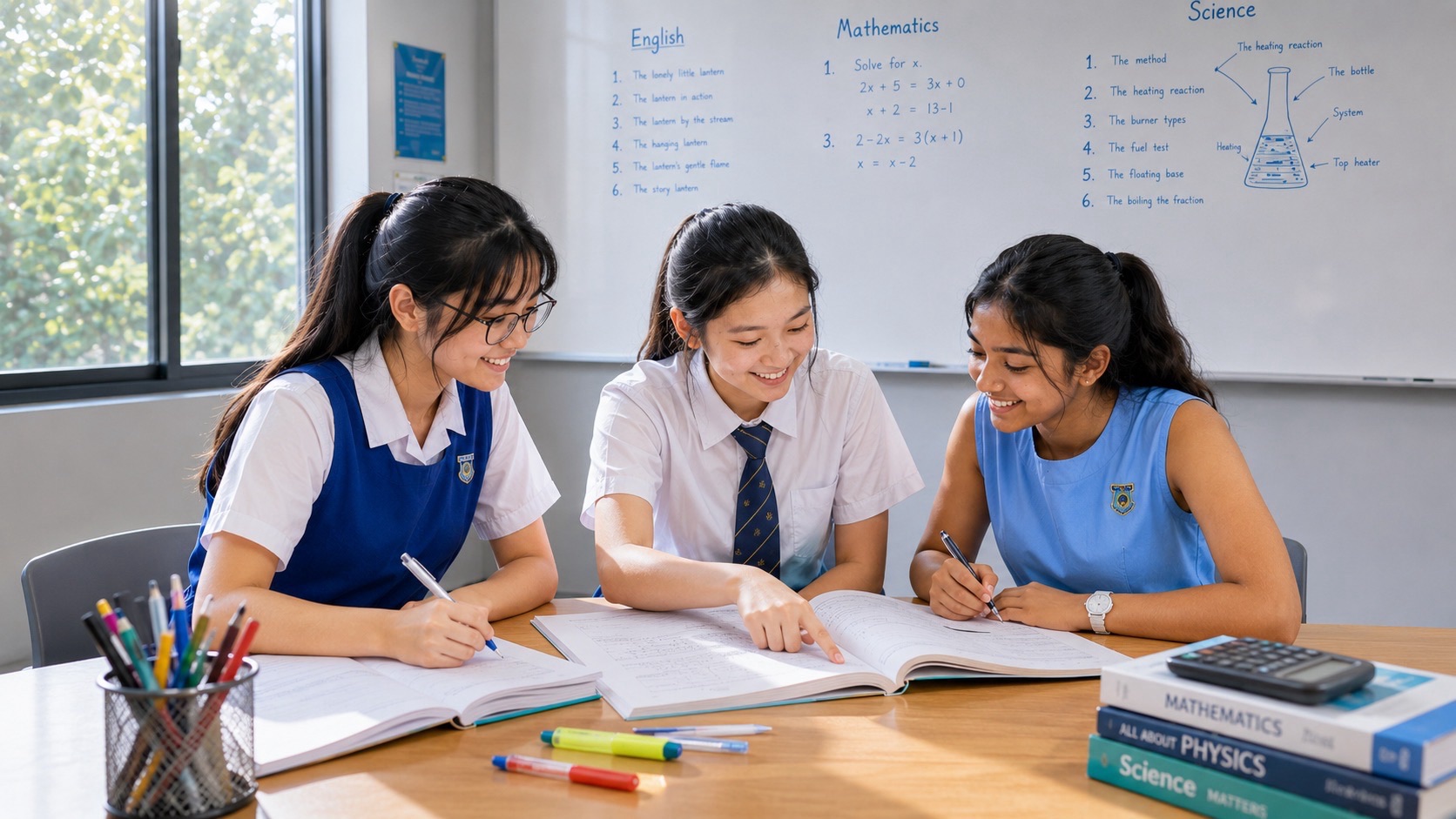
A school canteen is a small food system operating inside a learning system. It must move students through limited break time, turn ingredients and prepared food into safe meals, coordinate vendors or staff, manage queues, prices, cleaning and waste, and give students enough time to eat before lessons resume. What looks like a row of stalls is really a tightly timed interface between food, health, operations, behaviour, money and the school timetable.
Understanding how school canteens work means understanding school meals, lunch and recess, food safety, nutrition, queues, payment, affordability, choice, allergens, hygiene, seating, waste, cleaning, vendor capacity and student movement. A canteen cannot optimise every goal independently: more choice can increase operational complexity; slower preparation can improve freshness but lengthen queues; staggered breaks can reduce crowding but complicate the timetable.
This world-facing guide explains the canteen as a complete school system and turns ordinary lunch into a creative-writing laboratory. It connects to the school day, school timetables, attendance and punctuality, and the wider eduKate learning ecosystem. The owner here is the meal-and-break operating system: how food reaches students safely and usefully inside finite school time.
The 50-second quick read
A canteen works when food supply, preparation, service capacity, payment, seating, cleaning and break time stay synchronised. The student-facing loop is simple: arrive, choose, queue, pay, receive food, find a place, eat, clear or return items, and reach the next school activity on time. Every stage has capacity limits.
The deepest mechanism is flow. If students arrive faster than stalls can serve them, queues grow. If seating turns over slowly, standing demand rises. If cleaning lags, usable capacity falls. If a break is too short for actual queue and eating time, the problem cannot be solved by telling students merely to hurry. Good systems locate the bottleneck and change the relevant part.
1. The canteen is a flow system
Students, food, money, trays, tables and waste all move through the space. The quality of lunch depends on those flows meeting without unsafe or excessive congestion.
2. Break time is the hard clock
The canteen has a service window. Students need enough of that window left after queuing to eat and transition onward.
3. Demand arrives in waves
Unlike a restaurant with customers distributed across hours, school demand can surge immediately after a bell. Capacity must be understood at peak arrival, not only daily average.
4. Food safety is a boundary condition
Speed, cost and choice matter only inside safe food handling and the applicable school and public-health requirements. Exact rules vary by jurisdiction.
5. Nutrition and operations interact
What food is offered affects preparation, storage, service speed, price and waste. Nutrition policy cannot be operationally separated from the food system that delivers it.
6. The complete canteen chain
Plan menu → source ingredients → receive and store → prepare → hold safely → serve → pay → eat → clear → clean → record demand → adjust.
7. Arrival rate
How quickly students enter the canteen after the bell determines how fast queues can form.
8. Service rate
Each stall can serve only a finite number of students per minute. Menu complexity, payment and portioning affect this rate.
9. Queue length
A queue is stored demand: students have arrived but have not yet been served.
10. Waiting time
Queue length matters because break time is finite. The useful measure is often how much eating and transition time remains after service.
11. Seating capacity
Tables and seats create another capacity layer after food service.
12. Table turnover
A seat becomes available only when a diner finishes, clears the space and the next student can use it.
13. Cleaning capacity
Dirty tables, trays or utensils can temporarily reduce usable capacity even when physical seats remain.
14. Stall variety
Multiple stalls distribute demand and create choice, but students do not divide evenly across them.
15. Popularity imbalance
One highly popular stall can develop a long queue while another has spare capacity.
16. Menu complexity
A dish assembled to order may take longer than one portioned in advance. Service design affects throughput.
17. Preparation capacity
Food must be prepared before and during service without exceeding equipment, staff and safety limits.
18. Storage capacity
Cold, dry and other appropriate storage constrain what can be stocked and how often deliveries are needed.
19. Delivery timing
Supplies must arrive without blocking student movement or disrupting safe food operations.
20. Payment
Cash, cards or other permitted payment systems add a transaction step whose speed and failure modes affect queues.
21. Affordability
A meal system must consider what students can reasonably access within the school’s policy and local context.
22. Choice
Choice supports preference and autonomy, but every additional option can add stock, forecasting and service complexity.
23. Nutrition
Schools may use nutrition standards or guidance to shape what is sold. Specific requirements depend on jurisdiction.
24. Allergens and dietary needs
Food systems need clear, locally appropriate processes for relevant dietary and allergy information; students and families should use official school channels.
25. Hygiene
Hand hygiene, surfaces, utensils, food temperatures and cleaning routines belong to the safety system, not cosmetic presentation.
26. Waste
Unsold food, packaging and leftovers are outputs of forecasting, portioning, preference and disposal systems.
27. Forecasting
Vendors estimate demand from enrolment, day, menu, events and past sales. Forecast error becomes shortage or waste.
28. Shortage
Running out early can shift demand suddenly to other stalls and change queue patterns.
29. Surplus
Overproduction can increase waste and cost. The goal is not infinite stock but calibrated availability.
30. Break staggering
Different cohorts can eat at different times to reduce peak demand, though this interacts with the timetable.
31. Transition time
Students need time to travel from class to canteen and from canteen to the next activity.
32. Supervision
Schools may assign adults to support safe movement and orderly shared-space use according to local practice.
33. Accessibility
The system should consider whether students can physically access queues, counters, seating and payment routes.
34. Information
Menus, prices, ingredient or dietary information and temporary changes are useful only when students can find and understand them.
35. Feedback
Sales, queues, waste, student reports and operational incidents can help the system update.
36. Two stalls, one queue
Two stalls, one queue: Students join one common line, but service times differ. A shared queue can feel fairer and balance idle capacity, yet stall-specific choice becomes harder to coordinate.
37. Separate queues
Separate queues: Each stall has its own line. Students can choose directly, but popularity creates unequal waits.
38. The fastest stall
The fastest stall: A simple menu serves quickly. Its advantage is throughput, not necessarily superiority on every food criterion.
39. The slow popular stall
The slow popular stall: Demand exceeds service rate. The correct question is whether to increase capacity, simplify service, shift demand or accept the wait—not merely blame the queue.
40. The empty stall
The empty stall: Low demand can reflect menu preference, price, visibility, timing or other causes. One observation does not establish why.
41. The bell surge
The bell surge: Five hundred students arrive within minutes. Average hourly capacity hides the peak.
42. The staggered break
The staggered break: Two cohorts arrive separately. Peak queues fall, but timetable coordination becomes more complex.
43. The long walk
The long walk: A class far from the canteen loses several minutes before joining any queue. Their usable break differs from a nearby class.
44. The cash delay
The cash delay: Many small transactions slow service. Changing payment may help only if payment is the actual bottleneck.
45. The cooking bottleneck
The cooking bottleneck: Payment is fast, but portions cannot be produced quickly enough. Faster checkout does not solve preparation capacity.
46. The seating bottleneck
The seating bottleneck: Food queues are short, yet students stand waiting for tables. Service optimisation has moved the bottleneck downstream.
47. The tray bottleneck
The tray bottleneck: Seats exist, but clean trays or utensils run low. Cleaning capacity limits throughput.
48. The return bottleneck
The return bottleneck: Students finish but tray-return congestion slows clearing and table turnover.
49. The popular menu day
The popular menu day: Demand shifts sharply to one stall. Historical averages need menu-specific adjustment.
50. The event day
The event day: A school activity changes cohort timing. Forecasts based on normal attendance become inaccurate.
51. The rainy day
The rainy day: Covered movement and seating become more valuable; outdoor overflow capacity may disappear.
52. The examination day
The examination day: Different release times alter arrival waves and vendor demand.
53. The field-trip day
The field-trip day: A cohort is absent. Overproduction rises if forecasts ignore the event.
54. The shortage cascade
The shortage cascade: One stall sells out. Its customers move to neighbouring queues, creating secondary congestion.
55. The surplus lesson
The surplus lesson: Unsold portions reveal forecast error but not necessarily bad management; uncertainty cannot be eliminated.
56. The smaller portion option
The smaller portion option: Different portion sizes can affect affordability and waste, but policy, nutrition and operations must remain aligned.
57. The menu board
The menu board: Clear prices reduce decision time at the counter. Information design can improve service rate.
58. The indecisive counter
The indecisive counter: Students first inspect choices only when reaching service. Moving information upstream can reduce transaction time.
59. The pre-order idea
The pre-order idea: Pre-ordering can improve forecasting or pickup speed but adds digital access, fulfilment and exception-management requirements.
60. The forgotten payment
The forgotten payment: A student reaches the counter unable to pay. Schools need humane, policy-consistent exception routes rather than improvisation.
61. The allergy question
The allergy question: The safest response is not guessing from appearance. Use official ingredient and school processes appropriate to the jurisdiction.
62. The spill
The spill: Cleaning becomes an immediate safety and capacity task, not merely tidiness.
63. The broken refrigerator
The broken refrigerator: Food-safety rules can make stock unusable even when demand is high. Safety outranks throughput.
64. The vendor absence
The vendor absence: One closed stall concentrates demand elsewhere. Resilience depends on how much spare capacity remains.
65. The perfect average
The perfect average: Average wait is acceptable, but one cohort repeatedly receives much longer waits. Distribution matters.
66. The fast eater fallacy
The fast eater fallacy: Telling students to eat faster treats downstream human time as the adjustable variable without first examining queues and break design.
67. The no-queue fallacy
The no-queue fallacy: Eliminating all queues may require excessive idle capacity. The goal is workable waiting within safety, cost and time constraints.
68. The cheapest-only model
The cheapest-only model: Minimising price alone can ignore nutrition, safety, vendor viability and choice.
69. The healthiest-only model
The healthiest-only model: A menu that meets nutritional intentions but students consistently avoid can produce waste and poor access. Delivery matters.
70. The maximum-choice model
The maximum-choice model: More items can increase complexity, stock risk and decision time.
71. The minimum-choice model
The minimum-choice model: Simplicity improves operations but can reduce preference fit and dietary flexibility.
72. The maximum-seating model
The maximum-seating model: Adding tables can obstruct movement if circulation space is ignored.
73. The maximum-speed model
The maximum-speed model: Serving faster is not useful if it compromises safety or simply creates a seating queue.
74. The queue-cutting conflict
The queue-cutting conflict: A behavioural problem becomes visible because scarce time makes position valuable.
75. The late-return conflict
The late-return conflict: A student arrives late to class after lunch. Diagnose travel, queue, eating and individual timing before assuming one cause.
76. The forgotten lunch conflict
The forgotten lunch conflict: Home, school and canteen systems intersect; the appropriate response depends on local policy.
77. The reusable-container system
The reusable-container system: Waste may fall, while washing and return logistics become new operational work.
78. The disposable-container system
The disposable-container system: Turnover may simplify, while material waste increases. Trade-offs depend on context.
79. The feedback box
The feedback box: Suggestions become useful when tied to specific mechanisms such as price, queue time, menu availability or seating.
80. The sales ledger
The sales ledger: Purchases reveal revealed demand, but not why students rejected alternatives.
81. The waste bin
The waste bin: Leftovers reveal something about portion, preference or time, but interpretation needs context.
82. The canteen as classroom
The canteen as classroom: Students can learn systems thinking by measuring queues, throughput and waste without interfering with operations.
83. The canteen as community space
The canteen as community space: Eating time also supports social interaction; optimising only throughput can miss this human function.
84. The quiet table
The quiet table: Some students may value lower-stimulation seating where schools can provide it; inclusion can be spatial as well as dietary.
85. The final bell
The final bell: The canteen succeeds when students are fed, the space resets, and the next school system can begin.
86. Why are school canteen queues so long?
Queues grow when arrival demand temporarily exceeds service capacity. Measure where time is spent—choosing, preparation, payment or handover—before selecting a fix.
87. Why not add another stall?
Additional capacity can help if space, staffing, vendor viability, utilities and school policy support it. It is not costless spare throughput.
88. Why not make every break longer?
Break duration competes with the finite school day. Timetable design must allocate time across instruction, meals, movement and other functions.
89. Why stagger recess?
Staggering can flatten peak demand and improve seating availability, but it requires compatible curriculum and supervision schedules.
90. Why do popular stalls have longer queues?
Demand is uneven. Students choose based on taste, price, menu, habit and other factors, so equal stall count does not imply equal queue length.
91. Why not force equal queues?
Students value choice. A system can inform or redesign flow, but equal queue length is not itself the educational objective.
92. Why do prices differ?
Ingredients, portions, preparation, vendor arrangements and local policies can differ. Use the school’s current official price information.
93. Why can a dish sell out?
Forecasting occurs before exact demand is known. Increasing stock reduces shortage risk but can increase surplus and waste.
94. Why is food sometimes prepared before the bell?
Peak demand arrives quickly, so preparation can shift work earlier. Safe holding and food-quality requirements still apply.
95. Why are some dishes slower?
Assembly, cooking, customisation and portioning require different service time.
96. Why do schools care about nutrition?
Food consumed during school contributes to students’ daily intake, so many jurisdictions or schools use nutrition policies or guidance.
97. Does healthy food guarantee students will buy it?
No. Availability, taste, price, familiarity, presentation and time all affect choice. Nutrition policy needs a delivery system students can actually use.
98. Why is hygiene so strict?
Food systems can transmit harm if storage, preparation, handling or cleaning fails. Safety is a non-compensatory boundary.
99. Can students judge food safety by appearance?
Not reliably. Use official food-safety and school processes rather than visual guesswork.
100. What about allergies?
Students and families should communicate through the school’s official health or dietary channels. Vendors and schools should follow applicable procedures; this article does not replace medical advice.
101. Why do canteens need cleaning during service?
Spills, tables, utensils and waste accumulate while students are eating. Cleaning is part of live capacity and safety.
102. Why are bins placed where they are?
Placement affects clearing routes, congestion and waste sorting. A convenient location for one flow can obstruct another.
103. Why do students have to return trays?
Where tray-return systems exist, returning items helps restore tables and move reusable serviceware into cleaning.
104. Why not put bins beside every table?
More collection points can reduce walking but increase servicing and space requirements. Layout is a flow trade-off.
105. Why is seating sometimes limited?
Physical space is finite, and circulation, accessibility and safety need room too.
106. Why not eat in classrooms?
Policies differ. Food in teaching rooms can create cleaning, pest, allergy, supervision or operational concerns.
107. Why does weather matter?
Outdoor or semi-outdoor seating and walking routes can lose capacity during rain or heat depending on campus design.
108. Why does the timetable matter?
The timetable determines when cohorts arrive and how much transition time surrounds the meal.
109. Why does attendance matter?
Daily demand changes with who is present, while absences can also alter vendor forecasts and cohort flow.
110. Why do exams change canteen demand?
Exam schedules can release students at unusual times or reduce ordinary lesson populations.
111. Why do school events matter?
Trips, sports, performances and celebrations alter demand, space and timing.
112. Why not use only pre-orders?
Pre-orders can improve prediction but add ordering deadlines, digital access, fulfilment matching and exception handling.
113. Why not use only cashless payment?
Payment policy depends on school context. Cashless systems can speed some transactions but create device, account or outage exceptions.
114. Why not use only cash?
Cash is familiar but can slow transactions and requires handling, change and reconciliation.
115. What happens if payment systems fail?
A resilient system needs an approved fallback that preserves student access and financial accountability.
116. Why does menu information matter before the queue?
Students who decide upstream reduce counter decision time and make throughput more predictable.
117. Can queue signs help?
Clear lines, stall names, menus and prices can reduce confusion, though signage cannot solve insufficient capacity.
118. Can staff tell students which queue is fastest?
Information can redistribute flexible demand, but students may still prefer a particular menu.
119. What is a bottleneck?
The stage whose limited capacity currently constrains total flow. Improving a non-bottleneck may not reduce total waiting.
120. Can the bottleneck move?
Yes. Faster payment can make food preparation the next bottleneck; faster service can make seating the next one.
121. What is throughput?
The number of students or meals successfully served per unit time under defined conditions.
122. What is utilisation?
How much of a resource’s available capacity is being used. Very high utilisation can increase waiting and reduce resilience.
123. What is slack?
Spare capacity that can absorb demand variation or disruption. Slack can look inefficient until something goes wrong.
124. What is queue discipline?
The rule by which waiting customers are served. Schools typically need clear, fair and understandable routines.
125. What is Little’s Law?
In stable queueing systems, average number in the system relates to arrival rate and average time. It is a useful conceptual lens, but real school peaks may violate simple steady-state assumptions.
126. Why are averages dangerous?
An acceptable daily average can hide severe ten-minute peaks or repeated disadvantage for one cohort.
127. What should schools measure?
Depending on purpose: arrival times, queue waits, service rate, sell-outs, seating occupancy, waste and student feedback, while respecting privacy and local policy.
128. Should students be tracked individually?
Only where legitimate and necessary under applicable school and privacy rules. Many operational questions can be answered with aggregate observations.
129. How can students help?
Decide before reaching the counter, prepare payment, follow queue routines, clear spaces and report specific recurring problems through appropriate channels.
130. How can families help?
Use official dietary and payment channels, keep relevant accounts or arrangements current, and raise access concerns with concrete information.
131. How can vendors help?
Forecast, prepare safely, communicate menus and prices, manage service flow and update stock based on evidence.
132. How can teachers help?
Release and transition according to school routines and avoid creating unnecessary delays that consume students’ meal time.
133. How can school leaders help?
Set policies, allocate space and time, coordinate vendors, safety and inclusion, and review evidence across the whole system.
134. What is the canteen’s real output?
Not merely meals sold. It is students receiving safe, accessible food within a break system that returns them to learning ready for the next part of school.
135. What is the best question when lunch fails?
Where did the flow stop working: supply, preparation, service, payment, seating, cleaning, information, time or access?
136. Original model story: The Twelve-Minute Queue
This story is original fiction.
On Monday, Ryan spent twelve minutes in the noodle queue. He knew because he timed it.
“Twelve minutes,” he told Aisha. “The canteen is broken.”
Aisha looked at the other stalls. Rice: four minutes. Sandwiches: almost none. Fruit and drinks: two.
“The canteen isn’t twelve minutes,” she said. “Noodles are.”
On Tuesday they watched from the side without blocking anyone. The noodle stall served quickly until one dish became popular. Each order needed a final assembly step. The queue lengthened.
“So they need faster payment,” Ryan said.
They timed payment. Seconds. The slower step was portioning and finishing the dish.
On Wednesday the stall prepared more components before the bell. The queue moved faster. Then the tables filled.
Students holding food stood waiting for seats.
“We fixed it and made it worse,” Ryan said.
“No,” Aisha said. “We moved the bottleneck.”
They mapped the lunch loop for a class project: arrival, choice, queue, service, payment, seating, eating, clearing, exit.
The teacher asked them not to treat students as identical units. Some needed longer to eat. Some used different stalls. Some arrived from farther classrooms. Some required particular dietary routes.
So they stopped asking how to make everyone finish lunch faster. They asked which part of the system was consuming time without adding value.
The answer changed by day. On Monday it was service capacity at one stall. On Wednesday it was seating. On Friday it rained, and the covered seating became the constraint.
Ryan stopped saying the canteen had one problem. It had a moving bottleneck inside a fixed break.
137. Reading The Twelve-Minute Queue
The story begins with an aggregate complaint and narrows it. “The canteen is broken” becomes one stall, then one service step, then a downstream seating constraint. The system changes state as one bottleneck is relieved.
138. What writers can learn from the queue
A queue is visible causality. Characters can measure it, argue about it and discover that the obvious explanation is wrong. The setting supplies natural stakes because the bell keeps moving closer.
139. Fifty canteen distinctions
Demand: students wanting service under defined conditions.
Capacity: how much service the system can provide.
Arrival rate: how quickly demand enters.
Service rate: how quickly completed service exits.
Queue: demand waiting for service.
Wait: time spent before service.
Throughput: completed service per unit time.
Utilisation: share of available capacity in use.
Slack: unused capacity available for variation.
Bottleneck: the capacity limit constraining total flow.
Menu: the set of available offerings.
Choice: selection among available options.
Availability: whether an option can actually be obtained now.
Affordability: whether price permits practical access.
Price: the monetary amount charged.
Cost: resources required to produce and deliver.
Value: benefit relative to cost from a defined perspective.
Nutrition: the food’s contribution to dietary intake.
Food safety: control of hazards in food handling and service.
Hygiene: practices supporting cleanliness and safety.
Allergen information: information relevant to allergen risk and authoritative processes.
Preference: what a student would like.
Requirement: a condition the system must meet.
Portion: the amount served.
Waste: material leaving the useful food cycle.
Surplus: quantity above realised demand.
Shortage: demand exceeding available supply.
Forecast: an estimate before actual demand is known.
Error: difference between forecast and realised state.
Seat: physical dining capacity for one person.
Turnover: reuse of capacity across successive diners.
Cleaning: work restoring safe usable capacity.
Payment: the transaction step.
Transaction: exchange recorded by the system.
Exception: a case that cannot follow the normal route.
Fallback: an approved alternative when the normal route fails.
Break: scheduled non-lesson time containing several human functions.
Eating time: time actually available to consume food.
Transition: movement and reset between activities.
Staggering: shifting cohorts across service windows.
Peak: period of highest demand.
Average: summary that can hide peaks.
Flow: movement through linked stages.
Congestion: excess simultaneous demand in limited space.
Layout: spatial arrangement shaping flow.
Information: signals helping students choose and act.
Feedback: evidence returned to improve the system.
Resilience: ability to continue under disruption.
Efficiency: use of resources to produce desired output.
Dignity: treating students as people whose access and time matter.
140. One hundred canteen diagnostic laboratories
Laboratory 1: arrival surge
Observe. students reach the canteen faster than normal after a common release. Do not begin by assigning motive to students or vendors. Record the time, cohort, stall or space and whether the pattern repeats.
Narrow. Test arrival rate as the working mechanism. Compare a normal period with the affected period and look for the earliest stage where demand begins to exceed usable capacity.
Act. A proportionate experiment is to stagger release where appropriate or increase short-peak service readiness. Keep food safety, school policy, accessibility and student dignity as non-compensatory boundaries.
Return evidence. Measure queue wait and remaining eating time. If the metric improves but total lunch experience does not, inspect the next downstream bottleneck rather than declaring the system solved.
Laboratory 2: popular-stall overload
Observe. one menu attracts much more demand than neighbouring stalls. Do not begin by assigning motive to students or vendors. Record the time, cohort, stall or space and whether the pattern repeats.
Narrow. Test demand distribution as the working mechanism. Compare a normal period with the affected period and look for the earliest stage where demand begins to exceed usable capacity.
Act. A proportionate experiment is to increase that stall’s throughput, simplify its service step, or provide better upstream choice information. Keep food safety, school policy, accessibility and student dignity as non-compensatory boundaries.
Return evidence. Measure stall-specific wait and sell-out time. If the metric improves but total lunch experience does not, inspect the next downstream bottleneck rather than declaring the system solved.
Laboratory 3: slow decision
Observe. students choose only when they reach the counter. Do not begin by assigning motive to students or vendors. Record the time, cohort, stall or space and whether the pattern repeats.
Narrow. Test information placement as the working mechanism. Compare a normal period with the affected period and look for the earliest stage where demand begins to exceed usable capacity.
Act. A proportionate experiment is to move menu and price information upstream. Keep food safety, school policy, accessibility and student dignity as non-compensatory boundaries.
Return evidence. Measure counter transaction time. If the metric improves but total lunch experience does not, inspect the next downstream bottleneck rather than declaring the system solved.
Laboratory 4: payment delay
Observe. the food is ready but transactions accumulate. Do not begin by assigning motive to students or vendors. Record the time, cohort, stall or space and whether the pattern repeats.
Narrow. Test payment capacity as the working mechanism. Compare a normal period with the affected period and look for the earliest stage where demand begins to exceed usable capacity.
Act. A proportionate experiment is to simplify the approved payment flow or add a legitimate fallback. Keep food safety, school policy, accessibility and student dignity as non-compensatory boundaries.
Return evidence. Measure payment seconds and abandoned purchases. If the metric improves but total lunch experience does not, inspect the next downstream bottleneck rather than declaring the system solved.
Laboratory 5: preparation delay
Observe. orders wait because portions are not ready. Do not begin by assigning motive to students or vendors. Record the time, cohort, stall or space and whether the pattern repeats.
Narrow. Test production capacity as the working mechanism. Compare a normal period with the affected period and look for the earliest stage where demand begins to exceed usable capacity.
Act. A proportionate experiment is to shift safe preparation earlier or simplify assembly. Keep food safety, school policy, accessibility and student dignity as non-compensatory boundaries.
Return evidence. Measure orders completed per minute. If the metric improves but total lunch experience does not, inspect the next downstream bottleneck rather than declaring the system solved.
Laboratory 6: seating shortage
Observe. served students wait with food. Do not begin by assigning motive to students or vendors. Record the time, cohort, stall or space and whether the pattern repeats.
Narrow. Test seat turnover as the working mechanism. Compare a normal period with the affected period and look for the earliest stage where demand begins to exceed usable capacity.
Act. A proportionate experiment is to increase usable seating where feasible or improve clearing and cohort staggering. Keep food safety, school policy, accessibility and student dignity as non-compensatory boundaries.
Return evidence. Measure standing diners and seat wait. If the metric improves but total lunch experience does not, inspect the next downstream bottleneck rather than declaring the system solved.
Laboratory 7: cleaning lag
Observe. tables exist but remain unusable. Do not begin by assigning motive to students or vendors. Record the time, cohort, stall or space and whether the pattern repeats.
Narrow. Test cleaning capacity as the working mechanism. Compare a normal period with the affected period and look for the earliest stage where demand begins to exceed usable capacity.
Act. A proportionate experiment is to improve clearing routes and cleaning response. Keep food safety, school policy, accessibility and student dignity as non-compensatory boundaries.
Return evidence. Measure time from departure to reusable table. If the metric improves but total lunch experience does not, inspect the next downstream bottleneck rather than declaring the system solved.
Laboratory 8: tray-return congestion
Observe. students cluster after eating. Do not begin by assigning motive to students or vendors. Record the time, cohort, stall or space and whether the pattern repeats.
Narrow. Test return layout as the working mechanism. Compare a normal period with the affected period and look for the earliest stage where demand begins to exceed usable capacity.
Act. A proportionate experiment is to separate return flow from incoming and seating flow. Keep food safety, school policy, accessibility and student dignity as non-compensatory boundaries.
Return evidence. Measure return wait and blocked circulation. If the metric improves but total lunch experience does not, inspect the next downstream bottleneck rather than declaring the system solved.
Laboratory 9: rain loss
Observe. outdoor overflow becomes unavailable. Do not begin by assigning motive to students or vendors. Record the time, cohort, stall or space and whether the pattern repeats.
Narrow. Test weather-dependent capacity as the working mechanism. Compare a normal period with the affected period and look for the earliest stage where demand begins to exceed usable capacity.
Act. A proportionate experiment is to activate covered alternatives or adjust cohort flow. Keep food safety, school policy, accessibility and student dignity as non-compensatory boundaries.
Return evidence. Measure covered-seat occupancy. If the metric improves but total lunch experience does not, inspect the next downstream bottleneck rather than declaring the system solved.
Laboratory 10: long transition
Observe. a cohort arrives later because its classroom is distant. Do not begin by assigning motive to students or vendors. Record the time, cohort, stall or space and whether the pattern repeats.
Narrow. Test travel time as the working mechanism. Compare a normal period with the affected period and look for the earliest stage where demand begins to exceed usable capacity.
Act. A proportionate experiment is to review room/timetable transition or protect sufficient break time. Keep food safety, school policy, accessibility and student dignity as non-compensatory boundaries.
Return evidence. Measure arrival distribution by cohort. If the metric improves but total lunch experience does not, inspect the next downstream bottleneck rather than declaring the system solved.
Laboratory 11: stall sell-out
Observe. one option runs out early. Do not begin by assigning motive to students or vendors. Record the time, cohort, stall or space and whether the pattern repeats.
Narrow. Test forecast and stock as the working mechanism. Compare a normal period with the affected period and look for the earliest stage where demand begins to exceed usable capacity.
Act. A proportionate experiment is to improve menu-specific forecasting while balancing waste. Keep food safety, school policy, accessibility and student dignity as non-compensatory boundaries.
Return evidence. Measure sell-out time and displaced demand. If the metric improves but total lunch experience does not, inspect the next downstream bottleneck rather than declaring the system solved.
Laboratory 12: surplus waste
Observe. many portions remain. Do not begin by assigning motive to students or vendors. Record the time, cohort, stall or space and whether the pattern repeats.
Narrow. Test forecast error as the working mechanism. Compare a normal period with the affected period and look for the earliest stage where demand begins to exceed usable capacity.
Act. A proportionate experiment is to adjust production using day, event and menu history. Keep food safety, school policy, accessibility and student dignity as non-compensatory boundaries.
Return evidence. Measure unsold portions and waste. If the metric improves but total lunch experience does not, inspect the next downstream bottleneck rather than declaring the system solved.
Laboratory 13: allergen-information gap
Observe. a student cannot verify whether an option fits an established dietary requirement. Do not begin by assigning motive to students or vendors. Record the time, cohort, stall or space and whether the pattern repeats.
Narrow. Test authoritative information as the working mechanism. Compare a normal period with the affected period and look for the earliest stage where demand begins to exceed usable capacity.
Act. A proportionate experiment is to use official school/vendor ingredient and dietary processes rather than guesswork. Keep food safety, school policy, accessibility and student dignity as non-compensatory boundaries.
Return evidence. Measure resolved queries and safe access. If the metric improves but total lunch experience does not, inspect the next downstream bottleneck rather than declaring the system solved.
Laboratory 14: payment outage
Observe. normal cashless route fails. Do not begin by assigning motive to students or vendors. Record the time, cohort, stall or space and whether the pattern repeats.
Narrow. Test resilience as the working mechanism. Compare a normal period with the affected period and look for the earliest stage where demand begins to exceed usable capacity.
Act. A proportionate experiment is to use an approved fallback that preserves access and records transactions. Keep food safety, school policy, accessibility and student dignity as non-compensatory boundaries.
Return evidence. Measure students served during outage. If the metric improves but total lunch experience does not, inspect the next downstream bottleneck rather than declaring the system solved.
Laboratory 15: vendor absence
Observe. one stall cannot open. Do not begin by assigning motive to students or vendors. Record the time, cohort, stall or space and whether the pattern repeats.
Narrow. Test spare capacity as the working mechanism. Compare a normal period with the affected period and look for the earliest stage where demand begins to exceed usable capacity.
Act. A proportionate experiment is to redistribute demand and use contingency arrangements. Keep food safety, school policy, accessibility and student dignity as non-compensatory boundaries.
Return evidence. Measure queue changes at remaining stalls. If the metric improves but total lunch experience does not, inspect the next downstream bottleneck rather than declaring the system solved.
Laboratory 16: menu-price confusion
Observe. students discover prices only at payment. Do not begin by assigning motive to students or vendors. Record the time, cohort, stall or space and whether the pattern repeats.
Narrow. Test information clarity as the working mechanism. Compare a normal period with the affected period and look for the earliest stage where demand begins to exceed usable capacity.
Act. A proportionate experiment is to publish current prices visibly before queuing. Keep food safety, school policy, accessibility and student dignity as non-compensatory boundaries.
Return evidence. Measure decision reversals and counter time. If the metric improves but total lunch experience does not, inspect the next downstream bottleneck rather than declaring the system solved.
Laboratory 17: oversized menu
Observe. many choices slow production and decision. Do not begin by assigning motive to students or vendors. Record the time, cohort, stall or space and whether the pattern repeats.
Narrow. Test complexity as the working mechanism. Compare a normal period with the affected period and look for the earliest stage where demand begins to exceed usable capacity.
Act. A proportionate experiment is to identify low-value complexity while preserving meaningful choice. Keep food safety, school policy, accessibility and student dignity as non-compensatory boundaries.
Return evidence. Measure service rate, waste and student uptake. If the metric improves but total lunch experience does not, inspect the next downstream bottleneck rather than declaring the system solved.
Laboratory 18: undersized menu
Observe. few options concentrate demand or exclude preferences. Do not begin by assigning motive to students or vendors. Record the time, cohort, stall or space and whether the pattern repeats.
Narrow. Test choice capacity as the working mechanism. Compare a normal period with the affected period and look for the earliest stage where demand begins to exceed usable capacity.
Act. A proportionate experiment is to add targeted variety only where evidence shows access or demand value. Keep food safety, school policy, accessibility and student dignity as non-compensatory boundaries.
Return evidence. Measure queue concentration and unmet demand. If the metric improves but total lunch experience does not, inspect the next downstream bottleneck rather than declaring the system solved.
Laboratory 19: portion mismatch
Observe. students routinely leave food. Do not begin by assigning motive to students or vendors. Record the time, cohort, stall or space and whether the pattern repeats.
Narrow. Test portion calibration as the working mechanism. Compare a normal period with the affected period and look for the earliest stage where demand begins to exceed usable capacity.
Act. A proportionate experiment is to review portion options and demand within nutrition and policy boundaries. Keep food safety, school policy, accessibility and student dignity as non-compensatory boundaries.
Return evidence. Measure plate waste. If the metric improves but total lunch experience does not, inspect the next downstream bottleneck rather than declaring the system solved.
Laboratory 20: queue cutting
Observe. position becomes contested. Do not begin by assigning motive to students or vendors. Record the time, cohort, stall or space and whether the pattern repeats.
Narrow. Test queue discipline as the working mechanism. Compare a normal period with the affected period and look for the earliest stage where demand begins to exceed usable capacity.
Act. A proportionate experiment is to make lines and service order legible and supervised according to school routines. Keep food safety, school policy, accessibility and student dignity as non-compensatory boundaries.
Return evidence. Measure incidents and flow disruption. If the metric improves but total lunch experience does not, inspect the next downstream bottleneck rather than declaring the system solved.
Laboratory 21: arrival surge
Observe. students reach the canteen faster than normal after a common release. Do not begin by assigning motive to students or vendors. Record the time, cohort, stall or space and whether the pattern repeats.
Narrow. Test arrival rate as the working mechanism. Compare a normal period with the affected period and look for the earliest stage where demand begins to exceed usable capacity.
Act. A proportionate experiment is to stagger release where appropriate or increase short-peak service readiness. Keep food safety, school policy, accessibility and student dignity as non-compensatory boundaries.
Return evidence. Measure queue wait and remaining eating time. If the metric improves but total lunch experience does not, inspect the next downstream bottleneck rather than declaring the system solved.
Laboratory 22: popular-stall overload
Observe. one menu attracts much more demand than neighbouring stalls. Do not begin by assigning motive to students or vendors. Record the time, cohort, stall or space and whether the pattern repeats.
Narrow. Test demand distribution as the working mechanism. Compare a normal period with the affected period and look for the earliest stage where demand begins to exceed usable capacity.
Act. A proportionate experiment is to increase that stall’s throughput, simplify its service step, or provide better upstream choice information. Keep food safety, school policy, accessibility and student dignity as non-compensatory boundaries.
Return evidence. Measure stall-specific wait and sell-out time. If the metric improves but total lunch experience does not, inspect the next downstream bottleneck rather than declaring the system solved.
Laboratory 23: slow decision
Observe. students choose only when they reach the counter. Do not begin by assigning motive to students or vendors. Record the time, cohort, stall or space and whether the pattern repeats.
Narrow. Test information placement as the working mechanism. Compare a normal period with the affected period and look for the earliest stage where demand begins to exceed usable capacity.
Act. A proportionate experiment is to move menu and price information upstream. Keep food safety, school policy, accessibility and student dignity as non-compensatory boundaries.
Return evidence. Measure counter transaction time. If the metric improves but total lunch experience does not, inspect the next downstream bottleneck rather than declaring the system solved.
Laboratory 24: payment delay
Observe. the food is ready but transactions accumulate. Do not begin by assigning motive to students or vendors. Record the time, cohort, stall or space and whether the pattern repeats.
Narrow. Test payment capacity as the working mechanism. Compare a normal period with the affected period and look for the earliest stage where demand begins to exceed usable capacity.
Act. A proportionate experiment is to simplify the approved payment flow or add a legitimate fallback. Keep food safety, school policy, accessibility and student dignity as non-compensatory boundaries.
Return evidence. Measure payment seconds and abandoned purchases. If the metric improves but total lunch experience does not, inspect the next downstream bottleneck rather than declaring the system solved.
Laboratory 25: preparation delay
Observe. orders wait because portions are not ready. Do not begin by assigning motive to students or vendors. Record the time, cohort, stall or space and whether the pattern repeats.
Narrow. Test production capacity as the working mechanism. Compare a normal period with the affected period and look for the earliest stage where demand begins to exceed usable capacity.
Act. A proportionate experiment is to shift safe preparation earlier or simplify assembly. Keep food safety, school policy, accessibility and student dignity as non-compensatory boundaries.
Return evidence. Measure orders completed per minute. If the metric improves but total lunch experience does not, inspect the next downstream bottleneck rather than declaring the system solved.
Laboratory 26: seating shortage
Observe. served students wait with food. Do not begin by assigning motive to students or vendors. Record the time, cohort, stall or space and whether the pattern repeats.
Narrow. Test seat turnover as the working mechanism. Compare a normal period with the affected period and look for the earliest stage where demand begins to exceed usable capacity.
Act. A proportionate experiment is to increase usable seating where feasible or improve clearing and cohort staggering. Keep food safety, school policy, accessibility and student dignity as non-compensatory boundaries.
Return evidence. Measure standing diners and seat wait. If the metric improves but total lunch experience does not, inspect the next downstream bottleneck rather than declaring the system solved.
Laboratory 27: cleaning lag
Observe. tables exist but remain unusable. Do not begin by assigning motive to students or vendors. Record the time, cohort, stall or space and whether the pattern repeats.
Narrow. Test cleaning capacity as the working mechanism. Compare a normal period with the affected period and look for the earliest stage where demand begins to exceed usable capacity.
Act. A proportionate experiment is to improve clearing routes and cleaning response. Keep food safety, school policy, accessibility and student dignity as non-compensatory boundaries.
Return evidence. Measure time from departure to reusable table. If the metric improves but total lunch experience does not, inspect the next downstream bottleneck rather than declaring the system solved.
Laboratory 28: tray-return congestion
Observe. students cluster after eating. Do not begin by assigning motive to students or vendors. Record the time, cohort, stall or space and whether the pattern repeats.
Narrow. Test return layout as the working mechanism. Compare a normal period with the affected period and look for the earliest stage where demand begins to exceed usable capacity.
Act. A proportionate experiment is to separate return flow from incoming and seating flow. Keep food safety, school policy, accessibility and student dignity as non-compensatory boundaries.
Return evidence. Measure return wait and blocked circulation. If the metric improves but total lunch experience does not, inspect the next downstream bottleneck rather than declaring the system solved.
Laboratory 29: rain loss
Observe. outdoor overflow becomes unavailable. Do not begin by assigning motive to students or vendors. Record the time, cohort, stall or space and whether the pattern repeats.
Narrow. Test weather-dependent capacity as the working mechanism. Compare a normal period with the affected period and look for the earliest stage where demand begins to exceed usable capacity.
Act. A proportionate experiment is to activate covered alternatives or adjust cohort flow. Keep food safety, school policy, accessibility and student dignity as non-compensatory boundaries.
Return evidence. Measure covered-seat occupancy. If the metric improves but total lunch experience does not, inspect the next downstream bottleneck rather than declaring the system solved.
Laboratory 30: long transition
Observe. a cohort arrives later because its classroom is distant. Do not begin by assigning motive to students or vendors. Record the time, cohort, stall or space and whether the pattern repeats.
Narrow. Test travel time as the working mechanism. Compare a normal period with the affected period and look for the earliest stage where demand begins to exceed usable capacity.
Act. A proportionate experiment is to review room/timetable transition or protect sufficient break time. Keep food safety, school policy, accessibility and student dignity as non-compensatory boundaries.
Return evidence. Measure arrival distribution by cohort. If the metric improves but total lunch experience does not, inspect the next downstream bottleneck rather than declaring the system solved.
Laboratory 31: stall sell-out
Observe. one option runs out early. Do not begin by assigning motive to students or vendors. Record the time, cohort, stall or space and whether the pattern repeats.
Narrow. Test forecast and stock as the working mechanism. Compare a normal period with the affected period and look for the earliest stage where demand begins to exceed usable capacity.
Act. A proportionate experiment is to improve menu-specific forecasting while balancing waste. Keep food safety, school policy, accessibility and student dignity as non-compensatory boundaries.
Return evidence. Measure sell-out time and displaced demand. If the metric improves but total lunch experience does not, inspect the next downstream bottleneck rather than declaring the system solved.
Laboratory 32: surplus waste
Observe. many portions remain. Do not begin by assigning motive to students or vendors. Record the time, cohort, stall or space and whether the pattern repeats.
Narrow. Test forecast error as the working mechanism. Compare a normal period with the affected period and look for the earliest stage where demand begins to exceed usable capacity.
Act. A proportionate experiment is to adjust production using day, event and menu history. Keep food safety, school policy, accessibility and student dignity as non-compensatory boundaries.
Return evidence. Measure unsold portions and waste. If the metric improves but total lunch experience does not, inspect the next downstream bottleneck rather than declaring the system solved.
Laboratory 33: allergen-information gap
Observe. a student cannot verify whether an option fits an established dietary requirement. Do not begin by assigning motive to students or vendors. Record the time, cohort, stall or space and whether the pattern repeats.
Narrow. Test authoritative information as the working mechanism. Compare a normal period with the affected period and look for the earliest stage where demand begins to exceed usable capacity.
Act. A proportionate experiment is to use official school/vendor ingredient and dietary processes rather than guesswork. Keep food safety, school policy, accessibility and student dignity as non-compensatory boundaries.
Return evidence. Measure resolved queries and safe access. If the metric improves but total lunch experience does not, inspect the next downstream bottleneck rather than declaring the system solved.
Laboratory 34: payment outage
Observe. normal cashless route fails. Do not begin by assigning motive to students or vendors. Record the time, cohort, stall or space and whether the pattern repeats.
Narrow. Test resilience as the working mechanism. Compare a normal period with the affected period and look for the earliest stage where demand begins to exceed usable capacity.
Act. A proportionate experiment is to use an approved fallback that preserves access and records transactions. Keep food safety, school policy, accessibility and student dignity as non-compensatory boundaries.
Return evidence. Measure students served during outage. If the metric improves but total lunch experience does not, inspect the next downstream bottleneck rather than declaring the system solved.
Laboratory 35: vendor absence
Observe. one stall cannot open. Do not begin by assigning motive to students or vendors. Record the time, cohort, stall or space and whether the pattern repeats.
Narrow. Test spare capacity as the working mechanism. Compare a normal period with the affected period and look for the earliest stage where demand begins to exceed usable capacity.
Act. A proportionate experiment is to redistribute demand and use contingency arrangements. Keep food safety, school policy, accessibility and student dignity as non-compensatory boundaries.
Return evidence. Measure queue changes at remaining stalls. If the metric improves but total lunch experience does not, inspect the next downstream bottleneck rather than declaring the system solved.
Laboratory 36: menu-price confusion
Observe. students discover prices only at payment. Do not begin by assigning motive to students or vendors. Record the time, cohort, stall or space and whether the pattern repeats.
Narrow. Test information clarity as the working mechanism. Compare a normal period with the affected period and look for the earliest stage where demand begins to exceed usable capacity.
Act. A proportionate experiment is to publish current prices visibly before queuing. Keep food safety, school policy, accessibility and student dignity as non-compensatory boundaries.
Return evidence. Measure decision reversals and counter time. If the metric improves but total lunch experience does not, inspect the next downstream bottleneck rather than declaring the system solved.
Laboratory 37: oversized menu
Observe. many choices slow production and decision. Do not begin by assigning motive to students or vendors. Record the time, cohort, stall or space and whether the pattern repeats.
Narrow. Test complexity as the working mechanism. Compare a normal period with the affected period and look for the earliest stage where demand begins to exceed usable capacity.
Act. A proportionate experiment is to identify low-value complexity while preserving meaningful choice. Keep food safety, school policy, accessibility and student dignity as non-compensatory boundaries.
Return evidence. Measure service rate, waste and student uptake. If the metric improves but total lunch experience does not, inspect the next downstream bottleneck rather than declaring the system solved.
Laboratory 38: undersized menu
Observe. few options concentrate demand or exclude preferences. Do not begin by assigning motive to students or vendors. Record the time, cohort, stall or space and whether the pattern repeats.
Narrow. Test choice capacity as the working mechanism. Compare a normal period with the affected period and look for the earliest stage where demand begins to exceed usable capacity.
Act. A proportionate experiment is to add targeted variety only where evidence shows access or demand value. Keep food safety, school policy, accessibility and student dignity as non-compensatory boundaries.
Return evidence. Measure queue concentration and unmet demand. If the metric improves but total lunch experience does not, inspect the next downstream bottleneck rather than declaring the system solved.
Laboratory 39: portion mismatch
Observe. students routinely leave food. Do not begin by assigning motive to students or vendors. Record the time, cohort, stall or space and whether the pattern repeats.
Narrow. Test portion calibration as the working mechanism. Compare a normal period with the affected period and look for the earliest stage where demand begins to exceed usable capacity.
Act. A proportionate experiment is to review portion options and demand within nutrition and policy boundaries. Keep food safety, school policy, accessibility and student dignity as non-compensatory boundaries.
Return evidence. Measure plate waste. If the metric improves but total lunch experience does not, inspect the next downstream bottleneck rather than declaring the system solved.
Laboratory 40: queue cutting
Observe. position becomes contested. Do not begin by assigning motive to students or vendors. Record the time, cohort, stall or space and whether the pattern repeats.
Narrow. Test queue discipline as the working mechanism. Compare a normal period with the affected period and look for the earliest stage where demand begins to exceed usable capacity.
Act. A proportionate experiment is to make lines and service order legible and supervised according to school routines. Keep food safety, school policy, accessibility and student dignity as non-compensatory boundaries.
Return evidence. Measure incidents and flow disruption. If the metric improves but total lunch experience does not, inspect the next downstream bottleneck rather than declaring the system solved.
Laboratory 41: arrival surge
Observe. students reach the canteen faster than normal after a common release. Do not begin by assigning motive to students or vendors. Record the time, cohort, stall or space and whether the pattern repeats.
Narrow. Test arrival rate as the working mechanism. Compare a normal period with the affected period and look for the earliest stage where demand begins to exceed usable capacity.
Act. A proportionate experiment is to stagger release where appropriate or increase short-peak service readiness. Keep food safety, school policy, accessibility and student dignity as non-compensatory boundaries.
Return evidence. Measure queue wait and remaining eating time. If the metric improves but total lunch experience does not, inspect the next downstream bottleneck rather than declaring the system solved.
Laboratory 42: popular-stall overload
Observe. one menu attracts much more demand than neighbouring stalls. Do not begin by assigning motive to students or vendors. Record the time, cohort, stall or space and whether the pattern repeats.
Narrow. Test demand distribution as the working mechanism. Compare a normal period with the affected period and look for the earliest stage where demand begins to exceed usable capacity.
Act. A proportionate experiment is to increase that stall’s throughput, simplify its service step, or provide better upstream choice information. Keep food safety, school policy, accessibility and student dignity as non-compensatory boundaries.
Return evidence. Measure stall-specific wait and sell-out time. If the metric improves but total lunch experience does not, inspect the next downstream bottleneck rather than declaring the system solved.
Laboratory 43: slow decision
Observe. students choose only when they reach the counter. Do not begin by assigning motive to students or vendors. Record the time, cohort, stall or space and whether the pattern repeats.
Narrow. Test information placement as the working mechanism. Compare a normal period with the affected period and look for the earliest stage where demand begins to exceed usable capacity.
Act. A proportionate experiment is to move menu and price information upstream. Keep food safety, school policy, accessibility and student dignity as non-compensatory boundaries.
Return evidence. Measure counter transaction time. If the metric improves but total lunch experience does not, inspect the next downstream bottleneck rather than declaring the system solved.
Laboratory 44: payment delay
Observe. the food is ready but transactions accumulate. Do not begin by assigning motive to students or vendors. Record the time, cohort, stall or space and whether the pattern repeats.
Narrow. Test payment capacity as the working mechanism. Compare a normal period with the affected period and look for the earliest stage where demand begins to exceed usable capacity.
Act. A proportionate experiment is to simplify the approved payment flow or add a legitimate fallback. Keep food safety, school policy, accessibility and student dignity as non-compensatory boundaries.
Return evidence. Measure payment seconds and abandoned purchases. If the metric improves but total lunch experience does not, inspect the next downstream bottleneck rather than declaring the system solved.
Laboratory 45: preparation delay
Observe. orders wait because portions are not ready. Do not begin by assigning motive to students or vendors. Record the time, cohort, stall or space and whether the pattern repeats.
Narrow. Test production capacity as the working mechanism. Compare a normal period with the affected period and look for the earliest stage where demand begins to exceed usable capacity.
Act. A proportionate experiment is to shift safe preparation earlier or simplify assembly. Keep food safety, school policy, accessibility and student dignity as non-compensatory boundaries.
Return evidence. Measure orders completed per minute. If the metric improves but total lunch experience does not, inspect the next downstream bottleneck rather than declaring the system solved.
Laboratory 46: seating shortage
Observe. served students wait with food. Do not begin by assigning motive to students or vendors. Record the time, cohort, stall or space and whether the pattern repeats.
Narrow. Test seat turnover as the working mechanism. Compare a normal period with the affected period and look for the earliest stage where demand begins to exceed usable capacity.
Act. A proportionate experiment is to increase usable seating where feasible or improve clearing and cohort staggering. Keep food safety, school policy, accessibility and student dignity as non-compensatory boundaries.
Return evidence. Measure standing diners and seat wait. If the metric improves but total lunch experience does not, inspect the next downstream bottleneck rather than declaring the system solved.
Laboratory 47: cleaning lag
Observe. tables exist but remain unusable. Do not begin by assigning motive to students or vendors. Record the time, cohort, stall or space and whether the pattern repeats.
Narrow. Test cleaning capacity as the working mechanism. Compare a normal period with the affected period and look for the earliest stage where demand begins to exceed usable capacity.
Act. A proportionate experiment is to improve clearing routes and cleaning response. Keep food safety, school policy, accessibility and student dignity as non-compensatory boundaries.
Return evidence. Measure time from departure to reusable table. If the metric improves but total lunch experience does not, inspect the next downstream bottleneck rather than declaring the system solved.
Laboratory 48: tray-return congestion
Observe. students cluster after eating. Do not begin by assigning motive to students or vendors. Record the time, cohort, stall or space and whether the pattern repeats.
Narrow. Test return layout as the working mechanism. Compare a normal period with the affected period and look for the earliest stage where demand begins to exceed usable capacity.
Act. A proportionate experiment is to separate return flow from incoming and seating flow. Keep food safety, school policy, accessibility and student dignity as non-compensatory boundaries.
Return evidence. Measure return wait and blocked circulation. If the metric improves but total lunch experience does not, inspect the next downstream bottleneck rather than declaring the system solved.
Laboratory 49: rain loss
Observe. outdoor overflow becomes unavailable. Do not begin by assigning motive to students or vendors. Record the time, cohort, stall or space and whether the pattern repeats.
Narrow. Test weather-dependent capacity as the working mechanism. Compare a normal period with the affected period and look for the earliest stage where demand begins to exceed usable capacity.
Act. A proportionate experiment is to activate covered alternatives or adjust cohort flow. Keep food safety, school policy, accessibility and student dignity as non-compensatory boundaries.
Return evidence. Measure covered-seat occupancy. If the metric improves but total lunch experience does not, inspect the next downstream bottleneck rather than declaring the system solved.
Laboratory 50: long transition
Observe. a cohort arrives later because its classroom is distant. Do not begin by assigning motive to students or vendors. Record the time, cohort, stall or space and whether the pattern repeats.
Narrow. Test travel time as the working mechanism. Compare a normal period with the affected period and look for the earliest stage where demand begins to exceed usable capacity.
Act. A proportionate experiment is to review room/timetable transition or protect sufficient break time. Keep food safety, school policy, accessibility and student dignity as non-compensatory boundaries.
Return evidence. Measure arrival distribution by cohort. If the metric improves but total lunch experience does not, inspect the next downstream bottleneck rather than declaring the system solved.
Laboratory 51: stall sell-out
Observe. one option runs out early. Do not begin by assigning motive to students or vendors. Record the time, cohort, stall or space and whether the pattern repeats.
Narrow. Test forecast and stock as the working mechanism. Compare a normal period with the affected period and look for the earliest stage where demand begins to exceed usable capacity.
Act. A proportionate experiment is to improve menu-specific forecasting while balancing waste. Keep food safety, school policy, accessibility and student dignity as non-compensatory boundaries.
Return evidence. Measure sell-out time and displaced demand. If the metric improves but total lunch experience does not, inspect the next downstream bottleneck rather than declaring the system solved.
Laboratory 52: surplus waste
Observe. many portions remain. Do not begin by assigning motive to students or vendors. Record the time, cohort, stall or space and whether the pattern repeats.
Narrow. Test forecast error as the working mechanism. Compare a normal period with the affected period and look for the earliest stage where demand begins to exceed usable capacity.
Act. A proportionate experiment is to adjust production using day, event and menu history. Keep food safety, school policy, accessibility and student dignity as non-compensatory boundaries.
Return evidence. Measure unsold portions and waste. If the metric improves but total lunch experience does not, inspect the next downstream bottleneck rather than declaring the system solved.
Laboratory 53: allergen-information gap
Observe. a student cannot verify whether an option fits an established dietary requirement. Do not begin by assigning motive to students or vendors. Record the time, cohort, stall or space and whether the pattern repeats.
Narrow. Test authoritative information as the working mechanism. Compare a normal period with the affected period and look for the earliest stage where demand begins to exceed usable capacity.
Act. A proportionate experiment is to use official school/vendor ingredient and dietary processes rather than guesswork. Keep food safety, school policy, accessibility and student dignity as non-compensatory boundaries.
Return evidence. Measure resolved queries and safe access. If the metric improves but total lunch experience does not, inspect the next downstream bottleneck rather than declaring the system solved.
Laboratory 54: payment outage
Observe. normal cashless route fails. Do not begin by assigning motive to students or vendors. Record the time, cohort, stall or space and whether the pattern repeats.
Narrow. Test resilience as the working mechanism. Compare a normal period with the affected period and look for the earliest stage where demand begins to exceed usable capacity.
Act. A proportionate experiment is to use an approved fallback that preserves access and records transactions. Keep food safety, school policy, accessibility and student dignity as non-compensatory boundaries.
Return evidence. Measure students served during outage. If the metric improves but total lunch experience does not, inspect the next downstream bottleneck rather than declaring the system solved.
Laboratory 55: vendor absence
Observe. one stall cannot open. Do not begin by assigning motive to students or vendors. Record the time, cohort, stall or space and whether the pattern repeats.
Narrow. Test spare capacity as the working mechanism. Compare a normal period with the affected period and look for the earliest stage where demand begins to exceed usable capacity.
Act. A proportionate experiment is to redistribute demand and use contingency arrangements. Keep food safety, school policy, accessibility and student dignity as non-compensatory boundaries.
Return evidence. Measure queue changes at remaining stalls. If the metric improves but total lunch experience does not, inspect the next downstream bottleneck rather than declaring the system solved.
Laboratory 56: menu-price confusion
Observe. students discover prices only at payment. Do not begin by assigning motive to students or vendors. Record the time, cohort, stall or space and whether the pattern repeats.
Narrow. Test information clarity as the working mechanism. Compare a normal period with the affected period and look for the earliest stage where demand begins to exceed usable capacity.
Act. A proportionate experiment is to publish current prices visibly before queuing. Keep food safety, school policy, accessibility and student dignity as non-compensatory boundaries.
Return evidence. Measure decision reversals and counter time. If the metric improves but total lunch experience does not, inspect the next downstream bottleneck rather than declaring the system solved.
Laboratory 57: oversized menu
Observe. many choices slow production and decision. Do not begin by assigning motive to students or vendors. Record the time, cohort, stall or space and whether the pattern repeats.
Narrow. Test complexity as the working mechanism. Compare a normal period with the affected period and look for the earliest stage where demand begins to exceed usable capacity.
Act. A proportionate experiment is to identify low-value complexity while preserving meaningful choice. Keep food safety, school policy, accessibility and student dignity as non-compensatory boundaries.
Return evidence. Measure service rate, waste and student uptake. If the metric improves but total lunch experience does not, inspect the next downstream bottleneck rather than declaring the system solved.
Laboratory 58: undersized menu
Observe. few options concentrate demand or exclude preferences. Do not begin by assigning motive to students or vendors. Record the time, cohort, stall or space and whether the pattern repeats.
Narrow. Test choice capacity as the working mechanism. Compare a normal period with the affected period and look for the earliest stage where demand begins to exceed usable capacity.
Act. A proportionate experiment is to add targeted variety only where evidence shows access or demand value. Keep food safety, school policy, accessibility and student dignity as non-compensatory boundaries.
Return evidence. Measure queue concentration and unmet demand. If the metric improves but total lunch experience does not, inspect the next downstream bottleneck rather than declaring the system solved.
Laboratory 59: portion mismatch
Observe. students routinely leave food. Do not begin by assigning motive to students or vendors. Record the time, cohort, stall or space and whether the pattern repeats.
Narrow. Test portion calibration as the working mechanism. Compare a normal period with the affected period and look for the earliest stage where demand begins to exceed usable capacity.
Act. A proportionate experiment is to review portion options and demand within nutrition and policy boundaries. Keep food safety, school policy, accessibility and student dignity as non-compensatory boundaries.
Return evidence. Measure plate waste. If the metric improves but total lunch experience does not, inspect the next downstream bottleneck rather than declaring the system solved.
Laboratory 60: queue cutting
Observe. position becomes contested. Do not begin by assigning motive to students or vendors. Record the time, cohort, stall or space and whether the pattern repeats.
Narrow. Test queue discipline as the working mechanism. Compare a normal period with the affected period and look for the earliest stage where demand begins to exceed usable capacity.
Act. A proportionate experiment is to make lines and service order legible and supervised according to school routines. Keep food safety, school policy, accessibility and student dignity as non-compensatory boundaries.
Return evidence. Measure incidents and flow disruption. If the metric improves but total lunch experience does not, inspect the next downstream bottleneck rather than declaring the system solved.
Laboratory 61: arrival surge
Observe. students reach the canteen faster than normal after a common release. Do not begin by assigning motive to students or vendors. Record the time, cohort, stall or space and whether the pattern repeats.
Narrow. Test arrival rate as the working mechanism. Compare a normal period with the affected period and look for the earliest stage where demand begins to exceed usable capacity.
Act. A proportionate experiment is to stagger release where appropriate or increase short-peak service readiness. Keep food safety, school policy, accessibility and student dignity as non-compensatory boundaries.
Return evidence. Measure queue wait and remaining eating time. If the metric improves but total lunch experience does not, inspect the next downstream bottleneck rather than declaring the system solved.
Laboratory 62: popular-stall overload
Observe. one menu attracts much more demand than neighbouring stalls. Do not begin by assigning motive to students or vendors. Record the time, cohort, stall or space and whether the pattern repeats.
Narrow. Test demand distribution as the working mechanism. Compare a normal period with the affected period and look for the earliest stage where demand begins to exceed usable capacity.
Act. A proportionate experiment is to increase that stall’s throughput, simplify its service step, or provide better upstream choice information. Keep food safety, school policy, accessibility and student dignity as non-compensatory boundaries.
Return evidence. Measure stall-specific wait and sell-out time. If the metric improves but total lunch experience does not, inspect the next downstream bottleneck rather than declaring the system solved.
Laboratory 63: slow decision
Observe. students choose only when they reach the counter. Do not begin by assigning motive to students or vendors. Record the time, cohort, stall or space and whether the pattern repeats.
Narrow. Test information placement as the working mechanism. Compare a normal period with the affected period and look for the earliest stage where demand begins to exceed usable capacity.
Act. A proportionate experiment is to move menu and price information upstream. Keep food safety, school policy, accessibility and student dignity as non-compensatory boundaries.
Return evidence. Measure counter transaction time. If the metric improves but total lunch experience does not, inspect the next downstream bottleneck rather than declaring the system solved.
Laboratory 64: payment delay
Observe. the food is ready but transactions accumulate. Do not begin by assigning motive to students or vendors. Record the time, cohort, stall or space and whether the pattern repeats.
Narrow. Test payment capacity as the working mechanism. Compare a normal period with the affected period and look for the earliest stage where demand begins to exceed usable capacity.
Act. A proportionate experiment is to simplify the approved payment flow or add a legitimate fallback. Keep food safety, school policy, accessibility and student dignity as non-compensatory boundaries.
Return evidence. Measure payment seconds and abandoned purchases. If the metric improves but total lunch experience does not, inspect the next downstream bottleneck rather than declaring the system solved.
Laboratory 65: preparation delay
Observe. orders wait because portions are not ready. Do not begin by assigning motive to students or vendors. Record the time, cohort, stall or space and whether the pattern repeats.
Narrow. Test production capacity as the working mechanism. Compare a normal period with the affected period and look for the earliest stage where demand begins to exceed usable capacity.
Act. A proportionate experiment is to shift safe preparation earlier or simplify assembly. Keep food safety, school policy, accessibility and student dignity as non-compensatory boundaries.
Return evidence. Measure orders completed per minute. If the metric improves but total lunch experience does not, inspect the next downstream bottleneck rather than declaring the system solved.
Laboratory 66: seating shortage
Observe. served students wait with food. Do not begin by assigning motive to students or vendors. Record the time, cohort, stall or space and whether the pattern repeats.
Narrow. Test seat turnover as the working mechanism. Compare a normal period with the affected period and look for the earliest stage where demand begins to exceed usable capacity.
Act. A proportionate experiment is to increase usable seating where feasible or improve clearing and cohort staggering. Keep food safety, school policy, accessibility and student dignity as non-compensatory boundaries.
Return evidence. Measure standing diners and seat wait. If the metric improves but total lunch experience does not, inspect the next downstream bottleneck rather than declaring the system solved.
Laboratory 67: cleaning lag
Observe. tables exist but remain unusable. Do not begin by assigning motive to students or vendors. Record the time, cohort, stall or space and whether the pattern repeats.
Narrow. Test cleaning capacity as the working mechanism. Compare a normal period with the affected period and look for the earliest stage where demand begins to exceed usable capacity.
Act. A proportionate experiment is to improve clearing routes and cleaning response. Keep food safety, school policy, accessibility and student dignity as non-compensatory boundaries.
Return evidence. Measure time from departure to reusable table. If the metric improves but total lunch experience does not, inspect the next downstream bottleneck rather than declaring the system solved.
Laboratory 68: tray-return congestion
Observe. students cluster after eating. Do not begin by assigning motive to students or vendors. Record the time, cohort, stall or space and whether the pattern repeats.
Narrow. Test return layout as the working mechanism. Compare a normal period with the affected period and look for the earliest stage where demand begins to exceed usable capacity.
Act. A proportionate experiment is to separate return flow from incoming and seating flow. Keep food safety, school policy, accessibility and student dignity as non-compensatory boundaries.
Return evidence. Measure return wait and blocked circulation. If the metric improves but total lunch experience does not, inspect the next downstream bottleneck rather than declaring the system solved.
Laboratory 69: rain loss
Observe. outdoor overflow becomes unavailable. Do not begin by assigning motive to students or vendors. Record the time, cohort, stall or space and whether the pattern repeats.
Narrow. Test weather-dependent capacity as the working mechanism. Compare a normal period with the affected period and look for the earliest stage where demand begins to exceed usable capacity.
Act. A proportionate experiment is to activate covered alternatives or adjust cohort flow. Keep food safety, school policy, accessibility and student dignity as non-compensatory boundaries.
Return evidence. Measure covered-seat occupancy. If the metric improves but total lunch experience does not, inspect the next downstream bottleneck rather than declaring the system solved.
Laboratory 70: long transition
Observe. a cohort arrives later because its classroom is distant. Do not begin by assigning motive to students or vendors. Record the time, cohort, stall or space and whether the pattern repeats.
Narrow. Test travel time as the working mechanism. Compare a normal period with the affected period and look for the earliest stage where demand begins to exceed usable capacity.
Act. A proportionate experiment is to review room/timetable transition or protect sufficient break time. Keep food safety, school policy, accessibility and student dignity as non-compensatory boundaries.
Return evidence. Measure arrival distribution by cohort. If the metric improves but total lunch experience does not, inspect the next downstream bottleneck rather than declaring the system solved.
Laboratory 71: stall sell-out
Observe. one option runs out early. Do not begin by assigning motive to students or vendors. Record the time, cohort, stall or space and whether the pattern repeats.
Narrow. Test forecast and stock as the working mechanism. Compare a normal period with the affected period and look for the earliest stage where demand begins to exceed usable capacity.
Act. A proportionate experiment is to improve menu-specific forecasting while balancing waste. Keep food safety, school policy, accessibility and student dignity as non-compensatory boundaries.
Return evidence. Measure sell-out time and displaced demand. If the metric improves but total lunch experience does not, inspect the next downstream bottleneck rather than declaring the system solved.
Laboratory 72: surplus waste
Observe. many portions remain. Do not begin by assigning motive to students or vendors. Record the time, cohort, stall or space and whether the pattern repeats.
Narrow. Test forecast error as the working mechanism. Compare a normal period with the affected period and look for the earliest stage where demand begins to exceed usable capacity.
Act. A proportionate experiment is to adjust production using day, event and menu history. Keep food safety, school policy, accessibility and student dignity as non-compensatory boundaries.
Return evidence. Measure unsold portions and waste. If the metric improves but total lunch experience does not, inspect the next downstream bottleneck rather than declaring the system solved.
Laboratory 73: allergen-information gap
Observe. a student cannot verify whether an option fits an established dietary requirement. Do not begin by assigning motive to students or vendors. Record the time, cohort, stall or space and whether the pattern repeats.
Narrow. Test authoritative information as the working mechanism. Compare a normal period with the affected period and look for the earliest stage where demand begins to exceed usable capacity.
Act. A proportionate experiment is to use official school/vendor ingredient and dietary processes rather than guesswork. Keep food safety, school policy, accessibility and student dignity as non-compensatory boundaries.
Return evidence. Measure resolved queries and safe access. If the metric improves but total lunch experience does not, inspect the next downstream bottleneck rather than declaring the system solved.
Laboratory 74: payment outage
Observe. normal cashless route fails. Do not begin by assigning motive to students or vendors. Record the time, cohort, stall or space and whether the pattern repeats.
Narrow. Test resilience as the working mechanism. Compare a normal period with the affected period and look for the earliest stage where demand begins to exceed usable capacity.
Act. A proportionate experiment is to use an approved fallback that preserves access and records transactions. Keep food safety, school policy, accessibility and student dignity as non-compensatory boundaries.
Return evidence. Measure students served during outage. If the metric improves but total lunch experience does not, inspect the next downstream bottleneck rather than declaring the system solved.
Laboratory 75: vendor absence
Observe. one stall cannot open. Do not begin by assigning motive to students or vendors. Record the time, cohort, stall or space and whether the pattern repeats.
Narrow. Test spare capacity as the working mechanism. Compare a normal period with the affected period and look for the earliest stage where demand begins to exceed usable capacity.
Act. A proportionate experiment is to redistribute demand and use contingency arrangements. Keep food safety, school policy, accessibility and student dignity as non-compensatory boundaries.
Return evidence. Measure queue changes at remaining stalls. If the metric improves but total lunch experience does not, inspect the next downstream bottleneck rather than declaring the system solved.
Laboratory 76: menu-price confusion
Observe. students discover prices only at payment. Do not begin by assigning motive to students or vendors. Record the time, cohort, stall or space and whether the pattern repeats.
Narrow. Test information clarity as the working mechanism. Compare a normal period with the affected period and look for the earliest stage where demand begins to exceed usable capacity.
Act. A proportionate experiment is to publish current prices visibly before queuing. Keep food safety, school policy, accessibility and student dignity as non-compensatory boundaries.
Return evidence. Measure decision reversals and counter time. If the metric improves but total lunch experience does not, inspect the next downstream bottleneck rather than declaring the system solved.
Laboratory 77: oversized menu
Observe. many choices slow production and decision. Do not begin by assigning motive to students or vendors. Record the time, cohort, stall or space and whether the pattern repeats.
Narrow. Test complexity as the working mechanism. Compare a normal period with the affected period and look for the earliest stage where demand begins to exceed usable capacity.
Act. A proportionate experiment is to identify low-value complexity while preserving meaningful choice. Keep food safety, school policy, accessibility and student dignity as non-compensatory boundaries.
Return evidence. Measure service rate, waste and student uptake. If the metric improves but total lunch experience does not, inspect the next downstream bottleneck rather than declaring the system solved.
Laboratory 78: undersized menu
Observe. few options concentrate demand or exclude preferences. Do not begin by assigning motive to students or vendors. Record the time, cohort, stall or space and whether the pattern repeats.
Narrow. Test choice capacity as the working mechanism. Compare a normal period with the affected period and look for the earliest stage where demand begins to exceed usable capacity.
Act. A proportionate experiment is to add targeted variety only where evidence shows access or demand value. Keep food safety, school policy, accessibility and student dignity as non-compensatory boundaries.
Return evidence. Measure queue concentration and unmet demand. If the metric improves but total lunch experience does not, inspect the next downstream bottleneck rather than declaring the system solved.
Laboratory 79: portion mismatch
Observe. students routinely leave food. Do not begin by assigning motive to students or vendors. Record the time, cohort, stall or space and whether the pattern repeats.
Narrow. Test portion calibration as the working mechanism. Compare a normal period with the affected period and look for the earliest stage where demand begins to exceed usable capacity.
Act. A proportionate experiment is to review portion options and demand within nutrition and policy boundaries. Keep food safety, school policy, accessibility and student dignity as non-compensatory boundaries.
Return evidence. Measure plate waste. If the metric improves but total lunch experience does not, inspect the next downstream bottleneck rather than declaring the system solved.
Laboratory 80: queue cutting
Observe. position becomes contested. Do not begin by assigning motive to students or vendors. Record the time, cohort, stall or space and whether the pattern repeats.
Narrow. Test queue discipline as the working mechanism. Compare a normal period with the affected period and look for the earliest stage where demand begins to exceed usable capacity.
Act. A proportionate experiment is to make lines and service order legible and supervised according to school routines. Keep food safety, school policy, accessibility and student dignity as non-compensatory boundaries.
Return evidence. Measure incidents and flow disruption. If the metric improves but total lunch experience does not, inspect the next downstream bottleneck rather than declaring the system solved.
Laboratory 81: arrival surge
Observe. students reach the canteen faster than normal after a common release. Do not begin by assigning motive to students or vendors. Record the time, cohort, stall or space and whether the pattern repeats.
Narrow. Test arrival rate as the working mechanism. Compare a normal period with the affected period and look for the earliest stage where demand begins to exceed usable capacity.
Act. A proportionate experiment is to stagger release where appropriate or increase short-peak service readiness. Keep food safety, school policy, accessibility and student dignity as non-compensatory boundaries.
Return evidence. Measure queue wait and remaining eating time. If the metric improves but total lunch experience does not, inspect the next downstream bottleneck rather than declaring the system solved.
Laboratory 82: popular-stall overload
Observe. one menu attracts much more demand than neighbouring stalls. Do not begin by assigning motive to students or vendors. Record the time, cohort, stall or space and whether the pattern repeats.
Narrow. Test demand distribution as the working mechanism. Compare a normal period with the affected period and look for the earliest stage where demand begins to exceed usable capacity.
Act. A proportionate experiment is to increase that stall’s throughput, simplify its service step, or provide better upstream choice information. Keep food safety, school policy, accessibility and student dignity as non-compensatory boundaries.
Return evidence. Measure stall-specific wait and sell-out time. If the metric improves but total lunch experience does not, inspect the next downstream bottleneck rather than declaring the system solved.
Laboratory 83: slow decision
Observe. students choose only when they reach the counter. Do not begin by assigning motive to students or vendors. Record the time, cohort, stall or space and whether the pattern repeats.
Narrow. Test information placement as the working mechanism. Compare a normal period with the affected period and look for the earliest stage where demand begins to exceed usable capacity.
Act. A proportionate experiment is to move menu and price information upstream. Keep food safety, school policy, accessibility and student dignity as non-compensatory boundaries.
Return evidence. Measure counter transaction time. If the metric improves but total lunch experience does not, inspect the next downstream bottleneck rather than declaring the system solved.
Laboratory 84: payment delay
Observe. the food is ready but transactions accumulate. Do not begin by assigning motive to students or vendors. Record the time, cohort, stall or space and whether the pattern repeats.
Narrow. Test payment capacity as the working mechanism. Compare a normal period with the affected period and look for the earliest stage where demand begins to exceed usable capacity.
Act. A proportionate experiment is to simplify the approved payment flow or add a legitimate fallback. Keep food safety, school policy, accessibility and student dignity as non-compensatory boundaries.
Return evidence. Measure payment seconds and abandoned purchases. If the metric improves but total lunch experience does not, inspect the next downstream bottleneck rather than declaring the system solved.
Laboratory 85: preparation delay
Observe. orders wait because portions are not ready. Do not begin by assigning motive to students or vendors. Record the time, cohort, stall or space and whether the pattern repeats.
Narrow. Test production capacity as the working mechanism. Compare a normal period with the affected period and look for the earliest stage where demand begins to exceed usable capacity.
Act. A proportionate experiment is to shift safe preparation earlier or simplify assembly. Keep food safety, school policy, accessibility and student dignity as non-compensatory boundaries.
Return evidence. Measure orders completed per minute. If the metric improves but total lunch experience does not, inspect the next downstream bottleneck rather than declaring the system solved.
Laboratory 86: seating shortage
Observe. served students wait with food. Do not begin by assigning motive to students or vendors. Record the time, cohort, stall or space and whether the pattern repeats.
Narrow. Test seat turnover as the working mechanism. Compare a normal period with the affected period and look for the earliest stage where demand begins to exceed usable capacity.
Act. A proportionate experiment is to increase usable seating where feasible or improve clearing and cohort staggering. Keep food safety, school policy, accessibility and student dignity as non-compensatory boundaries.
Return evidence. Measure standing diners and seat wait. If the metric improves but total lunch experience does not, inspect the next downstream bottleneck rather than declaring the system solved.
Laboratory 87: cleaning lag
Observe. tables exist but remain unusable. Do not begin by assigning motive to students or vendors. Record the time, cohort, stall or space and whether the pattern repeats.
Narrow. Test cleaning capacity as the working mechanism. Compare a normal period with the affected period and look for the earliest stage where demand begins to exceed usable capacity.
Act. A proportionate experiment is to improve clearing routes and cleaning response. Keep food safety, school policy, accessibility and student dignity as non-compensatory boundaries.
Return evidence. Measure time from departure to reusable table. If the metric improves but total lunch experience does not, inspect the next downstream bottleneck rather than declaring the system solved.
Laboratory 88: tray-return congestion
Observe. students cluster after eating. Do not begin by assigning motive to students or vendors. Record the time, cohort, stall or space and whether the pattern repeats.
Narrow. Test return layout as the working mechanism. Compare a normal period with the affected period and look for the earliest stage where demand begins to exceed usable capacity.
Act. A proportionate experiment is to separate return flow from incoming and seating flow. Keep food safety, school policy, accessibility and student dignity as non-compensatory boundaries.
Return evidence. Measure return wait and blocked circulation. If the metric improves but total lunch experience does not, inspect the next downstream bottleneck rather than declaring the system solved.
Laboratory 89: rain loss
Observe. outdoor overflow becomes unavailable. Do not begin by assigning motive to students or vendors. Record the time, cohort, stall or space and whether the pattern repeats.
Narrow. Test weather-dependent capacity as the working mechanism. Compare a normal period with the affected period and look for the earliest stage where demand begins to exceed usable capacity.
Act. A proportionate experiment is to activate covered alternatives or adjust cohort flow. Keep food safety, school policy, accessibility and student dignity as non-compensatory boundaries.
Return evidence. Measure covered-seat occupancy. If the metric improves but total lunch experience does not, inspect the next downstream bottleneck rather than declaring the system solved.
Laboratory 90: long transition
Observe. a cohort arrives later because its classroom is distant. Do not begin by assigning motive to students or vendors. Record the time, cohort, stall or space and whether the pattern repeats.
Narrow. Test travel time as the working mechanism. Compare a normal period with the affected period and look for the earliest stage where demand begins to exceed usable capacity.
Act. A proportionate experiment is to review room/timetable transition or protect sufficient break time. Keep food safety, school policy, accessibility and student dignity as non-compensatory boundaries.
Return evidence. Measure arrival distribution by cohort. If the metric improves but total lunch experience does not, inspect the next downstream bottleneck rather than declaring the system solved.
Laboratory 91: stall sell-out
Observe. one option runs out early. Do not begin by assigning motive to students or vendors. Record the time, cohort, stall or space and whether the pattern repeats.
Narrow. Test forecast and stock as the working mechanism. Compare a normal period with the affected period and look for the earliest stage where demand begins to exceed usable capacity.
Act. A proportionate experiment is to improve menu-specific forecasting while balancing waste. Keep food safety, school policy, accessibility and student dignity as non-compensatory boundaries.
Return evidence. Measure sell-out time and displaced demand. If the metric improves but total lunch experience does not, inspect the next downstream bottleneck rather than declaring the system solved.
Laboratory 92: surplus waste
Observe. many portions remain. Do not begin by assigning motive to students or vendors. Record the time, cohort, stall or space and whether the pattern repeats.
Narrow. Test forecast error as the working mechanism. Compare a normal period with the affected period and look for the earliest stage where demand begins to exceed usable capacity.
Act. A proportionate experiment is to adjust production using day, event and menu history. Keep food safety, school policy, accessibility and student dignity as non-compensatory boundaries.
Return evidence. Measure unsold portions and waste. If the metric improves but total lunch experience does not, inspect the next downstream bottleneck rather than declaring the system solved.
Laboratory 93: allergen-information gap
Observe. a student cannot verify whether an option fits an established dietary requirement. Do not begin by assigning motive to students or vendors. Record the time, cohort, stall or space and whether the pattern repeats.
Narrow. Test authoritative information as the working mechanism. Compare a normal period with the affected period and look for the earliest stage where demand begins to exceed usable capacity.
Act. A proportionate experiment is to use official school/vendor ingredient and dietary processes rather than guesswork. Keep food safety, school policy, accessibility and student dignity as non-compensatory boundaries.
Return evidence. Measure resolved queries and safe access. If the metric improves but total lunch experience does not, inspect the next downstream bottleneck rather than declaring the system solved.
Laboratory 94: payment outage
Observe. normal cashless route fails. Do not begin by assigning motive to students or vendors. Record the time, cohort, stall or space and whether the pattern repeats.
Narrow. Test resilience as the working mechanism. Compare a normal period with the affected period and look for the earliest stage where demand begins to exceed usable capacity.
Act. A proportionate experiment is to use an approved fallback that preserves access and records transactions. Keep food safety, school policy, accessibility and student dignity as non-compensatory boundaries.
Return evidence. Measure students served during outage. If the metric improves but total lunch experience does not, inspect the next downstream bottleneck rather than declaring the system solved.
Laboratory 95: vendor absence
Observe. one stall cannot open. Do not begin by assigning motive to students or vendors. Record the time, cohort, stall or space and whether the pattern repeats.
Narrow. Test spare capacity as the working mechanism. Compare a normal period with the affected period and look for the earliest stage where demand begins to exceed usable capacity.
Act. A proportionate experiment is to redistribute demand and use contingency arrangements. Keep food safety, school policy, accessibility and student dignity as non-compensatory boundaries.
Return evidence. Measure queue changes at remaining stalls. If the metric improves but total lunch experience does not, inspect the next downstream bottleneck rather than declaring the system solved.
Laboratory 96: menu-price confusion
Observe. students discover prices only at payment. Do not begin by assigning motive to students or vendors. Record the time, cohort, stall or space and whether the pattern repeats.
Narrow. Test information clarity as the working mechanism. Compare a normal period with the affected period and look for the earliest stage where demand begins to exceed usable capacity.
Act. A proportionate experiment is to publish current prices visibly before queuing. Keep food safety, school policy, accessibility and student dignity as non-compensatory boundaries.
Return evidence. Measure decision reversals and counter time. If the metric improves but total lunch experience does not, inspect the next downstream bottleneck rather than declaring the system solved.
Laboratory 97: oversized menu
Observe. many choices slow production and decision. Do not begin by assigning motive to students or vendors. Record the time, cohort, stall or space and whether the pattern repeats.
Narrow. Test complexity as the working mechanism. Compare a normal period with the affected period and look for the earliest stage where demand begins to exceed usable capacity.
Act. A proportionate experiment is to identify low-value complexity while preserving meaningful choice. Keep food safety, school policy, accessibility and student dignity as non-compensatory boundaries.
Return evidence. Measure service rate, waste and student uptake. If the metric improves but total lunch experience does not, inspect the next downstream bottleneck rather than declaring the system solved.
Laboratory 98: undersized menu
Observe. few options concentrate demand or exclude preferences. Do not begin by assigning motive to students or vendors. Record the time, cohort, stall or space and whether the pattern repeats.
Narrow. Test choice capacity as the working mechanism. Compare a normal period with the affected period and look for the earliest stage where demand begins to exceed usable capacity.
Act. A proportionate experiment is to add targeted variety only where evidence shows access or demand value. Keep food safety, school policy, accessibility and student dignity as non-compensatory boundaries.
Return evidence. Measure queue concentration and unmet demand. If the metric improves but total lunch experience does not, inspect the next downstream bottleneck rather than declaring the system solved.
Laboratory 99: portion mismatch
Observe. students routinely leave food. Do not begin by assigning motive to students or vendors. Record the time, cohort, stall or space and whether the pattern repeats.
Narrow. Test portion calibration as the working mechanism. Compare a normal period with the affected period and look for the earliest stage where demand begins to exceed usable capacity.
Act. A proportionate experiment is to review portion options and demand within nutrition and policy boundaries. Keep food safety, school policy, accessibility and student dignity as non-compensatory boundaries.
Return evidence. Measure plate waste. If the metric improves but total lunch experience does not, inspect the next downstream bottleneck rather than declaring the system solved.
Laboratory 100: queue cutting
Observe. position becomes contested. Do not begin by assigning motive to students or vendors. Record the time, cohort, stall or space and whether the pattern repeats.
Narrow. Test queue discipline as the working mechanism. Compare a normal period with the affected period and look for the earliest stage where demand begins to exceed usable capacity.
Act. A proportionate experiment is to make lines and service order legible and supervised according to school routines. Keep food safety, school policy, accessibility and student dignity as non-compensatory boundaries.
Return evidence. Measure incidents and flow disruption. If the metric improves but total lunch experience does not, inspect the next downstream bottleneck rather than declaring the system solved.
141. Forty creative-writing laboratories from the school canteen
Writing laboratory 1: The last bowl
Premise. Write a 700–1,000 word scene in which one popular dish remains and two students reach the counter together. Keep the canteen ordinary at first. Let the reader notice trays, coins or payment screens, steam, bells, tables and bodies moving before explaining the system.
Mechanism. Build the scene around scarcity. Give at least two characters reasonable but incomplete explanations. Introduce one observable clue—a timed wait, an empty counter, a changed sign, a blocked route or a sell-out—that forces both models to update.
Revision. Remove any paragraph that lectures about “how canteens work” if the same idea can be shown through action. Replace generic emotion with consequence: the bell rings, a seat disappears, food cools, a line moves, or a student must choose.
Ending. resolve the conflict through evidence of need, choice or an alternative rather than making one character simply cruel. Preserve one trade-off. A systems story becomes believable when solving one problem does not magically erase scarcity.
Writing laboratory 2: The wrong queue
Premise. Write a 700–1,000 word scene in which a new student waits ten minutes and discovers the line serves a different stall. Keep the canteen ordinary at first. Let the reader notice trays, coins or payment screens, steam, bells, tables and bodies moving before explaining the system.
Mechanism. Build the scene around information. Give at least two characters reasonable but incomplete explanations. Introduce one observable clue—a timed wait, an empty counter, a changed sign, a blocked route or a sell-out—that forces both models to update.
Revision. Remove any paragraph that lectures about “how canteens work” if the same idea can be shown through action. Replace generic emotion with consequence: the bell rings, a seat disappears, food cools, a line moves, or a student must choose.
Ending. use signs, overheard dialogue and movement to reveal how insiders read the space. Preserve one trade-off. A systems story becomes believable when solving one problem does not magically erase scarcity.
Writing laboratory 3: The rain table
Premise. Write a 700–1,000 word scene in which a storm removes half the seating. Keep the canteen ordinary at first. Let the reader notice trays, coins or payment screens, steam, bells, tables and bodies moving before explaining the system.
Mechanism. Build the scene around capacity. Give at least two characters reasonable but incomplete explanations. Introduce one observable clue—a timed wait, an empty counter, a changed sign, a blocked route or a sell-out—that forces both models to update.
Revision. Remove any paragraph that lectures about “how canteens work” if the same idea can be shown through action. Replace generic emotion with consequence: the bell rings, a seat disappears, food cools, a line moves, or a student must choose.
Ending. let students reorganise space while adults protect safe circulation. Preserve one trade-off. A systems story becomes believable when solving one problem does not magically erase scarcity.
Writing laboratory 4: The silent payment terminal
Premise. Write a 700–1,000 word scene in which the cashless system fails at peak lunch. Keep the canteen ordinary at first. Let the reader notice trays, coins or payment screens, steam, bells, tables and bodies moving before explaining the system.
Mechanism. Build the scene around resilience. Give at least two characters reasonable but incomplete explanations. Introduce one observable clue—a timed wait, an empty counter, a changed sign, a blocked route or a sell-out—that forces both models to update.
Revision. Remove any paragraph that lectures about “how canteens work” if the same idea can be shown through action. Replace generic emotion with consequence: the bell rings, a seat disappears, food cools, a line moves, or a student must choose.
Ending. show an approved fallback becoming the difference between a technical failure and a meal-access failure. Preserve one trade-off. A systems story becomes believable when solving one problem does not magically erase scarcity.
Writing laboratory 5: The missing vendor
Premise. Write a 700–1,000 word scene in which one stall is closed without warning. Keep the canteen ordinary at first. Let the reader notice trays, coins or payment screens, steam, bells, tables and bodies moving before explaining the system.
Mechanism. Build the scene around redistribution. Give at least two characters reasonable but incomplete explanations. Introduce one observable clue—a timed wait, an empty counter, a changed sign, a blocked route or a sell-out—that forces both models to update.
Revision. Remove any paragraph that lectures about “how canteens work” if the same idea can be shown through action. Replace generic emotion with consequence: the bell rings, a seat disappears, food cools, a line moves, or a student must choose.
Ending. show neighbouring queues changing like water after a gate closes. Preserve one trade-off. A systems story becomes believable when solving one problem does not magically erase scarcity.
Writing laboratory 6: The price board
Premise. Write a 700–1,000 word scene in which a student has planned a meal from yesterday’s price. Keep the canteen ordinary at first. Let the reader notice trays, coins or payment screens, steam, bells, tables and bodies moving before explaining the system.
Mechanism. Build the scene around versioning. Give at least two characters reasonable but incomplete explanations. Introduce one observable clue—a timed wait, an empty counter, a changed sign, a blocked route or a sell-out—that forces both models to update.
Revision. Remove any paragraph that lectures about “how canteens work” if the same idea can be shown through action. Replace generic emotion with consequence: the bell rings, a seat disappears, food cools, a line moves, or a student must choose.
Ending. make the conflict about current information rather than accusation. Preserve one trade-off. A systems story becomes believable when solving one problem does not magically erase scarcity.
Writing laboratory 7: The spill
Premise. Write a 700–1,000 word scene in which a tray falls at the busiest crossing. Keep the canteen ordinary at first. Let the reader notice trays, coins or payment screens, steam, bells, tables and bodies moving before explaining the system.
Mechanism. Build the scene around safety. Give at least two characters reasonable but incomplete explanations. Introduce one observable clue—a timed wait, an empty counter, a changed sign, a blocked route or a sell-out—that forces both models to update.
Revision. Remove any paragraph that lectures about “how canteens work” if the same idea can be shown through action. Replace generic emotion with consequence: the bell rings, a seat disappears, food cools, a line moves, or a student must choose.
Ending. let cleanup temporarily reduce capacity and force the flow to reroute. Preserve one trade-off. A systems story becomes believable when solving one problem does not magically erase scarcity.
Writing laboratory 8: The tray mountain
Premise. Write a 700–1,000 word scene in which returns accumulate faster than washing. Keep the canteen ordinary at first. Let the reader notice trays, coins or payment screens, steam, bells, tables and bodies moving before explaining the system.
Mechanism. Build the scene around downstream bottleneck. Give at least two characters reasonable but incomplete explanations. Introduce one observable clue—a timed wait, an empty counter, a changed sign, a blocked route or a sell-out—that forces both models to update.
Revision. Remove any paragraph that lectures about “how canteens work” if the same idea can be shown through action. Replace generic emotion with consequence: the bell rings, a seat disappears, food cools, a line moves, or a student must choose.
Ending. make the reader see that serving food is only half the cycle. Preserve one trade-off. A systems story becomes believable when solving one problem does not magically erase scarcity.
Writing laboratory 9: The empty table
Premise. Write a 700–1,000 word scene in which one table stays unused although every other seat is full. Keep the canteen ordinary at first. Let the reader notice trays, coins or payment screens, steam, bells, tables and bodies moving before explaining the system.
Mechanism. Build the scene around hidden constraint. Give at least two characters reasonable but incomplete explanations. Introduce one observable clue—a timed wait, an empty counter, a changed sign, a blocked route or a sell-out—that forces both models to update.
Revision. Remove any paragraph that lectures about “how canteens work” if the same idea can be shown through action. Replace generic emotion with consequence: the bell rings, a seat disappears, food cools, a line moves, or a student must choose.
Ending. reveal accessibility, cleaning or another legitimate reason before characters judge. Preserve one trade-off. A systems story becomes believable when solving one problem does not magically erase scarcity.
Writing laboratory 10: The short break
Premise. Write a 700–1,000 word scene in which a class arrives late from a distant laboratory. Keep the canteen ordinary at first. Let the reader notice trays, coins or payment screens, steam, bells, tables and bodies moving before explaining the system.
Mechanism. Build the scene around time budget. Give at least two characters reasonable but incomplete explanations. Introduce one observable clue—a timed wait, an empty counter, a changed sign, a blocked route or a sell-out—that forces both models to update.
Revision. Remove any paragraph that lectures about “how canteens work” if the same idea can be shown through action. Replace generic emotion with consequence: the bell rings, a seat disappears, food cools, a line moves, or a student must choose.
Ending. trace the lost minutes through walking, queueing and eating. Preserve one trade-off. A systems story becomes believable when solving one problem does not magically erase scarcity.
Writing laboratory 11: The sold-out sign
Premise. Write a 700–1,000 word scene in which the favourite meal disappears early. Keep the canteen ordinary at first. Let the reader notice trays, coins or payment screens, steam, bells, tables and bodies moving before explaining the system.
Mechanism. Build the scene around forecasting. Give at least two characters reasonable but incomplete explanations. Introduce one observable clue—a timed wait, an empty counter, a changed sign, a blocked route or a sell-out—that forces both models to update.
Revision. Remove any paragraph that lectures about “how canteens work” if the same idea can be shown through action. Replace generic emotion with consequence: the bell rings, a seat disappears, food cools, a line moves, or a student must choose.
Ending. let displaced students reshape every other queue. Preserve one trade-off. A systems story becomes believable when solving one problem does not magically erase scarcity.
Writing laboratory 12: The untouched food
Premise. Write a 700–1,000 word scene in which many plates return with the same item uneaten. Keep the canteen ordinary at first. Let the reader notice trays, coins or payment screens, steam, bells, tables and bodies moving before explaining the system.
Mechanism. Build the scene around feedback. Give at least two characters reasonable but incomplete explanations. Introduce one observable clue—a timed wait, an empty counter, a changed sign, a blocked route or a sell-out—that forces both models to update.
Revision. Remove any paragraph that lectures about “how canteens work” if the same idea can be shown through action. Replace generic emotion with consequence: the bell rings, a seat disappears, food cools, a line moves, or a student must choose.
Ending. turn waste into a clue without pretending one observation proves why. Preserve one trade-off. A systems story becomes believable when solving one problem does not magically erase scarcity.
Writing laboratory 13: The menu experiment
Premise. Write a 700–1,000 word scene in which a stall simplifies its menu for one week. Keep the canteen ordinary at first. Let the reader notice trays, coins or payment screens, steam, bells, tables and bodies moving before explaining the system.
Mechanism. Build the scene around complexity. Give at least two characters reasonable but incomplete explanations. Introduce one observable clue—a timed wait, an empty counter, a changed sign, a blocked route or a sell-out—that forces both models to update.
Revision. Remove any paragraph that lectures about “how canteens work” if the same idea can be shown through action. Replace generic emotion with consequence: the bell rings, a seat disappears, food cools, a line moves, or a student must choose.
Ending. show faster service alongside what students miss. Preserve one trade-off. A systems story becomes believable when solving one problem does not magically erase scarcity.
Writing laboratory 14: The new stall
Premise. Write a 700–1,000 word scene in which extra capacity opens but queues barely change. Keep the canteen ordinary at first. Let the reader notice trays, coins or payment screens, steam, bells, tables and bodies moving before explaining the system.
Mechanism. Build the scene around wrong mechanism. Give at least two characters reasonable but incomplete explanations. Introduce one observable clue—a timed wait, an empty counter, a changed sign, a blocked route or a sell-out—that forces both models to update.
Revision. Remove any paragraph that lectures about “how canteens work” if the same idea can be shown through action. Replace generic emotion with consequence: the bell rings, a seat disappears, food cools, a line moves, or a student must choose.
Ending. discover that demand remains concentrated elsewhere. Preserve one trade-off. A systems story becomes believable when solving one problem does not magically erase scarcity.
Writing laboratory 15: The faster counter
Premise. Write a 700–1,000 word scene in which payment becomes instant but waiting remains. Keep the canteen ordinary at first. Let the reader notice trays, coins or payment screens, steam, bells, tables and bodies moving before explaining the system.
Mechanism. Build the scene around moving bottleneck. Give at least two characters reasonable but incomplete explanations. Introduce one observable clue—a timed wait, an empty counter, a changed sign, a blocked route or a sell-out—that forces both models to update.
Revision. Remove any paragraph that lectures about “how canteens work” if the same idea can be shown through action. Replace generic emotion with consequence: the bell rings, a seat disappears, food cools, a line moves, or a student must choose.
Ending. shift attention to preparation. Preserve one trade-off. A systems story becomes believable when solving one problem does not magically erase scarcity.
Writing laboratory 16: The extra tables
Premise. Write a 700–1,000 word scene in which more seating is added and circulation worsens. Keep the canteen ordinary at first. Let the reader notice trays, coins or payment screens, steam, bells, tables and bodies moving before explaining the system.
Mechanism. Build the scene around space trade-off. Give at least two characters reasonable but incomplete explanations. Introduce one observable clue—a timed wait, an empty counter, a changed sign, a blocked route or a sell-out—that forces both models to update.
Revision. Remove any paragraph that lectures about “how canteens work” if the same idea can be shown through action. Replace generic emotion with consequence: the bell rings, a seat disappears, food cools, a line moves, or a student must choose.
Ending. make improvement create a new cost. Preserve one trade-off. A systems story becomes believable when solving one problem does not magically erase scarcity.
Writing laboratory 17: The pre-order
Premise. Write a 700–1,000 word scene in which students reserve meals before recess. Keep the canteen ordinary at first. Let the reader notice trays, coins or payment screens, steam, bells, tables and bodies moving before explaining the system.
Mechanism. Build the scene around forecasting. Give at least two characters reasonable but incomplete explanations. Introduce one observable clue—a timed wait, an empty counter, a changed sign, a blocked route or a sell-out—that forces both models to update.
Revision. Remove any paragraph that lectures about “how canteens work” if the same idea can be shown through action. Replace generic emotion with consequence: the bell rings, a seat disappears, food cools, a line moves, or a student must choose.
Ending. show both smoother pickup and the exceptions created by forgotten orders. Preserve one trade-off. A systems story becomes believable when solving one problem does not magically erase scarcity.
Writing laboratory 18: The reusable cup
Premise. Write a 700–1,000 word scene in which a waste-reduction idea succeeds until returns pile up. Keep the canteen ordinary at first. Let the reader notice trays, coins or payment screens, steam, bells, tables and bodies moving before explaining the system.
Mechanism. Build the scene around closed loop. Give at least two characters reasonable but incomplete explanations. Introduce one observable clue—a timed wait, an empty counter, a changed sign, a blocked route or a sell-out—that forces both models to update.
Revision. Remove any paragraph that lectures about “how canteens work” if the same idea can be shown through action. Replace generic emotion with consequence: the bell rings, a seat disappears, food cools, a line moves, or a student must choose.
Ending. make washing and return logistics visible. Preserve one trade-off. A systems story becomes believable when solving one problem does not magically erase scarcity.
Writing laboratory 19: The canteen map
Premise. Write a 700–1,000 word scene in which students redraw the space from memory. Keep the canteen ordinary at first. Let the reader notice trays, coins or payment screens, steam, bells, tables and bodies moving before explaining the system.
Mechanism. Build the scene around representation. Give at least two characters reasonable but incomplete explanations. Introduce one observable clue—a timed wait, an empty counter, a changed sign, a blocked route or a sell-out—that forces both models to update.
Revision. Remove any paragraph that lectures about “how canteens work” if the same idea can be shown through action. Replace generic emotion with consequence: the bell rings, a seat disappears, food cools, a line moves, or a student must choose.
Ending. compare the map with actual walking paths and discover desire lines. Preserve one trade-off. A systems story becomes believable when solving one problem does not magically erase scarcity.
Writing laboratory 20: The first day
Premise. Write a 700–1,000 word scene in which a Primary 1 learner enters the canteen alone for the first time. Keep the canteen ordinary at first. Let the reader notice trays, coins or payment screens, steam, bells, tables and bodies moving before explaining the system.
Mechanism. Build the scene around agency. Give at least two characters reasonable but incomplete explanations. Introduce one observable clue—a timed wait, an empty counter, a changed sign, a blocked route or a sell-out—that forces both models to update.
Revision. Remove any paragraph that lectures about “how canteens work” if the same idea can be shown through action. Replace generic emotion with consequence: the bell rings, a seat disappears, food cools, a line moves, or a student must choose.
Ending. show choice, money, queue and clearing as a sequence of small independent acts. Preserve one trade-off. A systems story becomes believable when solving one problem does not magically erase scarcity.
Writing laboratory 21: The last bowl
Premise. Write a 700–1,000 word scene in which one popular dish remains and two students reach the counter together. Keep the canteen ordinary at first. Let the reader notice trays, coins or payment screens, steam, bells, tables and bodies moving before explaining the system.
Mechanism. Build the scene around scarcity. Give at least two characters reasonable but incomplete explanations. Introduce one observable clue—a timed wait, an empty counter, a changed sign, a blocked route or a sell-out—that forces both models to update.
Revision. Remove any paragraph that lectures about “how canteens work” if the same idea can be shown through action. Replace generic emotion with consequence: the bell rings, a seat disappears, food cools, a line moves, or a student must choose.
Ending. resolve the conflict through evidence of need, choice or an alternative rather than making one character simply cruel. Preserve one trade-off. A systems story becomes believable when solving one problem does not magically erase scarcity.
Writing laboratory 22: The wrong queue
Premise. Write a 700–1,000 word scene in which a new student waits ten minutes and discovers the line serves a different stall. Keep the canteen ordinary at first. Let the reader notice trays, coins or payment screens, steam, bells, tables and bodies moving before explaining the system.
Mechanism. Build the scene around information. Give at least two characters reasonable but incomplete explanations. Introduce one observable clue—a timed wait, an empty counter, a changed sign, a blocked route or a sell-out—that forces both models to update.
Revision. Remove any paragraph that lectures about “how canteens work” if the same idea can be shown through action. Replace generic emotion with consequence: the bell rings, a seat disappears, food cools, a line moves, or a student must choose.
Ending. use signs, overheard dialogue and movement to reveal how insiders read the space. Preserve one trade-off. A systems story becomes believable when solving one problem does not magically erase scarcity.
Writing laboratory 23: The rain table
Premise. Write a 700–1,000 word scene in which a storm removes half the seating. Keep the canteen ordinary at first. Let the reader notice trays, coins or payment screens, steam, bells, tables and bodies moving before explaining the system.
Mechanism. Build the scene around capacity. Give at least two characters reasonable but incomplete explanations. Introduce one observable clue—a timed wait, an empty counter, a changed sign, a blocked route or a sell-out—that forces both models to update.
Revision. Remove any paragraph that lectures about “how canteens work” if the same idea can be shown through action. Replace generic emotion with consequence: the bell rings, a seat disappears, food cools, a line moves, or a student must choose.
Ending. let students reorganise space while adults protect safe circulation. Preserve one trade-off. A systems story becomes believable when solving one problem does not magically erase scarcity.
Writing laboratory 24: The silent payment terminal
Premise. Write a 700–1,000 word scene in which the cashless system fails at peak lunch. Keep the canteen ordinary at first. Let the reader notice trays, coins or payment screens, steam, bells, tables and bodies moving before explaining the system.
Mechanism. Build the scene around resilience. Give at least two characters reasonable but incomplete explanations. Introduce one observable clue—a timed wait, an empty counter, a changed sign, a blocked route or a sell-out—that forces both models to update.
Revision. Remove any paragraph that lectures about “how canteens work” if the same idea can be shown through action. Replace generic emotion with consequence: the bell rings, a seat disappears, food cools, a line moves, or a student must choose.
Ending. show an approved fallback becoming the difference between a technical failure and a meal-access failure. Preserve one trade-off. A systems story becomes believable when solving one problem does not magically erase scarcity.
Writing laboratory 25: The missing vendor
Premise. Write a 700–1,000 word scene in which one stall is closed without warning. Keep the canteen ordinary at first. Let the reader notice trays, coins or payment screens, steam, bells, tables and bodies moving before explaining the system.
Mechanism. Build the scene around redistribution. Give at least two characters reasonable but incomplete explanations. Introduce one observable clue—a timed wait, an empty counter, a changed sign, a blocked route or a sell-out—that forces both models to update.
Revision. Remove any paragraph that lectures about “how canteens work” if the same idea can be shown through action. Replace generic emotion with consequence: the bell rings, a seat disappears, food cools, a line moves, or a student must choose.
Ending. show neighbouring queues changing like water after a gate closes. Preserve one trade-off. A systems story becomes believable when solving one problem does not magically erase scarcity.
Writing laboratory 26: The price board
Premise. Write a 700–1,000 word scene in which a student has planned a meal from yesterday’s price. Keep the canteen ordinary at first. Let the reader notice trays, coins or payment screens, steam, bells, tables and bodies moving before explaining the system.
Mechanism. Build the scene around versioning. Give at least two characters reasonable but incomplete explanations. Introduce one observable clue—a timed wait, an empty counter, a changed sign, a blocked route or a sell-out—that forces both models to update.
Revision. Remove any paragraph that lectures about “how canteens work” if the same idea can be shown through action. Replace generic emotion with consequence: the bell rings, a seat disappears, food cools, a line moves, or a student must choose.
Ending. make the conflict about current information rather than accusation. Preserve one trade-off. A systems story becomes believable when solving one problem does not magically erase scarcity.
Writing laboratory 27: The spill
Premise. Write a 700–1,000 word scene in which a tray falls at the busiest crossing. Keep the canteen ordinary at first. Let the reader notice trays, coins or payment screens, steam, bells, tables and bodies moving before explaining the system.
Mechanism. Build the scene around safety. Give at least two characters reasonable but incomplete explanations. Introduce one observable clue—a timed wait, an empty counter, a changed sign, a blocked route or a sell-out—that forces both models to update.
Revision. Remove any paragraph that lectures about “how canteens work” if the same idea can be shown through action. Replace generic emotion with consequence: the bell rings, a seat disappears, food cools, a line moves, or a student must choose.
Ending. let cleanup temporarily reduce capacity and force the flow to reroute. Preserve one trade-off. A systems story becomes believable when solving one problem does not magically erase scarcity.
Writing laboratory 28: The tray mountain
Premise. Write a 700–1,000 word scene in which returns accumulate faster than washing. Keep the canteen ordinary at first. Let the reader notice trays, coins or payment screens, steam, bells, tables and bodies moving before explaining the system.
Mechanism. Build the scene around downstream bottleneck. Give at least two characters reasonable but incomplete explanations. Introduce one observable clue—a timed wait, an empty counter, a changed sign, a blocked route or a sell-out—that forces both models to update.
Revision. Remove any paragraph that lectures about “how canteens work” if the same idea can be shown through action. Replace generic emotion with consequence: the bell rings, a seat disappears, food cools, a line moves, or a student must choose.
Ending. make the reader see that serving food is only half the cycle. Preserve one trade-off. A systems story becomes believable when solving one problem does not magically erase scarcity.
Writing laboratory 29: The empty table
Premise. Write a 700–1,000 word scene in which one table stays unused although every other seat is full. Keep the canteen ordinary at first. Let the reader notice trays, coins or payment screens, steam, bells, tables and bodies moving before explaining the system.
Mechanism. Build the scene around hidden constraint. Give at least two characters reasonable but incomplete explanations. Introduce one observable clue—a timed wait, an empty counter, a changed sign, a blocked route or a sell-out—that forces both models to update.
Revision. Remove any paragraph that lectures about “how canteens work” if the same idea can be shown through action. Replace generic emotion with consequence: the bell rings, a seat disappears, food cools, a line moves, or a student must choose.
Ending. reveal accessibility, cleaning or another legitimate reason before characters judge. Preserve one trade-off. A systems story becomes believable when solving one problem does not magically erase scarcity.
Writing laboratory 30: The short break
Premise. Write a 700–1,000 word scene in which a class arrives late from a distant laboratory. Keep the canteen ordinary at first. Let the reader notice trays, coins or payment screens, steam, bells, tables and bodies moving before explaining the system.
Mechanism. Build the scene around time budget. Give at least two characters reasonable but incomplete explanations. Introduce one observable clue—a timed wait, an empty counter, a changed sign, a blocked route or a sell-out—that forces both models to update.
Revision. Remove any paragraph that lectures about “how canteens work” if the same idea can be shown through action. Replace generic emotion with consequence: the bell rings, a seat disappears, food cools, a line moves, or a student must choose.
Ending. trace the lost minutes through walking, queueing and eating. Preserve one trade-off. A systems story becomes believable when solving one problem does not magically erase scarcity.
Writing laboratory 31: The sold-out sign
Premise. Write a 700–1,000 word scene in which the favourite meal disappears early. Keep the canteen ordinary at first. Let the reader notice trays, coins or payment screens, steam, bells, tables and bodies moving before explaining the system.
Mechanism. Build the scene around forecasting. Give at least two characters reasonable but incomplete explanations. Introduce one observable clue—a timed wait, an empty counter, a changed sign, a blocked route or a sell-out—that forces both models to update.
Revision. Remove any paragraph that lectures about “how canteens work” if the same idea can be shown through action. Replace generic emotion with consequence: the bell rings, a seat disappears, food cools, a line moves, or a student must choose.
Ending. let displaced students reshape every other queue. Preserve one trade-off. A systems story becomes believable when solving one problem does not magically erase scarcity.
Writing laboratory 32: The untouched food
Premise. Write a 700–1,000 word scene in which many plates return with the same item uneaten. Keep the canteen ordinary at first. Let the reader notice trays, coins or payment screens, steam, bells, tables and bodies moving before explaining the system.
Mechanism. Build the scene around feedback. Give at least two characters reasonable but incomplete explanations. Introduce one observable clue—a timed wait, an empty counter, a changed sign, a blocked route or a sell-out—that forces both models to update.
Revision. Remove any paragraph that lectures about “how canteens work” if the same idea can be shown through action. Replace generic emotion with consequence: the bell rings, a seat disappears, food cools, a line moves, or a student must choose.
Ending. turn waste into a clue without pretending one observation proves why. Preserve one trade-off. A systems story becomes believable when solving one problem does not magically erase scarcity.
Writing laboratory 33: The menu experiment
Premise. Write a 700–1,000 word scene in which a stall simplifies its menu for one week. Keep the canteen ordinary at first. Let the reader notice trays, coins or payment screens, steam, bells, tables and bodies moving before explaining the system.
Mechanism. Build the scene around complexity. Give at least two characters reasonable but incomplete explanations. Introduce one observable clue—a timed wait, an empty counter, a changed sign, a blocked route or a sell-out—that forces both models to update.
Revision. Remove any paragraph that lectures about “how canteens work” if the same idea can be shown through action. Replace generic emotion with consequence: the bell rings, a seat disappears, food cools, a line moves, or a student must choose.
Ending. show faster service alongside what students miss. Preserve one trade-off. A systems story becomes believable when solving one problem does not magically erase scarcity.
Writing laboratory 34: The new stall
Premise. Write a 700–1,000 word scene in which extra capacity opens but queues barely change. Keep the canteen ordinary at first. Let the reader notice trays, coins or payment screens, steam, bells, tables and bodies moving before explaining the system.
Mechanism. Build the scene around wrong mechanism. Give at least two characters reasonable but incomplete explanations. Introduce one observable clue—a timed wait, an empty counter, a changed sign, a blocked route or a sell-out—that forces both models to update.
Revision. Remove any paragraph that lectures about “how canteens work” if the same idea can be shown through action. Replace generic emotion with consequence: the bell rings, a seat disappears, food cools, a line moves, or a student must choose.
Ending. discover that demand remains concentrated elsewhere. Preserve one trade-off. A systems story becomes believable when solving one problem does not magically erase scarcity.
Writing laboratory 35: The faster counter
Premise. Write a 700–1,000 word scene in which payment becomes instant but waiting remains. Keep the canteen ordinary at first. Let the reader notice trays, coins or payment screens, steam, bells, tables and bodies moving before explaining the system.
Mechanism. Build the scene around moving bottleneck. Give at least two characters reasonable but incomplete explanations. Introduce one observable clue—a timed wait, an empty counter, a changed sign, a blocked route or a sell-out—that forces both models to update.
Revision. Remove any paragraph that lectures about “how canteens work” if the same idea can be shown through action. Replace generic emotion with consequence: the bell rings, a seat disappears, food cools, a line moves, or a student must choose.
Ending. shift attention to preparation. Preserve one trade-off. A systems story becomes believable when solving one problem does not magically erase scarcity.
Writing laboratory 36: The extra tables
Premise. Write a 700–1,000 word scene in which more seating is added and circulation worsens. Keep the canteen ordinary at first. Let the reader notice trays, coins or payment screens, steam, bells, tables and bodies moving before explaining the system.
Mechanism. Build the scene around space trade-off. Give at least two characters reasonable but incomplete explanations. Introduce one observable clue—a timed wait, an empty counter, a changed sign, a blocked route or a sell-out—that forces both models to update.
Revision. Remove any paragraph that lectures about “how canteens work” if the same idea can be shown through action. Replace generic emotion with consequence: the bell rings, a seat disappears, food cools, a line moves, or a student must choose.
Ending. make improvement create a new cost. Preserve one trade-off. A systems story becomes believable when solving one problem does not magically erase scarcity.
Writing laboratory 37: The pre-order
Premise. Write a 700–1,000 word scene in which students reserve meals before recess. Keep the canteen ordinary at first. Let the reader notice trays, coins or payment screens, steam, bells, tables and bodies moving before explaining the system.
Mechanism. Build the scene around forecasting. Give at least two characters reasonable but incomplete explanations. Introduce one observable clue—a timed wait, an empty counter, a changed sign, a blocked route or a sell-out—that forces both models to update.
Revision. Remove any paragraph that lectures about “how canteens work” if the same idea can be shown through action. Replace generic emotion with consequence: the bell rings, a seat disappears, food cools, a line moves, or a student must choose.
Ending. show both smoother pickup and the exceptions created by forgotten orders. Preserve one trade-off. A systems story becomes believable when solving one problem does not magically erase scarcity.
Writing laboratory 38: The reusable cup
Premise. Write a 700–1,000 word scene in which a waste-reduction idea succeeds until returns pile up. Keep the canteen ordinary at first. Let the reader notice trays, coins or payment screens, steam, bells, tables and bodies moving before explaining the system.
Mechanism. Build the scene around closed loop. Give at least two characters reasonable but incomplete explanations. Introduce one observable clue—a timed wait, an empty counter, a changed sign, a blocked route or a sell-out—that forces both models to update.
Revision. Remove any paragraph that lectures about “how canteens work” if the same idea can be shown through action. Replace generic emotion with consequence: the bell rings, a seat disappears, food cools, a line moves, or a student must choose.
Ending. make washing and return logistics visible. Preserve one trade-off. A systems story becomes believable when solving one problem does not magically erase scarcity.
Writing laboratory 39: The canteen map
Premise. Write a 700–1,000 word scene in which students redraw the space from memory. Keep the canteen ordinary at first. Let the reader notice trays, coins or payment screens, steam, bells, tables and bodies moving before explaining the system.
Mechanism. Build the scene around representation. Give at least two characters reasonable but incomplete explanations. Introduce one observable clue—a timed wait, an empty counter, a changed sign, a blocked route or a sell-out—that forces both models to update.
Revision. Remove any paragraph that lectures about “how canteens work” if the same idea can be shown through action. Replace generic emotion with consequence: the bell rings, a seat disappears, food cools, a line moves, or a student must choose.
Ending. compare the map with actual walking paths and discover desire lines. Preserve one trade-off. A systems story becomes believable when solving one problem does not magically erase scarcity.
Writing laboratory 40: The first day
Premise. Write a 700–1,000 word scene in which a Primary 1 learner enters the canteen alone for the first time. Keep the canteen ordinary at first. Let the reader notice trays, coins or payment screens, steam, bells, tables and bodies moving before explaining the system.
Mechanism. Build the scene around agency. Give at least two characters reasonable but incomplete explanations. Introduce one observable clue—a timed wait, an empty counter, a changed sign, a blocked route or a sell-out—that forces both models to update.
Revision. Remove any paragraph that lectures about “how canteens work” if the same idea can be shown through action. Replace generic emotion with consequence: the bell rings, a seat disappears, food cools, a line moves, or a student must choose.
Ending. show choice, money, queue and clearing as a sequence of small independent acts. Preserve one trade-off. A systems story becomes believable when solving one problem does not magically erase scarcity.
142. Evidence, policy and jurisdiction boundaries
The queueing models, diagnostic laboratories, fictional cases and creative-writing exercises in this article are original eduKate constructions for explaining school-food operations. They are not food-safety rules, dietary prescriptions or substitutes for a school’s current policies.
The World Health Organization’s guideline on healthy school food environments treats schools as an important food environment and covers food provision, nutrition standards or rules, and interventions that shape healthier choices. Schools should apply the authoritative requirements relevant to their own jurisdiction.
The Food and Agriculture Organization’s school food and nutrition resources connect school meals with nutrition, education, food systems and the wider community. These sources provide global context rather than a single operational design for every school.
The UNICEF Nutrition Environment Assessment Toolkit for Schools offers a framework and instruments for examining school nutrition environments in East Asia and the Pacific. Its existence reinforces a core principle of this article: measure the actual environment before assuming which intervention it needs.
143. The complete canteen operating loop
Forecast → source → receive → store → prepare → hold safely → display information → receive demand → queue → serve → transact → seat → eat → clear → clean → handle waste → record evidence → update.
Every arrow is a possible failure point. The canteen becomes easier to reason about when a broad complaint is narrowed to the earliest weak link.
144. The student loop
Arrive → inspect → choose → queue → pay → receive → sit → eat → clear → transition. The student experiences the whole system through this path. A failure upstream steals time downstream.
145. The vendor loop
Estimate demand → prepare capacity → serve safely → observe demand → record shortages and surplus → adjust. Forecasting improves through return evidence rather than certainty.
146. The school loop
Set boundaries → allocate time and space → coordinate vendors → monitor safety and access → observe flow → receive feedback → repair bottlenecks → review policy.
147. Closing image: the bell after lunch
The canteen empties faster than it filled. Trays return. Tables clear. A vendor counts what sold out and what remained. Students pick up bags and move towards staircases, laboratories and classrooms.
For thirty minutes, the school became a food system.
Then the bell sounds, and the same people become a learning system again.
A good canteen makes that handover ordinary: students have had a real chance to choose, obtain and eat appropriate food safely, the space can reset, and lunch does not consume the lesson that follows.
148. Final route through How School Works
Continue through From First Bell to Final Bell for the full school-day rhythm, School Timetables Explained for time allocation, School Attendance Explained for continuity and punctuality, School Transport Explained for arrival systems, and School Libraries Explained for another shared school resource system.