
How should we teach civilisation through scientific literacy? Students need more than scientific facts and more than laboratory routines. They need to explain phenomena, design and evaluate investigations, interpret data, judge evidence, distinguish models from reality, understand uncertainty, recognise the limits of a claim, and use scientific information in ordinary decisions. Searches for “scientific literacy”, “science literacy”, “scientific method”, “scientific inquiry”, “science experiments for students”, “evidence-based reasoning”, “how to evaluate scientific claims”, “science misinformation” and “scientific thinking” all point toward a durable educational need: learners must know how science builds reliable knowledge rather than merely what science has already discovered.
This article belongs to eduKateSG’s How to Teach Civilisation lane. It is distinct from How Science Works and The Importance of Scientific Literacy. Those owners explain science and why it matters. This page translates the domain into instruction: how to teach observation, hypothesis, measurement, experimentation, modelling, replication, uncertainty, source evaluation and transfer into real civilisation systems.
OECD’s current science literacy framework emphasises explaining phenomena scientifically, constructing and evaluating scientific enquiry, interpreting data and evidence, and researching and using scientific information for decisions. PISA 2025 likewise treats functional science literacy as active use of evidence rather than simple recall. That direction fits eduKateSG’s Civilisation estate: science is not only a school subject. It is one of the operating systems by which civilisation tests claims about health, climate, materials, food, engineering, technology and the natural world.
1. Teach Science as a Way of Knowing
The first shift is conceptual. Science should not be presented as a warehouse of finished answers. It is a disciplined way of asking questions about observable reality. A strong student can separate an observation from an explanation, a hypothesis from a prediction, a measurement from an interpretation, and a result from a conclusion. Those distinctions matter because many weak arguments collapse them. “The plant grew faster” is an observation. “The fertiliser caused the faster growth because it supplied a limiting nutrient” is a causal explanation. The second statement requires more evidence than the first.
Teachers should therefore build lessons around the chain question → evidence → explanation → test → revision. Students should be repeatedly asked what evidence would count against their preferred explanation. If nothing could change their mind, the claim is not functioning scientifically. This habit is transferable to health claims, climate models, engineering failures and consumer advertising. It also protects students from the idea that changing one’s mind is weakness. In science, revision is often evidence that the process is working.
A useful classroom routine is the “epistemic status” label. Students mark each statement as observation, measurement, inference, model, assumption, prediction or established background knowledge. At first this feels slow. With practice, it becomes automatic and helps students write more precise reports and arguments.
2. Teach Questions, Hypotheses and Predictions Precisely
A scientific question should be specific enough that evidence could answer it. “Are plants healthy?” is too broad. “How does light intensity affect the rate of photosynthesis in this species under controlled temperature and carbon dioxide conditions?” identifies a relationship and conditions. Students should learn to turn vague curiosity into testable structure without losing the original curiosity that motivated the investigation.
A hypothesis is not merely a guess. It is a proposed explanation or relationship that can be tested. A prediction is the observable result expected if that hypothesis is correct under stated conditions. Teachers should require students to write the logical bridge explicitly: “If this explanation is correct, then when we change X while holding Y and Z reasonably constant, we expect to observe A rather than B.” The bridge exposes hidden assumptions and makes later revision easier.
This is also where vocabulary matters. Terms such as variable, mechanism, control, treatment, baseline, condition and outcome are not exam decorations. They are handles for thinking. Students should use them while designing real investigations, not only define them in isolation.
3. Teach Measurement as a Civilisation Capability
Civilisation depends on measurement. Medicine requires doses and laboratory values. Engineering requires dimensions, tolerances and loads. Climate science requires temperature, radiation and atmospheric composition. Markets rely on weights, volumes and standards. Students should therefore understand that measurement is not simply reading a number from an instrument. It is a process involving definitions, units, calibration, resolution, repeated observation and uncertainty.
Teach accuracy and precision separately. A set of measurements can be highly consistent but systematically wrong if the instrument is miscalibrated. Teach students to record units every time, check whether the instrument is appropriate to the scale of the quantity, and ask whether the method itself changes what is being measured. A thermometer placed in direct sunlight and one placed in a standard shaded enclosure are not equivalent observations of air temperature.
Repeated measurement should be explained as a way to see variability, not as a ritual. Students can calculate a mean, inspect spread, identify outliers and ask whether one unusual value is error or an important clue. This creates a bridge to the Mathematics Learning Hub and to the wider eduKateSG work on data and statistical literacy.
4. Teach Experimental Design as Causal Reasoning
Students often learn independent, dependent and controlled variables as labels without understanding the reason for them. The deeper purpose of experimental design is to make causal inference more credible. If two groups differ in many ways, a difference in outcome cannot confidently be attributed to one variable. Controls, randomisation and standardised procedures reduce competing explanations.
A control condition provides a counterfactual baseline: what would likely have happened without the intervention? Random assignment can reduce systematic differences between groups. Blinding can reduce expectation effects when appropriate. Replication can show whether a result survives independent checking. None of these tools guarantees truth, but each closes a route by which we might fool ourselves.
Students should also learn that not all scientific questions can be answered with controlled experiments. Astronomy, geology, ecology, epidemiology and climate science frequently rely on observation, natural experiments, historical records and models. Scientific literacy means choosing a method that fits the question, not forcing every problem into the same school-laboratory template.
5. Teach Evidence, Correlation and Causation
The difference between correlation and causation should recur across the curriculum. If two variables move together, one may cause the other, a third factor may affect both, or the pattern may be coincidental. Students should be required to propose at least two alternative explanations before making a causal claim. This simple discipline sharply improves reasoning.
Causal confidence increases when evidence supports a plausible mechanism, the cause precedes the effect, alternative explanations are weakened, patterns are replicated, and changes in exposure correspond appropriately to changes in outcome. Students do not need advanced causal-inference mathematics to understand this architecture. They need repeated practice applying it.
This connects directly to How to Teach Civilisation | Critical Thinking, Evidence and Independent Judgment. Scientific literacy is critical thinking under conditions where claims can be tested against the physical or biological world.
6. Teach Models as Useful Simplifications
Models are central to science because reality is too complex to hold in full detail. A particle diagram, food web, climate model, circuit diagram or mathematical equation highlights selected relationships. Students should ask what the model represents, what it leaves out, what assumptions it makes, and what kinds of predictions it can support.
A useful model can be wrong in detail. The ideal gas law is not a complete description of every gas under every condition, yet it is extremely useful within a defined range. This helps students move beyond the childish idea that models are either true or false. Scientific maturity involves asking whether a model is good enough for a particular purpose and scale.
Teachers should compare competing models and require students to state what evidence would discriminate between them. When students revise a model after new evidence, they experience science as cumulative reasoning rather than answer memorisation.
7. Teach Data Interpretation and Uncertainty
Graphs, tables and statistical summaries are not neutral decorations. Choices of axis, scale, category, baseline and aggregation can change what a reader notices. Students should learn to reconstruct a graph in words: what is measured, in what unit, across what population or period, what pattern appears, and what cannot be concluded from the display.
Outliers deserve investigation rather than automatic deletion. Missing data require explanation. A very large sample does not correct a biased sampling method. A statistically detectable effect may still be too small to matter practically. Confidence intervals and error bars should be introduced as ways of representing uncertainty rather than as advanced symbols to memorise.
The core rule is calibration: stronger evidence justifies stronger claims. A student should be able to say “the data are consistent with this explanation, but the sample is narrow and an alternative mechanism remains.” That is better science than a more confident but unsupported conclusion.
8. Teach Scientific Literature and Source Quality
Students increasingly encounter science through headlines, influencers, AI summaries and corporate marketing. They need to understand the evidence ecosystem: primary research papers, preprints, peer-reviewed articles, systematic reviews, meta-analyses, professional guidelines and public-agency reports. Each source type answers different questions and has different checks.
Peer review is a filter, not a guarantee. A preprint can contain important findings before review. A systematic review can synthesise many studies but still inherit weaknesses from the underlying evidence. Expertise is domain-specific. A physicist is not automatically authoritative about clinical medicine, and a doctor may not be an expert in climate modelling. Students should match expertise to the claim.
Use Media and Information Literacy to teach lateral reading, source tracing and the difference between the study and the headline about the study.
9. Teach Replication, Correction and Scientific Integrity
Civilisation relies on science because scientific claims can be checked. Replication, reanalysis, criticism, correction and sometimes retraction are not signs that the entire enterprise is broken. They are mechanisms through which error becomes visible. Students should see examples where conclusions became more precise after new evidence rather than assuming that science must be perfectly right the first time.
Research integrity should be part of scientific literacy. Fabrication, falsification and plagiarism damage shared knowledge because later researchers may build on false records. Transparent methods, accurate citation, lab notes, data documentation and declared limitations are therefore not bureaucratic extras. They are infrastructure for cumulative knowledge.
A useful student habit is versioning. Label a model or conclusion v1, v2 and v3. Each revision should record what new evidence changed and why. This teaches students to value improvement over attachment to the first answer.
10. Teach Science Through Civilisation Systems
The eduKateSG ecosystem provides natural laboratories. In Health Literacy, students can evaluate trials, screening data and epidemiological claims. In Climate Literacy, they can work with models, time series, feedbacks and measurement networks. In AI Literacy, they can test generated claims against primary evidence.
Food security offers agriculture, soil, nutrition and logistics. Water security offers chemistry, microbiology, hydrology and engineering. Energy systems offer physics, materials and grid behaviour. Critical infrastructure offers reliability engineering and failure analysis. The important pedagogical move is transfer: students use the same scientific reasoning in different systems until the method becomes independent of the topic.
This keeps scientific literacy from becoming a separate “science skill” chapter. It becomes the evidence layer underneath the whole Civilisation estate.
11. Lesson Architecture and Diagnosis
A 60-minute lesson can begin with a surprising but testable claim. In the first ten minutes, students identify what exactly is being claimed and turn it into a scientific question. In the next fifteen, they design an investigation or evidence search, naming variables, controls, sample and measurement. The next fifteen are spent interpreting results, including uncertainty and alternative explanations. The final twenty are used to compare sources, revise the model and write a calibrated conclusion.
Across twelve weeks, begin with observation, measurement and questions; add experimental design and causal reasoning; then move into data interpretation, modelling, literature, replication and source evaluation. The capstone should not be a memorised experiment. Give students an unfamiliar civilisation claim and require them to build a complete evidence file from first principles.
Diagnosis matters. One student may confuse observation with explanation; another may design a weak control; another may understand the experiment but overstate the conclusion. Record these failure modes separately so repair targets the actual reasoning weakness.
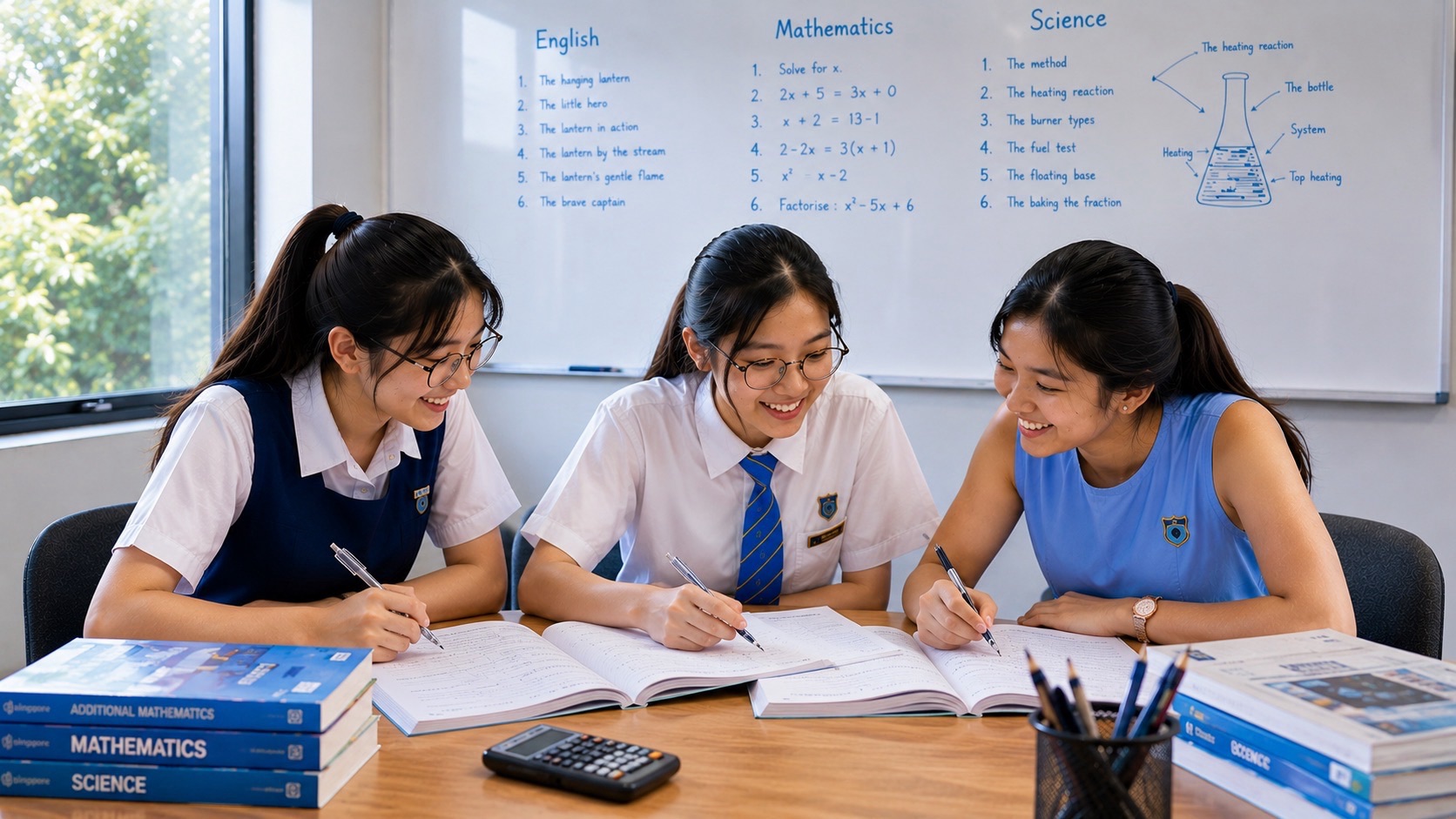
12. The Three-Student Scientific Literacy Lab
Small-group teaching works well when the roles make reasoning visible. Student A is the investigator: define the question and propose the method. Student B is the method critic: identify confounders, measurement problems and alternative designs. Student C is the evidence interpreter: decide what the data support, what they do not support, and how confident the group should be. Rotate roles every task.
The teacher’s questions should be consistent: What is the claim? What observation would distinguish these explanations? How are you measuring the variable? What comparison do you need? What could produce the same result? What uncertainty remains? What evidence would make you revise?
The goal is not a classroom of young people who imitate the language of scientists. It is a classroom in which students adopt the habits that make scientific knowledge reliable.
13. Capstone: Build a Civilisation Evidence File
Give each group a claim tied to a real civilisation system: “this water treatment reduces contamination”, “this material improves insulation”, “this intervention reduces disease transmission”, “this agricultural technique raises yield”, or “this energy-storage design improves reliability”. Provide a mixed packet of data, source summaries and incomplete information.
Students must define the claim, identify the mechanism, decide what evidence is relevant, evaluate study design, interpret a graph, identify uncertainty, locate at least one primary or authoritative source, and produce a conclusion with a confidence level. They must also state what evidence would change their conclusion. This last requirement makes the project scientific rather than rhetorical.
The capstone should reward revision. If a group changes its conclusion after finding stronger evidence, that is a success. The learning target is not stubborn consistency. It is evidence-responsive judgment.
14. The Standard We Are Trying to Build
The standard is a student who can meet an unfamiliar scientific claim and resist both gullibility and reflexive disbelief. The learner asks what was observed, how it was measured, whether the comparison is appropriate, what model connects cause to effect, whether the sample matches the population, whether independent evidence converges, and how much uncertainty remains.
That learner understands that science is powerful precisely because it does not depend on one person’s confidence. Instruments, methods, records, replication, criticism and shared standards allow knowledge to accumulate across generations. Civilisation gains not only facts, but a method for correcting itself.
Teaching scientific literacy is therefore teaching civilisation how to know. Properly taught, students leave not merely with more science content, but with a durable way to turn curiosity into evidence, evidence into explanation and explanation into decisions that remain open to revision.
15. Extended Transfer Practice
To make the capability durable, teachers should repeatedly remove the familiar subject label. Give students a nutrition headline, a bridge-failure report, a plant-growth dataset, a climate graph, a battery claim, an air-quality alert and an AI-generated scientific explanation. Require the same analysis every time. What exactly is claimed? What mechanism is proposed? Which variables matter? How reliable is the measurement? What comparison is available? Is the reasoning causal or merely correlational? What evidence would contradict the claim? What uncertainty limits action?
Students can maintain an evidence journal across the year. Each entry records the claim, source, method, strongest evidence, key limitation, confidence level and one piece of information that would make the student update. The journal reveals whether learners are becoming more precise about the boundary between what they know, what they infer and what remains unresolved. That boundary is one of the clearest markers of genuine scientific literacy.
FAQ: Teaching Scientific Literacy
Is scientific literacy the same as knowing many science facts?
No. Knowledge matters, but scientific literacy also requires investigation design, evidence interpretation, model evaluation, causal reasoning, uncertainty and source judgment.
Should every science lesson include an experiment?
No. Experiments are powerful, but many scientific questions are answered through observation, modelling, field studies, natural experiments and analysis of existing evidence.
How do we avoid making students think science is always uncertain?
Teach calibrated confidence. Some conclusions are tentative; others are supported by many independent lines of evidence. Uncertainty should be stated at the level the evidence justifies.
16. Additional Diagnostic and Repair Routines
A practical diagnostic bank should include deliberately flawed investigations. One uses no control. One changes two variables at once. One measures the wrong outcome. One samples only volunteers. One reports a graph with a truncated axis. One confuses absence of evidence with evidence of absence. One uses an expert outside the relevant field. One cites a press release instead of the original study. Students identify the precise failure rather than simply labelling the work “bad science”.
Repair follows diagnosis. Add a control, narrow the claim, change the instrument, improve sampling, seek replication, distinguish a model from direct measurement, or lower confidence. The repair language matters because it teaches students that weak evidence does not always require total rejection. Sometimes a claim becomes defensible after its scope is narrowed to what the evidence actually supports.
Teachers should also vary the consequence of the decision. A classroom prediction about which paper aeroplane flies farther tolerates more uncertainty than a decision about a medicine, public-health warning or structural safety. Students learn that verification effort should scale with the cost of being wrong. This “consequence-aware science literacy” helps them allocate attention intelligently outside school.
Finally, require students to explain scientific reasoning to a non-specialist. If they cannot translate the mechanism without losing accuracy, they may not understand it deeply. Communication is therefore part of scientific competence: a civilisation benefits from knowledge only when findings can move from specialists into engineering, medicine, policy, education and ordinary decision-making without becoming distorted.
17. Teach Reliability and Validity Separately
Reliability asks whether a measure or procedure produces consistent results under comparable conditions. Validity asks whether it is actually measuring the thing it claims to measure. A bathroom scale can be reliable but invalid if it always reads two kilograms too high; a survey can be internally consistent while failing to capture the intended construct.
Students should learn to diagnose both. Repeating an invalid measurement more times does not make it valid, while a valid concept measured unreliably can still produce noisy conclusions. This distinction transfers into psychology, health, education and social statistics.
18. Teach Internal and External Validity
Internal validity concerns whether the study supports the claimed relationship within the investigation. External validity concerns whether the result can be generalised to other people, places or conditions.
A tightly controlled experiment can have strong internal validity but limited relevance outside the laboratory. A large observational study may have broad relevance but weaker causal control. Students should learn that study quality has dimensions rather than one universal score.
19. Teach Selection Bias
Selection bias occurs when the people, objects or cases included in a study differ systematically from the population of interest. Volunteers, online respondents or surviving records may not represent everyone.
Give students a survey about school transport collected only from cyclists. The flaw becomes obvious. Then transfer the same logic to health surveys, product reviews and internet polls.
20. Teach Survivorship Bias
When we see only the cases that survived a process, our explanation can become distorted. Successful businesses, published studies, functioning machines and historical records are visible partly because failures disappeared.
Students should ask what missing cases would change the story. This is especially useful in entrepreneurship, history and engineering failure analysis.
21. Teach Confirmation Bias as a Design Problem
People naturally notice evidence that fits expectations and may overlook contradictory evidence. Scientific method reduces this risk by making predictions explicit, using controls, predefining methods and inviting independent scrutiny.
Students should practise writing what result would count against their hypothesis before collecting data. The act of defining a potential failure protects the investigation from becoming a search for confirmation.
22. Teach Observer Effects
Measurement can change the system being measured. People may behave differently when watched; sensors can alter physical conditions; repeated testing can affect learning.
Students should ask whether the method itself influences the outcome and whether that influence is large enough to matter. This creates a more realistic model of measurement.
23. Teach Instrument Drift
Instruments can change performance over time because of wear, temperature, calibration loss or software changes. Long-term scientific records therefore require maintenance and metadata.
Students can compare two measurement series and ask whether an apparent trend might partly reflect a change in equipment. This connects scientific literacy to institutional memory and quality control.
24. Teach Missing Data
Datasets often have gaps. Participants drop out, sensors fail, records are incomplete and historical archives are uneven. Simply ignoring missing data can bias results if the missing cases differ systematically.
At school level, students need not learn advanced imputation. They should recognise missingness, report it, and ask whether the missing cases could change the conclusion.
25. Teach Measurement Invariance
A measure used across groups or time should represent the same underlying construct consistently. If definitions or instruments change, comparisons can become misleading.
Students can examine a school survey whose wording changes from year to year. Even when percentages are available, trend interpretation becomes harder. Scientific literacy includes checking whether the ruler stayed the same.
26. Teach Base Rates
Rare events require careful interpretation. Even a highly accurate test can produce many false positives if the underlying condition is uncommon.
Use natural frequencies rather than formulas first: out of 1,000 people, how many truly have the condition, how many test positive, and how many positive results are actually true? This is a powerful bridge between probability and health literacy.
27. Teach Bayesian Updating Conceptually
Scientific reasoning often involves updating confidence rather than flipping from false to true. Prior knowledge matters, but strong new evidence can shift beliefs substantially.
Students can begin with a confidence estimate, receive new evidence, and explain why their confidence rises or falls. This makes revision visible and reduces all-or-nothing thinking.
28. Teach Multiple Working Hypotheses
Complex phenomena often have several plausible explanations. Instead of testing one preferred hypothesis, students can compare a set of competing explanations.
Ask what each hypothesis predicts and which observation would distinguish them. This practice reduces premature closure and strengthens causal reasoning.
29. Teach Converging Methods
Confidence increases when different methods with different weaknesses point toward the same conclusion. Laboratory experiments, field observations, modelling and historical records can converge.
Students should recognise that methodological diversity can be a strength. If all evidence comes from one instrument or one method, a shared bias may remain hidden.
30. Teach Triangulation
Triangulation compares evidence from multiple sources or methods to test whether a pattern persists. It is common in both natural and social sciences.
Students can triangulate a local air-quality question using sensor readings, weather data and official monitoring. Agreement does not prove perfection, but convergence can strengthen confidence.
31. Teach Mechanistic Evidence and Statistical Evidence Together
Statistical evidence can show that two variables are associated; mechanistic evidence can explain how the relationship could occur.
The strongest scientific conclusions often combine both. Students should not assume that mechanism alone proves prevalence or that statistical association alone proves mechanism.
32. Teach Cumulative Evidence
Science rarely rests on one decisive paper. Knowledge strengthens as studies accumulate, methods improve, replications succeed, and explanations survive criticism.
Teachers should sometimes present a timeline of evidence rather than a single study. Students see how civilisation builds confidence gradually.
33. Teach Scientific Disagreement Precisely
Experts may disagree because data are incomplete, methods differ, models make different assumptions or values enter at the decision stage.
Students should identify the locus of disagreement rather than conclude that ‘scientists disagree’ therefore nothing is known. Some parts of a field can be well established while important questions remain open.
34. Teach Frontier Science Versus Established Science
New research at the frontier is more uncertain than mature knowledge supported by decades of evidence. Media coverage can blur this distinction.
Students should ask whether a claim represents a preliminary result, an active debate, or a well-supported consensus. This improves calibration and reduces sensationalism.
35. Teach Negative Controls
A negative control is designed so that no effect is expected. If an apparent effect appears anyway, contamination, bias or measurement problems may be present.
Simple classroom experiments can use negative controls to show why absence of an expected effect is informative about method quality.
36. Teach Positive Controls
A positive control is expected to produce a known effect and checks whether the experimental system can detect that effect.
Students learn that a failed experiment may reflect the method rather than the hypothesis. Controls diagnose the experiment itself.
37. Teach Random Error and Systematic Error
Random error produces unpredictable variation; systematic error pushes measurements consistently in one direction.
Repeating measurements can reduce random error, but systematic bias often requires redesign or recalibration. This distinction helps students choose the right repair.
38. Teach Signal and Noise
Scientific data contain meaningful structure and irrelevant variation. Detecting signal requires suitable measurement, sample size and analysis.
Students can compare a weak pattern buried in noisy data with a strong pattern. They learn why overinterpreting small fluctuations is dangerous.
39. Teach Pre-Registration Conceptually
Pre-registration records questions, hypotheses and analysis plans before results are known. It reduces opportunities to reshape the method after seeing the data.
Students can use a simplified pre-registration sheet for investigations. This turns planning into a commitment that makes later deviations visible.
40. Teach Open Data and Transparency
When data and methods can be inspected, other researchers can check calculations, identify errors and extend the work.
Students should understand why privacy or security can limit full openness, but transparency remains a general scientific value where appropriate.
41. Teach Replication Failure Without Panic
When a finding fails to replicate, several explanations are possible: the original effect was weak, the replication differed, the population changed, or the phenomenon is context-dependent.
Students should compare methods before declaring either study invalid. Replication is an investigation, not a courtroom verdict.
42. Teach Scientific Communication as Compression
Research papers, abstracts, news stories and social posts compress the same evidence to different degrees. Each compression can lose caveats.
Students can trace one study through an abstract, press release and headline, identifying what disappeared. This connects science literacy with media literacy.
43. Teach Visual Evidence Carefully
Microscope images, satellite pictures and medical scans look direct, but they are produced through instruments, processing and interpretation.
Students should ask what the image represents, what colours or scales mean, what processing occurred, and whether the image is representative.
44. Teach Classification as Model Building
Scientific categories such as species, disease classes or rock types organise variation so that patterns become easier to study.
Categories are useful models, but boundary cases can exist. Students should understand both the utility and limitations of classification.
45. Teach Scale
Processes can behave differently at microscopic, human, ecological, planetary or geological scales.
Students should always ask what spatial and temporal scale the claim concerns. A mechanism that matters at one scale may average out or become irrelevant at another.
46. Teach Orders of Magnitude
Scientific reasoning improves when students can estimate whether a quantity is around ten, a thousand or a billion rather than treating all large numbers as equally huge.
Order-of-magnitude estimates help detect impossible claims and support quick reasonableness checks before exact calculation.
47. Teach Estimation Before Precision
Before using a calculator, ask students to estimate the expected range. If the final result falls far outside it, something may be wrong.
This habit catches unit errors, misplaced decimals and implausible model outputs. It is one of the simplest forms of scientific self-checking.
48. Teach Dimension and Unit Checking
Equations should make sense dimensionally. Adding metres to seconds is meaningless unless a defined relationship converts them.
Unit checking helps students detect algebraic mistakes and reinforces the idea that quantities are not just numbers.
49. Teach Conservation Principles
Mass, energy, charge and momentum conservation provide powerful constraints on explanations.
Students can use conservation thinking to reject impossible mechanisms before detailed calculation. Scientific laws narrow the space of plausible stories.
50. Teach Boundary Conditions
Models often work only within specified temperature, pressure, concentration, speed or scale ranges.
Students should learn to ask where a formula or model stops being reliable. Applying a correct model outside its valid range can still produce a wrong conclusion.
51. Teach Science Through Failure Analysis
Engineering and scientific failures reveal hidden assumptions. A material breaks, a sensor fails, a treatment underperforms or a model misses an extreme event.
Students should reconstruct the failure chain: expected behaviour, actual behaviour, missing variable, evidence and repair. Failure becomes a source of knowledge.
52. Teach Scientific Literacy as an Ethical Capability
Evidence can inform decisions but does not automatically determine values. Science may estimate risks and benefits while society still decides what trade-offs are acceptable.
Students should separate empirical findings from ethical or political judgments. This protects both science and civic agency.
53. The Final Transfer Standard
A mature student can enter an unfamiliar scientific problem, build a provisional model, identify relevant evidence, evaluate methods, quantify uncertainty and revise the explanation when stronger information appears.
That is the civilisation capability this lane is building: evidence-responsive judgment that remains curious, precise and corrigible.