
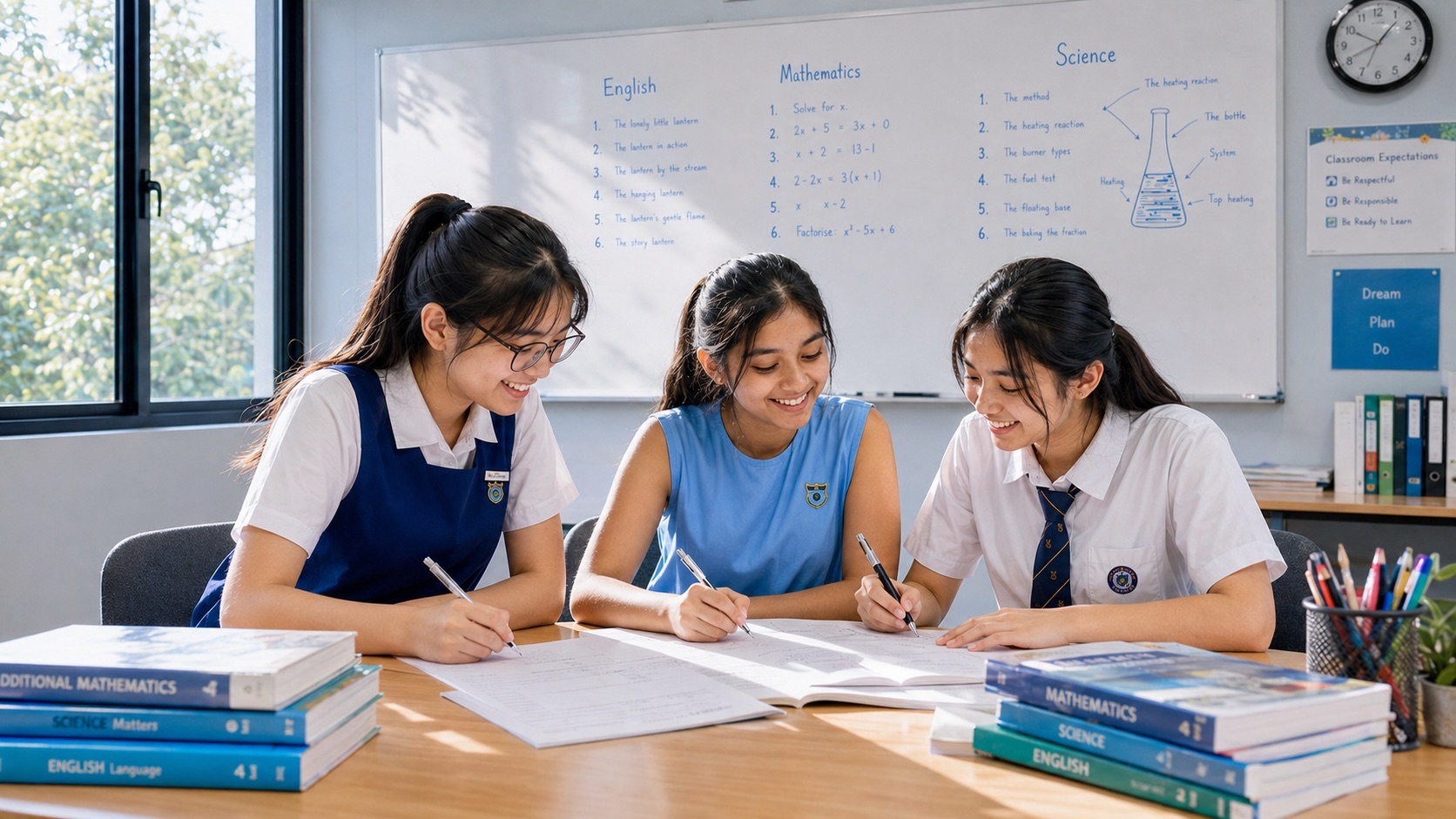
English matters when a headline catches our attention but leaves the evidence underneath unfinished. Reading comprehension, media literacy and critical reading skills help a student understand what an article actually claims, what it supports and what remains uncertain. That can make learning, conversation and sharing information more thoughtful.
For families searching for the importance of English, critical thinking in English or ways to understand online information, headlines offer a practical starting point. A reader does not need to become suspicious of everything. They need enough language control to distinguish a possibility from a certainty, one example from a general pattern, and a writer’s interpretation from the evidence being discussed.
This guide explores the value of English through the gap between an attention-grabbing summary and the fuller account. It supports Why English Matters. For the wider learning programme, continue through Media Literacy Education and the established Digital Literacy Education guide. All sample headlines and datasets below are invented teaching examples, not reports about real schools, products or research findings.
Find a section in this guide
- A headline is an invitation to read
- The verb tells you how strong the claim is
- Scope words decide who the statement covers
- Find the comparison hidden inside “better”
- Attribution tells you who is making the statement
- Evidence and interpretation do different jobs
- A sequence is not automatically a cause
- Dates are part of meaning
- Pictures and captions need to be read together
- Follow the claim back to its source
- Repetition does not create independent confirmation
- A worked headline comparison keeps curiosity alive
- Retelling should preserve the important limits
- Disagreement can begin with the wording
- Recognise when the headline is supported
- Parents can model changing a conclusion
- A student can check one claim before sharing
- English examination skills have everyday uses
- Digital summaries still need accountable reading
- School and career decisions need fuller accounts
- Look for progress in the reader’s questions
- Frequently asked questions
- Read next and keep the discovery useful
A headline is an invitation to read
Imagine a fictional headline: “New Reading Club Transforms Student Results.” It sounds exciting, and a parent may immediately wonder whether their child should join a similar activity. However, the headline has not yet established which students participated, what changed, how the change was measured or whether the club caused it.
Opening the article is the next useful step. Perhaps the text describes a small voluntary group, a teacher’s observation or a change in one particular task. Those details do not automatically make the story worthless. They tell the reader how much the headline can reasonably carry. English helps the reader notice the difference between the title’s broad promise and the account’s actual scope.
A headline has limited space and usually aims to attract attention. The reader should therefore avoid treating it as a complete explanation. Ask, “What would I need to know before acting on this?” That question creates a reason to read beyond the first line instead of either accepting or dismissing the story immediately.
Did you know? A headline can be grammatically clear and still be informationally incomplete. The missing information may concern the people, comparison, time period or evidence. Good English reading is therefore more than decoding a sentence correctly. It includes recognising which questions the sentence has not yet answered.
The verb tells you how strong the claim is
Could, may, suggests, shows and proves express different levels of commitment. A report saying that an activity may help is not making the same claim as a report saying that the activity always works. When a summary changes the verb, it can change the apparent certainty even if the topic stays the same.
Consider two invented statements: “The results suggest a possible connection” and “The results prove the cause.” The second claims much more. A student should ask whether the evidence in the article justifies that stronger wording. The useful task is to connect the verb with the support, not memorise that one verb is always acceptable and another always wrong.
Sometimes a confident verb is appropriate. A direct observation may support a definite account of what happened. At other times, a cautious verb preserves a real limitation. English helps readers recognise those differences and avoid converting every uncertain finding into a promise or every confident statement into something suspicious.
For practice, ask the learner to compare the headline’s verb with the article’s conclusion. If one says “will” and the other says “may”, discuss what changed. The child can explain the difference in ordinary language: the headline presents an expected outcome, while the article leaves the outcome uncertain.
Scope words decide who the statement covers
Some, many, most and all cover different sets of people or cases. “Some students found the activity useful” does not establish that every student will benefit. A reader who overlooks the scope word may turn a limited observation into a broad claim about all learners, including a child whose needs are different.
The same issue appears when a statement concerns one school, one age group or one setting. A result from that group may be interesting, but applying it elsewhere requires judgement. Ask, “Who was actually included?” and “Who is the headline inviting me to imagine?” Those questions make the generalisation visible.
In an invented survey, 18 of 30 participants say that a workshop helped them understand one task. That establishes a response within that sample. It does not establish that 60 percent of all students everywhere would benefit, or that the workshop improved examination results. The wording should preserve what the numbers actually describe.
English matters because it keeps the boundary of a claim available for discussion. A student can say, “This describes the participants in the survey, not every student.” That sentence is simple, but it prevents a substantial change in meaning. Accurate scope can be more valuable than an impressive phrase.
Find the comparison hidden inside “better”
Better, faster, higher and more effective need a reference point. A fictional headline saying that students read faster leaves open faster than what: their previous pace, another group’s pace or a particular target? The comparison affects how the reader understands the result and whether it relates to their question.
Look in the article for the baseline. If a group read 80 words in one minute before an activity and 90 afterwards, the reported pace increased within that group. The reader still needs to know whether understanding remained accurate and whether the conditions were comparable. Faster reading alone does not tell the whole learning story.
This example is deliberately narrow. It shows how a numerical comparison can be described accurately without becoming a claim that a particular programme works. Students can practise asking what was measured and what was not. The questions turn a vague improvement word into a more specific statement.
Parents can use this distinction when discussing education claims. Ask which performance changed, how it was observed and whether the comparison is relevant to the child. English reading helps make the evidence usable. It does not require accepting every number as meaningful or rejecting numbers because they need explanation.
Attribution tells you who is making the statement
An article may report what a researcher found, what a company says, what a witness recalls or what the writer concludes. These are different sources of a statement. The reader needs to preserve the attribution when retelling the story. “The organiser said…” should not quietly become “It has been independently established…”
Ask who supplied the information and what position they occupy. A participant can describe their experience. An organiser can explain the programme’s intended purpose. A researcher can report a study within its stated design. None of these roles automatically answers every question about effectiveness, relevance or cause.
This does not mean that interested people can never provide useful information. It means the reader should know whose perspective is being presented. English phrases such as according to, reported, observed and argued help keep that perspective visible. Losing them can make a source’s opinion sound like the article’s verified conclusion.
Students can practise with a short retelling. Begin, “The article reports that…” Then specify the person or source for the main claim. If the article does not identify one, that is a useful observation to record. A missing attribution calls for further checking, rather than an immediate confident judgement about the claim’s truth.
Evidence and interpretation do different jobs
Evidence is the information offered to support a claim. Interpretation explains what someone thinks that information means. Both can be useful, but they should not be collapsed. A photograph might show a crowded event. The interpretation that the event was educationally effective requires something more than attendance visible in the image.
In a fictional school story, students submit more library borrowing requests after a reading display. That observation may suggest increased interest in borrowing. It does not independently show that every borrowed book was read or that comprehension improved. The interpretation needs to stay close to what the evidence can support.
Ask the learner to divide a short account into “what was observed” and “what was concluded”. Then discuss the connection. Is the conclusion a reasonable possibility, a strong inference or a statement that reaches beyond the observation? The aim is a thoughtful judgement, not automatic rejection of every interpretation.
English helps make the connection explicit. “This may indicate greater interest, but it does not measure understanding” preserves both the useful signal and its limit. The sentence supports a more constructive conversation than “The story is fake” or “The story proves everything.” Careful reading creates room for proportionate conclusions.
A sequence is not automatically a cause
If one event happens before another, the first may have contributed to the second, but sequence alone does not establish that relationship. A student who begins reading more and later receives a better mark may have changed several habits, encountered a different paper or received other support during the same period.
A headline can compress that complexity into a simple cause. The reader’s task is to ask what the account actually establishes. Does it compare alternatives? Does it describe other changes? Does it discuss a limitation? Students need not master research design before noticing that “after” and “because of” make different claims.
Use an invented example: a class begins a new discussion routine, and participation rises the following week. That is an observed sequence in the story. To claim that the routine alone caused the increase would require further support. The reader can remain interested in the routine while keeping the causal claim provisional.
This distinction gives English a practical role in education decisions. Families can explore a promising idea without treating one account as a guarantee. The language of contribution, possibility and uncertainty helps preserve options while encouraging questions about the evidence that would make the decision more secure.
Dates are part of meaning
A report may describe a past policy, an announced change or a currently operating arrangement. Those are different states. An old article can remain informative about history while no longer supplying the current requirement a family needs. Reading the date and the account’s time language helps prevent that confusion.
Look for when the article was published and when the event happened. Then check whether it describes a proposal, a confirmed plan or implementation. “Will introduce” does not mean “already available”. “Previously required” does not mean “currently required”. These ordinary words can change the practical consequence of the page.
For school admissions, examination arrangements and programme availability, use the relevant current official source before acting. This article does not supply a live admissions table. Its purpose is to explain why careful English reading helps a student identify which cycle and arrangement a source is discussing.
Ask the learner to retell the state accurately: “This page announced a future change” or “This account describes what happened last year.” The sentence keeps time attached to the claim. That habit matters whenever an appealing headline travels through a chat or search result without its original date.
Pictures and captions need to be read together
An image can attract attention before the reader reaches the article. The caption may explain where and when it was taken or identify it as an illustration. Ignoring that information can lead someone to treat a general stock image as evidence of the particular event being discussed.
Ask what the image actually establishes. Does it show the named situation, a related setting or a visual idea chosen to accompany the text? An image of students reading does not independently prove the educational result in a headline. The picture and claim may relate without one verifying the other.
This is a language task because captions, labels and surrounding text provide context. A student can compare “students at the event” with “an illustrative classroom scene”. The difference should remain in their retelling. They can enjoy the image while understanding its informational role accurately.
For classroom practice, use a clearly invented example and provide two alternative captions. Ask how the captions change what a reader may conclude. This gives the learner a manageable way to discuss visual information without requiring them to investigate a real person’s photograph or make unsupported accusations about an actual publication.
Follow the claim back to its source
A summary may link to an original report, official page or research paper. Following that link can reveal details omitted from the summary. The source may use narrower language, describe a particular group or explain conditions which the headline does not mention. Reading directly reduces reliance on another person’s compression.
However, the original source may be difficult. Students can begin with the section relevant to their question, identify unfamiliar terms and ask for help. The goal is accurate understanding, not performing independence by pretending to understand technical language. A carefully stated uncertainty is a useful outcome of reading.
The National Library Board’s advanced S.U.R.E. courseware names Source, Understand, Research and Evaluate as information-literacy concepts. Its materials include distinguishing fact and opinion, navigating resources and evaluating information. This official framework provides a useful wider route; the sample cases in this article are original educational examples.
Use the framework’s questions proportionately. A casual low-stakes fact may need a quick check, while a decision about an education route deserves the relevant official information. English helps the learner identify the claim and formulate the check. It does not remove the need for subject knowledge or a reliable source.
Repetition does not create independent confirmation
Several pages may repeat the same original report. Seeing the claim in many places can make it feel independently confirmed, yet the pages may all rely on one account. The reader should ask whether there are separate sources or simply several summaries of the same source.
In an invented example, four blogs report that a school activity improved participation. Each links to the same organiser’s announcement. The reader has found four presentations, but only one underlying account. That account may still be useful; the important point is to describe the evidence accurately.
English helps preserve the relationship: “Several pages repeat the organiser’s report” is different from “Several independent studies reached the same conclusion.” A student does not need a technical research vocabulary to notice this distinction. They need to track who said what and where the information began.
This habit also improves school projects. A learner can avoid counting repeated summaries as separate evidence and can acknowledge the actual source. For wider project communication, continue through Group Projects and Useful Feedback. Shared work becomes easier to improve when the group knows which evidence it actually has.
A worked headline comparison keeps curiosity alive
Consider the fictional headline, “Daily Reading Makes Every Student More Confident.” The account says that 12 students voluntarily joined a four-week reading circle and that nine reported feeling more comfortable discussing books afterwards. The headline and account describe related ideas, but their scope and evidence differ.
The account concerns the participating group, a short period and a reported feeling about book discussion. The headline concerns every student and confidence generally. It also presents a causal certainty. A careful reader can identify these differences without denying that the participants’ experiences are interesting.
A more proportionate summary would be: “Most participants in the small reading circle reported greater comfort discussing books after four weeks.” That preserves the sample, task, time and self-report. It does not establish a universal effect or independently identify which feature of the circle contributed to the change.
Ask the learner what they would investigate next. They might ask what the sessions involved, how participants were selected or whether the comfort continued. The exercise shows a positive purpose for critical reading: it produces better questions. Curiosity becomes more informed, rather than disappearing into either unquestioning enthusiasm or blanket disbelief.
Retelling should preserve the important limits
When students share a story, they naturally shorten it. The challenge is to keep the limits that change its meaning. Removing a phrase such as “in this small group” may make the summary smoother while turning a local observation into a general claim. A useful retelling must balance brevity and fidelity.
Ask the student to include the source, central finding and one meaningful limit. “The organiser reported that most participating students enjoyed the workshop; the account did not measure later learning.” This gives listeners useful information without pretending that the article answered questions it never investigated.
Do not require every casual conversation to include a full evidence report. Match the precision to the claim and its likely consequence. If the student is recommending an education programme or repeating a claim about a group of people, preserving the evidence and scope becomes particularly worthwhile.
The broader Digital Literacy Education guide remains the established route for information practices. This article’s importance question is narrower: how does English help a person keep a story’s meaning stable as it moves from a headline into a conversation?
Disagreement can begin with the wording
Two readers may disagree because one remembers the headline and the other remembers the qualification in the article. Before debating who is right, compare the actual wording. Ask which statement each person is evaluating. They may discover that they are discussing different claims rather than interpreting the same evidence differently.
Useful phrases include “The headline says…, while the article says…” and “I am agreeing with this narrower point, but not with that broader conclusion.” These statements make the disagreement more precise. They also reduce the need to defend a whole position when only one part requires correction.
Keep the tone respectful. A person who repeated a headline may not have intended to mislead anyone. Offer the missing context and let the conversation develop. English is useful not only for detecting an overstatement, but also for correcting it in a way that leaves room for the other person to revise their understanding.
If evidence remains uncertain, say so. “We have not found enough information to decide” can be an accurate conclusion. The learner should not feel compelled to replace every disputed claim with a confident alternative. Careful reading sometimes ends with a clearly identified question that still needs a reliable answer.
Recognise when the headline is supported
Careful reading should also identify a well-supported headline. Suppose a fictional headline says, “Library Opens a New Reading Room on Monday.” The account identifies the library, gives the opening date and links to its official announcement. If the current announcement confirms those details, the reader has a sensible basis for the narrow statement.
There is no need to invent doubts merely to sound analytical. The relevant questions have been answered: which place, what change and when. A different claim, such as “The new room will improve every visitor’s reading”, would need different evidence. The reader should judge the claim actually made rather than demand that one announcement establish every possible benefit.
This distinction is useful for students who begin to equate critical reading with finding something wrong. Ask what the source does establish before asking what it does not. The learner can recognise a reliable detail, preserve its conditions and use it appropriately. Good judgement includes accepting adequately supported information as well as questioning an overstatement.
The same principle applies to school notices. A clear official instruction about a particular activity can support preparation for that activity. It does not need to answer unrelated questions about the school’s overall quality. English helps the reader match the size of the conclusion to the job the source can reasonably perform.
Parents can model changing a conclusion
An adult can say, “The headline made me think the programme was available now. The article says it is planned for a later date.” That demonstrates how reading changes a conclusion. The child sees that revision is part of understanding, not a humiliating admission that the adult should have known everything immediately.
Choose ordinary, age-appropriate examples. A notice about an event or a fictional education claim can provide useful practice. Avoid making a young child responsible for evaluating complex adult decisions. The purpose is to develop a habit of checking meaning within material they can reasonably understand.
Ask one question at a time. “Who does this describe?” may be enough for one conversation. Another day, ask what the number measures. Turning every interesting article into a long interrogation can make reading feel joyless. Curiosity, humour and enjoyment belong alongside careful judgement.
For a wider home-learning discussion, use the Parent’s English Education Operating Manual. Let the child explain what they noticed. A small accurate observation can be recognised warmly without demanding a sophisticated critique of the whole publication.
A student can check one claim before sharing
Start by writing the main claim in a sentence. Then identify the person or group it concerns, the evidence provided and the source. Finally, ask whether your planned message preserves those details. This is a manageable check for a student sharing an education story or using it in a school discussion.
A short checklist can keep the process visible:
- What exactly is being claimed?
- Who or what does it apply to?
- What evidence is offered?
- Does my summary make the claim stronger?
The fourth question is particularly useful. A student may inadvertently replace “may help” with “works” or “participants” with “everyone”. Checking the summary catches a meaning change before it travels further. It also gives writing accuracy a practical purpose beyond pleasing a marker.
This routine is a suggested teaching tool, not a guarantee that every false claim will be recognised. Some information requires expert knowledge or further investigation. The useful habit is knowing what was checked and what remains uncertain. Share that uncertainty when it materially affects how another person might use the information.
English examination skills have everyday uses
Reading passages asks students to attend to wording, reference, tone, evidence and inference. Those abilities can also help with public information. A learner who checks whether an answer is supported by the text is practising a discipline that remains useful when a headline invites them to make a broader judgement.
The contexts differ. An examination supplies a particular text and task, while online reading may require finding the source and comparing information across pages. Students should therefore avoid assuming that examination performance automatically establishes strong media literacy. The connection is a useful opportunity for transfer, rather than proof that transfer happens without practice.
Discuss the connection with a familiar task. Ask how the learner distinguishes a stated fact from an inference in a passage. Then apply the same question to an invented short article. The student can discover that a school skill has a practical role, while noticing the additional source-checking demand in the new context.
For explicit comprehension work, choose the established teaching guide that matches the learner’s need. This importance article should help explain the purpose of the skill. It does not need to become another complete examination course or make claims about the format of a cohort’s current English paper.
Digital summaries still need accountable reading
Search snippets and automatically produced summaries can make information easier to approach. They also compress the original material. A learner should compare the summary with the source before relying on a cycle-sensitive requirement or a consequential claim. Convenient wording does not remove the need to understand where it came from.
Ask whether the summary preserved the date, condition and group. If those details are missing, open the relevant official source or original report. The student’s English reading skills remain useful because they need to identify what was omitted and phrase the question that would resolve the uncertainty.
When a summary supplies a citation, check that the linked page actually supports the claim. A related topic is not automatically evidence for the stated conclusion. Students can practise this distinction with a small invented case: a page describing a club’s aims does not independently prove that the club achieved those aims.
Keep responsibility visible in schoolwork. Follow the school’s actual rules about tools and attribution. The learner should be able to explain the information they use, rather than submit fluent text whose claims they cannot support. English matters as a means of understanding and judgement, even when software helps produce language.
School and career decisions need fuller accounts
An appealing headline about a school or career may start exploration, but the decision needs the actual programme and relevant official requirements. Students should read what is offered, who is eligible and which cycle applies. A broad story about success does not establish that a particular route fits every learner.
This is where language precision becomes practically valuable. Required differs from preferred. Announced differs from available. Indicative differs from guaranteed. Reading those distinctions helps a student formulate useful questions for an institution, while preserving the difference between general inspiration and current decision information.
For that decision stage, continue through Reading Course and Career Information. It is the established article for comparing course descriptions and career information. This guide explains the earlier moment when a headline attracts attention and the reader decides how much its claim can carry.
The connection is optimistic. Good English gives the student more ability to investigate a promising possibility directly. They can remain excited while asking better questions. Thoughtful reading protects curiosity from becoming either an unsupported promise or a reason to dismiss an option before understanding it.
Look for progress in the reader’s questions
Progress may first appear when a learner asks who a claim describes, notices that the headline dropped a condition or checks what a number measures. These are observable reading actions. They show the student becoming more active in understanding the account rather than merely repeating its most memorable phrase.
The learner may also revise a summary independently. “I wrote ‘all students’, but the article says ‘the students who joined’.” Recognise the specific correction. The student has preserved scope, which makes the information more accurate. This is useful growth even if the topic itself is simple.
Avoid rewarding cynicism as though it were critical thinking. A reader who dismisses every story without examining it has not necessarily evaluated evidence. Encourage proportionate conclusions: a claim may be well supported, partly supported, uncertain or unsupported by the available account. The language should match that judgement.
Over time, offer different materials: a short article, a school notice, an infographic or an official page. Keep the learning demand clear and manageable. The student gains opportunities to use reading skills in varied contexts without being expected to become an expert on every subject they encounter.
Frequently asked questions
Should my child distrust headlines?
Treat a headline as a starting point. It may accurately summarise the account, but it cannot contain every detail. Read further when the claim matters. Ask what the article supports and which limits affect the conclusion. The aim is informed curiosity, not a rule that every headline is either trustworthy or misleading before its evidence is read.
Does strong English guarantee that someone spots misinformation?
Language skills help identify a claim and its qualifications, but subject knowledge, source quality and judgement also matter. A fluent reader can still accept a weak claim. Teach the student to connect wording with evidence and recognise when a reliable source or expert explanation is needed. No single reading routine resolves every difficult information problem.
What if the original source is too technical?
Begin with the part relevant to the question and seek a reliable explanation of unfamiliar terms. Preserve the uncertainty rather than guessing. A teacher can help an older learner compare a summary with the source’s stated conclusion and limitations. Understanding one relevant section accurately is more useful than pretending to understand the entire document.
Is a personal story useful evidence?
A personal story can describe an individual experience and generate useful questions. It does not automatically establish a general effect for everyone. Ask what the person experienced, how that experience relates to the claim and what further evidence would be needed for a broader conclusion. Respect the story while keeping its scope clear.
How can we practise without making reading tedious?
Choose one interesting, age-appropriate item and ask one meaningful question. Compare a headline with the article’s conclusion or identify what a number measures. Let much family reading remain enjoyable and conversational. A brief accurate observation can build the habit without turning every story into a formal lesson.
What should a student do before using a claim in a project?
Find the source, identify the claim and check whether the evidence supports the wording they plan to use. Keep dates and conditions where they matter. Acknowledge sources according to the teacher’s instructions. If the claim remains uncertain, qualify it or choose a better supported point instead of making the sentence sound more confident.
Read next and keep the discovery useful
Use Why English Matters for the broader importance discussion. Continue through Digital Literacy Education for the established information-learning route and NLB’s S.U.R.E. courseware for official information-literacy materials.
For interpreting a scientific account, Explaining Scientific Evidence connects observations, claims and conclusions in a subject context. Choose it when that is the actual learning need. A useful next link should help the reader continue the question they already have.
The next time a headline interests you, keep the interest and open the fuller account. Find one phrase that limits or strengthens the claim. English matters because that phrase can change what the story means and what you sensibly do with it. Careful reading lets curiosity travel with understanding.