
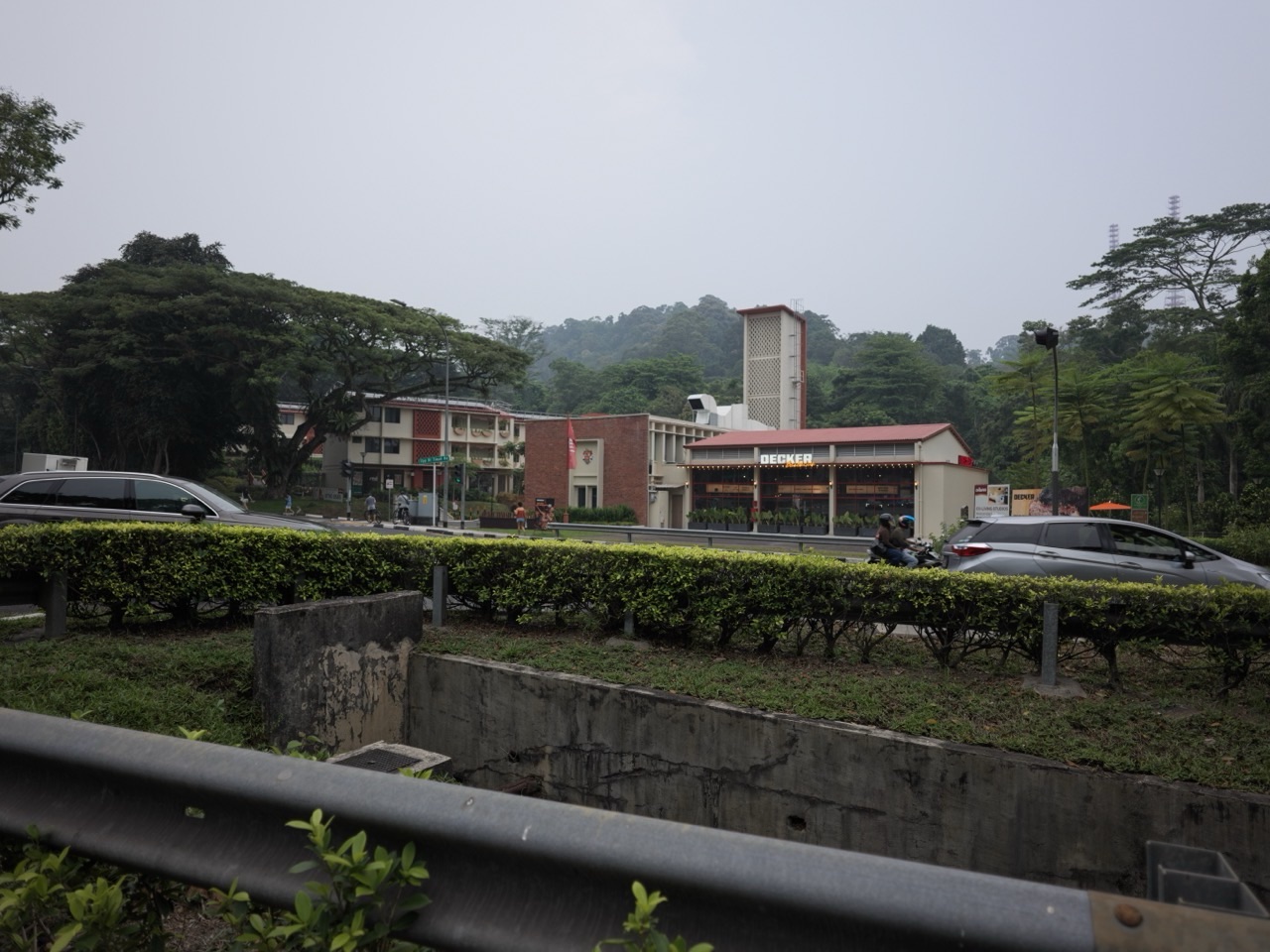
Former Bukit Timah Fire Station, at 260 Upper Bukit Timah Road, connects the neighbourhood’s emergency-service history with a newer chapter of community use. Built in 1956 and retired from firefighting operations in 2005, it is a place to explore how a working civic building can take on a different role without losing its identity.
For readers searching for Bukit Timah Fire Station history or things to do in Upper Bukit Timah, the key current distinction is simple. URA’s page updated on 24 June 2026 says a community space for recreation, learning and co-living opened in 2025. It describes the visitor centre and eco-pedestrian bridge as plans for a later phase, rather than completed visitor facilities.
Start with the building’s story, then plan any outing around confirmed access and the particular venue or activity you want to use. A historic site can be partly residential, partly commercial and partly public; its new identity does not mean every room or outdoor area is available to walk through.
Choose your reading route
1. A useful timeline: service, closure, conservation and reuse
| Date | What changed | Source |
|---|---|---|
| 1956 | Fire station built | NHB heritage booklet |
| 2005 | Firefighting operations ceased | NHB heritage booklet |
| 2019 | Gazetted for conservation under Master Plan 2019 | URA circular |
| 2025 | New community space opened | URA’s June 2026 update |
These four milestones answer different questions. Construction tells us when the facility was established. Operational closure tells us when its original work ended. Conservation concerns the treatment of the historic building. Reuse concerns what happens there afterwards.
Keeping those dates separate makes the story easier to understand. A building can stop serving its original purpose years before a new role is agreed, implemented or opened. The intervening period is part of the history too.
The dates above are drawn from the National Heritage Board’s Bukit Timah Heritage Trail booklet, URA’s Master Plan 2019 gazette circular and URA’s current Rail Corridor account. Read the sources with their dates in mind; older announcements can contain schedules that later changed.
2. Look at the building before looking for an attraction
NHB describes the station’s streamlined Modernist design in tan brick, its firefighters’ quarters and a coat of arms from Singapore’s Crown Colony period. Those details provide a more specific starting point than simply calling the building “old”.
On a permitted visit, begin with the overall form. Which parts appear arranged around the original working function? Which details seem intended to give a public building a recognisable identity? Treat these as observation questions, and check interpretation panels before assigning a precise purpose to a feature.
Then look for the relationship between the main building and the quarters. A fire station’s story includes people who worked there, not just appliances and doors. The presence of accommodation is a reminder that a civic facility could also be a living environment.
You need not enter every space to appreciate the exterior. From an appropriate public viewpoint, a quick sketch of the building’s shape can be more informative than a hurried set of photographs. Label only the features you can identify confidently.
3. What adaptive reuse means at this site
Adaptive reuse means finding a new function for an existing building. At the former station, URA now describes a lifestyle and co-living hub and a community space for recreation and learning. See URA’s description of the transformed site.
The interesting question is how a new use relates to the old structure. Does a visitor still recognise the original building? Can the new activity fit without making the history difficult to read? These are useful ways to assess reuse, rather than assuming that any change is either a complete loss or a complete success.
A meal, event or workshop can bring people into contact with a historic place. But participation in a new activity is different from a dedicated historical tour. If history is your main reason for going, prepare with the official account and look for reliable on-site interpretation.
Co-living also changes how you should move through the site. Residential areas deserve the same privacy as any other home. Public-facing businesses and community spaces should be used according to their own access arrangements.
4. The visitor centre and bridge: read the status carefully
URA’s June 2026 account says plans are underway for a visitor centre and an eco-pedestrian bridge connecting the node and Rail Corridor to Bukit Batok Nature Park in the next development phase. That wording matters.
A planned connection is not a route to put into an itinerary as though it already exists. Likewise, a proposed visitor centre should not be advertised as an operating museum or information counter without a later source confirming it.
This distinction is especially useful when browsing photographs. A completed site photograph, an architectural rendering and a historical image may appear on the same planning page. Read the caption before deciding what the image shows.
For a visit now, use current maps and official access notices. If an older article promises a direct connection that you cannot confirm, plan around a verified route. The larger idea of linking heritage and nature can still be appreciated while particular works remain future plans.
5. Things to do: choose one activity and one history question
A comfortable outing starts with a concrete purpose. Choose an open public-facing venue, a confirmed event or an exterior heritage stop from a permitted viewpoint. Check its current hours and booking requirements directly before travelling.
Then add one question: “What changed when this building stopped being a fire station?” Look for an answer in the surviving architecture, the official history and the present use. A useful visit can involve all three without becoming a full-day excursion.
Allow time for arrival and a pause. If you intend to continue to a nature area or the Rail Corridor, plan that walk separately with its operator’s current maps and conditions. Proximity on a map does not guarantee a direct, open or accessible pedestrian connection.
Keep the wider Upper Bukit Timah history in view with our Fuyong Estate history guide. For the broader sequence of road, forest, railway and wartime sites, use the Bukit Timah history timeline.
6. Quick questions before you visit
Where is the former station? URA’s conservation portal identifies its historic address as 260 Upper Bukit Timah Road. View the official building entry. Use a current map for the entrance you need.
Can I attend a fire-station open house here? The building’s firefighting operations ended in 2005. For an operational-station visit, consult current SCDF information instead of treating this heritage site as a working station.
Does conservation mean it is a national monument? Do not use the terms interchangeably. The status established by the URA source used here is conservation under Master Plan 2019.
Are all new facilities complete? The dated URA account distinguishes the community space that opened from later planned facilities. Recheck the official page for any subsequent update before setting out.
That is the pleasure of reading a place carefully: you can enjoy its new life while keeping its earlier purpose visible. For more on the original role, continue to our earlier article on Bukit Timah’s suburban fire-service infrastructure.