
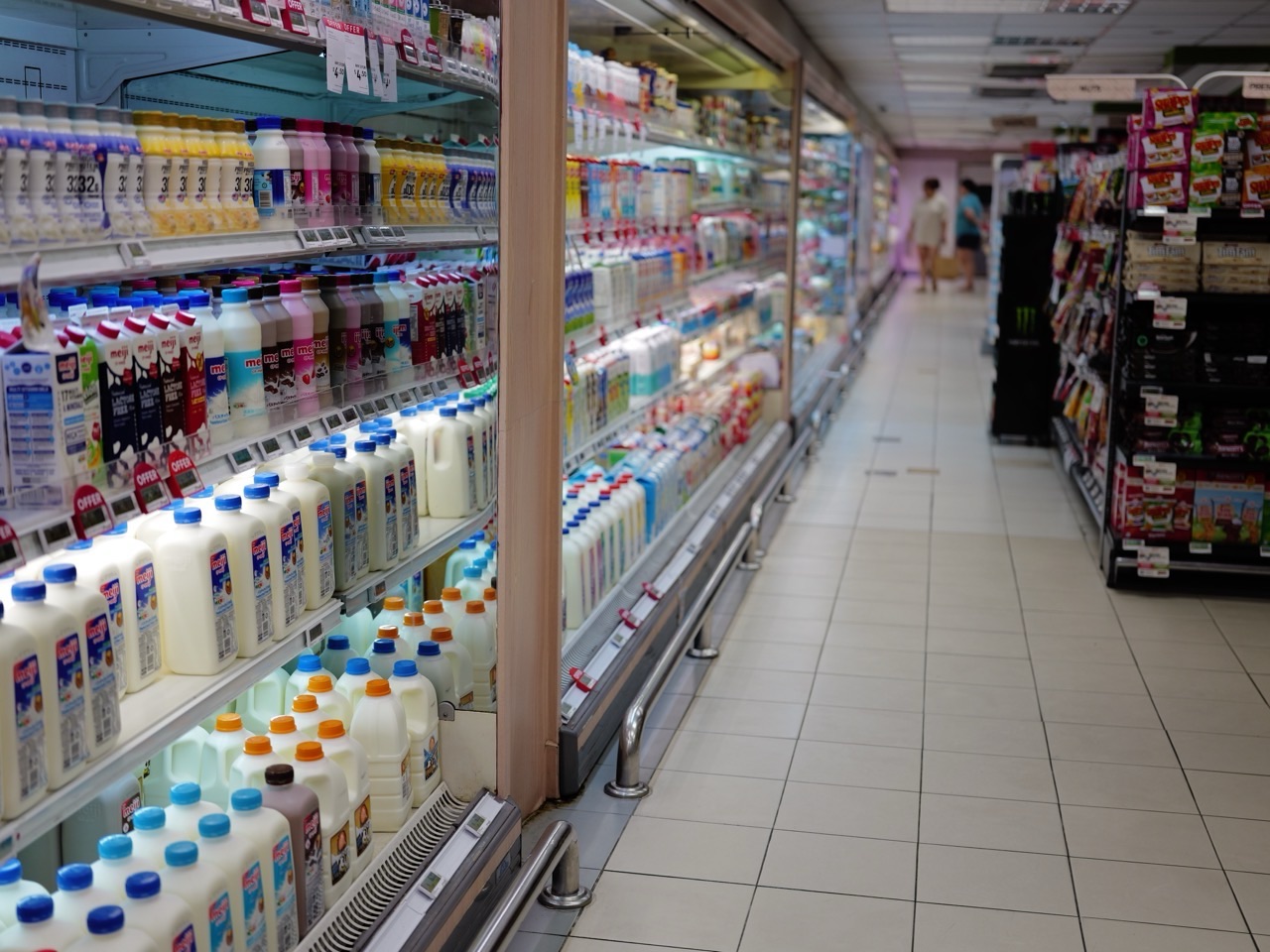
Why does milk turn into thick, sour yogurt? Selected lactic acid bacteria metabolise lactose and generate lactic acid during yogurt fermentation. As the pH of milk falls, its casein protein particles become less stable as separate dispersed structures and begin forming a network that traps water, creating a soft gel. Milk starts around pH 6.6 in a typical example; many yogurt systems acidify towards roughly pH 4.6, near the isoelectric region of casein proteins. The change in texture is not simply “water freezing” or “milk evaporating”. It involves biological metabolism changing acidity, followed by protein interactions and a three-dimensional structure forming within the liquid.
For Hougang parents and students searching for the Chemistry of yogurt, why milk curdles, lactic acid fermentation, casein proteins, pH and food Science explanations, Secondary school Science tuition or a Chemistry tutor, the most useful first questions are what the bacteria consume, what acidic products form, and why pH affects proteins. This guide explains lactose, lactic acid, milk protein gelation, why yogurt tastes sour, why water sometimes separates on top and how intentional fermentation differs from spoiled milk. It connects Science, Biology, Chemistry and food technology with worked questions, reliable dairy research and the eduKate Hougang learning library. Yogurt manufacture is a real-world enrichment example, not a claim that detailed dairy fermentation processes are directly examinable in every Singapore Chemistry syllabus.
A spoonful of yogurt contains a whole chemical story
Imagine a student opening a yogurt cup during a break in Hougang. The yogurt is cool, slightly sour and thick enough to stay on a spoon.
How did a fairly runny liquid become something like a soft gel? The label may mention milk and live cultures, but those words do not yet explain the transformation.
The answer crosses several scientific levels. Microorganisms change which molecules are present. The resulting acidity changes interactions between proteins. The proteins form a network that changes the material’s texture.
When those levels are connected, food becomes a remarkably accessible classroom for Chemistry. The same student can learn about pH, acids, proteins, reactions, colloids and the difference between an observation and the mechanism producing it.
Milk is a mixture, not a single substance
Milk contains water, lactose, proteins, fat droplets, minerals and other components. It is not one pure molecular compound with a single chemical formula.
The water provides the liquid environment. Lactose is a carbohydrate. Proteins include caseins and whey proteins, and fat is dispersed in droplets whose structure contributes to texture.
The mixture can appear uniform to the naked eye while still containing microscopic structures such as casein micelles and fat globules.
That is a useful correction to the school distinction between pure substance and mixture. A white liquid need not be a pure chemical compound merely because it looks uniform.
A student should describe milk as a complex biological mixture and avoid claiming that every component is molecularly dissolved in exactly the same way as sugar in water.
What is lactose?
Lactose is the characteristic sugar in ordinary mammalian milk. It is a disaccharide built from glucose and galactose units.
The chemical formula of lactose is C₁₂H₂₂O₁₁. Its constituent monosaccharides are connected through a glycosidic linkage.
The bacteria involved in conventional yogurt cultures can metabolise lactose through enzymatic pathways, generating lactic acid and other metabolic products according to organism and conditions.
It is not necessary for a Secondary 1 student to memorise every biochemical intermediate in this process. The meaningful chain is sugar as starting material → bacterial metabolism → acidity increases.
For older students, the molecular structure of lactose can be linked to carbohydrate Chemistry and enzymatic catalysis.
Which bacteria are usually involved?
Traditional yogurt cultures commonly include Streptococcus thermophilus and Lactobacillus delbrueckii subsp. bulgaricus, which are associated with fermentation and acid production.
Different commercial yogurt products may use additional cultures or manufacturing approaches. A particular label or product standard determines which organisms a specific product contains.
The scientific point is that selected microorganisms are used deliberately to create a desired change in food composition and texture.
This is very different from assuming that any random microorganism growing in milk will produce safe yogurt. Uncontrolled spoilage can involve unwanted microbes and unsafe food.
Food fermentation should use appropriate food-safe cultures, controlled processing and food-safety standards, rather than improvising with milk that smells unusual or has been left warm.
How does fermentation make yogurt acidic?
During yogurt fermentation, starter bacteria metabolise lactose and produce lactic acid and related metabolites.
Increasing acidity means the milk’s pH falls. For a typical illustrative process, milk near pH 6.6 may move towards pH 4.6 during fermentation.
That pH change affects the charge and interactions of milk proteins. It also influences flavour and microbial ecology.
A child may say “bacteria eat the milk” or “the yogurt goes sour because it has gone bad”. Those statements fail to distinguish intentional cultured fermentation from uncontrolled spoilage.
The more precise explanation is that controlled microorganisms convert suitable nutrients into metabolic products that alter acidity.
This is a chemical consequence of biological activity.
Worked question 1 — what does pH 6.6 to pH 4.6 mean?
Suppose a question says that the pH falls from 6.6 to 4.6.
The change is 2.0 pH units.
Because pH is logarithmic, the activity of hydrogen ions associated with the lower pH is about 100 times greater in the usual idealised comparison, since 10² = 100.
This does not mean that the bacteria necessarily produced exactly 100 times the original total number of acidic molecules. Milk is a buffered, chemically complex system, and acid is also involved in equilibria with proteins and minerals.
A student who simply subtracts 6.6 − 4.6 = 2 and says “the hydrogen-ion concentration doubled” has confused a logarithmic scale with a linear scale.
For JC students, the connection to Buffer Solutions and pH is especially valuable.
What are casein proteins?
Caseins are a major family of milk proteins. They associate into structures usually called casein micelles.
These micelles interact with one another and with calcium phosphate components within milk. They are not identical to simple solid crystals floating in pure water.
In ordinary milk, the interactions and surface conditions help keep these protein structures dispersed. As fermentation changes acidity, their balance of charge, mineral associations and mutual interactions changes.
The result can be aggregation of casein structures into a gel network.
Understanding this does not require imagining that every individual protein molecule suddenly becomes one giant covalent polymer through acidification. The network involves complex protein–protein interactions rather than one simple newly formed covalent chain connecting every molecule.
Why the pH 4.6 region matters
Casein proteins approach an isoelectric region near pH 4.6. Around this region, their net charge is reduced, and electrostatic repulsion between casein-rich particles is less effective.
They can therefore associate into a connected network more readily.
That protein network traps water and other components, causing milk to set into yogurt-like gel.
The exact texture depends on cultures, protein concentration, earlier heat treatment, temperature profile, mechanical handling and other variables.
A common mistake is to say yogurt forms because all its water evaporates. Ordinary yogurt retains a great deal of water; it changes texture because that water becomes held within a protein network.
This is the central food-materials Chemistry idea.
A protein gel is not ice
When water freezes, water molecules form a solid crystalline network through a phase change.
When yogurt gels, milk proteins form an interconnected structure that immobilises much of the water and gives the product its thickness.
These are fundamentally different processes. Yogurt can remain a soft gel at temperatures where ordinary water is still liquid.
The distinction helps students apply scientific vocabulary correctly: gelation describes a material network forming, while freezing describes liquid changing to solid.
That is why yogurt can be thick without becoming an ice block.
The Hougang Condensation and States of Matter Guide provides a comparison with a true phase change.
How heat treatment affects yogurt texture
In many yogurt production methods, milk receives a controlled heating treatment before fermentation. This can change whey-protein structure and interactions, helping influence the final protein network and texture.
A detailed dairy study published in the Journal of Dairy Science describes how heat-denatured whey proteins can interact with casein micelles, affecting the gel structure during acidification.
This is another example of two different mechanisms working together: heat treatment changes some protein interactions, while bacteria change acidity during fermentation.
Neither mechanism alone provides a universal guarantee of thick, high-quality yogurt. Processing variables matter.
The scientific literature is useful because it explains why food engineers care about temperature histories and protein composition rather than simply choosing a culture and hoping for the best.
See Structure and Physical Properties of Yogurt Gels for a research-based account.
Worked question 2 — why might two yogurts have different thicknesses?
Suppose two yogurt products have similar listed protein content but different textures.
A sensible explanation is that processing conditions, protein interactions, starter cultures and mechanical handling can change the formation and structure of the gel network.
One product might be stirred after setting; another may form its gel inside the final container. Ingredients and processes may also differ.
The student should not assume that the thicker yogurt necessarily has more calcium, more bacteria or less water without supporting measurements.
Scientific explanations should identify possible mechanisms and note what evidence would distinguish them.
A texture difference is an observation. Its underlying cause is a hypothesis that may require more information.
Why does liquid sometimes sit on top of yogurt?
The liquid that separates from yogurt is commonly called whey in the familiar food context.
As the gel network rearranges or contracts, some liquid can be expelled from the structure. This is known as syneresis.
A small amount of separated whey can occur in otherwise normal commercially prepared yogurt. It does not by itself establish that the product is unsafe or spoiled.
However, unusual appearance, odour, packaging damage, inappropriate storage or expiry concerns require following food-safety guidance and product instructions. The presence or absence of whey alone cannot certify food safety.
The Chemistry explanation is about the relationship between the protein network and water it holds.
Why does yogurt taste sour?
Lactic acid and other products of fermentation contribute to yogurt’s acidity and characteristic flavour.
Taste perception also depends on sugars, aroma molecules, milk fat, added fruit or sweeteners and the specific microbial culture.
A student may conclude that more sour must always mean more bacteria or better nutrition. That is too broad. A sour taste is not a direct count of living bacteria, protein concentration or food safety.
A scientifically useful answer says the sourness is associated with acid production and low pH, while different sensory properties depend on the whole formulation.
This makes a clear link between chemical composition and sensory observation.
Yogurt versus spoiled milk: a distinction that matters
Intentional yogurt fermentation uses selected starter cultures in a controlled food-production process. Acidity is developed for the desired product.
Milk can also spoil through uncontrolled microbial activity or other degradation, which may create unwanted odours, textures and safety risks.
Both cases can involve changes to proteins and acidity, but curdling alone does not prove yogurt has been produced.
It would be unsafe to treat curdled or expired milk as edible yogurt simply because it resembles a gel.
The educational conclusion is that the type of microorganism, processing method and food-safety controls matter. Chemistry can explain the texture without making a claim that an unknown food is safe to eat.
No home fermentation instructions or unpasteurised-milk handling are needed for this lesson.
Worked question 3 — what changes chemically during fermentation?
An examination-style question states that lactose is metabolised by selected lactic acid bacteria and milk pH falls.
Identify one chemical change and one physical or structural consequence.
Chemical change: the bacteria metabolise lactose into acidic products, increasing acidity.
Structural consequence: the changed pH destabilises the casein dispersion and favours formation of a protein gel network.
The second consequence does not have to mean a new simple chemical formula for the whole product. The protein network forms through changes in interactions and structure within the mixture.
The distinction between chemical composition and material microstructure is one of the most useful insights in food Chemistry.
Worked question 4 — distinguish acidity from gel firmness
Consider two hypothetical yogurt samples with the same measured pH of 4.6 but different firmness.
Can a student conclude that the firmer sample must have a lower pH?
No. The question states the pH values are the same. Firmness can still differ through protein concentration, thermal treatment, starter culture characteristics, processing and gel architecture.
The pH is one measurement of acid-base conditions; firmness is a mechanical material property.
The two can be related but are not the same variable.
This is an important experimental-design principle. Do not use one convenient measurement as a substitute for a different property without evidence.
Worked question 5 — yoghurt and the word fermentation
Students may have met fermentation in the Secondary 4 ethanol topic, where yeast converts glucose into ethanol and carbon dioxide in the familiar simplified equation.
Yogurt fermentation is not simply that same equation happening in a milk bottle. Its main starter cultures and major fermentation products are different.
A lactic-acid-producing system and an ethanol-producing system are both biological conversions, but their products and conditions need to be specified.
Compare the Hougang Ethanol Fermentation and Ethene Hydration Guide for the classic ethanol route.
A student who applies the yeast-to-ethanol equation to every fermented food has memorised a word without knowing which chemistry it describes.
Why lactose, lactic acid and casein belong together
These names describe three different roles in the process.
Lactose is a starting carbohydrate nutrient.
Lactic acid is an important acidic metabolic product.
Casein is a family of proteins whose interactions contribute to gel formation.
It helps to put them into a single flow:
Lactose → bacterial metabolism → lower pH → changed casein interactions → protein gel → thickened yogurt.
The arrow chain is an explanatory diagram, not one balanced elementary chemical equation. The stages take place through many biochemical and physical interactions.
This distinction teaches students not to confuse a multistep biological process with one simple reaction.
What the research says about yogurt gels
A dairy-science study reports that acidification of milk from around pH 6.6 towards 4.6 increases attraction among casein structures and supports gel formation.
Research also finds that the gel structure depends on fermentation conditions and on how whey proteins interact with casein following heat treatment.
The Journal of Dairy Science yogurt gel study and a scholarly review of fermented milk microstructure provide deeper reading.
Students do not need to memorise the laboratory instruments from those studies. They can use the evidence to understand why food scientists investigate pH, protein interactions, temperature and texture together.
Six mistakes to avoid
- Claiming milk is one pure compound with a single chemical formula.
- Saying yogurt sets simply because most of its water evaporates.
- Confusing controlled lactic acid fermentation with any random bacterial spoilage.
- Assuming pH falls because the casein molecules turn into water.
- Treating visible whey separation alone as proof that yogurt is unsafe.
- Believing the same word “fermentation” means identical chemical products in yogurt and ethanol manufacture.
These errors show why everyday material science is a useful educational bridge. Students must keep track of different substances and different levels of explanation.
Curriculum connection: what is examined and what is enrichment?
This topic can support lower-secondary Science ideas about mixtures, changes, particles and investigation. It also reinforces upper-secondary Chemistry acids, pH, molecular compounds and chemical change, as well as Biology and food science concepts involving microorganisms and proteins.
However, the detailed microbiology of commercial yogurt gelation is not a required stand-alone topic in every SEC G3 Chemistry K324 paper. It is a real-world enrichment case that helps learners apply core scientific principles.
Singapore also has a separate Nutrition and Food Science subject at the relevant upper-secondary level; families should use the student’s actual examination syllabus rather than confuse the subjects.
The SEAB 2027 G3 subject directory and Hougang Lower Secondary Science Guide provide the course-routing starting point.
A seven-day food Chemistry learning sequence
Day 1: classify milk as a mixture and identify water, lactose, proteins and fat.
Day 2: explain how selected microorganisms metabolise lactose into acidic products.
Day 3: distinguish the meaning of pH from the amount of total acid added, using an idealised pH calculation.
Day 4: explain why casein structures aggregate when acidity rises and how the network changes texture.
Day 5: compare protein gelation with freezing and with evaporation.
Day 6: discuss whey separation and why texture alone cannot establish product safety.
Day 7: answer a new question about a different fermented food, identifying what observations support and which details remain unknown.
The goal is not learning to manufacture yogurt. It is learning to reason from biochemical changes to material properties.
How a tutor can make this useful rather than distracting
A Secondary 1 student might need a simple explanation of mixtures and physical changes. A Secondary 4 Chemistry learner may benefit from identifying acidity and molecular interactions. A JC student may connect pH and protein charge to a wider equilibrium model.
Those are different explanations, even though the yogurt on the spoon is the same.
In a carefully managed three-student tutorial, the tutor should match the conceptual depth to the student’s school subject, repair the first missing link and use another example to check transfer.
For Hougang families, explore Hougang Science Learning Hub, Hougang Chemistry Tuition and Tutor Guide and How Biology Works in Hougang. Confirm actual teaching venue, timetable and level coverage before deciding on tuition.
Frequently asked questions
Does yogurt become thick because milk freezes?
No. The thickening mainly reflects a protein gel network forming as fermentation changes the milk’s acidity.
Which milk component is used by yogurt bacteria?
Lactose is the characteristic milk sugar involved in the familiar fermentation pathway.
Why is yogurt sour?
Lactic acid and related fermentation products contribute to its acidity and flavour.
Is yogurt always pH 4.6?
No. The value around 4.6 is an important illustrative region for casein acid-gel formation, but actual yogurt pH varies with product, processing and conditions.
Does liquid on top mean the yogurt has spoiled?
Not necessarily. Whey separation can occur in ordinary yogurt. Food safety must be assessed according to storage, packaging, expiry and other relevant evidence rather than a single visual feature.
Is yogurt fermentation in the SEC Chemistry examination syllabus?
Core Science concepts such as acids, pH, mixtures and biological processes are relevant across subjects, but detailed yogurt manufacture is an application, not a universal K324 learning outcome.
What should students explore next?
Continue with Why Salt Preserves Food, Why Cakes Rise with Baking Powder and eduKate Sengkang Science Hub. A simple yogurt cup becomes a powerful educational object when the student can connect microorganisms, molecules, acidity and material structure into one clear explanation.