
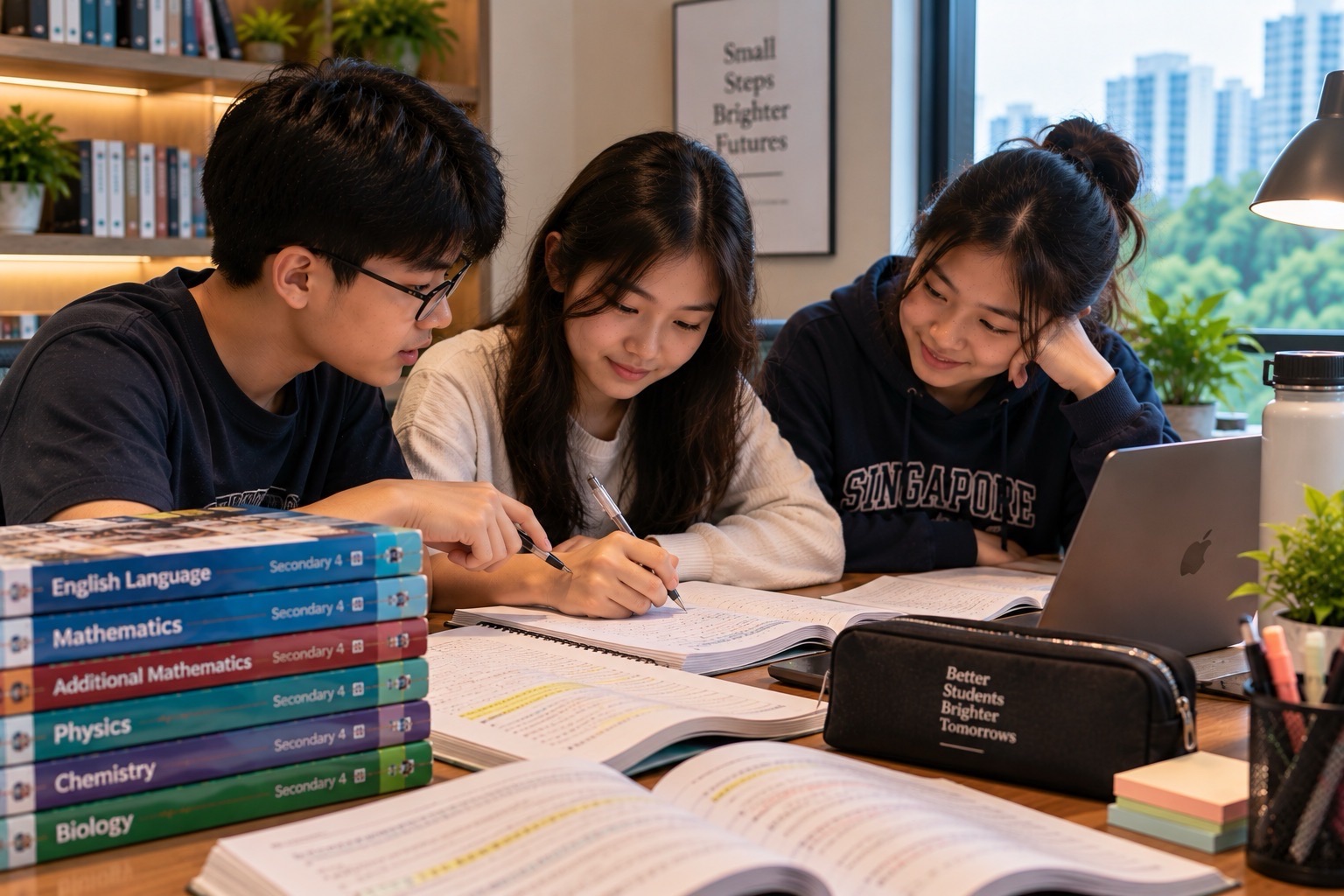
Choosing a Physics tutor in Costa Rica requires distinguishing ordinary school Física in the Educación Diversificada curriculum from the country’s different assessment modalities. A student in a regular secondary programme does not necessarily take the same stand-alone Physics examinations as a candidate in Educación Diversificada a Distancia. A tutor who fails to make that distinction may prepare the student for the wrong paper.
Quick answer: start with the learner’s colegio, grade or programme, current Ministry of Public Education learning outcomes and actual assessed topics. Then ask the tutor to diagnose a physical misconception, teach it with diagrams, quantities and units, and verify independent understanding using a changed problem after four weeks. A guaranteed mark without a baseline is not a meaningful selection criterion.
This guide is for parents and learners in San José, Alajuela, Heredia, Cartago, Puntarenas, Limón, Guanacaste and other communities. It offers educational advice, not a claim of physical eduKate Singapore centres or an independently verified Costa Rican tutor network.
Costa Rican Physics assessment: do not confuse the different educational routes
The Ministerio de Educación Pública (MEP) education programmes portal identifies the III Ciclo and Educación Diversificada as distinct stages of secondary learning. A 2026 MEP regional curriculum-planning resource provides planning templates covering III Ciclo Science and separate Biology, Physics and Chemistry content in diversified education.
The government’s 2026 National Standardised Tests FAQ explains that the secondary Science assessment is constructed according to the learner’s actual course plan. For the usual diversified academic plan it incorporates Biology, Physics and Chemistry; special plans or options have different science distributions. It specifically warns against assuming an emphasis in one science means the whole examination tests only that science.
The official 2026 secondary Science assessment specification identifies Physics components including physical quantities, motion, Newton’s laws, work and energy, hydrostatics, electricity, electromagnetism and waves. These appear within a wider Science framework, not necessarily as a separate general-school Physics paper for every student.
In contrast, the MEP’s Educación Diversificada a Distancia programme offers Biology, Physics or Chemistry as one of the candidate subject choices in that adult/open education route. Its official page lists separate Prueba 1 and Prueba 2 and their own 2026 specifications. That rule is programme-specific; it must not be projected onto all conventional colegio students.
For the 02-2026 distance-education call, the official programme schedules the Biology/Physics/Chemistry subject sitting for 5 December 2026, with its own registration instructions and specifications. The date is a fact about that named call, not a reusable timetable for future years or for ordinary school candidates.
MEP’s 2025 advanced Physics planning resource specifically identifies Física for tenth and eleventh years of diversified education. It is a planning example for learners with high scientific potential, not a document imposing identical support plans on every pupil.
To book useful lessons, bring the student’s current MEP programme and school assessment outline, their year and science pathway, one marked exercise, the upcoming topic, the exam modality if relevant and the teacher’s expectations. A tutor should identify whether the goal is foundational Science, classroom Physics learning, the combined national Science assessment or the distinct distance-learning Physics examination.
The first tutor diagnostic should test physical meaning before formulas
Hydrostatics is a useful diagnostic because it connects everyday ideas about water to clearly defined quantities. Ask the student whether pressure at a greater depth in a uniform fluid tends to be larger or smaller, and why. Then ask them to distinguish pressure, force, area and depth. Each answer can show a different conceptual gap.
A learner may recall p = ρgh without knowing that this expression describes the pressure increase associated with depth below a free surface in an ideal hydrostatic model. Another may confuse kilograms with newtons or pressure in pascals with force. A third understands the concept orally but mishandles decimal arithmetic. Those three learners need distinct teaching interventions.
Before any long calculation, have the student draw a flat liquid surface, mark two depths and identify the vertical distance in metres. Ask them to compare pressure values qualitatively. The tutor should wait for a prediction rather than show the equation immediately.
The next layer concerns scientific communication. Can the student say why the fluid’s density and gravitational field strength matter? Can they explain the assumptions, such as a stationary fluid and constant density? Does the chosen model include or omit atmospheric pressure? These ideas are part of interpreting a calculation.
Finally, save an independent first attempt. A good tutor needs an observable baseline against which a different question can be compared after tuition. This is stronger evidence than the number of pages completed under direct prompting.
Original worked Physics example: pressure under a fictional water surface
This is a fictional textbook hydrostatics model, not a water tank construction or structural design. Imagine a stationary uniform fresh-water column with assumed density ρ = 1000 kg/m³ and gravitational field strength g = 9.8 N/kg. Consider a point 0.75 m below the free surface. Use a flat horizontal model panel area of 0.012 m² with air at atmospheric pressure on its other side for the force-difference calculation.
Step 1 — identify the relevant pressure. Pressure due to the liquid column, measured relative to atmospheric pressure, is Δp = ρgh. The model asks for the gauge pressure associated with water depth, not the total absolute pressure.
Step 2 — calculate gauge pressure. Δp = 1000 × 9.8 × 0.75 = 7350 Pa, also 7.35 kPa. The pascal is newton per square metre; the numerical result is a pressure, not a force.
Step 3 — calculate the net pressure force on the model panel. Suppose water and air act on opposite sides of the small horizontal panel with pressure difference 7350 Pa. The resulting normal force magnitude from that difference is F = Δp A = 7350 × 0.012 = 88.2 N. This is a model calculation of the pressure difference across the panel, not its full structural loading.
Step 4 — distinguish force and pressure. The 7.35 kPa pressure does not depend on the panel’s area at the same depth; the net force does. A panel twice as large at the same pressure difference would have twice the normal force in this simplified uniform-pressure model.
Step 5 — examine a deeper point. Repeat at 1.50 m below the same surface. Δp = 1000 × 9.8 × 1.50 = 14,700 Pa. Under the same 0.012 m² panel simplification, net pressure force becomes 14,700 × 0.012 = 176.4 N.
Step 6 — make a proportional prediction. Doubling depth from 0.75 m to 1.50 m doubles gauge pressure and the model force because density, gravity and area were held constant. A learner should predict that before multiplying.
Step 7 — distinguish absolute and gauge pressure. If, for a separate arithmetic illustration, atmospheric pressure were specified as 101,300 Pa, absolute pressure at 0.75 m would be approximately 101,300 + 7350 = 108,650 Pa. But pressure on the atmospheric side would also be 101,300 Pa, so the difference across the specified two-sided model remains 7350 Pa. It would be wrong to calculate a net panel force using 108,650 Pa alone while ignoring the opposite side.
Transfer task A — a different fluid density. In a hypothetical liquid with density 1200 kg/m³, at 0.75 m and the same g, Δp = 1200 × 9.8 × 0.75 = 8820 Pa, which is 20% greater than before. At 0.012 m², the pressure-difference force is 105.84 N.
Transfer task B — a shallower measurement. Return to water density 1000 kg/m³ but choose depth 0.30 m and area 0.020 m². Δp = 1000 × 9.8 × 0.30 = 2940 Pa, and the corresponding force difference is 2940 × 0.020 = 58.8 N.
Transfer explanation. Why does the second transfer have lower pressure despite having a larger panel area? Because pressure at a given depth is independent of panel area. The area’s role enters only when pressure is converted to force.
All depths and densities are chosen for instructional calculations. Real reservoirs and containers have walls, nonuniform load distributions, engineering standards and safety constraints not represented here. Students should explore the relations through diagrams or school-approved simulations. This article gives no guidance for building or modifying a pressure vessel, dam or water installation.
A good tutor separates five pressure misconceptions
A learner who adds the atmospheric pressure and then uses the resulting total to compute the panel’s net force has overlooked the pressure on the opposite face. The tutor should redraw the two sides and ask what ‘net’ means. Using gauge pressure correctly prevents double-counting in the model.
A student who writes 7350 N rather than Pa is confusing pressure and force. Instead of marking a unit as a trivial typo, explain that pressure is force per unit area and ask what quantity the formula ρgh returns.
Someone may assume doubling panel area doubles pressure. That is wrong for the specified stationary liquid at a fixed depth; doubling area doubles force from the same pressure difference. Ask the child to predict separately what happens to pressure and force.
If the learner calculates 7350 at 1.50 m after repeating the original formula from memory, the concept of depth dependence is not secure. Use a drawing and a proportional argument before calculating again.
Finally, a student may treat a real reservoir as though the entire structure experiences one uniform hydrostatic pressure. Explain why this one-point ideal calculation is not an engineering design. Scientific literacy includes knowing the boundary of a model.
Tutoring across III Ciclo and Educación Diversificada
Foundations: III Ciclo Science and basic quantitative language
Earlier secondary students may need general Science explanations of force, motion, energy, states of matter, measuring instruments and simple graphs. A strong tutor should begin with accessible diagrams and everyday scientific meanings rather than an exam-calculation sheet intended for older learners.
Mathematics bridges are important. Ratios, multiplication by decimals, unit conversion and careful reading of graph axes make later hydrostatics and electricity easier. Student confidence often increases when the teacher identifies one manageable concept instead of presenting every missed topic at once.
Regular diversified education: support the actual subject plan
At the diversified stage, Física content may be studied alongside Biology and Chemistry. The 2026 national Standardised Science framework covers science areas according to the learner’s plan. The tutor should not set all lesson time on Física if the immediate assessment has wider science requirements or if the student requires support in another domain.
Within Physics, select school-relevant areas such as motion, Newton’s laws, hydrostatics, work and energy or waves. Ask the student to provide the teacher’s actual sequence and the current assessment framework rather than a generic list of ‘most likely’ predictions.
Educación Diversificada a Distancia: a separate assessment strategy
For the adult or distance programme, the MEP page expressly describes Biology, Physics or Chemistry selection and two tests for the subject. A learner registered in Física should check the exact 2026 specifications and required passed stages before scheduling revision. A tutor who knows only the regular colegio route may need to adapt.
A distance candidate may benefit from a study calendar emphasising independent practice, retrieval and timed work while maintaining mathematical and conceptual understanding. The 02-2026 test date belongs only to that named call; the family should not reuse it as the schedule for another year.
How a 90-minute lesson can diagnose and teach at the same time
First 10 minutes — recall and predict. Ask what pressure means, which quantities affect it and why two different depths might yield different readings. Record the learner’s first response without correction.
Next 15 minutes — draw the model. Place the surface, mark the depths and define gauge pressure. Ask which face of the fictional panel is exposed to atmospheric pressure.
Next 20 minutes — guided calculation. Work through the 0.75 m water example step by step, requiring the learner to identify pressure in Pa and force in N. Explain the distinction between a one-point pressure and a panel force.
Next 20 minutes — independent transfer. Change depth or density and ask for predictions before calculations. The student should solve without prompts and compare the result against physical sense.
Next 15 minutes — different-topic practice. Introduce a short Newton’s law, energy or wave problem according to the student’s MEP plan. This checks whether unit discipline and clear explanations survive beyond one model.
Final 10 minutes — correction and short homework. The student writes a statement of the model’s assumptions and corrects one error; the tutor reports the new independent skill demonstrated.
Four-week improvement plan for a Costa Rican Physics learner
Week 1 — correct route and baseline: identify regular Educación Diversificada, III Ciclo or a distance examination. Collect the school plan and one marked paper. Check formula interpretation, diagrams and units before teaching.
Week 2 — rebuild pressure and forces: use a simple liquid column drawing and explain why ρgh describes gauge pressure under the stated assumptions. Teach separate effects of area and depth, then complete the original 0.75 m example.
Week 3 — deliberately vary the model: change fluid density and panel area, introduce one graph and a different current MEP topic. Ask for predictions and a paragraph explaining what the model can and cannot establish.
Week 4 — show transfer: provide an unfamiliar hydrostatics diagram and a separate curriculum-aligned question. Compare answers against the Week 1 baseline for unit accuracy, independent reasoning, formula choice and explanation. Where relevant, use the official current examination specifications and allowed materials.
After four weeks, decide whether to continue, change the teaching emphasis or reduce assistance. A responsible plan can document progress, but no one can guarantee a national assessment outcome from four weeks of tutoring.
What parents should ask prospective Physics tutors
- Which exact MEP educational modality, grade and current assessment specification applies to my child’s study?
- Do you distinguish regular secondary Science’s Biology/Physics/Chemistry composition from the distance-education route’s Physics papers?
- Can you explain pressure and net force without confusing pascals with newtons?
- Will you check the learner’s graph reading, decimal arithmetic and scientific Spanish when these block progress?
- Do you preserve an independent baseline and test a different problem after teaching?
- Can you support honest school scientific investigations and safely labelled simulations, without fabricated observations?
- What course experience, qualifications, fees, schedule, group size and online feedback arrangements can we verify?
- Will you provide a four-week report naming the misconception repaired and the next priority instead of an unconditional grade promise?
Frequently asked questions
Does every Costa Rican secondary student sit a separate Physics national examination?
No. The composition of the 2026 national Standardised Science assessment depends on the programme; typical diversified pathways include several sciences. Separate Física testing also exists in the named distance programme.
Is the 2026 distance-education Física sitting the same as the regular colegio Science assessment?
No. The DGEC’s Educación Diversificada a Distancia route has its own requirements, Prueba 1 and Prueba 2 and published subject-specific timetables.
Which date applies to the 02-2026 distance Science sitting?
The official programme lists 5 December 2026 for Biology, Physics or Chemistry in that call. The date should not be applied to other modalities or years.
Why does pressure double when depth doubles?
In the ideal uniform-fluid model, gauge pressure Δp = ρgh is directly proportional to depth when density and g remain fixed.
If the panel area doubles, does water pressure double?
No. Pressure at a given depth remains the same under the model; the force associated with a uniform pressure difference doubles when area doubles.
Can a tutor complete experiments or assessed school work for the student?
No. They can teach how to plan, analyse, graph and describe genuine data and how to use clearly labelled simulations. Assessed student work must retain authenticity.
Can Spanish-language tutoring also support Physics Mathematics?
Yes. An effective tutor can explain quantities in clear scientific Spanish while repairing percentages, algebra, graphs and SI units when needed.
What should parents see after four weeks?
A different problem solved unaided with correct units, justified model choices, improved diagrams and a clear explanation of one previously unstable principle.
Second worked example: separating electric power from energy
Hydrostatics is one way to assess physical reasoning, but a capable tutor should check whether a learner can apply the same unit discipline to a different Physics topic. Consider a fictional 12 V classroom model containing a single ideal 6 Ω resistive component. These figures describe a paper circuit only; the article does not recommend constructing or operating the device.
Using Ohm’s law, I = V/R = 12/6 = 2 A. Power transferred at the resistive component is P = VI = 12 × 2 = 24 W. If the ideal conditions were maintained for 30 seconds, the energy transferred would be E = Pt = 24 × 30 = 720 J. Power and energy are not interchangeable, even though students sometimes write 720 W as a final answer.
A second check uses P = I²R: (2 A)² × 6 Ω = 24 W, again agreeing. A tutor should explain where the equivalent forms come from rather than require uncritical memorisation of each variation.
A transfer question changes the ideal resistance to 12 Ω but keeps the supply at 12 V. Current becomes 1 A, power becomes 12 W and energy in the same 30 seconds becomes 360 J. Before calculating, the student should predict that increased resistance under fixed voltage reduces both current and energy-transfer rate.
This example connects circuit topology, algebra, units and physical interpretation. It can be used where electricity appears on the student’s applicable MEP programme. The student must be reminded that real electrical components have ratings, heating effects and safety rules; the example is a theoretical model, not a construction task.
A teaching sequence for learners who can calculate but struggle to explain
Some pupils produce accurate results yet cannot say why a pressure model differs from an electric-power model. A tutor can ask them to compare the two problems without substituting numbers: the hydrostatic relationship uses fluid density, gravity and depth, while the simple circuit uses voltage, resistance, current and time. The common skill is correct representation and dimensional reasoning, not using the same formula in every subject.
Ask the student to explain their physical model in three sentences. The first identifies the system, the second names the relevant relationship and assumptions, and the third interprets the result with units. If they can do this independently, even an unfamiliar calculation becomes less intimidating.
A learner who struggles with scientific Spanish may need vocabulary cards pairing presión, fuerza, potencia and energía with quantities, symbols and units. The purpose is conceptual precision, not translation of a stock phrase. A tutor can encourage explanations in the student’s own words before refining formal scientific language.
The same approach can be extended to graphs. A horizontal line on a position–time graph means unchanged position; on a velocity–time graph it means constant velocity; on a pressure-versus-depth graph a line with positive slope conveys increasing gauge pressure. Reading axes first prevents mechanical copying of a diagram interpretation from an unrelated question.
Parent consultation: what to do before, during and after a trial lesson
Before meeting a tutor, write down the educational modality, course grade, upcoming topic and one sentence about what the learner currently finds difficult. Bring a genuine school task and preserve its uncorrected first attempt. Ask for a description of the teacher’s methods and the evidence used to measure understanding.
During the trial, notice whether the tutor checks what the student knows before explaining, listens to a wrong answer without immediately supplying the next step, and uses a suitable diagram or short model. A calm, focused explanation can be more productive than a fast lecture that assumes every student is ready for advanced calculations.
After the lesson, ask the child to explain one principle without opening the tutor’s notes. Could they say why pressure is measured in pascals, or why energy in joules equals power multiplied by time? If the answer is unclear, ask for a changed task rather than a second viewing of the same solution.
At two weeks, expect specific evidence: for example, a student who previously confused pressure with force now labels p in Pa and F in N on a new diagram. At four weeks, the tutor should test a fresh case and explain which errors remain.
A responsible family decision considers educational benefit alongside fees, the child’s independent study time and the reliability of sessions. Once the student can solve and explain suitable new problems, the tutor should gradually remove scaffolding instead of building dependency.
Study calendar: align revision to the actual Costa Rican examination modality
For a learner in a regular secondary colegio, the teaching calendar should match their class sequence and the applicable national Science framework. A tutor can allocate work to Physics while recognising that the standardised Science assessment may also involve Biology and Chemistry. The balance should be based on the real plan rather than the tutor’s personal favourite topic.
For a candidate in Educación Diversificada a Distancia, create a separate schedule around the actual registered Physics choice, Prueba 1 or Prueba 2 status, the official session specifications and registration rules. Reviewing a 2026 document is useful only if the learner is enrolled in that named call.
Avoid rigid promises such as ‘memorise these thirty Physics questions and the examination is covered’. More useful practice includes one foundational explanation, an unfamiliar model, a short timed calculation and error reflection. The student should see how knowledge transfers to questions with new values.
Where internet access or travel makes weekly meetings difficult, agree on a compact asynchronous process: the student submits original handwritten working, the tutor marks one precise issue, and the learner completes a changed question before the next full lesson. The quality of this feedback loop matters more than the apparent quantity of assigned pages.
The broad aim is a learner who can read their own official study plan, distinguish measured quantities, ask sensible questions and verify answers. Physics tuition should help the student continue learning after the tutor leaves, whether the next step is another school year, an adult education examination or further study.
Official references and linked eduKate educational guides
- Costa Rica Ministry of Public Education — education stages and programmes
- MEP DGEC — 2026 standardised national tests FAQ
- MEP DGEC — 2026 secondary Science specification, including Physics topics
- MEP DGEC — Educación Diversificada a Distancia, Physics examination information
- MEP regional — 2026 teaching-planning templates
- eduKate Science Tutor Guide — Costa Rica
- eduKate Mathematics Tutor Guide — Costa Rica
- eduKate Chemistry Tutor Guide — Costa Rica
- World Physics Tutor Guides directory
- World Tuition subject index
Editorial note, 17 October 2026: All water-pressure numbers and panel dimensions are original fictional teaching examples, not design criteria for structures or plumbing. MEP 2026 references apply to the specific modalities and calls described; school documents govern individual learners. The article does not claim eduKate tutor availability or a guaranteed grade in Costa Rica.