
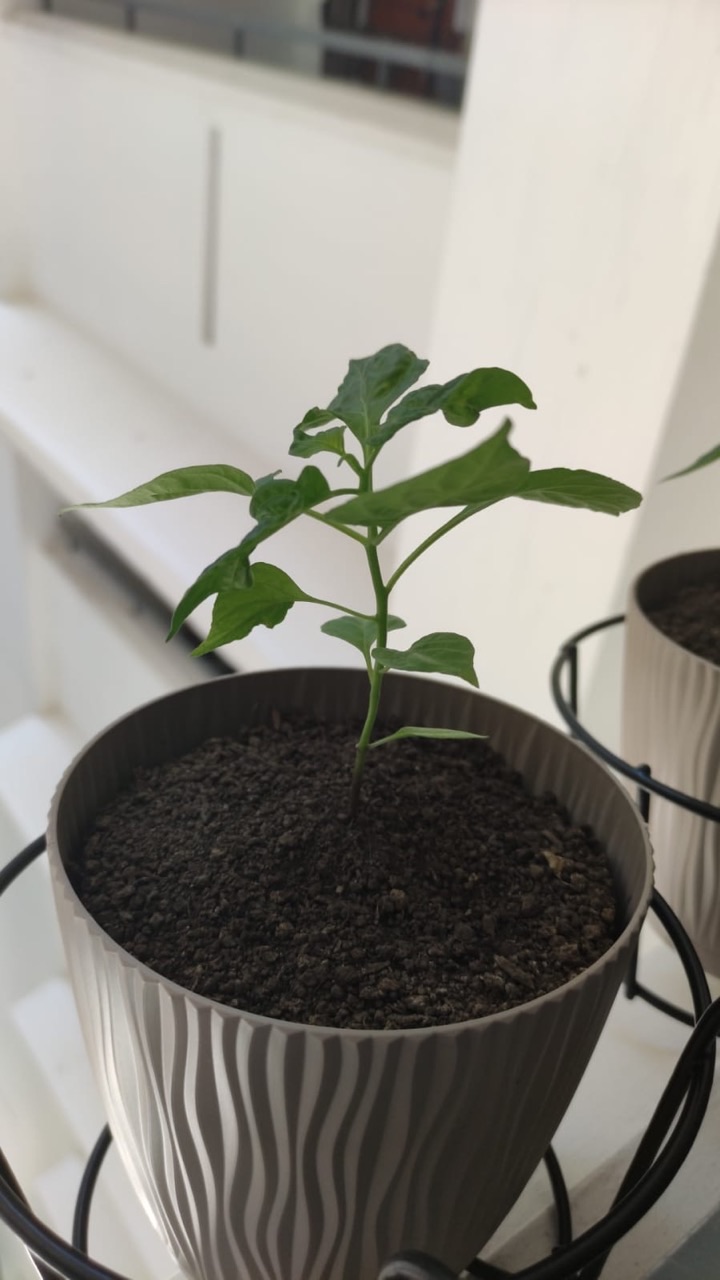
A transparent bag around healthy leaves develops droplets. Is that direct proof of liquid water coming out of the leaf? A reliable Primary 5 Science explanation distinguishes water transport, invisible vapour released through transpiration, and visible condensation on the plastic. Parents comparing weekday and weekend Science lessons should begin with this error and ask what the child can explain independently after teaching.
eduKateSG · Primary 5 Science · Syed Alwi Road
Use a leaf bag and a control to reason about the source of water; never mistake one wet bag for an exact measurement of transpiration.
Full chapter index
1. The first misconception: droplets prove water leaked through plastic · 2. Follow water from soil into a living plant · 3. Distinguish transpiration from condensation · 4. Read a fictional bag-and-control comparison · 5. Set up a fair test and respect the plant · 6. Weekday tuition: repair the missing step promptly · 7. Weekend tuition: compare alternative sources · 8. Build an evidence-linked open-ended response · 9. After two days, use a genuinely changed experiment · 10. Parent questions, tutor selection and the next step
1. The first misconception: droplets prove water leaked through plastic
A Primary 5 child sees liquid droplets inside a transparent bag enclosing leaves and says the plastic must have leaked. Ask what the drawing directly shows: droplets are present. The claim about leakage is not directly observed. Perhaps water vapour inside the bag condensed, or perhaps the leaves were initially wet. A good Science explanation distinguishes an observation from a possible cause.
Start the lesson with the child’s own statement. Ask whether the bag was dry at first, whether wet soil was enclosed, and whether another bag without leaves was observed. These details matter because the experiment is supposed to identify where the vapour originated rather than simply show that a surface became damp.
2. Follow water from soil into a living plant
Roots absorb water from the surrounding soil or another suitable growing medium. Conducting tissue carries water to stems and leaves. Some of the absorbed water is used by the plant, and some can leave its aerial parts as water vapour. This loss of vapour is called transpiration, which commonly occurs through small openings in leaves.
Water vapour is invisible. The child should not draw a stream of liquid drops flying directly from leaf to plastic if the observation concerns moisture collected later. Instead, draw an arrow for water taken up by roots, another for transport, and one for vapour released into the air enclosed by the bag. This separates the source from the final droplets.
3. Distinguish transpiration from condensation
The invisible water vapour released from a leaf may accumulate within a clear bag. If it encounters a sufficiently cool surface, some vapour changes into liquid water. That gas-to-liquid change is condensation. The leaf contributes a possible source of vapour; the plastic becomes the surface on which droplets are observed.
The two processes must not be treated as synonyms. A cold glass can develop droplets even without a plant, because water vapour from surrounding air can condense on it. The learner should name the source of vapour and the change of state separately. This is a useful link between upper-primary plant-system learning and the water cycle.
4. Read a fictional bag-and-control comparison
The following is an invented classroom design, not an actual investigation at Syed Alwi Road. Imagine two clean and dry bags of similar size in comparable conditions. Bag A encloses leaves on a living plant while excluding wet soil. Bag B encloses a clean, dry, non-living stick. A third bag covers wet soil but no leaves.
Bag A may show more droplets than a suitable control because the leaves contribute water vapour. Bag B helps identify background humidity that could condense even without leaves. Bag C reveals why soil evaporation is a confounding source. Actual observations depend on starting humidity, temperature, duration and plant condition; this teaching table supplies no measured transpiration rate.
| Bag | Conditions | Scientifically bounded interpretation |
|---|---|---|
| A | Living leaves inside clean dry bag | Transpiration may contribute vapour |
| B | Clean dry stick inside similar bag | Background humidity can still condense |
| C | Wet soil, no leaves | Soil evaporation can contribute vapour |
| D | Initially wet leaves | Starting liquid prevents clear source attribution |
5. Set up a fair test and respect the plant
The intended difference in the comparison is the presence of living leaves. Keep bag size, observation interval and surrounding temperature or light as comparable as possible. Begin with clean dry plastic and avoid wrapping wet soil with the leaves when the goal is to isolate transpiration. Otherwise moisture from soil or from an initially wet leaf could distort the inference.
Teachers can use NASA’s classroom transpiration demonstration and USGS water-cycle resources as references. A home investigation should be brief, gentle and supervised, without tightly damaging stems or disturbing public plants. A photograph-based question is sufficient for most tutoring purposes. A wet bag proves only that liquid has appeared, not that every droplet came from the plant.
6. Weekday tuition: repair the missing step promptly
If the school worksheet says “the leaf releases liquid drops”, a weekday lesson can rebuild three short stages: water reaches leaves, transpiration releases vapour, and vapour may condense on the bag. Ask the pupil to explain why the final liquid is visible even though the released vapour was not. Then cover the model diagram.
Present a changed bag enclosing wet soil but no leaves. Could droplets still form? Yes, water can evaporate from soil and then condense. This single altered question reveals whether the learner understands the mechanism or merely recognises a familiar plant picture. Choose a weekday session only when the child still has the energy for that independent answer after school and travelling.
7. Weekend tuition: compare alternative sources
A weekend session can compare leaf bags, empty control bags, wet-soil bags and a cold drinking glass. Ask where vapour originates in each case and what conditions allow condensation. Extra time is valuable when it exposes competing explanations and the need for a controlled comparison, not merely when it fills more pages.
In a three-pupil class, rotate the roles of predictor, fair-test checker and evidence explainer. Then require each learner to give a different explanation alone. A quieter child’s learning cannot be inferred from the most confident pupil’s answer. Record the original prediction and an independent correction for each student.
8. Build an evidence-linked open-ended response
Question: “Explain a possible source of droplets inside a bag around healthy leaves.” Strong answer: “Water absorbed by the roots is transported to the leaves. Some is released as water vapour through transpiration. This vapour can condense on the inside of the bag to form liquid droplets.” The order links source, transport, release and change of state.
If a control bag is given and shows fewer droplets, the child may add that the comparison supports a contribution from the leaves. But do not report an exact rate of water loss unless the experiment actually measured water quantity over time. An analogy such as “the plant sweats” needs to be translated into specific Science processes.
9. After two days, use a genuinely changed experiment
Give two new diagrams. One bag encloses green leaves; the other encloses damp soil without leaves. Both show droplets. Ask whether both bags demonstrate transpiration. A strong answer says no: moisture from wet soil can arise through evaporation, while moisture associated with leaves can be related to transpiration; condensation can produce the final droplets in both.
Then show a leaf bag with no visible droplets after a short observation. Does this prove that leaves released no water vapour? No. The conditions may not have permitted visible condensation. Ask the child to explain independently instead of copying the first answer. This distinguishes a learned process from a memorised picture.
Independent changed-question check: A leaf bag and a soil-only bag both develop droplets. Explain the two possible vapour sources and why the drawings cannot establish an exact transpiration rate.
Collect the child’s own reason before revealing a model answer.
10. Parent questions, tutor selection and the next step
Does every Primary 5 school require the technical word transpiration at the same time? Follow the current MOE syllabus, school chapter and Standard or Foundation course; this experiment may be used for cross-topic extension. Can droplets alone measure a transpiration rate? No, not without suitable quantitative data. Is weekend better? Only if the learner needs the additional comparisons and can stay focused.
Does a three-pupil tutorial suit a quiet child? Ask the tutor to collect an individual prediction and delayed response. Bring the first wrong explanation, the controlled comparison and a new wet-soil question to consultation. Syed Alwi Road identifies the reading area, not a verified eduKate classroom address or vacancy. Confirm venue, fees and timetable directly.
Weekday versus weekend decision table
| Parent question | Weekday | Weekend |
|---|---|---|
| Immediate objective | Correct the transport–vapour–condensation sequence | Compare multiple moisture sources |
| Practice task | One plant bag versus control | Leaves, wet soil and humid air cases |
| Delayed check | Soil-only bag after two days | Leaf bag without visible condensation |
| Proof of progress | Correct mechanism without hints | Recognises uncertainty and controls |
Official syllabus, trusted Science sources and related guides
MOE Primary Science Syllabus · NASA JPL Transpiration Demo · USGS Water Cycle: Transpiration. The worked case above is fictional and does not describe experiments carried out in Syed Alwi Road.
Primary Science Tuition Singapore · weekday/weekend learning rhythm · three-pupil tutoring standard · consultation.
Other worked examples: Crawford Lane · Kitchener Road · King George’s Avenue.
Other levels on Syed Alwi Road: Primary 3 · Primary 4 · Primary 6 PSLE.
Syed Alwi Road is the intended local reader area, not confirmation of an eduKate classroom, vacancy, tuition fee or guaranteed outcome on the street. Contact the provider to verify current teaching arrangements.