
Bukit Timah’s forest streams are small habitats with a large ecological story. Water conditions, shaded surroundings, streambeds and the wider forest support different freshwater organisms. The Singapore freshwater crab, Johora singaporensis, makes that relationship especially important because it is endemic to Singapore and has demanding habitat requirements.
For a family visit, the useful activity is understanding the habitat from a designated public route. Stay out of streams, leave rocks and leaf litter in place and avoid searching for sensitive wildlife locations. A clear view of water is not a complete water-quality assessment, and a short visit cannot establish whether a particular species is present.
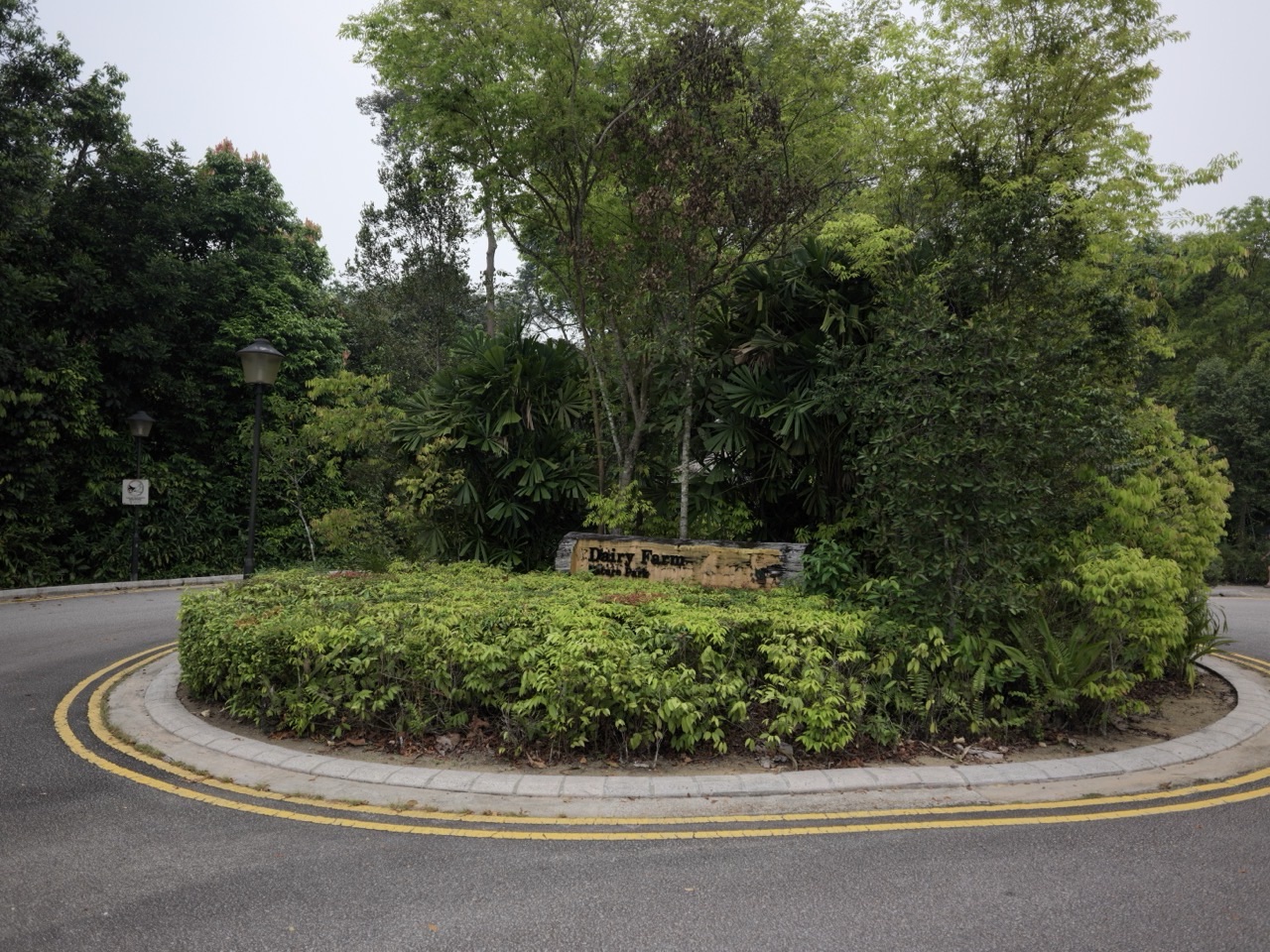
NParks’ conservation working-group page now links a 2026 review of the Singapore freshwater-crab strategy, listed on 17 October 2026. This guide uses that current context alongside published research, while keeping historical findings distinct from present-day visitor observations. The calculations and activities are original examples, not measurements of a local stream or instructions for sampling. The photograph shows the Dairy Farm side of the wider landscape, not a crab site.
eduKateSG · Bukit Timah nature and neighbourhood
Choose your reading route
Understand the subject · Explore the science · Connect the ecosystem · Try a worked example · Read ten quick answers
Chapters 1–5
2. Meet the Singapore freshwater crab
3. Read the 2026 update accurately
Chapters 6–10
7. Flow, shade and stream structure
8. Leaf litter and freshwater food webs
| Question | Evidence needed |
|---|---|
| Does the water look clear? | A limited visual description at that moment. |
| What is its pH or dissolved oxygen? | Appropriate measurements and a defined method. |
| Which species live there? | Suitable identification and survey evidence. |
| What may a visitor do? | Current access information and reserve rules. |
Look beyond the moving water
A stream includes more than the visible strip of water. Its bed, banks, surrounding vegetation and connections with the wider catchment influence the conditions available to organisms. A small channel can therefore have considerable ecological importance without looking dramatic in a photograph. Begin with a simple description from a permitted public viewpoint: shaded or open, visibly moving or still-looking, with particular surfaces and vegetation nearby. Keep the description separate from a claim about overall health. What you can see is useful evidence, but it is only part of the setting. A stream becomes more interesting when its less obvious connections are included in the question.
Small scale does not mean simple ecology
Different organisms can require different combinations of conditions within a relatively small area. A published Bukit Timah freshwater study emphasises conservation across the stream network rather than focusing only on selected sites. Use that principle to explain why an apparently ordinary channel matters. A habitat should not be valued only by whether a visitor sees a rare animal there during one walk. The relationships may operate below the water surface or at times when people are absent. Children can understand that a small place can support a complicated system, just as a small part of a machine can matter to the whole mechanism.
Endemic has a precise meaning
Johora singaporensis is the Singapore freshwater crab, an endemic species. Endemic means that its natural distribution is restricted to a particular geographical area, here Singapore. It does not simply mean common, famous or found somewhere locally. This is a useful vocabulary distinction because a species can be locally rare while being especially significant to the place. Use the scientific and common names together when introducing it, then keep the explanation concrete. The animal’s conservation depends on conditions within a limited landscape. A family can appreciate that importance without seeing the crab or obtaining an exact location from a public guide.
A freshwater crab is not just any crab near water
The presence of water and a small crustacean does not establish the identity Johora singaporensis. Different freshwater species occur in Singapore, with different features and habitat relationships. A quick photograph may not resolve the necessary details. Keep an uncertain observation descriptive rather than borrowing the best-known local name. This protects both the quality of the record and the reader’s understanding of conservation. A guide about an endemic species should not encourage every unidentified crab to be reported online as that species. Accurate uncertainty is useful information, especially when later identification or a more careful survey may be needed.
A review examines conservation actions
The 2026 addendum reviews work since the Singapore freshwater-crab strategy developed from earlier collaborative planning. Its purpose includes assessing progress on actions, documenting work and identifying continuing priorities. NParks’ working-group page lists the review on 17 October 2026. Present that as a dated update, not as a claim that every conservation problem is solved. A review can contain completed actions and remaining work at the same time. This makes a useful example for students reading reports: the existence of a new document tells you that information has been updated, while the document’s actual findings determine what conclusions are justified.
A strategy is not a visitor sighting forecast
A conservation document serves a different purpose from a walking guide. It may discuss research, management and recommendations without creating public access to study sites. The addendum also states that it represents the authors’ strategy work rather than an organisational policy declaration. Keep that distinction when summarising it. A family needs the current reserve page and local signs for its route. The conservation report helps explain why habitat protection matters, not where a visitor should go to find a crab. Good information retrieval matches the source to the question instead of treating every official-hosted document as an instruction for recreation.
Clear-looking water answers only a visual question
Water can look clear while containing dissolved substances that a person cannot judge by sight. A photograph also says little about conditions earlier in the day or elsewhere in the stream. Describe clarity as an observation, not a certificate of safety or ecological suitability. The word ‘clean’ can hide several different questions: appearance, chemistry, biological conditions and suitability for a particular use. Ask which question you mean before answering. This helps children understand why scientific measurements exist. Ordinary looking remains useful, but it should not be made responsible for information that the senses cannot reliably provide.
A single number is not a complete assessment
Measuring one variable would still leave other aspects of water quality unresolved. Temperature, dissolved oxygen, acidity, flow and other conditions can interact, and organisms differ in their requirements. A researcher chooses methods to answer defined questions rather than treating one favourable reading as proof that everything is suitable. A family activity can model that reasoning through invented data at home. Do not collect stream samples or install equipment during a casual reserve visit. The interesting learning is that an assessment is a structured combination of evidence, not merely a dramatic-looking photograph or one number presented without context.
pH describes an important chemical property
The pH scale relates to hydrogen-ion activity and helps describe acidity or alkalinity. A lower pH is more acidic, but the ecological meaning depends on the organism and setting. Do not assume that every acidic natural water body is polluted or that neutral water is automatically ideal for every species. Those are different questions. A clear explanation begins with what the variable measures, then considers the habitat and evidence. For younger children, it is enough to recognise that water can differ chemically even when it looks similar. Older learners can explore the scale’s logarithmic structure using the worked example later in this guide.
Preserve ‘possibly’ when a source uses it
NParks’ working-group overview describes a decline in the Bukit Timah crab population as possibly linked to stream acidification. Keep that qualification rather than rewriting a possible explanation as a proven single cause. The distinction matters because conservation decisions depend on understanding evidence, not only having a plausible story. A child can compare ‘occurred alongside’, ‘possibly related to’ and ‘was caused by’ as statements with different strengths. Scientific writing often uses careful language for a reason. Preserving it is not evasive; it helps the reader see what is known and which part remains under investigation.
Oxygen in water is different from a visible bubble
Dissolved oxygen is oxygen present in the water in a form relevant to aquatic life. It cannot be assessed simply by looking for bubbles in a photograph. Conditions such as temperature, mixing and biological activity can affect it. The important family lesson is that a living habitat has properties not immediately visible from the bank. Use a diagram or a reliable explanation rather than assuming that fast-looking water always answers the whole question. A public observation can suggest an interesting comparison, but appropriate measurements and methods are needed to establish the actual values and their meaning for a species.
Habitat requirements are species-specific
The historical Bukit Timah decapod paper relates different species to different stream conditions. Avoid turning one species’ association into a universal rule for all freshwater animals. A feature that matters to one crab may have a different significance for another organism. This is why a habitat network can support varied communities rather than one identical set everywhere. Children can practise with labelled hypothetical species, each having different stated requirements, then identify which invented setting fits the description. The exercise teaches matching evidence to a question without pretending that a simplified worksheet can evaluate a real stream from a distance.
Movement affects the physical setting
Flow influences how water and material move through a channel, but a momentary surface appearance is not a full hydrological record. Rainfall and other conditions can change the scene. From a permitted viewpoint, describe visible movement without entering the stream or releasing an object to measure it. A general diagram can show how water travels downslope and interacts with a channel, with the limits labelled. The learner should understand the physical principle while keeping local measurements unclaimed. This makes Geography and Science connect naturally: slope, water and habitat are related, but each specific conclusion still needs appropriate evidence.
Shade belongs to the stream’s context
Vegetation around a stream affects its physical environment, including light and local conditions. The forest canopy is therefore part of the stream story rather than scenery surrounding it. A child can compare the conceptual effects of an open channel and a shaded one using reliable general biology, without declaring one universally better. Different habitats support different relationships. For Bukit Timah, keep the actual conservation interpretation attached to research about the relevant setting. The broad lesson is connection: decisions affecting the surrounding landscape can matter to the water habitat, even when the visible change occurs outside the channel itself.
Material from trees can enter the aquatic system
A leaf falling into water connects the forest canopy with processes in and around a stream. Organic material can be transformed and used by organisms in different ways. The published decapod paper discusses roles involving nutrient cycling and leaf-litter breakdown. For a family explanation, use a general model and avoid assigning every visible animal the same task. Physical fragmentation, microbial decomposition and feeding are related but distinct processes. The useful insight is that the stream does not receive all its resources from within the water. It is connected with growth and material movement in the surrounding forest.
A food web includes more than the rare species
A conservation icon helps attract attention, but the habitat contains relationships involving less familiar organisms too. A crab, shrimp, microorganism or predator can participate in different parts of the wider system. Build a small verified example rather than an enormous speculative diagram. Explain each arrow’s meaning and distinguish a feeding link from movement of water or nutrients. This keeps the model readable and scientifically useful. A child can appreciate why protecting a habitat serves a network of life, not merely one photogenic animal whose name appears in the article title. The ordinary organisms matter even when the visitor cannot identify them.
A quarry lake is not a hill stream
Bukit Timah’s wider landscape includes streams, ponds, wetland settings and former quarry water bodies. They can all be interesting without supporting identical conditions or species. Do not use a photograph of a quarry lake as proof of a sensitive hill-stream crab habitat. Compare the broad physical differences in a classroom diagram and keep species claims specific to reliable sources. This is a useful local geography lesson: nearby water bodies share a map but differ in history, structure and ecology. A visitor can enjoy several kinds of place while understanding why a conservation recommendation for one cannot simply be copied to another.
A drain also has a different purpose and context
An urban drainage channel and a forest stream can both carry water, but that shared feature does not make them ecologically equivalent. Their materials, flow conditions, connections and management can differ. Avoid simplistic claims that natural-looking always means suitable or engineered always means lifeless. Ask a narrower question about the organisms and conditions involved. A thoughtful comparison makes the city easier to understand without collapsing everything into two moral categories. For a family, a map of different water settings can support observation and discussion while keeping the actual reserve visit focused on its permitted public route.
Attach findings to the survey period
The 2019 Bukit Timah decapod paper reports research conducted in 2015–2016. Its species records are evidence from that study period and method, not a guaranteed current checklist for a visitor. Keep the date visible when using the findings. This is especially important where an older source and a newer overview discuss population changes or different localities. The sources can add to understanding without every sentence being interchangeable. Students can make a timeline showing survey work, publication and later review as separate events. That simple structure prevents a historical record from being mistaken for an observation made today.
A method affects what is detected
Different survey methods detect organisms with different effectiveness. A species not recorded by one method is not automatically absent from the wider habitat. The paper itself discusses limitations relevant to some animals. A family can learn the principle without copying nets or traps from the research. Ask what the method could notice and what it might miss. This is a strong evidence-reading habit: a result belongs to a defined investigation. The absence of a record, the absence of an animal during a short walk and proof of ecological absence are different claims. Keeping them distinct makes both science and conservation communication more reliable.
A one-unit change is not a one-unit percentage
For a simplified chemistry exercise, imagine two waters with pH values of 6 and 5 under comparable conditions. These are invented values, not Bukit Timah readings. Because pH is logarithmic, the lower-pH example corresponds to about ten times the hydrogen-ion activity of the higher-pH example. A change from pH 6 to pH 4 corresponds to about one hundred times. This is why subtracting the numbers and calling the result a percentage would be misleading. The scale describes a relationship that needs its own interpretation. Older learners can connect the powers of ten with the meaning of logarithms rather than memorising the rule in isolation.
The calculation does not diagnose a habitat
The pH comparison alone does not establish pollution, a cause of change or whether a particular animal can thrive. Those conclusions require relevant ecological evidence and a suitable method. Ask children to write two separate sentences: one explaining the numerical relationship, and another stating what remains unknown. This prevents an impressive calculation from becoming a complete environmental story. The example can be explored with published educational material at home, without taking water from a protected stream. A strong Science answer combines correct reasoning with a clear boundary around the claim, especially when the subject is a sensitive habitat rather than an invented classroom setting.
Keep feet, hands and equipment out
NParks’ reserve etiquette directs visitors not to wade in streams and to remain on designated trails. Leave rocks, branches and leaf litter in place. Moving one object can alter a shelter or local condition that is not obvious to a visitor. A clear public viewpoint is enough for a habitat description, while internal details can be studied through reference photographs. Explain the rule through the learning goal: the family came to understand a living system, so leaving its structure intact demonstrates that understanding. A closer look is not automatically a better observation if obtaining it changes the very setting being described.
Do not create a sampling activity casually
A published paper may describe nets, traps, handling or water measurements used within a research programme. That does not make the method suitable for an informal outing. Organised scientific work has defined questions, responsibilities and permissions. A family can learn the principle by using hypothetical data or a home model instead. This distinction is particularly helpful for older children planning a project: an interesting question needs an appropriate method, not merely an available technique. Responsible inquiry includes choosing what can be investigated without disturbance and recognising when a stronger study belongs to trained researchers working under the relevant arrangements.
A useful record need not be a public location pin
If you have a potentially useful observation, record the time, broad setting, visible features and uncertainty. Use an appropriate official or recognised research channel when sharing information for conservation purposes. Avoid turning a sensitive wildlife record into a public invitation to search. The purpose and audience matter: the same photograph can assist a researcher or attract unnecessary attention depending on how it is circulated. A family learning record can remain general about place while still explaining the biology. The important outcome is a better understanding and, where appropriate, useful information reaching the people able to assess it.
Keep captions narrower than the story you imagine
A photograph of a crab does not automatically prove its species, population size or condition. A photograph of a stream does not establish the chemistry that day. Write the visible evidence first, then separate any later identification or reference-based explanation. Children can practise by comparing an accurate caption with one that adds an unsupported claim. Ask what extra evidence the stronger statement would need. This makes writing more informative without making it dull. A precise caption helps another person evaluate the observation and preserves the original record, rather than burying it beneath an engaging story that cannot be checked.
Reviewing actions differs from declaring success
A conservation review can document progress while identifying work that continues. The 2026 addendum’s review structure is a useful example of that process. Read the action, evidence, status and recommendation together instead of extracting a single positive phrase as a verdict on the whole species. This helps students understand how real projects are assessed. A completed research task may improve knowledge without removing every threat, while an ongoing task may reflect a long-term responsibility rather than failure. Conservation becomes more understandable when it is seen as repeated evidence-based work, not one dramatic intervention followed by a permanent happy ending.
Protect the network rather than only the famous site
The historical decapod study emphasises differing habitat requirements across the stream network. Use that as a general conservation lesson: protecting one well-known place may not represent all the conditions needed by different organisms. Avoid publishing a visitor checklist that concentrates attention on one sensitive locality. A family can appreciate the wider principle through a simple map of connected habitats without exact wildlife coordinates. The forest stream story then extends beyond a rare crab to the relationships among water, land and multiple species. The significance of a small channel need not depend on whether it contains the animal with the most recognisable name.
Choose a manageable public route
Use current reserve information, maps, weather guidance and the group’s needs to choose the outing. A stream theme does not require reaching an exact site, walking off-trail or finding a crab. A suitable public observation point can support questions about shade, water movement and the surrounding forest. If conditions make the visit unsuitable, use diagrams and reference material instead. The learning purpose can survive a changed plan. Keep time for rests and the return journey, and avoid turning a modest educational interest into a demanding hike. A comfortable outing leaves more attention available for the relationships that make the place interesting. A simple pre-visit card can list the planned public route, the question you want to explore and the fallback if conditions change. Give the question a scope that fits ordinary observation. This keeps the outing’s purpose clear and stops a last-minute search for a rare animal from taking over the plan.
Finish with one clear connection
Ask each person to explain one relationship: the canopy influences the stream’s setting, fallen material can enter aquatic processes, or a species’ habitat requirements make water conditions important. Add one observation and one unanswered question. This is enough for a meaningful first visit. The family does not need a specimen, exact measurement or rare sighting to understand why the habitat matters. On a later outing, use the earlier question as a starting point and check current access again. Bukit Timah’s streams become more rewarding when the small visible channel is understood as part of a connected forest system whose important work continues beyond the visitor’s view.
Why do small forest streams matter?
They provide particular combinations of water, structure and surrounding habitat that can support different organisms. Their ecological value is not determined by size or by a visitor’s sighting list. Research on Bukit Timah freshwater animals highlights the importance of the wider stream network, rather than treating one famous locality as the whole conservation story.
Is a quarry lake the same habitat as a hill stream?
No. Nearby water bodies can differ in origin, physical structure, movement and ecological conditions. A quarry photograph should not be used as proof of a hill-stream species’ habitat. Compare the places thoughtfully and keep species claims attached to relevant sources. Being close together on a map does not make freshwater settings interchangeable.
What does endemic mean?
An endemic species has a natural distribution restricted to a particular geographical area. The Singapore freshwater crab is endemic to Singapore. The term does not mean common or easy to find. A species can be especially significant to a place while remaining rare, difficult to detect and dependent on specific habitat conditions.
Can I assume any small crab is Johora singaporensis?
No. Singapore has different freshwater crab species, and a quick sighting or unclear photograph may not support a specific identification. Record visible features and preserve uncertainty. A well-known conservation name should not be attached to every animal near water. Use an appropriate expert or authoritative reference when a more precise identification is needed.
Does clear water mean the habitat is healthy?
A clear appearance is only a visual observation. Dissolved substances, oxygen, acidity and other conditions require suitable evidence and interpretation. A photograph cannot provide a complete water-quality assessment or establish suitability for every organism. Define which question you mean by ‘healthy’ and keep the conclusion within what the available evidence can support.
Does acidic water always mean pollution?
No. Natural waters can differ chemically, and ecological meaning depends on the setting and species. The working-group overview qualifies its discussion of Bukit Timah population decline and possible stream acidification. Preserve that causal uncertainty. A pH value alone does not identify a source, establish a complete diagnosis or justify a visitor changing the habitat.
What changed in October 2026?
NParks’ working-group page lists a 2026 addendum reviewing the Singapore freshwater-crab conservation strategy on 17 October 2026. The document reviews actions and continuing priorities. It is a dated conservation update, not a promise of population recovery at every location or a new public route to observe the species.
Are the 2019 survey records current sighting guarantees?
No. The paper reports a defined study conducted in 2015–2016. Those findings are valuable historical evidence and a research baseline. They should not be rewritten as a complete current population count or a checklist that visitors will see. Keep survey period, publication date and present-day observations separate when explaining the evidence.
Can we lift rocks or wade in to look for crabs?
Leave rocks, litter and other habitat material in place and follow the designated public route. NParks’ etiquette directs visitors not to wade in streams. A closer view is not worth changing a sensitive setting. Use reliable photographs and diagrams for details that cannot be observed appropriately during an ordinary visit.
What is a useful first learning exercise?
From a permitted viewpoint, describe one visible feature, suggest one question and mark what cannot be established by sight. At home, use the hypothetical pH example or a simple habitat diagram to develop the reasoning. This supports Science and clear writing without collecting water, disturbing animals or relying on a rare sighting.
Sources and further reading
Information checked on 18 October 2026. Visitor arrangements can change. Worked calculations and suggested family activities are original illustrative exercises, not local survey results or official programmes. Header photographs show the Dairy Farm side of the wider Bukit Timah nature-park landscape; they do not identify a featured species or mark a sensitive observation site.
NParks: Freshwater Crab Conservation Working Group — Current overview and the 17 October 2026 listing of the review.
2026 Addendum: Singapore freshwater-crab conservation strategy — Working-group review of actions since the original strategy; not a promise of visitor sightings.
Khoo and colleagues, 2019: Freshwater decapods of Bukit Timah — Primary research based on 2015–2016 surveys; historical results are not a current population count.
NParks: Nature parks and reserves etiquette — Stream protection, designated routes and visitor behaviour.
NParks: Bukit Timah Nature Reserve — Current reserve information and map.
Bukit Timah rainforest layers explained
Bukit Timah Nature Reserve first-visit guide
Fungi in Bukit Timah · Fig trees and wildlife · Dipterocarp trees