
Fungi help make Bukit Timah’s forest work. Some break down fallen wood and leaves; others form close relationships with living plants. The mushrooms and bracket-like growths a visitor may notice are only part of that larger world. Look from designated trails, leave everything in place and enjoy the shapes without treating an unidentified fungus as food.
A family walk becomes more interesting when a fallen branch stops looking like rubbish and starts looking like habitat. A small fungal structure can connect a tree’s past growth with the movement of nutrients through the forest. You do not need to know its species to ask a good question about what it is growing on and what is visible around it.
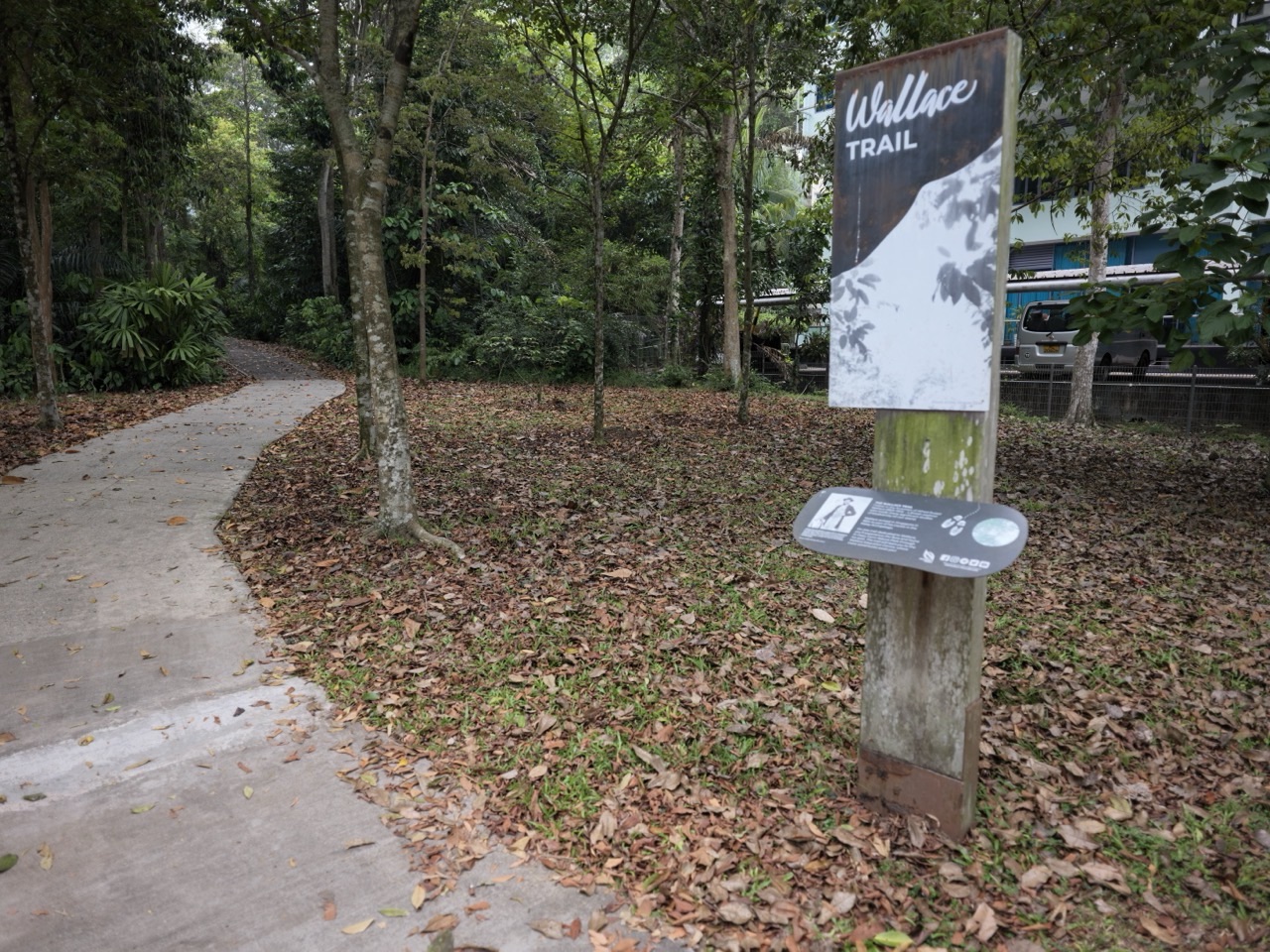
This guide explains mushrooms, mycelium, decomposition and careful observation in a conversational way. Published Bukit Timah research provides the local context, while the learning exercises use invented examples. They are not research instructions, a foraging guide or a prediction of what will appear on a particular day. The photograph shows the nearby Dairy Farm forest landscape rather than a labelled fungus.
eduKateSG · Bukit Timah nature and neighbourhood
Choose your reading route
Understand the subject · Explore the science · Connect the ecosystem · Try a worked example · Read ten quick answers
Chapters 1–5
| Idea | What it helps explain |
|---|---|
| Fruiting body | A visible reproductive structure, rather than necessarily the whole fungus. |
| Mycelium | A network of fungal threads that can occur within suitable material. |
| Decomposition | Transformation of organic material through biological processes. |
| Observation | A description of visible evidence, separate from a confirmed species identification. |
A mushroom is a clue to a larger organism
A familiar mushroom is a reproductive structure produced by certain fungi, not a miniature plant standing alone. Much of the organism may be within the material on which it grows. This is a useful first idea for children because it changes the question from ‘what flower is that?’ to ‘what part of a fungus can we see?’ Use a reference illustration to connect the visible structure with the less visible threads. The drawing is a model, not a map of the individual beside the path. A visitor can understand the relationship without pulling the mushroom up or exposing the material underneath it.
Fungi appear in more than one shape
A cap and stalk are only one visible form. Some fungi produce shelf-like brackets, cup-like structures or other shapes that look very different from the supermarket mushroom. Begin a note with ordinary description: colour, outline, position and the material supporting it. Avoid deciding that two shapes are different species solely because they look different, or that similar colours establish the same identity. Appearance can vary with stage and conditions. The reward is in noticing the range of forms. A short visit may offer one useful observation, while a reference book can show many others without requiring the forest to produce a complete display on demand.
Different ways of obtaining organic material
Green plants can use light energy in photosynthesis to make sugars from carbon dioxide and water. Fungi obtain organic material from other sources rather than carrying out that same process. The distinction helps explain why a fungus can be associated with dead wood or a living partner. Do not simplify it into ‘fungi need nothing’ because they are not green. They still have biological requirements and particular relationships with their surroundings. A child can compare two questions: where does the organism obtain its resources, and how does it use them? This is a stronger explanation than classifying everything rooted-looking or stationary as a plant.
Position does not define the relationship
A fungus on wood is not automatically doing the same thing as another fungus on another tree. Some use dead organic material, some interact with living hosts, and some form mutualistic associations. A passing visitor may not be able to establish the exact relationship. Keep that uncertainty in the note rather than assigning every visible structure the same ecological role. General knowledge helps generate possibilities; it does not prove which possibility applies to an individual sighting. This makes the forest more interesting, because a small structure becomes the beginning of a question rather than the end of an identification exercise.
Hyphae form a working network
Many fungi grow as fine threads called hyphae, which together can form a mycelium. The network can extend through suitable material, with a visible fruiting body representing only part of the activity. A useful analogy is to compare the visible page of a book with the larger book it belongs to: the analogy highlights a hidden extent, but should not be treated as a literal description. Mycelium is living fungal structure, not a plant root system. Use the term when it clarifies the explanation, then return to the concrete idea of threads growing within a resource and environment.
Do not expose it for a demonstration
Leaf litter and decaying wood can contain structures that are easily disturbed. A family visit is not the place to brush away material or break a branch to reveal threads. Use official photographs or a diagram for the close view. This keeps the habitat intact and also prevents a mistaken identification: a pale thread-like growth in a quick glance may not establish the fungus or the relationship you imagined. The important learning can happen without direct access to every hidden part. Children can understand that an organism extends beyond what they see while practising the useful habit of choosing a less intrusive way to investigate a question.
Reproduction does not require a flower
Fungi do not need flowers to reproduce. Many produce spores, and the visible structures of mushroom-forming fungi help form and disperse them. A spore is not simply a tiny plant seed, even though the comparison may help introduce dispersal. Explain the similarity and the limit: both can be involved in a new organism developing elsewhere, but they have different biological structures and life histories. This is a good opportunity to show that nature solves reproduction in different ways. The forest contains more than variations on the familiar flower-and-seed sequence learned from garden plants.
A new structure is not necessarily a new individual
If several mushrooms appear near one another, their number does not automatically equal the number of separate fungal individuals. They may be associated with a larger network, and a visitor cannot usually resolve the relationship from surface appearance. Keep the counted quantity explicit: visible structures observed during a session. This will matter later when using numbers. A photograph can show a cluster without establishing how the organisms are connected underneath. Children can draw the visible structures with dotted question lines for possible unseen connections. The dotted lines remind them that a model can suggest a question without turning it into a confirmed fact.
A fallen tree enters different relationships
A tree that has fallen is no longer functioning in the same way as a living canopy tree, but its material remains part of the ecosystem. Fungi and other organisms can use that material over time. The log can also offer physical shelter and different local conditions. Avoid treating it as empty debris waiting to be removed. On a forest walk, notice changes in texture and visible growth from the public route. The sequence connects several parts of the forest story: photosynthesis produced organic material, the tree grew, material fell and further processes began. Death changes the relationships rather than removing the material instantly from the system.
A tidy garden is not the right comparison
A protected forest should not be judged against a display where every fallen leaf is swept away. The management purposes differ, and dead organic material can be ecologically valuable. That does not mean every fallen branch is safe for visitors to approach or every management decision can be assessed from a photograph. Stay on the designated route and leave professional management to the responsible authority. The useful visitor insight is narrower: apparent untidiness can support living processes. A child who understands that can explain why a log may remain beside a trail without assuming that nobody is caring for the reserve.
Breakdown includes chemical transformation
Fungi involved in decomposition can release enzymes that help break down complex organic material, allowing the organism to obtain resources. This is different from simply chewing a leaf into smaller pieces, though physical fragmentation by animals and other processes can contribute to the wider system. Keep those roles distinct in a school explanation. A diagram can show a large piece of material becoming smaller and being chemically transformed, with arrows labelled carefully. Do not suggest that every stage is visible on the particular log beside the path. The model explains a process that may involve several organisms and changes over time.
Nutrients and energy follow different stories
Nutrients can return to forms available within the environment and living systems, while energy is transferred and dissipated through ecological processes. Avoid saying that fungi create an endless cycle of usable energy. Their activity connects to the organic material originally produced by other organisms and to the wider flow of energy through the forest. For younger children, use two separate drawings: one for a nutrient pathway and one for an energy pathway. Explain what each arrow means. Clear separation prevents a common misconception in which every recycling process is treated as if matter and energy behave identically.
Some relationships benefit both partners
Mycorrhizal associations connect certain fungi with plant roots. In broad terms, the fungus and plant can exchange resources in ways relevant to their growth and survival. The details depend on the partners and conditions, so avoid presenting every root-fungus relationship as an identical arrangement. A simplified classroom diagram can show two organisms and labelled resource movements. Mark it as a general model rather than a confirmed explanation of a tree you photographed. This is a useful example of organisms being connected through more than eating one another. Food webs matter, but ecology also includes other forms of close association.
Resist the forest-internet shortcut
A network metaphor can make fungal relationships memorable, but it can also imply more certainty and human-like intention than the evidence supports. Do not turn a visible mushroom into proof that a particular tree is deliberately sending messages to another. Explain the concrete biology first, then identify what the source actually investigated. For a family outing, it is enough to understand that some fungal structures extend through material and can participate in plant relationships. The forest remains remarkable without assigning it a human conversation. A careful explanation can inspire curiosity while leaving the complicated research questions open.
One material supports several kinds of life
A decaying branch may be associated with fungi, insects and other organisms, each using or affecting the setting in different ways. Observing one does not mean the others are present or visible at that moment. Ask which relationships are directly seen and which come from reference knowledge. A child might notice an insect walking across a bracket fungus, but that alone does not prove it is feeding on it. Keep the action descriptive. This helps turn a crowded small scene into several manageable questions. Ecology becomes clearer when the learner can separate co-occurrence, contact, feeding and a more specialised association.
A small observation can connect to a food web
Use a verified example at home to connect organic material, a fungus and an animal that obtains food from a fungal resource. Explain that the example is a teaching model, not a reconstructed event from your walk. Add another arrow only when its meaning is clear. Children often enjoy building an increasingly complex diagram, but complexity is useful only when each connection is defensible. The exercise shows that the forest floor is not a separate world from the birds, mammals and plants above it. Resources and organisms connect different parts of the structure, sometimes through relationships that visitors do not notice directly.
Conditions affect what visitors notice
Moisture, temperature and the organism’s life history can influence when visible structures appear and how long they persist. A photograph from one visit is therefore not a promise of the same scene next week. Record the date and conditions in ordinary language, then keep the conclusion limited to the observation. A wet-looking surface does not tell you the full moisture history of the material or identify the species. The value of context is that it makes comparisons more thoughtful. It does not give a passing visitor a complete explanation for every change between two walks.
Do not chase a post-rain display
Interest in fungi is not a reason to enter forested areas during or immediately after bad weather. Follow current NParks weather and access guidance. A changed outing can continue through reference images, a drawing or a later visit. This keeps the subject enjoyable without making the family feel that a brief display must be caught at any cost. If conditions are suitable on another day, choose a manageable public route and look at what is present. A living landscape offers possibilities rather than appointments. Learning to accept that variability is part of becoming a more attentive and considerate nature visitor.
A local history with unanswered questions
Serena Lee’s 2019 paper on Bukit Timah macrofungi describes the reserve’s historical importance to fungal study and emphasises how much remains to be documented and identified. Use that as an invitation to scientific curiosity, not as a current complete species count. A historical checklist reflects records and methods available at its time. New collections, re-examination and taxonomic work can change understanding. This is a useful contrast with the idea that a familiar reserve must already be completely known. A place can have been visited and studied for many years while still containing difficult questions about small, diverse organisms.
Specimens and names need careful work
The paper describes the value of curated material and specialist identification. That work is different from recognising a broad shape in a phone photograph. A species name may depend on details beyond what a casual visitor can record, and a confident-looking app result should not erase those limits. Keep your own activity as observation and use the scientific work to appreciate what a fuller identification involves. Do not reproduce collection methods from a paper in a protected reserve. The research is interesting partly because it requires expertise, permissions and long-term care of evidence, not because it provides a set of casual foraging instructions.
Count what the record actually contains
Imagine a child records eight mushroom-like structures on a visible log and later records twelve. These are invented teaching values. The observed increase is 12 − 8 = 4 structures, and 4 ÷ 8 × 100 = 50% relative to the first count. The correct conclusion concerns the visible structures under the stated method. It does not show that the number of fungal individuals increased by 50%, because their unseen connections have not been established. Write the noun beside the number every time. This small discipline prevents an accurate calculation from being attached to a quantity that was never measured.
Improve the comparison before enlarging the conclusion
A more consistent informal record would use a comparable viewpoint, a clear counting rule and a note of the date and conditions. Even then, it remains a visitor observation rather than a population study. Ask what a researcher would need to resolve the individual organisms and the process behind the change. The child does not need to answer the whole research question to learn from it. They can explain both the arithmetic and the limitation. This is a strong transfer skill for school: a numerical difference can be real while the proposed biological explanation remains uncertain or incomplete.
Record the setting as well as the shape
If a fungus is visible from the public path, a useful photograph can show the structure and the material supporting it. Keep your position and belongings clear of passing visitors. Do not move leaves, break wood or rotate the fungus for a more diagnostic angle. Note which features are hidden. A second contextual image may be more informative than repeated close crops of the same surface. The record then helps you ask whether the structure was associated with wood, soil or another visible setting, without pretending that the photograph establishes every unseen connection or the full identity.
Use an honest caption
A caption can say ‘unidentified bracket-like fungal structure on fallen wood, seen from the trail’ when that matches the record. It need not contain a species name to be useful. Avoid claims about edibility, danger or a tree’s health based only on a casual image. Those claims require a different level of assessment. If a later expert identification is obtained, add it as a separate update with its source. Preserve the original observation rather than silently improving its certainty. This makes a personal nature record more reliable and teaches children how evidence and explanation can be connected without becoming confused.
Choose a shape comparison
Ask each person to draw one visible outline, then compare which descriptive words help someone else recognise it: rounded, shelf-like, layered, narrow or broad. Keep the vocabulary attached to visible features rather than imagined textures that would require touching. A child can explain why two drawings differ because of viewpoint or because they show different structures. This combines observation with clear English. The activity works even if the fungus remains unidentified. A well-described uncertainty is a better learning outcome than a confident label guessed from one colour, and the forest remains unchanged when the group moves on.
Build a process diagram at home
Use a simple sequence showing a living tree, fallen material and decomposition-related processes. Add a separate box for uncertainty about the actual fungus seen. Explain that the sequence is a model of general relationships, not a measured history of that log. Children can label where matter moves and where energy is transferred, with help appropriate to their age. The drawing gives the walk a useful continuation without requiring a specimen. It also lets a parent check misconceptions calmly afterwards. A nature outing can provide the meaningful question, while a quiet conversation at home provides room to refine the explanation.
A souvenir can be a record
Keep the mushroom, leaf litter and wood in the reserve. NParks’ etiquette protects flora and fauna and asks visitors to remain on designated trails. A photograph, drawing or a few accurate sentences can preserve the experience without removing a part of the habitat. Explain this positively to children: the structure belongs in the process we came to understand. A piece taken home becomes separated from the setting that made it interesting. The family’s record can still show what was noticed and why it mattered. Learning is not reduced because the object remains in the forest; in this case, leaving it helps demonstrate the lesson.
Keep research and recreation distinct
A paper may describe collection, microscopy or DNA work. Those methods serve a defined scientific programme and should not be copied casually during a public walk. A family can be inspired by the research while choosing a different role: observing from the trail, respecting infrastructure and investigating through published material later. This distinction is particularly useful for curious older children. It shows that asking a good question does not automatically authorise every method of answering it. Responsible inquiry includes choosing an appropriate method for the setting, the person and the permissions involved. That is part of scientific judgement, not a barrier to it.
Let the next question be specific
After the outing, choose one thing to investigate: what a fruiting body does, why fungi are not plants, or how decomposition differs from simple fragmentation. A specific question is easier to answer well than trying to learn every fungal name at once. Use reliable educational material and keep track of which explanation came from which source. On the next visit, look at the forest with that idea in mind, without expecting the same structure to remain. The purpose is a better understanding of a living system. Repetition becomes rewarding when the questions improve, even if the visible scene changes. A useful check is to ask the learner to explain the difference between the drawing and the organism. The drawing contains selected features chosen to answer a question; the living fungus has a history, environment and relationships that the page cannot fully show. Recognising that limit helps the child use illustrations confidently without mistaking them for complete accounts.
Notice progress in the explanation
A child who first called every fungus a flower may later explain a visible reproductive structure and an unseen mycelium. That is meaningful progress even without a longer species list. Ask them to describe what they know, what they observed and what remains uncertain. The three-part answer makes understanding visible. A quiet forest walk can then end with a clear relationship rather than a collection of labels: fallen material supports biological activity that connects to the wider ecosystem. Bukit Timah’s fungal world is fascinating because much of its work is easy to overlook, and learning to notice that work changes the whole walk.
Are fungi plants?
No. Fungi obtain organic material in ways different from green plants’ photosynthesis. Their relationships include decomposition and associations with living organisms. A mushroom’s stationary appearance does not make it a plant. Use the distinction to ask how an organism obtains resources, rather than deciding its biological group from where it happens to grow.
Is the mushroom the whole fungus?
For mushroom-forming fungi, the visible mushroom is a reproductive structure, while other fungal growth may be within suitable material. The exact unseen extent is not established by a visitor photograph. A diagram can explain the general relationship without exposing the organism or assuming that every nearby structure is a separate individual.
Are all fungi decomposers?
No. Fungi participate in several relationships, including decomposition, associations with living roots and other interactions. A visible structure on a tree does not by itself establish the exact role or the tree’s condition. Describe the setting and use reliable sources for the wider explanation, keeping an individual identification uncertain when the evidence is insufficient.
Why is dead wood left in the forest?
Dead wood can provide resources, shelter and conditions for many organisms and processes. It is not simply rubbish. Observe it from the designated trail and leave it intact. The presence of fallen material can help explain continuity between tree growth and forest-floor activity, while specific management decisions belong to the responsible authority.
Can colour tell me which fungus I found?
Colour is one visible feature, but it rarely settles an identification by itself. Shape, stage, substrate and details not visible in a casual image can matter. Keep a descriptive record and mark uncertainty. Do not use an app guess or a social-media comparison as a basis for eating or collecting an unidentified wild fungus.
Should we take one home to identify it?
Leave natural material in place and follow reserve rules. Use photographs, notes and drawings for a family observation. Scientific collection has different requirements and purposes; a paper describing it does not authorise a visitor to copy the method. A useful question can be investigated through reference material without removing the object from its habitat.
Does a cluster mean many separate fungi?
Not necessarily. Several visible fruiting bodies may be associated with a larger unseen network, and a casual observation cannot resolve the individual organisms. Count and describe the structures you actually saw. The worked example in this guide illustrates why a change in visible structures should not be rewritten as an equivalent change in fungal individuals.
Will the same mushrooms be there next week?
There is no guarantee. Visible structures can change with the organism’s life history and environmental conditions. Record the date and setting, then treat a return visit as a new observation. The fungal world remains interesting even when a previous structure is gone, because the wider habitat and processes continue beyond one photograph.
What is the simplest activity for children?
Draw one visible structure from the public path, describe its outline and note what it is growing on. Add one question for later. This supports careful observation and clear language without requiring a species name or physical contact. A parent can help distinguish the visible evidence from the explanation found in a reliable reference.
Can we learn about fungi without seeing a mushroom?
Yes. Fallen wood, leaf litter and a diagram can support a discussion of decomposition and hidden fungal growth. Do not claim that a particular process or organism is confirmed unless the evidence supports it. A forest visit can provide a useful setting for a general idea, while published sources supply the details that are not visible.
Sources and further reading
Information checked on 18 October 2026. Visitor arrangements can change. Worked calculations and suggested family activities are original illustrative exercises, not local survey results or official programmes. Header photographs show the Dairy Farm side of the wider Bukit Timah nature-park landscape; they do not identify a featured species or mark a sensitive observation site.
Lee, 2019: Macro-fungal diversity of Bukit Timah Nature Reserve — Local research history and the limits of existing documentation.
NParks: More than Mushrooms, the Secret World of Fungi — Specialist discussion of fungal biology and identification.
US National Park Service: Mushrooms and Other Fungi — General explanation of hyphae, mycelium and fruiting structures; not a Singapore species guide.
NParks: Nature parks and reserves etiquette — Public trails and protection of the habitat.
Bukit Timah rainforest layers explained
Insects in Bukit Timah Nature Reserve
Fig trees and wildlife · Dipterocarp trees · Forest streams and crabs