
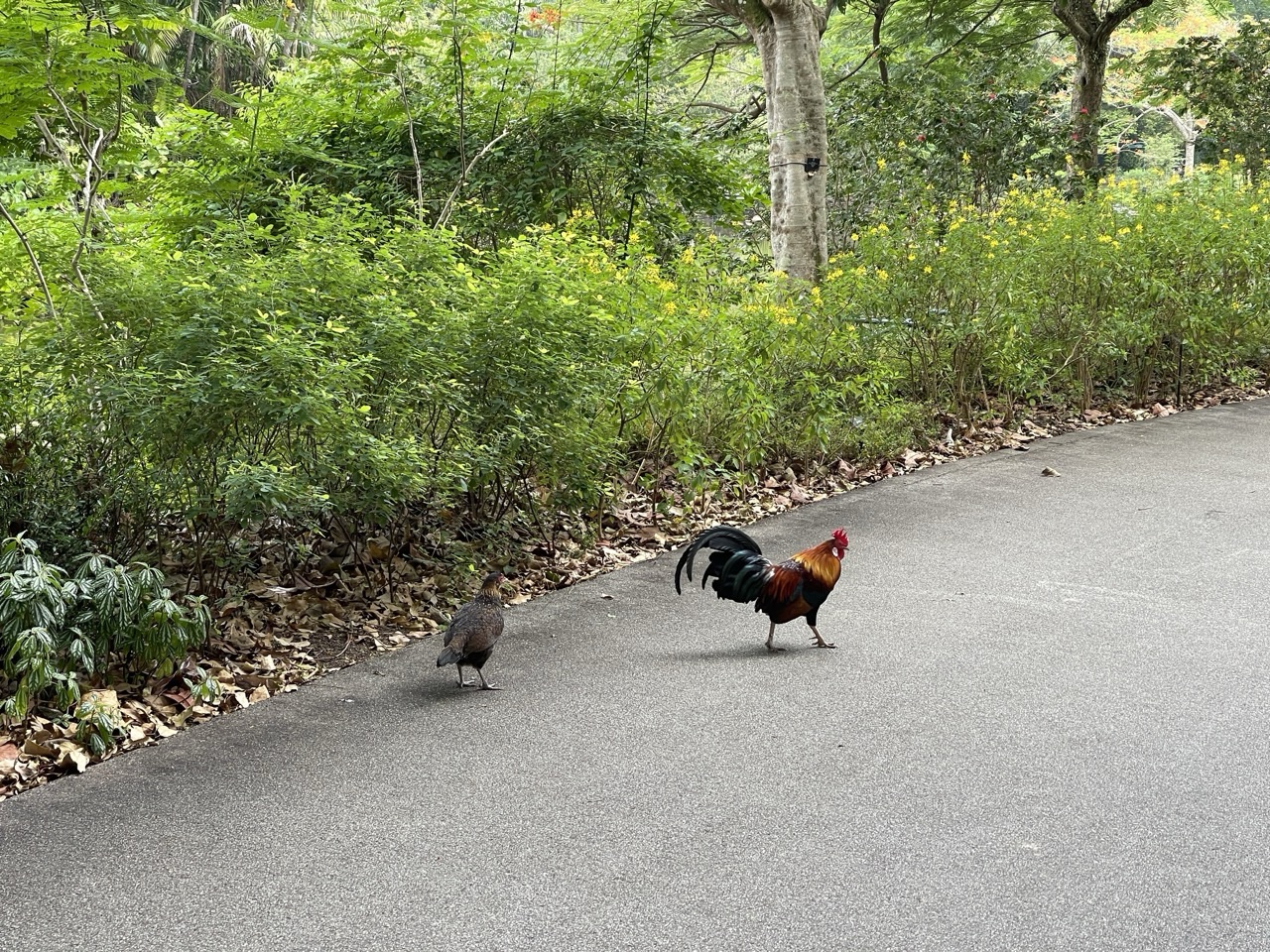
Singapore Botanic Gardens offers a rewarding introduction to birdwatching because several kinds of habitat sit within one public landscape. Start with a small area such as Eco Lake near the Bukit Timah side, watch from permitted paths and record what the birds do before worrying about naming every species.
The Gardens is a living place rather than a display with guaranteed sightings. NParks reported in 2024 that more than 180 bird species had been recorded there over time. That historical record describes the site’s importance; it is not a count you should expect to see on a morning walk. A short visit becomes more interesting when you learn to distinguish a sighting, a sound, an inference and a question.
This guide gives Bukit Timah families and first-time birdwatchers a practical way to choose a habitat, organise a field note and compare visits without disturbing wildlife. Suggested observation sessions and calculations are original learning exercises. They are not an official survey protocol, a guided-tour booking or a prediction of which bird will appear. Follow current access notices and the Gardens’ visitor rules throughout.
| Record | What it means |
|---|---|
| Detection | An occasion on which you noticed a bird; it may repeat an individual. |
| Individual count | An estimate of different birds, requiring care about repeated sightings. |
| Species count | Different identified species, with uncertainty marked. |
| Observation effort | Time and conditions needed to interpret your own records. |
eduKateSG · Bukit Timah neighbourhood guides
Choose your reading route
Understand the visit · Plan arrival · Choose activities · Solve practical problems · Read ten quick answers
Chapters 1–5
1. Start by watching behaviour
2. Understand why habitats differ
3. Choose a first observation area
Look for an action you can describe
A bird perched in a tree is already doing something worth noticing. Does it remain on one branch, move between leaves, look towards the ground or make repeated short flights? Describe the action in ordinary words before reaching for a species name. This gives you a reliable observation even when the bird disappears quickly. A child who writes ‘a small bird moved between three low branches’ has recorded more useful evidence than one who confidently supplies an unverified name. Keep the description brief enough to finish while the memory is fresh. The first skill in birdwatching is noticing what actually happened.
Let identification remain a question
You do not need to solve every sighting immediately. Record the features you saw—relative size, body shape, bill, colours, movement and location—then compare them with a reliable guide later. Distinguish a feature you clearly observed from one hidden by leaves or poor light. If a photograph is available, it can help, but a blurry image does not justify certainty. Write ‘unidentified small bird’ when that is the honest conclusion. This is a productive result because it preserves evidence for learning. Over time, careful descriptions make identification easier, while premature guesses can teach you to overlook the features that matter.
Look beyond a single attractive tree
Birds use a landscape in relation to food, cover, water and other conditions. A lakeside edge offers a different setting from a dense canopy or an open lawn. You do not need to know the ecology of every species to notice this variety. Start by describing the place: open water beside vegetation, shaded trees over a path, or a clearing with scattered shrubs. Then observe which part of it the bird uses. This habit connects an animal to its surroundings instead of treating a sighting as an isolated collectible. The question changes from ‘what did I see?’ to ‘what was happening here?’
Use the Gardens as a comparison landscape
NParks has identified several important habitat areas in the Gardens, including Eco Lake, the primary Rain Forest, parts of the Learning Forest and the freshwater stream at Gallop Extension. These names suggest different observation opportunities, not a requirement to cross the whole site in one outing. Choose one area first and investigate how it looks and sounds from the permitted path. Save another habitat for a separate visit. Comparing two compact sessions thoughtfully can teach you more than rushing through five areas. The habitat descriptions in the official source are conservation context, rather than a promise that particular birds will be visible on demand.
Eco Lake is a useful northern starting idea
For visitors approaching from Bukit Timah, Eco Lake provides a clear place around which to organise a compact first session after checking the current map. Choose a safe public viewpoint and stay out of planting or habitat areas. Watch the relationship between water, surrounding vegetation and open space. You might hear more than you see, or notice no bird at your first stop; either outcome can still support a careful record. Do not walk closer to the water’s edge merely to force a sighting. The aim is to learn how to observe from a suitable place, not to reach every part of the habitat.
Keep the first route small
Pick a starting point, one or two observation stops and a return entrance. Allow time to stand quietly rather than filling the whole visit with movement. If the first area is busy, use a different suitable point on the permitted path instead of pushing into vegetation. A compact route is especially useful with children, who can compare nearby settings without becoming tired during a long transfer. Treat additional sights as optional. Birdwatching often rewards staying attentive in a modest area; an ever-growing itinerary can make you walk past the very behaviour you came to notice. A good first session leaves you curious enough to return.
Use the entrance as a route decision
The official visitor information identifies Botanic Gardens MRT on the Circle and Downtown lines for the Bukit Timah Entrance, and Napier MRT on the Thomson–East Coast Line for Tanglin. Choose according to the area you intend to observe. A northern Eco Lake session and a southern heritage-landscape session need not start at the same gate. Check the final station-to-entrance connection and the route inside the grounds. Meeting friends at an exact entrance prevents an outing from beginning with a long search for each other. If you are carrying binoculars or a camera, a clear arrival also leaves your attention free for the landscape.
Do not confuse the gate with the birding stop
Allow time to move from arrival to the actual observation area, find a place to wait considerately and settle the group. That transition is part of the visit. Rushing straight from transport into a timed observation makes it harder to notice the surroundings and easier to forget practical details such as the return route. If the group needs a washroom stop, do it before the main session when possible. The first few minutes can simply be orientation: identify the path, the habitat and a comfortable place to stand. A calm start makes a beginner more likely to hear and see something worth recording.
Use opening hours as boundaries
The general Gardens opening span does not apply to every nature area. The official page lists the Rain Forest and Learning Forest with daytime access, so check the specific area before planning an early or late session. A broad gate-opening time is not permission to enter a collection that is closed. Plan enough time to leave the area before its closing boundary. If you prefer a quieter session, consider your own experience of the location and current conditions rather than assuming that one hour guarantees birds or empty paths. The useful plan is one that remains enjoyable even when the expected sighting does not appear.
Record when you observed
Time is part of a field note because it helps describe the conditions under which you watched. Write the date, start and finish, weather as you experienced it and whether the area was unusually busy. You do not need specialised instruments to make a basic record; a plain description such as ‘bright, warm, light breeze’ is better than an invented measurement. Keep the same style of notes when returning so that comparisons are easier. These details cannot explain every difference in sightings, but they prevent you from treating two very different sessions as though only the bird population changed. Good comparison begins with context.
Binoculars are helpful, not compulsory
Start by finding the bird with your eyes, noting a stable reference such as a branch, then bringing binoculars up while keeping that reference in mind. Practise on a stationary object before trying a moving bird. If you lose the subject, lower the binoculars and relocate it rather than sweeping around in frustration. A beginner can also observe without optical equipment, especially when learning broad behaviours and habitat features. Choose what you already have and can use comfortably. Spending the whole outing adjusting unfamiliar equipment can leave less time for noticing. Confidence grows from a clear view of an ordinary observation, not from carrying the largest kit.
Carry a small recording method
A notebook or phone note is enough for an informal field record. Prepare headings before arriving: place, time, habitat, bird description, behaviour and confidence. Keep the format short so recording does not interrupt the entire visit. If using a phone, step aside where you will not block the path while typing. Photographing a bird can support the note, but remember to observe beyond the screen. The sound, movement and context may not appear in the image. At the end of the session, spend a minute completing uncertain details honestly, marking what you remember clearly and what you would need to verify.
Separate evidence from interpretation
Try two columns in your mind: what I observed and what I think it might mean. ‘The bird picked at a leaf three times’ is an observation. ‘It was searching for insects’ is an interpretation that may be plausible but is not established by the sentence alone. Keep both if they interest you, with the distinction clear. This habit protects the quality of your notes without making the activity formal or intimidating. Children often enjoy testing possible explanations, provided an adult does not turn the first guess into the official answer. A good question can remain open until you have more evidence.
Describe location without exposing sensitive details
For an ordinary outing, a broad public location and habitat description can be sufficient. Avoid sharing precise sensitive wildlife locations or drawing a crowd towards an animal that needs space. If you notice nesting or vulnerable behaviour, keep your distance and seek appropriate guidance before publicising details. A personal note can record that an observation occurred without turning it into an invitation for others to approach. Think about what a reader would do with the information. The purpose of documentation is to learn and, where appropriate, contribute responsibly—not to make the animal easier to disturb for the next photograph.
Calculate a rate with a clear denominator
Imagine one informal session records six bird detections during 15 minutes, while another records eight during 20 minutes. The simple rates are 6 ÷ 15 = 0.4 detections per minute and 8 ÷ 20 = 0.4 detections per minute. The second session has a larger total but the same calculated rate. These invented numbers illustrate why observation time matters. They do not describe actual Gardens sightings or a formal ecological survey. Define a detection before counting, and remember that the same individual might be noticed more than once. A rate can clarify a comparison only when the numerator and denominator mean something consistent.
Explain what the calculation cannot prove
Equal rates do not establish equal bird populations. The observer’s skill, weather, visibility, noise and bird movement can all affect what is detected. Nor does a count of eight detections necessarily mean eight individual birds or eight species. Write those quantities separately. A useful conclusion from the exercise is modest: with these invented records, the detection total increased in proportion to observation time. A stronger claim would need a suitable method and more evidence. This is a good family learning moment because the arithmetic is straightforward while the interpretation requires care. Mathematics helps ask a better question rather than supplying an ecological answer by itself.
Let the bird choose its distance
Stay on permitted paths and avoid pursuing an animal through vegetation. If a bird moves away as you approach, treat that as a reason to give more space. Do not keep closing the gap to recover the same photograph. Find a suitable place to watch and allow the activity to continue without your intervention. A bird that is free to leave may do so, and that is part of the experience. Teach beginners that a short distant observation can be a success. The quality of the visit is not measured by how close you get, especially when closeness changes the behaviour you wanted to observe.
Avoid attracting a performance
The Gardens prohibits feeding wildlife. For a considerate birdwatching session, also avoid trying to draw birds towards you with food, repeated calls or other attention-seeking tricks. This guide recommends passive observation so that the bird’s activity remains the subject. Keep voices low and equipment organised, especially when other people are already watching. If a group gathers, leave enough path width for ordinary visitors to pass. The landscape serves many purposes, and someone walking to a collection should not have to negotiate a wall of cameras. Your patience and positioning can protect both the wildlife experience and the shared use of the Gardens.
Use an image to answer a question
A photograph can help check a feature later, such as bill shape or a patch of colour. Decide what information you need before taking repeated frames. If the image is too distant to resolve it, write that limitation in the note rather than enlarging a blur into certainty. Keep a habitat photograph as well when it adds context without revealing a sensitive location. For beginners, a small collection of informative images is easier to review than hundreds of nearly identical frames. The camera supports observation; it does not have to replace the experience of watching the bird move through the landscape.
Let a missed photograph remain a good sighting
A bird can appear and disappear before you raise the camera. Describe it immediately and enjoy the fact that you saw it. Repeatedly chasing a missed image can turn a relaxed session into frustration and may disturb wildlife. If children are involved, model a calm response: say what was noticed, what remains uncertain and what might help next time. That teaches attention without demanding a trophy. Choose a new observation point only when it makes sense for the route and access rules. Sometimes remaining still and looking at the surrounding habitat gives you a different, equally interesting experience.
Use a short observation challenge
Give children one manageable question at a time: which part of the habitat is the bird using, how does it move, or what changes when it lands? A five-minute listening or looking exercise can be more engaging than a long list of species names. Keep the timing flexible and let children describe in their own words. An adult can help refine the description without replacing it entirely. If no bird appears, compare leaf movement, sound and shade while waiting. This keeps the visit connected to the actual environment instead of turning absence into failure or encouraging the group to chase a sighting elsewhere.
Build an honest learning record
Ask each child to choose one observation, one possible explanation and one question. For example: ‘A bird stayed near low plants’; ‘perhaps it found food there’; ‘what was it picking up?’ The structure gives uncertainty a useful place. Later, use a reliable reference to investigate the question without claiming the answer was visible all along. This can support English through precise description, Science through evidence and Mathematics through carefully defined counts. The outing can also remain simply enjoyable time together. There is no requirement to extract a worksheet from every moment. The best learning often begins when a child wants to return and look again.
Choose a viewpoint everyone can use
An observation area is useful only if your group can reach it comfortably and wait without obstructing others. Check the map and Gardens access information when travelling with a wheelchair or pram. A destination-wide accessibility statement does not guarantee that every preferred camera position is appropriate. Choose the viewpoint around the person’s needs rather than asking them to wait elsewhere while the group pursues a sighting. A shared view of a habitat can support rich observation even when it is not the position an experienced photographer would select. The outing should remain a group activity, with a clear return and reachable facilities.
Plan the visit separately from a pet walk
Several important nature areas in the Gardens are on the official no-pet list. If the intended birdwatching route depends on one of them, do not assume a dog can accompany the group. Check the precise area and its current restrictions before travelling. A dedicated pet walk and a focused birdwatching visit may work better as different outings. Even on permitted paths, keep pets away from wildlife. The practical principle is to make the activity and access rules fit from the start. Avoid building a plan in which one adult and the dog repeatedly wait outside while the rest of the group enters a collection.
Compare like with like where possible
Repeat a modest observation from a similar place for a similar duration, recording the conditions each time. This makes comparison more meaningful than placing an hour-long quiet session beside a brief crowded walk. Use the same definitions for sightings, individuals and species, and mark uncertainties consistently. Even then, differences in your notes are observations from your visits, not proof of a long-term population trend. Treat them as reasons to ask questions. A beginner’s valuable progress may be noticing more detail or identifying fewer birds with unjustified confidence. Better records can appear less dramatic while actually becoming more reliable.
Include sessions with no detections
A session in which you detect no bird is still part of your personal record. Write the duration and conditions rather than deleting it because it feels disappointing. Be precise with the conclusion: you did not detect birds during that session. You have not shown that the habitat contains none. This distinction is especially important when explaining results to children, who may naturally turn ‘I did not see it’ into ‘it was not there’. A good field note preserves the limits of observation. It also gives you a fairer picture of your own experience than a scrapbook containing only unusually successful visits.
Understand the difference from an informal walk
NParks’ Garden Bird Watch is a citizen-science initiative that uses community observations to support knowledge about birds and park management. Participation involves its own current arrangements and methods. Check the official programme information if you want to contribute rather than assuming that any casual count automatically qualifies as survey data. The field-note habits in this guide are useful preparation: observe carefully, record effort and separate evidence from inference. They are not a substitute for programme training or instructions. When contributing to a shared dataset, consistency matters because other people need to interpret your record alongside observations made by different volunteers.
Start with a realistic commitment
Before joining an activity, check the date, location, training, registration and survey expectations. Choose a level of involvement that your schedule and experience can support. A family can first practise identifying a few familiar features and keeping a clear note, then decide whether a structured programme suits them. Do not promise children an official survey place before registration is confirmed. Informal visits remain valuable even if you never join a programme. Curiosity, care for wildlife and accurate descriptions are worthwhile habits in their own right. A formal contribution becomes stronger when it grows from those habits rather than a desire to collect a label quickly.
Finish without changing the place
Take belongings and litter with you, leave plants and animals undisturbed and avoid marking a spot for your next visit. There is no need to arrange vegetation or move an object to improve a future view. If another group arrives, share the public space considerately without directing them towards sensitive wildlife. A brief description of ordinary activity can be friendly; a crowd-building announcement about a vulnerable animal can have different consequences. Think beyond the moment in which you make the record. Responsible birdwatching preserves the possibility that both the birds and later visitors can continue using the landscape without your outing having altered it unnecessarily.
Choose one question for the next visit
Before leaving, ask what you would like to understand better. Perhaps you want to compare the lake edge with a shaded path, recognise a recurring call or learn to distinguish two similar shapes. Choose one question rather than a long list of targets. Note the practical details that worked: the entrance, the session length and the recording method. Recheck official notices before returning, then use the earlier note as a starting point rather than a prediction. Birdwatching becomes satisfying when familiarity and surprise can coexist. You know how to look more carefully, while the living landscape remains free to offer something different each time.
Is Singapore Botanic Gardens good for beginner birdwatching?
Its varied habitats and public visitor infrastructure make it a useful place to practise observation. Start with one small area and watch from permitted paths. The quality of a beginner session depends on attention and responsible behaviour, not a guaranteed number of species. Keep expectations flexible and record what you actually see or hear.
How many bird species can I expect to see?
There is no reliable fixed number for an individual visit. NParks’ 2024 statement that more than 180 species had been recorded concerns accumulated records over time. It should not be turned into a morning target. Conditions, habitat, observation duration and your experience all influence what you detect.
Where should a Bukit Timah visitor begin?
Eco Lake is a useful area around which to plan a compact northern session after checking the official map and current access. Botanic Gardens MRT serves the Bukit Timah Entrance. Choose a safe public viewpoint, allow time to settle and keep the return manageable. This is an editorial starting idea, not an official guided trail.
Do I need binoculars or an expensive camera?
No expensive purchase is needed to begin noticing behaviour and habitat. Binoculars can improve a distant view, and a camera can support later checking, but both require practice. A clear written description of an ordinary observation is valuable. Use equipment you can handle comfortably and avoid letting it occupy the whole outing.
What should I write down?
Record the place, date, observation duration, conditions, habitat, bird features and behaviour. Mark uncertainty clearly. Keep a sighting total separate from an individual-bird or species count, and define what you mean by each. A short consistent note is more useful for comparison than a confident label with no supporting details.
Does no sighting mean there are no birds?
No. It means you did not detect birds in that place during your session. Visibility, sound, movement and your own attention affect detection. Keep the record with its duration and conditions. This modest conclusion preserves the evidence and avoids turning a limited observation into a claim about the whole habitat.
Can I feed birds to bring them closer?
No. Feeding wildlife is prohibited by the Gardens’ rules. Watch without attracting a performance, remain on permitted paths and keep your distance. A closer photograph is not a reason to alter the bird’s activity. Patient observation lets the animal’s own behaviour remain the subject of the visit.
Should I share every bird’s exact location?
Think about the possible effect before sharing. Sensitive or vulnerable wildlife, especially nesting activity, can be disturbed by extra attention. A broad habitat note may be enough for your learning record. Seek appropriate guidance before publicising details that could draw people towards an animal needing space, and avoid encouraging off-path approaches.
Can children learn without knowing species names?
Yes. Describing movement, location, shape and behaviour builds strong observation skills. Ask children to separate what they saw from what they think it means, then keep one question for later investigation. A species name can be added when the evidence supports it. Accurate uncertainty is a useful learning outcome, not a failure.
Is this guide a Garden Bird Watch survey method?
No. The examples are informal learning exercises and editorial visit suggestions. NParks’ citizen-science programmes have their own current participation and recording requirements. Read the official programme guidance before contributing, and follow its instructions. The observation habits here can prepare you, while an ordinary family visit remains worthwhile in its own right.
Official sources and further reading
Visitor information checked on 18 October 2026. Opening arrangements and local access can change. Suggested timings, sample budgets and learning activities in this guide are eduKate editorial examples, not official tours or guarantees.
NParks: Birds of Singapore Botanic Gardens, 2024 announcement — Historical species-record context and habitat conservation; the exhibition announcement is not a current exhibition listing.
Singapore Botanic Gardens: Visitor Information — Maps, entrances, attraction hours and visitor rules.
NParks BiodiversitySG: Garden Bird Watch research and conservation — Context for organised citizen science, separate from the informal exercises in this guide.
Continue with our Bukit Timah things-to-do guide and Bukit Timah Gate arrival guide.
Continue learning: Day 28 Singapore Botanic Gardens vocabulary
Related Touring Singapore vocabulary: For the wider ecology, orchid collections and conservation vocabulary behind a birdwatching visit, explore Top 100 Singapore Vocabulary Words | Day 28: Singapore Botanic Gardens, UNESCO and Orchids. The Touring Singapore master hub connects this subject to the other numbered days. This is further reading, not a replacement for any current venue or access advice.