
If you encounter a snake during a Bukit Timah walk, stay calm, give it space and back away slowly. Leave it alone, avoid touching or cornering it, and allow it a way to retreat. AVS advises calling NParks’ Animal Response Centre on 1800-476-1600 when a snake is injured, distressed or trapped. Seek immediate medical attention if a bite occurs.
Snakes belong to Singapore’s natural landscapes, including forests, parks and some urban environments. Understanding them can make a family outing calmer and more interesting. A snake is a predator, a possible meal for another animal and a living part of the food web. Its presence does not turn a nature reserve into an attraction where visitors should try to find or approach one.
This guide combines current official encounter advice with clear explanations of reptile biology and practical family planning. It does not identify an unseen animal or promise sightings on a particular trail. You can have a rewarding Bukit Timah visit without seeing a snake at all: learning how the forest works is already a good reason to slow down, look carefully and enjoy the walk.
eduKateSG · Bukit Timah nature and neighbourhood
Choose your reading route
Understand the subject · Explore the science · Plan a thoughtful visit · Try a worked learning example · Read ten quick answers
| Situation | Useful response |
|---|---|
| Snake in natural habitat | Give space, back away slowly and leave it alone. |
| Injured, distressed or trapped snake | Call NParks’ Animal Response Centre: 1800-476-1600. |
| Uncertain identification | Keep the uncertainty; do not approach for a better look. |
| A bite has occurred | Seek medical attention immediately. |
Pause before the group reacts
When one person notices a snake, the most useful first contribution is a calm, clear message to the others. Stop the group from moving towards it, give children direct instructions and step back slowly. Do not turn the moment into a contest to see who can get closest. A group that remains together and leaves space is easier to manage than several people scattering around the animal. The official advice is to let the snake retreat, which means thinking about its available space as well as your own. Your task is to manage the people, not to organise the snake’s next move.
Leave an ordinary encounter ordinary
A snake moving through suitable habitat may need no intervention from visitors. AVS advises leaving it alone, especially in its natural habitat. Avoid interpreting every sighting as a rescue situation or proof that an animal is lost. If its condition or position creates a concern that needs assistance, use the official response channel and explain what you actually observed. Keep a distance while doing so. A calm encounter can be brief: you notice the animal, give it room and continue when the route is suitable. There is no obligation to obtain a photograph or remain until something dramatic happens.
A reptile with a different body plan
A snake is a reptile with an elongated, limbless body and overlapping scales. Its body plan allows forms of movement very different from our own, and that unfamiliarity is one reason people can react strongly. Begin with ordinary descriptive language when explaining it to a child. ‘It is moving along the ground’ is a useful observation; ‘it is coming to attack us’ is a conclusion that the movement alone does not establish. Understanding a body plan does not require touching the animal. A diagram, official photograph or reputable reference is a better place to examine details than a live encounter on a shared trail.
Scales do not make every reptile equivalent
A long shape or patterned skin is not enough to identify a species or decide how to handle it. Different snakes have different ecologies, and a visitor may see only a short section of an animal under difficult light. Resist the temptation to turn a broad description into certainty. The useful response remains the same while identification is unresolved: give space and avoid handling. This is a helpful lesson beyond snakes. In nature, a rough category can support curiosity without justifying a specific claim. You can learn what makes a reptile distinctive while keeping a particular sighting honestly labelled as unidentified.
Forest habitat is part of the neighbourhood
Bukit Timah’s appeal includes its proximity to protected forest and surrounding green spaces. Those landscapes support animals as well as human recreation. A wildlife encounter therefore belongs within the possibility of a nature walk, even when it is unusual for an individual visitor. This is a reason to prepare sensibly, not a reason to expect a snake around every corner. Read the reserve’s current visitor information, follow designated trails and understand the basic encounter response. Familiarity with the setting lets you enjoy the forest as a living place rather than treating any unscheduled animal appearance as a breakdown in the outing.
Urban edges also have ecological relationships
AVS explains that some snakes occur in urban areas where prey such as rodents and other small animals are available. A neighbourhood sighting does not automatically mean an animal has escaped from captivity or arrived from far away. At the same time, a general explanation cannot establish why one particular snake is in one particular place. Keep the difference clear. If you report an encounter, describe the location and observed condition rather than supplying a speculative story. The broader lesson is that the forest edge is a zone of interaction between habitats, buildings, people and wildlife, not a clean line beyond which ecological processes stop.
Ectothermic means relying on external heat
Snakes are ectothermic: their body temperature is influenced by external heat rather than maintained in the same way as a human’s. AVS describes their use of surrounding warmth in thermoregulation. For a learner, the useful idea is a relationship between the animal and its environment. It does not mean the animal is always cold, inactive or unable to move quickly. Nor does it give a visitor a reliable timetable for where a snake will be. Use the concept to understand why environmental conditions matter, while leaving prediction of an individual animal’s position and behaviour to careful evidence rather than a slogan.
Avoid turning biology into a sighting promise
A statement about reptiles using environmental heat can easily become an overconfident claim such as ‘you will find one here at this hour’. That leap is not supported by the general principle. Weather, species, shelter and many other circumstances affect behaviour. A family guide should help readers understand the forest without publishing a schedule for approaching wildlife. Ask children what information would be needed to make a stronger prediction, then recognise how little a passing visitor usually has. Good science often makes a claim more precise and modest. You can explain the biological principle clearly while admitting that the day’s actual sighting remains unpredictable.
The tongue provides chemical information
AVS describes snakes using their forked tongues to detect chemical signals. A tongue-flick is therefore worth understanding as part of sensing the environment. It is not, by itself, a complete explanation of the animal’s intentions. When a child sees a photograph of this behaviour, ask what can be observed directly and what would require interpretation. The visible action is the tongue moving; the biological explanation comes from a reliable reference. This distinction helps children combine observation with knowledge without assuming they can read every animal’s state from a single gesture. Keep live encounters distant rather than seeking a close demonstration of the feature.
Use several features when learning identification
In reference work, identification depends on more than one attractive feature. Body form, pattern, head details, habitat and distribution may all matter, and the relevant features differ between groups. A quick phone image may not show enough. Keep uncertainty in your notes and compare with authoritative material later. Do not move closer to obtain missing details, especially when you have no need to identify the animal for an immediate visitor decision. The basic response already works without a name. This is a useful example of acting appropriately under uncertainty: you do not have to solve the entire biological question before giving wildlife space.
Predators connect different populations
Snakes eat other animals, and AVS highlights their role in food webs and the biological control of rodents. That does not make every snake identical in diet or turn it into a tool whose only value is pest removal. A food web contains several feeding relationships, with each species interacting in particular ways. Explain the idea using a simple illustrative chain, such as plant material supporting a small animal that may be eaten by a predator. Label the chain as a teaching model rather than a confirmed record from the trail. The point is to see relationships, not to invent a meal for the individual snake you noticed.
Predators can also be prey
A snake can itself be eaten by another animal. This helps children move beyond the idea that every predator sits at the top of a single ladder. Food webs are networks, and the same organism can occupy several relationships. A diagram at home can show arrows from food towards the animal consuming it, with the arrow meaning explained clearly. Keep the example general unless the species and interaction are verified. Once children understand the network, a snake becomes easier to discuss as part of an ecosystem. Its unfamiliar shape remains interesting, but the conversation can shift from fear or spectacle to its place among other living things.
Different feeding strategies exist
AVS notes that snakes can subdue prey using strategies including venom and constriction. These are biological adaptations, not useful categories for deciding which unknown snake a visitor should touch. Avoid simplistic rules based on colour, shape or a remembered social-media tip. A short sighting can conceal important details, and a photograph may be misinterpreted. The responsible visitor response does not depend on proving that a snake is dangerous or harmless. Leave it alone and maintain space. For deeper learning, use an authoritative species account after the visit, where you can read carefully and compare features without placing yourself or the animal under pressure.
Do not make handling a test of knowledge
Knowing a species name is not a licence to catch, move or pose with it. A confident companion can be mistaken, and even a correct identification does not make an unnecessary intervention appropriate. Tell children that expertise includes knowing when to leave an animal undisturbed. If professional help is needed, the official response service can arrange trained assistance. Visitors contribute most usefully by giving accurate information and keeping others away from the immediate area. This principle makes the outing calmer because the group does not need to debate who knows most about snakes. The practical decision is already clear: nobody needs to handle the animal.
Give children a short, usable instruction
Before entering the forest, explain what to do if anyone notices an unfamiliar animal: stop, tell an adult and give it space. Keep the instruction short enough to remember during an unexpected moment. Avoid an alarming speech that makes the walk feel like a danger hunt. Children can understand that a forest is an animal’s home and that observation works best when the animal is free to continue its activity. Agree that nobody reaches into vegetation or leaves the trail to investigate a movement. Preparation gives curiosity a sensible framework. It also means the adult can respond to the child’s report without first inventing rules on the spot.
Choose a walk that suits the group
Use the current reserve map and route information to select a manageable outing. Include the return journey, rest needs and time to leave before closing. A wildlife guide is not a reason to add an unfamiliar trail to a first visit. If someone is anxious about snakes, begin with clear information and a modest plan rather than promising a sighting or promising there can never be one. Both promises exceed what you know. The family’s goal can be enjoying trees, learning one ecological idea and practising considerate trail behaviour. A successful day does not need an animal encounter to justify the trip.
Wait or change the plan calmly
If continuing would bring the group close to the snake, do not squeeze past for the sake of completing an itinerary. Give space, wait at a suitable distance or revise the route using current signs and the official map. Avoid surrounding the animal from several directions while deciding. Keep other visitors informed in a calm way without creating a crowd. The exact response depends on the setting, but there is no need to force the original plan. A delayed or shortened walk is easier to manage than an unnecessary close encounter. The snake does not have to move according to the group’s timetable.
Keep people out of the animal’s retreat space
Think about the position of the whole group, including a person who has stepped ahead for a photograph. If visitors occupy several sides, the animal may have less space than it first appears. AVS specifically advises against cornering snakes. Move the people back slowly and let the situation settle. Do not wave objects, poke vegetation or try to herd the animal across the trail. If assistance is needed, call the official response channel rather than improvising capture. The useful role for an adult is coordination: keep children close, ensure the route behind is suitable and communicate a simple next step to the group.
Report the condition and location
For an injured, distressed or trapped snake, AVS directs people to NParks’ Animal Response Centre on 1800-476-1600. Give a clear location, explain what you observed and follow the responder’s instructions. A nearby sign, recognised entrance or map reference may be more useful than ‘somewhere in Bukit Timah’. Do not approach merely to improve the report. If a photograph is already available from a distance, describe that honestly; if none exists, a plain account can still be useful. Distinguish what is happening now from what another visitor told you. Accurate, limited information is more valuable than a vivid story filled with guesses.
Keep assistance separate from personal rescue
An animal that appears trapped can prompt a well-intentioned attempt to lift a barrier or pull it free. AVS advises avoiding handling because it can increase stress, cause injury and provoke a defensive bite. Give the professionals the information they need and keep the group away while awaiting guidance. Do not let a desire to help become a reason to touch an unknown animal. The same applies to staging a photograph as proof of a rescue. The helpful action is the one that improves the situation, which may consist of making a call, providing a precise location and leaving trained people to manage the animal.
Sort a short encounter note
Consider this invented note: ‘At 9.10am, we saw a long, patterned animal move from the public path into vegetation. We watched from a distance for about 20 seconds.’ Direct evidence includes the time, location type, visible pattern and movement. The note does not establish the species, its previous location, its diet or its intentions towards the group. Ask a child to underline the observed details and circle any added interpretation. This exercise teaches a useful habit: write down the strongest available evidence first. A short accurate note is easier to improve later than a confident story whose original observations have become mixed with guesses.
Improve the conclusion without enlarging the claim
A suitable conclusion might be, ‘We observed a possible snake moving away, but could not identify it.’ That is more defensible than ‘A dangerous snake chased us’ if the recorded movement was towards vegetation. The adult’s practical response—giving space—remains appropriate while the identity is uncertain. Now change the example: suppose a responder later confirms the species from an existing image. Add that as a separate verified update, keeping the original observation intact. The lesson transfers to school Science and everyday information: a later explanation should strengthen the record, not silently rewrite what you actually knew at the time.
Use a photograph only when it adds information
A distant photograph may help later identification, but obtaining one is optional. Stay where the group can remain comfortable and the animal has room. Digital zoom or a crop cannot recover details that the original image never resolved, so be realistic about what a picture proves. A blurred patterned shape should not become a confident species label after repeated enlargement. If the encounter is brief, let it end. The outing has already provided a useful experience of noticing and responding calmly. Children benefit from seeing an adult choose space over a better frame when the two cannot be achieved together.
Avoid sensational captions
A caption such as ‘snake encountered on a nature walk; species unconfirmed’ tells readers what is known. A claim of an attack, infestation or unusual invasion needs evidence beyond the presence of one animal. Think about how sharing affects both public understanding and the location. Avoid inviting others to approach a particular animal or encouraging off-trail searching. If a wildlife issue needs assistance, use the appropriate response channel rather than assuming that a public post will reach the right people. Clear language preserves the interesting part of the encounter without amplifying fear or turning the forest into a stage for a dramatic story.
A forest encounter differs from a snake indoors
AVS provides separate guidance for snakes entering a house and for encounters in natural habitat. Do not transfer a casual trail response into a plan for handling a snake inside a home. Keep family members and pets away and seek the official assistance described by AVS. A general article cannot assess a particular building or animal from afar. Give the responder the actual situation and follow the relevant instructions. The important distinction is the setting: a snake continuing through forest habitat and one confined inside a room create different practical questions, even when the animal’s species is still unknown.
Use prevention advice in its proper setting
AVS connects some urban encounters with available prey and discusses property practices such as proper food-waste disposal. That neighbourhood advice does not mean visitors should tidy a forest floor, remove dead wood or alter vegetation in a reserve. Habitat management belongs to the responsible authority. Keep the context attached to any advice you share. A measure intended for a residential property can be harmful if copied into a protected natural area. For a visitor, the useful actions remain straightforward: respect trail boundaries, manage your belongings and leave the habitat intact. Ecological understanding improves when we distinguish a home, a street and a forest rather than treating them as the same environment.
Build a simple comparison at home
After the walk, compare reptiles with mammals using reliable reference material. Choose features that can be explained accurately, such as body covering, temperature regulation and broad reproductive differences, while recognising that large groups contain exceptions. Keep the comparison age-appropriate and avoid making a child memorise a list detached from the outing. Ask which feature surprised them and what question remains. A drawing can label a snake’s scales and tongue without relying on a live animal being nearby. The visit becomes a starting point for learning because it supplied a meaningful context, not because every biological answer had to be delivered on the trail.
Keep the next outing enjoyable
Choose one useful question for a return visit: how does shade change along the path, what habitats appear beside it, or how can you describe an animal without guessing its name? None requires finding another snake. This keeps the family’s interest broad and prevents a rare encounter becoming a target. Review the route and current notices again before returning. The forest will be different in small ways each time, and that is part of its appeal. A calm, observant walker can enjoy familiar trees, changing sounds and the possibility of ordinary discoveries while remaining ready to give unexpected wildlife the space it needs.
Agree who leads the response
In a family or small group, agree that one adult gives the immediate instruction while others help children pause and move back. Several contradictory commands can make a simple encounter harder to manage. The designated person does not need expert identification skills; they need to keep the response calm and aligned with official advice. If a call is necessary, another adult can provide the location while the rest of the group stays clear. Do not put a child in charge of watching the animal at close range. Preparation works best when it reduces the number of decisions needed during a surprising moment.
Recognise a sensible finish
The group can continue when the route is suitable, choose another verified route or end the visit. Nobody needs to prove bravery by walking closer than they are comfortable with. If a bite occurs, the priority is immediate medical attention, as AVS states, rather than completing identification or finishing the hike. For an ordinary sighting without injury, a calm departure can be the whole story. Discuss afterwards what the group did well: someone noticed, others listened and the animal received space. Those are concrete skills that make future nature visits more comfortable and respectful, even when no further snake is seen.
What should I do if I see a snake?
Stay calm, give it room and back away slowly. AVS advises leaving snakes alone in natural habitat and avoiding touching, chasing or cornering them. Keep the group clear rather than crowding around. You do not need to identify the animal before making space or decide that it is harmless before leaving it undisturbed.
Should I try to move it off the trail?
Do not handle or herd it yourself. Give space and revise the walk if necessary. If it is injured, distressed or trapped, call NParks’ Animal Response Centre on 1800-476-1600 and follow the guidance provided. A visitor’s useful contribution is accurate information and managing the group, not attempting an improvised relocation.
Can I identify danger from colour or head shape?
Do not rely on a single casual visual rule to decide how to approach an unknown snake. A passing view or unclear photograph may omit important features. Keep the animal unidentified when evidence is insufficient and use authoritative references later. The visitor response remains to give space and avoid handling, regardless of a confident companion’s guess.
Does a tongue-flick mean it is attacking?
AVS explains that the forked tongue helps detect chemical signals. That biological function is more informative than interpreting a single movement as a complete statement of intent. Observe from a distance and avoid provoking the animal. Use reference images for close study instead of approaching a live snake to watch the behaviour.
When should I contact NParks?
AVS directs people to the Animal Response Centre on 1800-476-1600 for injured, distressed or trapped snakes and gives further guidance for other snake-related situations. Describe the actual setting and condition clearly. A snake simply moving through its natural habitat may be best left alone with adequate space, rather than treated automatically as a rescue case.
What if someone is bitten?
Seek medical attention immediately, as the official AVS advisory states. Do not delay care while trying to capture the snake, obtain a close photograph or settle an identification argument. This visitor guide does not provide individual treatment instructions. The medical team should assess the person and the circumstances directly.
Are snakes guaranteed on Bukit Timah trails?
No. Wildlife sightings vary, and an article cannot promise one at a particular place or time. Choose a nature walk for the landscape, route and learning opportunities. A satisfying visit can involve no snake sighting at all. Stay on designated trails and follow current visitor information rather than searching off-path for an animal.
Can I bring a dog on a reserve snake walk?
Bukit Timah Nature Reserve lists pets as not allowed. Do not bring a dog to a reserve outing or use general pet guidance from another location as permission. Check the exact destination before planning. A dedicated nature visit and a dog walk may need separate routes and separate days.
Can children learn from an unidentified sighting?
Yes. They can record shape, movement, habitat and what remains uncertain, then compare reliable references later. Distinguishing observation from inference is a useful Science and English skill. A species name is helpful when supported by evidence, but it is not required for the child to learn or for the group to respond considerately.
Should I post the encounter online?
Consider what the post can establish and what effect it may have. Use an accurate caption, mark uncertainty and avoid sensational claims or directions encouraging people to approach the animal. If assistance is needed, report through the official response channel. A public post is not a substitute for a clear, timely request to the relevant service.
Sources and further reading
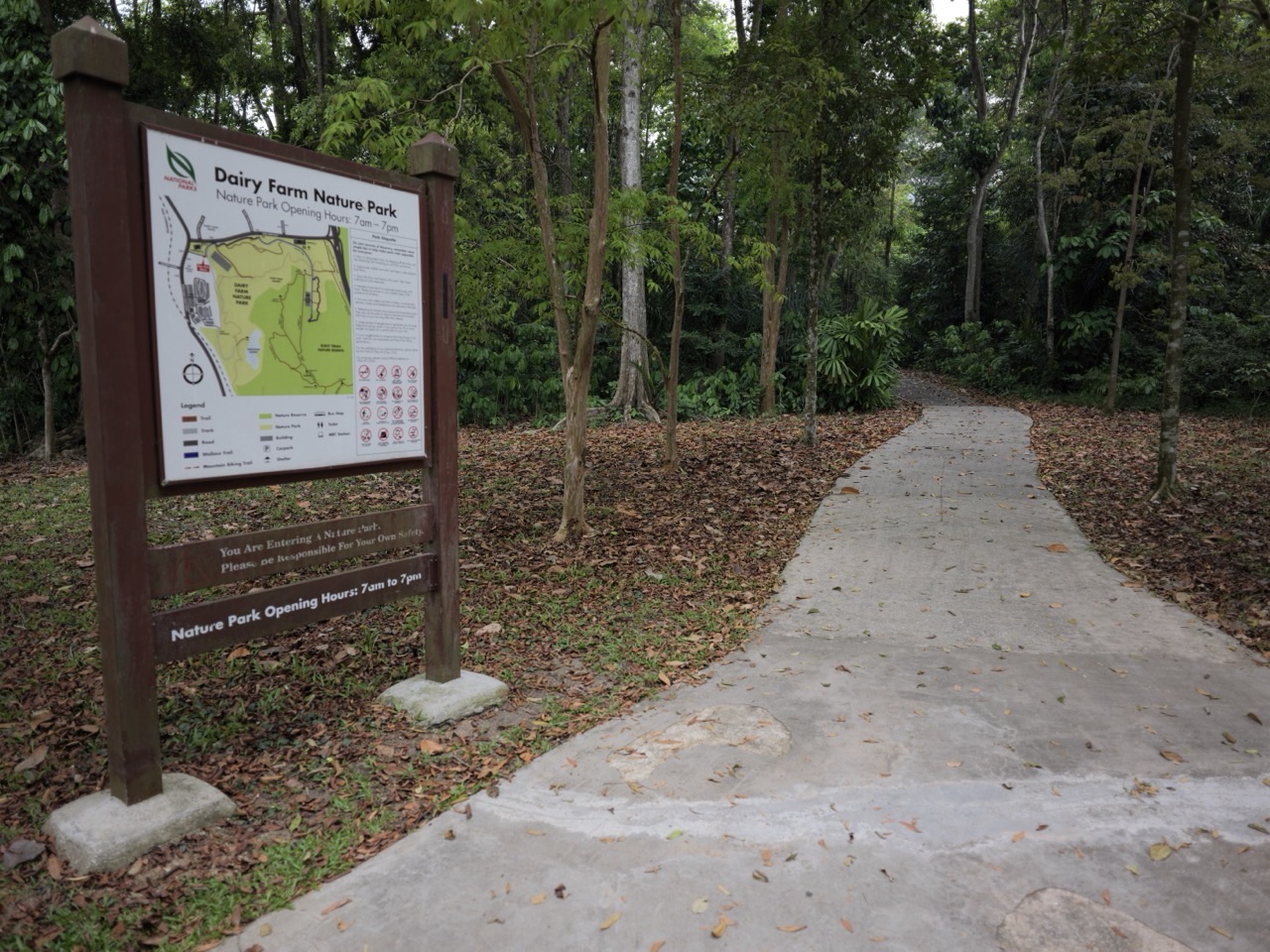
Information checked on 18 October 2026. Visitor arrangements can change. The worked calculations and family learning activities are original illustrative exercises, not local survey results or official guided programmes. The header photograph shows a public approach or forest setting in the Bukit Timah nature-park network; it does not promise an animal sighting.
AVS: Snakes in Singapore — Current encounter response, ecological background and assistance contact.
NParks: Bukit Timah Nature Reserve — Current reserve information, map, access and pet restrictions.
NParks: Nature parks and reserves etiquette — Trail conduct and protection of wildlife.
Bukit Timah Nature Reserve first-visit guide
Monkeys in Bukit Timah: the separate macaque guide
Pangolins in Bukit Timah · Insects in Bukit Timah · Bukit Timah rainforest layers