
The Sunda pangolin is native to Singapore, and AVS identifies Bukit Timah Nature Reserve among the forest areas where it occurs. It is a shy, mainly nocturnal mammal that feeds on ants and termites. If you encounter one, give it space, leave it undisturbed and avoid approaching, touching, chasing or cornering it.
That combination makes the pangolin a fascinating neighbour and an unsuitable target for a sightseeing promise. A daylight forest walk can teach a great deal about its habitat without producing a sighting. The better question is how a forest supports an animal you may never see, and what people can do to keep an unexpected encounter calm.
This guide explains the animal’s features, its place in the food web and the practical meaning of conservation around Bukit Timah. For injured, distressed or trapped pangolins, AVS directs people to NParks’ Animal Response Centre on 1800-476-1600. The activities and calculations below are original teaching examples, not a population estimate, tracking guide or invitation to search restricted areas.
eduKateSG · Bukit Timah nature and neighbourhood
Choose your reading route
Understand the subject · Explore the science · Plan a thoughtful visit · Try a worked learning example · Read ten quick answers
Chapters 1–5
| Question | Useful distinction |
|---|---|
| Scales mean reptile? | No. The Sunda pangolin is a mammal. |
| No sighting means absent? | No. A short walk provides limited detection evidence. |
| Animal appears distressed or trapped? | Contact NParks’ Animal Response Centre: 1800-476-1600. |
| Forest connection means a visitor route? | No. Follow public access information for the exact place. |
A distinctive native mammal
Singapore’s native pangolin is the Sunda pangolin, also called the Malayan pangolin, with the scientific name Manis javanica. A scientific name helps connect information across different common names, but you do not need to memorise it to understand the animal’s importance. Begin with a few clear ideas: it is a mammal, it lives in forested landscapes and it has specialised ways of finding and eating insects. Those facts make an ordinary neighbourhood map more interesting. The green areas around Bukit Timah are habitat, not simply a backdrop behind housing, roads and weekend walks. An animal can belong to that landscape even when visitors rarely notice it.
Use the name without promising a sighting
A species being recorded in a reserve establishes a relationship with the area; it does not identify a particular tree, path or hour at which a visitor will encounter one. Keep that distinction in a family plan. Tell children they will learn about pangolin habitat, rather than promising that they will see the animal. This makes the outing honest and leaves room for other discoveries. You might notice forest structure, insects from a public path or the way a road divides green spaces. The pangolin remains a useful focus because it connects these observations, even if the animal itself remains out of sight.
Appearance and classification are different questions
A pangolin’s overlapping scales can lead a child to assume it is a reptile. It is a good opportunity to ask what evidence classification uses. Mammals are a biological group, and a striking surface feature does not override the animal’s other characteristics and evolutionary relationships. Explain that appearances can be surprising: a mammal does not have to look like the familiar furry pet at home. Use a reliable diagram or photograph to compare features without touching a wild animal. The useful learning move is to revise the first guess when better information appears, rather than treating the unusual animal as an exception that makes classification meaningless.
Keratin is a familiar material
The scales are made of keratin, a structural material also familiar from human hair and nails. That comparison helps a child connect something unusual with something ordinary. It does not mean a scale is identical in shape or function to a fingernail; the arrangement and biological context matter. Ask which part of the explanation concerns material and which concerns purpose. ‘Made of keratin’ describes composition, while ‘provides protection’ describes a function. Keeping those questions distinct is useful in Science, where students often mix what a structure is made from with what it does. A simple animal feature can support a surprisingly careful conversation.
Ants and termites shape the animal’s needs
The Sunda pangolin specialises in feeding on ants and termites. Mandai’s animal information highlights how specialised that diet is, while AVS describes the claws used to dig and the tail used in climbing. Rather than memorising these as unrelated facts, link structure and function: the animal must locate suitable food, gain access to it and consume it. A forest that supports the animal therefore involves more than a space large enough for its body. It also needs the ecological relationships associated with that food supply. This is why a habitat cannot be judged only by whether it looks green in a photograph.
Do not turn food knowledge into feeding
Knowing an animal’s diet is not a reason to provide it with food. A wild pangolin finding food within its habitat is different from a person trying to attract one with a prepared offering. Leave wildlife undisturbed and follow the reserve’s rules against feeding. For learning, use a diagram connecting animal, food and habitat rather than staging an interaction. This distinction is easy for children to understand when explained positively: we want to watch the animal live its own life. A feeding attempt changes that behaviour and can create further problems, while an undisturbed forest visit can still produce many questions worth investigating afterwards.
Several structures work together
Mandai describes the long sticky tongue and strong curved claws associated with feeding, alongside a prehensile tail used in climbing. ‘Prehensile’ means capable of grasping, which is a useful word when linked to a concrete function. The animal is not simply an armoured shape moving along the ground. Its body supports activity in a three-dimensional forest environment. Ask a child to connect each structure to a task on a labelled drawing. Then ask what the drawing leaves out: movement, the actual surroundings and the conditions of a particular moment. A diagram simplifies reality so that a relationship can be understood; it does not replace the living animal.
Avoid interpreting every movement as a message
A visitor who sees a pangolin climbing, pausing or changing direction may be tempted to narrate its intention with confidence. Record the action first. ‘It moved towards a tree’ is an observation; ‘it came to ask for help’ is an interpretation that requires evidence. Even a familiar-looking gesture can have a different meaning in another animal. When the sighting is rare and exciting, careful language matters more, not less. Use official advice to decide whether assistance is needed based on the situation and condition, rather than imagining a story. Good observation lets the animal remain interesting without turning it into a human character performing for visitors.
Nocturnal does not create public access
AVS describes the Sunda pangolin as nocturnal. That helps explain why a daytime visitor may not see one, but it does not authorise a night visit to a closed reserve. Follow the current opening hours and signs for the exact destination. A protected area’s quiet hours are part of the animal’s habitat conditions. If your interest is learning about nocturnal wildlife, use official educational material or an appropriate organised activity with confirmed arrangements. Do not turn a biological fact into a reason to extend a walk beyond permitted hours. Understanding the animal includes respecting the time and space in which it can live without visitor pressure.
Absence from view is a limited observation
A family can walk through suitable habitat without detecting a pangolin. That observation says something about the visit, not everything about the animal’s presence. Low visibility, timing, behaviour and the small area you covered all limit detection. Write ‘we did not see one during this walk’ rather than ‘there are none here’. This distinction is valuable for children because it separates the world from what one person happens to notice. It also reduces disappointment. A quiet forest walk can be successful as an experience of habitat and responsible observation, with the unseen animal remaining part of the story rather than evidence that the outing failed.
A protective response deserves space
When threatened, a pangolin can curl into a ball, using its scales to protect softer parts of its body. That is a defensive response, not an invitation to pick it up or pose beside it. If you encounter one, the official advice is to avoid approaching, touching, chasing or cornering it and to observe from afar. Children can understand that protection and comfort are different things: an animal having a defence does not mean a stressful interaction is harmless. The kind action is to reduce the pressure. Let the response remind the group to step back rather than treating it as the most photogenic moment of the encounter.
A defence has limits
A biological defence works in particular contexts. A structure that helps protect an animal from some threats does not protect it equally from every human activity. Roads and exploitation introduce different problems from those a curled posture can solve. This is a useful way to explain conservation without exaggeration. Ask what the defence can do physically, then consider a threat that operates at a larger scale. The answer is not that the animal needs to become more cautious or more impressive. It is that people must manage human-created risks. Admiring an adaptation should therefore lead towards understanding its limits as well as celebrating its unusual form.
Habitat includes relationships
A suitable habitat provides the conditions and resources an animal needs over time. For a specialist feeder, that includes its food relationships; for a forest mammal, it also involves places to move and shelter. Avoid reducing habitat to the area inside a green polygon on a map. Two places can look similar from above while differing in structure, disturbance and connections. A visitor cannot fully evaluate suitability from one walk, but can learn to ask better questions. What is connected to this patch? What barriers surround it? How is the place managed? Those questions make the neighbourhood legible as an ecological landscape as well as a human one.
A nearby nature park has its own purpose
The Bukit Timah area contains the reserve and several surrounding nature parks. They are related parts of a larger green landscape, but they are not identical habitats or interchangeable visitor destinations. Check each place’s official access and route information. Do not assume that a path through one area continues through another without a boundary or change in rules. For a family outing, choose the public route that fits the group and use the wider map as a learning tool. The goal is understanding connections, not following an animal’s possible movements. Wildlife connectivity and human recreation can overlap in some places while serving different purposes.
Understand a major local threat
AVS identifies roadkill as a major threat to pangolins in Singapore. A road is therefore more than a line separating two green areas on a map. It is a space where animal movement and vehicle movement can meet with severe consequences. Explain this clearly without presenting every road as an equal risk or inventing a precise collision hotspot. The practical visitor lesson is to remain attentive around forest edges and avoid creating additional disturbance. A conservation discussion becomes stronger when it connects a species’ ordinary need to move with a specific human pressure, instead of treating endangered status as an unexplained label attached to an attractive animal.
Do not improvise a road rescue
Seeing an animal near traffic can prompt an urgent wish to help, but a visitor should not rush into a roadway or attempt handling. Use the official response channel and provide a clear location and description of the situation. Let trained responders advise on assistance. Keep other people from turning the moment into a crowd or a photography stop. The exact circumstances matter, and an article cannot direct a particular live incident from afar. The useful preparation is knowing whom to contact and what information to give. Good intentions become more effective when they work through a response that considers both the animal and the people nearby.
Connectivity answers a movement problem
A habitat connection can help animals move between places that would otherwise be separated. The official Bukit Timah information describes Eco-Link@BKE as a wildlife crossing between Bukit Timah and Central Catchment nature reserves. For a learner, the key idea is that conservation can involve the spaces between habitat patches as well as the patches themselves. This does not guarantee that any one animal uses a particular crossing at a particular time. Treat the connection as an ecological feature with a stated purpose, rather than a stage on which visitors should expect to watch wildlife. The map becomes more meaningful when you see why a gap can matter.
An ecological bridge is not automatically a hiking bridge
Public access must be checked separately from the existence of a connection. Do not assume that a structure designed for wildlife is a route you can enter because it looks like a bridge on a map. Use the official information and current signs for the exact site. Our existing Eco-Link guide addresses that distinction in more detail. It is a valuable family lesson: a city can provide infrastructure whose main users are animals. Respecting that purpose may mean appreciating it through explanations and approved viewpoints rather than walking across it. Understanding a place does not always require physical access to every part of it.
Give the animal a quiet margin
AVS advises observing a pangolin from afar and leaving it alone in its natural habitat. Keep the group back, avoid surrounding it and let it continue without following. A rare encounter can feel like an opportunity that must be used immediately, especially with a camera in hand. Choose a different measure of success: the animal remains undisturbed and the group knows what happened. A short distant view is enough. If it disappears from sight, do not move into vegetation or extend the outing beyond permitted access to recover the experience. The rarity of the moment makes restraint more valuable, not less.
Know when to seek trained help
For an injured, distressed or trapped pangolin, call NParks’ Animal Response Centre on 1800-476-1600. Describe the actual condition and location and follow the guidance given. Avoid handling it yourself. A useful report can include a nearby sign or clear public reference point, but do not approach solely to improve a photograph. Keep observed facts separate from assumptions about how the animal arrived there. The responder needs a dependable account more than a dramatic narrative. You can contribute to a good outcome by keeping people clear and providing information, even when the most visible action is carried out later by someone else.
Compare two imaginary records
Imagine two families each spend 30 minutes on an ordinary public trail. The first sees no pangolin; the second sees one. These are invented records for a reasoning exercise. You cannot conclude that the second area contains exactly one pangolin and the first contains none. Each record concerns a limited observation window, and an unseen animal may have been present outside the observers’ view. Ask children what was actually counted: detections during a visit, not all animals in the habitat. This distinction makes a large difference to the conclusion. The exercise is useful precisely because the numbers are small enough that the uncertainty is easy to discuss.
Add repeat visits without pretending certainty
Now imagine ten equal-length visits produce two detections in total. The simple detection frequency is 2 ÷ 10 = 0.2 detections per visit. That number does not mean there are 0.2 animals, nor does it establish that two different individuals were seen. It describes the invented observation record under the stated method. A population estimate would require a suitable research design and further information. The transfer lesson is to attach the quantity to its definition. Counts become useful when we know what they count, how effort was measured and what remains uncertain. This is a strong everyday mathematics habit as well as a conservation lesson.
A report differs from a public invitation
AVS encourages sharing sightings and useful media with relevant research and welfare groups. That purpose is different from posting an exact location to attract visitors. Think about who needs the information and what they will do with it. A responsible report can support understanding or assistance, while a widely circulated location may increase disturbance. Use the appropriate official or conservation channel and keep the original time and context with the record. If the animal needs help, make the response contact directly rather than hoping a social post will be noticed. The same photograph can have different consequences depending on where and how it is shared.
Keep the caption proportionate
A photograph can establish that an animal was visible at a time and place; it may not establish its health, home range or reason for being there. Avoid captions claiming that a pangolin is abandoned, lost or asking for rescue unless those conclusions are supported by appropriate assessment. Mark uncertain identification and distinguish a current sighting from an older image. Children can practise writing a factual caption and a separate question about the animal. This preserves the excitement without sacrificing accuracy. Good wildlife communication makes the viewer better informed and leaves the animal with more space, rather than converting a rare moment into a demand for public attention.
Understand local and wider pressures
AVS identifies the Sunda pangolin as Critically Endangered in the Singapore Red Data Book 2024. The official sources distinguish pressures such as road collisions and habitat change in Singapore from the serious wider problem of exploitation and trafficking. Keep those scales of discussion clear. A global threat should not be used as proof of what happened in a particular local incident, and a local success should not imply that the species’ wider situation is secure. Conservation involves several kinds of work operating together. Readers can appreciate the animal’s place in Bukit Timah while also understanding why its future cannot be assessed from one neighbourhood walk. The useful question is what evidence supports each claim and which action addresses the pressure being discussed.
Choose a practical contribution
Useful contributions include learning from reliable sources, respecting habitat boundaries, reporting relevant incidents through the right channel and avoiding pangolin products. If you want a more formal role, investigate current opportunities through recognised conservation organisations and confirm the actual requirements. Do not assume every advertised wildlife activity is an official programme or a chance to handle an animal. A quiet everyday contribution can still matter: a child understands why the forest closes, a family stops sharing precise sensitive locations, or a visitor makes an accurate report. Conservation is sustained by those ordinary decisions as well as specialist research and response work.
Link a feature to a task
Ask a child to complete three sentences: the claws help with a task, the tongue helps with a task, and the tail helps with a task. Then verify the answers using an authoritative illustration or description. This approach turns an unusual animal into a clear structure-and-function lesson. Avoid adding a claim simply because it sounds memorable. A story about armour can be engaging while remaining accurate about vulnerability. Encourage the child to ask which part of the animal they can actually see and which information comes from a reference. The distinction builds confidence in evidence, rather than rewarding whoever invents the most colourful explanation.
Let a drawing show uncertainty
A child’s diagram can label verified features and include a small question box for something they want to investigate. For example, they may wonder how the animal moves between ground and tree. The question need not be answered by a new live encounter. Use official educational material, a museum resource or a reputable filmed explanation. This protects the enjoyable part of curiosity while avoiding pressure to seek out an elusive animal. A good learning activity ends with clearer understanding and a worthwhile next question. It does not need a specimen, an exact wildlife location or an adult pretending to know every answer immediately.
Choose a public route everyone can manage
Use current maps, opening hours and access information for the reserve or park you intend to visit. Pick the walk for the group’s distance, terrain and rest needs, then add one habitat question. A pangolin theme does not require a long hike, a night search or an unfamiliar connection. You might look at the forest edge from a permitted path and discuss how a road changes movement. If accessibility needs shape the outing, check the specific route rather than borrowing a general description of the whole destination. The best learning plan is one that remains comfortable and meaningful even when no target animal appears.
End with what you understood
After the visit, ask each person to name one relationship they now understand: animal and food, habitat and movement, or public access and quiet wildlife time. Record one observation and one question. This is more useful than scoring the day by whether a pangolin was seen. A forest supports many lives that a passing visitor cannot detect, and recognising that is part of becoming an attentive neighbour. Choose a next outing based on the route and curiosity that worked, then recheck current information. Bukit Timah’s appeal grows when familiar green spaces become places whose hidden relationships you can explain with increasing care.
Are there pangolins in Bukit Timah?
AVS identifies Bukit Timah Nature Reserve among Singapore’s forest areas where Sunda pangolins occur. That establishes the area’s relevance to the species, not a guaranteed sighting on a public trail. Plan a visit around habitat learning and ordinary nature enjoyment. An animal can be present in the wider landscape while remaining unseen during your outing.
Is a pangolin a reptile?
No. The Sunda pangolin is a mammal despite its conspicuous scales. The scales are made of keratin, a material familiar from human hair and nails. This makes it a useful example of why biological classification cannot be decided from one unusual surface feature or from resemblance to a more familiar animal.
What does a Sunda pangolin eat?
Its specialised diet consists of ants and termites. Official descriptions connect its claws and long sticky tongue with feeding. Learning that relationship does not justify feeding or attracting a wild animal. Use a diagram or reference material to explore the biology, while leaving animals to obtain food within their own habitat.
Can pangolins climb trees?
Yes. Official descriptions identify climbing ability and a prehensile tail that helps grasp. That is one reason to think about the forest as a three-dimensional habitat rather than only ground space. Do not follow a climbing animal or try to bring it down. A distant observation is enough, and an unseen continuation remains part of its own life.
What should I do if I see one?
Give it space, observe from afar and avoid approaching, touching, chasing or cornering it. Leave it alone in natural habitat. Keep the group together and do not follow when it moves out of view. The rarity of a sighting does not create a reason to obtain a close photograph or interrupt its activity.
What if it is injured, distressed or trapped?
AVS directs people to NParks’ Animal Response Centre on 1800-476-1600. Provide the location and observed condition and follow the responder’s guidance. Avoid handling the animal yourself. Accurate information and keeping people clear are useful contributions while trained assistance is arranged; a visitor does not need to attempt a personal rescue.
Should I search the reserve at night?
No. Follow the reserve’s current opening hours and access rules. The pangolin’s nocturnal behaviour does not authorise entering a closed area. Quiet periods allow wildlife space. Use official educational resources or an appropriately organised activity with confirmed arrangements if you want to learn more about nocturnal animals without disturbing their habitat.
Why are roads a concern?
AVS identifies roadkill as a major local threat to pangolins. Movement between forested areas can bring animals into contact with vehicles. Discuss that relationship without inventing a local hotspot or approaching an animal near traffic. Report a concerning situation through the official response channel and let trained people advise on assistance.
Does not seeing a pangolin mean none live there?
No. A short walk provides limited detection evidence. Time, visibility, behaviour and the area covered affect what you notice. Write that you did not detect one during the visit, rather than making a claim about the entire habitat. This is a useful distinction for interpreting wildlife records and for school Science.
How can children help without seeing the animal?
They can learn the animal’s features, explain a food relationship, respect habitat boundaries and practise accurate observations. A simple habitat map or labelled drawing can support the learning. Keep one question for later investigation and use reliable references. Enjoying a forest responsibly is already a meaningful activity, whether or not an elusive mammal appears.
Sources and further reading
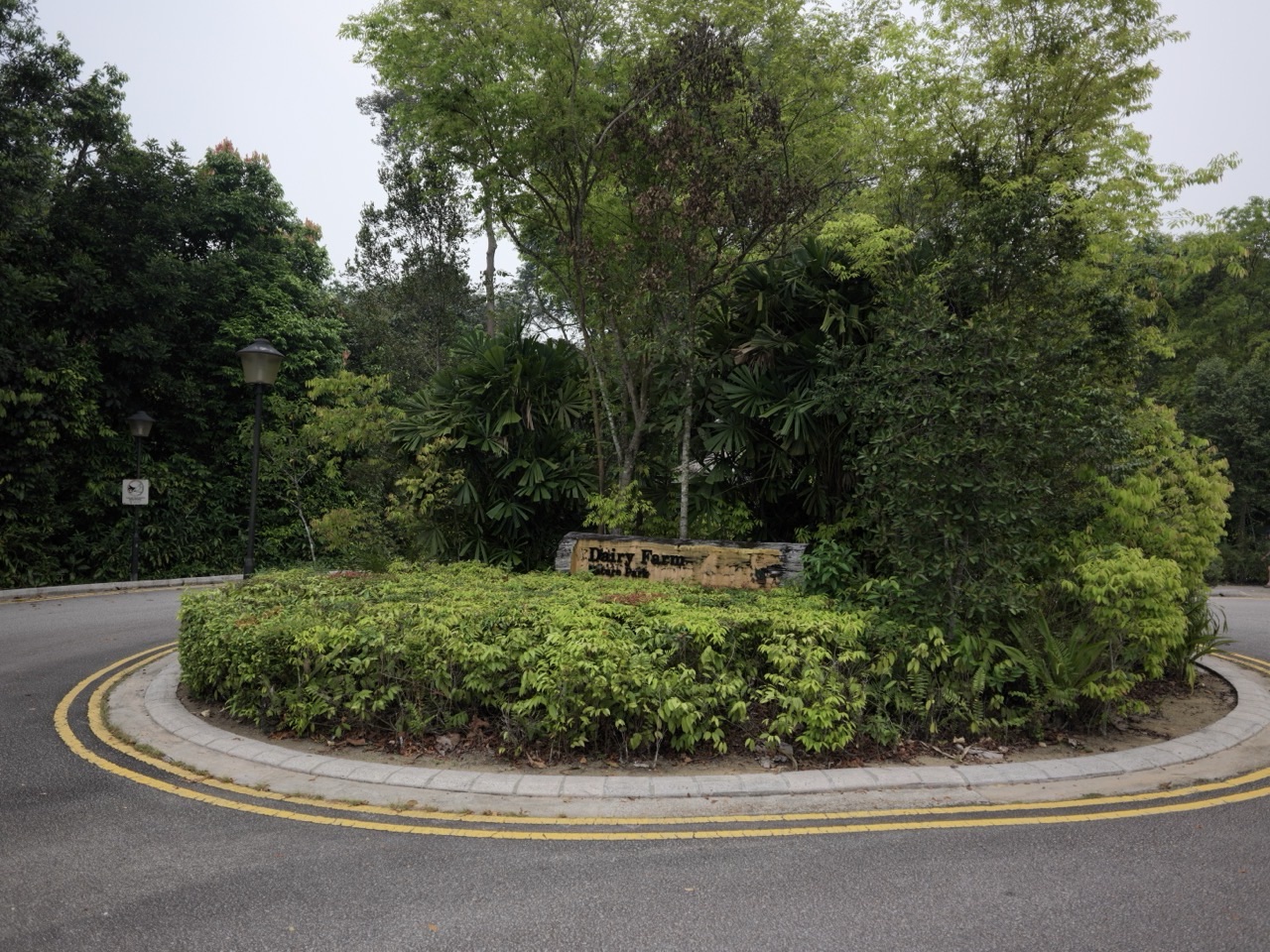
Information checked on 18 October 2026. Visitor arrangements can change. The worked calculations and family learning activities are original illustrative exercises, not local survey results or official guided programmes. The header photograph shows a public approach or forest setting in the Bukit Timah nature-park network; it does not promise an animal sighting.
AVS: Pangolins in Singapore — Distribution, encounter response, local threats and assistance contact.
BiodiversitySG: Sunda Pangolin — Features and ecological context; this guide does not adopt an undated population estimate.
Mandai: Sunda Pangolin — Specialised feeding and climbing features.
NParks: Bukit Timah Nature Reserve — Reserve visitor information and the ecological crossing context.
Bukit Timah Nature Reserve first-visit guide
Snakes in Bukit Timah · Insects in Bukit Timah · Bukit Timah rainforest layers