
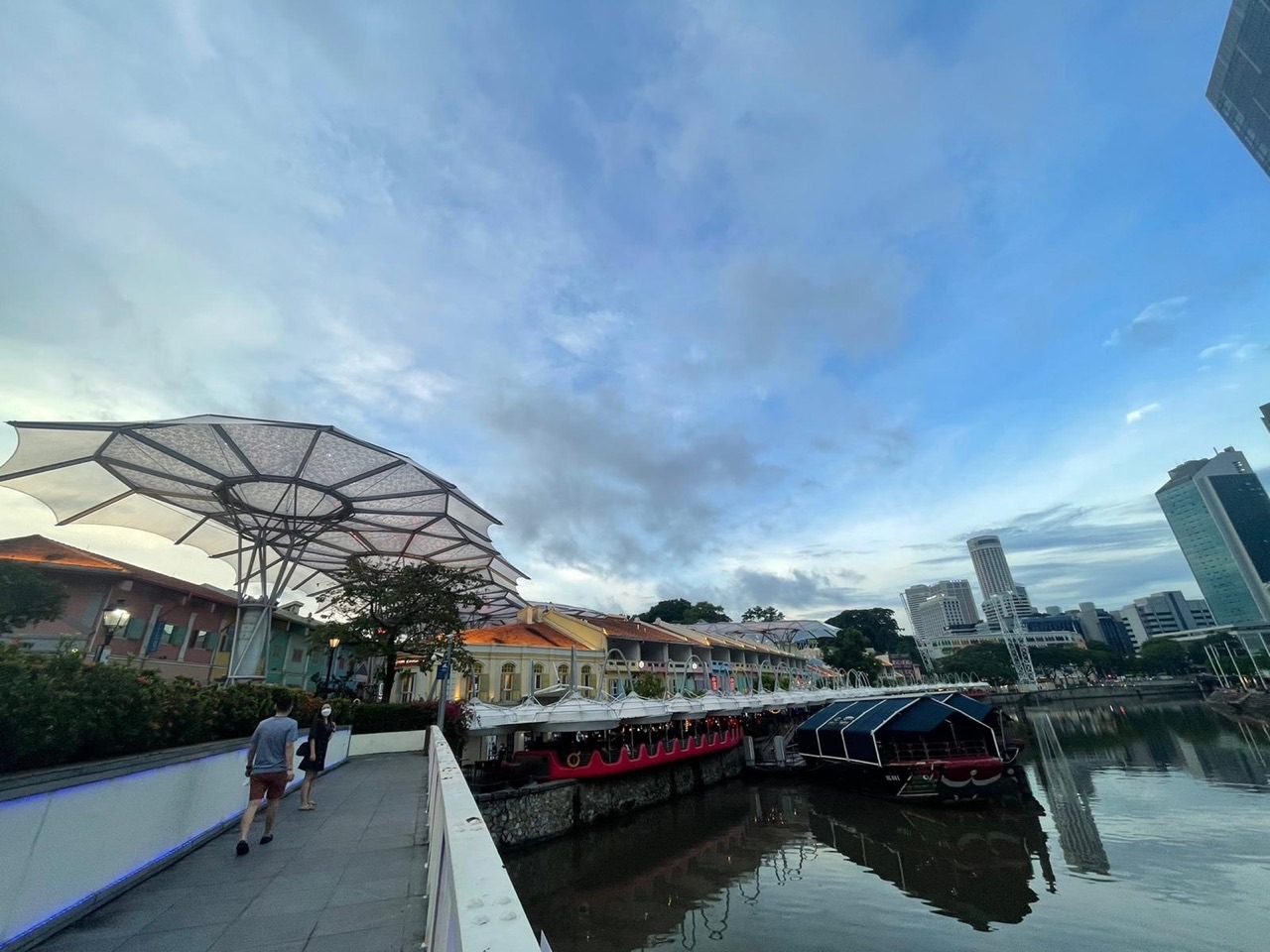
Parents comparing Secondary 1 English tuition for Clarke Quay often ask whether a weekday lesson after school or a weekend tutorial is better. The answer begins with a smaller question: can the child follow exactly who did what, when it happened and which details support an inference? A student who is too tired to think independently will not necessarily benefit from an additional worksheet, whatever the day.
Secondary 1 is a crucial bridge between the familiar Primary 6 learning routine and longer secondary reading and writing. A pupil may understand individual words yet lose track of a pronoun, reverse the order of two events or invent a character’s motive without evidence. These mistakes are teachable when the tutor can observe the child’s first explanation rather than simply providing a corrected answer.
eduKateSG’s referenced premium programme uses small groups capped at three students, approximately 90 minutes per weekly tutorial, at 8 Fourth Avenue, Singapore 268674, near Sixth Avenue MRT. Clarke Quay is the search and journey area, not a separate teaching branch. Check the true school-to-centre or home-to-centre route, available groups and the child’s needs before choosing a day.
The district’s historic warehouses, river and conserved buildings offer attractive reading and writing contexts. This article uses Clarke Quay specifically to teach pronoun reference, event sequence and evidence-bound inference rather than repeating a generic Singapore River guide.
The immediate answer for Clarke Quay parents
- Weekday: choose it when school dismissal, food, transport, concentration and home practice fit comfortably.
- Weekend: consider it when CCA or long schooldays undermine attention, provided family recovery remains protected.
- First English target: read who acts, what happened first and what the text truly supports.
- Teaching format: up to three students, approximately 1.5 hours weekly, near Sixth Avenue MRT.
- Before joining: check original work, actual subject level, group suitability and live class availability.
Contents
- 1. The moment a seemingly easy story becomes confusing
- 2. Secondary 1 English should teach readers to control the timeline
- 3. Why Clarke Quay is a useful but carefully bounded English setting
- 4. The weekday route from Clarke Quay is not the child’s whole day
- 5. Diagnose the exact reading error rather than buying extra worksheets
- 6. Original comprehension exercise: a photograph, a folder and an unclear ‘it’
- 7. Original inference exercise: what does waiting actually suggest?
- 8. Build a clear composition with a choice and a consequence
- 9. What three students can do that an anonymous worksheet cannot
- 10. A four-week family plan with a meaningful check at the end
- 11. The parent decision: weekday or weekend in real family situations
- 12. Frequently asked questions and the next step
1. The moment a seemingly easy story becomes confusing
Picture a fictional Secondary 1 class reading about two friends, Aisha and Mei, who are studying a heritage map by the Singapore River. The paragraph says: “Aisha showed Mei the old warehouse photograph before she went to the reading room.” When asked who went to the reading room, a student immediately writes “Mei”. Another says “Aisha”. Without more information, the pronoun “she” may not be sufficiently clear.
Many children learn in Primary school to locate a word that resembles the question. The tougher secondary habit is to track referents—who “he”, “she”, “they”, “it” or “this” actually points to across a sequence of clauses. The answer is not always the nearest noun. Sometimes the writer has been ambiguous, and an honest reader must recognise the limit of the evidence.
Teach the first step by naming the two actions. Aisha showed a photograph; someone later went to the reading room. Then ask what additional information would settle the second action. If the next sentence is “Mei waited for Aisha outside”, the reader has a stronger reason to infer that Aisha went in. Without it, treating the choice as certain risks inventing meaning.
The pupil can also repair the writing: “Before entering the reading room, Aisha showed Mei the old warehouse photograph.” Now the agent of both actions is explicit. Or: “Aisha showed Mei the photograph, and Mei then entered the reading room.” The sentence is not sophisticated merely because it is long; it is effective because another person can follow it.
Use a fresh setting immediately. Replace the friends with a guide and a visitor studying an old riverside warehouse. Change the order of clauses. Ask the child to mark each pronoun and explain its intended reference aloud. The same method should work even when familiar names disappear.
The weekday-versus-weekend scheduling choice matters because this reasoning is easy to imitate while tired. A child can nod when a tutor names the correct person yet fail to see ambiguity alone. The right class time must leave enough attention for a first attempt, explanation, a revision and a genuinely independent new attempt.
2. Secondary 1 English should teach readers to control the timeline
Before a student infers character motives or writes expressive narratives, they need control over the basic event sequence. “Before”, “after”, “while”, “by the time” and “until” may be short words, but they organise a narrative. A child who misses the sequence may produce an attractive answer about the wrong event.
Consider: “By the time Haris arrived at the river, his class had already left for the museum.” Haris arrived later than the group’s departure. Some pupils focus on “arrived” and “left” and mistakenly say he went with them. Ask them to draw two points on a timeline. This is a teaching aid, not a requirement to draw diagrams in every examination response.
Contrast the sentence with “Haris arrived before the class left.” The vocabulary is almost unchanged, but the order reverses. When a learner can explain that difference, comprehension becomes more secure. The skill transfers to school notices, science instructions and the organisation of everyday tasks.
Secondary 1 also requires connections between paragraphs. A new paragraph may begin, “The following morning, the group returned.” What does “the group” refer to? Which morning is “following”? A learner needs to carry information forward without reconstructing the story from vague impressions.
Inference remains important, but it should build upon an accurate literal reading. If a character repeatedly checks a ticket, the action may suggest uncertainty or anticipation. It does not prove panic, anger or the existence of a broken promise. The tutor should teach children to give evidence and limit the interpretation.
In writing, sequence creates cause and consequence. A pupil who jumps from the opening of an invitation to a final apology without showing the central choice leaves the reader guessing. Ask each paragraph to answer: what new event or decision happened, and how does it change what comes next?
The child’s current school English level—G1, G2 or G3—should guide text difficulty and expectations under Full Subject-Based Banding. Secondary 1 is one year level, not one uniform class of reading ability. Use school evidence before prescribing a worksheet difficulty.
3. Why Clarke Quay is a useful but carefully bounded English setting
Clarke Quay is a conserved part of the Singapore River area, not a second eduKateSG teaching venue. The Urban Redevelopment Authority’s Clarke Quay Conservation Area account describes its riverside warehouses, two- and three-storey shophouses and traditional architecture. The buildings offer authentic objects for factual description, comparison and creative storytelling.
URA identifies the River House as a notable Teochew-style mansion, and records the area’s conservation status from 1989. The National Heritage Board’s Singapore River stories explain how goods such as gambier were associated with river trade and storage. These accounts support factual claims about history; a pupil’s imagined conversation between merchants would be fiction.
A Secondary 1 learner could compare two types of sentences. “The River House was used as a godown” is a checkable historical statement. “The merchant trembled when he opened the door” is a possible sentence in a fictional narrative. A strong student can use both in the correct genre, without presenting an invented feeling as recorded evidence.
The preserved bridges at Clarke Quay, including Read Bridge and Ord Bridge, offer another vocabulary lesson: a bridge is a structure over water, while a “bridge” between two ideas is a figurative connection. A word’s meaning comes from the whole sentence. Knowing a landmark name does not automatically solve every comprehension question that uses the word.
Clarke Quay must also be distinguished from neighbouring Boat Quay and Robertson Quay. All are associated with the Singapore River, but a reader should not claim that the same historical building is located at all three. The local precision is not decorative: teaching exact names trains pupils to read and write responsibly.
The URA Singapore River overview describes river redevelopment and conservation. A useful English task asks the pupil to put two documented developments in sequence, then paraphrase each without adding dates or motivations that the source does not state.
This guide is for families searching for Secondary 1 English tuition from Clarke Quay. The referenced eduKateSG programme meets at 8 Fourth Avenue, Singapore 268674, near Sixth Avenue MRT. We do not claim a Clarke Quay branch or an on-site lesson inside a heritage building.
4. The weekday route from Clarke Quay is not the child’s whole day
A child connected to Clarke Quay may be there because a parent works nearby, because the family visits the area, or because it appears in a locality search. The child may still attend school in a completely different neighbourhood. Before comparing days, determine where the pupil actually finishes school and where the weekend journey begins.
Clarke Quay MRT is on the North East Line. Sixth Avenue MRT is on the Downtown Line. A possible rail connection is to travel from Clarke Quay towards Little India and change to the Downtown Line for Sixth Avenue; follow live station signs and check official journey information. The complete route includes walking, waiting and the last stretch to the teaching venue.
Consult LTA’s rail network information for service and network context. This article does not invent a current journey time or guarantee a particular interchange. A family should compare the actual route at the class day and time.
One parent’s weekday plan may appear simple: finish work near Clarke Quay, collect the child, and travel towards Sixth Avenue. But if the child has already waited for an hour after school, the route may use the very attention that English reasoning needs. Add meals, schoolwork, CCA and return travel before calling it convenient.
A weekend lesson may reduce schoolday fatigue, but Saturday is also part of family life. Sport, relatives, leisure reading and recovery do not become unimportant because tuition is available. A weekend can be the better academic choice only if it leaves enough space for the rest of the child’s routine.
Try a practical test: at the proposed lesson time, ask the child to read a six-sentence passage and explain why “she” refers to one character rather than another. If the pupil is too exhausted to track the answer, the schedule is not supporting the very skill that tuition seeks to teach.
A premium small-group lesson is a weekly opportunity, not an excuse to turn every spare hour into an academic activity. The more sustainable plan protects a short independent follow-up during the week, so the child can try the same reading decision without a tutor watching.
5. Diagnose the exact reading error rather than buying extra worksheets
First ask the pupil to retell a short passage in order. Do not correct every word immediately. A confident but inaccurate retelling may reveal that the child missed a sentence about time, place or speaker. Mark which event was reversed before introducing interpretation questions.
Next underline reference words: “he”, “her”, “they”, “those”, “this”. Can the student point back to the intended person, object or idea? If the source is genuinely ambiguous, ask whether the child can explain what remains unknown. Being aware of uncertainty is a reading strength.
Then test a connective. Compare “Although the visitor was late, the guide waited” with “Because the visitor was late, the guide waited”. The first signals a contrast with expectation; the second supplies a cause. Ask for a brief explanation of what changed and why.
Check vocabulary through a sentence rather than a word bank. “The river bank was crowded with workers” uses “bank” differently from “The bank opened its office at nine.” A good learner notices grammatical and contextual clues. A tutor can extend the exercise with “current”, “draft” or “passage” when appropriate.
Observe one paragraph of the child’s own writing. Is every pronoun clear? Does a setting detail advance the story or merely use up space? Does the ending follow from the choice made earlier? A single missing cause-and-effect link may be more important than ten slightly ordinary adjectives.
Ask for an independent return task two or three days later. If the student can explain a completely new passage without relying on the coloured annotations of the first lesson, the technique has begun to transfer. Without this delayed check, a neatly corrected page can be misleading.
The most useful placement consultation brings uncorrected schoolwork, the child’s current English subject level and a realistic schedule. Different pupils can achieve the same test grade for different reasons. The tutor should teach the first unstable decision, not assign a generic number of pages.
6. Original comprehension exercise: a photograph, a folder and an unclear ‘it’
Read this newly written classroom passage: “The class found a photograph of an old riverside warehouse. Amir put it into the folder beside the map. Before leaving, he placed it on the librarian’s desk.” The question is: “What did Amir place on the desk?” There are at least two possible referents for the final “it”: the photograph or the folder.
The first sentence establishes the photograph. The second says Amir put it in the folder. The third introduces a new action with a pronoun but does not fully distinguish the possible object. Some readers may infer that he placed the folder on the desk. Others may think he removed the photograph and placed that there. Unless a later sentence clarifies the action, the text alone may not settle it.
Good comprehension begins by separating what is said from what is inferred. We know that a photograph was put into a folder; we know that something was placed on a desk. We are not justified in inventing a detailed sequence in which Amir removes one object unless the text supplies that step.
Now revise the writing: “Before leaving, Amir placed the folder on the librarian’s desk.” The intended action is clear. A second revision could be: “Before leaving, Amir took out the photograph and placed it on the librarian’s desk.” Both are grammatically acceptable, but they describe different events.
Ask the pupil which change the writer needs if the next sentence says, “The librarian opened the folder and admired the photograph.” This new information favours the folder interpretation. The reader should be willing to revise a preliminary conclusion when additional evidence appears.
A tutor can deepen the exercise by asking students to write a two-line continuation that clarifies the final pronoun without repeating the earlier sentence. The task joins reading to writing. Instead of treating ambiguity as a trap, the child learns how responsible writers make meaning recoverable.
For independent transfer, move the scene to a science laboratory with a labelled bottle, tray and box. The pronoun issue is the same but the vocabulary is new. If the child can still name the uncertainty and repair it, the lesson has taught a principle rather than the word “folder”.
7. Original inference exercise: what does waiting actually suggest?
Here is another fictional narrative: “The guide checked the time. Beside the riverside railing, Lina folded her visitor leaflet carefully and looked across the water twice. She let the group walk on, then followed a few steps behind.” Ask the student what Lina’s behaviour suggests, rather than what literally happened.
The details allow a measured inference: Lina may be distracted, hesitant or interested in something across the river. The action does not prove she is angry at the guide or hiding a secret. Those may be intriguing story ideas, but they require additional textual evidence before becoming defensible comprehension answers.
Use a two-column note: on the left, record “looked across twice”, “let the group move ahead” and “followed behind”. On the right, try two possibilities and assess which clues support them. The child should be able to say which interpretation is strongest and which remains uncertain.
Now add a sentence: “Across the river, she had spotted the museum sign her grandfather once described.” This changes the context and makes an interest in the location more plausible. Ask the learner to adjust the original interpretation rather than cling to the first guess.
A different continuation might say: “She was struggling to hear the guide through the crowd.” That supports another explanation. Good reading is active revision in response to evidence. The pupil who treats the first impression as permanent is less prepared for nuanced comprehension.
Writing teaches the reverse operation. An author can make a character’s uncertainty visible through movement, dialogue or hesitation. The pupil should choose one or two details that communicate a mood and connect to the character’s next decision, rather than announcing an emotion in every sentence.
The Clarke Quay riverfront is a backdrop for the original fictional example; the named character and guide are invented. It is not a description of an eduKateSG student, an advertised excursion, or a reported event at a heritage site.
8. Build a clear composition with a choice and a consequence
A common Secondary 1 composition difficulty is the beautifully described story that never really begins. A student might write several paragraphs about lights reflecting on the river but fail to give the protagonist a goal or problem. Sensory details help only when they support the narrative.
Try this practice prompt: “Write a story about noticing a mistake before it became a problem.” The original plot can involve a fictional student, Farid, who notices two different meeting points on a printed timetable and a later school message during a supervised outing. The central decision is whether to follow the crowd or verify the new instructions with a teacher.
Give the child a story spine before writing: the class receives an itinerary; Farid notices a discrepancy; he checks the message timestamp; he asks the teacher; the teacher clarifies the correct point; the group continues safely. The tension comes from uncertainty and the need to act responsibly, not from inventing danger or portraying sensible adult guidance as uninteresting.
Each paragraph needs a job. The opening establishes place and planned activity. The complication shows the conflicting information. The decision reveals the character’s reasoning. The resolution shows the consequence, and a short reflection explains what the character has learned.
Good details can carry meaning. “Farid unfolded the creased map for the third time” shows uncertainty more effectively than adding “he was very, extremely, unbelievably worried” to every line. Encourage precise verbs and a smaller number of purposeful images.
The pupil can later adapt the story to a school library or community centre. If the writing method depends on a famous river location to sound impressive, it has not yet transferred. The point is to structure an unfamiliar situation into a coherent sequence with a credible choice.
Peer review can work in a group of three: one child checks chronology, another checks ambiguous pronouns, and the third checks whether the ending follows from the central decision. Rotate roles. That way everyone practises more than giving generic praise such as “nice vocabulary”.
9. What three students can do that an anonymous worksheet cannot
The referenced eduKateSG format has a maximum of three pupils in a roughly 90-minute weekly tutorial. Smallness is useful only when the teacher makes every pupil’s reasoning visible. A lesson should not rely on one confident speaker while two students quietly copy corrections.
A practical session might begin with three short independent answers to the same unfamiliar passage. The tutor identifies different starting problems: one child reversed the event order, one misread a pronoun, and one invented a character motive. The shared teaching point is evidence-led reading, but the correction each child requires is different.
The teacher can model one relevant idea, then give progressively less help. The first exercise may mark each reference word in a colour. The next uses ordinary text. The last asks for a written answer on a fresh passage without coloured support. This progression lets the tutor see whether understanding is becoming independent.
For writing, ask each learner to revise a different unclear paragraph and explain the reason for the changes. The group can compare alternatives without pretending that every sentence has only one correct style. Clarity, faithfulness to the task and a plausible sequence are the shared objectives.
A student who already handles simple reference questions can explore why writers sometimes deliberately use uncertainty for suspense. The more foundational learner may remain with naming agents and sequencing events. Differentiation is a mark of sound planning, not a reason to label students permanently.
The short homework continuation should be targeted: perhaps five sentences to mark for reference, one small paragraph to revise and a question on a new passage. Volume alone is a poor indicator of progress. Ask the child what they can now do without the tutor’s hints.
Confirm group suitability and actual available lesson times before organising transport. The article describes the teaching model, not live vacancies, a guaranteed examination grade or a Clarke Quay classroom.
10. A four-week family plan with a meaningful check at the end
Week one: capture the original error. Bring an uncorrected school script and one composition paragraph. Ask the child to explain what happened first, who each pronoun names and which phrase supports an inference. Record the first attempt without immediately replacing it with a model answer.
Choose one primary skill—for example, tracking pronoun references. Teach it with a short passage, then ask for a repair in the child’s own writing. Do not overload the session with a dozen unrelated techniques because the parent wants quick improvement.
Week two: make the method portable. Use a new text set away from Clarke Quay so that the learner cannot rely on remembered details. Check whether they can mark who acted, what changed, and which information remains uncertain. Ask for a brief explanation in their own words.
Keep vocabulary in context. If the passage uses “bank”, “current” or “passage”, the child should choose meaning from the sentence, not select the most advanced synonym from a memorised list. Link each new meaning to a useful original sentence.
Week three: move into writing. Give a clear choice-and-consequence composition task. Ask the pupil to write a short plan, draft a scene and revise ambiguous reference words. The tutoring goal is not to manufacture a perfect essay in the teacher’s voice, but to help the child recognise and improve weaknesses independently.
Include brief spoken explanation. Ask why one detail is included and what would happen if the story removed it. If the child can explain purpose rather than simply saying the line “sounds nicer”, their language awareness is growing.
Week four: use delayed independent transfer. Present an unfamiliar passage, obtain a first answer and compare it with week one. Has the child improved in event sequence, clear reference and evidence? Give one composition prompt without the familiar plan template and see whether the child can still organise a coherent narrative.
If the child is accurate while rested but weak after a late weekday journey, revisit the schedule. If the child is alert but the same misconception remains, revisit the teaching method and scaffolding. Four weeks are enough for useful observations, not for a guaranteed examination outcome.
11. The parent decision: weekday or weekend in real family situations
For one family, the child attends school relatively near a North East Line station and finishes early on a chosen weekday. After a meal and a reasonable journey to Sixth Avenue, they are ready to read thoughtfully. Moving the tutorial to Saturday would remove valuable family time without improving concentration. In that case a weekday may be sensible.
For another family, Secondary 1 comes with a new CCA and late school dismissal. The learner travels home tired and struggles to finish ordinary homework. Adding a further 90-minute lesson plus transport on that day may reduce sleep and produce passive worksheet copying. A well-protected weekend slot could be better.
A third family has a parent whose office is close to Clarke Quay, but the pupil’s school is elsewhere. Collecting the child at the office introduces a separate journey. Compare the actual route and rest time, not the office’s position on a map. The best educational day may begin nowhere near Clarke Quay.
A fourth family fills Saturday with multiple enrichment activities. The student technically has an empty hour, but the day is already a procession of transport and instructions. A weekday with fewer commitments may give more room for independent reading and a calmer bedtime.
No single formula chooses the day. The comparison must include the child’s current work, subject level, sleep, family time, travel, and real suitability of a three-student group. Convenience should serve learning rather than replace it.
These family situations are examples for decision-making, not verified parent reviews. The best first enquiry asks for a consultation around real school materials rather than a commitment to an imagined Saturday or Tuesday vacancy.
12. Frequently asked questions and the next step
Is there an eduKateSG English classroom at Clarke Quay? No such claim is made. The described teaching takes place at 8 Fourth Avenue, near Sixth Avenue MRT. Clarke Quay is the family’s search or travel reference.
How does a Primary 6 learner adapt to Secondary 1 English? Start with literal comprehension, reference tracking and a coherent event sequence, then teach evidence-based inference and more deliberate writing. The first skill should come from the child’s original errors, not from a universal package.
What about G1, G2 and G3? The child’s school subject-level placement and materials determine appropriate language complexity. The MOE Full Subject-Based Banding resource explains the broader arrangements; future examination materials are listed by SEAB.
Does this page promise a particular class or improvement? No. A maximum-three-student model describes the format, while current availability must be confirmed. Grades depend on starting point, teaching fit, participation and other factors.
Could a weekend be worse than a weekday? Yes, if it crowds out sleep, leisure reading or recovery. Likewise a late weekday can be unhelpful if the child is too tired to reason. Compare whole days and review after several ordinary weeks.
How will I know that teaching works? Look for a new passage answered correctly without prompts, a repaired ambiguous paragraph, and an explanation of why an inference is supported. Finished worksheets alone are not enough.
How do we begin? Bring three pieces of the child’s recent English work and a realistic school, CCA and family timetable to a consultation. Visit eduKate Singapore or ask about Secondary 1 English group suitability on WhatsApp.
The passages, names, outing and family situations here are original illustrative teaching material. They are not quoted from live examinations, testimonials, unconfirmed business addresses or guarantees of group vacancies.
A useful weekday versus weekend comparison
| Consideration | Weekday | Weekend |
|---|---|---|
| Actual journey origin | School or an after-school location | Usually home, depending on family plans |
| Risk to learning | Fatigue, delayed meal and CCA | Overfilled activities and lost recovery |
| Reading skill to test | Identify references and event sequence independently | Identify references and event sequence independently |
| Follow-up | One short fresh text later in the week | One short fresh text before the next session |
| Booking | Confirm current group fit and availability | Confirm current group fit and availability |
Read further: Surviving Tuition | Clarke Quay, A Student’s Life | Clarke Quay, Tuition | Singapore River and the eduKateSG Clementi small-group teaching reference.
Official historical and educational references: URA Clarke Quay Conservation Area; NHB Singapore River histories; MOE Full Subject-Based Banding; SEAB Singapore-Cambridge SEC.