
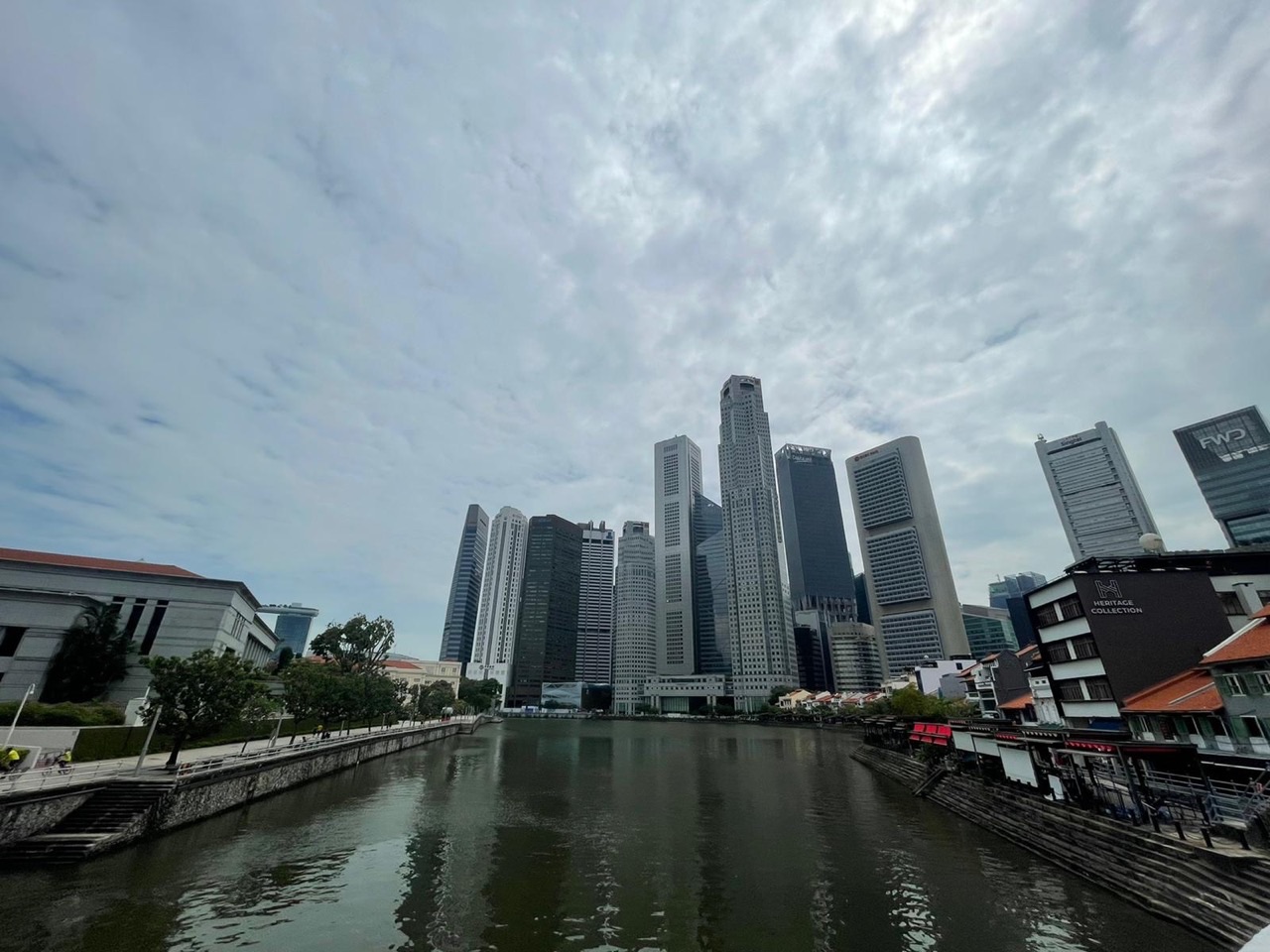
Secondary 4 English tuition for families connected to Boat Quay should begin with the student’s real examination year and English subject level—not with an attractive weekday or weekend slot. Final-year mistakes can be small but expensive: misreading “always” as “sometimes”, turning a possibility into a fact, spending too long on an irrelevant introduction or submitting a summary that changes the source.
A suitable tutorial teaches the teenager to identify a task quickly, make a defensible reading or writing decision, test it against the source and then perform independently under appropriate time pressure. A weekday can work when dismissal and travel leave enough attention; a weekend may be better when schoolwork is intense, but only if it does not eliminate recovery.
The eduKateSG programme described here uses premium groups of no more than three students in approximately ninety-minute weekly tutorials at 8 Fourth Avenue, Singapore 268674, near Sixth Avenue MRT. Boat Quay is a geographic search and travel reference, not a classroom branch. Actual class availability, level fit and the applicable examination paperwork must be checked.
Boat Quay’s documented trade and conservation history offers examples for rigorous reading, but students must not rely on memorising one neighbourhood essay. The final-year goal is to make correct decisions in any unfamiliar text or writing task.
The immediate parent answer
- Confirm the candidate’s examination year and the applicable GCE or SEC English subject level.
- Choose weekday only if attention remains after the true school-to-centre journey.
- Choose weekend when it allows better reasoning without erasing family rest.
- Focus on correct task interpretation, faithful summary, evidence-led inference and completion.
- Venue: maximum three pupils, approximately ninety minutes weekly, at 8 Fourth Avenue near Sixth Avenue MRT.
Contents
- 1. First, get the 2026 or 2027 English paper right
- 2. The hidden danger: a polished answer to the wrong question
- 3. What Boat Quay can teach about evidence boundaries
- 4. Time pressure is useful only after the method is secure
- 5. How the weekday or weekend route affects final-year attention
- 6. Reading example: the difference between an inference and a dramatic story
- 7. Summary writing: one changed modal can invalidate the result
- 8. Situational writing: the request must survive the elegant prose
- 9. Continuous writing: a relevant argument needs a clear finish
- 10. The three-student final-year lesson needs an error audit
- 11. Eight weeks of deliberate revision, not eight weeks of panic
- 12. Parent FAQs and the responsible next step
1. First, get the 2026 or 2027 English paper right
Singapore is moving from the former GCE examination certificates to the Singapore-Cambridge Secondary Education Certificate (SEC) from 2027. A pupil who is in the 2026 GCE examination cohort and a pupil preparing for a 2027 SEC English examination should not assume the same front cover, syllabus code or task requirements.
For school candidates, SEAB’s 2026 GCE O-Level syllabus list identifies English Language 1184. If that is the student’s applicable examination, teaching materials should follow that documentation and the school’s directions rather than an imagined universal “SEC 2026” paper.
For 2027 school candidates, SEAB distinguishes English Language at G1, G2 and G3 levels: K100, K200 and K300 respectively. Those are three subject-level examinations under the SEC framework, not one common English question paper for every student.
The official G1, G2 and G3 syllabus pages list the appropriate subject codes and papers. Use the actual examination entry and school timetable before assigning full-paper practice.
Some broad English skills remain useful across cohorts: interpreting a task, supporting an inference, writing for an audience and editing for accuracy. However, general transferability does not justify presenting a 2027 format to a 2026 candidate as though the paper specifications were interchangeable.
A tutor should confirm the examination before planning a revision schedule. Ask the teenager to explain what their current school has registered them for, then verify the applicable official syllabus. This prevents an avoidable error at the very beginning of final-year preparation.
The current guide does not invent examination dates, durations or mark allocations. Those details should come from the relevant SEAB document, not from a generic parent-facing article.
2. The hidden danger: a polished answer to the wrong question
A fictional Secondary 4 learner receives the practice question: “Are historic buildings always more valuable when kept in their original use?” The student recognises Boat Quay and launches into a prepared essay praising Singapore’s history. The prose flows, but the script never distinguishes conserving a building from retaining its original function.
The word “always” makes the question demanding: one counterexample can complicate an absolute claim. “Original use” refers to function, whereas architectural conservation concerns physical and historical features. A relevant essay must address the relationship rather than simply admire old shophouses.
The URA Boat Quay record documents former trading-related buildings and later conservation and reuse. The student can therefore argue that heritage can remain meaningful despite a change of commercial activity. They must avoid declaring that every change is successful or every interior remains original.
A strong opening position might be: “Historic buildings do not always need to retain their original activity to retain value; sensitive reuse can support their continued relevance, provided important features are protected.” It answers the question and identifies a condition.
A timed planning check should ask: What am I being asked to judge? Which terms matter? What two or three distinct reasons will support the answer? Which counterpoint deserves attention? A thirty-second check at the start may prevent hundreds of irrelevant words.
Move immediately to a completely different topic, such as whether online learning is always preferable to face-to-face learning. The student should use the same task-analysis habit without relying on a prepared Boat Quay paragraph.
A fatigued pupil may copy the better thesis but repeat the mistake in a fresh paper. The point of weekday or weekend scheduling is to preserve independent interpretation, not maximise the number of rehearsal essays produced.
3. What Boat Quay can teach about evidence boundaries
The URA’s conservation history describes Boat Quay’s trading activities, shophouses and godowns, the river’s commercial role, later changes in cargo handling and the conservation of its built environment. These facts create a rich historical example, provided their periods and scopes are respected.
The account explains that the district was conserved in 1989 after earlier planning for preservation. A careless response might merge planning, designation, river cleanup and contemporary businesses into one simultaneous event. Good English distinguishes a proposal, a decision, an action and a later consequence.
The URA Historic Districts page identifies Boat Quay’s geographic extent and relationship to Singapore’s wider historic districts. “At Boat Quay” does not mean “everywhere along the river”. A quotation about one quay cannot automatically justify a universal claim about Robertson Quay or Clarke Quay.
Photographs show visible details such as riverfront buildings, steps and the modern skyline, but they do not directly disclose a nineteenth-century merchant’s feelings. A creative essay can invent a fictional merchant; an evidence-based discussion must not present that invention as documented testimony.
The site’s changing use also helps with causation. Declining river cargo, new technologies, relocation of shipping activities, conservation and later hospitality uses are related historical developments, but a student should not say that one modern business caused all of them. Ask which relationship a source explicitly establishes.
The local example should be used only if relevant to the actual writing task. An examination prompt about friendships or technology may not benefit from a paragraph about waterfront godowns. A good writer chooses evidence that genuinely advances the question.
Neither this article nor the classroom examples promise excursions at Boat Quay. The stated tuition venue is 8 Fourth Avenue near Sixth Avenue MRT. Historical context helps make English reasoning concrete, not invent another school programme.
4. Time pressure is useful only after the method is secure
An examination candidate may need to work within strict time limits, but speed is not the first remedy for every mistake. If a learner cannot distinguish a stated fact from an inference without a clock, a timed paper may simply teach faster guessing.
Begin with one short comprehension item untimed. Ask for the source phrase, the defensible conclusion and the limit of the evidence. When the child consistently handles that operation, introduce an appropriate time constraint and inspect whether accuracy holds.
For writing, separate planning, development and final checking. A pupil who spends too long creating a beautiful introduction may leave required content points unanswered. Another may write rapidly without a clear position, producing many paragraphs that repeat the same idea.
The tutor should teach a short opening checkpoint tied to the specific paper: identify the reader or question, the required response, the key conditions and the core ideas. Do not turn the check into a long ritual that consumes more time than it saves.
A full timed practice should be followed by a diagnostic review. Was the first error a misread instruction, unsupported inference, distorted summary or missing paragraph purpose? “You need to write faster” is not a sufficient explanation when the content is off task.
Small-group teaching allows a tutor to compare the three learners’ error patterns without assuming they all require the same volume of papers. One teenager may need precise summaries; another needs relevant arguments; the third needs a controlled way to finish.
Build speed gradually through accurate short exercises, then task combinations and finally appropriate paper-level practice. A teenager who can reproduce the correct process independently is better placed than one who merely memorises a stopwatch routine.
5. How the weekday or weekend route affects final-year attention
A family may connect Boat Quay with a parent’s workplace, not with the pupil’s school. If the teenager finishes CCA in a different estate, travels to the office and then continues to tuition, the actual journey is longer than a map from Boat Quay to Sixth Avenue suggests.
Raffles Place MRT offers North–South and East–West services; Clarke Quay MRT is on the North East Line, while Sixth Avenue MRT uses the Downtown Line. Depending on the starting station, a family may use Newton or Little India as an interchange. Confirm the real route using LTA’s official rail network information.
Include school dismissal, food, travel to and from the centre, the approximately ninety-minute lesson, unfinished assignments and bedtime. Final-year revision should strengthen English performance without quietly removing sleep and recovery.
A weekday can work if the student arrives sufficiently alert to read unfamiliar material, plan a response and return to the method on another day. One coherent weekly cycle is more useful than hurried attendance followed by no independent practice.
A weekend may create a calmer learning window for a pupil with late CCA or intense subject combinations. But Saturday can also be crowded with other classes, sport, family commitments and travel. The extra available hour may not represent more useful attention.
One practical test is whether the student can explain what the command word “always” does in a new practice prompt at the proposed class time. If the teenager is too tired to make that distinction, the day may be wrong for the current educational purpose.
Choose the time only after confirming that an appropriately levelled three-student group is actually available. The article does not list live timetable vacancies or a separate Boat Quay branch.
6. Reading example: the difference between an inference and a dramatic story
Read this original narrative: “The museum guide checked the attendance list again. Although the group had gathered on time, she stayed near the entrance and looked towards the street. When the last visitor arrived, she lowered the list and smiled.”
A weak inference says, “The guide despises the late visitor for lying to her.” Nothing in the passage establishes lying or hatred. The observable details involve repeated checking, waiting by an entrance and a change of expression after the last arrival.
A defensible answer is: “She appears concerned about whether everyone has arrived, as she repeatedly checks the list and waits near the entrance, then relaxes when the final visitor arrives.” The response connects relevant clues without claiming an unsupported backstory.
Now inspect “although”. The group was on time, yet the guide continued checking. The contrast may reveal that the guide’s concern involved a particular missing person rather than the whole group’s punctuality. Ignoring the connective can flatten the interpretation.
Change the final sentence to “When the last visitor arrived, she pointed sharply at her watch.” This supports a different reaction, perhaps concern with timing, but it still does not prove every imagined private emotion. Teach the pupil to revise conclusions as new evidence arrives.
In a short timed retest, use an unrelated classroom or transport passage. The child should recognise the same evidence boundary even without river or guide vocabulary. That is stronger proof of understanding than repeating the first corrected answer.
This original passage is not a SEAB text, historical record or description of an actual Boat Quay tour. It exists to teach inference and precise language.
7. Summary writing: one changed modal can invalidate the result
Consider this invented school notice: “Several classes have expressed interest in a river-history display. Groups may submit draft captions by Wednesday. The teacher will select entries after reviewing the sources, and an additional display may be organised if enough space remains.”
A weak summary reads: “All classes must submit captions on Wednesday, and a second exhibition will definitely be held.” The wording changes the interested group, turns permission into obligation, changes “by Wednesday” into a single-day instruction and removes the conditions for further activity.
Ask the learner to tag each source phrase: quantity, permission, deadline, selection process and possible later event. A strong summary should be shorter than the original, but it cannot strengthen uncertain claims or delete the condition essential to understanding.
One accurate compressed version could be: “Interested classes may submit captions by Wednesday for selection, and another display is possible if space permits.” It retains the central procedural ideas without guaranteeing selection or the second display.
Now change the notice to say “Only confirmed groups must submit captions by Wednesday.” The meaning changes materially. The pupil should identify both the group affected and the obligation, not recycle the first summary automatically.
A useful examination strategy is a final claim-strength scan. Compare “some” with “all”, “may” with “will”, and “eligible” with “accepted”. If the summary is more absolute than the source, inspect the difference before submitting.
Delayed transfer matters. Give a new paragraph about library bookings or transport services later in the week and ask for an independent summary. The child should preserve meaning when the familiar heritage topic is gone.
8. Situational writing: the request must survive the elegant prose
Use an original practice task: “Write to a teacher-in-charge seeking permission for a one-period exhibition of student-written Boat Quay history captions. Explain the activity’s English-learning purpose, how students will prepare, one practical concern and the decision you need.”
A weak opening may spend half a page describing river reflections and how magnificent Singapore is. The description is not necessarily wrong, but it delays the purpose and may leave compulsory points unaddressed when time is limited.
A stronger opening is: “I am writing to request permission for our English class to prepare a short information display comparing Boat Quay’s former trading activities with its conserved present-day setting.” It states who, what and what decision is sought.
The following paragraph can specify how pupils will work: read official sources, choose accurate historical statements, label what is inference, and write short captions. The mechanism is relevant to English even without arranging any physical excursion.
A practical concern might be time. The writer could propose completing the work during a single scheduled English period, subject to approval, with group captions checked before display. Do not invent access to an outside venue or assert that the school has already agreed.
The closing can ask for a clear response and offer flexibility. In a message to classmates, the writer must preserve the unconfirmed status. Changing tone should not turn a proposed activity into a confirmed event.
In an examination, adapt every element to the actual prompt and syllabus. This sample letter is an educational exercise rather than an authentic paper question, and the tutor should measure independent transfer to other subjects and readers.
9. Continuous writing: a relevant argument needs a clear finish
Suppose a practice question asks: “Is learning outside the classroom always more effective than learning from books?” The word “always” makes the comparison explicit. A student who submits a memorised essay praising tourist destinations has not answered it.
A defensible position could recognise that visits allow direct observation while books offer context, depth and accessibility. The choice depends on the learning goal and circumstances. A good essay should explain when each method may work instead of merely asserting that both are useful.
Boat Quay provides one illustrative example: observing conserved shophouses might help students notice architectural details, while URA’s historical account supplies dates and commercial context not visible in a facade. The two modes of learning contribute different information.
The writer should acknowledge practical constraints without inventing outcomes. Visits require time, transport and supervision; books and classroom sources require careful reading and selection. These limits make “always” difficult to defend as a universal claim.
A relevant conclusion might say, “Outdoor learning can deepen understanding when paired with preparation and reflection, but it cannot be considered universally superior to learning from books.” This judgement directly addresses the prompt.
Teach paragraph roles: claim, mechanism, example, considered limitation and return to the question. A page of repeated slogans is not more persuasive than a shorter, developed argument.
Then choose an unrelated issue for transfer, perhaps whether students should have more independent study time. The teenager must be able to plan and complete a response without bringing along an irrelevant heritage paragraph.
10. The three-student final-year lesson needs an error audit
In the referenced premium format, three or fewer pupils learn for approximately ninety minutes weekly. This can support personalised observation, but only if the tutor sees the original response before providing the perfect model.
One learner may have a task-interpretation problem; another may change source meaning while summarising; a third may understand content but lose accuracy under a clock. A single pile of full papers should not replace diagnosis.
A useful session opens with a fresh brief reading or writing attempt. The tutor identifies the first consequential error and models one precise repair. Each pupil then tries a different text or prompt to demonstrate the repaired method independently.
The group can discuss a weak claim. Students identify whether it exceeds the evidence, misses the question or confuses two dates. Rotation ensures every pupil can play the critic and the writer, rather than depending on the most confident classmate.
Timed integration should follow successful short work. Teach an opening task check, a completion point and a final review appropriate to the student’s actual assessment. Simply reducing the time allowed for every exercise may reward rushing without understanding.
Homework should be focused and feasible during a demanding school week. A new paragraph, one accurate summary or an oral response can provide more evidence of transfer than a large packet completed with adult hints.
Parents can ask whether the student’s first responses are improving, whether the tutor can explain the next teachable target and whether revision remains compatible with sleep and wellbeing. A maximum-three-student format is not a result guarantee.
11. Eight weeks of deliberate revision, not eight weeks of panic
Weeks one and two: verify the applicable syllabus and collect a small set of untouched school scripts. Identify the first repeated error—task reading, evidence inference, inaccurate summary, weak paragraph purpose or completion under time. Teach the earliest unstable operation before adding examination volume.
Use fresh, small exercises several days apart. A student who can reproduce the method without hints has stronger evidence of learning than one who copies multiple model answers. Record the first unaided results.
Weeks three and four: integrate comprehension and writing. Practise protecting qualifiers in a summary, interpreting a writer’s language and creating plans that address the actual question. Increase task complexity without introducing unnecessary rushing.
Let the teenager draft one situational response for a specific audience and check mandatory content before polishing vocabulary. Then change the reader or purpose, keeping facts accurate. Short oral responses can reinforce the same habit of relevance.
Weeks five and six: move towards representative tasks from the correct paper and subject level. Use appropriate timing and analyse why marks were lost. Differentiate a missing skill from an error caused by poor pacing or fatigue.
Ask the learner to maintain an error register with decisions they can actually change: “I turned may into will” or “I forgot the required request”. A general entry such as “must work harder” offers little guidance.
Weeks seven and eight: consolidate persistent gaps with unfamiliar examples. Reduce unproductive last-minute volume, protect sleep and practise independent retrieval. Continue the specific timing and task checks that have become reliable.
This is an illustrative eight-week progression, not an asserted examination timetable or promise of a particular grade. Adapt the sequence to how much time genuinely remains, the actual school workload and the student’s present needs.
12. Parent FAQs and the responsible next step
Where does eduKateSG teach? This Boat Quay guide refers to tutorials at 8 Fourth Avenue near Sixth Avenue MRT. It does not advertise a Boat Quay branch.
Is a weekday or weekend automatically better for Secondary 4? No. Choose the day that protects active attention, safe travel, a meal, rest and an independent return task. Either day can work when the whole schedule is realistic.
What if my child sits GCE O-Level English in 2026? Verify the applicable 2026 syllabus and examination entry; SEAB lists English Language 1184. Do not assume a 2027 SEC-labelled practice paper is automatically suitable.
What if my child sits English under the 2027 SEC? Use the correct G1, G2 or G3 syllabus, with SEAB’s K100, K200 or K300 as applicable. A common SEC certificate does not mean one common English paper.
Can repeated timed papers guarantee A1? No. Timed practice is useful when the reading and writing methods are sound, but a learner can practise the wrong approach repeatedly. Specific outcomes depend on starting skills, preparation, examination demands and other factors.
How can we recognise progress? Watch for relevant first responses on unfamiliar prompts, fewer unsupported claims, more faithful summary language and an ability to finish without abandoning essential task requirements.
How do we enquire about groups? Bring recent uncorrected school work, the student’s examination year and subject level, and a realistic timetable. Contact eduKate Singapore or ask about Secondary 4 English tutorials on WhatsApp. Availability needs direct confirmation.
The characters, school notices, examples and questions here are created for instruction. They are not authentic SEAB items, actual student results or promises of a current lesson slot.
Final-year weekday and weekend comparison
| Question | Weekday | Weekend |
|---|---|---|
| Starting journey | School or current activity venue | Usually the family home |
| Attention risk | CCA, long dismissal and homework load | Too many tutorials and reduced recovery |
| Readiness target | Relevant timed response with correct evidence | Relevant timed response with correct evidence |
| Independent return | Fresh short task on another day | Fresh short task on another day |
| First confirmation | Correct paper and available group | Correct paper and available group |
Connected eduKateSG guides: Surviving Tuition | Boat Quay; Tuition | Singapore River; Secondary 3 English Boat Quay; and the Clementi small-group teaching standard.
Official references: SEAB 2026 GCE O-Level syllabuses; 2027 SEC school-candidate syllabuses; URA Boat Quay conservation history; URA Historic Districts; and MOE Full Subject-Based Banding.