
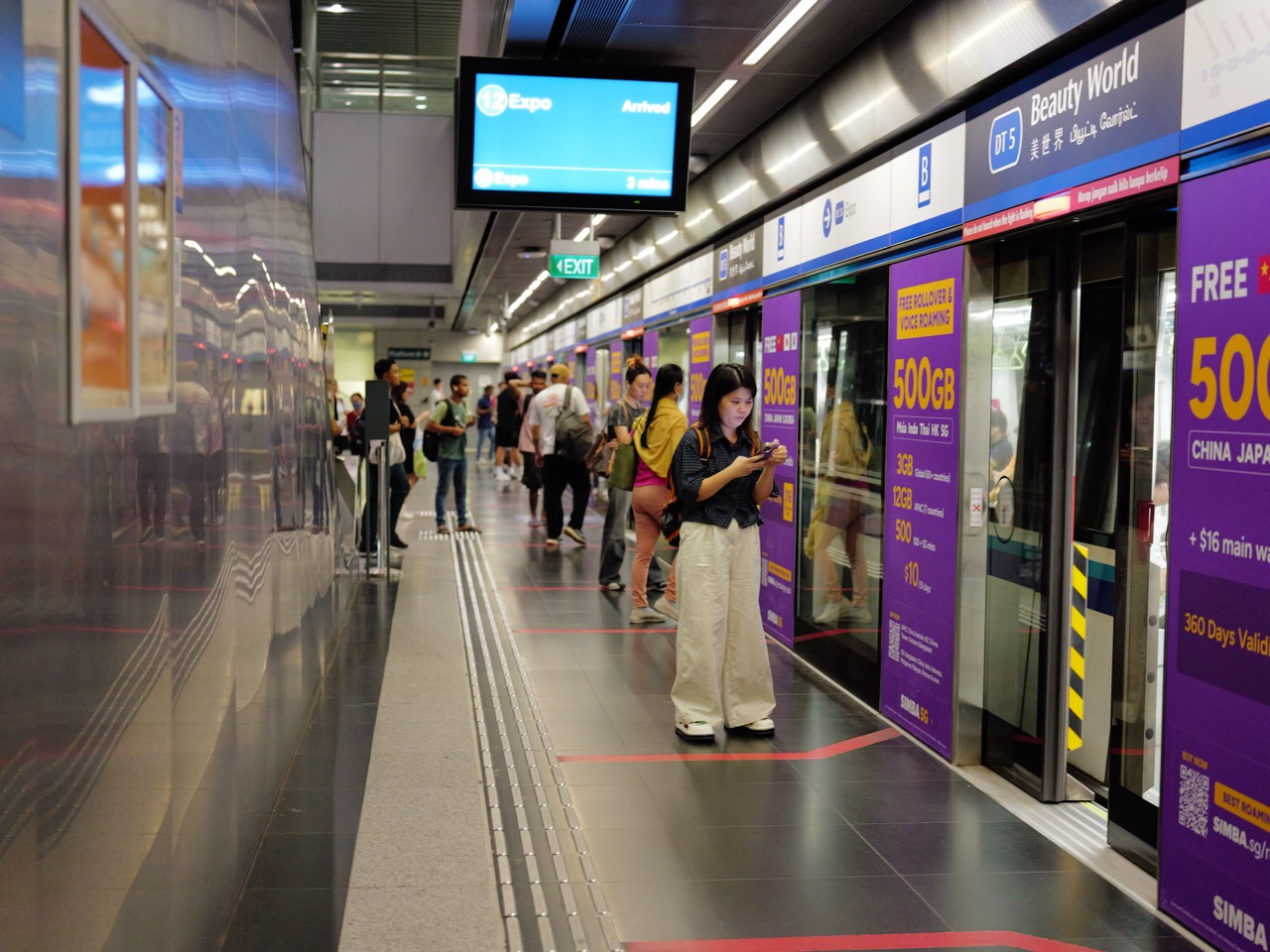
To translate a bus or train timetable into another language, preserve the route, direction, stop, date, departure time and service condition before improving the wording. A timetable is a practical promise about where a vehicle is supposed to travel and when. A translation that moves a stop to the wrong line, turns an arrival into a departure, or mistakes a cancellation for a delay can make someone miss their journey.
People searching for how to translate train schedules, translate bus timetables, public transport map translation, transit announcement translation or multilingual transport information usually want a quick and reliable answer. Start by identifying the route number or line name, the direction, the stop, the service day and the information’s timestamp. Then check whether a time is scheduled, predicted or already observed. Translate the language, but keep the travel facts intact.
This guide shows how to translate passenger timetables, station maps, bus-stop notices, service disruptions, travel announcements and ticket instructions. It covers operating calendars, night services, platform changes, route variants, transfer conditions, accessibility, fares and live information. With worked examples and practical quality checks, you can understand or publish multilingual travel information without quietly changing the journey it describes.
A quick check before trusting the timetable
Extract six things: route or line identity, direction, boarding stop, destination, date and displayed time. If one is missing, ask or verify before planning a critical journey. The same route number may run in two directions, and a departure time at the terminus may not be the time the vehicle reaches your stop.
Look for a seventh detail when using an online app: was the time taken from a published schedule or a live vehicle estimate? Both can be useful, but they are not identical. If the timetable is old, the operator may already have changed its services.
Translate only after these fields are clear. A beautifully worded notice for the wrong route is not useful.
A timetable is structured information, not just prose
Transport information combines identifiers, time values, service conditions and traveller instructions. A phrase such as ‘Route 16 to Old Town, weekdays only, departs at 07:35’ is meaningful because all parts work together. Removing the weekday condition can change when the service is available.
For translation, treat numbers and codes as protected data. Translate descriptive labels while preserving the underlying route, stop, trip and service-date relationships. The words may move around grammatically, but the relationships must not.
This is also how quality should be measured: does a reader of the target version choose the same vehicle, stop and departure as a reader of the original?
Scheduled, estimated and actual times
A published schedule describes when a service is intended to run. A predicted arrival uses current information to estimate movement. An actual departure describes something that has happened. Translating all three as ‘the train arrives’ removes important distinctions.
When an app shows an estimated arrival, preserve words such as ‘expected’, ‘estimated’ or ‘due in approximately’. If it shows a fixed timetable, do not pretend it is a live prediction. If a vehicle has departed, avoid language that still invites passengers to board.
A quick reader test asks whether the target makes a time seem more certain than the source. If yes, the translation needs revision.
Direction and destination are decisive
A bus route may show the same number on services going east and west. A train line may have branches that share many stations before separating. The target must preserve destination names, directional words and branch identifiers so riders can select the correct journey.
‘To Riverside’ is not ‘from Riverside’. ‘Clockwise loop’ is not ‘anticlockwise loop’. If the direction is shown with an arrow, verify that the arrow points to the correct physical direction in the translated design.
Names may have established transliterations or official English forms. Use those where available instead of inventing a new translation of a station that no signage uses.
Route numbers and branch letters
A service numbered 22B may differ from 22 or 22A. The letter can identify a shortened route, variant or special service. Removing it because it looks like an unnecessary suffix changes the identity of the trip.
Keep route codes and stop IDs unchanged unless the operator has supplied a validated localised representation. Translate the human-readable label beside the code, not the code itself.
Ask a target-only reader to identify the route from the translated notice and find it on the operator’s map. If the code no longer matches, the localisation is not ready.
Stops, stations and platforms
A bus stop, bus interchange, railway station, platform and boarding bay can be different physical locations. If a notice says ‘Board at Stop 104 across from Central Station’, a target that says ‘Board inside Central Station’ moves the boarding point.
Preserve location identifiers, directional descriptions and platform or bay labels. A station with multiple entrances may require an exit number as well as a name.
Do not infer a platform from an old timetable when a live notice says the platform is subject to change. The traveller must know which facts are fixed and which require checking again.
Stop names should remain recognisable
Some place names contain ordinary words, but they function as proper names. Translating only the generic word ‘bridge’ in a named station can produce an unfamiliar hybrid name that does not match a ticket machine or digital map.
Use the official local name where possible and provide an accepted translation or transliteration as an aid. For multilingual interfaces, map all display labels back to one stable stop record.
If two stations share a similar name, retain context such as the town, line or stop ID when the source supplies it. Do not use the target language to erase an important distinction.
Arrival and departure are not synonyms
Long-distance services sometimes arrive and depart from a station several minutes apart. ‘Arrives 14:05, departs 14:12′ gives two separate actions. A translation showing only ’14:05’ may mislead someone trying to board.
Keep the column labels attached to the correct clock times. If the source uses a single stop time, do not invent a boarding interval or dwell duration. The timetable’s actual structure determines what can be said.
A target-language reviewer should answer: which time tells me when the service is scheduled to leave? If the answer is ambiguous, improve the label before publishing.
First service and last service
First and last train notices can refer to departures from a specific station, terminus or line segment. ‘Last train from Main Street at 23:45’ does not mean every station’s last train is at that time.
Translate the place and direction together with the clock time. A last service to a branch may leave earlier than the last train on a main corridor. A service that leaves the terminus late may reach intermediate stations after midnight.
For connections, check the actual stop-specific schedule rather than using a generic operating-hours headline.
Weekdays, weekends and public holidays
Operating calendars can have different rules for weekdays, Saturdays, Sundays, public holidays or special-event days. The term ‘weekend’ should not automatically replace a precise description such as ‘Saturdays only’.
Different regions have different workweek conventions. Preserve the days or named schedule that the operator actually uses rather than mapping them mechanically to the reader’s country.
A notice reading ‘Saturday timetable applies on public holidays’ means that a holiday may use a particular reduced or altered schedule. It does not mean no services operate, nor that the normal Sunday service applies.
Exceptional operating days
A service may be added for a festival, withdrawn for a holiday or changed because of engineering work. The written weekly pattern can therefore be insufficient to identify what runs on a particular date.
A useful reference is the GTFS Schedule Reference, which describes service calendars, exception dates, routes, trips and stop times. It shows why translated clock labels must remain connected to the underlying service-day rules.
Do not assume a train runs simply because its usual weekday row contains a departure. Check whether the intended travel date is excluded or handled by a special schedule.
After-midnight service and the operating day
A bus leaving shortly after midnight on Saturday may still belong to Friday’s late-night operating timetable. In GTFS data, departures after midnight can use times greater than 24:00:00 to keep trips associated with their service day.
For passengers, the display should make the real calendar date and local clock time easy to understand. Behind the display, however, changing the service-day identity can attach the trip to the wrong operating calendar.
This distinction is especially important for the last train, night buses, overnight intercity services and journeys that cross midnight.
International journeys and time zones
Urban transport often runs in one local time zone, but long-distance trains, coaches and ferries can cross borders or time-zone boundaries. A time printed on a foreign timetable is not necessarily shown in the traveller’s home time zone.
Translate the operator’s stated clock convention and confirm the departure location, arrival location and date before converting. Some regions observe daylight saving time, which can make the difference vary by season.
If the source is missing a necessary time zone, flag the uncertainty instead of inventing one based on the language of the page.
Frequency is not a precise departure schedule
‘Every 15 minutes’ can describe a service interval rather than exact clock departures at 00, 15, 30 and 45 minutes each hour. Some operators run fixed times while others aim for a regular headway.
Translate ‘approximately every 15 minutes’, ‘at least every 15 minutes’ and ‘scheduled at 15-minute intervals’ according to their actual meaning. Those expressions make different promises about how long passengers may wait.
If the passenger needs to catch a final connection, a frequency statement may be insufficient. The translated information should not invent exact departure times that the source does not provide.
Express, all-stop and limited-stop services
An express train may pass several stations without stopping, while an all-stop service calls at every station on its route. A limited-stop bus may skip certain boarding points. Translating the destination correctly is not enough if the stop pattern is lost.
Keep the status or service type visible. A traveller needs to know whether the exact vehicle serves their intended stop, not only whether it travels generally in the correct direction.
Some lines use separate route letters or headsigns for stopping patterns. Preserve these identifiers and check the translated map’s stop list against the source.
Branches, loop routes and shortened journeys
A trip may operate only to an intermediate station or along a branch instead of the normal end point. A route may circulate around a loop rather than travel back along the same corridor.
Translate ‘terminates at’, ‘via’, ‘diverted to’, ‘short working’, ‘clockwise’ and ‘anticlockwise’ so that the passenger understands where the vehicle actually goes. Do not use ‘return’ as a universal replacement for the opposite direction.
When a target journey is ambiguous, show the route number plus terminus or branch rather than an oversimplified line name.
Connections and transfers
‘Change at Central for Line C’ is an instruction to transfer. ‘Remain on this service to Central’ is not. A translated itinerary must preserve whether the passenger stays on board or needs to move to another platform or vehicle.
Check the source for transfer location, walking direction, planned connection time and any ticket conditions. Do not promise that a connection will be held or guaranteed unless the operator explicitly does so.
A travel-time estimate can be correct yet insufficient for a transfer involving lifts, stairs or distance through a station. Avoid inventing connection feasibility from the clock alone.
Disruptions are operational categories
Delay, cancellation, suspension, diversion, reduced frequency and partial closure are different statuses. Translating them all as ‘service problem’ may be understandable but removes the information needed to decide what to do next.
A delayed trip is generally still expected later, while a cancelled trip will not run as planned. A suspension can affect a segment, and a diversion sends a service along a different path. Keep the scope and current status together.
When these events are changing quickly, a translation must retain the issue time and link to the operator’s current notice so passengers do not rely on outdated information.
Estimated restoration versus confirmed reopening
‘Expected to resume around 16:00’ is not equivalent to ‘will resume at exactly 16:00’. The first communicates a provisional expectation. A phrase such as ‘until further notice’ does not supply an end time at all.
Preserve uncertainty words and the operator’s stated conditions. A target should not convert an operational estimate into a promise simply because definite wording fits a display better.
If the alert is updated or withdrawn, review the translated version. A translation that remains on screen after an incident ends can cause confusion even if it was accurate when issued.
Partial closures and replacement transport
Some incidents close only one platform, direction or line segment. Replacement buses may stop at designated temporary boarding points, not at every station entrance. A broad translation like ‘entire line closed’ can incorrectly discourage travel on unaffected parts.
Identify the affected corridor, dates, replacement route and any locations whose service is suspended. If the original includes a temporary map, translate its legend and stop labels accurately.
Do not invent a temporary boarding point from a route planner guess. In a disruption, the operator’s current instructions are the primary source.
Safety warnings on vehicles and platforms
‘Stand behind the yellow line’, ‘do not cross the tracks’ and ‘keep clear of closing doors’ are safety instructions. Translate their prohibited actions and conditions exactly. A mild suggestion is not an adequate replacement for a firm prohibition.
For official deployment, safety messages need qualified linguistic and operational review. A machine translation can be grammatically fluent while reversing a condition or pointing toward the wrong area.
The safest wording is usually concise, direct and matched to the physical situation. The translator should not invent emergency procedures that are not in the operator’s authorised source.
Exit signs, arrows and station diagrams
Directions include both language and geometry. ‘Exit A, turn right’ must not become ‘Exit B, turn left’. When localising a map into a right-to-left script, arrows pointing to physical directions should not be mirrored automatically.
Keep exit letters, staircase labels, concourse levels and lift locations linked to their actual map features. A word translated correctly but placed beside the wrong arrow becomes an operational error.
Test the final sign at a realistic size or in the station environment, not only as a list of strings. People must be able to act on it quickly.
Accessibility and lift information
A station may provide a lift to one platform but not another. A notice about a lift outage can be decisive for travellers requiring step-free access. Translating ‘lift to Platform 2 unavailable’ as ‘station inaccessible’ is too broad, while omitting the unavailable platform is too vague.
Preserve the affected facility and any verified alternative access route. Do not promise a complete step-free journey merely because the station has some accessible features.
Where an operator publishes live lift status, link to the current official information rather than relying on an old static accessibility label.
Seating, priority spaces and boarding assistance
Transport notices may explain reserved seating, wheelchair spaces, bicycles, strollers, ramps, boarding assistance or advance notice requirements. These rules can differ by vehicle and service, so the target should not generalise a limited facility.
Translate who may use a space, whether booking is required and what action a traveller must take. A sign reading ‘ask staff for assistance’ is not ‘assistance automatically available at all times’.
Respectful language matters, but precision matters equally. The passenger needs practical information, not a vague promise that every need will be met.
Ticket types and fare rules
Single, return, day pass, transfer ticket, concession and contactless fare products may have different validity conditions. Translate the rule attached to the product rather than selecting a familiar category from another country’s network.
A ticket that allows one transfer is not necessarily a pass for unlimited rides. ‘Valid for 90 minutes after activation’ differs from ‘valid for 90 minutes after purchase’. The starting event matters.
Preserve fare zones, route restrictions, eligible passengers and payment conditions. If local laws or product rules change, the translated version should be updated alongside the source.
Refunds, service changes and ticket validity
A cancelled train can trigger alternative transport or ticket rules, but the translator should not promise a refund or rebooking entitlement unless the notice actually states it. Operator policies and passenger rights may differ by service and jurisdiction.
‘Tickets accepted on replacement buses’ describes validity on a specific alternative, while ‘all tickets refunded’ is an entirely different outcome. Keep the scope, duration and qualifying language.
If passengers need to take action, preserve the required channel, deadline and evidence. A translated claim that omits a condition can create avoidable frustration.
Accessibility of digital timetables
An app may show status through text, colour, icons and animation. A red symbol may indicate a cancellation or simply a busy line depending on the product. Translate the accompanying status label; do not assume colour alone establishes meaning.
For screen-reader users, textual labels should expose route, destination, time type and service status in a useful reading order. A translated app that reads a number without its label can make the schedule hard to understand.
Test the interface with the target language enabled. Word expansion and right-to-left layouts can hide critical qualifiers if designers do not check them.
A transport app must protect identifiers
In a structured timetable, the route name, stop name, stop ID, trip ID and service day serve different purposes. The GTFS documentation distinguishes routes, stops and trips as separate data objects. Display labels may be localised while their underlying identifiers continue to point to the same service.
Do not translate internal IDs as ordinary prose. A stop code containing letters should remain exact unless the operator formally changes it. Changing a technical identifier may break navigation even though its translated label looks plausible.
For software quality assurance, compare planned journeys across language settings. They should map to the same underlying trips unless the user has deliberately changed a travel preference.
Stop name search and autocomplete
A multilingual traveller may search using the official name, an English translation, a transliteration or a spelling without accents. A good search system can recognise approved alternatives while selecting one canonical location.
A translator can supply meaningful synonyms and language variants, but must not merge distinct stops simply because their names look alike. Two stations may share a generic word such as Central or Park.
When a search suggestion is ambiguous, add route or locality context rather than returning a confident but wrong destination.
Real-time alerts and publication timestamps
A notice translated today might be accurate only for a short period. If a site keeps publishing a static copy after the operator updates the service, the information becomes misleading.
Retain original issue time, last-updated status where available and a link to current operator information. Where the translation is generated automatically, the interface should still distinguish the translation from verified live operational data.
Do not claim ‘open now’, ‘running normally’ or ‘service restored’ unless the current source actually supports it. This is especially important during severe weather or major disruptions.
Translating audio announcements
Spoken notices must work when heard once in a noisy station. Short clear phrases may be better than long literal constructions. The first part should identify the affected service or platform, followed by the action passengers need to take.
Keep prohibitions and platform changes unmistakable. ‘The next train is not in service’ should not become ‘the next train is delayed’. A passenger should immediately know whether to board.
If recorded announcements are being produced for public use, test timing, pronunciation of place names and intelligibility with qualified speakers. An accurate written script can still be hard to follow when spoken too rapidly.
Display boards and truncated text
Electronic boards may show only one or two lines. A translated sentence can be longer than its source and hide the most important word when clipped. A notice with ‘not stopping’ is dangerous if the display reveals only ‘stopping’.
Prioritise status, route, destination, time and affected location. Use approved short forms rather than ad hoc abbreviations that could be misunderstood.
Check the actual rendered display at realistic sizes. Translation quality includes making the full decisive message visible to the passenger.
Transport maps and language placement
Line colours, route geometry, interchange symbols and destination markers are parts of the source information. Localisation should not change their relationship to places. Changing text direction does not justify reversing a real-world arrow or route sequence.
When two place names overlap, adjust layout carefully rather than moving a label to another station. Use a legend or numbered key where space is limited, ensuring every number still identifies the right stop.
A practical review asks target-language readers to find a specified route and complete a sample journey on the map. Their path should match the source version.
Worked example: Two buses with the same number
A sign shows Route 41 eastbound to Riverside and Route 41 westbound to Old Town. A translation that shows ‘Route 41’ without direction or terminus leaves riders unable to choose correctly.
Preserve both destination and directional cues. If the route uses a loop or branch, retain its official variant label. Do not infer the correct bus solely from the stop’s name.
Give a target-only reader the two choices and ask which service reaches Riverside. If they cannot answer, the translation needs its disambiguating information restored.
Worked example: Two times at one station
Source: ‘Arrives 14:05, departs 14:09′. A faulty translation uses ’14:05 departure’. This can lead to unnecessary panic or a missed boarding opportunity.
Keep arrival and departure separate, attached to their correct values. If the source timetable explicitly shows a dwell time, preserve that relation.
A reviewer should reconstruct the train’s planned station call and identify the departure time without having to guess which column was originally used.
Worked example: A Saturday morning night bus
A night bus passes the station at 00:45 on Saturday but belongs to Friday night’s service pattern. A careless translation may send riders to the standard Saturday timetable, where the trip might not be listed in the same way.
Show the passenger the real local clock time while preserving the relevant overnight-service context. The operating calendar and the calendar date are related but not identical concepts.
This issue matters most around weekends and holidays. A translator who ignores service-day rules can misstate an otherwise correct clock time.
Worked example: A special holiday timetable
Source: ‘Saturday timetable applies on Monday’s public holiday’. An inaccurate target says ‘No buses operate Monday’. The source describes a schedule substitution, not a complete shutdown.
Translate the named timetable and the date condition. If a passenger needs the exact departures, direct them to the corresponding Saturday schedule or live official trip data.
The practical test is whether a reader chooses the correct schedule for Monday. A broad word such as ‘reduced’ may be insufficient when the source identifies a specific published pattern.
Worked example: A cancellation rather than a delay
Source: ‘The 17:40 departure is cancelled; use the 18:10 departure instead’. A faulty target says ‘The 17:40 is delayed to 18:10’. That may look similar, but it changes which trip is operating.
Preserve the cancellation and the named alternative as separate facts. If tickets have different validity conditions, translate only the conditions the operator provides.
A target reader should know not to wait for the 17:40 service as if it were still scheduled to arrive later.
Worked example: A diverted route
Source: ‘Route 8 diverted via Market Street; Stops 12 and 13 not served’. A misleading translation reads ‘Route 8 unavailable’. The service may still operate and reach most destinations.
Keep the diversion street and affected stop IDs. If replacement stops are given, preserve their exact locations and identifying markers.
Ask which stops a passenger can still use according to the target notice. The answer should match the original information.
Worked example: A platform switch
Source: ‘The 19:10 to Westport now departs Platform 6 instead of Platform 4’. A translation that reverses the platform numbers sends people to the old boarding point.
Make the new platform conspicuous while retaining the former platform for context where useful. Keep the destination, departure time and direction unchanged.
An independent reviewer can check the translated information against the actual station announcement or official data before public release.
Worked example: Service resumes at lower frequency
Source: ‘Trains are running again between A and B, but at reduced frequency’. A target that says ‘Normal service restored’ changes the status and may cause people to underestimate waiting time.
Preserve both service resumption and the continued limitation. If the source gives an approximate interval, include it with its uncertainty markers.
This is a common case where an apparently positive phrase can conceal practical information travellers need.
Worked example: A closed lift
Source: ‘Lift between concourse and Platform 2 unavailable; use the south entrance for the step-free alternative’. A target saying ‘Station entirely inaccessible’ is too broad, while ‘use north entrance’ points to the wrong location.
Keep the affected lift, platform and verified alternative. If the lift status can change, the translated message should carry its current update time.
Someone relying on step-free access should be able to identify a workable route from the target without hidden assumptions.
Worked example: A limited ticket transfer
Source: ‘One transfer permitted within 60 minutes on the same payment card’. A translation saying ‘Unlimited travel for one hour’ creates an unsupported benefit.
Preserve the single-transfer permission, time window and payment-card condition. Do not assume the period begins at purchase if the source or operator’s rules specify another trigger.
For a traveller budgeting a journey, a clear conditional rule is more helpful than an attractive but misleading summary.
Worked example: A train terminating early
Source: ‘This train terminates at Old Town. For the airport, change to Line D at Old Town’. A poor translation suggests the train continues directly to the airport.
Keep the termination and transfer action separately. If the operator names a platform or interchange corridor, preserve it. Do not invent those details from a generic map.
The target-only reader should know they need to leave the current train before reaching the airport.
Worked example: Opposite the station
Source: ‘Board at Bus Stop 127 opposite Central Station’. A translation that says ‘inside Central Station’ moves the boarding location. Place relations such as opposite, beside, behind, above and beneath are crucial in wayfinding.
Preserve the stop code and spatial relation. A translated street name should remain searchable and recognisable on local signs.
Give a reader the target phrase and ask them to point to the boarding area on an accurate map. If the choice is wrong, revise the direction.
Worked example: An estimated arrival
Source: ‘Next service expected at 08:40, about ten minutes late’. A target reading ‘Service will arrive at 08:40’ makes a live estimate sound like a guarantee.
Keep ‘expected’ and the delay context. If the displayed time updates later, the translated screen should update from the same source.
A reliable transport translation lets passengers know how confident to be in the time, not just which numbers appear.
Worked example: A message about limited boarding
Source: ‘Passengers may board only at the front door during this temporary arrangement’. A target that says ‘Passengers may board at any door’ reverses the restriction.
Preserve ‘only’, door location and temporary scope. If accessibility exceptions are provided elsewhere in the source, translate those exactly rather than inventing or suppressing them.
Procedural restrictions can matter to passenger flow and safety. They deserve the same attention as times and route codes.
A workflow for translating an official timetable
Begin with the authoritative route and stop data, including service-day rules and effective dates. Identify translatable labels separately from fixed identifiers. Prepare a glossary for stop names, directions, status terms, ticket rules and safety instructions.
Translate and review the passenger-facing text, then compare planned journeys across language versions. Test weekdays, weekends, holiday exceptions, overnight services, branches, cancellations, platform changes and accessible alternatives.
Do a final review in the actual interface: printed map, station sign, PDF, mobile app or audio announcement. A correct text file can still produce a misleading result through clipping, spacing or misaligned labels.
A quick translation workflow for travellers
Photograph the full sign or timetable, including footnotes and route codes. Use a language tool to interpret the text, but verify numbers and line breaks visually. Camera recognition can confuse ‘1’ and ‘I’, merge columns or attach a time to the wrong stop.
Identify your boarding point, direction, intended date and service status. Compare with the operator’s current official information if the situation is changing. For a disruption or last service, ask staff a narrow question rather than relying on an uncertain machine guess.
The aim is not to translate every sign in the station. It is to get the few facts right that decide the journey.
Practice: Reconstruct a route
Give a student a short translated timetable and ask them to choose a departure for a given date, stop and destination. Then compare the chosen trip with the source data.
Add a weekend exception and a night service to make the exercise realistic. If the target reader selects an invalid trip, locate whether the error came from a day label, direction, boarding stop or time.
This turns translation into a clear comprehension test. It measures whether another person can act correctly, not just whether the sentence sounds familiar.
Practice: Compare three disruptions
Provide three source alerts: one delay, one cancellation and one diversion. Translate them, then ask readers what action they would take in each case. Waiting, choosing a different departure and moving to a temporary boarding point may all be appropriate under the respective notices.
If every translated alert seems to mean ‘service unavailable’, the distinctions have been lost. Restore the status word, affected area and next step.
This exercise also teaches that concise public-language translation should preserve more than the emotional tone of an alert.
Practice: Map labels and exits
Take a plan with platform numbers, route colours, exits, lifts and a north arrow. Translate the labels, then ask a target-language reader to find a specified entrance and accessible transfer route.
Watch for labels drifting onto adjacent features or physical arrows being mirrored to match writing direction. Check the result at a realistic display size.
A successful localised map leads users through the same physical spaces as the original.
Frequently asked questions
How can I translate a bus or train timetable quickly?
Identify the route, direction, stop, date and time first. Use translation for the labels, then confirm numeric values and current status with the source. Be especially careful about late-night and holiday schedules.
What is the difference between scheduled and expected?
Scheduled refers to the published plan; expected is a current prediction or estimate. A translated target should preserve that difference so passengers do not mistake a prediction for a guaranteed arrival.
Why does an overnight service appear under the previous day?
Some operators define a service day extending beyond midnight. Data formats such as GTFS can represent after-midnight stop times within the preceding operating day. Passenger-facing information must still show the actual clock time clearly.
How should station names be translated?
Use official translated names or established transliterations when available. Preserve the canonical stop or station identity so the traveller can match the target to signs, maps and ticket machines.
Can a photo translator read route maps?
It can help with text recognition, but arrows, labels, columns and route codes may be misread or misaligned. Compare the output with the original map before using it to navigate.
What does ‘every ten minutes’ mean?
It may describe a service frequency rather than exact departures at ten-minute clock marks. Check the operator’s timetable convention and preserve any approximation.
Is a cancelled train the same as a delayed train?
No. A cancelled trip will not run as scheduled, while a delayed one is expected later. A diversion or partial suspension describes a different change.
What should I do if translated and official live notices disagree?
Prioritise current authoritative operator information and seek clarification if necessary. A static or automatic translation may be stale or incorrect, especially during disruptions.
The translation should lead to the same journey
Clear multilingual transport information lets travellers locate the same stop, catch the same intended service and understand the same restrictions, estimates and changes. The translator does not create a better route by inventing times. The translator makes the real route easier to understand.
For the wider translation ecosystem, read Master Art of Translation and Why Translation Matters in Rail and Public Transport. Accurate language preserves the journey people need to make.