
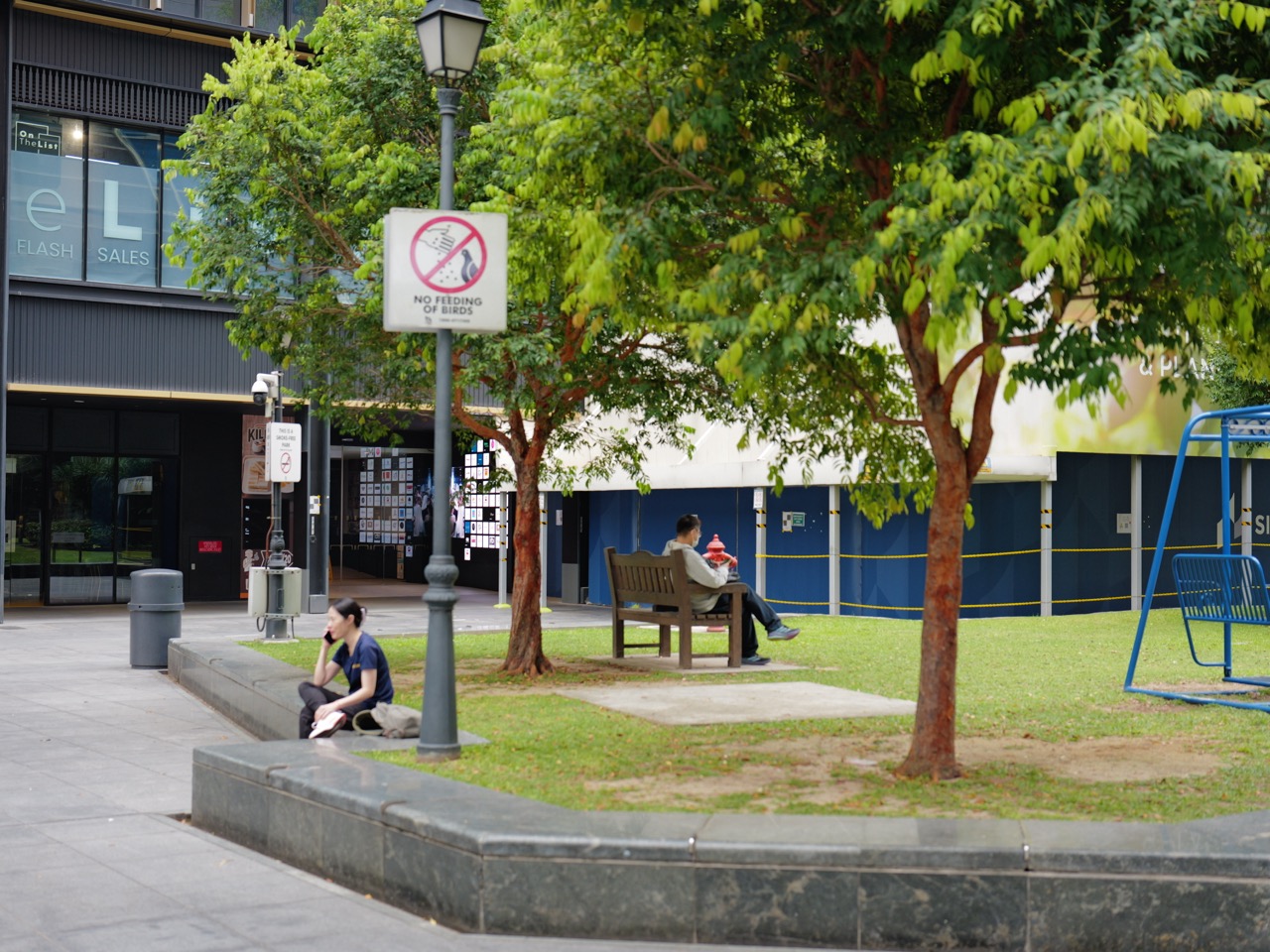
Singapore children may see a monkey near a nature trail, an otter family by a waterway, a large monitor lizard near a park path or an unfamiliar bird at a shared playground. These sightings can be exciting. A child may say, “It’s cute, so we should feed it,” or “It’s in our neighbourhood, so somebody should take it away.” Neither conclusion follows from seeing an animal. To respond responsibly, children need vocabulary that distinguishes wildlife from pets, observing from approaching, and assistance from handling an animal themselves.
A first-language explanation helps when excitement makes English words hard to retrieve. The child may know a familiar family-language expression for “keep back,” or a grandparent may use the local name for a bird. The adult can preserve that meaning and add accurate English words such as habitat, forage, offspring, defensive, distance and coexistence.
This fortieth article in the Singapore Children Vocabulary series is about what children should say and understand when they encounter an urban wild animal, mainly for ages seven to twelve. It complements but does not duplicate Community Gardens and Biodiversity Observation, which studies species, habitats and careful recording. This article begins where a real encounter requires a behaviour decision: how to protect the child, the animal and other people.
Quick answer: keep distance, do not feed and let adults seek help
The child-friendly sequence is notice → stay calm → give the animal space → do not feed, chase or touch → tell an adult if concerned. The exact action in a specific incident depends on the animal and official advice. Children should not be taught that every animal is harmless or that every animal should be approached for a photo.
The Animal and Veterinary Service (AVS), part of NParks, maintains official advice for different species through its Encountering Wildlife portal. Its advice emphasises appropriate distance and avoiding actions that distress, corner or attract wildlife. Different species and circumstances require different details, so adults should check the actual guidance rather than rely on a single slogan.
- Learning outcome: child can say what animal or behaviour was observed and describe a safe adult-led response without attributing a motive.
- First-language bridge: explain the situation first in the language the child knows best, then practise a short accurate English description.
- Safety: never approach an animal for a worksheet, lure it with food, touch an injured creature or bring wildlife home.
- Responsible contact: adults may consult the AVS advice or seek suitable professional assistance when a wildlife incident requires intervention.
What NParks and AVS explain about urban wildlife
AVS’s wildlife guidance, updated in September 2026, lists species-specific pages covering macaques, otters, wild boars, snakes, monitor lizards, civets, birds and others. Singapore’s City in Nature approach has increased opportunities for people and wildlife to encounter one another. Encounters do not make animals domestic or remove the need for distance.
AVS’s otter guidance says otters may become defensive if disturbed, especially near pups. It advises people not to touch, chase, corner, feed or use flash photography near them. Families should give otters space, keep pets controlled and avoid disturbing their habitat.
The wild-boar guidance notes that adults can protect their young and may react defensively if threatened. It tells people not to feed, touch, chase or corner the animals and to observe from a distance. A child should not approach a piglet because it appears small or alone; a protective adult may be nearby.
NParks’s hiking etiquette tells park visitors to remain on designated trails, avoid restricted areas, not approach or feed wildlife and stay out of forested areas during and immediately after bad weather. The Living with Nature educational panels reinforce safe distance, avoiding flash and not feeding wildlife. They also point residents to the AVS Animal Response Centre for wildlife matters.
Feeding wildlife in Singapore is prohibited under the Wildlife Act. Children should understand the legal and ecological point without being asked to confront a person who is feeding an animal. A suitable caregiver or authorised officer handles concerns. Animals’ natural feeding behaviour can be altered by repeated human feeding.
Twenty first-language words for safer wildlife encounters
These definitions are original English teaching anchors. Some refer to concepts best shown using official pictures or fictional drawings rather than real physical encounters. Introduce five at a time and practise in a calm setting.
- 1. Wildlife: animals living independently in their natural or adapted environments rather than as household pets. “We may see wildlife in Singapore’s parks.”
- 2. Habitat: the place and conditions in which an animal lives. “A waterway can form part of an otter’s habitat.”
- 3. Urban: connected with a town or city environment. “Some wild animals also live in urban areas.”
- 4. Encounter: an occasion when a person comes across an animal. “We had a wildlife encounter during a supervised walk.”
- 5. Observe: notice carefully without unnecessary interference. “Observe from a safe distance.”
- 6. Distance: the separation between an animal and a person or object. “Give the animal enough distance.”
- 7. Approach: move closer to somebody or something. “Do not approach a wild boar.”
- 8. Forage: search for natural food. “Wildlife needs space to forage.”
- 9. Feed: provide food to an animal. “Do not feed wild animals.”
- 10. Habituated: accustomed to a repeated condition, such as people or human-provided food. “Feeding can change an animal’s behaviour around people.”
- 11. Defensive: acting to protect itself or its young when threatened. “An otter may act defensively near pups.”
- 12. Offspring: an animal’s young. “Give mothers and their offspring room.”
- 13. Corner: trap an animal where it has limited room to move away. “Never corner wildlife.”
- 14. Chase: follow rapidly in an attempt to catch or drive something away. “Do not chase an animal for a photograph.”
- 15. Scavenge: search for discarded food or waste. “Litter can attract scavenging animals.”
- 16. Litter: waste left where it does not belong. “Dispose of food waste so animals are not drawn to it.”
- 17. Leash: a strap or line used to control a pet during a walk. “A dog should be kept safely controlled near wildlife.”
- 18. Injured: hurt or physically harmed. “Tell a responsible adult about an injured wild animal.”
- 19. Professional: a person with relevant training and responsibility for a task. “Wildlife professionals handle animals needing intervention.”
- 20. Coexistence: living or sharing an area without unnecessary conflict. “Coexistence includes respecting both people’s needs and wildlife.”
Teach the distinction between wildlife and pet explicitly. Seeing an otter often does not turn it into a domestic animal. A visible baby animal does not prove it is orphaned. And defensive does not mean an animal is “evil”; it describes a possible response to threat or proximity.
Worked case one: the otter pups beside a waterway
A fictional family sees a group of otters with young pups by a waterway while walking along an authorised public path. The child wants to step closer for a clear photograph.
Parent: “What do we observe?”
Child: “Adult otters and pups near the water.”
Parent: “Does the presence of pups change what we should consider?”
Child: “The adults may protect them and react defensively.”
Parent: “Should we approach or corner the group?”
Child: “No. Give them space and follow the appropriate official guidance.”
Parent: “Do we need a close-up photograph?”
Child: “No. We can enjoy the sighting safely from where we are, or move away.”
AVS advises keeping distance from otters, particularly family groups, and avoiding chasing or feeding. The child’s task is not to determine the precise safe distance with a ruler or to decide the animals’ mood. A caregiver handles the actual situation and moves away where appropriate.
An extension asks whether an otter entering a public area automatically means it needs to be captured. Not necessarily. Professionals assess situations where intervention is warranted. Children should describe what they observed without deciding that every animal is an emergency.
Worked case two: a small wild-boar piglet is not a pet
During a hypothetical supervised walk, a child sees a small wild-boar piglet. They say it must be lost and suggest taking it home.
Adult: “What do we know from the observation?”
Child: “We can see a young wild boar.”
Adult: “Do we know whether its mother is nearby?”
Child: “No.”
Adult: “Why would approaching be unsafe?”
Child: “Adult wild boars may protect their young, and wild animals can react defensively.”
Adult: “What should we do?”
Child: “Stay away and follow your safety guidance.”
AVS’s wild-boar advice stresses not cornering, chasing, touching or feeding wild boars, especially in the presence of piglets. The child must not interpret apparent small size as permission to touch or pick up an animal.
A learning point is the distinction between young and abandoned. The first may be visible; the second needs evidence. Do not invent a rescue story from a photograph.
Worked case three: a macaque near a food container
A family is having a supervised picnic at a suitable location. A macaque appears nearby, and a child reaches for food to offer it. The adult stops the behaviour.
Parent: “What is the child planning to do?”
Child: “Feed the macaque.”
Parent: “What does NParks advise about feeding wildlife?”
Child: “Do not feed it.”
Parent: “Why could feeding change the situation?”
Child: “Animals may associate people with food, which changes how they behave around us.”
Parent: “What should we do instead?”
Child: “Follow your guidance and avoid attracting or provoking the animal.”
The situation should be handled by the adult using AVS’s species-specific macaque guidance. Children should not try to push an animal away, grab food from it or shout at it. The vocabulary lesson can happen later with a fictional drawing if the live encounter requires attention.
Introduce forage as searching for food in the environment and contrast that with people supplying snacks. A wild animal can forage successfully without human feeding. Litter and poorly secured food waste can also influence animal behaviour.
Worked case four: a large monitor lizard on a path
A child sees a monitor lizard resting near a walking path and declares it is “chasing us” because it later begins moving.
Parent: “What did you actually observe?”
Child: “A lizard moved along the ground.”
Parent: “Does movement prove it is chasing a person?”
Child: “No.”
Parent: “What should we avoid?”
Child: “Approaching, touching or trying to block the animal.”
Parent: “What can you tell me accurately?”
Child: “There is a large lizard near the path; we should keep a safe distance.”
The child should not classify every large lizard as harmless. Give it space and follow the relevant AVS advice or adult directions. This exercise separates a neutral observation from a claim about an animal’s intention.
A near-miss question asks if the child should circle the animal repeatedly to get a better angle. No. Moving around it may reduce its escape options and increase disturbance.
Worked case five: the bird that appears injured
A child notices a bird that seems unable to fly and reaches forward to pick it up. The caregiver intervenes.
Caregiver: “What can we describe from a safe place?”
Child: “The bird is on the ground and is not flying.”
Caregiver: “Does that prove the exact injury or the bird’s age?”
Child: “No.”
Caregiver: “Should you touch or take the animal home?”
Child: “No. An appropriate wildlife professional should assess the situation.”
AVS’s wildlife help pages describe professional response for injured or distressed wild animals. An adult can check the official contact information and provide a careful location description if assistance is necessary. The child should not force an animal to move, give it water or attempt treatment based on an internet video.
For an at-home activity, compare two statements: “The bird is injured” and “The bird appears to have difficulty moving.” The second may more accurately reflect a distant observation when its medical condition is not known.
Worked case six: a pet dog and a wild animal need different boundaries
During a fictional walk, a family dog becomes interested in an otter near water. The child says the dog should be released to play because both are animals.
Parent: “What is the dog’s status?”
Child: “It is our pet.”
Parent: “And the otter?”
Child: “It is wildlife.”
Parent: “Does the pet’s friendliness mean the encounter is safe?”
Child: “No.”
Parent: “What should the responsible adult do?”
Child: “Keep the pet controlled and maintain distance, following official guidance.”
AVS advises keeping pets on leash near otters. A child’s role is to follow the caregiver’s directions rather than release the dog or attempt to separate animals if they interact. Different animal types require different care.
This case also distinguishes respecting wildlife from disliking pets. Responsible pet ownership can help protect both the domestic animal and nearby wildlife.
Worked case seven: the close-up video is not evidence of a safe encounter
A child watches a short social-media clip showing someone posing close to wildlife. They conclude that approaching the animal must be safe because the person in the video was smiling.
Parent: “What does the clip show?”
Child: “Someone appeared close to the animal for part of a video.”
Parent: “Does that establish what happened before or after?”
Child: “No.”
Parent: “Does the clip override AVS guidance?”
Child: “No. The official advice is to give wildlife appropriate space.”
This is a media-literacy extension, but the core task remains wildlife behaviour. A cropped clip may omit feeding, disturbance, danger or professional handling. Children should not imitate unsafe actions to create similar content.
Avoid sharing precise locations of sensitive wildlife sightings publicly as a school assignment. The family can discuss animal behaviour without drawing crowds to a habitat or exposing an individual animal to disturbance.
Safe distance is a behaviour, not one universal number
Children often ask, “How many metres away must I stand?” There is no single number in this article that can safely apply to every species, setting and behaviour. AVS gives species-specific guidance, and real distance needs depend on circumstances including movement, protective adults, human crowding and escape routes.
Teach the meaning instead: give the animal room to move away, do not surround it and do not approach to make it perform for a photograph. If it comes closer, adults use appropriate official advice to handle the situation. Do not ask children to test how near they can get before an animal reacts.
The child may be disappointed that they cannot get a close-up. A useful adult response is to invite careful observation from safety, then find an official photograph at home. Curiosity is valuable; the boundary protects both child and animal.
A family can discuss wildlife respectfully without claiming that people must never use a park or that animals belong to humans because they entered a housing estate. Shared urban habitats require appropriate planning and professional management.
The first-language bridge: observation, warning and help
Start with a simple family-language description: “There is an animal near the path.” Avoid turning it into “The animal is attacking us” if no such behaviour has been observed. The English sentence can preserve the modest claim: “I can see a wild animal, and we should keep our distance.”
Next explain the difference between a statement and a request. “The animal looks hurt” reports a concern. “Please contact the appropriate wildlife service” asks an adult to take suitable action. “I will catch it myself” is a proposed intervention and is unsafe for a child.
A third distinction is feeding versus helping. Giving human food to wildlife is not automatically beneficial. NParks warns that feeding changes animals’ natural behaviour and can harm them. A child can express kindness by keeping distance and disposing of waste appropriately rather than offering a snack.
Names of animals may also vary between dialects and languages. If a child is uncertain whether a photographed animal is an otter or another species, say “I am not sure which animal it is.” A knowledgeable adult can check reputable identification resources, but the safety boundary does not require perfect taxonomy.
A child should never be placed in charge of translating a dangerous animal encounter for strangers. Adults and authorised professionals handle consequential communication.
A ten-minute paper wildlife-choice activity
Prepare five cards with fictional pictures: an otter family, a wild-boar piglet, a monkey near a picnic, an unfamiliar large lizard and a bird that appears distressed. Mark the cards as FICTIONAL EXERCISES. Do not ask children to photograph real animals or recreate the situations outdoors.
For each card, ask “What can we observe?”, “What should we not assume?”, “Which action might create more danger?”, and “Who should help if intervention is needed?” The child should learn that the same general rule—do not feed, chase, corner or touch—applies alongside species-specific cautions.
Next introduce a litter card. Ask why leaving food waste near a path may attract animals and change their behaviour. The child can practise the verb scavenge without handling rubbish in real wildlife areas.
Then show two imaginary photographs, one taken from a distant viewpoint and one requiring the person to approach pups closely. Ask which behaviour respects AVS advice. No child should be asked to produce the close-up.
Finally practise a suitable adult-reporting sentence: “I saw an animal near the path at this location. I did not touch it. Please check whether professional assistance is needed.” Keep fictional locations out of real reporting systems.
Three learning pathways
Repair pathway: a child knows some animal names but does not distinguish pets from wildlife. Teach wildlife, habitat, urban, encounter and distance. Ask for one observable feature and one safe action.
Stabilisation pathway: a child understands the animals but wants to approach or feed them. Teach forage, feed, defensive, offspring and corner. Use a picture sequence to explain why an apparently friendly animal is still wild.
Extension pathway: the learner can discuss habituated, scavenge, litter, professional and coexistence. Ask how people’s actions influence wildlife behaviour and where professional responsibilities begin.
A child who uses a home-language animal name confidently may need help with the English term. A child who memorises “coexistence” but still proposes feeding needs a concrete behaviour example. Correct the relevant misunderstanding rather than merely adding harder words.
Four weeks of first-language urban wildlife vocabulary
- Week 1 — identify and observe: wildlife, habitat, urban, encounter and observe. Use official pictures to distinguish direct observation from guessed intentions.
- Week 2 — preserve distance: distance, approach, defensive, offspring and corner. Practise why pups and piglets should not be approached.
- Week 3 — understand feeding risks: forage, feed, habituated, scavenge and litter. Discuss why human feeding can alter behaviour.
- Week 4 — appropriate help: chase, leash, injured, professional and coexistence. Identify the child’s safe role and the responsible adult’s next step.
There is no need to arrange a live encounter. A nature photograph and conversation can teach the vocabulary. Children should not be rewarded for finding rare wildlife or photographing an animal in a difficult location.
A useful progress record contains three fields: “What I saw,” “What I should not do,” and “Which adult or professional can help if necessary.” That is stronger evidence of learning than a long list of animal names.
Frequent misconceptions to correct
“Wild animals are pets if they enter a housing estate.” No. Urban wildlife remains wild even in shared human spaces.
“An otter pup is safe to touch because it is small.” No. Otter adults may defend their pups. Maintain distance.
“A wild-boar piglet must have no parent nearby.” Not necessarily. Avoid approaching or attempting rescue.
“Feeding animals is always the kindest action.” No. NParks advises against feeding wildlife and warns about altered behaviour and welfare.
“If a video shows someone close to an animal, that proves it was safe.” No. A clip does not establish the circumstances or justify imitation.
“A moving monitor lizard is necessarily chasing a child.” No. Motion alone does not prove intent. Stay calm and follow adult guidance.
“An injured-looking bird should be taken home by a child.” No. Professional assessment may be needed, and handling can harm the person or animal.
“One distance rule works for every animal.” Not automatically. Different species and situations require appropriate current guidance.
Frequently asked questions
What is the safest general response when children encounter wildlife?
Does NParks advise against feeding otters and wild boars?
Are animals allowed to live near Singapore neighbourhoods?
Should a child pick up an injured animal?
Can children photograph otters at very close range?
Do different animal species require different advice?
Can a family talk about wildlife in its home language first?
Where should adults find reliable encounter guidance?
Coexistence and Singapore’s shared urban environment
Singapore is both a city and a place where numerous wild animals live, forage and reproduce. An encounter may involve competing needs for space: a resident needs a safe route, an animal needs to avoid being cornered, and public agencies must manage wildlife and habitats responsibly. A child does not solve those tensions alone.
The AVS guidance, otter advice, wild-boar advice and Living with Nature educational panels provide the factual background. All family dialogues and incidents are fictional; this article is not a real-time wildlife incident alert.
The nation-building skill is modest but concrete: describe an encounter without blaming or sensationalising, avoid behaviour that could cause harm and respect the professionals and neighbours who share the responsibility for safe coexistence.
Continue the Singapore Children Vocabulary series
Read Community Gardens, Biodiversity and Careful Nature Observation for habitat and evidence vocabulary, and Clean Shared Spaces and Recycling for managing waste responsibly. Emergency Help-Seeking explains how children describe an urgent concern to a responsible adult.
Companion articles in this batch cover Ports and Global Trade, Film and Game Ratings and Science Centre Inquiry and Evidence. Each teaches how to interpret a different kind of public information responsibly.
For the wider vocabulary progression, visit Vocabulary Learning Hub, Vocabulary Development and Singapore Bilingual Education.
A safe five-minute wildlife vocabulary exercise
Choose an official picture of an otter family or wild boar. Ask your child to describe one visible feature, one reason to give the animal space and one safe action a caregiver could take. Let the child answer in their first language, then practise a clear English statement such as “We should not approach the animal or feed it.” This teaches useful civic care without creating a real encounter.
Prepared 24 October 2026 using current NParks and AVS guidance. All teaching situations are hypothetical; refer to official species-specific instructions and professional assistance for real encounters. The featured photo, if displayed, illustrates public bird-feeding signage, not an instruction to approach wildlife.