
Why do people in Britain and Australia ask for a lift while a character in an American story asks for an elevator? Both can name a device that transports people between levels of a building. But British, Australian, American and Singapore English also differ in spelling, pronunciation, cultural vocabulary and everyday institutions. Parents can teach children to recognise these variants while preserving the meaning of the story.
A word may have a close regional equivalent, or it may describe a local food, school structure or transport system with no exact one-word translation. Children should learn the setting and the real object before replacing an unfamiliar expression. The goal is flexible communication and reading comprehension, not treating legitimate international English varieties as intellectual rankings.
This volume gives a worked conversation among fictional children in Singapore, Australia and the United States, twenty useful regional word comparisons, respectful guidance on Standard Singapore English and informal Singlish, reading activities, parent questions and references to Australian travel-vocabulary resources.

Quick answer: identify the object, region and audience
Ask what the word refers to in this sentence, which English variety the story uses and whether a proposed alternative preserves the exact meaning. Some words are close equivalents; others require a description, photograph or explanation of the local institution.
First principles: the speaker and the setting both matter
Imagine a visitor asking for the building’s lift. A person using American English might more readily use elevator, while an Australian or British speaker often uses lift. Both can be appropriate and intelligible. Do not ask the child to say that one is wrong merely because another book uses a different form.
A pedestrian path presents a similar lesson: Australian English often uses footpath, British English often uses pavement, and US English often uses sidewalk. Those labels are related but the physical layout and local road-use rules may differ. In a travel instruction the child must understand where pedestrians should walk, not merely translate the word.
Complete worked conversation: an international library visit
Use the following fictional discussion. Maya lives in Singapore, Ella in Australia and Ben in the United States. Their word choices show common tendencies, not a claim about every resident of their countries.
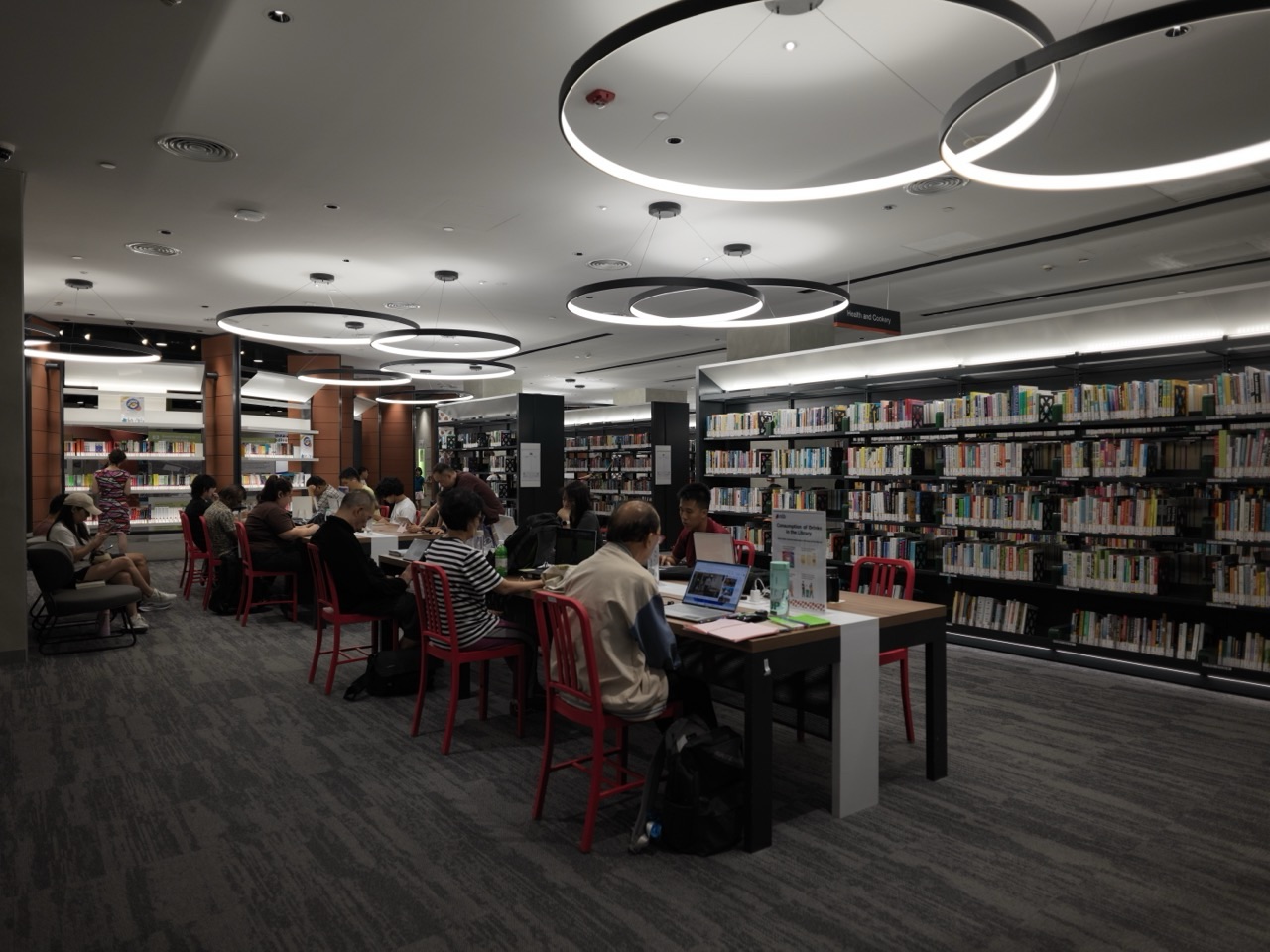
Maya says, ‘Let’s take the lift up to the library.’ Ben asks, ‘Do you mean the elevator?’ Ella recognises both and explains that the group is talking about the same building feature. The children do not need to argue which term is superior.
Outside the library, Ella mentions the footpath and Ben calls a similar walking route the sidewalk. Maya explains that both refer to pedestrian routes in this context, though exact local terminology and route details still matter.
After reading, the children tidy the table. Ben says to put an empty wrapper in the trash. Ella might call it rubbish; Maya may use rubbish as well. Everyone understands the practical request, but the actual waste and recycling arrangements depend on local rules.
On a poster, Maya writes colour and Ben writes color. Both spellings can be correct under different standards. They decide to use one spelling style consistently for their shared final report. This is an editing choice, not a judgement about either child’s language ability.
Finally, Maya talks about an MRT station and a hawker centre in Singapore. The others need a description of those local contexts rather than a forced one-word translation. A useful explanation of a hawker centre mentions multiple food stalls and a shared eating environment.
| Situation | Common wording | Meaning check |
|---|---|---|
| Moving between floors | lift (UK/AU/SG), elevator (US) | Same kind of building transport |
| Walking beside roads | footpath (AU), pavement (UK), sidewalk (US) | A pedestrian route; local designs vary |
| Unwanted packaging | rubbish (UK/AU/SG), trash or garbage (US) | Waste, not the recycling rule |
| Spelling a hue | colour (UK/AU/SG), color (US) | A standard spelling variant |
| Singapore food setting | hawker centre | A culturally specific venue rather than any restaurant |
| Singapore railway system | MRT | A particular urban rail network |
Twenty useful regional vocabulary comparisons
| Topic | Common UK or Australian usage | Common American wording or contextual caution |
|---|---|---|
| Building transport | lift | elevator |
| Motor fuel | petrol | gasoline or gas in context |
| Walking route | footpath (AU), pavement (UK) | sidewalk |
| Waste | rubbish | trash or garbage |
| Waste container | rubbish bin | trash can |
| Short trip | holiday | vacation; holiday has other US senses |
| Car storage area | boot | trunk |
| Car engine cover | bonnet | hood |
| Parking area | car park | parking lot |
| Hand-held portable light | torch | flashlight |
| Large road freight vehicle | lorry (UK), truck (AU) | truck |
| Athletic footwear | trainers (UK), runners or sneakers (AU) | sneakers |
| Removing pencil marks | rubber (UK school usage) | eraser; rubber can mean other things |
| School-break period | school holidays | school vacation or break |
| Ground-level storey | ground floor in many UK/AU contexts | first floor often ground level in US |
| Utility vehicle | ute (AU) | pickup truck as approximate category comparison |
| Baked snack | biscuit (UK/AU contexts) | cookie for some similar foods; US biscuit differs |
| Hot potato food | hot chips (AU/UK context) | fries for many similar foods |
| Football | sport code depends on UK/AU region | American football in common US context |
| A main urban railway | MRT (Singapore-specific name) | subway or metro are broader comparable terms |
A child should not learn this table as twenty perfect substitutions. Football, chips, biscuits, school levels and regional institutions can refer to different things. A photograph, local context or relevant dictionary may be necessary. The same expression can also occur in more than one region, with variation within a country.
Australian English has a distinct history
Australian English reflects historical developments, settlement and migration, and words borrowed from Indigenous Australian languages. It is not simply British English with one different accent. The National Museum of Australia describes the significance of the Macquarie Dictionary in recording local vocabulary and usage, and the Australian Government Style Manual recommends using an appropriate Australian dictionary for consistent formal writing.
Australian English itself varies by region, generation and community. A speaker in one Australian city might use a local expression differently from someone elsewhere. Do not teach a national vocabulary list as though every resident must use the same words. Ask the child to understand the particular speaker and story.
Spelling patterns: colour, centre and travelled
Many UK, Australian and Singapore formal contexts favour colour, centre and travelled, while US writing commonly uses color, center and traveled. These are conventional differences and do not necessarily indicate different meanings. The child can practise editing one short passage into a consistent chosen style.
| UK/AU/SG standard tendency | US tendency | Reading or writing check |
|---|---|---|
| colour | color | Same colour concept |
| favour | favor | Use one style consistently |
| centre | center | Check proper names separately |
| metre (length) | meter (length) | Meter also denotes a measuring device in other uses |
| travelling | traveling | Doubling convention |
| labelled | labeled | Doubling convention |
| organise | organize | Both forms can occur in several standards |
| programme in some contexts | program | Computing and editorial conventions affect choice |
Spelling conventions do not require a child to alter an organisation’s official name or an exact quotation. It is useful to teach that a school assignment may have a preferred standard, while an authentic American story may retain its own spelling. The audience determines the writing decision.
A word may refer to different foods across regions
In the United States, a biscuit can refer to a soft savoury quick bread, often served with a meal. In Britain and Australia, biscuit often refers to a different kind of baked item. Cookie may name many similar items, but it is not a universal replacement for every biscuit. A child should inspect the recipe or illustration.
The word chips presents another trap. Australians use hot chips for some cooked potato pieces and can also use chips for packaged snacks. In US contexts, fries often names hot fried potatoes while chips frequently refers to thin packaged snacks. The food, not the spelling, determines the intended meaning.
A local sports term can also mislead. Football in Britain commonly refers to association football. In the United States it often means American football. In Australia, football may refer to different codes according to region and community. An accurate summary should name the code where the distinction matters.
Near-equivalent words are not always interchangeable
A ute in Australian English refers to a vehicle type related to what Americans may call a pickup truck, but individual designs and historical categories differ. If a story requires the exact kind of vehicle, a photograph or description is safer than simply changing the noun.
Similarly, primary school, Year 1, Grade 1 and elementary school belong to different education systems. They cannot automatically be mapped to equal ages or identical curricula. A parent should confirm the educational structure of the country rather than calculate grade equivalence from the wording alone.
An MRT in Singapore names a particular public transport network. A metro or subway elsewhere may serve comparable purposes without having the same routes, schedules, fare structures or official name. Tell the child what the systems have in common while preserving the local name.
Singapore Standard English and Singlish serve different purposes
Singapore Standard English is widely used in formal education, public communication and professional writing. Singapore Colloquial English, often called Singlish, also communicates local belonging, humour and familiarity in suitable social situations. A child can learn the conventions of formal school English while retaining a rich family and community speech repertoire.
The National Institute of Education’s SingTeach discussion of English in Singapore distinguishes the standard variety used for formal purposes and the colloquial variety associated with informal communication. It is more helpful to teach children when a particular form fits the audience than to describe legitimate home speech as a sign of limited intelligence.
A word such as void deck describes an open shared space associated with many Singapore public-housing buildings. Explaining it as simply ‘an empty floor’ can lose its social and architectural context. Hawker centre likewise describes a multi-stall food environment, not just any restaurant.
A culturally specific name may need an explanation rather than a substitute
Imagine an Australian student reading a Singapore story about a hawker centre. The child might ask whether the venue is a food court. The broad comparison can provide a starting point, but a careful explanation mentions the local stall-based food culture and communal eating arrangements. The point is understanding the real place named by the text.
The same method works in the opposite direction: when a child in Singapore reads about an Australian outdoor setting, explain the geographical feature, travel practice or local institution without assuming it is the exact equivalent of something familiar at home.
Pronunciation varies within countries
Accent is not a single fixed property of an entire nation. English speakers in Australia, Britain, the United States and Singapore differ individually as well as regionally. A child may recognise a word in print but initially mishear it in another accent. Read the surrounding sentence, repeat the expression naturally and show the written form when useful.
A child does not need to imitate a broadcast accent to demonstrate vocabulary knowledge. The practical goals are intelligible communication, comfortable listening and recognition that a pronunciation difference is not automatically a meaning difference.
Standard writing needs consistency, not national rivalry
If a child is completing a Singapore school assignment, use the school’s current writing expectations. If a document is written for an Australian audience, an Australian dictionary and consistent local spelling can be appropriate. A US publication may choose American forms. Following a specified style makes the text easier to edit and understand.
Don’t encourage children to change a direct quotation’s spelling and then present it as exact speech. Preserve source wording accurately and explain any authorised editorial adjustments when a formal task requires it.
How dictionaries can help
A current regional dictionary may identify local meanings, pronunciations, spelling alternatives and usage labels. The Australian Government Style Manual recommends the Macquarie Dictionary or Australian Concise Oxford Dictionary for official Australian usage. The dictionary helps the writer decide what is conventional in the target context; it does not make words in other varieties disappear.
Teach the child to check a complete example sentence, not just the first listed synonym. A word may belong to several senses, and one of those senses may be region-specific or informal. For a new word, record the intended meaning and where it was encountered.
Understand the original sentence before choosing an equivalent
Imagine an Australian character saying that her family will park the ute near a walking track. The story is describing a vehicle and a walking route, but the exact object and location still require context. Translating ute as any kind of van, or a walking track as any pavement, could change the scene. The child’s first job is to describe the physical action without erasing its local meaning.
Another sentence says an American visitor put a suitcase in the trunk of a car. A British or Australian speaker can describe the same compartment as the boot in this context. In a different story, a boot can be footwear. The noun’s meaning depends on the surrounding sentence, not the nationality alone.
A fictional visiting-student paragraph
Read: ‘Ella arrived in Singapore with her family. At the MRT station, Maya showed her where to find the lift. Later they visited a hawker centre, where several stalls offered meals. Ella wrote the word colour in her notebook, while her American cousin used color when sending a message.’ This is an original language exercise, not a record of a real journey.
| Question | Supported answer | Language principle |
|---|---|---|
| What transport system is named? | The Singapore MRT | Local proper name |
| What helped them move between floors? | A lift is mentioned | A common building transport term |
| What kind of food setting did they visit? | A hawker centre with several stalls | Local cultural concept |
| Which spelling did Ella write? | colour | A standard spelling form |
| What spelling did her cousin use? | color | A US-standard variant |
| Did the cousin also visit Singapore? | Not stated | Do not invent an event |
| Does every Australian use the same words as Ella? | Not established | One speaker isn’t a national rule |
The final two questions develop a reading habit beyond memorising a glossary: a child should understand that a passage about one fictional person does not provide universal evidence for every member of a nation.
Place-specific Australian vocabulary can deepen context
The eduKateSG ecosystem includes Australian place-based vocabulary reading resources. Parents can select Launceston, Alice Springs, Wollongong or Toowoomba as a setting for a place-themed reading activity.
Use the places to teach what a word describes in a context—travel, landscape, cultural history, navigation or daily life. Do not assume that a place-vocabulary article demonstrates which form of every English word is used by every Australian. When a real travel decision depends on an unfamiliar term, confirm the current local instructions.
A small word record is better than a national word contest
| Original expression | Meaning in context | Useful alternative or explanation |
|---|---|---|
| lift | Device transporting people between levels | elevator in common US usage |
| footpath | Pedestrian path in its setting | sidewalk or pavement can be related |
| car boot | Car’s luggage storage compartment | trunk in US use |
| hawker centre | Singapore multi-stall food venue | Explain its local function |
| colour | Word for a hue | color in US spelling |
| ute | Australian utility vehicle | pickup truck is only an approximate category |
Let your child identify whether a pair is a close equivalent, a different spelling of one concept, or an approximate category match. If the proposed substitution loses information, write one sentence explaining the difference.
Learning vocabulary across English-speaking countries
A school level called Year 3 in one country need not correspond exactly to Grade 3 or Primary 3 elsewhere. Likewise, sporting words such as football and institutional terms such as MRT and subway may refer to different systems. When the child’s goal is accurate comprehension, retain the local term and explain its role rather than declare two names identical.
Reading and travelling also involve local practices. A footpath, a road crossing or a school timetable may have official signage and rules that differ by jurisdiction. Language lessons cannot replace checking those rules for a real journey.
Respectful listening is part of the lesson
If a child hears an unfamiliar accent, model ‘Could you please repeat that?’ or ‘Do you mean the lift near the library?’ A person speaking another established variety of English may use an ordinary, appropriate form that the listener hasn’t encountered. Curiosity and clarification are more helpful than accent imitation or ridicule.
For multilingual families, this lesson can demonstrate that competence includes selecting the form suited to the audience. Learning formal Singapore school English and understanding Australian or American vocabulary expands a child’s resources rather than invalidating family speech.
An eight-step family comparison exercise
- Choose a real sentence from an Australian, British, American or Singapore children’s text.
- Name the story’s country, speaker and topic where the source establishes them.
- Underline one unfamiliar expression, keeping the surrounding sentence visible.
- Describe the person, object or institution in everyday English before choosing a replacement.
- Try an alternative from another English variety and see if both complete sentences still describe the same thing.
- Check the dictionary or another reliable source if the equivalence is unclear.
- Record one note distinguishing an exact spelling variant from an approximate cultural translation.
- Invite the child to explain a different regional term independently later.
A parent can adapt the task to a child who cannot yet read: show a picture of the object and say the two familiar names aloud. Older learners can examine why an institutional term such as a school grade doesn’t translate one-to-one.
A child should recognise local terms without losing cultural detail
A Singapore void deck is not best explained merely as an empty floor. The term evokes a shared, often open space in a particular housing context. A hawker centre is not identical to any restaurant, even though both can serve meals. A contextual definition often preserves more useful knowledge than a literal substitute.
The same principle applies to a British or American text: school grades, transport services, sporting codes and foods reflect local practices. The child’s goal should be understanding the story as its writer presents it, rather than smoothing away every difference.
How to repair an overconfident translation
Weak draft: ‘An American biscuit is always a British cookie. Football means the same sport everywhere.’ Both claims ignore established differences in regional food vocabulary and sporting codes.
Clearer revision: ‘Biscuit can refer to different foods across English varieties, and football can refer to different sports. Readers should use the picture, the setting and additional context to identify the intended meaning.’ The improved version avoids asserting an exact equivalence that the source does not support.
A true spelling-variant comparison can be simple: ‘Ella wrote colour, and Ben used the American spelling color.’ Do not add hedges merely to make every statement look cautious when a common standard difference is clear.
A ten-minute parent routine
- Two minutes: read a short scene that has an unfamiliar regional term.
- Two minutes: identify the object or situation the term refers to.
- Two minutes: compare a proposed form from another region.
- Two minutes: check whether that form preserves the local meaning and register.
- Two minutes: use both terms naturally in clear example sentences.
The timing is illustrative rather than an experimentally prescribed lesson duration. A curious child may want to explore one unfamiliar word through an entire story, which can be more valuable than collecting many detached pairs.
Match the activity to the child’s current readiness
| Stage | Good starting practice | Next challenge |
|---|---|---|
| Young listener | Lift and elevator in pictures | Explain the shared object |
| Beginning reader | Colour and color | Recognise spelling conventions |
| Growing primary reader | Footpath and sidewalk | Infer meaning in a travel instruction |
| Confident primary learner | Explain hawker centre to a visitor | Preserve institutional context |
| Older learner | Compare grade levels and sporting codes | Avoid false exact equivalences |
What useful progress looks like
- The child accepts that English has several established regional varieties.
- They use the story’s setting rather than a national stereotype to interpret a word.
- They can explain one familiar variant pair in a complete sentence.
- They can tell when a proposed translation is only approximate.
- They keep proper names and cultural details accurate.
- They choose a consistent spelling convention for a school writing task.
- They ask polite clarifying questions about an unfamiliar accent or expression.
- They use regional words to understand new texts, not to judge speakers.
Common parent mistakes
- Teaching a word pair as a universal rule for an entire country.
- Treating an accent or colloquial variety as evidence of lower intelligence.
- Replacing foods or sporting codes without checking the actual referent.
- Applying another country’s grade labels to a Singapore school stage without verification.
- Changing an official local term into an inaccurate generic label.
- Switching spelling conventions randomly in edited formal writing.
- Correcting genuine dialogue as though it were a school examination sentence.
- Making a long country vocabulary list more important than understanding a story.
Frequently asked questions
Is Australian English just British English with another accent?
No. Australian English has its own history, vocabulary, pronunciation and patterns of regional and social variation, even while sharing many conventions with British English.
Are color and colour both valid English spellings?
Yes. Both are standard forms under different spelling conventions. Formal work should follow the specified style.
Does biscuit always refer to the same food?
No. Its common culinary sense differs across some English varieties. The recipe and context matter.
Should Singapore children learn only British spelling?
For schoolwork, follow the school or examination requirements. Learning to recognise American spelling and other varieties can support international reading without requiring inconsistent formal writing.
Does football mean the same sport in every country?
No. The sport intended depends on the region and community. Name the specific code when the detail matters.
How should a child respond to unfamiliar pronunciation?
They can ask the speaker to repeat or explain. Listening comprehension can develop without demanding one national accent.
Are hawker centre and restaurant interchangeable?
Not precisely. A hawker centre names a locally characteristic multi-stall food venue. A brief explanation often preserves more useful context than a one-word substitute.
How can parents tell if their child understands regional vocabulary?
Ask for an explanation of the real object or institution, then a sentence in which the proposed regional alternative still fits the meaning.
Evidence and parent reading
The Australian Government Style Manual recommends using a current Australian dictionary for local spelling and usage. The National Museum of Australia history of the Macquarie Dictionary describes the documentation of Australian English. NIE SingTeach discusses formal and colloquial English in Singapore. The invented library conversation and family exercises are educational illustrations, not an assessment standard.
The question worth asking during tonight’s reading
When a character uses a word unfamiliar to your child, ask what the person means in that particular scene, then see whether another regional expression conveys the same meaning. If it doesn’t, keep the original term and explain it. Useful vocabulary expands a child’s understanding without erasing where the words came from.
Continue the series: Vol 8: Multilingual English · Vol 18: Audience and Register · Vol 22: Spelling and Pronunciation · Vocabulary in Real English Hub.
Continue with this batch of children’s vocabulary articles: Vol 66: Adjective and Verb–Preposition Partnerships · Vol 67: Adjective Order and -ed/-ing Meaning · Vol 68: Precise Verbs for Looking, Moving and Speaking. Previous: Vol 64 on punctuation · Vocabulary in Real English Hub.