
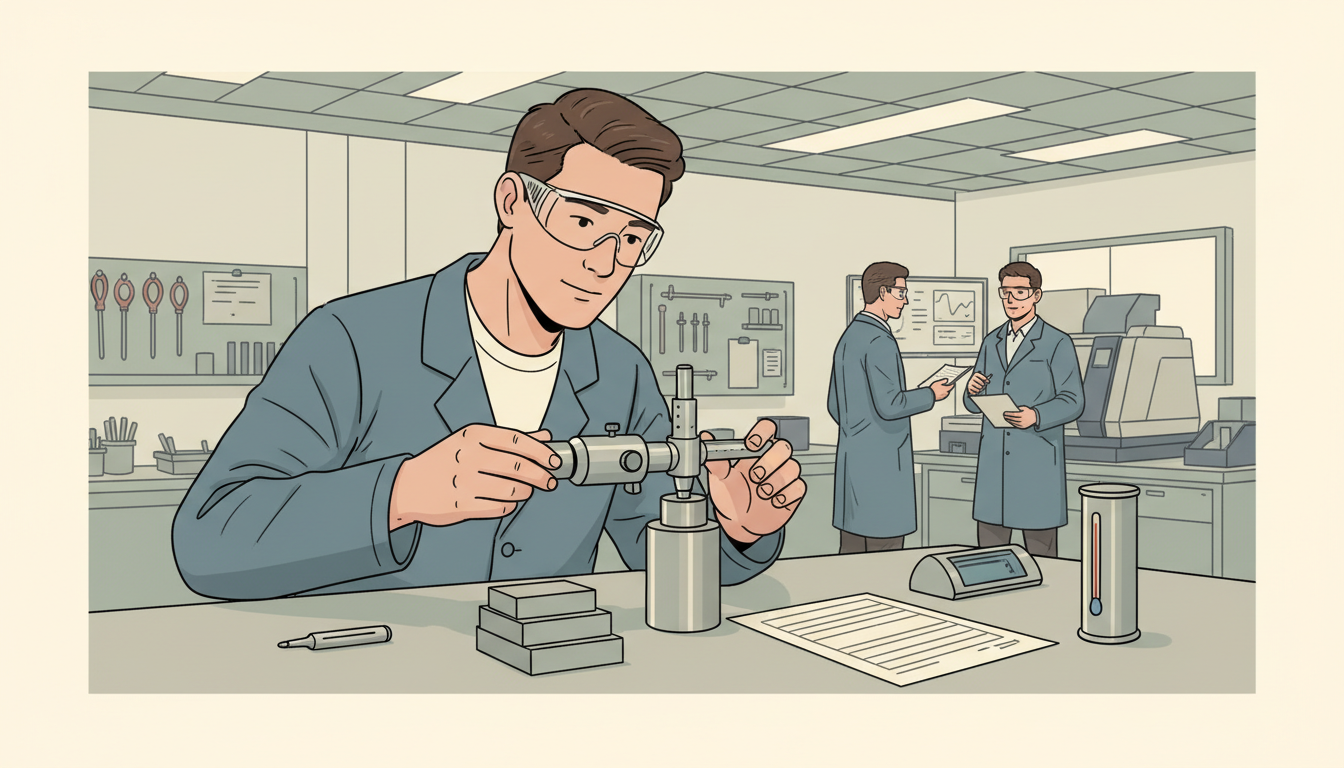
What enables people in different settlements to compare a load of grain, schedule a ferry, build parts that fit together and share scientific evidence? Timekeeping, measurement and standards form a quiet foundation of civilisation. The most impressive instrument is not helpful when people misunderstand its units, fail to examine uncertainty or cannot interpret a record. Shared methods make collaboration possible, while responsible checks prevent a standard from becoming false certainty.
The measuring and standards component of civilisation gives people compatible ways to describe quantity, time, location, quality, performance and evidence. It connects daily trade and public services with science, engineering, education and fair decisions.
This volume continues eduKate’s Components of a Civilisation series for children, parents and tutors. The learning settlement Tidal Reach is wholly invented: 240 fictional residents, sixty hypothetical households and a landscape with river access, public spaces, workshops and neighbouring communities. All conversations, figures, cases and outcomes in the exercises are illustrative. They do not represent real populations, safety standards or documented historical events.
This article is about interoperability and evidence rather than only writing or recording events. The companion article on archives explains how records are preserved; this chapter explains how their quantities, dates and definitions become meaningful to other people.
The featured illustration is selected from existing original conceptual editorial artwork in the eduKate media library. It is not a photograph documenting a specific person, practice, historical event or place and must not be used as evidence for a factual claim. We identify authoritative sources later in the guide and make clear when a claim cannot be generalised from the fictional exercise.
The learning route is modular. A child does not need to read every section at once. Parents may use a single question at home, tutors may select one topic and its companion activity for a lesson, and advanced readers may compare the limitations of several systems. The aim is to understand what a component does, what makes it dependable, who it serves, what could fail and how an accountable institution can learn.
Quick answer: what does this component make possible?
The measuring and standards component of civilisation gives people compatible ways to describe quantity, time, location, quality, performance and evidence. It connects daily trade and public services with science, engineering, education and fair decisions. The best question is not merely whether a town has an impressive object or announced policy. Ask what real function a resident can use, what relationships produce it, whether its outcomes can be checked and what legitimate path exists for correction.
A component can be studied in four stages: name a need, trace the mechanism, inspect who is affected and revise a claim after checking evidence. A child can draw this with arrows; older learners can identify counterexamples, evidence standards and rights. Different societies can organise similar functions in unlike ways. A teaching framework should never become a hierarchy of the worth of human populations.
Choose a reader route
- Primary: select one station, draw its people and resources, and explain one cause and effect.
- Secondary: make an argument with a counterexample, evidence requirement and clearly defined limitations.
- Parent: ask which invisible jobs make an ordinary service work and how people know if it fails.
- Tutor: move from vocabulary to mechanism, then a fair comparison, then a reasoned revision.
- Researcher: consult primary sources for real definitions and keep all fictional examples labelled as models.
A map of the system before any model answers
| Layer | Essential question | What the student produces |
|---|---|---|
| Purpose | What is the practical need or right? | A plain-language definition |
| Mechanism | Which work and dependencies produce the outcome? | A causal arrow diagram |
| Access | Who experiences benefits, burdens or barriers? | An inclusive user-journey map |
| Evidence | Which observation might change the recommendation? | A defined check and source |
| Continuity | Who can maintain or revise the arrangement? | A defensible handover procedure |
Why correct arithmetic can still support a wrong inference
Imagine a fictional team of twenty-four learners split into four equal groups. Each receives six paper tokens. The arithmetic is clear: 4 × 6 = 24. That does not demonstrate that the tasks are equally demanding or that all learners have identical resources. The calculated equality describes tokens, not fair opportunity or effective outcomes. This matters when a society compares budgets, service reach, training or measurement data.
Now imagine that twelve of the sixty fictional households attend a meeting. That is 12 ÷ 60 = 20%, if one household is the relevant unit. It does not follow that the other eighty per cent oppose the idea. They may be unaware of the meeting, unable to attend or represented differently. Likewise, thirty reports in one week and forty reports in another do not automatically establish a worsening problem; definitions, denominators and reporting access also matter.
Write the quantities, units, population and time window beside every classroom calculation. Treat the numbers as invented aids to reasoning, never as observations about a country or evidence of any real law or safe operating specification. Students who can calculate correctly and still question their conclusion have achieved a valuable form of mathematical maturity.
Part 1: Quantity, trade and fair comparisons
This part studies six connected topics. The teaching task begins with start with the everyday function, and each topic is best read through a question a young person can answer. Rather than demand that all six be studied in a single sitting, select one, ask for a drawing or written explanation and check the mechanism against a realistic counterexample. The purpose is a transferable method, not a claim that ancient and modern societies all follow one institutional sequence.
Component 01: Shared length units
The mechanism. The topic is shared length units. Everyday systems are easier to understand when we ask what work actually happens between a need and a result. First describe the function in a verb, then identify who performs it, what resource they require, and which other institution makes their contribution possible. A name on a building or a formal policy announcement is not the same as a dependable outcome. A student can demonstrate understanding by drawing this chain and explaining each arrow to someone who has never studied the subject. Its importance appears when we consider the fictional example of two students measure the same model walkway in centimetres and metres. This makes the idea concrete without pretending that an illustration supplies historical proof. A student should be able to state what people need and which practical work makes it possible.
Walk through Tidal Reach. Two students measure the same model walkway in centimetres and metres. Draw a small map of the imagined incident. Mark the people affected, the service or place where the difficulty occurs and at least one dependency outside the picture. Ask whether the proposed solution helps someone who cannot attend the council meeting. A complete explanation should be able to follow a fictional resident from the original need to the practical outcome without skipping the difficult steps. What happens next depends on the rules, resources, people and evidence available in the imagined scene. The learner should identify an actor, a constraint and a consequence. Ask what essential information the story has deliberately not provided.
The weak link and the trade-off. Without a stated unit identical numbers could represent different lengths. A striking opening-day success does not settle the question of continuity. What happens when equipment wears out, skilled people leave, demand changes or the first grant is exhausted? Extend the story from today to next year and then to the next generation. This reveals obligations that an attractive short-term plan may omit. A good recommendation considers upkeep and transfer of knowledge as well as construction. Write the strongest reasonable objection to the first solution and describe an alternative that might address the same concern. Avoid framing the invented residents as stereotypes of actual groups. A good criticism identifies a specific causal connection rather than a vague suspicion.
What would we measure? The question is whether shared length units is actually performing the useful job described in the first paragraph. A dataset can be accurate about the people counted while failing to describe the people left out. Who had access to the survey or reporting system? Who was absent because of timing, location, language or privacy concerns? These questions do not justify inventing answers. They show where further evidence or a carefully stated limitation is needed before generalising. The class should name a possible positive result, a possible negative result and a limitation on what can be inferred. This is where source quality and numerical precision matter more than impressive formatting.
A safe parent-and-tutor activity. Let one student propose a solution and another state the strongest reasonable objection. They should take turns restating each other’s concern before giving a response. Then both revise the shared plan using a clearer assumption or a more meaningful check. The exercise rewards listening, respect and the ability to revise a claim, not the volume of the speaker’s voice. The child now applies the activity to two students measure the same model walkway in centimetres and metres. The adult asks which observation could challenge the child’s preferred solution. Keep discussion suitable for the child’s age and avoid real personal records, hazardous experiments or professional decisions outside the classroom.
Connect the component and revise the decision. A sound conclusion can withstand respectful disagreement. Let another learner propose a credible alternative and ask both writers what observation could change their preference. They should not portray reasonable objection as a personal attack. If the best evidence is insufficient, a conditional recommendation is more honest than a guaranteed answer. Link this station to mass and trade scales and consider whether a change in one could disturb the other. Close with a two-sentence recommendation: one sentence explaining the current preference and another specifying what evidence or change in circumstances would make the pupil revise it.
Component 02: Mass and trade scales
The mechanism. The topic is mass and trade scales. Begin by imagining what the community would lose if this function suddenly disappeared but its buildings remained. Would people lose access, accuracy, care, trust or an opportunity to participate? Work backward from the missing outcome to the people, procedures and materials that previously supported it. The reverse map often reveals a hidden dependency. A child who can describe that dependency understands the component more deeply than a child who can merely recite a definition. Its importance appears when we consider the fictional example of market vendors weigh imaginary grain with differently adjusted balances. This makes the idea concrete without pretending that an illustration supplies historical proof. A student should be able to state what people need and which practical work makes it possible.
Walk through Tidal Reach. Market vendors weigh imaginary grain with differently adjusted balances. One common error is to treat the loudest character as the most representative. Ask who could not be in the room because of working hours, mobility, language, caregiving or distance. Then re-examine the first proposal in light of that missing perspective. The class does not have to presume that all affected people want the same policy. It must show that their circumstances were not erased from the analysis. What happens next depends on the rules, resources, people and evidence available in the imagined scene. The learner should identify an actor, a constraint and a consequence. Ask what essential information the story has deliberately not provided.
The weak link and the trade-off. A shared price cannot be assessed fairly using unverified mass readings. The strongest counterargument does not need exaggerated language. Have a second learner state the best reasonable objection to the favourite proposal. Perhaps the evidence is inadequate, the cost is underestimated or one group was not consulted. The first learner should answer that objection fairly, even if the recommendation changes. A classroom that rewards revision develops more robust reasoning than one that rewards certainty alone. Write the strongest reasonable objection to the first solution and describe an alternative that might address the same concern. Avoid framing the invented residents as stereotypes of actual groups. A good criticism identifies a specific causal connection rather than a vague suspicion.
What would we measure? The question is whether mass and trade scales is actually performing the useful job described in the first paragraph. Look for the difference between an input and an outcome. A budget, training session, new document or meeting may be important, but it does not by itself show that a user received a dependable service. Identify an observation closer to the intended benefit. Then name one confounding factor that might affect the result. This helps the class avoid mistaking administrative effort for actual improvement. The class should name a possible positive result, a possible negative result and a limitation on what can be inferred. This is where source quality and numerical precision matter more than impressive formatting.
A safe parent-and-tutor activity. Ask the learner to explain the station to a younger student without copying its paragraph. Provide one simple example and invite a ‘what if?’ question. If the explanation cannot handle the change, consult the text and revise the model. This teach-back method reveals whether the child has learned the causal mechanism or merely remembered the words. The child now applies the activity to market vendors weigh imaginary grain with differently adjusted balances. The adult asks which observation could challenge the child’s preferred solution. Keep discussion suitable for the child’s age and avoid real personal records, hazardous experiments or professional decisions outside the classroom.
Connect the component and revise the decision. Connect this station to another part of the civilisation diagram using a verb such as supplies, constrains, finances or verifies. Then follow the arrow in reverse. What happens to the second component if the first fails? The exercise helps the learner recognise cascade risks and distinguish direct dependencies from vague association. Link this station to volume and storage and consider whether a change in one could disturb the other. Close with a two-sentence recommendation: one sentence explaining the current preference and another specifying what evidence or change in circumstances would make the pupil revise it.
Component 03: Volume and storage
The mechanism. The topic is volume and storage. It helps to separate a purpose from the particular tool or institution used to fulfil that purpose. Different historical societies, environments and cultures have organised comparable functions in very different ways. Explain the need first, then describe one possible arrangement that meets it. The learner should avoid suggesting that the fictional town provides a universal standard for all communities. A comparison is meaningful when the purpose is clear and the contextual differences are acknowledged. Its importance appears when we consider the fictional example of tidal Reach estimates the capacity of two differently shaped rainwater jars. This makes the idea concrete without pretending that an illustration supplies historical proof. A student should be able to state what people need and which practical work makes it possible.
Walk through Tidal Reach. Tidal Reach estimates the capacity of two differently shaped rainwater jars. Imagine that the council is sincerely trying to help and that no character is deliberately dishonest. An error can still occur because instructions are unclear, measurements conflict or responsibilities overlap. Identify the transition where good intentions could stop producing a good result. Then design a check at precisely that point. This trains attention on fixable mechanisms rather than treating every failure as proof of bad character. What happens next depends on the rules, resources, people and evidence available in the imagined scene. The learner should identify an actor, a constraint and a consequence. Ask what essential information the story has deliberately not provided.
The weak link and the trade-off. Apparent container size may conceal different usable capacity. A design can be efficient for administrators yet difficult for the public to use. Compare the steps required by the institution with those required by a child, an older resident and a busy caregiver. Are instructions understandable? Is the route accessible? Can a mistake be appealed? The comparison does not prove discrimination, but it identifies possible barriers that a responsible real-world evaluation would need to test. Write the strongest reasonable objection to the first solution and describe an alternative that might address the same concern. Avoid framing the invented residents as stereotypes of actual groups. A good criticism identifies a specific causal connection rather than a vague suspicion.
What would we measure? The question is whether volume and storage is actually performing the useful job described in the first paragraph. A good test must be capable of making the preferred idea look wrong. Ask students what result would cause them to revise or abandon their proposal. If every possible result can be described as success, the supposed evaluation is not meaningful. Write the contrary observation in advance and discuss how it might be collected safely and fairly by the proper authorities. The class should name a possible positive result, a possible negative result and a limitation on what can be inferred. This is where source quality and numerical precision matter more than impressive formatting.
A safe parent-and-tutor activity. Design a simple instruction card for an imagined resident who missed the lesson. Use concise words, a clear first step, a legitimate source of help and a note explaining the limits of the card. The tutor should check whether someone unfamiliar with the topic can follow it. The task improves accessibility and the ability to write for real readers. The child now applies the activity to tidal reach estimates the capacity of two differently shaped rainwater jars. The adult asks which observation could challenge the child’s preferred solution. Keep discussion suitable for the child’s age and avoid real personal records, hazardous experiments or professional decisions outside the classroom.
Connect the component and revise the decision. A capable civilisation makes it possible to describe mistakes and improve institutions without silencing people who notice them. The learner can propose a feedback route: receive a concern, examine evidence, reach a legitimate decision, communicate it and check the outcome. The chapter ends when the child can explain not only a working system, but also how people can repair it. Link this station to area and land plots and consider whether a change in one could disturb the other. Close with a two-sentence recommendation: one sentence explaining the current preference and another specifying what evidence or change in circumstances would make the pupil revise it.
Component 04: Area and land plots
The mechanism. The topic is area and land plots. Ask the student to identify the human roles behind this idea. One person may plan, another may perform the practical work, another may be affected and a fourth may check the outcome. Sometimes those roles overlap, but they should not be assumed identical. This distinction prevents an abstract noun from becoming a magical explanation. The system works through people and relationships, including the right to raise a concern when the result differs from the promise. Its importance appears when we consider the fictional example of a paper map is enlarged while its old dimensions remain printed. This makes the idea concrete without pretending that an illustration supplies historical proof. A student should be able to state what people need and which practical work makes it possible.
Walk through Tidal Reach. A paper map is enlarged while its old dimensions remain printed. Ask pupils to build a four-part timeline: discovery, decision, implementation and review. Place a question mark wherever the story does not explain what happened. The sequence can reveal a missing authorised decision maker, a resource that arrives too late or a service that has no maintenance plan. A good answer explains why that gap matters. It should never turn a fictional timing assumption into a real legal deadline or safety instruction. What happens next depends on the rules, resources, people and evidence available in the imagined scene. The learner should identify an actor, a constraint and a consequence. Ask what essential information the story has deliberately not provided.
The weak link and the trade-off. The map scale becomes unreliable and affects planning claims. A complaint box, inspection sheet or consultation form is a means, not an outcome. What happens after a concern is raised? Who is responsible for reviewing it, communicating a result and verifying the correction? A plan that collects information without using it may create frustration rather than accountability. Students should trace the entire feedback loop, including the person affected by the original error. Write the strongest reasonable objection to the first solution and describe an alternative that might address the same concern. Avoid framing the invented residents as stereotypes of actual groups. A good criticism identifies a specific causal connection rather than a vague suspicion.
What would we measure? The question is whether area and land plots is actually performing the useful job described in the first paragraph. Start by defining the observation precisely. Is it an amount, rate, share, time or qualitative experience? Then ask whose situation it describes and when the measurement was made. Without a unit, denominator or clear category, an impressive number can be misleading. The learner should write a short definition beside every statistic and explain what it would not prove. No invented classroom figure is a factual claim about a real society. The class should name a possible positive result, a possible negative result and a limitation on what can be inferred. This is where source quality and numerical precision matter more than impressive formatting.
A safe parent-and-tutor activity. Create four paper cards labelled need, proposal, possible problem and evidence. Shuffle the cards and ask the child to restore their logical order in a way that fits the topic. Next, change one assumption and invite a revision. The activity develops vocabulary, sequence and inference without requiring children to perform unsafe practical tasks or reveal personal information. The child now applies the activity to a paper map is enlarged while its old dimensions remain printed. The adult asks which observation could challenge the child’s preferred solution. Keep discussion suitable for the child’s age and avoid real personal records, hazardous experiments or professional decisions outside the classroom.
Connect the component and revise the decision. Separate the moral value of an idea from the authority to enforce it. A good classroom proposal does not itself create legal rights, technical certification or professional permission. Have the learner name the boundary between understanding a system and acting in the real world. That distinction protects both intellectual honesty and people’s safety. Link this station to temperature and context and consider whether a change in one could disturb the other. Close with a two-sentence recommendation: one sentence explaining the current preference and another specifying what evidence or change in circumstances would make the pupil revise it.
Component 05: Temperature and context
The mechanism. The topic is temperature and context. Good explanations use a mechanism rather than the vague assertion that progress has occurred. Describe the input, the transformation and the useful result. Then identify a realistic condition under which the transformation could fail. This permits meaningful disagreement: students can challenge a link in the explanation rather than merely announce whether they like the idea. Ask the writer to label the assumptions underlying their strongest claim. Its importance appears when we consider the fictional example of a sunlit paved yard is compared with a shaded learning corner. This makes the idea concrete without pretending that an illustration supplies historical proof. A student should be able to state what people need and which practical work makes it possible.
Walk through Tidal Reach. A sunlit paved yard is compared with a shaded learning corner. Consider a nearby settlement with the same apparent challenge but different geography or institutions. What would remain useful about the first response, and what could change? The comparison teaches children that a mechanism may transfer even when a particular design does not. Avoid presenting any two fictional places as a ranking of peoples or cultures. Look instead for the conditions that make a solution relevant. What happens next depends on the rules, resources, people and evidence available in the imagined scene. The learner should identify an actor, a constraint and a consequence. Ask what essential information the story has deliberately not provided.
The weak link and the trade-off. A sensor reading does not represent all locations or establish medical safety. Ask whether the people paying a cost are the same people receiving the benefit. Costs may be monetary, environmental, emotional, administrative or related to lost time. A diagram of the total benefit cannot answer a distributional question unless it shows who carries each burden. The learner should identify any mismatch without inventing data about real populations or assuming one identity determines a person’s experience. Write the strongest reasonable objection to the first solution and describe an alternative that might address the same concern. Avoid framing the invented residents as stereotypes of actual groups. A good criticism identifies a specific causal connection rather than a vague suspicion.
What would we measure? The question is whether temperature and context is actually performing the useful job described in the first paragraph. Distinguish carefully between a safe illustrative model and professional evidence. A paper exercise can demonstrate that a definition matters; it cannot certify a bridge, determine a health requirement, decide a legal entitlement or establish a nation’s circumstances. The proper interpretation states what the model supports and where expert guidance or authoritative data become necessary. The class should name a possible positive result, a possible negative result and a limitation on what can be inferred. This is where source quality and numerical precision matter more than impressive formatting.
A safe parent-and-tutor activity. Let one student propose a solution and another state the strongest reasonable objection. They should take turns restating each other’s concern before giving a response. Then both revise the shared plan using a clearer assumption or a more meaningful check. The exercise rewards listening, respect and the ability to revise a claim, not the volume of the speaker’s voice. The child now applies the activity to a sunlit paved yard is compared with a shaded learning corner. The adult asks which observation could challenge the child’s preferred solution. Keep discussion suitable for the child’s age and avoid real personal records, hazardous experiments or professional decisions outside the classroom.
Connect the component and revise the decision. A sound conclusion can withstand respectful disagreement. Let another learner propose a credible alternative and ask both writers what observation could change their preference. They should not portray reasonable objection as a personal attack. If the best evidence is insufficient, a conditional recommendation is more honest than a guaranteed answer. Link this station to rates and units and consider whether a change in one could disturb the other. Close with a two-sentence recommendation: one sentence explaining the current preference and another specifying what evidence or change in circumstances would make the pupil revise it.
Component 06: Rates and units
The mechanism. The topic is rates and units. A component of civilisation is an enduring capability, not a single heroic achievement. A successful launch may depend on a particular person, a fortunate harvest or an unusual donation. What happens the next season? Who maintains the equipment, understands the rules and trains a successor? The answer should address continuity rather than the excitement of the first day. This is one reason maintenance, education and public records appear repeatedly in complex societies. Its importance appears when we consider the fictional example of a water station is reported to deliver twelve vessels with no duration. This makes the idea concrete without pretending that an illustration supplies historical proof. A student should be able to state what people need and which practical work makes it possible.
Walk through Tidal Reach. A water station is reported to deliver twelve vessels with no duration. Read the episode from two perspectives. First ask what the organisers thought they were delivering; next ask what a young learner, worker or caregiver would actually encounter. The accounts may be compatible, but they may reveal a barrier the organisers did not notice. Do not treat one invented character as a spokesperson for any real social group. The purpose is to expose a question that real research would need to examine. What happens next depends on the rules, resources, people and evidence available in the imagined scene. The learner should identify an actor, a constraint and a consequence. Ask what essential information the story has deliberately not provided.
The weak link and the trade-off. A total cannot substitute for a quantity per unit time. It is important to criticise a mechanism rather than the moral character of imaginary people. Identify the missing information, unreliable dependency or unclear responsibility that could produce the difficulty. Then propose a correction aimed at that source. A learner should be able to say why the correction would plausibly help, what it might cost and which further observation would test the idea. Write the strongest reasonable objection to the first solution and describe an alternative that might address the same concern. Avoid framing the invented residents as stereotypes of actual groups. A good criticism identifies a specific causal connection rather than a vague suspicion.
What would we measure? The question is whether rates and units is actually performing the useful job described in the first paragraph. Ask whether a record from another place or decade uses the same definition, unit and observation period. It may not. Rather than forcing a simple ranking, explain which elements are comparable and which require adjustment or additional research. This is particularly important when discussing civilisations with different technologies, legal systems, environments and cultures. The class should name a possible positive result, a possible negative result and a limitation on what can be inferred. This is where source quality and numerical precision matter more than impressive formatting.
A safe parent-and-tutor activity. Ask the learner to explain the station to a younger student without copying its paragraph. Provide one simple example and invite a ‘what if?’ question. If the explanation cannot handle the change, consult the text and revise the model. This teach-back method reveals whether the child has learned the causal mechanism or merely remembered the words. The child now applies the activity to a water station is reported to deliver twelve vessels with no duration. The adult asks which observation could challenge the child’s preferred solution. Keep discussion suitable for the child’s age and avoid real personal records, hazardous experiments or professional decisions outside the classroom.
Connect the component and revise the decision. Connect this station to another part of the civilisation diagram using a verb such as supplies, constrains, finances or verifies. Then follow the arrow in reverse. What happens to the second component if the first fails? The exercise helps the learner recognise cascade risks and distinguish direct dependencies from vague association. Link this station to seasonal calendars and consider whether a change in one could disturb the other. Close with a two-sentence recommendation: one sentence explaining the current preference and another specifying what evidence or change in circumstances would make the pupil revise it.
Chapter investigation 1: six interacting responsibilities
The class now joins Shared length units; Mass and trade scales; Volume and storage; Area and land plots; Temperature and context; Rates and units into a single imaginary community problem. First draw these six headings as connected nodes rather than six unrelated lists. A child can make a picture while a Secondary student can use arrows labelled ‘depends on’, ‘constrains’, ‘supplies’ and ‘checks’. Ask which arrow rests on given information and which is merely plausible. This avoids mistaking a visually neat diagram for evidence.
Assign three fictional council roles: an evidence checker, an access checker and a systems designer. The evidence checker records what is supported and what remains unknown. The access checker asks which residents might experience a barrier. The designer tests whether the proposed fix shifts the burden elsewhere. They should disagree respectfully and produce one revised plan rather than a grand claim that the town has achieved a perfect civilisation.
For a written assignment, use five paragraphs: define the problem; trace two connected causes; consider a serious objection; present an observable check; and reach a conditional conclusion. An advanced learner can compare two alternative designs under different circumstances, with the assumptions explicitly stated. None of the classroom choices constitutes a real permit, legal ruling, medical decision, employment contract or engineering certification.
Part 2: Calendars, clocks and coordination
This part studies six connected topics. The teaching task begins with trace people, rules and dependencies, and each topic is best read through a question a young person can answer. Rather than demand that all six be studied in a single sitting, select one, ask for a drawing or written explanation and check the mechanism against a realistic counterexample. The purpose is a transferable method, not a claim that ancient and modern societies all follow one institutional sequence.
Component 07: Seasonal calendars
The mechanism. The topic is seasonal calendars. Many learners start by naming objects: a road, classroom, market, document or device. Invite them to replace the noun with a sentence describing what people are now able to do. A road may connect services, a classroom may support understanding, and a record may make obligations inspectable. The object is important, but its effects depend on accessibility, responsible operation and surrounding institutions. The student can test the claim with one hypothetical interruption. Its importance appears when we consider the fictional example of a visiting school community uses a different seasonal tradition. This makes the idea concrete without pretending that an illustration supplies historical proof. A student should be able to state what people need and which practical work makes it possible.
Walk through Tidal Reach. A visiting school community uses a different seasonal tradition. A credible systems story has a beginning, mechanism and consequence. At the start, a specific need becomes visible. During the middle, people or institutions act using limited information and resources. At the end, the result is checked and the original plan may need correction. Ask the student to label these three stages. If the middle is absent, the story has made a promise without explaining how it can be fulfilled. What happens next depends on the rules, resources, people and evidence available in the imagined scene. The learner should identify an actor, a constraint and a consequence. Ask what essential information the story has deliberately not provided.
The weak link and the trade-off. Civil schedules should be compatible without treating one culture as inferior. Uniform procedures make coordination easier, but they can also miss local circumstances. A standard may help a measurement travel across borders while a local service still needs adaptation to geography and users. Ask what must remain comparable and what can vary responsibly. The goal is not total standardisation or total improvisation. It is a justified division between common principles and contextual decisions. Write the strongest reasonable objection to the first solution and describe an alternative that might address the same concern. Avoid framing the invented residents as stereotypes of actual groups. A good criticism identifies a specific causal connection rather than a vague suspicion.
What would we measure? The question is whether seasonal calendars is actually performing the useful job described in the first paragraph. Good evidence includes a correction path. If a later observation contradicts the earlier one, who checks the source, records the revision and explains the change? An institution that reports errors openly may initially appear less successful than one that suppresses them. Students should understand that the visibility of problems can reflect either deterioration, better reporting or both. The class should name a possible positive result, a possible negative result and a limitation on what can be inferred. This is where source quality and numerical precision matter more than impressive formatting.
A safe parent-and-tutor activity. Design a simple instruction card for an imagined resident who missed the lesson. Use concise words, a clear first step, a legitimate source of help and a note explaining the limits of the card. The tutor should check whether someone unfamiliar with the topic can follow it. The task improves accessibility and the ability to write for real readers. The child now applies the activity to a visiting school community uses a different seasonal tradition. The adult asks which observation could challenge the child’s preferred solution. Keep discussion suitable for the child’s age and avoid real personal records, hazardous experiments or professional decisions outside the classroom.
Connect the component and revise the decision. A capable civilisation makes it possible to describe mistakes and improve institutions without silencing people who notice them. The learner can propose a feedback route: receive a concern, examine evidence, reach a legitimate decision, communicate it and check the outcome. The chapter ends when the child can explain not only a working system, but also how people can repair it. Link this station to civil time and longitude and consider whether a change in one could disturb the other. Close with a two-sentence recommendation: one sentence explaining the current preference and another specifying what evidence or change in circumstances would make the pupil revise it.
Component 08: Civil time and longitude
The mechanism. The topic is civil time and longitude. Use two levels of description. The first should be understandable to an eight-year-old: what is this for? The second should be suitable for a secondary student: by what series of actions does it achieve that purpose, and what evidence is needed? The exercise teaches precise language without turning complexity into jargon. If a specialist term is necessary, define it with an example and then check that the example does not exceed its legitimate scope. Its importance appears when we consider the fictional example of two imaginary ports describe a shipping deadline as local noon. This makes the idea concrete without pretending that an illustration supplies historical proof. A student should be able to state what people need and which practical work makes it possible.
Walk through Tidal Reach. Two imaginary ports describe a shipping deadline as local noon. Pause the story at the moment when the fictional residents must choose a response. One resident may see an immediate inconvenience; another understands a hidden process; a third worries about the effect next month. Distinguish what the story actually states from what the class has assumed. Then allow the learner to suggest a further observation that would improve the decision. A useful case study makes uncertainty visible instead of supplying an instant perfect solution. What happens next depends on the rules, resources, people and evidence available in the imagined scene. The learner should identify an actor, a constraint and a consequence. Ask what essential information the story has deliberately not provided.
The weak link and the trade-off. A local-time label may not identify the same instant everywhere. Look for a metric that could improve without the intended outcome improving. More forms processed might not mean more people helped. A lower immediate price might coincide with greater waste. A high number of participants might conceal exclusion from meaningful decisions. Ask which second observation would reveal the missing dimension. Students learn that an indicator is a tool for judgement, not a substitute for judgement. Write the strongest reasonable objection to the first solution and describe an alternative that might address the same concern. Avoid framing the invented residents as stereotypes of actual groups. A good criticism identifies a specific causal connection rather than a vague suspicion.
What would we measure? The question is whether civil time and longitude is actually performing the useful job described in the first paragraph. Some important outcomes require more than a single indicator. Clear communication, fair participation, safe working conditions and trust are not always reducible to one score. A useful evaluation may combine a transparent quantitative measure with documented process evidence and appropriately gathered experience. Avoid treating an anecdote as a representative survey or a high average as proof that every resident benefits. The class should name a possible positive result, a possible negative result and a limitation on what can be inferred. This is where source quality and numerical precision matter more than impressive formatting.
A safe parent-and-tutor activity. Create four paper cards labelled need, proposal, possible problem and evidence. Shuffle the cards and ask the child to restore their logical order in a way that fits the topic. Next, change one assumption and invite a revision. The activity develops vocabulary, sequence and inference without requiring children to perform unsafe practical tasks or reveal personal information. The child now applies the activity to two imaginary ports describe a shipping deadline as local noon. The adult asks which observation could challenge the child’s preferred solution. Keep discussion suitable for the child’s age and avoid real personal records, hazardous experiments or professional decisions outside the classroom.
Connect the component and revise the decision. Separate the moral value of an idea from the authority to enforce it. A good classroom proposal does not itself create legal rights, technical certification or professional permission. Have the learner name the boundary between understanding a system and acting in the real world. That distinction protects both intellectual honesty and people’s safety. Link this station to time zones and utc and consider whether a change in one could disturb the other. Close with a two-sentence recommendation: one sentence explaining the current preference and another specifying what evidence or change in circumstances would make the pupil revise it.
Component 09: Time zones and UTC
The mechanism. The topic is time zones and utc. A claim of effectiveness must be more specific than ‘the town has a good system’. Good for which user, at what time and under what conditions? Write the expected outcome as an observable statement. Then ask what resources and rules are required before that outcome is possible. This turns the topic into a question that can be studied, challenged and revised rather than an attractive phrase that can never be tested. Its importance appears when we consider the fictional example of an overseas teacher writes a meeting time without an offset. This makes the idea concrete without pretending that an illustration supplies historical proof. A student should be able to state what people need and which practical work makes it possible.
Walk through Tidal Reach. An overseas teacher writes a meeting time without an offset. The episode is an invitation to make an accountable prediction. If the proposal is followed, what would the intended user experience first? What might a different user experience? Identify a possible result and the evidence that would distinguish it from wishful thinking. Where the information is missing, a careful pupil can say that the outcome is uncertain. Naming that limitation is a strength of reasoning, not a failure to answer. What happens next depends on the rules, resources, people and evidence available in the imagined scene. The learner should identify an actor, a constraint and a consequence. Ask what essential information the story has deliberately not provided.
The weak link and the trade-off. Two groups may arrive at different times despite identical calendar entries. An intervention can change incentives. People may respond to new schedules, fees, duties or access rules in ways that planners did not anticipate. Ask what behaviour the plan assumes and whether there are legitimate alternatives. Do not predict the actions of a real community from stereotypes. Use the invented case to identify observations a careful public researcher would seek. Write the strongest reasonable objection to the first solution and describe an alternative that might address the same concern. Avoid framing the invented residents as stereotypes of actual groups. A good criticism identifies a specific causal connection rather than a vague suspicion.
What would we measure? The question is whether time zones and utc is actually performing the useful job described in the first paragraph. Test the denominator before interpreting the numerator. Ten reports out of a small group may suggest something different from ten reports in a much larger group, but access to reporting also matters. Ask whether repeated events could be counted more than once and whether the observation period matches the comparison. This prevents a correct calculation from carrying the wrong conclusion. The class should name a possible positive result, a possible negative result and a limitation on what can be inferred. This is where source quality and numerical precision matter more than impressive formatting.
A safe parent-and-tutor activity. Let one student propose a solution and another state the strongest reasonable objection. They should take turns restating each other’s concern before giving a response. Then both revise the shared plan using a clearer assumption or a more meaningful check. The exercise rewards listening, respect and the ability to revise a claim, not the volume of the speaker’s voice. The child now applies the activity to an overseas teacher writes a meeting time without an offset. The adult asks which observation could challenge the child’s preferred solution. Keep discussion suitable for the child’s age and avoid real personal records, hazardous experiments or professional decisions outside the classroom.
Connect the component and revise the decision. A sound conclusion can withstand respectful disagreement. Let another learner propose a credible alternative and ask both writers what observation could change their preference. They should not portray reasonable objection as a personal attack. If the best evidence is insufficient, a conditional recommendation is more honest than a guaranteed answer. Link this station to unambiguous dates and consider whether a change in one could disturb the other. Close with a two-sentence recommendation: one sentence explaining the current preference and another specifying what evidence or change in circumstances would make the pupil revise it.
Component 10: Unambiguous dates
The mechanism. The topic is unambiguous dates. Consider who remains invisible in an account of this function. The famous inventor, ruler or institution may be remembered, while operators, caregivers, cleaners, interpreters and people who bear unintended costs are overlooked. A fair explanation does not have to list every individual. It should nevertheless identify which kinds of contribution are essential and avoid confusing public prominence with social importance. Its importance appears when we consider the fictional example of one notice prints 04/05 without naming month and day order. This makes the idea concrete without pretending that an illustration supplies historical proof. A student should be able to state what people need and which practical work makes it possible.
Walk through Tidal Reach. One notice prints 04/05 without naming month and day order. In this exercise every number, name and event is invented. That allows the class to reason without claiming intimate knowledge of an actual society. When moving to real history, explain that evidence would be needed from appropriate records, archaeology, scholarship or public institutions. This bridge between stories and sources helps children understand how strong factual writing differs from an engaging illustration. What happens next depends on the rules, resources, people and evidence available in the imagined scene. The learner should identify an actor, a constraint and a consequence. Ask what essential information the story has deliberately not provided.
The weak link and the trade-off. A reader may interpret the date differently under another convention. A trade-off is not the same as a claim that every choice has equal merit. Some requirements involve rights, safety or lawful professional duties that cannot be casually exchanged for convenience. After identifying those boundaries, compare realistic alternative ways to meet the objective. This is a more responsible form of problem-solving than either blind enthusiasm or the insistence that nothing can ever change. Write the strongest reasonable objection to the first solution and describe an alternative that might address the same concern. Avoid framing the invented residents as stereotypes of actual groups. A good criticism identifies a specific causal connection rather than a vague suspicion.
What would we measure? The question is whether unambiguous dates is actually performing the useful job described in the first paragraph. Ask who collected the information, which procedure they used and whether another person could repeat the check. A trustworthy record describes method and limits, not only a result. That principle matters in a workshop, school, public office and historical study. It also encourages respect for qualified expertise when technical questions exceed the capacity of a classroom simulation. The class should name a possible positive result, a possible negative result and a limitation on what can be inferred. This is where source quality and numerical precision matter more than impressive formatting.
A safe parent-and-tutor activity. Ask the learner to explain the station to a younger student without copying its paragraph. Provide one simple example and invite a ‘what if?’ question. If the explanation cannot handle the change, consult the text and revise the model. This teach-back method reveals whether the child has learned the causal mechanism or merely remembered the words. The child now applies the activity to one notice prints 04/05 without naming month and day order. The adult asks which observation could challenge the child’s preferred solution. Keep discussion suitable for the child’s age and avoid real personal records, hazardous experiments or professional decisions outside the classroom.
Connect the component and revise the decision. Connect this station to another part of the civilisation diagram using a verb such as supplies, constrains, finances or verifies. Then follow the arrow in reverse. What happens to the second component if the first fails? The exercise helps the learner recognise cascade risks and distinguish direct dependencies from vague association. Link this station to public timetables and consider whether a change in one could disturb the other. Close with a two-sentence recommendation: one sentence explaining the current preference and another specifying what evidence or change in circumstances would make the pupil revise it.
Component 11: Public timetables
The mechanism. The topic is public timetables. What makes this function different from a one-off favour? A durable component has a way to repeat successful work, communicate expectations and learn when it fails. Ask who makes decisions, how a resident knows what to expect and which record survives after the first organiser leaves. A useful model does not pretend that a community can eliminate uncertainty. It shows how people can act responsibly when uncertainty remains. Its importance appears when we consider the fictional example of a village timetable is correct but its first connecting ferry is too late. This makes the idea concrete without pretending that an illustration supplies historical proof. A student should be able to state what people need and which practical work makes it possible.
Walk through Tidal Reach. A village timetable is correct but its first connecting ferry is too late. Make two versions of the imaginary plan. In one version, the town acts immediately on its first assumption. In the other, it checks an important fact or includes an overlooked person before deciding. Keep other details unchanged so the contrast is meaningful. Which version is more defensible, and at what cost? The exercise is about causal comparison rather than the claim that careful consultation always produces agreement. What happens next depends on the rules, resources, people and evidence available in the imagined scene. The learner should identify an actor, a constraint and a consequence. Ask what essential information the story has deliberately not provided.
The weak link and the trade-off. A correct schedule may still leave users without practical access. The obvious improvement may shift a burden rather than remove it. A faster process might become inaccessible; a cheaper service might create higher replacement costs; a uniform rule might overlook different conditions. Ask the student to name one group that benefits quickly and one group that might face a later problem. These possibilities are not proof of harm; they are hypotheses to examine before calling a plan complete. Write the strongest reasonable objection to the first solution and describe an alternative that might address the same concern. Avoid framing the invented residents as stereotypes of actual groups. A good criticism identifies a specific causal connection rather than a vague suspicion.
What would we measure? The question is whether public timetables is actually performing the useful job described in the first paragraph. An observation does not automatically establish cause. A service might improve while several conditions change at once. Students should list possible alternative explanations and consider what additional comparison could separate them. For real research this can require specialised statistical methods. In the teaching exercise, the achievement is recognising uncertainty rather than inventing a definitive causal claim. The class should name a possible positive result, a possible negative result and a limitation on what can be inferred. This is where source quality and numerical precision matter more than impressive formatting.
A safe parent-and-tutor activity. Design a simple instruction card for an imagined resident who missed the lesson. Use concise words, a clear first step, a legitimate source of help and a note explaining the limits of the card. The tutor should check whether someone unfamiliar with the topic can follow it. The task improves accessibility and the ability to write for real readers. The child now applies the activity to a village timetable is correct but its first connecting ferry is too late. The adult asks which observation could challenge the child’s preferred solution. Keep discussion suitable for the child’s age and avoid real personal records, hazardous experiments or professional decisions outside the classroom.
Connect the component and revise the decision. A capable civilisation makes it possible to describe mistakes and improve institutions without silencing people who notice them. The learner can propose a feedback route: receive a concern, examine evidence, reach a legitimate decision, communicate it and check the outcome. The chapter ends when the child can explain not only a working system, but also how people can repair it. Link this station to chronology and event records and consider whether a change in one could disturb the other. Close with a two-sentence recommendation: one sentence explaining the current preference and another specifying what evidence or change in circumstances would make the pupil revise it.
Component 12: Chronology and event records
The mechanism. The topic is chronology and event records. The topic becomes clearer when connected to two neighbouring services. Draw arrows labelled ‘provides’, ‘depends on’, ‘checks’ or ‘limits’, rather than the word ‘related’. This forces students to explain the direction of an influence. Perhaps shared information makes a market work, or trained people keep a water system safe. If an arrow cannot be explained, it is a question to investigate, not a reason to invent a confident answer. Its importance appears when we consider the fictional example of a repair report is entered after the apparent date of completion. This makes the idea concrete without pretending that an illustration supplies historical proof. A student should be able to state what people need and which practical work makes it possible.
Walk through Tidal Reach. A repair report is entered after the apparent date of completion. Have the class read the problem twice. On the first pass, underline the terms identifying the service or duty. On the second, circle every assumption about what people know, can afford or are allowed to do. Discuss whether the scene gives enough information to support those assumptions. This is useful comprehension practice: a skilled reader knows the difference between an inference and information explicitly supplied. What happens next depends on the rules, resources, people and evidence available in the imagined scene. The learner should identify an actor, a constraint and a consequence. Ask what essential information the story has deliberately not provided.
The weak link and the trade-off. Order in one record cannot by itself prove causation. A system may work in familiar circumstances but become fragile under change. Introduce one realistic hypothetical disruption while preserving the rest of the scenario. Does the service have an alternative route, suitable records or people who can respond? A second backup that uses the same single dependency may not truly be independent. Students should explain the hidden common point of failure. Write the strongest reasonable objection to the first solution and describe an alternative that might address the same concern. Avoid framing the invented residents as stereotypes of actual groups. A good criticism identifies a specific causal connection rather than a vague suspicion.
What would we measure? The question is whether chronology and event records is actually performing the useful job described in the first paragraph. Measurement is a sequence from question to definition, collection, checking, interpretation and revision. Ask pupils to mark which part of that chain is strongest and which part is missing. A sophisticated chart can still contain an invalid comparison if the underlying categories differ. The aim is to make the evidence inspectable to a reader, including the uncertainty that remains. The class should name a possible positive result, a possible negative result and a limitation on what can be inferred. This is where source quality and numerical precision matter more than impressive formatting.
A safe parent-and-tutor activity. Create four paper cards labelled need, proposal, possible problem and evidence. Shuffle the cards and ask the child to restore their logical order in a way that fits the topic. Next, change one assumption and invite a revision. The activity develops vocabulary, sequence and inference without requiring children to perform unsafe practical tasks or reveal personal information. The child now applies the activity to a repair report is entered after the apparent date of completion. The adult asks which observation could challenge the child’s preferred solution. Keep discussion suitable for the child’s age and avoid real personal records, hazardous experiments or professional decisions outside the classroom.
Connect the component and revise the decision. Separate the moral value of an idea from the authority to enforce it. A good classroom proposal does not itself create legal rights, technical certification or professional permission. Have the learner name the boundary between understanding a system and acting in the real world. That distinction protects both intellectual honesty and people’s safety. Link this station to precision and resolution and consider whether a change in one could disturb the other. Close with a two-sentence recommendation: one sentence explaining the current preference and another specifying what evidence or change in circumstances would make the pupil revise it.
Chapter investigation 2: six interacting responsibilities
The class now joins Seasonal calendars; Civil time and longitude; Time zones and UTC; Unambiguous dates; Public timetables; Chronology and event records into a single imaginary community problem. First draw these six headings as connected nodes rather than six unrelated lists. A child can make a picture while a Secondary student can use arrows labelled ‘depends on’, ‘constrains’, ‘supplies’ and ‘checks’. Ask which arrow rests on given information and which is merely plausible. This avoids mistaking a visually neat diagram for evidence.
Assign three fictional council roles: an evidence checker, an access checker and a systems designer. The evidence checker records what is supported and what remains unknown. The access checker asks which residents might experience a barrier. The designer tests whether the proposed fix shifts the burden elsewhere. They should disagree respectfully and produce one revised plan rather than a grand claim that the town has achieved a perfect civilisation.
For a written assignment, use five paragraphs: define the problem; trace two connected causes; consider a serious objection; present an observable check; and reach a conditional conclusion. An advanced learner can compare two alternative designs under different circumstances, with the assumptions explicitly stated. None of the classroom choices constitutes a real permit, legal ruling, medical decision, employment contract or engineering certification.
Part 3: Measurement confidence and instrument care
This part studies six connected topics. The teaching task begins with find what the first model conceals, and each topic is best read through a question a young person can answer. Rather than demand that all six be studied in a single sitting, select one, ask for a drawing or written explanation and check the mechanism against a realistic counterexample. The purpose is a transferable method, not a claim that ancient and modern societies all follow one institutional sequence.
Component 13: Precision and resolution
The mechanism. The topic is precision and resolution. Everyday systems are easier to understand when we ask what work actually happens between a need and a result. First describe the function in a verb, then identify who performs it, what resource they require, and which other institution makes their contribution possible. A name on a building or a formal policy announcement is not the same as a dependable outcome. A student can demonstrate understanding by drawing this chain and explaining each arrow to someone who has never studied the subject. Its importance appears when we consider the fictional example of an inexpensive digital sensor displays many decimal places. This makes the idea concrete without pretending that an illustration supplies historical proof. A student should be able to state what people need and which practical work makes it possible.
Walk through Tidal Reach. An inexpensive digital sensor displays many decimal places. Draw a small map of the imagined incident. Mark the people affected, the service or place where the difficulty occurs and at least one dependency outside the picture. Ask whether the proposed solution helps someone who cannot attend the council meeting. A complete explanation should be able to follow a fictional resident from the original need to the practical outcome without skipping the difficult steps. What happens next depends on the rules, resources, people and evidence available in the imagined scene. The learner should identify an actor, a constraint and a consequence. Ask what essential information the story has deliberately not provided.
The weak link and the trade-off. Extra digits can disguise weak calibration or inappropriate precision. A striking opening-day success does not settle the question of continuity. What happens when equipment wears out, skilled people leave, demand changes or the first grant is exhausted? Extend the story from today to next year and then to the next generation. This reveals obligations that an attractive short-term plan may omit. A good recommendation considers upkeep and transfer of knowledge as well as construction. Write the strongest reasonable objection to the first solution and describe an alternative that might address the same concern. Avoid framing the invented residents as stereotypes of actual groups. A good criticism identifies a specific causal connection rather than a vague suspicion.
What would we measure? The question is whether precision and resolution is actually performing the useful job described in the first paragraph. A dataset can be accurate about the people counted while failing to describe the people left out. Who had access to the survey or reporting system? Who was absent because of timing, location, language or privacy concerns? These questions do not justify inventing answers. They show where further evidence or a carefully stated limitation is needed before generalising. The class should name a possible positive result, a possible negative result and a limitation on what can be inferred. This is where source quality and numerical precision matter more than impressive formatting.
A safe parent-and-tutor activity. Let one student propose a solution and another state the strongest reasonable objection. They should take turns restating each other’s concern before giving a response. Then both revise the shared plan using a clearer assumption or a more meaningful check. The exercise rewards listening, respect and the ability to revise a claim, not the volume of the speaker’s voice. The child now applies the activity to an inexpensive digital sensor displays many decimal places. The adult asks which observation could challenge the child’s preferred solution. Keep discussion suitable for the child’s age and avoid real personal records, hazardous experiments or professional decisions outside the classroom.
Connect the component and revise the decision. A sound conclusion can withstand respectful disagreement. Let another learner propose a credible alternative and ask both writers what observation could change their preference. They should not portray reasonable objection as a personal attack. If the best evidence is insufficient, a conditional recommendation is more honest than a guaranteed answer. Link this station to accuracy and bias and consider whether a change in one could disturb the other. Close with a two-sentence recommendation: one sentence explaining the current preference and another specifying what evidence or change in circumstances would make the pupil revise it.
Component 14: Accuracy and bias
The mechanism. The topic is accuracy and bias. Begin by imagining what the community would lose if this function suddenly disappeared but its buildings remained. Would people lose access, accuracy, care, trust or an opportunity to participate? Work backward from the missing outcome to the people, procedures and materials that previously supported it. The reverse map often reveals a hidden dependency. A child who can describe that dependency understands the component more deeply than a child who can merely recite a definition. Its importance appears when we consider the fictional example of all pupils use one shifted ruler and obtain matching results. This makes the idea concrete without pretending that an illustration supplies historical proof. A student should be able to state what people need and which practical work makes it possible.
Walk through Tidal Reach. All pupils use one shifted ruler and obtain matching results. One common error is to treat the loudest character as the most representative. Ask who could not be in the room because of working hours, mobility, language, caregiving or distance. Then re-examine the first proposal in light of that missing perspective. The class does not have to presume that all affected people want the same policy. It must show that their circumstances were not erased from the analysis. What happens next depends on the rules, resources, people and evidence available in the imagined scene. The learner should identify an actor, a constraint and a consequence. Ask what essential information the story has deliberately not provided.
The weak link and the trade-off. Agreement among measurements cannot eliminate shared systematic error. The strongest counterargument does not need exaggerated language. Have a second learner state the best reasonable objection to the favourite proposal. Perhaps the evidence is inadequate, the cost is underestimated or one group was not consulted. The first learner should answer that objection fairly, even if the recommendation changes. A classroom that rewards revision develops more robust reasoning than one that rewards certainty alone. Write the strongest reasonable objection to the first solution and describe an alternative that might address the same concern. Avoid framing the invented residents as stereotypes of actual groups. A good criticism identifies a specific causal connection rather than a vague suspicion.
What would we measure? The question is whether accuracy and bias is actually performing the useful job described in the first paragraph. Look for the difference between an input and an outcome. A budget, training session, new document or meeting may be important, but it does not by itself show that a user received a dependable service. Identify an observation closer to the intended benefit. Then name one confounding factor that might affect the result. This helps the class avoid mistaking administrative effort for actual improvement. The class should name a possible positive result, a possible negative result and a limitation on what can be inferred. This is where source quality and numerical precision matter more than impressive formatting.
A safe parent-and-tutor activity. Ask the learner to explain the station to a younger student without copying its paragraph. Provide one simple example and invite a ‘what if?’ question. If the explanation cannot handle the change, consult the text and revise the model. This teach-back method reveals whether the child has learned the causal mechanism or merely remembered the words. The child now applies the activity to all pupils use one shifted ruler and obtain matching results. The adult asks which observation could challenge the child’s preferred solution. Keep discussion suitable for the child’s age and avoid real personal records, hazardous experiments or professional decisions outside the classroom.
Connect the component and revise the decision. Connect this station to another part of the civilisation diagram using a verb such as supplies, constrains, finances or verifies. Then follow the arrow in reverse. What happens to the second component if the first fails? The exercise helps the learner recognise cascade risks and distinguish direct dependencies from vague association. Link this station to repeatability and variation and consider whether a change in one could disturb the other. Close with a two-sentence recommendation: one sentence explaining the current preference and another specifying what evidence or change in circumstances would make the pupil revise it.
Component 15: Repeatability and variation
The mechanism. The topic is repeatability and variation. It helps to separate a purpose from the particular tool or institution used to fulfil that purpose. Different historical societies, environments and cultures have organised comparable functions in very different ways. Explain the need first, then describe one possible arrangement that meets it. The learner should avoid suggesting that the fictional town provides a universal standard for all communities. A comparison is meaningful when the purpose is clear and the contextual differences are acknowledged. Its importance appears when we consider the fictional example of a rolling toy travels different distances over several safe trials. This makes the idea concrete without pretending that an illustration supplies historical proof. A student should be able to state what people need and which practical work makes it possible.
Walk through Tidal Reach. A rolling toy travels different distances over several safe trials. Imagine that the council is sincerely trying to help and that no character is deliberately dishonest. An error can still occur because instructions are unclear, measurements conflict or responsibilities overlap. Identify the transition where good intentions could stop producing a good result. Then design a check at precisely that point. This trains attention on fixable mechanisms rather than treating every failure as proof of bad character. What happens next depends on the rules, resources, people and evidence available in the imagined scene. The learner should identify an actor, a constraint and a consequence. Ask what essential information the story has deliberately not provided.
The weak link and the trade-off. A single favourable result is not a reliable estimate of performance. A design can be efficient for administrators yet difficult for the public to use. Compare the steps required by the institution with those required by a child, an older resident and a busy caregiver. Are instructions understandable? Is the route accessible? Can a mistake be appealed? The comparison does not prove discrimination, but it identifies possible barriers that a responsible real-world evaluation would need to test. Write the strongest reasonable objection to the first solution and describe an alternative that might address the same concern. Avoid framing the invented residents as stereotypes of actual groups. A good criticism identifies a specific causal connection rather than a vague suspicion.
What would we measure? The question is whether repeatability and variation is actually performing the useful job described in the first paragraph. A good test must be capable of making the preferred idea look wrong. Ask students what result would cause them to revise or abandon their proposal. If every possible result can be described as success, the supposed evaluation is not meaningful. Write the contrary observation in advance and discuss how it might be collected safely and fairly by the proper authorities. The class should name a possible positive result, a possible negative result and a limitation on what can be inferred. This is where source quality and numerical precision matter more than impressive formatting.
A safe parent-and-tutor activity. Design a simple instruction card for an imagined resident who missed the lesson. Use concise words, a clear first step, a legitimate source of help and a note explaining the limits of the card. The tutor should check whether someone unfamiliar with the topic can follow it. The task improves accessibility and the ability to write for real readers. The child now applies the activity to a rolling toy travels different distances over several safe trials. The adult asks which observation could challenge the child’s preferred solution. Keep discussion suitable for the child’s age and avoid real personal records, hazardous experiments or professional decisions outside the classroom.
Connect the component and revise the decision. A capable civilisation makes it possible to describe mistakes and improve institutions without silencing people who notice them. The learner can propose a feedback route: receive a concern, examine evidence, reach a legitimate decision, communicate it and check the outcome. The chapter ends when the child can explain not only a working system, but also how people can repair it. Link this station to uncertainty and margins and consider whether a change in one could disturb the other. Close with a two-sentence recommendation: one sentence explaining the current preference and another specifying what evidence or change in circumstances would make the pupil revise it.
Component 16: Uncertainty and margins
The mechanism. The topic is uncertainty and margins. Ask the student to identify the human roles behind this idea. One person may plan, another may perform the practical work, another may be affected and a fourth may check the outcome. Sometimes those roles overlap, but they should not be assumed identical. This distinction prevents an abstract noun from becoming a magical explanation. The system works through people and relationships, including the right to raise a concern when the result differs from the promise. Its importance appears when we consider the fictional example of an imagined width reading lies close to a required clearance. This makes the idea concrete without pretending that an illustration supplies historical proof. A student should be able to state what people need and which practical work makes it possible.
Walk through Tidal Reach. An imagined width reading lies close to a required clearance. Ask pupils to build a four-part timeline: discovery, decision, implementation and review. Place a question mark wherever the story does not explain what happened. The sequence can reveal a missing authorised decision maker, a resource that arrives too late or a service that has no maintenance plan. A good answer explains why that gap matters. It should never turn a fictional timing assumption into a real legal deadline or safety instruction. What happens next depends on the rules, resources, people and evidence available in the imagined scene. The learner should identify an actor, a constraint and a consequence. Ask what essential information the story has deliberately not provided.
The weak link and the trade-off. A borderline decision should not discard relevant uncertainty. A complaint box, inspection sheet or consultation form is a means, not an outcome. What happens after a concern is raised? Who is responsible for reviewing it, communicating a result and verifying the correction? A plan that collects information without using it may create frustration rather than accountability. Students should trace the entire feedback loop, including the person affected by the original error. Write the strongest reasonable objection to the first solution and describe an alternative that might address the same concern. Avoid framing the invented residents as stereotypes of actual groups. A good criticism identifies a specific causal connection rather than a vague suspicion.
What would we measure? The question is whether uncertainty and margins is actually performing the useful job described in the first paragraph. Start by defining the observation precisely. Is it an amount, rate, share, time or qualitative experience? Then ask whose situation it describes and when the measurement was made. Without a unit, denominator or clear category, an impressive number can be misleading. The learner should write a short definition beside every statistic and explain what it would not prove. No invented classroom figure is a factual claim about a real society. The class should name a possible positive result, a possible negative result and a limitation on what can be inferred. This is where source quality and numerical precision matter more than impressive formatting.
A safe parent-and-tutor activity. Create four paper cards labelled need, proposal, possible problem and evidence. Shuffle the cards and ask the child to restore their logical order in a way that fits the topic. Next, change one assumption and invite a revision. The activity develops vocabulary, sequence and inference without requiring children to perform unsafe practical tasks or reveal personal information. The child now applies the activity to an imagined width reading lies close to a required clearance. The adult asks which observation could challenge the child’s preferred solution. Keep discussion suitable for the child’s age and avoid real personal records, hazardous experiments or professional decisions outside the classroom.
Connect the component and revise the decision. Separate the moral value of an idea from the authority to enforce it. A good classroom proposal does not itself create legal rights, technical certification or professional permission. Have the learner name the boundary between understanding a system and acting in the real world. That distinction protects both intellectual honesty and people’s safety. Link this station to calibration and traceability and consider whether a change in one could disturb the other. Close with a two-sentence recommendation: one sentence explaining the current preference and another specifying what evidence or change in circumstances would make the pupil revise it.
Component 17: Calibration and traceability
The mechanism. The topic is calibration and traceability. Good explanations use a mechanism rather than the vague assertion that progress has occurred. Describe the input, the transformation and the useful result. Then identify a realistic condition under which the transformation could fail. This permits meaningful disagreement: students can challenge a link in the explanation rather than merely announce whether they like the idea. Ask the writer to label the assumptions underlying their strongest claim. Its importance appears when we consider the fictional example of a workshop cannot identify the reference for an old gauge. This makes the idea concrete without pretending that an illustration supplies historical proof. A student should be able to state what people need and which practical work makes it possible.
Walk through Tidal Reach. A workshop cannot identify the reference for an old gauge. Consider a nearby settlement with the same apparent challenge but different geography or institutions. What would remain useful about the first response, and what could change? The comparison teaches children that a mechanism may transfer even when a particular design does not. Avoid presenting any two fictional places as a ranking of peoples or cultures. Look instead for the conditions that make a solution relevant. What happens next depends on the rules, resources, people and evidence available in the imagined scene. The learner should identify an actor, a constraint and a consequence. Ask what essential information the story has deliberately not provided.
The weak link and the trade-off. A reading lacks a defensible comparison chain without documented references. Ask whether the people paying a cost are the same people receiving the benefit. Costs may be monetary, environmental, emotional, administrative or related to lost time. A diagram of the total benefit cannot answer a distributional question unless it shows who carries each burden. The learner should identify any mismatch without inventing data about real populations or assuming one identity determines a person’s experience. Write the strongest reasonable objection to the first solution and describe an alternative that might address the same concern. Avoid framing the invented residents as stereotypes of actual groups. A good criticism identifies a specific causal connection rather than a vague suspicion.
What would we measure? The question is whether calibration and traceability is actually performing the useful job described in the first paragraph. Distinguish carefully between a safe illustrative model and professional evidence. A paper exercise can demonstrate that a definition matters; it cannot certify a bridge, determine a health requirement, decide a legal entitlement or establish a nation’s circumstances. The proper interpretation states what the model supports and where expert guidance or authoritative data become necessary. The class should name a possible positive result, a possible negative result and a limitation on what can be inferred. This is where source quality and numerical precision matter more than impressive formatting.
A safe parent-and-tutor activity. Let one student propose a solution and another state the strongest reasonable objection. They should take turns restating each other’s concern before giving a response. Then both revise the shared plan using a clearer assumption or a more meaningful check. The exercise rewards listening, respect and the ability to revise a claim, not the volume of the speaker’s voice. The child now applies the activity to a workshop cannot identify the reference for an old gauge. The adult asks which observation could challenge the child’s preferred solution. Keep discussion suitable for the child’s age and avoid real personal records, hazardous experiments or professional decisions outside the classroom.
Connect the component and revise the decision. A sound conclusion can withstand respectful disagreement. Let another learner propose a credible alternative and ask both writers what observation could change their preference. They should not portray reasonable objection as a personal attack. If the best evidence is insufficient, a conditional recommendation is more honest than a guaranteed answer. Link this station to instrument wear and drift and consider whether a change in one could disturb the other. Close with a two-sentence recommendation: one sentence explaining the current preference and another specifying what evidence or change in circumstances would make the pupil revise it.
Component 18: Instrument wear and drift
The mechanism. The topic is instrument wear and drift. A component of civilisation is an enduring capability, not a single heroic achievement. A successful launch may depend on a particular person, a fortunate harvest or an unusual donation. What happens the next season? Who maintains the equipment, understands the rules and trains a successor? The answer should address continuity rather than the excitement of the first day. This is one reason maintenance, education and public records appear repeatedly in complex societies. Its importance appears when we consider the fictional example of a classroom measuring device is dropped and still looks intact. This makes the idea concrete without pretending that an illustration supplies historical proof. A student should be able to state what people need and which practical work makes it possible.
Walk through Tidal Reach. A classroom measuring device is dropped and still looks intact. Read the episode from two perspectives. First ask what the organisers thought they were delivering; next ask what a young learner, worker or caregiver would actually encounter. The accounts may be compatible, but they may reveal a barrier the organisers did not notice. Do not treat one invented character as a spokesperson for any real social group. The purpose is to expose a question that real research would need to examine. What happens next depends on the rules, resources, people and evidence available in the imagined scene. The learner should identify an actor, a constraint and a consequence. Ask what essential information the story has deliberately not provided.
The weak link and the trade-off. Earlier accuracy does not guarantee present accuracy after damage. It is important to criticise a mechanism rather than the moral character of imaginary people. Identify the missing information, unreliable dependency or unclear responsibility that could produce the difficulty. Then propose a correction aimed at that source. A learner should be able to say why the correction would plausibly help, what it might cost and which further observation would test the idea. Write the strongest reasonable objection to the first solution and describe an alternative that might address the same concern. Avoid framing the invented residents as stereotypes of actual groups. A good criticism identifies a specific causal connection rather than a vague suspicion.
What would we measure? The question is whether instrument wear and drift is actually performing the useful job described in the first paragraph. Ask whether a record from another place or decade uses the same definition, unit and observation period. It may not. Rather than forcing a simple ranking, explain which elements are comparable and which require adjustment or additional research. This is particularly important when discussing civilisations with different technologies, legal systems, environments and cultures. The class should name a possible positive result, a possible negative result and a limitation on what can be inferred. This is where source quality and numerical precision matter more than impressive formatting.
A safe parent-and-tutor activity. Ask the learner to explain the station to a younger student without copying its paragraph. Provide one simple example and invite a ‘what if?’ question. If the explanation cannot handle the change, consult the text and revise the model. This teach-back method reveals whether the child has learned the causal mechanism or merely remembered the words. The child now applies the activity to a classroom measuring device is dropped and still looks intact. The adult asks which observation could challenge the child’s preferred solution. Keep discussion suitable for the child’s age and avoid real personal records, hazardous experiments or professional decisions outside the classroom.
Connect the component and revise the decision. Connect this station to another part of the civilisation diagram using a verb such as supplies, constrains, finances or verifies. Then follow the arrow in reverse. What happens to the second component if the first fails? The exercise helps the learner recognise cascade risks and distinguish direct dependencies from vague association. Link this station to sampling and representation and consider whether a change in one could disturb the other. Close with a two-sentence recommendation: one sentence explaining the current preference and another specifying what evidence or change in circumstances would make the pupil revise it.
Chapter investigation 3: six interacting responsibilities
The class now joins Precision and resolution; Accuracy and bias; Repeatability and variation; Uncertainty and margins; Calibration and traceability; Instrument wear and drift into a single imaginary community problem. First draw these six headings as connected nodes rather than six unrelated lists. A child can make a picture while a Secondary student can use arrows labelled ‘depends on’, ‘constrains’, ‘supplies’ and ‘checks’. Ask which arrow rests on given information and which is merely plausible. This avoids mistaking a visually neat diagram for evidence.
Assign three fictional council roles: an evidence checker, an access checker and a systems designer. The evidence checker records what is supported and what remains unknown. The access checker asks which residents might experience a barrier. The designer tests whether the proposed fix shifts the burden elsewhere. They should disagree respectfully and produce one revised plan rather than a grand claim that the town has achieved a perfect civilisation.
For a written assignment, use five paragraphs: define the problem; trace two connected causes; consider a serious objection; present an observable check; and reach a conditional conclusion. An advanced learner can compare two alternative designs under different circumstances, with the assumptions explicitly stated. None of the classroom choices constitutes a real permit, legal ruling, medical decision, employment contract or engineering certification.
Part 4: Records, interfaces and technical interoperability
This part studies six connected topics. The teaching task begins with test decisions and compare alternatives, and each topic is best read through a question a young person can answer. Rather than demand that all six be studied in a single sitting, select one, ask for a drawing or written explanation and check the mechanism against a realistic counterexample. The purpose is a transferable method, not a claim that ancient and modern societies all follow one institutional sequence.
Component 19: Sampling and representation
The mechanism. The topic is sampling and representation. Many learners start by naming objects: a road, classroom, market, document or device. Invite them to replace the noun with a sentence describing what people are now able to do. A road may connect services, a classroom may support understanding, and a record may make obligations inspectable. The object is important, but its effects depend on accessibility, responsible operation and surrounding institutions. The student can test the claim with one hypothetical interruption. Its importance appears when we consider the fictional example of a council surveys market users only during one rainy morning. This makes the idea concrete without pretending that an illustration supplies historical proof. A student should be able to state what people need and which practical work makes it possible.
Walk through Tidal Reach. A council surveys market users only during one rainy morning. A credible systems story has a beginning, mechanism and consequence. At the start, a specific need becomes visible. During the middle, people or institutions act using limited information and resources. At the end, the result is checked and the original plan may need correction. Ask the student to label these three stages. If the middle is absent, the story has made a promise without explaining how it can be fulfilled. What happens next depends on the rules, resources, people and evidence available in the imagined scene. The learner should identify an actor, a constraint and a consequence. Ask what essential information the story has deliberately not provided.
The weak link and the trade-off. Its sample may miss regular visitors who arrive at other times. Uniform procedures make coordination easier, but they can also miss local circumstances. A standard may help a measurement travel across borders while a local service still needs adaptation to geography and users. Ask what must remain comparable and what can vary responsibly. The goal is not total standardisation or total improvisation. It is a justified division between common principles and contextual decisions. Write the strongest reasonable objection to the first solution and describe an alternative that might address the same concern. Avoid framing the invented residents as stereotypes of actual groups. A good criticism identifies a specific causal connection rather than a vague suspicion.
What would we measure? The question is whether sampling and representation is actually performing the useful job described in the first paragraph. Good evidence includes a correction path. If a later observation contradicts the earlier one, who checks the source, records the revision and explains the change? An institution that reports errors openly may initially appear less successful than one that suppresses them. Students should understand that the visibility of problems can reflect either deterioration, better reporting or both. The class should name a possible positive result, a possible negative result and a limitation on what can be inferred. This is where source quality and numerical precision matter more than impressive formatting.
A safe parent-and-tutor activity. Design a simple instruction card for an imagined resident who missed the lesson. Use concise words, a clear first step, a legitimate source of help and a note explaining the limits of the card. The tutor should check whether someone unfamiliar with the topic can follow it. The task improves accessibility and the ability to write for real readers. The child now applies the activity to a council surveys market users only during one rainy morning. The adult asks which observation could challenge the child’s preferred solution. Keep discussion suitable for the child’s age and avoid real personal records, hazardous experiments or professional decisions outside the classroom.
Connect the component and revise the decision. A capable civilisation makes it possible to describe mistakes and improve institutions without silencing people who notice them. The learner can propose a feedback route: receive a concern, examine evidence, reach a legitimate decision, communicate it and check the outcome. The chapter ends when the child can explain not only a working system, but also how people can repair it. Link this station to denominators and rates and consider whether a change in one could disturb the other. Close with a two-sentence recommendation: one sentence explaining the current preference and another specifying what evidence or change in circumstances would make the pupil revise it.
Component 20: Denominators and rates
The mechanism. The topic is denominators and rates. Use two levels of description. The first should be understandable to an eight-year-old: what is this for? The second should be suitable for a secondary student: by what series of actions does it achieve that purpose, and what evidence is needed? The exercise teaches precise language without turning complexity into jargon. If a specialist term is necessary, define it with an example and then check that the example does not exceed its legitimate scope. Its importance appears when we consider the fictional example of two districts have nine complaints but different numbers of residents. This makes the idea concrete without pretending that an illustration supplies historical proof. A student should be able to state what people need and which practical work makes it possible.
Walk through Tidal Reach. Two districts have nine complaints but different numbers of residents. Pause the story at the moment when the fictional residents must choose a response. One resident may see an immediate inconvenience; another understands a hidden process; a third worries about the effect next month. Distinguish what the story actually states from what the class has assumed. Then allow the learner to suggest a further observation that would improve the decision. A useful case study makes uncertainty visible instead of supplying an instant perfect solution. What happens next depends on the rules, resources, people and evidence available in the imagined scene. The learner should identify an actor, a constraint and a consequence. Ask what essential information the story has deliberately not provided.
The weak link and the trade-off. Equal counts do not imply equal incidence or access. Look for a metric that could improve without the intended outcome improving. More forms processed might not mean more people helped. A lower immediate price might coincide with greater waste. A high number of participants might conceal exclusion from meaningful decisions. Ask which second observation would reveal the missing dimension. Students learn that an indicator is a tool for judgement, not a substitute for judgement. Write the strongest reasonable objection to the first solution and describe an alternative that might address the same concern. Avoid framing the invented residents as stereotypes of actual groups. A good criticism identifies a specific causal connection rather than a vague suspicion.
What would we measure? The question is whether denominators and rates is actually performing the useful job described in the first paragraph. Some important outcomes require more than a single indicator. Clear communication, fair participation, safe working conditions and trust are not always reducible to one score. A useful evaluation may combine a transparent quantitative measure with documented process evidence and appropriately gathered experience. Avoid treating an anecdote as a representative survey or a high average as proof that every resident benefits. The class should name a possible positive result, a possible negative result and a limitation on what can be inferred. This is where source quality and numerical precision matter more than impressive formatting.
A safe parent-and-tutor activity. Create four paper cards labelled need, proposal, possible problem and evidence. Shuffle the cards and ask the child to restore their logical order in a way that fits the topic. Next, change one assumption and invite a revision. The activity develops vocabulary, sequence and inference without requiring children to perform unsafe practical tasks or reveal personal information. The child now applies the activity to two districts have nine complaints but different numbers of residents. The adult asks which observation could challenge the child’s preferred solution. Keep discussion suitable for the child’s age and avoid real personal records, hazardous experiments or professional decisions outside the classroom.
Connect the component and revise the decision. Separate the moral value of an idea from the authority to enforce it. A good classroom proposal does not itself create legal rights, technical certification or professional permission. Have the learner name the boundary between understanding a system and acting in the real world. That distinction protects both intellectual honesty and people’s safety. Link this station to data dictionaries and consider whether a change in one could disturb the other. Close with a two-sentence recommendation: one sentence explaining the current preference and another specifying what evidence or change in circumstances would make the pupil revise it.
Component 21: Data dictionaries
The mechanism. The topic is data dictionaries. A claim of effectiveness must be more specific than ‘the town has a good system’. Good for which user, at what time and under what conditions? Write the expected outcome as an observable statement. Then ask what resources and rules are required before that outcome is possible. This turns the topic into a question that can be studied, challenged and revised rather than an attractive phrase that can never be tested. Its importance appears when we consider the fictional example of one clinic counts appointments while another counts individuals. This makes the idea concrete without pretending that an illustration supplies historical proof. A student should be able to state what people need and which practical work makes it possible.
Walk through Tidal Reach. One clinic counts appointments while another counts individuals. The episode is an invitation to make an accountable prediction. If the proposal is followed, what would the intended user experience first? What might a different user experience? Identify a possible result and the evidence that would distinguish it from wishful thinking. Where the information is missing, a careful pupil can say that the outcome is uncertain. Naming that limitation is a strength of reasoning, not a failure to answer. What happens next depends on the rules, resources, people and evidence available in the imagined scene. The learner should identify an actor, a constraint and a consequence. Ask what essential information the story has deliberately not provided.
The weak link and the trade-off. Identical column names can conceal incompatible data definitions. An intervention can change incentives. People may respond to new schedules, fees, duties or access rules in ways that planners did not anticipate. Ask what behaviour the plan assumes and whether there are legitimate alternatives. Do not predict the actions of a real community from stereotypes. Use the invented case to identify observations a careful public researcher would seek. Write the strongest reasonable objection to the first solution and describe an alternative that might address the same concern. Avoid framing the invented residents as stereotypes of actual groups. A good criticism identifies a specific causal connection rather than a vague suspicion.
What would we measure? The question is whether data dictionaries is actually performing the useful job described in the first paragraph. Test the denominator before interpreting the numerator. Ten reports out of a small group may suggest something different from ten reports in a much larger group, but access to reporting also matters. Ask whether repeated events could be counted more than once and whether the observation period matches the comparison. This prevents a correct calculation from carrying the wrong conclusion. The class should name a possible positive result, a possible negative result and a limitation on what can be inferred. This is where source quality and numerical precision matter more than impressive formatting.
A safe parent-and-tutor activity. Let one student propose a solution and another state the strongest reasonable objection. They should take turns restating each other’s concern before giving a response. Then both revise the shared plan using a clearer assumption or a more meaningful check. The exercise rewards listening, respect and the ability to revise a claim, not the volume of the speaker’s voice. The child now applies the activity to one clinic counts appointments while another counts individuals. The adult asks which observation could challenge the child’s preferred solution. Keep discussion suitable for the child’s age and avoid real personal records, hazardous experiments or professional decisions outside the classroom.
Connect the component and revise the decision. A sound conclusion can withstand respectful disagreement. Let another learner propose a credible alternative and ask both writers what observation could change their preference. They should not portray reasonable objection as a personal attack. If the best evidence is insufficient, a conditional recommendation is more honest than a guaranteed answer. Link this station to identifiers and duplicate records and consider whether a change in one could disturb the other. Close with a two-sentence recommendation: one sentence explaining the current preference and another specifying what evidence or change in circumstances would make the pupil revise it.
Component 22: Identifiers and duplicate records
The mechanism. The topic is identifiers and duplicate records. Consider who remains invisible in an account of this function. The famous inventor, ruler or institution may be remembered, while operators, caregivers, cleaners, interpreters and people who bear unintended costs are overlooked. A fair explanation does not have to list every individual. It should nevertheless identify which kinds of contribution are essential and avoid confusing public prominence with social importance. Its importance appears when we consider the fictional example of two fictional residents have nearly identical names on service forms. This makes the idea concrete without pretending that an illustration supplies historical proof. A student should be able to state what people need and which practical work makes it possible.
Walk through Tidal Reach. Two fictional residents have nearly identical names on service forms. In this exercise every number, name and event is invented. That allows the class to reason without claiming intimate knowledge of an actual society. When moving to real history, explain that evidence would be needed from appropriate records, archaeology, scholarship or public institutions. This bridge between stories and sources helps children understand how strong factual writing differs from an engaging illustration. What happens next depends on the rules, resources, people and evidence available in the imagined scene. The learner should identify an actor, a constraint and a consequence. Ask what essential information the story has deliberately not provided.
The weak link and the trade-off. Bad record matching can deny access or leak sensitive information. A trade-off is not the same as a claim that every choice has equal merit. Some requirements involve rights, safety or lawful professional duties that cannot be casually exchanged for convenience. After identifying those boundaries, compare realistic alternative ways to meet the objective. This is a more responsible form of problem-solving than either blind enthusiasm or the insistence that nothing can ever change. Write the strongest reasonable objection to the first solution and describe an alternative that might address the same concern. Avoid framing the invented residents as stereotypes of actual groups. A good criticism identifies a specific causal connection rather than a vague suspicion.
What would we measure? The question is whether identifiers and duplicate records is actually performing the useful job described in the first paragraph. Ask who collected the information, which procedure they used and whether another person could repeat the check. A trustworthy record describes method and limits, not only a result. That principle matters in a workshop, school, public office and historical study. It also encourages respect for qualified expertise when technical questions exceed the capacity of a classroom simulation. The class should name a possible positive result, a possible negative result and a limitation on what can be inferred. This is where source quality and numerical precision matter more than impressive formatting.
A safe parent-and-tutor activity. Ask the learner to explain the station to a younger student without copying its paragraph. Provide one simple example and invite a ‘what if?’ question. If the explanation cannot handle the change, consult the text and revise the model. This teach-back method reveals whether the child has learned the causal mechanism or merely remembered the words. The child now applies the activity to two fictional residents have nearly identical names on service forms. The adult asks which observation could challenge the child’s preferred solution. Keep discussion suitable for the child’s age and avoid real personal records, hazardous experiments or professional decisions outside the classroom.
Connect the component and revise the decision. Connect this station to another part of the civilisation diagram using a verb such as supplies, constrains, finances or verifies. Then follow the arrow in reverse. What happens to the second component if the first fails? The exercise helps the learner recognise cascade risks and distinguish direct dependencies from vague association. Link this station to map coordinates and origins and consider whether a change in one could disturb the other. Close with a two-sentence recommendation: one sentence explaining the current preference and another specifying what evidence or change in circumstances would make the pupil revise it.
Component 23: Map coordinates and origins
The mechanism. The topic is map coordinates and origins. What makes this function different from a one-off favour? A durable component has a way to repeat successful work, communicate expectations and learn when it fails. Ask who makes decisions, how a resident knows what to expect and which record survives after the first organiser leaves. A useful model does not pretend that a community can eliminate uncertainty. It shows how people can act responsibly when uncertainty remains. Its importance appears when we consider the fictional example of surveyors draw a river curve from two different grid origins. This makes the idea concrete without pretending that an illustration supplies historical proof. A student should be able to state what people need and which practical work makes it possible.
Walk through Tidal Reach. Surveyors draw a river curve from two different grid origins. Make two versions of the imaginary plan. In one version, the town acts immediately on its first assumption. In the other, it checks an important fact or includes an overlooked person before deciding. Keep other details unchanged so the contrast is meaningful. Which version is more defensible, and at what cost? The exercise is about causal comparison rather than the claim that careful consultation always produces agreement. What happens next depends on the rules, resources, people and evidence available in the imagined scene. The learner should identify an actor, a constraint and a consequence. Ask what essential information the story has deliberately not provided.
The weak link and the trade-off. Maps with different reference frames can appear contradictory. The obvious improvement may shift a burden rather than remove it. A faster process might become inaccessible; a cheaper service might create higher replacement costs; a uniform rule might overlook different conditions. Ask the student to name one group that benefits quickly and one group that might face a later problem. These possibilities are not proof of harm; they are hypotheses to examine before calling a plan complete. Write the strongest reasonable objection to the first solution and describe an alternative that might address the same concern. Avoid framing the invented residents as stereotypes of actual groups. A good criticism identifies a specific causal connection rather than a vague suspicion.
What would we measure? The question is whether map coordinates and origins is actually performing the useful job described in the first paragraph. An observation does not automatically establish cause. A service might improve while several conditions change at once. Students should list possible alternative explanations and consider what additional comparison could separate them. For real research this can require specialised statistical methods. In the teaching exercise, the achievement is recognising uncertainty rather than inventing a definitive causal claim. The class should name a possible positive result, a possible negative result and a limitation on what can be inferred. This is where source quality and numerical precision matter more than impressive formatting.
A safe parent-and-tutor activity. Design a simple instruction card for an imagined resident who missed the lesson. Use concise words, a clear first step, a legitimate source of help and a note explaining the limits of the card. The tutor should check whether someone unfamiliar with the topic can follow it. The task improves accessibility and the ability to write for real readers. The child now applies the activity to surveyors draw a river curve from two different grid origins. The adult asks which observation could challenge the child’s preferred solution. Keep discussion suitable for the child’s age and avoid real personal records, hazardous experiments or professional decisions outside the classroom.
Connect the component and revise the decision. A capable civilisation makes it possible to describe mistakes and improve institutions without silencing people who notice them. The learner can propose a feedback route: receive a concern, examine evidence, reach a legitimate decision, communicate it and check the outcome. The chapter ends when the child can explain not only a working system, but also how people can repair it. Link this station to specifications and tolerance and consider whether a change in one could disturb the other. Close with a two-sentence recommendation: one sentence explaining the current preference and another specifying what evidence or change in circumstances would make the pupil revise it.
Component 24: Specifications and tolerance
The mechanism. The topic is specifications and tolerance. The topic becomes clearer when connected to two neighbouring services. Draw arrows labelled ‘provides’, ‘depends on’, ‘checks’ or ‘limits’, rather than the word ‘related’. This forces students to explain the direction of an influence. Perhaps shared information makes a market work, or trained people keep a water system safe. If an arrow cannot be explained, it is a question to investigate, not a reason to invent a confident answer. Its importance appears when we consider the fictional example of a model gate fits one toy cart but blocks another slightly wider one. This makes the idea concrete without pretending that an illustration supplies historical proof. A student should be able to state what people need and which practical work makes it possible.
Walk through Tidal Reach. A model gate fits one toy cart but blocks another slightly wider one. Have the class read the problem twice. On the first pass, underline the terms identifying the service or duty. On the second, circle every assumption about what people know, can afford or are allowed to do. Discuss whether the scene gives enough information to support those assumptions. This is useful comprehension practice: a skilled reader knows the difference between an inference and information explicitly supplied. What happens next depends on the rules, resources, people and evidence available in the imagined scene. The learner should identify an actor, a constraint and a consequence. Ask what essential information the story has deliberately not provided.
The weak link and the trade-off. Nominal dimensions alone do not describe acceptable variation. A system may work in familiar circumstances but become fragile under change. Introduce one realistic hypothetical disruption while preserving the rest of the scenario. Does the service have an alternative route, suitable records or people who can respond? A second backup that uses the same single dependency may not truly be independent. Students should explain the hidden common point of failure. Write the strongest reasonable objection to the first solution and describe an alternative that might address the same concern. Avoid framing the invented residents as stereotypes of actual groups. A good criticism identifies a specific causal connection rather than a vague suspicion.
What would we measure? The question is whether specifications and tolerance is actually performing the useful job described in the first paragraph. Measurement is a sequence from question to definition, collection, checking, interpretation and revision. Ask pupils to mark which part of that chain is strongest and which part is missing. A sophisticated chart can still contain an invalid comparison if the underlying categories differ. The aim is to make the evidence inspectable to a reader, including the uncertainty that remains. The class should name a possible positive result, a possible negative result and a limitation on what can be inferred. This is where source quality and numerical precision matter more than impressive formatting.
A safe parent-and-tutor activity. Create four paper cards labelled need, proposal, possible problem and evidence. Shuffle the cards and ask the child to restore their logical order in a way that fits the topic. Next, change one assumption and invite a revision. The activity develops vocabulary, sequence and inference without requiring children to perform unsafe practical tasks or reveal personal information. The child now applies the activity to a model gate fits one toy cart but blocks another slightly wider one. The adult asks which observation could challenge the child’s preferred solution. Keep discussion suitable for the child’s age and avoid real personal records, hazardous experiments or professional decisions outside the classroom.
Connect the component and revise the decision. Separate the moral value of an idea from the authority to enforce it. A good classroom proposal does not itself create legal rights, technical certification or professional permission. Have the learner name the boundary between understanding a system and acting in the real world. That distinction protects both intellectual honesty and people’s safety. Link this station to interchangeable replacement parts and consider whether a change in one could disturb the other. Close with a two-sentence recommendation: one sentence explaining the current preference and another specifying what evidence or change in circumstances would make the pupil revise it.
Chapter investigation 4: six interacting responsibilities
The class now joins Sampling and representation; Denominators and rates; Data dictionaries; Identifiers and duplicate records; Map coordinates and origins; Specifications and tolerance into a single imaginary community problem. First draw these six headings as connected nodes rather than six unrelated lists. A child can make a picture while a Secondary student can use arrows labelled ‘depends on’, ‘constrains’, ‘supplies’ and ‘checks’. Ask which arrow rests on given information and which is merely plausible. This avoids mistaking a visually neat diagram for evidence.
Assign three fictional council roles: an evidence checker, an access checker and a systems designer. The evidence checker records what is supported and what remains unknown. The access checker asks which residents might experience a barrier. The designer tests whether the proposed fix shifts the burden elsewhere. They should disagree respectfully and produce one revised plan rather than a grand claim that the town has achieved a perfect civilisation.
For a written assignment, use five paragraphs: define the problem; trace two connected causes; consider a serious objection; present an observable check; and reach a conditional conclusion. An advanced learner can compare two alternative designs under different circumstances, with the assumptions explicitly stated. None of the classroom choices constitutes a real permit, legal ruling, medical decision, employment contract or engineering certification.
Part 5: Standards, governance and access
This part studies six connected topics. The teaching task begins with plan for changes and disruptions, and each topic is best read through a question a young person can answer. Rather than demand that all six be studied in a single sitting, select one, ask for a drawing or written explanation and check the mechanism against a realistic counterexample. The purpose is a transferable method, not a claim that ancient and modern societies all follow one institutional sequence.
Component 25: Interchangeable replacement parts
The mechanism. The topic is interchangeable replacement parts. Everyday systems are easier to understand when we ask what work actually happens between a need and a result. First describe the function in a verb, then identify who performs it, what resource they require, and which other institution makes their contribution possible. A name on a building or a formal policy announcement is not the same as a dependable outcome. A student can demonstrate understanding by drawing this chain and explaining each arrow to someone who has never studied the subject. Its importance appears when we consider the fictional example of a replacement fixing matches a picture but not a specification. This makes the idea concrete without pretending that an illustration supplies historical proof. A student should be able to state what people need and which practical work makes it possible.
Walk through Tidal Reach. A replacement fixing matches a picture but not a specification. Draw a small map of the imagined incident. Mark the people affected, the service or place where the difficulty occurs and at least one dependency outside the picture. Ask whether the proposed solution helps someone who cannot attend the council meeting. A complete explanation should be able to follow a fictional resident from the original need to the practical outcome without skipping the difficult steps. What happens next depends on the rules, resources, people and evidence available in the imagined scene. The learner should identify an actor, a constraint and a consequence. Ask what essential information the story has deliberately not provided.
The weak link and the trade-off. Visual resemblance is not proof of compatibility. A striking opening-day success does not settle the question of continuity. What happens when equipment wears out, skilled people leave, demand changes or the first grant is exhausted? Extend the story from today to next year and then to the next generation. This reveals obligations that an attractive short-term plan may omit. A good recommendation considers upkeep and transfer of knowledge as well as construction. Write the strongest reasonable objection to the first solution and describe an alternative that might address the same concern. Avoid framing the invented residents as stereotypes of actual groups. A good criticism identifies a specific causal connection rather than a vague suspicion.
What would we measure? The question is whether interchangeable replacement parts is actually performing the useful job described in the first paragraph. A dataset can be accurate about the people counted while failing to describe the people left out. Who had access to the survey or reporting system? Who was absent because of timing, location, language or privacy concerns? These questions do not justify inventing answers. They show where further evidence or a carefully stated limitation is needed before generalising. The class should name a possible positive result, a possible negative result and a limitation on what can be inferred. This is where source quality and numerical precision matter more than impressive formatting.
A safe parent-and-tutor activity. Let one student propose a solution and another state the strongest reasonable objection. They should take turns restating each other’s concern before giving a response. Then both revise the shared plan using a clearer assumption or a more meaningful check. The exercise rewards listening, respect and the ability to revise a claim, not the volume of the speaker’s voice. The child now applies the activity to a replacement fixing matches a picture but not a specification. The adult asks which observation could challenge the child’s preferred solution. Keep discussion suitable for the child’s age and avoid real personal records, hazardous experiments or professional decisions outside the classroom.
Connect the component and revise the decision. A sound conclusion can withstand respectful disagreement. Let another learner propose a credible alternative and ask both writers what observation could change their preference. They should not portray reasonable objection as a personal attack. If the best evidence is insufficient, a conditional recommendation is more honest than a guaranteed answer. Link this station to digital interfaces and safety and consider whether a change in one could disturb the other. Close with a two-sentence recommendation: one sentence explaining the current preference and another specifying what evidence or change in circumstances would make the pupil revise it.
Component 26: Digital interfaces and safety
The mechanism. The topic is digital interfaces and safety. Begin by imagining what the community would lose if this function suddenly disappeared but its buildings remained. Would people lose access, accuracy, care, trust or an opportunity to participate? Work backward from the missing outcome to the people, procedures and materials that previously supported it. The reverse map often reveals a hidden dependency. A child who can describe that dependency understands the component more deeply than a child who can merely recite a definition. Its importance appears when we consider the fictional example of a school device is offered a connector of uncertain compatibility. This makes the idea concrete without pretending that an illustration supplies historical proof. A student should be able to state what people need and which practical work makes it possible.
Walk through Tidal Reach. A school device is offered a connector of uncertain compatibility. One common error is to treat the loudest character as the most representative. Ask who could not be in the room because of working hours, mobility, language, caregiving or distance. Then re-examine the first proposal in light of that missing perspective. The class does not have to presume that all affected people want the same policy. It must show that their circumstances were not erased from the analysis. What happens next depends on the rules, resources, people and evidence available in the imagined scene. The learner should identify an actor, a constraint and a consequence. Ask what essential information the story has deliberately not provided.
The weak link and the trade-off. Physical connection is not evidence of safe authorised operation. The strongest counterargument does not need exaggerated language. Have a second learner state the best reasonable objection to the favourite proposal. Perhaps the evidence is inadequate, the cost is underestimated or one group was not consulted. The first learner should answer that objection fairly, even if the recommendation changes. A classroom that rewards revision develops more robust reasoning than one that rewards certainty alone. Write the strongest reasonable objection to the first solution and describe an alternative that might address the same concern. Avoid framing the invented residents as stereotypes of actual groups. A good criticism identifies a specific causal connection rather than a vague suspicion.
What would we measure? The question is whether digital interfaces and safety is actually performing the useful job described in the first paragraph. Look for the difference between an input and an outcome. A budget, training session, new document or meeting may be important, but it does not by itself show that a user received a dependable service. Identify an observation closer to the intended benefit. Then name one confounding factor that might affect the result. This helps the class avoid mistaking administrative effort for actual improvement. The class should name a possible positive result, a possible negative result and a limitation on what can be inferred. This is where source quality and numerical precision matter more than impressive formatting.
A safe parent-and-tutor activity. Ask the learner to explain the station to a younger student without copying its paragraph. Provide one simple example and invite a ‘what if?’ question. If the explanation cannot handle the change, consult the text and revise the model. This teach-back method reveals whether the child has learned the causal mechanism or merely remembered the words. The child now applies the activity to a school device is offered a connector of uncertain compatibility. The adult asks which observation could challenge the child’s preferred solution. Keep discussion suitable for the child’s age and avoid real personal records, hazardous experiments or professional decisions outside the classroom.
Connect the component and revise the decision. Connect this station to another part of the civilisation diagram using a verb such as supplies, constrains, finances or verifies. Then follow the arrow in reverse. What happens to the second component if the first fails? The exercise helps the learner recognise cascade risks and distinguish direct dependencies from vague association. Link this station to food quantities and labelling and consider whether a change in one could disturb the other. Close with a two-sentence recommendation: one sentence explaining the current preference and another specifying what evidence or change in circumstances would make the pupil revise it.
Component 27: Food quantities and labelling
The mechanism. The topic is food quantities and labelling. It helps to separate a purpose from the particular tool or institution used to fulfil that purpose. Different historical societies, environments and cultures have organised comparable functions in very different ways. Explain the need first, then describe one possible arrangement that meets it. The learner should avoid suggesting that the fictional town provides a universal standard for all communities. A comparison is meaningful when the purpose is clear and the contextual differences are acknowledged. Its importance appears when we consider the fictional example of two identical-looking food packages contain different net weights. This makes the idea concrete without pretending that an illustration supplies historical proof. A student should be able to state what people need and which practical work makes it possible.
Walk through Tidal Reach. Two identical-looking food packages contain different net weights. Imagine that the council is sincerely trying to help and that no character is deliberately dishonest. An error can still occur because instructions are unclear, measurements conflict or responsibilities overlap. Identify the transition where good intentions could stop producing a good result. Then design a check at precisely that point. This trains attention on fixable mechanisms rather than treating every failure as proof of bad character. What happens next depends on the rules, resources, people and evidence available in the imagined scene. The learner should identify an actor, a constraint and a consequence. Ask what essential information the story has deliberately not provided.
The weak link and the trade-off. Unclear quantity can distort an everyday comparison. A design can be efficient for administrators yet difficult for the public to use. Compare the steps required by the institution with those required by a child, an older resident and a busy caregiver. Are instructions understandable? Is the route accessible? Can a mistake be appealed? The comparison does not prove discrimination, but it identifies possible barriers that a responsible real-world evaluation would need to test. Write the strongest reasonable objection to the first solution and describe an alternative that might address the same concern. Avoid framing the invented residents as stereotypes of actual groups. A good criticism identifies a specific causal connection rather than a vague suspicion.
What would we measure? The question is whether food quantities and labelling is actually performing the useful job described in the first paragraph. A good test must be capable of making the preferred idea look wrong. Ask students what result would cause them to revise or abandon their proposal. If every possible result can be described as success, the supposed evaluation is not meaningful. Write the contrary observation in advance and discuss how it might be collected safely and fairly by the proper authorities. The class should name a possible positive result, a possible negative result and a limitation on what can be inferred. This is where source quality and numerical precision matter more than impressive formatting.
A safe parent-and-tutor activity. Design a simple instruction card for an imagined resident who missed the lesson. Use concise words, a clear first step, a legitimate source of help and a note explaining the limits of the card. The tutor should check whether someone unfamiliar with the topic can follow it. The task improves accessibility and the ability to write for real readers. The child now applies the activity to two identical-looking food packages contain different net weights. The adult asks which observation could challenge the child’s preferred solution. Keep discussion suitable for the child’s age and avoid real personal records, hazardous experiments or professional decisions outside the classroom.
Connect the component and revise the decision. A capable civilisation makes it possible to describe mistakes and improve institutions without silencing people who notice them. The learner can propose a feedback route: receive a concern, examine evidence, reach a legitimate decision, communicate it and check the outcome. The chapter ends when the child can explain not only a working system, but also how people can repair it. Link this station to accessibility standards and consider whether a change in one could disturb the other. Close with a two-sentence recommendation: one sentence explaining the current preference and another specifying what evidence or change in circumstances would make the pupil revise it.
Component 28: Accessibility standards
The mechanism. The topic is accessibility standards. Ask the student to identify the human roles behind this idea. One person may plan, another may perform the practical work, another may be affected and a fourth may check the outcome. Sometimes those roles overlap, but they should not be assumed identical. This distinction prevents an abstract noun from becoming a magical explanation. The system works through people and relationships, including the right to raise a concern when the result differs from the promise. Its importance appears when we consider the fictional example of a public-service notice uses tiny print despite an accessible entrance. This makes the idea concrete without pretending that an illustration supplies historical proof. A student should be able to state what people need and which practical work makes it possible.
Walk through Tidal Reach. A public-service notice uses tiny print despite an accessible entrance. Ask pupils to build a four-part timeline: discovery, decision, implementation and review. Place a question mark wherever the story does not explain what happened. The sequence can reveal a missing authorised decision maker, a resource that arrives too late or a service that has no maintenance plan. A good answer explains why that gap matters. It should never turn a fictional timing assumption into a real legal deadline or safety instruction. What happens next depends on the rules, resources, people and evidence available in the imagined scene. The learner should identify an actor, a constraint and a consequence. Ask what essential information the story has deliberately not provided.
The weak link and the trade-off. One compliant feature does not prove the entire service is usable. A complaint box, inspection sheet or consultation form is a means, not an outcome. What happens after a concern is raised? Who is responsible for reviewing it, communicating a result and verifying the correction? A plan that collects information without using it may create frustration rather than accountability. Students should trace the entire feedback loop, including the person affected by the original error. Write the strongest reasonable objection to the first solution and describe an alternative that might address the same concern. Avoid framing the invented residents as stereotypes of actual groups. A good criticism identifies a specific causal connection rather than a vague suspicion.
What would we measure? The question is whether accessibility standards is actually performing the useful job described in the first paragraph. Start by defining the observation precisely. Is it an amount, rate, share, time or qualitative experience? Then ask whose situation it describes and when the measurement was made. Without a unit, denominator or clear category, an impressive number can be misleading. The learner should write a short definition beside every statistic and explain what it would not prove. No invented classroom figure is a factual claim about a real society. The class should name a possible positive result, a possible negative result and a limitation on what can be inferred. This is where source quality and numerical precision matter more than impressive formatting.
A safe parent-and-tutor activity. Create four paper cards labelled need, proposal, possible problem and evidence. Shuffle the cards and ask the child to restore their logical order in a way that fits the topic. Next, change one assumption and invite a revision. The activity develops vocabulary, sequence and inference without requiring children to perform unsafe practical tasks or reveal personal information. The child now applies the activity to a public-service notice uses tiny print despite an accessible entrance. The adult asks which observation could challenge the child’s preferred solution. Keep discussion suitable for the child’s age and avoid real personal records, hazardous experiments or professional decisions outside the classroom.
Connect the component and revise the decision. Separate the moral value of an idea from the authority to enforce it. A good classroom proposal does not itself create legal rights, technical certification or professional permission. Have the learner name the boundary between understanding a system and acting in the real world. That distinction protects both intellectual honesty and people’s safety. Link this station to public procurement specifications and consider whether a change in one could disturb the other. Close with a two-sentence recommendation: one sentence explaining the current preference and another specifying what evidence or change in circumstances would make the pupil revise it.
Component 29: Public procurement specifications
The mechanism. The topic is public procurement specifications. Good explanations use a mechanism rather than the vague assertion that progress has occurred. Describe the input, the transformation and the useful result. Then identify a realistic condition under which the transformation could fail. This permits meaningful disagreement: students can challenge a link in the explanation rather than merely announce whether they like the idea. Ask the writer to label the assumptions underlying their strongest claim. Its importance appears when we consider the fictional example of a vendor promises the strongest material without naming a test. This makes the idea concrete without pretending that an illustration supplies historical proof. A student should be able to state what people need and which practical work makes it possible.
Walk through Tidal Reach. A vendor promises the strongest material without naming a test. Consider a nearby settlement with the same apparent challenge but different geography or institutions. What would remain useful about the first response, and what could change? The comparison teaches children that a mechanism may transfer even when a particular design does not. Avoid presenting any two fictional places as a ranking of peoples or cultures. Look instead for the conditions that make a solution relevant. What happens next depends on the rules, resources, people and evidence available in the imagined scene. The learner should identify an actor, a constraint and a consequence. Ask what essential information the story has deliberately not provided.
The weak link and the trade-off. Marketing language prevents meaningful bid comparison. Ask whether the people paying a cost are the same people receiving the benefit. Costs may be monetary, environmental, emotional, administrative or related to lost time. A diagram of the total benefit cannot answer a distributional question unless it shows who carries each burden. The learner should identify any mismatch without inventing data about real populations or assuming one identity determines a person’s experience. Write the strongest reasonable objection to the first solution and describe an alternative that might address the same concern. Avoid framing the invented residents as stereotypes of actual groups. A good criticism identifies a specific causal connection rather than a vague suspicion.
What would we measure? The question is whether public procurement specifications is actually performing the useful job described in the first paragraph. Distinguish carefully between a safe illustrative model and professional evidence. A paper exercise can demonstrate that a definition matters; it cannot certify a bridge, determine a health requirement, decide a legal entitlement or establish a nation’s circumstances. The proper interpretation states what the model supports and where expert guidance or authoritative data become necessary. The class should name a possible positive result, a possible negative result and a limitation on what can be inferred. This is where source quality and numerical precision matter more than impressive formatting.
A safe parent-and-tutor activity. Let one student propose a solution and another state the strongest reasonable objection. They should take turns restating each other’s concern before giving a response. Then both revise the shared plan using a clearer assumption or a more meaningful check. The exercise rewards listening, respect and the ability to revise a claim, not the volume of the speaker’s voice. The child now applies the activity to a vendor promises the strongest material without naming a test. The adult asks which observation could challenge the child’s preferred solution. Keep discussion suitable for the child’s age and avoid real personal records, hazardous experiments or professional decisions outside the classroom.
Connect the component and revise the decision. A sound conclusion can withstand respectful disagreement. Let another learner propose a credible alternative and ask both writers what observation could change their preference. They should not portray reasonable objection as a personal attack. If the best evidence is insufficient, a conditional recommendation is more honest than a guaranteed answer. Link this station to certification and scope and consider whether a change in one could disturb the other. Close with a two-sentence recommendation: one sentence explaining the current preference and another specifying what evidence or change in circumstances would make the pupil revise it.
Component 30: Certification and scope
The mechanism. The topic is certification and scope. A component of civilisation is an enduring capability, not a single heroic achievement. A successful launch may depend on a particular person, a fortunate harvest or an unusual donation. What happens the next season? Who maintains the equipment, understands the rules and trains a successor? The answer should address continuity rather than the excitement of the first day. This is one reason maintenance, education and public records appear repeatedly in complex societies. Its importance appears when we consider the fictional example of a supplier treats one laboratory result as a permanent guarantee. This makes the idea concrete without pretending that an illustration supplies historical proof. A student should be able to state what people need and which practical work makes it possible.
Walk through Tidal Reach. A supplier treats one laboratory result as a permanent guarantee. Read the episode from two perspectives. First ask what the organisers thought they were delivering; next ask what a young learner, worker or caregiver would actually encounter. The accounts may be compatible, but they may reveal a barrier the organisers did not notice. Do not treat one invented character as a spokesperson for any real social group. The purpose is to expose a question that real research would need to examine. What happens next depends on the rules, resources, people and evidence available in the imagined scene. The learner should identify an actor, a constraint and a consequence. Ask what essential information the story has deliberately not provided.
The weak link and the trade-off. A certificate is limited by its date method scope and conditions. It is important to criticise a mechanism rather than the moral character of imaginary people. Identify the missing information, unreliable dependency or unclear responsibility that could produce the difficulty. Then propose a correction aimed at that source. A learner should be able to say why the correction would plausibly help, what it might cost and which further observation would test the idea. Write the strongest reasonable objection to the first solution and describe an alternative that might address the same concern. Avoid framing the invented residents as stereotypes of actual groups. A good criticism identifies a specific causal connection rather than a vague suspicion.
What would we measure? The question is whether certification and scope is actually performing the useful job described in the first paragraph. Ask whether a record from another place or decade uses the same definition, unit and observation period. It may not. Rather than forcing a simple ranking, explain which elements are comparable and which require adjustment or additional research. This is particularly important when discussing civilisations with different technologies, legal systems, environments and cultures. The class should name a possible positive result, a possible negative result and a limitation on what can be inferred. This is where source quality and numerical precision matter more than impressive formatting.
A safe parent-and-tutor activity. Ask the learner to explain the station to a younger student without copying its paragraph. Provide one simple example and invite a ‘what if?’ question. If the explanation cannot handle the change, consult the text and revise the model. This teach-back method reveals whether the child has learned the causal mechanism or merely remembered the words. The child now applies the activity to a supplier treats one laboratory result as a permanent guarantee. The adult asks which observation could challenge the child’s preferred solution. Keep discussion suitable for the child’s age and avoid real personal records, hazardous experiments or professional decisions outside the classroom.
Connect the component and revise the decision. Connect this station to another part of the civilisation diagram using a verb such as supplies, constrains, finances or verifies. Then follow the arrow in reverse. What happens to the second component if the first fails? The exercise helps the learner recognise cascade risks and distinguish direct dependencies from vague association. Link this station to standards-setting and consultation and consider whether a change in one could disturb the other. Close with a two-sentence recommendation: one sentence explaining the current preference and another specifying what evidence or change in circumstances would make the pupil revise it.
Chapter investigation 5: six interacting responsibilities
The class now joins Interchangeable replacement parts; Digital interfaces and safety; Food quantities and labelling; Accessibility standards; Public procurement specifications; Certification and scope into a single imaginary community problem. First draw these six headings as connected nodes rather than six unrelated lists. A child can make a picture while a Secondary student can use arrows labelled ‘depends on’, ‘constrains’, ‘supplies’ and ‘checks’. Ask which arrow rests on given information and which is merely plausible. This avoids mistaking a visually neat diagram for evidence.
Assign three fictional council roles: an evidence checker, an access checker and a systems designer. The evidence checker records what is supported and what remains unknown. The access checker asks which residents might experience a barrier. The designer tests whether the proposed fix shifts the burden elsewhere. They should disagree respectfully and produce one revised plan rather than a grand claim that the town has achieved a perfect civilisation.
For a written assignment, use five paragraphs: define the problem; trace two connected causes; consider a serious objection; present an observable check; and reach a conditional conclusion. An advanced learner can compare two alternative designs under different circumstances, with the assumptions explicitly stated. None of the classroom choices constitutes a real permit, legal ruling, medical decision, employment contract or engineering certification.
Part 6: Global cooperation and transfer of measurement knowledge
This part studies six connected topics. The teaching task begins with hand the knowledge to the next generation, and each topic is best read through a question a young person can answer. Rather than demand that all six be studied in a single sitting, select one, ask for a drawing or written explanation and check the mechanism against a realistic counterexample. The purpose is a transferable method, not a claim that ancient and modern societies all follow one institutional sequence.
Component 31: Standards-setting and consultation
The mechanism. The topic is standards-setting and consultation. Many learners start by naming objects: a road, classroom, market, document or device. Invite them to replace the noun with a sentence describing what people are now able to do. A road may connect services, a classroom may support understanding, and a record may make obligations inspectable. The object is important, but its effects depend on accessibility, responsible operation and surrounding institutions. The student can test the claim with one hypothetical interruption. Its importance appears when we consider the fictional example of a shared technical rule is drafted without smaller users at the table. This makes the idea concrete without pretending that an illustration supplies historical proof. A student should be able to state what people need and which practical work makes it possible.
Walk through Tidal Reach. A shared technical rule is drafted without smaller users at the table. A credible systems story has a beginning, mechanism and consequence. At the start, a specific need becomes visible. During the middle, people or institutions act using limited information and resources. At the end, the result is checked and the original plan may need correction. Ask the student to label these three stages. If the middle is absent, the story has made a promise without explaining how it can be fulfilled. What happens next depends on the rules, resources, people and evidence available in the imagined scene. The learner should identify an actor, a constraint and a consequence. Ask what essential information the story has deliberately not provided.
The weak link and the trade-off. An efficient interface may exclude people unable to adopt it. Uniform procedures make coordination easier, but they can also miss local circumstances. A standard may help a measurement travel across borders while a local service still needs adaptation to geography and users. Ask what must remain comparable and what can vary responsibly. The goal is not total standardisation or total improvisation. It is a justified division between common principles and contextual decisions. Write the strongest reasonable objection to the first solution and describe an alternative that might address the same concern. Avoid framing the invented residents as stereotypes of actual groups. A good criticism identifies a specific causal connection rather than a vague suspicion.
What would we measure? The question is whether standards-setting and consultation is actually performing the useful job described in the first paragraph. Good evidence includes a correction path. If a later observation contradicts the earlier one, who checks the source, records the revision and explains the change? An institution that reports errors openly may initially appear less successful than one that suppresses them. Students should understand that the visibility of problems can reflect either deterioration, better reporting or both. The class should name a possible positive result, a possible negative result and a limitation on what can be inferred. This is where source quality and numerical precision matter more than impressive formatting.
A safe parent-and-tutor activity. Design a simple instruction card for an imagined resident who missed the lesson. Use concise words, a clear first step, a legitimate source of help and a note explaining the limits of the card. The tutor should check whether someone unfamiliar with the topic can follow it. The task improves accessibility and the ability to write for real readers. The child now applies the activity to a shared technical rule is drafted without smaller users at the table. The adult asks which observation could challenge the child’s preferred solution. Keep discussion suitable for the child’s age and avoid real personal records, hazardous experiments or professional decisions outside the classroom.
Connect the component and revise the decision. A capable civilisation makes it possible to describe mistakes and improve institutions without silencing people who notice them. The learner can propose a feedback route: receive a concern, examine evidence, reach a legitimate decision, communicate it and check the outcome. The chapter ends when the child can explain not only a working system, but also how people can repair it. Link this station to local knowledge and common reference and consider whether a change in one could disturb the other. Close with a two-sentence recommendation: one sentence explaining the current preference and another specifying what evidence or change in circumstances would make the pupil revise it.
Component 32: Local knowledge and common reference
The mechanism. The topic is local knowledge and common reference. Use two levels of description. The first should be understandable to an eight-year-old: what is this for? The second should be suitable for a secondary student: by what series of actions does it achieve that purpose, and what evidence is needed? The exercise teaches precise language without turning complexity into jargon. If a specialist term is necessary, define it with an example and then check that the example does not exceed its legitimate scope. Its importance appears when we consider the fictional example of an imported farming calendar ignores a local monsoon pattern. This makes the idea concrete without pretending that an illustration supplies historical proof. A student should be able to state what people need and which practical work makes it possible.
Walk through Tidal Reach. An imported farming calendar ignores a local monsoon pattern. Pause the story at the moment when the fictional residents must choose a response. One resident may see an immediate inconvenience; another understands a hidden process; a third worries about the effect next month. Distinguish what the story actually states from what the class has assumed. Then allow the learner to suggest a further observation that would improve the decision. A useful case study makes uncertainty visible instead of supplying an instant perfect solution. What happens next depends on the rules, resources, people and evidence available in the imagined scene. The learner should identify an actor, a constraint and a consequence. Ask what essential information the story has deliberately not provided.
The weak link and the trade-off. Standard notation should not erase relevant local evidence. Look for a metric that could improve without the intended outcome improving. More forms processed might not mean more people helped. A lower immediate price might coincide with greater waste. A high number of participants might conceal exclusion from meaningful decisions. Ask which second observation would reveal the missing dimension. Students learn that an indicator is a tool for judgement, not a substitute for judgement. Write the strongest reasonable objection to the first solution and describe an alternative that might address the same concern. Avoid framing the invented residents as stereotypes of actual groups. A good criticism identifies a specific causal connection rather than a vague suspicion.
What would we measure? The question is whether local knowledge and common reference is actually performing the useful job described in the first paragraph. Some important outcomes require more than a single indicator. Clear communication, fair participation, safe working conditions and trust are not always reducible to one score. A useful evaluation may combine a transparent quantitative measure with documented process evidence and appropriately gathered experience. Avoid treating an anecdote as a representative survey or a high average as proof that every resident benefits. The class should name a possible positive result, a possible negative result and a limitation on what can be inferred. This is where source quality and numerical precision matter more than impressive formatting.
A safe parent-and-tutor activity. Create four paper cards labelled need, proposal, possible problem and evidence. Shuffle the cards and ask the child to restore their logical order in a way that fits the topic. Next, change one assumption and invite a revision. The activity develops vocabulary, sequence and inference without requiring children to perform unsafe practical tasks or reveal personal information. The child now applies the activity to an imported farming calendar ignores a local monsoon pattern. The adult asks which observation could challenge the child’s preferred solution. Keep discussion suitable for the child’s age and avoid real personal records, hazardous experiments or professional decisions outside the classroom.
Connect the component and revise the decision. Separate the moral value of an idea from the authority to enforce it. A good classroom proposal does not itself create legal rights, technical certification or professional permission. Have the learner name the boundary between understanding a system and acting in the real world. That distinction protects both intellectual honesty and people’s safety. Link this station to scientific reproducibility and consider whether a change in one could disturb the other. Close with a two-sentence recommendation: one sentence explaining the current preference and another specifying what evidence or change in circumstances would make the pupil revise it.
Component 33: Scientific reproducibility
The mechanism. The topic is scientific reproducibility. A claim of effectiveness must be more specific than ‘the town has a good system’. Good for which user, at what time and under what conditions? Write the expected outcome as an observable statement. Then ask what resources and rules are required before that outcome is possible. This turns the topic into a question that can be studied, challenged and revised rather than an attractive phrase that can never be tested. Its importance appears when we consider the fictional example of three variables change at once during a classroom model trial. This makes the idea concrete without pretending that an illustration supplies historical proof. A student should be able to state what people need and which practical work makes it possible.
Walk through Tidal Reach. Three variables change at once during a classroom model trial. The episode is an invitation to make an accountable prediction. If the proposal is followed, what would the intended user experience first? What might a different user experience? Identify a possible result and the evidence that would distinguish it from wishful thinking. Where the information is missing, a careful pupil can say that the outcome is uncertain. Naming that limitation is a strength of reasoning, not a failure to answer. What happens next depends on the rules, resources, people and evidence available in the imagined scene. The learner should identify an actor, a constraint and a consequence. Ask what essential information the story has deliberately not provided.
The weak link and the trade-off. The observed difference cannot be attributed to one factor confidently. An intervention can change incentives. People may respond to new schedules, fees, duties or access rules in ways that planners did not anticipate. Ask what behaviour the plan assumes and whether there are legitimate alternatives. Do not predict the actions of a real community from stereotypes. Use the invented case to identify observations a careful public researcher would seek. Write the strongest reasonable objection to the first solution and describe an alternative that might address the same concern. Avoid framing the invented residents as stereotypes of actual groups. A good criticism identifies a specific causal connection rather than a vague suspicion.
What would we measure? The question is whether scientific reproducibility is actually performing the useful job described in the first paragraph. Test the denominator before interpreting the numerator. Ten reports out of a small group may suggest something different from ten reports in a much larger group, but access to reporting also matters. Ask whether repeated events could be counted more than once and whether the observation period matches the comparison. This prevents a correct calculation from carrying the wrong conclusion. The class should name a possible positive result, a possible negative result and a limitation on what can be inferred. This is where source quality and numerical precision matter more than impressive formatting.
A safe parent-and-tutor activity. Let one student propose a solution and another state the strongest reasonable objection. They should take turns restating each other’s concern before giving a response. Then both revise the shared plan using a clearer assumption or a more meaningful check. The exercise rewards listening, respect and the ability to revise a claim, not the volume of the speaker’s voice. The child now applies the activity to three variables change at once during a classroom model trial. The adult asks which observation could challenge the child’s preferred solution. Keep discussion suitable for the child’s age and avoid real personal records, hazardous experiments or professional decisions outside the classroom.
Connect the component and revise the decision. A sound conclusion can withstand respectful disagreement. Let another learner propose a credible alternative and ask both writers what observation could change their preference. They should not portray reasonable objection as a personal attack. If the best evidence is insufficient, a conditional recommendation is more honest than a guaranteed answer. Link this station to synchronised digital clocks and consider whether a change in one could disturb the other. Close with a two-sentence recommendation: one sentence explaining the current preference and another specifying what evidence or change in circumstances would make the pupil revise it.
Component 34: Synchronised digital clocks
The mechanism. The topic is synchronised digital clocks. Consider who remains invisible in an account of this function. The famous inventor, ruler or institution may be remembered, while operators, caregivers, cleaners, interpreters and people who bear unintended costs are overlooked. A fair explanation does not have to list every individual. It should nevertheless identify which kinds of contribution are essential and avoid confusing public prominence with social importance. Its importance appears when we consider the fictional example of a power interruption resets several public screens to old timestamps. This makes the idea concrete without pretending that an illustration supplies historical proof. A student should be able to state what people need and which practical work makes it possible.
Walk through Tidal Reach. A power interruption resets several public screens to old timestamps. In this exercise every number, name and event is invented. That allows the class to reason without claiming intimate knowledge of an actual society. When moving to real history, explain that evidence would be needed from appropriate records, archaeology, scholarship or public institutions. This bridge between stories and sources helps children understand how strong factual writing differs from an engaging illustration. What happens next depends on the rules, resources, people and evidence available in the imagined scene. The learner should identify an actor, a constraint and a consequence. Ask what essential information the story has deliberately not provided.
The weak link and the trade-off. A network of clocks can share one failure mode. A trade-off is not the same as a claim that every choice has equal merit. Some requirements involve rights, safety or lawful professional duties that cannot be casually exchanged for convenience. After identifying those boundaries, compare realistic alternative ways to meet the objective. This is a more responsible form of problem-solving than either blind enthusiasm or the insistence that nothing can ever change. Write the strongest reasonable objection to the first solution and describe an alternative that might address the same concern. Avoid framing the invented residents as stereotypes of actual groups. A good criticism identifies a specific causal connection rather than a vague suspicion.
What would we measure? The question is whether synchronised digital clocks is actually performing the useful job described in the first paragraph. Ask who collected the information, which procedure they used and whether another person could repeat the check. A trustworthy record describes method and limits, not only a result. That principle matters in a workshop, school, public office and historical study. It also encourages respect for qualified expertise when technical questions exceed the capacity of a classroom simulation. The class should name a possible positive result, a possible negative result and a limitation on what can be inferred. This is where source quality and numerical precision matter more than impressive formatting.
A safe parent-and-tutor activity. Ask the learner to explain the station to a younger student without copying its paragraph. Provide one simple example and invite a ‘what if?’ question. If the explanation cannot handle the change, consult the text and revise the model. This teach-back method reveals whether the child has learned the causal mechanism or merely remembered the words. The child now applies the activity to a power interruption resets several public screens to old timestamps. The adult asks which observation could challenge the child’s preferred solution. Keep discussion suitable for the child’s age and avoid real personal records, hazardous experiments or professional decisions outside the classroom.
Connect the component and revise the decision. Connect this station to another part of the civilisation diagram using a verb such as supplies, constrains, finances or verifies. Then follow the arrow in reverse. What happens to the second component if the first fails? The exercise helps the learner recognise cascade risks and distinguish direct dependencies from vague association. Link this station to international evidence comparison and consider whether a change in one could disturb the other. Close with a two-sentence recommendation: one sentence explaining the current preference and another specifying what evidence or change in circumstances would make the pupil revise it.
Component 35: International evidence comparison
The mechanism. The topic is international evidence comparison. What makes this function different from a one-off favour? A durable component has a way to repeat successful work, communicate expectations and learn when it fails. Ask who makes decisions, how a resident knows what to expect and which record survives after the first organiser leaves. A useful model does not pretend that a community can eliminate uncertainty. It shows how people can act responsibly when uncertainty remains. Its importance appears when we consider the fictional example of two institutions exchange temperature records in unlike units. This makes the idea concrete without pretending that an illustration supplies historical proof. A student should be able to state what people need and which practical work makes it possible.
Walk through Tidal Reach. Two institutions exchange temperature records in unlike units. Make two versions of the imaginary plan. In one version, the town acts immediately on its first assumption. In the other, it checks an important fact or includes an overlooked person before deciding. Keep other details unchanged so the contrast is meaningful. Which version is more defensible, and at what cost? The exercise is about causal comparison rather than the claim that careful consultation always produces agreement. What happens next depends on the rules, resources, people and evidence available in the imagined scene. The learner should identify an actor, a constraint and a consequence. Ask what essential information the story has deliberately not provided.
The weak link and the trade-off. Successful transmission does not guarantee meaningful interpretation. The obvious improvement may shift a burden rather than remove it. A faster process might become inaccessible; a cheaper service might create higher replacement costs; a uniform rule might overlook different conditions. Ask the student to name one group that benefits quickly and one group that might face a later problem. These possibilities are not proof of harm; they are hypotheses to examine before calling a plan complete. Write the strongest reasonable objection to the first solution and describe an alternative that might address the same concern. Avoid framing the invented residents as stereotypes of actual groups. A good criticism identifies a specific causal connection rather than a vague suspicion.
What would we measure? The question is whether international evidence comparison is actually performing the useful job described in the first paragraph. An observation does not automatically establish cause. A service might improve while several conditions change at once. Students should list possible alternative explanations and consider what additional comparison could separate them. For real research this can require specialised statistical methods. In the teaching exercise, the achievement is recognising uncertainty rather than inventing a definitive causal claim. The class should name a possible positive result, a possible negative result and a limitation on what can be inferred. This is where source quality and numerical precision matter more than impressive formatting.
A safe parent-and-tutor activity. Design a simple instruction card for an imagined resident who missed the lesson. Use concise words, a clear first step, a legitimate source of help and a note explaining the limits of the card. The tutor should check whether someone unfamiliar with the topic can follow it. The task improves accessibility and the ability to write for real readers. The child now applies the activity to two institutions exchange temperature records in unlike units. The adult asks which observation could challenge the child’s preferred solution. Keep discussion suitable for the child’s age and avoid real personal records, hazardous experiments or professional decisions outside the classroom.
Connect the component and revise the decision. A capable civilisation makes it possible to describe mistakes and improve institutions without silencing people who notice them. The learner can propose a feedback route: receive a concern, examine evidence, reach a legitimate decision, communicate it and check the outcome. The chapter ends when the child can explain not only a working system, but also how people can repair it. Link this station to passing standards onward and consider whether a change in one could disturb the other. Close with a two-sentence recommendation: one sentence explaining the current preference and another specifying what evidence or change in circumstances would make the pupil revise it.
Component 36: Passing standards onward
The mechanism. The topic is passing standards onward. The topic becomes clearer when connected to two neighbouring services. Draw arrows labelled ‘provides’, ‘depends on’, ‘checks’ or ‘limits’, rather than the word ‘related’. This forces students to explain the direction of an influence. Perhaps shared information makes a market work, or trained people keep a water system safe. If an arrow cannot be explained, it is a question to investigate, not a reason to invent a confident answer. Its importance appears when we consider the fictional example of a future student inherits equipment without documented methods. This makes the idea concrete without pretending that an illustration supplies historical proof. A student should be able to state what people need and which practical work makes it possible.
Walk through Tidal Reach. A future student inherits equipment without documented methods. Have the class read the problem twice. On the first pass, underline the terms identifying the service or duty. On the second, circle every assumption about what people know, can afford or are allowed to do. Discuss whether the scene gives enough information to support those assumptions. This is useful comprehension practice: a skilled reader knows the difference between an inference and information explicitly supplied. What happens next depends on the rules, resources, people and evidence available in the imagined scene. The learner should identify an actor, a constraint and a consequence. Ask what essential information the story has deliberately not provided.
The weak link and the trade-off. The next generation cannot inspect a claim built on lost assumptions. A system may work in familiar circumstances but become fragile under change. Introduce one realistic hypothetical disruption while preserving the rest of the scenario. Does the service have an alternative route, suitable records or people who can respond? A second backup that uses the same single dependency may not truly be independent. Students should explain the hidden common point of failure. Write the strongest reasonable objection to the first solution and describe an alternative that might address the same concern. Avoid framing the invented residents as stereotypes of actual groups. A good criticism identifies a specific causal connection rather than a vague suspicion.
What would we measure? The question is whether passing standards onward is actually performing the useful job described in the first paragraph. Measurement is a sequence from question to definition, collection, checking, interpretation and revision. Ask pupils to mark which part of that chain is strongest and which part is missing. A sophisticated chart can still contain an invalid comparison if the underlying categories differ. The aim is to make the evidence inspectable to a reader, including the uncertainty that remains. The class should name a possible positive result, a possible negative result and a limitation on what can be inferred. This is where source quality and numerical precision matter more than impressive formatting.
A safe parent-and-tutor activity. Create four paper cards labelled need, proposal, possible problem and evidence. Shuffle the cards and ask the child to restore their logical order in a way that fits the topic. Next, change one assumption and invite a revision. The activity develops vocabulary, sequence and inference without requiring children to perform unsafe practical tasks or reveal personal information. The child now applies the activity to a future student inherits equipment without documented methods. The adult asks which observation could challenge the child’s preferred solution. Keep discussion suitable for the child’s age and avoid real personal records, hazardous experiments or professional decisions outside the classroom.
Connect the component and revise the decision. Separate the moral value of an idea from the authority to enforce it. A good classroom proposal does not itself create legal rights, technical certification or professional permission. Have the learner name the boundary between understanding a system and acting in the real world. That distinction protects both intellectual honesty and people’s safety. Link this station to shared length units and consider whether a change in one could disturb the other. Close with a two-sentence recommendation: one sentence explaining the current preference and another specifying what evidence or change in circumstances would make the pupil revise it.
Chapter investigation 6: six interacting responsibilities
The class now joins Standards-setting and consultation; Local knowledge and common reference; Scientific reproducibility; Synchronised digital clocks; International evidence comparison; Passing standards onward into a single imaginary community problem. First draw these six headings as connected nodes rather than six unrelated lists. A child can make a picture while a Secondary student can use arrows labelled ‘depends on’, ‘constrains’, ‘supplies’ and ‘checks’. Ask which arrow rests on given information and which is merely plausible. This avoids mistaking a visually neat diagram for evidence.
Assign three fictional council roles: an evidence checker, an access checker and a systems designer. The evidence checker records what is supported and what remains unknown. The access checker asks which residents might experience a barrier. The designer tests whether the proposed fix shifts the burden elsewhere. They should disagree respectfully and produce one revised plan rather than a grand claim that the town has achieved a perfect civilisation.
For a written assignment, use five paragraphs: define the problem; trace two connected causes; consider a serious objection; present an observable check; and reach a conditional conclusion. An advanced learner can compare two alternative designs under different circumstances, with the assumptions explicitly stated. None of the classroom choices constitutes a real permit, legal ruling, medical decision, employment contract or engineering certification.
Eight transfer exercises for higher-level reasoning
Transfer 1: A household becomes a public institution
What works through personal knowledge among relatives may require public rules and review in a larger group. Explain which responsibility must become explicit and why. Begin with a clear claim. Then give one mechanism, an example, a credible objection and a limitation. Where useful, pupils can draw a pair of connected diagrams. The aim is not to pretend there is one universal blueprint for civilisation but to practise adjusting an explanation when context changes.
Parents can use a short discussion and a drawing. Tutors can ask for a structured paragraph with claim, evidence, reasoning and counterexample. Advanced students can add a conditional judgement: under which circumstances is the recommendation appropriate, and what observation would justify changing it? That final condition distinguishes transferable understanding from rote reproduction.
Transfer 2: A village becomes a connected city
Many more people and services must coordinate, and a small isolated error may have downstream effects. Map one connection whose importance increases with scale. Begin with a clear claim. Then give one mechanism, an example, a credible objection and a limitation. Where useful, pupils can draw a pair of connected diagrams. The aim is not to pretend there is one universal blueprint for civilisation but to practise adjusting an explanation when context changes.
Parents can use a short discussion and a drawing. Tutors can ask for a structured paragraph with claim, evidence, reasoning and counterexample. Advanced students can add a conditional judgement: under which circumstances is the recommendation appropriate, and what observation would justify changing it? That final condition distinguishes transferable understanding from rote reproduction.
Transfer 3: A classroom model becomes a research question
Invented facts can reveal a mechanism but cannot establish reality. List the records, studies or qualified observations that would be needed to test the claim. Begin with a clear claim. Then give one mechanism, an example, a credible objection and a limitation. Where useful, pupils can draw a pair of connected diagrams. The aim is not to pretend there is one universal blueprint for civilisation but to practise adjusting an explanation when context changes.
Parents can use a short discussion and a drawing. Tutors can ask for a structured paragraph with claim, evidence, reasoning and counterexample. Advanced students can add a conditional judgement: under which circumstances is the recommendation appropriate, and what observation would justify changing it? That final condition distinguishes transferable understanding from rote reproduction.
Transfer 4: One generation becomes three
A plan should be understandable to successors and should not transfer unexamined costs. Identify the records, skills and obligations worth preserving. Begin with a clear claim. Then give one mechanism, an example, a credible objection and a limitation. Where useful, pupils can draw a pair of connected diagrams. The aim is not to pretend there is one universal blueprint for civilisation but to practise adjusting an explanation when context changes.
Parents can use a short discussion and a drawing. Tutors can ask for a structured paragraph with claim, evidence, reasoning and counterexample. Advanced students can add a conditional judgement: under which circumstances is the recommendation appropriate, and what observation would justify changing it? That final condition distinguishes transferable understanding from rote reproduction.
Transfer 5: Ordinary operation becomes disruption
Remove a route, information channel or skilled person from the imaginary map. Ask whether the system still offers the intended service. Begin with a clear claim. Then give one mechanism, an example, a credible objection and a limitation. Where useful, pupils can draw a pair of connected diagrams. The aim is not to pretend there is one universal blueprint for civilisation but to practise adjusting an explanation when context changes.
Parents can use a short discussion and a drawing. Tutors can ask for a structured paragraph with claim, evidence, reasoning and counterexample. Advanced students can add a conditional judgement: under which circumstances is the recommendation appropriate, and what observation would justify changing it? That final condition distinguishes transferable understanding from rote reproduction.
Transfer 6: An average becomes several user journeys
A public statistic may be correct while some groups face barriers. Give two fictional residents different needs and compare practical access. Begin with a clear claim. Then give one mechanism, an example, a credible objection and a limitation. Where useful, pupils can draw a pair of connected diagrams. The aim is not to pretend there is one universal blueprint for civilisation but to practise adjusting an explanation when context changes.
Parents can use a short discussion and a drawing. Tutors can ask for a structured paragraph with claim, evidence, reasoning and counterexample. Advanced students can add a conditional judgement: under which circumstances is the recommendation appropriate, and what observation would justify changing it? That final condition distinguishes transferable understanding from rote reproduction.
Transfer 7: A local decision becomes cross-border cooperation
Common units, clear language and legal responsibilities may be needed when several authorities act together. Identify a genuinely shared function. Begin with a clear claim. Then give one mechanism, an example, a credible objection and a limitation. Where useful, pupils can draw a pair of connected diagrams. The aim is not to pretend there is one universal blueprint for civilisation but to practise adjusting an explanation when context changes.
Parents can use a short discussion and a drawing. Tutors can ask for a structured paragraph with claim, evidence, reasoning and counterexample. Advanced students can add a conditional judgement: under which circumstances is the recommendation appropriate, and what observation would justify changing it? That final condition distinguishes transferable understanding from rote reproduction.
Transfer 8: A confident answer becomes a careful revision
Present a new fact and ask which part of the original causal explanation changes. Reward accurate uncertainty rather than theatrical certainty. Begin with a clear claim. Then give one mechanism, an example, a credible objection and a limitation. Where useful, pupils can draw a pair of connected diagrams. The aim is not to pretend there is one universal blueprint for civilisation but to practise adjusting an explanation when context changes.
Parents can use a short discussion and a drawing. Tutors can ask for a structured paragraph with claim, evidence, reasoning and counterexample. Advanced students can add a conditional judgement: under which circumstances is the recommendation appropriate, and what observation would justify changing it? That final condition distinguishes transferable understanding from rote reproduction.
Six practical lesson plans
Lesson 1: Vocabulary and exact meaning
Select six terms from the chapter and require a useful example and a nearby nonexample for each. Start by checking the learner’s first explanation and choosing only the necessary parts of this guide. Avoid assigning the whole long-form article as a single memory task. Select one small map, case or evidence question that makes the concept visible. The adult may then ask how a different person would encounter the proposed system. This supplies a reason to question the first answer without requiring elaborate materials.
For Primary learners, accept two short sentences and a clear drawing. For Secondary learners, request a five-sentence paragraph with one claim, two explanations, a plausible objection and a justified revision. For older pupils, require an additional statement about the type of evidence needed. A good learning outcome is an explanation another person can challenge and improve, not a display of the most technical vocabulary.
Lesson 2: Cause and consequence
Draw the shortest plausible chain from need to action to benefit, then mark the most uncertain arrow. Start by checking the learner’s first explanation and choosing only the necessary parts of this guide. Avoid assigning the whole long-form article as a single memory task. Select one small map, case or evidence question that makes the concept visible. The adult may then ask how a different person would encounter the proposed system. This supplies a reason to question the first answer without requiring elaborate materials.
For Primary learners, accept two short sentences and a clear drawing. For Secondary learners, request a five-sentence paragraph with one claim, two explanations, a plausible objection and a justified revision. For older pupils, require an additional statement about the type of evidence needed. A good learning outcome is an explanation another person can challenge and improve, not a display of the most technical vocabulary.
Lesson 3: Arithmetic and responsible interpretation
Give students fictional counts with clear units and ask why a correct calculation might not settle a public decision. Start by checking the learner’s first explanation and choosing only the necessary parts of this guide. Avoid assigning the whole long-form article as a single memory task. Select one small map, case or evidence question that makes the concept visible. The adult may then ask how a different person would encounter the proposed system. This supplies a reason to question the first answer without requiring elaborate materials.
For Primary learners, accept two short sentences and a clear drawing. For Secondary learners, request a five-sentence paragraph with one claim, two explanations, a plausible objection and a justified revision. For older pupils, require an additional statement about the type of evidence needed. A good learning outcome is an explanation another person can challenge and improve, not a display of the most technical vocabulary.
Lesson 4: Evidence and source boundaries
Compare an official institutional definition with a story about Tidal Reach and identify their different status. Start by checking the learner’s first explanation and choosing only the necessary parts of this guide. Avoid assigning the whole long-form article as a single memory task. Select one small map, case or evidence question that makes the concept visible. The adult may then ask how a different person would encounter the proposed system. This supplies a reason to question the first answer without requiring elaborate materials.
For Primary learners, accept two short sentences and a clear drawing. For Secondary learners, request a five-sentence paragraph with one claim, two explanations, a plausible objection and a justified revision. For older pupils, require an additional statement about the type of evidence needed. A good learning outcome is an explanation another person can challenge and improve, not a display of the most technical vocabulary.
Lesson 5: Fairness and structured disagreement
Have two learners present alternative proposals, restate the strongest objection and produce a revision. Start by checking the learner’s first explanation and choosing only the necessary parts of this guide. Avoid assigning the whole long-form article as a single memory task. Select one small map, case or evidence question that makes the concept visible. The adult may then ask how a different person would encounter the proposed system. This supplies a reason to question the first answer without requiring elaborate materials.
For Primary learners, accept two short sentences and a clear drawing. For Secondary learners, request a five-sentence paragraph with one claim, two explanations, a plausible objection and a justified revision. For older pupils, require an additional statement about the type of evidence needed. A good learning outcome is an explanation another person can challenge and improve, not a display of the most technical vocabulary.
Lesson 6: Teach-back and transfer
Ask the child to explain one concept to a younger listener and respond to a fresh what-if question. Start by checking the learner’s first explanation and choosing only the necessary parts of this guide. Avoid assigning the whole long-form article as a single memory task. Select one small map, case or evidence question that makes the concept visible. The adult may then ask how a different person would encounter the proposed system. This supplies a reason to question the first answer without requiring elaborate materials.
For Primary learners, accept two short sentences and a clear drawing. For Secondary learners, request a five-sentence paragraph with one claim, two explanations, a plausible objection and a justified revision. For older pupils, require an additional statement about the type of evidence needed. A good learning outcome is an explanation another person can challenge and improve, not a display of the most technical vocabulary.
Frequently asked questions
FAQ 1: Is one developmental sequence universal?
No. Societies have distinct histories, cultures and environments; a teaching series is not a ranking of peoples. Apply the answer to one of the fictional stations rather than treating it as a free-floating slogan. A complete response should be able to name a relevant person, a dependency and a limit to the available evidence. This is the habit that turns classroom information into a durable understanding of how civic systems work.
FAQ 2: Can Primary pupils use such a long reference?
Yes, by selecting one station and one appropriate activity instead of reading everything at once. Apply the answer to one of the fictional stations rather than treating it as a free-floating slogan. A complete response should be able to name a relevant person, a dependency and a limit to the available evidence. This is the habit that turns classroom information into a durable understanding of how civic systems work.
FAQ 3: Are the residents and numbers real?
No. Tidal Reach, its households and all associated classroom quantities are invented. Apply the answer to one of the fictional stations rather than treating it as a free-floating slogan. A complete response should be able to name a relevant person, a dependency and a limit to the available evidence. This is the habit that turns classroom information into a durable understanding of how civic systems work.
FAQ 4: Why are there so many examples?
Different examples make a mechanism visible in varied settings and give tutors options for targeted lessons. Apply the answer to one of the fictional stations rather than treating it as a free-floating slogan. A complete response should be able to name a relevant person, a dependency and a limit to the available evidence. This is the habit that turns classroom information into a durable understanding of how civic systems work.
FAQ 5: Is a claim proved by a detailed diagram?
No. A diagram can explain a hypothesis; real evidence is needed to establish a real conclusion. Apply the answer to one of the fictional stations rather than treating it as a free-floating slogan. A complete response should be able to name a relevant person, a dependency and a limit to the available evidence. This is the habit that turns classroom information into a durable understanding of how civic systems work.
FAQ 6: How should learners handle disagreement?
State each claim accurately, compare evidence and assumptions, then make a defensible conditional judgement. Apply the answer to one of the fictional stations rather than treating it as a free-floating slogan. A complete response should be able to name a relevant person, a dependency and a limit to the available evidence. This is the habit that turns classroom information into a durable understanding of how civic systems work.
FAQ 7: What if a child cannot find a unique answer?
Ask what information is missing and what observation might distinguish the plausible options. Apply the answer to one of the fictional stations rather than treating it as a free-floating slogan. A complete response should be able to name a relevant person, a dependency and a limit to the available evidence. This is the habit that turns classroom information into a durable understanding of how civic systems work.
FAQ 8: Does measuring success mean counting something?
Not always. Quantities are useful, but lived access, process quality and rights may require several forms of evidence. Apply the answer to one of the fictional stations rather than treating it as a free-floating slogan. A complete response should be able to name a relevant person, a dependency and a limit to the available evidence. This is the habit that turns classroom information into a durable understanding of how civic systems work.
FAQ 9: Can a fictional case determine real rights or safety?
No. Current applicable law, qualified expertise and official institutions are needed for real high-stakes choices. Apply the answer to one of the fictional stations rather than treating it as a free-floating slogan. A complete response should be able to name a relevant person, a dependency and a limit to the available evidence. This is the habit that turns classroom information into a durable understanding of how civic systems work.
FAQ 10: What is the parent or tutor’s role?
Provide a safe setting for explanation, questions, respectful challenges and evidence-led revision. Apply the answer to one of the fictional stations rather than treating it as a free-floating slogan. A complete response should be able to name a relevant person, a dependency and a limit to the available evidence. This is the habit that turns classroom information into a durable understanding of how civic systems work.
FAQ 11: What makes a useful counterexample?
A plausible case that tests the mechanism, its boundaries or the assumption behind a confident prediction. Apply the answer to one of the fictional stations rather than treating it as a free-floating slogan. A complete response should be able to name a relevant person, a dependency and a limit to the available evidence. This is the habit that turns classroom information into a durable understanding of how civic systems work.
FAQ 12: What should children remember at the end?
What the component does, what it depends on, who it affects and how people can responsibly improve it. Apply the answer to one of the fictional stations rather than treating it as a free-floating slogan. A complete response should be able to name a relevant person, a dependency and a limit to the available evidence. This is the habit that turns classroom information into a durable understanding of how civic systems work.
Sources, responsible interpretation and further reading
The following primary institutional sources support distinct technical or rights-related principles. They do not describe the fictional settlement, endorse its plans or establish its made-up numbers. Their exact scope matters; readers should consult current local rules, qualified expertise and original research for real decisions.
- BIPM: the International System of Units, SI Brochure updated in 2026.
- ISO 8601-1:2019, representations for date and time information interchange.
- NIST: Metrological Traceability.
Related articles in the connected civilisation library
- Civilisation: Connected Systems.
- Education and Knowledge.
- Writing and Records.
- Governance and Law.
- Trade and Transport.
- Public Finance.
- Infrastructure Resilience.
Conclusion: a civilisation capable of explaining and improving itself
The measuring and standards component of civilisation gives people compatible ways to describe quantity, time, location, quality, performance and evidence. It connects daily trade and public services with science, engineering, education and fair decisions. The final measure of educational understanding is not the length of a recited definition. It is whether a child can explain a useful function, draw its dependencies, identify an affected person, state a credible test and recognise when a professional or public authority must be consulted. That is a method for studying both ancient and modern communities without reducing them to stereotypes or a single story.
Return to the map of Tidal Reach. Add an ordinary learner, caregiver, worker, visitor and older resident. Follow their paths through the systems and identify one place where a good intention might fail. Invite a careful correction and a second explanation written for someone who did not attend the first lesson. A civilisation becomes stronger when its institutions and residents preserve the ability to examine, repair and teach what they have built.