
Did you know calendars are not just lists of dates? They connect seasons, ceremonies, work, school, observation, memory and the obligations people owe one another. Different cultures developed different ways to track recurring events. Modern telecommunications demand precise international coordination, while distant hypothetical settlements would face very different day lengths and message delays. This guide helps parents and tutors follow the changing work of timekeeping without ranking societies by the age or precision of their clocks.
The central teaching rule is to ask what a named community or institution can reliably do, for whom, with what evidence, and under which environmental and social conditions. Foundation 0 and eight numbered stages form this article series’ working educational Atlas. It is not a universal law of archaeology, a scale of intelligence or a licence to describe one people as more human than another. Stage 5 is explicitly a proposed regenerative threshold, while Stages 6–8 are hypothetical human futures beyond Earth. Claims about those later thresholds must not turn current robotic achievements or mission proposals into invented settled populations.
This guide is written for parents, tutors and older children in Singapore and beyond. Read the opening mechanism, compare the evidence, then use a harmless paper-based learning task. The fictional districts, towns, families, institutions and faraway habitats are invented. Real examples appear only when identified through a named source. An AI illustration may communicate a concept, but it cannot establish that a historical place, settlement or event looked as depicted. The goal is transferable judgement rather than another impressive label memorised for an examination.

The quick guide: nine positions, but not a single historical ladder
Foundation 0: Adaptive Human Worlds. The emphasis is learning and adaptation. Its operative threshold is demonstrated practical cooperation and learned skill rather than a formal urban bureaucracy. Its status is historically investigable human capability, not a compulsory first rung. Oral knowledge and mobile communities are not incomplete versions of cities. Missing monuments cannot establish a lack of intelligence or complex social life. Students should ask for whether another person can responsibly reproduce the practice after a handover rather than decide the social value of a community from a photograph.
Stage 1: Settlement and Surplus. The emphasis is repeated provision. Its operative threshold is continuity of settlement functions and provision beyond a single favourable day. Its status is a historically investigable settlement capability. One large structure or fertile harvest is not proof of equitable provision, lasting residence or a universally better way of life. Students should ask for reliable access over a stated period, not a single impressive total rather than decide the social value of a community from a photograph.
Stage 2: Administrative and Recorded Systems. The emphasis is traceable responsibility. Its operative threshold is durable handovers, checkable decisions and repeatable procedures. Its status is a historically investigable type of organised coordination. Surviving records may represent particular institutions or powerful groups; they do not necessarily describe everybody who lived there. Students should ask for decisions and delivery records that can be reconciled rather than decide the social value of a community from a photograph.
Stage 3: Industrial and Mass Institutions. The emphasis is scalable safe service. Its operative threshold is large-scale repeatability supported by trained staff, materials and accountable institutions. Its status is a historically investigable industrial and institutional capacity. Factories, machinery and grand public buildings cannot on their own prove fairness, good health or social progress. Students should ask for sustained service quality and repair performance rather than decide the social value of a community from a photograph.
Stage 4: Planetary Network Civilisation. The emphasis is connected continuity. Its operative threshold is functional international interdependence across diverse places without universal or equal connectivity. Its status is a historically investigable global-network capability. A cable, airport or international agreement demonstrates only a component, not equal rights or access throughout the planet. Students should ask for end-to-end access including the least-connected users rather than decide the social value of a community from a photograph.
Stage 5: Regenerative and Self-Correcting Civilisation. The emphasis is evidence of correction. Its operative threshold is a proposed ability to detect harmful outcomes, correct causes and show sustained improvement. Its status is a proposed capability standard rather than a historical milestone. This is a proposed teaching threshold, not an officially recognised or demonstrably achieved global state. Students should ask for verified, equitable improvement sustained beyond the announcement rather than decide the social value of a community from a photograph.
Stage 6: Multi-World Extension. The emphasis is extension and dependency. Its operative threshold is continuing inhabited human activity in another celestial environment with transparently documented support. Its status is hypothetical future human capability. Robotic missions, scientific research and conceptual base images do not establish an enduring human second-world civilisation. Students should ask for tested duration of continued operations with explicit external inputs rather than decide the social value of a community from a photograph.
Stage 7: Autonomous Multi-World Civilisation. The emphasis is local independence. Its operative threshold is substantial local autonomy in supplies, expertise, repairs, care and decisions. Its status is hypothetical future human capability. Producing one material or recycling one resource is not proof of broad independent human settlement. Students should ask for essential functions sustained without assumed external replacement rather than decide the social value of a community from a photograph.
Stage 8: Distributed Interplanetary Civilisation. The emphasis is distributed resilience. Its operative threshold is resilient cooperation and local autonomy across multiple inhabited worlds without requiring one uninterrupted central command. Its status is hypothetical future human capability. Deep-space probes and messaging experiments are real technical achievements, not evidence of a distributed human civilisation. Students should ask for independently maintained services with accountable cooperation during delay rather than decide the social value of a community from a photograph.
What reliable source material can establish
UNESCO documents the Chankillo Archaeoastronomical Complex in Peru, where thirteen towers and observation points supported a solar calendar in a specific landscape and historical context. UNESCO also documents the astronomical instruments of the Jantar Mantar in Jaipur. Neither heritage site demonstrates that every civilisation used the same calendar. The BIPM provides a separate modern example: internationally coordinated time built from scientific measurement and many cooperating laboratories. Those sources support distinct kinds of claims; they do not form one compulsory line of progress.
UNESCO — Chankillo Archaeoastronomical Complex
UNESCO describes a pre-Columbian solar observation complex in Peru, including thirteen towers and seasonal horizon observations. The relevant primary reference is UNESCO — Chankillo Archaeoastronomical Complex. Check the date, scope, purpose and method before using the source. In particular, the institution’s findings do not endorse the eduKate stage model or confer official recognition on its future classifications.
UNESCO — Jantar Mantar, Jaipur
UNESCO documents an early eighteenth-century observatory with monumental fixed instruments used to observe astronomical positions. The relevant primary reference is UNESCO — Jantar Mantar, Jaipur. Check the date, scope, purpose and method before using the source. In particular, the institution’s findings do not endorse the eduKate stage model or confer official recognition on its future classifications.
BIPM — Historical perspective on the SI second
The SI second evolved from astronomical definitions to the caesium-133 atomic frequency reference; precise wording and methods changed over time. The relevant primary reference is BIPM — Historical perspective on the SI second. Check the date, scope, purpose and method before using the source. In particular, the institution’s findings do not endorse the eduKate stage model or confer official recognition on its future classifications.
BIPM — Coordinated Universal Time
UTC is internationally computed from contributions of time laboratories and atomic clocks, supporting synchronisation across global systems. The relevant primary reference is BIPM — Coordinated Universal Time. Check the date, scope, purpose and method before using the source. In particular, the institution’s findings do not endorse the eduKate stage model or confer official recognition on its future classifications.
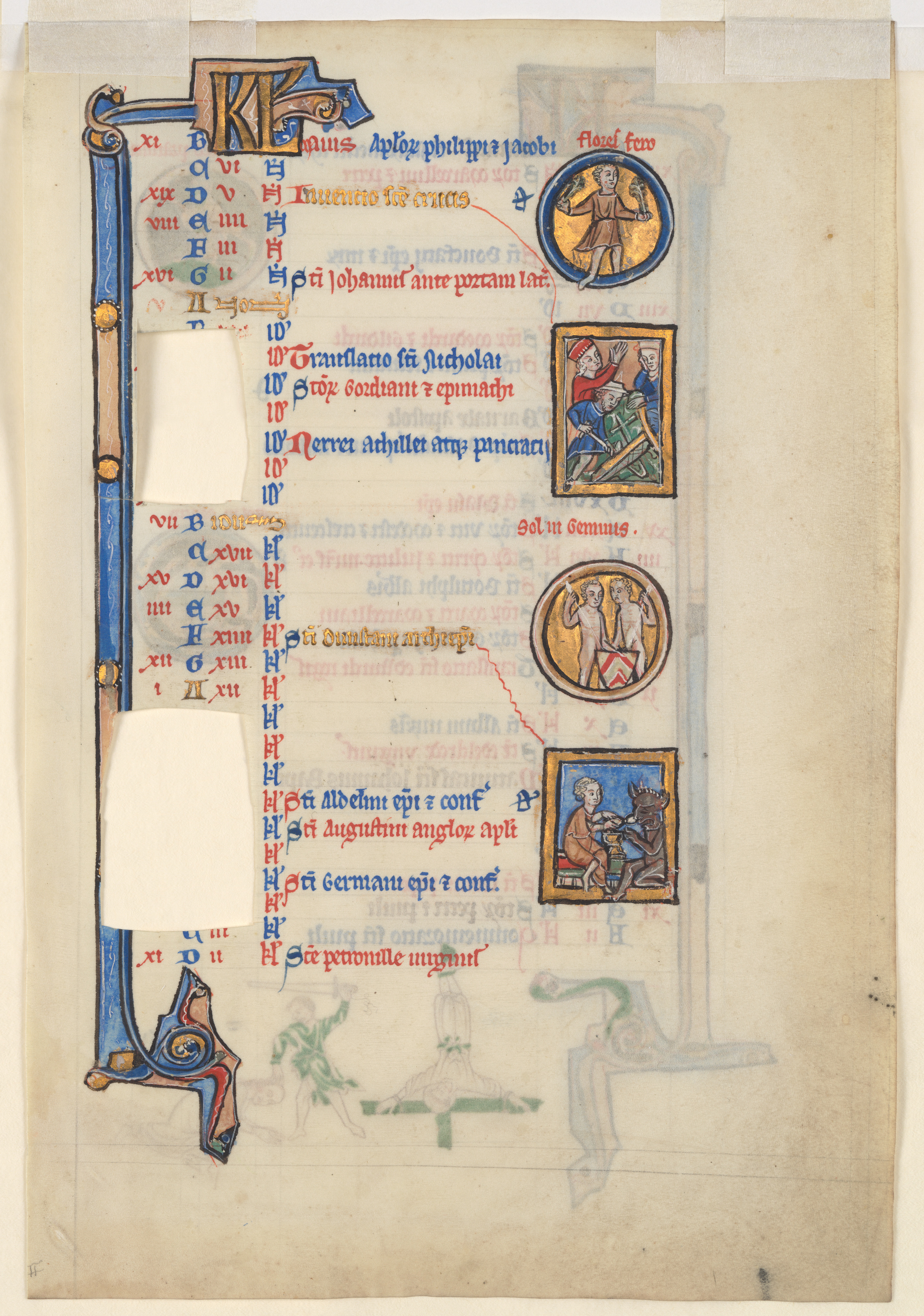
The Met — Manuscript Leaf with June Calendar
A specific thirteenth-century manuscript calendar provides a historically bounded object for discussing written time records. The relevant primary reference is The Met — Manuscript Leaf with June Calendar. Check the date, scope, purpose and method before using the source. In particular, the institution’s findings do not endorse the eduKate stage model or confer official recognition on its future classifications.
Three separate axes: capability, present condition and dependencies
A community may be outstanding in one function and weak in another. Capability is what can actually be sustained; present condition is whether that capability is strong, under strain or changing; dependence identifies the inputs, people, environments and institutions without which it cannot operate. The fourth question, inclusion, asks who enjoys the benefit and who carries the cost. This is a more useful civic and historical account than treating a spectacular object as a summary of an entire civilisation.
The case studies below are deliberately bounded. A surviving object tells us something about its materials, makers, location or later use, but not automatically about the rights, happiness and competence of everyone who lived nearby. An official contemporary target tells us what an institution wants to achieve, not necessarily what has already happened. A genuine experiment establishes a measured component under specified conditions, not an entire society-wide transition. Older children should practise writing these differences in the margins of each case.
Fifteen working mechanisms across every stage of civilisation
Each mechanism begins with the service or cultural practice that matters, then considers what can fail, how to identify the people affected and which evidence could reasonably justify a claim. A nine-stage comparison follows, but the stages are diagnostic coordinates, not an invitation to praise the largest or newest technology. The final exercise provides a harmless imaginary example with numbers, documentation and a question about what remains uncertain.
1. Daylight, daily rhythms and safe routines: how this system works
Did you know that daylight, daily rhythms and safe routines is easier to misunderstand when it is represented by one attractive object, a slogan or a colourful chart? The real educational question is how people can explain how recurring light and darkness help people organise useful activity without requiring clock towers. Imagine a case where a fictional family moves to a location with a different daylight pattern. Such a scene is invented to make an operating relationship visible, not to claim that a named historical culture necessarily had this experience. The actual issue is a group assumes that a familiar daily signal works identically in a new place. Parents can ask children to identify who faces that difficulty before the group proposes an attractive-looking solution. Tutors should ask which duties, skills and safeguards would still be required after the initial solution was announced.
An evidence-led inquiry begins with careful observation records and context-appropriate environmental information. A possible indicator is tasks timed appropriately to actual conditions, although a number only acquires meaning after its unit, denominator, population and period have been defined. A common mistake would be assuming a universal daylight schedule across latitudes and seasons. Another plausible explanation is that the daily pattern of one place cannot define all communities. The class should examine which observations could distinguish those interpretations. Make room for people working outside or managing dependent care, who may be missing from the most convenient dataset or official narrative. This approach joins history, geography, science and ethical reasoning without pretending that the same evidence survives from every historical period.
The practical purpose of this chapter is to distinguish a natural signal from an institutional timetable. One safe introductory classroom task is to draw two imaginary daily routines and compare what changes with shorter daylight. Let children state their assumptions aloud and choose one indicator to watch. The student who disagrees respectfully with the dominant explanation should be invited to explain which evidence would change their mind. Encourage a careful sentence such as “In this fictional setting, the documented observations support this limited claim, but they do not establish that every household or region shared the benefit.” This is how an attractive idea becomes a checkable explanation.
Nine-stage analysis of daylight, daily rhythms and safe routines
Foundation 0: Adaptive Human Worlds: the concrete capability
What changes? Consider an adaptable community using observation, reciprocal care, material knowledge and intergenerational teaching without requiring urban settlement. The relevant daylight, daily rhythms and safe routines task is to explain how recurring light and darkness help people organise useful activity without requiring clock towers. The stage’s organising function is demonstrated practical cooperation and learned skill rather than a formal urban bureaucracy. Suppose a group assumes that a familiar daily signal works identically in a new place. It is not enough to identify one object or an isolated success; a credible account shows what people can keep doing when an ordinary condition changes. At this stage the particular pressure is that a knowledgeable person is absent and a younger learner must apply the shared practice. Readers should separate a learner’s imaginary scenario from any historical fact that would require a named source. The framework is historically investigable human capability, not a compulsory first rung, not a judgement of anyone’s intelligence or dignity.
Evidence, fairness and a useful test. The investigation needs careful observation records and context-appropriate environmental information, while remembering that Oral knowledge and mobile communities are not incomplete versions of cities. Missing monuments cannot establish a lack of intelligence or complex social life.. A helpful measurement could be tasks timed appropriately to actual conditions with its unit and period stated openly. Yet people working outside or managing dependent care may not appear in the original records, and the daily pattern of one place cannot define all communities. Have one team draw two imaginary daily routines and compare what changes with shorter daylight. Ask a second team to show how a useful skill or decision is explained, observed, learned and adapted without requiring a permanent written record. Their explanations should identify the strongest evidence, the weakest inference and what would count as a meaningful correction. Because assuming a universal daylight schedule across latitudes and seasons would be misleading, the teacher should reward a cautious explanation over a confident guess. The next question is whether whether another person can responsibly reproduce the practice after a handover can actually be checked.
Stage 1: Settlement and Surplus: the concrete capability
What changes? Consider an imagined permanent settlement where households, paths, stores and shared spaces must be maintained through seasonal variation. The relevant daylight, daily rhythms and safe routines task is to explain how recurring light and darkness help people organise useful activity without requiring clock towers. The stage’s organising function is continuity of settlement functions and provision beyond a single favourable day. Suppose a group assumes that a familiar daily signal works identically in a new place. It is not enough to identify one object or an isolated success; a credible account shows what people can keep doing when an ordinary condition changes. At this stage the particular pressure is that a promised service works in one season but fails during an ordinary household or supply change. Readers should separate a learner’s imaginary scenario from any historical fact that would require a named source. The framework is a historically investigable settlement capability, not a judgement of anyone’s intelligence or dignity.
Evidence, fairness and a useful test. The investigation needs careful observation records and context-appropriate environmental information, while remembering that One large structure or fertile harvest is not proof of equitable provision, lasting residence or a universally better way of life.. A helpful measurement could be tasks timed appropriately to actual conditions with its unit and period stated openly. Yet people working outside or managing dependent care may not appear in the original records, and the daily pattern of one place cannot define all communities. Have one team draw two imaginary daily routines and compare what changes with shorter daylight. Ask a second team to record who uses the service, how it is repaired and whether the benefit persists over a second fictional season. Their explanations should identify the strongest evidence, the weakest inference and what would count as a meaningful correction. Because assuming a universal daylight schedule across latitudes and seasons would be misleading, the teacher should reward a cautious explanation over a confident guess. The next question is whether reliable access over a stated period, not a single impressive total can actually be checked.
Stage 2: Administrative and Recorded Systems: the concrete capability
What changes? Consider a town with record keepers and public stewards coordinating overlapping responsibilities across different neighbourhoods. The relevant daylight, daily rhythms and safe routines task is to explain how recurring light and darkness help people organise useful activity without requiring clock towers. The stage’s organising function is durable handovers, checkable decisions and repeatable procedures. Suppose a group assumes that a familiar daily signal works identically in a new place. It is not enough to identify one object or an isolated success; a credible account shows what people can keep doing when an ordinary condition changes. At this stage the particular pressure is that a record claims success while a different witness or receipt suggests an unresolved failure. Readers should separate a learner’s imaginary scenario from any historical fact that would require a named source. The framework is a historically investigable type of organised coordination, not a judgement of anyone’s intelligence or dignity.
Evidence, fairness and a useful test. The investigation needs careful observation records and context-appropriate environmental information, while remembering that Surviving records may represent particular institutions or powerful groups; they do not necessarily describe everybody who lived there.. A helpful measurement could be tasks timed appropriately to actual conditions with its unit and period stated openly. Yet people working outside or managing dependent care may not appear in the original records, and the daily pattern of one place cannot define all communities. Have one team draw two imaginary daily routines and compare what changes with shorter daylight. Ask a second team to compare the ledger with the experienced outcome and show how an error is corrected and explained. Their explanations should identify the strongest evidence, the weakest inference and what would count as a meaningful correction. Because assuming a universal daylight schedule across latitudes and seasons would be misleading, the teacher should reward a cautious explanation over a confident guess. The next question is whether decisions and delivery records that can be reconciled can actually be checked.
Stage 3: Industrial and Mass Institutions: the concrete capability
What changes? Consider a growing district with mechanised production, professional services, technical workers, schools and maintenance schedules. The relevant daylight, daily rhythms and safe routines task is to explain how recurring light and darkness help people organise useful activity without requiring clock towers. The stage’s organising function is large-scale repeatability supported by trained staff, materials and accountable institutions. Suppose a group assumes that a familiar daily signal works identically in a new place. It is not enough to identify one object or an isolated success; a credible account shows what people can keep doing when an ordinary condition changes. At this stage the particular pressure is that a visible technical achievement conceals unsafe work, unmaintained equipment or unequal service reach. Readers should separate a learner’s imaginary scenario from any historical fact that would require a named source. The framework is a historically investigable industrial and institutional capacity, not a judgement of anyone’s intelligence or dignity.
Evidence, fairness and a useful test. The investigation needs careful observation records and context-appropriate environmental information, while remembering that Factories, machinery and grand public buildings cannot on their own prove fairness, good health or social progress.. A helpful measurement could be tasks timed appropriately to actual conditions with its unit and period stated openly. Yet people working outside or managing dependent care may not appear in the original records, and the daily pattern of one place cannot define all communities. Have one team draw two imaginary daily routines and compare what changes with shorter daylight. Ask a second team to compare output with safety, access, repair cost and the availability of people competent to keep operating. Their explanations should identify the strongest evidence, the weakest inference and what would count as a meaningful correction. Because assuming a universal daylight schedule across latitudes and seasons would be misleading, the teacher should reward a cautious explanation over a confident guess. The next question is whether sustained service quality and repair performance can actually be checked.
Stage 4: Planetary Network Civilisation: the concrete capability
What changes? Consider multiple world regions connected by consequential trade, information and institutional relationships. The relevant daylight, daily rhythms and safe routines task is to explain how recurring light and darkness help people organise useful activity without requiring clock towers. The stage’s organising function is functional international interdependence across diverse places without universal or equal connectivity. Suppose a group assumes that a familiar daily signal works identically in a new place. It is not enough to identify one object or an isolated success; a credible account shows what people can keep doing when an ordinary condition changes. At this stage the particular pressure is that the failure of a distant service affects people excluded from the original plan. Readers should separate a learner’s imaginary scenario from any historical fact that would require a named source. The framework is a historically investigable global-network capability, not a judgement of anyone’s intelligence or dignity.
Evidence, fairness and a useful test. The investigation needs careful observation records and context-appropriate environmental information, while remembering that A cable, airport or international agreement demonstrates only a component, not equal rights or access throughout the planet.. A helpful measurement could be tasks timed appropriately to actual conditions with its unit and period stated openly. Yet people working outside or managing dependent care may not appear in the original records, and the daily pattern of one place cannot define all communities. Have one team draw two imaginary daily routines and compare what changes with shorter daylight. Ask a second team to trace upstream and downstream links, alternative paths and who cannot use the connection. Their explanations should identify the strongest evidence, the weakest inference and what would count as a meaningful correction. Because assuming a universal daylight schedule across latitudes and seasons would be misleading, the teacher should reward a cautious explanation over a confident guess. The next question is whether end-to-end access including the least-connected users can actually be checked.
Stage 5: Regenerative and Self-Correcting Civilisation: the concrete capability
What changes? Consider a fictional region attempting to identify damage, act on its causes and verify the result after time has passed. The relevant daylight, daily rhythms and safe routines task is to explain how recurring light and darkness help people organise useful activity without requiring clock towers. The stage’s organising function is a proposed ability to detect harmful outcomes, correct causes and show sustained improvement. Suppose a group assumes that a familiar daily signal works identically in a new place. It is not enough to identify one object or an isolated success; a credible account shows what people can keep doing when an ordinary condition changes. At this stage the particular pressure is that a celebrated project improves a headline indicator but moves costs or damage to another group. Readers should separate a learner’s imaginary scenario from any historical fact that would require a named source. The framework is a proposed capability standard rather than a historical milestone, not a judgement of anyone’s intelligence or dignity.
Evidence, fairness and a useful test. The investigation needs careful observation records and context-appropriate environmental information, while remembering that This is a proposed teaching threshold, not an officially recognised or demonstrably achieved global state.. A helpful measurement could be tasks timed appropriately to actual conditions with its unit and period stated openly. Yet people working outside or managing dependent care may not appear in the original records, and the daily pattern of one place cannot define all communities. Have one team draw two imaginary daily routines and compare what changes with shorter daylight. Ask a second team to compare baselines, trade-offs, follow-up measures, outside review and the rights of those affected. Their explanations should identify the strongest evidence, the weakest inference and what would count as a meaningful correction. Because assuming a universal daylight schedule across latitudes and seasons would be misleading, the teacher should reward a cautious explanation over a confident guess. The next question is whether verified, equitable improvement sustained beyond the announcement can actually be checked.
Stage 6: Multi-World Extension: the concrete capability
What changes? Consider an imaginary inhabited outpost beyond Earth that still relies on external resupply, institutional guidance and specialist maintenance. The relevant daylight, daily rhythms and safe routines task is to explain how recurring light and darkness help people organise useful activity without requiring clock towers. The stage’s organising function is continuing inhabited human activity in another celestial environment with transparently documented support. Suppose a group assumes that a familiar daily signal works identically in a new place. It is not enough to identify one object or an isolated success; a credible account shows what people can keep doing when an ordinary condition changes. At this stage the particular pressure is that a necessary Earth shipment or expert response does not arrive as expected. Readers should separate a learner’s imaginary scenario from any historical fact that would require a named source. The framework is hypothetical future human capability, not a judgement of anyone’s intelligence or dignity.
Evidence, fairness and a useful test. The investigation needs careful observation records and context-appropriate environmental information, while remembering that Robotic missions, scientific research and conceptual base images do not establish an enduring human second-world civilisation.. A helpful measurement could be tasks timed appropriately to actual conditions with its unit and period stated openly. Yet people working outside or managing dependent care may not appear in the original records, and the daily pattern of one place cannot define all communities. Have one team draw two imaginary daily routines and compare what changes with shorter daylight. Ask a second team to separate what is demonstrated locally from what is imported, planned, simulated or advertised. Their explanations should identify the strongest evidence, the weakest inference and what would count as a meaningful correction. Because assuming a universal daylight schedule across latitudes and seasons would be misleading, the teacher should reward a cautious explanation over a confident guess. The next question is whether tested duration of continued operations with explicit external inputs can actually be checked.
Stage 7: Autonomous Multi-World Civilisation: the concrete capability
What changes? Consider an imagined inhabited off-Earth settlement attempting to maintain essential functions through extended interruption of Earth support. The relevant daylight, daily rhythms and safe routines task is to explain how recurring light and darkness help people organise useful activity without requiring clock towers. The stage’s organising function is substantial local autonomy in supplies, expertise, repairs, care and decisions. Suppose a group assumes that a familiar daily signal works identically in a new place. It is not enough to identify one object or an isolated success; a credible account shows what people can keep doing when an ordinary condition changes. At this stage the particular pressure is that one successful local process hides dependence on an irreplaceable imported specialist component. Readers should separate a learner’s imaginary scenario from any historical fact that would require a named source. The framework is hypothetical future human capability, not a judgement of anyone’s intelligence or dignity.
Evidence, fairness and a useful test. The investigation needs careful observation records and context-appropriate environmental information, while remembering that Producing one material or recycling one resource is not proof of broad independent human settlement.. A helpful measurement could be tasks timed appropriately to actual conditions with its unit and period stated openly. Yet people working outside or managing dependent care may not appear in the original records, and the daily pattern of one place cannot define all communities. Have one team draw two imaginary daily routines and compare what changes with shorter daylight. Ask a second team to make a dependency register for every essential function and describe what cannot yet be repaired locally. Their explanations should identify the strongest evidence, the weakest inference and what would count as a meaningful correction. Because assuming a universal daylight schedule across latitudes and seasons would be misleading, the teacher should reward a cautious explanation over a confident guess. The next question is whether essential functions sustained without assumed external replacement can actually be checked.
Stage 8: Distributed Interplanetary Civilisation: the concrete capability
What changes? Consider several imagined inhabited centres separated by significant communication and travel delays. The relevant daylight, daily rhythms and safe routines task is to explain how recurring light and darkness help people organise useful activity without requiring clock towers. The stage’s organising function is resilient cooperation and local autonomy across multiple inhabited worlds without requiring one uninterrupted central command. Suppose a group assumes that a familiar daily signal works identically in a new place. It is not enough to identify one object or an isolated success; a credible account shows what people can keep doing when an ordinary condition changes. At this stage the particular pressure is that a distant centre receives a message whose information became outdated during transmission. Readers should separate a learner’s imaginary scenario from any historical fact that would require a named source. The framework is hypothetical future human capability, not a judgement of anyone’s intelligence or dignity.
Evidence, fairness and a useful test. The investigation needs careful observation records and context-appropriate environmental information, while remembering that Deep-space probes and messaging experiments are real technical achievements, not evidence of a distributed human civilisation.. A helpful measurement could be tasks timed appropriately to actual conditions with its unit and period stated openly. Yet people working outside or managing dependent care may not appear in the original records, and the daily pattern of one place cannot define all communities. Have one team draw two imaginary daily routines and compare what changes with shorter daylight. Ask a second team to distinguish local decisions from inter-centre consent, and log the time and evidence available to each participant. Their explanations should identify the strongest evidence, the weakest inference and what would count as a meaningful correction. Because assuming a universal daylight schedule across latitudes and seasons would be misleading, the teacher should reward a cautious explanation over a confident guess. The next question is whether independently maintained services with accountable cooperation during delay can actually be checked.
Worked model: numbers, source quality and an honest denominator
Here is an entirely invented teaching record about daylight, daily rhythms and safe routines. The class plans 58 instances of tasks timed appropriately to actual conditions during an explicitly stated period. An independent check confirms 53; another 2 reports are incomplete. The confirmed fraction is 53/58, or approximately 91.4%. The confirmed shortfall is 5; ambiguous items are not additional confirmed successes and must not be double-counted if they are already excluded from the verified total. Nothing in these imaginary figures describes an actual heritage site, public institution or living community.
Now complicate the interpretation. Suppose people working outside or managing dependent care were omitted from the planned count. A higher-looking success rate might merely be a narrower definition of the people being served. Suppose instead that the daily pattern of one place cannot define all communities. The group must write what new evidence would support or reject the alternative before claiming that its method has worked. An excellent student can explain why the mathematics is correct but the historical or policy conclusion remains unjustified. A meaningful correction changes the record, the operating process or both, and then checks whether the outcome is genuinely improved.
Three questions worth arguing about
First, what would this mechanism look like if the same capability had to survive a change of personnel, location or supplies? Second, why is assuming a universal daylight schedule across latitudes and seasons a serious danger when a reader knows only a headline or a picture? Third, if distinguish a natural signal from an institutional timetable, which proposed result could be measured while respecting people whose experiences differ from the majority? These questions form a genuine teaching discussion; they do not require children to make personal disclosures or pretend to live through hazards. A tutor can revisit the same case in a later lesson and ask whether the student’s revised explanation is better grounded.
2. Seasonal observation and ecological knowledge: how this system works
Did you know that seasonal observation and ecological knowledge is easier to misunderstand when it is represented by one attractive object, a slogan or a colourful chart? The real educational question is how people can recognise the skilled local observation that can connect climate, plants and human decisions. Imagine a case where an imaginary harvest planner disagrees with a changed flowering date. Such a scene is invented to make an operating relationship visible, not to claim that a named historical culture necessarily had this experience. The actual issue is an expected seasonal cue arrives later than people anticipated. Parents can ask children to identify who faces that difficulty before the group proposes an attractive-looking solution. Tutors should ask which duties, skills and safeguards would still be required after the initial solution was announced.
An evidence-led inquiry begins with dated observations, environmental context and respectfully attributed local knowledge. A possible indicator is plans revised when observations change, although a number only acquires meaning after its unit, denominator, population and period have been defined. A common mistake would be equating a calendar’s traditional age with guaranteed accuracy in every year. Another plausible explanation is that one anomalous season does not establish a permanent climate shift. The class should examine which observations could distinguish those interpretations. Make room for communities depending on weather-sensitive livelihoods, who may be missing from the most convenient dataset or official narrative. This approach joins history, geography, science and ethical reasoning without pretending that the same evidence survives from every historical period.
The practical purpose of this chapter is to study how a community keeps useful knowledge while updating assumptions. One safe introductory classroom task is to compare invented signs of seasonal change with an uncertain weather record. Let children state their assumptions aloud and choose one indicator to watch. The student who disagrees respectfully with the dominant explanation should be invited to explain which evidence would change their mind. Encourage a careful sentence such as “In this fictional setting, the documented observations support this limited claim, but they do not establish that every household or region shared the benefit.” This is how an attractive idea becomes a checkable explanation.
Nine-stage analysis of seasonal observation and ecological knowledge
Foundation 0: Adaptive Human Worlds: the concrete capability
What changes? Consider an adaptable community using observation, reciprocal care, material knowledge and intergenerational teaching without requiring urban settlement. The relevant seasonal observation and ecological knowledge task is to recognise the skilled local observation that can connect climate, plants and human decisions. The stage’s organising function is demonstrated practical cooperation and learned skill rather than a formal urban bureaucracy. Suppose an expected seasonal cue arrives later than people anticipated. It is not enough to identify one object or an isolated success; a credible account shows what people can keep doing when an ordinary condition changes. At this stage the particular pressure is that a knowledgeable person is absent and a younger learner must apply the shared practice. Readers should separate a learner’s imaginary scenario from any historical fact that would require a named source. The framework is historically investigable human capability, not a compulsory first rung, not a judgement of anyone’s intelligence or dignity.
Evidence, fairness and a useful test. The investigation needs dated observations, environmental context and respectfully attributed local knowledge, while remembering that Oral knowledge and mobile communities are not incomplete versions of cities. Missing monuments cannot establish a lack of intelligence or complex social life.. A helpful measurement could be plans revised when observations change with its unit and period stated openly. Yet communities depending on weather-sensitive livelihoods may not appear in the original records, and one anomalous season does not establish a permanent climate shift. Have one team compare invented signs of seasonal change with an uncertain weather record. Ask a second team to show how a useful skill or decision is explained, observed, learned and adapted without requiring a permanent written record. Their explanations should identify the strongest evidence, the weakest inference and what would count as a meaningful correction. Because equating a calendar’s traditional age with guaranteed accuracy in every year would be misleading, the teacher should reward a cautious explanation over a confident guess. The next question is whether whether another person can responsibly reproduce the practice after a handover can actually be checked.
Stage 1: Settlement and Surplus: the concrete capability
What changes? Consider an imagined permanent settlement where households, paths, stores and shared spaces must be maintained through seasonal variation. The relevant seasonal observation and ecological knowledge task is to recognise the skilled local observation that can connect climate, plants and human decisions. The stage’s organising function is continuity of settlement functions and provision beyond a single favourable day. Suppose an expected seasonal cue arrives later than people anticipated. It is not enough to identify one object or an isolated success; a credible account shows what people can keep doing when an ordinary condition changes. At this stage the particular pressure is that a promised service works in one season but fails during an ordinary household or supply change. Readers should separate a learner’s imaginary scenario from any historical fact that would require a named source. The framework is a historically investigable settlement capability, not a judgement of anyone’s intelligence or dignity.
Evidence, fairness and a useful test. The investigation needs dated observations, environmental context and respectfully attributed local knowledge, while remembering that One large structure or fertile harvest is not proof of equitable provision, lasting residence or a universally better way of life.. A helpful measurement could be plans revised when observations change with its unit and period stated openly. Yet communities depending on weather-sensitive livelihoods may not appear in the original records, and one anomalous season does not establish a permanent climate shift. Have one team compare invented signs of seasonal change with an uncertain weather record. Ask a second team to record who uses the service, how it is repaired and whether the benefit persists over a second fictional season. Their explanations should identify the strongest evidence, the weakest inference and what would count as a meaningful correction. Because equating a calendar’s traditional age with guaranteed accuracy in every year would be misleading, the teacher should reward a cautious explanation over a confident guess. The next question is whether reliable access over a stated period, not a single impressive total can actually be checked.
Stage 2: Administrative and Recorded Systems: the concrete capability
What changes? Consider a town with record keepers and public stewards coordinating overlapping responsibilities across different neighbourhoods. The relevant seasonal observation and ecological knowledge task is to recognise the skilled local observation that can connect climate, plants and human decisions. The stage’s organising function is durable handovers, checkable decisions and repeatable procedures. Suppose an expected seasonal cue arrives later than people anticipated. It is not enough to identify one object or an isolated success; a credible account shows what people can keep doing when an ordinary condition changes. At this stage the particular pressure is that a record claims success while a different witness or receipt suggests an unresolved failure. Readers should separate a learner’s imaginary scenario from any historical fact that would require a named source. The framework is a historically investigable type of organised coordination, not a judgement of anyone’s intelligence or dignity.
Evidence, fairness and a useful test. The investigation needs dated observations, environmental context and respectfully attributed local knowledge, while remembering that Surviving records may represent particular institutions or powerful groups; they do not necessarily describe everybody who lived there.. A helpful measurement could be plans revised when observations change with its unit and period stated openly. Yet communities depending on weather-sensitive livelihoods may not appear in the original records, and one anomalous season does not establish a permanent climate shift. Have one team compare invented signs of seasonal change with an uncertain weather record. Ask a second team to compare the ledger with the experienced outcome and show how an error is corrected and explained. Their explanations should identify the strongest evidence, the weakest inference and what would count as a meaningful correction. Because equating a calendar’s traditional age with guaranteed accuracy in every year would be misleading, the teacher should reward a cautious explanation over a confident guess. The next question is whether decisions and delivery records that can be reconciled can actually be checked.
Stage 3: Industrial and Mass Institutions: the concrete capability
What changes? Consider a growing district with mechanised production, professional services, technical workers, schools and maintenance schedules. The relevant seasonal observation and ecological knowledge task is to recognise the skilled local observation that can connect climate, plants and human decisions. The stage’s organising function is large-scale repeatability supported by trained staff, materials and accountable institutions. Suppose an expected seasonal cue arrives later than people anticipated. It is not enough to identify one object or an isolated success; a credible account shows what people can keep doing when an ordinary condition changes. At this stage the particular pressure is that a visible technical achievement conceals unsafe work, unmaintained equipment or unequal service reach. Readers should separate a learner’s imaginary scenario from any historical fact that would require a named source. The framework is a historically investigable industrial and institutional capacity, not a judgement of anyone’s intelligence or dignity.
Evidence, fairness and a useful test. The investigation needs dated observations, environmental context and respectfully attributed local knowledge, while remembering that Factories, machinery and grand public buildings cannot on their own prove fairness, good health or social progress.. A helpful measurement could be plans revised when observations change with its unit and period stated openly. Yet communities depending on weather-sensitive livelihoods may not appear in the original records, and one anomalous season does not establish a permanent climate shift. Have one team compare invented signs of seasonal change with an uncertain weather record. Ask a second team to compare output with safety, access, repair cost and the availability of people competent to keep operating. Their explanations should identify the strongest evidence, the weakest inference and what would count as a meaningful correction. Because equating a calendar’s traditional age with guaranteed accuracy in every year would be misleading, the teacher should reward a cautious explanation over a confident guess. The next question is whether sustained service quality and repair performance can actually be checked.
Stage 4: Planetary Network Civilisation: the concrete capability
What changes? Consider multiple world regions connected by consequential trade, information and institutional relationships. The relevant seasonal observation and ecological knowledge task is to recognise the skilled local observation that can connect climate, plants and human decisions. The stage’s organising function is functional international interdependence across diverse places without universal or equal connectivity. Suppose an expected seasonal cue arrives later than people anticipated. It is not enough to identify one object or an isolated success; a credible account shows what people can keep doing when an ordinary condition changes. At this stage the particular pressure is that the failure of a distant service affects people excluded from the original plan. Readers should separate a learner’s imaginary scenario from any historical fact that would require a named source. The framework is a historically investigable global-network capability, not a judgement of anyone’s intelligence or dignity.
Evidence, fairness and a useful test. The investigation needs dated observations, environmental context and respectfully attributed local knowledge, while remembering that A cable, airport or international agreement demonstrates only a component, not equal rights or access throughout the planet.. A helpful measurement could be plans revised when observations change with its unit and period stated openly. Yet communities depending on weather-sensitive livelihoods may not appear in the original records, and one anomalous season does not establish a permanent climate shift. Have one team compare invented signs of seasonal change with an uncertain weather record. Ask a second team to trace upstream and downstream links, alternative paths and who cannot use the connection. Their explanations should identify the strongest evidence, the weakest inference and what would count as a meaningful correction. Because equating a calendar’s traditional age with guaranteed accuracy in every year would be misleading, the teacher should reward a cautious explanation over a confident guess. The next question is whether end-to-end access including the least-connected users can actually be checked.
Stage 5: Regenerative and Self-Correcting Civilisation: the concrete capability
What changes? Consider a fictional region attempting to identify damage, act on its causes and verify the result after time has passed. The relevant seasonal observation and ecological knowledge task is to recognise the skilled local observation that can connect climate, plants and human decisions. The stage’s organising function is a proposed ability to detect harmful outcomes, correct causes and show sustained improvement. Suppose an expected seasonal cue arrives later than people anticipated. It is not enough to identify one object or an isolated success; a credible account shows what people can keep doing when an ordinary condition changes. At this stage the particular pressure is that a celebrated project improves a headline indicator but moves costs or damage to another group. Readers should separate a learner’s imaginary scenario from any historical fact that would require a named source. The framework is a proposed capability standard rather than a historical milestone, not a judgement of anyone’s intelligence or dignity.
Evidence, fairness and a useful test. The investigation needs dated observations, environmental context and respectfully attributed local knowledge, while remembering that This is a proposed teaching threshold, not an officially recognised or demonstrably achieved global state.. A helpful measurement could be plans revised when observations change with its unit and period stated openly. Yet communities depending on weather-sensitive livelihoods may not appear in the original records, and one anomalous season does not establish a permanent climate shift. Have one team compare invented signs of seasonal change with an uncertain weather record. Ask a second team to compare baselines, trade-offs, follow-up measures, outside review and the rights of those affected. Their explanations should identify the strongest evidence, the weakest inference and what would count as a meaningful correction. Because equating a calendar’s traditional age with guaranteed accuracy in every year would be misleading, the teacher should reward a cautious explanation over a confident guess. The next question is whether verified, equitable improvement sustained beyond the announcement can actually be checked.
Stage 6: Multi-World Extension: the concrete capability
What changes? Consider an imaginary inhabited outpost beyond Earth that still relies on external resupply, institutional guidance and specialist maintenance. The relevant seasonal observation and ecological knowledge task is to recognise the skilled local observation that can connect climate, plants and human decisions. The stage’s organising function is continuing inhabited human activity in another celestial environment with transparently documented support. Suppose an expected seasonal cue arrives later than people anticipated. It is not enough to identify one object or an isolated success; a credible account shows what people can keep doing when an ordinary condition changes. At this stage the particular pressure is that a necessary Earth shipment or expert response does not arrive as expected. Readers should separate a learner’s imaginary scenario from any historical fact that would require a named source. The framework is hypothetical future human capability, not a judgement of anyone’s intelligence or dignity.
Evidence, fairness and a useful test. The investigation needs dated observations, environmental context and respectfully attributed local knowledge, while remembering that Robotic missions, scientific research and conceptual base images do not establish an enduring human second-world civilisation.. A helpful measurement could be plans revised when observations change with its unit and period stated openly. Yet communities depending on weather-sensitive livelihoods may not appear in the original records, and one anomalous season does not establish a permanent climate shift. Have one team compare invented signs of seasonal change with an uncertain weather record. Ask a second team to separate what is demonstrated locally from what is imported, planned, simulated or advertised. Their explanations should identify the strongest evidence, the weakest inference and what would count as a meaningful correction. Because equating a calendar’s traditional age with guaranteed accuracy in every year would be misleading, the teacher should reward a cautious explanation over a confident guess. The next question is whether tested duration of continued operations with explicit external inputs can actually be checked.
Stage 7: Autonomous Multi-World Civilisation: the concrete capability
What changes? Consider an imagined inhabited off-Earth settlement attempting to maintain essential functions through extended interruption of Earth support. The relevant seasonal observation and ecological knowledge task is to recognise the skilled local observation that can connect climate, plants and human decisions. The stage’s organising function is substantial local autonomy in supplies, expertise, repairs, care and decisions. Suppose an expected seasonal cue arrives later than people anticipated. It is not enough to identify one object or an isolated success; a credible account shows what people can keep doing when an ordinary condition changes. At this stage the particular pressure is that one successful local process hides dependence on an irreplaceable imported specialist component. Readers should separate a learner’s imaginary scenario from any historical fact that would require a named source. The framework is hypothetical future human capability, not a judgement of anyone’s intelligence or dignity.
Evidence, fairness and a useful test. The investigation needs dated observations, environmental context and respectfully attributed local knowledge, while remembering that Producing one material or recycling one resource is not proof of broad independent human settlement.. A helpful measurement could be plans revised when observations change with its unit and period stated openly. Yet communities depending on weather-sensitive livelihoods may not appear in the original records, and one anomalous season does not establish a permanent climate shift. Have one team compare invented signs of seasonal change with an uncertain weather record. Ask a second team to make a dependency register for every essential function and describe what cannot yet be repaired locally. Their explanations should identify the strongest evidence, the weakest inference and what would count as a meaningful correction. Because equating a calendar’s traditional age with guaranteed accuracy in every year would be misleading, the teacher should reward a cautious explanation over a confident guess. The next question is whether essential functions sustained without assumed external replacement can actually be checked.
Stage 8: Distributed Interplanetary Civilisation: the concrete capability
What changes? Consider several imagined inhabited centres separated by significant communication and travel delays. The relevant seasonal observation and ecological knowledge task is to recognise the skilled local observation that can connect climate, plants and human decisions. The stage’s organising function is resilient cooperation and local autonomy across multiple inhabited worlds without requiring one uninterrupted central command. Suppose an expected seasonal cue arrives later than people anticipated. It is not enough to identify one object or an isolated success; a credible account shows what people can keep doing when an ordinary condition changes. At this stage the particular pressure is that a distant centre receives a message whose information became outdated during transmission. Readers should separate a learner’s imaginary scenario from any historical fact that would require a named source. The framework is hypothetical future human capability, not a judgement of anyone’s intelligence or dignity.
Evidence, fairness and a useful test. The investigation needs dated observations, environmental context and respectfully attributed local knowledge, while remembering that Deep-space probes and messaging experiments are real technical achievements, not evidence of a distributed human civilisation.. A helpful measurement could be plans revised when observations change with its unit and period stated openly. Yet communities depending on weather-sensitive livelihoods may not appear in the original records, and one anomalous season does not establish a permanent climate shift. Have one team compare invented signs of seasonal change with an uncertain weather record. Ask a second team to distinguish local decisions from inter-centre consent, and log the time and evidence available to each participant. Their explanations should identify the strongest evidence, the weakest inference and what would count as a meaningful correction. Because equating a calendar’s traditional age with guaranteed accuracy in every year would be misleading, the teacher should reward a cautious explanation over a confident guess. The next question is whether independently maintained services with accountable cooperation during delay can actually be checked.
Worked model: numbers, source quality and an honest denominator
Here is an entirely invented teaching record about seasonal observation and ecological knowledge. The class plans 63 instances of plans revised when observations change during an explicitly stated period. An independent check confirms 56; another 3 reports are incomplete. The confirmed fraction is 56/63, or approximately 88.9%. The confirmed shortfall is 7; ambiguous items are not additional confirmed successes and must not be double-counted if they are already excluded from the verified total. Nothing in these imaginary figures describes an actual heritage site, public institution or living community.
Now complicate the interpretation. Suppose communities depending on weather-sensitive livelihoods were omitted from the planned count. A higher-looking success rate might merely be a narrower definition of the people being served. Suppose instead that one anomalous season does not establish a permanent climate shift. The group must write what new evidence would support or reject the alternative before claiming that its method has worked. An excellent student can explain why the mathematics is correct but the historical or policy conclusion remains unjustified. A meaningful correction changes the record, the operating process or both, and then checks whether the outcome is genuinely improved.
Three questions worth arguing about
First, what would this mechanism look like if the same capability had to survive a change of personnel, location or supplies? Second, why is equating a calendar’s traditional age with guaranteed accuracy in every year a serious danger when a reader knows only a headline or a picture? Third, if study how a community keeps useful knowledge while updating assumptions, which proposed result could be measured while respecting people whose experiences differ from the majority? These questions form a genuine teaching discussion; they do not require children to make personal disclosures or pretend to live through hazards. A tutor can revisit the same case in a later lesson and ask whether the student’s revised explanation is better grounded.
3. Solar calendars and horizon markers: how this system works
Did you know that solar calendars and horizon markers is easier to misunderstand when it is represented by one attractive object, a slogan or a colourful chart? The real educational question is how people can understand how observing annual solar movement can organise recurring periods. Imagine a case where a fictional student moves the viewpoint and observes a different alignment. Such a scene is invented to make an operating relationship visible, not to claim that a named historical culture necessarily had this experience. The actual issue is a marker is placed at an incorrect observation point and the apparent pattern changes. Parents can ask children to identify who faces that difficulty before the group proposes an attractive-looking solution. Tutors should ask which duties, skills and safeguards would still be required after the initial solution was announced.
An evidence-led inquiry begins with archaeological context, site geometry and specialist historical interpretation. A possible indicator is observations repeated from stated locations, although a number only acquires meaning after its unit, denominator, population and period have been defined. A common mistake would be claiming every aligned structure was intentionally an astronomical observatory. Another plausible explanation is that an architectural alignment by itself may have multiple explanations. The class should examine which observations could distinguish those interpretations. Make room for people who cannot access the observation site or its recorded interpretation, who may be missing from the most convenient dataset or official narrative. This approach joins history, geography, science and ethical reasoning without pretending that the same evidence survives from every historical period.
The practical purpose of this chapter is to distinguish visible position, time of year and the uncertainty of reconstructed practices. One safe introductory classroom task is to use a safe printed diagram of Chankillo’s horizon markers and state what the source proves. Let children state their assumptions aloud and choose one indicator to watch. The student who disagrees respectfully with the dominant explanation should be invited to explain which evidence would change their mind. Encourage a careful sentence such as “In this fictional setting, the documented observations support this limited claim, but they do not establish that every household or region shared the benefit.” This is how an attractive idea becomes a checkable explanation.
Nine-stage analysis of solar calendars and horizon markers
Foundation 0: Adaptive Human Worlds: the concrete capability
What changes? Consider an adaptable community using observation, reciprocal care, material knowledge and intergenerational teaching without requiring urban settlement. The relevant solar calendars and horizon markers task is to understand how observing annual solar movement can organise recurring periods. The stage’s organising function is demonstrated practical cooperation and learned skill rather than a formal urban bureaucracy. Suppose a marker is placed at an incorrect observation point and the apparent pattern changes. It is not enough to identify one object or an isolated success; a credible account shows what people can keep doing when an ordinary condition changes. At this stage the particular pressure is that a knowledgeable person is absent and a younger learner must apply the shared practice. Readers should separate a learner’s imaginary scenario from any historical fact that would require a named source. The framework is historically investigable human capability, not a compulsory first rung, not a judgement of anyone’s intelligence or dignity.
Evidence, fairness and a useful test. The investigation needs archaeological context, site geometry and specialist historical interpretation, while remembering that Oral knowledge and mobile communities are not incomplete versions of cities. Missing monuments cannot establish a lack of intelligence or complex social life.. A helpful measurement could be observations repeated from stated locations with its unit and period stated openly. Yet people who cannot access the observation site or its recorded interpretation may not appear in the original records, and an architectural alignment by itself may have multiple explanations. Have one team use a safe printed diagram of Chankillo’s horizon markers and state what the source proves. Ask a second team to show how a useful skill or decision is explained, observed, learned and adapted without requiring a permanent written record. Their explanations should identify the strongest evidence, the weakest inference and what would count as a meaningful correction. Because claiming every aligned structure was intentionally an astronomical observatory would be misleading, the teacher should reward a cautious explanation over a confident guess. The next question is whether whether another person can responsibly reproduce the practice after a handover can actually be checked.
Stage 1: Settlement and Surplus: the concrete capability
What changes? Consider an imagined permanent settlement where households, paths, stores and shared spaces must be maintained through seasonal variation. The relevant solar calendars and horizon markers task is to understand how observing annual solar movement can organise recurring periods. The stage’s organising function is continuity of settlement functions and provision beyond a single favourable day. Suppose a marker is placed at an incorrect observation point and the apparent pattern changes. It is not enough to identify one object or an isolated success; a credible account shows what people can keep doing when an ordinary condition changes. At this stage the particular pressure is that a promised service works in one season but fails during an ordinary household or supply change. Readers should separate a learner’s imaginary scenario from any historical fact that would require a named source. The framework is a historically investigable settlement capability, not a judgement of anyone’s intelligence or dignity.
Evidence, fairness and a useful test. The investigation needs archaeological context, site geometry and specialist historical interpretation, while remembering that One large structure or fertile harvest is not proof of equitable provision, lasting residence or a universally better way of life.. A helpful measurement could be observations repeated from stated locations with its unit and period stated openly. Yet people who cannot access the observation site or its recorded interpretation may not appear in the original records, and an architectural alignment by itself may have multiple explanations. Have one team use a safe printed diagram of Chankillo’s horizon markers and state what the source proves. Ask a second team to record who uses the service, how it is repaired and whether the benefit persists over a second fictional season. Their explanations should identify the strongest evidence, the weakest inference and what would count as a meaningful correction. Because claiming every aligned structure was intentionally an astronomical observatory would be misleading, the teacher should reward a cautious explanation over a confident guess. The next question is whether reliable access over a stated period, not a single impressive total can actually be checked.
Stage 2: Administrative and Recorded Systems: the concrete capability
What changes? Consider a town with record keepers and public stewards coordinating overlapping responsibilities across different neighbourhoods. The relevant solar calendars and horizon markers task is to understand how observing annual solar movement can organise recurring periods. The stage’s organising function is durable handovers, checkable decisions and repeatable procedures. Suppose a marker is placed at an incorrect observation point and the apparent pattern changes. It is not enough to identify one object or an isolated success; a credible account shows what people can keep doing when an ordinary condition changes. At this stage the particular pressure is that a record claims success while a different witness or receipt suggests an unresolved failure. Readers should separate a learner’s imaginary scenario from any historical fact that would require a named source. The framework is a historically investigable type of organised coordination, not a judgement of anyone’s intelligence or dignity.
Evidence, fairness and a useful test. The investigation needs archaeological context, site geometry and specialist historical interpretation, while remembering that Surviving records may represent particular institutions or powerful groups; they do not necessarily describe everybody who lived there.. A helpful measurement could be observations repeated from stated locations with its unit and period stated openly. Yet people who cannot access the observation site or its recorded interpretation may not appear in the original records, and an architectural alignment by itself may have multiple explanations. Have one team use a safe printed diagram of Chankillo’s horizon markers and state what the source proves. Ask a second team to compare the ledger with the experienced outcome and show how an error is corrected and explained. Their explanations should identify the strongest evidence, the weakest inference and what would count as a meaningful correction. Because claiming every aligned structure was intentionally an astronomical observatory would be misleading, the teacher should reward a cautious explanation over a confident guess. The next question is whether decisions and delivery records that can be reconciled can actually be checked.
Stage 3: Industrial and Mass Institutions: the concrete capability
What changes? Consider a growing district with mechanised production, professional services, technical workers, schools and maintenance schedules. The relevant solar calendars and horizon markers task is to understand how observing annual solar movement can organise recurring periods. The stage’s organising function is large-scale repeatability supported by trained staff, materials and accountable institutions. Suppose a marker is placed at an incorrect observation point and the apparent pattern changes. It is not enough to identify one object or an isolated success; a credible account shows what people can keep doing when an ordinary condition changes. At this stage the particular pressure is that a visible technical achievement conceals unsafe work, unmaintained equipment or unequal service reach. Readers should separate a learner’s imaginary scenario from any historical fact that would require a named source. The framework is a historically investigable industrial and institutional capacity, not a judgement of anyone’s intelligence or dignity.
Evidence, fairness and a useful test. The investigation needs archaeological context, site geometry and specialist historical interpretation, while remembering that Factories, machinery and grand public buildings cannot on their own prove fairness, good health or social progress.. A helpful measurement could be observations repeated from stated locations with its unit and period stated openly. Yet people who cannot access the observation site or its recorded interpretation may not appear in the original records, and an architectural alignment by itself may have multiple explanations. Have one team use a safe printed diagram of Chankillo’s horizon markers and state what the source proves. Ask a second team to compare output with safety, access, repair cost and the availability of people competent to keep operating. Their explanations should identify the strongest evidence, the weakest inference and what would count as a meaningful correction. Because claiming every aligned structure was intentionally an astronomical observatory would be misleading, the teacher should reward a cautious explanation over a confident guess. The next question is whether sustained service quality and repair performance can actually be checked.
Stage 4: Planetary Network Civilisation: the concrete capability
What changes? Consider multiple world regions connected by consequential trade, information and institutional relationships. The relevant solar calendars and horizon markers task is to understand how observing annual solar movement can organise recurring periods. The stage’s organising function is functional international interdependence across diverse places without universal or equal connectivity. Suppose a marker is placed at an incorrect observation point and the apparent pattern changes. It is not enough to identify one object or an isolated success; a credible account shows what people can keep doing when an ordinary condition changes. At this stage the particular pressure is that the failure of a distant service affects people excluded from the original plan. Readers should separate a learner’s imaginary scenario from any historical fact that would require a named source. The framework is a historically investigable global-network capability, not a judgement of anyone’s intelligence or dignity.
Evidence, fairness and a useful test. The investigation needs archaeological context, site geometry and specialist historical interpretation, while remembering that A cable, airport or international agreement demonstrates only a component, not equal rights or access throughout the planet.. A helpful measurement could be observations repeated from stated locations with its unit and period stated openly. Yet people who cannot access the observation site or its recorded interpretation may not appear in the original records, and an architectural alignment by itself may have multiple explanations. Have one team use a safe printed diagram of Chankillo’s horizon markers and state what the source proves. Ask a second team to trace upstream and downstream links, alternative paths and who cannot use the connection. Their explanations should identify the strongest evidence, the weakest inference and what would count as a meaningful correction. Because claiming every aligned structure was intentionally an astronomical observatory would be misleading, the teacher should reward a cautious explanation over a confident guess. The next question is whether end-to-end access including the least-connected users can actually be checked.
Stage 5: Regenerative and Self-Correcting Civilisation: the concrete capability
What changes? Consider a fictional region attempting to identify damage, act on its causes and verify the result after time has passed. The relevant solar calendars and horizon markers task is to understand how observing annual solar movement can organise recurring periods. The stage’s organising function is a proposed ability to detect harmful outcomes, correct causes and show sustained improvement. Suppose a marker is placed at an incorrect observation point and the apparent pattern changes. It is not enough to identify one object or an isolated success; a credible account shows what people can keep doing when an ordinary condition changes. At this stage the particular pressure is that a celebrated project improves a headline indicator but moves costs or damage to another group. Readers should separate a learner’s imaginary scenario from any historical fact that would require a named source. The framework is a proposed capability standard rather than a historical milestone, not a judgement of anyone’s intelligence or dignity.
Evidence, fairness and a useful test. The investigation needs archaeological context, site geometry and specialist historical interpretation, while remembering that This is a proposed teaching threshold, not an officially recognised or demonstrably achieved global state.. A helpful measurement could be observations repeated from stated locations with its unit and period stated openly. Yet people who cannot access the observation site or its recorded interpretation may not appear in the original records, and an architectural alignment by itself may have multiple explanations. Have one team use a safe printed diagram of Chankillo’s horizon markers and state what the source proves. Ask a second team to compare baselines, trade-offs, follow-up measures, outside review and the rights of those affected. Their explanations should identify the strongest evidence, the weakest inference and what would count as a meaningful correction. Because claiming every aligned structure was intentionally an astronomical observatory would be misleading, the teacher should reward a cautious explanation over a confident guess. The next question is whether verified, equitable improvement sustained beyond the announcement can actually be checked.
Stage 6: Multi-World Extension: the concrete capability
What changes? Consider an imaginary inhabited outpost beyond Earth that still relies on external resupply, institutional guidance and specialist maintenance. The relevant solar calendars and horizon markers task is to understand how observing annual solar movement can organise recurring periods. The stage’s organising function is continuing inhabited human activity in another celestial environment with transparently documented support. Suppose a marker is placed at an incorrect observation point and the apparent pattern changes. It is not enough to identify one object or an isolated success; a credible account shows what people can keep doing when an ordinary condition changes. At this stage the particular pressure is that a necessary Earth shipment or expert response does not arrive as expected. Readers should separate a learner’s imaginary scenario from any historical fact that would require a named source. The framework is hypothetical future human capability, not a judgement of anyone’s intelligence or dignity.
Evidence, fairness and a useful test. The investigation needs archaeological context, site geometry and specialist historical interpretation, while remembering that Robotic missions, scientific research and conceptual base images do not establish an enduring human second-world civilisation.. A helpful measurement could be observations repeated from stated locations with its unit and period stated openly. Yet people who cannot access the observation site or its recorded interpretation may not appear in the original records, and an architectural alignment by itself may have multiple explanations. Have one team use a safe printed diagram of Chankillo’s horizon markers and state what the source proves. Ask a second team to separate what is demonstrated locally from what is imported, planned, simulated or advertised. Their explanations should identify the strongest evidence, the weakest inference and what would count as a meaningful correction. Because claiming every aligned structure was intentionally an astronomical observatory would be misleading, the teacher should reward a cautious explanation over a confident guess. The next question is whether tested duration of continued operations with explicit external inputs can actually be checked.
Stage 7: Autonomous Multi-World Civilisation: the concrete capability
What changes? Consider an imagined inhabited off-Earth settlement attempting to maintain essential functions through extended interruption of Earth support. The relevant solar calendars and horizon markers task is to understand how observing annual solar movement can organise recurring periods. The stage’s organising function is substantial local autonomy in supplies, expertise, repairs, care and decisions. Suppose a marker is placed at an incorrect observation point and the apparent pattern changes. It is not enough to identify one object or an isolated success; a credible account shows what people can keep doing when an ordinary condition changes. At this stage the particular pressure is that one successful local process hides dependence on an irreplaceable imported specialist component. Readers should separate a learner’s imaginary scenario from any historical fact that would require a named source. The framework is hypothetical future human capability, not a judgement of anyone’s intelligence or dignity.
Evidence, fairness and a useful test. The investigation needs archaeological context, site geometry and specialist historical interpretation, while remembering that Producing one material or recycling one resource is not proof of broad independent human settlement.. A helpful measurement could be observations repeated from stated locations with its unit and period stated openly. Yet people who cannot access the observation site or its recorded interpretation may not appear in the original records, and an architectural alignment by itself may have multiple explanations. Have one team use a safe printed diagram of Chankillo’s horizon markers and state what the source proves. Ask a second team to make a dependency register for every essential function and describe what cannot yet be repaired locally. Their explanations should identify the strongest evidence, the weakest inference and what would count as a meaningful correction. Because claiming every aligned structure was intentionally an astronomical observatory would be misleading, the teacher should reward a cautious explanation over a confident guess. The next question is whether essential functions sustained without assumed external replacement can actually be checked.
Stage 8: Distributed Interplanetary Civilisation: the concrete capability
What changes? Consider several imagined inhabited centres separated by significant communication and travel delays. The relevant solar calendars and horizon markers task is to understand how observing annual solar movement can organise recurring periods. The stage’s organising function is resilient cooperation and local autonomy across multiple inhabited worlds without requiring one uninterrupted central command. Suppose a marker is placed at an incorrect observation point and the apparent pattern changes. It is not enough to identify one object or an isolated success; a credible account shows what people can keep doing when an ordinary condition changes. At this stage the particular pressure is that a distant centre receives a message whose information became outdated during transmission. Readers should separate a learner’s imaginary scenario from any historical fact that would require a named source. The framework is hypothetical future human capability, not a judgement of anyone’s intelligence or dignity.
Evidence, fairness and a useful test. The investigation needs archaeological context, site geometry and specialist historical interpretation, while remembering that Deep-space probes and messaging experiments are real technical achievements, not evidence of a distributed human civilisation.. A helpful measurement could be observations repeated from stated locations with its unit and period stated openly. Yet people who cannot access the observation site or its recorded interpretation may not appear in the original records, and an architectural alignment by itself may have multiple explanations. Have one team use a safe printed diagram of Chankillo’s horizon markers and state what the source proves. Ask a second team to distinguish local decisions from inter-centre consent, and log the time and evidence available to each participant. Their explanations should identify the strongest evidence, the weakest inference and what would count as a meaningful correction. Because claiming every aligned structure was intentionally an astronomical observatory would be misleading, the teacher should reward a cautious explanation over a confident guess. The next question is whether independently maintained services with accountable cooperation during delay can actually be checked.
Worked model: numbers, source quality and an honest denominator
Here is an entirely invented teaching record about solar calendars and horizon markers. The class plans 68 instances of observations repeated from stated locations during an explicitly stated period. An independent check confirms 59; another 4 reports are incomplete. The confirmed fraction is 59/68, or approximately 86.8%. The confirmed shortfall is 9; ambiguous items are not additional confirmed successes and must not be double-counted if they are already excluded from the verified total. Nothing in these imaginary figures describes an actual heritage site, public institution or living community.
Now complicate the interpretation. Suppose people who cannot access the observation site or its recorded interpretation were omitted from the planned count. A higher-looking success rate might merely be a narrower definition of the people being served. Suppose instead that an architectural alignment by itself may have multiple explanations. The group must write what new evidence would support or reject the alternative before claiming that its method has worked. An excellent student can explain why the mathematics is correct but the historical or policy conclusion remains unjustified. A meaningful correction changes the record, the operating process or both, and then checks whether the outcome is genuinely improved.
Three questions worth arguing about
First, what would this mechanism look like if the same capability had to survive a change of personnel, location or supplies? Second, why is claiming every aligned structure was intentionally an astronomical observatory a serious danger when a reader knows only a headline or a picture? Third, if distinguish visible position, time of year and the uncertainty of reconstructed practices, which proposed result could be measured while respecting people whose experiences differ from the majority? These questions form a genuine teaching discussion; they do not require children to make personal disclosures or pretend to live through hazards. A tutor can revisit the same case in a later lesson and ask whether the student’s revised explanation is better grounded.
4. Lunar cycles, naming and calendar differences: how this system works
Did you know that lunar cycles, naming and calendar differences is easier to misunderstand when it is represented by one attractive object, a slogan or a colourful chart? The real educational question is how people can explore how lunar observation can shape recurring communal dates and different calendar conventions. Imagine a case where an imaginary cross-town festival is announced under two different calendars. Such a scene is invented to make an operating relationship visible, not to claim that a named historical culture necessarily had this experience. The actual issue is two groups agree on an event but calculate its date using different conventions. Parents can ask children to identify who faces that difficulty before the group proposes an attractive-looking solution. Tutors should ask which duties, skills and safeguards would still be required after the initial solution was announced.
An evidence-led inquiry begins with documented calendar rules and observational context. A possible indicator is events labelled consistently within the declared system, although a number only acquires meaning after its unit, denominator, population and period have been defined. A common mistake would be assuming every calendar defines a month or year’s start in the same way. Another plausible explanation is that a calendar’s cultural meaning cannot be reduced to mechanical accuracy. The class should examine which observations could distinguish those interpretations. Make room for families needing an agreed translation between calendar systems, who may be missing from the most convenient dataset or official narrative. This approach joins history, geography, science and ethical reasoning without pretending that the same evidence survives from every historical period.
The practical purpose of this chapter is to separate astronomical cycles from the social choice of an observance date. One safe introductory classroom task is to compare entirely fictional cycle cards with a written rule for when a new month begins. Let children state their assumptions aloud and choose one indicator to watch. The student who disagrees respectfully with the dominant explanation should be invited to explain which evidence would change their mind. Encourage a careful sentence such as “In this fictional setting, the documented observations support this limited claim, but they do not establish that every household or region shared the benefit.” This is how an attractive idea becomes a checkable explanation.
Nine-stage analysis of lunar cycles, naming and calendar differences
Foundation 0: Adaptive Human Worlds: the concrete capability
What changes? Consider an adaptable community using observation, reciprocal care, material knowledge and intergenerational teaching without requiring urban settlement. The relevant lunar cycles, naming and calendar differences task is to explore how lunar observation can shape recurring communal dates and different calendar conventions. The stage’s organising function is demonstrated practical cooperation and learned skill rather than a formal urban bureaucracy. Suppose two groups agree on an event but calculate its date using different conventions. It is not enough to identify one object or an isolated success; a credible account shows what people can keep doing when an ordinary condition changes. At this stage the particular pressure is that a knowledgeable person is absent and a younger learner must apply the shared practice. Readers should separate a learner’s imaginary scenario from any historical fact that would require a named source. The framework is historically investigable human capability, not a compulsory first rung, not a judgement of anyone’s intelligence or dignity.
Evidence, fairness and a useful test. The investigation needs documented calendar rules and observational context, while remembering that Oral knowledge and mobile communities are not incomplete versions of cities. Missing monuments cannot establish a lack of intelligence or complex social life.. A helpful measurement could be events labelled consistently within the declared system with its unit and period stated openly. Yet families needing an agreed translation between calendar systems may not appear in the original records, and a calendar’s cultural meaning cannot be reduced to mechanical accuracy. Have one team compare entirely fictional cycle cards with a written rule for when a new month begins. Ask a second team to show how a useful skill or decision is explained, observed, learned and adapted without requiring a permanent written record. Their explanations should identify the strongest evidence, the weakest inference and what would count as a meaningful correction. Because assuming every calendar defines a month or year’s start in the same way would be misleading, the teacher should reward a cautious explanation over a confident guess. The next question is whether whether another person can responsibly reproduce the practice after a handover can actually be checked.
Stage 1: Settlement and Surplus: the concrete capability
What changes? Consider an imagined permanent settlement where households, paths, stores and shared spaces must be maintained through seasonal variation. The relevant lunar cycles, naming and calendar differences task is to explore how lunar observation can shape recurring communal dates and different calendar conventions. The stage’s organising function is continuity of settlement functions and provision beyond a single favourable day. Suppose two groups agree on an event but calculate its date using different conventions. It is not enough to identify one object or an isolated success; a credible account shows what people can keep doing when an ordinary condition changes. At this stage the particular pressure is that a promised service works in one season but fails during an ordinary household or supply change. Readers should separate a learner’s imaginary scenario from any historical fact that would require a named source. The framework is a historically investigable settlement capability, not a judgement of anyone’s intelligence or dignity.
Evidence, fairness and a useful test. The investigation needs documented calendar rules and observational context, while remembering that One large structure or fertile harvest is not proof of equitable provision, lasting residence or a universally better way of life.. A helpful measurement could be events labelled consistently within the declared system with its unit and period stated openly. Yet families needing an agreed translation between calendar systems may not appear in the original records, and a calendar’s cultural meaning cannot be reduced to mechanical accuracy. Have one team compare entirely fictional cycle cards with a written rule for when a new month begins. Ask a second team to record who uses the service, how it is repaired and whether the benefit persists over a second fictional season. Their explanations should identify the strongest evidence, the weakest inference and what would count as a meaningful correction. Because assuming every calendar defines a month or year’s start in the same way would be misleading, the teacher should reward a cautious explanation over a confident guess. The next question is whether reliable access over a stated period, not a single impressive total can actually be checked.
Stage 2: Administrative and Recorded Systems: the concrete capability
What changes? Consider a town with record keepers and public stewards coordinating overlapping responsibilities across different neighbourhoods. The relevant lunar cycles, naming and calendar differences task is to explore how lunar observation can shape recurring communal dates and different calendar conventions. The stage’s organising function is durable handovers, checkable decisions and repeatable procedures. Suppose two groups agree on an event but calculate its date using different conventions. It is not enough to identify one object or an isolated success; a credible account shows what people can keep doing when an ordinary condition changes. At this stage the particular pressure is that a record claims success while a different witness or receipt suggests an unresolved failure. Readers should separate a learner’s imaginary scenario from any historical fact that would require a named source. The framework is a historically investigable type of organised coordination, not a judgement of anyone’s intelligence or dignity.
Evidence, fairness and a useful test. The investigation needs documented calendar rules and observational context, while remembering that Surviving records may represent particular institutions or powerful groups; they do not necessarily describe everybody who lived there.. A helpful measurement could be events labelled consistently within the declared system with its unit and period stated openly. Yet families needing an agreed translation between calendar systems may not appear in the original records, and a calendar’s cultural meaning cannot be reduced to mechanical accuracy. Have one team compare entirely fictional cycle cards with a written rule for when a new month begins. Ask a second team to compare the ledger with the experienced outcome and show how an error is corrected and explained. Their explanations should identify the strongest evidence, the weakest inference and what would count as a meaningful correction. Because assuming every calendar defines a month or year’s start in the same way would be misleading, the teacher should reward a cautious explanation over a confident guess. The next question is whether decisions and delivery records that can be reconciled can actually be checked.
Stage 3: Industrial and Mass Institutions: the concrete capability
What changes? Consider a growing district with mechanised production, professional services, technical workers, schools and maintenance schedules. The relevant lunar cycles, naming and calendar differences task is to explore how lunar observation can shape recurring communal dates and different calendar conventions. The stage’s organising function is large-scale repeatability supported by trained staff, materials and accountable institutions. Suppose two groups agree on an event but calculate its date using different conventions. It is not enough to identify one object or an isolated success; a credible account shows what people can keep doing when an ordinary condition changes. At this stage the particular pressure is that a visible technical achievement conceals unsafe work, unmaintained equipment or unequal service reach. Readers should separate a learner’s imaginary scenario from any historical fact that would require a named source. The framework is a historically investigable industrial and institutional capacity, not a judgement of anyone’s intelligence or dignity.
Evidence, fairness and a useful test. The investigation needs documented calendar rules and observational context, while remembering that Factories, machinery and grand public buildings cannot on their own prove fairness, good health or social progress.. A helpful measurement could be events labelled consistently within the declared system with its unit and period stated openly. Yet families needing an agreed translation between calendar systems may not appear in the original records, and a calendar’s cultural meaning cannot be reduced to mechanical accuracy. Have one team compare entirely fictional cycle cards with a written rule for when a new month begins. Ask a second team to compare output with safety, access, repair cost and the availability of people competent to keep operating. Their explanations should identify the strongest evidence, the weakest inference and what would count as a meaningful correction. Because assuming every calendar defines a month or year’s start in the same way would be misleading, the teacher should reward a cautious explanation over a confident guess. The next question is whether sustained service quality and repair performance can actually be checked.
Stage 4: Planetary Network Civilisation: the concrete capability
What changes? Consider multiple world regions connected by consequential trade, information and institutional relationships. The relevant lunar cycles, naming and calendar differences task is to explore how lunar observation can shape recurring communal dates and different calendar conventions. The stage’s organising function is functional international interdependence across diverse places without universal or equal connectivity. Suppose two groups agree on an event but calculate its date using different conventions. It is not enough to identify one object or an isolated success; a credible account shows what people can keep doing when an ordinary condition changes. At this stage the particular pressure is that the failure of a distant service affects people excluded from the original plan. Readers should separate a learner’s imaginary scenario from any historical fact that would require a named source. The framework is a historically investigable global-network capability, not a judgement of anyone’s intelligence or dignity.
Evidence, fairness and a useful test. The investigation needs documented calendar rules and observational context, while remembering that A cable, airport or international agreement demonstrates only a component, not equal rights or access throughout the planet.. A helpful measurement could be events labelled consistently within the declared system with its unit and period stated openly. Yet families needing an agreed translation between calendar systems may not appear in the original records, and a calendar’s cultural meaning cannot be reduced to mechanical accuracy. Have one team compare entirely fictional cycle cards with a written rule for when a new month begins. Ask a second team to trace upstream and downstream links, alternative paths and who cannot use the connection. Their explanations should identify the strongest evidence, the weakest inference and what would count as a meaningful correction. Because assuming every calendar defines a month or year’s start in the same way would be misleading, the teacher should reward a cautious explanation over a confident guess. The next question is whether end-to-end access including the least-connected users can actually be checked.
Stage 5: Regenerative and Self-Correcting Civilisation: the concrete capability
What changes? Consider a fictional region attempting to identify damage, act on its causes and verify the result after time has passed. The relevant lunar cycles, naming and calendar differences task is to explore how lunar observation can shape recurring communal dates and different calendar conventions. The stage’s organising function is a proposed ability to detect harmful outcomes, correct causes and show sustained improvement. Suppose two groups agree on an event but calculate its date using different conventions. It is not enough to identify one object or an isolated success; a credible account shows what people can keep doing when an ordinary condition changes. At this stage the particular pressure is that a celebrated project improves a headline indicator but moves costs or damage to another group. Readers should separate a learner’s imaginary scenario from any historical fact that would require a named source. The framework is a proposed capability standard rather than a historical milestone, not a judgement of anyone’s intelligence or dignity.
Evidence, fairness and a useful test. The investigation needs documented calendar rules and observational context, while remembering that This is a proposed teaching threshold, not an officially recognised or demonstrably achieved global state.. A helpful measurement could be events labelled consistently within the declared system with its unit and period stated openly. Yet families needing an agreed translation between calendar systems may not appear in the original records, and a calendar’s cultural meaning cannot be reduced to mechanical accuracy. Have one team compare entirely fictional cycle cards with a written rule for when a new month begins. Ask a second team to compare baselines, trade-offs, follow-up measures, outside review and the rights of those affected. Their explanations should identify the strongest evidence, the weakest inference and what would count as a meaningful correction. Because assuming every calendar defines a month or year’s start in the same way would be misleading, the teacher should reward a cautious explanation over a confident guess. The next question is whether verified, equitable improvement sustained beyond the announcement can actually be checked.
Stage 6: Multi-World Extension: the concrete capability
What changes? Consider an imaginary inhabited outpost beyond Earth that still relies on external resupply, institutional guidance and specialist maintenance. The relevant lunar cycles, naming and calendar differences task is to explore how lunar observation can shape recurring communal dates and different calendar conventions. The stage’s organising function is continuing inhabited human activity in another celestial environment with transparently documented support. Suppose two groups agree on an event but calculate its date using different conventions. It is not enough to identify one object or an isolated success; a credible account shows what people can keep doing when an ordinary condition changes. At this stage the particular pressure is that a necessary Earth shipment or expert response does not arrive as expected. Readers should separate a learner’s imaginary scenario from any historical fact that would require a named source. The framework is hypothetical future human capability, not a judgement of anyone’s intelligence or dignity.
Evidence, fairness and a useful test. The investigation needs documented calendar rules and observational context, while remembering that Robotic missions, scientific research and conceptual base images do not establish an enduring human second-world civilisation.. A helpful measurement could be events labelled consistently within the declared system with its unit and period stated openly. Yet families needing an agreed translation between calendar systems may not appear in the original records, and a calendar’s cultural meaning cannot be reduced to mechanical accuracy. Have one team compare entirely fictional cycle cards with a written rule for when a new month begins. Ask a second team to separate what is demonstrated locally from what is imported, planned, simulated or advertised. Their explanations should identify the strongest evidence, the weakest inference and what would count as a meaningful correction. Because assuming every calendar defines a month or year’s start in the same way would be misleading, the teacher should reward a cautious explanation over a confident guess. The next question is whether tested duration of continued operations with explicit external inputs can actually be checked.
Stage 7: Autonomous Multi-World Civilisation: the concrete capability
What changes? Consider an imagined inhabited off-Earth settlement attempting to maintain essential functions through extended interruption of Earth support. The relevant lunar cycles, naming and calendar differences task is to explore how lunar observation can shape recurring communal dates and different calendar conventions. The stage’s organising function is substantial local autonomy in supplies, expertise, repairs, care and decisions. Suppose two groups agree on an event but calculate its date using different conventions. It is not enough to identify one object or an isolated success; a credible account shows what people can keep doing when an ordinary condition changes. At this stage the particular pressure is that one successful local process hides dependence on an irreplaceable imported specialist component. Readers should separate a learner’s imaginary scenario from any historical fact that would require a named source. The framework is hypothetical future human capability, not a judgement of anyone’s intelligence or dignity.
Evidence, fairness and a useful test. The investigation needs documented calendar rules and observational context, while remembering that Producing one material or recycling one resource is not proof of broad independent human settlement.. A helpful measurement could be events labelled consistently within the declared system with its unit and period stated openly. Yet families needing an agreed translation between calendar systems may not appear in the original records, and a calendar’s cultural meaning cannot be reduced to mechanical accuracy. Have one team compare entirely fictional cycle cards with a written rule for when a new month begins. Ask a second team to make a dependency register for every essential function and describe what cannot yet be repaired locally. Their explanations should identify the strongest evidence, the weakest inference and what would count as a meaningful correction. Because assuming every calendar defines a month or year’s start in the same way would be misleading, the teacher should reward a cautious explanation over a confident guess. The next question is whether essential functions sustained without assumed external replacement can actually be checked.
Stage 8: Distributed Interplanetary Civilisation: the concrete capability
What changes? Consider several imagined inhabited centres separated by significant communication and travel delays. The relevant lunar cycles, naming and calendar differences task is to explore how lunar observation can shape recurring communal dates and different calendar conventions. The stage’s organising function is resilient cooperation and local autonomy across multiple inhabited worlds without requiring one uninterrupted central command. Suppose two groups agree on an event but calculate its date using different conventions. It is not enough to identify one object or an isolated success; a credible account shows what people can keep doing when an ordinary condition changes. At this stage the particular pressure is that a distant centre receives a message whose information became outdated during transmission. Readers should separate a learner’s imaginary scenario from any historical fact that would require a named source. The framework is hypothetical future human capability, not a judgement of anyone’s intelligence or dignity.
Evidence, fairness and a useful test. The investigation needs documented calendar rules and observational context, while remembering that Deep-space probes and messaging experiments are real technical achievements, not evidence of a distributed human civilisation.. A helpful measurement could be events labelled consistently within the declared system with its unit and period stated openly. Yet families needing an agreed translation between calendar systems may not appear in the original records, and a calendar’s cultural meaning cannot be reduced to mechanical accuracy. Have one team compare entirely fictional cycle cards with a written rule for when a new month begins. Ask a second team to distinguish local decisions from inter-centre consent, and log the time and evidence available to each participant. Their explanations should identify the strongest evidence, the weakest inference and what would count as a meaningful correction. Because assuming every calendar defines a month or year’s start in the same way would be misleading, the teacher should reward a cautious explanation over a confident guess. The next question is whether independently maintained services with accountable cooperation during delay can actually be checked.
Worked model: numbers, source quality and an honest denominator
Here is an entirely invented teaching record about lunar cycles, naming and calendar differences. The class plans 73 instances of events labelled consistently within the declared system during an explicitly stated period. An independent check confirms 62; another 5 reports are incomplete. The confirmed fraction is 62/73, or approximately 84.9%. The confirmed shortfall is 11; ambiguous items are not additional confirmed successes and must not be double-counted if they are already excluded from the verified total. Nothing in these imaginary figures describes an actual heritage site, public institution or living community.
Now complicate the interpretation. Suppose families needing an agreed translation between calendar systems were omitted from the planned count. A higher-looking success rate might merely be a narrower definition of the people being served. Suppose instead that a calendar’s cultural meaning cannot be reduced to mechanical accuracy. The group must write what new evidence would support or reject the alternative before claiming that its method has worked. An excellent student can explain why the mathematics is correct but the historical or policy conclusion remains unjustified. A meaningful correction changes the record, the operating process or both, and then checks whether the outcome is genuinely improved.
Three questions worth arguing about
First, what would this mechanism look like if the same capability had to survive a change of personnel, location or supplies? Second, why is assuming every calendar defines a month or year’s start in the same way a serious danger when a reader knows only a headline or a picture? Third, if separate astronomical cycles from the social choice of an observance date, which proposed result could be measured while respecting people whose experiences differ from the majority? These questions form a genuine teaching discussion; they do not require children to make personal disclosures or pretend to live through hazards. A tutor can revisit the same case in a later lesson and ask whether the student’s revised explanation is better grounded.
5. Agricultural and provisioning schedules: how this system works
Did you know that agricultural and provisioning schedules is easier to misunderstand when it is represented by one attractive object, a slogan or a colourful chart? The real educational question is how people can link expected seasons, workforce planning, food storage and observation. Imagine a case where an invented storage keeper finds that a shipment arrived after the accounting deadline. Such a scene is invented to make an operating relationship visible, not to claim that a named historical culture necessarily had this experience. The actual issue is a settlement counts the same harvest twice when the reporting periods overlap. Parents can ask children to identify who faces that difficulty before the group proposes an attractive-looking solution. Tutors should ask which duties, skills and safeguards would still be required after the initial solution was announced.
An evidence-led inquiry begins with dated inventories, crop records and explicitly defined observation windows. A possible indicator is provision maintained through a defined planning period, although a number only acquires meaning after its unit, denominator, population and period have been defined. A common mistake would be treating one favourable year as a permanent source of surplus. Another plausible explanation is that a precise schedule cannot remove uncertainty about environmental conditions. The class should examine which observations could distinguish those interpretations. Make room for households depending on timely access to food, who may be missing from the most convenient dataset or official narrative. This approach joins history, geography, science and ethical reasoning without pretending that the same evidence survives from every historical period.
The practical purpose of this chapter is to compare physical stocks with calendar entries before planning an allocation. One safe introductory classroom task is to create a fictional harvest-and-store schedule with one delayed crop. Let children state their assumptions aloud and choose one indicator to watch. The student who disagrees respectfully with the dominant explanation should be invited to explain which evidence would change their mind. Encourage a careful sentence such as “In this fictional setting, the documented observations support this limited claim, but they do not establish that every household or region shared the benefit.” This is how an attractive idea becomes a checkable explanation.
Nine-stage analysis of agricultural and provisioning schedules
Foundation 0: Adaptive Human Worlds: the concrete capability
What changes? Consider an adaptable community using observation, reciprocal care, material knowledge and intergenerational teaching without requiring urban settlement. The relevant agricultural and provisioning schedules task is to link expected seasons, workforce planning, food storage and observation. The stage’s organising function is demonstrated practical cooperation and learned skill rather than a formal urban bureaucracy. Suppose a settlement counts the same harvest twice when the reporting periods overlap. It is not enough to identify one object or an isolated success; a credible account shows what people can keep doing when an ordinary condition changes. At this stage the particular pressure is that a knowledgeable person is absent and a younger learner must apply the shared practice. Readers should separate a learner’s imaginary scenario from any historical fact that would require a named source. The framework is historically investigable human capability, not a compulsory first rung, not a judgement of anyone’s intelligence or dignity.
Evidence, fairness and a useful test. The investigation needs dated inventories, crop records and explicitly defined observation windows, while remembering that Oral knowledge and mobile communities are not incomplete versions of cities. Missing monuments cannot establish a lack of intelligence or complex social life.. A helpful measurement could be provision maintained through a defined planning period with its unit and period stated openly. Yet households depending on timely access to food may not appear in the original records, and a precise schedule cannot remove uncertainty about environmental conditions. Have one team create a fictional harvest-and-store schedule with one delayed crop. Ask a second team to show how a useful skill or decision is explained, observed, learned and adapted without requiring a permanent written record. Their explanations should identify the strongest evidence, the weakest inference and what would count as a meaningful correction. Because treating one favourable year as a permanent source of surplus would be misleading, the teacher should reward a cautious explanation over a confident guess. The next question is whether whether another person can responsibly reproduce the practice after a handover can actually be checked.
Stage 1: Settlement and Surplus: the concrete capability
What changes? Consider an imagined permanent settlement where households, paths, stores and shared spaces must be maintained through seasonal variation. The relevant agricultural and provisioning schedules task is to link expected seasons, workforce planning, food storage and observation. The stage’s organising function is continuity of settlement functions and provision beyond a single favourable day. Suppose a settlement counts the same harvest twice when the reporting periods overlap. It is not enough to identify one object or an isolated success; a credible account shows what people can keep doing when an ordinary condition changes. At this stage the particular pressure is that a promised service works in one season but fails during an ordinary household or supply change. Readers should separate a learner’s imaginary scenario from any historical fact that would require a named source. The framework is a historically investigable settlement capability, not a judgement of anyone’s intelligence or dignity.
Evidence, fairness and a useful test. The investigation needs dated inventories, crop records and explicitly defined observation windows, while remembering that One large structure or fertile harvest is not proof of equitable provision, lasting residence or a universally better way of life.. A helpful measurement could be provision maintained through a defined planning period with its unit and period stated openly. Yet households depending on timely access to food may not appear in the original records, and a precise schedule cannot remove uncertainty about environmental conditions. Have one team create a fictional harvest-and-store schedule with one delayed crop. Ask a second team to record who uses the service, how it is repaired and whether the benefit persists over a second fictional season. Their explanations should identify the strongest evidence, the weakest inference and what would count as a meaningful correction. Because treating one favourable year as a permanent source of surplus would be misleading, the teacher should reward a cautious explanation over a confident guess. The next question is whether reliable access over a stated period, not a single impressive total can actually be checked.
Stage 2: Administrative and Recorded Systems: the concrete capability
What changes? Consider a town with record keepers and public stewards coordinating overlapping responsibilities across different neighbourhoods. The relevant agricultural and provisioning schedules task is to link expected seasons, workforce planning, food storage and observation. The stage’s organising function is durable handovers, checkable decisions and repeatable procedures. Suppose a settlement counts the same harvest twice when the reporting periods overlap. It is not enough to identify one object or an isolated success; a credible account shows what people can keep doing when an ordinary condition changes. At this stage the particular pressure is that a record claims success while a different witness or receipt suggests an unresolved failure. Readers should separate a learner’s imaginary scenario from any historical fact that would require a named source. The framework is a historically investigable type of organised coordination, not a judgement of anyone’s intelligence or dignity.
Evidence, fairness and a useful test. The investigation needs dated inventories, crop records and explicitly defined observation windows, while remembering that Surviving records may represent particular institutions or powerful groups; they do not necessarily describe everybody who lived there.. A helpful measurement could be provision maintained through a defined planning period with its unit and period stated openly. Yet households depending on timely access to food may not appear in the original records, and a precise schedule cannot remove uncertainty about environmental conditions. Have one team create a fictional harvest-and-store schedule with one delayed crop. Ask a second team to compare the ledger with the experienced outcome and show how an error is corrected and explained. Their explanations should identify the strongest evidence, the weakest inference and what would count as a meaningful correction. Because treating one favourable year as a permanent source of surplus would be misleading, the teacher should reward a cautious explanation over a confident guess. The next question is whether decisions and delivery records that can be reconciled can actually be checked.
Stage 3: Industrial and Mass Institutions: the concrete capability
What changes? Consider a growing district with mechanised production, professional services, technical workers, schools and maintenance schedules. The relevant agricultural and provisioning schedules task is to link expected seasons, workforce planning, food storage and observation. The stage’s organising function is large-scale repeatability supported by trained staff, materials and accountable institutions. Suppose a settlement counts the same harvest twice when the reporting periods overlap. It is not enough to identify one object or an isolated success; a credible account shows what people can keep doing when an ordinary condition changes. At this stage the particular pressure is that a visible technical achievement conceals unsafe work, unmaintained equipment or unequal service reach. Readers should separate a learner’s imaginary scenario from any historical fact that would require a named source. The framework is a historically investigable industrial and institutional capacity, not a judgement of anyone’s intelligence or dignity.
Evidence, fairness and a useful test. The investigation needs dated inventories, crop records and explicitly defined observation windows, while remembering that Factories, machinery and grand public buildings cannot on their own prove fairness, good health or social progress.. A helpful measurement could be provision maintained through a defined planning period with its unit and period stated openly. Yet households depending on timely access to food may not appear in the original records, and a precise schedule cannot remove uncertainty about environmental conditions. Have one team create a fictional harvest-and-store schedule with one delayed crop. Ask a second team to compare output with safety, access, repair cost and the availability of people competent to keep operating. Their explanations should identify the strongest evidence, the weakest inference and what would count as a meaningful correction. Because treating one favourable year as a permanent source of surplus would be misleading, the teacher should reward a cautious explanation over a confident guess. The next question is whether sustained service quality and repair performance can actually be checked.
Stage 4: Planetary Network Civilisation: the concrete capability
What changes? Consider multiple world regions connected by consequential trade, information and institutional relationships. The relevant agricultural and provisioning schedules task is to link expected seasons, workforce planning, food storage and observation. The stage’s organising function is functional international interdependence across diverse places without universal or equal connectivity. Suppose a settlement counts the same harvest twice when the reporting periods overlap. It is not enough to identify one object or an isolated success; a credible account shows what people can keep doing when an ordinary condition changes. At this stage the particular pressure is that the failure of a distant service affects people excluded from the original plan. Readers should separate a learner’s imaginary scenario from any historical fact that would require a named source. The framework is a historically investigable global-network capability, not a judgement of anyone’s intelligence or dignity.
Evidence, fairness and a useful test. The investigation needs dated inventories, crop records and explicitly defined observation windows, while remembering that A cable, airport or international agreement demonstrates only a component, not equal rights or access throughout the planet.. A helpful measurement could be provision maintained through a defined planning period with its unit and period stated openly. Yet households depending on timely access to food may not appear in the original records, and a precise schedule cannot remove uncertainty about environmental conditions. Have one team create a fictional harvest-and-store schedule with one delayed crop. Ask a second team to trace upstream and downstream links, alternative paths and who cannot use the connection. Their explanations should identify the strongest evidence, the weakest inference and what would count as a meaningful correction. Because treating one favourable year as a permanent source of surplus would be misleading, the teacher should reward a cautious explanation over a confident guess. The next question is whether end-to-end access including the least-connected users can actually be checked.
Stage 5: Regenerative and Self-Correcting Civilisation: the concrete capability
What changes? Consider a fictional region attempting to identify damage, act on its causes and verify the result after time has passed. The relevant agricultural and provisioning schedules task is to link expected seasons, workforce planning, food storage and observation. The stage’s organising function is a proposed ability to detect harmful outcomes, correct causes and show sustained improvement. Suppose a settlement counts the same harvest twice when the reporting periods overlap. It is not enough to identify one object or an isolated success; a credible account shows what people can keep doing when an ordinary condition changes. At this stage the particular pressure is that a celebrated project improves a headline indicator but moves costs or damage to another group. Readers should separate a learner’s imaginary scenario from any historical fact that would require a named source. The framework is a proposed capability standard rather than a historical milestone, not a judgement of anyone’s intelligence or dignity.
Evidence, fairness and a useful test. The investigation needs dated inventories, crop records and explicitly defined observation windows, while remembering that This is a proposed teaching threshold, not an officially recognised or demonstrably achieved global state.. A helpful measurement could be provision maintained through a defined planning period with its unit and period stated openly. Yet households depending on timely access to food may not appear in the original records, and a precise schedule cannot remove uncertainty about environmental conditions. Have one team create a fictional harvest-and-store schedule with one delayed crop. Ask a second team to compare baselines, trade-offs, follow-up measures, outside review and the rights of those affected. Their explanations should identify the strongest evidence, the weakest inference and what would count as a meaningful correction. Because treating one favourable year as a permanent source of surplus would be misleading, the teacher should reward a cautious explanation over a confident guess. The next question is whether verified, equitable improvement sustained beyond the announcement can actually be checked.
Stage 6: Multi-World Extension: the concrete capability
What changes? Consider an imaginary inhabited outpost beyond Earth that still relies on external resupply, institutional guidance and specialist maintenance. The relevant agricultural and provisioning schedules task is to link expected seasons, workforce planning, food storage and observation. The stage’s organising function is continuing inhabited human activity in another celestial environment with transparently documented support. Suppose a settlement counts the same harvest twice when the reporting periods overlap. It is not enough to identify one object or an isolated success; a credible account shows what people can keep doing when an ordinary condition changes. At this stage the particular pressure is that a necessary Earth shipment or expert response does not arrive as expected. Readers should separate a learner’s imaginary scenario from any historical fact that would require a named source. The framework is hypothetical future human capability, not a judgement of anyone’s intelligence or dignity.
Evidence, fairness and a useful test. The investigation needs dated inventories, crop records and explicitly defined observation windows, while remembering that Robotic missions, scientific research and conceptual base images do not establish an enduring human second-world civilisation.. A helpful measurement could be provision maintained through a defined planning period with its unit and period stated openly. Yet households depending on timely access to food may not appear in the original records, and a precise schedule cannot remove uncertainty about environmental conditions. Have one team create a fictional harvest-and-store schedule with one delayed crop. Ask a second team to separate what is demonstrated locally from what is imported, planned, simulated or advertised. Their explanations should identify the strongest evidence, the weakest inference and what would count as a meaningful correction. Because treating one favourable year as a permanent source of surplus would be misleading, the teacher should reward a cautious explanation over a confident guess. The next question is whether tested duration of continued operations with explicit external inputs can actually be checked.
Stage 7: Autonomous Multi-World Civilisation: the concrete capability
What changes? Consider an imagined inhabited off-Earth settlement attempting to maintain essential functions through extended interruption of Earth support. The relevant agricultural and provisioning schedules task is to link expected seasons, workforce planning, food storage and observation. The stage’s organising function is substantial local autonomy in supplies, expertise, repairs, care and decisions. Suppose a settlement counts the same harvest twice when the reporting periods overlap. It is not enough to identify one object or an isolated success; a credible account shows what people can keep doing when an ordinary condition changes. At this stage the particular pressure is that one successful local process hides dependence on an irreplaceable imported specialist component. Readers should separate a learner’s imaginary scenario from any historical fact that would require a named source. The framework is hypothetical future human capability, not a judgement of anyone’s intelligence or dignity.
Evidence, fairness and a useful test. The investigation needs dated inventories, crop records and explicitly defined observation windows, while remembering that Producing one material or recycling one resource is not proof of broad independent human settlement.. A helpful measurement could be provision maintained through a defined planning period with its unit and period stated openly. Yet households depending on timely access to food may not appear in the original records, and a precise schedule cannot remove uncertainty about environmental conditions. Have one team create a fictional harvest-and-store schedule with one delayed crop. Ask a second team to make a dependency register for every essential function and describe what cannot yet be repaired locally. Their explanations should identify the strongest evidence, the weakest inference and what would count as a meaningful correction. Because treating one favourable year as a permanent source of surplus would be misleading, the teacher should reward a cautious explanation over a confident guess. The next question is whether essential functions sustained without assumed external replacement can actually be checked.
Stage 8: Distributed Interplanetary Civilisation: the concrete capability
What changes? Consider several imagined inhabited centres separated by significant communication and travel delays. The relevant agricultural and provisioning schedules task is to link expected seasons, workforce planning, food storage and observation. The stage’s organising function is resilient cooperation and local autonomy across multiple inhabited worlds without requiring one uninterrupted central command. Suppose a settlement counts the same harvest twice when the reporting periods overlap. It is not enough to identify one object or an isolated success; a credible account shows what people can keep doing when an ordinary condition changes. At this stage the particular pressure is that a distant centre receives a message whose information became outdated during transmission. Readers should separate a learner’s imaginary scenario from any historical fact that would require a named source. The framework is hypothetical future human capability, not a judgement of anyone’s intelligence or dignity.
Evidence, fairness and a useful test. The investigation needs dated inventories, crop records and explicitly defined observation windows, while remembering that Deep-space probes and messaging experiments are real technical achievements, not evidence of a distributed human civilisation.. A helpful measurement could be provision maintained through a defined planning period with its unit and period stated openly. Yet households depending on timely access to food may not appear in the original records, and a precise schedule cannot remove uncertainty about environmental conditions. Have one team create a fictional harvest-and-store schedule with one delayed crop. Ask a second team to distinguish local decisions from inter-centre consent, and log the time and evidence available to each participant. Their explanations should identify the strongest evidence, the weakest inference and what would count as a meaningful correction. Because treating one favourable year as a permanent source of surplus would be misleading, the teacher should reward a cautious explanation over a confident guess. The next question is whether independently maintained services with accountable cooperation during delay can actually be checked.
Worked model: numbers, source quality and an honest denominator
Here is an entirely invented teaching record about agricultural and provisioning schedules. The class plans 78 instances of provision maintained through a defined planning period during an explicitly stated period. An independent check confirms 65; another 2 reports are incomplete. The confirmed fraction is 65/78, or approximately 83.3%. The confirmed shortfall is 13; ambiguous items are not additional confirmed successes and must not be double-counted if they are already excluded from the verified total. Nothing in these imaginary figures describes an actual heritage site, public institution or living community.
Now complicate the interpretation. Suppose households depending on timely access to food were omitted from the planned count. A higher-looking success rate might merely be a narrower definition of the people being served. Suppose instead that a precise schedule cannot remove uncertainty about environmental conditions. The group must write what new evidence would support or reject the alternative before claiming that its method has worked. An excellent student can explain why the mathematics is correct but the historical or policy conclusion remains unjustified. A meaningful correction changes the record, the operating process or both, and then checks whether the outcome is genuinely improved.
Three questions worth arguing about
First, what would this mechanism look like if the same capability had to survive a change of personnel, location or supplies? Second, why is treating one favourable year as a permanent source of surplus a serious danger when a reader knows only a headline or a picture? Third, if compare physical stocks with calendar entries before planning an allocation, which proposed result could be measured while respecting people whose experiences differ from the majority? These questions form a genuine teaching discussion; they do not require children to make personal disclosures or pretend to live through hazards. A tutor can revisit the same case in a later lesson and ask whether the student’s revised explanation is better grounded.
6. Social time, rest and shared obligations: how this system works
Did you know that social time, rest and shared obligations is easier to misunderstand when it is represented by one attractive object, a slogan or a colourful chart? The real educational question is how people can examine how work, rest, care and gatherings require agreement beyond simple clock measurement. Imagine a case where an imaginary community changes its weekly meeting without hearing from shift workers. Such a scene is invented to make an operating relationship visible, not to claim that a named historical culture necessarily had this experience. The actual issue is an efficient timetable ignores someone who provides unpaid care at the same time. Parents can ask children to identify who faces that difficulty before the group proposes an attractive-looking solution. Tutors should ask which duties, skills and safeguards would still be required after the initial solution was announced.
An evidence-led inquiry begins with contextual work records and inclusive consultation. A possible indicator is realistic and fairly shared commitments, although a number only acquires meaning after its unit, denominator, population and period have been defined. A common mistake would be assuming the fastest timetable is the most humane. Another plausible explanation is that a uniform schedule may distribute the burden unequally. The class should examine which observations could distinguish those interpretations. Make room for carers and workers with irregular shifts, who may be missing from the most convenient dataset or official narrative. This approach joins history, geography, science and ethical reasoning without pretending that the same evidence survives from every historical period.
The practical purpose of this chapter is to compare efficiency with recovery time and meaningful participation. One safe introductory classroom task is to allocate a fictional week’s school, rest, care and shared activity with varying needs. Let children state their assumptions aloud and choose one indicator to watch. The student who disagrees respectfully with the dominant explanation should be invited to explain which evidence would change their mind. Encourage a careful sentence such as “In this fictional setting, the documented observations support this limited claim, but they do not establish that every household or region shared the benefit.” This is how an attractive idea becomes a checkable explanation.
Nine-stage analysis of social time, rest and shared obligations
Foundation 0: Adaptive Human Worlds: the concrete capability
What changes? Consider an adaptable community using observation, reciprocal care, material knowledge and intergenerational teaching without requiring urban settlement. The relevant social time, rest and shared obligations task is to examine how work, rest, care and gatherings require agreement beyond simple clock measurement. The stage’s organising function is demonstrated practical cooperation and learned skill rather than a formal urban bureaucracy. Suppose an efficient timetable ignores someone who provides unpaid care at the same time. It is not enough to identify one object or an isolated success; a credible account shows what people can keep doing when an ordinary condition changes. At this stage the particular pressure is that a knowledgeable person is absent and a younger learner must apply the shared practice. Readers should separate a learner’s imaginary scenario from any historical fact that would require a named source. The framework is historically investigable human capability, not a compulsory first rung, not a judgement of anyone’s intelligence or dignity.
Evidence, fairness and a useful test. The investigation needs contextual work records and inclusive consultation, while remembering that Oral knowledge and mobile communities are not incomplete versions of cities. Missing monuments cannot establish a lack of intelligence or complex social life.. A helpful measurement could be realistic and fairly shared commitments with its unit and period stated openly. Yet carers and workers with irregular shifts may not appear in the original records, and a uniform schedule may distribute the burden unequally. Have one team allocate a fictional week’s school, rest, care and shared activity with varying needs. Ask a second team to show how a useful skill or decision is explained, observed, learned and adapted without requiring a permanent written record. Their explanations should identify the strongest evidence, the weakest inference and what would count as a meaningful correction. Because assuming the fastest timetable is the most humane would be misleading, the teacher should reward a cautious explanation over a confident guess. The next question is whether whether another person can responsibly reproduce the practice after a handover can actually be checked.
Stage 1: Settlement and Surplus: the concrete capability
What changes? Consider an imagined permanent settlement where households, paths, stores and shared spaces must be maintained through seasonal variation. The relevant social time, rest and shared obligations task is to examine how work, rest, care and gatherings require agreement beyond simple clock measurement. The stage’s organising function is continuity of settlement functions and provision beyond a single favourable day. Suppose an efficient timetable ignores someone who provides unpaid care at the same time. It is not enough to identify one object or an isolated success; a credible account shows what people can keep doing when an ordinary condition changes. At this stage the particular pressure is that a promised service works in one season but fails during an ordinary household or supply change. Readers should separate a learner’s imaginary scenario from any historical fact that would require a named source. The framework is a historically investigable settlement capability, not a judgement of anyone’s intelligence or dignity.
Evidence, fairness and a useful test. The investigation needs contextual work records and inclusive consultation, while remembering that One large structure or fertile harvest is not proof of equitable provision, lasting residence or a universally better way of life.. A helpful measurement could be realistic and fairly shared commitments with its unit and period stated openly. Yet carers and workers with irregular shifts may not appear in the original records, and a uniform schedule may distribute the burden unequally. Have one team allocate a fictional week’s school, rest, care and shared activity with varying needs. Ask a second team to record who uses the service, how it is repaired and whether the benefit persists over a second fictional season. Their explanations should identify the strongest evidence, the weakest inference and what would count as a meaningful correction. Because assuming the fastest timetable is the most humane would be misleading, the teacher should reward a cautious explanation over a confident guess. The next question is whether reliable access over a stated period, not a single impressive total can actually be checked.
Stage 2: Administrative and Recorded Systems: the concrete capability
What changes? Consider a town with record keepers and public stewards coordinating overlapping responsibilities across different neighbourhoods. The relevant social time, rest and shared obligations task is to examine how work, rest, care and gatherings require agreement beyond simple clock measurement. The stage’s organising function is durable handovers, checkable decisions and repeatable procedures. Suppose an efficient timetable ignores someone who provides unpaid care at the same time. It is not enough to identify one object or an isolated success; a credible account shows what people can keep doing when an ordinary condition changes. At this stage the particular pressure is that a record claims success while a different witness or receipt suggests an unresolved failure. Readers should separate a learner’s imaginary scenario from any historical fact that would require a named source. The framework is a historically investigable type of organised coordination, not a judgement of anyone’s intelligence or dignity.
Evidence, fairness and a useful test. The investigation needs contextual work records and inclusive consultation, while remembering that Surviving records may represent particular institutions or powerful groups; they do not necessarily describe everybody who lived there.. A helpful measurement could be realistic and fairly shared commitments with its unit and period stated openly. Yet carers and workers with irregular shifts may not appear in the original records, and a uniform schedule may distribute the burden unequally. Have one team allocate a fictional week’s school, rest, care and shared activity with varying needs. Ask a second team to compare the ledger with the experienced outcome and show how an error is corrected and explained. Their explanations should identify the strongest evidence, the weakest inference and what would count as a meaningful correction. Because assuming the fastest timetable is the most humane would be misleading, the teacher should reward a cautious explanation over a confident guess. The next question is whether decisions and delivery records that can be reconciled can actually be checked.
Stage 3: Industrial and Mass Institutions: the concrete capability
What changes? Consider a growing district with mechanised production, professional services, technical workers, schools and maintenance schedules. The relevant social time, rest and shared obligations task is to examine how work, rest, care and gatherings require agreement beyond simple clock measurement. The stage’s organising function is large-scale repeatability supported by trained staff, materials and accountable institutions. Suppose an efficient timetable ignores someone who provides unpaid care at the same time. It is not enough to identify one object or an isolated success; a credible account shows what people can keep doing when an ordinary condition changes. At this stage the particular pressure is that a visible technical achievement conceals unsafe work, unmaintained equipment or unequal service reach. Readers should separate a learner’s imaginary scenario from any historical fact that would require a named source. The framework is a historically investigable industrial and institutional capacity, not a judgement of anyone’s intelligence or dignity.
Evidence, fairness and a useful test. The investigation needs contextual work records and inclusive consultation, while remembering that Factories, machinery and grand public buildings cannot on their own prove fairness, good health or social progress.. A helpful measurement could be realistic and fairly shared commitments with its unit and period stated openly. Yet carers and workers with irregular shifts may not appear in the original records, and a uniform schedule may distribute the burden unequally. Have one team allocate a fictional week’s school, rest, care and shared activity with varying needs. Ask a second team to compare output with safety, access, repair cost and the availability of people competent to keep operating. Their explanations should identify the strongest evidence, the weakest inference and what would count as a meaningful correction. Because assuming the fastest timetable is the most humane would be misleading, the teacher should reward a cautious explanation over a confident guess. The next question is whether sustained service quality and repair performance can actually be checked.
Stage 4: Planetary Network Civilisation: the concrete capability
What changes? Consider multiple world regions connected by consequential trade, information and institutional relationships. The relevant social time, rest and shared obligations task is to examine how work, rest, care and gatherings require agreement beyond simple clock measurement. The stage’s organising function is functional international interdependence across diverse places without universal or equal connectivity. Suppose an efficient timetable ignores someone who provides unpaid care at the same time. It is not enough to identify one object or an isolated success; a credible account shows what people can keep doing when an ordinary condition changes. At this stage the particular pressure is that the failure of a distant service affects people excluded from the original plan. Readers should separate a learner’s imaginary scenario from any historical fact that would require a named source. The framework is a historically investigable global-network capability, not a judgement of anyone’s intelligence or dignity.
Evidence, fairness and a useful test. The investigation needs contextual work records and inclusive consultation, while remembering that A cable, airport or international agreement demonstrates only a component, not equal rights or access throughout the planet.. A helpful measurement could be realistic and fairly shared commitments with its unit and period stated openly. Yet carers and workers with irregular shifts may not appear in the original records, and a uniform schedule may distribute the burden unequally. Have one team allocate a fictional week’s school, rest, care and shared activity with varying needs. Ask a second team to trace upstream and downstream links, alternative paths and who cannot use the connection. Their explanations should identify the strongest evidence, the weakest inference and what would count as a meaningful correction. Because assuming the fastest timetable is the most humane would be misleading, the teacher should reward a cautious explanation over a confident guess. The next question is whether end-to-end access including the least-connected users can actually be checked.
Stage 5: Regenerative and Self-Correcting Civilisation: the concrete capability
What changes? Consider a fictional region attempting to identify damage, act on its causes and verify the result after time has passed. The relevant social time, rest and shared obligations task is to examine how work, rest, care and gatherings require agreement beyond simple clock measurement. The stage’s organising function is a proposed ability to detect harmful outcomes, correct causes and show sustained improvement. Suppose an efficient timetable ignores someone who provides unpaid care at the same time. It is not enough to identify one object or an isolated success; a credible account shows what people can keep doing when an ordinary condition changes. At this stage the particular pressure is that a celebrated project improves a headline indicator but moves costs or damage to another group. Readers should separate a learner’s imaginary scenario from any historical fact that would require a named source. The framework is a proposed capability standard rather than a historical milestone, not a judgement of anyone’s intelligence or dignity.
Evidence, fairness and a useful test. The investigation needs contextual work records and inclusive consultation, while remembering that This is a proposed teaching threshold, not an officially recognised or demonstrably achieved global state.. A helpful measurement could be realistic and fairly shared commitments with its unit and period stated openly. Yet carers and workers with irregular shifts may not appear in the original records, and a uniform schedule may distribute the burden unequally. Have one team allocate a fictional week’s school, rest, care and shared activity with varying needs. Ask a second team to compare baselines, trade-offs, follow-up measures, outside review and the rights of those affected. Their explanations should identify the strongest evidence, the weakest inference and what would count as a meaningful correction. Because assuming the fastest timetable is the most humane would be misleading, the teacher should reward a cautious explanation over a confident guess. The next question is whether verified, equitable improvement sustained beyond the announcement can actually be checked.
Stage 6: Multi-World Extension: the concrete capability
What changes? Consider an imaginary inhabited outpost beyond Earth that still relies on external resupply, institutional guidance and specialist maintenance. The relevant social time, rest and shared obligations task is to examine how work, rest, care and gatherings require agreement beyond simple clock measurement. The stage’s organising function is continuing inhabited human activity in another celestial environment with transparently documented support. Suppose an efficient timetable ignores someone who provides unpaid care at the same time. It is not enough to identify one object or an isolated success; a credible account shows what people can keep doing when an ordinary condition changes. At this stage the particular pressure is that a necessary Earth shipment or expert response does not arrive as expected. Readers should separate a learner’s imaginary scenario from any historical fact that would require a named source. The framework is hypothetical future human capability, not a judgement of anyone’s intelligence or dignity.
Evidence, fairness and a useful test. The investigation needs contextual work records and inclusive consultation, while remembering that Robotic missions, scientific research and conceptual base images do not establish an enduring human second-world civilisation.. A helpful measurement could be realistic and fairly shared commitments with its unit and period stated openly. Yet carers and workers with irregular shifts may not appear in the original records, and a uniform schedule may distribute the burden unequally. Have one team allocate a fictional week’s school, rest, care and shared activity with varying needs. Ask a second team to separate what is demonstrated locally from what is imported, planned, simulated or advertised. Their explanations should identify the strongest evidence, the weakest inference and what would count as a meaningful correction. Because assuming the fastest timetable is the most humane would be misleading, the teacher should reward a cautious explanation over a confident guess. The next question is whether tested duration of continued operations with explicit external inputs can actually be checked.
Stage 7: Autonomous Multi-World Civilisation: the concrete capability
What changes? Consider an imagined inhabited off-Earth settlement attempting to maintain essential functions through extended interruption of Earth support. The relevant social time, rest and shared obligations task is to examine how work, rest, care and gatherings require agreement beyond simple clock measurement. The stage’s organising function is substantial local autonomy in supplies, expertise, repairs, care and decisions. Suppose an efficient timetable ignores someone who provides unpaid care at the same time. It is not enough to identify one object or an isolated success; a credible account shows what people can keep doing when an ordinary condition changes. At this stage the particular pressure is that one successful local process hides dependence on an irreplaceable imported specialist component. Readers should separate a learner’s imaginary scenario from any historical fact that would require a named source. The framework is hypothetical future human capability, not a judgement of anyone’s intelligence or dignity.
Evidence, fairness and a useful test. The investigation needs contextual work records and inclusive consultation, while remembering that Producing one material or recycling one resource is not proof of broad independent human settlement.. A helpful measurement could be realistic and fairly shared commitments with its unit and period stated openly. Yet carers and workers with irregular shifts may not appear in the original records, and a uniform schedule may distribute the burden unequally. Have one team allocate a fictional week’s school, rest, care and shared activity with varying needs. Ask a second team to make a dependency register for every essential function and describe what cannot yet be repaired locally. Their explanations should identify the strongest evidence, the weakest inference and what would count as a meaningful correction. Because assuming the fastest timetable is the most humane would be misleading, the teacher should reward a cautious explanation over a confident guess. The next question is whether essential functions sustained without assumed external replacement can actually be checked.
Stage 8: Distributed Interplanetary Civilisation: the concrete capability
What changes? Consider several imagined inhabited centres separated by significant communication and travel delays. The relevant social time, rest and shared obligations task is to examine how work, rest, care and gatherings require agreement beyond simple clock measurement. The stage’s organising function is resilient cooperation and local autonomy across multiple inhabited worlds without requiring one uninterrupted central command. Suppose an efficient timetable ignores someone who provides unpaid care at the same time. It is not enough to identify one object or an isolated success; a credible account shows what people can keep doing when an ordinary condition changes. At this stage the particular pressure is that a distant centre receives a message whose information became outdated during transmission. Readers should separate a learner’s imaginary scenario from any historical fact that would require a named source. The framework is hypothetical future human capability, not a judgement of anyone’s intelligence or dignity.
Evidence, fairness and a useful test. The investigation needs contextual work records and inclusive consultation, while remembering that Deep-space probes and messaging experiments are real technical achievements, not evidence of a distributed human civilisation.. A helpful measurement could be realistic and fairly shared commitments with its unit and period stated openly. Yet carers and workers with irregular shifts may not appear in the original records, and a uniform schedule may distribute the burden unequally. Have one team allocate a fictional week’s school, rest, care and shared activity with varying needs. Ask a second team to distinguish local decisions from inter-centre consent, and log the time and evidence available to each participant. Their explanations should identify the strongest evidence, the weakest inference and what would count as a meaningful correction. Because assuming the fastest timetable is the most humane would be misleading, the teacher should reward a cautious explanation over a confident guess. The next question is whether independently maintained services with accountable cooperation during delay can actually be checked.
Worked model: numbers, source quality and an honest denominator
Here is an entirely invented teaching record about social time, rest and shared obligations. The class plans 83 instances of realistic and fairly shared commitments during an explicitly stated period. An independent check confirms 78; another 3 reports are incomplete. The confirmed fraction is 78/83, or approximately 94.0%. The confirmed shortfall is 5; ambiguous items are not additional confirmed successes and must not be double-counted if they are already excluded from the verified total. Nothing in these imaginary figures describes an actual heritage site, public institution or living community.
Now complicate the interpretation. Suppose carers and workers with irregular shifts were omitted from the planned count. A higher-looking success rate might merely be a narrower definition of the people being served. Suppose instead that a uniform schedule may distribute the burden unequally. The group must write what new evidence would support or reject the alternative before claiming that its method has worked. An excellent student can explain why the mathematics is correct but the historical or policy conclusion remains unjustified. A meaningful correction changes the record, the operating process or both, and then checks whether the outcome is genuinely improved.
Three questions worth arguing about
First, what would this mechanism look like if the same capability had to survive a change of personnel, location or supplies? Second, why is assuming the fastest timetable is the most humane a serious danger when a reader knows only a headline or a picture? Third, if compare efficiency with recovery time and meaningful participation, which proposed result could be measured while respecting people whose experiences differ from the majority? These questions form a genuine teaching discussion; they do not require children to make personal disclosures or pretend to live through hazards. A tutor can revisit the same case in a later lesson and ask whether the student’s revised explanation is better grounded.
7. Chronology, eras and historical records: how this system works
Did you know that chronology, eras and historical records is easier to misunderstand when it is represented by one attractive object, a slogan or a colourful chart? The real educational question is how people can learn why historians need provenance, date conventions and clear uncertainty. Imagine a case where an invented archive places a monument’s repair before its original construction. Such a scene is invented to make an operating relationship visible, not to claim that a named historical culture necessarily had this experience. The actual issue is two records appear inconsistent because they use different era systems. Parents can ask children to identify who faces that difficulty before the group proposes an attractive-looking solution. Tutors should ask which duties, skills and safeguards would still be required after the initial solution was announced.
An evidence-led inquiry begins with dated primary documents and competent interpretation of chronology. A possible indicator is events ordered with justified uncertainty, although a number only acquires meaning after its unit, denominator, population and period have been defined. A common mistake would be converting a historical date without explaining its calendar context. Another plausible explanation is that an inscription’s date may refer to an event other than a building’s construction. The class should examine which observations could distinguish those interpretations. Make room for people whose histories were not preserved in dominant archives, who may be missing from the most convenient dataset or official narrative. This approach joins history, geography, science and ethical reasoning without pretending that the same evidence survives from every historical period.
The practical purpose of this chapter is to separate source date, claimed event date and modern conversion. One safe introductory classroom task is to place fictional documents on a timeline with explicit date-format labels. Let children state their assumptions aloud and choose one indicator to watch. The student who disagrees respectfully with the dominant explanation should be invited to explain which evidence would change their mind. Encourage a careful sentence such as “In this fictional setting, the documented observations support this limited claim, but they do not establish that every household or region shared the benefit.” This is how an attractive idea becomes a checkable explanation.
Nine-stage analysis of chronology, eras and historical records
Foundation 0: Adaptive Human Worlds: the concrete capability
What changes? Consider an adaptable community using observation, reciprocal care, material knowledge and intergenerational teaching without requiring urban settlement. The relevant chronology, eras and historical records task is to learn why historians need provenance, date conventions and clear uncertainty. The stage’s organising function is demonstrated practical cooperation and learned skill rather than a formal urban bureaucracy. Suppose two records appear inconsistent because they use different era systems. It is not enough to identify one object or an isolated success; a credible account shows what people can keep doing when an ordinary condition changes. At this stage the particular pressure is that a knowledgeable person is absent and a younger learner must apply the shared practice. Readers should separate a learner’s imaginary scenario from any historical fact that would require a named source. The framework is historically investigable human capability, not a compulsory first rung, not a judgement of anyone’s intelligence or dignity.
Evidence, fairness and a useful test. The investigation needs dated primary documents and competent interpretation of chronology, while remembering that Oral knowledge and mobile communities are not incomplete versions of cities. Missing monuments cannot establish a lack of intelligence or complex social life.. A helpful measurement could be events ordered with justified uncertainty with its unit and period stated openly. Yet people whose histories were not preserved in dominant archives may not appear in the original records, and an inscription’s date may refer to an event other than a building’s construction. Have one team place fictional documents on a timeline with explicit date-format labels. Ask a second team to show how a useful skill or decision is explained, observed, learned and adapted without requiring a permanent written record. Their explanations should identify the strongest evidence, the weakest inference and what would count as a meaningful correction. Because converting a historical date without explaining its calendar context would be misleading, the teacher should reward a cautious explanation over a confident guess. The next question is whether whether another person can responsibly reproduce the practice after a handover can actually be checked.
Stage 1: Settlement and Surplus: the concrete capability
What changes? Consider an imagined permanent settlement where households, paths, stores and shared spaces must be maintained through seasonal variation. The relevant chronology, eras and historical records task is to learn why historians need provenance, date conventions and clear uncertainty. The stage’s organising function is continuity of settlement functions and provision beyond a single favourable day. Suppose two records appear inconsistent because they use different era systems. It is not enough to identify one object or an isolated success; a credible account shows what people can keep doing when an ordinary condition changes. At this stage the particular pressure is that a promised service works in one season but fails during an ordinary household or supply change. Readers should separate a learner’s imaginary scenario from any historical fact that would require a named source. The framework is a historically investigable settlement capability, not a judgement of anyone’s intelligence or dignity.
Evidence, fairness and a useful test. The investigation needs dated primary documents and competent interpretation of chronology, while remembering that One large structure or fertile harvest is not proof of equitable provision, lasting residence or a universally better way of life.. A helpful measurement could be events ordered with justified uncertainty with its unit and period stated openly. Yet people whose histories were not preserved in dominant archives may not appear in the original records, and an inscription’s date may refer to an event other than a building’s construction. Have one team place fictional documents on a timeline with explicit date-format labels. Ask a second team to record who uses the service, how it is repaired and whether the benefit persists over a second fictional season. Their explanations should identify the strongest evidence, the weakest inference and what would count as a meaningful correction. Because converting a historical date without explaining its calendar context would be misleading, the teacher should reward a cautious explanation over a confident guess. The next question is whether reliable access over a stated period, not a single impressive total can actually be checked.
Stage 2: Administrative and Recorded Systems: the concrete capability
What changes? Consider a town with record keepers and public stewards coordinating overlapping responsibilities across different neighbourhoods. The relevant chronology, eras and historical records task is to learn why historians need provenance, date conventions and clear uncertainty. The stage’s organising function is durable handovers, checkable decisions and repeatable procedures. Suppose two records appear inconsistent because they use different era systems. It is not enough to identify one object or an isolated success; a credible account shows what people can keep doing when an ordinary condition changes. At this stage the particular pressure is that a record claims success while a different witness or receipt suggests an unresolved failure. Readers should separate a learner’s imaginary scenario from any historical fact that would require a named source. The framework is a historically investigable type of organised coordination, not a judgement of anyone’s intelligence or dignity.
Evidence, fairness and a useful test. The investigation needs dated primary documents and competent interpretation of chronology, while remembering that Surviving records may represent particular institutions or powerful groups; they do not necessarily describe everybody who lived there.. A helpful measurement could be events ordered with justified uncertainty with its unit and period stated openly. Yet people whose histories were not preserved in dominant archives may not appear in the original records, and an inscription’s date may refer to an event other than a building’s construction. Have one team place fictional documents on a timeline with explicit date-format labels. Ask a second team to compare the ledger with the experienced outcome and show how an error is corrected and explained. Their explanations should identify the strongest evidence, the weakest inference and what would count as a meaningful correction. Because converting a historical date without explaining its calendar context would be misleading, the teacher should reward a cautious explanation over a confident guess. The next question is whether decisions and delivery records that can be reconciled can actually be checked.
Stage 3: Industrial and Mass Institutions: the concrete capability
What changes? Consider a growing district with mechanised production, professional services, technical workers, schools and maintenance schedules. The relevant chronology, eras and historical records task is to learn why historians need provenance, date conventions and clear uncertainty. The stage’s organising function is large-scale repeatability supported by trained staff, materials and accountable institutions. Suppose two records appear inconsistent because they use different era systems. It is not enough to identify one object or an isolated success; a credible account shows what people can keep doing when an ordinary condition changes. At this stage the particular pressure is that a visible technical achievement conceals unsafe work, unmaintained equipment or unequal service reach. Readers should separate a learner’s imaginary scenario from any historical fact that would require a named source. The framework is a historically investigable industrial and institutional capacity, not a judgement of anyone’s intelligence or dignity.
Evidence, fairness and a useful test. The investigation needs dated primary documents and competent interpretation of chronology, while remembering that Factories, machinery and grand public buildings cannot on their own prove fairness, good health or social progress.. A helpful measurement could be events ordered with justified uncertainty with its unit and period stated openly. Yet people whose histories were not preserved in dominant archives may not appear in the original records, and an inscription’s date may refer to an event other than a building’s construction. Have one team place fictional documents on a timeline with explicit date-format labels. Ask a second team to compare output with safety, access, repair cost and the availability of people competent to keep operating. Their explanations should identify the strongest evidence, the weakest inference and what would count as a meaningful correction. Because converting a historical date without explaining its calendar context would be misleading, the teacher should reward a cautious explanation over a confident guess. The next question is whether sustained service quality and repair performance can actually be checked.
Stage 4: Planetary Network Civilisation: the concrete capability
What changes? Consider multiple world regions connected by consequential trade, information and institutional relationships. The relevant chronology, eras and historical records task is to learn why historians need provenance, date conventions and clear uncertainty. The stage’s organising function is functional international interdependence across diverse places without universal or equal connectivity. Suppose two records appear inconsistent because they use different era systems. It is not enough to identify one object or an isolated success; a credible account shows what people can keep doing when an ordinary condition changes. At this stage the particular pressure is that the failure of a distant service affects people excluded from the original plan. Readers should separate a learner’s imaginary scenario from any historical fact that would require a named source. The framework is a historically investigable global-network capability, not a judgement of anyone’s intelligence or dignity.
Evidence, fairness and a useful test. The investigation needs dated primary documents and competent interpretation of chronology, while remembering that A cable, airport or international agreement demonstrates only a component, not equal rights or access throughout the planet.. A helpful measurement could be events ordered with justified uncertainty with its unit and period stated openly. Yet people whose histories were not preserved in dominant archives may not appear in the original records, and an inscription’s date may refer to an event other than a building’s construction. Have one team place fictional documents on a timeline with explicit date-format labels. Ask a second team to trace upstream and downstream links, alternative paths and who cannot use the connection. Their explanations should identify the strongest evidence, the weakest inference and what would count as a meaningful correction. Because converting a historical date without explaining its calendar context would be misleading, the teacher should reward a cautious explanation over a confident guess. The next question is whether end-to-end access including the least-connected users can actually be checked.
Stage 5: Regenerative and Self-Correcting Civilisation: the concrete capability
What changes? Consider a fictional region attempting to identify damage, act on its causes and verify the result after time has passed. The relevant chronology, eras and historical records task is to learn why historians need provenance, date conventions and clear uncertainty. The stage’s organising function is a proposed ability to detect harmful outcomes, correct causes and show sustained improvement. Suppose two records appear inconsistent because they use different era systems. It is not enough to identify one object or an isolated success; a credible account shows what people can keep doing when an ordinary condition changes. At this stage the particular pressure is that a celebrated project improves a headline indicator but moves costs or damage to another group. Readers should separate a learner’s imaginary scenario from any historical fact that would require a named source. The framework is a proposed capability standard rather than a historical milestone, not a judgement of anyone’s intelligence or dignity.
Evidence, fairness and a useful test. The investigation needs dated primary documents and competent interpretation of chronology, while remembering that This is a proposed teaching threshold, not an officially recognised or demonstrably achieved global state.. A helpful measurement could be events ordered with justified uncertainty with its unit and period stated openly. Yet people whose histories were not preserved in dominant archives may not appear in the original records, and an inscription’s date may refer to an event other than a building’s construction. Have one team place fictional documents on a timeline with explicit date-format labels. Ask a second team to compare baselines, trade-offs, follow-up measures, outside review and the rights of those affected. Their explanations should identify the strongest evidence, the weakest inference and what would count as a meaningful correction. Because converting a historical date without explaining its calendar context would be misleading, the teacher should reward a cautious explanation over a confident guess. The next question is whether verified, equitable improvement sustained beyond the announcement can actually be checked.
Stage 6: Multi-World Extension: the concrete capability
What changes? Consider an imaginary inhabited outpost beyond Earth that still relies on external resupply, institutional guidance and specialist maintenance. The relevant chronology, eras and historical records task is to learn why historians need provenance, date conventions and clear uncertainty. The stage’s organising function is continuing inhabited human activity in another celestial environment with transparently documented support. Suppose two records appear inconsistent because they use different era systems. It is not enough to identify one object or an isolated success; a credible account shows what people can keep doing when an ordinary condition changes. At this stage the particular pressure is that a necessary Earth shipment or expert response does not arrive as expected. Readers should separate a learner’s imaginary scenario from any historical fact that would require a named source. The framework is hypothetical future human capability, not a judgement of anyone’s intelligence or dignity.
Evidence, fairness and a useful test. The investigation needs dated primary documents and competent interpretation of chronology, while remembering that Robotic missions, scientific research and conceptual base images do not establish an enduring human second-world civilisation.. A helpful measurement could be events ordered with justified uncertainty with its unit and period stated openly. Yet people whose histories were not preserved in dominant archives may not appear in the original records, and an inscription’s date may refer to an event other than a building’s construction. Have one team place fictional documents on a timeline with explicit date-format labels. Ask a second team to separate what is demonstrated locally from what is imported, planned, simulated or advertised. Their explanations should identify the strongest evidence, the weakest inference and what would count as a meaningful correction. Because converting a historical date without explaining its calendar context would be misleading, the teacher should reward a cautious explanation over a confident guess. The next question is whether tested duration of continued operations with explicit external inputs can actually be checked.
Stage 7: Autonomous Multi-World Civilisation: the concrete capability
What changes? Consider an imagined inhabited off-Earth settlement attempting to maintain essential functions through extended interruption of Earth support. The relevant chronology, eras and historical records task is to learn why historians need provenance, date conventions and clear uncertainty. The stage’s organising function is substantial local autonomy in supplies, expertise, repairs, care and decisions. Suppose two records appear inconsistent because they use different era systems. It is not enough to identify one object or an isolated success; a credible account shows what people can keep doing when an ordinary condition changes. At this stage the particular pressure is that one successful local process hides dependence on an irreplaceable imported specialist component. Readers should separate a learner’s imaginary scenario from any historical fact that would require a named source. The framework is hypothetical future human capability, not a judgement of anyone’s intelligence or dignity.
Evidence, fairness and a useful test. The investigation needs dated primary documents and competent interpretation of chronology, while remembering that Producing one material or recycling one resource is not proof of broad independent human settlement.. A helpful measurement could be events ordered with justified uncertainty with its unit and period stated openly. Yet people whose histories were not preserved in dominant archives may not appear in the original records, and an inscription’s date may refer to an event other than a building’s construction. Have one team place fictional documents on a timeline with explicit date-format labels. Ask a second team to make a dependency register for every essential function and describe what cannot yet be repaired locally. Their explanations should identify the strongest evidence, the weakest inference and what would count as a meaningful correction. Because converting a historical date without explaining its calendar context would be misleading, the teacher should reward a cautious explanation over a confident guess. The next question is whether essential functions sustained without assumed external replacement can actually be checked.
Stage 8: Distributed Interplanetary Civilisation: the concrete capability
What changes? Consider several imagined inhabited centres separated by significant communication and travel delays. The relevant chronology, eras and historical records task is to learn why historians need provenance, date conventions and clear uncertainty. The stage’s organising function is resilient cooperation and local autonomy across multiple inhabited worlds without requiring one uninterrupted central command. Suppose two records appear inconsistent because they use different era systems. It is not enough to identify one object or an isolated success; a credible account shows what people can keep doing when an ordinary condition changes. At this stage the particular pressure is that a distant centre receives a message whose information became outdated during transmission. Readers should separate a learner’s imaginary scenario from any historical fact that would require a named source. The framework is hypothetical future human capability, not a judgement of anyone’s intelligence or dignity.
Evidence, fairness and a useful test. The investigation needs dated primary documents and competent interpretation of chronology, while remembering that Deep-space probes and messaging experiments are real technical achievements, not evidence of a distributed human civilisation.. A helpful measurement could be events ordered with justified uncertainty with its unit and period stated openly. Yet people whose histories were not preserved in dominant archives may not appear in the original records, and an inscription’s date may refer to an event other than a building’s construction. Have one team place fictional documents on a timeline with explicit date-format labels. Ask a second team to distinguish local decisions from inter-centre consent, and log the time and evidence available to each participant. Their explanations should identify the strongest evidence, the weakest inference and what would count as a meaningful correction. Because converting a historical date without explaining its calendar context would be misleading, the teacher should reward a cautious explanation over a confident guess. The next question is whether independently maintained services with accountable cooperation during delay can actually be checked.
Worked model: numbers, source quality and an honest denominator
Here is an entirely invented teaching record about chronology, eras and historical records. The class plans 88 instances of events ordered with justified uncertainty during an explicitly stated period. An independent check confirms 81; another 4 reports are incomplete. The confirmed fraction is 81/88, or approximately 92.0%. The confirmed shortfall is 7; ambiguous items are not additional confirmed successes and must not be double-counted if they are already excluded from the verified total. Nothing in these imaginary figures describes an actual heritage site, public institution or living community.
Now complicate the interpretation. Suppose people whose histories were not preserved in dominant archives were omitted from the planned count. A higher-looking success rate might merely be a narrower definition of the people being served. Suppose instead that an inscription’s date may refer to an event other than a building’s construction. The group must write what new evidence would support or reject the alternative before claiming that its method has worked. An excellent student can explain why the mathematics is correct but the historical or policy conclusion remains unjustified. A meaningful correction changes the record, the operating process or both, and then checks whether the outcome is genuinely improved.
Three questions worth arguing about
First, what would this mechanism look like if the same capability had to survive a change of personnel, location or supplies? Second, why is converting a historical date without explaining its calendar context a serious danger when a reader knows only a headline or a picture? Third, if separate source date, claimed event date and modern conversion, which proposed result could be measured while respecting people whose experiences differ from the majority? These questions form a genuine teaching discussion; they do not require children to make personal disclosures or pretend to live through hazards. A tutor can revisit the same case in a later lesson and ask whether the student’s revised explanation is better grounded.
8. Public administration and deadline fairness: how this system works
Did you know that public administration and deadline fairness is easier to misunderstand when it is represented by one attractive object, a slogan or a colourful chart? The real educational question is how people can show how shared dates and timetables help institutions fulfil obligations consistently. Imagine a case where an imaginary office closes before a rural resident can arrive. Such a scene is invented to make an operating relationship visible, not to claim that a named historical culture necessarily had this experience. The actual issue is a deadline is published in a format that an affected household misunderstands. Parents can ask children to identify who faces that difficulty before the group proposes an attractive-looking solution. Tutors should ask which duties, skills and safeguards would still be required after the initial solution was announced.
An evidence-led inquiry begins with official notices with time-zone definitions and documented accessibility checks. A possible indicator is people able to act before accurately stated deadlines, although a number only acquires meaning after its unit, denominator, population and period have been defined. A common mistake would be assuming a published deadline guarantees fair notice. Another plausible explanation is that a technically correct date may still be inaccessible in practice. The class should examine which observations could distinguish those interpretations. Make room for residents with limited digital access or language support, who may be missing from the most convenient dataset or official narrative. This approach joins history, geography, science and ethical reasoning without pretending that the same evidence survives from every historical period.
The practical purpose of this chapter is to compare the date a notice was issued with the time people actually received it. One safe introductory classroom task is to rewrite an invented application deadline with location and clear local time. Let children state their assumptions aloud and choose one indicator to watch. The student who disagrees respectfully with the dominant explanation should be invited to explain which evidence would change their mind. Encourage a careful sentence such as “In this fictional setting, the documented observations support this limited claim, but they do not establish that every household or region shared the benefit.” This is how an attractive idea becomes a checkable explanation.
Nine-stage analysis of public administration and deadline fairness
Foundation 0: Adaptive Human Worlds: the concrete capability
What changes? Consider an adaptable community using observation, reciprocal care, material knowledge and intergenerational teaching without requiring urban settlement. The relevant public administration and deadline fairness task is to show how shared dates and timetables help institutions fulfil obligations consistently. The stage’s organising function is demonstrated practical cooperation and learned skill rather than a formal urban bureaucracy. Suppose a deadline is published in a format that an affected household misunderstands. It is not enough to identify one object or an isolated success; a credible account shows what people can keep doing when an ordinary condition changes. At this stage the particular pressure is that a knowledgeable person is absent and a younger learner must apply the shared practice. Readers should separate a learner’s imaginary scenario from any historical fact that would require a named source. The framework is historically investigable human capability, not a compulsory first rung, not a judgement of anyone’s intelligence or dignity.
Evidence, fairness and a useful test. The investigation needs official notices with time-zone definitions and documented accessibility checks, while remembering that Oral knowledge and mobile communities are not incomplete versions of cities. Missing monuments cannot establish a lack of intelligence or complex social life.. A helpful measurement could be people able to act before accurately stated deadlines with its unit and period stated openly. Yet residents with limited digital access or language support may not appear in the original records, and a technically correct date may still be inaccessible in practice. Have one team rewrite an invented application deadline with location and clear local time. Ask a second team to show how a useful skill or decision is explained, observed, learned and adapted without requiring a permanent written record. Their explanations should identify the strongest evidence, the weakest inference and what would count as a meaningful correction. Because assuming a published deadline guarantees fair notice would be misleading, the teacher should reward a cautious explanation over a confident guess. The next question is whether whether another person can responsibly reproduce the practice after a handover can actually be checked.
Stage 1: Settlement and Surplus: the concrete capability
What changes? Consider an imagined permanent settlement where households, paths, stores and shared spaces must be maintained through seasonal variation. The relevant public administration and deadline fairness task is to show how shared dates and timetables help institutions fulfil obligations consistently. The stage’s organising function is continuity of settlement functions and provision beyond a single favourable day. Suppose a deadline is published in a format that an affected household misunderstands. It is not enough to identify one object or an isolated success; a credible account shows what people can keep doing when an ordinary condition changes. At this stage the particular pressure is that a promised service works in one season but fails during an ordinary household or supply change. Readers should separate a learner’s imaginary scenario from any historical fact that would require a named source. The framework is a historically investigable settlement capability, not a judgement of anyone’s intelligence or dignity.
Evidence, fairness and a useful test. The investigation needs official notices with time-zone definitions and documented accessibility checks, while remembering that One large structure or fertile harvest is not proof of equitable provision, lasting residence or a universally better way of life.. A helpful measurement could be people able to act before accurately stated deadlines with its unit and period stated openly. Yet residents with limited digital access or language support may not appear in the original records, and a technically correct date may still be inaccessible in practice. Have one team rewrite an invented application deadline with location and clear local time. Ask a second team to record who uses the service, how it is repaired and whether the benefit persists over a second fictional season. Their explanations should identify the strongest evidence, the weakest inference and what would count as a meaningful correction. Because assuming a published deadline guarantees fair notice would be misleading, the teacher should reward a cautious explanation over a confident guess. The next question is whether reliable access over a stated period, not a single impressive total can actually be checked.
Stage 2: Administrative and Recorded Systems: the concrete capability
What changes? Consider a town with record keepers and public stewards coordinating overlapping responsibilities across different neighbourhoods. The relevant public administration and deadline fairness task is to show how shared dates and timetables help institutions fulfil obligations consistently. The stage’s organising function is durable handovers, checkable decisions and repeatable procedures. Suppose a deadline is published in a format that an affected household misunderstands. It is not enough to identify one object or an isolated success; a credible account shows what people can keep doing when an ordinary condition changes. At this stage the particular pressure is that a record claims success while a different witness or receipt suggests an unresolved failure. Readers should separate a learner’s imaginary scenario from any historical fact that would require a named source. The framework is a historically investigable type of organised coordination, not a judgement of anyone’s intelligence or dignity.
Evidence, fairness and a useful test. The investigation needs official notices with time-zone definitions and documented accessibility checks, while remembering that Surviving records may represent particular institutions or powerful groups; they do not necessarily describe everybody who lived there.. A helpful measurement could be people able to act before accurately stated deadlines with its unit and period stated openly. Yet residents with limited digital access or language support may not appear in the original records, and a technically correct date may still be inaccessible in practice. Have one team rewrite an invented application deadline with location and clear local time. Ask a second team to compare the ledger with the experienced outcome and show how an error is corrected and explained. Their explanations should identify the strongest evidence, the weakest inference and what would count as a meaningful correction. Because assuming a published deadline guarantees fair notice would be misleading, the teacher should reward a cautious explanation over a confident guess. The next question is whether decisions and delivery records that can be reconciled can actually be checked.
Stage 3: Industrial and Mass Institutions: the concrete capability
What changes? Consider a growing district with mechanised production, professional services, technical workers, schools and maintenance schedules. The relevant public administration and deadline fairness task is to show how shared dates and timetables help institutions fulfil obligations consistently. The stage’s organising function is large-scale repeatability supported by trained staff, materials and accountable institutions. Suppose a deadline is published in a format that an affected household misunderstands. It is not enough to identify one object or an isolated success; a credible account shows what people can keep doing when an ordinary condition changes. At this stage the particular pressure is that a visible technical achievement conceals unsafe work, unmaintained equipment or unequal service reach. Readers should separate a learner’s imaginary scenario from any historical fact that would require a named source. The framework is a historically investigable industrial and institutional capacity, not a judgement of anyone’s intelligence or dignity.
Evidence, fairness and a useful test. The investigation needs official notices with time-zone definitions and documented accessibility checks, while remembering that Factories, machinery and grand public buildings cannot on their own prove fairness, good health or social progress.. A helpful measurement could be people able to act before accurately stated deadlines with its unit and period stated openly. Yet residents with limited digital access or language support may not appear in the original records, and a technically correct date may still be inaccessible in practice. Have one team rewrite an invented application deadline with location and clear local time. Ask a second team to compare output with safety, access, repair cost and the availability of people competent to keep operating. Their explanations should identify the strongest evidence, the weakest inference and what would count as a meaningful correction. Because assuming a published deadline guarantees fair notice would be misleading, the teacher should reward a cautious explanation over a confident guess. The next question is whether sustained service quality and repair performance can actually be checked.
Stage 4: Planetary Network Civilisation: the concrete capability
What changes? Consider multiple world regions connected by consequential trade, information and institutional relationships. The relevant public administration and deadline fairness task is to show how shared dates and timetables help institutions fulfil obligations consistently. The stage’s organising function is functional international interdependence across diverse places without universal or equal connectivity. Suppose a deadline is published in a format that an affected household misunderstands. It is not enough to identify one object or an isolated success; a credible account shows what people can keep doing when an ordinary condition changes. At this stage the particular pressure is that the failure of a distant service affects people excluded from the original plan. Readers should separate a learner’s imaginary scenario from any historical fact that would require a named source. The framework is a historically investigable global-network capability, not a judgement of anyone’s intelligence or dignity.
Evidence, fairness and a useful test. The investigation needs official notices with time-zone definitions and documented accessibility checks, while remembering that A cable, airport or international agreement demonstrates only a component, not equal rights or access throughout the planet.. A helpful measurement could be people able to act before accurately stated deadlines with its unit and period stated openly. Yet residents with limited digital access or language support may not appear in the original records, and a technically correct date may still be inaccessible in practice. Have one team rewrite an invented application deadline with location and clear local time. Ask a second team to trace upstream and downstream links, alternative paths and who cannot use the connection. Their explanations should identify the strongest evidence, the weakest inference and what would count as a meaningful correction. Because assuming a published deadline guarantees fair notice would be misleading, the teacher should reward a cautious explanation over a confident guess. The next question is whether end-to-end access including the least-connected users can actually be checked.
Stage 5: Regenerative and Self-Correcting Civilisation: the concrete capability
What changes? Consider a fictional region attempting to identify damage, act on its causes and verify the result after time has passed. The relevant public administration and deadline fairness task is to show how shared dates and timetables help institutions fulfil obligations consistently. The stage’s organising function is a proposed ability to detect harmful outcomes, correct causes and show sustained improvement. Suppose a deadline is published in a format that an affected household misunderstands. It is not enough to identify one object or an isolated success; a credible account shows what people can keep doing when an ordinary condition changes. At this stage the particular pressure is that a celebrated project improves a headline indicator but moves costs or damage to another group. Readers should separate a learner’s imaginary scenario from any historical fact that would require a named source. The framework is a proposed capability standard rather than a historical milestone, not a judgement of anyone’s intelligence or dignity.
Evidence, fairness and a useful test. The investigation needs official notices with time-zone definitions and documented accessibility checks, while remembering that This is a proposed teaching threshold, not an officially recognised or demonstrably achieved global state.. A helpful measurement could be people able to act before accurately stated deadlines with its unit and period stated openly. Yet residents with limited digital access or language support may not appear in the original records, and a technically correct date may still be inaccessible in practice. Have one team rewrite an invented application deadline with location and clear local time. Ask a second team to compare baselines, trade-offs, follow-up measures, outside review and the rights of those affected. Their explanations should identify the strongest evidence, the weakest inference and what would count as a meaningful correction. Because assuming a published deadline guarantees fair notice would be misleading, the teacher should reward a cautious explanation over a confident guess. The next question is whether verified, equitable improvement sustained beyond the announcement can actually be checked.
Stage 6: Multi-World Extension: the concrete capability
What changes? Consider an imaginary inhabited outpost beyond Earth that still relies on external resupply, institutional guidance and specialist maintenance. The relevant public administration and deadline fairness task is to show how shared dates and timetables help institutions fulfil obligations consistently. The stage’s organising function is continuing inhabited human activity in another celestial environment with transparently documented support. Suppose a deadline is published in a format that an affected household misunderstands. It is not enough to identify one object or an isolated success; a credible account shows what people can keep doing when an ordinary condition changes. At this stage the particular pressure is that a necessary Earth shipment or expert response does not arrive as expected. Readers should separate a learner’s imaginary scenario from any historical fact that would require a named source. The framework is hypothetical future human capability, not a judgement of anyone’s intelligence or dignity.
Evidence, fairness and a useful test. The investigation needs official notices with time-zone definitions and documented accessibility checks, while remembering that Robotic missions, scientific research and conceptual base images do not establish an enduring human second-world civilisation.. A helpful measurement could be people able to act before accurately stated deadlines with its unit and period stated openly. Yet residents with limited digital access or language support may not appear in the original records, and a technically correct date may still be inaccessible in practice. Have one team rewrite an invented application deadline with location and clear local time. Ask a second team to separate what is demonstrated locally from what is imported, planned, simulated or advertised. Their explanations should identify the strongest evidence, the weakest inference and what would count as a meaningful correction. Because assuming a published deadline guarantees fair notice would be misleading, the teacher should reward a cautious explanation over a confident guess. The next question is whether tested duration of continued operations with explicit external inputs can actually be checked.
Stage 7: Autonomous Multi-World Civilisation: the concrete capability
What changes? Consider an imagined inhabited off-Earth settlement attempting to maintain essential functions through extended interruption of Earth support. The relevant public administration and deadline fairness task is to show how shared dates and timetables help institutions fulfil obligations consistently. The stage’s organising function is substantial local autonomy in supplies, expertise, repairs, care and decisions. Suppose a deadline is published in a format that an affected household misunderstands. It is not enough to identify one object or an isolated success; a credible account shows what people can keep doing when an ordinary condition changes. At this stage the particular pressure is that one successful local process hides dependence on an irreplaceable imported specialist component. Readers should separate a learner’s imaginary scenario from any historical fact that would require a named source. The framework is hypothetical future human capability, not a judgement of anyone’s intelligence or dignity.
Evidence, fairness and a useful test. The investigation needs official notices with time-zone definitions and documented accessibility checks, while remembering that Producing one material or recycling one resource is not proof of broad independent human settlement.. A helpful measurement could be people able to act before accurately stated deadlines with its unit and period stated openly. Yet residents with limited digital access or language support may not appear in the original records, and a technically correct date may still be inaccessible in practice. Have one team rewrite an invented application deadline with location and clear local time. Ask a second team to make a dependency register for every essential function and describe what cannot yet be repaired locally. Their explanations should identify the strongest evidence, the weakest inference and what would count as a meaningful correction. Because assuming a published deadline guarantees fair notice would be misleading, the teacher should reward a cautious explanation over a confident guess. The next question is whether essential functions sustained without assumed external replacement can actually be checked.
Stage 8: Distributed Interplanetary Civilisation: the concrete capability
What changes? Consider several imagined inhabited centres separated by significant communication and travel delays. The relevant public administration and deadline fairness task is to show how shared dates and timetables help institutions fulfil obligations consistently. The stage’s organising function is resilient cooperation and local autonomy across multiple inhabited worlds without requiring one uninterrupted central command. Suppose a deadline is published in a format that an affected household misunderstands. It is not enough to identify one object or an isolated success; a credible account shows what people can keep doing when an ordinary condition changes. At this stage the particular pressure is that a distant centre receives a message whose information became outdated during transmission. Readers should separate a learner’s imaginary scenario from any historical fact that would require a named source. The framework is hypothetical future human capability, not a judgement of anyone’s intelligence or dignity.
Evidence, fairness and a useful test. The investigation needs official notices with time-zone definitions and documented accessibility checks, while remembering that Deep-space probes and messaging experiments are real technical achievements, not evidence of a distributed human civilisation.. A helpful measurement could be people able to act before accurately stated deadlines with its unit and period stated openly. Yet residents with limited digital access or language support may not appear in the original records, and a technically correct date may still be inaccessible in practice. Have one team rewrite an invented application deadline with location and clear local time. Ask a second team to distinguish local decisions from inter-centre consent, and log the time and evidence available to each participant. Their explanations should identify the strongest evidence, the weakest inference and what would count as a meaningful correction. Because assuming a published deadline guarantees fair notice would be misleading, the teacher should reward a cautious explanation over a confident guess. The next question is whether independently maintained services with accountable cooperation during delay can actually be checked.
Worked model: numbers, source quality and an honest denominator
Here is an entirely invented teaching record about public administration and deadline fairness. The class plans 93 instances of people able to act before accurately stated deadlines during an explicitly stated period. An independent check confirms 84; another 5 reports are incomplete. The confirmed fraction is 84/93, or approximately 90.3%. The confirmed shortfall is 9; ambiguous items are not additional confirmed successes and must not be double-counted if they are already excluded from the verified total. Nothing in these imaginary figures describes an actual heritage site, public institution or living community.
Now complicate the interpretation. Suppose residents with limited digital access or language support were omitted from the planned count. A higher-looking success rate might merely be a narrower definition of the people being served. Suppose instead that a technically correct date may still be inaccessible in practice. The group must write what new evidence would support or reject the alternative before claiming that its method has worked. An excellent student can explain why the mathematics is correct but the historical or policy conclusion remains unjustified. A meaningful correction changes the record, the operating process or both, and then checks whether the outcome is genuinely improved.
Three questions worth arguing about
First, what would this mechanism look like if the same capability had to survive a change of personnel, location or supplies? Second, why is assuming a published deadline guarantees fair notice a serious danger when a reader knows only a headline or a picture? Third, if compare the date a notice was issued with the time people actually received it, which proposed result could be measured while respecting people whose experiences differ from the majority? These questions form a genuine teaching discussion; they do not require children to make personal disclosures or pretend to live through hazards. A tutor can revisit the same case in a later lesson and ask whether the student’s revised explanation is better grounded.
9. Astronomy, observatories and measurement: how this system works
Did you know that astronomy, observatories and measurement is easier to misunderstand when it is represented by one attractive object, a slogan or a colourful chart? The real educational question is how people can distinguish observation, instrument design and interpretation of the sky. Imagine a case where an imaginary guide labels every old tower a calendar instrument without proof. Such a scene is invented to make an operating relationship visible, not to claim that a named historical culture necessarily had this experience. The actual issue is a historic structure is labelled an observatory solely because it faces a prominent point. Parents can ask children to identify who faces that difficulty before the group proposes an attractive-looking solution. Tutors should ask which duties, skills and safeguards would still be required after the initial solution was announced.
An evidence-led inquiry begins with UNESCO descriptions, archaeological context and repeatable geometrical observations. A possible indicator is claims that retain method and historical context, although a number only acquires meaning after its unit, denominator, population and period have been defined. A common mistake would be treating impressive architecture as automatic proof of advanced scientific intention. Another plausible explanation is that different instruments may pursue different observational or ceremonial purposes. The class should examine which observations could distinguish those interpretations. Make room for people whose observing practices left little surviving written evidence, who may be missing from the most convenient dataset or official narrative. This approach joins history, geography, science and ethical reasoning without pretending that the same evidence survives from every historical period.
The practical purpose of this chapter is to avoid importing modern physical theories into past observers’ own explanations. One safe introductory classroom task is to compare Chankillo and Jaipur using separate dated evidence cards. Let children state their assumptions aloud and choose one indicator to watch. The student who disagrees respectfully with the dominant explanation should be invited to explain which evidence would change their mind. Encourage a careful sentence such as “In this fictional setting, the documented observations support this limited claim, but they do not establish that every household or region shared the benefit.” This is how an attractive idea becomes a checkable explanation.
Nine-stage analysis of astronomy, observatories and measurement
Foundation 0: Adaptive Human Worlds: the concrete capability
What changes? Consider an adaptable community using observation, reciprocal care, material knowledge and intergenerational teaching without requiring urban settlement. The relevant astronomy, observatories and measurement task is to distinguish observation, instrument design and interpretation of the sky. The stage’s organising function is demonstrated practical cooperation and learned skill rather than a formal urban bureaucracy. Suppose a historic structure is labelled an observatory solely because it faces a prominent point. It is not enough to identify one object or an isolated success; a credible account shows what people can keep doing when an ordinary condition changes. At this stage the particular pressure is that a knowledgeable person is absent and a younger learner must apply the shared practice. Readers should separate a learner’s imaginary scenario from any historical fact that would require a named source. The framework is historically investigable human capability, not a compulsory first rung, not a judgement of anyone’s intelligence or dignity.
Evidence, fairness and a useful test. The investigation needs UNESCO descriptions, archaeological context and repeatable geometrical observations, while remembering that Oral knowledge and mobile communities are not incomplete versions of cities. Missing monuments cannot establish a lack of intelligence or complex social life.. A helpful measurement could be claims that retain method and historical context with its unit and period stated openly. Yet people whose observing practices left little surviving written evidence may not appear in the original records, and different instruments may pursue different observational or ceremonial purposes. Have one team compare Chankillo and Jaipur using separate dated evidence cards. Ask a second team to show how a useful skill or decision is explained, observed, learned and adapted without requiring a permanent written record. Their explanations should identify the strongest evidence, the weakest inference and what would count as a meaningful correction. Because treating impressive architecture as automatic proof of advanced scientific intention would be misleading, the teacher should reward a cautious explanation over a confident guess. The next question is whether whether another person can responsibly reproduce the practice after a handover can actually be checked.
Stage 1: Settlement and Surplus: the concrete capability
What changes? Consider an imagined permanent settlement where households, paths, stores and shared spaces must be maintained through seasonal variation. The relevant astronomy, observatories and measurement task is to distinguish observation, instrument design and interpretation of the sky. The stage’s organising function is continuity of settlement functions and provision beyond a single favourable day. Suppose a historic structure is labelled an observatory solely because it faces a prominent point. It is not enough to identify one object or an isolated success; a credible account shows what people can keep doing when an ordinary condition changes. At this stage the particular pressure is that a promised service works in one season but fails during an ordinary household or supply change. Readers should separate a learner’s imaginary scenario from any historical fact that would require a named source. The framework is a historically investigable settlement capability, not a judgement of anyone’s intelligence or dignity.
Evidence, fairness and a useful test. The investigation needs UNESCO descriptions, archaeological context and repeatable geometrical observations, while remembering that One large structure or fertile harvest is not proof of equitable provision, lasting residence or a universally better way of life.. A helpful measurement could be claims that retain method and historical context with its unit and period stated openly. Yet people whose observing practices left little surviving written evidence may not appear in the original records, and different instruments may pursue different observational or ceremonial purposes. Have one team compare Chankillo and Jaipur using separate dated evidence cards. Ask a second team to record who uses the service, how it is repaired and whether the benefit persists over a second fictional season. Their explanations should identify the strongest evidence, the weakest inference and what would count as a meaningful correction. Because treating impressive architecture as automatic proof of advanced scientific intention would be misleading, the teacher should reward a cautious explanation over a confident guess. The next question is whether reliable access over a stated period, not a single impressive total can actually be checked.
Stage 2: Administrative and Recorded Systems: the concrete capability
What changes? Consider a town with record keepers and public stewards coordinating overlapping responsibilities across different neighbourhoods. The relevant astronomy, observatories and measurement task is to distinguish observation, instrument design and interpretation of the sky. The stage’s organising function is durable handovers, checkable decisions and repeatable procedures. Suppose a historic structure is labelled an observatory solely because it faces a prominent point. It is not enough to identify one object or an isolated success; a credible account shows what people can keep doing when an ordinary condition changes. At this stage the particular pressure is that a record claims success while a different witness or receipt suggests an unresolved failure. Readers should separate a learner’s imaginary scenario from any historical fact that would require a named source. The framework is a historically investigable type of organised coordination, not a judgement of anyone’s intelligence or dignity.
Evidence, fairness and a useful test. The investigation needs UNESCO descriptions, archaeological context and repeatable geometrical observations, while remembering that Surviving records may represent particular institutions or powerful groups; they do not necessarily describe everybody who lived there.. A helpful measurement could be claims that retain method and historical context with its unit and period stated openly. Yet people whose observing practices left little surviving written evidence may not appear in the original records, and different instruments may pursue different observational or ceremonial purposes. Have one team compare Chankillo and Jaipur using separate dated evidence cards. Ask a second team to compare the ledger with the experienced outcome and show how an error is corrected and explained. Their explanations should identify the strongest evidence, the weakest inference and what would count as a meaningful correction. Because treating impressive architecture as automatic proof of advanced scientific intention would be misleading, the teacher should reward a cautious explanation over a confident guess. The next question is whether decisions and delivery records that can be reconciled can actually be checked.
Stage 3: Industrial and Mass Institutions: the concrete capability
What changes? Consider a growing district with mechanised production, professional services, technical workers, schools and maintenance schedules. The relevant astronomy, observatories and measurement task is to distinguish observation, instrument design and interpretation of the sky. The stage’s organising function is large-scale repeatability supported by trained staff, materials and accountable institutions. Suppose a historic structure is labelled an observatory solely because it faces a prominent point. It is not enough to identify one object or an isolated success; a credible account shows what people can keep doing when an ordinary condition changes. At this stage the particular pressure is that a visible technical achievement conceals unsafe work, unmaintained equipment or unequal service reach. Readers should separate a learner’s imaginary scenario from any historical fact that would require a named source. The framework is a historically investigable industrial and institutional capacity, not a judgement of anyone’s intelligence or dignity.
Evidence, fairness and a useful test. The investigation needs UNESCO descriptions, archaeological context and repeatable geometrical observations, while remembering that Factories, machinery and grand public buildings cannot on their own prove fairness, good health or social progress.. A helpful measurement could be claims that retain method and historical context with its unit and period stated openly. Yet people whose observing practices left little surviving written evidence may not appear in the original records, and different instruments may pursue different observational or ceremonial purposes. Have one team compare Chankillo and Jaipur using separate dated evidence cards. Ask a second team to compare output with safety, access, repair cost and the availability of people competent to keep operating. Their explanations should identify the strongest evidence, the weakest inference and what would count as a meaningful correction. Because treating impressive architecture as automatic proof of advanced scientific intention would be misleading, the teacher should reward a cautious explanation over a confident guess. The next question is whether sustained service quality and repair performance can actually be checked.
Stage 4: Planetary Network Civilisation: the concrete capability
What changes? Consider multiple world regions connected by consequential trade, information and institutional relationships. The relevant astronomy, observatories and measurement task is to distinguish observation, instrument design and interpretation of the sky. The stage’s organising function is functional international interdependence across diverse places without universal or equal connectivity. Suppose a historic structure is labelled an observatory solely because it faces a prominent point. It is not enough to identify one object or an isolated success; a credible account shows what people can keep doing when an ordinary condition changes. At this stage the particular pressure is that the failure of a distant service affects people excluded from the original plan. Readers should separate a learner’s imaginary scenario from any historical fact that would require a named source. The framework is a historically investigable global-network capability, not a judgement of anyone’s intelligence or dignity.
Evidence, fairness and a useful test. The investigation needs UNESCO descriptions, archaeological context and repeatable geometrical observations, while remembering that A cable, airport or international agreement demonstrates only a component, not equal rights or access throughout the planet.. A helpful measurement could be claims that retain method and historical context with its unit and period stated openly. Yet people whose observing practices left little surviving written evidence may not appear in the original records, and different instruments may pursue different observational or ceremonial purposes. Have one team compare Chankillo and Jaipur using separate dated evidence cards. Ask a second team to trace upstream and downstream links, alternative paths and who cannot use the connection. Their explanations should identify the strongest evidence, the weakest inference and what would count as a meaningful correction. Because treating impressive architecture as automatic proof of advanced scientific intention would be misleading, the teacher should reward a cautious explanation over a confident guess. The next question is whether end-to-end access including the least-connected users can actually be checked.
Stage 5: Regenerative and Self-Correcting Civilisation: the concrete capability
What changes? Consider a fictional region attempting to identify damage, act on its causes and verify the result after time has passed. The relevant astronomy, observatories and measurement task is to distinguish observation, instrument design and interpretation of the sky. The stage’s organising function is a proposed ability to detect harmful outcomes, correct causes and show sustained improvement. Suppose a historic structure is labelled an observatory solely because it faces a prominent point. It is not enough to identify one object or an isolated success; a credible account shows what people can keep doing when an ordinary condition changes. At this stage the particular pressure is that a celebrated project improves a headline indicator but moves costs or damage to another group. Readers should separate a learner’s imaginary scenario from any historical fact that would require a named source. The framework is a proposed capability standard rather than a historical milestone, not a judgement of anyone’s intelligence or dignity.
Evidence, fairness and a useful test. The investigation needs UNESCO descriptions, archaeological context and repeatable geometrical observations, while remembering that This is a proposed teaching threshold, not an officially recognised or demonstrably achieved global state.. A helpful measurement could be claims that retain method and historical context with its unit and period stated openly. Yet people whose observing practices left little surviving written evidence may not appear in the original records, and different instruments may pursue different observational or ceremonial purposes. Have one team compare Chankillo and Jaipur using separate dated evidence cards. Ask a second team to compare baselines, trade-offs, follow-up measures, outside review and the rights of those affected. Their explanations should identify the strongest evidence, the weakest inference and what would count as a meaningful correction. Because treating impressive architecture as automatic proof of advanced scientific intention would be misleading, the teacher should reward a cautious explanation over a confident guess. The next question is whether verified, equitable improvement sustained beyond the announcement can actually be checked.
Stage 6: Multi-World Extension: the concrete capability
What changes? Consider an imaginary inhabited outpost beyond Earth that still relies on external resupply, institutional guidance and specialist maintenance. The relevant astronomy, observatories and measurement task is to distinguish observation, instrument design and interpretation of the sky. The stage’s organising function is continuing inhabited human activity in another celestial environment with transparently documented support. Suppose a historic structure is labelled an observatory solely because it faces a prominent point. It is not enough to identify one object or an isolated success; a credible account shows what people can keep doing when an ordinary condition changes. At this stage the particular pressure is that a necessary Earth shipment or expert response does not arrive as expected. Readers should separate a learner’s imaginary scenario from any historical fact that would require a named source. The framework is hypothetical future human capability, not a judgement of anyone’s intelligence or dignity.
Evidence, fairness and a useful test. The investigation needs UNESCO descriptions, archaeological context and repeatable geometrical observations, while remembering that Robotic missions, scientific research and conceptual base images do not establish an enduring human second-world civilisation.. A helpful measurement could be claims that retain method and historical context with its unit and period stated openly. Yet people whose observing practices left little surviving written evidence may not appear in the original records, and different instruments may pursue different observational or ceremonial purposes. Have one team compare Chankillo and Jaipur using separate dated evidence cards. Ask a second team to separate what is demonstrated locally from what is imported, planned, simulated or advertised. Their explanations should identify the strongest evidence, the weakest inference and what would count as a meaningful correction. Because treating impressive architecture as automatic proof of advanced scientific intention would be misleading, the teacher should reward a cautious explanation over a confident guess. The next question is whether tested duration of continued operations with explicit external inputs can actually be checked.
Stage 7: Autonomous Multi-World Civilisation: the concrete capability
What changes? Consider an imagined inhabited off-Earth settlement attempting to maintain essential functions through extended interruption of Earth support. The relevant astronomy, observatories and measurement task is to distinguish observation, instrument design and interpretation of the sky. The stage’s organising function is substantial local autonomy in supplies, expertise, repairs, care and decisions. Suppose a historic structure is labelled an observatory solely because it faces a prominent point. It is not enough to identify one object or an isolated success; a credible account shows what people can keep doing when an ordinary condition changes. At this stage the particular pressure is that one successful local process hides dependence on an irreplaceable imported specialist component. Readers should separate a learner’s imaginary scenario from any historical fact that would require a named source. The framework is hypothetical future human capability, not a judgement of anyone’s intelligence or dignity.
Evidence, fairness and a useful test. The investigation needs UNESCO descriptions, archaeological context and repeatable geometrical observations, while remembering that Producing one material or recycling one resource is not proof of broad independent human settlement.. A helpful measurement could be claims that retain method and historical context with its unit and period stated openly. Yet people whose observing practices left little surviving written evidence may not appear in the original records, and different instruments may pursue different observational or ceremonial purposes. Have one team compare Chankillo and Jaipur using separate dated evidence cards. Ask a second team to make a dependency register for every essential function and describe what cannot yet be repaired locally. Their explanations should identify the strongest evidence, the weakest inference and what would count as a meaningful correction. Because treating impressive architecture as automatic proof of advanced scientific intention would be misleading, the teacher should reward a cautious explanation over a confident guess. The next question is whether essential functions sustained without assumed external replacement can actually be checked.
Stage 8: Distributed Interplanetary Civilisation: the concrete capability
What changes? Consider several imagined inhabited centres separated by significant communication and travel delays. The relevant astronomy, observatories and measurement task is to distinguish observation, instrument design and interpretation of the sky. The stage’s organising function is resilient cooperation and local autonomy across multiple inhabited worlds without requiring one uninterrupted central command. Suppose a historic structure is labelled an observatory solely because it faces a prominent point. It is not enough to identify one object or an isolated success; a credible account shows what people can keep doing when an ordinary condition changes. At this stage the particular pressure is that a distant centre receives a message whose information became outdated during transmission. Readers should separate a learner’s imaginary scenario from any historical fact that would require a named source. The framework is hypothetical future human capability, not a judgement of anyone’s intelligence or dignity.
Evidence, fairness and a useful test. The investigation needs UNESCO descriptions, archaeological context and repeatable geometrical observations, while remembering that Deep-space probes and messaging experiments are real technical achievements, not evidence of a distributed human civilisation.. A helpful measurement could be claims that retain method and historical context with its unit and period stated openly. Yet people whose observing practices left little surviving written evidence may not appear in the original records, and different instruments may pursue different observational or ceremonial purposes. Have one team compare Chankillo and Jaipur using separate dated evidence cards. Ask a second team to distinguish local decisions from inter-centre consent, and log the time and evidence available to each participant. Their explanations should identify the strongest evidence, the weakest inference and what would count as a meaningful correction. Because treating impressive architecture as automatic proof of advanced scientific intention would be misleading, the teacher should reward a cautious explanation over a confident guess. The next question is whether independently maintained services with accountable cooperation during delay can actually be checked.
Worked model: numbers, source quality and an honest denominator
Here is an entirely invented teaching record about astronomy, observatories and measurement. The class plans 98 instances of claims that retain method and historical context during an explicitly stated period. An independent check confirms 87; another 2 reports are incomplete. The confirmed fraction is 87/98, or approximately 88.8%. The confirmed shortfall is 11; ambiguous items are not additional confirmed successes and must not be double-counted if they are already excluded from the verified total. Nothing in these imaginary figures describes an actual heritage site, public institution or living community.
Now complicate the interpretation. Suppose people whose observing practices left little surviving written evidence were omitted from the planned count. A higher-looking success rate might merely be a narrower definition of the people being served. Suppose instead that different instruments may pursue different observational or ceremonial purposes. The group must write what new evidence would support or reject the alternative before claiming that its method has worked. An excellent student can explain why the mathematics is correct but the historical or policy conclusion remains unjustified. A meaningful correction changes the record, the operating process or both, and then checks whether the outcome is genuinely improved.
Three questions worth arguing about
First, what would this mechanism look like if the same capability had to survive a change of personnel, location or supplies? Second, why is treating impressive architecture as automatic proof of advanced scientific intention a serious danger when a reader knows only a headline or a picture? Third, if avoid importing modern physical theories into past observers’ own explanations, which proposed result could be measured while respecting people whose experiences differ from the majority? These questions form a genuine teaching discussion; they do not require children to make personal disclosures or pretend to live through hazards. A tutor can revisit the same case in a later lesson and ask whether the student’s revised explanation is better grounded.
10. Clocks, standards and repeatability: how this system works
Did you know that clocks, standards and repeatability is easier to misunderstand when it is represented by one attractive object, a slogan or a colourful chart? The real educational question is how people can explain how shared physical measures make independently timed events comparable. Imagine a case where a fictional railway station clock runs ahead after a repair. Such a scene is invented to make an operating relationship visible, not to claim that a named historical culture necessarily had this experience. The actual issue is two workshops report the same duration using differently calibrated devices. Parents can ask children to identify who faces that difficulty before the group proposes an attractive-looking solution. Tutors should ask which duties, skills and safeguards would still be required after the initial solution was announced.
An evidence-led inquiry begins with traceable measurement standards, calibration records and technical documentation. A possible indicator is repeatable durations with known uncertainty, although a number only acquires meaning after its unit, denominator, population and period have been defined. A common mistake would be confusing a clock’s precision with the correctness of every decision based on it. Another plausible explanation is that high precision does not automatically create fair scheduling. The class should examine which observations could distinguish those interpretations. Make room for small institutions without access to expensive calibration, who may be missing from the most convenient dataset or official narrative. This approach joins history, geography, science and ethical reasoning without pretending that the same evidence survives from every historical period.
The practical purpose of this chapter is to distinguish accuracy, precision and agreed convention. One safe introductory classroom task is to compare two invented clock readings and identify whether the difference is systematic. Let children state their assumptions aloud and choose one indicator to watch. The student who disagrees respectfully with the dominant explanation should be invited to explain which evidence would change their mind. Encourage a careful sentence such as “In this fictional setting, the documented observations support this limited claim, but they do not establish that every household or region shared the benefit.” This is how an attractive idea becomes a checkable explanation.
Nine-stage analysis of clocks, standards and repeatability
Foundation 0: Adaptive Human Worlds: the concrete capability
What changes? Consider an adaptable community using observation, reciprocal care, material knowledge and intergenerational teaching without requiring urban settlement. The relevant clocks, standards and repeatability task is to explain how shared physical measures make independently timed events comparable. The stage’s organising function is demonstrated practical cooperation and learned skill rather than a formal urban bureaucracy. Suppose two workshops report the same duration using differently calibrated devices. It is not enough to identify one object or an isolated success; a credible account shows what people can keep doing when an ordinary condition changes. At this stage the particular pressure is that a knowledgeable person is absent and a younger learner must apply the shared practice. Readers should separate a learner’s imaginary scenario from any historical fact that would require a named source. The framework is historically investigable human capability, not a compulsory first rung, not a judgement of anyone’s intelligence or dignity.
Evidence, fairness and a useful test. The investigation needs traceable measurement standards, calibration records and technical documentation, while remembering that Oral knowledge and mobile communities are not incomplete versions of cities. Missing monuments cannot establish a lack of intelligence or complex social life.. A helpful measurement could be repeatable durations with known uncertainty with its unit and period stated openly. Yet small institutions without access to expensive calibration may not appear in the original records, and high precision does not automatically create fair scheduling. Have one team compare two invented clock readings and identify whether the difference is systematic. Ask a second team to show how a useful skill or decision is explained, observed, learned and adapted without requiring a permanent written record. Their explanations should identify the strongest evidence, the weakest inference and what would count as a meaningful correction. Because confusing a clock’s precision with the correctness of every decision based on it would be misleading, the teacher should reward a cautious explanation over a confident guess. The next question is whether whether another person can responsibly reproduce the practice after a handover can actually be checked.
Stage 1: Settlement and Surplus: the concrete capability
What changes? Consider an imagined permanent settlement where households, paths, stores and shared spaces must be maintained through seasonal variation. The relevant clocks, standards and repeatability task is to explain how shared physical measures make independently timed events comparable. The stage’s organising function is continuity of settlement functions and provision beyond a single favourable day. Suppose two workshops report the same duration using differently calibrated devices. It is not enough to identify one object or an isolated success; a credible account shows what people can keep doing when an ordinary condition changes. At this stage the particular pressure is that a promised service works in one season but fails during an ordinary household or supply change. Readers should separate a learner’s imaginary scenario from any historical fact that would require a named source. The framework is a historically investigable settlement capability, not a judgement of anyone’s intelligence or dignity.
Evidence, fairness and a useful test. The investigation needs traceable measurement standards, calibration records and technical documentation, while remembering that One large structure or fertile harvest is not proof of equitable provision, lasting residence or a universally better way of life.. A helpful measurement could be repeatable durations with known uncertainty with its unit and period stated openly. Yet small institutions without access to expensive calibration may not appear in the original records, and high precision does not automatically create fair scheduling. Have one team compare two invented clock readings and identify whether the difference is systematic. Ask a second team to record who uses the service, how it is repaired and whether the benefit persists over a second fictional season. Their explanations should identify the strongest evidence, the weakest inference and what would count as a meaningful correction. Because confusing a clock’s precision with the correctness of every decision based on it would be misleading, the teacher should reward a cautious explanation over a confident guess. The next question is whether reliable access over a stated period, not a single impressive total can actually be checked.
Stage 2: Administrative and Recorded Systems: the concrete capability
What changes? Consider a town with record keepers and public stewards coordinating overlapping responsibilities across different neighbourhoods. The relevant clocks, standards and repeatability task is to explain how shared physical measures make independently timed events comparable. The stage’s organising function is durable handovers, checkable decisions and repeatable procedures. Suppose two workshops report the same duration using differently calibrated devices. It is not enough to identify one object or an isolated success; a credible account shows what people can keep doing when an ordinary condition changes. At this stage the particular pressure is that a record claims success while a different witness or receipt suggests an unresolved failure. Readers should separate a learner’s imaginary scenario from any historical fact that would require a named source. The framework is a historically investigable type of organised coordination, not a judgement of anyone’s intelligence or dignity.
Evidence, fairness and a useful test. The investigation needs traceable measurement standards, calibration records and technical documentation, while remembering that Surviving records may represent particular institutions or powerful groups; they do not necessarily describe everybody who lived there.. A helpful measurement could be repeatable durations with known uncertainty with its unit and period stated openly. Yet small institutions without access to expensive calibration may not appear in the original records, and high precision does not automatically create fair scheduling. Have one team compare two invented clock readings and identify whether the difference is systematic. Ask a second team to compare the ledger with the experienced outcome and show how an error is corrected and explained. Their explanations should identify the strongest evidence, the weakest inference and what would count as a meaningful correction. Because confusing a clock’s precision with the correctness of every decision based on it would be misleading, the teacher should reward a cautious explanation over a confident guess. The next question is whether decisions and delivery records that can be reconciled can actually be checked.
Stage 3: Industrial and Mass Institutions: the concrete capability
What changes? Consider a growing district with mechanised production, professional services, technical workers, schools and maintenance schedules. The relevant clocks, standards and repeatability task is to explain how shared physical measures make independently timed events comparable. The stage’s organising function is large-scale repeatability supported by trained staff, materials and accountable institutions. Suppose two workshops report the same duration using differently calibrated devices. It is not enough to identify one object or an isolated success; a credible account shows what people can keep doing when an ordinary condition changes. At this stage the particular pressure is that a visible technical achievement conceals unsafe work, unmaintained equipment or unequal service reach. Readers should separate a learner’s imaginary scenario from any historical fact that would require a named source. The framework is a historically investigable industrial and institutional capacity, not a judgement of anyone’s intelligence or dignity.
Evidence, fairness and a useful test. The investigation needs traceable measurement standards, calibration records and technical documentation, while remembering that Factories, machinery and grand public buildings cannot on their own prove fairness, good health or social progress.. A helpful measurement could be repeatable durations with known uncertainty with its unit and period stated openly. Yet small institutions without access to expensive calibration may not appear in the original records, and high precision does not automatically create fair scheduling. Have one team compare two invented clock readings and identify whether the difference is systematic. Ask a second team to compare output with safety, access, repair cost and the availability of people competent to keep operating. Their explanations should identify the strongest evidence, the weakest inference and what would count as a meaningful correction. Because confusing a clock’s precision with the correctness of every decision based on it would be misleading, the teacher should reward a cautious explanation over a confident guess. The next question is whether sustained service quality and repair performance can actually be checked.
Stage 4: Planetary Network Civilisation: the concrete capability
What changes? Consider multiple world regions connected by consequential trade, information and institutional relationships. The relevant clocks, standards and repeatability task is to explain how shared physical measures make independently timed events comparable. The stage’s organising function is functional international interdependence across diverse places without universal or equal connectivity. Suppose two workshops report the same duration using differently calibrated devices. It is not enough to identify one object or an isolated success; a credible account shows what people can keep doing when an ordinary condition changes. At this stage the particular pressure is that the failure of a distant service affects people excluded from the original plan. Readers should separate a learner’s imaginary scenario from any historical fact that would require a named source. The framework is a historically investigable global-network capability, not a judgement of anyone’s intelligence or dignity.
Evidence, fairness and a useful test. The investigation needs traceable measurement standards, calibration records and technical documentation, while remembering that A cable, airport or international agreement demonstrates only a component, not equal rights or access throughout the planet.. A helpful measurement could be repeatable durations with known uncertainty with its unit and period stated openly. Yet small institutions without access to expensive calibration may not appear in the original records, and high precision does not automatically create fair scheduling. Have one team compare two invented clock readings and identify whether the difference is systematic. Ask a second team to trace upstream and downstream links, alternative paths and who cannot use the connection. Their explanations should identify the strongest evidence, the weakest inference and what would count as a meaningful correction. Because confusing a clock’s precision with the correctness of every decision based on it would be misleading, the teacher should reward a cautious explanation over a confident guess. The next question is whether end-to-end access including the least-connected users can actually be checked.
Stage 5: Regenerative and Self-Correcting Civilisation: the concrete capability
What changes? Consider a fictional region attempting to identify damage, act on its causes and verify the result after time has passed. The relevant clocks, standards and repeatability task is to explain how shared physical measures make independently timed events comparable. The stage’s organising function is a proposed ability to detect harmful outcomes, correct causes and show sustained improvement. Suppose two workshops report the same duration using differently calibrated devices. It is not enough to identify one object or an isolated success; a credible account shows what people can keep doing when an ordinary condition changes. At this stage the particular pressure is that a celebrated project improves a headline indicator but moves costs or damage to another group. Readers should separate a learner’s imaginary scenario from any historical fact that would require a named source. The framework is a proposed capability standard rather than a historical milestone, not a judgement of anyone’s intelligence or dignity.
Evidence, fairness and a useful test. The investigation needs traceable measurement standards, calibration records and technical documentation, while remembering that This is a proposed teaching threshold, not an officially recognised or demonstrably achieved global state.. A helpful measurement could be repeatable durations with known uncertainty with its unit and period stated openly. Yet small institutions without access to expensive calibration may not appear in the original records, and high precision does not automatically create fair scheduling. Have one team compare two invented clock readings and identify whether the difference is systematic. Ask a second team to compare baselines, trade-offs, follow-up measures, outside review and the rights of those affected. Their explanations should identify the strongest evidence, the weakest inference and what would count as a meaningful correction. Because confusing a clock’s precision with the correctness of every decision based on it would be misleading, the teacher should reward a cautious explanation over a confident guess. The next question is whether verified, equitable improvement sustained beyond the announcement can actually be checked.
Stage 6: Multi-World Extension: the concrete capability
What changes? Consider an imaginary inhabited outpost beyond Earth that still relies on external resupply, institutional guidance and specialist maintenance. The relevant clocks, standards and repeatability task is to explain how shared physical measures make independently timed events comparable. The stage’s organising function is continuing inhabited human activity in another celestial environment with transparently documented support. Suppose two workshops report the same duration using differently calibrated devices. It is not enough to identify one object or an isolated success; a credible account shows what people can keep doing when an ordinary condition changes. At this stage the particular pressure is that a necessary Earth shipment or expert response does not arrive as expected. Readers should separate a learner’s imaginary scenario from any historical fact that would require a named source. The framework is hypothetical future human capability, not a judgement of anyone’s intelligence or dignity.
Evidence, fairness and a useful test. The investigation needs traceable measurement standards, calibration records and technical documentation, while remembering that Robotic missions, scientific research and conceptual base images do not establish an enduring human second-world civilisation.. A helpful measurement could be repeatable durations with known uncertainty with its unit and period stated openly. Yet small institutions without access to expensive calibration may not appear in the original records, and high precision does not automatically create fair scheduling. Have one team compare two invented clock readings and identify whether the difference is systematic. Ask a second team to separate what is demonstrated locally from what is imported, planned, simulated or advertised. Their explanations should identify the strongest evidence, the weakest inference and what would count as a meaningful correction. Because confusing a clock’s precision with the correctness of every decision based on it would be misleading, the teacher should reward a cautious explanation over a confident guess. The next question is whether tested duration of continued operations with explicit external inputs can actually be checked.
Stage 7: Autonomous Multi-World Civilisation: the concrete capability
What changes? Consider an imagined inhabited off-Earth settlement attempting to maintain essential functions through extended interruption of Earth support. The relevant clocks, standards and repeatability task is to explain how shared physical measures make independently timed events comparable. The stage’s organising function is substantial local autonomy in supplies, expertise, repairs, care and decisions. Suppose two workshops report the same duration using differently calibrated devices. It is not enough to identify one object or an isolated success; a credible account shows what people can keep doing when an ordinary condition changes. At this stage the particular pressure is that one successful local process hides dependence on an irreplaceable imported specialist component. Readers should separate a learner’s imaginary scenario from any historical fact that would require a named source. The framework is hypothetical future human capability, not a judgement of anyone’s intelligence or dignity.
Evidence, fairness and a useful test. The investigation needs traceable measurement standards, calibration records and technical documentation, while remembering that Producing one material or recycling one resource is not proof of broad independent human settlement.. A helpful measurement could be repeatable durations with known uncertainty with its unit and period stated openly. Yet small institutions without access to expensive calibration may not appear in the original records, and high precision does not automatically create fair scheduling. Have one team compare two invented clock readings and identify whether the difference is systematic. Ask a second team to make a dependency register for every essential function and describe what cannot yet be repaired locally. Their explanations should identify the strongest evidence, the weakest inference and what would count as a meaningful correction. Because confusing a clock’s precision with the correctness of every decision based on it would be misleading, the teacher should reward a cautious explanation over a confident guess. The next question is whether essential functions sustained without assumed external replacement can actually be checked.
Stage 8: Distributed Interplanetary Civilisation: the concrete capability
What changes? Consider several imagined inhabited centres separated by significant communication and travel delays. The relevant clocks, standards and repeatability task is to explain how shared physical measures make independently timed events comparable. The stage’s organising function is resilient cooperation and local autonomy across multiple inhabited worlds without requiring one uninterrupted central command. Suppose two workshops report the same duration using differently calibrated devices. It is not enough to identify one object or an isolated success; a credible account shows what people can keep doing when an ordinary condition changes. At this stage the particular pressure is that a distant centre receives a message whose information became outdated during transmission. Readers should separate a learner’s imaginary scenario from any historical fact that would require a named source. The framework is hypothetical future human capability, not a judgement of anyone’s intelligence or dignity.
Evidence, fairness and a useful test. The investigation needs traceable measurement standards, calibration records and technical documentation, while remembering that Deep-space probes and messaging experiments are real technical achievements, not evidence of a distributed human civilisation.. A helpful measurement could be repeatable durations with known uncertainty with its unit and period stated openly. Yet small institutions without access to expensive calibration may not appear in the original records, and high precision does not automatically create fair scheduling. Have one team compare two invented clock readings and identify whether the difference is systematic. Ask a second team to distinguish local decisions from inter-centre consent, and log the time and evidence available to each participant. Their explanations should identify the strongest evidence, the weakest inference and what would count as a meaningful correction. Because confusing a clock’s precision with the correctness of every decision based on it would be misleading, the teacher should reward a cautious explanation over a confident guess. The next question is whether independently maintained services with accountable cooperation during delay can actually be checked.
Worked model: numbers, source quality and an honest denominator
Here is an entirely invented teaching record about clocks, standards and repeatability. The class plans 103 instances of repeatable durations with known uncertainty during an explicitly stated period. An independent check confirms 90; another 3 reports are incomplete. The confirmed fraction is 90/103, or approximately 87.4%. The confirmed shortfall is 13; ambiguous items are not additional confirmed successes and must not be double-counted if they are already excluded from the verified total. Nothing in these imaginary figures describes an actual heritage site, public institution or living community.
Now complicate the interpretation. Suppose small institutions without access to expensive calibration were omitted from the planned count. A higher-looking success rate might merely be a narrower definition of the people being served. Suppose instead that high precision does not automatically create fair scheduling. The group must write what new evidence would support or reject the alternative before claiming that its method has worked. An excellent student can explain why the mathematics is correct but the historical or policy conclusion remains unjustified. A meaningful correction changes the record, the operating process or both, and then checks whether the outcome is genuinely improved.
Three questions worth arguing about
First, what would this mechanism look like if the same capability had to survive a change of personnel, location or supplies? Second, why is confusing a clock’s precision with the correctness of every decision based on it a serious danger when a reader knows only a headline or a picture? Third, if distinguish accuracy, precision and agreed convention, which proposed result could be measured while respecting people whose experiences differ from the majority? These questions form a genuine teaching discussion; they do not require children to make personal disclosures or pretend to live through hazards. A tutor can revisit the same case in a later lesson and ask whether the student’s revised explanation is better grounded.
11. Industrial shifts and coordinated transport: how this system works
Did you know that industrial shifts and coordinated transport is easier to misunderstand when it is represented by one attractive object, a slogan or a colourful chart? The real educational question is how people can understand why expanding transport and production create new timing dependencies. Imagine a case where an imaginary train arrives on time but its cargo reception team has already left. Such a scene is invented to make an operating relationship visible, not to claim that a named historical culture necessarily had this experience. The actual issue is a connecting journey is missed because two stops use incompatible schedules. Parents can ask children to identify who faces that difficulty before the group proposes an attractive-looking solution. Tutors should ask which duties, skills and safeguards would still be required after the initial solution was announced.
An evidence-led inquiry begins with published route plans, operational data and verified handovers. A possible indicator is successful transfers under stated conditions, although a number only acquires meaning after its unit, denominator, population and period have been defined. A common mistake would be assuming a printed timetable proves actual reliable service. Another plausible explanation is that tight coordination can increase vulnerability when one link fails. The class should examine which observations could distinguish those interpretations. Make room for workers and passengers unable to control their shift patterns, who may be missing from the most convenient dataset or official narrative. This approach joins history, geography, science and ethical reasoning without pretending that the same evidence survives from every historical period.
The practical purpose of this chapter is to compare speed with schedule flexibility and worker wellbeing. One safe introductory classroom task is to design a hypothetical rail-to-port transfer with an achievable margin. Let children state their assumptions aloud and choose one indicator to watch. The student who disagrees respectfully with the dominant explanation should be invited to explain which evidence would change their mind. Encourage a careful sentence such as “In this fictional setting, the documented observations support this limited claim, but they do not establish that every household or region shared the benefit.” This is how an attractive idea becomes a checkable explanation.
Nine-stage analysis of industrial shifts and coordinated transport
Foundation 0: Adaptive Human Worlds: the concrete capability
What changes? Consider an adaptable community using observation, reciprocal care, material knowledge and intergenerational teaching without requiring urban settlement. The relevant industrial shifts and coordinated transport task is to understand why expanding transport and production create new timing dependencies. The stage’s organising function is demonstrated practical cooperation and learned skill rather than a formal urban bureaucracy. Suppose a connecting journey is missed because two stops use incompatible schedules. It is not enough to identify one object or an isolated success; a credible account shows what people can keep doing when an ordinary condition changes. At this stage the particular pressure is that a knowledgeable person is absent and a younger learner must apply the shared practice. Readers should separate a learner’s imaginary scenario from any historical fact that would require a named source. The framework is historically investigable human capability, not a compulsory first rung, not a judgement of anyone’s intelligence or dignity.
Evidence, fairness and a useful test. The investigation needs published route plans, operational data and verified handovers, while remembering that Oral knowledge and mobile communities are not incomplete versions of cities. Missing monuments cannot establish a lack of intelligence or complex social life.. A helpful measurement could be successful transfers under stated conditions with its unit and period stated openly. Yet workers and passengers unable to control their shift patterns may not appear in the original records, and tight coordination can increase vulnerability when one link fails. Have one team design a hypothetical rail-to-port transfer with an achievable margin. Ask a second team to show how a useful skill or decision is explained, observed, learned and adapted without requiring a permanent written record. Their explanations should identify the strongest evidence, the weakest inference and what would count as a meaningful correction. Because assuming a printed timetable proves actual reliable service would be misleading, the teacher should reward a cautious explanation over a confident guess. The next question is whether whether another person can responsibly reproduce the practice after a handover can actually be checked.
Stage 1: Settlement and Surplus: the concrete capability
What changes? Consider an imagined permanent settlement where households, paths, stores and shared spaces must be maintained through seasonal variation. The relevant industrial shifts and coordinated transport task is to understand why expanding transport and production create new timing dependencies. The stage’s organising function is continuity of settlement functions and provision beyond a single favourable day. Suppose a connecting journey is missed because two stops use incompatible schedules. It is not enough to identify one object or an isolated success; a credible account shows what people can keep doing when an ordinary condition changes. At this stage the particular pressure is that a promised service works in one season but fails during an ordinary household or supply change. Readers should separate a learner’s imaginary scenario from any historical fact that would require a named source. The framework is a historically investigable settlement capability, not a judgement of anyone’s intelligence or dignity.
Evidence, fairness and a useful test. The investigation needs published route plans, operational data and verified handovers, while remembering that One large structure or fertile harvest is not proof of equitable provision, lasting residence or a universally better way of life.. A helpful measurement could be successful transfers under stated conditions with its unit and period stated openly. Yet workers and passengers unable to control their shift patterns may not appear in the original records, and tight coordination can increase vulnerability when one link fails. Have one team design a hypothetical rail-to-port transfer with an achievable margin. Ask a second team to record who uses the service, how it is repaired and whether the benefit persists over a second fictional season. Their explanations should identify the strongest evidence, the weakest inference and what would count as a meaningful correction. Because assuming a printed timetable proves actual reliable service would be misleading, the teacher should reward a cautious explanation over a confident guess. The next question is whether reliable access over a stated period, not a single impressive total can actually be checked.
Stage 2: Administrative and Recorded Systems: the concrete capability
What changes? Consider a town with record keepers and public stewards coordinating overlapping responsibilities across different neighbourhoods. The relevant industrial shifts and coordinated transport task is to understand why expanding transport and production create new timing dependencies. The stage’s organising function is durable handovers, checkable decisions and repeatable procedures. Suppose a connecting journey is missed because two stops use incompatible schedules. It is not enough to identify one object or an isolated success; a credible account shows what people can keep doing when an ordinary condition changes. At this stage the particular pressure is that a record claims success while a different witness or receipt suggests an unresolved failure. Readers should separate a learner’s imaginary scenario from any historical fact that would require a named source. The framework is a historically investigable type of organised coordination, not a judgement of anyone’s intelligence or dignity.
Evidence, fairness and a useful test. The investigation needs published route plans, operational data and verified handovers, while remembering that Surviving records may represent particular institutions or powerful groups; they do not necessarily describe everybody who lived there.. A helpful measurement could be successful transfers under stated conditions with its unit and period stated openly. Yet workers and passengers unable to control their shift patterns may not appear in the original records, and tight coordination can increase vulnerability when one link fails. Have one team design a hypothetical rail-to-port transfer with an achievable margin. Ask a second team to compare the ledger with the experienced outcome and show how an error is corrected and explained. Their explanations should identify the strongest evidence, the weakest inference and what would count as a meaningful correction. Because assuming a printed timetable proves actual reliable service would be misleading, the teacher should reward a cautious explanation over a confident guess. The next question is whether decisions and delivery records that can be reconciled can actually be checked.
Stage 3: Industrial and Mass Institutions: the concrete capability
What changes? Consider a growing district with mechanised production, professional services, technical workers, schools and maintenance schedules. The relevant industrial shifts and coordinated transport task is to understand why expanding transport and production create new timing dependencies. The stage’s organising function is large-scale repeatability supported by trained staff, materials and accountable institutions. Suppose a connecting journey is missed because two stops use incompatible schedules. It is not enough to identify one object or an isolated success; a credible account shows what people can keep doing when an ordinary condition changes. At this stage the particular pressure is that a visible technical achievement conceals unsafe work, unmaintained equipment or unequal service reach. Readers should separate a learner’s imaginary scenario from any historical fact that would require a named source. The framework is a historically investigable industrial and institutional capacity, not a judgement of anyone’s intelligence or dignity.
Evidence, fairness and a useful test. The investigation needs published route plans, operational data and verified handovers, while remembering that Factories, machinery and grand public buildings cannot on their own prove fairness, good health or social progress.. A helpful measurement could be successful transfers under stated conditions with its unit and period stated openly. Yet workers and passengers unable to control their shift patterns may not appear in the original records, and tight coordination can increase vulnerability when one link fails. Have one team design a hypothetical rail-to-port transfer with an achievable margin. Ask a second team to compare output with safety, access, repair cost and the availability of people competent to keep operating. Their explanations should identify the strongest evidence, the weakest inference and what would count as a meaningful correction. Because assuming a printed timetable proves actual reliable service would be misleading, the teacher should reward a cautious explanation over a confident guess. The next question is whether sustained service quality and repair performance can actually be checked.
Stage 4: Planetary Network Civilisation: the concrete capability
What changes? Consider multiple world regions connected by consequential trade, information and institutional relationships. The relevant industrial shifts and coordinated transport task is to understand why expanding transport and production create new timing dependencies. The stage’s organising function is functional international interdependence across diverse places without universal or equal connectivity. Suppose a connecting journey is missed because two stops use incompatible schedules. It is not enough to identify one object or an isolated success; a credible account shows what people can keep doing when an ordinary condition changes. At this stage the particular pressure is that the failure of a distant service affects people excluded from the original plan. Readers should separate a learner’s imaginary scenario from any historical fact that would require a named source. The framework is a historically investigable global-network capability, not a judgement of anyone’s intelligence or dignity.
Evidence, fairness and a useful test. The investigation needs published route plans, operational data and verified handovers, while remembering that A cable, airport or international agreement demonstrates only a component, not equal rights or access throughout the planet.. A helpful measurement could be successful transfers under stated conditions with its unit and period stated openly. Yet workers and passengers unable to control their shift patterns may not appear in the original records, and tight coordination can increase vulnerability when one link fails. Have one team design a hypothetical rail-to-port transfer with an achievable margin. Ask a second team to trace upstream and downstream links, alternative paths and who cannot use the connection. Their explanations should identify the strongest evidence, the weakest inference and what would count as a meaningful correction. Because assuming a printed timetable proves actual reliable service would be misleading, the teacher should reward a cautious explanation over a confident guess. The next question is whether end-to-end access including the least-connected users can actually be checked.
Stage 5: Regenerative and Self-Correcting Civilisation: the concrete capability
What changes? Consider a fictional region attempting to identify damage, act on its causes and verify the result after time has passed. The relevant industrial shifts and coordinated transport task is to understand why expanding transport and production create new timing dependencies. The stage’s organising function is a proposed ability to detect harmful outcomes, correct causes and show sustained improvement. Suppose a connecting journey is missed because two stops use incompatible schedules. It is not enough to identify one object or an isolated success; a credible account shows what people can keep doing when an ordinary condition changes. At this stage the particular pressure is that a celebrated project improves a headline indicator but moves costs or damage to another group. Readers should separate a learner’s imaginary scenario from any historical fact that would require a named source. The framework is a proposed capability standard rather than a historical milestone, not a judgement of anyone’s intelligence or dignity.
Evidence, fairness and a useful test. The investigation needs published route plans, operational data and verified handovers, while remembering that This is a proposed teaching threshold, not an officially recognised or demonstrably achieved global state.. A helpful measurement could be successful transfers under stated conditions with its unit and period stated openly. Yet workers and passengers unable to control their shift patterns may not appear in the original records, and tight coordination can increase vulnerability when one link fails. Have one team design a hypothetical rail-to-port transfer with an achievable margin. Ask a second team to compare baselines, trade-offs, follow-up measures, outside review and the rights of those affected. Their explanations should identify the strongest evidence, the weakest inference and what would count as a meaningful correction. Because assuming a printed timetable proves actual reliable service would be misleading, the teacher should reward a cautious explanation over a confident guess. The next question is whether verified, equitable improvement sustained beyond the announcement can actually be checked.
Stage 6: Multi-World Extension: the concrete capability
What changes? Consider an imaginary inhabited outpost beyond Earth that still relies on external resupply, institutional guidance and specialist maintenance. The relevant industrial shifts and coordinated transport task is to understand why expanding transport and production create new timing dependencies. The stage’s organising function is continuing inhabited human activity in another celestial environment with transparently documented support. Suppose a connecting journey is missed because two stops use incompatible schedules. It is not enough to identify one object or an isolated success; a credible account shows what people can keep doing when an ordinary condition changes. At this stage the particular pressure is that a necessary Earth shipment or expert response does not arrive as expected. Readers should separate a learner’s imaginary scenario from any historical fact that would require a named source. The framework is hypothetical future human capability, not a judgement of anyone’s intelligence or dignity.
Evidence, fairness and a useful test. The investigation needs published route plans, operational data and verified handovers, while remembering that Robotic missions, scientific research and conceptual base images do not establish an enduring human second-world civilisation.. A helpful measurement could be successful transfers under stated conditions with its unit and period stated openly. Yet workers and passengers unable to control their shift patterns may not appear in the original records, and tight coordination can increase vulnerability when one link fails. Have one team design a hypothetical rail-to-port transfer with an achievable margin. Ask a second team to separate what is demonstrated locally from what is imported, planned, simulated or advertised. Their explanations should identify the strongest evidence, the weakest inference and what would count as a meaningful correction. Because assuming a printed timetable proves actual reliable service would be misleading, the teacher should reward a cautious explanation over a confident guess. The next question is whether tested duration of continued operations with explicit external inputs can actually be checked.
Stage 7: Autonomous Multi-World Civilisation: the concrete capability
What changes? Consider an imagined inhabited off-Earth settlement attempting to maintain essential functions through extended interruption of Earth support. The relevant industrial shifts and coordinated transport task is to understand why expanding transport and production create new timing dependencies. The stage’s organising function is substantial local autonomy in supplies, expertise, repairs, care and decisions. Suppose a connecting journey is missed because two stops use incompatible schedules. It is not enough to identify one object or an isolated success; a credible account shows what people can keep doing when an ordinary condition changes. At this stage the particular pressure is that one successful local process hides dependence on an irreplaceable imported specialist component. Readers should separate a learner’s imaginary scenario from any historical fact that would require a named source. The framework is hypothetical future human capability, not a judgement of anyone’s intelligence or dignity.
Evidence, fairness and a useful test. The investigation needs published route plans, operational data and verified handovers, while remembering that Producing one material or recycling one resource is not proof of broad independent human settlement.. A helpful measurement could be successful transfers under stated conditions with its unit and period stated openly. Yet workers and passengers unable to control their shift patterns may not appear in the original records, and tight coordination can increase vulnerability when one link fails. Have one team design a hypothetical rail-to-port transfer with an achievable margin. Ask a second team to make a dependency register for every essential function and describe what cannot yet be repaired locally. Their explanations should identify the strongest evidence, the weakest inference and what would count as a meaningful correction. Because assuming a printed timetable proves actual reliable service would be misleading, the teacher should reward a cautious explanation over a confident guess. The next question is whether essential functions sustained without assumed external replacement can actually be checked.
Stage 8: Distributed Interplanetary Civilisation: the concrete capability
What changes? Consider several imagined inhabited centres separated by significant communication and travel delays. The relevant industrial shifts and coordinated transport task is to understand why expanding transport and production create new timing dependencies. The stage’s organising function is resilient cooperation and local autonomy across multiple inhabited worlds without requiring one uninterrupted central command. Suppose a connecting journey is missed because two stops use incompatible schedules. It is not enough to identify one object or an isolated success; a credible account shows what people can keep doing when an ordinary condition changes. At this stage the particular pressure is that a distant centre receives a message whose information became outdated during transmission. Readers should separate a learner’s imaginary scenario from any historical fact that would require a named source. The framework is hypothetical future human capability, not a judgement of anyone’s intelligence or dignity.
Evidence, fairness and a useful test. The investigation needs published route plans, operational data and verified handovers, while remembering that Deep-space probes and messaging experiments are real technical achievements, not evidence of a distributed human civilisation.. A helpful measurement could be successful transfers under stated conditions with its unit and period stated openly. Yet workers and passengers unable to control their shift patterns may not appear in the original records, and tight coordination can increase vulnerability when one link fails. Have one team design a hypothetical rail-to-port transfer with an achievable margin. Ask a second team to distinguish local decisions from inter-centre consent, and log the time and evidence available to each participant. Their explanations should identify the strongest evidence, the weakest inference and what would count as a meaningful correction. Because assuming a printed timetable proves actual reliable service would be misleading, the teacher should reward a cautious explanation over a confident guess. The next question is whether independently maintained services with accountable cooperation during delay can actually be checked.
Worked model: numbers, source quality and an honest denominator
Here is an entirely invented teaching record about industrial shifts and coordinated transport. The class plans 108 instances of successful transfers under stated conditions during an explicitly stated period. An independent check confirms 103; another 4 reports are incomplete. The confirmed fraction is 103/108, or approximately 95.4%. The confirmed shortfall is 5; ambiguous items are not additional confirmed successes and must not be double-counted if they are already excluded from the verified total. Nothing in these imaginary figures describes an actual heritage site, public institution or living community.
Now complicate the interpretation. Suppose workers and passengers unable to control their shift patterns were omitted from the planned count. A higher-looking success rate might merely be a narrower definition of the people being served. Suppose instead that tight coordination can increase vulnerability when one link fails. The group must write what new evidence would support or reject the alternative before claiming that its method has worked. An excellent student can explain why the mathematics is correct but the historical or policy conclusion remains unjustified. A meaningful correction changes the record, the operating process or both, and then checks whether the outcome is genuinely improved.
Three questions worth arguing about
First, what would this mechanism look like if the same capability had to survive a change of personnel, location or supplies? Second, why is assuming a printed timetable proves actual reliable service a serious danger when a reader knows only a headline or a picture? Third, if compare speed with schedule flexibility and worker wellbeing, which proposed result could be measured while respecting people whose experiences differ from the majority? These questions form a genuine teaching discussion; they do not require children to make personal disclosures or pretend to live through hazards. A tutor can revisit the same case in a later lesson and ask whether the student’s revised explanation is better grounded.
12. Time zones, UTC and digital coordination: how this system works
Did you know that time zones, utc and digital coordination is easier to misunderstand when it is represented by one attractive object, a slogan or a colourful chart? The real educational question is how people can explain how globally connected systems reconcile local civil time with a shared reference. Imagine a case where a fictional school schedules two remote classrooms for different hours. Such a scene is invented to make an operating relationship visible, not to claim that a named historical culture necessarily had this experience. The actual issue is an overseas event is stored without a time-zone offset and appears at the wrong local hour. Parents can ask children to identify who faces that difficulty before the group proposes an attractive-looking solution. Tutors should ask which duties, skills and safeguards would still be required after the initial solution was announced.
An evidence-led inquiry begins with BIPM and appropriate technical time-standard sources, plus audited system records. A possible indicator is correctly coordinated events and records, although a number only acquires meaning after its unit, denominator, population and period have been defined. A common mistake would be treating local wall-clock time as a universal timestamp. Another plausible explanation is that a precise timestamp can still describe the wrong event or location. The class should examine which observations could distinguish those interpretations. Make room for people unfamiliar with digital calendar settings, who may be missing from the most convenient dataset or official narrative. This approach joins history, geography, science and ethical reasoning without pretending that the same evidence survives from every historical period.
The practical purpose of this chapter is to distinguish measurement uncertainty from an interpretation or conversion error. One safe introductory classroom task is to convert a fictional meeting time using explicitly stated offsets and dates. Let children state their assumptions aloud and choose one indicator to watch. The student who disagrees respectfully with the dominant explanation should be invited to explain which evidence would change their mind. Encourage a careful sentence such as “In this fictional setting, the documented observations support this limited claim, but they do not establish that every household or region shared the benefit.” This is how an attractive idea becomes a checkable explanation.
Nine-stage analysis of time zones, utc and digital coordination
Foundation 0: Adaptive Human Worlds: the concrete capability
What changes? Consider an adaptable community using observation, reciprocal care, material knowledge and intergenerational teaching without requiring urban settlement. The relevant time zones, utc and digital coordination task is to explain how globally connected systems reconcile local civil time with a shared reference. The stage’s organising function is demonstrated practical cooperation and learned skill rather than a formal urban bureaucracy. Suppose an overseas event is stored without a time-zone offset and appears at the wrong local hour. It is not enough to identify one object or an isolated success; a credible account shows what people can keep doing when an ordinary condition changes. At this stage the particular pressure is that a knowledgeable person is absent and a younger learner must apply the shared practice. Readers should separate a learner’s imaginary scenario from any historical fact that would require a named source. The framework is historically investigable human capability, not a compulsory first rung, not a judgement of anyone’s intelligence or dignity.
Evidence, fairness and a useful test. The investigation needs BIPM and appropriate technical time-standard sources, plus audited system records, while remembering that Oral knowledge and mobile communities are not incomplete versions of cities. Missing monuments cannot establish a lack of intelligence or complex social life.. A helpful measurement could be correctly coordinated events and records with its unit and period stated openly. Yet people unfamiliar with digital calendar settings may not appear in the original records, and a precise timestamp can still describe the wrong event or location. Have one team convert a fictional meeting time using explicitly stated offsets and dates. Ask a second team to show how a useful skill or decision is explained, observed, learned and adapted without requiring a permanent written record. Their explanations should identify the strongest evidence, the weakest inference and what would count as a meaningful correction. Because treating local wall-clock time as a universal timestamp would be misleading, the teacher should reward a cautious explanation over a confident guess. The next question is whether whether another person can responsibly reproduce the practice after a handover can actually be checked.
Stage 1: Settlement and Surplus: the concrete capability
What changes? Consider an imagined permanent settlement where households, paths, stores and shared spaces must be maintained through seasonal variation. The relevant time zones, utc and digital coordination task is to explain how globally connected systems reconcile local civil time with a shared reference. The stage’s organising function is continuity of settlement functions and provision beyond a single favourable day. Suppose an overseas event is stored without a time-zone offset and appears at the wrong local hour. It is not enough to identify one object or an isolated success; a credible account shows what people can keep doing when an ordinary condition changes. At this stage the particular pressure is that a promised service works in one season but fails during an ordinary household or supply change. Readers should separate a learner’s imaginary scenario from any historical fact that would require a named source. The framework is a historically investigable settlement capability, not a judgement of anyone’s intelligence or dignity.
Evidence, fairness and a useful test. The investigation needs BIPM and appropriate technical time-standard sources, plus audited system records, while remembering that One large structure or fertile harvest is not proof of equitable provision, lasting residence or a universally better way of life.. A helpful measurement could be correctly coordinated events and records with its unit and period stated openly. Yet people unfamiliar with digital calendar settings may not appear in the original records, and a precise timestamp can still describe the wrong event or location. Have one team convert a fictional meeting time using explicitly stated offsets and dates. Ask a second team to record who uses the service, how it is repaired and whether the benefit persists over a second fictional season. Their explanations should identify the strongest evidence, the weakest inference and what would count as a meaningful correction. Because treating local wall-clock time as a universal timestamp would be misleading, the teacher should reward a cautious explanation over a confident guess. The next question is whether reliable access over a stated period, not a single impressive total can actually be checked.
Stage 2: Administrative and Recorded Systems: the concrete capability
What changes? Consider a town with record keepers and public stewards coordinating overlapping responsibilities across different neighbourhoods. The relevant time zones, utc and digital coordination task is to explain how globally connected systems reconcile local civil time with a shared reference. The stage’s organising function is durable handovers, checkable decisions and repeatable procedures. Suppose an overseas event is stored without a time-zone offset and appears at the wrong local hour. It is not enough to identify one object or an isolated success; a credible account shows what people can keep doing when an ordinary condition changes. At this stage the particular pressure is that a record claims success while a different witness or receipt suggests an unresolved failure. Readers should separate a learner’s imaginary scenario from any historical fact that would require a named source. The framework is a historically investigable type of organised coordination, not a judgement of anyone’s intelligence or dignity.
Evidence, fairness and a useful test. The investigation needs BIPM and appropriate technical time-standard sources, plus audited system records, while remembering that Surviving records may represent particular institutions or powerful groups; they do not necessarily describe everybody who lived there.. A helpful measurement could be correctly coordinated events and records with its unit and period stated openly. Yet people unfamiliar with digital calendar settings may not appear in the original records, and a precise timestamp can still describe the wrong event or location. Have one team convert a fictional meeting time using explicitly stated offsets and dates. Ask a second team to compare the ledger with the experienced outcome and show how an error is corrected and explained. Their explanations should identify the strongest evidence, the weakest inference and what would count as a meaningful correction. Because treating local wall-clock time as a universal timestamp would be misleading, the teacher should reward a cautious explanation over a confident guess. The next question is whether decisions and delivery records that can be reconciled can actually be checked.
Stage 3: Industrial and Mass Institutions: the concrete capability
What changes? Consider a growing district with mechanised production, professional services, technical workers, schools and maintenance schedules. The relevant time zones, utc and digital coordination task is to explain how globally connected systems reconcile local civil time with a shared reference. The stage’s organising function is large-scale repeatability supported by trained staff, materials and accountable institutions. Suppose an overseas event is stored without a time-zone offset and appears at the wrong local hour. It is not enough to identify one object or an isolated success; a credible account shows what people can keep doing when an ordinary condition changes. At this stage the particular pressure is that a visible technical achievement conceals unsafe work, unmaintained equipment or unequal service reach. Readers should separate a learner’s imaginary scenario from any historical fact that would require a named source. The framework is a historically investigable industrial and institutional capacity, not a judgement of anyone’s intelligence or dignity.
Evidence, fairness and a useful test. The investigation needs BIPM and appropriate technical time-standard sources, plus audited system records, while remembering that Factories, machinery and grand public buildings cannot on their own prove fairness, good health or social progress.. A helpful measurement could be correctly coordinated events and records with its unit and period stated openly. Yet people unfamiliar with digital calendar settings may not appear in the original records, and a precise timestamp can still describe the wrong event or location. Have one team convert a fictional meeting time using explicitly stated offsets and dates. Ask a second team to compare output with safety, access, repair cost and the availability of people competent to keep operating. Their explanations should identify the strongest evidence, the weakest inference and what would count as a meaningful correction. Because treating local wall-clock time as a universal timestamp would be misleading, the teacher should reward a cautious explanation over a confident guess. The next question is whether sustained service quality and repair performance can actually be checked.
Stage 4: Planetary Network Civilisation: the concrete capability
What changes? Consider multiple world regions connected by consequential trade, information and institutional relationships. The relevant time zones, utc and digital coordination task is to explain how globally connected systems reconcile local civil time with a shared reference. The stage’s organising function is functional international interdependence across diverse places without universal or equal connectivity. Suppose an overseas event is stored without a time-zone offset and appears at the wrong local hour. It is not enough to identify one object or an isolated success; a credible account shows what people can keep doing when an ordinary condition changes. At this stage the particular pressure is that the failure of a distant service affects people excluded from the original plan. Readers should separate a learner’s imaginary scenario from any historical fact that would require a named source. The framework is a historically investigable global-network capability, not a judgement of anyone’s intelligence or dignity.
Evidence, fairness and a useful test. The investigation needs BIPM and appropriate technical time-standard sources, plus audited system records, while remembering that A cable, airport or international agreement demonstrates only a component, not equal rights or access throughout the planet.. A helpful measurement could be correctly coordinated events and records with its unit and period stated openly. Yet people unfamiliar with digital calendar settings may not appear in the original records, and a precise timestamp can still describe the wrong event or location. Have one team convert a fictional meeting time using explicitly stated offsets and dates. Ask a second team to trace upstream and downstream links, alternative paths and who cannot use the connection. Their explanations should identify the strongest evidence, the weakest inference and what would count as a meaningful correction. Because treating local wall-clock time as a universal timestamp would be misleading, the teacher should reward a cautious explanation over a confident guess. The next question is whether end-to-end access including the least-connected users can actually be checked.
Stage 5: Regenerative and Self-Correcting Civilisation: the concrete capability
What changes? Consider a fictional region attempting to identify damage, act on its causes and verify the result after time has passed. The relevant time zones, utc and digital coordination task is to explain how globally connected systems reconcile local civil time with a shared reference. The stage’s organising function is a proposed ability to detect harmful outcomes, correct causes and show sustained improvement. Suppose an overseas event is stored without a time-zone offset and appears at the wrong local hour. It is not enough to identify one object or an isolated success; a credible account shows what people can keep doing when an ordinary condition changes. At this stage the particular pressure is that a celebrated project improves a headline indicator but moves costs or damage to another group. Readers should separate a learner’s imaginary scenario from any historical fact that would require a named source. The framework is a proposed capability standard rather than a historical milestone, not a judgement of anyone’s intelligence or dignity.
Evidence, fairness and a useful test. The investigation needs BIPM and appropriate technical time-standard sources, plus audited system records, while remembering that This is a proposed teaching threshold, not an officially recognised or demonstrably achieved global state.. A helpful measurement could be correctly coordinated events and records with its unit and period stated openly. Yet people unfamiliar with digital calendar settings may not appear in the original records, and a precise timestamp can still describe the wrong event or location. Have one team convert a fictional meeting time using explicitly stated offsets and dates. Ask a second team to compare baselines, trade-offs, follow-up measures, outside review and the rights of those affected. Their explanations should identify the strongest evidence, the weakest inference and what would count as a meaningful correction. Because treating local wall-clock time as a universal timestamp would be misleading, the teacher should reward a cautious explanation over a confident guess. The next question is whether verified, equitable improvement sustained beyond the announcement can actually be checked.
Stage 6: Multi-World Extension: the concrete capability
What changes? Consider an imaginary inhabited outpost beyond Earth that still relies on external resupply, institutional guidance and specialist maintenance. The relevant time zones, utc and digital coordination task is to explain how globally connected systems reconcile local civil time with a shared reference. The stage’s organising function is continuing inhabited human activity in another celestial environment with transparently documented support. Suppose an overseas event is stored without a time-zone offset and appears at the wrong local hour. It is not enough to identify one object or an isolated success; a credible account shows what people can keep doing when an ordinary condition changes. At this stage the particular pressure is that a necessary Earth shipment or expert response does not arrive as expected. Readers should separate a learner’s imaginary scenario from any historical fact that would require a named source. The framework is hypothetical future human capability, not a judgement of anyone’s intelligence or dignity.
Evidence, fairness and a useful test. The investigation needs BIPM and appropriate technical time-standard sources, plus audited system records, while remembering that Robotic missions, scientific research and conceptual base images do not establish an enduring human second-world civilisation.. A helpful measurement could be correctly coordinated events and records with its unit and period stated openly. Yet people unfamiliar with digital calendar settings may not appear in the original records, and a precise timestamp can still describe the wrong event or location. Have one team convert a fictional meeting time using explicitly stated offsets and dates. Ask a second team to separate what is demonstrated locally from what is imported, planned, simulated or advertised. Their explanations should identify the strongest evidence, the weakest inference and what would count as a meaningful correction. Because treating local wall-clock time as a universal timestamp would be misleading, the teacher should reward a cautious explanation over a confident guess. The next question is whether tested duration of continued operations with explicit external inputs can actually be checked.
Stage 7: Autonomous Multi-World Civilisation: the concrete capability
What changes? Consider an imagined inhabited off-Earth settlement attempting to maintain essential functions through extended interruption of Earth support. The relevant time zones, utc and digital coordination task is to explain how globally connected systems reconcile local civil time with a shared reference. The stage’s organising function is substantial local autonomy in supplies, expertise, repairs, care and decisions. Suppose an overseas event is stored without a time-zone offset and appears at the wrong local hour. It is not enough to identify one object or an isolated success; a credible account shows what people can keep doing when an ordinary condition changes. At this stage the particular pressure is that one successful local process hides dependence on an irreplaceable imported specialist component. Readers should separate a learner’s imaginary scenario from any historical fact that would require a named source. The framework is hypothetical future human capability, not a judgement of anyone’s intelligence or dignity.
Evidence, fairness and a useful test. The investigation needs BIPM and appropriate technical time-standard sources, plus audited system records, while remembering that Producing one material or recycling one resource is not proof of broad independent human settlement.. A helpful measurement could be correctly coordinated events and records with its unit and period stated openly. Yet people unfamiliar with digital calendar settings may not appear in the original records, and a precise timestamp can still describe the wrong event or location. Have one team convert a fictional meeting time using explicitly stated offsets and dates. Ask a second team to make a dependency register for every essential function and describe what cannot yet be repaired locally. Their explanations should identify the strongest evidence, the weakest inference and what would count as a meaningful correction. Because treating local wall-clock time as a universal timestamp would be misleading, the teacher should reward a cautious explanation over a confident guess. The next question is whether essential functions sustained without assumed external replacement can actually be checked.
Stage 8: Distributed Interplanetary Civilisation: the concrete capability
What changes? Consider several imagined inhabited centres separated by significant communication and travel delays. The relevant time zones, utc and digital coordination task is to explain how globally connected systems reconcile local civil time with a shared reference. The stage’s organising function is resilient cooperation and local autonomy across multiple inhabited worlds without requiring one uninterrupted central command. Suppose an overseas event is stored without a time-zone offset and appears at the wrong local hour. It is not enough to identify one object or an isolated success; a credible account shows what people can keep doing when an ordinary condition changes. At this stage the particular pressure is that a distant centre receives a message whose information became outdated during transmission. Readers should separate a learner’s imaginary scenario from any historical fact that would require a named source. The framework is hypothetical future human capability, not a judgement of anyone’s intelligence or dignity.
Evidence, fairness and a useful test. The investigation needs BIPM and appropriate technical time-standard sources, plus audited system records, while remembering that Deep-space probes and messaging experiments are real technical achievements, not evidence of a distributed human civilisation.. A helpful measurement could be correctly coordinated events and records with its unit and period stated openly. Yet people unfamiliar with digital calendar settings may not appear in the original records, and a precise timestamp can still describe the wrong event or location. Have one team convert a fictional meeting time using explicitly stated offsets and dates. Ask a second team to distinguish local decisions from inter-centre consent, and log the time and evidence available to each participant. Their explanations should identify the strongest evidence, the weakest inference and what would count as a meaningful correction. Because treating local wall-clock time as a universal timestamp would be misleading, the teacher should reward a cautious explanation over a confident guess. The next question is whether independently maintained services with accountable cooperation during delay can actually be checked.
Worked model: numbers, source quality and an honest denominator
Here is an entirely invented teaching record about time zones, utc and digital coordination. The class plans 113 instances of correctly coordinated events and records during an explicitly stated period. An independent check confirms 106; another 5 reports are incomplete. The confirmed fraction is 106/113, or approximately 93.8%. The confirmed shortfall is 7; ambiguous items are not additional confirmed successes and must not be double-counted if they are already excluded from the verified total. Nothing in these imaginary figures describes an actual heritage site, public institution or living community.
Now complicate the interpretation. Suppose people unfamiliar with digital calendar settings were omitted from the planned count. A higher-looking success rate might merely be a narrower definition of the people being served. Suppose instead that a precise timestamp can still describe the wrong event or location. The group must write what new evidence would support or reject the alternative before claiming that its method has worked. An excellent student can explain why the mathematics is correct but the historical or policy conclusion remains unjustified. A meaningful correction changes the record, the operating process or both, and then checks whether the outcome is genuinely improved.
Three questions worth arguing about
First, what would this mechanism look like if the same capability had to survive a change of personnel, location or supplies? Second, why is treating local wall-clock time as a universal timestamp a serious danger when a reader knows only a headline or a picture? Third, if distinguish measurement uncertainty from an interpretation or conversion error, which proposed result could be measured while respecting people whose experiences differ from the majority? These questions form a genuine teaching discussion; they do not require children to make personal disclosures or pretend to live through hazards. A tutor can revisit the same case in a later lesson and ask whether the student’s revised explanation is better grounded.
13. Long-term environmental and historical monitoring: how this system works
Did you know that long-term environmental and historical monitoring is easier to misunderstand when it is represented by one attractive object, a slogan or a colourful chart? The real educational question is how people can investigate why meaningful change may require observations extending beyond a short report cycle. Imagine a case where a fictional restoration report stops collecting data after the publicity campaign. Such a scene is invented to make an operating relationship visible, not to claim that a named historical culture necessarily had this experience. The actual issue is a project celebrates a monthly improvement while a longer series still shows deterioration. Parents can ask children to identify who faces that difficulty before the group proposes an attractive-looking solution. Tutors should ask which duties, skills and safeguards would still be required after the initial solution was announced.
An evidence-led inquiry begins with dated and comparable environmental records with uncertainty and method details. A possible indicator is decisions based on transparent long-term evidence, although a number only acquires meaning after its unit, denominator, population and period have been defined. A common mistake would be choosing a convenient starting point to make a trend appear better. Another plausible explanation is that a change between two selected dates may not represent the wider trend. The class should examine which observations could distinguish those interpretations. Make room for future residents affected by decisions made today, who may be missing from the most convenient dataset or official narrative. This approach joins history, geography, science and ethical reasoning without pretending that the same evidence survives from every historical period.
The practical purpose of this chapter is to compare short emergency response with durable follow-up responsibility. One safe introductory classroom task is to draw an invented multiyear chart and compare several legitimate baseline choices. Let children state their assumptions aloud and choose one indicator to watch. The student who disagrees respectfully with the dominant explanation should be invited to explain which evidence would change their mind. Encourage a careful sentence such as “In this fictional setting, the documented observations support this limited claim, but they do not establish that every household or region shared the benefit.” This is how an attractive idea becomes a checkable explanation.
Nine-stage analysis of long-term environmental and historical monitoring
Foundation 0: Adaptive Human Worlds: the concrete capability
What changes? Consider an adaptable community using observation, reciprocal care, material knowledge and intergenerational teaching without requiring urban settlement. The relevant long-term environmental and historical monitoring task is to investigate why meaningful change may require observations extending beyond a short report cycle. The stage’s organising function is demonstrated practical cooperation and learned skill rather than a formal urban bureaucracy. Suppose a project celebrates a monthly improvement while a longer series still shows deterioration. It is not enough to identify one object or an isolated success; a credible account shows what people can keep doing when an ordinary condition changes. At this stage the particular pressure is that a knowledgeable person is absent and a younger learner must apply the shared practice. Readers should separate a learner’s imaginary scenario from any historical fact that would require a named source. The framework is historically investigable human capability, not a compulsory first rung, not a judgement of anyone’s intelligence or dignity.
Evidence, fairness and a useful test. The investigation needs dated and comparable environmental records with uncertainty and method details, while remembering that Oral knowledge and mobile communities are not incomplete versions of cities. Missing monuments cannot establish a lack of intelligence or complex social life.. A helpful measurement could be decisions based on transparent long-term evidence with its unit and period stated openly. Yet future residents affected by decisions made today may not appear in the original records, and a change between two selected dates may not represent the wider trend. Have one team draw an invented multiyear chart and compare several legitimate baseline choices. Ask a second team to show how a useful skill or decision is explained, observed, learned and adapted without requiring a permanent written record. Their explanations should identify the strongest evidence, the weakest inference and what would count as a meaningful correction. Because choosing a convenient starting point to make a trend appear better would be misleading, the teacher should reward a cautious explanation over a confident guess. The next question is whether whether another person can responsibly reproduce the practice after a handover can actually be checked.
Stage 1: Settlement and Surplus: the concrete capability
What changes? Consider an imagined permanent settlement where households, paths, stores and shared spaces must be maintained through seasonal variation. The relevant long-term environmental and historical monitoring task is to investigate why meaningful change may require observations extending beyond a short report cycle. The stage’s organising function is continuity of settlement functions and provision beyond a single favourable day. Suppose a project celebrates a monthly improvement while a longer series still shows deterioration. It is not enough to identify one object or an isolated success; a credible account shows what people can keep doing when an ordinary condition changes. At this stage the particular pressure is that a promised service works in one season but fails during an ordinary household or supply change. Readers should separate a learner’s imaginary scenario from any historical fact that would require a named source. The framework is a historically investigable settlement capability, not a judgement of anyone’s intelligence or dignity.
Evidence, fairness and a useful test. The investigation needs dated and comparable environmental records with uncertainty and method details, while remembering that One large structure or fertile harvest is not proof of equitable provision, lasting residence or a universally better way of life.. A helpful measurement could be decisions based on transparent long-term evidence with its unit and period stated openly. Yet future residents affected by decisions made today may not appear in the original records, and a change between two selected dates may not represent the wider trend. Have one team draw an invented multiyear chart and compare several legitimate baseline choices. Ask a second team to record who uses the service, how it is repaired and whether the benefit persists over a second fictional season. Their explanations should identify the strongest evidence, the weakest inference and what would count as a meaningful correction. Because choosing a convenient starting point to make a trend appear better would be misleading, the teacher should reward a cautious explanation over a confident guess. The next question is whether reliable access over a stated period, not a single impressive total can actually be checked.
Stage 2: Administrative and Recorded Systems: the concrete capability
What changes? Consider a town with record keepers and public stewards coordinating overlapping responsibilities across different neighbourhoods. The relevant long-term environmental and historical monitoring task is to investigate why meaningful change may require observations extending beyond a short report cycle. The stage’s organising function is durable handovers, checkable decisions and repeatable procedures. Suppose a project celebrates a monthly improvement while a longer series still shows deterioration. It is not enough to identify one object or an isolated success; a credible account shows what people can keep doing when an ordinary condition changes. At this stage the particular pressure is that a record claims success while a different witness or receipt suggests an unresolved failure. Readers should separate a learner’s imaginary scenario from any historical fact that would require a named source. The framework is a historically investigable type of organised coordination, not a judgement of anyone’s intelligence or dignity.
Evidence, fairness and a useful test. The investigation needs dated and comparable environmental records with uncertainty and method details, while remembering that Surviving records may represent particular institutions or powerful groups; they do not necessarily describe everybody who lived there.. A helpful measurement could be decisions based on transparent long-term evidence with its unit and period stated openly. Yet future residents affected by decisions made today may not appear in the original records, and a change between two selected dates may not represent the wider trend. Have one team draw an invented multiyear chart and compare several legitimate baseline choices. Ask a second team to compare the ledger with the experienced outcome and show how an error is corrected and explained. Their explanations should identify the strongest evidence, the weakest inference and what would count as a meaningful correction. Because choosing a convenient starting point to make a trend appear better would be misleading, the teacher should reward a cautious explanation over a confident guess. The next question is whether decisions and delivery records that can be reconciled can actually be checked.
Stage 3: Industrial and Mass Institutions: the concrete capability
What changes? Consider a growing district with mechanised production, professional services, technical workers, schools and maintenance schedules. The relevant long-term environmental and historical monitoring task is to investigate why meaningful change may require observations extending beyond a short report cycle. The stage’s organising function is large-scale repeatability supported by trained staff, materials and accountable institutions. Suppose a project celebrates a monthly improvement while a longer series still shows deterioration. It is not enough to identify one object or an isolated success; a credible account shows what people can keep doing when an ordinary condition changes. At this stage the particular pressure is that a visible technical achievement conceals unsafe work, unmaintained equipment or unequal service reach. Readers should separate a learner’s imaginary scenario from any historical fact that would require a named source. The framework is a historically investigable industrial and institutional capacity, not a judgement of anyone’s intelligence or dignity.
Evidence, fairness and a useful test. The investigation needs dated and comparable environmental records with uncertainty and method details, while remembering that Factories, machinery and grand public buildings cannot on their own prove fairness, good health or social progress.. A helpful measurement could be decisions based on transparent long-term evidence with its unit and period stated openly. Yet future residents affected by decisions made today may not appear in the original records, and a change between two selected dates may not represent the wider trend. Have one team draw an invented multiyear chart and compare several legitimate baseline choices. Ask a second team to compare output with safety, access, repair cost and the availability of people competent to keep operating. Their explanations should identify the strongest evidence, the weakest inference and what would count as a meaningful correction. Because choosing a convenient starting point to make a trend appear better would be misleading, the teacher should reward a cautious explanation over a confident guess. The next question is whether sustained service quality and repair performance can actually be checked.
Stage 4: Planetary Network Civilisation: the concrete capability
What changes? Consider multiple world regions connected by consequential trade, information and institutional relationships. The relevant long-term environmental and historical monitoring task is to investigate why meaningful change may require observations extending beyond a short report cycle. The stage’s organising function is functional international interdependence across diverse places without universal or equal connectivity. Suppose a project celebrates a monthly improvement while a longer series still shows deterioration. It is not enough to identify one object or an isolated success; a credible account shows what people can keep doing when an ordinary condition changes. At this stage the particular pressure is that the failure of a distant service affects people excluded from the original plan. Readers should separate a learner’s imaginary scenario from any historical fact that would require a named source. The framework is a historically investigable global-network capability, not a judgement of anyone’s intelligence or dignity.
Evidence, fairness and a useful test. The investigation needs dated and comparable environmental records with uncertainty and method details, while remembering that A cable, airport or international agreement demonstrates only a component, not equal rights or access throughout the planet.. A helpful measurement could be decisions based on transparent long-term evidence with its unit and period stated openly. Yet future residents affected by decisions made today may not appear in the original records, and a change between two selected dates may not represent the wider trend. Have one team draw an invented multiyear chart and compare several legitimate baseline choices. Ask a second team to trace upstream and downstream links, alternative paths and who cannot use the connection. Their explanations should identify the strongest evidence, the weakest inference and what would count as a meaningful correction. Because choosing a convenient starting point to make a trend appear better would be misleading, the teacher should reward a cautious explanation over a confident guess. The next question is whether end-to-end access including the least-connected users can actually be checked.
Stage 5: Regenerative and Self-Correcting Civilisation: the concrete capability
What changes? Consider a fictional region attempting to identify damage, act on its causes and verify the result after time has passed. The relevant long-term environmental and historical monitoring task is to investigate why meaningful change may require observations extending beyond a short report cycle. The stage’s organising function is a proposed ability to detect harmful outcomes, correct causes and show sustained improvement. Suppose a project celebrates a monthly improvement while a longer series still shows deterioration. It is not enough to identify one object or an isolated success; a credible account shows what people can keep doing when an ordinary condition changes. At this stage the particular pressure is that a celebrated project improves a headline indicator but moves costs or damage to another group. Readers should separate a learner’s imaginary scenario from any historical fact that would require a named source. The framework is a proposed capability standard rather than a historical milestone, not a judgement of anyone’s intelligence or dignity.
Evidence, fairness and a useful test. The investigation needs dated and comparable environmental records with uncertainty and method details, while remembering that This is a proposed teaching threshold, not an officially recognised or demonstrably achieved global state.. A helpful measurement could be decisions based on transparent long-term evidence with its unit and period stated openly. Yet future residents affected by decisions made today may not appear in the original records, and a change between two selected dates may not represent the wider trend. Have one team draw an invented multiyear chart and compare several legitimate baseline choices. Ask a second team to compare baselines, trade-offs, follow-up measures, outside review and the rights of those affected. Their explanations should identify the strongest evidence, the weakest inference and what would count as a meaningful correction. Because choosing a convenient starting point to make a trend appear better would be misleading, the teacher should reward a cautious explanation over a confident guess. The next question is whether verified, equitable improvement sustained beyond the announcement can actually be checked.
Stage 6: Multi-World Extension: the concrete capability
What changes? Consider an imaginary inhabited outpost beyond Earth that still relies on external resupply, institutional guidance and specialist maintenance. The relevant long-term environmental and historical monitoring task is to investigate why meaningful change may require observations extending beyond a short report cycle. The stage’s organising function is continuing inhabited human activity in another celestial environment with transparently documented support. Suppose a project celebrates a monthly improvement while a longer series still shows deterioration. It is not enough to identify one object or an isolated success; a credible account shows what people can keep doing when an ordinary condition changes. At this stage the particular pressure is that a necessary Earth shipment or expert response does not arrive as expected. Readers should separate a learner’s imaginary scenario from any historical fact that would require a named source. The framework is hypothetical future human capability, not a judgement of anyone’s intelligence or dignity.
Evidence, fairness and a useful test. The investigation needs dated and comparable environmental records with uncertainty and method details, while remembering that Robotic missions, scientific research and conceptual base images do not establish an enduring human second-world civilisation.. A helpful measurement could be decisions based on transparent long-term evidence with its unit and period stated openly. Yet future residents affected by decisions made today may not appear in the original records, and a change between two selected dates may not represent the wider trend. Have one team draw an invented multiyear chart and compare several legitimate baseline choices. Ask a second team to separate what is demonstrated locally from what is imported, planned, simulated or advertised. Their explanations should identify the strongest evidence, the weakest inference and what would count as a meaningful correction. Because choosing a convenient starting point to make a trend appear better would be misleading, the teacher should reward a cautious explanation over a confident guess. The next question is whether tested duration of continued operations with explicit external inputs can actually be checked.
Stage 7: Autonomous Multi-World Civilisation: the concrete capability
What changes? Consider an imagined inhabited off-Earth settlement attempting to maintain essential functions through extended interruption of Earth support. The relevant long-term environmental and historical monitoring task is to investigate why meaningful change may require observations extending beyond a short report cycle. The stage’s organising function is substantial local autonomy in supplies, expertise, repairs, care and decisions. Suppose a project celebrates a monthly improvement while a longer series still shows deterioration. It is not enough to identify one object or an isolated success; a credible account shows what people can keep doing when an ordinary condition changes. At this stage the particular pressure is that one successful local process hides dependence on an irreplaceable imported specialist component. Readers should separate a learner’s imaginary scenario from any historical fact that would require a named source. The framework is hypothetical future human capability, not a judgement of anyone’s intelligence or dignity.
Evidence, fairness and a useful test. The investigation needs dated and comparable environmental records with uncertainty and method details, while remembering that Producing one material or recycling one resource is not proof of broad independent human settlement.. A helpful measurement could be decisions based on transparent long-term evidence with its unit and period stated openly. Yet future residents affected by decisions made today may not appear in the original records, and a change between two selected dates may not represent the wider trend. Have one team draw an invented multiyear chart and compare several legitimate baseline choices. Ask a second team to make a dependency register for every essential function and describe what cannot yet be repaired locally. Their explanations should identify the strongest evidence, the weakest inference and what would count as a meaningful correction. Because choosing a convenient starting point to make a trend appear better would be misleading, the teacher should reward a cautious explanation over a confident guess. The next question is whether essential functions sustained without assumed external replacement can actually be checked.
Stage 8: Distributed Interplanetary Civilisation: the concrete capability
What changes? Consider several imagined inhabited centres separated by significant communication and travel delays. The relevant long-term environmental and historical monitoring task is to investigate why meaningful change may require observations extending beyond a short report cycle. The stage’s organising function is resilient cooperation and local autonomy across multiple inhabited worlds without requiring one uninterrupted central command. Suppose a project celebrates a monthly improvement while a longer series still shows deterioration. It is not enough to identify one object or an isolated success; a credible account shows what people can keep doing when an ordinary condition changes. At this stage the particular pressure is that a distant centre receives a message whose information became outdated during transmission. Readers should separate a learner’s imaginary scenario from any historical fact that would require a named source. The framework is hypothetical future human capability, not a judgement of anyone’s intelligence or dignity.
Evidence, fairness and a useful test. The investigation needs dated and comparable environmental records with uncertainty and method details, while remembering that Deep-space probes and messaging experiments are real technical achievements, not evidence of a distributed human civilisation.. A helpful measurement could be decisions based on transparent long-term evidence with its unit and period stated openly. Yet future residents affected by decisions made today may not appear in the original records, and a change between two selected dates may not represent the wider trend. Have one team draw an invented multiyear chart and compare several legitimate baseline choices. Ask a second team to distinguish local decisions from inter-centre consent, and log the time and evidence available to each participant. Their explanations should identify the strongest evidence, the weakest inference and what would count as a meaningful correction. Because choosing a convenient starting point to make a trend appear better would be misleading, the teacher should reward a cautious explanation over a confident guess. The next question is whether independently maintained services with accountable cooperation during delay can actually be checked.
Worked model: numbers, source quality and an honest denominator
Here is an entirely invented teaching record about long-term environmental and historical monitoring. The class plans 118 instances of decisions based on transparent long-term evidence during an explicitly stated period. An independent check confirms 109; another 2 reports are incomplete. The confirmed fraction is 109/118, or approximately 92.4%. The confirmed shortfall is 9; ambiguous items are not additional confirmed successes and must not be double-counted if they are already excluded from the verified total. Nothing in these imaginary figures describes an actual heritage site, public institution or living community.
Now complicate the interpretation. Suppose future residents affected by decisions made today were omitted from the planned count. A higher-looking success rate might merely be a narrower definition of the people being served. Suppose instead that a change between two selected dates may not represent the wider trend. The group must write what new evidence would support or reject the alternative before claiming that its method has worked. An excellent student can explain why the mathematics is correct but the historical or policy conclusion remains unjustified. A meaningful correction changes the record, the operating process or both, and then checks whether the outcome is genuinely improved.
Three questions worth arguing about
First, what would this mechanism look like if the same capability had to survive a change of personnel, location or supplies? Second, why is choosing a convenient starting point to make a trend appear better a serious danger when a reader knows only a headline or a picture? Third, if compare short emergency response with durable follow-up responsibility, which proposed result could be measured while respecting people whose experiences differ from the majority? These questions form a genuine teaching discussion; they do not require children to make personal disclosures or pretend to live through hazards. A tutor can revisit the same case in a later lesson and ask whether the student’s revised explanation is better grounded.
14. Intergenerational plans and responsible succession: how this system works
Did you know that intergenerational plans and responsible succession is easier to misunderstand when it is represented by one attractive object, a slogan or a colourful chart? The real educational question is how people can connect present commitments to people who will inherit a system and its liabilities. Imagine a case where an imagined council’s new building has no trained person to maintain it. Such a scene is invented to make an operating relationship visible, not to claim that a named historical culture necessarily had this experience. The actual issue is a community funds new projects but does not provide skills or resources for future repairs. Parents can ask children to identify who faces that difficulty before the group proposes an attractive-looking solution. Tutors should ask which duties, skills and safeguards would still be required after the initial solution was announced.
An evidence-led inquiry begins with responsibility records, budget projections and learning handovers with stated assumptions. A possible indicator is promises supported by tested continuity mechanisms, although a number only acquires meaning after its unit, denominator, population and period have been defined. A common mistake would be assuming that grand ambitions guarantee future performance. Another plausible explanation is that future conditions are uncertain and a plan must be revisable. The class should examine which observations could distinguish those interpretations. Make room for children and future residents without a current vote, who may be missing from the most convenient dataset or official narrative. This approach joins history, geography, science and ethical reasoning without pretending that the same evidence survives from every historical period.
The practical purpose of this chapter is to compare what can be promised now with what must be rechecked later. One safe introductory classroom task is to write a fictional ten-year maintenance and skill-transfer plan with review points. Let children state their assumptions aloud and choose one indicator to watch. The student who disagrees respectfully with the dominant explanation should be invited to explain which evidence would change their mind. Encourage a careful sentence such as “In this fictional setting, the documented observations support this limited claim, but they do not establish that every household or region shared the benefit.” This is how an attractive idea becomes a checkable explanation.
Nine-stage analysis of intergenerational plans and responsible succession
Foundation 0: Adaptive Human Worlds: the concrete capability
What changes? Consider an adaptable community using observation, reciprocal care, material knowledge and intergenerational teaching without requiring urban settlement. The relevant intergenerational plans and responsible succession task is to connect present commitments to people who will inherit a system and its liabilities. The stage’s organising function is demonstrated practical cooperation and learned skill rather than a formal urban bureaucracy. Suppose a community funds new projects but does not provide skills or resources for future repairs. It is not enough to identify one object or an isolated success; a credible account shows what people can keep doing when an ordinary condition changes. At this stage the particular pressure is that a knowledgeable person is absent and a younger learner must apply the shared practice. Readers should separate a learner’s imaginary scenario from any historical fact that would require a named source. The framework is historically investigable human capability, not a compulsory first rung, not a judgement of anyone’s intelligence or dignity.
Evidence, fairness and a useful test. The investigation needs responsibility records, budget projections and learning handovers with stated assumptions, while remembering that Oral knowledge and mobile communities are not incomplete versions of cities. Missing monuments cannot establish a lack of intelligence or complex social life.. A helpful measurement could be promises supported by tested continuity mechanisms with its unit and period stated openly. Yet children and future residents without a current vote may not appear in the original records, and future conditions are uncertain and a plan must be revisable. Have one team write a fictional ten-year maintenance and skill-transfer plan with review points. Ask a second team to show how a useful skill or decision is explained, observed, learned and adapted without requiring a permanent written record. Their explanations should identify the strongest evidence, the weakest inference and what would count as a meaningful correction. Because assuming that grand ambitions guarantee future performance would be misleading, the teacher should reward a cautious explanation over a confident guess. The next question is whether whether another person can responsibly reproduce the practice after a handover can actually be checked.
Stage 1: Settlement and Surplus: the concrete capability
What changes? Consider an imagined permanent settlement where households, paths, stores and shared spaces must be maintained through seasonal variation. The relevant intergenerational plans and responsible succession task is to connect present commitments to people who will inherit a system and its liabilities. The stage’s organising function is continuity of settlement functions and provision beyond a single favourable day. Suppose a community funds new projects but does not provide skills or resources for future repairs. It is not enough to identify one object or an isolated success; a credible account shows what people can keep doing when an ordinary condition changes. At this stage the particular pressure is that a promised service works in one season but fails during an ordinary household or supply change. Readers should separate a learner’s imaginary scenario from any historical fact that would require a named source. The framework is a historically investigable settlement capability, not a judgement of anyone’s intelligence or dignity.
Evidence, fairness and a useful test. The investigation needs responsibility records, budget projections and learning handovers with stated assumptions, while remembering that One large structure or fertile harvest is not proof of equitable provision, lasting residence or a universally better way of life.. A helpful measurement could be promises supported by tested continuity mechanisms with its unit and period stated openly. Yet children and future residents without a current vote may not appear in the original records, and future conditions are uncertain and a plan must be revisable. Have one team write a fictional ten-year maintenance and skill-transfer plan with review points. Ask a second team to record who uses the service, how it is repaired and whether the benefit persists over a second fictional season. Their explanations should identify the strongest evidence, the weakest inference and what would count as a meaningful correction. Because assuming that grand ambitions guarantee future performance would be misleading, the teacher should reward a cautious explanation over a confident guess. The next question is whether reliable access over a stated period, not a single impressive total can actually be checked.
Stage 2: Administrative and Recorded Systems: the concrete capability
What changes? Consider a town with record keepers and public stewards coordinating overlapping responsibilities across different neighbourhoods. The relevant intergenerational plans and responsible succession task is to connect present commitments to people who will inherit a system and its liabilities. The stage’s organising function is durable handovers, checkable decisions and repeatable procedures. Suppose a community funds new projects but does not provide skills or resources for future repairs. It is not enough to identify one object or an isolated success; a credible account shows what people can keep doing when an ordinary condition changes. At this stage the particular pressure is that a record claims success while a different witness or receipt suggests an unresolved failure. Readers should separate a learner’s imaginary scenario from any historical fact that would require a named source. The framework is a historically investigable type of organised coordination, not a judgement of anyone’s intelligence or dignity.
Evidence, fairness and a useful test. The investigation needs responsibility records, budget projections and learning handovers with stated assumptions, while remembering that Surviving records may represent particular institutions or powerful groups; they do not necessarily describe everybody who lived there.. A helpful measurement could be promises supported by tested continuity mechanisms with its unit and period stated openly. Yet children and future residents without a current vote may not appear in the original records, and future conditions are uncertain and a plan must be revisable. Have one team write a fictional ten-year maintenance and skill-transfer plan with review points. Ask a second team to compare the ledger with the experienced outcome and show how an error is corrected and explained. Their explanations should identify the strongest evidence, the weakest inference and what would count as a meaningful correction. Because assuming that grand ambitions guarantee future performance would be misleading, the teacher should reward a cautious explanation over a confident guess. The next question is whether decisions and delivery records that can be reconciled can actually be checked.
Stage 3: Industrial and Mass Institutions: the concrete capability
What changes? Consider a growing district with mechanised production, professional services, technical workers, schools and maintenance schedules. The relevant intergenerational plans and responsible succession task is to connect present commitments to people who will inherit a system and its liabilities. The stage’s organising function is large-scale repeatability supported by trained staff, materials and accountable institutions. Suppose a community funds new projects but does not provide skills or resources for future repairs. It is not enough to identify one object or an isolated success; a credible account shows what people can keep doing when an ordinary condition changes. At this stage the particular pressure is that a visible technical achievement conceals unsafe work, unmaintained equipment or unequal service reach. Readers should separate a learner’s imaginary scenario from any historical fact that would require a named source. The framework is a historically investigable industrial and institutional capacity, not a judgement of anyone’s intelligence or dignity.
Evidence, fairness and a useful test. The investigation needs responsibility records, budget projections and learning handovers with stated assumptions, while remembering that Factories, machinery and grand public buildings cannot on their own prove fairness, good health or social progress.. A helpful measurement could be promises supported by tested continuity mechanisms with its unit and period stated openly. Yet children and future residents without a current vote may not appear in the original records, and future conditions are uncertain and a plan must be revisable. Have one team write a fictional ten-year maintenance and skill-transfer plan with review points. Ask a second team to compare output with safety, access, repair cost and the availability of people competent to keep operating. Their explanations should identify the strongest evidence, the weakest inference and what would count as a meaningful correction. Because assuming that grand ambitions guarantee future performance would be misleading, the teacher should reward a cautious explanation over a confident guess. The next question is whether sustained service quality and repair performance can actually be checked.
Stage 4: Planetary Network Civilisation: the concrete capability
What changes? Consider multiple world regions connected by consequential trade, information and institutional relationships. The relevant intergenerational plans and responsible succession task is to connect present commitments to people who will inherit a system and its liabilities. The stage’s organising function is functional international interdependence across diverse places without universal or equal connectivity. Suppose a community funds new projects but does not provide skills or resources for future repairs. It is not enough to identify one object or an isolated success; a credible account shows what people can keep doing when an ordinary condition changes. At this stage the particular pressure is that the failure of a distant service affects people excluded from the original plan. Readers should separate a learner’s imaginary scenario from any historical fact that would require a named source. The framework is a historically investigable global-network capability, not a judgement of anyone’s intelligence or dignity.
Evidence, fairness and a useful test. The investigation needs responsibility records, budget projections and learning handovers with stated assumptions, while remembering that A cable, airport or international agreement demonstrates only a component, not equal rights or access throughout the planet.. A helpful measurement could be promises supported by tested continuity mechanisms with its unit and period stated openly. Yet children and future residents without a current vote may not appear in the original records, and future conditions are uncertain and a plan must be revisable. Have one team write a fictional ten-year maintenance and skill-transfer plan with review points. Ask a second team to trace upstream and downstream links, alternative paths and who cannot use the connection. Their explanations should identify the strongest evidence, the weakest inference and what would count as a meaningful correction. Because assuming that grand ambitions guarantee future performance would be misleading, the teacher should reward a cautious explanation over a confident guess. The next question is whether end-to-end access including the least-connected users can actually be checked.
Stage 5: Regenerative and Self-Correcting Civilisation: the concrete capability
What changes? Consider a fictional region attempting to identify damage, act on its causes and verify the result after time has passed. The relevant intergenerational plans and responsible succession task is to connect present commitments to people who will inherit a system and its liabilities. The stage’s organising function is a proposed ability to detect harmful outcomes, correct causes and show sustained improvement. Suppose a community funds new projects but does not provide skills or resources for future repairs. It is not enough to identify one object or an isolated success; a credible account shows what people can keep doing when an ordinary condition changes. At this stage the particular pressure is that a celebrated project improves a headline indicator but moves costs or damage to another group. Readers should separate a learner’s imaginary scenario from any historical fact that would require a named source. The framework is a proposed capability standard rather than a historical milestone, not a judgement of anyone’s intelligence or dignity.
Evidence, fairness and a useful test. The investigation needs responsibility records, budget projections and learning handovers with stated assumptions, while remembering that This is a proposed teaching threshold, not an officially recognised or demonstrably achieved global state.. A helpful measurement could be promises supported by tested continuity mechanisms with its unit and period stated openly. Yet children and future residents without a current vote may not appear in the original records, and future conditions are uncertain and a plan must be revisable. Have one team write a fictional ten-year maintenance and skill-transfer plan with review points. Ask a second team to compare baselines, trade-offs, follow-up measures, outside review and the rights of those affected. Their explanations should identify the strongest evidence, the weakest inference and what would count as a meaningful correction. Because assuming that grand ambitions guarantee future performance would be misleading, the teacher should reward a cautious explanation over a confident guess. The next question is whether verified, equitable improvement sustained beyond the announcement can actually be checked.
Stage 6: Multi-World Extension: the concrete capability
What changes? Consider an imaginary inhabited outpost beyond Earth that still relies on external resupply, institutional guidance and specialist maintenance. The relevant intergenerational plans and responsible succession task is to connect present commitments to people who will inherit a system and its liabilities. The stage’s organising function is continuing inhabited human activity in another celestial environment with transparently documented support. Suppose a community funds new projects but does not provide skills or resources for future repairs. It is not enough to identify one object or an isolated success; a credible account shows what people can keep doing when an ordinary condition changes. At this stage the particular pressure is that a necessary Earth shipment or expert response does not arrive as expected. Readers should separate a learner’s imaginary scenario from any historical fact that would require a named source. The framework is hypothetical future human capability, not a judgement of anyone’s intelligence or dignity.
Evidence, fairness and a useful test. The investigation needs responsibility records, budget projections and learning handovers with stated assumptions, while remembering that Robotic missions, scientific research and conceptual base images do not establish an enduring human second-world civilisation.. A helpful measurement could be promises supported by tested continuity mechanisms with its unit and period stated openly. Yet children and future residents without a current vote may not appear in the original records, and future conditions are uncertain and a plan must be revisable. Have one team write a fictional ten-year maintenance and skill-transfer plan with review points. Ask a second team to separate what is demonstrated locally from what is imported, planned, simulated or advertised. Their explanations should identify the strongest evidence, the weakest inference and what would count as a meaningful correction. Because assuming that grand ambitions guarantee future performance would be misleading, the teacher should reward a cautious explanation over a confident guess. The next question is whether tested duration of continued operations with explicit external inputs can actually be checked.
Stage 7: Autonomous Multi-World Civilisation: the concrete capability
What changes? Consider an imagined inhabited off-Earth settlement attempting to maintain essential functions through extended interruption of Earth support. The relevant intergenerational plans and responsible succession task is to connect present commitments to people who will inherit a system and its liabilities. The stage’s organising function is substantial local autonomy in supplies, expertise, repairs, care and decisions. Suppose a community funds new projects but does not provide skills or resources for future repairs. It is not enough to identify one object or an isolated success; a credible account shows what people can keep doing when an ordinary condition changes. At this stage the particular pressure is that one successful local process hides dependence on an irreplaceable imported specialist component. Readers should separate a learner’s imaginary scenario from any historical fact that would require a named source. The framework is hypothetical future human capability, not a judgement of anyone’s intelligence or dignity.
Evidence, fairness and a useful test. The investigation needs responsibility records, budget projections and learning handovers with stated assumptions, while remembering that Producing one material or recycling one resource is not proof of broad independent human settlement.. A helpful measurement could be promises supported by tested continuity mechanisms with its unit and period stated openly. Yet children and future residents without a current vote may not appear in the original records, and future conditions are uncertain and a plan must be revisable. Have one team write a fictional ten-year maintenance and skill-transfer plan with review points. Ask a second team to make a dependency register for every essential function and describe what cannot yet be repaired locally. Their explanations should identify the strongest evidence, the weakest inference and what would count as a meaningful correction. Because assuming that grand ambitions guarantee future performance would be misleading, the teacher should reward a cautious explanation over a confident guess. The next question is whether essential functions sustained without assumed external replacement can actually be checked.
Stage 8: Distributed Interplanetary Civilisation: the concrete capability
What changes? Consider several imagined inhabited centres separated by significant communication and travel delays. The relevant intergenerational plans and responsible succession task is to connect present commitments to people who will inherit a system and its liabilities. The stage’s organising function is resilient cooperation and local autonomy across multiple inhabited worlds without requiring one uninterrupted central command. Suppose a community funds new projects but does not provide skills or resources for future repairs. It is not enough to identify one object or an isolated success; a credible account shows what people can keep doing when an ordinary condition changes. At this stage the particular pressure is that a distant centre receives a message whose information became outdated during transmission. Readers should separate a learner’s imaginary scenario from any historical fact that would require a named source. The framework is hypothetical future human capability, not a judgement of anyone’s intelligence or dignity.
Evidence, fairness and a useful test. The investigation needs responsibility records, budget projections and learning handovers with stated assumptions, while remembering that Deep-space probes and messaging experiments are real technical achievements, not evidence of a distributed human civilisation.. A helpful measurement could be promises supported by tested continuity mechanisms with its unit and period stated openly. Yet children and future residents without a current vote may not appear in the original records, and future conditions are uncertain and a plan must be revisable. Have one team write a fictional ten-year maintenance and skill-transfer plan with review points. Ask a second team to distinguish local decisions from inter-centre consent, and log the time and evidence available to each participant. Their explanations should identify the strongest evidence, the weakest inference and what would count as a meaningful correction. Because assuming that grand ambitions guarantee future performance would be misleading, the teacher should reward a cautious explanation over a confident guess. The next question is whether independently maintained services with accountable cooperation during delay can actually be checked.
Worked model: numbers, source quality and an honest denominator
Here is an entirely invented teaching record about intergenerational plans and responsible succession. The class plans 123 instances of promises supported by tested continuity mechanisms during an explicitly stated period. An independent check confirms 112; another 3 reports are incomplete. The confirmed fraction is 112/123, or approximately 91.1%. The confirmed shortfall is 11; ambiguous items are not additional confirmed successes and must not be double-counted if they are already excluded from the verified total. Nothing in these imaginary figures describes an actual heritage site, public institution or living community.
Now complicate the interpretation. Suppose children and future residents without a current vote were omitted from the planned count. A higher-looking success rate might merely be a narrower definition of the people being served. Suppose instead that future conditions are uncertain and a plan must be revisable. The group must write what new evidence would support or reject the alternative before claiming that its method has worked. An excellent student can explain why the mathematics is correct but the historical or policy conclusion remains unjustified. A meaningful correction changes the record, the operating process or both, and then checks whether the outcome is genuinely improved.
Three questions worth arguing about
First, what would this mechanism look like if the same capability had to survive a change of personnel, location or supplies? Second, why is assuming that grand ambitions guarantee future performance a serious danger when a reader knows only a headline or a picture? Third, if compare what can be promised now with what must be rechecked later, which proposed result could be measured while respecting people whose experiences differ from the majority? These questions form a genuine teaching discussion; they do not require children to make personal disclosures or pretend to live through hazards. A tutor can revisit the same case in a later lesson and ask whether the student’s revised explanation is better grounded.
15. Communication delay and hypothetical multi-world time: how this system works
Did you know that communication delay and hypothetical multi-world time is easier to misunderstand when it is represented by one attractive object, a slogan or a colourful chart? The real educational question is how people can ask how separated inhabited worlds would coordinate without assuming instantaneous agreement. Imagine a case where three imaginary inhabited worlds disagree on when a shared action becomes effective. Such a scene is invented to make an operating relationship visible, not to claim that a named historical culture necessarily had this experience. The actual issue is one fictional habitat acts on a decision after the originating world has changed its view. Parents can ask children to identify who faces that difficulty before the group proposes an attractive-looking solution. Tutors should ask which duties, skills and safeguards would still be required after the initial solution was announced.
An evidence-led inquiry begins with real mission communication research clearly separated from hypothetical human institutions. A possible indicator is decisions that remain transparent despite delays, although a number only acquires meaning after its unit, denominator, population and period have been defined. A common mistake would be presenting a projected interplanetary calendar as an established human standard. Another plausible explanation is that local autonomy may be necessary even when institutions prefer central direction. The class should examine which observations could distinguish those interpretations. Make room for remote residents whose information arrives after the decision, who may be missing from the most convenient dataset or official narrative. This approach joins history, geography, science and ethical reasoning without pretending that the same evidence survives from every historical period.
The practical purpose of this chapter is to distinguish local day length, common reference time and message arrival. One safe introductory classroom task is to pass dated paper messages between imagined worlds over several rounds. Let children state their assumptions aloud and choose one indicator to watch. The student who disagrees respectfully with the dominant explanation should be invited to explain which evidence would change their mind. Encourage a careful sentence such as “In this fictional setting, the documented observations support this limited claim, but they do not establish that every household or region shared the benefit.” This is how an attractive idea becomes a checkable explanation.
Nine-stage analysis of communication delay and hypothetical multi-world time
Foundation 0: Adaptive Human Worlds: the concrete capability
What changes? Consider an adaptable community using observation, reciprocal care, material knowledge and intergenerational teaching without requiring urban settlement. The relevant communication delay and hypothetical multi-world time task is to ask how separated inhabited worlds would coordinate without assuming instantaneous agreement. The stage’s organising function is demonstrated practical cooperation and learned skill rather than a formal urban bureaucracy. Suppose one fictional habitat acts on a decision after the originating world has changed its view. It is not enough to identify one object or an isolated success; a credible account shows what people can keep doing when an ordinary condition changes. At this stage the particular pressure is that a knowledgeable person is absent and a younger learner must apply the shared practice. Readers should separate a learner’s imaginary scenario from any historical fact that would require a named source. The framework is historically investigable human capability, not a compulsory first rung, not a judgement of anyone’s intelligence or dignity.
Evidence, fairness and a useful test. The investigation needs real mission communication research clearly separated from hypothetical human institutions, while remembering that Oral knowledge and mobile communities are not incomplete versions of cities. Missing monuments cannot establish a lack of intelligence or complex social life.. A helpful measurement could be decisions that remain transparent despite delays with its unit and period stated openly. Yet remote residents whose information arrives after the decision may not appear in the original records, and local autonomy may be necessary even when institutions prefer central direction. Have one team pass dated paper messages between imagined worlds over several rounds. Ask a second team to show how a useful skill or decision is explained, observed, learned and adapted without requiring a permanent written record. Their explanations should identify the strongest evidence, the weakest inference and what would count as a meaningful correction. Because presenting a projected interplanetary calendar as an established human standard would be misleading, the teacher should reward a cautious explanation over a confident guess. The next question is whether whether another person can responsibly reproduce the practice after a handover can actually be checked.
Stage 1: Settlement and Surplus: the concrete capability
What changes? Consider an imagined permanent settlement where households, paths, stores and shared spaces must be maintained through seasonal variation. The relevant communication delay and hypothetical multi-world time task is to ask how separated inhabited worlds would coordinate without assuming instantaneous agreement. The stage’s organising function is continuity of settlement functions and provision beyond a single favourable day. Suppose one fictional habitat acts on a decision after the originating world has changed its view. It is not enough to identify one object or an isolated success; a credible account shows what people can keep doing when an ordinary condition changes. At this stage the particular pressure is that a promised service works in one season but fails during an ordinary household or supply change. Readers should separate a learner’s imaginary scenario from any historical fact that would require a named source. The framework is a historically investigable settlement capability, not a judgement of anyone’s intelligence or dignity.
Evidence, fairness and a useful test. The investigation needs real mission communication research clearly separated from hypothetical human institutions, while remembering that One large structure or fertile harvest is not proof of equitable provision, lasting residence or a universally better way of life.. A helpful measurement could be decisions that remain transparent despite delays with its unit and period stated openly. Yet remote residents whose information arrives after the decision may not appear in the original records, and local autonomy may be necessary even when institutions prefer central direction. Have one team pass dated paper messages between imagined worlds over several rounds. Ask a second team to record who uses the service, how it is repaired and whether the benefit persists over a second fictional season. Their explanations should identify the strongest evidence, the weakest inference and what would count as a meaningful correction. Because presenting a projected interplanetary calendar as an established human standard would be misleading, the teacher should reward a cautious explanation over a confident guess. The next question is whether reliable access over a stated period, not a single impressive total can actually be checked.
Stage 2: Administrative and Recorded Systems: the concrete capability
What changes? Consider a town with record keepers and public stewards coordinating overlapping responsibilities across different neighbourhoods. The relevant communication delay and hypothetical multi-world time task is to ask how separated inhabited worlds would coordinate without assuming instantaneous agreement. The stage’s organising function is durable handovers, checkable decisions and repeatable procedures. Suppose one fictional habitat acts on a decision after the originating world has changed its view. It is not enough to identify one object or an isolated success; a credible account shows what people can keep doing when an ordinary condition changes. At this stage the particular pressure is that a record claims success while a different witness or receipt suggests an unresolved failure. Readers should separate a learner’s imaginary scenario from any historical fact that would require a named source. The framework is a historically investigable type of organised coordination, not a judgement of anyone’s intelligence or dignity.
Evidence, fairness and a useful test. The investigation needs real mission communication research clearly separated from hypothetical human institutions, while remembering that Surviving records may represent particular institutions or powerful groups; they do not necessarily describe everybody who lived there.. A helpful measurement could be decisions that remain transparent despite delays with its unit and period stated openly. Yet remote residents whose information arrives after the decision may not appear in the original records, and local autonomy may be necessary even when institutions prefer central direction. Have one team pass dated paper messages between imagined worlds over several rounds. Ask a second team to compare the ledger with the experienced outcome and show how an error is corrected and explained. Their explanations should identify the strongest evidence, the weakest inference and what would count as a meaningful correction. Because presenting a projected interplanetary calendar as an established human standard would be misleading, the teacher should reward a cautious explanation over a confident guess. The next question is whether decisions and delivery records that can be reconciled can actually be checked.
Stage 3: Industrial and Mass Institutions: the concrete capability
What changes? Consider a growing district with mechanised production, professional services, technical workers, schools and maintenance schedules. The relevant communication delay and hypothetical multi-world time task is to ask how separated inhabited worlds would coordinate without assuming instantaneous agreement. The stage’s organising function is large-scale repeatability supported by trained staff, materials and accountable institutions. Suppose one fictional habitat acts on a decision after the originating world has changed its view. It is not enough to identify one object or an isolated success; a credible account shows what people can keep doing when an ordinary condition changes. At this stage the particular pressure is that a visible technical achievement conceals unsafe work, unmaintained equipment or unequal service reach. Readers should separate a learner’s imaginary scenario from any historical fact that would require a named source. The framework is a historically investigable industrial and institutional capacity, not a judgement of anyone’s intelligence or dignity.
Evidence, fairness and a useful test. The investigation needs real mission communication research clearly separated from hypothetical human institutions, while remembering that Factories, machinery and grand public buildings cannot on their own prove fairness, good health or social progress.. A helpful measurement could be decisions that remain transparent despite delays with its unit and period stated openly. Yet remote residents whose information arrives after the decision may not appear in the original records, and local autonomy may be necessary even when institutions prefer central direction. Have one team pass dated paper messages between imagined worlds over several rounds. Ask a second team to compare output with safety, access, repair cost and the availability of people competent to keep operating. Their explanations should identify the strongest evidence, the weakest inference and what would count as a meaningful correction. Because presenting a projected interplanetary calendar as an established human standard would be misleading, the teacher should reward a cautious explanation over a confident guess. The next question is whether sustained service quality and repair performance can actually be checked.
Stage 4: Planetary Network Civilisation: the concrete capability
What changes? Consider multiple world regions connected by consequential trade, information and institutional relationships. The relevant communication delay and hypothetical multi-world time task is to ask how separated inhabited worlds would coordinate without assuming instantaneous agreement. The stage’s organising function is functional international interdependence across diverse places without universal or equal connectivity. Suppose one fictional habitat acts on a decision after the originating world has changed its view. It is not enough to identify one object or an isolated success; a credible account shows what people can keep doing when an ordinary condition changes. At this stage the particular pressure is that the failure of a distant service affects people excluded from the original plan. Readers should separate a learner’s imaginary scenario from any historical fact that would require a named source. The framework is a historically investigable global-network capability, not a judgement of anyone’s intelligence or dignity.
Evidence, fairness and a useful test. The investigation needs real mission communication research clearly separated from hypothetical human institutions, while remembering that A cable, airport or international agreement demonstrates only a component, not equal rights or access throughout the planet.. A helpful measurement could be decisions that remain transparent despite delays with its unit and period stated openly. Yet remote residents whose information arrives after the decision may not appear in the original records, and local autonomy may be necessary even when institutions prefer central direction. Have one team pass dated paper messages between imagined worlds over several rounds. Ask a second team to trace upstream and downstream links, alternative paths and who cannot use the connection. Their explanations should identify the strongest evidence, the weakest inference and what would count as a meaningful correction. Because presenting a projected interplanetary calendar as an established human standard would be misleading, the teacher should reward a cautious explanation over a confident guess. The next question is whether end-to-end access including the least-connected users can actually be checked.
Stage 5: Regenerative and Self-Correcting Civilisation: the concrete capability
What changes? Consider a fictional region attempting to identify damage, act on its causes and verify the result after time has passed. The relevant communication delay and hypothetical multi-world time task is to ask how separated inhabited worlds would coordinate without assuming instantaneous agreement. The stage’s organising function is a proposed ability to detect harmful outcomes, correct causes and show sustained improvement. Suppose one fictional habitat acts on a decision after the originating world has changed its view. It is not enough to identify one object or an isolated success; a credible account shows what people can keep doing when an ordinary condition changes. At this stage the particular pressure is that a celebrated project improves a headline indicator but moves costs or damage to another group. Readers should separate a learner’s imaginary scenario from any historical fact that would require a named source. The framework is a proposed capability standard rather than a historical milestone, not a judgement of anyone’s intelligence or dignity.
Evidence, fairness and a useful test. The investigation needs real mission communication research clearly separated from hypothetical human institutions, while remembering that This is a proposed teaching threshold, not an officially recognised or demonstrably achieved global state.. A helpful measurement could be decisions that remain transparent despite delays with its unit and period stated openly. Yet remote residents whose information arrives after the decision may not appear in the original records, and local autonomy may be necessary even when institutions prefer central direction. Have one team pass dated paper messages between imagined worlds over several rounds. Ask a second team to compare baselines, trade-offs, follow-up measures, outside review and the rights of those affected. Their explanations should identify the strongest evidence, the weakest inference and what would count as a meaningful correction. Because presenting a projected interplanetary calendar as an established human standard would be misleading, the teacher should reward a cautious explanation over a confident guess. The next question is whether verified, equitable improvement sustained beyond the announcement can actually be checked.
Stage 6: Multi-World Extension: the concrete capability
What changes? Consider an imaginary inhabited outpost beyond Earth that still relies on external resupply, institutional guidance and specialist maintenance. The relevant communication delay and hypothetical multi-world time task is to ask how separated inhabited worlds would coordinate without assuming instantaneous agreement. The stage’s organising function is continuing inhabited human activity in another celestial environment with transparently documented support. Suppose one fictional habitat acts on a decision after the originating world has changed its view. It is not enough to identify one object or an isolated success; a credible account shows what people can keep doing when an ordinary condition changes. At this stage the particular pressure is that a necessary Earth shipment or expert response does not arrive as expected. Readers should separate a learner’s imaginary scenario from any historical fact that would require a named source. The framework is hypothetical future human capability, not a judgement of anyone’s intelligence or dignity.
Evidence, fairness and a useful test. The investigation needs real mission communication research clearly separated from hypothetical human institutions, while remembering that Robotic missions, scientific research and conceptual base images do not establish an enduring human second-world civilisation.. A helpful measurement could be decisions that remain transparent despite delays with its unit and period stated openly. Yet remote residents whose information arrives after the decision may not appear in the original records, and local autonomy may be necessary even when institutions prefer central direction. Have one team pass dated paper messages between imagined worlds over several rounds. Ask a second team to separate what is demonstrated locally from what is imported, planned, simulated or advertised. Their explanations should identify the strongest evidence, the weakest inference and what would count as a meaningful correction. Because presenting a projected interplanetary calendar as an established human standard would be misleading, the teacher should reward a cautious explanation over a confident guess. The next question is whether tested duration of continued operations with explicit external inputs can actually be checked.
Stage 7: Autonomous Multi-World Civilisation: the concrete capability
What changes? Consider an imagined inhabited off-Earth settlement attempting to maintain essential functions through extended interruption of Earth support. The relevant communication delay and hypothetical multi-world time task is to ask how separated inhabited worlds would coordinate without assuming instantaneous agreement. The stage’s organising function is substantial local autonomy in supplies, expertise, repairs, care and decisions. Suppose one fictional habitat acts on a decision after the originating world has changed its view. It is not enough to identify one object or an isolated success; a credible account shows what people can keep doing when an ordinary condition changes. At this stage the particular pressure is that one successful local process hides dependence on an irreplaceable imported specialist component. Readers should separate a learner’s imaginary scenario from any historical fact that would require a named source. The framework is hypothetical future human capability, not a judgement of anyone’s intelligence or dignity.
Evidence, fairness and a useful test. The investigation needs real mission communication research clearly separated from hypothetical human institutions, while remembering that Producing one material or recycling one resource is not proof of broad independent human settlement.. A helpful measurement could be decisions that remain transparent despite delays with its unit and period stated openly. Yet remote residents whose information arrives after the decision may not appear in the original records, and local autonomy may be necessary even when institutions prefer central direction. Have one team pass dated paper messages between imagined worlds over several rounds. Ask a second team to make a dependency register for every essential function and describe what cannot yet be repaired locally. Their explanations should identify the strongest evidence, the weakest inference and what would count as a meaningful correction. Because presenting a projected interplanetary calendar as an established human standard would be misleading, the teacher should reward a cautious explanation over a confident guess. The next question is whether essential functions sustained without assumed external replacement can actually be checked.
Stage 8: Distributed Interplanetary Civilisation: the concrete capability
What changes? Consider several imagined inhabited centres separated by significant communication and travel delays. The relevant communication delay and hypothetical multi-world time task is to ask how separated inhabited worlds would coordinate without assuming instantaneous agreement. The stage’s organising function is resilient cooperation and local autonomy across multiple inhabited worlds without requiring one uninterrupted central command. Suppose one fictional habitat acts on a decision after the originating world has changed its view. It is not enough to identify one object or an isolated success; a credible account shows what people can keep doing when an ordinary condition changes. At this stage the particular pressure is that a distant centre receives a message whose information became outdated during transmission. Readers should separate a learner’s imaginary scenario from any historical fact that would require a named source. The framework is hypothetical future human capability, not a judgement of anyone’s intelligence or dignity.
Evidence, fairness and a useful test. The investigation needs real mission communication research clearly separated from hypothetical human institutions, while remembering that Deep-space probes and messaging experiments are real technical achievements, not evidence of a distributed human civilisation.. A helpful measurement could be decisions that remain transparent despite delays with its unit and period stated openly. Yet remote residents whose information arrives after the decision may not appear in the original records, and local autonomy may be necessary even when institutions prefer central direction. Have one team pass dated paper messages between imagined worlds over several rounds. Ask a second team to distinguish local decisions from inter-centre consent, and log the time and evidence available to each participant. Their explanations should identify the strongest evidence, the weakest inference and what would count as a meaningful correction. Because presenting a projected interplanetary calendar as an established human standard would be misleading, the teacher should reward a cautious explanation over a confident guess. The next question is whether independently maintained services with accountable cooperation during delay can actually be checked.
Worked model: numbers, source quality and an honest denominator
Here is an entirely invented teaching record about communication delay and hypothetical multi-world time. The class plans 128 instances of decisions that remain transparent despite delays during an explicitly stated period. An independent check confirms 115; another 4 reports are incomplete. The confirmed fraction is 115/128, or approximately 89.8%. The confirmed shortfall is 13; ambiguous items are not additional confirmed successes and must not be double-counted if they are already excluded from the verified total. Nothing in these imaginary figures describes an actual heritage site, public institution or living community.
Now complicate the interpretation. Suppose remote residents whose information arrives after the decision were omitted from the planned count. A higher-looking success rate might merely be a narrower definition of the people being served. Suppose instead that local autonomy may be necessary even when institutions prefer central direction. The group must write what new evidence would support or reject the alternative before claiming that its method has worked. An excellent student can explain why the mathematics is correct but the historical or policy conclusion remains unjustified. A meaningful correction changes the record, the operating process or both, and then checks whether the outcome is genuinely improved.
Three questions worth arguing about
First, what would this mechanism look like if the same capability had to survive a change of personnel, location or supplies? Second, why is presenting a projected interplanetary calendar as an established human standard a serious danger when a reader knows only a headline or a picture? Third, if distinguish local day length, common reference time and message arrival, which proposed result could be measured while respecting people whose experiences differ from the majority? These questions form a genuine teaching discussion; they do not require children to make personal disclosures or pretend to live through hazards. A tutor can revisit the same case in a later lesson and ask whether the student’s revised explanation is better grounded.
Nine connected studio lessons: one society, several interacting systems
Studio 1: Foundation 0: Adaptive Human Worlds
Imagine an adaptable community using observation, reciprocal care, material knowledge and intergenerational teaching without requiring urban settlement. The group studies daylight, daily rhythms and safe routines, seasonal observation and ecological knowledge and solar calendars and horizon markers as interdependent tasks. One team maps the people and resources required; another makes an evidence ledger; a third checks fairness and asks which residents are not represented by the first two diagrams. This is a paper exercise, not an exercise in real engineering, security, clinical practice, conflict intervention or emergency response. The group should know that this stage is historically investigable human capability, not a compulsory first rung.
Next the facilitator introduces a change: a knowledgeable person is absent and a younger learner must apply the shared practice. The participants explain whether the original plan still works, what must be verified and whether the new evidence is strong enough to change the stage description. Oral knowledge and mobile communities are not incomplete versions of cities. Missing monuments cannot establish a lack of intelligence or complex social life. Ask the class for whether another person can responsibly reproduce the practice after a handover with explicit caveats, and invite a rival explanation. The final output is a short report that distinguishes observed facts, invented assumptions, source limitations and an ethical next step. Strong reports explain what happened to real people’s needs instead of declaring that the fictional society is “more advanced”.
Studio 2: Stage 1: Settlement and Surplus
Imagine an imagined permanent settlement where households, paths, stores and shared spaces must be maintained through seasonal variation. The group studies solar calendars and horizon markers, lunar cycles, naming and calendar differences and agricultural and provisioning schedules as interdependent tasks. One team maps the people and resources required; another makes an evidence ledger; a third checks fairness and asks which residents are not represented by the first two diagrams. This is a paper exercise, not an exercise in real engineering, security, clinical practice, conflict intervention or emergency response. The group should know that this stage is a historically investigable settlement capability.
Next the facilitator introduces a change: a promised service works in one season but fails during an ordinary household or supply change. The participants explain whether the original plan still works, what must be verified and whether the new evidence is strong enough to change the stage description. One large structure or fertile harvest is not proof of equitable provision, lasting residence or a universally better way of life. Ask the class for reliable access over a stated period, not a single impressive total with explicit caveats, and invite a rival explanation. The final output is a short report that distinguishes observed facts, invented assumptions, source limitations and an ethical next step. Strong reports explain what happened to real people’s needs instead of declaring that the fictional society is “more advanced”.
Studio 3: Stage 2: Administrative and Recorded Systems
Imagine a town with record keepers and public stewards coordinating overlapping responsibilities across different neighbourhoods. The group studies agricultural and provisioning schedules, social time, rest and shared obligations and chronology, eras and historical records as interdependent tasks. One team maps the people and resources required; another makes an evidence ledger; a third checks fairness and asks which residents are not represented by the first two diagrams. This is a paper exercise, not an exercise in real engineering, security, clinical practice, conflict intervention or emergency response. The group should know that this stage is a historically investigable type of organised coordination.
Next the facilitator introduces a change: a record claims success while a different witness or receipt suggests an unresolved failure. The participants explain whether the original plan still works, what must be verified and whether the new evidence is strong enough to change the stage description. Surviving records may represent particular institutions or powerful groups; they do not necessarily describe everybody who lived there. Ask the class for decisions and delivery records that can be reconciled with explicit caveats, and invite a rival explanation. The final output is a short report that distinguishes observed facts, invented assumptions, source limitations and an ethical next step. Strong reports explain what happened to real people’s needs instead of declaring that the fictional society is “more advanced”.
Studio 4: Stage 3: Industrial and Mass Institutions
Imagine a growing district with mechanised production, professional services, technical workers, schools and maintenance schedules. The group studies chronology, eras and historical records, public administration and deadline fairness and astronomy, observatories and measurement as interdependent tasks. One team maps the people and resources required; another makes an evidence ledger; a third checks fairness and asks which residents are not represented by the first two diagrams. This is a paper exercise, not an exercise in real engineering, security, clinical practice, conflict intervention or emergency response. The group should know that this stage is a historically investigable industrial and institutional capacity.
Next the facilitator introduces a change: a visible technical achievement conceals unsafe work, unmaintained equipment or unequal service reach. The participants explain whether the original plan still works, what must be verified and whether the new evidence is strong enough to change the stage description. Factories, machinery and grand public buildings cannot on their own prove fairness, good health or social progress. Ask the class for sustained service quality and repair performance with explicit caveats, and invite a rival explanation. The final output is a short report that distinguishes observed facts, invented assumptions, source limitations and an ethical next step. Strong reports explain what happened to real people’s needs instead of declaring that the fictional society is “more advanced”.
Studio 5: Stage 4: Planetary Network Civilisation
Imagine multiple world regions connected by consequential trade, information and institutional relationships. The group studies astronomy, observatories and measurement, clocks, standards and repeatability and industrial shifts and coordinated transport as interdependent tasks. One team maps the people and resources required; another makes an evidence ledger; a third checks fairness and asks which residents are not represented by the first two diagrams. This is a paper exercise, not an exercise in real engineering, security, clinical practice, conflict intervention or emergency response. The group should know that this stage is a historically investigable global-network capability.
Next the facilitator introduces a change: the failure of a distant service affects people excluded from the original plan. The participants explain whether the original plan still works, what must be verified and whether the new evidence is strong enough to change the stage description. A cable, airport or international agreement demonstrates only a component, not equal rights or access throughout the planet. Ask the class for end-to-end access including the least-connected users with explicit caveats, and invite a rival explanation. The final output is a short report that distinguishes observed facts, invented assumptions, source limitations and an ethical next step. Strong reports explain what happened to real people’s needs instead of declaring that the fictional society is “more advanced”.
Studio 6: Stage 5: Regenerative and Self-Correcting Civilisation
Imagine a fictional region attempting to identify damage, act on its causes and verify the result after time has passed. The group studies industrial shifts and coordinated transport, time zones, utc and digital coordination and long-term environmental and historical monitoring as interdependent tasks. One team maps the people and resources required; another makes an evidence ledger; a third checks fairness and asks which residents are not represented by the first two diagrams. This is a paper exercise, not an exercise in real engineering, security, clinical practice, conflict intervention or emergency response. The group should know that this stage is a proposed capability standard rather than a historical milestone.
Next the facilitator introduces a change: a celebrated project improves a headline indicator but moves costs or damage to another group. The participants explain whether the original plan still works, what must be verified and whether the new evidence is strong enough to change the stage description. This is a proposed teaching threshold, not an officially recognised or demonstrably achieved global state. Ask the class for verified, equitable improvement sustained beyond the announcement with explicit caveats, and invite a rival explanation. The final output is a short report that distinguishes observed facts, invented assumptions, source limitations and an ethical next step. Strong reports explain what happened to real people’s needs instead of declaring that the fictional society is “more advanced”.
Studio 7: Stage 6: Multi-World Extension
Imagine an imaginary inhabited outpost beyond Earth that still relies on external resupply, institutional guidance and specialist maintenance. The group studies long-term environmental and historical monitoring, intergenerational plans and responsible succession and communication delay and hypothetical multi-world time as interdependent tasks. One team maps the people and resources required; another makes an evidence ledger; a third checks fairness and asks which residents are not represented by the first two diagrams. This is a paper exercise, not an exercise in real engineering, security, clinical practice, conflict intervention or emergency response. The group should know that this stage is hypothetical future human capability.
Next the facilitator introduces a change: a necessary Earth shipment or expert response does not arrive as expected. The participants explain whether the original plan still works, what must be verified and whether the new evidence is strong enough to change the stage description. Robotic missions, scientific research and conceptual base images do not establish an enduring human second-world civilisation. Ask the class for tested duration of continued operations with explicit external inputs with explicit caveats, and invite a rival explanation. The final output is a short report that distinguishes observed facts, invented assumptions, source limitations and an ethical next step. Strong reports explain what happened to real people’s needs instead of declaring that the fictional society is “more advanced”.
Studio 8: Stage 7: Autonomous Multi-World Civilisation
Imagine an imagined inhabited off-Earth settlement attempting to maintain essential functions through extended interruption of Earth support. The group studies communication delay and hypothetical multi-world time, daylight, daily rhythms and safe routines and seasonal observation and ecological knowledge as interdependent tasks. One team maps the people and resources required; another makes an evidence ledger; a third checks fairness and asks which residents are not represented by the first two diagrams. This is a paper exercise, not an exercise in real engineering, security, clinical practice, conflict intervention or emergency response. The group should know that this stage is hypothetical future human capability.
Next the facilitator introduces a change: one successful local process hides dependence on an irreplaceable imported specialist component. The participants explain whether the original plan still works, what must be verified and whether the new evidence is strong enough to change the stage description. Producing one material or recycling one resource is not proof of broad independent human settlement. Ask the class for essential functions sustained without assumed external replacement with explicit caveats, and invite a rival explanation. The final output is a short report that distinguishes observed facts, invented assumptions, source limitations and an ethical next step. Strong reports explain what happened to real people’s needs instead of declaring that the fictional society is “more advanced”.
Studio 9: Stage 8: Distributed Interplanetary Civilisation
Imagine several imagined inhabited centres separated by significant communication and travel delays. The group studies seasonal observation and ecological knowledge, solar calendars and horizon markers and lunar cycles, naming and calendar differences as interdependent tasks. One team maps the people and resources required; another makes an evidence ledger; a third checks fairness and asks which residents are not represented by the first two diagrams. This is a paper exercise, not an exercise in real engineering, security, clinical practice, conflict intervention or emergency response. The group should know that this stage is hypothetical future human capability.
Next the facilitator introduces a change: a distant centre receives a message whose information became outdated during transmission. The participants explain whether the original plan still works, what must be verified and whether the new evidence is strong enough to change the stage description. Deep-space probes and messaging experiments are real technical achievements, not evidence of a distributed human civilisation. Ask the class for independently maintained services with accountable cooperation during delay with explicit caveats, and invite a rival explanation. The final output is a short report that distinguishes observed facts, invented assumptions, source limitations and an ethical next step. Strong reports explain what happened to real people’s needs instead of declaring that the fictional society is “more advanced”.
A parent-and-tutor assessment rubric
Starting: the learner can name an object or event but still relies on its appearance. Developing: the learner identifies a real function and at least one relevant source, while tending to confuse a proposal with a verified outcome. Secure: the learner names beneficiaries, a documented dependency, a reasonable indicator and a plausible source limitation. Advanced: the learner compares competing explanations, recognises exclusions, separates current condition from underlying capability, and revises the original claim when the evidence changes.
Ask younger children to explain the system through a map or illustrated story. Secondary learners can write a source evaluation, trace an administrative handover or audit an imaginary numerical claim. Adults and tutors can add ethical and legal questions with appropriate professional context. Assess the clarity of the reasoning rather than the theatrical scale of the answer. No child should be instructed to obtain private records, enter an unsafe site, simulate personal trauma, conduct real mediation of serious harm or make a medical or engineering decision.
Frequently asked questions
Does every civilisation have to pass through these stages?
No. The numbered stages are a pedagogical map of capabilities, not a universal sequence and not an official archaeological classification. Societies have diverse histories, combinations of skills and reasons for organising their lives differently.
Can a community excel at one stage and struggle with an earlier function?
Yes. Networked services can be sophisticated while essentials remain unevenly distributed. The issue is not a paradox: functional capability, current condition, access and dependence are separate questions.
Does a public building prove an inclusive society?
No. It may show construction capacity or a particular public purpose, but it does not alone establish how users reached it, who was excluded, whether conditions were safe or how it was maintained.
Can an authentic photograph be used inaccurately?
Yes. A genuine photograph may be accompanied by an incorrect location, date, interpretation or claim of representativeness. Follow the provenance and distinguish original structure from later restoration.
Are an AI-generated illustration and a historical reconstruction the same?
No. An AI illustration may be labelled conceptual and can help explain a fictional model, but it does not document a real event or authenticated historic appearance.
What if published sources disagree?
Name the disagreement, compare their periods, methods and evidence, and explain what would be needed to settle the question. Do not invent a precise ranking to hide uncertainty.
Is Stage 5 already a globally achieved condition?
Not as defined by this teaching framework. Stage 5 is proposed; particular restoration efforts or governance improvements do not automatically establish society-wide attainment.
Do Stages 6 to 8 describe real inhabited human societies?
No. They are hypothetical thresholds for future human settlement and cooperation. Robotic exploration and current engineering research are real, but not proof of inhabited multi-world civilisation.
How can a tutor assess thoughtful disagreement?
Reward clear source use, fair paraphrasing of another view, appropriate uncertainty and a measurable revision. The correct method is more valuable than speaking confidently.
What should a reader do next?
Choose a real, narrowly defined system, consult its primary source and state a specific observation. Then compare it with the educational stage framework only as a limited analogy.
Continue through the connected Civilisation Atlas
- Atlas master guide
- Foundation 0 — Adaptive Human Worlds
- Stage 1 — Settlement and Surplus
- Stage 2 — Administrative and Recorded
- Stage 3 — Industrial and Mass Institutions
- Stage 4 — Planetary Network
- Stage 5 — Regenerative and Self-Correcting
- Stage 6 — Multi-World Extension
- Stage 7 — Autonomous Multi-World
- Stage 8 — Distributed Interplanetary
- Evidence Atlas and Confidence
- Capability, Lifecycle and Habitat Independence
- Transitions, Branches and Skipped Stages
Primary-source reading and scope
- UNESCO — Chankillo Archaeoastronomical Complex
- UNESCO — Jantar Mantar, Jaipur
- BIPM — Historical perspective on the SI second
- BIPM — Coordinated Universal Time
- The Met — Manuscript Leaf with June Calendar
All historical, scientific and policy references are attached to named primary institutions. The specific educational stage coordinates are developed for this article series and are not represented as institutional standards. Dates and scope matter: a conservation listing can establish a site’s significance, an internationally adopted recommendation can state goals, and a technical measurement document can define a unit. None independently describes the total worth or all everyday practices of a population. Official guidance and figures can be updated after October 2026, so check original publications before quoting them.
The closing question: what can people really sustain?
To understand time, calendars and long-term planning through every stage, ask what a community can demonstrate across ordinary conditions, who benefits, whose knowledge counts, what happens when a component or institution fails, and how an error could be corrected without concealing harm. A grand site, sophisticated instrument or fictional future city can inspire curiosity. A checkable account of its function and evidence is what turns that curiosity into learning.
A civilisation is not made more worthy by a stage label. Foundation 0 and the historically investigable stages are diverse ways to study capability, Stage 5 is a proposed regenerative threshold, and the highest numbered stages remain hypothetical human futures. When a careful investigation ends with mixed evidence, unclear causation or an incomplete record, the intellectually responsible answer is to state the uncertainty and keep investigating.