
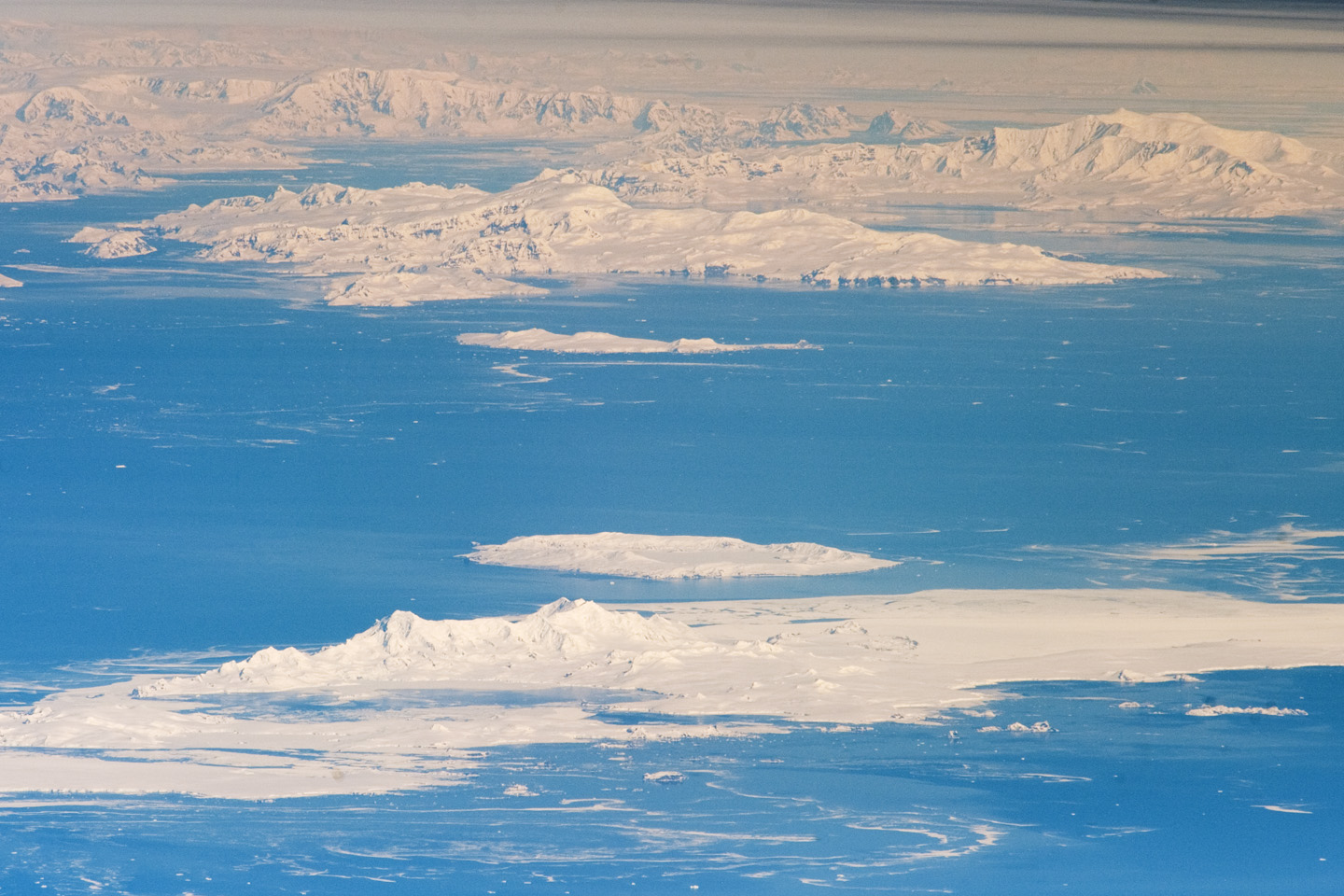
Quick answer: Polar and extreme-environment research communities are specialised systems of people, institutions, transport, scientific observation and essential services that work under challenging conditions. Antarctic research stations are not the same as the longstanding towns and Indigenous communities of the Arctic. In both cases, responsible explanations must begin with actual people, geography, safety, law, ecology and evidence—not with an exciting image of humans conquering ice.
A civilisation’s polar capability is measured by reliable relationships between human knowledge, ecological restraint, transport, power, healthcare, communication and lawful institutions. A station with elegant architecture can fail as a system when a single maintenance service stops; a northern community can thrive through social practices that cannot be reduced to climate data. The educational task is to recognise these differences and make bounded claims.
Our fictional learning community, Frosthaven, is a classroom model. The characters Wintour and Rainbolt act only as learning guides: one asks about fairness, culture and human dignity; the other changes a hidden assumption. They do not represent the British Antarctic Survey, the Arctic Council or any real research station. The Types of a Civilisation foundation explains why civilisations are overlapping patterns rather than a ranking of people’s worth.
A short reading path for five kinds of learner
- Parents: read the quick answer, the Arctic-versus-Antarctic distinction, Missions 01, 09 and 11.
- Primary students: use simple classification cards, source captions and paper-based maps.
- Secondary students: calculate ratios with named denominators and question the evidence behind graphs.
- Tutors: use sixteen differentiated missions, the eight-week programme and worked-model rubric.
- Researchers: begin with the originating institutional source files and preserve jurisdiction and measurement limits.
The six conditions that make a polar research community capable
- Specific geographical reality: latitude, surface, season and site cannot be replaced by one generic ‘polar’ image.
- Purpose and people: research stations, Arctic towns and Indigenous communities have different histories and authorities.
- Reliable services: safe shelter, nutrition, heat, water, sanitation, communication and medical support require professional operators.
- Knowledge and scientific method: validated observations and reproducible records have value beyond spectacle.
- Legal and ecological care: the Antarctic Treaty System and Arctic governance contexts must not be collapsed.
- Succession and correction: future workers and students must be able to identify uncertain claims and update old decisions.
These are teaching categories, not a design standard. A child should never be directed to enter extreme cold, approach wildlife, improvise an emergency shelter, perform heating or electrical work, or test water safety. The models below are purely paper exercises supported by public, non-operational information.
Six institutional case files: actual research and law
- British Antarctic Survey: Halley VI Research Station
- British Antarctic Survey: Research stations
- Antarctic Treaty Secretariat: The Antarctic Treaty
- Antarctic Treaty Secretariat: Protocol on Environmental Protection
- Arctic Council: Permanent Participants
- UNESCO: International Decades
Case file 1: British Antarctic Survey: Halley VI Research Station
Halley VI is a relocatable scientific facility on the Brunt Ice Shelf. Its organisation and data collection show the role of skilled staff, instruments, logistics and seasonal operating conditions; the article does not claim this facility represents all of Antarctica.
Read the originating institution’s published information. A child should inspect its publisher, date, jurisdiction and purpose before treating it as evidence. A published source can establish what the institution says; it cannot prove how our fictional Frosthaven station is performing.
Tutor case method: ask the learner to write one claim supported by this source, one tempting but unsupported extension, and one question requiring a more specific observation. Where two sources address different regions or institutions, their facts should not be combined without explaining why the comparison is meaningful.
Case file 2: British Antarctic Survey: Research stations
Research sites such as Rothera and Halley have different operational and scientific purposes. A station is not simply a building in snow; its laboratories, transport and field research are embedded in professional systems.
Read the originating institution’s published information. A child should inspect its publisher, date, jurisdiction and purpose before treating it as evidence. A published source can establish what the institution says; it cannot prove how our fictional Frosthaven station is performing.
Tutor case method: ask the learner to write one claim supported by this source, one tempting but unsupported extension, and one question requiring a more specific observation. Where two sources address different regions or institutions, their facts should not be combined without explaining why the comparison is meaningful.
Case file 3: Antarctic Treaty Secretariat: The Antarctic Treaty
The Treaty governs peaceful purposes, freedom of scientific investigation and exchange of observations, with special provisions on territorial claims. No pupil should infer ownership rights from a flag on a diagram.
Read the originating institution’s published information. A child should inspect its publisher, date, jurisdiction and purpose before treating it as evidence. A published source can establish what the institution says; it cannot prove how our fictional Frosthaven station is performing.
Tutor case method: ask the learner to write one claim supported by this source, one tempting but unsupported extension, and one question requiring a more specific observation. Where two sources address different regions or institutions, their facts should not be combined without explaining why the comparison is meaningful.
Case file 4: Antarctic Treaty Secretariat: Protocol on Environmental Protection
The 1991 Protocol, effective from 1998, establishes environmental principles and prohibits mineral resource activities in Antarctica other than scientific research. It does not simply expire in 2048.
Read the originating institution’s published information. A child should inspect its publisher, date, jurisdiction and purpose before treating it as evidence. A published source can establish what the institution says; it cannot prove how our fictional Frosthaven station is performing.
Tutor case method: ask the learner to write one claim supported by this source, one tempting but unsupported extension, and one question requiring a more specific observation. Where two sources address different regions or institutions, their facts should not be combined without explaining why the comparison is meaningful.
Case file 5: Arctic Council: Permanent Participants
Arctic Indigenous peoples have living cultures, local knowledge and political representation. They should never be treated as a fictional laboratory workforce or erased in an account of polar civilisation.
Read the originating institution’s published information. A child should inspect its publisher, date, jurisdiction and purpose before treating it as evidence. A published source can establish what the institution says; it cannot prove how our fictional Frosthaven station is performing.
Tutor case method: ask the learner to write one claim supported by this source, one tempting but unsupported extension, and one question requiring a more specific observation. Where two sources address different regions or institutions, their facts should not be combined without explaining why the comparison is meaningful.
Case file 6: UNESCO: International Decades
UNESCO lists international initiatives on ocean and cryospheric science, providing a starting point for understanding why changing polar conditions are studied across borders.
Read the originating institution’s published information. A child should inspect its publisher, date, jurisdiction and purpose before treating it as evidence. A published source can establish what the institution says; it cannot prove how our fictional Frosthaven station is performing.
Tutor case method: ask the learner to write one claim supported by this source, one tempting but unsupported extension, and one question requiring a more specific observation. Where two sources address different regions or institutions, their facts should not be combined without explaining why the comparison is meaningful.
The sixteen Frosthaven missions
- 01. Separate Antarctic research stations from Arctic societies
- 02. Read latitude, seasons and polar daylight carefully
- 03. Understand sea ice, land ice, glaciers and ice shelves
- 04. Protect atmospheric and ozone observations
- 05. Plan professional logistics, food and safe water
- 06. Understand heat, shelter and energy as linked systems
- 07. Make field science and remote observation trustworthy
- 08. Differentiate research risk from thrilling adventure imagery
- 09. Respect environmental impact assessment and wildlife
- 10. Understand protected science and peaceful cooperation
- 11. Distinguish Indigenous northern knowledge from research data
- 12. Teach winter darkness, wellbeing and work without stereotypes
- 13. Interpret polar change through reliable time series
- 14. Maintain stations without confusing them with permanent towns
- 15. Study international collaboration and public value
- 16. Leave successor-ready polar knowledge and humility
Mission 01 — Separate Antarctic research stations from Arctic societies
The first question: Frosthaven’s class receives pictures of a temporary research camp, a coastal northern town and a laboratory on an Antarctic ice shelf. They must identify what each source actually documents before assigning social labels.
What this system actually is
An Antarctic research facility is a specialised, staffed institution operating within the Antarctic Treaty System, whereas the Arctic includes towns, states and Indigenous communities with diverse legal and cultural histories. Their economies, relationships to land and forms of authority are not interchangeable.
Students begin with an essential question in everyday English, not with a list of technical nouns. A useful explanation names the people, physical conditions and institutions that make the answer possible. Ask the learner whether the same description could apply to a different location; if it could without modification, it may be too generic.
In Frosthaven, separate antarctic research stations from arctic societies is investigated through a specific story: Frosthaven’s class receives pictures of a temporary research camp, a coastal northern town and a laboratory on an Antarctic ice shelf. They must identify what each source actually documents before assigning social labels. Instead of announcing the correct answer immediately, ask which words describe a demonstrated fact, which describe a hypothetical condition, and which express a judgement that others might reasonably dispute.
What keeps the service or institution functioning
Draw the service as a set of inputs, responsibilities and observations. Label transport, power, staffing, data, law and environmental constraints where relevant. The arrow between two boxes should have an interpretation: what moves, who checks it, and how a mistake is detected. Do not mistake a neat diagram for verified safety.
The central dependency is: An Antarctic research facility is a specialised, staffed institution operating within the Antarctic Treaty System, whereas the Arctic includes towns, states and Indigenous communities with diverse legal and cultural histories. Their economies, relationships to land and forms of authority are not interchangeable. Pupils must connect this to a person responsible for maintaining reliable information, the physical condition that could change, and the evidence required to know whether a service is usable. Treat fictional drawings as diagrams of questions, not as operational schematics.
The evidence and source test
The evidence layer separates three things: real institutional sources, a stated physical concept and a classroom hypothesis. An Antarctic Treaty clause is evidence about a legal framework; a research-station webpage is evidence about an institution’s operations at the time described; a made-up supply count teaches arithmetic. Confusing those levels produces impressive but untrustworthy writing.
A reliable science guide names what the figure cannot show. An atmospheric average does not establish a person’s exposure; one day’s photograph does not establish a long-term climate trend; and a station’s website cannot authorise a private expedition. Invite the child to write a careful caption and attach the correct source.
The safest research route is to start with an identified originating institution and a limited question. For separate antarctic research stations from arctic societies, write down the date and jurisdiction when relevant, and mark what cannot be inferred from a global statistic or a photograph. The learner who admits ‘this has not been established’ is doing accurate science rather than failing the activity.
Mathematics with named assumptions
Twelve picture cards contain four research stations, five residential communities and three unidentified sites. That makes 4/12 a research-station card share, not a statistic about either polar region.
Have the student record the unit, period and starting value before doing arithmetic. A station’s daily demand is not an inventory quantity; days of cover require a demand rate; a count of records says nothing about their measurement accuracy. These distinctions are often where secondary mathematics begins to matter in real systems reasoning.
Now change exactly one number in the given example while preserving the same units. The student must show how the answer changes, and then ask whether the new answer would change a real decision. If it would, why? If it would not, which more important variable remains unmeasured? This second step is a short sensitivity test and should be written down.
The interruption and a corrected model
A dramatic film calls every structure a colony. The class changes the caption and asks whether the image shows seasonal scientific staffing, long-established residence or an unknown case.
The characters’ contributions are different. Wintour asks whose rights, experiences or knowledge the first solution overlooked. Rainbolt changes one physical or informational assumption. The best result is often a narrower claim and a list of professional checks, not a more dramatic fix.
Use a dated evidence log with the original claim, source or fictional assumption, the challenge, the resulting calculation and the revised wording. This makes learning reproducible. When future pupils understand why a conclusion changed, a lesson has become transferable knowledge.
A revision is not evidence of incompetence. It is the proof that the group can distinguish a claim from its conditions. Compare the original diagram with the changed one and circle the first dependency that fails; then list further consequences, without inventing a physical hazard calculation or a safety instruction.
Who might be overlooked?
Rights and living culture are central in Arctic communities; Antarctic environmental and treaty responsibilities are not a substitute for Indigenous representation in the north.
Ask for a deliberate alternative: a learner gives the strongest plausible argument against the first proposal. The purpose is not verbal competition. It helps reveal whether a decision serves a particular operator, child, researcher, worker or community member at someone else’s expense.
Place the imagined decision in its historical, legal and ecological context. An institution may operate in Antarctica subject to one arrangement, while an inhabited Arctic region has very different peoples and governmental structures. Avoid transplanting one area’s legal language into another merely because the photos look snowy.
Fairness is not a decorative extra. Research scientists, logistics workers, distant families, communities, Indigenous knowledge holders and natural ecosystems can all be affected in different ways. Ask who could legitimately challenge the planned activity and who could correct the public explanation if a new observation appears.
Safe activities and learning transfer
Use paper captions with place, source, date, what is visible and what cannot be concluded.
Children should not simulate actual emergency work, environmental sample collection, polar travel or engineering maintenance. Paper maps, counters, school geometry and reading official material are enough to show causes and constraints. Where physical safety or legal action would matter, the student identifies the qualified organisation that should be consulted.
Test for transfer after each lesson. Could the learner explain the issue to a parent in two accurate sentences? Could a peer reproduce the calculation? Could a new reader recognise what was not proved? A positive answer to those questions is more useful than memorising all sixteen mission titles.
Four worked thinking checks
Claim boundary — Mission 1
Rewrite a bold headline as a testable and appropriately limited claim. State the location, time and type of evidence that would have to exist before a real report could make it.
Apply the thinking check to this specific case: Frosthaven’s class receives pictures of a temporary research camp, a coastal northern town and a laboratory on an Antarctic ice shelf. They must identify what each source actually documents before assigning social labels. A suitable pupil answer makes reference to the central physical or institutional mechanism: An Antarctic research facility is a specialised, staffed institution operating within the Antarctic Treaty System, whereas the Arctic includes towns, states and Indigenous communities with diverse legal and cultural histories. Their economies, relationships to land and forms of authority are not interchangeable. Do not treat the original drawing, scenario quantities or pupil role-play as a field observation.
When assessing, the tutor should expect the student to revisit the challenge: A dramatic film calls every structure a colony. The class changes the caption and asks whether the image shows seasonal scientific staffing, long-established residence or an unknown case. The stronger answer includes a dated or clearly fictional evidence label, an uncertainty, and a reason that someone else could verify. It should also recognise this affected-person concern: Rights and living culture are central in Arctic communities; Antarctic environmental and treaty responsibilities are not a substitute for Indigenous representation in the north.
Maths audit — Mission 1
Show every arithmetic step, identify the denominator and units, and explain why the example cannot be converted into a real operational or environmental estimate.
Apply the thinking check to this specific case: Frosthaven’s class receives pictures of a temporary research camp, a coastal northern town and a laboratory on an Antarctic ice shelf. They must identify what each source actually documents before assigning social labels. A suitable pupil answer makes reference to the central physical or institutional mechanism: An Antarctic research facility is a specialised, staffed institution operating within the Antarctic Treaty System, whereas the Arctic includes towns, states and Indigenous communities with diverse legal and cultural histories. Their economies, relationships to land and forms of authority are not interchangeable. Do not treat the original drawing, scenario quantities or pupil role-play as a field observation.
When assessing, the tutor should expect the student to revisit the challenge: A dramatic film calls every structure a colony. The class changes the caption and asks whether the image shows seasonal scientific staffing, long-established residence or an unknown case. The stronger answer includes a dated or clearly fictional evidence label, an uncertainty, and a reason that someone else could verify. It should also recognise this affected-person concern: Rights and living culture are central in Arctic communities; Antarctic environmental and treaty responsibilities are not a substitute for Indigenous representation in the north.
Fairness hearing — Mission 1
Give two people with distinct legitimate interests the strongest explanation of their concern. Ask whether the procedure allows disagreement and a reasoned response.
Apply the thinking check to this specific case: Frosthaven’s class receives pictures of a temporary research camp, a coastal northern town and a laboratory on an Antarctic ice shelf. They must identify what each source actually documents before assigning social labels. A suitable pupil answer makes reference to the central physical or institutional mechanism: An Antarctic research facility is a specialised, staffed institution operating within the Antarctic Treaty System, whereas the Arctic includes towns, states and Indigenous communities with diverse legal and cultural histories. Their economies, relationships to land and forms of authority are not interchangeable. Do not treat the original drawing, scenario quantities or pupil role-play as a field observation.
When assessing, the tutor should expect the student to revisit the challenge: A dramatic film calls every structure a colony. The class changes the caption and asks whether the image shows seasonal scientific staffing, long-established residence or an unknown case. The stronger answer includes a dated or clearly fictional evidence label, an uncertainty, and a reason that someone else could verify. It should also recognise this affected-person concern: Rights and living culture are central in Arctic communities; Antarctic environmental and treaty responsibilities are not a substitute for Indigenous representation in the north.
Successor record — Mission 1
Imagine a new science student arrives after the original team has left. State which source files, maintenance responsibilities and known uncertainties they would need to avoid repeating a mistake.
Apply the thinking check to this specific case: Frosthaven’s class receives pictures of a temporary research camp, a coastal northern town and a laboratory on an Antarctic ice shelf. They must identify what each source actually documents before assigning social labels. A suitable pupil answer makes reference to the central physical or institutional mechanism: An Antarctic research facility is a specialised, staffed institution operating within the Antarctic Treaty System, whereas the Arctic includes towns, states and Indigenous communities with diverse legal and cultural histories. Their economies, relationships to land and forms of authority are not interchangeable. Do not treat the original drawing, scenario quantities or pupil role-play as a field observation.
When assessing, the tutor should expect the student to revisit the challenge: A dramatic film calls every structure a colony. The class changes the caption and asks whether the image shows seasonal scientific staffing, long-established residence or an unknown case. The stronger answer includes a dated or clearly fictional evidence label, an uncertainty, and a reason that someone else could verify. It should also recognise this affected-person concern: Rights and living culture are central in Arctic communities; Antarctic environmental and treaty responsibilities are not a substitute for Indigenous representation in the north.
Carry-forward: Separate Antarctic research stations from Arctic societies is now a system the learner can describe, question and hand to another class with appropriate uncertainty, rather than a vocabulary item to memorise.
Mission 02 — Read latitude, seasons and polar daylight carefully
The first question: Students draw Earth tilted relative to an imagined incoming ray of sunlight and place a polar research-station symbol at a stated latitude.
What this system actually is
High latitudes are affected by solar geometry, seasons and, near the poles, extended daylight or darkness. Exact local conditions vary by latitude and time of year; a general ‘six months of night’ slogan is not a usable local forecast.
Students begin with an essential question in everyday English, not with a list of technical nouns. A useful explanation names the people, physical conditions and institutions that make the answer possible. Ask the learner whether the same description could apply to a different location; if it could without modification, it may be too generic.
In Frosthaven, read latitude, seasons and polar daylight carefully is investigated through a specific story: Students draw Earth tilted relative to an imagined incoming ray of sunlight and place a polar research-station symbol at a stated latitude. Instead of announcing the correct answer immediately, ask which words describe a demonstrated fact, which describe a hypothetical condition, and which express a judgement that others might reasonably dispute.
What keeps the service or institution functioning
Draw the service as a set of inputs, responsibilities and observations. Label transport, power, staffing, data, law and environmental constraints where relevant. The arrow between two boxes should have an interpretation: what moves, who checks it, and how a mistake is detected. Do not mistake a neat diagram for verified safety.
The central dependency is: High latitudes are affected by solar geometry, seasons and, near the poles, extended daylight or darkness. Exact local conditions vary by latitude and time of year; a general ‘six months of night’ slogan is not a usable local forecast. Pupils must connect this to a person responsible for maintaining reliable information, the physical condition that could change, and the evidence required to know whether a service is usable. Treat fictional drawings as diagrams of questions, not as operational schematics.
The evidence and source test
The evidence layer separates three things: real institutional sources, a stated physical concept and a classroom hypothesis. An Antarctic Treaty clause is evidence about a legal framework; a research-station webpage is evidence about an institution’s operations at the time described; a made-up supply count teaches arithmetic. Confusing those levels produces impressive but untrustworthy writing.
A reliable science guide names what the figure cannot show. An atmospheric average does not establish a person’s exposure; one day’s photograph does not establish a long-term climate trend; and a station’s website cannot authorise a private expedition. Invite the child to write a careful caption and attach the correct source.
The safest research route is to start with an identified originating institution and a limited question. For read latitude, seasons and polar daylight carefully, write down the date and jurisdiction when relevant, and mark what cannot be inferred from a global statistic or a photograph. The learner who admits ‘this has not been established’ is doing accurate science rather than failing the activity.
Mathematics with named assumptions
A fictional survey logs 6 hours of usable outdoor observation during 24 hours; 25% of the day in that model is available. It is not a measurement of actual Antarctic daylight.
Have the student record the unit, period and starting value before doing arithmetic. A station’s daily demand is not an inventory quantity; days of cover require a demand rate; a count of records says nothing about their measurement accuracy. These distinctions are often where secondary mathematics begins to matter in real systems reasoning.
Now change exactly one number in the given example while preserving the same units. The student must show how the answer changes, and then ask whether the new answer would change a real decision. If it would, why? If it would not, which more important variable remains unmeasured? This second step is a short sensitivity test and should be written down.
The interruption and a corrected model
Rainbolt changes the station latitude and month. Students must obtain current local astronomical information before claiming a particular sunrise time.
The characters’ contributions are different. Wintour asks whose rights, experiences or knowledge the first solution overlooked. Rainbolt changes one physical or informational assumption. The best result is often a narrower claim and a list of professional checks, not a more dramatic fix.
Use a dated evidence log with the original claim, source or fictional assumption, the challenge, the resulting calculation and the revised wording. This makes learning reproducible. When future pupils understand why a conclusion changed, a lesson has become transferable knowledge.
A revision is not evidence of incompetence. It is the proof that the group can distinguish a claim from its conditions. Compare the original diagram with the changed one and circle the first dependency that fails; then list further consequences, without inventing a physical hazard calculation or a safety instruction.
Who might be overlooked?
Wintour asks how work and wellbeing adapt to changing light, who sets safe shifts and how people communicate with families.
Ask for a deliberate alternative: a learner gives the strongest plausible argument against the first proposal. The purpose is not verbal competition. It helps reveal whether a decision serves a particular operator, child, researcher, worker or community member at someone else’s expense.
Place the imagined decision in its historical, legal and ecological context. An institution may operate in Antarctica subject to one arrangement, while an inhabited Arctic region has very different peoples and governmental structures. Avoid transplanting one area’s legal language into another merely because the photos look snowy.
Fairness is not a decorative extra. Research scientists, logistics workers, distant families, communities, Indigenous knowledge holders and natural ecosystems can all be affected in different ways. Ask who could legitimately challenge the planned activity and who could correct the public explanation if a new observation appears.
Safe activities and learning transfer
Use a printed globe and a school diagram; do not plan real polar travel from simplified figures.
Children should not simulate actual emergency work, environmental sample collection, polar travel or engineering maintenance. Paper maps, counters, school geometry and reading official material are enough to show causes and constraints. Where physical safety or legal action would matter, the student identifies the qualified organisation that should be consulted.
Test for transfer after each lesson. Could the learner explain the issue to a parent in two accurate sentences? Could a peer reproduce the calculation? Could a new reader recognise what was not proved? A positive answer to those questions is more useful than memorising all sixteen mission titles.
Four worked thinking checks
Claim boundary — Mission 2
Rewrite a bold headline as a testable and appropriately limited claim. State the location, time and type of evidence that would have to exist before a real report could make it.
Apply the thinking check to this specific case: Students draw Earth tilted relative to an imagined incoming ray of sunlight and place a polar research-station symbol at a stated latitude. A suitable pupil answer makes reference to the central physical or institutional mechanism: High latitudes are affected by solar geometry, seasons and, near the poles, extended daylight or darkness. Exact local conditions vary by latitude and time of year; a general ‘six months of night’ slogan is not a usable local forecast. Do not treat the original drawing, scenario quantities or pupil role-play as a field observation.
When assessing, the tutor should expect the student to revisit the challenge: Rainbolt changes the station latitude and month. Students must obtain current local astronomical information before claiming a particular sunrise time. The stronger answer includes a dated or clearly fictional evidence label, an uncertainty, and a reason that someone else could verify. It should also recognise this affected-person concern: Wintour asks how work and wellbeing adapt to changing light, who sets safe shifts and how people communicate with families.
Maths audit — Mission 2
Show every arithmetic step, identify the denominator and units, and explain why the example cannot be converted into a real operational or environmental estimate.
Apply the thinking check to this specific case: Students draw Earth tilted relative to an imagined incoming ray of sunlight and place a polar research-station symbol at a stated latitude. A suitable pupil answer makes reference to the central physical or institutional mechanism: High latitudes are affected by solar geometry, seasons and, near the poles, extended daylight or darkness. Exact local conditions vary by latitude and time of year; a general ‘six months of night’ slogan is not a usable local forecast. Do not treat the original drawing, scenario quantities or pupil role-play as a field observation.
When assessing, the tutor should expect the student to revisit the challenge: Rainbolt changes the station latitude and month. Students must obtain current local astronomical information before claiming a particular sunrise time. The stronger answer includes a dated or clearly fictional evidence label, an uncertainty, and a reason that someone else could verify. It should also recognise this affected-person concern: Wintour asks how work and wellbeing adapt to changing light, who sets safe shifts and how people communicate with families.
Fairness hearing — Mission 2
Give two people with distinct legitimate interests the strongest explanation of their concern. Ask whether the procedure allows disagreement and a reasoned response.
Apply the thinking check to this specific case: Students draw Earth tilted relative to an imagined incoming ray of sunlight and place a polar research-station symbol at a stated latitude. A suitable pupil answer makes reference to the central physical or institutional mechanism: High latitudes are affected by solar geometry, seasons and, near the poles, extended daylight or darkness. Exact local conditions vary by latitude and time of year; a general ‘six months of night’ slogan is not a usable local forecast. Do not treat the original drawing, scenario quantities or pupil role-play as a field observation.
When assessing, the tutor should expect the student to revisit the challenge: Rainbolt changes the station latitude and month. Students must obtain current local astronomical information before claiming a particular sunrise time. The stronger answer includes a dated or clearly fictional evidence label, an uncertainty, and a reason that someone else could verify. It should also recognise this affected-person concern: Wintour asks how work and wellbeing adapt to changing light, who sets safe shifts and how people communicate with families.
Successor record — Mission 2
Imagine a new science student arrives after the original team has left. State which source files, maintenance responsibilities and known uncertainties they would need to avoid repeating a mistake.
Apply the thinking check to this specific case: Students draw Earth tilted relative to an imagined incoming ray of sunlight and place a polar research-station symbol at a stated latitude. A suitable pupil answer makes reference to the central physical or institutional mechanism: High latitudes are affected by solar geometry, seasons and, near the poles, extended daylight or darkness. Exact local conditions vary by latitude and time of year; a general ‘six months of night’ slogan is not a usable local forecast. Do not treat the original drawing, scenario quantities or pupil role-play as a field observation.
When assessing, the tutor should expect the student to revisit the challenge: Rainbolt changes the station latitude and month. Students must obtain current local astronomical information before claiming a particular sunrise time. The stronger answer includes a dated or clearly fictional evidence label, an uncertainty, and a reason that someone else could verify. It should also recognise this affected-person concern: Wintour asks how work and wellbeing adapt to changing light, who sets safe shifts and how people communicate with families.
Carry-forward: Read latitude, seasons and polar daylight carefully is now a system the learner can describe, question and hand to another class with appropriate uncertainty, rather than a vocabulary item to memorise.
Mission 03 — Understand sea ice, land ice, glaciers and ice shelves
The first question: Frosthaven compares three carefully labelled drawings: floating seasonal sea ice, a mountain glacier and an ice shelf attached to a larger ice sheet.
What this system actually is
Sea ice forms from seawater, glaciers move over land, and floating ice shelves extend from the continental ice sheet. Different kinds of ice affect shipping, ecology and sea-level interpretation in different ways.
Students begin with an essential question in everyday English, not with a list of technical nouns. A useful explanation names the people, physical conditions and institutions that make the answer possible. Ask the learner whether the same description could apply to a different location; if it could without modification, it may be too generic.
In Frosthaven, understand sea ice, land ice, glaciers and ice shelves is investigated through a specific story: Frosthaven compares three carefully labelled drawings: floating seasonal sea ice, a mountain glacier and an ice shelf attached to a larger ice sheet. Instead of announcing the correct answer immediately, ask which words describe a demonstrated fact, which describe a hypothetical condition, and which express a judgement that others might reasonably dispute.
What keeps the service or institution functioning
Draw the service as a set of inputs, responsibilities and observations. Label transport, power, staffing, data, law and environmental constraints where relevant. The arrow between two boxes should have an interpretation: what moves, who checks it, and how a mistake is detected. Do not mistake a neat diagram for verified safety.
The central dependency is: Sea ice forms from seawater, glaciers move over land, and floating ice shelves extend from the continental ice sheet. Different kinds of ice affect shipping, ecology and sea-level interpretation in different ways. Pupils must connect this to a person responsible for maintaining reliable information, the physical condition that could change, and the evidence required to know whether a service is usable. Treat fictional drawings as diagrams of questions, not as operational schematics.
The evidence and source test
The evidence layer separates three things: real institutional sources, a stated physical concept and a classroom hypothesis. An Antarctic Treaty clause is evidence about a legal framework; a research-station webpage is evidence about an institution’s operations at the time described; a made-up supply count teaches arithmetic. Confusing those levels produces impressive but untrustworthy writing.
A reliable science guide names what the figure cannot show. An atmospheric average does not establish a person’s exposure; one day’s photograph does not establish a long-term climate trend; and a station’s website cannot authorise a private expedition. Invite the child to write a careful caption and attach the correct source.
The safest research route is to start with an identified originating institution and a limited question. For understand sea ice, land ice, glaciers and ice shelves, write down the date and jurisdiction when relevant, and mark what cannot be inferred from a global statistic or a photograph. The learner who admits ‘this has not been established’ is doing accurate science rather than failing the activity.
Mathematics with named assumptions
A simple set of ten illustrated samples contains four sea-ice cards and six land-ice cards. The 40% share classifies illustrations, not a measured polar ice distribution.
Have the student record the unit, period and starting value before doing arithmetic. A station’s daily demand is not an inventory quantity; days of cover require a demand rate; a count of records says nothing about their measurement accuracy. These distinctions are often where secondary mathematics begins to matter in real systems reasoning.
Now change exactly one number in the given example while preserving the same units. The student must show how the answer changes, and then ask whether the new answer would change a real decision. If it would, why? If it would not, which more important variable remains unmeasured? This second step is a short sensitivity test and should be written down.
The interruption and a corrected model
A student treats floating sea ice and land ice as identical. The group repairs the physical classification before drawing environmental conclusions.
The characters’ contributions are different. Wintour asks whose rights, experiences or knowledge the first solution overlooked. Rainbolt changes one physical or informational assumption. The best result is often a narrower claim and a list of professional checks, not a more dramatic fix.
Use a dated evidence log with the original claim, source or fictional assumption, the challenge, the resulting calculation and the revised wording. This makes learning reproducible. When future pupils understand why a conclusion changed, a lesson has become transferable knowledge.
A revision is not evidence of incompetence. It is the proof that the group can distinguish a claim from its conditions. Compare the original diagram with the changed one and circle the first dependency that fails; then list further consequences, without inventing a physical hazard calculation or a safety instruction.
Who might be overlooked?
Ask which people and ecosystems face risks, who has authority to observe a site and why a picture cannot establish an entire climate trend.
Ask for a deliberate alternative: a learner gives the strongest plausible argument against the first proposal. The purpose is not verbal competition. It helps reveal whether a decision serves a particular operator, child, researcher, worker or community member at someone else’s expense.
Place the imagined decision in its historical, legal and ecological context. An institution may operate in Antarctica subject to one arrangement, while an inhabited Arctic region has very different peoples and governmental structures. Avoid transplanting one area’s legal language into another merely because the photos look snowy.
Fairness is not a decorative extra. Research scientists, logistics workers, distant families, communities, Indigenous knowledge holders and natural ecosystems can all be affected in different ways. Ask who could legitimately challenge the planned activity and who could correct the public explanation if a new observation appears.
Safe activities and learning transfer
Build category cards and check formal definitions through polar research institutions.
Children should not simulate actual emergency work, environmental sample collection, polar travel or engineering maintenance. Paper maps, counters, school geometry and reading official material are enough to show causes and constraints. Where physical safety or legal action would matter, the student identifies the qualified organisation that should be consulted.
Test for transfer after each lesson. Could the learner explain the issue to a parent in two accurate sentences? Could a peer reproduce the calculation? Could a new reader recognise what was not proved? A positive answer to those questions is more useful than memorising all sixteen mission titles.
Four worked thinking checks
Claim boundary — Mission 3
Rewrite a bold headline as a testable and appropriately limited claim. State the location, time and type of evidence that would have to exist before a real report could make it.
Apply the thinking check to this specific case: Frosthaven compares three carefully labelled drawings: floating seasonal sea ice, a mountain glacier and an ice shelf attached to a larger ice sheet. A suitable pupil answer makes reference to the central physical or institutional mechanism: Sea ice forms from seawater, glaciers move over land, and floating ice shelves extend from the continental ice sheet. Different kinds of ice affect shipping, ecology and sea-level interpretation in different ways. Do not treat the original drawing, scenario quantities or pupil role-play as a field observation.
When assessing, the tutor should expect the student to revisit the challenge: A student treats floating sea ice and land ice as identical. The group repairs the physical classification before drawing environmental conclusions. The stronger answer includes a dated or clearly fictional evidence label, an uncertainty, and a reason that someone else could verify. It should also recognise this affected-person concern: Ask which people and ecosystems face risks, who has authority to observe a site and why a picture cannot establish an entire climate trend.
Maths audit — Mission 3
Show every arithmetic step, identify the denominator and units, and explain why the example cannot be converted into a real operational or environmental estimate.
Apply the thinking check to this specific case: Frosthaven compares three carefully labelled drawings: floating seasonal sea ice, a mountain glacier and an ice shelf attached to a larger ice sheet. A suitable pupil answer makes reference to the central physical or institutional mechanism: Sea ice forms from seawater, glaciers move over land, and floating ice shelves extend from the continental ice sheet. Different kinds of ice affect shipping, ecology and sea-level interpretation in different ways. Do not treat the original drawing, scenario quantities or pupil role-play as a field observation.
When assessing, the tutor should expect the student to revisit the challenge: A student treats floating sea ice and land ice as identical. The group repairs the physical classification before drawing environmental conclusions. The stronger answer includes a dated or clearly fictional evidence label, an uncertainty, and a reason that someone else could verify. It should also recognise this affected-person concern: Ask which people and ecosystems face risks, who has authority to observe a site and why a picture cannot establish an entire climate trend.
Fairness hearing — Mission 3
Give two people with distinct legitimate interests the strongest explanation of their concern. Ask whether the procedure allows disagreement and a reasoned response.
Apply the thinking check to this specific case: Frosthaven compares three carefully labelled drawings: floating seasonal sea ice, a mountain glacier and an ice shelf attached to a larger ice sheet. A suitable pupil answer makes reference to the central physical or institutional mechanism: Sea ice forms from seawater, glaciers move over land, and floating ice shelves extend from the continental ice sheet. Different kinds of ice affect shipping, ecology and sea-level interpretation in different ways. Do not treat the original drawing, scenario quantities or pupil role-play as a field observation.
When assessing, the tutor should expect the student to revisit the challenge: A student treats floating sea ice and land ice as identical. The group repairs the physical classification before drawing environmental conclusions. The stronger answer includes a dated or clearly fictional evidence label, an uncertainty, and a reason that someone else could verify. It should also recognise this affected-person concern: Ask which people and ecosystems face risks, who has authority to observe a site and why a picture cannot establish an entire climate trend.
Successor record — Mission 3
Imagine a new science student arrives after the original team has left. State which source files, maintenance responsibilities and known uncertainties they would need to avoid repeating a mistake.
Apply the thinking check to this specific case: Frosthaven compares three carefully labelled drawings: floating seasonal sea ice, a mountain glacier and an ice shelf attached to a larger ice sheet. A suitable pupil answer makes reference to the central physical or institutional mechanism: Sea ice forms from seawater, glaciers move over land, and floating ice shelves extend from the continental ice sheet. Different kinds of ice affect shipping, ecology and sea-level interpretation in different ways. Do not treat the original drawing, scenario quantities or pupil role-play as a field observation.
When assessing, the tutor should expect the student to revisit the challenge: A student treats floating sea ice and land ice as identical. The group repairs the physical classification before drawing environmental conclusions. The stronger answer includes a dated or clearly fictional evidence label, an uncertainty, and a reason that someone else could verify. It should also recognise this affected-person concern: Ask which people and ecosystems face risks, who has authority to observe a site and why a picture cannot establish an entire climate trend.
Carry-forward: Understand sea ice, land ice, glaciers and ice shelves is now a system the learner can describe, question and hand to another class with appropriate uncertainty, rather than a vocabulary item to memorise.
Mission 04 — Protect atmospheric and ozone observations
The first question: Frosthaven’s station keeps a fictional daily observational log beside the documented history of ozone measurements at Halley.
What this system actually is
Long-term atmospheric records depend on instruments, calibration, repeated observations, trained personnel and careful interpretation. Antarctic ozone research became significant through scientific measurement rather than speculation.
Students begin with an essential question in everyday English, not with a list of technical nouns. A useful explanation names the people, physical conditions and institutions that make the answer possible. Ask the learner whether the same description could apply to a different location; if it could without modification, it may be too generic.
In Frosthaven, protect atmospheric and ozone observations is investigated through a specific story: Frosthaven’s station keeps a fictional daily observational log beside the documented history of ozone measurements at Halley. Instead of announcing the correct answer immediately, ask which words describe a demonstrated fact, which describe a hypothetical condition, and which express a judgement that others might reasonably dispute.
What keeps the service or institution functioning
Draw the service as a set of inputs, responsibilities and observations. Label transport, power, staffing, data, law and environmental constraints where relevant. The arrow between two boxes should have an interpretation: what moves, who checks it, and how a mistake is detected. Do not mistake a neat diagram for verified safety.
The central dependency is: Long-term atmospheric records depend on instruments, calibration, repeated observations, trained personnel and careful interpretation. Antarctic ozone research became significant through scientific measurement rather than speculation. Pupils must connect this to a person responsible for maintaining reliable information, the physical condition that could change, and the evidence required to know whether a service is usable. Treat fictional drawings as diagrams of questions, not as operational schematics.
The evidence and source test
The evidence layer separates three things: real institutional sources, a stated physical concept and a classroom hypothesis. An Antarctic Treaty clause is evidence about a legal framework; a research-station webpage is evidence about an institution’s operations at the time described; a made-up supply count teaches arithmetic. Confusing those levels produces impressive but untrustworthy writing.
A reliable science guide names what the figure cannot show. An atmospheric average does not establish a person’s exposure; one day’s photograph does not establish a long-term climate trend; and a station’s website cannot authorise a private expedition. Invite the child to write a careful caption and attach the correct source.
The safest research route is to start with an identified originating institution and a limited question. For protect atmospheric and ozone observations, write down the date and jurisdiction when relevant, and mark what cannot be inferred from a global statistic or a photograph. The learner who admits ‘this has not been established’ is doing accurate science rather than failing the activity.
Mathematics with named assumptions
A seven-day paper record has six labelled values and one missing day: completeness is 6/7, about 85.7%. It does not prove data accuracy.
Have the student record the unit, period and starting value before doing arithmetic. A station’s daily demand is not an inventory quantity; days of cover require a demand rate; a count of records says nothing about their measurement accuracy. These distinctions are often where secondary mathematics begins to matter in real systems reasoning.
Now change exactly one number in the given example while preserving the same units. The student must show how the answer changes, and then ask whether the new answer would change a real decision. If it would, why? If it would not, which more important variable remains unmeasured? This second step is a short sensitivity test and should be written down.
The interruption and a corrected model
Rainbolt replaces one reading with an unverified estimate. The class shows why a missing observation should remain explicitly missing rather than quietly invented.
The characters’ contributions are different. Wintour asks whose rights, experiences or knowledge the first solution overlooked. Rainbolt changes one physical or informational assumption. The best result is often a narrower claim and a list of professional checks, not a more dramatic fix.
Use a dated evidence log with the original claim, source or fictional assumption, the challenge, the resulting calculation and the revised wording. This makes learning reproducible. When future pupils understand why a conclusion changed, a lesson has become transferable knowledge.
A revision is not evidence of incompetence. It is the proof that the group can distinguish a claim from its conditions. Compare the original diagram with the changed one and circle the first dependency that fails; then list further consequences, without inventing a physical hazard calculation or a safety instruction.
Who might be overlooked?
Wintour asks who maintains the instruments and how public explanations avoid unnecessary alarm or unwarranted reassurance.
Ask for a deliberate alternative: a learner gives the strongest plausible argument against the first proposal. The purpose is not verbal competition. It helps reveal whether a decision serves a particular operator, child, researcher, worker or community member at someone else’s expense.
Place the imagined decision in its historical, legal and ecological context. An institution may operate in Antarctica subject to one arrangement, while an inhabited Arctic region has very different peoples and governmental structures. Avoid transplanting one area’s legal language into another merely because the photos look snowy.
Fairness is not a decorative extra. Research scientists, logistics workers, distant families, communities, Indigenous knowledge holders and natural ecosystems can all be affected in different ways. Ask who could legitimately challenge the planned activity and who could correct the public explanation if a new observation appears.
Safe activities and learning transfer
Use temperature or abstract observation records on paper, not chemical measurements or ultraviolet exposure experiments.
Children should not simulate actual emergency work, environmental sample collection, polar travel or engineering maintenance. Paper maps, counters, school geometry and reading official material are enough to show causes and constraints. Where physical safety or legal action would matter, the student identifies the qualified organisation that should be consulted.
Test for transfer after each lesson. Could the learner explain the issue to a parent in two accurate sentences? Could a peer reproduce the calculation? Could a new reader recognise what was not proved? A positive answer to those questions is more useful than memorising all sixteen mission titles.
Four worked thinking checks
Claim boundary — Mission 4
Rewrite a bold headline as a testable and appropriately limited claim. State the location, time and type of evidence that would have to exist before a real report could make it.
Apply the thinking check to this specific case: Frosthaven’s station keeps a fictional daily observational log beside the documented history of ozone measurements at Halley. A suitable pupil answer makes reference to the central physical or institutional mechanism: Long-term atmospheric records depend on instruments, calibration, repeated observations, trained personnel and careful interpretation. Antarctic ozone research became significant through scientific measurement rather than speculation. Do not treat the original drawing, scenario quantities or pupil role-play as a field observation.
When assessing, the tutor should expect the student to revisit the challenge: Rainbolt replaces one reading with an unverified estimate. The class shows why a missing observation should remain explicitly missing rather than quietly invented. The stronger answer includes a dated or clearly fictional evidence label, an uncertainty, and a reason that someone else could verify. It should also recognise this affected-person concern: Wintour asks who maintains the instruments and how public explanations avoid unnecessary alarm or unwarranted reassurance.
Maths audit — Mission 4
Show every arithmetic step, identify the denominator and units, and explain why the example cannot be converted into a real operational or environmental estimate.
Apply the thinking check to this specific case: Frosthaven’s station keeps a fictional daily observational log beside the documented history of ozone measurements at Halley. A suitable pupil answer makes reference to the central physical or institutional mechanism: Long-term atmospheric records depend on instruments, calibration, repeated observations, trained personnel and careful interpretation. Antarctic ozone research became significant through scientific measurement rather than speculation. Do not treat the original drawing, scenario quantities or pupil role-play as a field observation.
When assessing, the tutor should expect the student to revisit the challenge: Rainbolt replaces one reading with an unverified estimate. The class shows why a missing observation should remain explicitly missing rather than quietly invented. The stronger answer includes a dated or clearly fictional evidence label, an uncertainty, and a reason that someone else could verify. It should also recognise this affected-person concern: Wintour asks who maintains the instruments and how public explanations avoid unnecessary alarm or unwarranted reassurance.
Fairness hearing — Mission 4
Give two people with distinct legitimate interests the strongest explanation of their concern. Ask whether the procedure allows disagreement and a reasoned response.
Apply the thinking check to this specific case: Frosthaven’s station keeps a fictional daily observational log beside the documented history of ozone measurements at Halley. A suitable pupil answer makes reference to the central physical or institutional mechanism: Long-term atmospheric records depend on instruments, calibration, repeated observations, trained personnel and careful interpretation. Antarctic ozone research became significant through scientific measurement rather than speculation. Do not treat the original drawing, scenario quantities or pupil role-play as a field observation.
When assessing, the tutor should expect the student to revisit the challenge: Rainbolt replaces one reading with an unverified estimate. The class shows why a missing observation should remain explicitly missing rather than quietly invented. The stronger answer includes a dated or clearly fictional evidence label, an uncertainty, and a reason that someone else could verify. It should also recognise this affected-person concern: Wintour asks who maintains the instruments and how public explanations avoid unnecessary alarm or unwarranted reassurance.
Successor record — Mission 4
Imagine a new science student arrives after the original team has left. State which source files, maintenance responsibilities and known uncertainties they would need to avoid repeating a mistake.
Apply the thinking check to this specific case: Frosthaven’s station keeps a fictional daily observational log beside the documented history of ozone measurements at Halley. A suitable pupil answer makes reference to the central physical or institutional mechanism: Long-term atmospheric records depend on instruments, calibration, repeated observations, trained personnel and careful interpretation. Antarctic ozone research became significant through scientific measurement rather than speculation. Do not treat the original drawing, scenario quantities or pupil role-play as a field observation.
When assessing, the tutor should expect the student to revisit the challenge: Rainbolt replaces one reading with an unverified estimate. The class shows why a missing observation should remain explicitly missing rather than quietly invented. The stronger answer includes a dated or clearly fictional evidence label, an uncertainty, and a reason that someone else could verify. It should also recognise this affected-person concern: Wintour asks who maintains the instruments and how public explanations avoid unnecessary alarm or unwarranted reassurance.
Carry-forward: Protect atmospheric and ozone observations is now a system the learner can describe, question and hand to another class with appropriate uncertainty, rather than a vocabulary item to memorise.
Mission 05 — Plan professional logistics, food and safe water
The first question: The class draws a ship-to-station cargo network including a documented receipt, a safe storage facility and professionally maintained supplies.
What this system actually is
Extreme-environment scientific work depends on transport, storage, authorised drinking-water arrangements, food supplies and emergency plans. A station’s scientific purpose does not make its material dependencies disappear.
Students begin with an essential question in everyday English, not with a list of technical nouns. A useful explanation names the people, physical conditions and institutions that make the answer possible. Ask the learner whether the same description could apply to a different location; if it could without modification, it may be too generic.
In Frosthaven, plan professional logistics, food and safe water is investigated through a specific story: The class draws a ship-to-station cargo network including a documented receipt, a safe storage facility and professionally maintained supplies. Instead of announcing the correct answer immediately, ask which words describe a demonstrated fact, which describe a hypothetical condition, and which express a judgement that others might reasonably dispute.
What keeps the service or institution functioning
Draw the service as a set of inputs, responsibilities and observations. Label transport, power, staffing, data, law and environmental constraints where relevant. The arrow between two boxes should have an interpretation: what moves, who checks it, and how a mistake is detected. Do not mistake a neat diagram for verified safety.
The central dependency is: Extreme-environment scientific work depends on transport, storage, authorised drinking-water arrangements, food supplies and emergency plans. A station’s scientific purpose does not make its material dependencies disappear. Pupils must connect this to a person responsible for maintaining reliable information, the physical condition that could change, and the evidence required to know whether a service is usable. Treat fictional drawings as diagrams of questions, not as operational schematics.
The evidence and source test
The evidence layer separates three things: real institutional sources, a stated physical concept and a classroom hypothesis. An Antarctic Treaty clause is evidence about a legal framework; a research-station webpage is evidence about an institution’s operations at the time described; a made-up supply count teaches arithmetic. Confusing those levels produces impressive but untrustworthy writing.
A reliable science guide names what the figure cannot show. An atmospheric average does not establish a person’s exposure; one day’s photograph does not establish a long-term climate trend; and a station’s website cannot authorise a private expedition. Invite the child to write a careful caption and attach the correct source.
The safest research route is to start with an identified originating institution and a limited question. For plan professional logistics, food and safe water, write down the date and jurisdiction when relevant, and mark what cannot be inferred from a global statistic or a photograph. The learner who admits ‘this has not been established’ is doing accurate science rather than failing the activity.
Mathematics with named assumptions
A teaching station uses 18 paper food units daily and stores 126 units. That equals seven days only at the assumed rate and with no spoilage or access problem.
Have the student record the unit, period and starting value before doing arithmetic. A station’s daily demand is not an inventory quantity; days of cover require a demand rate; a count of records says nothing about their measurement accuracy. These distinctions are often where secondary mathematics begins to matter in real systems reasoning.
Now change exactly one number in the given example while preserving the same units. The student must show how the answer changes, and then ask whether the new answer would change a real decision. If it would, why? If it would not, which more important variable remains unmeasured? This second step is a short sensitivity test and should be written down.
The interruption and a corrected model
A delayed shipment and a spoiled stock item change the number. Rainbolt asks students to record revisions rather than pretend the original inventory remains usable.
The characters’ contributions are different. Wintour asks whose rights, experiences or knowledge the first solution overlooked. Rainbolt changes one physical or informational assumption. The best result is often a narrower claim and a list of professional checks, not a more dramatic fix.
Use a dated evidence log with the original claim, source or fictional assumption, the challenge, the resulting calculation and the revised wording. This makes learning reproducible. When future pupils understand why a conclusion changed, a lesson has become transferable knowledge.
A revision is not evidence of incompetence. It is the proof that the group can distinguish a claim from its conditions. Compare the original diagram with the changed one and circle the first dependency that fails; then list further consequences, without inventing a physical hazard calculation or a safety instruction.
Who might be overlooked?
Wintour checks workers with special dietary needs and equitable access; safety decisions belong to qualified operators.
Ask for a deliberate alternative: a learner gives the strongest plausible argument against the first proposal. The purpose is not verbal competition. It helps reveal whether a decision serves a particular operator, child, researcher, worker or community member at someone else’s expense.
Place the imagined decision in its historical, legal and ecological context. An institution may operate in Antarctica subject to one arrangement, while an inhabited Arctic region has very different peoples and governmental structures. Avoid transplanting one area’s legal language into another merely because the photos look snowy.
Fairness is not a decorative extra. Research scientists, logistics workers, distant families, communities, Indigenous knowledge holders and natural ecosystems can all be affected in different ways. Ask who could legitimately challenge the planned activity and who could correct the public explanation if a new observation appears.
Safe activities and learning transfer
Count paper tokens with expiry and inspection labels; no child handles actual emergency food or water treatment.
Children should not simulate actual emergency work, environmental sample collection, polar travel or engineering maintenance. Paper maps, counters, school geometry and reading official material are enough to show causes and constraints. Where physical safety or legal action would matter, the student identifies the qualified organisation that should be consulted.
Test for transfer after each lesson. Could the learner explain the issue to a parent in two accurate sentences? Could a peer reproduce the calculation? Could a new reader recognise what was not proved? A positive answer to those questions is more useful than memorising all sixteen mission titles.
Four worked thinking checks
Claim boundary — Mission 5
Rewrite a bold headline as a testable and appropriately limited claim. State the location, time and type of evidence that would have to exist before a real report could make it.
Apply the thinking check to this specific case: The class draws a ship-to-station cargo network including a documented receipt, a safe storage facility and professionally maintained supplies. A suitable pupil answer makes reference to the central physical or institutional mechanism: Extreme-environment scientific work depends on transport, storage, authorised drinking-water arrangements, food supplies and emergency plans. A station’s scientific purpose does not make its material dependencies disappear. Do not treat the original drawing, scenario quantities or pupil role-play as a field observation.
When assessing, the tutor should expect the student to revisit the challenge: A delayed shipment and a spoiled stock item change the number. Rainbolt asks students to record revisions rather than pretend the original inventory remains usable. The stronger answer includes a dated or clearly fictional evidence label, an uncertainty, and a reason that someone else could verify. It should also recognise this affected-person concern: Wintour checks workers with special dietary needs and equitable access; safety decisions belong to qualified operators.
Maths audit — Mission 5
Show every arithmetic step, identify the denominator and units, and explain why the example cannot be converted into a real operational or environmental estimate.
Apply the thinking check to this specific case: The class draws a ship-to-station cargo network including a documented receipt, a safe storage facility and professionally maintained supplies. A suitable pupil answer makes reference to the central physical or institutional mechanism: Extreme-environment scientific work depends on transport, storage, authorised drinking-water arrangements, food supplies and emergency plans. A station’s scientific purpose does not make its material dependencies disappear. Do not treat the original drawing, scenario quantities or pupil role-play as a field observation.
When assessing, the tutor should expect the student to revisit the challenge: A delayed shipment and a spoiled stock item change the number. Rainbolt asks students to record revisions rather than pretend the original inventory remains usable. The stronger answer includes a dated or clearly fictional evidence label, an uncertainty, and a reason that someone else could verify. It should also recognise this affected-person concern: Wintour checks workers with special dietary needs and equitable access; safety decisions belong to qualified operators.
Fairness hearing — Mission 5
Give two people with distinct legitimate interests the strongest explanation of their concern. Ask whether the procedure allows disagreement and a reasoned response.
Apply the thinking check to this specific case: The class draws a ship-to-station cargo network including a documented receipt, a safe storage facility and professionally maintained supplies. A suitable pupil answer makes reference to the central physical or institutional mechanism: Extreme-environment scientific work depends on transport, storage, authorised drinking-water arrangements, food supplies and emergency plans. A station’s scientific purpose does not make its material dependencies disappear. Do not treat the original drawing, scenario quantities or pupil role-play as a field observation.
When assessing, the tutor should expect the student to revisit the challenge: A delayed shipment and a spoiled stock item change the number. Rainbolt asks students to record revisions rather than pretend the original inventory remains usable. The stronger answer includes a dated or clearly fictional evidence label, an uncertainty, and a reason that someone else could verify. It should also recognise this affected-person concern: Wintour checks workers with special dietary needs and equitable access; safety decisions belong to qualified operators.
Successor record — Mission 5
Imagine a new science student arrives after the original team has left. State which source files, maintenance responsibilities and known uncertainties they would need to avoid repeating a mistake.
Apply the thinking check to this specific case: The class draws a ship-to-station cargo network including a documented receipt, a safe storage facility and professionally maintained supplies. A suitable pupil answer makes reference to the central physical or institutional mechanism: Extreme-environment scientific work depends on transport, storage, authorised drinking-water arrangements, food supplies and emergency plans. A station’s scientific purpose does not make its material dependencies disappear. Do not treat the original drawing, scenario quantities or pupil role-play as a field observation.
When assessing, the tutor should expect the student to revisit the challenge: A delayed shipment and a spoiled stock item change the number. Rainbolt asks students to record revisions rather than pretend the original inventory remains usable. The stronger answer includes a dated or clearly fictional evidence label, an uncertainty, and a reason that someone else could verify. It should also recognise this affected-person concern: Wintour checks workers with special dietary needs and equitable access; safety decisions belong to qualified operators.
Carry-forward: Plan professional logistics, food and safe water is now a system the learner can describe, question and hand to another class with appropriate uncertainty, rather than a vocabulary item to memorise.
Mission 06 — Understand heat, shelter and energy as linked systems
The first question: Frosthaven’s model station has heating, power, internal air conditions, water and communications as separate service cards.
What this system actually is
Maintaining a habitable scientific station involves insulation, energy sources, ventilation, service reliability and skilled maintenance. A warm-looking building in an illustration is no evidence of safe occupation.
Students begin with an essential question in everyday English, not with a list of technical nouns. A useful explanation names the people, physical conditions and institutions that make the answer possible. Ask the learner whether the same description could apply to a different location; if it could without modification, it may be too generic.
In Frosthaven, understand heat, shelter and energy as linked systems is investigated through a specific story: Frosthaven’s model station has heating, power, internal air conditions, water and communications as separate service cards. Instead of announcing the correct answer immediately, ask which words describe a demonstrated fact, which describe a hypothetical condition, and which express a judgement that others might reasonably dispute.
What keeps the service or institution functioning
Draw the service as a set of inputs, responsibilities and observations. Label transport, power, staffing, data, law and environmental constraints where relevant. The arrow between two boxes should have an interpretation: what moves, who checks it, and how a mistake is detected. Do not mistake a neat diagram for verified safety.
The central dependency is: Maintaining a habitable scientific station involves insulation, energy sources, ventilation, service reliability and skilled maintenance. A warm-looking building in an illustration is no evidence of safe occupation. Pupils must connect this to a person responsible for maintaining reliable information, the physical condition that could change, and the evidence required to know whether a service is usable. Treat fictional drawings as diagrams of questions, not as operational schematics.
The evidence and source test
The evidence layer separates three things: real institutional sources, a stated physical concept and a classroom hypothesis. An Antarctic Treaty clause is evidence about a legal framework; a research-station webpage is evidence about an institution’s operations at the time described; a made-up supply count teaches arithmetic. Confusing those levels produces impressive but untrustworthy writing.
A reliable science guide names what the figure cannot show. An atmospheric average does not establish a person’s exposure; one day’s photograph does not establish a long-term climate trend; and a station’s website cannot authorise a private expedition. Invite the child to write a careful caption and attach the correct source.
The safest research route is to start with an identified originating institution and a limited question. For understand heat, shelter and energy as linked systems, write down the date and jurisdiction when relevant, and mark what cannot be inferred from a global statistic or a photograph. The learner who admits ‘this has not been established’ is doing accurate science rather than failing the activity.
Mathematics with named assumptions
In a fictional simplified building, four loads each draw 0.5 kW over three hours: the modelled energy total is 6 kWh. Real heating design cannot be inferred.
Have the student record the unit, period and starting value before doing arithmetic. A station’s daily demand is not an inventory quantity; days of cover require a demand rate; a count of records says nothing about their measurement accuracy. These distinctions are often where secondary mathematics begins to matter in real systems reasoning.
Now change exactly one number in the given example while preserving the same units. The student must show how the answer changes, and then ask whether the new answer would change a real decision. If it would, why? If it would not, which more important variable remains unmeasured? This second step is a short sensitivity test and should be written down.
The interruption and a corrected model
Rainbolt removes a shared power source. Learners identify which services depend on the same input, without attempting any equipment intervention.
The characters’ contributions are different. Wintour asks whose rights, experiences or knowledge the first solution overlooked. Rainbolt changes one physical or informational assumption. The best result is often a narrower claim and a list of professional checks, not a more dramatic fix.
Use a dated evidence log with the original claim, source or fictional assumption, the challenge, the resulting calculation and the revised wording. This makes learning reproducible. When future pupils understand why a conclusion changed, a lesson has become transferable knowledge.
A revision is not evidence of incompetence. It is the proof that the group can distinguish a claim from its conditions. Compare the original diagram with the changed one and circle the first dependency that fails; then list further consequences, without inventing a physical hazard calculation or a safety instruction.
Who might be overlooked?
Wintour asks about worker fatigue, professional safety reviews and the environmental effects of fuel and resupply choices.
Ask for a deliberate alternative: a learner gives the strongest plausible argument against the first proposal. The purpose is not verbal competition. It helps reveal whether a decision serves a particular operator, child, researcher, worker or community member at someone else’s expense.
Place the imagined decision in its historical, legal and ecological context. An institution may operate in Antarctica subject to one arrangement, while an inhabited Arctic region has very different peoples and governmental structures. Avoid transplanting one area’s legal language into another merely because the photos look snowy.
Fairness is not a decorative extra. Research scientists, logistics workers, distant families, communities, Indigenous knowledge holders and natural ecosystems can all be affected in different ways. Ask who could legitimately challenge the planned activity and who could correct the public explanation if a new observation appears.
Safe activities and learning transfer
Construct a card-based dependency map only; do not simulate cold exposure or work with electrical heaters.
Children should not simulate actual emergency work, environmental sample collection, polar travel or engineering maintenance. Paper maps, counters, school geometry and reading official material are enough to show causes and constraints. Where physical safety or legal action would matter, the student identifies the qualified organisation that should be consulted.
Test for transfer after each lesson. Could the learner explain the issue to a parent in two accurate sentences? Could a peer reproduce the calculation? Could a new reader recognise what was not proved? A positive answer to those questions is more useful than memorising all sixteen mission titles.
Four worked thinking checks
Claim boundary — Mission 6
Rewrite a bold headline as a testable and appropriately limited claim. State the location, time and type of evidence that would have to exist before a real report could make it.
Apply the thinking check to this specific case: Frosthaven’s model station has heating, power, internal air conditions, water and communications as separate service cards. A suitable pupil answer makes reference to the central physical or institutional mechanism: Maintaining a habitable scientific station involves insulation, energy sources, ventilation, service reliability and skilled maintenance. A warm-looking building in an illustration is no evidence of safe occupation. Do not treat the original drawing, scenario quantities or pupil role-play as a field observation.
When assessing, the tutor should expect the student to revisit the challenge: Rainbolt removes a shared power source. Learners identify which services depend on the same input, without attempting any equipment intervention. The stronger answer includes a dated or clearly fictional evidence label, an uncertainty, and a reason that someone else could verify. It should also recognise this affected-person concern: Wintour asks about worker fatigue, professional safety reviews and the environmental effects of fuel and resupply choices.
Maths audit — Mission 6
Show every arithmetic step, identify the denominator and units, and explain why the example cannot be converted into a real operational or environmental estimate.
Apply the thinking check to this specific case: Frosthaven’s model station has heating, power, internal air conditions, water and communications as separate service cards. A suitable pupil answer makes reference to the central physical or institutional mechanism: Maintaining a habitable scientific station involves insulation, energy sources, ventilation, service reliability and skilled maintenance. A warm-looking building in an illustration is no evidence of safe occupation. Do not treat the original drawing, scenario quantities or pupil role-play as a field observation.
When assessing, the tutor should expect the student to revisit the challenge: Rainbolt removes a shared power source. Learners identify which services depend on the same input, without attempting any equipment intervention. The stronger answer includes a dated or clearly fictional evidence label, an uncertainty, and a reason that someone else could verify. It should also recognise this affected-person concern: Wintour asks about worker fatigue, professional safety reviews and the environmental effects of fuel and resupply choices.
Fairness hearing — Mission 6
Give two people with distinct legitimate interests the strongest explanation of their concern. Ask whether the procedure allows disagreement and a reasoned response.
Apply the thinking check to this specific case: Frosthaven’s model station has heating, power, internal air conditions, water and communications as separate service cards. A suitable pupil answer makes reference to the central physical or institutional mechanism: Maintaining a habitable scientific station involves insulation, energy sources, ventilation, service reliability and skilled maintenance. A warm-looking building in an illustration is no evidence of safe occupation. Do not treat the original drawing, scenario quantities or pupil role-play as a field observation.
When assessing, the tutor should expect the student to revisit the challenge: Rainbolt removes a shared power source. Learners identify which services depend on the same input, without attempting any equipment intervention. The stronger answer includes a dated or clearly fictional evidence label, an uncertainty, and a reason that someone else could verify. It should also recognise this affected-person concern: Wintour asks about worker fatigue, professional safety reviews and the environmental effects of fuel and resupply choices.
Successor record — Mission 6
Imagine a new science student arrives after the original team has left. State which source files, maintenance responsibilities and known uncertainties they would need to avoid repeating a mistake.
Apply the thinking check to this specific case: Frosthaven’s model station has heating, power, internal air conditions, water and communications as separate service cards. A suitable pupil answer makes reference to the central physical or institutional mechanism: Maintaining a habitable scientific station involves insulation, energy sources, ventilation, service reliability and skilled maintenance. A warm-looking building in an illustration is no evidence of safe occupation. Do not treat the original drawing, scenario quantities or pupil role-play as a field observation.
When assessing, the tutor should expect the student to revisit the challenge: Rainbolt removes a shared power source. Learners identify which services depend on the same input, without attempting any equipment intervention. The stronger answer includes a dated or clearly fictional evidence label, an uncertainty, and a reason that someone else could verify. It should also recognise this affected-person concern: Wintour asks about worker fatigue, professional safety reviews and the environmental effects of fuel and resupply choices.
Carry-forward: Understand heat, shelter and energy as linked systems is now a system the learner can describe, question and hand to another class with appropriate uncertainty, rather than a vocabulary item to memorise.
Mission 07 — Make field science and remote observation trustworthy
The first question: A fictitious frost sensor submits four measurements. Pupils decide which records are verified and which are merely plausible narratives.
What this system actually is
Remote instruments, satellite links and station logs can reveal changes in atmosphere, sea ice and the wider environment, but observations need calibration, dates, units and uncertainty.
Students begin with an essential question in everyday English, not with a list of technical nouns. A useful explanation names the people, physical conditions and institutions that make the answer possible. Ask the learner whether the same description could apply to a different location; if it could without modification, it may be too generic.
In Frosthaven, make field science and remote observation trustworthy is investigated through a specific story: A fictitious frost sensor submits four measurements. Pupils decide which records are verified and which are merely plausible narratives. Instead of announcing the correct answer immediately, ask which words describe a demonstrated fact, which describe a hypothetical condition, and which express a judgement that others might reasonably dispute.
What keeps the service or institution functioning
Draw the service as a set of inputs, responsibilities and observations. Label transport, power, staffing, data, law and environmental constraints where relevant. The arrow between two boxes should have an interpretation: what moves, who checks it, and how a mistake is detected. Do not mistake a neat diagram for verified safety.
The central dependency is: Remote instruments, satellite links and station logs can reveal changes in atmosphere, sea ice and the wider environment, but observations need calibration, dates, units and uncertainty. Pupils must connect this to a person responsible for maintaining reliable information, the physical condition that could change, and the evidence required to know whether a service is usable. Treat fictional drawings as diagrams of questions, not as operational schematics.
The evidence and source test
The evidence layer separates three things: real institutional sources, a stated physical concept and a classroom hypothesis. An Antarctic Treaty clause is evidence about a legal framework; a research-station webpage is evidence about an institution’s operations at the time described; a made-up supply count teaches arithmetic. Confusing those levels produces impressive but untrustworthy writing.
A reliable science guide names what the figure cannot show. An atmospheric average does not establish a person’s exposure; one day’s photograph does not establish a long-term climate trend; and a station’s website cannot authorise a private expedition. Invite the child to write a careful caption and attach the correct source.
The safest research route is to start with an identified originating institution and a limited question. For make field science and remote observation trustworthy, write down the date and jurisdiction when relevant, and mark what cannot be inferred from a global statistic or a photograph. The learner who admits ‘this has not been established’ is doing accurate science rather than failing the activity.
Mathematics with named assumptions
Three of four observations have proper timestamps: 75% documented; it does not establish whether the sensor is accurate.
Have the student record the unit, period and starting value before doing arithmetic. A station’s daily demand is not an inventory quantity; days of cover require a demand rate; a count of records says nothing about their measurement accuracy. These distinctions are often where secondary mathematics begins to matter in real systems reasoning.
Now change exactly one number in the given example while preserving the same units. The student must show how the answer changes, and then ask whether the new answer would change a real decision. If it would, why? If it would not, which more important variable remains unmeasured? This second step is a short sensitivity test and should be written down.
The interruption and a corrected model
Rainbolt moves a fictional sensor and shows that a new location may change comparability with earlier readings.
The characters’ contributions are different. Wintour asks whose rights, experiences or knowledge the first solution overlooked. Rainbolt changes one physical or informational assumption. The best result is often a narrower claim and a list of professional checks, not a more dramatic fix.
Use a dated evidence log with the original claim, source or fictional assumption, the challenge, the resulting calculation and the revised wording. This makes learning reproducible. When future pupils understand why a conclusion changed, a lesson has become transferable knowledge.
A revision is not evidence of incompetence. It is the proof that the group can distinguish a claim from its conditions. Compare the original diagram with the changed one and circle the first dependency that fails; then list further consequences, without inventing a physical hazard calculation or a safety instruction.
Who might be overlooked?
Wintour asks who owns data, who contributes local knowledge and who is entitled to an honest summary.
Ask for a deliberate alternative: a learner gives the strongest plausible argument against the first proposal. The purpose is not verbal competition. It helps reveal whether a decision serves a particular operator, child, researcher, worker or community member at someone else’s expense.
Place the imagined decision in its historical, legal and ecological context. An institution may operate in Antarctica subject to one arrangement, while an inhabited Arctic region has very different peoples and governmental structures. Avoid transplanting one area’s legal language into another merely because the photos look snowy.
Fairness is not a decorative extra. Research scientists, logistics workers, distant families, communities, Indigenous knowledge holders and natural ecosystems can all be affected in different ways. Ask who could legitimately challenge the planned activity and who could correct the public explanation if a new observation appears.
Safe activities and learning transfer
Practice reading official station descriptions and building a source-quality matrix.
Children should not simulate actual emergency work, environmental sample collection, polar travel or engineering maintenance. Paper maps, counters, school geometry and reading official material are enough to show causes and constraints. Where physical safety or legal action would matter, the student identifies the qualified organisation that should be consulted.
Test for transfer after each lesson. Could the learner explain the issue to a parent in two accurate sentences? Could a peer reproduce the calculation? Could a new reader recognise what was not proved? A positive answer to those questions is more useful than memorising all sixteen mission titles.
Four worked thinking checks
Claim boundary — Mission 7
Rewrite a bold headline as a testable and appropriately limited claim. State the location, time and type of evidence that would have to exist before a real report could make it.
Apply the thinking check to this specific case: A fictitious frost sensor submits four measurements. Pupils decide which records are verified and which are merely plausible narratives. A suitable pupil answer makes reference to the central physical or institutional mechanism: Remote instruments, satellite links and station logs can reveal changes in atmosphere, sea ice and the wider environment, but observations need calibration, dates, units and uncertainty. Do not treat the original drawing, scenario quantities or pupil role-play as a field observation.
When assessing, the tutor should expect the student to revisit the challenge: Rainbolt moves a fictional sensor and shows that a new location may change comparability with earlier readings. The stronger answer includes a dated or clearly fictional evidence label, an uncertainty, and a reason that someone else could verify. It should also recognise this affected-person concern: Wintour asks who owns data, who contributes local knowledge and who is entitled to an honest summary.
Maths audit — Mission 7
Show every arithmetic step, identify the denominator and units, and explain why the example cannot be converted into a real operational or environmental estimate.
Apply the thinking check to this specific case: A fictitious frost sensor submits four measurements. Pupils decide which records are verified and which are merely plausible narratives. A suitable pupil answer makes reference to the central physical or institutional mechanism: Remote instruments, satellite links and station logs can reveal changes in atmosphere, sea ice and the wider environment, but observations need calibration, dates, units and uncertainty. Do not treat the original drawing, scenario quantities or pupil role-play as a field observation.
When assessing, the tutor should expect the student to revisit the challenge: Rainbolt moves a fictional sensor and shows that a new location may change comparability with earlier readings. The stronger answer includes a dated or clearly fictional evidence label, an uncertainty, and a reason that someone else could verify. It should also recognise this affected-person concern: Wintour asks who owns data, who contributes local knowledge and who is entitled to an honest summary.
Fairness hearing — Mission 7
Give two people with distinct legitimate interests the strongest explanation of their concern. Ask whether the procedure allows disagreement and a reasoned response.
Apply the thinking check to this specific case: A fictitious frost sensor submits four measurements. Pupils decide which records are verified and which are merely plausible narratives. A suitable pupil answer makes reference to the central physical or institutional mechanism: Remote instruments, satellite links and station logs can reveal changes in atmosphere, sea ice and the wider environment, but observations need calibration, dates, units and uncertainty. Do not treat the original drawing, scenario quantities or pupil role-play as a field observation.
When assessing, the tutor should expect the student to revisit the challenge: Rainbolt moves a fictional sensor and shows that a new location may change comparability with earlier readings. The stronger answer includes a dated or clearly fictional evidence label, an uncertainty, and a reason that someone else could verify. It should also recognise this affected-person concern: Wintour asks who owns data, who contributes local knowledge and who is entitled to an honest summary.
Successor record — Mission 7
Imagine a new science student arrives after the original team has left. State which source files, maintenance responsibilities and known uncertainties they would need to avoid repeating a mistake.
Apply the thinking check to this specific case: A fictitious frost sensor submits four measurements. Pupils decide which records are verified and which are merely plausible narratives. A suitable pupil answer makes reference to the central physical or institutional mechanism: Remote instruments, satellite links and station logs can reveal changes in atmosphere, sea ice and the wider environment, but observations need calibration, dates, units and uncertainty. Do not treat the original drawing, scenario quantities or pupil role-play as a field observation.
When assessing, the tutor should expect the student to revisit the challenge: Rainbolt moves a fictional sensor and shows that a new location may change comparability with earlier readings. The stronger answer includes a dated or clearly fictional evidence label, an uncertainty, and a reason that someone else could verify. It should also recognise this affected-person concern: Wintour asks who owns data, who contributes local knowledge and who is entitled to an honest summary.
Carry-forward: Make field science and remote observation trustworthy is now a system the learner can describe, question and hand to another class with appropriate uncertainty, rather than a vocabulary item to memorise.
Mission 08 — Differentiate research risk from thrilling adventure imagery
The first question: Frosthaven debates whether the most dramatic photograph is the most informative source about safe station operations.
What this system actually is
A documentary may show spectacular ice cliffs, but scientific fieldwork involves professionally assessed hazards, approvals, communication and environmental duties. School simulations must not normalise casual expedition behaviour.
Students begin with an essential question in everyday English, not with a list of technical nouns. A useful explanation names the people, physical conditions and institutions that make the answer possible. Ask the learner whether the same description could apply to a different location; if it could without modification, it may be too generic.
In Frosthaven, differentiate research risk from thrilling adventure imagery is investigated through a specific story: Frosthaven debates whether the most dramatic photograph is the most informative source about safe station operations. Instead of announcing the correct answer immediately, ask which words describe a demonstrated fact, which describe a hypothetical condition, and which express a judgement that others might reasonably dispute.
What keeps the service or institution functioning
Draw the service as a set of inputs, responsibilities and observations. Label transport, power, staffing, data, law and environmental constraints where relevant. The arrow between two boxes should have an interpretation: what moves, who checks it, and how a mistake is detected. Do not mistake a neat diagram for verified safety.
The central dependency is: A documentary may show spectacular ice cliffs, but scientific fieldwork involves professionally assessed hazards, approvals, communication and environmental duties. School simulations must not normalise casual expedition behaviour. Pupils must connect this to a person responsible for maintaining reliable information, the physical condition that could change, and the evidence required to know whether a service is usable. Treat fictional drawings as diagrams of questions, not as operational schematics.
The evidence and source test
The evidence layer separates three things: real institutional sources, a stated physical concept and a classroom hypothesis. An Antarctic Treaty clause is evidence about a legal framework; a research-station webpage is evidence about an institution’s operations at the time described; a made-up supply count teaches arithmetic. Confusing those levels produces impressive but untrustworthy writing.
A reliable science guide names what the figure cannot show. An atmospheric average does not establish a person’s exposure; one day’s photograph does not establish a long-term climate trend; and a station’s website cannot authorise a private expedition. Invite the child to write a careful caption and attach the correct source.
The safest research route is to start with an identified originating institution and a limited question. For differentiate research risk from thrilling adventure imagery, write down the date and jurisdiction when relevant, and mark what cannot be inferred from a global statistic or a photograph. The learner who admits ‘this has not been established’ is doing accurate science rather than failing the activity.
Mathematics with named assumptions
Eight fictional scenario cards include two with documented permission. The fraction 2/8 reports paperwork coverage, not actual field safety.
Have the student record the unit, period and starting value before doing arithmetic. A station’s daily demand is not an inventory quantity; days of cover require a demand rate; a count of records says nothing about their measurement accuracy. These distinctions are often where secondary mathematics begins to matter in real systems reasoning.
Now change exactly one number in the given example while preserving the same units. The student must show how the answer changes, and then ask whether the new answer would change a real decision. If it would, why? If it would not, which more important variable remains unmeasured? This second step is a short sensitivity test and should be written down.
The interruption and a corrected model
Rainbolt adds a changing ice condition; students stop making operational claims and seek professional information.
The characters’ contributions are different. Wintour asks whose rights, experiences or knowledge the first solution overlooked. Rainbolt changes one physical or informational assumption. The best result is often a narrower claim and a list of professional checks, not a more dramatic fix.
Use a dated evidence log with the original claim, source or fictional assumption, the challenge, the resulting calculation and the revised wording. This makes learning reproducible. When future pupils understand why a conclusion changed, a lesson has become transferable knowledge.
A revision is not evidence of incompetence. It is the proof that the group can distinguish a claim from its conditions. Compare the original diagram with the changed one and circle the first dependency that fails; then list further consequences, without inventing a physical hazard calculation or a safety instruction.
Who might be overlooked?
Wintour asks whether crew wellbeing and environmental care are being sacrificed for a visually compelling story.
Ask for a deliberate alternative: a learner gives the strongest plausible argument against the first proposal. The purpose is not verbal competition. It helps reveal whether a decision serves a particular operator, child, researcher, worker or community member at someone else’s expense.
Place the imagined decision in its historical, legal and ecological context. An institution may operate in Antarctica subject to one arrangement, while an inhabited Arctic region has very different peoples and governmental structures. Avoid transplanting one area’s legal language into another merely because the photos look snowy.
Fairness is not a decorative extra. Research scientists, logistics workers, distant families, communities, Indigenous knowledge holders and natural ecosystems can all be affected in different ways. Ask who could legitimately challenge the planned activity and who could correct the public explanation if a new observation appears.
Safe activities and learning transfer
Write a safe media caption that avoids telling readers to walk on ice or approach wildlife.
Children should not simulate actual emergency work, environmental sample collection, polar travel or engineering maintenance. Paper maps, counters, school geometry and reading official material are enough to show causes and constraints. Where physical safety or legal action would matter, the student identifies the qualified organisation that should be consulted.
Test for transfer after each lesson. Could the learner explain the issue to a parent in two accurate sentences? Could a peer reproduce the calculation? Could a new reader recognise what was not proved? A positive answer to those questions is more useful than memorising all sixteen mission titles.
Four worked thinking checks
Claim boundary — Mission 8
Rewrite a bold headline as a testable and appropriately limited claim. State the location, time and type of evidence that would have to exist before a real report could make it.
Apply the thinking check to this specific case: Frosthaven debates whether the most dramatic photograph is the most informative source about safe station operations. A suitable pupil answer makes reference to the central physical or institutional mechanism: A documentary may show spectacular ice cliffs, but scientific fieldwork involves professionally assessed hazards, approvals, communication and environmental duties. School simulations must not normalise casual expedition behaviour. Do not treat the original drawing, scenario quantities or pupil role-play as a field observation.
When assessing, the tutor should expect the student to revisit the challenge: Rainbolt adds a changing ice condition; students stop making operational claims and seek professional information. The stronger answer includes a dated or clearly fictional evidence label, an uncertainty, and a reason that someone else could verify. It should also recognise this affected-person concern: Wintour asks whether crew wellbeing and environmental care are being sacrificed for a visually compelling story.
Maths audit — Mission 8
Show every arithmetic step, identify the denominator and units, and explain why the example cannot be converted into a real operational or environmental estimate.
Apply the thinking check to this specific case: Frosthaven debates whether the most dramatic photograph is the most informative source about safe station operations. A suitable pupil answer makes reference to the central physical or institutional mechanism: A documentary may show spectacular ice cliffs, but scientific fieldwork involves professionally assessed hazards, approvals, communication and environmental duties. School simulations must not normalise casual expedition behaviour. Do not treat the original drawing, scenario quantities or pupil role-play as a field observation.
When assessing, the tutor should expect the student to revisit the challenge: Rainbolt adds a changing ice condition; students stop making operational claims and seek professional information. The stronger answer includes a dated or clearly fictional evidence label, an uncertainty, and a reason that someone else could verify. It should also recognise this affected-person concern: Wintour asks whether crew wellbeing and environmental care are being sacrificed for a visually compelling story.
Fairness hearing — Mission 8
Give two people with distinct legitimate interests the strongest explanation of their concern. Ask whether the procedure allows disagreement and a reasoned response.
Apply the thinking check to this specific case: Frosthaven debates whether the most dramatic photograph is the most informative source about safe station operations. A suitable pupil answer makes reference to the central physical or institutional mechanism: A documentary may show spectacular ice cliffs, but scientific fieldwork involves professionally assessed hazards, approvals, communication and environmental duties. School simulations must not normalise casual expedition behaviour. Do not treat the original drawing, scenario quantities or pupil role-play as a field observation.
When assessing, the tutor should expect the student to revisit the challenge: Rainbolt adds a changing ice condition; students stop making operational claims and seek professional information. The stronger answer includes a dated or clearly fictional evidence label, an uncertainty, and a reason that someone else could verify. It should also recognise this affected-person concern: Wintour asks whether crew wellbeing and environmental care are being sacrificed for a visually compelling story.
Successor record — Mission 8
Imagine a new science student arrives after the original team has left. State which source files, maintenance responsibilities and known uncertainties they would need to avoid repeating a mistake.
Apply the thinking check to this specific case: Frosthaven debates whether the most dramatic photograph is the most informative source about safe station operations. A suitable pupil answer makes reference to the central physical or institutional mechanism: A documentary may show spectacular ice cliffs, but scientific fieldwork involves professionally assessed hazards, approvals, communication and environmental duties. School simulations must not normalise casual expedition behaviour. Do not treat the original drawing, scenario quantities or pupil role-play as a field observation.
When assessing, the tutor should expect the student to revisit the challenge: Rainbolt adds a changing ice condition; students stop making operational claims and seek professional information. The stronger answer includes a dated or clearly fictional evidence label, an uncertainty, and a reason that someone else could verify. It should also recognise this affected-person concern: Wintour asks whether crew wellbeing and environmental care are being sacrificed for a visually compelling story.
Carry-forward: Differentiate research risk from thrilling adventure imagery is now a system the learner can describe, question and hand to another class with appropriate uncertainty, rather than a vocabulary item to memorise.
Mission 09 — Respect environmental impact assessment and wildlife
The first question: The class checks the Environmental Protocol and marks each of a fictional visit’s possible environmental effects as verified, uncertain or needing expert review.
What this system actually is
Research and logistics can affect ecosystems through disturbance, transport and waste. Environmental decisions need lawful assessment and site-specific ecological expertise, not a class’s guess about harmlessness.
Students begin with an essential question in everyday English, not with a list of technical nouns. A useful explanation names the people, physical conditions and institutions that make the answer possible. Ask the learner whether the same description could apply to a different location; if it could without modification, it may be too generic.
In Frosthaven, respect environmental impact assessment and wildlife is investigated through a specific story: The class checks the Environmental Protocol and marks each of a fictional visit’s possible environmental effects as verified, uncertain or needing expert review. Instead of announcing the correct answer immediately, ask which words describe a demonstrated fact, which describe a hypothetical condition, and which express a judgement that others might reasonably dispute.
What keeps the service or institution functioning
Draw the service as a set of inputs, responsibilities and observations. Label transport, power, staffing, data, law and environmental constraints where relevant. The arrow between two boxes should have an interpretation: what moves, who checks it, and how a mistake is detected. Do not mistake a neat diagram for verified safety.
The central dependency is: Research and logistics can affect ecosystems through disturbance, transport and waste. Environmental decisions need lawful assessment and site-specific ecological expertise, not a class’s guess about harmlessness. Pupils must connect this to a person responsible for maintaining reliable information, the physical condition that could change, and the evidence required to know whether a service is usable. Treat fictional drawings as diagrams of questions, not as operational schematics.
The evidence and source test
The evidence layer separates three things: real institutional sources, a stated physical concept and a classroom hypothesis. An Antarctic Treaty clause is evidence about a legal framework; a research-station webpage is evidence about an institution’s operations at the time described; a made-up supply count teaches arithmetic. Confusing those levels produces impressive but untrustworthy writing.
A reliable science guide names what the figure cannot show. An atmospheric average does not establish a person’s exposure; one day’s photograph does not establish a long-term climate trend; and a station’s website cannot authorise a private expedition. Invite the child to write a careful caption and attach the correct source.
The safest research route is to start with an identified originating institution and a limited question. For respect environmental impact assessment and wildlife, write down the date and jurisdiction when relevant, and mark what cannot be inferred from a global statistic or a photograph. The learner who admits ‘this has not been established’ is doing accurate science rather than failing the activity.
Mathematics with named assumptions
Nine potential impacts appear in a learning checklist and three lack evidence. One-third unresolved does not quantify total environmental harm.
Have the student record the unit, period and starting value before doing arithmetic. A station’s daily demand is not an inventory quantity; days of cover require a demand rate; a count of records says nothing about their measurement accuracy. These distinctions are often where secondary mathematics begins to matter in real systems reasoning.
Now change exactly one number in the given example while preserving the same units. The student must show how the answer changes, and then ask whether the new answer would change a real decision. If it would, why? If it would not, which more important variable remains unmeasured? This second step is a short sensitivity test and should be written down.
The interruption and a corrected model
Rainbolt discovers a proposed route passes near a sensitive habitat. Pupils revise the fictional proposal rather than provide field instructions.
The characters’ contributions are different. Wintour asks whose rights, experiences or knowledge the first solution overlooked. Rainbolt changes one physical or informational assumption. The best result is often a narrower claim and a list of professional checks, not a more dramatic fix.
Use a dated evidence log with the original claim, source or fictional assumption, the challenge, the resulting calculation and the revised wording. This makes learning reproducible. When future pupils understand why a conclusion changed, a lesson has become transferable knowledge.
A revision is not evidence of incompetence. It is the proof that the group can distinguish a claim from its conditions. Compare the original diagram with the changed one and circle the first dependency that fails; then list further consequences, without inventing a physical hazard calculation or a safety instruction.
Who might be overlooked?
Wintour emphasises wildlife, ecological knowledge, scientific work and the legal responsibility to avoid unsupported claims.
Ask for a deliberate alternative: a learner gives the strongest plausible argument against the first proposal. The purpose is not verbal competition. It helps reveal whether a decision serves a particular operator, child, researcher, worker or community member at someone else’s expense.
Place the imagined decision in its historical, legal and ecological context. An institution may operate in Antarctica subject to one arrangement, while an inhabited Arctic region has very different peoples and governmental structures. Avoid transplanting one area’s legal language into another merely because the photos look snowy.
Fairness is not a decorative extra. Research scientists, logistics workers, distant families, communities, Indigenous knowledge holders and natural ecosystems can all be affected in different ways. Ask who could legitimately challenge the planned activity and who could correct the public explanation if a new observation appears.
Safe activities and learning transfer
Use printed maps and environmental case summaries; no wildlife approach, feeding or collecting.
Children should not simulate actual emergency work, environmental sample collection, polar travel or engineering maintenance. Paper maps, counters, school geometry and reading official material are enough to show causes and constraints. Where physical safety or legal action would matter, the student identifies the qualified organisation that should be consulted.
Test for transfer after each lesson. Could the learner explain the issue to a parent in two accurate sentences? Could a peer reproduce the calculation? Could a new reader recognise what was not proved? A positive answer to those questions is more useful than memorising all sixteen mission titles.
Four worked thinking checks
Claim boundary — Mission 9
Rewrite a bold headline as a testable and appropriately limited claim. State the location, time and type of evidence that would have to exist before a real report could make it.
Apply the thinking check to this specific case: The class checks the Environmental Protocol and marks each of a fictional visit’s possible environmental effects as verified, uncertain or needing expert review. A suitable pupil answer makes reference to the central physical or institutional mechanism: Research and logistics can affect ecosystems through disturbance, transport and waste. Environmental decisions need lawful assessment and site-specific ecological expertise, not a class’s guess about harmlessness. Do not treat the original drawing, scenario quantities or pupil role-play as a field observation.
When assessing, the tutor should expect the student to revisit the challenge: Rainbolt discovers a proposed route passes near a sensitive habitat. Pupils revise the fictional proposal rather than provide field instructions. The stronger answer includes a dated or clearly fictional evidence label, an uncertainty, and a reason that someone else could verify. It should also recognise this affected-person concern: Wintour emphasises wildlife, ecological knowledge, scientific work and the legal responsibility to avoid unsupported claims.
Maths audit — Mission 9
Show every arithmetic step, identify the denominator and units, and explain why the example cannot be converted into a real operational or environmental estimate.
Apply the thinking check to this specific case: The class checks the Environmental Protocol and marks each of a fictional visit’s possible environmental effects as verified, uncertain or needing expert review. A suitable pupil answer makes reference to the central physical or institutional mechanism: Research and logistics can affect ecosystems through disturbance, transport and waste. Environmental decisions need lawful assessment and site-specific ecological expertise, not a class’s guess about harmlessness. Do not treat the original drawing, scenario quantities or pupil role-play as a field observation.
When assessing, the tutor should expect the student to revisit the challenge: Rainbolt discovers a proposed route passes near a sensitive habitat. Pupils revise the fictional proposal rather than provide field instructions. The stronger answer includes a dated or clearly fictional evidence label, an uncertainty, and a reason that someone else could verify. It should also recognise this affected-person concern: Wintour emphasises wildlife, ecological knowledge, scientific work and the legal responsibility to avoid unsupported claims.
Fairness hearing — Mission 9
Give two people with distinct legitimate interests the strongest explanation of their concern. Ask whether the procedure allows disagreement and a reasoned response.
Apply the thinking check to this specific case: The class checks the Environmental Protocol and marks each of a fictional visit’s possible environmental effects as verified, uncertain or needing expert review. A suitable pupil answer makes reference to the central physical or institutional mechanism: Research and logistics can affect ecosystems through disturbance, transport and waste. Environmental decisions need lawful assessment and site-specific ecological expertise, not a class’s guess about harmlessness. Do not treat the original drawing, scenario quantities or pupil role-play as a field observation.
When assessing, the tutor should expect the student to revisit the challenge: Rainbolt discovers a proposed route passes near a sensitive habitat. Pupils revise the fictional proposal rather than provide field instructions. The stronger answer includes a dated or clearly fictional evidence label, an uncertainty, and a reason that someone else could verify. It should also recognise this affected-person concern: Wintour emphasises wildlife, ecological knowledge, scientific work and the legal responsibility to avoid unsupported claims.
Successor record — Mission 9
Imagine a new science student arrives after the original team has left. State which source files, maintenance responsibilities and known uncertainties they would need to avoid repeating a mistake.
Apply the thinking check to this specific case: The class checks the Environmental Protocol and marks each of a fictional visit’s possible environmental effects as verified, uncertain or needing expert review. A suitable pupil answer makes reference to the central physical or institutional mechanism: Research and logistics can affect ecosystems through disturbance, transport and waste. Environmental decisions need lawful assessment and site-specific ecological expertise, not a class’s guess about harmlessness. Do not treat the original drawing, scenario quantities or pupil role-play as a field observation.
When assessing, the tutor should expect the student to revisit the challenge: Rainbolt discovers a proposed route passes near a sensitive habitat. Pupils revise the fictional proposal rather than provide field instructions. The stronger answer includes a dated or clearly fictional evidence label, an uncertainty, and a reason that someone else could verify. It should also recognise this affected-person concern: Wintour emphasises wildlife, ecological knowledge, scientific work and the legal responsibility to avoid unsupported claims.
Carry-forward: Respect environmental impact assessment and wildlife is now a system the learner can describe, question and hand to another class with appropriate uncertainty, rather than a vocabulary item to memorise.
Mission 10 — Understand protected science and peaceful cooperation
The first question: Frosthaven’s classroom council wishes to proclaim a new sovereign territory on Antarctica; the class reads the treaty provisions instead.
What this system actually is
The Antarctic Treaty System makes science, peaceful use and international cooperation central. That does not erase other geographical and political contexts or permit an imaginary school to grant legal permissions.
Students begin with an essential question in everyday English, not with a list of technical nouns. A useful explanation names the people, physical conditions and institutions that make the answer possible. Ask the learner whether the same description could apply to a different location; if it could without modification, it may be too generic.
In Frosthaven, understand protected science and peaceful cooperation is investigated through a specific story: Frosthaven’s classroom council wishes to proclaim a new sovereign territory on Antarctica; the class reads the treaty provisions instead. Instead of announcing the correct answer immediately, ask which words describe a demonstrated fact, which describe a hypothetical condition, and which express a judgement that others might reasonably dispute.
What keeps the service or institution functioning
Draw the service as a set of inputs, responsibilities and observations. Label transport, power, staffing, data, law and environmental constraints where relevant. The arrow between two boxes should have an interpretation: what moves, who checks it, and how a mistake is detected. Do not mistake a neat diagram for verified safety.
The central dependency is: The Antarctic Treaty System makes science, peaceful use and international cooperation central. That does not erase other geographical and political contexts or permit an imaginary school to grant legal permissions. Pupils must connect this to a person responsible for maintaining reliable information, the physical condition that could change, and the evidence required to know whether a service is usable. Treat fictional drawings as diagrams of questions, not as operational schematics.
The evidence and source test
The evidence layer separates three things: real institutional sources, a stated physical concept and a classroom hypothesis. An Antarctic Treaty clause is evidence about a legal framework; a research-station webpage is evidence about an institution’s operations at the time described; a made-up supply count teaches arithmetic. Confusing those levels produces impressive but untrustworthy writing.
A reliable science guide names what the figure cannot show. An atmospheric average does not establish a person’s exposure; one day’s photograph does not establish a long-term climate trend; and a station’s website cannot authorise a private expedition. Invite the child to write a careful caption and attach the correct source.
The safest research route is to start with an identified originating institution and a limited question. For understand protected science and peaceful cooperation, write down the date and jurisdiction when relevant, and mark what cannot be inferred from a global statistic or a photograph. The learner who admits ‘this has not been established’ is doing accurate science rather than failing the activity.
Mathematics with named assumptions
A set of ten fictional statements contains seven relevant treaty claims and three unsupported speculations. That distribution is just a classroom review.
Have the student record the unit, period and starting value before doing arithmetic. A station’s daily demand is not an inventory quantity; days of cover require a demand rate; a count of records says nothing about their measurement accuracy. These distinctions are often where secondary mathematics begins to matter in real systems reasoning.
Now change exactly one number in the given example while preserving the same units. The student must show how the answer changes, and then ask whether the new answer would change a real decision. If it would, why? If it would not, which more important variable remains unmeasured? This second step is a short sensitivity test and should be written down.
The interruption and a corrected model
Rainbolt changes the applicant from a student to a state research programme. Learners seek proper legal context rather than improvising an answer.
The characters’ contributions are different. Wintour asks whose rights, experiences or knowledge the first solution overlooked. Rainbolt changes one physical or informational assumption. The best result is often a narrower claim and a list of professional checks, not a more dramatic fix.
Use a dated evidence log with the original claim, source or fictional assumption, the challenge, the resulting calculation and the revised wording. This makes learning reproducible. When future pupils understand why a conclusion changed, a lesson has become transferable knowledge.
A revision is not evidence of incompetence. It is the proof that the group can distinguish a claim from its conditions. Compare the original diagram with the changed one and circle the first dependency that fails; then list further consequences, without inventing a physical hazard calculation or a safety instruction.
Who might be overlooked?
Wintour asks that decisions respect evidence, professional obligations and the interests of other participants.
Ask for a deliberate alternative: a learner gives the strongest plausible argument against the first proposal. The purpose is not verbal competition. It helps reveal whether a decision serves a particular operator, child, researcher, worker or community member at someone else’s expense.
Place the imagined decision in its historical, legal and ecological context. An institution may operate in Antarctica subject to one arrangement, while an inhabited Arctic region has very different peoples and governmental structures. Avoid transplanting one area’s legal language into another merely because the photos look snowy.
Fairness is not a decorative extra. Research scientists, logistics workers, distant families, communities, Indigenous knowledge holders and natural ecosystems can all be affected in different ways. Ask who could legitimately challenge the planned activity and who could correct the public explanation if a new observation appears.
Safe activities and learning transfer
Draft a source-grounded paragraph on peaceful scientific cooperation without pretending to make treaty law.
Children should not simulate actual emergency work, environmental sample collection, polar travel or engineering maintenance. Paper maps, counters, school geometry and reading official material are enough to show causes and constraints. Where physical safety or legal action would matter, the student identifies the qualified organisation that should be consulted.
Test for transfer after each lesson. Could the learner explain the issue to a parent in two accurate sentences? Could a peer reproduce the calculation? Could a new reader recognise what was not proved? A positive answer to those questions is more useful than memorising all sixteen mission titles.
Four worked thinking checks
Claim boundary — Mission 10
Rewrite a bold headline as a testable and appropriately limited claim. State the location, time and type of evidence that would have to exist before a real report could make it.
Apply the thinking check to this specific case: Frosthaven’s classroom council wishes to proclaim a new sovereign territory on Antarctica; the class reads the treaty provisions instead. A suitable pupil answer makes reference to the central physical or institutional mechanism: The Antarctic Treaty System makes science, peaceful use and international cooperation central. That does not erase other geographical and political contexts or permit an imaginary school to grant legal permissions. Do not treat the original drawing, scenario quantities or pupil role-play as a field observation.
When assessing, the tutor should expect the student to revisit the challenge: Rainbolt changes the applicant from a student to a state research programme. Learners seek proper legal context rather than improvising an answer. The stronger answer includes a dated or clearly fictional evidence label, an uncertainty, and a reason that someone else could verify. It should also recognise this affected-person concern: Wintour asks that decisions respect evidence, professional obligations and the interests of other participants.
Maths audit — Mission 10
Show every arithmetic step, identify the denominator and units, and explain why the example cannot be converted into a real operational or environmental estimate.
Apply the thinking check to this specific case: Frosthaven’s classroom council wishes to proclaim a new sovereign territory on Antarctica; the class reads the treaty provisions instead. A suitable pupil answer makes reference to the central physical or institutional mechanism: The Antarctic Treaty System makes science, peaceful use and international cooperation central. That does not erase other geographical and political contexts or permit an imaginary school to grant legal permissions. Do not treat the original drawing, scenario quantities or pupil role-play as a field observation.
When assessing, the tutor should expect the student to revisit the challenge: Rainbolt changes the applicant from a student to a state research programme. Learners seek proper legal context rather than improvising an answer. The stronger answer includes a dated or clearly fictional evidence label, an uncertainty, and a reason that someone else could verify. It should also recognise this affected-person concern: Wintour asks that decisions respect evidence, professional obligations and the interests of other participants.
Fairness hearing — Mission 10
Give two people with distinct legitimate interests the strongest explanation of their concern. Ask whether the procedure allows disagreement and a reasoned response.
Apply the thinking check to this specific case: Frosthaven’s classroom council wishes to proclaim a new sovereign territory on Antarctica; the class reads the treaty provisions instead. A suitable pupil answer makes reference to the central physical or institutional mechanism: The Antarctic Treaty System makes science, peaceful use and international cooperation central. That does not erase other geographical and political contexts or permit an imaginary school to grant legal permissions. Do not treat the original drawing, scenario quantities or pupil role-play as a field observation.
When assessing, the tutor should expect the student to revisit the challenge: Rainbolt changes the applicant from a student to a state research programme. Learners seek proper legal context rather than improvising an answer. The stronger answer includes a dated or clearly fictional evidence label, an uncertainty, and a reason that someone else could verify. It should also recognise this affected-person concern: Wintour asks that decisions respect evidence, professional obligations and the interests of other participants.
Successor record — Mission 10
Imagine a new science student arrives after the original team has left. State which source files, maintenance responsibilities and known uncertainties they would need to avoid repeating a mistake.
Apply the thinking check to this specific case: Frosthaven’s classroom council wishes to proclaim a new sovereign territory on Antarctica; the class reads the treaty provisions instead. A suitable pupil answer makes reference to the central physical or institutional mechanism: The Antarctic Treaty System makes science, peaceful use and international cooperation central. That does not erase other geographical and political contexts or permit an imaginary school to grant legal permissions. Do not treat the original drawing, scenario quantities or pupil role-play as a field observation.
When assessing, the tutor should expect the student to revisit the challenge: Rainbolt changes the applicant from a student to a state research programme. Learners seek proper legal context rather than improvising an answer. The stronger answer includes a dated or clearly fictional evidence label, an uncertainty, and a reason that someone else could verify. It should also recognise this affected-person concern: Wintour asks that decisions respect evidence, professional obligations and the interests of other participants.
Carry-forward: Understand protected science and peaceful cooperation is now a system the learner can describe, question and hand to another class with appropriate uncertainty, rather than a vocabulary item to memorise.
Mission 11 — Distinguish Indigenous northern knowledge from research data
The first question: An adult narrator claims to speak for all Arctic peoples after reading one public story. Frosthaven’s students identify the unfair generalisation.
What this system actually is
Arctic Indigenous knowledge belongs to living communities with authority over its use and interpretation. Respectful dialogue does not mean mining cultural knowledge as unrestricted data for external research.
Students begin with an essential question in everyday English, not with a list of technical nouns. A useful explanation names the people, physical conditions and institutions that make the answer possible. Ask the learner whether the same description could apply to a different location; if it could without modification, it may be too generic.
In Frosthaven, distinguish indigenous northern knowledge from research data is investigated through a specific story: An adult narrator claims to speak for all Arctic peoples after reading one public story. Frosthaven’s students identify the unfair generalisation. Instead of announcing the correct answer immediately, ask which words describe a demonstrated fact, which describe a hypothetical condition, and which express a judgement that others might reasonably dispute.
What keeps the service or institution functioning
Draw the service as a set of inputs, responsibilities and observations. Label transport, power, staffing, data, law and environmental constraints where relevant. The arrow between two boxes should have an interpretation: what moves, who checks it, and how a mistake is detected. Do not mistake a neat diagram for verified safety.
The central dependency is: Arctic Indigenous knowledge belongs to living communities with authority over its use and interpretation. Respectful dialogue does not mean mining cultural knowledge as unrestricted data for external research. Pupils must connect this to a person responsible for maintaining reliable information, the physical condition that could change, and the evidence required to know whether a service is usable. Treat fictional drawings as diagrams of questions, not as operational schematics.
The evidence and source test
The evidence layer separates three things: real institutional sources, a stated physical concept and a classroom hypothesis. An Antarctic Treaty clause is evidence about a legal framework; a research-station webpage is evidence about an institution’s operations at the time described; a made-up supply count teaches arithmetic. Confusing those levels produces impressive but untrustworthy writing.
A reliable science guide names what the figure cannot show. An atmospheric average does not establish a person’s exposure; one day’s photograph does not establish a long-term climate trend; and a station’s website cannot authorise a private expedition. Invite the child to write a careful caption and attach the correct source.
The safest research route is to start with an identified originating institution and a limited question. For distinguish indigenous northern knowledge from research data, write down the date and jurisdiction when relevant, and mark what cannot be inferred from a global statistic or a photograph. The learner who admits ‘this has not been established’ is doing accurate science rather than failing the activity.
Mathematics with named assumptions
Six Indigenous organisations hold Permanent Participant status at the Arctic Council. A fictional activity containing three of six names has 50% name coverage, not representation of those peoples.
Have the student record the unit, period and starting value before doing arithmetic. A station’s daily demand is not an inventory quantity; days of cover require a demand rate; a count of records says nothing about their measurement accuracy. These distinctions are often where secondary mathematics begins to matter in real systems reasoning.
Now change exactly one number in the given example while preserving the same units. The student must show how the answer changes, and then ask whether the new answer would change a real decision. If it would, why? If it would not, which more important variable remains unmeasured? This second step is a short sensitivity test and should be written down.
The interruption and a corrected model
Rainbolt removes consent to share a fictional community interview. Pupils correct the source plan and do not circulate the material.
The characters’ contributions are different. Wintour asks whose rights, experiences or knowledge the first solution overlooked. Rainbolt changes one physical or informational assumption. The best result is often a narrower claim and a list of professional checks, not a more dramatic fix.
Use a dated evidence log with the original claim, source or fictional assumption, the challenge, the resulting calculation and the revised wording. This makes learning reproducible. When future pupils understand why a conclusion changed, a lesson has become transferable knowledge.
A revision is not evidence of incompetence. It is the proof that the group can distinguish a claim from its conditions. Compare the original diagram with the changed one and circle the first dependency that fails; then list further consequences, without inventing a physical hazard calculation or a safety instruction.
Who might be overlooked?
Wintour asks who speaks for whom, whose consent matters and how benefits and burdens are negotiated.
Ask for a deliberate alternative: a learner gives the strongest plausible argument against the first proposal. The purpose is not verbal competition. It helps reveal whether a decision serves a particular operator, child, researcher, worker or community member at someone else’s expense.
Place the imagined decision in its historical, legal and ecological context. An institution may operate in Antarctica subject to one arrangement, while an inhabited Arctic region has very different peoples and governmental structures. Avoid transplanting one area’s legal language into another merely because the photos look snowy.
Fairness is not a decorative extra. Research scientists, logistics workers, distant families, communities, Indigenous knowledge holders and natural ecosystems can all be affected in different ways. Ask who could legitimately challenge the planned activity and who could correct the public explanation if a new observation appears.
Safe activities and learning transfer
Read the Arctic Council’s description of Permanent Participants, then write a respectful source-introduction paragraph.
Children should not simulate actual emergency work, environmental sample collection, polar travel or engineering maintenance. Paper maps, counters, school geometry and reading official material are enough to show causes and constraints. Where physical safety or legal action would matter, the student identifies the qualified organisation that should be consulted.
Test for transfer after each lesson. Could the learner explain the issue to a parent in two accurate sentences? Could a peer reproduce the calculation? Could a new reader recognise what was not proved? A positive answer to those questions is more useful than memorising all sixteen mission titles.
Four worked thinking checks
Claim boundary — Mission 11
Rewrite a bold headline as a testable and appropriately limited claim. State the location, time and type of evidence that would have to exist before a real report could make it.
Apply the thinking check to this specific case: An adult narrator claims to speak for all Arctic peoples after reading one public story. Frosthaven’s students identify the unfair generalisation. A suitable pupil answer makes reference to the central physical or institutional mechanism: Arctic Indigenous knowledge belongs to living communities with authority over its use and interpretation. Respectful dialogue does not mean mining cultural knowledge as unrestricted data for external research. Do not treat the original drawing, scenario quantities or pupil role-play as a field observation.
When assessing, the tutor should expect the student to revisit the challenge: Rainbolt removes consent to share a fictional community interview. Pupils correct the source plan and do not circulate the material. The stronger answer includes a dated or clearly fictional evidence label, an uncertainty, and a reason that someone else could verify. It should also recognise this affected-person concern: Wintour asks who speaks for whom, whose consent matters and how benefits and burdens are negotiated.
Maths audit — Mission 11
Show every arithmetic step, identify the denominator and units, and explain why the example cannot be converted into a real operational or environmental estimate.
Apply the thinking check to this specific case: An adult narrator claims to speak for all Arctic peoples after reading one public story. Frosthaven’s students identify the unfair generalisation. A suitable pupil answer makes reference to the central physical or institutional mechanism: Arctic Indigenous knowledge belongs to living communities with authority over its use and interpretation. Respectful dialogue does not mean mining cultural knowledge as unrestricted data for external research. Do not treat the original drawing, scenario quantities or pupil role-play as a field observation.
When assessing, the tutor should expect the student to revisit the challenge: Rainbolt removes consent to share a fictional community interview. Pupils correct the source plan and do not circulate the material. The stronger answer includes a dated or clearly fictional evidence label, an uncertainty, and a reason that someone else could verify. It should also recognise this affected-person concern: Wintour asks who speaks for whom, whose consent matters and how benefits and burdens are negotiated.
Fairness hearing — Mission 11
Give two people with distinct legitimate interests the strongest explanation of their concern. Ask whether the procedure allows disagreement and a reasoned response.
Apply the thinking check to this specific case: An adult narrator claims to speak for all Arctic peoples after reading one public story. Frosthaven’s students identify the unfair generalisation. A suitable pupil answer makes reference to the central physical or institutional mechanism: Arctic Indigenous knowledge belongs to living communities with authority over its use and interpretation. Respectful dialogue does not mean mining cultural knowledge as unrestricted data for external research. Do not treat the original drawing, scenario quantities or pupil role-play as a field observation.
When assessing, the tutor should expect the student to revisit the challenge: Rainbolt removes consent to share a fictional community interview. Pupils correct the source plan and do not circulate the material. The stronger answer includes a dated or clearly fictional evidence label, an uncertainty, and a reason that someone else could verify. It should also recognise this affected-person concern: Wintour asks who speaks for whom, whose consent matters and how benefits and burdens are negotiated.
Successor record — Mission 11
Imagine a new science student arrives after the original team has left. State which source files, maintenance responsibilities and known uncertainties they would need to avoid repeating a mistake.
Apply the thinking check to this specific case: An adult narrator claims to speak for all Arctic peoples after reading one public story. Frosthaven’s students identify the unfair generalisation. A suitable pupil answer makes reference to the central physical or institutional mechanism: Arctic Indigenous knowledge belongs to living communities with authority over its use and interpretation. Respectful dialogue does not mean mining cultural knowledge as unrestricted data for external research. Do not treat the original drawing, scenario quantities or pupil role-play as a field observation.
When assessing, the tutor should expect the student to revisit the challenge: Rainbolt removes consent to share a fictional community interview. Pupils correct the source plan and do not circulate the material. The stronger answer includes a dated or clearly fictional evidence label, an uncertainty, and a reason that someone else could verify. It should also recognise this affected-person concern: Wintour asks who speaks for whom, whose consent matters and how benefits and burdens are negotiated.
Carry-forward: Distinguish Indigenous northern knowledge from research data is now a system the learner can describe, question and hand to another class with appropriate uncertainty, rather than a vocabulary item to memorise.
Mission 12 — Teach winter darkness, wellbeing and work without stereotypes
The first question: Frosthaven invents a week of station tasks and asks students to distinguish scheduled rest, clinical support and scientific observations.
What this system actually is
Isolation and unusual light conditions may affect particular work routines, but wellbeing depends on social, cultural, medical and environmental context. Indigenous Arctic life is not an experiment in human endurance.
Students begin with an essential question in everyday English, not with a list of technical nouns. A useful explanation names the people, physical conditions and institutions that make the answer possible. Ask the learner whether the same description could apply to a different location; if it could without modification, it may be too generic.
In Frosthaven, teach winter darkness, wellbeing and work without stereotypes is investigated through a specific story: Frosthaven invents a week of station tasks and asks students to distinguish scheduled rest, clinical support and scientific observations. Instead of announcing the correct answer immediately, ask which words describe a demonstrated fact, which describe a hypothetical condition, and which express a judgement that others might reasonably dispute.
What keeps the service or institution functioning
Draw the service as a set of inputs, responsibilities and observations. Label transport, power, staffing, data, law and environmental constraints where relevant. The arrow between two boxes should have an interpretation: what moves, who checks it, and how a mistake is detected. Do not mistake a neat diagram for verified safety.
The central dependency is: Isolation and unusual light conditions may affect particular work routines, but wellbeing depends on social, cultural, medical and environmental context. Indigenous Arctic life is not an experiment in human endurance. Pupils must connect this to a person responsible for maintaining reliable information, the physical condition that could change, and the evidence required to know whether a service is usable. Treat fictional drawings as diagrams of questions, not as operational schematics.
The evidence and source test
The evidence layer separates three things: real institutional sources, a stated physical concept and a classroom hypothesis. An Antarctic Treaty clause is evidence about a legal framework; a research-station webpage is evidence about an institution’s operations at the time described; a made-up supply count teaches arithmetic. Confusing those levels produces impressive but untrustworthy writing.
A reliable science guide names what the figure cannot show. An atmospheric average does not establish a person’s exposure; one day’s photograph does not establish a long-term climate trend; and a station’s website cannot authorise a private expedition. Invite the child to write a careful caption and attach the correct source.
The safest research route is to start with an identified originating institution and a limited question. For teach winter darkness, wellbeing and work without stereotypes, write down the date and jurisdiction when relevant, and mark what cannot be inferred from a global statistic or a photograph. The learner who admits ‘this has not been established’ is doing accurate science rather than failing the activity.
Mathematics with named assumptions
If three research assistants each have six hours of planned learning, the total is 18 person-hours, not an adequate staffing or medical plan.
Have the student record the unit, period and starting value before doing arithmetic. A station’s daily demand is not an inventory quantity; days of cover require a demand rate; a count of records says nothing about their measurement accuracy. These distinctions are often where secondary mathematics begins to matter in real systems reasoning.
Now change exactly one number in the given example while preserving the same units. The student must show how the answer changes, and then ask whether the new answer would change a real decision. If it would, why? If it would not, which more important variable remains unmeasured? This second step is a short sensitivity test and should be written down.
The interruption and a corrected model
Rainbolt adds an inaccessible rest space. The class changes its conceptual design and refers safety to professionals.
The characters’ contributions are different. Wintour asks whose rights, experiences or knowledge the first solution overlooked. Rainbolt changes one physical or informational assumption. The best result is often a narrower claim and a list of professional checks, not a more dramatic fix.
Use a dated evidence log with the original claim, source or fictional assumption, the challenge, the resulting calculation and the revised wording. This makes learning reproducible. When future pupils understand why a conclusion changed, a lesson has become transferable knowledge.
A revision is not evidence of incompetence. It is the proof that the group can distinguish a claim from its conditions. Compare the original diagram with the changed one and circle the first dependency that fails; then list further consequences, without inventing a physical hazard calculation or a safety instruction.
Who might be overlooked?
Wintour considers disability access, social ties, culturally appropriate support and the dignity of workers.
Ask for a deliberate alternative: a learner gives the strongest plausible argument against the first proposal. The purpose is not verbal competition. It helps reveal whether a decision serves a particular operator, child, researcher, worker or community member at someone else’s expense.
Place the imagined decision in its historical, legal and ecological context. An institution may operate in Antarctica subject to one arrangement, while an inhabited Arctic region has very different peoples and governmental structures. Avoid transplanting one area’s legal language into another merely because the photos look snowy.
Fairness is not a decorative extra. Research scientists, logistics workers, distant families, communities, Indigenous knowledge holders and natural ecosystems can all be affected in different ways. Ask who could legitimately challenge the planned activity and who could correct the public explanation if a new observation appears.
Safe activities and learning transfer
Write empathetic first-person diary sentences for a fictional adult scientist while avoiding invented cultural impersonation.
Children should not simulate actual emergency work, environmental sample collection, polar travel or engineering maintenance. Paper maps, counters, school geometry and reading official material are enough to show causes and constraints. Where physical safety or legal action would matter, the student identifies the qualified organisation that should be consulted.
Test for transfer after each lesson. Could the learner explain the issue to a parent in two accurate sentences? Could a peer reproduce the calculation? Could a new reader recognise what was not proved? A positive answer to those questions is more useful than memorising all sixteen mission titles.
Four worked thinking checks
Claim boundary — Mission 12
Rewrite a bold headline as a testable and appropriately limited claim. State the location, time and type of evidence that would have to exist before a real report could make it.
Apply the thinking check to this specific case: Frosthaven invents a week of station tasks and asks students to distinguish scheduled rest, clinical support and scientific observations. A suitable pupil answer makes reference to the central physical or institutional mechanism: Isolation and unusual light conditions may affect particular work routines, but wellbeing depends on social, cultural, medical and environmental context. Indigenous Arctic life is not an experiment in human endurance. Do not treat the original drawing, scenario quantities or pupil role-play as a field observation.
When assessing, the tutor should expect the student to revisit the challenge: Rainbolt adds an inaccessible rest space. The class changes its conceptual design and refers safety to professionals. The stronger answer includes a dated or clearly fictional evidence label, an uncertainty, and a reason that someone else could verify. It should also recognise this affected-person concern: Wintour considers disability access, social ties, culturally appropriate support and the dignity of workers.
Maths audit — Mission 12
Show every arithmetic step, identify the denominator and units, and explain why the example cannot be converted into a real operational or environmental estimate.
Apply the thinking check to this specific case: Frosthaven invents a week of station tasks and asks students to distinguish scheduled rest, clinical support and scientific observations. A suitable pupil answer makes reference to the central physical or institutional mechanism: Isolation and unusual light conditions may affect particular work routines, but wellbeing depends on social, cultural, medical and environmental context. Indigenous Arctic life is not an experiment in human endurance. Do not treat the original drawing, scenario quantities or pupil role-play as a field observation.
When assessing, the tutor should expect the student to revisit the challenge: Rainbolt adds an inaccessible rest space. The class changes its conceptual design and refers safety to professionals. The stronger answer includes a dated or clearly fictional evidence label, an uncertainty, and a reason that someone else could verify. It should also recognise this affected-person concern: Wintour considers disability access, social ties, culturally appropriate support and the dignity of workers.
Fairness hearing — Mission 12
Give two people with distinct legitimate interests the strongest explanation of their concern. Ask whether the procedure allows disagreement and a reasoned response.
Apply the thinking check to this specific case: Frosthaven invents a week of station tasks and asks students to distinguish scheduled rest, clinical support and scientific observations. A suitable pupil answer makes reference to the central physical or institutional mechanism: Isolation and unusual light conditions may affect particular work routines, but wellbeing depends on social, cultural, medical and environmental context. Indigenous Arctic life is not an experiment in human endurance. Do not treat the original drawing, scenario quantities or pupil role-play as a field observation.
When assessing, the tutor should expect the student to revisit the challenge: Rainbolt adds an inaccessible rest space. The class changes its conceptual design and refers safety to professionals. The stronger answer includes a dated or clearly fictional evidence label, an uncertainty, and a reason that someone else could verify. It should also recognise this affected-person concern: Wintour considers disability access, social ties, culturally appropriate support and the dignity of workers.
Successor record — Mission 12
Imagine a new science student arrives after the original team has left. State which source files, maintenance responsibilities and known uncertainties they would need to avoid repeating a mistake.
Apply the thinking check to this specific case: Frosthaven invents a week of station tasks and asks students to distinguish scheduled rest, clinical support and scientific observations. A suitable pupil answer makes reference to the central physical or institutional mechanism: Isolation and unusual light conditions may affect particular work routines, but wellbeing depends on social, cultural, medical and environmental context. Indigenous Arctic life is not an experiment in human endurance. Do not treat the original drawing, scenario quantities or pupil role-play as a field observation.
When assessing, the tutor should expect the student to revisit the challenge: Rainbolt adds an inaccessible rest space. The class changes its conceptual design and refers safety to professionals. The stronger answer includes a dated or clearly fictional evidence label, an uncertainty, and a reason that someone else could verify. It should also recognise this affected-person concern: Wintour considers disability access, social ties, culturally appropriate support and the dignity of workers.
Carry-forward: Teach winter darkness, wellbeing and work without stereotypes is now a system the learner can describe, question and hand to another class with appropriate uncertainty, rather than a vocabulary item to memorise.
Mission 13 — Interpret polar change through reliable time series
The first question: Students compare two deliberately fictional charts with different axis ranges and labels, then check a genuine research source.
What this system actually is
Changes in sea ice, atmosphere and glaciers require observations across comparable definitions, places and periods. A single winter image, extreme day or anecdote cannot settle a trend.
Students begin with an essential question in everyday English, not with a list of technical nouns. A useful explanation names the people, physical conditions and institutions that make the answer possible. Ask the learner whether the same description could apply to a different location; if it could without modification, it may be too generic.
In Frosthaven, interpret polar change through reliable time series is investigated through a specific story: Students compare two deliberately fictional charts with different axis ranges and labels, then check a genuine research source. Instead of announcing the correct answer immediately, ask which words describe a demonstrated fact, which describe a hypothetical condition, and which express a judgement that others might reasonably dispute.
What keeps the service or institution functioning
Draw the service as a set of inputs, responsibilities and observations. Label transport, power, staffing, data, law and environmental constraints where relevant. The arrow between two boxes should have an interpretation: what moves, who checks it, and how a mistake is detected. Do not mistake a neat diagram for verified safety.
The central dependency is: Changes in sea ice, atmosphere and glaciers require observations across comparable definitions, places and periods. A single winter image, extreme day or anecdote cannot settle a trend. Pupils must connect this to a person responsible for maintaining reliable information, the physical condition that could change, and the evidence required to know whether a service is usable. Treat fictional drawings as diagrams of questions, not as operational schematics.
The evidence and source test
The evidence layer separates three things: real institutional sources, a stated physical concept and a classroom hypothesis. An Antarctic Treaty clause is evidence about a legal framework; a research-station webpage is evidence about an institution’s operations at the time described; a made-up supply count teaches arithmetic. Confusing those levels produces impressive but untrustworthy writing.
A reliable science guide names what the figure cannot show. An atmospheric average does not establish a person’s exposure; one day’s photograph does not establish a long-term climate trend; and a station’s website cannot authorise a private expedition. Invite the child to write a careful caption and attach the correct source.
The safest research route is to start with an identified originating institution and a limited question. For interpret polar change through reliable time series, write down the date and jurisdiction when relevant, and mark what cannot be inferred from a global statistic or a photograph. The learner who admits ‘this has not been established’ is doing accurate science rather than failing the activity.
Mathematics with named assumptions
A hypothetical measure changes from 100 units to 92: an 8% decrease relative to the first value. The statistic says nothing about real ice without authentic units and location.
Have the student record the unit, period and starting value before doing arithmetic. A station’s daily demand is not an inventory quantity; days of cover require a demand rate; a count of records says nothing about their measurement accuracy. These distinctions are often where secondary mathematics begins to matter in real systems reasoning.
Now change exactly one number in the given example while preserving the same units. The student must show how the answer changes, and then ask whether the new answer would change a real decision. If it would, why? If it would not, which more important variable remains unmeasured? This second step is a short sensitivity test and should be written down.
The interruption and a corrected model
Rainbolt changes the baseline year. Learners explain why a revised percentage may differ without altering the underlying observations.
The characters’ contributions are different. Wintour asks whose rights, experiences or knowledge the first solution overlooked. Rainbolt changes one physical or informational assumption. The best result is often a narrower claim and a list of professional checks, not a more dramatic fix.
Use a dated evidence log with the original claim, source or fictional assumption, the challenge, the resulting calculation and the revised wording. This makes learning reproducible. When future pupils understand why a conclusion changed, a lesson has become transferable knowledge.
A revision is not evidence of incompetence. It is the proof that the group can distinguish a claim from its conditions. Compare the original diagram with the changed one and circle the first dependency that fails; then list further consequences, without inventing a physical hazard calculation or a safety instruction.
Who might be overlooked?
Wintour asks that scientific uncertainty be described honestly, without dismissing the experiences of affected communities.
Ask for a deliberate alternative: a learner gives the strongest plausible argument against the first proposal. The purpose is not verbal competition. It helps reveal whether a decision serves a particular operator, child, researcher, worker or community member at someone else’s expense.
Place the imagined decision in its historical, legal and ecological context. An institution may operate in Antarctica subject to one arrangement, while an inhabited Arctic region has very different peoples and governmental structures. Avoid transplanting one area’s legal language into another merely because the photos look snowy.
Fairness is not a decorative extra. Research scientists, logistics workers, distant families, communities, Indigenous knowledge holders and natural ecosystems can all be affected in different ways. Ask who could legitimately challenge the planned activity and who could correct the public explanation if a new observation appears.
Safe activities and learning transfer
Use source evaluation, graph reading and percentage-change practice, not claims about a particular future climate outcome.
Children should not simulate actual emergency work, environmental sample collection, polar travel or engineering maintenance. Paper maps, counters, school geometry and reading official material are enough to show causes and constraints. Where physical safety or legal action would matter, the student identifies the qualified organisation that should be consulted.
Test for transfer after each lesson. Could the learner explain the issue to a parent in two accurate sentences? Could a peer reproduce the calculation? Could a new reader recognise what was not proved? A positive answer to those questions is more useful than memorising all sixteen mission titles.
Four worked thinking checks
Claim boundary — Mission 13
Rewrite a bold headline as a testable and appropriately limited claim. State the location, time and type of evidence that would have to exist before a real report could make it.
Apply the thinking check to this specific case: Students compare two deliberately fictional charts with different axis ranges and labels, then check a genuine research source. A suitable pupil answer makes reference to the central physical or institutional mechanism: Changes in sea ice, atmosphere and glaciers require observations across comparable definitions, places and periods. A single winter image, extreme day or anecdote cannot settle a trend. Do not treat the original drawing, scenario quantities or pupil role-play as a field observation.
When assessing, the tutor should expect the student to revisit the challenge: Rainbolt changes the baseline year. Learners explain why a revised percentage may differ without altering the underlying observations. The stronger answer includes a dated or clearly fictional evidence label, an uncertainty, and a reason that someone else could verify. It should also recognise this affected-person concern: Wintour asks that scientific uncertainty be described honestly, without dismissing the experiences of affected communities.
Maths audit — Mission 13
Show every arithmetic step, identify the denominator and units, and explain why the example cannot be converted into a real operational or environmental estimate.
Apply the thinking check to this specific case: Students compare two deliberately fictional charts with different axis ranges and labels, then check a genuine research source. A suitable pupil answer makes reference to the central physical or institutional mechanism: Changes in sea ice, atmosphere and glaciers require observations across comparable definitions, places and periods. A single winter image, extreme day or anecdote cannot settle a trend. Do not treat the original drawing, scenario quantities or pupil role-play as a field observation.
When assessing, the tutor should expect the student to revisit the challenge: Rainbolt changes the baseline year. Learners explain why a revised percentage may differ without altering the underlying observations. The stronger answer includes a dated or clearly fictional evidence label, an uncertainty, and a reason that someone else could verify. It should also recognise this affected-person concern: Wintour asks that scientific uncertainty be described honestly, without dismissing the experiences of affected communities.
Fairness hearing — Mission 13
Give two people with distinct legitimate interests the strongest explanation of their concern. Ask whether the procedure allows disagreement and a reasoned response.
Apply the thinking check to this specific case: Students compare two deliberately fictional charts with different axis ranges and labels, then check a genuine research source. A suitable pupil answer makes reference to the central physical or institutional mechanism: Changes in sea ice, atmosphere and glaciers require observations across comparable definitions, places and periods. A single winter image, extreme day or anecdote cannot settle a trend. Do not treat the original drawing, scenario quantities or pupil role-play as a field observation.
When assessing, the tutor should expect the student to revisit the challenge: Rainbolt changes the baseline year. Learners explain why a revised percentage may differ without altering the underlying observations. The stronger answer includes a dated or clearly fictional evidence label, an uncertainty, and a reason that someone else could verify. It should also recognise this affected-person concern: Wintour asks that scientific uncertainty be described honestly, without dismissing the experiences of affected communities.
Successor record — Mission 13
Imagine a new science student arrives after the original team has left. State which source files, maintenance responsibilities and known uncertainties they would need to avoid repeating a mistake.
Apply the thinking check to this specific case: Students compare two deliberately fictional charts with different axis ranges and labels, then check a genuine research source. A suitable pupil answer makes reference to the central physical or institutional mechanism: Changes in sea ice, atmosphere and glaciers require observations across comparable definitions, places and periods. A single winter image, extreme day or anecdote cannot settle a trend. Do not treat the original drawing, scenario quantities or pupil role-play as a field observation.
When assessing, the tutor should expect the student to revisit the challenge: Rainbolt changes the baseline year. Learners explain why a revised percentage may differ without altering the underlying observations. The stronger answer includes a dated or clearly fictional evidence label, an uncertainty, and a reason that someone else could verify. It should also recognise this affected-person concern: Wintour asks that scientific uncertainty be described honestly, without dismissing the experiences of affected communities.
Carry-forward: Interpret polar change through reliable time series is now a system the learner can describe, question and hand to another class with appropriate uncertainty, rather than a vocabulary item to memorise.
Mission 14 — Maintain stations without confusing them with permanent towns
The first question: A fictional station closes its summer accommodation while autonomous instruments continue sending readings. Students compare operational continuity with human habitation.
What this system actually is
A polar scientific facility may require specialist contractors, seasonal staffing and remote control. Its legal and social purpose differs from the work of a municipality serving permanent residents.
Students begin with an essential question in everyday English, not with a list of technical nouns. A useful explanation names the people, physical conditions and institutions that make the answer possible. Ask the learner whether the same description could apply to a different location; if it could without modification, it may be too generic.
In Frosthaven, maintain stations without confusing them with permanent towns is investigated through a specific story: A fictional station closes its summer accommodation while autonomous instruments continue sending readings. Students compare operational continuity with human habitation. Instead of announcing the correct answer immediately, ask which words describe a demonstrated fact, which describe a hypothetical condition, and which express a judgement that others might reasonably dispute.
What keeps the service or institution functioning
Draw the service as a set of inputs, responsibilities and observations. Label transport, power, staffing, data, law and environmental constraints where relevant. The arrow between two boxes should have an interpretation: what moves, who checks it, and how a mistake is detected. Do not mistake a neat diagram for verified safety.
The central dependency is: A polar scientific facility may require specialist contractors, seasonal staffing and remote control. Its legal and social purpose differs from the work of a municipality serving permanent residents. Pupils must connect this to a person responsible for maintaining reliable information, the physical condition that could change, and the evidence required to know whether a service is usable. Treat fictional drawings as diagrams of questions, not as operational schematics.
The evidence and source test
The evidence layer separates three things: real institutional sources, a stated physical concept and a classroom hypothesis. An Antarctic Treaty clause is evidence about a legal framework; a research-station webpage is evidence about an institution’s operations at the time described; a made-up supply count teaches arithmetic. Confusing those levels produces impressive but untrustworthy writing.
A reliable science guide names what the figure cannot show. An atmospheric average does not establish a person’s exposure; one day’s photograph does not establish a long-term climate trend; and a station’s website cannot authorise a private expedition. Invite the child to write a careful caption and attach the correct source.
The safest research route is to start with an identified originating institution and a limited question. For maintain stations without confusing them with permanent towns, write down the date and jurisdiction when relevant, and mark what cannot be inferred from a global statistic or a photograph. The learner who admits ‘this has not been established’ is doing accurate science rather than failing the activity.
Mathematics with named assumptions
The station’s paper log contains 180 days of remote data and 60 days of staffed operation. The 3:1 count ratio does not reveal quality or safety.
Have the student record the unit, period and starting value before doing arithmetic. A station’s daily demand is not an inventory quantity; days of cover require a demand rate; a count of records says nothing about their measurement accuracy. These distinctions are often where secondary mathematics begins to matter in real systems reasoning.
Now change exactly one number in the given example while preserving the same units. The student must show how the answer changes, and then ask whether the new answer would change a real decision. If it would, why? If it would not, which more important variable remains unmeasured? This second step is a short sensitivity test and should be written down.
The interruption and a corrected model
Rainbolt discovers one dataset stopped reporting. The class stops using an invented ‘fully autonomous’ label.
The characters’ contributions are different. Wintour asks whose rights, experiences or knowledge the first solution overlooked. Rainbolt changes one physical or informational assumption. The best result is often a narrower claim and a list of professional checks, not a more dramatic fix.
Use a dated evidence log with the original claim, source or fictional assumption, the challenge, the resulting calculation and the revised wording. This makes learning reproducible. When future pupils understand why a conclusion changed, a lesson has become transferable knowledge.
A revision is not evidence of incompetence. It is the proof that the group can distinguish a claim from its conditions. Compare the original diagram with the changed one and circle the first dependency that fails; then list further consequences, without inventing a physical hazard calculation or a safety instruction.
Who might be overlooked?
Wintour asks about maintenance workers, accountability, truthful public claims and responsible decommissioning.
Ask for a deliberate alternative: a learner gives the strongest plausible argument against the first proposal. The purpose is not verbal competition. It helps reveal whether a decision serves a particular operator, child, researcher, worker or community member at someone else’s expense.
Place the imagined decision in its historical, legal and ecological context. An institution may operate in Antarctica subject to one arrangement, while an inhabited Arctic region has very different peoples and governmental structures. Avoid transplanting one area’s legal language into another merely because the photos look snowy.
Fairness is not a decorative extra. Research scientists, logistics workers, distant families, communities, Indigenous knowledge holders and natural ecosystems can all be affected in different ways. Ask who could legitimately challenge the planned activity and who could correct the public explanation if a new observation appears.
Safe activities and learning transfer
Draw separate timelines for human occupancy, instrument operations and support from external institutions.
Children should not simulate actual emergency work, environmental sample collection, polar travel or engineering maintenance. Paper maps, counters, school geometry and reading official material are enough to show causes and constraints. Where physical safety or legal action would matter, the student identifies the qualified organisation that should be consulted.
Test for transfer after each lesson. Could the learner explain the issue to a parent in two accurate sentences? Could a peer reproduce the calculation? Could a new reader recognise what was not proved? A positive answer to those questions is more useful than memorising all sixteen mission titles.
Four worked thinking checks
Claim boundary — Mission 14
Rewrite a bold headline as a testable and appropriately limited claim. State the location, time and type of evidence that would have to exist before a real report could make it.
Apply the thinking check to this specific case: A fictional station closes its summer accommodation while autonomous instruments continue sending readings. Students compare operational continuity with human habitation. A suitable pupil answer makes reference to the central physical or institutional mechanism: A polar scientific facility may require specialist contractors, seasonal staffing and remote control. Its legal and social purpose differs from the work of a municipality serving permanent residents. Do not treat the original drawing, scenario quantities or pupil role-play as a field observation.
When assessing, the tutor should expect the student to revisit the challenge: Rainbolt discovers one dataset stopped reporting. The class stops using an invented ‘fully autonomous’ label. The stronger answer includes a dated or clearly fictional evidence label, an uncertainty, and a reason that someone else could verify. It should also recognise this affected-person concern: Wintour asks about maintenance workers, accountability, truthful public claims and responsible decommissioning.
Maths audit — Mission 14
Show every arithmetic step, identify the denominator and units, and explain why the example cannot be converted into a real operational or environmental estimate.
Apply the thinking check to this specific case: A fictional station closes its summer accommodation while autonomous instruments continue sending readings. Students compare operational continuity with human habitation. A suitable pupil answer makes reference to the central physical or institutional mechanism: A polar scientific facility may require specialist contractors, seasonal staffing and remote control. Its legal and social purpose differs from the work of a municipality serving permanent residents. Do not treat the original drawing, scenario quantities or pupil role-play as a field observation.
When assessing, the tutor should expect the student to revisit the challenge: Rainbolt discovers one dataset stopped reporting. The class stops using an invented ‘fully autonomous’ label. The stronger answer includes a dated or clearly fictional evidence label, an uncertainty, and a reason that someone else could verify. It should also recognise this affected-person concern: Wintour asks about maintenance workers, accountability, truthful public claims and responsible decommissioning.
Fairness hearing — Mission 14
Give two people with distinct legitimate interests the strongest explanation of their concern. Ask whether the procedure allows disagreement and a reasoned response.
Apply the thinking check to this specific case: A fictional station closes its summer accommodation while autonomous instruments continue sending readings. Students compare operational continuity with human habitation. A suitable pupil answer makes reference to the central physical or institutional mechanism: A polar scientific facility may require specialist contractors, seasonal staffing and remote control. Its legal and social purpose differs from the work of a municipality serving permanent residents. Do not treat the original drawing, scenario quantities or pupil role-play as a field observation.
When assessing, the tutor should expect the student to revisit the challenge: Rainbolt discovers one dataset stopped reporting. The class stops using an invented ‘fully autonomous’ label. The stronger answer includes a dated or clearly fictional evidence label, an uncertainty, and a reason that someone else could verify. It should also recognise this affected-person concern: Wintour asks about maintenance workers, accountability, truthful public claims and responsible decommissioning.
Successor record — Mission 14
Imagine a new science student arrives after the original team has left. State which source files, maintenance responsibilities and known uncertainties they would need to avoid repeating a mistake.
Apply the thinking check to this specific case: A fictional station closes its summer accommodation while autonomous instruments continue sending readings. Students compare operational continuity with human habitation. A suitable pupil answer makes reference to the central physical or institutional mechanism: A polar scientific facility may require specialist contractors, seasonal staffing and remote control. Its legal and social purpose differs from the work of a municipality serving permanent residents. Do not treat the original drawing, scenario quantities or pupil role-play as a field observation.
When assessing, the tutor should expect the student to revisit the challenge: Rainbolt discovers one dataset stopped reporting. The class stops using an invented ‘fully autonomous’ label. The stronger answer includes a dated or clearly fictional evidence label, an uncertainty, and a reason that someone else could verify. It should also recognise this affected-person concern: Wintour asks about maintenance workers, accountability, truthful public claims and responsible decommissioning.
Carry-forward: Maintain stations without confusing them with permanent towns is now a system the learner can describe, question and hand to another class with appropriate uncertainty, rather than a vocabulary item to memorise.
Mission 15 — Study international collaboration and public value
The first question: Frosthaven compares a joint data publication with an isolated exhibition photograph, asking which better explains a scientific contribution.
What this system actually is
Polar observations help worldwide scientific understanding but require cooperation, public trust and sometimes careful sharing arrangements. The value of research cannot be reduced to the number of stations.
Students begin with an essential question in everyday English, not with a list of technical nouns. A useful explanation names the people, physical conditions and institutions that make the answer possible. Ask the learner whether the same description could apply to a different location; if it could without modification, it may be too generic.
In Frosthaven, study international collaboration and public value is investigated through a specific story: Frosthaven compares a joint data publication with an isolated exhibition photograph, asking which better explains a scientific contribution. Instead of announcing the correct answer immediately, ask which words describe a demonstrated fact, which describe a hypothetical condition, and which express a judgement that others might reasonably dispute.
What keeps the service or institution functioning
Draw the service as a set of inputs, responsibilities and observations. Label transport, power, staffing, data, law and environmental constraints where relevant. The arrow between two boxes should have an interpretation: what moves, who checks it, and how a mistake is detected. Do not mistake a neat diagram for verified safety.
The central dependency is: Polar observations help worldwide scientific understanding but require cooperation, public trust and sometimes careful sharing arrangements. The value of research cannot be reduced to the number of stations. Pupils must connect this to a person responsible for maintaining reliable information, the physical condition that could change, and the evidence required to know whether a service is usable. Treat fictional drawings as diagrams of questions, not as operational schematics.
The evidence and source test
The evidence layer separates three things: real institutional sources, a stated physical concept and a classroom hypothesis. An Antarctic Treaty clause is evidence about a legal framework; a research-station webpage is evidence about an institution’s operations at the time described; a made-up supply count teaches arithmetic. Confusing those levels produces impressive but untrustworthy writing.
A reliable science guide names what the figure cannot show. An atmospheric average does not establish a person’s exposure; one day’s photograph does not establish a long-term climate trend; and a station’s website cannot authorise a private expedition. Invite the child to write a careful caption and attach the correct source.
The safest research route is to start with an identified originating institution and a limited question. For study international collaboration and public value, write down the date and jurisdiction when relevant, and mark what cannot be inferred from a global statistic or a photograph. The learner who admits ‘this has not been established’ is doing accurate science rather than failing the activity.
Mathematics with named assumptions
Two teams submit eight observations each; only 12 of 16 records pass a quality check. The 75% fictional acceptance rate does not measure the scientific value of the project.
Have the student record the unit, period and starting value before doing arithmetic. A station’s daily demand is not an inventory quantity; days of cover require a demand rate; a count of records says nothing about their measurement accuracy. These distinctions are often where secondary mathematics begins to matter in real systems reasoning.
Now change exactly one number in the given example while preserving the same units. The student must show how the answer changes, and then ask whether the new answer would change a real decision. If it would, why? If it would not, which more important variable remains unmeasured? This second step is a short sensitivity test and should be written down.
The interruption and a corrected model
Rainbolt introduces incompatible units between stations. Learners harmonise the records on paper before comparing conclusions.
The characters’ contributions are different. Wintour asks whose rights, experiences or knowledge the first solution overlooked. Rainbolt changes one physical or informational assumption. The best result is often a narrower claim and a list of professional checks, not a more dramatic fix.
Use a dated evidence log with the original claim, source or fictional assumption, the challenge, the resulting calculation and the revised wording. This makes learning reproducible. When future pupils understand why a conclusion changed, a lesson has become transferable knowledge.
A revision is not evidence of incompetence. It is the proof that the group can distinguish a claim from its conditions. Compare the original diagram with the changed one and circle the first dependency that fails; then list further consequences, without inventing a physical hazard calculation or a safety instruction.
Who might be overlooked?
Wintour asks that benefits, authorship, capacity and community interests be considered across borders.
Ask for a deliberate alternative: a learner gives the strongest plausible argument against the first proposal. The purpose is not verbal competition. It helps reveal whether a decision serves a particular operator, child, researcher, worker or community member at someone else’s expense.
Place the imagined decision in its historical, legal and ecological context. An institution may operate in Antarctica subject to one arrangement, while an inhabited Arctic region has very different peoples and governmental structures. Avoid transplanting one area’s legal language into another merely because the photos look snowy.
Fairness is not a decorative extra. Research scientists, logistics workers, distant families, communities, Indigenous knowledge holders and natural ecosystems can all be affected in different ways. Ask who could legitimately challenge the planned activity and who could correct the public explanation if a new observation appears.
Safe activities and learning transfer
Have pupils translate a technical abstract into clear English while preserving source and uncertainty.
Children should not simulate actual emergency work, environmental sample collection, polar travel or engineering maintenance. Paper maps, counters, school geometry and reading official material are enough to show causes and constraints. Where physical safety or legal action would matter, the student identifies the qualified organisation that should be consulted.
Test for transfer after each lesson. Could the learner explain the issue to a parent in two accurate sentences? Could a peer reproduce the calculation? Could a new reader recognise what was not proved? A positive answer to those questions is more useful than memorising all sixteen mission titles.
Four worked thinking checks
Claim boundary — Mission 15
Rewrite a bold headline as a testable and appropriately limited claim. State the location, time and type of evidence that would have to exist before a real report could make it.
Apply the thinking check to this specific case: Frosthaven compares a joint data publication with an isolated exhibition photograph, asking which better explains a scientific contribution. A suitable pupil answer makes reference to the central physical or institutional mechanism: Polar observations help worldwide scientific understanding but require cooperation, public trust and sometimes careful sharing arrangements. The value of research cannot be reduced to the number of stations. Do not treat the original drawing, scenario quantities or pupil role-play as a field observation.
When assessing, the tutor should expect the student to revisit the challenge: Rainbolt introduces incompatible units between stations. Learners harmonise the records on paper before comparing conclusions. The stronger answer includes a dated or clearly fictional evidence label, an uncertainty, and a reason that someone else could verify. It should also recognise this affected-person concern: Wintour asks that benefits, authorship, capacity and community interests be considered across borders.
Maths audit — Mission 15
Show every arithmetic step, identify the denominator and units, and explain why the example cannot be converted into a real operational or environmental estimate.
Apply the thinking check to this specific case: Frosthaven compares a joint data publication with an isolated exhibition photograph, asking which better explains a scientific contribution. A suitable pupil answer makes reference to the central physical or institutional mechanism: Polar observations help worldwide scientific understanding but require cooperation, public trust and sometimes careful sharing arrangements. The value of research cannot be reduced to the number of stations. Do not treat the original drawing, scenario quantities or pupil role-play as a field observation.
When assessing, the tutor should expect the student to revisit the challenge: Rainbolt introduces incompatible units between stations. Learners harmonise the records on paper before comparing conclusions. The stronger answer includes a dated or clearly fictional evidence label, an uncertainty, and a reason that someone else could verify. It should also recognise this affected-person concern: Wintour asks that benefits, authorship, capacity and community interests be considered across borders.
Fairness hearing — Mission 15
Give two people with distinct legitimate interests the strongest explanation of their concern. Ask whether the procedure allows disagreement and a reasoned response.
Apply the thinking check to this specific case: Frosthaven compares a joint data publication with an isolated exhibition photograph, asking which better explains a scientific contribution. A suitable pupil answer makes reference to the central physical or institutional mechanism: Polar observations help worldwide scientific understanding but require cooperation, public trust and sometimes careful sharing arrangements. The value of research cannot be reduced to the number of stations. Do not treat the original drawing, scenario quantities or pupil role-play as a field observation.
When assessing, the tutor should expect the student to revisit the challenge: Rainbolt introduces incompatible units between stations. Learners harmonise the records on paper before comparing conclusions. The stronger answer includes a dated or clearly fictional evidence label, an uncertainty, and a reason that someone else could verify. It should also recognise this affected-person concern: Wintour asks that benefits, authorship, capacity and community interests be considered across borders.
Successor record — Mission 15
Imagine a new science student arrives after the original team has left. State which source files, maintenance responsibilities and known uncertainties they would need to avoid repeating a mistake.
Apply the thinking check to this specific case: Frosthaven compares a joint data publication with an isolated exhibition photograph, asking which better explains a scientific contribution. A suitable pupil answer makes reference to the central physical or institutional mechanism: Polar observations help worldwide scientific understanding but require cooperation, public trust and sometimes careful sharing arrangements. The value of research cannot be reduced to the number of stations. Do not treat the original drawing, scenario quantities or pupil role-play as a field observation.
When assessing, the tutor should expect the student to revisit the challenge: Rainbolt introduces incompatible units between stations. Learners harmonise the records on paper before comparing conclusions. The stronger answer includes a dated or clearly fictional evidence label, an uncertainty, and a reason that someone else could verify. It should also recognise this affected-person concern: Wintour asks that benefits, authorship, capacity and community interests be considered across borders.
Carry-forward: Study international collaboration and public value is now a system the learner can describe, question and hand to another class with appropriate uncertainty, rather than a vocabulary item to memorise.
Mission 16 — Leave successor-ready polar knowledge and humility
The first question: Frosthaven’s final class inherits an undated station diagram and a series of observations; they must identify what needs checking before reuse.
What this system actually is
Institutions survive turnover through traceable methods, training, safety procedures, correctable records and respectful treatment of living communities and ecosystems.
Students begin with an essential question in everyday English, not with a list of technical nouns. A useful explanation names the people, physical conditions and institutions that make the answer possible. Ask the learner whether the same description could apply to a different location; if it could without modification, it may be too generic.
In Frosthaven, leave successor-ready polar knowledge and humility is investigated through a specific story: Frosthaven’s final class inherits an undated station diagram and a series of observations; they must identify what needs checking before reuse. Instead of announcing the correct answer immediately, ask which words describe a demonstrated fact, which describe a hypothetical condition, and which express a judgement that others might reasonably dispute.
What keeps the service or institution functioning
Draw the service as a set of inputs, responsibilities and observations. Label transport, power, staffing, data, law and environmental constraints where relevant. The arrow between two boxes should have an interpretation: what moves, who checks it, and how a mistake is detected. Do not mistake a neat diagram for verified safety.
The central dependency is: Institutions survive turnover through traceable methods, training, safety procedures, correctable records and respectful treatment of living communities and ecosystems. Pupils must connect this to a person responsible for maintaining reliable information, the physical condition that could change, and the evidence required to know whether a service is usable. Treat fictional drawings as diagrams of questions, not as operational schematics.
The evidence and source test
The evidence layer separates three things: real institutional sources, a stated physical concept and a classroom hypothesis. An Antarctic Treaty clause is evidence about a legal framework; a research-station webpage is evidence about an institution’s operations at the time described; a made-up supply count teaches arithmetic. Confusing those levels produces impressive but untrustworthy writing.
A reliable science guide names what the figure cannot show. An atmospheric average does not establish a person’s exposure; one day’s photograph does not establish a long-term climate trend; and a station’s website cannot authorise a private expedition. Invite the child to write a careful caption and attach the correct source.
The safest research route is to start with an identified originating institution and a limited question. For leave successor-ready polar knowledge and humility, write down the date and jurisdiction when relevant, and mark what cannot be inferred from a global statistic or a photograph. The learner who admits ‘this has not been established’ is doing accurate science rather than failing the activity.
Mathematics with named assumptions
Fifteen of twenty paper records include source, date and unit: coverage is 75%, not a reliability score.
Have the student record the unit, period and starting value before doing arithmetic. A station’s daily demand is not an inventory quantity; days of cover require a demand rate; a count of records says nothing about their measurement accuracy. These distinctions are often where secondary mathematics begins to matter in real systems reasoning.
Now change exactly one number in the given example while preserving the same units. The student must show how the answer changes, and then ask whether the new answer would change a real decision. If it would, why? If it would not, which more important variable remains unmeasured? This second step is a short sensitivity test and should be written down.
The interruption and a corrected model
Rainbolt changes one instrument model; students update method notes and reject unverified continuity claims.
The characters’ contributions are different. Wintour asks whose rights, experiences or knowledge the first solution overlooked. Rainbolt changes one physical or informational assumption. The best result is often a narrower claim and a list of professional checks, not a more dramatic fix.
Use a dated evidence log with the original claim, source or fictional assumption, the challenge, the resulting calculation and the revised wording. This makes learning reproducible. When future pupils understand why a conclusion changed, a lesson has become transferable knowledge.
A revision is not evidence of incompetence. It is the proof that the group can distinguish a claim from its conditions. Compare the original diagram with the changed one and circle the first dependency that fails; then list further consequences, without inventing a physical hazard calculation or a safety instruction.
Who might be overlooked?
Wintour asks whether workers and Arctic communities are represented fairly and whether future learners can question inherited errors.
Ask for a deliberate alternative: a learner gives the strongest plausible argument against the first proposal. The purpose is not verbal competition. It helps reveal whether a decision serves a particular operator, child, researcher, worker or community member at someone else’s expense.
Place the imagined decision in its historical, legal and ecological context. An institution may operate in Antarctica subject to one arrangement, while an inhabited Arctic region has very different peoples and governmental structures. Avoid transplanting one area’s legal language into another merely because the photos look snowy.
Fairness is not a decorative extra. Research scientists, logistics workers, distant families, communities, Indigenous knowledge holders and natural ecosystems can all be affected in different ways. Ask who could legitimately challenge the planned activity and who could correct the public explanation if a new observation appears.
Safe activities and learning transfer
Give a successor a case without the original tutor, note where they get lost, and improve the archive.
Children should not simulate actual emergency work, environmental sample collection, polar travel or engineering maintenance. Paper maps, counters, school geometry and reading official material are enough to show causes and constraints. Where physical safety or legal action would matter, the student identifies the qualified organisation that should be consulted.
Test for transfer after each lesson. Could the learner explain the issue to a parent in two accurate sentences? Could a peer reproduce the calculation? Could a new reader recognise what was not proved? A positive answer to those questions is more useful than memorising all sixteen mission titles.
Four worked thinking checks
Claim boundary — Mission 16
Rewrite a bold headline as a testable and appropriately limited claim. State the location, time and type of evidence that would have to exist before a real report could make it.
Apply the thinking check to this specific case: Frosthaven’s final class inherits an undated station diagram and a series of observations; they must identify what needs checking before reuse. A suitable pupil answer makes reference to the central physical or institutional mechanism: Institutions survive turnover through traceable methods, training, safety procedures, correctable records and respectful treatment of living communities and ecosystems. Do not treat the original drawing, scenario quantities or pupil role-play as a field observation.
When assessing, the tutor should expect the student to revisit the challenge: Rainbolt changes one instrument model; students update method notes and reject unverified continuity claims. The stronger answer includes a dated or clearly fictional evidence label, an uncertainty, and a reason that someone else could verify. It should also recognise this affected-person concern: Wintour asks whether workers and Arctic communities are represented fairly and whether future learners can question inherited errors.
Maths audit — Mission 16
Show every arithmetic step, identify the denominator and units, and explain why the example cannot be converted into a real operational or environmental estimate.
Apply the thinking check to this specific case: Frosthaven’s final class inherits an undated station diagram and a series of observations; they must identify what needs checking before reuse. A suitable pupil answer makes reference to the central physical or institutional mechanism: Institutions survive turnover through traceable methods, training, safety procedures, correctable records and respectful treatment of living communities and ecosystems. Do not treat the original drawing, scenario quantities or pupil role-play as a field observation.
When assessing, the tutor should expect the student to revisit the challenge: Rainbolt changes one instrument model; students update method notes and reject unverified continuity claims. The stronger answer includes a dated or clearly fictional evidence label, an uncertainty, and a reason that someone else could verify. It should also recognise this affected-person concern: Wintour asks whether workers and Arctic communities are represented fairly and whether future learners can question inherited errors.
Fairness hearing — Mission 16
Give two people with distinct legitimate interests the strongest explanation of their concern. Ask whether the procedure allows disagreement and a reasoned response.
Apply the thinking check to this specific case: Frosthaven’s final class inherits an undated station diagram and a series of observations; they must identify what needs checking before reuse. A suitable pupil answer makes reference to the central physical or institutional mechanism: Institutions survive turnover through traceable methods, training, safety procedures, correctable records and respectful treatment of living communities and ecosystems. Do not treat the original drawing, scenario quantities or pupil role-play as a field observation.
When assessing, the tutor should expect the student to revisit the challenge: Rainbolt changes one instrument model; students update method notes and reject unverified continuity claims. The stronger answer includes a dated or clearly fictional evidence label, an uncertainty, and a reason that someone else could verify. It should also recognise this affected-person concern: Wintour asks whether workers and Arctic communities are represented fairly and whether future learners can question inherited errors.
Successor record — Mission 16
Imagine a new science student arrives after the original team has left. State which source files, maintenance responsibilities and known uncertainties they would need to avoid repeating a mistake.
Apply the thinking check to this specific case: Frosthaven’s final class inherits an undated station diagram and a series of observations; they must identify what needs checking before reuse. A suitable pupil answer makes reference to the central physical or institutional mechanism: Institutions survive turnover through traceable methods, training, safety procedures, correctable records and respectful treatment of living communities and ecosystems. Do not treat the original drawing, scenario quantities or pupil role-play as a field observation.
When assessing, the tutor should expect the student to revisit the challenge: Rainbolt changes one instrument model; students update method notes and reject unverified continuity claims. The stronger answer includes a dated or clearly fictional evidence label, an uncertainty, and a reason that someone else could verify. It should also recognise this affected-person concern: Wintour asks whether workers and Arctic communities are represented fairly and whether future learners can question inherited errors.
Carry-forward: Leave successor-ready polar knowledge and humility is now a system the learner can describe, question and hand to another class with appropriate uncertainty, rather than a vocabulary item to memorise.
Eight-week teaching course, two missions each week
Week 1: Separate Antarctic research stations from Arctic societies and Read latitude, seasons and polar daylight carefully
Begin with separate antarctic research stations from arctic societies as a reading problem, then compare it with read latitude, seasons and polar daylight carefully. The first question should be answerable from an explicitly named source or an appropriately limited classroom assumption. The second forces students to identify what the first method overlooked.
A forty-minute tutorial has four moves: eight minutes to sort facts from ideas, ten minutes to draw the responsible system, ten minutes to calculate or inspect an evidence card, and twelve minutes to challenge and repair the answer. Give the numerical role to a different pupil each week so confidence can grow through a supported first attempt.
For younger children, use coloured paper and short clear descriptions. Older pupils can compare definitions, calculate change, analyse a chart with a misleading scale, or distinguish a rate from a total. The tutor’s assessment looks for units, cause and effect, a legitimate human concern and a visible correction rather than speed.
The home conversation asks which part of the lesson was actually observed by a scientist and which was only invented for school. This prevents a child from confusing a documentary image, a dramatic future rendering and a source-grounded fact. The parent need not know polar engineering to reward careful reasoning.
Week 2: Understand sea ice, land ice, glaciers and ice shelves and Protect atmospheric and ozone observations
Begin with understand sea ice, land ice, glaciers and ice shelves as a reading problem, then compare it with protect atmospheric and ozone observations. The first question should be answerable from an explicitly named source or an appropriately limited classroom assumption. The second forces students to identify what the first method overlooked.
A forty-minute tutorial has four moves: eight minutes to sort facts from ideas, ten minutes to draw the responsible system, ten minutes to calculate or inspect an evidence card, and twelve minutes to challenge and repair the answer. Give the numerical role to a different pupil each week so confidence can grow through a supported first attempt.
For younger children, use coloured paper and short clear descriptions. Older pupils can compare definitions, calculate change, analyse a chart with a misleading scale, or distinguish a rate from a total. The tutor’s assessment looks for units, cause and effect, a legitimate human concern and a visible correction rather than speed.
The home conversation asks which part of the lesson was actually observed by a scientist and which was only invented for school. This prevents a child from confusing a documentary image, a dramatic future rendering and a source-grounded fact. The parent need not know polar engineering to reward careful reasoning.
Week 3: Plan professional logistics, food and safe water and Understand heat, shelter and energy as linked systems
Begin with plan professional logistics, food and safe water as a reading problem, then compare it with understand heat, shelter and energy as linked systems. The first question should be answerable from an explicitly named source or an appropriately limited classroom assumption. The second forces students to identify what the first method overlooked.
A forty-minute tutorial has four moves: eight minutes to sort facts from ideas, ten minutes to draw the responsible system, ten minutes to calculate or inspect an evidence card, and twelve minutes to challenge and repair the answer. Give the numerical role to a different pupil each week so confidence can grow through a supported first attempt.
For younger children, use coloured paper and short clear descriptions. Older pupils can compare definitions, calculate change, analyse a chart with a misleading scale, or distinguish a rate from a total. The tutor’s assessment looks for units, cause and effect, a legitimate human concern and a visible correction rather than speed.
The home conversation asks which part of the lesson was actually observed by a scientist and which was only invented for school. This prevents a child from confusing a documentary image, a dramatic future rendering and a source-grounded fact. The parent need not know polar engineering to reward careful reasoning.
Week 4: Make field science and remote observation trustworthy and Differentiate research risk from thrilling adventure imagery
Begin with make field science and remote observation trustworthy as a reading problem, then compare it with differentiate research risk from thrilling adventure imagery. The first question should be answerable from an explicitly named source or an appropriately limited classroom assumption. The second forces students to identify what the first method overlooked.
A forty-minute tutorial has four moves: eight minutes to sort facts from ideas, ten minutes to draw the responsible system, ten minutes to calculate or inspect an evidence card, and twelve minutes to challenge and repair the answer. Give the numerical role to a different pupil each week so confidence can grow through a supported first attempt.
For younger children, use coloured paper and short clear descriptions. Older pupils can compare definitions, calculate change, analyse a chart with a misleading scale, or distinguish a rate from a total. The tutor’s assessment looks for units, cause and effect, a legitimate human concern and a visible correction rather than speed.
The home conversation asks which part of the lesson was actually observed by a scientist and which was only invented for school. This prevents a child from confusing a documentary image, a dramatic future rendering and a source-grounded fact. The parent need not know polar engineering to reward careful reasoning.
Week 5: Respect environmental impact assessment and wildlife and Understand protected science and peaceful cooperation
Begin with respect environmental impact assessment and wildlife as a reading problem, then compare it with understand protected science and peaceful cooperation. The first question should be answerable from an explicitly named source or an appropriately limited classroom assumption. The second forces students to identify what the first method overlooked.
A forty-minute tutorial has four moves: eight minutes to sort facts from ideas, ten minutes to draw the responsible system, ten minutes to calculate or inspect an evidence card, and twelve minutes to challenge and repair the answer. Give the numerical role to a different pupil each week so confidence can grow through a supported first attempt.
For younger children, use coloured paper and short clear descriptions. Older pupils can compare definitions, calculate change, analyse a chart with a misleading scale, or distinguish a rate from a total. The tutor’s assessment looks for units, cause and effect, a legitimate human concern and a visible correction rather than speed.
The home conversation asks which part of the lesson was actually observed by a scientist and which was only invented for school. This prevents a child from confusing a documentary image, a dramatic future rendering and a source-grounded fact. The parent need not know polar engineering to reward careful reasoning.
Week 6: Distinguish Indigenous northern knowledge from research data and Teach winter darkness, wellbeing and work without stereotypes
Begin with distinguish indigenous northern knowledge from research data as a reading problem, then compare it with teach winter darkness, wellbeing and work without stereotypes. The first question should be answerable from an explicitly named source or an appropriately limited classroom assumption. The second forces students to identify what the first method overlooked.
A forty-minute tutorial has four moves: eight minutes to sort facts from ideas, ten minutes to draw the responsible system, ten minutes to calculate or inspect an evidence card, and twelve minutes to challenge and repair the answer. Give the numerical role to a different pupil each week so confidence can grow through a supported first attempt.
For younger children, use coloured paper and short clear descriptions. Older pupils can compare definitions, calculate change, analyse a chart with a misleading scale, or distinguish a rate from a total. The tutor’s assessment looks for units, cause and effect, a legitimate human concern and a visible correction rather than speed.
The home conversation asks which part of the lesson was actually observed by a scientist and which was only invented for school. This prevents a child from confusing a documentary image, a dramatic future rendering and a source-grounded fact. The parent need not know polar engineering to reward careful reasoning.
Week 7: Interpret polar change through reliable time series and Maintain stations without confusing them with permanent towns
Begin with interpret polar change through reliable time series as a reading problem, then compare it with maintain stations without confusing them with permanent towns. The first question should be answerable from an explicitly named source or an appropriately limited classroom assumption. The second forces students to identify what the first method overlooked.
A forty-minute tutorial has four moves: eight minutes to sort facts from ideas, ten minutes to draw the responsible system, ten minutes to calculate or inspect an evidence card, and twelve minutes to challenge and repair the answer. Give the numerical role to a different pupil each week so confidence can grow through a supported first attempt.
For younger children, use coloured paper and short clear descriptions. Older pupils can compare definitions, calculate change, analyse a chart with a misleading scale, or distinguish a rate from a total. The tutor’s assessment looks for units, cause and effect, a legitimate human concern and a visible correction rather than speed.
The home conversation asks which part of the lesson was actually observed by a scientist and which was only invented for school. This prevents a child from confusing a documentary image, a dramatic future rendering and a source-grounded fact. The parent need not know polar engineering to reward careful reasoning.
Week 8: Study international collaboration and public value and Leave successor-ready polar knowledge and humility
Begin with study international collaboration and public value as a reading problem, then compare it with leave successor-ready polar knowledge and humility. The first question should be answerable from an explicitly named source or an appropriately limited classroom assumption. The second forces students to identify what the first method overlooked.
A forty-minute tutorial has four moves: eight minutes to sort facts from ideas, ten minutes to draw the responsible system, ten minutes to calculate or inspect an evidence card, and twelve minutes to challenge and repair the answer. Give the numerical role to a different pupil each week so confidence can grow through a supported first attempt.
For younger children, use coloured paper and short clear descriptions. Older pupils can compare definitions, calculate change, analyse a chart with a misleading scale, or distinguish a rate from a total. The tutor’s assessment looks for units, cause and effect, a legitimate human concern and a visible correction rather than speed.
The home conversation asks which part of the lesson was actually observed by a scientist and which was only invented for school. This prevents a child from confusing a documentary image, a dramatic future rendering and a source-grounded fact. The parent need not know polar engineering to reward careful reasoning.
Frequently asked questions: evidence before spectacle
Is Antarctica the same as the Arctic?
No. Antarctica is a southern continent with an Antarctic Treaty System and research stations; the Arctic is a northern region containing inhabited areas and diverse Indigenous peoples and states. Geography and authority differ markedly.
Parent-and-tutor follow-up: ask for a two-sentence explanation that uses the correct location and one sourced fact. Then invite the learner to add a sentence beginning ‘This does not establish …’. The quality of the limitation matters more than repeating every technical word in the chapter.
Do people permanently live in Antarctica?
People work and live at research stations for varying periods, but these are not equivalent to the many long-established civilian and Indigenous communities of the Arctic. The particulars of staffing should come from current station information.
Parent-and-tutor follow-up: ask for a two-sentence explanation that uses the correct location and one sourced fact. Then invite the learner to add a sentence beginning ‘This does not establish …’. The quality of the limitation matters more than repeating every technical word in the chapter.
Why can a research station be called a civilisation capability?
A station depends on systems of education, scientific observation, international law, professional labour, logistics and communications. Those relationships are evidence of human capability, even though the station is not a civilisation by itself.
Parent-and-tutor follow-up: ask for a two-sentence explanation that uses the correct location and one sourced fact. Then invite the learner to add a sentence beginning ‘This does not establish …’. The quality of the limitation matters more than repeating every technical word in the chapter.
Are polar conditions identical across the region?
No. Latitude, altitude, season, ocean influence and local geography affect conditions. A diagram of polar daylight or snow cannot replace site-specific information.
Parent-and-tutor follow-up: ask for a two-sentence explanation that uses the correct location and one sourced fact. Then invite the learner to add a sentence beginning ‘This does not establish …’. The quality of the limitation matters more than repeating every technical word in the chapter.
Is sea ice the same as a glacier?
No. Sea ice forms from seawater; glaciers and ice sheets are land ice. Ice shelves float but connect to land ice and have different implications. The exact distinction is important for interpreting physical measurements.
Parent-and-tutor follow-up: ask for a two-sentence explanation that uses the correct location and one sourced fact. Then invite the learner to add a sentence beginning ‘This does not establish …’. The quality of the limitation matters more than repeating every technical word in the chapter.
Did Antarctic science help discover ozone depletion?
Yes. Long-term ozone observations at Halley played an important role in discovering the Antarctic ozone hole in 1985. The British Antarctic Survey describes the institutional and scientific history.
Parent-and-tutor follow-up: ask for a two-sentence explanation that uses the correct location and one sourced fact. Then invite the learner to add a sentence beginning ‘This does not establish …’. The quality of the limitation matters more than repeating every technical word in the chapter.
Does the Madrid Protocol expire in 2048?
No. The Antarctic Treaty Secretariat expressly identifies the idea that it simply expires in 2048 as incorrect. Review provisions do not amount to an automatic expiry of treaty protection.
Parent-and-tutor follow-up: ask for a two-sentence explanation that uses the correct location and one sourced fact. Then invite the learner to add a sentence beginning ‘This does not establish …’. The quality of the limitation matters more than repeating every technical word in the chapter.
Can a school activity test polar survival?
No. The tasks in this guide are paper simulations and source-reading exercises. Real polar safety is managed by authorised expedition professionals and relevant institutions.
Parent-and-tutor follow-up: ask for a two-sentence explanation that uses the correct location and one sourced fact. Then invite the learner to add a sentence beginning ‘This does not establish …’. The quality of the limitation matters more than repeating every technical word in the chapter.
Why include Indigenous knowledge?
Because Arctic Indigenous peoples are living communities with rights, languages, histories and expertise. A responsible article avoids treating local knowledge as unowned research material or assuming one account represents all peoples.
Parent-and-tutor follow-up: ask for a two-sentence explanation that uses the correct location and one sourced fact. Then invite the learner to add a sentence beginning ‘This does not establish …’. The quality of the limitation matters more than repeating every technical word in the chapter.
Does a station with remote instruments count as autonomous?
Only within a tightly defined operational scope. Remote data collection does not imply full independence from human operators, energy inputs, maintenance, legal authority or external institutions.
Parent-and-tutor follow-up: ask for a two-sentence explanation that uses the correct location and one sourced fact. Then invite the learner to add a sentence beginning ‘This does not establish …’. The quality of the limitation matters more than repeating every technical word in the chapter.
Can the same method teach science and ethics?
Yes. A good model checks physical dependencies while also naming workers, communities, wildlife and legal obligations affected by a decision. Those checks may reveal different necessary sources and decisions.
Parent-and-tutor follow-up: ask for a two-sentence explanation that uses the correct location and one sourced fact. Then invite the learner to add a sentence beginning ‘This does not establish …’. The quality of the limitation matters more than repeating every technical word in the chapter.
What is the simplest calculation for Secondary students?
A denominator-labelled percentage, rate or coverage measure can be valuable. Ask what the number counts and what it excludes before turning it into an explanation about real conditions.
Parent-and-tutor follow-up: ask for a two-sentence explanation that uses the correct location and one sourced fact. Then invite the learner to add a sentence beginning ‘This does not establish …’. The quality of the limitation matters more than repeating every technical word in the chapter.
Can a striking photograph prove climate change?
A single photograph can document one place and time under verifiable provenance. Trends require comparable observations, definitions, scales and careful interpretation across time.
Parent-and-tutor follow-up: ask for a two-sentence explanation that uses the correct location and one sourced fact. Then invite the learner to add a sentence beginning ‘This does not establish …’. The quality of the limitation matters more than repeating every technical word in the chapter.
Why does polar science matter elsewhere?
Polar observations are important to understanding climate, atmosphere, oceans and other Earth systems. Their interpretation depends on research methods and international scientific collaboration.
Parent-and-tutor follow-up: ask for a two-sentence explanation that uses the correct location and one sourced fact. Then invite the learner to add a sentence beginning ‘This does not establish …’. The quality of the limitation matters more than repeating every technical word in the chapter.
How can I check a polar claim from a social post?
Find the originating research institution, location, publication date and relevant measurement. Ask whether the claim concerns Arctic or Antarctic conditions and what the image actually depicts.
Parent-and-tutor follow-up: ask for a two-sentence explanation that uses the correct location and one sourced fact. Then invite the learner to add a sentence beginning ‘This does not establish …’. The quality of the limitation matters more than repeating every technical word in the chapter.
What is the strongest final learning outcome?
A student who can state what a source establishes, calculate with units, explain a hidden dependency and revise an unsupported claim has learned a useful intellectual habit.
Parent-and-tutor follow-up: ask for a two-sentence explanation that uses the correct location and one sourced fact. Then invite the learner to add a sentence beginning ‘This does not establish …’. The quality of the limitation matters more than repeating every technical word in the chapter.
A working glossary for the polar systems classroom
Arctic
Northern high-latitude region with living communities, states, seas and distinct ecosystems.
A child should use ‘Arctic’ in a precise sentence and say which common confusion it avoids. The tutor can challenge the sentence by changing the place, season or source. This creates a small but meaningful retrieval exercise and helps learners notice when they are using a familiar word for the wrong scientific concept.
Antarctic
Southern polar region centred on Antarctica and governed in relevant respects by the Antarctic Treaty System.
A child should use ‘Antarctic’ in a precise sentence and say which common confusion it avoids. The tutor can challenge the sentence by changing the place, season or source. This creates a small but meaningful retrieval exercise and helps learners notice when they are using a familiar word for the wrong scientific concept.
Cryosphere
Parts of Earth’s system where water is present as snow, ice or frozen ground.
A child should use ‘Cryosphere’ in a precise sentence and say which common confusion it avoids. The tutor can challenge the sentence by changing the place, season or source. This creates a small but meaningful retrieval exercise and helps learners notice when they are using a familiar word for the wrong scientific concept.
Glacier
Mass of ice that forms on land and moves under gravity.
A child should use ‘Glacier’ in a precise sentence and say which common confusion it avoids. The tutor can challenge the sentence by changing the place, season or source. This creates a small but meaningful retrieval exercise and helps learners notice when they are using a familiar word for the wrong scientific concept.
Sea ice
Frozen seawater that forms, changes and melts in the ocean.
A child should use ‘Sea ice’ in a precise sentence and say which common confusion it avoids. The tutor can challenge the sentence by changing the place, season or source. This creates a small but meaningful retrieval exercise and helps learners notice when they are using a familiar word for the wrong scientific concept.
Ice shelf
Floating extension of land ice that remains attached to an ice sheet or glacier.
A child should use ‘Ice shelf’ in a precise sentence and say which common confusion it avoids. The tutor can challenge the sentence by changing the place, season or source. This creates a small but meaningful retrieval exercise and helps learners notice when they are using a familiar word for the wrong scientific concept.
Ozone layer
Stratospheric region where ozone helps absorb harmful ultraviolet radiation.
A child should use ‘Ozone layer’ in a precise sentence and say which common confusion it avoids. The tutor can challenge the sentence by changing the place, season or source. This creates a small but meaningful retrieval exercise and helps learners notice when they are using a familiar word for the wrong scientific concept.
Research station
Institutional facility supporting scientific operations and associated services.
A child should use ‘Research station’ in a precise sentence and say which common confusion it avoids. The tutor can challenge the sentence by changing the place, season or source. This creates a small but meaningful retrieval exercise and helps learners notice when they are using a familiar word for the wrong scientific concept.
Remote observation
Measurement obtained through instruments or systems whose observers may be elsewhere.
A child should use ‘Remote observation’ in a precise sentence and say which common confusion it avoids. The tutor can challenge the sentence by changing the place, season or source. This creates a small but meaningful retrieval exercise and helps learners notice when they are using a familiar word for the wrong scientific concept.
Calibration
Procedure relating instrument indications to known standards under suitable conditions.
A child should use ‘Calibration’ in a precise sentence and say which common confusion it avoids. The tutor can challenge the sentence by changing the place, season or source. This creates a small but meaningful retrieval exercise and helps learners notice when they are using a familiar word for the wrong scientific concept.
Time series
Comparable observations recorded over time under documented methods.
A child should use ‘Time series’ in a precise sentence and say which common confusion it avoids. The tutor can challenge the sentence by changing the place, season or source. This creates a small but meaningful retrieval exercise and helps learners notice when they are using a familiar word for the wrong scientific concept.
Environmental impact assessment
A formal process to consider and review potential environmental effects where required by governing rules.
A child should use ‘Environmental impact assessment’ in a precise sentence and say which common confusion it avoids. The tutor can challenge the sentence by changing the place, season or source. This creates a small but meaningful retrieval exercise and helps learners notice when they are using a familiar word for the wrong scientific concept.
Contingency
Provision for a possible change or disruption under stated assumptions.
A child should use ‘Contingency’ in a precise sentence and say which common confusion it avoids. The tutor can challenge the sentence by changing the place, season or source. This creates a small but meaningful retrieval exercise and helps learners notice when they are using a familiar word for the wrong scientific concept.
Reliability
Ability of a system to perform a required function under specified conditions.
A child should use ‘Reliability’ in a precise sentence and say which common confusion it avoids. The tutor can challenge the sentence by changing the place, season or source. This creates a small but meaningful retrieval exercise and helps learners notice when they are using a familiar word for the wrong scientific concept.
Indigenous representation
Participation and authority of Indigenous peoples and their recognised institutions in relevant decisions.
A child should use ‘Indigenous representation’ in a precise sentence and say which common confusion it avoids. The tutor can challenge the sentence by changing the place, season or source. This creates a small but meaningful retrieval exercise and helps learners notice when they are using a familiar word for the wrong scientific concept.
Provenance
Information identifying where a claim, image, dataset or observation originated.
A child should use ‘Provenance’ in a precise sentence and say which common confusion it avoids. The tutor can challenge the sentence by changing the place, season or source. This creates a small but meaningful retrieval exercise and helps learners notice when they are using a familiar word for the wrong scientific concept.
A final evidence and image audit
The featured media is a NASA astronaut view of South Shetland Islands near the Antarctic Peninsula, from the eduKateSG media library. It is an actual Earth-observation image, not a fictional classroom photograph. The image does not depict the British Antarctic Survey’s Halley station, an Arctic town, a safe walking route or a verified climate trend; the caption and alt description should not suggest otherwise.
This article does not permit hazardous activities, real polar navigation or engineering interventions. Every Frosthaven task is fictional and age-appropriate. Institutional sources should be checked at the time of use, especially where operational arrangements, environmental information or governance details may change.
Final Frosthaven question: If the founders of a research station or a classroom investigation were absent tomorrow, would successors still be able to separate Arctic and Antarctic realities, protect human dignity and ecological responsibilities, check instrument records and correct a mistaken conclusion? That is what durable civilisation knowledge requires.