
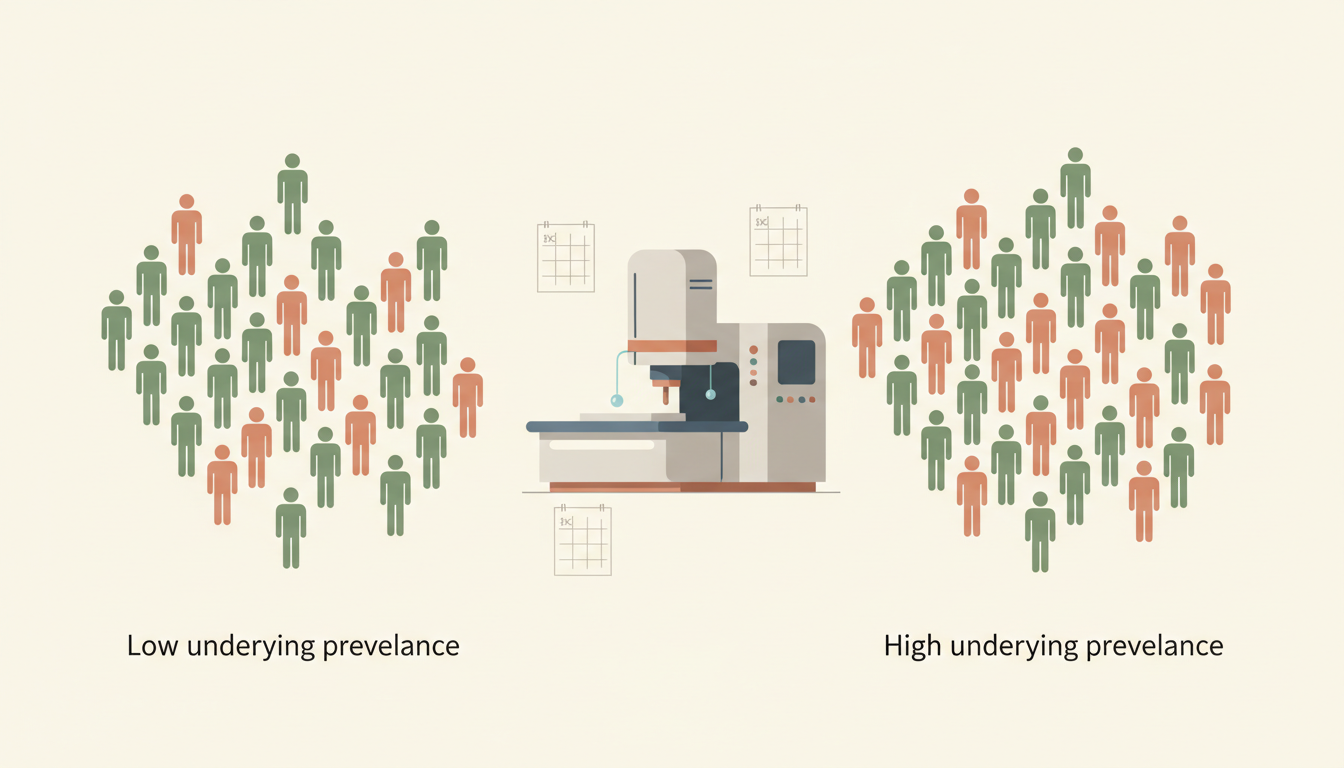
Public health surveillance helps a civilisation notice and understand patterns that no single clinician or hospital can see. It links reliable reporting, epidemiological analysis, professional laboratories, privacy safeguards and appropriate public health communication. A record count or colourful map can be useful, but without a defined population, source and interpretation it does not establish a disease trend, cause or outbreak. This guide teaches the institutional system and its limits.
This volume continues eduKate’s Components of a Civilisation long-form learning library. All reports, cases and figures used to explain the fictional settlement of Tidal Reach are made up. This is not a source of clinical advice or actual emergency instructions.
What public health surveillance does
It is ongoing, systematic information work that helps qualified institutions understand population health concerns. Data should be collected with clear purposes, analysed using suitable methods, interpreted honestly and communicated with responsible professional review. A report count is not automatically an incidence rate; a signal is not a confirmed outbreak.
Evidence from authoritative sources
The CDC’s surveillance framework and its June 2025 analysis guidance explain systematic observation, interpretation and feedback. The WHO EIOS Strategy 2024–2026 addresses professional open-source epidemic intelligence. WHO’s October 2026 strategy announcement describes a future ambition to detect new outbreaks within 24 hours; this is a goal, not a statement of universal current performance.
A defined information pathway
- Purpose: what health event and population are relevant?
- Reporting: which authorised sources provide data?
- Validation: are records complete, comparable and properly protected?
- Analysis: what can a denominator or trend actually show?
- Communication: what has been verified and what is still uncertain?
- Review: how do competent institutions use the information and learn?
Two toy calculations and their limits
Two imaginary districts each report ten events, but one has a hundred people and the other a thousand. The simple ratios are 10% and 1% respectively; neither can be declared a valid incidence rate without a suitable event definition, population at risk, observation period and reporting coverage. The point is that raw counts alone do not allow a meaningful comparison.
An invented register receives twenty entries and identifies five as duplicates. The corrected count is fifteen entries under those assumptions. The change reflects the record set, not necessarily the number of underlying health events. A responsible student distinguishes administrative processing from public health outcomes.
Part 1: The population-health purpose
These six stations describe a distinct section of the public health information system. They are conceptual exercises and not a clinical or operational manual.
Component 01: P
What the concept means. o. A meaningful surveillance service starts with a defined population question. Health institutions must know what event is being observed, where, during which interval and for what legitimate public purpose. Otherwise a large amount of data may create an impressive display without answering anything useful. The student should identify the professional responsible for interpretation and describe exactly what the available record can and cannot establish. Consider how p contributes to the broader process.
The fictional case. p. The town’s imaginary clinician and epidemiologist know different parts of the same episode. One knows when information arose in clinical care while the other sees when a report entered the shared system. Those times may differ, and both records may be correct within their scope. Draw a timeline with the relevant events and ask which interpretation the initial chart would support. The imaginary report must not be mistaken for a real public health finding.
Risk and competing explanations. Professional and legal boundaries are essential. An invented report cannot justify a real diagnosis, an official outbreak warning or instructions about medical treatment. Such decisions belong to competent services using applicable clinical and public health standards. The classroom can describe why those roles exist and identify original sources without trying to perform them. Name a plausible alternative interpretation before claiming a causal result.
Evidence needed for a reliable account. Aggregate results and personal experiences answer different questions. An agency may know the number of reports while an individual knows whether healthcare was accessible. Neither one anecdote nor one public chart automatically describes everyone. Ask what suitable additional evidence a trained team would need and why a school model cannot determine clinical consequences. Identify the source and the professional authority that could review it.
Parent and tutor exercise. Hold a respectful discussion involving invented roles for a clinician, laboratory professional, epidemiologist and public communicator. Each participant should explain their responsibilities and listen to another role’s concern. The group then writes one source-checking question, not a diagnosis or health policy instruction. All data should remain imaginary and nonidentifying.
Review and future generations. An administrative record marked complete does not prove the underlying health question has been resolved. Ask what qualified reviewers could examine and how a correction should be documented. Future generations inherit not just information but the professional ability to interpret and challenge it responsibly. Connect this station with e and explain the dependency.
Reasoning challenge. If the reporting source or definition changed, could the same observed total have a different meaning? Compare two interpretations and state what competent evidence would distinguish them. A thoughtful pupil should know where their educational conclusion ends and expert public health work begins.
Component 02: W
What the concept means. h. Surveillance is a sequence of related activities rather than a dashboard alone. Appropriate records are collected under defined duties, checked for source quality, analysed and interpreted by trained people, then communicated with limitations. A weakness at one step can affect every downstream claim. Ask which institution provides the information and what should happen when a record is incompatible with the rest of the dataset. Consider how w contributes to the broader process.
The fictional case. y. Imagine Tidal Reach, a wholly fictional town of 240 residents. Its dashboard displays a number but has not stated which reporting sites contributed or what the event category means. Pause before writing a headline. Ask what the records actually say, what the child assumed and which competent authority would have to verify the claim. The uncertainty is not a failure of the lesson; recognising it is the main learning achievement. The imaginary report must not be mistaken for a real public health finding.
Risk and competing explanations. International guidance aids cooperation but does not grant identical powers to every institution. WHO initiatives, national public health agencies and clinical providers can have different mandates. A learner should state the source’s date and scope before drawing a conclusion about what one country must do. This avoids confusing a general scientific framework with a direct local medical order. Name a plausible alternative interpretation before claiming a causal result.
Evidence needed for a reliable account. Trace an observation through its source, classification, analysis and eventual publication. Each transformation needs a clear definition and, where relevant, a date. Another pupil should be able to reconstruct the conclusion without receiving confidential medical information. This is why transparent methods and data protection can strengthen each other instead of acting as opposites. Identify the source and the professional authority that could review it.
Parent and tutor exercise. Present a fictional dashboard whose date, denominator or case definition is missing. Ask students to write a more accurate caption in everyday English. Another learner should understand what the chart does and does not establish. This builds source literacy without spreading alarming unverified claims. All data should remain imaginary and nonidentifying.
Review and future generations. Return to a person not represented in the original dataset. Ask which practical barrier could explain why their experience was missing, without assuming a diagnosis or stereotyping a group. A competent authority could review service reach and data coverage. Pupils should keep the question respectful and nonidentifying. Connect this station with p and explain the dependency.
Reasoning challenge. If the reporting source or definition changed, could the same observed total have a different meaning? Compare two interpretations and state what competent evidence would distinguish them. A thoughtful pupil should know where their educational conclusion ends and expert public health work begins.
Component 03: S
What the concept means. u. Population-health monitoring and individual patient care are connected but different. The clinician needs information for the particular patient, while public health teams examine patterns across defined groups. One aggregate count cannot diagnose a person, and an individual story cannot establish a whole community’s event rate. A good explanation preserves both functions and respects the professional authority and privacy requirements associated with each. Consider how s contributes to the broader process.
The fictional case. r. One fictional district has more health reports than another, but the two communities differ in population size and service availability. A student cannot announce that the first district is less healthy from that fact alone. Define the denominator and consider who could be missing from each system. The correct result is a better question rather than a dramatic ranking. The imaginary report must not be mistaken for a real public health finding.
Risk and competing explanations. Professional and legal boundaries are essential. An invented report cannot justify a real diagnosis, an official outbreak warning or instructions about medical treatment. Such decisions belong to competent services using applicable clinical and public health standards. The classroom can describe why those roles exist and identify original sources without trying to perform them. Name a plausible alternative interpretation before claiming a causal result.
Evidence needed for a reliable account. A credible evidence check should be capable of showing the first explanation to be wrong. Ask whether the reporting definition changed, whether data were duplicated and whether an expected source stopped participating. Define the check before looking for a convenient answer. This makes the exercise an investigation into reliability rather than a presentation designed only to confirm an initial belief. Identify the source and the professional authority that could review it.
Parent and tutor exercise. Use four paper boxes labelled population question, protected reporting, professional analysis and public information. Put a verb on every arrow. Have another pupil remove one information source and ask which conclusion becomes uncertain. The activity must use only imaginary data and should never involve medical records, specimens or real public warnings. All data should remain imaginary and nonidentifying.
Review and future generations. Link this station to other public systems through causal verbs. Surveillance depends on healthcare, laboratories, digital infrastructure, professional work and public trust. An interruption in one can alter the meaning of data from another. Explain one such relationship in the fictional town rather than simply connect important words with arrows. Connect this station with s and explain the dependency.
Reasoning challenge. If the reporting source or definition changed, could the same observed total have a different meaning? Compare two interpretations and state what competent evidence would distinguish them. A thoughtful pupil should know where their educational conclusion ends and expert public health work begins.
Component 04: D
What the concept means. e. A possible signal is not automatically a verified public health event. A group of reports, an online story or a sudden change in a chart may warrant professional assessment, but several explanations could remain plausible. Competent analysts examine the original source, event definition, timing and any corroborating information. Students may ask why those checks matter without conducting actual outbreak investigations. Consider how d contributes to the broader process.
The fictional case. f. An imagined health project adds new reporting facilities and suddenly receives more records. The change could reflect wider observation rather than a change in the events themselves. Keep the population-health question constant and compare the definitions and reporting sites before and after the change. Ask which conclusion should remain conditional until qualified analysis is available. The imaginary report must not be mistaken for a real public health finding.
Risk and competing explanations. International guidance aids cooperation but does not grant identical powers to every institution. WHO initiatives, national public health agencies and clinical providers can have different mandates. A learner should state the source’s date and scope before drawing a conclusion about what one country must do. This avoids confusing a general scientific framework with a direct local medical order. Name a plausible alternative interpretation before claiming a causal result.
Evidence needed for a reliable account. Begin evaluation by defining the event being counted and the period covered. New cases, existing cases, tests, clinic visits and digital signals are not interchangeable. An apparently exact number may still be irrelevant to the public question. Write the numerator and denominator in plain language, then ask what observations remain outside the dataset and what authority would interpret the result. Identify the source and the professional authority that could review it.
Parent and tutor exercise. Hold a respectful discussion involving invented roles for a clinician, laboratory professional, epidemiologist and public communicator. Each participant should explain their responsibilities and listen to another role’s concern. The group then writes one source-checking question, not a diagnosis or health policy instruction. All data should remain imaginary and nonidentifying.
Review and future generations. A dependable service identifies signals that should trigger review of its own methods. A missing clinic, new case definition or persistent duplicate record may require professional correction. Ask who can lawfully review the problem and how a revised interpretation would reach intended readers. A good institution is able to learn from uncertainty. Connect this station with r and explain the dependency.
Reasoning challenge. If the reporting source or definition changed, could the same observed total have a different meaning? Compare two interpretations and state what competent evidence would distinguish them. A thoughtful pupil should know where their educational conclusion ends and expert public health work begins.
Component 05: L
What the concept means. i. Rates depend on meaningful numerators, denominators and observation periods. Counts from different places may appear equal despite different population sizes, reporting coverage or clinical access. A precise percentage can therefore mislead when categories do not match its stated purpose. The pupil should label every toy number with its source and time and identify at least one way the observed pattern could be incomplete. Consider how l contributes to the broader process.
The fictional case. n. Students in the invented town see the same online message reproduced by several websites. They mistakenly count each copy as a new independent observation. Trace the information back to its original source and ask what professional verification would require. The activity teaches source provenance and careful communication without spreading actual rumours or naming real patients. The imaginary report must not be mistaken for a real public health finding.
Risk and competing explanations. Professional and legal boundaries are essential. An invented report cannot justify a real diagnosis, an official outbreak warning or instructions about medical treatment. Such decisions belong to competent services using applicable clinical and public health standards. The classroom can describe why those roles exist and identify original sources without trying to perform them. Name a plausible alternative interpretation before claiming a causal result.
Evidence needed for a reliable account. Monitoring becomes valuable when responsible institutions can review its findings and use them appropriately. A dashboard without feedback to trained professionals is only a display. Ask who evaluates the evidence, what uncertainty accompanies the interpretation and what further observation could justify a revision. This closes the information-for-action cycle without issuing health instructions. Identify the source and the professional authority that could review it.
Parent and tutor exercise. Present a fictional dashboard whose date, denominator or case definition is missing. Ask students to write a more accurate caption in everyday English. Another learner should understand what the chart does and does not establish. This builds source literacy without spreading alarming unverified claims. All data should remain imaginary and nonidentifying.
Review and future generations. Imagine the first surveillance team retiring. Its successors need the history of reporting sites, changes in definitions and reasons for earlier corrections. Without this information, future analysts may mistake a change in the measurement system for a change in illness. Ask what should be documented and how confidentiality can be protected. Connect this station with m and explain the dependency.
Reasoning challenge. If the reporting source or definition changed, could the same observed total have a different meaning? Compare two interpretations and state what competent evidence would distinguish them. A thoughtful pupil should know where their educational conclusion ends and expert public health work begins.
Component 06: P
What the concept means. u. Public health intelligence must endure beyond the first project. Records, trained professionals, secure reporting systems, laboratory relationships and accountable review all need ongoing support. Methods can change as tests or case definitions are revised. Future analysts should know which historical figures remain comparable and which cannot be interpreted without documentation of the change. Consider how p contributes to the broader process.
The fictional case. b. A fictional reporting clinic goes temporarily silent while the data platform continues drawing a smooth line. It would be dangerous to infer that no public health events occurred. Ask which sites were expected to report and what the missing source means for a population comparison. This is a paper exercise using invented data, never a statement about actual healthcare services. The imaginary report must not be mistaken for a real public health finding.
Risk and competing explanations. International guidance aids cooperation but does not grant identical powers to every institution. WHO initiatives, national public health agencies and clinical providers can have different mandates. A learner should state the source’s date and scope before drawing a conclusion about what one country must do. This avoids confusing a general scientific framework with a direct local medical order. Name a plausible alternative interpretation before claiming a causal result.
Evidence needed for a reliable account. Reporting numbers can change when source coverage and technology change. A smooth-looking chart should not hide a new clinic, revised definition or changed laboratory method. Ask which values remain comparable and where a break should be marked. A limitation statement can be more scientifically useful than forcing every historical value into one attractive trend. Identify the source and the professional authority that could review it.
Parent and tutor exercise. Use four paper boxes labelled population question, protected reporting, professional analysis and public information. Put a verb on every arrow. Have another pupil remove one information source and ask which conclusion becomes uncertain. The activity must use only imaginary data and should never involve medical records, specimens or real public warnings. All data should remain imaginary and nonidentifying.
Review and future generations. Identify the authorised institution associated with the concept. A clinician, laboratory, public health analyst and regulator may each handle different responsibilities. The child’s role is to understand how their information or decisions connect, not to substitute for their work. A useful diagram names each handover and its limits. Connect this station with i and explain the dependency.
Reasoning challenge. If the reporting source or definition changed, could the same observed total have a different meaning? Compare two interpretations and state what competent evidence would distinguish them. A thoughtful pupil should know where their educational conclusion ends and expert public health work begins.
Synthesis 1: six connected functions
Place P; W; S; D; L; P into one information-flow diagram. The arrows should identify data, reporting, verification, interpretation and appropriate institutional action. Students should challenge one weak link instead of assuming the whole system works simply because all the components have names.
Part 2: Reliable reporting and compatible records
These six stations describe a distinct section of the public health information system. They are conceptual exercises and not a clinical or operational manual.
Component 07: I
What the concept means. n. A meaningful surveillance service starts with a defined population question. Health institutions must know what event is being observed, where, during which interval and for what legitimate public purpose. Otherwise a large amount of data may create an impressive display without answering anything useful. The student should identify the professional responsible for interpretation and describe exactly what the available record can and cannot establish. Consider how i contributes to the broader process.
The fictional case. d. The town’s imaginary clinician and epidemiologist know different parts of the same episode. One knows when information arose in clinical care while the other sees when a report entered the shared system. Those times may differ, and both records may be correct within their scope. Draw a timeline with the relevant events and ask which interpretation the initial chart would support. The imaginary report must not be mistaken for a real public health finding.
Risk and competing explanations. Professional and legal boundaries are essential. An invented report cannot justify a real diagnosis, an official outbreak warning or instructions about medical treatment. Such decisions belong to competent services using applicable clinical and public health standards. The classroom can describe why those roles exist and identify original sources without trying to perform them. Name a plausible alternative interpretation before claiming a causal result.
Evidence needed for a reliable account. Aggregate results and personal experiences answer different questions. An agency may know the number of reports while an individual knows whether healthcare was accessible. Neither one anecdote nor one public chart automatically describes everyone. Ask what suitable additional evidence a trained team would need and why a school model cannot determine clinical consequences. Identify the source and the professional authority that could review it.
Parent and tutor exercise. Hold a respectful discussion involving invented roles for a clinician, laboratory professional, epidemiologist and public communicator. Each participant should explain their responsibilities and listen to another role’s concern. The group then writes one source-checking question, not a diagnosis or health policy instruction. All data should remain imaginary and nonidentifying.
Review and future generations. An administrative record marked complete does not prove the underlying health question has been resolved. Ask what qualified reviewers could examine and how a correction should be documented. Future generations inherit not just information but the professional ability to interpret and challenge it responsibly. Connect this station with p and explain the dependency.
Reasoning challenge. If the reporting source or definition changed, could the same observed total have a different meaning? Compare two interpretations and state what competent evidence would distinguish them. A thoughtful pupil should know where their educational conclusion ends and expert public health work begins.
Component 08: E
What the concept means. v. Surveillance is a sequence of related activities rather than a dashboard alone. Appropriate records are collected under defined duties, checked for source quality, analysed and interpreted by trained people, then communicated with limitations. A weakness at one step can affect every downstream claim. Ask which institution provides the information and what should happen when a record is incompatible with the rest of the dataset. Consider how e contributes to the broader process.
The fictional case. e. Imagine Tidal Reach, a wholly fictional town of 240 residents. Its dashboard displays a number but has not stated which reporting sites contributed or what the event category means. Pause before writing a headline. Ask what the records actually say, what the child assumed and which competent authority would have to verify the claim. The uncertainty is not a failure of the lesson; recognising it is the main learning achievement. The imaginary report must not be mistaken for a real public health finding.
Risk and competing explanations. International guidance aids cooperation but does not grant identical powers to every institution. WHO initiatives, national public health agencies and clinical providers can have different mandates. A learner should state the source’s date and scope before drawing a conclusion about what one country must do. This avoids confusing a general scientific framework with a direct local medical order. Name a plausible alternative interpretation before claiming a causal result.
Evidence needed for a reliable account. Trace an observation through its source, classification, analysis and eventual publication. Each transformation needs a clear definition and, where relevant, a date. Another pupil should be able to reconstruct the conclusion without receiving confidential medical information. This is why transparent methods and data protection can strengthen each other instead of acting as opposites. Identify the source and the professional authority that could review it.
Parent and tutor exercise. Present a fictional dashboard whose date, denominator or case definition is missing. Ask students to write a more accurate caption in everyday English. Another learner should understand what the chart does and does not establish. This builds source literacy without spreading alarming unverified claims. All data should remain imaginary and nonidentifying.
Review and future generations. Return to a person not represented in the original dataset. Ask which practical barrier could explain why their experience was missing, without assuming a diagnosis or stereotyping a group. A competent authority could review service reach and data coverage. Pupils should keep the question respectful and nonidentifying. Connect this station with p and explain the dependency.
Reasoning challenge. If the reporting source or definition changed, could the same observed total have a different meaning? Compare two interpretations and state what competent evidence would distinguish them. A thoughtful pupil should know where their educational conclusion ends and expert public health work begins.
Component 09: P
What the concept means. r. Population-health monitoring and individual patient care are connected but different. The clinician needs information for the particular patient, while public health teams examine patterns across defined groups. One aggregate count cannot diagnose a person, and an individual story cannot establish a whole community’s event rate. A good explanation preserves both functions and respects the professional authority and privacy requirements associated with each. Consider how p contributes to the broader process.
The fictional case. o. One fictional district has more health reports than another, but the two communities differ in population size and service availability. A student cannot announce that the first district is less healthy from that fact alone. Define the denominator and consider who could be missing from each system. The correct result is a better question rather than a dramatic ranking. The imaginary report must not be mistaken for a real public health finding.
Risk and competing explanations. Professional and legal boundaries are essential. An invented report cannot justify a real diagnosis, an official outbreak warning or instructions about medical treatment. Such decisions belong to competent services using applicable clinical and public health standards. The classroom can describe why those roles exist and identify original sources without trying to perform them. Name a plausible alternative interpretation before claiming a causal result.
Evidence needed for a reliable account. A credible evidence check should be capable of showing the first explanation to be wrong. Ask whether the reporting definition changed, whether data were duplicated and whether an expected source stopped participating. Define the check before looking for a convenient answer. This makes the exercise an investigation into reliability rather than a presentation designed only to confirm an initial belief. Identify the source and the professional authority that could review it.
Parent and tutor exercise. Use four paper boxes labelled population question, protected reporting, professional analysis and public information. Put a verb on every arrow. Have another pupil remove one information source and ask which conclusion becomes uncertain. The activity must use only imaginary data and should never involve medical records, specimens or real public warnings. All data should remain imaginary and nonidentifying.
Review and future generations. Link this station to other public systems through causal verbs. Surveillance depends on healthcare, laboratories, digital infrastructure, professional work and public trust. An interruption in one can alter the meaning of data from another. Explain one such relationship in the fictional town rather than simply connect important words with arrows. Connect this station with c and explain the dependency.
Reasoning challenge. If the reporting source or definition changed, could the same observed total have a different meaning? Compare two interpretations and state what competent evidence would distinguish them. A thoughtful pupil should know where their educational conclusion ends and expert public health work begins.
Component 10: S
What the concept means. u. A possible signal is not automatically a verified public health event. A group of reports, an online story or a sudden change in a chart may warrant professional assessment, but several explanations could remain plausible. Competent analysts examine the original source, event definition, timing and any corroborating information. Students may ask why those checks matter without conducting actual outbreak investigations. Consider how s contributes to the broader process.
The fictional case. r. An imagined health project adds new reporting facilities and suddenly receives more records. The change could reflect wider observation rather than a change in the events themselves. Keep the population-health question constant and compare the definitions and reporting sites before and after the change. Ask which conclusion should remain conditional until qualified analysis is available. The imaginary report must not be mistaken for a real public health finding.
Risk and competing explanations. International guidance aids cooperation but does not grant identical powers to every institution. WHO initiatives, national public health agencies and clinical providers can have different mandates. A learner should state the source’s date and scope before drawing a conclusion about what one country must do. This avoids confusing a general scientific framework with a direct local medical order. Name a plausible alternative interpretation before claiming a causal result.
Evidence needed for a reliable account. Begin evaluation by defining the event being counted and the period covered. New cases, existing cases, tests, clinic visits and digital signals are not interchangeable. An apparently exact number may still be irrelevant to the public question. Write the numerator and denominator in plain language, then ask what observations remain outside the dataset and what authority would interpret the result. Identify the source and the professional authority that could review it.
Parent and tutor exercise. Hold a respectful discussion involving invented roles for a clinician, laboratory professional, epidemiologist and public communicator. Each participant should explain their responsibilities and listen to another role’s concern. The group then writes one source-checking question, not a diagnosis or health policy instruction. All data should remain imaginary and nonidentifying.
Review and future generations. A dependable service identifies signals that should trigger review of its own methods. A missing clinic, new case definition or persistent duplicate record may require professional correction. Ask who can lawfully review the problem and how a revised interpretation would reach intended readers. A good institution is able to learn from uncertainty. Connect this station with s and explain the dependency.
Reasoning challenge. If the reporting source or definition changed, could the same observed total have a different meaning? Compare two interpretations and state what competent evidence would distinguish them. A thoughtful pupil should know where their educational conclusion ends and expert public health work begins.
Component 11: R
What the concept means. e. Rates depend on meaningful numerators, denominators and observation periods. Counts from different places may appear equal despite different population sizes, reporting coverage or clinical access. A precise percentage can therefore mislead when categories do not match its stated purpose. The pupil should label every toy number with its source and time and identify at least one way the observed pattern could be incomplete. Consider how r contributes to the broader process.
The fictional case. p. Students in the invented town see the same online message reproduced by several websites. They mistakenly count each copy as a new independent observation. Trace the information back to its original source and ask what professional verification would require. The activity teaches source provenance and careful communication without spreading actual rumours or naming real patients. The imaginary report must not be mistaken for a real public health finding.
Risk and competing explanations. Professional and legal boundaries are essential. An invented report cannot justify a real diagnosis, an official outbreak warning or instructions about medical treatment. Such decisions belong to competent services using applicable clinical and public health standards. The classroom can describe why those roles exist and identify original sources without trying to perform them. Name a plausible alternative interpretation before claiming a causal result.
Evidence needed for a reliable account. Monitoring becomes valuable when responsible institutions can review its findings and use them appropriately. A dashboard without feedback to trained professionals is only a display. Ask who evaluates the evidence, what uncertainty accompanies the interpretation and what further observation could justify a revision. This closes the information-for-action cycle without issuing health instructions. Identify the source and the professional authority that could review it.
Parent and tutor exercise. Present a fictional dashboard whose date, denominator or case definition is missing. Ask students to write a more accurate caption in everyday English. Another learner should understand what the chart does and does not establish. This builds source literacy without spreading alarming unverified claims. All data should remain imaginary and nonidentifying.
Review and future generations. Imagine the first surveillance team retiring. Its successors need the history of reporting sites, changes in definitions and reasons for earlier corrections. Without this information, future analysts may mistake a change in the measurement system for a change in illness. Ask what should be documented and how confidentiality can be protected. Connect this station with c and explain the dependency.
Reasoning challenge. If the reporting source or definition changed, could the same observed total have a different meaning? Compare two interpretations and state what competent evidence would distinguish them. A thoughtful pupil should know where their educational conclusion ends and expert public health work begins.
Component 12: M
What the concept means. i. Public health intelligence must endure beyond the first project. Records, trained professionals, secure reporting systems, laboratory relationships and accountable review all need ongoing support. Methods can change as tests or case definitions are revised. Future analysts should know which historical figures remain comparable and which cannot be interpreted without documentation of the change. Consider how m contributes to the broader process.
The fictional case. s. A fictional reporting clinic goes temporarily silent while the data platform continues drawing a smooth line. It would be dangerous to infer that no public health events occurred. Ask which sites were expected to report and what the missing source means for a population comparison. This is a paper exercise using invented data, never a statement about actual healthcare services. The imaginary report must not be mistaken for a real public health finding.
Risk and competing explanations. International guidance aids cooperation but does not grant identical powers to every institution. WHO initiatives, national public health agencies and clinical providers can have different mandates. A learner should state the source’s date and scope before drawing a conclusion about what one country must do. This avoids confusing a general scientific framework with a direct local medical order. Name a plausible alternative interpretation before claiming a causal result.
Evidence needed for a reliable account. Reporting numbers can change when source coverage and technology change. A smooth-looking chart should not hide a new clinic, revised definition or changed laboratory method. Ask which values remain comparable and where a break should be marked. A limitation statement can be more scientifically useful than forcing every historical value into one attractive trend. Identify the source and the professional authority that could review it.
Parent and tutor exercise. Use four paper boxes labelled population question, protected reporting, professional analysis and public information. Put a verb on every arrow. Have another pupil remove one information source and ask which conclusion becomes uncertain. The activity must use only imaginary data and should never involve medical records, specimens or real public warnings. All data should remain imaginary and nonidentifying.
Review and future generations. Identify the authorised institution associated with the concept. A clinician, laboratory, public health analyst and regulator may each handle different responsibilities. The child’s role is to understand how their information or decisions connect, not to substitute for their work. A useful diagram names each handover and its limits. Connect this station with c and explain the dependency.
Reasoning challenge. If the reporting source or definition changed, could the same observed total have a different meaning? Compare two interpretations and state what competent evidence would distinguish them. A thoughtful pupil should know where their educational conclusion ends and expert public health work begins.
Synthesis 2: six connected functions
Place I; E; P; S; R; M into one information-flow diagram. The arrows should identify data, reporting, verification, interpretation and appropriate institutional action. Students should challenge one weak link instead of assuming the whole system works simply because all the components have names.
Part 3: Epidemiological measures and uncertainty
These six stations describe a distinct section of the public health information system. They are conceptual exercises and not a clinical or operational manual.
Component 13: I
What the concept means. n. A meaningful surveillance service starts with a defined population question. Health institutions must know what event is being observed, where, during which interval and for what legitimate public purpose. Otherwise a large amount of data may create an impressive display without answering anything useful. The student should identify the professional responsible for interpretation and describe exactly what the available record can and cannot establish. Consider how i contributes to the broader process.
The fictional case. c. The town’s imaginary clinician and epidemiologist know different parts of the same episode. One knows when information arose in clinical care while the other sees when a report entered the shared system. Those times may differ, and both records may be correct within their scope. Draw a timeline with the relevant events and ask which interpretation the initial chart would support. The imaginary report must not be mistaken for a real public health finding.
Risk and competing explanations. Professional and legal boundaries are essential. An invented report cannot justify a real diagnosis, an official outbreak warning or instructions about medical treatment. Such decisions belong to competent services using applicable clinical and public health standards. The classroom can describe why those roles exist and identify original sources without trying to perform them. Name a plausible alternative interpretation before claiming a causal result.
Evidence needed for a reliable account. Aggregate results and personal experiences answer different questions. An agency may know the number of reports while an individual knows whether healthcare was accessible. Neither one anecdote nor one public chart automatically describes everyone. Ask what suitable additional evidence a trained team would need and why a school model cannot determine clinical consequences. Identify the source and the professional authority that could review it.
Parent and tutor exercise. Hold a respectful discussion involving invented roles for a clinician, laboratory professional, epidemiologist and public communicator. Each participant should explain their responsibilities and listen to another role’s concern. The group then writes one source-checking question, not a diagnosis or health policy instruction. All data should remain imaginary and nonidentifying.
Review and future generations. An administrative record marked complete does not prove the underlying health question has been resolved. Ask what qualified reviewers could examine and how a correction should be documented. Future generations inherit not just information but the professional ability to interpret and challenge it responsibly. Connect this station with a and explain the dependency.
Reasoning challenge. If the reporting source or definition changed, could the same observed total have a different meaning? Compare two interpretations and state what competent evidence would distinguish them. A thoughtful pupil should know where their educational conclusion ends and expert public health work begins.
Component 14: P
What the concept means. r. Surveillance is a sequence of related activities rather than a dashboard alone. Appropriate records are collected under defined duties, checked for source quality, analysed and interpreted by trained people, then communicated with limitations. A weakness at one step can affect every downstream claim. Ask which institution provides the information and what should happen when a record is incompatible with the rest of the dataset. Consider how p contributes to the broader process.
The fictional case. e. Imagine Tidal Reach, a wholly fictional town of 240 residents. Its dashboard displays a number but has not stated which reporting sites contributed or what the event category means. Pause before writing a headline. Ask what the records actually say, what the child assumed and which competent authority would have to verify the claim. The uncertainty is not a failure of the lesson; recognising it is the main learning achievement. The imaginary report must not be mistaken for a real public health finding.
Risk and competing explanations. International guidance aids cooperation but does not grant identical powers to every institution. WHO initiatives, national public health agencies and clinical providers can have different mandates. A learner should state the source’s date and scope before drawing a conclusion about what one country must do. This avoids confusing a general scientific framework with a direct local medical order. Name a plausible alternative interpretation before claiming a causal result.
Evidence needed for a reliable account. Trace an observation through its source, classification, analysis and eventual publication. Each transformation needs a clear definition and, where relevant, a date. Another pupil should be able to reconstruct the conclusion without receiving confidential medical information. This is why transparent methods and data protection can strengthen each other instead of acting as opposites. Identify the source and the professional authority that could review it.
Parent and tutor exercise. Present a fictional dashboard whose date, denominator or case definition is missing. Ask students to write a more accurate caption in everyday English. Another learner should understand what the chart does and does not establish. This builds source literacy without spreading alarming unverified claims. All data should remain imaginary and nonidentifying.
Review and future generations. Return to a person not represented in the original dataset. Ask which practical barrier could explain why their experience was missing, without assuming a diagnosis or stereotyping a group. A competent authority could review service reach and data coverage. Pupils should keep the question respectful and nonidentifying. Connect this station with p and explain the dependency.
Reasoning challenge. If the reporting source or definition changed, could the same observed total have a different meaning? Compare two interpretations and state what competent evidence would distinguish them. A thoughtful pupil should know where their educational conclusion ends and expert public health work begins.
Component 15: P
What the concept means. o. Population-health monitoring and individual patient care are connected but different. The clinician needs information for the particular patient, while public health teams examine patterns across defined groups. One aggregate count cannot diagnose a person, and an individual story cannot establish a whole community’s event rate. A good explanation preserves both functions and respects the professional authority and privacy requirements associated with each. Consider how p contributes to the broader process.
The fictional case. p. One fictional district has more health reports than another, but the two communities differ in population size and service availability. A student cannot announce that the first district is less healthy from that fact alone. Define the denominator and consider who could be missing from each system. The correct result is a better question rather than a dramatic ranking. The imaginary report must not be mistaken for a real public health finding.
Risk and competing explanations. Professional and legal boundaries are essential. An invented report cannot justify a real diagnosis, an official outbreak warning or instructions about medical treatment. Such decisions belong to competent services using applicable clinical and public health standards. The classroom can describe why those roles exist and identify original sources without trying to perform them. Name a plausible alternative interpretation before claiming a causal result.
Evidence needed for a reliable account. A credible evidence check should be capable of showing the first explanation to be wrong. Ask whether the reporting definition changed, whether data were duplicated and whether an expected source stopped participating. Define the check before looking for a convenient answer. This makes the exercise an investigation into reliability rather than a presentation designed only to confirm an initial belief. Identify the source and the professional authority that could review it.
Parent and tutor exercise. Use four paper boxes labelled population question, protected reporting, professional analysis and public information. Put a verb on every arrow. Have another pupil remove one information source and ask which conclusion becomes uncertain. The activity must use only imaginary data and should never involve medical records, specimens or real public warnings. All data should remain imaginary and nonidentifying.
Review and future generations. Link this station to other public systems through causal verbs. Surveillance depends on healthcare, laboratories, digital infrastructure, professional work and public trust. An interruption in one can alter the meaning of data from another. Explain one such relationship in the fictional town rather than simply connect important words with arrows. Connect this station with s and explain the dependency.
Reasoning challenge. If the reporting source or definition changed, could the same observed total have a different meaning? Compare two interpretations and state what competent evidence would distinguish them. A thoughtful pupil should know where their educational conclusion ends and expert public health work begins.
Component 16: C
What the concept means. h. A possible signal is not automatically a verified public health event. A group of reports, an online story or a sudden change in a chart may warrant professional assessment, but several explanations could remain plausible. Competent analysts examine the original source, event definition, timing and any corroborating information. Students may ask why those checks matter without conducting actual outbreak investigations. Consider how c contributes to the broader process.
The fictional case. a. An imagined health project adds new reporting facilities and suddenly receives more records. The change could reflect wider observation rather than a change in the events themselves. Keep the population-health question constant and compare the definitions and reporting sites before and after the change. Ask which conclusion should remain conditional until qualified analysis is available. The imaginary report must not be mistaken for a real public health finding.
Risk and competing explanations. International guidance aids cooperation but does not grant identical powers to every institution. WHO initiatives, national public health agencies and clinical providers can have different mandates. A learner should state the source’s date and scope before drawing a conclusion about what one country must do. This avoids confusing a general scientific framework with a direct local medical order. Name a plausible alternative interpretation before claiming a causal result.
Evidence needed for a reliable account. Begin evaluation by defining the event being counted and the period covered. New cases, existing cases, tests, clinic visits and digital signals are not interchangeable. An apparently exact number may still be irrelevant to the public question. Write the numerator and denominator in plain language, then ask what observations remain outside the dataset and what authority would interpret the result. Identify the source and the professional authority that could review it.
Parent and tutor exercise. Hold a respectful discussion involving invented roles for a clinician, laboratory professional, epidemiologist and public communicator. Each participant should explain their responsibilities and listen to another role’s concern. The group then writes one source-checking question, not a diagnosis or health policy instruction. All data should remain imaginary and nonidentifying.
Review and future generations. A dependable service identifies signals that should trigger review of its own methods. A missing clinic, new case definition or persistent duplicate record may require professional correction. Ask who can lawfully review the problem and how a revised interpretation would reach intended readers. A good institution is able to learn from uncertainty. Connect this station with s and explain the dependency.
Reasoning challenge. If the reporting source or definition changed, could the same observed total have a different meaning? Compare two interpretations and state what competent evidence would distinguish them. A thoughtful pupil should know where their educational conclusion ends and expert public health work begins.
Component 17: S
What the concept means. e. Rates depend on meaningful numerators, denominators and observation periods. Counts from different places may appear equal despite different population sizes, reporting coverage or clinical access. A precise percentage can therefore mislead when categories do not match its stated purpose. The pupil should label every toy number with its source and time and identify at least one way the observed pattern could be incomplete. Consider how s contributes to the broader process.
The fictional case. a. Students in the invented town see the same online message reproduced by several websites. They mistakenly count each copy as a new independent observation. Trace the information back to its original source and ask what professional verification would require. The activity teaches source provenance and careful communication without spreading actual rumours or naming real patients. The imaginary report must not be mistaken for a real public health finding.
Risk and competing explanations. Professional and legal boundaries are essential. An invented report cannot justify a real diagnosis, an official outbreak warning or instructions about medical treatment. Such decisions belong to competent services using applicable clinical and public health standards. The classroom can describe why those roles exist and identify original sources without trying to perform them. Name a plausible alternative interpretation before claiming a causal result.
Evidence needed for a reliable account. Monitoring becomes valuable when responsible institutions can review its findings and use them appropriately. A dashboard without feedback to trained professionals is only a display. Ask who evaluates the evidence, what uncertainty accompanies the interpretation and what further observation could justify a revision. This closes the information-for-action cycle without issuing health instructions. Identify the source and the professional authority that could review it.
Parent and tutor exercise. Present a fictional dashboard whose date, denominator or case definition is missing. Ask students to write a more accurate caption in everyday English. Another learner should understand what the chart does and does not establish. This builds source literacy without spreading alarming unverified claims. All data should remain imaginary and nonidentifying.
Review and future generations. Imagine the first surveillance team retiring. Its successors need the history of reporting sites, changes in definitions and reasons for earlier corrections. Without this information, future analysts may mistake a change in the measurement system for a change in illness. Ask what should be documented and how confidentiality can be protected. Connect this station with p and explain the dependency.
Reasoning challenge. If the reporting source or definition changed, could the same observed total have a different meaning? Compare two interpretations and state what competent evidence would distinguish them. A thoughtful pupil should know where their educational conclusion ends and expert public health work begins.
Component 18: C
What the concept means. l. Public health intelligence must endure beyond the first project. Records, trained professionals, secure reporting systems, laboratory relationships and accountable review all need ongoing support. Methods can change as tests or case definitions are revised. Future analysts should know which historical figures remain comparable and which cannot be interpreted without documentation of the change. Consider how c contributes to the broader process.
The fictional case. u. A fictional reporting clinic goes temporarily silent while the data platform continues drawing a smooth line. It would be dangerous to infer that no public health events occurred. Ask which sites were expected to report and what the missing source means for a population comparison. This is a paper exercise using invented data, never a statement about actual healthcare services. The imaginary report must not be mistaken for a real public health finding.
Risk and competing explanations. International guidance aids cooperation but does not grant identical powers to every institution. WHO initiatives, national public health agencies and clinical providers can have different mandates. A learner should state the source’s date and scope before drawing a conclusion about what one country must do. This avoids confusing a general scientific framework with a direct local medical order. Name a plausible alternative interpretation before claiming a causal result.
Evidence needed for a reliable account. Reporting numbers can change when source coverage and technology change. A smooth-looking chart should not hide a new clinic, revised definition or changed laboratory method. Ask which values remain comparable and where a break should be marked. A limitation statement can be more scientifically useful than forcing every historical value into one attractive trend. Identify the source and the professional authority that could review it.
Parent and tutor exercise. Use four paper boxes labelled population question, protected reporting, professional analysis and public information. Put a verb on every arrow. Have another pupil remove one information source and ask which conclusion becomes uncertain. The activity must use only imaginary data and should never involve medical records, specimens or real public warnings. All data should remain imaginary and nonidentifying.
Review and future generations. Identify the authorised institution associated with the concept. A clinician, laboratory, public health analyst and regulator may each handle different responsibilities. The child’s role is to understand how their information or decisions connect, not to substitute for their work. A useful diagram names each handover and its limits. Connect this station with b and explain the dependency.
Reasoning challenge. If the reporting source or definition changed, could the same observed total have a different meaning? Compare two interpretations and state what competent evidence would distinguish them. A thoughtful pupil should know where their educational conclusion ends and expert public health work begins.
Synthesis 3: six connected functions
Place I; P; P; C; S; C into one information-flow diagram. The arrows should identify data, reporting, verification, interpretation and appropriate institutional action. Students should challenge one weak link instead of assuming the whole system works simply because all the components have names.
Part 4: Laboratories and professional validation
These six stations describe a distinct section of the public health information system. They are conceptual exercises and not a clinical or operational manual.
Component 19: C
What the concept means. o. A meaningful surveillance service starts with a defined population question. Health institutions must know what event is being observed, where, during which interval and for what legitimate public purpose. Otherwise a large amount of data may create an impressive display without answering anything useful. The student should identify the professional responsible for interpretation and describe exactly what the available record can and cannot establish. Consider how c contributes to the broader process.
The fictional case. r. The town’s imaginary clinician and epidemiologist know different parts of the same episode. One knows when information arose in clinical care while the other sees when a report entered the shared system. Those times may differ, and both records may be correct within their scope. Draw a timeline with the relevant events and ask which interpretation the initial chart would support. The imaginary report must not be mistaken for a real public health finding.
Risk and competing explanations. Professional and legal boundaries are essential. An invented report cannot justify a real diagnosis, an official outbreak warning or instructions about medical treatment. Such decisions belong to competent services using applicable clinical and public health standards. The classroom can describe why those roles exist and identify original sources without trying to perform them. Name a plausible alternative interpretation before claiming a causal result.
Evidence needed for a reliable account. Aggregate results and personal experiences answer different questions. An agency may know the number of reports while an individual knows whether healthcare was accessible. Neither one anecdote nor one public chart automatically describes everyone. Ask what suitable additional evidence a trained team would need and why a school model cannot determine clinical consequences. Identify the source and the professional authority that could review it.
Parent and tutor exercise. Hold a respectful discussion involving invented roles for a clinician, laboratory professional, epidemiologist and public communicator. Each participant should explain their responsibilities and listen to another role’s concern. The group then writes one source-checking question, not a diagnosis or health policy instruction. All data should remain imaginary and nonidentifying.
Review and future generations. An administrative record marked complete does not prove the underlying health question has been resolved. Ask what qualified reviewers could examine and how a correction should be documented. Future generations inherit not just information but the professional ability to interpret and challenge it responsibly. Connect this station with o and explain the dependency.
Reasoning challenge. If the reporting source or definition changed, could the same observed total have a different meaning? Compare two interpretations and state what competent evidence would distinguish them. A thoughtful pupil should know where their educational conclusion ends and expert public health work begins.
Component 20: A
What the concept means. c. Surveillance is a sequence of related activities rather than a dashboard alone. Appropriate records are collected under defined duties, checked for source quality, analysed and interpreted by trained people, then communicated with limitations. A weakness at one step can affect every downstream claim. Ask which institution provides the information and what should happen when a record is incompatible with the rest of the dataset. Consider how a contributes to the broader process.
The fictional case. c. Imagine Tidal Reach, a wholly fictional town of 240 residents. Its dashboard displays a number but has not stated which reporting sites contributed or what the event category means. Pause before writing a headline. Ask what the records actually say, what the child assumed and which competent authority would have to verify the claim. The uncertainty is not a failure of the lesson; recognising it is the main learning achievement. The imaginary report must not be mistaken for a real public health finding.
Risk and competing explanations. International guidance aids cooperation but does not grant identical powers to every institution. WHO initiatives, national public health agencies and clinical providers can have different mandates. A learner should state the source’s date and scope before drawing a conclusion about what one country must do. This avoids confusing a general scientific framework with a direct local medical order. Name a plausible alternative interpretation before claiming a causal result.
Evidence needed for a reliable account. Trace an observation through its source, classification, analysis and eventual publication. Each transformation needs a clear definition and, where relevant, a date. Another pupil should be able to reconstruct the conclusion without receiving confidential medical information. This is why transparent methods and data protection can strengthen each other instead of acting as opposites. Identify the source and the professional authority that could review it.
Parent and tutor exercise. Present a fictional dashboard whose date, denominator or case definition is missing. Ask students to write a more accurate caption in everyday English. Another learner should understand what the chart does and does not establish. This builds source literacy without spreading alarming unverified claims. All data should remain imaginary and nonidentifying.
Review and future generations. Return to a person not represented in the original dataset. Ask which practical barrier could explain why their experience was missing, without assuming a diagnosis or stereotyping a group. A competent authority could review service reach and data coverage. Pupils should keep the question respectful and nonidentifying. Connect this station with v and explain the dependency.
Reasoning challenge. If the reporting source or definition changed, could the same observed total have a different meaning? Compare two interpretations and state what competent evidence would distinguish them. A thoughtful pupil should know where their educational conclusion ends and expert public health work begins.
Component 21: P
What the concept means. u. Population-health monitoring and individual patient care are connected but different. The clinician needs information for the particular patient, while public health teams examine patterns across defined groups. One aggregate count cannot diagnose a person, and an individual story cannot establish a whole community’s event rate. A good explanation preserves both functions and respects the professional authority and privacy requirements associated with each. Consider how p contributes to the broader process.
The fictional case. b. One fictional district has more health reports than another, but the two communities differ in population size and service availability. A student cannot announce that the first district is less healthy from that fact alone. Define the denominator and consider who could be missing from each system. The correct result is a better question rather than a dramatic ranking. The imaginary report must not be mistaken for a real public health finding.
Risk and competing explanations. Professional and legal boundaries are essential. An invented report cannot justify a real diagnosis, an official outbreak warning or instructions about medical treatment. Such decisions belong to competent services using applicable clinical and public health standards. The classroom can describe why those roles exist and identify original sources without trying to perform them. Name a plausible alternative interpretation before claiming a causal result.
Evidence needed for a reliable account. A credible evidence check should be capable of showing the first explanation to be wrong. Ask whether the reporting definition changed, whether data were duplicated and whether an expected source stopped participating. Define the check before looking for a convenient answer. This makes the exercise an investigation into reliability rather than a presentation designed only to confirm an initial belief. Identify the source and the professional authority that could review it.
Parent and tutor exercise. Use four paper boxes labelled population question, protected reporting, professional analysis and public information. Put a verb on every arrow. Have another pupil remove one information source and ask which conclusion becomes uncertain. The activity must use only imaginary data and should never involve medical records, specimens or real public warnings. All data should remain imaginary and nonidentifying.
Review and future generations. Link this station to other public systems through causal verbs. Surveillance depends on healthcare, laboratories, digital infrastructure, professional work and public trust. An interruption in one can alter the meaning of data from another. Explain one such relationship in the fictional town rather than simply connect important words with arrows. Connect this station with a and explain the dependency.
Reasoning challenge. If the reporting source or definition changed, could the same observed total have a different meaning? Compare two interpretations and state what competent evidence would distinguish them. A thoughtful pupil should know where their educational conclusion ends and expert public health work begins.
Component 22: S
What the concept means. p. A possible signal is not automatically a verified public health event. A group of reports, an online story or a sudden change in a chart may warrant professional assessment, but several explanations could remain plausible. Competent analysts examine the original source, event definition, timing and any corroborating information. Students may ask why those checks matter without conducting actual outbreak investigations. Consider how s contributes to the broader process.
The fictional case. e. An imagined health project adds new reporting facilities and suddenly receives more records. The change could reflect wider observation rather than a change in the events themselves. Keep the population-health question constant and compare the definitions and reporting sites before and after the change. Ask which conclusion should remain conditional until qualified analysis is available. The imaginary report must not be mistaken for a real public health finding.
Risk and competing explanations. International guidance aids cooperation but does not grant identical powers to every institution. WHO initiatives, national public health agencies and clinical providers can have different mandates. A learner should state the source’s date and scope before drawing a conclusion about what one country must do. This avoids confusing a general scientific framework with a direct local medical order. Name a plausible alternative interpretation before claiming a causal result.
Evidence needed for a reliable account. Begin evaluation by defining the event being counted and the period covered. New cases, existing cases, tests, clinic visits and digital signals are not interchangeable. An apparently exact number may still be irrelevant to the public question. Write the numerator and denominator in plain language, then ask what observations remain outside the dataset and what authority would interpret the result. Identify the source and the professional authority that could review it.
Parent and tutor exercise. Hold a respectful discussion involving invented roles for a clinician, laboratory professional, epidemiologist and public communicator. Each participant should explain their responsibilities and listen to another role’s concern. The group then writes one source-checking question, not a diagnosis or health policy instruction. All data should remain imaginary and nonidentifying.
Review and future generations. A dependable service identifies signals that should trigger review of its own methods. A missing clinic, new case definition or persistent duplicate record may require professional correction. Ask who can lawfully review the problem and how a revised interpretation would reach intended readers. A good institution is able to learn from uncertainty. Connect this station with e and explain the dependency.
Reasoning challenge. If the reporting source or definition changed, could the same observed total have a different meaning? Compare two interpretations and state what competent evidence would distinguish them. A thoughtful pupil should know where their educational conclusion ends and expert public health work begins.
Component 23: S
What the concept means. e. Rates depend on meaningful numerators, denominators and observation periods. Counts from different places may appear equal despite different population sizes, reporting coverage or clinical access. A precise percentage can therefore mislead when categories do not match its stated purpose. The pupil should label every toy number with its source and time and identify at least one way the observed pattern could be incomplete. Consider how s contributes to the broader process.
The fictional case. n. Students in the invented town see the same online message reproduced by several websites. They mistakenly count each copy as a new independent observation. Trace the information back to its original source and ask what professional verification would require. The activity teaches source provenance and careful communication without spreading actual rumours or naming real patients. The imaginary report must not be mistaken for a real public health finding.
Risk and competing explanations. Professional and legal boundaries are essential. An invented report cannot justify a real diagnosis, an official outbreak warning or instructions about medical treatment. Such decisions belong to competent services using applicable clinical and public health standards. The classroom can describe why those roles exist and identify original sources without trying to perform them. Name a plausible alternative interpretation before claiming a causal result.
Evidence needed for a reliable account. Monitoring becomes valuable when responsible institutions can review its findings and use them appropriately. A dashboard without feedback to trained professionals is only a display. Ask who evaluates the evidence, what uncertainty accompanies the interpretation and what further observation could justify a revision. This closes the information-for-action cycle without issuing health instructions. Identify the source and the professional authority that could review it.
Parent and tutor exercise. Present a fictional dashboard whose date, denominator or case definition is missing. Ask students to write a more accurate caption in everyday English. Another learner should understand what the chart does and does not establish. This builds source literacy without spreading alarming unverified claims. All data should remain imaginary and nonidentifying.
Review and future generations. Imagine the first surveillance team retiring. Its successors need the history of reporting sites, changes in definitions and reasons for earlier corrections. Without this information, future analysts may mistake a change in the measurement system for a change in illness. Ask what should be documented and how confidentiality can be protected. Connect this station with v and explain the dependency.
Reasoning challenge. If the reporting source or definition changed, could the same observed total have a different meaning? Compare two interpretations and state what competent evidence would distinguish them. A thoughtful pupil should know where their educational conclusion ends and expert public health work begins.
Component 24: P
What the concept means. r. Public health intelligence must endure beyond the first project. Records, trained professionals, secure reporting systems, laboratory relationships and accountable review all need ongoing support. Methods can change as tests or case definitions are revised. Future analysts should know which historical figures remain comparable and which cannot be interpreted without documentation of the change. Consider how p contributes to the broader process.
The fictional case. e. A fictional reporting clinic goes temporarily silent while the data platform continues drawing a smooth line. It would be dangerous to infer that no public health events occurred. Ask which sites were expected to report and what the missing source means for a population comparison. This is a paper exercise using invented data, never a statement about actual healthcare services. The imaginary report must not be mistaken for a real public health finding.
Risk and competing explanations. International guidance aids cooperation but does not grant identical powers to every institution. WHO initiatives, national public health agencies and clinical providers can have different mandates. A learner should state the source’s date and scope before drawing a conclusion about what one country must do. This avoids confusing a general scientific framework with a direct local medical order. Name a plausible alternative interpretation before claiming a causal result.
Evidence needed for a reliable account. Reporting numbers can change when source coverage and technology change. A smooth-looking chart should not hide a new clinic, revised definition or changed laboratory method. Ask which values remain comparable and where a break should be marked. A limitation statement can be more scientifically useful than forcing every historical value into one attractive trend. Identify the source and the professional authority that could review it.
Parent and tutor exercise. Use four paper boxes labelled population question, protected reporting, professional analysis and public information. Put a verb on every arrow. Have another pupil remove one information source and ask which conclusion becomes uncertain. The activity must use only imaginary data and should never involve medical records, specimens or real public warnings. All data should remain imaginary and nonidentifying.
Review and future generations. Identify the authorised institution associated with the concept. A clinician, laboratory, public health analyst and regulator may each handle different responsibilities. The child’s role is to understand how their information or decisions connect, not to substitute for their work. A useful diagram names each handover and its limits. Connect this station with p and explain the dependency.
Reasoning challenge. If the reporting source or definition changed, could the same observed total have a different meaning? Compare two interpretations and state what competent evidence would distinguish them. A thoughtful pupil should know where their educational conclusion ends and expert public health work begins.
Synthesis 4: six connected functions
Place C; A; P; S; S; P into one information-flow diagram. The arrows should identify data, reporting, verification, interpretation and appropriate institutional action. Students should challenge one weak link instead of assuming the whole system works simply because all the components have names.
Part 5: Public information, signals and prevention
These six stations describe a distinct section of the public health information system. They are conceptual exercises and not a clinical or operational manual.
Component 25: B
What the concept means. i. A meaningful surveillance service starts with a defined population question. Health institutions must know what event is being observed, where, during which interval and for what legitimate public purpose. Otherwise a large amount of data may create an impressive display without answering anything useful. The student should identify the professional responsible for interpretation and describe exactly what the available record can and cannot establish. Consider how b contributes to the broader process.
The fictional case. o. The town’s imaginary clinician and epidemiologist know different parts of the same episode. One knows when information arose in clinical care while the other sees when a report entered the shared system. Those times may differ, and both records may be correct within their scope. Draw a timeline with the relevant events and ask which interpretation the initial chart would support. The imaginary report must not be mistaken for a real public health finding.
Risk and competing explanations. Professional and legal boundaries are essential. An invented report cannot justify a real diagnosis, an official outbreak warning or instructions about medical treatment. Such decisions belong to competent services using applicable clinical and public health standards. The classroom can describe why those roles exist and identify original sources without trying to perform them. Name a plausible alternative interpretation before claiming a causal result.
Evidence needed for a reliable account. Aggregate results and personal experiences answer different questions. An agency may know the number of reports while an individual knows whether healthcare was accessible. Neither one anecdote nor one public chart automatically describes everyone. Ask what suitable additional evidence a trained team would need and why a school model cannot determine clinical consequences. Identify the source and the professional authority that could review it.
Parent and tutor exercise. Hold a respectful discussion involving invented roles for a clinician, laboratory professional, epidemiologist and public communicator. Each participant should explain their responsibilities and listen to another role’s concern. The group then writes one source-checking question, not a diagnosis or health policy instruction. All data should remain imaginary and nonidentifying.
Review and future generations. An administrative record marked complete does not prove the underlying health question has been resolved. Ask what qualified reviewers could examine and how a correction should be documented. Future generations inherit not just information but the professional ability to interpret and challenge it responsibly. Connect this station with p and explain the dependency.
Reasoning challenge. If the reporting source or definition changed, could the same observed total have a different meaning? Compare two interpretations and state what competent evidence would distinguish them. A thoughtful pupil should know where their educational conclusion ends and expert public health work begins.
Component 26: O
What the concept means. p. Surveillance is a sequence of related activities rather than a dashboard alone. Appropriate records are collected under defined duties, checked for source quality, analysed and interpreted by trained people, then communicated with limitations. A weakness at one step can affect every downstream claim. Ask which institution provides the information and what should happen when a record is incompatible with the rest of the dataset. Consider how o contributes to the broader process.
The fictional case. e. Imagine Tidal Reach, a wholly fictional town of 240 residents. Its dashboard displays a number but has not stated which reporting sites contributed or what the event category means. Pause before writing a headline. Ask what the records actually say, what the child assumed and which competent authority would have to verify the claim. The uncertainty is not a failure of the lesson; recognising it is the main learning achievement. The imaginary report must not be mistaken for a real public health finding.
Risk and competing explanations. International guidance aids cooperation but does not grant identical powers to every institution. WHO initiatives, national public health agencies and clinical providers can have different mandates. A learner should state the source’s date and scope before drawing a conclusion about what one country must do. This avoids confusing a general scientific framework with a direct local medical order. Name a plausible alternative interpretation before claiming a causal result.
Evidence needed for a reliable account. Trace an observation through its source, classification, analysis and eventual publication. Each transformation needs a clear definition and, where relevant, a date. Another pupil should be able to reconstruct the conclusion without receiving confidential medical information. This is why transparent methods and data protection can strengthen each other instead of acting as opposites. Identify the source and the professional authority that could review it.
Parent and tutor exercise. Present a fictional dashboard whose date, denominator or case definition is missing. Ask students to write a more accurate caption in everyday English. Another learner should understand what the chart does and does not establish. This builds source literacy without spreading alarming unverified claims. All data should remain imaginary and nonidentifying.
Review and future generations. Return to a person not represented in the original dataset. Ask which practical barrier could explain why their experience was missing, without assuming a diagnosis or stereotyping a group. A competent authority could review service reach and data coverage. Pupils should keep the question respectful and nonidentifying. Connect this station with e and explain the dependency.
Reasoning challenge. If the reporting source or definition changed, could the same observed total have a different meaning? Compare two interpretations and state what competent evidence would distinguish them. A thoughtful pupil should know where their educational conclusion ends and expert public health work begins.
Component 27: V
What the concept means. e. Population-health monitoring and individual patient care are connected but different. The clinician needs information for the particular patient, while public health teams examine patterns across defined groups. One aggregate count cannot diagnose a person, and an individual story cannot establish a whole community’s event rate. A good explanation preserves both functions and respects the professional authority and privacy requirements associated with each. Consider how v contributes to the broader process.
The fictional case. r. One fictional district has more health reports than another, but the two communities differ in population size and service availability. A student cannot announce that the first district is less healthy from that fact alone. Define the denominator and consider who could be missing from each system. The correct result is a better question rather than a dramatic ranking. The imaginary report must not be mistaken for a real public health finding.
Risk and competing explanations. Professional and legal boundaries are essential. An invented report cannot justify a real diagnosis, an official outbreak warning or instructions about medical treatment. Such decisions belong to competent services using applicable clinical and public health standards. The classroom can describe why those roles exist and identify original sources without trying to perform them. Name a plausible alternative interpretation before claiming a causal result.
Evidence needed for a reliable account. A credible evidence check should be capable of showing the first explanation to be wrong. Ask whether the reporting definition changed, whether data were duplicated and whether an expected source stopped participating. Define the check before looking for a convenient answer. This makes the exercise an investigation into reliability rather than a presentation designed only to confirm an initial belief. Identify the source and the professional authority that could review it.
Parent and tutor exercise. Use four paper boxes labelled population question, protected reporting, professional analysis and public information. Put a verb on every arrow. Have another pupil remove one information source and ask which conclusion becomes uncertain. The activity must use only imaginary data and should never involve medical records, specimens or real public warnings. All data should remain imaginary and nonidentifying.
Review and future generations. Link this station to other public systems through causal verbs. Surveillance depends on healthcare, laboratories, digital infrastructure, professional work and public trust. An interruption in one can alter the meaning of data from another. Explain one such relationship in the fictional town rather than simply connect important words with arrows. Connect this station with i and explain the dependency.
Reasoning challenge. If the reporting source or definition changed, could the same observed total have a different meaning? Compare two interpretations and state what competent evidence would distinguish them. A thoughtful pupil should know where their educational conclusion ends and expert public health work begins.
Component 28: A
What the concept means. c. A possible signal is not automatically a verified public health event. A group of reports, an online story or a sudden change in a chart may warrant professional assessment, but several explanations could remain plausible. Competent analysts examine the original source, event definition, timing and any corroborating information. Students may ask why those checks matter without conducting actual outbreak investigations. Consider how a contributes to the broader process.
The fictional case. c. An imagined health project adds new reporting facilities and suddenly receives more records. The change could reflect wider observation rather than a change in the events themselves. Keep the population-health question constant and compare the definitions and reporting sites before and after the change. Ask which conclusion should remain conditional until qualified analysis is available. The imaginary report must not be mistaken for a real public health finding.
Risk and competing explanations. International guidance aids cooperation but does not grant identical powers to every institution. WHO initiatives, national public health agencies and clinical providers can have different mandates. A learner should state the source’s date and scope before drawing a conclusion about what one country must do. This avoids confusing a general scientific framework with a direct local medical order. Name a plausible alternative interpretation before claiming a causal result.
Evidence needed for a reliable account. Begin evaluation by defining the event being counted and the period covered. New cases, existing cases, tests, clinic visits and digital signals are not interchangeable. An apparently exact number may still be irrelevant to the public question. Write the numerator and denominator in plain language, then ask what observations remain outside the dataset and what authority would interpret the result. Identify the source and the professional authority that could review it.
Parent and tutor exercise. Hold a respectful discussion involving invented roles for a clinician, laboratory professional, epidemiologist and public communicator. Each participant should explain their responsibilities and listen to another role’s concern. The group then writes one source-checking question, not a diagnosis or health policy instruction. All data should remain imaginary and nonidentifying.
Review and future generations. A dependable service identifies signals that should trigger review of its own methods. A missing clinic, new case definition or persistent duplicate record may require professional correction. Ask who can lawfully review the problem and how a revised interpretation would reach intended readers. A good institution is able to learn from uncertainty. Connect this station with w and explain the dependency.
Reasoning challenge. If the reporting source or definition changed, could the same observed total have a different meaning? Compare two interpretations and state what competent evidence would distinguish them. A thoughtful pupil should know where their educational conclusion ends and expert public health work begins.
Component 29: E
What the concept means. v. Rates depend on meaningful numerators, denominators and observation periods. Counts from different places may appear equal despite different population sizes, reporting coverage or clinical access. A precise percentage can therefore mislead when categories do not match its stated purpose. The pupil should label every toy number with its source and time and identify at least one way the observed pattern could be incomplete. Consider how e contributes to the broader process.
The fictional case. a. Students in the invented town see the same online message reproduced by several websites. They mistakenly count each copy as a new independent observation. Trace the information back to its original source and ask what professional verification would require. The activity teaches source provenance and careful communication without spreading actual rumours or naming real patients. The imaginary report must not be mistaken for a real public health finding.
Risk and competing explanations. Professional and legal boundaries are essential. An invented report cannot justify a real diagnosis, an official outbreak warning or instructions about medical treatment. Such decisions belong to competent services using applicable clinical and public health standards. The classroom can describe why those roles exist and identify original sources without trying to perform them. Name a plausible alternative interpretation before claiming a causal result.
Evidence needed for a reliable account. Monitoring becomes valuable when responsible institutions can review its findings and use them appropriately. A dashboard without feedback to trained professionals is only a display. Ask who evaluates the evidence, what uncertainty accompanies the interpretation and what further observation could justify a revision. This closes the information-for-action cycle without issuing health instructions. Identify the source and the professional authority that could review it.
Parent and tutor exercise. Present a fictional dashboard whose date, denominator or case definition is missing. Ask students to write a more accurate caption in everyday English. Another learner should understand what the chart does and does not establish. This builds source literacy without spreading alarming unverified claims. All data should remain imaginary and nonidentifying.
Review and future generations. Imagine the first surveillance team retiring. Its successors need the history of reporting sites, changes in definitions and reasons for earlier corrections. Without this information, future analysts may mistake a change in the measurement system for a change in illness. Ask what should be documented and how confidentiality can be protected. Connect this station with s and explain the dependency.
Reasoning challenge. If the reporting source or definition changed, could the same observed total have a different meaning? Compare two interpretations and state what competent evidence would distinguish them. A thoughtful pupil should know where their educational conclusion ends and expert public health work begins.
Component 30: V
What the concept means. a. Public health intelligence must endure beyond the first project. Records, trained professionals, secure reporting systems, laboratory relationships and accountable review all need ongoing support. Methods can change as tests or case definitions are revised. Future analysts should know which historical figures remain comparable and which cannot be interpreted without documentation of the change. Consider how v contributes to the broader process.
The fictional case. c. A fictional reporting clinic goes temporarily silent while the data platform continues drawing a smooth line. It would be dangerous to infer that no public health events occurred. Ask which sites were expected to report and what the missing source means for a population comparison. This is a paper exercise using invented data, never a statement about actual healthcare services. The imaginary report must not be mistaken for a real public health finding.
Risk and competing explanations. International guidance aids cooperation but does not grant identical powers to every institution. WHO initiatives, national public health agencies and clinical providers can have different mandates. A learner should state the source’s date and scope before drawing a conclusion about what one country must do. This avoids confusing a general scientific framework with a direct local medical order. Name a plausible alternative interpretation before claiming a causal result.
Evidence needed for a reliable account. Reporting numbers can change when source coverage and technology change. A smooth-looking chart should not hide a new clinic, revised definition or changed laboratory method. Ask which values remain comparable and where a break should be marked. A limitation statement can be more scientifically useful than forcing every historical value into one attractive trend. Identify the source and the professional authority that could review it.
Parent and tutor exercise. Use four paper boxes labelled population question, protected reporting, professional analysis and public information. Put a verb on every arrow. Have another pupil remove one information source and ask which conclusion becomes uncertain. The activity must use only imaginary data and should never involve medical records, specimens or real public warnings. All data should remain imaginary and nonidentifying.
Review and future generations. Identify the authorised institution associated with the concept. A clinician, laboratory, public health analyst and regulator may each handle different responsibilities. The child’s role is to understand how their information or decisions connect, not to substitute for their work. A useful diagram names each handover and its limits. Connect this station with e and explain the dependency.
Reasoning challenge. If the reporting source or definition changed, could the same observed total have a different meaning? Compare two interpretations and state what competent evidence would distinguish them. A thoughtful pupil should know where their educational conclusion ends and expert public health work begins.
Synthesis 5: six connected functions
Place B; O; V; A; E; V into one information-flow diagram. The arrows should identify data, reporting, verification, interpretation and appropriate institutional action. Students should challenge one weak link instead of assuming the whole system works simply because all the components have names.
Part 6: Privacy, international cooperation and trust
These six stations describe a distinct section of the public health information system. They are conceptual exercises and not a clinical or operational manual.
Component 31: P
What the concept means. r. A meaningful surveillance service starts with a defined population question. Health institutions must know what event is being observed, where, during which interval and for what legitimate public purpose. Otherwise a large amount of data may create an impressive display without answering anything useful. The student should identify the professional responsible for interpretation and describe exactly what the available record can and cannot establish. Consider how p contributes to the broader process.
The fictional case. o. The town’s imaginary clinician and epidemiologist know different parts of the same episode. One knows when information arose in clinical care while the other sees when a report entered the shared system. Those times may differ, and both records may be correct within their scope. Draw a timeline with the relevant events and ask which interpretation the initial chart would support. The imaginary report must not be mistaken for a real public health finding.
Risk and competing explanations. Professional and legal boundaries are essential. An invented report cannot justify a real diagnosis, an official outbreak warning or instructions about medical treatment. Such decisions belong to competent services using applicable clinical and public health standards. The classroom can describe why those roles exist and identify original sources without trying to perform them. Name a plausible alternative interpretation before claiming a causal result.
Evidence needed for a reliable account. Aggregate results and personal experiences answer different questions. An agency may know the number of reports while an individual knows whether healthcare was accessible. Neither one anecdote nor one public chart automatically describes everyone. Ask what suitable additional evidence a trained team would need and why a school model cannot determine clinical consequences. Identify the source and the professional authority that could review it.
Parent and tutor exercise. Hold a respectful discussion involving invented roles for a clinician, laboratory professional, epidemiologist and public communicator. Each participant should explain their responsibilities and listen to another role’s concern. The group then writes one source-checking question, not a diagnosis or health policy instruction. All data should remain imaginary and nonidentifying.
Review and future generations. An administrative record marked complete does not prove the underlying health question has been resolved. Ask what qualified reviewers could examine and how a correction should be documented. Future generations inherit not just information but the professional ability to interpret and challenge it responsibly. Connect this station with p and explain the dependency.
Reasoning challenge. If the reporting source or definition changed, could the same observed total have a different meaning? Compare two interpretations and state what competent evidence would distinguish them. A thoughtful pupil should know where their educational conclusion ends and expert public health work begins.
Component 32: P
What the concept means. r. Surveillance is a sequence of related activities rather than a dashboard alone. Appropriate records are collected under defined duties, checked for source quality, analysed and interpreted by trained people, then communicated with limitations. A weakness at one step can affect every downstream claim. Ask which institution provides the information and what should happen when a record is incompatible with the rest of the dataset. Consider how p contributes to the broader process.
The fictional case. i. Imagine Tidal Reach, a wholly fictional town of 240 residents. Its dashboard displays a number but has not stated which reporting sites contributed or what the event category means. Pause before writing a headline. Ask what the records actually say, what the child assumed and which competent authority would have to verify the claim. The uncertainty is not a failure of the lesson; recognising it is the main learning achievement. The imaginary report must not be mistaken for a real public health finding.
Risk and competing explanations. International guidance aids cooperation but does not grant identical powers to every institution. WHO initiatives, national public health agencies and clinical providers can have different mandates. A learner should state the source’s date and scope before drawing a conclusion about what one country must do. This avoids confusing a general scientific framework with a direct local medical order. Name a plausible alternative interpretation before claiming a causal result.
Evidence needed for a reliable account. Trace an observation through its source, classification, analysis and eventual publication. Each transformation needs a clear definition and, where relevant, a date. Another pupil should be able to reconstruct the conclusion without receiving confidential medical information. This is why transparent methods and data protection can strengthen each other instead of acting as opposites. Identify the source and the professional authority that could review it.
Parent and tutor exercise. Present a fictional dashboard whose date, denominator or case definition is missing. Ask students to write a more accurate caption in everyday English. Another learner should understand what the chart does and does not establish. This builds source literacy without spreading alarming unverified claims. All data should remain imaginary and nonidentifying.
Review and future generations. Return to a person not represented in the original dataset. Ask which practical barrier could explain why their experience was missing, without assuming a diagnosis or stereotyping a group. A competent authority could review service reach and data coverage. Pupils should keep the question respectful and nonidentifying. Connect this station with t and explain the dependency.
Reasoning challenge. If the reporting source or definition changed, could the same observed total have a different meaning? Compare two interpretations and state what competent evidence would distinguish them. A thoughtful pupil should know where their educational conclusion ends and expert public health work begins.
Component 33: E
What the concept means. q. Population-health monitoring and individual patient care are connected but different. The clinician needs information for the particular patient, while public health teams examine patterns across defined groups. One aggregate count cannot diagnose a person, and an individual story cannot establish a whole community’s event rate. A good explanation preserves both functions and respects the professional authority and privacy requirements associated with each. Consider how e contributes to the broader process.
The fictional case. u. One fictional district has more health reports than another, but the two communities differ in population size and service availability. A student cannot announce that the first district is less healthy from that fact alone. Define the denominator and consider who could be missing from each system. The correct result is a better question rather than a dramatic ranking. The imaginary report must not be mistaken for a real public health finding.
Risk and competing explanations. Professional and legal boundaries are essential. An invented report cannot justify a real diagnosis, an official outbreak warning or instructions about medical treatment. Such decisions belong to competent services using applicable clinical and public health standards. The classroom can describe why those roles exist and identify original sources without trying to perform them. Name a plausible alternative interpretation before claiming a causal result.
Evidence needed for a reliable account. A credible evidence check should be capable of showing the first explanation to be wrong. Ask whether the reporting definition changed, whether data were duplicated and whether an expected source stopped participating. Define the check before looking for a convenient answer. This makes the exercise an investigation into reliability rather than a presentation designed only to confirm an initial belief. Identify the source and the professional authority that could review it.
Parent and tutor exercise. Use four paper boxes labelled population question, protected reporting, professional analysis and public information. Put a verb on every arrow. Have another pupil remove one information source and ask which conclusion becomes uncertain. The activity must use only imaginary data and should never involve medical records, specimens or real public warnings. All data should remain imaginary and nonidentifying.
Review and future generations. Link this station to other public systems through causal verbs. Surveillance depends on healthcare, laboratories, digital infrastructure, professional work and public trust. An interruption in one can alter the meaning of data from another. Explain one such relationship in the fictional town rather than simply connect important words with arrows. Connect this station with o and explain the dependency.
Reasoning challenge. If the reporting source or definition changed, could the same observed total have a different meaning? Compare two interpretations and state what competent evidence would distinguish them. A thoughtful pupil should know where their educational conclusion ends and expert public health work begins.
Component 34: I
What the concept means. n. A possible signal is not automatically a verified public health event. A group of reports, an online story or a sudden change in a chart may warrant professional assessment, but several explanations could remain plausible. Competent analysts examine the original source, event definition, timing and any corroborating information. Students may ask why those checks matter without conducting actual outbreak investigations. Consider how i contributes to the broader process.
The fictional case. t. An imagined health project adds new reporting facilities and suddenly receives more records. The change could reflect wider observation rather than a change in the events themselves. Keep the population-health question constant and compare the definitions and reporting sites before and after the change. Ask which conclusion should remain conditional until qualified analysis is available. The imaginary report must not be mistaken for a real public health finding.
Risk and competing explanations. International guidance aids cooperation but does not grant identical powers to every institution. WHO initiatives, national public health agencies and clinical providers can have different mandates. A learner should state the source’s date and scope before drawing a conclusion about what one country must do. This avoids confusing a general scientific framework with a direct local medical order. Name a plausible alternative interpretation before claiming a causal result.
Evidence needed for a reliable account. Begin evaluation by defining the event being counted and the period covered. New cases, existing cases, tests, clinic visits and digital signals are not interchangeable. An apparently exact number may still be irrelevant to the public question. Write the numerator and denominator in plain language, then ask what observations remain outside the dataset and what authority would interpret the result. Identify the source and the professional authority that could review it.
Parent and tutor exercise. Hold a respectful discussion involving invented roles for a clinician, laboratory professional, epidemiologist and public communicator. Each participant should explain their responsibilities and listen to another role’s concern. The group then writes one source-checking question, not a diagnosis or health policy instruction. All data should remain imaginary and nonidentifying.
Review and future generations. A dependable service identifies signals that should trigger review of its own methods. A missing clinic, new case definition or persistent duplicate record may require professional correction. Ask who can lawfully review the problem and how a revised interpretation would reach intended readers. A good institution is able to learn from uncertainty. Connect this station with a and explain the dependency.
Reasoning challenge. If the reporting source or definition changed, could the same observed total have a different meaning? Compare two interpretations and state what competent evidence would distinguish them. A thoughtful pupil should know where their educational conclusion ends and expert public health work begins.
Component 35: W
What the concept means. H. Rates depend on meaningful numerators, denominators and observation periods. Counts from different places may appear equal despite different population sizes, reporting coverage or clinical access. A precise percentage can therefore mislead when categories do not match its stated purpose. The pupil should label every toy number with its source and time and identify at least one way the observed pattern could be incomplete. Consider how w contributes to the broader process.
The fictional case. O. Students in the invented town see the same online message reproduced by several websites. They mistakenly count each copy as a new independent observation. Trace the information back to its original source and ask what professional verification would require. The activity teaches source provenance and careful communication without spreading actual rumours or naming real patients. The imaginary report must not be mistaken for a real public health finding.
Risk and competing explanations. Professional and legal boundaries are essential. An invented report cannot justify a real diagnosis, an official outbreak warning or instructions about medical treatment. Such decisions belong to competent services using applicable clinical and public health standards. The classroom can describe why those roles exist and identify original sources without trying to perform them. Name a plausible alternative interpretation before claiming a causal result.
Evidence needed for a reliable account. Monitoring becomes valuable when responsible institutions can review its findings and use them appropriately. A dashboard without feedback to trained professionals is only a display. Ask who evaluates the evidence, what uncertainty accompanies the interpretation and what further observation could justify a revision. This closes the information-for-action cycle without issuing health instructions. Identify the source and the professional authority that could review it.
Parent and tutor exercise. Present a fictional dashboard whose date, denominator or case definition is missing. Ask students to write a more accurate caption in everyday English. Another learner should understand what the chart does and does not establish. This builds source literacy without spreading alarming unverified claims. All data should remain imaginary and nonidentifying.
Review and future generations. Imagine the first surveillance team retiring. Its successors need the history of reporting sites, changes in definitions and reasons for earlier corrections. Without this information, future analysts may mistake a change in the measurement system for a change in illness. Ask what should be documented and how confidentiality can be protected. Connect this station with p and explain the dependency.
Reasoning challenge. If the reporting source or definition changed, could the same observed total have a different meaning? Compare two interpretations and state what competent evidence would distinguish them. A thoughtful pupil should know where their educational conclusion ends and expert public health work begins.
Component 36: S
What the concept means. o. Public health intelligence must endure beyond the first project. Records, trained professionals, secure reporting systems, laboratory relationships and accountable review all need ongoing support. Methods can change as tests or case definitions are revised. Future analysts should know which historical figures remain comparable and which cannot be interpreted without documentation of the change. Consider how s contributes to the broader process.
The fictional case. u. A fictional reporting clinic goes temporarily silent while the data platform continues drawing a smooth line. It would be dangerous to infer that no public health events occurred. Ask which sites were expected to report and what the missing source means for a population comparison. This is a paper exercise using invented data, never a statement about actual healthcare services. The imaginary report must not be mistaken for a real public health finding.
Risk and competing explanations. International guidance aids cooperation but does not grant identical powers to every institution. WHO initiatives, national public health agencies and clinical providers can have different mandates. A learner should state the source’s date and scope before drawing a conclusion about what one country must do. This avoids confusing a general scientific framework with a direct local medical order. Name a plausible alternative interpretation before claiming a causal result.
Evidence needed for a reliable account. Reporting numbers can change when source coverage and technology change. A smooth-looking chart should not hide a new clinic, revised definition or changed laboratory method. Ask which values remain comparable and where a break should be marked. A limitation statement can be more scientifically useful than forcing every historical value into one attractive trend. Identify the source and the professional authority that could review it.
Parent and tutor exercise. Use four paper boxes labelled population question, protected reporting, professional analysis and public information. Put a verb on every arrow. Have another pupil remove one information source and ask which conclusion becomes uncertain. The activity must use only imaginary data and should never involve medical records, specimens or real public warnings. All data should remain imaginary and nonidentifying.
Review and future generations. Identify the authorised institution associated with the concept. A clinician, laboratory, public health analyst and regulator may each handle different responsibilities. The child’s role is to understand how their information or decisions connect, not to substitute for their work. A useful diagram names each handover and its limits. Connect this station with p and explain the dependency.
Reasoning challenge. If the reporting source or definition changed, could the same observed total have a different meaning? Compare two interpretations and state what competent evidence would distinguish them. A thoughtful pupil should know where their educational conclusion ends and expert public health work begins.
Synthesis 6: six connected functions
Place P; P; E; I; W; S into one information-flow diagram. The arrows should identify data, reporting, verification, interpretation and appropriate institutional action. Students should challenge one weak link instead of assuming the whole system works simply because all the components have names.
Part 7: Long-term performance and institutional memory
These six stations describe a distinct section of the public health information system. They are conceptual exercises and not a clinical or operational manual.
Component 37: E
What the concept means. v. A meaningful surveillance service starts with a defined population question. Health institutions must know what event is being observed, where, during which interval and for what legitimate public purpose. Otherwise a large amount of data may create an impressive display without answering anything useful. The student should identify the professional responsible for interpretation and describe exactly what the available record can and cannot establish. Consider how e contributes to the broader process.
The fictional case. a. The town’s imaginary clinician and epidemiologist know different parts of the same episode. One knows when information arose in clinical care while the other sees when a report entered the shared system. Those times may differ, and both records may be correct within their scope. Draw a timeline with the relevant events and ask which interpretation the initial chart would support. The imaginary report must not be mistaken for a real public health finding.
Risk and competing explanations. Professional and legal boundaries are essential. An invented report cannot justify a real diagnosis, an official outbreak warning or instructions about medical treatment. Such decisions belong to competent services using applicable clinical and public health standards. The classroom can describe why those roles exist and identify original sources without trying to perform them. Name a plausible alternative interpretation before claiming a causal result.
Evidence needed for a reliable account. Aggregate results and personal experiences answer different questions. An agency may know the number of reports while an individual knows whether healthcare was accessible. Neither one anecdote nor one public chart automatically describes everyone. Ask what suitable additional evidence a trained team would need and why a school model cannot determine clinical consequences. Identify the source and the professional authority that could review it.
Parent and tutor exercise. Hold a respectful discussion involving invented roles for a clinician, laboratory professional, epidemiologist and public communicator. Each participant should explain their responsibilities and listen to another role’s concern. The group then writes one source-checking question, not a diagnosis or health policy instruction. All data should remain imaginary and nonidentifying.
Review and future generations. An administrative record marked complete does not prove the underlying health question has been resolved. Ask what qualified reviewers could examine and how a correction should be documented. Future generations inherit not just information but the professional ability to interpret and challenge it responsibly. Connect this station with w and explain the dependency.
Reasoning challenge. If the reporting source or definition changed, could the same observed total have a different meaning? Compare two interpretations and state what competent evidence would distinguish them. A thoughtful pupil should know where their educational conclusion ends and expert public health work begins.
Component 38: P
What the concept means. u. Surveillance is a sequence of related activities rather than a dashboard alone. Appropriate records are collected under defined duties, checked for source quality, analysed and interpreted by trained people, then communicated with limitations. A weakness at one step can affect every downstream claim. Ask which institution provides the information and what should happen when a record is incompatible with the rest of the dataset. Consider how p contributes to the broader process.
The fictional case. b. Imagine Tidal Reach, a wholly fictional town of 240 residents. Its dashboard displays a number but has not stated which reporting sites contributed or what the event category means. Pause before writing a headline. Ask what the records actually say, what the child assumed and which competent authority would have to verify the claim. The uncertainty is not a failure of the lesson; recognising it is the main learning achievement. The imaginary report must not be mistaken for a real public health finding.
Risk and competing explanations. International guidance aids cooperation but does not grant identical powers to every institution. WHO initiatives, national public health agencies and clinical providers can have different mandates. A learner should state the source’s date and scope before drawing a conclusion about what one country must do. This avoids confusing a general scientific framework with a direct local medical order. Name a plausible alternative interpretation before claiming a causal result.
Evidence needed for a reliable account. Trace an observation through its source, classification, analysis and eventual publication. Each transformation needs a clear definition and, where relevant, a date. Another pupil should be able to reconstruct the conclusion without receiving confidential medical information. This is why transparent methods and data protection can strengthen each other instead of acting as opposites. Identify the source and the professional authority that could review it.
Parent and tutor exercise. Present a fictional dashboard whose date, denominator or case definition is missing. Ask students to write a more accurate caption in everyday English. Another learner should understand what the chart does and does not establish. This builds source literacy without spreading alarming unverified claims. All data should remain imaginary and nonidentifying.
Review and future generations. Return to a person not represented in the original dataset. Ask which practical barrier could explain why their experience was missing, without assuming a diagnosis or stereotyping a group. A competent authority could review service reach and data coverage. Pupils should keep the question respectful and nonidentifying. Connect this station with s and explain the dependency.
Reasoning challenge. If the reporting source or definition changed, could the same observed total have a different meaning? Compare two interpretations and state what competent evidence would distinguish them. A thoughtful pupil should know where their educational conclusion ends and expert public health work begins.
Component 39: T
What the concept means. h. Population-health monitoring and individual patient care are connected but different. The clinician needs information for the particular patient, while public health teams examine patterns across defined groups. One aggregate count cannot diagnose a person, and an individual story cannot establish a whole community’s event rate. A good explanation preserves both functions and respects the professional authority and privacy requirements associated with each. Consider how t contributes to the broader process.
The fictional case. e. One fictional district has more health reports than another, but the two communities differ in population size and service availability. A student cannot announce that the first district is less healthy from that fact alone. Define the denominator and consider who could be missing from each system. The correct result is a better question rather than a dramatic ranking. The imaginary report must not be mistaken for a real public health finding.
Risk and competing explanations. Professional and legal boundaries are essential. An invented report cannot justify a real diagnosis, an official outbreak warning or instructions about medical treatment. Such decisions belong to competent services using applicable clinical and public health standards. The classroom can describe why those roles exist and identify original sources without trying to perform them. Name a plausible alternative interpretation before claiming a causal result.
Evidence needed for a reliable account. A credible evidence check should be capable of showing the first explanation to be wrong. Ask whether the reporting definition changed, whether data were duplicated and whether an expected source stopped participating. Define the check before looking for a convenient answer. This makes the exercise an investigation into reliability rather than a presentation designed only to confirm an initial belief. Identify the source and the professional authority that could review it.
Parent and tutor exercise. Use four paper boxes labelled population question, protected reporting, professional analysis and public information. Put a verb on every arrow. Have another pupil remove one information source and ask which conclusion becomes uncertain. The activity must use only imaginary data and should never involve medical records, specimens or real public warnings. All data should remain imaginary and nonidentifying.
Review and future generations. Link this station to other public systems through causal verbs. Surveillance depends on healthcare, laboratories, digital infrastructure, professional work and public trust. An interruption in one can alter the meaning of data from another. Explain one such relationship in the fictional town rather than simply connect important words with arrows. Connect this station with d and explain the dependency.
Reasoning challenge. If the reporting source or definition changed, could the same observed total have a different meaning? Compare two interpretations and state what competent evidence would distinguish them. A thoughtful pupil should know where their educational conclusion ends and expert public health work begins.
Component 40: O
What the concept means. n. A possible signal is not automatically a verified public health event. A group of reports, an online story or a sudden change in a chart may warrant professional assessment, but several explanations could remain plausible. Competent analysts examine the original source, event definition, timing and any corroborating information. Students may ask why those checks matter without conducting actual outbreak investigations. Consider how o contributes to the broader process.
The fictional case. g. An imagined health project adds new reporting facilities and suddenly receives more records. The change could reflect wider observation rather than a change in the events themselves. Keep the population-health question constant and compare the definitions and reporting sites before and after the change. Ask which conclusion should remain conditional until qualified analysis is available. The imaginary report must not be mistaken for a real public health finding.
Risk and competing explanations. International guidance aids cooperation but does not grant identical powers to every institution. WHO initiatives, national public health agencies and clinical providers can have different mandates. A learner should state the source’s date and scope before drawing a conclusion about what one country must do. This avoids confusing a general scientific framework with a direct local medical order. Name a plausible alternative interpretation before claiming a causal result.
Evidence needed for a reliable account. Begin evaluation by defining the event being counted and the period covered. New cases, existing cases, tests, clinic visits and digital signals are not interchangeable. An apparently exact number may still be irrelevant to the public question. Write the numerator and denominator in plain language, then ask what observations remain outside the dataset and what authority would interpret the result. Identify the source and the professional authority that could review it.
Parent and tutor exercise. Hold a respectful discussion involving invented roles for a clinician, laboratory professional, epidemiologist and public communicator. Each participant should explain their responsibilities and listen to another role’s concern. The group then writes one source-checking question, not a diagnosis or health policy instruction. All data should remain imaginary and nonidentifying.
Review and future generations. A dependable service identifies signals that should trigger review of its own methods. A missing clinic, new case definition or persistent duplicate record may require professional correction. Ask who can lawfully review the problem and how a revised interpretation would reach intended readers. A good institution is able to learn from uncertainty. Connect this station with l and explain the dependency.
Reasoning challenge. If the reporting source or definition changed, could the same observed total have a different meaning? Compare two interpretations and state what competent evidence would distinguish them. A thoughtful pupil should know where their educational conclusion ends and expert public health work begins.
Component 41: A
What the concept means. l. Rates depend on meaningful numerators, denominators and observation periods. Counts from different places may appear equal despite different population sizes, reporting coverage or clinical access. A precise percentage can therefore mislead when categories do not match its stated purpose. The pupil should label every toy number with its source and time and identify at least one way the observed pattern could be incomplete. Consider how a contributes to the broader process.
The fictional case. g. Students in the invented town see the same online message reproduced by several websites. They mistakenly count each copy as a new independent observation. Trace the information back to its original source and ask what professional verification would require. The activity teaches source provenance and careful communication without spreading actual rumours or naming real patients. The imaginary report must not be mistaken for a real public health finding.
Risk and competing explanations. Professional and legal boundaries are essential. An invented report cannot justify a real diagnosis, an official outbreak warning or instructions about medical treatment. Such decisions belong to competent services using applicable clinical and public health standards. The classroom can describe why those roles exist and identify original sources without trying to perform them. Name a plausible alternative interpretation before claiming a causal result.
Evidence needed for a reliable account. Monitoring becomes valuable when responsible institutions can review its findings and use them appropriately. A dashboard without feedback to trained professionals is only a display. Ask who evaluates the evidence, what uncertainty accompanies the interpretation and what further observation could justify a revision. This closes the information-for-action cycle without issuing health instructions. Identify the source and the professional authority that could review it.
Parent and tutor exercise. Present a fictional dashboard whose date, denominator or case definition is missing. Ask students to write a more accurate caption in everyday English. Another learner should understand what the chart does and does not establish. This builds source literacy without spreading alarming unverified claims. All data should remain imaginary and nonidentifying.
Review and future generations. Imagine the first surveillance team retiring. Its successors need the history of reporting sites, changes in definitions and reasons for earlier corrections. Without this information, future analysts may mistake a change in the measurement system for a change in illness. Ask what should be documented and how confidentiality can be protected. Connect this station with p and explain the dependency.
Reasoning challenge. If the reporting source or definition changed, could the same observed total have a different meaning? Compare two interpretations and state what competent evidence would distinguish them. A thoughtful pupil should know where their educational conclusion ends and expert public health work begins.
Component 42: P
What the concept means. r. Public health intelligence must endure beyond the first project. Records, trained professionals, secure reporting systems, laboratory relationships and accountable review all need ongoing support. Methods can change as tests or case definitions are revised. Future analysts should know which historical figures remain comparable and which cannot be interpreted without documentation of the change. Consider how p contributes to the broader process.
The fictional case. e. A fictional reporting clinic goes temporarily silent while the data platform continues drawing a smooth line. It would be dangerous to infer that no public health events occurred. Ask which sites were expected to report and what the missing source means for a population comparison. This is a paper exercise using invented data, never a statement about actual healthcare services. The imaginary report must not be mistaken for a real public health finding.
Risk and competing explanations. International guidance aids cooperation but does not grant identical powers to every institution. WHO initiatives, national public health agencies and clinical providers can have different mandates. A learner should state the source’s date and scope before drawing a conclusion about what one country must do. This avoids confusing a general scientific framework with a direct local medical order. Name a plausible alternative interpretation before claiming a causal result.
Evidence needed for a reliable account. Reporting numbers can change when source coverage and technology change. A smooth-looking chart should not hide a new clinic, revised definition or changed laboratory method. Ask which values remain comparable and where a break should be marked. A limitation statement can be more scientifically useful than forcing every historical value into one attractive trend. Identify the source and the professional authority that could review it.
Parent and tutor exercise. Use four paper boxes labelled population question, protected reporting, professional analysis and public information. Put a verb on every arrow. Have another pupil remove one information source and ask which conclusion becomes uncertain. The activity must use only imaginary data and should never involve medical records, specimens or real public warnings. All data should remain imaginary and nonidentifying.
Review and future generations. Identify the authorised institution associated with the concept. A clinician, laboratory, public health analyst and regulator may each handle different responsibilities. The child’s role is to understand how their information or decisions connect, not to substitute for their work. A useful diagram names each handover and its limits. Connect this station with i and explain the dependency.
Reasoning challenge. If the reporting source or definition changed, could the same observed total have a different meaning? Compare two interpretations and state what competent evidence would distinguish them. A thoughtful pupil should know where their educational conclusion ends and expert public health work begins.
Synthesis 7: six connected functions
Place E; P; T; O; A; P into one information-flow diagram. The arrows should identify data, reporting, verification, interpretation and appropriate institutional action. Students should challenge one weak link instead of assuming the whole system works simply because all the components have names.
Ten useful checks for a public health claim
- What exactly is counted?
- Who is included in the population?
- What period does the record cover?
- Which institutions supplied the data?
- Have reporting definitions changed?
- Could records be duplicated or missing?
- Is the observation a signal or verified finding?
- What alternative explanations exist?
- Are personal details protected?
- Which competent authority can review the issue?
Frequently asked questions
FAQ 1: Is surveillance ongoing?
Yes, it generally involves continuing systematic information work. An imaginary example can clarify the distinction but never establish a personal clinical conclusion.
FAQ 2: Is a cluster proof of an outbreak?
No, professional verification is required. An imaginary example can clarify the distinction but never establish a personal clinical conclusion.
FAQ 3: Are incidence and prevalence identical?
No, they describe new and existing cases under different defined conditions. An imaginary example can clarify the distinction but never establish a personal clinical conclusion.
FAQ 4: Do equal counts mean equal rates?
No, relevant denominators may differ. An imaginary example can clarify the distinction but never establish a personal clinical conclusion.
FAQ 5: Can a student diagnose illness with this guide?
No, this is population-level educational explanation only. An imaginary example can clarify the distinction but never establish a personal clinical conclusion.
FAQ 6: What is WHO EIOS?
A professional initiative supporting early detection and assessment of potential health threats using open sources. An imaginary example can clarify the distinction but never establish a personal clinical conclusion.
FAQ 7: Why should case definitions be consistent?
They make reported categories comparable under specified methods. An imaginary example can clarify the distinction but never establish a personal clinical conclusion.
FAQ 8: Why must patient privacy be protected?
Health information may be sensitive and requires lawful safeguards. An imaginary example can clarify the distinction but never establish a personal clinical conclusion.
FAQ 9: Can an algorithm confirm an outbreak alone?
No, qualified validation and interpretation are necessary. An imaginary example can clarify the distinction but never establish a personal clinical conclusion.
FAQ 10: Can a public dashboard replace a clinic?
No, population intelligence and individual healthcare have distinct purposes. An imaginary example can clarify the distinction but never establish a personal clinical conclusion.
FAQ 11: What if a reporting site stops contributing?
Its absence can affect interpretation and should be examined. An imaginary example can clarify the distinction but never establish a personal clinical conclusion.
FAQ 12: What should future analysts preserve?
Definitions, provenance, professional capability and records of corrections. An imaginary example can clarify the distinction but never establish a personal clinical conclusion.
Institutional sources and related reading
- CDC surveillance lexicon.
- CDC surveillance analysis, June 2025.
- CDC case-definition resource.
- WHO EIOS Strategy 2024–2026.
- WHO Pandemic Hub October 2026 strategy.
Continue through the civilisation library
- Health, Care, Families and Population.
- Censuses, Official Statistics and Public Decisions.
- Research, Innovation and Responsible Technology.
- Digital Identity, Privacy and Data Trust.
Conclusion: a civilisation needs trustworthy health intelligence
Surveillance is useful when qualified institutions can interpret reliable population information, communicate uncertainty, protect privacy and learn from changes in evidence. A future generation should inherit not just a dashboard but the methods, trained people and responsible decisions that give its numbers meaning.