
Earth In Focus brings free outdoor nature films and a free photography exhibition to Sentosa in November 2026. The films are at Movies by the Beach, on the rooftop of Palawan Kidz City. The photo exhibition is at Beach Station and runs through Sunday 29 November. You can go for either stop or combine both on a screening day.
The 8 November closing film starts at 6.15pm and has its own registration. The later weekend screenings in this guide start at 6pm. Look up the date, running time and classification for the film you want before travelling. For the photography exhibition, the People’s Choice vote closes at 11.59pm on 28 November, the night before the final display day.
- Free nature photography exhibition at Beach Station through 29 November.
- Free outdoor films at Palawan Kidz City Rooftop on selected dates through 29 November.
- 8 November closing screening at 6.15pm, with registration. The later screenings in this guide start at 6pm.
- The People’s Choice photo vote closes 28 November at 11.59pm Singapore time.
Plan your visit
At a glance · Start planning · Common questions
Read the guide by section
- Where are the screenings and the photography exhibition?
- Which weekend film should you choose?
- How to see the photos and vote
- What free admission means for the evening
- Three ways to plan the visit
- Match the film with the questions your group already asks
- Manage the transition from exhibition to film
- Look for a story after the visit
- Fit the photography exhibition into a daytime Sentosa visit
- Frequently asked questions
Sentosa screening dates and times
| Date | Start time | Film |
|---|---|---|
| 8 Nov | 6.15pm | The Fading Star · 67 min · PG13 |
| 14 Nov | 6pm | Alatau: Following the Vanishing Glaciers · 62 min · PG |
| 15 Nov | 6pm | Four short films · check individual ratings |
| 21 Nov | 6pm | The Ancient Forest · 70 min |
| 22 Nov | 6pm | Fragile Alps and Muskox: Survival in the Arctic |
| 28 Nov | 6pm | Mysteries of the Red Sea · 59 min · PG |
| 29 Nov | 6pm | A Life Illuminated · 89 min · PG13 |
Where are the screenings and the photography exhibition?
Use two location names when planning. The photos are at Beach Station, between the Sentosa Express station and bus terminal. The films are on the rooftop of Palawan Kidz City. The festival’s map estimates about 270 metres, or three minutes, between them. That estimate is for the short walk and leaves out any time you spend finding the rooftop entrance, taking a lift or waiting for other people.
For a quick photo visit, use Beach Station as the destination and give yourself enough time to find the displays. For a movie visit, save Palawan Kidz City Rooftop as the final stop. Check the organiser’s map before leaving the station area if you have never been there. A broad beach pin can lead you towards the sand instead of the rooftop.
The opening-day programme has several places and times. The organiser lists an exhibition opening at Beach Station at 4.30pm on Sunday 8 November, then a 5.30pm festival gathering and a 6.15pm closing film at the rooftop. Check the free registration listing for those events. The photography exhibition itself is displayed across the month, so you can see it on another date if you miss the opening.
How to get to Beach Station
Follow Sentosa’s current directions for arriving via HarbourFront and the Sentosa Express, or choose another route that suits your group. The Express reaches Beach Station, making the photo exhibition a natural first stop for many visitors. The island’s transport choices can have separate charges even when the festival programme is free. Check the operator’s latest entry and travel information when planning.
Share a meeting point before travelling. A group arriving by different routes can meet at the photo display before going to the film. If some friends are coming later, send them the rooftop name and the 6pm start time for the appropriate date. It helps to have both destinations saved because a festival listing may refer to the whole area as Beach Station or Palawan.
Which weekend film should you choose?
Choose by subject, length and the interests of the people going. The programme includes studies of wildlife, landscapes and conservation, with very different styles. A short film can still deal with difficult material. A longer film may be a better fit for an older child who wants to follow one story rather than move between four subjects.
14 November — glaciers and water in Central Asia
The Saturday programme lists Alatau: Following the Vanishing Glaciers, a 62-minute PG film at 6pm. The organiser describes a story involving glaciologists and communities in Kazakhstan and Kyrgyzstan. A useful question to bring is how a change high in the mountains becomes an issue for people farther away who depend on water.
If someone in the group is interested in field science, watch for what the scientists are able to observe directly and what they need to compare over time. A single striking photograph of ice can explain what a place looks like. Repeated measurements or records can help explain what has changed. The two kinds of evidence can play different roles in a documentary.
15 November — hornbills, wildlife trade, food and salamanders
The Sunday programme starts at 6pm and lists four films in sequence. The Hornbill Promise and The Bird Smuggler’s Million-dollar Business are both listed PG. Connections: Bound by Hunger is listed G. The fourth title is The Water Dragons of Darjeeling. Check the latest programme for classification and attendance details, particularly if you want to bring younger children or stay for only part of the session.
The four-film format is useful if you want to see how documentaries can change scale quickly. One story may focus on an animal or a pair. Another follows the workings of a trade network. A third looks at feeding relationships, and the final film follows a species found in ponds. You can compare which kinds of story are easiest for you to understand through images alone.
A family that wants the evening to be gentle can review the descriptions before going. Wildlife trafficking can involve upsetting material even in a session with shorter films. Choose the programme for the group rather than assuming a short running time makes it easier for every child. An exhibition-only visit remains a complete outing.
21 and 22 November — forest, mountains and Arctic wildlife
The Saturday 21 November listing is The Ancient Forest, running 70 minutes from 6pm. The festival describes it as an exploration of old-growth forests and the life those forests support. For a child who normally looks first for large animals, try asking what the camera reveals at smaller scales and how the smaller things are related to the trees.
On Sunday 22 November, the programme lists Fragile Alps, a nine-minute G short, followed by Muskox: Survival in the Arctic, a 52-minute PG documentary. This pairing may suit someone who likes comparing two settings. One looks at environmental change across the Alps. The other follows a herd through Arctic conditions. Use the programme’s descriptions to decide whether both are a good fit for the same audience.
28 and 29 November — two ocean films
Saturday 28 November brings Mysteries of the Red Sea, a 59-minute PG film. The organiser describes an OceanX expedition exploring subjects including heat-tolerant coral and unusual brine environments. It is a good starting point for a discussion about how researchers study a place that is difficult to visit and how equipment changes what they can observe.
Sunday 29 November closes the Sentosa film schedule with A Life Illuminated, listed as 89 minutes and PG13. It focuses on marine biologist Edie Widder and deep-sea bioluminescence. This is the longest of the remaining listings in the table. Think about the later finish if your group has younger children or a longer trip home.
How to see the photos and vote
The exhibition gathers 72 photographs from the festival and Sentosa competitions. It runs at Beach Station from 1 to 29 November under the theme The Future We Choose. You can see the prints at the station area or browse the entries online. Start with a small group of images if you are planning to see the film on the same evening.
The organiser allows one vote per person and asks for an email address for voting. The online vote closes at 11.59pm Singapore time on Saturday 28 November, and the organiser plans to announce the winner on Sunday 29 November. If you are visiting on the last day, you can still see the exhibition. The voting deadline has already passed by then.
What to look for in a nature photograph
Look at an image before reading its label. Ask where your eyes go first and what the photographer has placed around the main subject. An animal can appear close because of the framing, or its size may only become clear when you notice a detail in the surrounding habitat. Let each person choose one photograph that tells them something and one that leaves them with a question.
Then read the description and compare what it establishes with what you saw. A dramatic pose may come from behaviour you can observe. The meaning of that behaviour may need a photographer or researcher to explain the setting. If the picture prompts a strong feeling, ask which visual choices create it. That can help you choose a favourite for reasons you can describe.
Compare an image with a sequence on film
A photograph gives you one moment to examine for a long time. A film can show what happens before and afterwards, as well as how the setting sounds or moves. After the screening, remember one scene that would work as a photograph and one that needs the passing of time. Ask what changes when a filmmaker chooses to stay with a scene instead of cutting away.
For a family, try a short conversation after both stops. Each person chooses a detail from the exhibition and one from the film, then explains what connects them. The link could be a habitat, a relationship between people and wildlife, or the way an image makes a distant place feel close. Keep it informal so children can answer in their own words.
What free admission means for the evening
The festival marks the Sentosa movies and photography exhibition as free. Its 8 November events at Sentosa need registration. For the later dates, check the current individual programme and any Sentosa entry or seating directions before you travel. Free admission tells you about the event price. It does not settle transport costs or whether a particular format has limited space.
If two adults are sharing the planning, one can check the film’s rating and time while the other checks how to get there and back. Put the correct date and venue together in a note. A programme entry for a different festival venue can show a different cost and check-in process. The rooftop and photo display are the two stops this guide covers.
Plan for weather at a rooftop screening
Check the organiser’s current advice on the day, especially if rain is likely. An outdoor film can be affected by weather or a programme change. Give yourself a fallback that still works for the group, such as a short photo visit where conditions allow or a meal before returning. Follow venue directions about when to stay or leave if the weather changes.
Bring what you need for the actual length of the outing and check any rules on seating or personal items. A person who needs a seat or step-free access should ask the venue about the rooftop approach before relying on it. The walk between the two festival locations is short, but the final access details matter more than the map distance.
Three ways to plan the visit
For a short daytime visit, make the photos the main event. Arrive at Beach Station, choose a few pictures and decide whether to vote while the vote is open. If your group wants a longer outing, you can add a beach walk or a meal. You can stop after the display without waiting for a film.
For a photo-and-film evening, give the photos an earlier slot and leave a gap for moving to the rooftop. Have a target time for finding the venue well before the screening starts. Someone who arrives late can go directly to the rooftop. Compare the works after the film, when each person has both images and scenes to talk about.
For a film-first evening, choose one film and plan transport around its start and expected finish. The subject, running time and classification tell you more about the trip than the broad festival label. With an 89-minute programme, for example, leave more time for the return than you would for a short documentary. A simple dinner or snack plan makes the timing easier to manage.
An outing for an older student interested in conservation
Ask the student to choose a question before going. They might want to know who collects evidence, how a film shows change over time, or what problem a community is trying to solve. After the film, ask for one scene that helped answer it. That is more manageable than asking a student to summarise the whole documentary.
If the film makes several claims, choose one to follow up using the sources or organisations named in it. A film can be a starting point for learning about a place. It can also give you a person’s perspective that needs to be understood in context. The photography exhibition gives a second way to ask what an image shows and what you need to learn outside the image.
Match the film with the questions your group already asks
If you are choosing for someone interested in how people live with environmental change, start with the glacier film or the Alpine short. The useful comparison is what each can show within its time. A long documentary can spend time with a community and let you see several people’s roles. A short film can make one contrast memorable through a small number of scenes. Think about which format your group will enjoy discussing.
If the group would rather follow one animal or one natural relationship, look at the programme descriptions for the hornbill, salamander and muskox films. A documentary can present an animal as an individual, as one member of a herd or as part of a habitat. You can tell the difference by watching where the camera keeps returning and whether the story gives more time to behaviour or to the setting.
If you are choosing between the two ocean films, consider whether you want an expedition story or a story centred on a researcher’s work. The Red Sea film is shorter and listed PG. The last film of the month is longer and listed PG13. For a family whose attention and travel time vary, that is a real choice about how long to stay and what kind of story will keep them engaged.
Compare two observation methods
A film about mountains can show changes to an entire landscape, while a film about a salamander may need to observe one pool very closely. Before the screening, ask each person which scale they expect to be most interesting. Afterwards, describe one detail at that scale and one detail they did not expect to notice. A teenager might pick a research instrument. A younger child might remember a shape or movement.
A good observation has a clear object and context. “I saw the herd move together when something approached” is easier to discuss than “the film was about animals.” Look for a moment you can describe without guessing the filmmaker’s intentions. Then read the programme note and see whether it adds a question you would like to follow.
A gentle photo route for families
Choose three photos rather than trying to read all 72 entries. Pick one for its colour or composition, one for the animal or landscape it shows, and one that gives you a new question. A child who enjoys pictures can take the lead. An adult can use the label to check the context when the child asks.
If the family wants to vote, let each person think independently about what makes a picture effective. A good discussion might compare an image that shows an unusual animal with one that makes an everyday place feel worth noticing. The vote is a personal preference. The reasoning behind it can help a child explain their choice clearly.
Manage the transition from exhibition to film
If you visit both parts, decide in advance how long you want to spend at the photographs. People often slow down when they come across an image they want to discuss. Keep a short buffer before the movie so a useful conversation does not become a rush to the rooftop. If you are waiting for friends, make the photo display the earlier meeting point and the rooftop the later one.
Parents choosing for younger children may prefer to have food and a break between the two stops. A student who wants to compare media can make a quick note before leaving the display. One detail is enough. By the time the film starts, the group can settle into the new space with the first stop already complete.
When someone can join only one part
Give them the address of the part they are attending and an approximate finishing time. A visitor joining for the photographs can arrive earlier and leave without needing to wait for the film. Someone coming straight to the screening should go to the rooftop and check the precise start time. Plan your meeting afterwards so both visitors can still share what they noticed.
If one person wants to see more films than the rest of the group, agree how you will travel on the way home. A shared return trip may matter more than spending every minute together on site. Keep a meeting point that works if the screening moves or a friend cannot join at the last minute.
Look for a story after the visit
Choose one question raised by a film and find out who is working on it. The documentary may name a scientist, conservation organisation or community. Start with their own information to see what has happened since the filming. A film has a production date, and a habitat or conservation project may continue changing after the screen goes dark.
Families can make this as simple as choosing one term to look up, such as bioluminescence or old-growth forest. Have the child explain the term using an example they saw in a film. An adult can then help them separate a memorable image from the larger claim the film was making. It is a way to use the visit again without turning the whole outing into a lesson.
Fit the photography exhibition into a daytime Sentosa visit
If your group is already visiting the island, treat the exhibition as its own stop before committing to an evening film. A daylight visit gives you time to look at the prints, read labels and decide whether you want to vote. The festival’s theme can also help you choose which pictures to spend time with. Ask what kind of future each picture invites you to think about and which details in the image give you that idea.
A visitor with limited time can choose a single subject, such as images of shorelines or photographs that show people interacting with a landscape. Choosing a subject gives the visit a clear focus and makes comparisons easier. At the end, pick one photograph that changed your impression of a place or species. If it raises a question, save the exhibition link so you can return to the image afterwards.
If the film is the only part you can attend
Read the exact running time and check which title is playing before leaving the mainland. Some evenings have more than one film, so use the whole session when deciding whether it fits your plans. Give yourself enough time to reach the rooftop and find a suitable place. If you arrive with room to spare, you can use the programme notes to choose one thing to listen or look for during the screening.
Frequently asked questions
Is Earth In Focus at Sentosa free?
The organiser lists the Sentosa screenings and Beach Station photography exhibition as free. Registration applies to the 8 November Sentosa events. Check the current programme and transport costs for your visit.
Where is Movies by the Beach?
For these screenings, go to Palawan Kidz City Rooftop. The organiser’s map puts it a short walk from the photography display at Beach Station.
Do the films start at 6pm?
The later November screenings in this guide start at 6pm. The closing-day screening on Sunday 8 November is listed for 6.15pm.
When is the last day?
Both the photography exhibition and the listed Sentosa screening schedule continue through 29 November. The public photo vote closes at 11.59pm on 28 November.
Can I visit the photos on a day without a movie?
Yes. The exhibition has its own date range at Beach Station, so it can be a separate visit.
How do I pick a film for children?
Read the film’s classification and description and check the running time. Several dates have different subjects and ratings, and 15 November is a sequence of shorts.
Official information and further reading
- Earth In Focus official programme and venue map
- Sentosa events and tours calendar
- Official directions to Sentosa
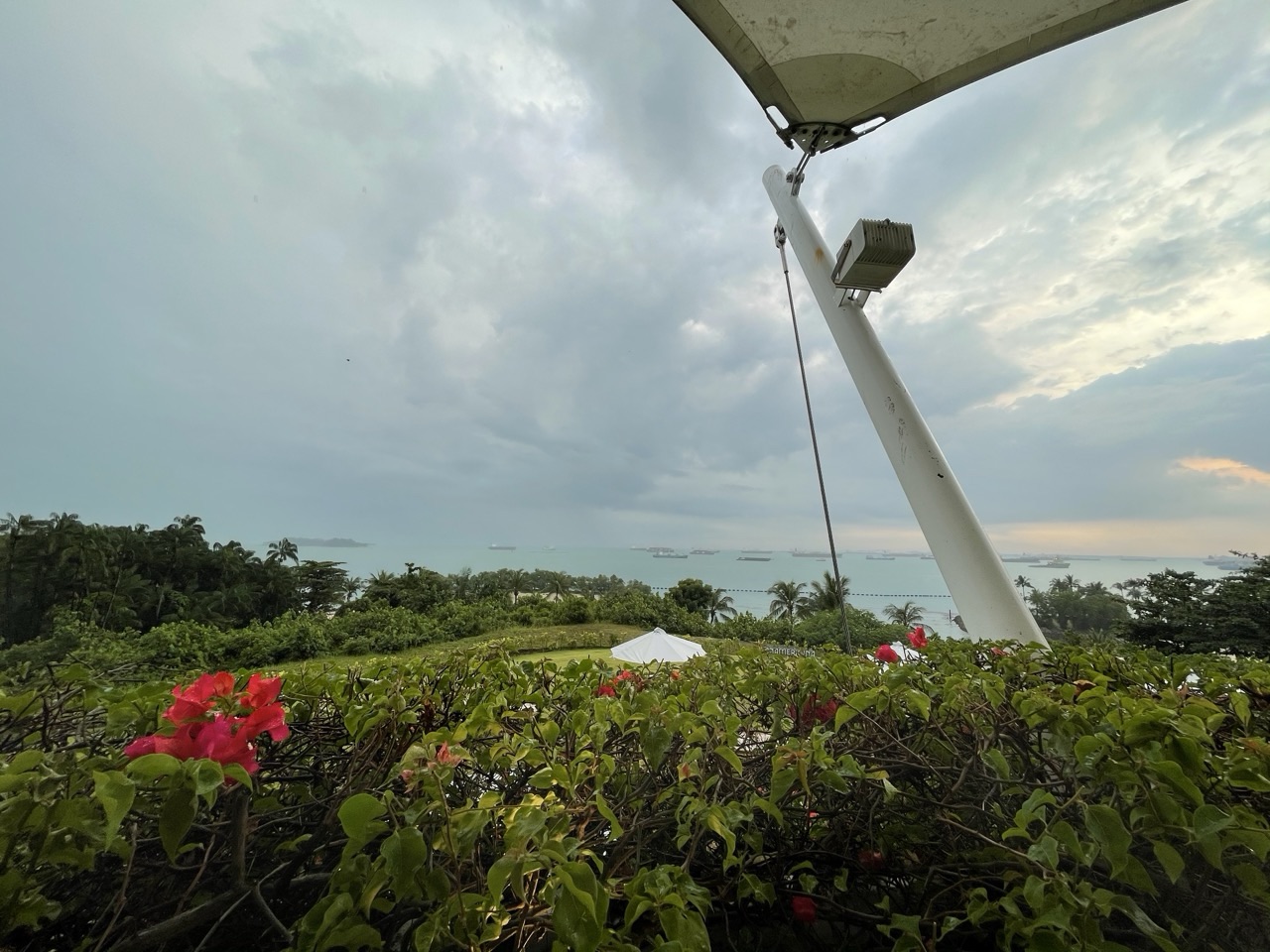
The header is an eduKateSG photograph of Sentosa.