
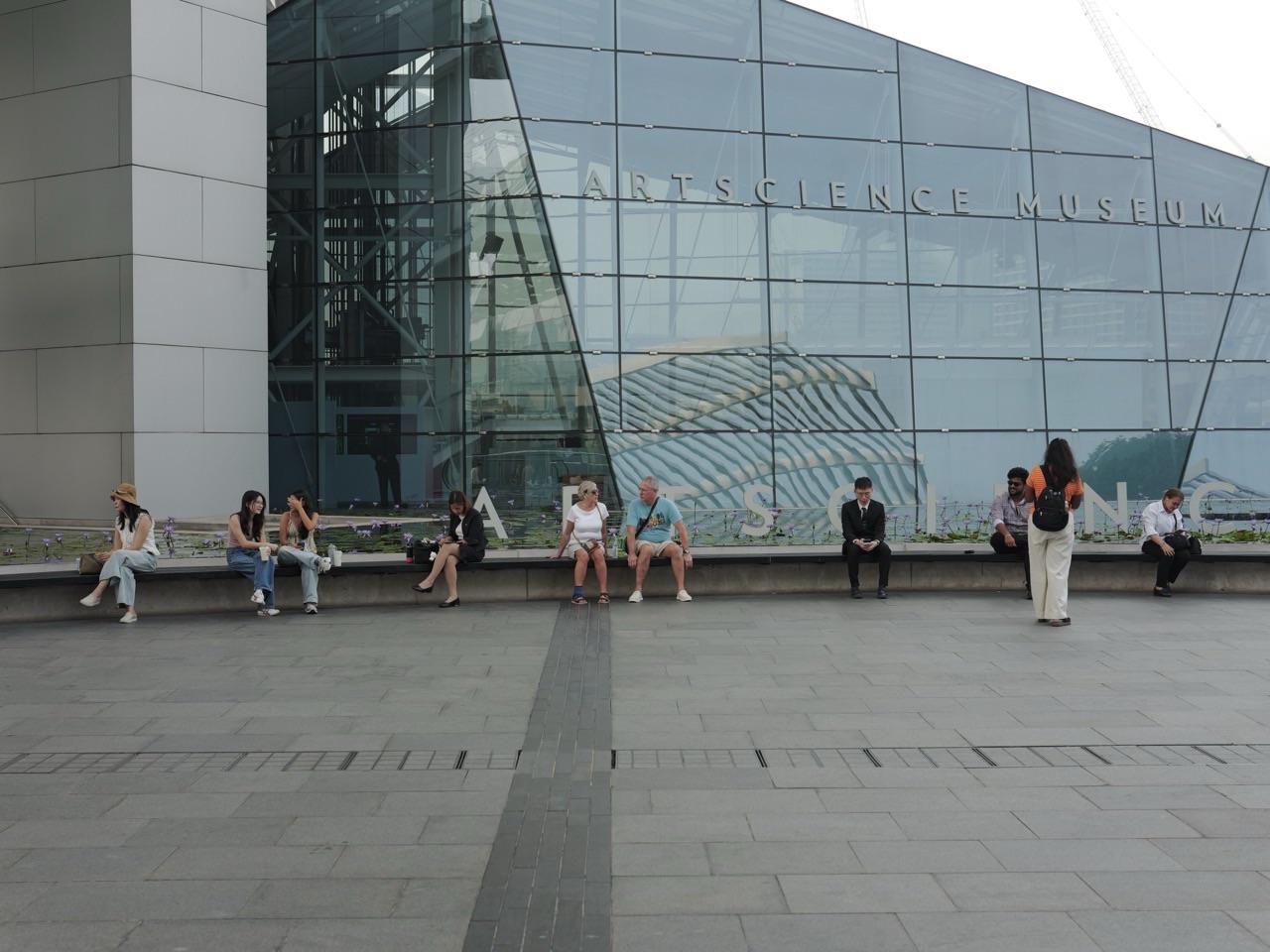
ArtScience Museum opens More than Human: Making With the Living World on Saturday, 28 November 2026 with an evening programme called In Relation. There are two talks in the Basement 2 exhibition galleries. In Relation to Place runs from 6pm to 7.15pm. In Relation to Attention runs from 7.30pm to 8.45pm.
The museum lists S$32 for one talk and S$37 for both. Either option includes same-day exhibition admission. From 6pm to 9pm on opening night, the galleries are reserved for programme participants. Book In Relation if you want to hear the speakers or visit during that after-hours window. The regular exhibition has its own tickets and continues through 16 May 2027.
- Date — Saturday, 28 November 2026
- Venue — ArtScience Museum, Basement 2 exhibition galleries
- In Relation to Place — 6pm to 7.15pm
- Break — 7.15pm to 7.30pm
Plan your visit
At a glance · Official information · Common questions
Chapters 1–4 · Event details and what to expect
At a glance
| Detail | What to know |
|---|---|
| Date | Saturday, 28 November 2026 |
| Venue | ArtScience Museum, Basement 2 exhibition galleries |
| In Relation to Place | 6pm to 7.15pm |
| Break | 7.15pm to 7.30pm |
| In Relation to Attention | 7.30pm to 8.45pm |
| Ticket choices | S$32 for one session, S$37 for both |
| Included | Same-day More than Human admission. After-hours exhibition window for programme participants, 6pm to 9pm. |
| Regular exhibition | 28 November 2026 to 16 May 2027, with separate ordinary admission. |

Chapter 1 of 8
How the tickets and after-hours access work
Choose one talk or both
The museum lists one session at S$32 and both at S$37. The difference is S$5 on the published prices. If both subjects interest you and you can stay for the later finish, the combined ticket makes sense. If you want to spend more time with one subject or can only arrive after work or dinner, choose the session that fits.
Start from the museum’s opening programme page and follow its booking link. Select the 28 November programme and confirm the session in the order summary. Several ArtScience Museum products are listed for the same weekend, including regular exhibition admission. Look for the talk title and session before paying.
Same-day exhibition admission is included
The programme listing says both talk ticket choices include same-day admission to More than Human. Read the confirmation for how to use the daytime component and whether you must select a slot. If the exhibition is a major part of your visit, plan time to look at it before the evening programme rather than assuming you can see every room in the remaining minutes.
The museum advertises an exclusive 6pm to 9pm exhibition window for programme participants. If you are attending only one session and want to browse before or after it, check the check-in and gallery access instructions for your particular ticket. The museum’s published window and your selected talk describe different parts of the visit.
Regular admission answers a different question
The standard More than Human exhibition runs from opening day through 16 May 2027. A regular ticket fits someone who mainly wants time to look at the works. The talks are tied to a single evening and offer discussion in the galleries. Choose the product based on whether the speakers and after-hours format are part of the reason you are going.
If you plan to visit with somebody who only wants the daytime exhibition, compare entry arrangements before choosing a time to meet. An opening-programme ticket includes exhibition access for its holder, while the other person needs the appropriate ticket for their own visit.
Chapter 2 of 8
Session 1: In Relation to Place
What the first talk considers
The 6pm session looks at how places are shaped by people, materials, living systems and histories. The museum connects this to Singapore and Southeast Asia through questions about urban settings, coasts and cultural memory. A visitor with an interest in architecture or the design of public spaces may find this the more direct entry point.
Think of a place you know well before attending. A park, street or shoreline has a visible layout, but it also has routines, weather and living things that influence how people use it. Bring one example and listen for how the speakers would describe its relationships. It gives you something specific to compare with the work in the gallery.
Who is speaking
The museum lists co-curator Justin McGuirk, Studio SKLIM founding principal Kevin Lim, creative technologist and new media artist Heider Ismail, and artist and creative director Nabilla Wardhana. Their work gives the session several approaches to place, from the built environment to artistic interpretation.
If one speaker is your main interest, check the museum’s latest programme in case of changes. The published roster tells you who is scheduled. It does not provide a minute-by-minute speaking order. Arrive with enough time to reach the Basement 2 galleries before the session starts.
What to look for in the exhibition first
Pick a work that brings together several kinds of information about a place. You might notice the material, the artist’s description and the physical position of the piece. Compare what you can see immediately with what the label adds. That contrast can make the discussion about design and context easier to follow.
A useful question is who or what gets considered when a place is changed. A design that works for pedestrians or building users also interacts with water, plants and animals. As you listen, try to identify a specific decision whose consequences extend beyond the people it was originally made for.
Contents · Previous chapter · Next chapter
Chapter 3 of 8
Session 2: In Relation to Attention
What the later talk considers
The 7.30pm session turns to the way artists observe, listen and work with materials. Its focus is attention as a practice. A visitor interested in how a creative method changes what you can notice may prefer this session. The conversation is presented inside the galleries, so the setting is part of the experience.
Before the talk, choose one detail of a work that takes time to see or hear. You may notice it more clearly once you slow down or move to a different position. Think about how that small observation changes what you think the work is doing. It gives you a way to follow a broad conversation about attention.
Who is speaking
The museum lists Justin McGuirk alongside Lêna Bùi, Ines Katamso, Isa Pengskul and the art and anthrozoology collective Zheng Mahler. The participants bring different artistic perspectives to the later session. The current programme page is the best place to check the lineup and any changes.
If an unfamiliar term appears, listen for the example the speaker uses. You can often understand a method through what an artist actually records, handles or displays. This makes the session approachable even if you have not read specialist writing on ecology or design.
How the two sessions connect
Place gives you a way to think about relationships that already exist around a site. Attention asks how a visitor or maker learns to notice those relationships. If you attend both, compare one example from the earlier session with a method from the second. A site changes meaning depending on what you pay attention to and how you record it.
You can also choose just one session and still have a coherent evening. If you visit with someone who is new to the exhibition, explain the distinction in one sentence and let them choose. It is easier to make a decision based on subject and time than by comparing long biographies.
Contents · Previous chapter · Next chapter
Chapter 4 of 8
How to plan your museum visit on 28 November
Build the day around the time you actually have
The regular exhibition lists daily hours of 9am to 6pm with last entry at 5pm. The opening programme has separate evening timings. If you want to use the ticket for daytime viewing first, confirm how and when to enter using the booking instructions. An afternoon visit can give you time to look without a talk about to start.
The 15-minute scheduled break between talks can cover a short pause. It is too brief to rely on for a meal outside the museum and a relaxed return. Eat earlier or decide on dinner after the later session. If you will only be there after 6pm, prioritise the session and check the after-hours viewing arrangements.
Use the Basement 2 exhibition galleries as the destination
The museum sits at Marina Bay Sands, 6 Bayfront Avenue. Bayfront MRT is a practical station for the precinct. Allow time to get through the waterfront complex and reach the museum, then go to the designated check-in for the Basement 2 galleries. The address and the room are both worth sharing with your group.
For a visitor with access needs, ask how the talk is arranged inside the exhibition. The programme describes talks among the works. If seating, a step-free route, the distance between stops or how staff assist late arrivals matters to you, check with the museum before booking. A clear question about the actual setup is more useful than a general question about the building.
Decide when to arrive for the later talk
If you hold only a ticket for the 7.30pm session, verify the museum’s evening entry instructions. The normal last-entry time for the exhibition refers to daytime admission. Use the programme confirmation to decide where to go and when to show your ticket.
If you are meeting somebody already inside, arrange a place to wait before moving into the exhibition. The group can arrive together at the correct check-in rather than trying to find each other while the programme is underway. Check whether the museum has any different evening access route.
Contents · Previous chapter · Next chapter
Chapter 5 of 8
Pick an opening-night plan that suits your interests
For a first-time visitor with one evening free
Choose one talk by subject and put the price, time and check-in location into your calendar. If possible, arrive earlier in the day to look at a few works, or ask how to make use of the evening access. Treat the talk and gallery visit as distinct parts of the outing, even though one booking covers them.
Afterwards, choose one idea or piece to discuss during the trip home. It could be a way of noticing a place or an example of designing for more than human users. That gives a first visit a clear point of focus without trying to summarise the whole exhibition.
For a student interested in art, design or ecology
Take one question to the programme. For example, what changes when a designer considers an animal or plant as one of the users of a place? During the session, write down the example that answers the question most clearly. Use the museum’s instructions on note-taking or photography if you need to record anything in the space.
Follow up on the work itself rather than trying to capture every speaker’s comments. If you visit later in the exhibition run, return to the relevant gallery with a new question. Opening night gives you a way into the subject, while a later visit gives you time to compare works at your own pace.
For a family deciding between the talk and exhibition
The opening event has two 75-minute sessions and can run late for younger visitors. Check any age, seating and programme requirements before booking. For family members who mostly want to explore the artworks together, ordinary exhibition admission offers a choice of dates beyond the opening Saturday.
A family that wants both experiences can choose a daytime exhibition trip together and have interested older attendees check the talk separately. Each person should know which ticket they need. The S$32 or S$37 programme prices apply to the opening-night talks, while ordinary admission is sold on a separate basis.
Contents · Previous chapter · Next chapter
Chapter 6 of 8
Before you book, compare three realistic schedules
Just the first talk
Keep the earlier part of the day open if you want to visit the exhibition first. Reach the galleries for the 6pm start and plan to be free after 7.15pm, subject to the programme running on time. This option fits someone who has an evening meal or another commitment and is mainly interested in cities, buildings or how landscapes are shaped.
If you hope to look around after the first talk, check what the booking allows. A schedule that leaves time for browsing is more useful when you know whether you can stay in the gallery between the two sessions.
Just the second talk
Make 7.30pm your fixed point and check the venue’s later arrival arrangements. If you are coming straight from dinner, leave enough margin to move through Marina Bay Sands and find the check-in. Choose this option when the artistic methods and listening or observation questions matter more to you than the earlier discussion.
The listed finish is 8.45pm and the special gallery window ends at 9pm. That leaves a short period at the end. If you want a fuller exhibition visit, use the same-day admission beforehand when the booking terms permit.
Both talks and a separate look at the exhibition
For the fullest visit, give yourself an exhibition viewing period, a food break and then both evening sessions. The two-session ticket costs S$5 more than the one-session ticket at the published prices. The extra time commitment is the more important difference for someone who will be standing, travelling with others or managing an early start the next morning.
Review the programme once more close to the date. One group member can save the tickets and another can confirm the travel route. When everyone knows the start, break and finish, the evening can be spent on the works and the speakers rather than on timing decisions.
Contents · Previous chapter · Next chapter
Chapter 7 of 8
What to notice in the galleries before a talk
Start with one object and its material
Look at the object before reading its description. Notice what it is made of, how it occupies the room and what it asks you to do as a visitor. Then read the label to see whether the material or method has a connection to a plant, animal, place or system. This gives you a concrete example to listen for during the discussion.
For the Place session, think about the source of the material and the location where it was used or collected. For Attention, think about how the artist learned what to notice and which part is easy to overlook. One object can give you a useful way into either conversation.
Compare two different ways of describing a place
A map can show location and shape, while a recording or an artwork may reveal movement, sound or material changes that a map cannot describe on its own. In a gallery visit, it is possible to move between those forms. Pay attention to the difference between what the object makes visible and what the artist asks you to imagine.
If the exhibition’s scale feels large, pick one work that makes sense immediately and another that takes time. Compare the questions each raises. That is enough preparation for an opening event, and it leaves room to discover something new when the speakers introduce their own examples.
Give yourself a quiet moment before the session
Opening night can be busy, especially when people are looking for the room and catching up with friends. If you have a few minutes before check-in, use them to decide which question you want to follow. Someone interested in design can ask whose needs a project serves. Someone interested in art can ask what observing a material changes.
There is no need to read about every speaker beforehand. The official list tells you who will take part. Pick one practice you are curious about and listen for a concrete example. A small question gives the conversation structure without turning the visit into preparation for a test.
Contents · Previous chapter · Next chapter
Chapter 8 of 8
Find the museum from the station or drop-off
Bayfront MRT and the Waterfront Promenade
The museum’s visitor guide gives the shortest of its listed Bayfront station walks as about seven minutes from Exit D. It also lists longer approaches from Exits B and C. Treat those as approximate outdoor and precinct travel times. Finding your way from the museum entrance to the talk check-in takes additional time.
If you will arrive after dark, share the museum name and exit with your group rather than only a Marina Bay Sands map pin. That pin can represent several buildings and entrances. The museum’s published address is 6 Bayfront Avenue.
Arriving by taxi or private hire
The visitor guide directs vehicles to The Shoppes or Casino drop-off at 10 Bayfront Avenue, from which it estimates about seven minutes on foot. The drop-off address and the museum address serve different purposes. Save the former for the vehicle and the latter for the venue and walking route.
A person who needs an accessible route should check both the outdoor approach and the evening programme check-in. The museum’s visitor information describes facilities, while the programme can explain how guests move within the galleries. Ask about the actual walk and any seating requirements ahead of time.
Contents · Previous chapter · Frequently asked questions
Frequently asked questions
When is the More than Human opening programme?
Saturday, 28 November 2026. The two sessions run from 6pm to 7.15pm and 7.30pm to 8.45pm.
What does one session cost?
The museum lists S$32 for one session and S$37 for both.
Does the ticket include exhibition admission?
Yes. The museum lists same-day More than Human admission with every opening-programme ticket. Check the ticket for entry instructions.
Can I visit after 6pm on a regular ticket?
The 6pm to 9pm opening-night exhibition window is reserved for programme participants.
Which session should I choose?
Choose Place for the built environment, landscapes and cultural context. Choose Attention for how artists observe, listen and work with materials.
Where is the talk?
In the Basement 2 exhibition galleries at ArtScience Museum, 6 Bayfront Avenue. Follow the booking instructions for check-in.
Booking and official information
- ArtScience Museum opening programme and speaker list
- More than Human exhibition dates and regular admission
- ArtScience Museum ticket options
- ArtScience Museum visitor information