
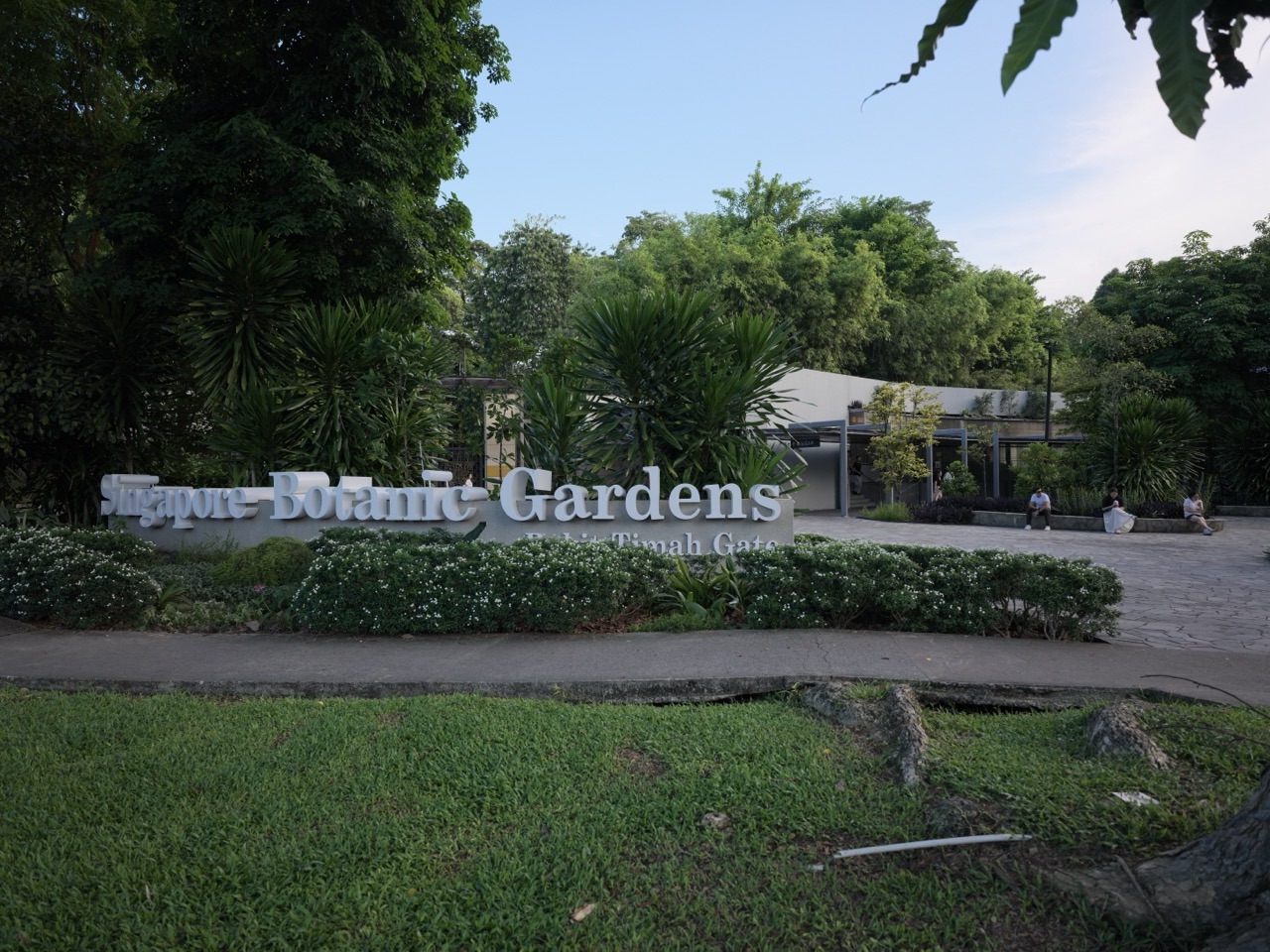
Find Interactive Birds in the Seed Dispersal Garden beside the Singapore Botanic Gardens Seed Bank. Enter via Bukit Timah Gate if this is your first stop. Botanic Gardens MRT serves that entrance on the Circle and Downtown lines. Use the Seed Bank as the destination on the Gardens map.
The brass sculpture by Chua Boon Kee shows three pairs of birds and plants. It gives families a way to talk about a familiar question: how does a new plant grow somewhere other than beside its parent? Pair a look at the sculpture with a walk around the outdoor garden or a visit to the Seed Bank Interpretive Gallery.
- Nearest entrance: Bukit Timah Gate, by Botanic Gardens MRT.
- Look for the Seed Dispersal Garden outside the Seed Bank.
- NParks lists Seed Bank opening hours as 9 am to 6 pm daily. Check the official page before visiting.
How to find the sculpture from Botanic Gardens MRT
Use Bukit Timah Gate and look for the Seed Bank on the park map. The Gardens has several areas with bird life and bird artworks, so enter the full destination into your map or tell your group to meet at the Seed Bank. The featured Hasselblad photo shows the gate you can use for this approach.
The sculpture is outdoors in the garden around the Seed Bank. Look for the garden and its interpretation signs before entering the gallery. If you are visiting other attractions after this stop, choose them once you have checked how far they are from the Bukit Timah side.
Which birds and plants are shown?
NParks identifies the orange-bellied flowerpecker with broad-leaf bramble, the red-crowned barbet with queen coralbead, and the pink-necked green pigeon with the green coffee tree. Read the labels and let each person choose one pair to describe. Younger children can start with body shape and the position of the fruit or seeds.
The artwork represents examples of animal dispersal. It can help a child notice the relationship between a bird and the plant it feeds on. A sighting of any of those species is a separate matter. Visit to look at the sculpture and treat any wildlife you spot along the way as a bonus.
How can a bird move a seed?
Some plants produce fruit that birds eat. A bird can move away after feeding, and an intact seed may later be dropped or passed out elsewhere. If it remains viable and lands in suitable conditions, it may germinate. Ask a child to trace the journey from the parent plant to the possible new growing site.
Seed dispersal means movement away from the parent. Germination is the start of growth. A seed can travel a long way and still fail to germinate. Giving the two events separate names helps students explain what happened without skipping the conditions a seed needs to grow.
Three observations to try in the garden
First, choose an animal-dispersed example. Ask what might attract an animal and how movement could happen. Next, look for an example of wind dispersal and describe one feature that might help it travel through the air. Finally, find the interpretation for water dispersal and compare what floats with what flies.
Use the wording “I observed” for a visible feature and “I think” for your explanation. A child might observe that a seed has a broad wing and infer that wind can carry it. Look at the label after making a prediction. This keeps the activity short enough for a family walk and gives a student an example to remember in class.
Add the Seed Bank Interpretive Gallery
The gallery explains how seeds move from field collection into conservation work. NParks describes windows and panels that offer a view of some behind-the-scenes work. After looking at the sculpture, ask what changes when people deliberately collect and store seeds rather than leaving dispersal to happen in the landscape.
If you have time for one outdoor stop and one indoor stop, use the bird sculpture first and the gallery second. With a short visit, look at the sculpture and choose just one other dispersal mechanism to compare.
Frequently asked questions
Is Interactive Birds at Swan Lake?
Find it at the Seed Dispersal Garden, near the Seed Bank on the Bukit Timah side.
Who made the sculpture?
NParks credits Chua Boon Kee.
Which MRT station should I use?
Use Botanic Gardens MRT for Bukit Timah Gate when the Seed Bank is your first stop.
Do I have to see the birds in the wild to follow the activity?
The artwork and interpretation signs are enough for the observation exercise.