
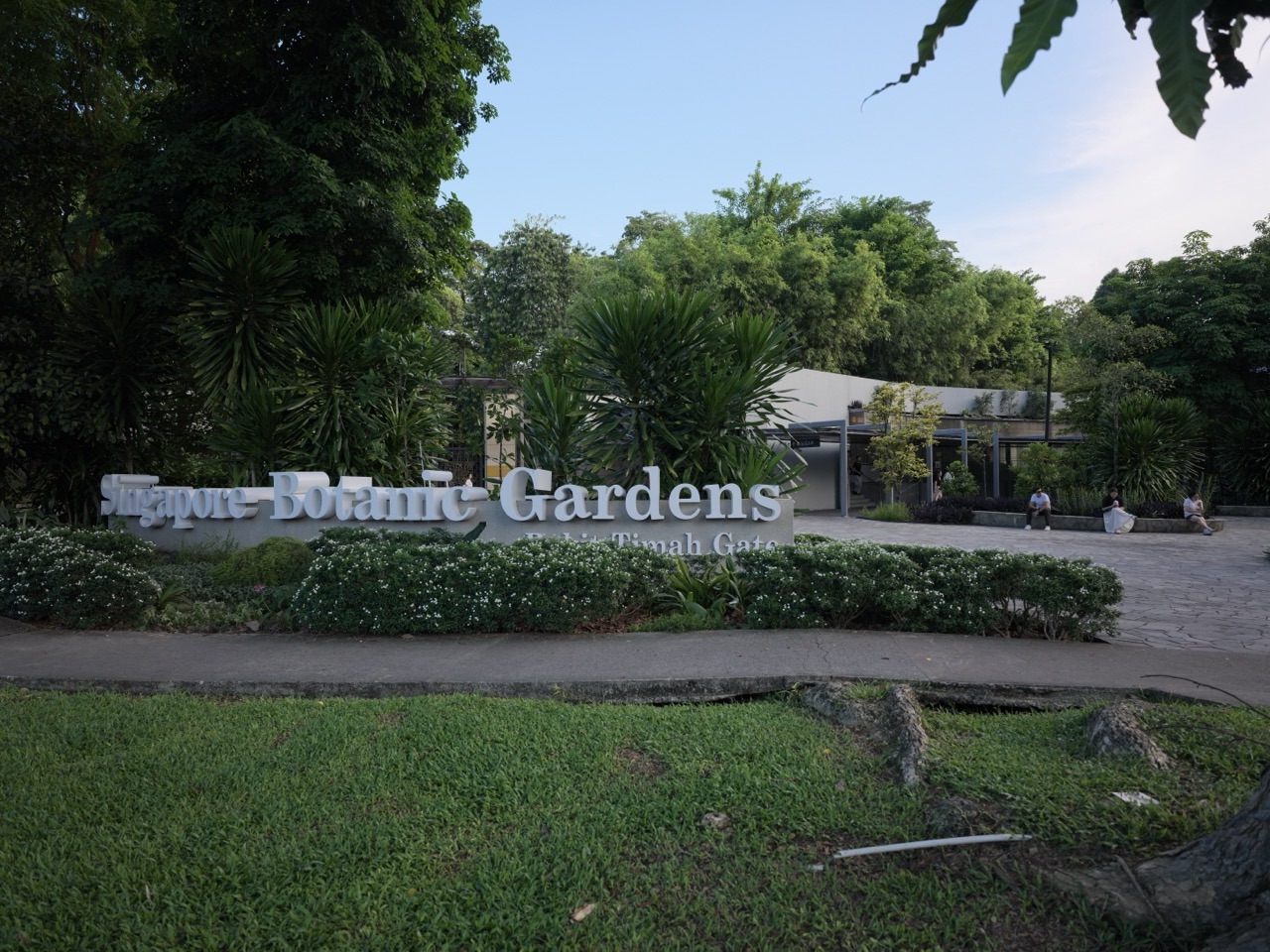
For the Singapore Botanic Gardens Seed Bank, start at Bukit Timah Gate from Botanic Gardens MRT (DT9/CC19), Exit A. NParks lists the Seed Bank’s usual hours as 9 am to 6 pm daily. The visit pairs an interpretive gallery with the Seed Dispersal Garden immediately outside.
Start with one question if you are visiting with children. Ask how a seed gets away from its parent plant, then look for examples outside. In the gallery, ask a different question about what happens after a seed is collected for conservation. Check NParks notices before travelling for either stop.
- Nearest entrance: Bukit Timah Gate.
- Train: Botanic Gardens MRT Exit A.
- Listed Seed Bank hours: 9 am to 6 pm daily.
- What to see: The interpretive gallery and outdoor Seed Dispersal Garden.
Find the Seed Bank from Bukit Timah Gate
Enter the Gardens from Exit A and use the map at Bukit Timah Gate to locate the Seed Bank. Follow the site signs to the conserved building and check the time before adding another stop. If your group is meeting friends, give them the attraction name or the gate and agree which one is the meeting point.

The main Gardens and individual facilities have different opening hours. If you arrive before the Seed Bank opens, begin with a short outdoor walk on the public paths and return later if the group still wants to visit.
Back to contents · Next section
Follow a seed’s journey in the interpretive gallery
The gallery explains how seeds travel from the forest to a conservation collection. Start with one stage, such as collection or storage, and ask why that stage matters. NParks says visitors can see into laboratories through windows, with panels explaining the work. Follow signs for the visitor areas.
A useful distinction is that collecting a seed and storing it successfully are different problems. NParks explains that some tropical seeds cannot tolerate the drying and freezing used in conventional seed banking. Researchers therefore look at other ways to conserve plant material.
For a young visitor, compare a seed you might see at home with a seed discussed in the gallery. Ask what the gallery adds to your first impression. Leave time to look closely at one example before moving on.
Back to contents · Next section
Compare dispersal methods outside
Look for signs identifying how a plant’s seeds or fruits travel. A lightweight structure may help wind dispersal. Hooks can catch on an animal. A floating fruit can travel by water. Use the labels to check your ideas, and observe the displays from the path.
Try pairing two examples. Ask what feature differs and how it helps each seed reach another place. An older student can sketch the feature and write a one-sentence explanation. Leave seeds and fruits where they are.
If you have time for one stop only, choose the gallery to learn about conservation or the outdoor displays to compare dispersal. Both work as a short outing from the same gate.
Back to contents · Next section
Frequently asked questions
Which gate is nearest the Seed Bank?
NParks identifies Bukit Timah Gate.
Is the Seed Bank open early in the morning?
NParks lists 9 am as the usual opening time. Check current notices.
Are the gallery and garden near each other?
Yes. The Seed Dispersal Garden is just outside the Seed Bank.
Can visitors enter the laboratories?
Use the interpretive gallery and its viewing windows, and follow signs for visitor access.