
The Michelin Rubber Plot at Singapore Botanic Gardens commemorates early rubber planting trials. NParks says the plot contains rubber trees of the GT1 clone, a commercial type planted in partnership with Michelin in 2018.
For a walk about rubber history, pair the plot with the Pará Rubber centenary monument near Symphony Lake. Ask the Visitor Services counter for the plot’s current location on the visitor map and use Palm Valley or Symphony Lake to orient yourself for the monument.
- The present Michelin planting dates to 2018.
- NParks identifies the trees as the GT1 commercial clone.
- The Pará Rubber centenary monument near Symphony Lake recalls the early plantings.
- Use the current Gardens map and ask Visitor Services if the plot is hard to locate.
What the Michelin Rubber Plot shows
NParks describes the plot as a site of early cultivation trials. The later GT1 planting gives visitors a way to connect those historical experiments to a rubber tree used commercially. Look at the labels for the plot name and the type of tree growing there.
A clone is a group of plants propagated to share the same genetic material. That makes GT1 a more specific label than simply ‘rubber tree’. Ask children to compare the species name on a label with the name given to a particular cultivated group. Each identifies the tree at a different level.
Observe the trunks and leaves from the path. The planting works as a history stop even when there is no tapping demonstration. If you want to see how latex was collected, look for an illustration or inscription rather than testing the bark.
How the plot connects to the Pará Rubber monument
The Gardens’ archive magazine describes the centenary monument near Symphony Lake. Its shape resembles a rubber trunk, with a line cut into the design to represent a tapping mark. Look for the inscription and compare what it records with the date of the modern planting.
The same account records that Pará rubber seedlings reached the Gardens in 1877. Some were first planted in Palm Valley, and surviving trees were later transplanted to the Economic Garden. Henry Ridley subsequently experimented with ways to tap and preserve latex and sent plant material out for cultivation in the region.
UNESCO identifies work related to rubber cultivation as part of the Gardens’ wider history of research in Southeast Asia. For a short family walk, choose one detail from the plot and one from the monument. Put them in date order before leaving so everyone can distinguish the first trials from the recent planting.
How to plan a short visit
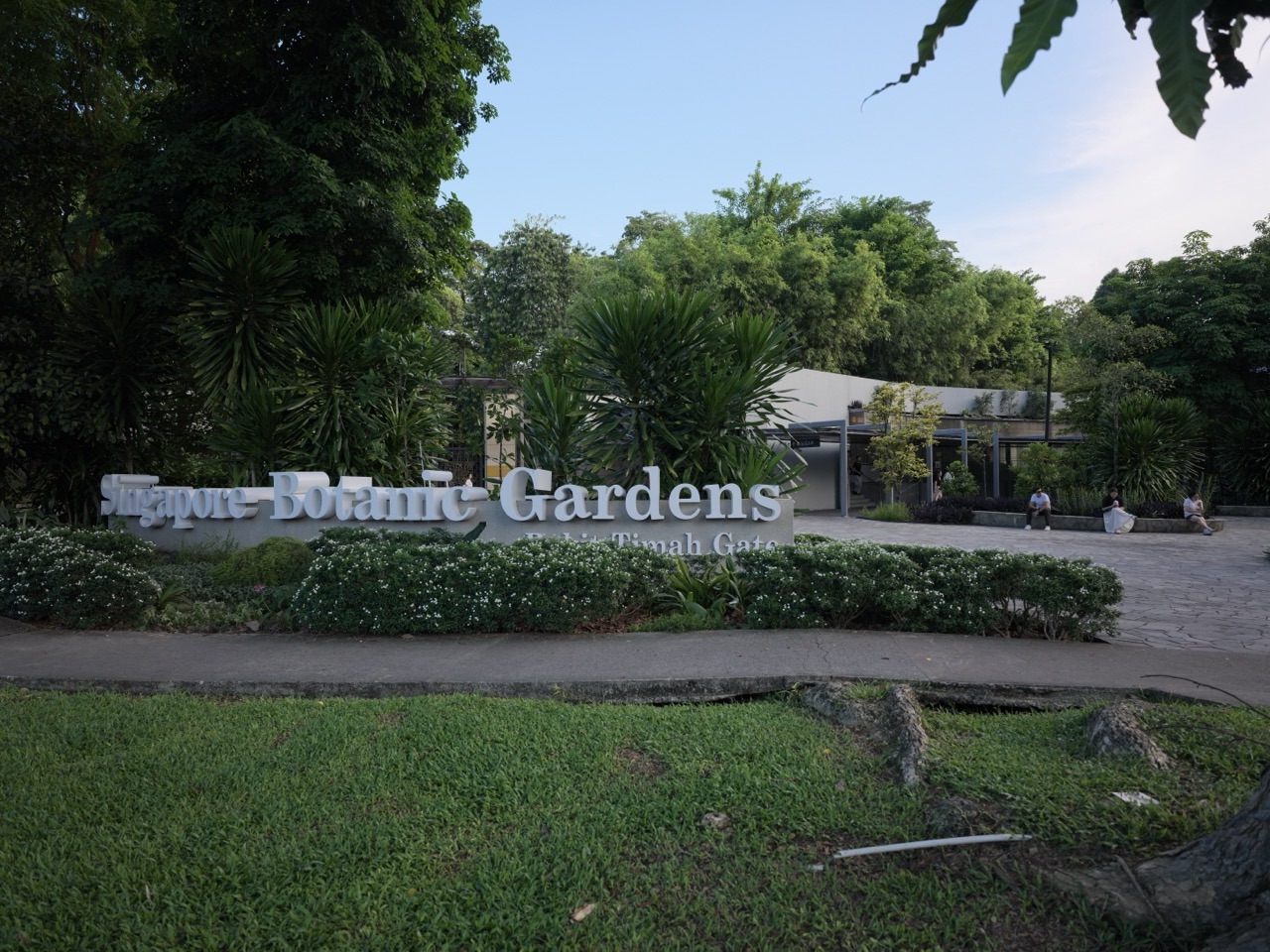
Open the official Gardens visitor map before choosing a gate. Botanic Gardens MRT serves Bukit Timah Gate, pictured above. Napier MRT serves the Tanglin Entrance. If your priority is the monument, use Symphony Lake or Palm Valley as your map landmark and choose the gate that fits your route.
Ask Visitor Services for the Michelin Rubber Plot if you cannot find it on the map. Leave time for one main stop and add the second if the group is comfortable with the walk. Check NParks notices before travelling if the plot or a particular route is the reason for the visit.
Frequently asked questions
What is planted in the Michelin Rubber Plot?
NParks identifies GT1 rubber trees, a commercial clone planted in partnership with Michelin in 2018.
Are those the trees first planted in 1877?
The present GT1 planting dates to 2018. The earlier plantings are recorded in the Gardens’ archive account and the Pará Rubber centenary monument.
Where is the Pará Rubber monument?
The Gardens’ archive magazine places it near Symphony Lake, in the Palm Valley area.
Where should I check the walking route?
Use the official Gardens visitor map and ask Visitor Services for help locating the plot.