
ONE Ocean: Every Action Ripples is at the Annexe Halls of Science Centre Singapore in Jurong East. The published run extends to 3 January 2027, covering the November and December school holidays. Science Centre lists tickets from S$13 and recommends the general exhibition for ages five and above.
The separate Secrets of the Blue VR experience is recommended for ages nine and above, with a parent or guardian required for children aged nine to 12. You can book the main exhibition without VR. Check the date, entry slot and selected add-ons before paying, especially if several children in the group are different ages.
- Location: Science Centre Singapore, Annexe Halls, 15 Science Centre Road.
- Listed hours: 10am–5pm, last entry 4.15pm. Mondays normally close except on public holidays and gazetted school holidays. Check your exact date.
- Allow about 60 to 100 minutes for the main experience, plus any waiting or time for the VR add-on.
- The main exhibition uses wide projections and sound. The separately ticketed VR experience uses a headset.
- Jurong East MRT is about eight minutes away on foot, according to Science Centre.
Find your route
ONE Ocean opening dates, hours and ticket prices · What do you see in the ONE Ocean exhibition? · Is Secrets of the Blue VR suitable for your group? · How to get to ONE Ocean from Jurong East MRT
Full guide contents
- ONE Ocean opening dates, hours and ticket prices
- What do you see in the ONE Ocean exhibition?
- Is Secrets of the Blue VR suitable for your group?
- How to get to ONE Ocean from Jurong East MRT
- School holiday plans for different ages
- Questions to take through the ocean exhibition
- Choosing a second Science Centre activity
- Frequently asked questions
- More school holiday activities in Singapore
| Visit question | What to check |
|---|---|
| How much? | Main exhibition listed from S$13. VR is extra. |
| How long? | About 60–100 minutes for the exhibition |
| Minimum or recommended age? | General experience recommended from age five. VR recommended from nine, with accompaniment at ages nine to 12. |
| What time should I arrive? | Check your booked slot. Published last entry is 4.15pm. |
| Where is it? | The Annexe Halls at Science Centre Singapore, Jurong East |
ONE Ocean opening dates, hours and ticket prices
The Science Centre exhibition page lists an opening date of 30 May 2026 and starting admission at S$13. Voilah’s programme listing gives the full exhibition run through 3 January 2027. The posted exhibition hours are 10am to 5pm, with last entry at 4.15pm. Check the operator’s current booking calendar before treating a school holiday Monday as open.
What does the ticket include?
Look for ONE Ocean by name and read the product description for your date. The organiser’s offer and the Voilah listing describe Science Centre admission with the exhibition ticket. Confirm the package in your actual checkout, including entry date and any conditions. Secrets of the Blue VR is a separate paid add-on. The usual rules for Science Centre general admission do not establish the price or access terms for this special exhibition.
Is the VR price included in the S$13 from-price?
No. The Science Centre’s VR guide lists an additional S$10 for the headset experience. Check the latest rate and selected time. If one person wants to use VR and the others prefer the general exhibition, check the number of add-ons separately. The main display has enough to make it a visit on its own.
How much time should you set aside?
The operator estimates about 60 to 100 minutes for the experience. Give that much time to the exhibition, plus your walk from the station and any separate slot. Last entry is a cutoff, so arriving just before 4.15pm gives less time than the upper end of that estimate. If you plan to visit Science Centre’s main galleries as well, start earlier and check how the two parts fit.
What if you need to change dates?
Read the ticket terms before confirming. The exhibition FAQ describes changes subject to availability and an advance-request deadline. For a school holiday visit with multiple relatives, confirm everyone’s date first and keep the order number handy. If the confirmation is missing, check the email account used at purchase and use the operator’s ticketing contact on the event page.
Contents · Next: What do you see in the ONE Ocean exhibition?
What do you see in the ONE Ocean exhibition?
The exhibition combines marine science and visual storytelling. It draws on Tara Ocean Foundation research and uses panoramic projection, sound and interactive displays. It covers environments from Arctic waters to coral ecosystems and includes a section on marine life and environmental pressures in Singapore’s waters.
Start with the size of the ocean
Large-scale projections give you a sense of the distance between a large animal and the smaller life around it. Children often recognise a whale more easily than plankton. Try asking what an animal eats and what needs to live in the same water for it to find food. That question connects two exhibits even if the labels use different vocabulary.
Look closer at plankton
Plankton are organisms that drift in water. The term covers many different kinds of life. A simple comparison is to notice the difference between the size of the organism on a screen and what you could see in water without magnification. Ask how scientists might collect and study something that is hard to spot with the naked eye. You can carry that question through the research displays.
Compare a global scene with Singapore’s shores
The local section, Tides of the Red Dot, is a useful point to slow down. Think of a coast you have visited in Singapore and ask what could live there even if you have never seen it. A visitor can connect a display about a shoreline to questions about tides, habitats or how people use the water. Use the exhibit to check what the researchers actually observed.
Where do ocean legends fit?
The organiser describes a Legends of the Ocean section alongside its science material. Ask what a story can tell you about how people understood an unfamiliar sea. Then compare that with the kind of evidence a marine scientist needs to identify an animal or describe a habitat. The distinction gives older children a reason to pay attention to both sections.
Contents · Previous · Next: Is Secrets of the Blue VR suitable for your group?
Is Secrets of the Blue VR suitable for your group?
Secrets of the Blue is the premium headset experience. The published guidance recommends it from age nine and says children aged nine to 12 must be accompanied by a parent or guardian. If you are booking for a group, ask the operator how the accompaniment rule works for your party and what each participant needs to purchase.
What is different from the exhibition?
The main exhibition uses shared visuals and sound around the visitors. In VR, each participant wears a headset for a more individual perspective while moving through the experience. The theme is the role of the ocean in the global carbon cycle. Visitors who prefer seeing the people and objects around them can stay with the general exhibition.
Read the operator’s access and comfort guidance
The VR guide gives specific advice for motion sensitivity, flashing lights, certain medical conditions and the fit of glasses. Read that advice before buying a headset ticket. If anyone is unsure, ask the operator about the experience and follow staff instructions at the venue. Strollers are excluded from VR. The general exhibition has separate access and stroller guidance.
Plan for a mixed-age visit
A family with a seven-year-old and an 11-year-old can visit the main exhibition together. If the older child takes the VR option, arrange which adult accompanies them and what the other family members do during that time. Agree on a meeting point and ask the operator about re-entry before planning to split up. If the split makes the outing difficult, choose the shared exhibition ticket.
Contents · Previous · Next: How to get to ONE Ocean from Jurong East MRT
How to get to ONE Ocean from Jurong East MRT
Go to Science Centre Singapore at 15 Science Centre Road and look for the Annexe Halls. Jurong East MRT (EW24/NS1) is the interchange for the East West and North South lines. The operator estimates an eight-minute walk from the station. Follow the signs and Science Centre’s current directions rather than treating an old station photograph as a route map.
Plan the walk around the weather
With younger children, allow time to leave the station, cross where directed and find the specific exhibition hall. The walk estimate ends at the centre, so add time for tickets and orientation. If it rains or the group needs a slower route, use the option that suits the actual conditions and the people travelling with you.
Coming by car or taxi
Share the current address and the word Annexe with the group. The centre lists onsite parking. Check rates and availability on its visitor site before deciding to drive. If someone is arriving separately, agree on a meeting point at the centre rather than asking them to search for you inside a gallery.
Check access before paying
The exhibition FAQ describes ramps and space for manual mobility devices, with separate limits for motorised wheelchairs. It says the main exhibition is difficult to navigate with some strollers. If those details affect your visit, ask the operator about the current route, assistance and any device restrictions for the exact activities you intend to do.
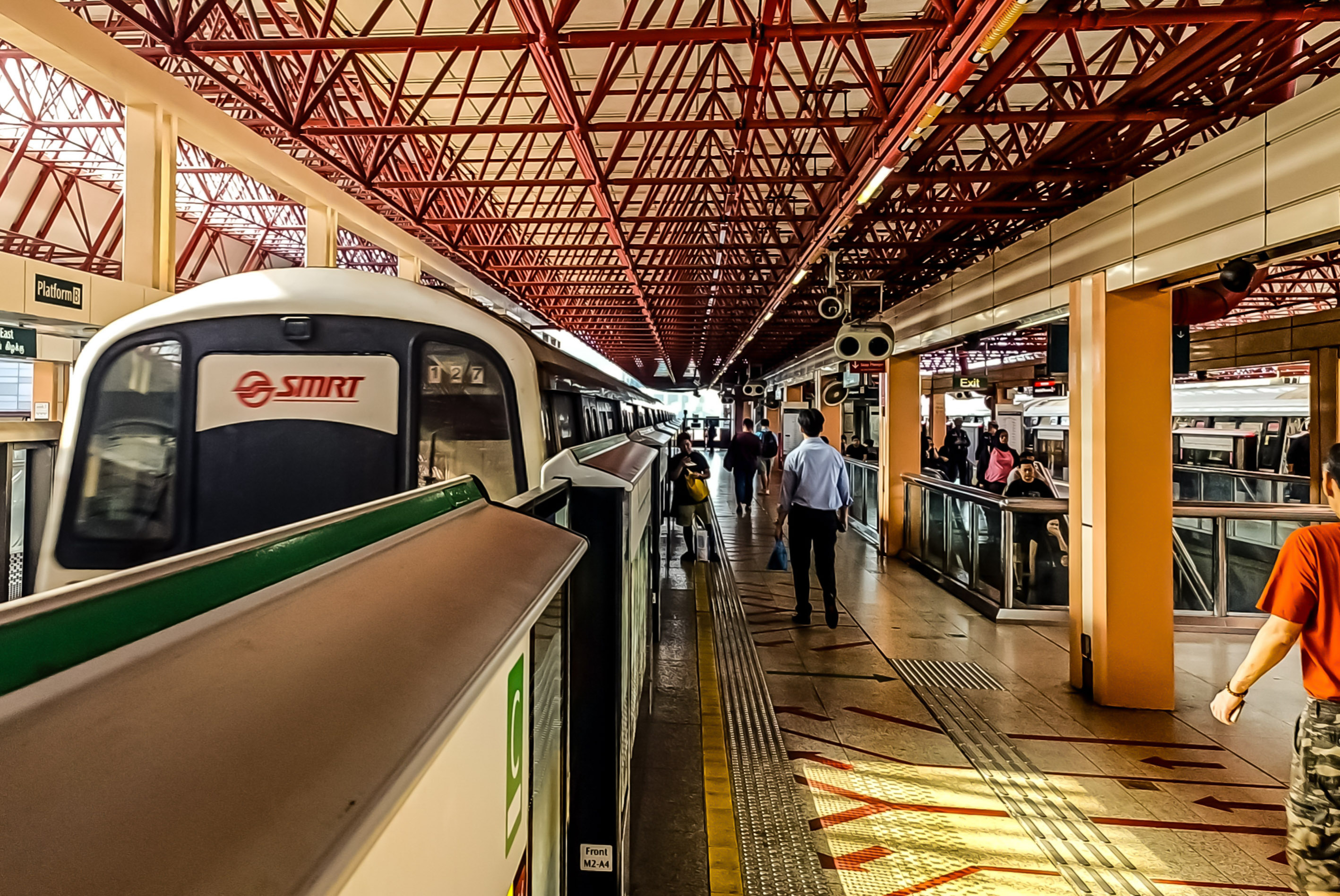
Header photograph: Fansy111’s Jurong East MRT Station photograph, taken in May 2024 and shared under CC BY-SA 4.0.

Contents · Previous · Next: School holiday plans for different ages
School holiday plans for different ages
A shorter trip with primary school children
Book a morning or early afternoon slot. Start by asking each child to choose one animal or habitat to remember. Give the group time to watch a projection or return to an interactive section. Decide afterwards whether there is time for the main galleries or a meal. An early booking gives you room to add something if the children are still interested.
An ocean science visit for teens
Choose one theme, such as marine habitats, ocean research methods or carbon storage. Ask each person to find one exhibit detail that explains part of it. A teenager can use a question like “What did they measure?” to compare a data display with a visual interpretation. If adding VR, leave a few minutes afterwards to compare what the headset made easier to understand and what needed an exhibit label.
A visit for relatives with different interests
Choose one meeting point for arrival and another for lunch or the trip home. If some people prefer a slower walk through the exhibits, arrange a rough time to meet again. A single shared activity can be enough. Check what the ticket includes before assuming everyone wants to continue into another experience.
A wet-weather afternoon
Make the Annexe the fixed destination and keep any outdoor walk optional. Bring what you need for the station-to-venue leg. Check the exact time for last entry, any holiday variation and your ticket before heading out. If you have booked late in the day, go to the exhibition first and save other Science Centre activities for a longer visit.
Contents · Previous · Next: Questions to take through the ocean exhibition
Questions to take through the ocean exhibition
How do small organisms fit into a large system?
Start with something a child can see, such as the size of an organism in a photograph or animation. Then ask how a scientist might estimate how much of it is in the water. Look for examples of sampling or observation in the exhibit. A wide projection can make the organism memorable. The research material helps you ask how anyone knows where it lives or what it does.
Why compare two habitats?
An Arctic scene and a tropical coastal scene can both be part of the same ocean exhibition while showing very different living conditions. Look for one feature of each setting, then compare what might be available to the organisms living there. A younger child can start with what the water and light look like. An older child can ask how changes in temperature, light or movement could affect what researchers observe.
Where does the carbon cycle fit?
The headset programme uses the carbon cycle as its theme. If you skip VR, you can still ask where carbon is found in a marine setting and how it moves between living things and their environment. Think of this as a question to ask while you watch and read. Invite a child to explain one observation in plain language on the trip home.
What can a family observe on a future coast visit?
At a safe public viewing point, notice whether the shore is sandy, rocky or planted and ask how a tide changes what is visible. A photograph from the path can help compare visits on different days. Let the exhibition be the place where you examine organisms or habitats that you cannot see easily outdoors. Follow local access rules if you plan to visit a shore afterwards.

Contents · Previous · Next: Choosing a second Science Centre activity
Choosing a second Science Centre activity
Book ONE Ocean as the fixed visit
Give your exhibition slot priority. If the selected product includes main Science Centre admission, choose one main gallery to add before or afterwards and check when that part of the centre opens. If you have a later slot, a gallery before the Annexe may work better than trying to add it after the exhibition.
Check separate experiences on their own terms
KidsSTOP and Omni-Theatre have their own entry arrangements. Read the current official listing before adding a timed activity. A toddler and a teenager may enjoy different parts of a day out, but booking several separate sessions leaves less room for delays, food or the VR add-on.
Keep the transport simple
Plan to leave from the Jurong East interchange unless you have a better route to your next destination. For families who want lunch near the station, decide whether you will eat before walking to the centre or after returning. Check the weather, the last-entry time and the pace of the slowest person in the group before placing a second booking.
Contents · Previous · Next: Frequently asked questions
Frequently asked questions
Is ONE Ocean running in December 2026?
Yes. The published event listing extends to 3 January 2027. Check the operator’s calendar for your date and ticket.
Can I go without doing VR?
Yes. Secrets of the Blue is separately ticketed. You can visit the main exhibition on its own.
Can a child under nine do VR?
Science Centre recommends it from age nine. Check its current admission and accompaniment terms before booking.
Is this the same exhibition as Into the Ocean at ArtScience Museum?
No. ONE Ocean is at Science Centre Singapore in Jurong East. ArtScience Museum’s Into the Ocean was a separate Bayfront exhibition.
How long does it take?
Science Centre estimates 60 to 100 minutes for the exhibition. Allow additional time for travelling and any separate booking.
Contents · Previous · Next: More school holiday activities in Singapore
More school holiday activities in Singapore
Use the November and December 2026 Singapore events guide for indoor exhibitions and other activities during the holidays.