
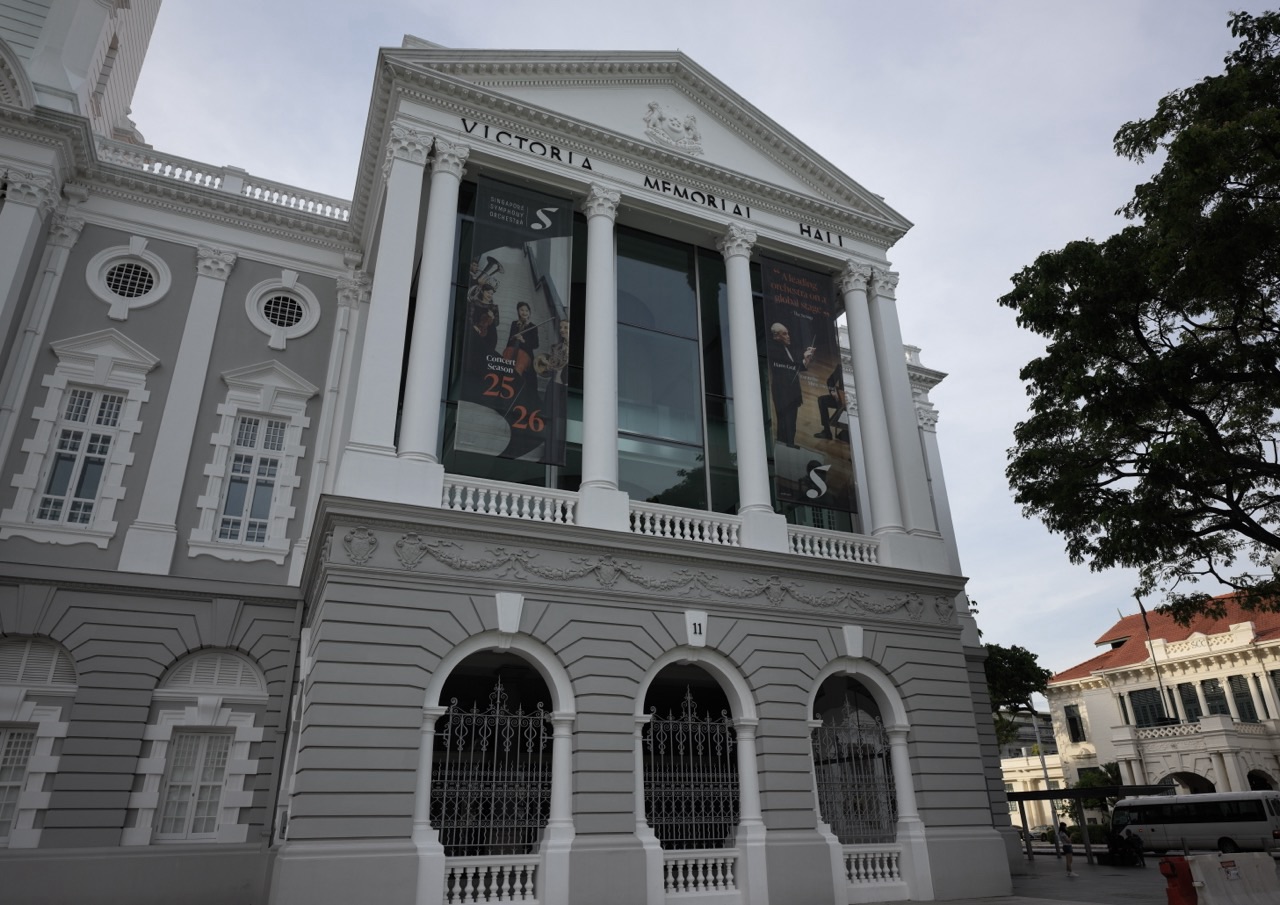
Steven Isserlis joins Hannu Lintu and the Singapore Symphony Orchestra on Friday 4 and Saturday 5 December 2026, both at 7.30pm at Victoria Concert Hall. Standard face values range from S$15 to S$100 before SISTIC booking fees. The SSO lists a two-hour programme with a 20-minute interval.
Isserlis plays Schumann’s Cello Concerto. The published running order opens with Schubert’s Unfinished Symphony, continues with the concerto and ends after the interval with Schubert/Berio’s Rendering. Use Victoria Concert Hall at 11 Empress Place as the destination. This concert takes place in the Civic District.
- Friday 4 and Saturday 5 December 2026 at 7.30pm, Victoria Concert Hall.
- Standard tickets S$15–S$100 before SISTIC fees. See the SSO listing for concessions.
- Hannu Lintu conducts the Singapore Symphony Orchestra; Steven Isserlis plays Schumann’s Cello Concerto.
- About two hours with a 20-minute interval. Recommended for ages seven and above.
Plan your visit
At a glance · Start planning · Common questions
Read the guide by section
- Dates, prices and the choice between Friday and Saturday
- Where is Victoria Concert Hall and how do you get there?
- What is the SSO playing?
- A listening plan for children and first-time visitors
- Listen for the difference between the two unfinished projects
- A closer listen to Schumann’s three connected movements
- Compare standard, student and school bookings before paying
- Make the Victoria Concert Hall arrival work for the group
- Which part of the programme is the best place to start?
- Fit the concert around an early December visit to the Civic District
- Frequently asked questions
SSO programme and running order
| Part of concert | Work | Details |
|---|---|---|
| Before interval | Schubert: Symphony No. 8 in B minor, D. 759 | The Unfinished Symphony. |
| Before interval | Schumann: Cello Concerto in A minor, Op. 129 | Steven Isserlis, cello. |
| Interval | 20 minutes | Plan time to return to your seat. |
| After interval | Schubert/Berio: Rendering | Berio works from sketches for a different Schubert symphony. |
Dates, prices and the choice between Friday and Saturday
Both dates have the same advertised start, venue and programme. Choose the one that gives you an easy arrival and the seats you want. Friday may suit someone already in the Civic District after work. Saturday may suit a group who wants time for a meal beforehand. Check both booking maps before deciding a category is unavailable.
The SSO gives six standard ticket prices: S$15, S$30, S$40, S$55, S$75 and S$100, before booking fees. The published fee for a ticket at S$20 or below is S$1. That puts the S$15 standard ticket at S$16 on the published schedule, if it is available. Use checkout for the actual charge, especially when considering higher categories, promotions or more than one ticket.
The SSO event page also displays SG Culture Pass information. If that affects your plans, follow the current eligibility and redemption instructions from the organiser’s booking link. Check the specific event and date before completing the transaction. A general account balance or offer does not establish that the selected category is still available.
Student offers and other concessions
The organiser lists student offers on Categories 4–6. It describes a 30% discount for purchases of one to three eligible student tickets and S$10 face-value tickets for groups of four to eight eligible students. Those amounts exclude fees and are subject to availability and the published conditions. Eligible full-time students need valid student passes.
A separate 30% concession is listed for seniors aged 55 and above, eligible national servicemen and persons with disabilities in Categories 4–6. Check which documents are needed. The SSO describes concession tickets as non-transferable and says proof can be checked. A mixed group should calculate the actual order for each visitor’s eligibility rather than applying one discount to the whole booking.
For schools, use the SSO’s school booking section. It lists its own conditions and ticket thresholds. Decide who is attending and which date fits the group before making a request. The school can then choose a meeting point, an arrival time and a return plan that make sense for its students.
Where is Victoria Concert Hall and how do you get there?
Victoria Concert Hall is at 11 Empress Place. Victoria Theatre and Concert Hall share a complex, so look for the Concert Hall name on your ticket and follow the signs on site. When meeting a friend, share the venue and start time together. Several arts events take place across the Civic District and Marina Bay in early December.
The SSO gives a route from Raffles Place MRT Exit H towards the Singapore River, Fullerton Hotel and Cavenagh Bridge. City Hall is another useful approach via the Civic District. Choose the route that fits your line and needs. The last walk is part of the arrival plan, particularly if you have booked seats for someone who prefers a shorter or more sheltered journey.
How early should you arrive?
The SSO advises people to be seated 15 minutes before the performance, which is 7.15pm for this concert. Aim to reach the building earlier if you need to find your door, check an access arrangement or use the washroom. Late admission is available only at appropriate pauses or during the interval, subject to the venue’s directions.
Set a meeting time that gives the group space to arrive without rushing. A visitor who already has their ticket can meet the rest of the group at the hall. If one person is carrying the tickets, decide how a late arrival will enter or meet them. Keep the order and venue directions available on your phone.
What is the SSO playing?
The SSO’s programme table places the Unfinished first and the Schumann concerto second. It places Rendering after the interval. Use the printed programme and announcements for the order on the day if the running order changes. The SSO dedicates the concert to Choo Hoey, its founding Music Director.
A first-time visitor can hear the programme as three different ways of using an orchestra. The first is an incomplete symphony that has become an established concert work. The second gives the cello a solo role. The last takes surviving ideas from a different Schubert project and presents them alongside Berio’s own writing. Each offers a different thing to follow.
Schubert’s Unfinished Symphony
The SSO lists Symphony No. 8 in B minor, D. 759. You can begin by listening for the atmosphere of the opening and how a melody comes forward. Later, hear whether the same sound still feels the same after the orchestra has moved through a different mood. You do not need to know the history of the manuscript to follow that experience.
The title Unfinished can raise a useful question for a student. What makes the movements feel complete enough to perform even if the larger project did not reach the form one might expect? Listen to the sense of arrival or pause at the end of a movement. The question lets you compare what you hear with the idea suggested by the title.
Schumann’s Cello Concerto with Steven Isserlis
The concerto gives the solo cello a distinct role in conversation with the orchestra. Listen for the places where the cello’s line feels intimate and those where it has to carry through a wider sound. An orchestral answer can change the feeling of a phrase. You can follow that exchange even if the detailed form of the concerto is unfamiliar.
For a student who plays a string instrument, choose a short passage and observe how the bow helps shape the sound. An audience member who does not play can listen for the same effect by noticing where the line sounds connected or where an attack stands out. Compare your observations after the concert if you are attending together.
Schubert and Berio’s Rendering
The SSO explains that Rendering draws on sketches for a different Schubert symphony, D. 936A. Berio brings those sketches into an orchestral work of his own. One starting point is to listen for changes in texture. A passage might sound clear and familiar before moving into an area that feels more distant or suspended.
The SSO’s description identifies the celesta as one sound to notice in those transitions. If you hear a delicate colour that changes the atmosphere, listen to what happens around it. You do not need to decide where every note came from. The change in musical space can help you hear the dialogue between materials from different periods.
A listening plan for children and first-time visitors
The organiser recommends ages seven and above, requires a ticket for each visitor and excludes infants-in-arms and toddlers. A younger listener who can attend may enjoy the evening more if they know when the break is and have one thing to listen for. Choose a short question such as which sound seems furthest away or when the cello becomes the focus.
The 20-minute interval comes after the concerto in the published programme table. Use it for a practical break and a brief conversation if the child wants one. Ask which idea they would recognise if they heard it again. That can give them a reason to listen closely in the second half without trying to remember every detail.
When to applaud and how to handle a break
The SSO’s first-time visitor guide explains concert etiquette. If you are unsure about pauses between movements, follow the cues from the stage and room. If someone needs to step out, ask staff about where to go and when re-entry is possible. The event’s access and admission directions are the best source for a specific arrangement.
The organiser restricts recording and photography during performances and gives separate advice for bows and applause. Follow the current instructions. If you want a memory of the music, note one sound or passage after the event and discuss it with someone who was there. You can return to a recording later to hear what you noticed in the hall.
Listen for the difference between the two unfinished projects
The concert begins with one work Schubert left incomplete and closes with a later composer’s engagement with a different set of Schubert sketches. The similar framing can make the works sound as though they come from the same manuscript. The SSO programme distinguishes them clearly. The B-minor Unfinished is D. 759. The sketches Berio used belong to D. 936A.
That difference can be a useful way to listen through the evening. In the first piece, attend to the musical experience the surviving movements already offer. In the last piece, pay attention to how a later composer makes the gaps and changes in source material part of the orchestral sound. Think about whether you want the connection to be obvious or whether you prefer to hear it only after looking at the programme.
What Berio says he was trying to do
In his own note, Berio describes composing material between the Schubert sketches and using the celesta to announce it. He presents the work as a form of restoration that makes the discontinuities audible. That gives the audience a helpful clue. When you hear the celesta, listen for how the surrounding orchestral colours and musical direction change. You can hear the connection without needing a score.
Imagine looking at a drawing that survives in several sections. A later artist could make a smooth copy in which the joins disappear, or put the sections together so the joins remain visible. Berio’s account gives you a way to think about the latter kind of work. What you hear during the quiet connections can matter just as much as the passages in which the older material stands out.
Why the final work can feel different from the opening
The Unfinished gives you the experience of Schubert’s musical ideas unfolding within its surviving movements. Rendering gives you a different kind of attention. You may notice a passage that seems to belong to one world and then hear it change as the connection to another passage becomes audible. The change can feel like a shift in distance or light even when you cannot name the instrument responsible.
A teenager who likes writing or visual art might compare that experience with an editor working from a notebook. What should the editor do with a gap? What happens if the new material sounds almost exactly like the original? Discuss the questions after the concert. The point is to hear how a decision about an incomplete work changes the experience, rather than settling what the original composer would have done.
A closer listen to Schumann’s three connected movements
The National Arts Centre’s programme note describes the concerto’s three movements as connected. The solo cello enters near the beginning, and the transitions help carry the listener into the next section. This is useful to know if you are used to waiting for a full pause between movements. Listen for the change in speed or mood and stay with the line as it continues.
In the slow part, listen for whether the soloist seems to be alone or in conversation with another voice. The National Arts Centre’s note highlights another cello from the orchestra in this section. You may hear the exchange more readily than you see who is playing. A cello student can listen for differences in tone and weight. Someone new to the instrument can follow the simpler question of when one voice seems to answer another.
What is an accompanied cadenza?
A cadenza is a passage that gives the soloist particular focus. In this concerto, the later cadenza is accompanied by the orchestra, according to orchestral programme notes. Listen for the way the cello remains in focus while the other players provide a setting around it. The relationship can feel more continuous than a solo passage completely apart from the orchestra.
After the concert, ask which part of the concerto felt most like a single conversation. It might be the early solo entry, the quieter exchanges or the movement towards the end. Use the answer to compare the concerto with the first symphony. The two works may both have memorable melodies, while giving a listener different ways to locate the main voice.
Compare standard, student and school bookings before paying
For an individual standard ticket, choose the category and check the published booking fee. For a full-time student, compare the individual concession with the group offer described by the SSO. The number of eligible students, availability and the required proof matter. Buying several tickets together does not establish that everyone can use the same price.
The SSO’s school listing describes S$10 tickets before booking fees for eligible bookings of at least four in the stated categories, subject to availability. It also gives separate instructions for schools using their own payment arrangements. Use the event page to check those terms if you are organising a visit. A teacher can confirm the group booking and then circulate only the arrival and supervision details that students need.
What to check if two people need different kinds of seats
Look at which available locations let you sit together and which meet any access requirement. If the cheapest category is unavailable or unsuitable, compare the other evening before moving up a category. The two dates use the same published programme, which gives you a choice based on practical details.
For an older visitor, consider the journey from the station and the movement within the building. Save the hall’s route information and confirm any access questions with the organiser. For someone interested in the cello, the booking map can help you assess the view. If you mainly want to hear the whole orchestra, your priorities can be different.
Make the Victoria Concert Hall arrival work for the group
Decide whether to meet at the hall or earlier in the Civic District. A group that needs to collect tickets or check access can make the earlier meeting the safer option. If some people want a meal first, set a time for leaving it that protects the recommended 7.15pm seating time. Tell everyone the full venue name so they do not default to Esplanade.
Use the 20-minute interval to take care of practical needs first. Then ask one short question about the opening two works. Which one made it easier to follow a main voice? That gives you a reason to listen for the shifting textures in Rendering after the break. Leave enough time to return to your seats without rushing.
After the concert, compare one moment from each half
Pick one sound from the concerto and one from the last work. Describe the difference in how each emerges from the orchestra. One listener might remember the cello line as distinct and another might recall the celesta or a change in texture. Their answers tell you how they listened, which can be more useful than asking them to name a favourite work immediately.
If you want to hear part of the concert again, start with the organiser’s listening material or one of the composer notes. The titles and catalogue numbers in the programme distinguish the works. That matters when searching for Schubert after this concert, since the opening symphony and Berio’s source sketches are separate projects.
Which part of the programme is the best place to start?
If you are most curious about Steven Isserlis, listen to a short passage of the Schumann concerto ahead of the concert. Follow the solo cello and then listen again to what supports it. The two passes give you a simple way to hear more of the orchestra once you are in the hall. A younger listener can pick one place where the cello sounds as if it is answering a question.
If you are drawn to Schubert, hear the opening of the Unfinished before reading about Berio. It gives you a reference point for the older sound world. Then read the composer’s note on Rendering and listen for its changes of texture. Both parts of the programme can be interesting to the same person for very different reasons.
A small comparison for music students
Pick one return of a musical idea and describe what has changed since it first appeared. It might be quieter, played by different instruments or surrounded by a new harmony. Note whether the change makes the idea easier or harder to recognise. In a concert with a soloist and two orchestral works, there are several chances to try this in different settings.
A student interested in orchestration can listen for how the cello keeps its place against the orchestra and compare that with the way the celesta draws attention in Rendering. Both sounds can stand out, but the reasons can differ. One is the named solo role. The other can act as a marker within a changing orchestral texture. Start by noticing the effect before naming the role.
How to prepare without listening to the whole programme
Choose an extract from one work and read only enough to recognise its place in the evening. A short preparation can be more helpful than trying to absorb three works before arriving. Share one question with a friend. You might ask which sound holds their attention at the opening, or how the orchestra makes a transition feel smooth.
After hearing the live programme, you can return to recordings with better questions. Notice whether a passage sounded different in the hall and what might have contributed. The acoustics, your attention and the performance itself can all change the experience. Describe what you heard rather than assuming there is only one correct way to play a passage.
Fit the concert around an early December visit to the Civic District
A visitor who has only the evening can meet at the hall and keep dinner flexible. Someone spending the afternoon nearby can leave a break before the 7.15pm recommended seating time. Use an exact landmark near Empress Place or your entrance rather than sending a broad neighbourhood pin. After the concert, give yourself time to walk back to the station.
If you are choosing between Friday and Saturday for a group, compare the journey on each day as well as the seats. Check whether anyone needs to leave by a particular time, use a quieter route or arrange pickup. Those details can determine which date works better even when the printed programme is identical.
Frequently asked questions
When does Steven Isserlis perform in Singapore?
The SSO lists 4 and 5 December 2026 at 7.30pm at Victoria Concert Hall.
What is the cheapest standard ticket?
The published standard face value starts at S$15, before booking fees. Check the live booking page for availability.
Does this performance take place at Esplanade?
The venue on the SSO event page is Victoria Concert Hall, 11 Empress Place.
What does Steven Isserlis play?
Schumann’s Cello Concerto in A minor, Op. 129, with the SSO and Hannu Lintu.
How long is the concert?
The SSO lists about two hours including a 20-minute interval. Allow time to leave the venue after the expected 9.30pm finish.
Are the two Schubert works based on the same symphony?
The SSO lists the Unfinished Symphony as D. 759. Berio’s Rendering works from a separate set of Schubert sketches, D. 936A.
Official information and further reading
- Official SSO event, ticket prices and programme
- SSO’s Victoria Concert Hall visitor guide
- SSO guide for first-time concertgoers
- Luciano Berio’s own note on Rendering
- National Arts Centre programme notes on the Schumann concerto
The header shows Victoria Concert Hall in an eduKateSG photograph.