
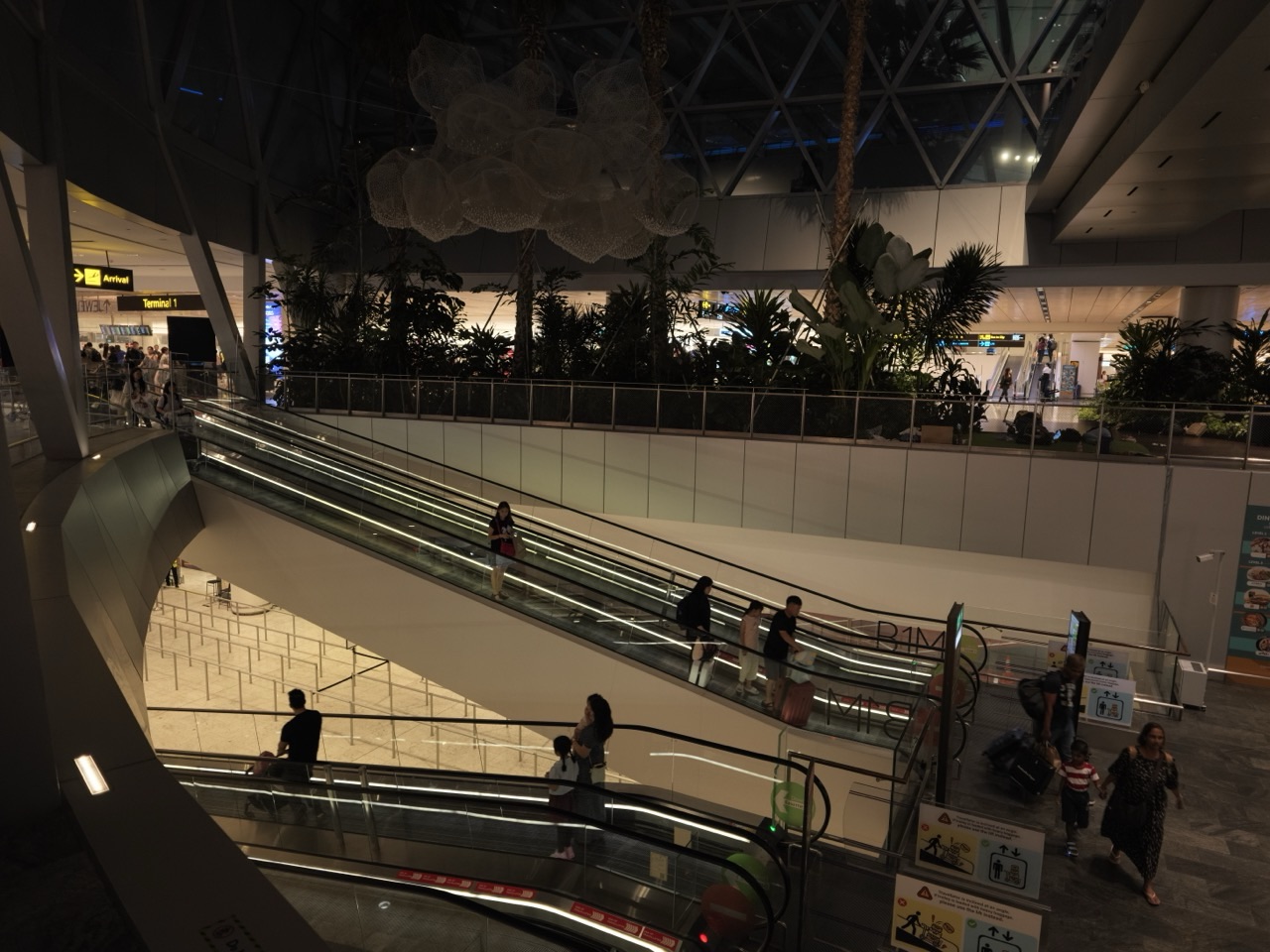
First Principle 1: An airport is a national time-router, not a building
Changi Airport OS exists because a modern city/country is an open system. People, goods, and time-critical movement must be routed reliably across borders. An airport is the high-frequency scheduler that converts global distance into local continuity.
Lock: Airport OS is a time-domain routing organ for the nation.
Start Here:
- https://edukatesg.com/environment-planetary-os-level-1/
- https://edukatesg.com/international-os-level-1/
- https://edukatesg.com/city-os-level-1/
- https://edukatesg.com/culture-language-os-level-1/
- https://edukatesg.com/governance-os-level-1/
- https://edukatesg.com/healthcare-os-level-1/
- https://edukatesg.com/infrastructure-os-level-1/
- https://edukatesg.com/production-os-level-1/
- https://edukatesg.com/finance-os-level-1/
- https://edukatesg.com/singapore-museum-arts-district-os-level-1/
- https://edukatesg.com/singapores-sports-os-level-1/
- https://edukatesg.com/orchard-road-os-level-1/
- https://edukatesg.com/security-stability-os-level-1/
- https://edukatesg.com/education-os-level-1
- https://edukatesg.com/community-os-level-1/
- https://edukatesg.com/family-os-operating-system-in-civilisation-os/
First Principle 2: Reliability under load is the real product
The airport’s output is not “flights.” The output is reliable throughput under volatility: peak travel surges, disruptions, weather, security events, system outages, delayed inbound aircraft, baggage spikes.
Lock: Airport OS is measured by how well it stays stable under stress, not how smooth it looks on a good day.
First Principle 3: Security is a throughput constraint, not a separate system
Air travel is fragile: one security breach can shut the whole node. Security is not “extra.” It is embedded in the flow design: screening, access control, identity verification, restricted zones, threat response.
Lock: Airport security is part of the scheduler, not a side function.
First Principle 4: Airports are multi-OS coupling points (high cascade risk)
Airport OS is a high-coupling hub connecting:
- International OS (border coupling, diplomacy, travel rules)
- City OS (jobs, tourism, business continuity)
- Infrastructure OS (power, water, ICT, rail links)
- Healthcare OS (public health import risk, medevac, pandemic control)
- Finance OS (tourism receipts, cargo value, business travel)
- Security OS (terror/cyber threats)
Lock: When Airport OS drifts, cascades spread fast because coupling is high.
First Principle 5: The airport is a trust engine (identity, safety, predictability)
People and firms route through Changi because they trust:
- safety
- punctuality
- process clarity
- border reliability
- baggage integrity
- dispute handling and recovery
Trust reduces friction. Friction reduces throughput.
Lock: Airport OS is a trust-clearing machine for movement.
Changi Airport OS (Level 1) — Inversion Test (Insert Block)
Assume Changi Airport OS does not matter.
Then Singapore should remain equally stable even if:
- flight delays and cancellations become normal
- baggage loss and process errors rise
- immigration and security queues become unpredictable
- cargo throughput becomes unreliable
- disruptions take a long time to recover
- trust declines and travellers/airlines reroute elsewhere
If Airport OS truly does not matter, nothing downstream should change:
- tourism and business travel should stay strong
- international confidence and investment should be unaffected
- supply chains and high-value cargo should remain stable
- city services and jobs should be unchanged
- security and public health risk should not increase
Reality contradicts this.
When Airport OS reliability drops, the nation’s external coupling degrades: tourism spend falls, business friction rises, cargo reliability weakens, and Singapore’s “trusted node” advantage erodes. The lattice becomes more brittle.
Therefore, Changi Airport OS is a real survivability organ, not a luxury asset.
Start Here for Singapore Airlines Role https://edukatesg.com/singapore-airlines-os-a-z2-reliability-institution-in-civos/
Changi Airport OS — Lattice Effects by Zoom (Z0 / Z1 / Z2) (Insert Block)
Z0 — PocketPhase effects (Individual-level reliability under load)
When Changi Airport OS is stable, it upgrades individual PocketPhases by reducing uncertainty and cognitive load:
- Traveller PocketPhases: navigation, time management, document readiness, calm decision-making under time pressure
- Worker PocketPhases: precision routines, safety compliance, exception handling, coordination vocabulary, situational awareness
- Family PocketPhases (with kids/elderly): buffer planning, stress regulation, caregiving coordination
When Airport OS drifts (delays, unclear procedures, frequent disruptions), individuals degrade toward P0/P1 in key pockets:
- anxiety spikes, mistakes rise, missed connections increase
- conflict probability rises (frontline staff + passengers)
- “small errors” multiply (documents, gates, baggage, timing)
Lock: Airport OS stability reduces human error by lowering load and preserving personal buffers.
Z1 — RolePhase effects (Person-in-role / operational performance)
Airport reliability depends on RolePhase stability across critical roles:
- Air Traffic Control / Airside Ops: high-stakes exception handling, safe envelope discipline
- Ground Handling / Turnaround: tight time windows, coordination under pressure
- Security & Immigration: trust enforcement + throughput trade-offs
- Baggage & Logistics: high-volume routing accuracy
- Customer service: de-escalation, clarity, rerouting passengers under disruption
- Facilities & IT ops: rapid repair to prevent cascading outages
If Airport OS drops below threshold, RolePhase failures appear as:
- backlog traps (queues that don’t clear)
- safety shortcuts (envelope violations)
- misrouting (bags/cargo/passengers)
- brittle coupling (one delay cascades into many)
Lock: Airport OS is RolePhase orchestration — it succeeds when critical roles remain P2/P3 under peak load.
Z2 — OrgPhase effects (Airport as an institution + national node)
At Z2, Changi Airport is an organ inside Singapore’s City/Nation OS:
- International OS: credibility, connectivity, optionality, diplomacy coupling
- Production OS: aviation ecosystem jobs, MRO, logistics, conferences, business travel
- Finance OS: tourism receipts, air cargo value, investment confidence
- Security OS: border control integrity, threat prevention, cyber resilience
- Healthcare OS: outbreak import control, medical response routing
- Infrastructure OS: power + ICT + transport links, resilience against disruption
Below threshold at Z2 looks like:
- persistent unreliability (not one-off events)
- partners reroute (airlines shift capacity, travellers choose alternatives)
- higher friction becomes “normal,” reducing Singapore’s trusted-node advantage
- cascades into tourism, business, supply chains, and national confidence
Lock: Airport OS failure is not local inconvenience — it is national coupling decay.
Changi Airport OS (Level 1) — Threshold (Insert Block)
Changi Airport OS drops below threshold when it can no longer deliver reliable throughput + safe border integrity + fast recovery at the speed required by Singapore’s open-boundary coupling.
The minimum safe condition (simple lock)
Airport OS is below threshold when disruption arrival rate exceeds recovery throughput long enough that backlog becomes normal.
In plain terms:
- queues don’t clear
- delays cascade
- trust erodes
- rerouting becomes unreliable
- “temporary disruption” becomes daily baseline
Threshold signals (what you can observe)
Below threshold typically shows up as sustained patterns, not one-off events:
- persistent flight delay/cancellation clusters (systemic, not weather-only)
- immigration/security queue instability and unpredictable wait times
- baggage mishandling becomes normal (loss/misrouting/long delays)
- turnaround time slips repeatedly (ground ops cannot recover schedule)
- repeated IT outages or cyber incidents affecting operations
- safety near-misses or compliance shortcuts rising under pressure
- airlines and travellers start rerouting away (confidence leak)
- cargo throughput becomes unreliable (time-sensitive goods shift elsewhere)
Lock: Below threshold, the airport still “operates,” but it stops being a trusted scheduler. It becomes a turbulence amplifier.
Changi Airport OS (Level 1) — The Three Collapse Modes (Insert Block)
Collapse Mode I: Amplitude Collapse (Shock)
A sudden, high-impact event overwhelms capacity and trust:
- major security incident
- catastrophic IT outage / cyberattack
- sudden border policy shutdown
- severe weather event with poor recovery capacity
- major accident or safety event that freezes operations
Mechanism:
Shock → throughput stops → backlog forms instantly → trust drops → recovery is slow → rerouting fails → partners divert.
Outcome:
Rapid Phase drop toward operational Phase 0 conditions: systemic delay, halted flows, confidence rupture.
Collapse Mode II: Slow Attrition Collapse (Drift)
The most dangerous mode because it looks “fine” until it is brittle.
Drift accumulates through:
- under-maintenance of systems and facilities
- staff fatigue and pipeline thinning (experience loss)
- process complexity creep (more checks, more friction, less clarity)
- cost-cutting that removes redundancy and buffers
- gradual loss of service quality and predictability
- vendor fragility and supply issues for critical components
- creeping cyber vulnerability
Mechanism:
Small friction increases → recovery slows → backlogs last longer → staff burn out → errors rise → more friction → deeper drift.
Outcome:
The airport becomes brittle. A normal disruption triggers a major cascade.
Collapse Mode III: Fast Attrition Collapse (Overload)
Repeated disruptions arrive faster than repair:
- stacked travel surges
- repeated IT faults
- repeated manpower shortages
- repeated regional disruptions
- repeated policy/health requirements that change faster than ops adapts
Mechanism:
No recovery window → backlog becomes permanent → frontline overload → errors increase → trust falls → airlines divert → throughput shrinks further.
Outcome:
A rapid slide into “permanent instability mode” where the airport is always catching up and never fully recovers.
Changi Airport OS — One-Paragraph Cascade Lock (for your article)
When Changi Airport OS is below threshold, the first visible symptom is operational chaos (queues, delays, baggage errors). But the real cascade is systemic: Z0 travellers and staff lose buffers and make more errors; Z1 roles drop out of Phase under peak load (misrouting, safety shortcuts, backlog traps); Z2 national coupling degrades (tourism, cargo, business confidence, public health control, and security integrity). Airport OS failure is national coupling decay, not local inconvenience.
Optional one-paragraph “hard lock” summary (tight insert)
Changi Airport OS is Singapore’s high-coupling time-router: it schedules cross-border movement with embedded security, trust, and rapid recovery under volatility. If it drops below threshold, Z0 pockets degrade (stress/errors), Z1 roles fall out of Phase under peak load (backlogs, misrouting, safety shortcuts), and Z2 national coupling weakens (tourism, cargo, business confidence, security and public health load). Airports are not buildings; they are survivability organs in an open-boundary civilisation.
If you want, say “add threshold + 3 collapse modes” and I’ll output those sections for Changi Airport OS in the exact same Level 1 format too.
Master Spine
https://edukatesg.com/civilisation-os/
https://edukatesg.com/what-is-phase-civilisation-os/
https://edukatesg.com/what-is-drift-civilisation-os/
https://edukatesg.com/what-is-repair-rate-civilisation-os/
https://edukatesg.com/what-are-thresholds-civilisation-os/
https://edukatesg.com/what-is-phase-frequency-civilisation-os/
https://edukatesg.com/what-is-phase-frequency-alignment/
https://edukatesg.com/phase-0-failure/
https://edukatesg.com/phase-1-diagnose-and-recover/
https://edukatesg.com/phase-2-distinction-build/
https://edukatesg.com/phase-3-drift-control/
Block B — Phase Gauge Series (Instrumentation)
Phase Gauge Series (Instrumentation)
https://edukatesg.com/phase-gauge
https://edukatesg.com/phase-gauge-trust-density/
https://edukatesg.com/phase-gauge-repair-capacity/
https://edukatesg.com/phase-gauge-buffer-margin/
https://edukatesg.com/phase-gauge-alignment/
https://edukatesg.com/phase-gauge-coordination-load/
https://edukatesg.com/phase-gauge-drift-rate/
https://edukatesg.com/phase-gauge-phase-frequency/
The Full Stack: Core Kernel + Supporting + Meta-Layers
Core Kernel (5-OS Loop + CDI)
- Mind OS Foundation — stabilises individual cognition (attention, judgement, regulation). Degradation cascades upward (unstable minds → poor Education → misaligned Governance).
- Education OS Capability engine (learn → skill → mastery).
- Governance OS Steering engine (rules → incentives → legitimacy).
- Production OS Reality engine (energy → infrastructure → execution).
- Constraint OS Limits (physics → ecology → resources).
Control: Telemetry & Diagnostics (CDI) Drift metrics (buffers, cascades), repair triggers (e.g., low legitimacy → Governance fix).
Supporting Layers (Phase 1 Expansions)
- Medical OS: Bio-repair for Mind/capability.
- Technology & Infrastructure OS: Amplifies all layers.
- Culture & Language OS: Norms, trust, meaning. •
- Security & Stability OS: Threat protection.
- Planetary & Ecological OS: Biosphere constraints.
- https://edukatesg.com/additional-mathematics-os/
- https://edukatesg.com/secondary-math-os/
- https://edukatesg.com/vocabulary-os/
- https://edukatesg.com/what-regeneration-means-in-civilisation-in-simple-terms/
- https://edukatesg.com/the-root-of-civilisation-why-everything-depends-on-regeneration/
Start Here for Lattice Infrastructure Connectors
- https://edukatesg.com/singapore-international-os-level-0/
- https://edukatesg.com/singapore-city-os/
- https://edukatesg.com/singapore-parliament-house-os/
- https://edukatesg.com/smrt-os/
- https://edukatesg.com/singapore-port-containers-os/
- https://edukatesg.com/changi-airport-os/
- https://edukatesg.com/tan-tock-seng-hospital-os-ttsh-os/
- https://edukatesg.com/bukit-timah-os/
- https://edukatesg.com/bukit-timah-schools-os/
- https://edukatesg.com/bukit-timah-tuition-os/
- https://edukatesg.com/family-os-level-0-root-node/
- https://bukittimahtutor.com
- https://edukatesg.com/punggol-os/
- https://edukatesg.com/tuas-industry-hub-os/
- https://edukatesg.com/shenton-way-banking-finance-hub-os/
- https://edukatesg.com/singapore-museum-smu-arts-school-district-os/
- https://edukatesg.com/orchard-road-shopping-district-os/
- https://edukatesg.com/singapore-integrated-sports-hub-national-stadium-os/