
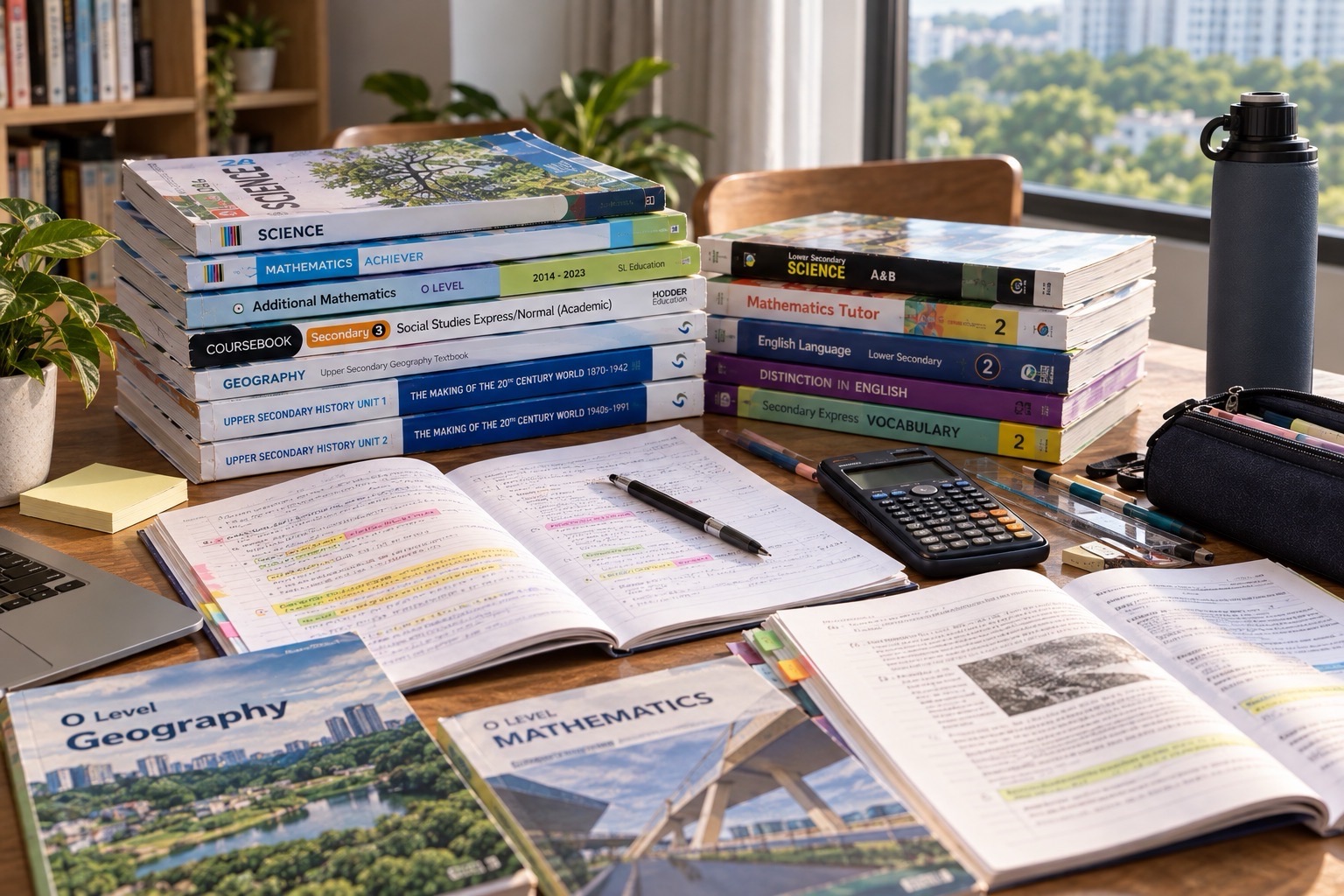
A parent guide to targeted academic help, genuine enrichment, west-side park routes, mathematical modelling and independent school life. All types of tuition and enrichment for Pioneer include preschool reading and numeracy play, Primary English, Mathematics, Science and Mother Tongue, PSLE learning, Secondary G1/G2/G3 and the SEC from 2027, appropriate IP and JC extension, languages, creative writing, music, visual arts, sport, robotics, computing and practical life skills. This full range describes possible learning purposes. It is not an instruction to enrol every Primary pupil or teenager in as many courses as possible.
Remediation helps repair a specific missing academic prerequisite. Subject tuition consolidates or extends current schoolwork, while enrichment develops personal interests, technical capability, expression or safe movement. Care and organisation support routines, and a child may sometimes need fewer appointments rather than more. Independent application on new work is a better indicator of academic progress than an impressive course title.
Pioneer MRT serves part of the Jurong West residential corridor, but the name Pioneer is also used for roads, schools and a wider western industrial area. A family should identify an actual venue and check the real route from the child’s school. CCAs, dinner, homework, safe crossings and sleep matter more than simply comparing a class to the nearest MRT station on a map.
NParks’ Jurong West Park Connector offers a wheelchair-accessible 2.2-kilometre route across Jurong West estates, linking Boon Lay Way and Jurong West Street 93 and providing access toward Pioneer MRT. The separate Jurong Park Connector is 9.4 kilometres long and spans a much broader area. Jurong Central Park’s large-scale board-game features invite useful Mathematics and social play without implying that a private class runs inside the park.
Start with purpose: remediation, tuition, enrichment or rest
- Repair a prerequisite: teach a documented missing concept and verify independent understanding.
- Consolidate the current syllabus: practice real school-subject content at the appropriate level.
- Extend a secure strength: develop depth through new reasoning, not just faster coverage of future chapters.
- Explore meaningful interests: offer arts, technology, language, movement and practical learning appropriately.
- Protect everyday life: organisation, independent reading, play and recovery may be the right priorities.
This is a parent reference to educational categories around Pioneer MRT, Jurong West Street 61 to Street 93, Jurong West Avenue 4, Pioneer Road North and nearby Boon Lay estates. It is not a local directory of commercial providers, a guarantee of available sessions or a timetable that every child should copy. The useful next step is the one that helps an individual learner make progress and keep a healthy school week.
An index of 68 types of tuition and enrichment
- Early-years play, preschool language and Primary One readiness (8 programme types)
- Primary English, Mathematics, Science, Mother Tongue and PSLE (10 programme types)
- Secondary G1/G2/G3, SEC, IP and pre-university learning (15 programme types)
- Reading, languages, literature and expressive communication (5 programme types)
- Robotics, coding, engineering, research and technology (8 programme types)
- Visual and performing arts, music, drama and creativity (6 programme types)
- Sport, movement, nature and physical exploration (6 programme types)
- Study habits, practical life skills, supervision and accessibility (10 programme types)
Early-years play, preschool language and Primary One readiness
Early childhood readiness develops through conversation, playful number relationships, movement and manageable routines. Formal acceleration is not a universal need even in a neighbourhood with many school-age families.
Play-based parent-and-child learning
Learning purpose: Young children explore sounds, objects, turn-taking and simple stories through guided play rather than a miniature school lesson. The need to recognise: A child learns best by joining an adult in play but is not ready for long desk tasks.
Evidence of meaningful progress: Joining a game, naming ideas and taking turns more comfortably. One practical trial: Ask whether there is time to explore freely rather than merely copy an adult. A child may learn counting and cooperation through a short board game. The child should gradually be able to choose an approach without the original example or adult hints; that is stronger evidence than rehearsed attendance. For Pioneer families, the complete school route, CCA obligations, meals and sleep remain part of this choice. Before committing to a term, consider whether a school programme, short home project or age-appropriate family activity meets the same objective.
Sensory and movement discovery
Central capability: Movement, textures, rhythm and spatial play create opportunities to coordinate body and attention, with activities adapted to developmental readiness. Possible learner starting point: A preschooler wants to move, build and investigate instead of sit for extended instruction.
Evidence of meaningful progress: More confident movement, imitation and curiosity in everyday settings. One practical trial: Watch the child’s comfort and safety rather than counting completed crafts. Early childhood readiness develops through stories, movement and routine.
Preschool language-rich storytelling
What children practise: Picture books, puppets, conversations and retelling invite children to build vocabulary and narrative sequence in meaningful situations. A suitable reason to consider it: A child enjoys stories but answers mostly with isolated words or guesses.
Evidence of meaningful progress: Explaining who did what, why it happened and what may happen next. One practical trial: Retell one familiar picture-book scene at home without supplying the words. Preschoolers should not be required to preview Secondary topics.
Early numeracy and mathematical play
What this develops: Sorting, matching, counting, comparing sets, repeating patterns and measuring with objects develop number sense before formal written arithmetic. When it might fit: A child recites numbers but does not reliably connect them with quantities.
Evidence of meaningful progress: Matching objects to numerals and explaining which group has more. One practical trial: Change the counters or containers and see whether understanding survives. A simple family project can be an adequate first experience. The child should gradually be able to choose an approach without the original example or adult hints; that is stronger evidence than rehearsed attendance.
Phonological awareness and phonics
Learning purpose: Listening for speech sounds and linking sounds with letters supports beginning reading, alongside oral language and enjoyable shared books. The need to recognise: A child finds it hard to blend sounds or distinguish similar words.
Evidence of meaningful progress: Reading unfamiliar decodable words without memorising an entire page. One practical trial: Use a new word rather than repeatedly testing a rehearsed flashcard. Early childhood readiness develops through stories, movement and routine.
Fine-motor and handwriting readiness
Central capability: Drawing, tracing, cutting, building and playful mark-making can strengthen control and confidence before extended handwriting tasks are expected. Possible learner starting point: Writing tires the hand quickly or letter formation consumes all attention.
Evidence of meaningful progress: Comfortable grip, purposeful strokes and legible short written messages. One practical trial: Check whether the child is relaxed rather than pushing for neat pages. Preschoolers should not be required to preview Secondary topics. For Pioneer families, the complete school route, CCA obligations, meals and sleep remain part of this choice.
Mother Tongue conversational exposure
What children practise: Songs, stories, games and real exchanges in Chinese, Malay or Tamil can support listening and speaking before written accuracy becomes the focus. A suitable reason to consider it: The child understands familiar household phrases but avoids responding independently.
Evidence of meaningful progress: Initiating simple exchanges and understanding meaning beyond a memorised dialogue. One practical trial: Try a real family conversation about food or a favourite story. A simple family project can be an adequate first experience. The child should gradually be able to choose an approach without the original example or adult hints; that is stronger evidence than rehearsed attendance.
Primary One transition and routines
What this develops: Activities model instructions, packing, listening, asking for help, handling a short task and recovering when something goes wrong. When it might fit: A child is curious about school but needs help starting and finishing routines.
Evidence of meaningful progress: Managing small transitions with fewer adult prompts while remaining cheerful. One practical trial: Practise packing a bag and asking a clear question in a calm setting. A child may learn counting and cooperation through a short board game. Before committing to a term, consider whether a school programme, short home project or age-appropriate family activity meets the same objective.
Primary English, Mathematics, Science, Mother Tongue and PSLE
Primary language, Mathematics and Science have different foundations. A child who cannot make a supported inference needs different feedback from one who misreads a rate or draws an inaccurate experimental conclusion.
Reading fluency and independent reading
Central capability: Repeated meaningful reading, decoding strategies and discussion gradually make text easier to navigate without turning every book into a test. Possible learner starting point: Reading is slow enough that the child loses the meaning of a paragraph.
Evidence of meaningful progress: Reading unfamiliar passages with improving accuracy and comprehension. One practical trial: Offer two different books and listen for meaning, not just speed. Ratio comparisons need equal reference quantities and correct units. The child should gradually be able to choose an approach without the original example or adult hints; that is stronger evidence than rehearsed attendance. For Pioneer families, the complete school route, CCA obligations, meals and sleep remain part of this choice. Before committing to a term, consider whether a school programme, short home project or age-appropriate family activity meets the same objective.
English reading comprehension
What children practise: Children learn to locate textual evidence, infer reasons, compare information and explain an answer that matches what a question asks. A suitable reason to consider it: A student understands a story socially but loses marks on inference or vocabulary-in-context questions.
Evidence of meaningful progress: Pointing to evidence and justifying an answer in a complete explanation. One practical trial: Ask what in the passage changed their mind about a character. An unfamiliar text tests inference more accurately than a memorised passage.
Composition and creative writing
What this develops: Idea generation, concrete detail, story structure, revision and editing help writers express something worth reading instead of recycling a memorised template. When it might fit: A child has ideas when talking but produces thin or repetitive compositions.
Evidence of meaningful progress: Planning a coherent scene and revising it for clarity and effect. One practical trial: Compare first and revised drafts rather than counting fancy phrases. Practising a wrong approach quickly will not repair it.
English oral and listening practice
Learning purpose: Spoken interaction, active listening, clear reading aloud and reasoned conversation develop communication beyond memorised sample speeches. The need to recognise: A child knows an answer but freezes or gives only one-sentence responses.
Evidence of meaningful progress: Speaking audibly, responding to follow-up questions and giving examples. One practical trial: Ask a genuine question and listen for a spontaneous reply. Concrete diagrams and fresh examples should come before speed pressure. The child should gradually be able to choose an approach without the original example or adult hints; that is stronger evidence than rehearsed attendance.
Chinese, Malay and Tamil literacy
Central capability: Mother Tongue reading and writing programmes combine vocabulary, comprehension, composition and functional language use suited to each learner’s exposure. Possible learner starting point: A student performs exercises but struggles to understand a new passage or communicate naturally.
Evidence of meaningful progress: Using words correctly across a new topic, conversation and written task. One practical trial: Ask for an explanation in the language rather than an English translation alone. An unfamiliar text tests inference more accurately than a memorised passage.
Primary Mathematics number foundations
What children practise: Place value, four operations, fractions, decimals, ratio and measurement require connected understanding before speed and examination routines. A suitable reason to consider it: The child obtains answers by guessing a formula or making repeated calculation errors.
Evidence of meaningful progress: Explaining why a method works, choosing suitable units and checking reasonableness. One practical trial: Change the numbers and request a different valid method. Practising a wrong approach quickly will not repair it. For Pioneer families, the complete school route, CCA obligations, meals and sleep remain part of this choice.
Problem-solving and PSLE Mathematics
What this develops: Heuristics such as models, diagrams, systematic listing and working backwards become useful only when the student knows why to choose them. When it might fit: Routine sums are fine, but unfamiliar multi-step word problems cause confusion.
Evidence of meaningful progress: Selecting a method independently and interpreting the final answer in context. One practical trial: Give a novel problem rather than another clone of the class example. Concrete diagrams and fresh examples should come before speed pressure. The child should gradually be able to choose an approach without the original example or adult hints; that is stronger evidence than rehearsed attendance.
Primary Science investigation
Learning purpose: Observing, predicting, controlling variables, reading results and explaining relationships support scientific thinking alongside factual knowledge. The need to recognise: A child remembers keywords but cannot explain a simple experiment or data table.
Evidence of meaningful progress: Distinguishing observations from inferences and making evidence-linked explanations. One practical trial: Ask what changed, what stayed constant and what the results suggest. Ratio comparisons need equal reference quantities and correct units. Before committing to a term, consider whether a school programme, short home project or age-appropriate family activity meets the same objective.
Homework consolidation and targeted remediation
Central capability: Short structured sessions identify the precise missing concept, then practise it and check whether that error disappears in fresh work. Possible learner starting point: A repeated mistake persists despite long revision periods.
Evidence of meaningful progress: Fewer recurring errors in ordinary school tasks after the scaffold is removed. One practical trial: Keep an error log with dates and revisit an old example two weeks later. Practising a wrong approach quickly will not repair it.
Upper-primary exam literacy
What children practise: Students learn to read command words, allocate time, show working, review errors and recognise the difference between understanding and exam presentation. A suitable reason to consider it: A capable student loses marks through misreading, omissions or poor time control.
Evidence of meaningful progress: Improved checking habits and clear working under reasonable conditions. One practical trial: Run a brief timed mixed task and review the process, not only the score. Concrete diagrams and fresh examples should come before speed pressure. The child should gradually be able to choose an approach without the original example or adult hints; that is stronger evidence than rehearsed attendance.
Secondary G1/G2/G3, SEC, IP and pre-university learning
The SEC begins in 2027, with subjects at G1, G2 or G3 levels under Full SBB. IP and JC routes may require separate materials. A learner’s actual syllabus and reasoning should govern support rather than residential location.
Secondary One academic transition
Learning purpose: Bridging introduces symbolic algebra, longer texts, subject-specific vocabulary, scientific reports and the independence expected after PSLE. The need to recognise: A student feels unexpectedly lost despite being comfortable in Primary Six.
Evidence of meaningful progress: Explaining new school methods and organising unfamiliar work independently. One practical trial: Use one actual school task to identify the new expectation. G1, G2 and G3 are subjects, not one identity for the student. The child should gradually be able to choose an approach without the original example or adult hints; that is stronger evidence than rehearsed attendance. For Pioneer families, the complete school route, CCA obligations, meals and sleep remain part of this choice. Before committing to a term, consider whether a school programme, short home project or age-appropriate family activity meets the same objective.
Secondary Mathematics G1 G2 G3
Central capability: Number and algebra, graphs, geometry, statistics and problem-solving are taught at an appropriate subject level and pace under Full SBB. Possible learner starting point: The learner needs support with concepts at the current subject level, not a generic worksheet pack.
Evidence of meaningful progress: Accurate reasoning and transferable methods on new questions of suitable demand. One practical trial: Check the school’s actual subject level and latest topic sequence first. Secondary revision should use the relevant SEC year and level.
Additional Mathematics readiness
What children practise: Algebraic manipulation, functions, equations, indices and coordinate ideas form the language for later Additional Mathematics study. A suitable reason to consider it: A learner is considering A-Math but is uncertain about factorisation and algebra basics.
Evidence of meaningful progress: Explaining each algebraic step and manipulating expressions reliably. One practical trial: Begin with a readiness check, not a pile of advanced exercises. A teenager needs to be able to correct an equation with sound reasoning.
Lower-secondary integrated Science
What this develops: Scientific inquiry, measurement, models, cells, energy and matter build the reasoning needed before more specialised science subjects. When it might fit: The student can recite definitions but struggles to connect concepts to observations.
Evidence of meaningful progress: Selecting evidence, using correct terms and drawing sensible conclusions. One practical trial: Use a familiar everyday phenomenon and require a causal explanation. A strong academic subject does not automatically need accelerating. The child should gradually be able to choose an approach without the original example or adult hints; that is stronger evidence than rehearsed attendance.
Physics and quantitative scientific reasoning
Learning purpose: Forces, energy, circuits, waves and other topics connect models, measurements and calculations; exact coverage depends on syllabus and level. The need to recognise: A student knows equations yet cannot decide which physical relationship applies.
Evidence of meaningful progress: Drawing useful diagrams, handling units and explaining a calculation. One practical trial: Ask for a prediction before writing down a formula. Secondary revision should use the relevant SEC year and level.
Chemistry concepts and laboratory reasoning
Central capability: Particles, bonding, reactions, acids, rates, practical observations and chemical representations need conceptual links rather than isolated memorisation. Possible learner starting point: Chemical symbols and explanations seem disconnected from what happens in an experiment.
Evidence of meaningful progress: Balancing ideas and equations while interpreting evidence accurately. One practical trial: Ask what particles or changes would account for the observed result. A teenager needs to be able to correct an equation with sound reasoning. For Pioneer families, the complete school route, CCA obligations, meals and sleep remain part of this choice.
Biology concepts and data explanations
What children practise: Cells, human systems, genetics, ecology and experimental reasoning involve processes, labelled diagrams and evidence-based explanation. A suitable reason to consider it: A student recognises a diagram but cannot explain a process or unfamiliar question.
Evidence of meaningful progress: Using correct causal links and interpreting graphs independently. One practical trial: Have the learner explain one process from start to finish without notes. A strong academic subject does not automatically need accelerating. The child should gradually be able to choose an approach without the original example or adult hints; that is stronger evidence than rehearsed attendance.
History and source-based inquiry
What this develops: Chronology, context, provenance, inference, comparison and evaluation help students work with sources instead of memorising essays. When it might fit: The learner describes a source but cannot substantiate an inference or compare perspectives.
Evidence of meaningful progress: Making a claim supported by specific source detail and context. One practical trial: Provide two sources and ask what they agree and disagree about. G1, G2 and G3 are subjects, not one identity for the student. Before committing to a term, consider whether a school programme, short home project or age-appropriate family activity meets the same objective.
Geography and spatial inquiry
Learning purpose: Maps, fieldwork, geographical data, physical processes and human-environment relationships require describing patterns and explaining causes. The need to recognise: A student remembers case examples but cannot interpret a new map or data display.
Evidence of meaningful progress: Identifying spatial patterns and explaining them with relevant concepts. One practical trial: Change the location or dataset and see whether reasoning transfers. A teenager needs to be able to correct an equation with sound reasoning.
Social Studies and argumentation
Central capability: Students integrate extracts, viewpoints and contextual knowledge to construct balanced explanations and supported judgements. Possible learner starting point: Answers become one-sided, generic or weakly supported by given sources.
Evidence of meaningful progress: Explaining multiple perspectives and citing relevant evidence appropriately. One practical trial: Ask how a different stakeholder might understand the same issue. A strong academic subject does not automatically need accelerating. The child should gradually be able to choose an approach without the original example or adult hints; that is stronger evidence than rehearsed attendance.
Principles of Accounts and business numeracy
What children practise: Recording transactions, understanding accounting relationships and interpreting business information combine procedure with explanation. A suitable reason to consider it: A student follows a format but confuses what an entry means or where it belongs.
Evidence of meaningful progress: Checking that entries balance and interpreting what figures signify. One practical trial: Explain the business event before writing the account entry. G1, G2 and G3 are subjects, not one identity for the student. For Pioneer families, the complete school route, CCA obligations, meals and sleep remain part of this choice.
SEC examination preparation and study planning
What this develops: Singapore-Cambridge SEC preparation should match the relevant subject level, syllabus version, assessment mode and year of examination. When it might fit: A family is using older papers or advice without checking whether it applies to the student’s cohort.
Evidence of meaningful progress: A study plan grounded in current school evidence and authentic requirements. One practical trial: Compare the school’s subject level and SEAB syllabus before selecting papers. Secondary revision should use the relevant SEC year and level.
Integrated Programme extension
Learning purpose: IP learners may benefit from inquiry, deeper transfer, non-routine problems and independent research beyond routine examination drilling. The need to recognise: A student completes basic tasks easily but finds open-ended extension work unfamiliar.
Evidence of meaningful progress: Defending a method, testing an idea and working productively with ambiguity. One practical trial: Offer a problem with several plausible approaches and ask for justification. A strong academic subject does not automatically need accelerating. The child should gradually be able to choose an approach without the original example or adult hints; that is stronger evidence than rehearsed attendance.
Junior College H1 and H2 subject support
Central capability: Pre-university work often demands precise definitions, extended reasoning, complex quantitative chains and disciplined independent revision. Possible learner starting point: A JC learner understands a lecture but cannot apply ideas in unseen contexts.
Evidence of meaningful progress: Producing rigorous solutions or arguments and diagnosing own gaps. One practical trial: Use actual H1 or H2 syllabus requirements rather than assuming subjects are interchangeable. G1, G2 and G3 are subjects, not one identity for the student.
Research, projects and information literacy
What children practise: Research instruction teaches question formation, evidence quality, note-taking, citation and synthesis without substituting generated text for student thinking. A suitable reason to consider it: A project contains many facts but no defensible question or coherent explanation.
Evidence of meaningful progress: Tracing claims to sources and explaining the student’s contribution. One practical trial: Ask the learner to defend one source choice and one limitation. Secondary revision should use the relevant SEC year and level. Before committing to a term, consider whether a school programme, short home project or age-appropriate family activity meets the same objective.
Reading, languages, literature and expressive communication
Authentic communication needs meaningful listening, an unfamiliar text and appropriately supported responses. Reading independently and speaking thoughtfully matter beyond memorised exam scripts.
Public speaking and presentation
Learning purpose: Structured speaking programmes develop audience awareness, coherent points, examples, voice and constructive handling of questions. The need to recognise: A learner avoids class presentations or reads every slide verbatim.
Evidence of meaningful progress: Explaining a point directly to listeners and adapting after feedback. One practical trial: Invite one unexpected question and notice whether the speaker responds naturally. A park map is a source that should be read with its scale and date. The child should gradually be able to choose an approach without the original example or adult hints; that is stronger evidence than rehearsed attendance. For Pioneer families, the complete school route, CCA obligations, meals and sleep remain part of this choice. Before committing to a term, consider whether a school programme, short home project or age-appropriate family activity meets the same objective.
Debate and critical discussion
Central capability: Claims, reasons, rebuttals, evidence and respectful listening turn disagreement into a structured intellectual exchange. Possible learner starting point: A student has strong opinions but weak reasoning or difficulty hearing another view.
Evidence of meaningful progress: Anticipating counterarguments and responding fairly with evidence. One practical trial: Debate a familiar issue where both sides have reasonable claims. Genuine Mother Tongue communication involves listening and reply.
Creative reading and literature circles
What children practise: Discussing novels, poetry and drama builds interpretation, empathy, vocabulary and the ability to support a reading with textual detail. A suitable reason to consider it: A willing reader wants deeper discussion but treats every interpretation as equally supported.
Evidence of meaningful progress: Connecting an interpretation to language, form and context. One practical trial: Compare two passages and explain the difference in mood. Writing about an area should not make up historical facts.
Additional languages and intercultural learning
What this develops: A non-school language may be learned through stories, songs, conversation and cultural context, with realistic goals for each stage. When it might fit: A family wants communication or cultural familiarity beyond school Mother Tongue study.
Evidence of meaningful progress: Using phrases spontaneously and understanding their social meaning. One practical trial: Test a simple unscripted exchange before choosing the next level. A prepared script alone cannot demonstrate flexible language. The child should gradually be able to choose an approach without the original example or adult hints; that is stronger evidence than rehearsed attendance.
Drama, improvisation and storytelling
Learning purpose: Role-play, expression, character choices and collaborative scenes support language, confidence and attentive responsiveness. The need to recognise: A child enjoys imaginative play or wants to speak more confidently with others.
Evidence of meaningful progress: Building a believable scene and responding to other participants. One practical trial: Watch for flexibility and collaboration rather than a polished recital. Genuine Mother Tongue communication involves listening and reply.
Robotics, coding, engineering, research and technology
Maker and coding activities should invite prediction, testing, an honest error and a learner-led change. A large project is not necessarily a better learning task than a small independent one.
Coding and computational thinking
What children practise: Programming develops sequencing, patterns, decomposition, debugging and logical explanation, using tools appropriate to the learner’s age. A suitable reason to consider it: A child enjoys puzzles or wants to make interactive creations rather than only use apps.
Evidence of meaningful progress: Locating an error and explaining how a program produces an output. One practical trial: Change one instruction and predict the effect before running it. Games can illustrate simple probability without proving results from a tiny sample. The child should gradually be able to choose an approach without the original example or adult hints; that is stronger evidence than rehearsed attendance. For Pioneer families, the complete school route, CCA obligations, meals and sleep remain part of this choice. Before committing to a term, consider whether a school programme, short home project or age-appropriate family activity meets the same objective.
Robotics and physical computing
What this develops: Building and programming devices connects sensors, mechanisms, design trade-offs and troubleshooting with tangible outcomes. When it might fit: A learner prefers hands-on construction and learns through testing prototypes.
Evidence of meaningful progress: Explaining design decisions and correcting a mechanism after failure. One practical trial: Set a new physical constraint rather than repeating a kit demonstration. A working robot is useful only when the learner explains what changed.
Artificial intelligence and data literacy
Learning purpose: Learners explore datasets, pattern recognition, model mistakes, privacy and critical evaluation of AI-generated responses at an age-appropriate level. The need to recognise: A student relies on digital tools without distinguishing confident output from justified evidence.
Evidence of meaningful progress: Checking sources, recognising uncertainty and explaining when a tool may be wrong. One practical trial: Give two contradictory outputs and ask what evidence is missing. A design model needs explicit assumptions and constraints.
Digital design, photography and media
Central capability: Visual communication uses framing, editing, typography, audience and ethical publication choices rather than effects for their own sake. Possible learner starting point: A young person likes making posters, videos or photographs but wants stronger design reasoning.
Evidence of meaningful progress: Producing work with a clear purpose and explaining editing choices. One practical trial: Compare an early draft with a more readable, intentional revision. Safe technical thinking can begin with paper and counters. The child should gradually be able to choose an approach without the original example or adult hints; that is stronger evidence than rehearsed attendance.
Maker projects and engineering design
What children practise: Hands-on making with paper, recycled materials, craft tools or safe fabrication develops planning, iteration and materials awareness. A suitable reason to consider it: The learner is curious about how everyday products and structures are built.
Evidence of meaningful progress: Prototyping, testing and improving a design against a stated need. One practical trial: Set a weight, size or user constraint and test the new design. A working robot is useful only when the learner explains what changed.
Chess, logic and strategy games
What this develops: Games can practise planning, visualisation, working memory and learning from mistakes when the focus remains reasoning rather than status. When it might fit: A child enjoys structured games and benefits from thinking ahead.
Evidence of meaningful progress: Explaining alternative moves and revising a plan after feedback. One practical trial: Discuss one choice and its consequences instead of focusing only on wins. A design model needs explicit assumptions and constraints. For Pioneer families, the complete school route, CCA obligations, meals and sleep remain part of this choice.
Mathematical olympiad and puzzle enrichment
Learning purpose: Non-routine puzzles invite pattern finding, proof, creative decomposition and perseverance beyond syllabus rehearsal. The need to recognise: A learner enjoys challenging mathematics and already has secure basics.
Evidence of meaningful progress: Explaining why a solution works and checking special cases. One practical trial: Ask for a second method rather than faster completion. Safe technical thinking can begin with paper and counters. The child should gradually be able to choose an approach without the original example or adult hints; that is stronger evidence than rehearsed attendance.
Environmental science and sustainability projects
Central capability: Observation, measurement, materials choices and local ecological questions connect scientific learning with responsible action. Possible learner starting point: A learner is fascinated by plants, water, waste or environmental change.
Evidence of meaningful progress: Maintaining a small evidence log and explaining what observations support. One practical trial: Compare observations from two visits or two simple conditions. Games can illustrate simple probability without proving results from a tiny sample. Before committing to a term, consider whether a school programme, short home project or age-appropriate family activity meets the same objective.
Visual and performing arts, music, drama and creativity
Music, art, dance and drama can offer craft, expression, collaboration and enjoyment without promised gains in unrelated examination marks.
Visual art and drawing
What this develops: Observation, composition, colour, materials and experimentation help children develop expressive decisions instead of merely copying a sample picture. When it might fit: A child sketches frequently or enjoys exploring images and tactile materials.
Evidence of meaningful progress: Making intentional choices and explaining how a piece changed during creation. One practical trial: Keep early sketches and let the learner describe a revision. Music, drawing and theatre can cultivate craft and voluntary practice. The child should gradually be able to choose an approach without the original example or adult hints; that is stronger evidence than rehearsed attendance. For Pioneer families, the complete school route, CCA obligations, meals and sleep remain part of this choice. Before committing to a term, consider whether a school programme, short home project or age-appropriate family activity meets the same objective.
Painting, sculpture and craft
Learning purpose: Working in two and three dimensions develops manipulation of materials, spatial thinking and patience through design and revision. The need to recognise: The child enjoys constructing tangible objects and exploring texture or form.
Evidence of meaningful progress: Completing a thoughtful work while coping with an unexpected material result. One practical trial: Offer open-ended materials rather than one compulsory finished model. A learner should own at least one important creative decision.
Music literacy and instrumental learning
Central capability: Rhythm, listening, notation, technique and musical phrasing develop gradually through careful practice and enjoyable performance. Possible learner starting point: A learner repeatedly returns to sounds or instruments and accepts small daily practice.
Evidence of meaningful progress: Keeping a steady pulse and applying a correction in a fresh phrase. One practical trial: Invite a short home performance without interrupting every mistake. Group art can develop cooperation.
Choir, ensemble and collaborative music
What children practise: Group music involves listening across parts, blending, timing, interpretation and responsibility to fellow performers. A suitable reason to consider it: A child enjoys music socially and learns through shared participation.
Evidence of meaningful progress: Following a cue and adjusting to the ensemble, not simply singing louder. One practical trial: Ask what the student needed to hear from someone else. These activities do not need unsupported exam-score promises. The child should gradually be able to choose an approach without the original example or adult hints; that is stronger evidence than rehearsed attendance.
Dance and creative movement
What this develops: Movement vocabulary, rhythm, balance, choreography and expressive choice support physical confidence and artistry. When it might fit: A child moves naturally to music or wants a creative physical activity.
Evidence of meaningful progress: Learning sequences safely and interpreting an unfamiliar rhythm. One practical trial: Observe comfort, coordination and enjoyment rather than comparing bodies. A learner should own at least one important creative decision.
Theatre production and stagecraft
Learning purpose: Beyond acting, theatre offers lighting, sound, set design, script work, organisation and collaborative problem solving. The need to recognise: A young person wants creative participation without necessarily performing in front of an audience.
Evidence of meaningful progress: Helping deliver a scene or production through reliable teamwork. One practical trial: Ask which production choice made the audience understand the story. Group art can develop cooperation. For Pioneer families, the complete school route, CCA obligations, meals and sleep remain part of this choice.
Sport, movement, nature and physical exploration
Physical learning should include safe technique, supervision, access and recovery. A public park or sport centre is an opportunity for activity, not confirmation of an available coached class.
Team sports and game intelligence
What children practise: Football, basketball, volleyball and other team games build movement skills, spatial awareness, decisions and cooperation. A suitable reason to consider it: A child wants vigorous activity and opportunities to contribute with others.
Evidence of meaningful progress: Recognising play situations, cooperating and recovering after errors. One practical trial: Ask what they noticed about teamwork rather than only the score. Park connector total length does not equal an individual’s trip. The child should gradually be able to choose an approach without the original example or adult hints; that is stronger evidence than rehearsed attendance. For Pioneer families, the complete school route, CCA obligations, meals and sleep remain part of this choice. Before committing to a term, consider whether a school programme, short home project or age-appropriate family activity meets the same objective.
Individual sports and physical disciplines
What this develops: Athletics, racquet sports, gymnastics and other disciplines develop technique, safe conditioning, goal setting and bodily awareness. When it might fit: A learner enjoys measurable physical challenges and steady personal improvement.
Evidence of meaningful progress: More confident technique, balanced effort and responsible warm-ups. One practical trial: Check qualified supervision, suitable equipment and recovery time. A path may be accessible while a particular journey has other constraints.
Swimming and water safety
Learning purpose: Age-appropriate swimming builds confidence in water, breathing control, strokes and practical safety judgement with appropriate supervision. The need to recognise: A child needs basic water confidence or wants to improve technique progressively.
Evidence of meaningful progress: Using safe habits and demonstrating a skill in a controlled setting. One practical trial: Treat certificates as milestones, never as substitutes for supervision. Recreation can remain ungraded play.
Martial arts and self-regulation
Central capability: Structured movement, controlled partner practice and respectful routines can develop coordination, discipline and confident boundaries. Possible learner starting point: A child likes structured movement with clear sequences and partner rules.
Evidence of meaningful progress: Following safety expectations and demonstrating control rather than aggression. One practical trial: Observe instruction quality and how mistakes are handled. A rested learner may benefit more than an exhausted one. The child should gradually be able to choose an approach without the original example or adult hints; that is stronger evidence than rehearsed attendance.
Outdoor education and nature exploration
What children practise: Nature walks, navigation, field observation and supervised outdoor challenges connect attention, ecology, responsibility and resilience. A suitable reason to consider it: A learner is energised by being outdoors and enjoys noticing the environment.
Evidence of meaningful progress: Recording observations, planning safely and caring for shared spaces. One practical trial: Choose conditions suitable for weather, age and accessibility needs. A path may be accessible while a particular journey has other constraints.
Cycling, skating and movement confidence
What this develops: Progressive practice in balance, braking, steering and situational awareness can broaden safe independent recreation. When it might fit: A child wants to master a practical movement skill in manageable stages.
Evidence of meaningful progress: Demonstrating control and making sensible decisions about risk. One practical trial: Use protective equipment and an appropriate supervised practice area. Recreation can remain ungraded play. For Pioneer families, the complete school route, CCA obligations, meals and sleep remain part of this choice.
Study habits, practical life skills, supervision and accessibility
Organisation, study methods and practical life skills should help the young person manage home and school tasks more independently. Care and curriculum teaching address separate needs.
Study skills and metacognition
Central capability: Planning revision, spacing practice, self-testing, reviewing errors and reflecting on strategies help learners become less dependent on reminders. Possible learner starting point: A student spends many hours studying but cannot explain what improved.
Evidence of meaningful progress: A realistic self-made plan and evidence of later retrieval. One practical trial: Review what was recalled after several days without rereading notes. An imaginary budget can develop practical numeracy. The child should gradually be able to choose an approach without the original example or adult hints; that is stronger evidence than rehearsed attendance. For Pioneer families, the complete school route, CCA obligations, meals and sleep remain part of this choice. Before committing to a term, consider whether a school programme, short home project or age-appropriate family activity meets the same objective.
Executive-function and organisation coaching
What children practise: Routines for starting work, breaking tasks down, packing materials and monitoring deadlines can reduce everyday friction. A suitable reason to consider it: A capable learner repeatedly forgets tasks or becomes stuck at the start.
Evidence of meaningful progress: Beginning independently and finishing a short planned sequence. One practical trial: Try one visible checklist across home and school for a fortnight. An actual school address matters more than its name.
Learning-difference-sensitive instruction
What this develops: Accessible pacing, multisensory explanations and appropriate scaffolding may support learners with distinct educational needs without making a diagnosis. When it might fit: Ordinary teaching methods repeatedly fail to provide access to content.
Evidence of meaningful progress: Meaningful participation and independent use of a helpful strategy. One practical trial: Coordinate with the school and qualified professionals when indicated. A good homework routine gradually needs fewer prompts.
Social and emotional learning
Learning purpose: Activities around naming feelings, listening, managing conflict, teamwork and self-awareness can strengthen everyday classroom and peer interactions. The need to recognise: A child wants structured practice navigating groups or handling disappointment.
Evidence of meaningful progress: Using a coping or communication strategy in a real-life situation. One practical trial: Notice whether the child feels respected and safe, not labelled. The family should count transport, meals and bedtime before enrolling. The child should gradually be able to choose an approach without the original example or adult hints; that is stronger evidence than rehearsed attendance.
Leadership, service and volunteering
Central capability: Planning a small service project, leading responsibly and reflecting on impact can teach initiative, humility and collaboration. Possible learner starting point: A teenager wants purposeful contribution beyond exams and competitions.
Evidence of meaningful progress: Taking ownership of a task while listening to the needs of others. One practical trial: Discuss who benefited, what evidence exists and what should change. An actual school address matters more than its name.
Financial literacy and everyday numeracy
What children practise: Budgeting, saving, comparing value, reading quantities and understanding trade-offs connect school maths with daily decisions. A suitable reason to consider it: A student can calculate percentages but struggles to apply them to purchases or planning.
Evidence of meaningful progress: Explaining a budget choice and its opportunity cost. One practical trial: Plan a modest hypothetical event budget and revise it after a constraint. A good homework routine gradually needs fewer prompts. For Pioneer families, the complete school route, CCA obligations, meals and sleep remain part of this choice.
Food, cooking and nutrition literacy
What this develops: Safe preparation, measurement, recipe adaptation, planning and practical food knowledge connect literacy, science and everyday independence. When it might fit: A child likes practical tasks and is ready for supervised responsibility.
Evidence of meaningful progress: Using measurements accurately and following hygiene and safety routines. One practical trial: Invite the learner to explain a recipe adjustment and its effect. The family should count transport, meals and bedtime before enrolling. The child should gradually be able to choose an approach without the original example or adult hints; that is stronger evidence than rehearsed attendance.
Homework supervision and student care
Learning purpose: After-school care, homework time and structured enrichment serve different functions; supervision need not involve specialised concept teaching. The need to recognise: A family primarily needs a safe transition from school to home and a stable afternoon routine.
Evidence of meaningful progress: Better organisation, rest and timely homework with appropriate adult oversight. One practical trial: Separate questions about care and safety from questions about academic diagnosis. An imaginary budget can develop practical numeracy. Before committing to a term, consider whether a school programme, short home project or age-appropriate family activity meets the same objective.
Holiday exploration workshops and camps
Central capability: Short blocks allow children to sample arts, sport, science, language or outdoor activities without immediately committing to a long-term pathway. Possible learner starting point: The learner wants to discover a new interest or try a creative project during school breaks.
Evidence of meaningful progress: Returning with a question, a skill or a stronger sense of preferred activities. One practical trial: Check the duration, adult supervision, inclusivity and actual learning objective. A good homework routine gradually needs fewer prompts.
Independent reading, libraries and family projects
What children practise: Borrowing books, discussing ideas, observing local life and making projects together can be powerful enrichment without a weekly class. A suitable reason to consider it: A family wants curiosity and autonomy to grow while preserving unstructured time.
Evidence of meaningful progress: A child independently choosing a question, book or project and following through. One practical trial: Let the learner select the next topic and explain the choice. The family should count transport, meals and bedtime before enrolling. The child should gradually be able to choose an approach without the original example or adult hints; that is stronger evidence than rehearsed attendance.
Eight local situations that change the decision in Pioneer
Jurong West Park Connector is a 2.2-kilometre neighbourhood route
NParks’ September 2026 listing describes Jurong West Park Connector as a 2.2-kilometre wheelchair-accessible path from Boon Lay Way across Jurong Central Park, following Jurong West Streets 62 and 64 to Street 93. It connects residences to the wider west-side park network and Pioneer MRT area. Its published length is a route measure, not the distance from any particular school to Pioneer MRT.
A Primary pupil can convert 2.2 kilometres to 2,200 metres and compare it with a hypothetical home-to-school journey involving only one segment. A Secondary learner could discuss why street crossings, safe lighting and the actual endpoint affect journey time. The correct mathematical representation should identify the full route and not invent a live ETA from one distance.
Families should check current conditions and choose a suitable section rather than requiring a child to complete the entire connector. A short supervised stroll can be beneficial without turning every minute into tuition.
Jurong Central Park’s board games teach patterns without commercial lessons
NParks identifies Jurong Central Park near Boon Lay MRT, linked to Jurong West Park Connector. Its design includes life-sized Snakes and Ladders play areas and Ludo Garden, inspired by familiar board games. These are public recreation features, not proof that a particular Mathematics or enrichment course is being sold or taught there.
A young child can practise fair turn-taking, counting moves and explaining a rule. An older pupil can consider the number of possible outcomes from two dice or design a fictional rule that changes a game’s length. A few dice throws are not evidence that certain totals are equally likely; a careful student distinguishes a short observation from a mathematical probability model.
Public equipment should be used according to site rules and the child’s ability. Some family learning can remain play, while recurring curriculum difficulties in probability or number sense deserve targeted instruction and changed practice.
The 9.4-kilometre Jurong Park Connector is not the local 2.2-kilometre route
NParks lists Jurong Park Connector as a much wider 9.4-kilometre connection spanning areas near the Pan-Island Expressway, Ayer Rajah Expressway and parts of Jurong East and the western estates. It is separately described as wheelchair-accessible. A family studying both maps should not confuse this full network route with Jurong West Park Connector’s 2.2 kilometres.
An upper-primary learner can compare the figures and explain the difference of 7.2 kilometres while recognising that a numerical difference does not by itself establish a connecting walking journey. A Secondary student can consider hypothetical segments, crossings and a return trip to learn how network distances differ from practical travel decisions.
Choose the park and access point relevant to the child’s actual aim. There is no educational advantage in completing a long park connector merely because its total distance is available online.
A Western Adventure Loop is a network, not a single school commute
NParks links Jurong West Park Connector with the wider Western Adventure Loop. A loop can connect several park connectors and nature sites for recreation, but a pupil’s daily journey may use entirely different roads or public transport services. The term ‘loop’ is a network description, not proof that walking the whole route is a safe or convenient schoolday activity.
A fictional map project can compare nodes, pathways and route constraints. Ask the learner to decide whether a shorter route with more crossings is preferable to a longer route with suitable lighting and safe walking areas. Explain what assumptions the model makes and why real route details must be checked.
A healthy family outing can use one manageable part of the network. School attendance, homework and recovery come before the ambition to visit every named feature.
Pioneer MRT and a school named Pioneer need not be in the same place
A school name does not necessarily identify its current street or the nearest MRT station, particularly as Singapore’s estates and schools change over time. Pioneer Primary School appears in education discussions about Tengah as well as western Singapore, but families should use the current MOE SchoolFinder and the school’s own information to check the actual campus rather than assume it is directly next to Pioneer MRT.
A child preparing for the Primary-to-Secondary transition can learn to distinguish a school name, street address, admission arrangements and commuting route. An older learner could make a carefully sourced table without turning one school’s programme into a universal definition of academic success. Each student has a different set of subjects, interests and personal needs.
A parent should check current school and venue addresses before arranging a daily route or choosing tuition because of a place name. This is practical information literacy, not a claim about any school’s admission outcomes.
A fictional everyday budget can build more than multiplication speed
Imagine a fictional family has a $30 budget for materials for a school project. They choose four imaginary items at $5 each and two at $3 each. The total is $26, leaving $4. These values do not represent current prices at any business in Pioneer or Jurong West; they exist to test quantity, equal groups and subtraction.
An upper-primary learner could compare two fictional package sizes by unit cost instead of the total sticker price. A Secondary student could express a simple linear cost model and identify the assumptions that make it valid. Change the prices and numbers of items after guided work and ask the child to select a method independently.
An everyday context only helps when it clarifies the underlying Mathematics. A child who misunderstands the reference quantity in a percentage-change question still needs a correct model before intensive timed papers.
G1/G2/G3 learners can have different gaps in the same household
Full Subject-Based Banding enables students to offer secondary subjects at different G1, G2 and G3 levels, and the first SEC is in 2027. One teenager in Pioneer may understand algebra but write weak Science explanations, while another may be comfortable in Humanities and need direct help with linear graphs. A blanket programme for ‘Secondary learners’ would obscure the difference.
Use schoolwork to identify the first wrong step. A student who writes 3(x+2) as 3x+2 should see three equal groups and understand why the expression becomes 3x+6. A learner who knows the formula but gives unsupported explanations needs practice connecting evidence and reasoning to a task.
After a short trial, give an unfamiliar question after a delay and ask for independent checking. Strong academic support should gradually make the learner more capable of choosing what to revise without constant adult direction.
The Pioneer family timetable should leave space for art, movement and reading
A class described as ‘Pioneer’ could be near Pioneer MRT, farther along Pioneer Road North or elsewhere in Jurong West. Families must use the real address, school dismissal, transport and CCA time to estimate the practical burden. A sixty-minute session may occupy much more of the evening than its printed length.
Protect meals, ordinary homework, safe travel and bedtime before choosing extra programmes. If a pupil already works confidently at school, a creative project, music, sport or free reading may offer more meaningful growth than repeating the same exam paper format.
Review after four to six weeks through a changed independent task and the child’s views. Continuing, rescheduling, reducing or ending a programme can all be productive decisions when the goal has been achieved or the week has become too crowded.
Six steps for a sustainable learning choice
Write one clear, demonstrable learning objective
Rather than begin with the question ‘Which is the best tuition?’, write what the learner cannot yet do or wants to explore. It might be explaining equivalent fractions, supporting an inference from new text, safely following a movement sequence or fixing one independently found programming error. A suitable activity should teach or develop that specific capability.
Look at the first weak step and the learner’s starting evidence
Actual schoolwork, a short unfamiliar task and school feedback can distinguish conceptual misunderstanding from language, task reading, time management or checking. A low grade alone is not a diagnosis. For a hobby, the starting evidence may be voluntary interest and willingness to practice, rather than a score.
Compare what school, home and public resources already offer
CCAs, reading, simple home models, family conversation and safe physical play may already develop useful capabilities. A formal programme adds value when it offers precise feedback, instruction, suitable equipment or an opportunity not available through the existing routine. Do not duplicate commitments merely because they are popular.
Trial the least intensive activity that can answer the question
For academic repair, teach the missing idea and test a few varied examples. For art, keep an early draft and try a deliberate revision. For technology, predict and test a safe design choice. For sport, focus first on safe technique and participation. A trial can reveal whether deeper formal engagement is warranted.
Change the task after guidance to check transfer
A correct answer on the teacher’s original question may depend on memory or prompts. Change the numbers, reading passage, variables, audience or design constraints and ask the learner to select an approach independently. Check retention after several days when relevant. Transfer and explanation are stronger outcomes than attendance alone.
Review wellbeing, travel and the child’s voice
Protect school, CCAs, food, homework, family time and enough sleep. An activity may be useful but wrongly timed for an individual child. After four to six weeks, compare independent progress and ask whether the experience is still enjoyable and sustainable. Continue, change or taper the commitment according to the evidence.
Six mistakes to avoid when choosing more activities
Advanced chapters cannot substitute for secure prerequisites
A learner struggling with place value, equality or supported inference gains little by jumping to more advanced papers before the central idea is understood. Deepen reliable learning before accelerating.
More worksheets may make a wrong method faster
A repeated mistake often needs explanation and a new representation, not simply longer practice. Test an unfamiliar case after teaching to see whether the learner understands and chooses a valid method.
A polished project can conceal the adult’s decisions
An attractive poster, sophisticated model or functioning robot might have been built mostly from instructions. Ask what the child independently predicted, tested, fixed and chose. A modest self-directed revision may show stronger growth.
Every hobby need not be justified by examination marks
Music, arts, reading, sport and making may develop craft, expression, safe practice, collaboration and enjoyment. Do not promise improvement in an unrelated examination subject without relevant evidence.
Public access is not class availability
A park, wildlife trail, neighbourhood centre, swimming complex or playground is a resource with its own rules, not confirmation that a private course operates there. Verify dates, bookings, age, accessibility and restrictions before visiting.
A complete calendar leaves too little space to apply learning
The trip home, waiting, CCA time, meals, homework and sleep all matter. An effective short intervention should make the child increasingly independent, rather than indefinitely requiring another adult-directed hour.
What progress looks like across very different types of learning
- Early years: cooperative play, clear language, meaningful number comparison and small age-appropriate routines.
- Primary reading and language: unfamiliar text understood, relevant evidence selected, clearer writing and genuine conversation.
- Primary Mathematics and Science: sound models, correct quantities and units, conclusions supported by observations and explanations.
- Secondary, SEC and pre-university: subject-level reasoning, valid methods, delayed recall and self-correction.
- Technology and inquiry: a testable prediction, safe evidence, recognition of uncertainty, debugging and purposeful revision.
- Arts and communication: expressive decisions, craft, attentive listening, cooperative practice and reasoned feedback.
- Sports and outdoors: age-appropriate safety, technique, responsible participation, accessibility and rest.
- Life skills and study habits: practical decisions and routines carried into ordinary life with fewer adult prompts.
No course guarantees an immediate grade change, a future career or a personality transformation. A useful review combines an honest baseline, an unfamiliar independent task, the child’s explanation and the effect on their wellbeing, schoolwork and family time.
Ten questions parents ask in Pioneer
How long is Jurong West Park Connector?
NParks lists 2.2 kilometres, from Boon Lay Way through Jurong West streets toward Street 93.
Is that route wheelchair accessible?
NParks currently describes Jurong West Park Connector as wheelchair-accessible. Check your intended access point and route.
Where are the life-sized board-game features?
NParks identifies Snakes and Ladders and Ludo-inspired features in Jurong Central Park near Boon Lay MRT.
How long is the wider Jurong Park Connector?
NParks lists 9.4 kilometres, distinct from the local Jurong West connector.
Does the full connector length equal my child’s commute?
No. Personal routes, crossings, transport and return journeys must be considered separately.
Is Pioneer Primary School automatically beside Pioneer MRT?
No. Check the school’s current address and entry requirements via MOE SchoolFinder.
Are the project-budget figures real shop prices?
No. All figures in the example are fictional.
Can outdoor play replace specific Mathematics tuition?
Play can build counting and reasoning but does not automatically repair a persistent school-concept misunderstanding.
Do all Secondary subjects share one SEC G level?
Not necessarily. Match each subject to the student’s actual G1, G2 or G3 syllabus for 2027.
When can a family reduce extra academic lessons?
When the targeted skill remains correct in unfamiliar independent work and the learner can monitor future errors.
Current official and public sources
The sources below distinguish currently open facilities from historical facts and future plans. They support public information rather than asserting that a particular private tutor or learning centre runs a course at any named site in Pioneer. Verify venue access and notices directly before a visit.
- NParks: 2.2 km Jurong West Park Connector and Pioneer MRT links
- NParks: 9.4 km Jurong Park Connector and western network
- NParks: parks and current visitor conditions
- MOE SchoolFinder: verify actual school addresses and programmes
- NLB: Singapore public library locations and reading resources
2027 SEC subject levels, Full SBB and syllabus alignment
The Singapore Examinations and Assessment Board confirms the first Singapore-Cambridge SEC examinations are in 2027, with subjects at G1, G2 or G3 levels. Parents should use the correct SEC school-candidate syllabuses and the student’s actual school subjects rather than assuming every previous stream-based paper is an exact match. IP, IGCSE and JC pathways may have different requirements.
Related eduKate articles about particular skills and parent decisions
- Primary English subject help in Pioneer
- Secondary 3 G3 Additional Mathematics for Pioneer
- Pioneer school commuting and western MRT routes
- Primary school in Tengah, Pioneer Primary and farmway learning
- All Types of Tuition and Enrichment for Boon Lay
- Remedial teaching versus academic tuition versus enrichment
- G1, G2 and G3 study habits under Full SBB
- Primary Standard and Foundation PSLE Mathematics
- SEAB: Singapore-Cambridge SEC from 2027
- SEAB: G1/G2/G3 school-candidate syllabuses
Continue with nearby area guides
- All Types of Tuition and Enrichment for Jurong West
- All Types of Tuition and Enrichment for Boon Lay
- All Types of Tuition and Enrichment for Lakeside
- All Types of Tuition and Enrichment for Tengah
- All Types of Tuition and Enrichment for Jurong East
Information reviewed in October 2026. This is an educational reference to tuition, enrichment and family learning choices, not a directory of current providers, classes, pricing, admission or booking availability. Follow the relevant school and institution’s up-to-date requirements.